

Submitted:
24 December 2025
Posted:
25 December 2025
You are already at the latest version
Abstract
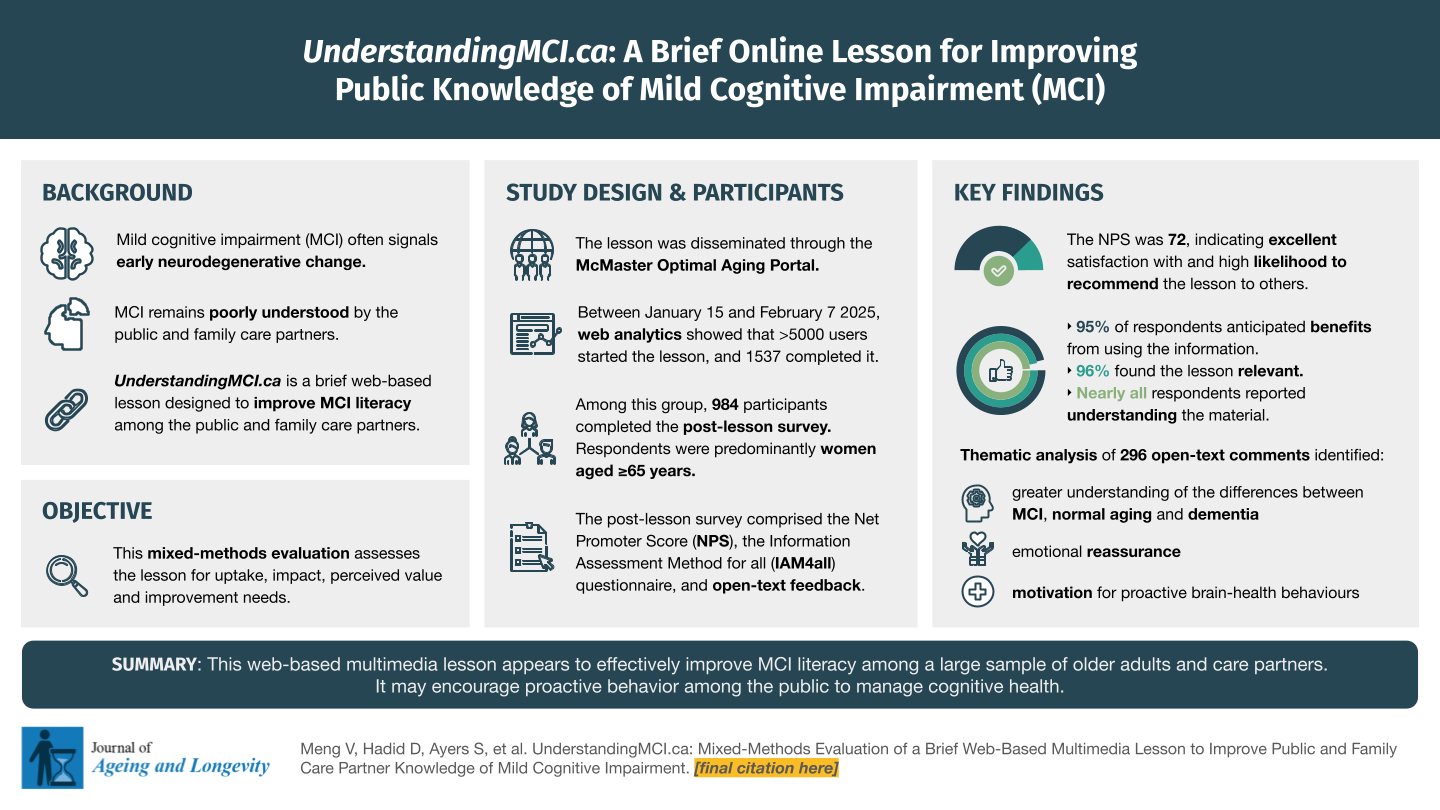
Mild cognitive impairment (MCI), also known as mild neurocognitive disorder, represents a transitional stage between normal cognitive aging and dementia and often signals early neurodegenerative change. Despite its clinical importance, MCI remains poorly understood by the public and family care partners, leading to uncertainty and distress following diagnosis. This study evaluated UnderstandingMCI.ca, a brief multimedia e-learning lesson designed to improve MCI literacy among the public and care partners. The lesson was disseminated through the McMaster Optimal Aging Portal, with web analytics tracking uptake, progress, and completion, and a post-lesson survey incorporating the Net Promoter Score (NPS), the Information Assessment Method for all (IAM4all) questionnaire, and open-text feedback assessing perceived impact. Between January 15 and February 7 2025, over 5,000 users initiated the lesson, 1,537 completed it, and 984 responded to the survey. Respondents were predominantly women aged 65 years or older. The NPS was 72 (“excellent”); 942 respondents (96%) found the lesson relevant, 937 (95%) anticipated benefits from using the information, and nearly all (982 respondents) reported understanding the material. Thematic analysis of 296 comments identified greater understanding of MCI versus normal aging and dementia, emotional reassurance, and motivation for proactive brain-health behaviors. UnderstandingMCI.ca appears to effectively improve public MCI literacy and confidence, offering a scalable, accessible tool for education in clinical and public health contexts.
Keywords:
mild cognitive impairment
; e-learning
; digital health literacy
; dementia prevention
; caregiver education
; online health education
1. Introduction
Mild cognitive impairment (MCI), also known as mild neurocognitive disorder, is a clinical condition characterized by measurable cognitive decline that exceeds age-related expectations but does not meet criteria for dementia due to preserved functional independence [1,2,3,4]. It is estimated that 3–19% of individuals over the age of 65 are affected by MCI, and approximately 5-10% of those individuals progress to dementia annually [4,5]. Early identification of MCI offers a critical opportunity to adopt lifestyle changes and management strategies that may delay further decline or support planning for future care needs [6].
Despite its clinical importance, public understanding of MCI remains limited. Confusion between normal cognitive aging, MCI, and dementia is common, and misinformation may lead to delays in seeking care, increased anxiety, or underutilization of preventative health strategies [7,8]. Increasing public knowledge of MCI is therefore vital in promoting early detection, reducing stigma, and empowering individuals and care partners to take proactive steps toward brain health.
To address this knowledge gap, we developed UnderstandingMCI.ca, Figure 1, an online, 15-minute multimedia lesson designed to improve MCI literacy among the public and family/friend care partners. The lesson was developed using evidence-based best practices in multimedia e-learning instructional design, including: interactive content, multimedia elements and audio narration; plain language explanations; segmenting the content into manageable topics to reduce cognitive load; authentic scenarios and worked examples; review questions; and learner control over navigation as displayed in Figure 2 [9]. Development was informed by a range of experts in MCI and e-learning, and was reviewed extensively with family care partners to ensure their feedback was incorporated. Lesson content includes: how to recognize MCI; distinctions from dementia and normal aging; and MCI prevention, diagnosis, and management. It is currently hosted on the McMaster Optimal Aging Portal, a free, publicly accessible, evidence-based health information website for adults and older adults. The Portal curates high-quality health evidence in user-friendly formats (e.g., evidence summaries, blog posts, videos) and disseminates content primarily through its website and subscription e-newsletter. Previous evaluations of the Portal have demonstrated high usability and satisfaction, and have described its users as predominantly female, highly educated, and typically aged 55 years and older, many of whom self-identify as caregivers or individuals managing their own chronic conditions [10,11,12,13].
The objective of this program evaluation is to describe lesson uptake and engagement and to assess perceived value and improvement needs using web/learning analytics, validated questionnaires, and open-text feedback.
2. Materials and Methods
2.1. Study Design
A single-group, post-intervention mixed-methods observational evaluation using a post-lesson survey was conducted.
2.2. Participants and Recruitment
Potential participants were recruited from the McMaster Optimal Aging Portal subscriber list with a link to the UnderstandingMCI.ca e-learning lesson. Eligible participants were limited to those who completed the lesson and voluntarily opted into the post-lesson survey. Incomplete survey responses were excluded from analysis.
2.3. Outcomes
Participants who completed the lesson were invited to complete a brief survey. The post-lesson survey included a collection of quantitative and qualitative data. The data collection period spanned from January 15, 2025-February 7, 2025. All data was anonymized prior to analysis.
Quantitative data was collected from four sources: (1) web and e-learning analytics tracking lesson uptake and engagement; (2) the Net Promoter Score (NPS), which is a consumer experience metric assessing the likelihood of users recommending the lesson on a scale of 0 to 10; (3) a short demographic survey; and (4) the content-validated Information Assessment Method for all (IAM4all) questionnaire, which evaluates the perceived relevance, understandability, intention to use, and anticipated benefit of consumer health information [14,15,16]. Quantitative data were summarized descriptively (counts/percentages); and NPS was calculated as the proportion of promoters (9–10) minus detractors (0–6).
2.4. Data Analysis
A convergent mixed-methods research design was used to evaluate user feedback. We examined quantitative ratings and qualitative comments to provide a more complete picture of the perceived impact of the lesson and opportunities for improvement.
Quantitative Data Analysis
The NPS was collected via SurveyMonkey. NPS scoring stratifies respondents into three categories: promoters (score 9-10), passives (score 7-8) and detractors (score 0-6) and is calculated using the standard scoring method by subtracting the percentage of detractors from promoters, resulting in a single score for the entire program ranging from -100 to +100. Quantitative data from the IAM4all questionnaire were collected using SurveyMonkey and analyzed using IBM SPSS Version 30. Data were summarized descriptively (counts/percentages) and were used to summarize participants’ responses across four domains: perceived relevance, understandability, intention to use the information, and anticipated benefit.
Qualitative Data Analysis
Data were collected through open-text feedback in the IAM4all questionnaire. Responses were manually coded using Microsoft Excel and analyzed inductively using reflexive thematic analysis. Two analysts (VM, DH) coded independently, then reached consensus agreement and iteratively developed themes with input from the principal investigator (AJL). To enhance trustworthiness, analysts maintained reflective notes, and themes were reviewed in team meetings until conceptual saturation was achieved.
Data integration
Data integration occurred at both the design and interpretation stages within a convergent mixed-methods framework. Predefined research objectives guided alignment of the quantitative survey data and qualitative free-text comments [17]. After independent analyses, results from both components were integrated narratively to compare and relate findings and to provide a more comprehensive understanding of the lesson’s perceived impact.
2.5. Ethics Approval
The Hamilton Integrated Research Ethics Board deemed the project exempt from full review on the basis that it constitutes quality improvement/program evaluation activity.
3. Results
3.1. Data Trends & Respondent Characteristics
A total of 5026 users started the UnderstandingMCI.ca lesson following its launch on January 15, 2025. Of those, 1537 users completed the full lesson (30.6% of lesson starters). Among those who completed the lesson, 984 participants completed the post-lesson survey (64.0% of lesson completers). Survey respondents were primarily older adults, with 79% identifying as women aged 65 years or older. Average time spent for survey completion was 3 minutes and 6 seconds. Many users reported personal interest in monitoring cognitive changes, either for themselves or loved ones.
3.2. Quantitative Analysis
Quantitative outcomes demonstrated high levels of satisfaction and impact. The Net Promoter Score (NPS) was 72, which is considered ‘excellent.’
From the IAM4all survey, also displayed in Table 1, 96% of respondents found the lesson relevant to their needs, while nearly 100% reported understanding the information well. Furthermore, 99% of users stated they intended to use the information, and 95% anticipated tangible benefits, such as improved health behavior, reduced anxiety, or improved support for a loved one.
3.3. Qualitative Analysis
Thematic analysis of 296 open-text responses yielded three primary themes. The first theme pertains to new knowledge gained, and informative content. Many users expressed that the lesson demystified distinctions between MCI, dementia, and normal aging. Second, emotional reassurance also emerged as a dominant theme, with users describing feelings of relief and decreased anxiety that came with an increased understanding of cognitive aging. Third, many users also reported a sense of motivation and proactivity. These users felt motivated to discuss cognitive health with healthcare providers or family members, or to adopt health-promoting behaviors, such as cognitive stimulation, physical activity, and dietary changes. A more detailed list of themes and sub-themes, their descriptions, and representative quotations illustrating each are provided in Appendix A.1.
3.4. Integration of Quantitative and Qualitative Findings
Overall, the qualitative themes were highly consistent with the quantitative survey results. Participants’ descriptions of the lesson as clear, informative, and improving their knowledge aligned with high IAM4all ratings around learning something new and better understanding. Comments related to emotional reassurance were consistent with the high percentage of respondents answering that the information reassured them and helped them to be less worried. Themes related to motivation/proactivity corresponded with strong agreement on items assessing motivation to learn more, do things differently, improve their health or health of a family member, and prevent a problem. Taken together, these convergent findings suggest that the lesson was experienced as credible, practical/useful, and emotionally supportive, reinforcing its perceived value in helping the public navigate concerns about cognitive changes.
4. Discussion
The findings of this evaluation suggest that UnderstandingMCI.ca is an impactful and accessible educational resource that communicates clear, credible information about mild cognitive impairment. The positive feedback across both quantitative and qualitative measures indicates that the lesson addresses a need for reliable, easy-to-understand information about MCI.
The high NPS (72) reflects excellent likelihood to recommend, while the IAM4all data showed that a vast majority of respondents found the content relevant and understandable, intended to use the information, and anticipated benefits.
The results of qualitative measures also suggest positive impacts. Many users described feeling reassured after completing the lesson. Others felt more empowered to seek out testing or counselling from healthcare providers or to make lifestyle changes – both of which are essential steps in dementia prevention and early intervention [18]. These outcomes suggest that the lesson may have both educational and psychosocial value for learners.
Furthermore, caregivers who completed the lesson highlighted its practical value, noting how it clarified their role and helped them better support their loved ones. This aligns with research showing that caregiver education reduces stress and improves care quality [19].
Importantly, limitations of this study must be considered. The sample was self-selected and composed primarily of health-engaged older adults which may not accurately reflect the target population, limiting its generalizability. Moreover, the evaluation relied on self-report data and was restricted to a short follow-up period. Future research should investigate its long-term impact on knowledge retention, behavior change, and outcomes in diverse and populations at elevated risk of cognitive disorders.
5. Conclusions
UnderstandingMCI.ca demonstrates strong potential as an evidence-based resource for communicating clear, credible information about MCI, and may encourage proactive behavior among the public to manage cognitive health. Its concise, user-friendly format and evidence-based content are well-received by a large sample of older adults and care partners. The positive responses – both quantitative and qualitative – indicate that this brief lesson not only met users’ informational needs, but also addressed emotional and practical aspects of navigating cognitive aging. Given its scalability and accessibility, UnderstandingMCI.ca may serve as a valuable resource in public education and clinical settings, with the goal of ultimately supporting early intervention and improved cognitive health.
Author Contributions
Conceptualization, AJL, SA, SC; methodology, AJL, SA, SC, DH, and RG; formal analysis, VM and DH; investigation: AJL, SA, and SC; data curation: SA, SC, and RW; writing—original draft preparation, VM, SA, and AJL; writing—review and editing, VM, SA, AJL; visualization: VM; supervision: AJL; project administration, SA, and AJL; funding acquisition: AJL. All authors have read and agreed to the published version of the manuscript.
Funding
This research received no external funding.
Institutional Review Board Statement
The Hamilton Integrated Research Ethics Board reviewed the study protocol and granted exemption from full review per their review process, as this was considered a quality improvement evaluation.
Informed Consent Statement
Not applicable.
Data Availability Statement
The data presented in this study are available upon reasonable request from the corresponding author due to privacy restrictions.
Acknowledgments
This work was supported by the research team at the Division of e-Learning Innovation at McMaster University. Richard Sztramko is a co-creator of the UnderstandingMCI lesson. The authors would like to thank Amy Schneeberg for her feedback with respect to the quantitative reporting. A.J.L. receives support through the John R Evans Chair in Health Sciences Educational Research and Instructional Development, Faculty of Health Sciences, McMaster University. The authors would like to thank all who participated in this project for their time.
Conflicts of Interest
A.J.L. and McMaster University are the co-owners of UnderstandingMCI.ca.
Abbreviations
The following abbreviations are used in this manuscript:
| MCI | Mild Cognitive Impairment |
| NPS | Net Promoter Score |
| IAM4all | Information Assessment Method for patients and consumers |
Appendix A
Appendix A.1

Table A1.
Full list of themes identified from open-text responses on thematic analysis and selected associated quotes.
Table A1.
Full list of themes identified from open-text responses on thematic analysis and selected associated quotes.
| Themes | Subthemes | Description | Examples of quotes |
|---|---|---|---|
| Feedback & Thoughts on the Lesson | |||
| Positive feedback and appreciation | General appreciation | Responses expressing general appreciation for the lesson. | “Keep up excellent work!” “It was helpful and presented with respect and knowledge. Thanks” |
| Appreciation for accessibility of information | Responses expressing appreciation for being able to access the information in the lesson. | “I really appreciate that this information is provided free of charge as I am on a very limited pension and just cannot afford courses available around ageing issues that are given by local seniors groups.” | |
| General appreciation for the team / portal / website | Responses that indicate appreciation for the present lesson, as well as other information available through the McMaster Optimal Aging Portal. | “Your website & email alerts are very informative & empowering. Thank you for continuing to post your research & helping us help ourselves to age well.” “The Optimal Aging Program is excellent, and I have recommended this program to many of my peers. The lessons are easy to understand and very informative.” |
|
| Informative content/new knowledge | Responses indicating the respondent learned new information or gained new knowledge from the lesson. | "Although a RN, I have been retired for over 12 yrs. I did have some updates about Cognitive Decline it has been a while. So, I learned some new things." “I was very interested to learn that symptoms of dementia may be indicative of other health issues. I now have a better understanding of the diagnosis process.” |
|
| Clarification of terminology | Responses indicating the lesson clarified differences between terms for the respondent (typically differences between MCI and dementia). | “Becoming more knowledgeable on the difference between dementia and MCI (which I believe I am currently suffering from). Thank you very much!” “English is my second language. My husband was diagnosed with dementia. The geriatric doctor seen by my husband never explained the mild cognitive impairment, so my family and I, aren't sure about exactly his diagnosis. thanks,” |
|
| Insight into one’s own cognitive health | Responses indicating the lesson provided insight into the respondent’s own cognitive health. | “I suspected that my forgetfulness was associated with the grief of recently losing my husband. I think I may be suffering from mild depression. I have enrolled in a grief course” “Have been diagnosed last week…the test conformed what I learned last week.” |
|
| Credibility and trust | Responses indicating that respondents feel that the lesson is credible and trustworthy, and that they value this. | “I'm new to the Portal and exploring what it offers, but I'm very impressed so far. In particular, the information cuts through the usual 'sponsored' items often accessed online. It gives me greater confidence the information is objective and science-based, unencumbered by unseen financial goals.” “Thank you, I find this website very informative and information I can trust” |
|
| Lesson format | Responses expressing appreciation for the format or delivery method of the lesson content. | “I like the idea of telling about Russ and catching up with his situation at the end. It made it relatable and applicable.” “The rhythm of the speaker's voice is at a great pace, and this makes understanding a lot better.” |
|
| Credibility and trust | Responses indicating that respondents feel that the lesson is credible and trustworthy, and that they value this. | “I'm new to the Portal and exploring what it offers, but I'm very impressed so far. In particular, the information cuts through the usual 'sponsored' items often accessed online. It gives me greater confidence the information is objective and science-based, unencumbered by unseen financial goals.” “Thank you, I find this website very informative and information I can trust” |
|
| Suggestions for improvement | Technical | Responses indicating dissatisfaction or suggesting improvements for technical aspects of navigating the lesson. | “I am not computer savvy, and was frustrated at not being able to find a "submit button." After several tries using the icons below the lesson, I discovered the check mark was the submit button.” “More instructions for advancing the variety of screens would be helpful for some people.” |
| Format / Presentation of content | Responses indicating dissatisfaction or suggesting improvements for the way that information was presented in the lesson. | “It would be useful to have the option of a different format for this info as well e.g. seeing the information in a non-repetitive way with option of reading slides - or even just a list of bullet points - to avoid having to click through slides and listen to narration. The format was a bit overproduced and slow but overall, the information is good! Yay McMaster” “The session was easy to navigate except for title pages which I think involved unnecessary pauses and could have simply been the title of the new topic or page.” |
|
| Minor edits to syntax | Responses suggesting edits to phrasing of certain aspects of the lesson or survey. | "#4 should be reviewed - I put 'well', but I would've put 'sort of well' if there had been an option that allowed that." | |
| Request for additional details / topics | Responses indicating a desire for additional details or information on additional topics. | “It would be helpful to have info on how to be diagnosed, e.g. family doctor or facilities offering specialized testing. So, generally: resources.” “List a bibliography of research/data to handle stages of MCI and how to adapt/handle each stage. Thank you.” |
|
| Reported Impacts of Completing the Lesson | |||
| Emotional Impact | Reassurance and relief | Responses indicating the respondent felt relieved or reassured after completing the lesson. | “This was reassuring to me that I don't have any signs of dementia, (yet).” “It gave me a better understanding of the aging process and to identify the subtle changes as we grow older without being alarmed.” “Still doing professional work as a writer, editor and teacher at a high level, but worried at my lessening patience with day-to-day hassles. Lesson was reassuring I do not have MCI” |
| Motivation and proactivity | Responses indicating the respondent felt more motivated to take action on their health after completing the lesson. | “This information encourages me to maximize every opportunity available: to do all I can, while I can.” "Motivate to continue with prevention measures already in place as long as possible." |
|
| Fear and anxiety | Responses indicating the respondent felt fearful or anxious about MCI after completing the lesson. | “I found it frightening.” “It made me scared and nervous” |
|
| Personal health management | Self-monitoring and awareness | Responses which indicate intent to monitor one’s own cognitive health. | “Helps me assess the things I. Can expect with normal aging and confirms that my approach to exercise, diet and other activity is correct.” “I will try to be more aware of any changes in my daily life and seek help before things get worse.” |
| Seek additional screening/testing/healthcare | Responses which indicate intent to discuss concerns with a healthcare professional, or seek screening or testing. | “I think I will speak to my family doctor about my memory and word retrieval problems.” “I will talk to my Dr about tests” |
|
| Seek out additional learning on own | Responses which indicate intent to seek out additional information beyond the lesson. | “I will research about arterial and vascular improvement.” “I will investigate MoCa, MMse nd toxic proteins on-line” |
|
| Encouraged to make lifestyle changes | Responses which indicate intent to make lifestyle changes. | “I have learned that my depression can affect my memory. I know I have to improve my diet, become more social and challenge myself to engage in more physical activities.” “Put big effort into maintaining healthy lifestyle - diet exercise, also to daily practice routines that strengthen my memory ie exercise. establish diary + daily entries;” |
|
| Community engagement and social involvement | Responses which indicate intent to increase community engagement or social involvement. | “I'm encouraged to continue my new interest in learning classical guitar WITH a few new friends. Sustainable, social and enjoyable activities. Finding activity-based friendships is KEY! Helps with joy and motivation. Also, this presentation has encouraged me to walk up to join our local Senior Centre for Tuesday mornings "Fun Bridge". As researchers you know that we are experiencing an epidemic of loneliness and isolation and increasing dementia with the Baby Boomers. Your presentations are therefore very timely and critical.” “Need to explore community programs / discussions which would encourage engagement and offer support .” |
|
| Coping strategies | Responses which indicate intent to develop coping strategies or skills. | “Although I take medication for depression & anxiety I still suffer as my spouse of 58 years as he ages becomes more argumentative and controlling. There is no getting away from this situation so I must learn coping skills. Thank you” “Recent concern about memory loss, searching for coping strategies…” |
|
| Planning and preparation | Daily routine and organization | Responses which indicate an intent to change their daily routine and organization to retain function or slow cognitive decline. | “research better ways and /or a routine to handle banking, household tasks, community events; to initiate a daily routine; for example, establish a timetable for daily tasks ie read newspaper daily, read emails daily, review banking information daily, read newspaper daily - keep up to date on personal banking, personal business and economic issues in short term, long term. Develop a strategy for myself should my situation deteriorate. Each day, follow suggestions to maintain cognitive well-being.” |
| Long-term planning | Responses which indicate an intent to develop a long-term plan or arrange affairs in the case of cognitive decline. | "Develop a strategy for myself should my situation deteriorate." "Do a Will and decide on power of attorney." |
|
| Sharing and educating others | Sharing information with family and friends | Responses which indicate intent to share the lesson or its content with family or friends, often out of a desire to reassure or educate those who are concerned they may have MCI or dementia. | “I am sending this to my sister, whose husband may have early MCI. Have watched the stress it is causing in her family, especially as other family members cope with another member who has a diagnosis of dementia. It helped understand why the other family member can have a diagnosis of dementia, and still be fairly "with it", but unable to complete ADLs etc.” “Will help me help others I know who are worried about this subject” |
| Educating clients | Responses which indicate the respondent’s intent to share the lesson or its content with their clients, in a non-healthcare professional capacity. | “Educate clients.” “Apply, with better understanding, to senior fitness classes I teach (training with Canadian Centre for Aging & Activity); guide conversations to help people understand the differences” |
|
| Healthcare professional use | Responses which indicate the respondent’s intent to share the lesson or its content with patients, in their role as a healthcare professional. | "To educate my patients and their families." “I will recommend it to patients” |
|
| Supporting loved ones | Providing support to loved ones | Responses which indicate the respondent will use the information to tangibly support loved ones who may have MCI or dementia. | “Very helpful in my work assisting a relative who has severe dementia, and another, also aged, relative who may have MCI.” “I have a neighbour who exhibits speech loss and memory loss, and I want to know as much as possible to help her with these losses. Thank you for this information.” |
| Understanding loved ones’ cognitive health | Responses which indicate the lesson helped the respondent to better understand the cognitive health of their loved ones. | “To better understand my sister's diagnosis and how it affects her interactions with other” “This was very informative and easy to understand. My father-in-law had Alzheimer’s and I didn’t understand all the potential causes and impact. Helpful for my future and other loved ones!” |
|
| Encourage loved ones to take action | Responses which indicate an intent to encourage loved ones to take action to assess or improve their cognitive health. | "Get professional (e.g., MD) to do further testing (e.g., CT scan & MRI) for a family member." “I will encourage a family member to see a doctor regarding some mild cognitive decline that I think should be investigated.” |
|
| How Respondents were Made Aware of the Lesson | |||
| Self-initiated interest | Self-initiated information seeking | Responses which indicate the respondent arrived at the lesson as a result of significant personal interest. | "I always keep an eye on the information from your portal - it’s a wealth of valuable significant knowledge and I appreciate being able to access good information!" “I am presently part of the MacM3 aging study. I'm very interested in how aging affects me and in maintaining good health.” |
| Digital communication | Email and newsletter referrals | Responses which indicate the respondent was made aware of the lesson through email or newsletter. | "The link was included in a Seniors NL biweekly newsletter." "I subscribe and receive emails." |
| Community and organizational referrals | Community and organizational links | Responses which indicate the respondent was made aware of the lesson through a community group or organization. | "Link from retired persons' association." |
| Referral from McMaster University of affiliates | McMaster affiliation | Responses which indicate the respondent was made aware of the lesson through a person or organization affiliated with McMaster. | "Was a member of the senior's gym at McMaster." “My sister is Journalist at McMaster and suggested this portal. To me this was a comfortable way to gain more insight into cognitive decline. Thank you.” |
| Referral from personal circle | Referral from family and friends | Responses which indicate the respondent was made aware of the lesson by their family or friends. | "Family suggested this portal." “Friend” |
| Referral from professional | Responses which indicate the respondent was made aware of the lesson by someone in their professional life. | “Supervisor” | |
References
- Petersen, RC. Mild cognitive impairment as a diagnostic entity. J Intern Med J Intern Med 2004, 256, 183–194. [Google Scholar] [CrossRef] [PubMed]
- Petersen, RC; Negash, S. Mild cognitive impairment: An overview. CNS Spectr MBL Communications 2008, 13, 45–53. [Google Scholar] [CrossRef] [PubMed]
- Whitehouse, P; Brodaty, H. Mild cognitive impairment. Lancet Elsevier B.V 2006, 367. [Google Scholar] [PubMed]
- Gauthier, S; Reisberg, B; Zaudig, M; Petersen, RC; Ritchie, K; Broich, K; Belleville, S; Brodaty, H; Bennett, D; Chertkow, H; Cummings, JL; de Leon, M; Feldman, H; Ganguli, M; Hampel, H; Scheltens, P; Tierney, MC; Whitehouse, P; Winblad, B. Mild cognitive impairment. Lancet Lancet 2006, 367, 1262–1270. [Google Scholar] [CrossRef] [PubMed]
- Mitchell, AJ; Shiri-Feshki, M. Rate of progression of mild cognitive impairment to dementia--meta-analysis of 41 robust inception cohort studies. Acta Psychiatr Scand Acta Psychiatr Scand 2009, 119, 252–265. [Google Scholar] [CrossRef] [PubMed]
- Roberts, R; Knopman, DS. Classification and epidemiology of MCI. Clin Geriatr Med Clin Geriatr Med 2013, 29, 753–772. [Google Scholar] [CrossRef] [PubMed]
- Cations, M; Radisic, G; Crotty, M; Laver, KE. What does the general public understand about prevention and treatment of dementia? A systematic review of population-based surveys. PLoS One PLoS One 2018, 13(4). [Google Scholar] [CrossRef] [PubMed]
- Ayalon, L; Areán, PA. Knowledge of Alzheimer’s disease in four ethnic groups of older adults. Int J Geriatr Psychiatry Int J Geriatr Psychiatry 2004, 19, 51–57. [Google Scholar] [CrossRef] [PubMed]
- Clark, R; Mayer, R. E-Learning and the Science of Instruction, 5th ed.; Wiley, 2023. [Google Scholar]
- Reichheld, FF. The One Number You Need to Grow. 2003. Available online: www.hbr.org (accessed on 3 Dec 2025).
- Pluye, P; Granikov, V; Bartlett, G; Grad, RM; Tang, DL; Johnson-Lafleur, J; Shulha, M; Galvão, MCB; Ricarte, ILM; Stephenson, R; Shohet, L; Hutsul, JA; Repchinsky, CA; Rosenberg, E; Burnand, B; Légaré, F; Dunikowski, L; Murray, S; Boruff, J; Frati, F; Kloda, L; Macaulay, A; Lagarde, F; Doray, G. Development and content validation of the information assessment method for patients and consumers. JMIR Res Protoc JMIR Res Protoc 2014, 3(1). [Google Scholar] [CrossRef] [PubMed]
- Pluye, P; Grad, R; Repchinsky, C; Jovaisas, B; Johnson-Lafleur, J; Carrier, ME; Granikov, V; Farrell, B; Rodriguez, C; Bartlett, G; Loiselle, C; Légaré, F. Four levels of outcomes of information-seeking: A mixed methods study in primary health care. Journal of the American Society for Information Science and Technology 2013. [Google Scholar] [CrossRef]
- Livingston, G; Huntley, J; Liu, KY; Costafreda, SG; Selbæk, G; Alladi, S; Ames, D; Banerjee, S; Burns, A; Brayne, C; Fox, NC; Ferri, CP; Gitlin, LN; Howard, R; Kales, HC; Kivimäki, M; Larson, EB; Nakasujja, N; Rockwood, K; Samus, Q; Shirai, K; Singh-Manoux, A; Schneider, LS; Walsh, S; Yao, Y; Sommerlad, A; Mukadam, N. Dementia prevention, intervention, and care: 2024 report of the Lancet standing Commission. The Lancet 2024. [Google Scholar] [CrossRef] [PubMed]
- Tremont, G; Davis, JD; Bishop, DS. Unique Contribution of Family Functioning in Caregivers of Patients with Mild to Moderate Dementia. Dement Geriatr Cogn Disord 2006, 21, 170. [Google Scholar] [CrossRef] [PubMed]
Figure 1.
UnderstandingMCI.ca e-learning lesson.
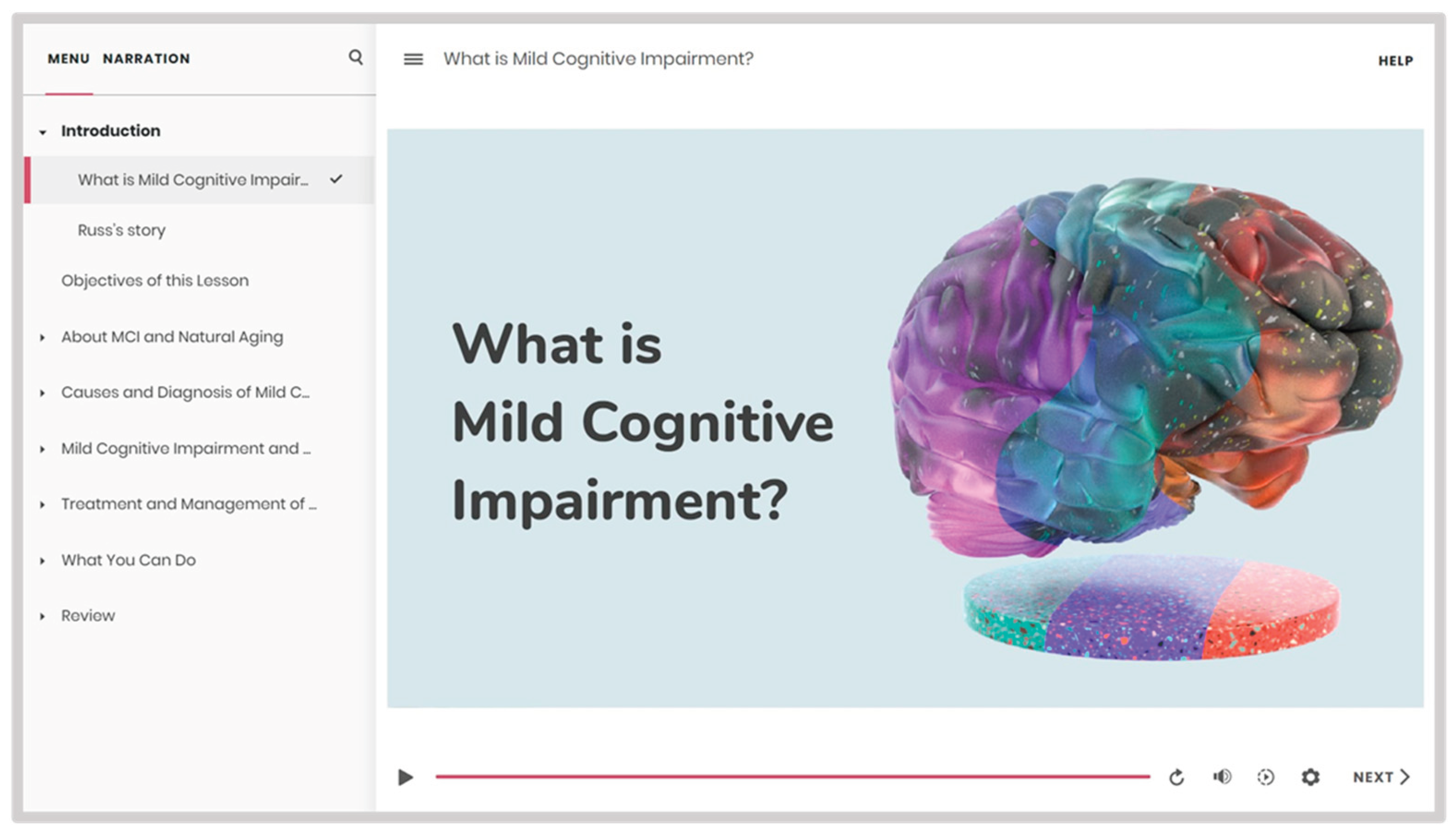
Figure 2.
Exemplar of interactive components of e-learning lesson.
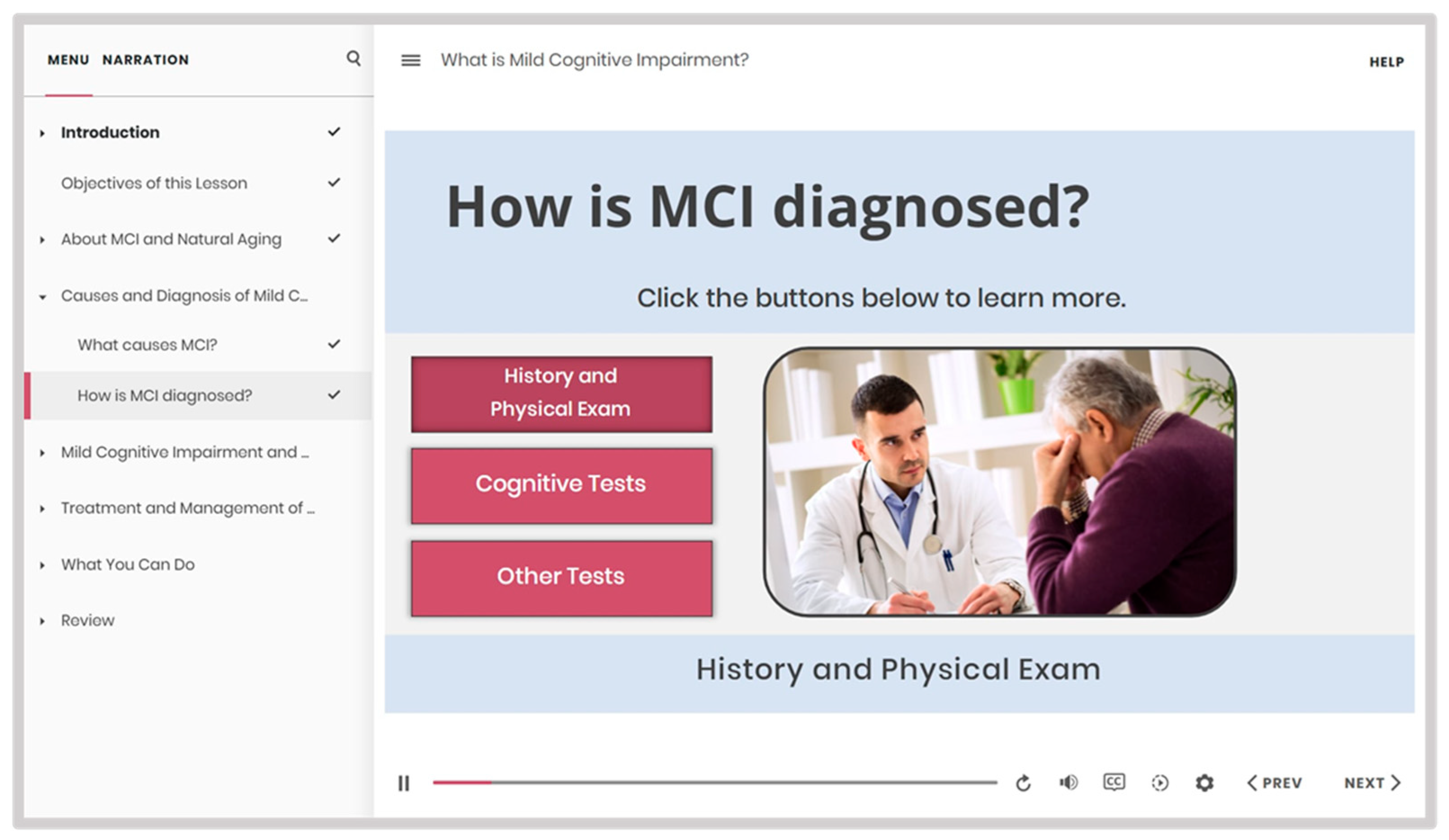
Table 1.
Selected summary of IAM4all questions and participant responses.
| Variables | Responses, n (%) |
|
What do you think about this information? Check all that apply. This information: (N = 984) | |
| taught me something new | 649 (66%) |
| reassured me | 478 (49%) |
| allowed me to validate what I do or did | 455 (46 %) |
| motivated me to learn more | 429 (44%) |
| refreshed my memory | 230 (23%) |
| I did not like this information or a part of this information | 46 (5%) |
|
Please tell us how you will use this information. Check all that apply. I will use this information to: (N = 970) | |
| better understand something | 690 (71%) |
| discuss with someone else | 496 (51%) |
| do things differently | 245 (25%) |
| do something | 208 (21%) |
| other | 135 (14%) |
|
Please tell us which benefit(s) you are expecting. Check all that apply. This information will help me to: (N = 984) | |
| improve my health or well-being | 603 (61%) |
| be less worried | 519 (53%) |
| improve the health or well-being of a family member or friend | 358 (36%) |
| handle a problem or the worsening of a problem | 340 (35%) |
| prevent a problem | 199 (20%) |
| decide something with someone else | 194 (20%) |
| Other | 69 (7%) |
Disclaimer/Publisher’s Note: The statements, opinions and data contained in all publications are solely those of the individual author(s) and contributor(s) and not of MDPI and/or the editor(s). MDPI and/or the editor(s) disclaim responsibility for any injury to people or property resulting from any ideas, methods, instructions or products referred to in the content. |
© 2025 by the authors. Licensee MDPI, Basel, Switzerland. This article is an open access article distributed under the terms and conditions of the Creative Commons Attribution (CC BY) license (http://creativecommons.org/licenses/by/4.0/).
Copyright: This open access article is published under a Creative Commons CC BY 4.0 license, which permit the free download, distribution, and reuse, provided that the author and preprint are cited in any reuse.


