

Submitted:
17 December 2025
Posted:
18 December 2025
You are already at the latest version
Abstract
(1) Backgroung: Influencer marketing has become one of the most effective strategies in digital communication due to its capacity to generate trust, credibility and endorsement within segmented online communities. Within the tourism sector, travel influencers have been progressively integrated as key agents in destination and brand promotion, acting as strategic intermediaries between the industry and consumers and contributing to both the construction of tourism imaginaries and travel decision-making. This study aims to analyse how travel influencers communicate and promote tourist destinations, focusing on their profiles, content formats, commercial transparency and the engagement generated with audiences. (2) Methods: the research is based on a quantitative content analysis of publications by leading Spanish travel influencers identified through the Forbes Best Content Creators 2025 ranking. The observation period covered May to July 2025, and the analysis was structured around four analytical blocks comprising 17 variables related to influencer profile, format and content, commercial transparency and ethics, and inter-action. (3) Results: the results reveal consistent behavioural patterns associated with gender, destination type and narrative style. Male influencers are more frequently linked to adventure-oriented storytelling and natural landscapes, whereas female influencers tend to emphasise urban and cultural experiences with an aspirational focus. Short-form video emerges as the dominant format, generating higher interaction levels, while en-gagement proves to be a more informative indicator of effectiveness than follower count. (4) Conclusions: the findings underscore the importance for tourism brands of prioritising specialization, narrative coherence, authenticity and transparency when integrating in-fluencers into their communication strategies.
Keywords:
travel influencers
; tourism marketing
; social media
; engagement
; business transparency
1. Introduction
Over the past decade, the rise of influencer marketing has profoundly transformed communication within the tourism sector. Visual social media platforms, particularly Instagram and TikTok, have become central spaces for destination promotion, where images and short videos not only shape new forms of symbolic consumption but also operate as powerful persuasive tools in travellers’ decision-making processes (Băltescu, 2025). The transition from the traditional tourist to the prosumer tourist (Toffler, 1980), capable of producing and disseminating personal experiences, has altered the dynamics of the tourism industry and compelled brands and destination management organisations to adopt digital strategies grounded in influence and social interaction (Pettersen-Sobczyk, 2023).
Tourism is currently undergoing a profound transformation driven by digitalisation and the culture of connectivity. In this context, influencer marketing has become a core pillar of contemporary tourism communication, enabling the articulation of emotional, aspirational and participatory narratives that reshape the relationship between destinations and their audiences (Rodríguez-Hidalgo et al., 2023; Pourazad et al., 2025). Influencers do not merely disseminate information; they interpret and give meaning to experiences, acting as cultural mediators and generators of trust (Ruiz-Viñals et al., 2023; Petrovic, 2025).
This study is situated within this transformative context and aims to analyse the communicative effectiveness of Spanish travel influencers in the promotion of tourism destinations through Instagram and TikTok. The research is grounded in the premise that digital influence cannot be explained solely by reach or popularity, but rather by the balanced interaction between content, credibility, authenticity and ethical values. Accordingly, the study integrates the dimensions of influencer profile, content, transparency and interaction in order to assess their impact on communicative effectiveness and perceived credibility.
From a theoretical perspective, the research is justified by the need to deepen understanding of three interrelated constructs: communicative effectiveness, authenticity and transparency. Recent literature (Iswanto et al., 2024; Javed et al., 2025; Blanco-Moreno et al., 2024) demonstrates that the effectiveness of digital messages does not depend exclusively on reach, but on the quality of interaction and the perception of honesty conveyed by the source. Consequently, examining how influencers balance aesthetic creativity with commercial disclosure and ethical communication is essential for advancing a comprehensive model of digital influence. Moreover, this study contributes to addressing the shortage of empirical analyses on influencer marketing in tourism identified in recent literature (Rodríguez-Hidalgo et al., 2023), by focusing on the Hispanic-European context and, in particular, Spain, where tourism represents a fundamental economic and cultural pillar (Atalayar, 2024; Iberia & PwC, 2022; OECD, 2024).
From a methodological standpoint, this research responds to limitations identified in prior studies by applying a systematic content analysis across two key platforms, Instagram and TikTok, through a mixed design that combines engagement metrics with qualitative narrative analysis. This approach overcomes the fragmentation of earlier research and provides a more rigorous overview of how the variables of profile, content, transparency and interaction shape digital tourism communication. Furthermore, the inclusion of TikTok, a platform that remains underexplored in tourism research, constitutes a novel empirical contribution to the field.
From a practical perspective, the study offers relevant insights for destination management and tourism marketing, proposing guidelines on the most effective and ethical communication strategies for engaging hyperconnected audiences with a growing awareness of sustainability (Kilipiri et al., 2023). In an environment saturated with messages, understanding how influencers construct visual and emotional narratives aligned with the values of responsible tourism becomes essential for brands and institutions within the sector (Arora et al., 2024).
Despite the growing body of research on influencer marketing in tourism, significant conceptual and empirical gaps remain. These limitations are consistent with recent studies highlighting the scarcity of comparative evidence between platforms such as Instagram and TikTok in the European tourism context, as well as the lack of approaches that simultaneously integrate variables related to influencer profile, visual narrative and commercial transparency (Ferreira & Zouain, 2024; Băltescu & Untaru, 2025; Wengel et al., 2022; Blanco-Moreno et al., 2024).
Additionally, limited attention has been paid to empirical analyses of the ethical dimension of identifying paid collaborations as a factor influencing engagement. Although commercial transparency is crucial for influencer credibility, its empirical impact on engagement has been insufficiently examined. Studies addressing sponsored content disclosure (Gross & von Wangenheim, 2022; Saternus, 2024) report mixed effects and concur that the relationship between disclosure and audience participation remains underexplored. From an ethical perspective, further gaps persist regarding how clarity in the identification of collaborations affects user behaviour (Vuković, 2025; Neira-Placer et al., 2025), particularly in tourism, where research has focused more on promotional potential than on transparency (Pettersen-Sobczyk, 2023). These gaps justify the need to empirically address the role of paid collaboration disclosure in shaping audience interaction.
This lack of evidence hampers a comprehensive understanding of how communicative effectiveness is configured in digital environments dominated by audiovisual performativity.
The specific objectives of this study are:
(I) to examine the communicative strategies employed by Spanish travel influencers, considering format, visual narrative and type of destination represented;
(II) evaluate the relationship between commercial transparency and perceived authenticity;
(III) analyse the impact of influencer profile on levels of interaction; and
(IV) compare audience responses according to content type and platform.
From these objectives, the following hypotheses are derived:
H1. Content that portrays personal experiences and authentic emotions generates higher levels of interaction than content focused exclusively on destination or brand promotion.
H2. Transparent disclosure of commercial collaborations increases perceived credibility and authenticity, thereby fostering audience participation.
H3. Natural or experiential destinations elicit more intense emotional and participatory responses than urban or luxury-associated destinations.
H4. Due to its short and dynamic audiovisual format, TikTok generates higher average levels of interaction than Instagram.
Overall, this study seeks to contribute to knowledge on digital tourism communication through a rigorous content analysis that examines how Spanish travel influencers construct their messages, interact with their communities and project ethical values associated with transparency and sustainability.
2. Literature Review
2.1. Influencer Marketing and Tourism Communication
The evolution of research on influencer marketing in tourism reflects a transition from exploratory approaches to more sophisticated analytical perspectives. Early studies primarily focused on visibility and popularity on social media, offering a still limited understanding of the phenomenon (Magno & Cassia, 2018). Over time, the field has incorporated more complex models that integrate psychological, narrative and strategic dimensions, acknowledging the active role of influencers in shaping destination image and influencing travellers’ decision-making processes (Pourazad et al., 2025).
This evolution is documented in several systematic literature reviews that highlight the need for updated and comparative frameworks capable of contextualising findings according to the characteristics of emerging platforms and audiences (Rodríguez-Hidalgo et al., 2023; Saini et al., 2023). More recently, the literature has shown an increase in methodological rigour and the integration of bibliometric approaches that allow for mapping the theoretical and empirical development of the field, underscoring the growing complexity of the digital ecosystem and the persistence of relevant research gaps (Javed et al., 2025).
2.2. Trust and Authenticity
The literature review reveals a convergence around three key explanatory dimensions of digital influence in tourism: trust, content authenticity and the increasing professionalisation of the influencer ecosystem. In the post-pandemic period, tourism communication has shifted towards messages perceived as useful, truthful and emotionally empathetic, with heightened sensitivity to trust, transparency and travel safety. This shift has been documented in both academic research and industry reports. Barrientos-Báez and Pérez-Ortega (2022) note that the health crisis reshaped informational priorities, positioning clarity and responsibility as central pillars of tourism communication. Complementarily, Saini, Gupta and Singh (2023) emphasise that trust in digital endorsers depends on the coherence between their lifestyle and communicative discourse, as well as on transparent recognition of commercial collaborations, which together constitute the foundation of credibility.
Likewise, Berjozkina and Garanti (2020) provide evidence of the importance of local authenticity in tourism promotion, showing that micro-influencers tend to generate stronger trust-based bonds within smaller communities. Industry reports by HypeAuditor (2024–2025) reinforce these trends by documenting the consolidation of influencer marketing professionalisation, the growth of short-form formats and the increasing demand for authentic content. Taken together, these findings confirm that authenticity and trust are fundamental pillars underpinning the relationship between influencers and audiences, and key determinants of communicative effectiveness in tourism contexts.
Qualitative and mixed-method studies further extend this perspective by exploring follower motivations and perceptions of authenticity. Lopes da Silva et al. (2023) demonstrate that identification with influencers’ values and lifestyles, along with the practical usefulness of content, explains audience loyalty. These conclusions are reinforced by Maldonado-Castro et al. (2024), who show that commercial transparency, expressed through labels such as #ad or #colab, enhances ethical perceptions, although its impact on interaction is ambivalent, as it may strengthen trust or reduce perceived spontaneity (Bertaglia et al., 2025; Ershov, 2021; Musiyiwa, 2023; Naderer et al., 2021). Additionally, recent literature introduces sustainability as an emerging dimension within travel influencer discourse. Kilipiri et al. (2023) highlight that eco-influencers can promote responsible tourism behaviours, although the effect of such messages on visit intention remains limited and contingent on cultural context.
2.3. Communicative Effectiveness and Visual Narrative
The emphasis on trust and authenticity coexists with findings from prior literature on communicative effectiveness grounded in content characteristics and visual storytelling. Blanco-Moreno et al. (2024), based on the analysis of more than 27,000 Instagram posts using artificial intelligence, show that images featuring human presence and focusing on tourism points of interest significantly increase audience interaction. Similarly, Ruiz-Viñals et al. (2023) underline that destination type and influencer gender condition visual style and narrative, revealing a tendency towards aesthetic and emotional differentiation of messages.
The systematic review Welcome to the destination: Social media influencers as cogent determinant of travel decision (2023) provides a conceptual framework explaining how digital influence operates through cognitive and emotional pathways, stimulating inspiration, evaluation of alternatives and, ultimately, travel intention. These approaches converge on the idea that the communicative effectiveness of tourism influencers depends not only on visual appeal, but also on coherence between message, creator identity and audience expectations (Boerman et al., 2022; Ong & Ito, 2022). In this sense, audiovisual content becomes a form of symbolic persuasion that combines aesthetics, emotion and credibility to influence travellers’ decision-making processes (Pourazad et al., 2025; Belanche et al., 2021).
2.4. Credibility, Legal Transparency and Commercial Disclosure
The literature review reveals broad consensus regarding the influence of communicative and emotional factors on the effectiveness of tourism influencer marketing, while also exposing significant methodological and conceptual gaps. Most studies rely on cross-sectional designs and descriptive approaches, limiting the ability to establish causal relationships between variables. Despite the growing number of content analyses, longitudinal and experimental studies remain scarce, restricting insights into the temporal evolution of engagement and credibility perceptions (Kumar, 2025; Javed et al., 2025).
Another critical issue concerns the lack of standardisation in interaction metrics. Various sources, including HypeAuditor reports (2024–2025), highlight the need to adjust reach and engagement measurements to avoid distortions caused by non-organic audiences or automated responses, a phenomenon empirically documented in studies on bots and artificial engagement in influencer marketing (Kim & Han, 2020). This challenge is linked to the increasing professionalisation of the sector and the need to define ethical and transparency indicators that allow for a comprehensive assessment of communicative effectiveness beyond simple and heterogeneous metrics, motivating recent proposals aimed at standardising and validating multidimensional engagement models (Levesque & Pons, 2023).
Furthermore, relatively few studies address legal and ethical dimensions as central variables in the relationship between influencers and tourism (Fedeli & Cheng, 2022). From a legal perspective, promotional activity by influencers in tourism is embedded within regulatory frameworks that require transparency and authenticity in commercial communication. In Spain, the General Advertising Law (Law 34/1988) defines misleading advertising as unlawful, while the Unfair Competition Law (Law 3/1991) considers as unfair any practice that may mislead consumers through false or ambiguous information or by concealing the commercial nature of the message. Similarly, the Information Society Services and Electronic Commerce Law (Law 34/2002) mandates that all electronic commercial communications be clearly identifiable, a requirement particularly relevant in social media environments where the boundary between entertainment and promotion is blurred. In the audiovisual domain, the General Audiovisual Communication Law (Law 13/2022) explicitly prohibits surreptitious advertising and regulates product placement, allowing it only when its commercial nature is recognisable and does not mislead audiences.
This legal framework implies that commercial transparency, including the explicit identification of paid collaborations through labels or clear disclosures, is not only an ethical best practice but also a legal requirement to prevent covert advertising (Law 34/2002, art. 20; Code of Conduct on Influencer Advertising, AUTOCONTROL/aea, 2025). Current regulations therefore emphasise the need to ensure that influencer messages are recognisable as advertising when a commercial interest exists, thereby reinforcing consumer trust and ensuring fair competition among destinations, brands and tourism operators.
In sum, the literature suggests that the communicative effectiveness of tourism influencers emerges from the interaction between credibility, authenticity and ethical as well as legal coherence. Nevertheless, the field requires further methodological advancement to explore these relationships in a comparative and dynamic manner, taking into account the diversity of platforms, audiences and cultural contexts in which digital tourism communication unfolds.The Materials and Methods should be described with sufficient details to allow others to replicate and build on the published results. Please note that the publication of your manuscript implicates that you must make all materials, data, computer code, and protocols associated with the publication available to readers. Please disclose at the submission stage any restrictions on the availability of materials or information. New methods and protocols should be described in detail while well-established methods can be briefly described and appropriately cited.
Research manuscripts reporting large datasets that are deposited in a publicly available database should specify where the data have been deposited and provide the relevant accession numbers. If the accession numbers have not yet been obtained at the time of submission, please state that they will be provided during review. They must be provided prior to publication.
Interventionary studies involving animals or humans, and other studies that require ethical approval, must list the authority that provided approval and the corresponding ethical approval code.
In this section, where applicable, authors are required to disclose details of how generative artificial intelligence (GenAI) has been used in this paper (e.g., to generate text, data, or graphics, or to assist in study design, data collection, analysis, or interpretation). The use of GenAI for superficial text editing (e.g., grammar, spelling, punctuation, and formatting) does not need to be declared.
3. Materials and Methods
3.1. Research Design and Sample
This study adopts a quantitative methodological approach based on content analysis, combining manual coding with systematic data processing using digital tools. The unit of analysis corresponds to the individual publication (post or short video) on Instagram and TikTok. The sample consists of eight Spanish travel influencers selected from the Forbes 2025 Ranking of Travel Content Creators in Spain, which is considered a benchmark of visibility and relevance within the digital landscape.
The selection followed a non-probabilistic, purposive sampling strategy, based on the visibility and level of interaction of the analysed profiles. Although the Forbes ranking also includes creators with substantially larger audiences, only those influencers whose content is consistently and explicitly focused on travel were selected, in order to ensure thematic coherence with the objectives of the study. (see Table 1)
Data collection was conducted manually by extracting information directly from the official accounts of the selected influencers on the analysed platforms. The observation period covered five months, from March to July 2025, which corresponds to one of the most strategic periods for the tourism industry: the pre-summer campaign. This time frame allowed for the collection of a representative sample of content, including both organic publications and paid collaborations.
Data extraction followed a systematic protocol that involved the manual capture of each publication, its classification within a structured coding sheet and cross-checking of the information. Reposted content, giveaways, recycled posts and publications unrelated to travel were excluded to ensure thematic consistency within the corpus.
3.2. Research Techniques and Analytical Variables
Content analysis was selected as the most appropriate methodological technique, as it enables the formulation of inference variables that can be systematically applied to a sample, allowing for valid and replicable conclusions. This technique is particularly suitable for the objective, systematic and quantitative description of manifest communication content, following the classical definition proposed by Berelson (1952) and later developed by Holsti (1969), Krippendorff (1990) and Kerlinger (1986). As noted by Wimmer and Dominick (2011), content analysis constitutes an effective tool for contrasting empirical reality with media representations. From this perspective, its application in the present study enables inferences to be drawn about the communicative strategies of brands and influencers through the systematic and objective identification of their discursive and visual characteristics on Instagram and TikTok.
Before presenting the variables, it is important to note that this study is embedded within a consolidated line of research focused on influencer marketing and commercial transparency in digital communication. The analytical model is grounded in an extensive review of the literature and previous studies addressing the intersection between digital communication, advertising ethics and destination promotion.
Key theoretical contributions include the work of Ramos-Gutiérrez and Fernández-Blanco (2021), which examines regulation and responsible communication in influencer marketing, as well as studies by Martínez-Sala et al. (2019) and Rodríguez-Hidalgo et al. (2023), which conceptualise the figure of the tourism influencer and their role in destination image construction. These are complemented by the reviews of Iswanto et al. (2024) and Javed et al. (2025), which provide bibliometric and systematic perspectives on the field, and by contributions from Maldonado-Castro et al. (2024) and Kilipiri et al. (2023), which focus on commercial transparency and the ethical sustainability of digital communication. Additional studies by Berjozkina and Garanti (2020) and Barrientos-Báez and Pérez-Ortega (2022) reinforce the importance of authenticity and social responsibility in tourism marketing, while Blanco-Moreno et al. (2024) and Ruiz-Viñals et al. (2023) provide empirical evidence on visual narrative, human presence and interaction. Finally, HypeAuditor reports (2024–2025) offer updated data on sector professionalisation and engagement metrics.
In total, 17 variables were identified, synthesising conceptual and methodological advances in this line of research and proposing an integrative analytical model that combines communicative effectiveness, authenticity and ethics as central dimensions of influencer marketing in tourism.
The analytical variables (Table 2) were classified into four analytical blocks: (a) influencer profile, (b) format and content, (c) commercial transparency and ethics, and (d) interaction.
3.3. Data Analysis
Data analysis followed a quantitative approach based on content analysis techniques. Each publication was coded according to the predefined variables, generating a database processed using Microsoft Excel. This procedure enabled the calculation of frequencies, mean values and descriptive relationships between the analysed dimensions. The analytical framework is grounded in the theoretical constructs of communicative effectiveness, authenticity and transparency identified in the literature review, and considers their relationship with audience interaction on social media.
The analytical procedure was structured in three stages:
(1) classification of publications according to content and format criteria;
(2) identification of transparency elements and ethical coherence in commercial collaborations; and
(3) calculation of interaction indicators (number of likes, comments and engagement rate). This approach allows for an integrated evaluation of the communicative effectiveness of influencers in their role as mediators between brands and tourism audiences.
As a result, a final corpus of 1,143 publications posted by the eight selected travel influencers during the observation period (March–July 2025) on Instagram and TikTok was obtained. All study variables were identified, systematised and quantified for subsequent analysis.
The final size of the corpus is considered appropriate for content analysis studies on social media, as it substantially exceeds the thresholds commonly used in previous digital tourism research. Moreover, the five-month observation period captures thematic, seasonal and commercial variability, ensuring a representative sample of the communicative activity of the selected influencers.
4. Results
4.1. Distribution of Publications by Platform and Gender
The final sample consisted of 1,143 publications generated by eight Spanish travel influencers on Instagram and TikTok (Table 3). Of the total corpus, 684 posts were published on TikTok (59.8%), while 459 posts corresponded to Instagram (40.2%). Regarding gender distribution, female influencers accounted for a higher proportion of content (58.8%), compared to male influencers (41.2%).
These results indicate a greater intensity of content production on TikTok during the analysed period, as well as a higher representation of female creators within the selected sample.
4.2. Content Formats
In terms of format, the sample reveals a clear predominance of audiovisual content. Of the 1,143 analysed publications, 86.0% correspond to video content, either in the form of Instagram reels or TikTok short videos. Photographic posts represent 9.3% of the total, while mixed formats combining photography and video account for the remaining 4.7% (Table 4).
The presence of the influencer within the content is almost universal: 99.6% of the publications feature the creator on screen. This finding highlights the centrality of the influencer as a narrative axis and as a resource for authenticity, reinforcing the notion that emotional connection with audiences is primarily articulated through personal exposure. The near-constant presence of the creator also suggests a communication strategy based on symbolic identification and the construction of aspirational lifestyles, which are key elements in tourism promotion on social media.
Overall, the results of this section indicate that digital tourism communication relies predominantly on audiovisual formats and on the direct presence of influencers, both of which enhance narrative immersion and emotional resonance.
4.3. Destination Representation and Content Types
Urban destinations are the most frequently represented (62.5%), followed by natural environments (19.3%) and event-related content (15.9%). Cultural destinations and transport-related content appear only marginally (2.2% and 0.1%, respectively) (Figure 1).
To further examine how destination choice interacts with platform characteristics, a cross-tabulation between destination type and social media platform was conducted. The results indicate that Instagram maximises engagement for urban (0.97%) and natural destinations (1.06%), whereas TikTok achieves its highest engagement levels in event-related content (1.21%). This pattern suggests that each platform favours different types of tourism experiences: Instagram amplifies visually recognisable destinations, landscapes and “photographable” experiences, while TikTok, due to its fast-paced narrative language, favours dynamic, action-oriented content typical of events and social activities.
In both platforms, cultural destinations show significantly lower levels of interaction, confirming their limited capacity to generate engagement in environments dominated by aspirational aesthetics and audiovisual immediacy.
Regarding communicative objectives, emotional content predominates (37.4%), followed by experiential content (31.5%). Promotional messages account for 25.6%, while purely informative content represents only 5.5% of the sample (Table 5).
4.4. Commercial Transparency and Brand Presence
The presence of commercial elements within the analysed content allows for an assessment of transparency levels and the ways in which influencers communicate collaborations with tourism destinations or companies. Of the 1,143 publications, only 72 posts (6.3%) include an explicit disclosure of collaboration through hashtags such as #ad, #publi, #sponsored or equivalent labels (Table 6).
Despite this low level of explicit transparency, 415 publications (36.3%) feature some form of brand presence, either through mentions, visual displays or tagging of tourism-related brands, including accommodation, restaurants, transport services, leisure activities or destinations. This discrepancy between explicit commercial disclosure and brand presence suggests practices close to covert advertising, a phenomenon previously identified in studies on influencer marketing in tourism. Furthermore, the high proportion of branded content relative to the limited use of regulatory labels points to inconsistent compliance with advertising self-regulation guidelines.
Among publications featuring brands, visual integration (logos, products, establishments) is the predominant modality, followed by textual mentions in captions. This trend indicates that commercial integration occurs primarily at an aesthetic or environmental level, reinforcing aspirational atmospheres associated with destinations or lifestyles rather than explicit promotional messaging.
Overall, the results reveal that commercial transparency remains limited in digital tourism communication, despite the relatively frequent presence of brands. This gap between effective promotion and explicit disclosure has direct implications for audience trust and for the regulation of advertising practices on social media, and represents a critical issue for understanding both the effectiveness and the ethical dimension of influencer marketing in tourism.
4.5. Engagement by Platform, Format and Destination Type
Engagement analysis was conducted using the standard formula commonly applied in social media and influencer marketing research, which calculates the proportion of interactions generated by each publication relative to the size of the influencer’s community on the corresponding platform. The results reveal significant differences depending on the digital environment, content format and type of destination represented.
The overall average engagement rate for the entire corpus is 5.72%, indicating a high capacity for audience mobilisation among the analysed travel influencers.
When comparing platforms, differences are minimal. TikTok records an average engagement rate of 5.84%, slightly higher than Instagram’s 5.55%. This proximity suggests that both platforms achieve comparable levels of interaction once metrics are normalised by audience size, challenging the widespread assumption that TikTok systematically generates higher engagement. In this case, Instagram performs at a level very close to TikTok, despite its more curated and aspirational aesthetic.
Format-based analysis confirms the superior effectiveness of audiovisual content. Video posts (reels and TikToks) achieve an engagement rate of 5.93%, while mixed formats combining video and photography record the highest value (6.00%). In contrast, photography-only posts show significantly lower engagement (3.71%). These findings confirm the dominance of dynamic storytelling in contemporary tourism communication and audience preference for short, visual and immersive content.
Regarding destination type, natural environments generate the highest engagement (7.17%), followed by urban destinations (5.97%) and cultural destinations (4.45%). Event-related content exhibits the lowest engagement level (3.15%), indicating that despite its dynamic nature, it does not proportionally activate audience responses.
Taken together, these results show that the communicative effectiveness of tourism influencers depends on a combination of factors: platform, content format and type of experience represented. While TikTok maintains a slight overall advantage, Instagram achieves nearly equivalent engagement levels. Video clearly emerges as the most effective format, and natural destinations consolidate their position as the most attractive for digital audiences.

Table 7.
Engagement.
| Category | Engagement (%) | |
|---|---|---|
| Plataform | 5,84% | |
| TikTok | 5,55% | |
| Format | Vídeo/reel | 5,93% |
| Photography | 3,71% | |
| Mix Content | 6,00% | |
| Type of destiny | Events | 3,15% |
| Urban | 5,97% | |
| Natural | 7,17% | |
| Transport | 8,13% | |
| Cultural | 4,45% |
4.6. Relationships Between Follower Volume, Interaction Types and Engagement
To further explore the factors explaining communicative effectiveness, correlation analyses were conducted between the main quantitative metrics of the study: number of followers, likes, comments, shares and total engagement. The results allow for a more nuanced understanding of the relationship between audience size and user response, as well as the forms of interaction that contribute most strongly to engagement.
The findings indicate that engagement is strongly associated with likes, showing a very high correlation (r ≈ 0.90). This suggests that the ability to trigger rapid, low-effort reactions constitutes the primary driver of interaction on Instagram and TikTok, platforms characterised by fast consumption and emotional immediacy. In contrast, the correlation between engagement and comments is considerably weaker (r ≈ 0.16), indicating that discursive participation, which requires greater cognitive effort, plays a much more limited role in overall performance.
A particularly relevant finding is the near absence of correlation between follower count and engagement (r ≈ 0.01). This result confirms that community size does not predict communicative effectiveness, and that qualitative factors such as visual storytelling, platform-content fit and perceived authenticity play a more decisive role than audience magnitude. These results support literature questioning the equivalence between popularity and influence, emphasising that interaction is better explained by symbolic and emotional resonance than by potential reach.
Overall, the correlation analyses confirm that social media interaction operates primarily through rapid and reactive dynamics, and that the communicative effectiveness of tourism influencers depends less on follower volume than on the capacity of content to elicit immediate and emotionally driven responses.
5. Discussion
The results of the study allow for an integrated response to the research objectives and hypotheses, offering a deeper understanding of how travel influencers shape digital tourism communication. Overall, the findings indicate that communicative effectiveness does not depend on a single factor, but rather on the interaction between content format, type of destination represented, alignment with platform-specific language, the influencer’s narrative profile and the level of commercial transparency. These elements reveal a complex communicative ecosystem in which performativity, aesthetics, credibility and algorithmic logics converge.
Within this framework, the results support the conceptualisation of influencers as cultural mediators, as proposed in the literature on tourism narratives. Their ability to transform travel experiences into visual and emotional stories with high symbolic impact contributes to shaping destination perceptions and guiding travellers’ decisions. This finding reinforces the relevance of self-branding, performativity and perceived authenticity as central pillars of contemporary digital tourism communication.
First, the comparison between Instagram and TikTok reveals that both platforms generate very similar levels of engagement (5.55% and 5.84%, respectively), which requires a nuanced interpretation of the initial expectations. Although previous literature suggests that TikTok tends to favour higher interaction due to its discovery-oriented algorithmic architecture, the results show that the platform itself is not a determining factor. Rather, effectiveness depends on the degree to which content is adapted to the narrative codes of each digital environment. Accordingly, both Instagram and TikTok can achieve comparable levels of engagement when content is constructed around coherent aesthetics, emotional resonance and alignment with user expectations.
Second, the results related to content format clearly confirm H2, as video emerges as the most effective resource for activating interaction. Its capacity to condense emotion, dynamism and influencer presence is consistent with the literature on tourism visuality and digital performativity, which highlights the role of the creator as the narrative axis of the tourism experience. In contrast, photography registers substantially lower engagement levels, evidencing a consolidated shift towards more immersive and sensory forms of communication. This predominance of video also aligns with perspectives on tourism visuality and the attention economy, which emphasise how dynamic formats enhance sensory immersion and emotional identification, thereby reinforcing perceived authenticity.
Third, findings related to destination type allow for a refinement of H3. Contrary to expectations, event-related content does not generate the highest engagement levels. Instead, natural destinations elicit the strongest audience response (7.17%), followed by urban destinations (5.97%). From the perspective of experiential authenticity, this pattern suggests that users tend to value scenarios associated with wellbeing, disconnection and scenic beauty, attributes that facilitate stronger emotional resonance. Although events are dynamic by nature, they appear to generate lower symbolic identification, possibly due to content saturation or difficulties in integrating them into intimate or personal narratives.
One of the most significant findings of the study concerns the pronounced lack of commercial transparency. While 36.3% of the publications include tourism-related brands, only 6.3% explicitly disclose collaborations. This gap evidences a widespread practice of implicit promotion. The implications of this phenomenon are both theoretical and practical. It directly affects influencer credibility, compromises perceptions of authenticity and places users in a position of interpretative vulnerability. Contrary to what was hypothesised in H2, transparency does not increase engagement; however, it remains a fundamental element for trust and message legitimacy. In a context where authenticity is a core value, commercial opacity generates tensions between aspirational aesthetics and communicative responsibility, representing a structural challenge for contemporary tourism communication. Moreover, the discrepancy between brand presence and explicit disclosure intensifies debates around source credibility in digital environments, as opacity may erode the influencer’s symbolic capital even if immediate engagement remains unaffected.
Finally, correlation analyses confirm H4, showing that follower count is unrelated to engagement. This finding challenges the widespread assumption that larger profiles are necessarily more influential. Instead, interaction is driven by narrative quality, discursive coherence and the ability of content to elicit immediate emotional responses. This result aligns with the growing industry trend towards micro- and mid-tier influencers, whose impact is often proportionally greater due to the symbolic closeness they maintain with their communities.
Taken together, the findings demonstrate that digital tourism communication is structured around a delicate balance between influencer performativity, audiovisual aesthetics, perceived authenticity and commercial transparency. Rather than depending on isolated factors such as platform choice, message typology or audience size, communicative effectiveness emerges from the coherence between these elements and their alignment with audience expectations and platform-specific algorithmic logic. This multidimensional approach contributes to a more comprehensive understanding of the role of influencers in shaping contemporary tourism imaginaries and opens new avenues for exploring how authenticity, credibility and emotion are negotiated within a deeply visual and mediated ecosystem.
6. Conclusions
This study provides a comprehensive overview of the role of travel influencers in digital tourism communication, based on the analysis of 1,143 publications generated by eight Spanish creators on Instagram and TikTok. The findings yield relevant conclusions for both academic research and the strategic management of tourism marketing.
First, the predominance of short-form audiovisual content and the centrality of the influencer as a narrative figure are clearly confirmed. The near-constant presence of the creator on screen and the strong prevalence of reel- and TikTok-style videos reflect a communication model grounded in visual performativity, emotion and the construction of a coherent public identity. This pattern reinforces the role of self-branding and embodied storytelling as essential elements of contemporary tourism communication.
Second, although emotional and experiential content is the most frequent, effectiveness does not depend on message type alone, but on its capacity to activate visual and emotional resonance. The results show that format, particularly video, carries more weight than explicit communicative intent. At the same time, commercial transparency emerges as a critical issue. While only 6.3% of publications explicitly disclose collaborations, more than one third include brand presence. Although this lack of transparency does not increase engagement, it poses significant risks to influencer credibility and, by extension, to audience trust in tourism communication. This finding highlights the need to move towards clearer, more ethical practices aligned with existing regulations.
Third, the results nuance the assumption that certain destination types systematically generate higher interaction. Contrary to expectations, natural destinations, rather than events, achieve the highest engagement levels, followed by urban environments. This pattern suggests that audiences respond more strongly to scenarios associated with wellbeing, scenic aesthetics and experiential authenticity. Event-related content, despite its narrative dynamism, shows lower performance, indicating that symbolic saturation or limited emotional identification may constrain its effectiveness on social media.
Fourth, platform comparison reveals that Instagram and TikTok exhibit very similar engagement levels, challenging the notion of TikTok’s inherent structural superiority. The decisive factor lies less in the platform itself than in the alignment of content with the language, rhythm and expectations of each digital environment. These findings confirm that communicative effectiveness depends not on multichannel presence per se, but on narrative and visual coherence between content and platform.
Finally, advanced correlation analyses demonstrate that engagement rates are independent of audience size, undermining the assumption that profiles with more followers are necessarily more effective. Interaction is better explained by perceived authenticity, discursive coherence, content aesthetics and the influencer’s ability to activate emotionally meaningful micro-narratives.
From an applied perspective, the results suggest that destination management should prioritise collaboration models grounded in ethical communication, commercial transparency, strategic selection of audiovisual formats and the choice of creators whose narrative style aligns with destination identity. The higher effectiveness of natural destination content also points to opportunities for campaigns that integrate values of sustainability, wellbeing and emotional connection with place.
Overall, this study demonstrates that digital tourism communication is a multidimensional phenomenon in which aesthetics, authenticity, narrative, platform dynamics and transparency converge. For brands and destinations, the findings imply the need to work with creators whose credibility and discursive coherence are sustainable over time. For academia, the results open new lines of inquiry into how the intersection of content, technology and digital culture shapes contemporary influence and emerging tourism imaginaries.
7. Patents
This section is not mandatory but may be added if there are patents resulting from the work reported in this manuscript.
Supplementary Materials
The following supporting information can be downloaded at: https://www.mdpi.com/article/doi/s1, Figure S1: title; Table S1: title; Video S1: title.
Author Contributions
For research articles with several authors, a short paragraph specifying their individual contributions must be provided. The following statements should be used “Conceptualization, E.F. and M.R.; methodology, E.F..; software, M.R., S.H..; validation, M.R. and S.H.; formal analysis, E.F..; investigation, E.F..; resources, E.F, M.R. and S.H..; data curation, M.R. writing—original draft preparation, E.F, M.R. and S.H.; writing—review and editing, E.F, M.R. and S.H.; visualization, E.F..; supervision, E.F..; project administration, E.F.. All authors have read and agreed to the published version of the manuscript.” Please turn to the CRediT taxonomy for the term explanation. Authorship must be limited to those who have contributed substantially to the work reported.
Funding
Please add: This research received no external funding.
Conflicts of Interest
The authors declare no conflicts of interest.
References
- Arora, R.; Kumar, S.; Bhatia, M. Harnessing the power of social media influencers to promote responsible tourism. International Journal of Communication Networks and Information Security 2024, 16, 1–10. Available online: https://ijcnis.org/index.php/ijcnis/article/view/6716.
- Atalayar. Tourism, a key pillar of the Spanish economy, accounting for 12.8% of GDP. Atalayar. 17 January 2024. Available online: https://www.atalayar.com/en/articulo/economy-and-business/tourism-key-pillar-of-the-spanish-economy-accounting-for-128-of-gdp/20240117150417195794.html.
- Autocontrol; Asociación Española de Anunciantes. Código de conducta sobre el uso de influencers en la publicidad. 2025. Available online: https://www.autocontrol.es/wp-content/uploads/2025/01/Codigo-influencers.pdf.
- Barrientos-Báez, A.; Pérez-Ortega, A. La comunicación turística en tiempos de pandemia. Revista Internacional de Turismo 2022, 12, 45–59. [Google Scholar]
- Băltescu, C. A.; Untaru, E.-N. Exploring the characteristics and extent of travel influencers’ impact on Generation Z tourist decisions. Sustainability 2025, 17, 66. [Google Scholar] [CrossRef]
- Berjozkina, G.; Garanti, Z. Emerging influencers promoting travel: The case of local tourism in Latvia. Journal of Tourism Futures 2020, 6, 241–255. [Google Scholar] [CrossRef]
- Belanche, D.; Flavián, M.; Ibáñez-Sánchez, S. Building influencers’ credibility on Instagram: Effects on followers’ attitudes and behavioral responses. Journal of Business Research 2021, 130, 241–252. [Google Scholar] [CrossRef]
- Berelson, B. Content Analysis in Comunication Research; Free Press: Glencoe, 1952. [Google Scholar]
- Bertaglia, T.; van Reijmersdal, E. A.; Smit, E. G. Influencer self-disclosure practices on Instagram: A multi-country longitudinal study. Computers in Human Behavior 2025, 152, 108089. [Google Scholar] [CrossRef]
- Boerman, S. C.; Fransen, M. L.; Willemsen, L. M. The importance of influencer–message congruence when communicating about (pro-)social issues: Effects on influencer credibility and behavioral intentions. In Journalism Practice. Advance online publication; 2022. [Google Scholar] [CrossRef]
- Blanco-Moreno, A.; Pérez, M.; Herrera, C. Understanding engagement with Instagram posts about tourism destinations. Journal of Destination Marketing & Management 2024, 32, 100789. [Google Scholar] [CrossRef]
- Ershov, D. The effects of advertising disclosure regulations on social media influencer marketing. Journal of Public Policy & Marketing 2021, 40, 452–469. [Google Scholar]
- Fernández-Gómez, E.; Quintas-Fraufe, N. Micro-influencers y publicidad. Transparencia y ética en la creación de contenido. Doxa Comunicación. Revista Interdisciplinar de Estudios de Comunicación y Ciencias Sociales 2025, 40, 203–220. [Google Scholar] [CrossRef]
- Fedeli, G.; Cheng, M. Influencer Marketing and Tourism: Another Threat to Integrity for the Industry? Tourism Analysis 2022, 28, 323–328. [Google Scholar] [CrossRef]
- Ferreira, M. A.; Zouain, D. M. Social media influential factors for the decision of tourist destinations: A systematic review. PASOS. Revista de Turismo y Patrimonio Cultural 2024, 22, 825–842. [Google Scholar] [CrossRef]
- Gross, J.; von Wangenheim, F. Influencer marketing on Instagram: Empirical research on social media engagement with sponsored posts. Journal of Interactive Advertising 2022, 22, 289–310. [Google Scholar] [CrossRef]
- HypeAuditor. State of Influencer Marketing Report; HypeAuditor: Londres, 2024–2025; Available online: https://hypeauditor.com/state-of-influencer-marketing/.
- Hostil, O.R. Content analysis for the social sciences and humanities; Addison Wesley, 1969. [Google Scholar]
- Iberia; PwC. Tourism as a key pillar of the Spanish economy; Iberia Group, 2022. [Google Scholar]
- Iswanto, D.; Handriana, T.; Sangadji, S. S. Influencers in Tourism Digital Marketing: A Comprehensive Literature Review. International Journal of Sustainable Development and Planning 2024, 19, 739–749. [Google Scholar] [CrossRef]
- Javed, A.; Vardarsuyu, M.; Can, A. S.; Ekinci, Y. Social media influencers in tourism and hospitality: A comprehensive review combining bibliometric and systematic analysis. Anatolia: An International Journal of Tourism and Hospitality Research 2025, 36, 874–904. [Google Scholar] [CrossRef]
- Kerlinger, F. N. Foundations of behavioral research, 3rd ed.; Holt, Rinehart and Winston, 1986. [Google Scholar]
- Kilipiri, E.; Papaioannou, E.; Kotzaivazoglou, I. Social Media and Influencer Marketing for Promoting Sustainable Tourism Destinations: The Instagram Perspective. Sustainability 2023, 15, 6374. [Google Scholar] [CrossRef]
- Kim, S.; Han, J. Detecting engagement bots on social influencer marketing. In Social Informatics: 12th International Conference, SocInfo 2020, Proceedings; Aref, S., Bontcheva, K., Braghieri, M., Dignum, F., Giannotti, F., Grisolia, F., Pedreschi, D., Eds.; Springer, 2020; pp. 124–136. [Google Scholar] [CrossRef]
- Krippendorff, K. Metodología de análisis de contenido. In Teoría y Práctica. Piados Comunicación; 1990. [Google Scholar]
- Kumar, A. Influencer marketing: A comprehensive review and future research agenda. Journal of Management Research 2025, 25. [Google Scholar]
- Levesque, N.; Pons, F. Influencer engagement on social media: A conceptual model, the development and validation of a measurement scale. Journal of Theoretical and Applied Electronic Commerce Research 2023, 18, 1741–1763. [Google Scholar] [CrossRef]
- Ley 34/1988, de 11 de noviembre, General de Publicidad. Boletín Oficial del Estado 1988, núm. 274, pp. 32464 a 32467.
- Ley 3/1991, de 10 de enero, de Competencia Desleal. Boletín Oficial del Estado 1991, núm. 10, pp. 959 a 962.
- Ley 34/2002, de 11 de julio, de servicios de la sociedad de la información y de comercio electrónico; Boletín Oficial del Estado. 2002; núm. 166, pp. 25388–25403.
- Ley 13/2022, de 7 de julio, de Comunicación Audiovisual. Boletín Oficial del Estado 2022, núm. 163, pp. 96114 a 96220.
- Lopes Da Silva, E. A.; Martins, J.; Torres, M. Motivos para seguir a los influencers de viajes en las redes sociales: un estudio con usuarios de Instagram. Revista Internacional de Relaciones Públicas 2023, 13, 161–176. [Google Scholar] [CrossRef]
- Magno, F.; Cassia, F. The impact of social media influencers in tourism. Anatolia 2018, 29, 288–290. [Google Scholar] [CrossRef]
- Maldonado-Castro, J. M.; Pérez, D.; Flores, S. Revisión de la literatura en torno a los influencers en Instagram: Impacto de las opiniones de los consumidores. Revista Ciencias Sociales y Económicas 2024, 8, 94–112. [Google Scholar] [CrossRef]
- Martínez-Sala, A. M.; Monserrat-Gauchi, J.; Campillo Alhama, C. El influencer 2.0 turístico: de turista anónimo a líder de opinión. Revista Latina de Comunicación Social 2019, 74, 118–135. [Google Scholar] [CrossRef]
- Musiyiwa, R.; Hudders, L.; Lou, C. Sponsorship disclosure in social media influencer marketing: A systematic literature review. Social Media + Society 2023, 9, 1–16. [Google Scholar] [CrossRef]
- Naderer, B.; Matthes, J.; Schäfer, S. Effects of disclosing ads on Instagram: The moderating impact of similarity to the influencer. International Journal of Advertising 2021, 40, 1023–1047. [Google Scholar] [CrossRef]
- Neira-Placer, P.; Feijoo, B.; Fernández-Gómez, E. Alfabetización digital y protección de datos personales en la infancia:: prácticas, percepciones y conocimientos en contextos digitales mediados por marcas. Revista ICONO 14. Revista científica de Comunicación y Tecnologías Emergentes 2025, 23, e2271. [Google Scholar] [CrossRef]
- Pettersen-Sobczyk, M. Social media influencer marketing in the promotion of tourist destinations. European Research Studies Journal 2023, 26, 143–159. [Google Scholar] [CrossRef]
- Petrovic, J. Social media influencers as cultural mediators in post-conflict tourism. Journal of Psychology and Culture 2025, 12, 77–96. [Google Scholar]
- Pourazad, N.; Stocchi, L.; Simmonds, L. Influencers and the choice of a travel destination: A customer journey and information processing perspective. Information Technology & Tourism 2025, 27, 1185–1228. [Google Scholar] [CrossRef]
- OECD. OECD tourism trends and policies 2024; OECD Publishing, 2024; Available online: https://www.oecd.org/en/publications/oecd-tourism-trends-and-policies-2024_80885d8b-en.html.
- Ong, Y. X.; Sun, T.; Ito, N. Beyond influencer credibility: The power of content and parasocial relationship on processing social media influencer destination marketing campaigns. In Information and Communication Technologies in Tourism 2022: Proceedings of the ENTER 2022 eTourism Conference; Stienmetz, J. L., Ferrer-Rosell, B., Massimo, D., Eds.; Springer, 2022; pp. 110–122. [Google Scholar] [CrossRef]
- Ramos Gutiérrez, M.; Fernández Blanco, E. La regulación de la publicidad encubierta en el marketing de influencers para la Generación Z: ¿Cumplirán los/as influencers el nuevo código de conducta de Autocontrol? Revista Prisma Social (34) 2021, 61–87. Available online: https://revistaprismasocial.es/ps/article/view/4370.
- Rodríguez-Hidalgo, A. B.; Tamayo Salcedo, A. L.; Castro-Ricalde, D. Marketing de influencers en el turismo: una revisión sistemática de literatura. Revista de Comunicación de la SEECI 2023, 56, 99–125. [Google Scholar] [CrossRef]
- Ruiz Viñals, C.; Gil-lbáñez, M.; del Olmo Arriaga, J. L. El impacto de los influencers de viajes y turismo en Instagram; Sánchez, Sierra, Martín, J., Patricia, Eds.; Pulso digital:estudios y perspectivas sobre comunicación especializada: MacGraw Hill, Madrid, 2023; pp. págs. 257–271. [Google Scholar]
- Saini, H.; Kumar, P.; Oberoi, S. Welcome to the destination! Social media influencers as cogent determinant of travel decision: A systematic literature review and conceptual framework. Cogent Social Sciences 2023, 9, 2240055. [Google Scholar] [CrossRef]
- Toffler, A. La tercera ola; William Morrow & Company: Nueva York, 1980. [Google Scholar]
- Saternus, Z.; Mihale-Wilson, C.; Hinz, O. Influencer marketing on Instagram—The optimal disclosure strategy from influencers’ and marketers’ perspectives. Electronic Markets 2024, 34, 60. [Google Scholar] [CrossRef]
- Vuković, D.; Pavković, T. The ethics of influencer marketing: An analysis of transparency and accountability in digital advertising. MAP Social Sciences 2025, 6, 40–50. [Google Scholar] [CrossRef]
- Wengel, Y.; Ma, L.; Ma, Y.; Apollo, M.; Maciuk, K.; Ashton, A. S. The TikTok effect on destination development: Famous overnight, now what? Journal of Outdoor Recreation and Tourism 2022, 37, 100458. [Google Scholar] [CrossRef]
- Wimmer, R. D.; Dominick, J. R. La investigación científica de los medios de comunicación, 9.ª ed.; Cengage Learning, 2011. [Google Scholar]
Figure 1.
Type of destination represented.
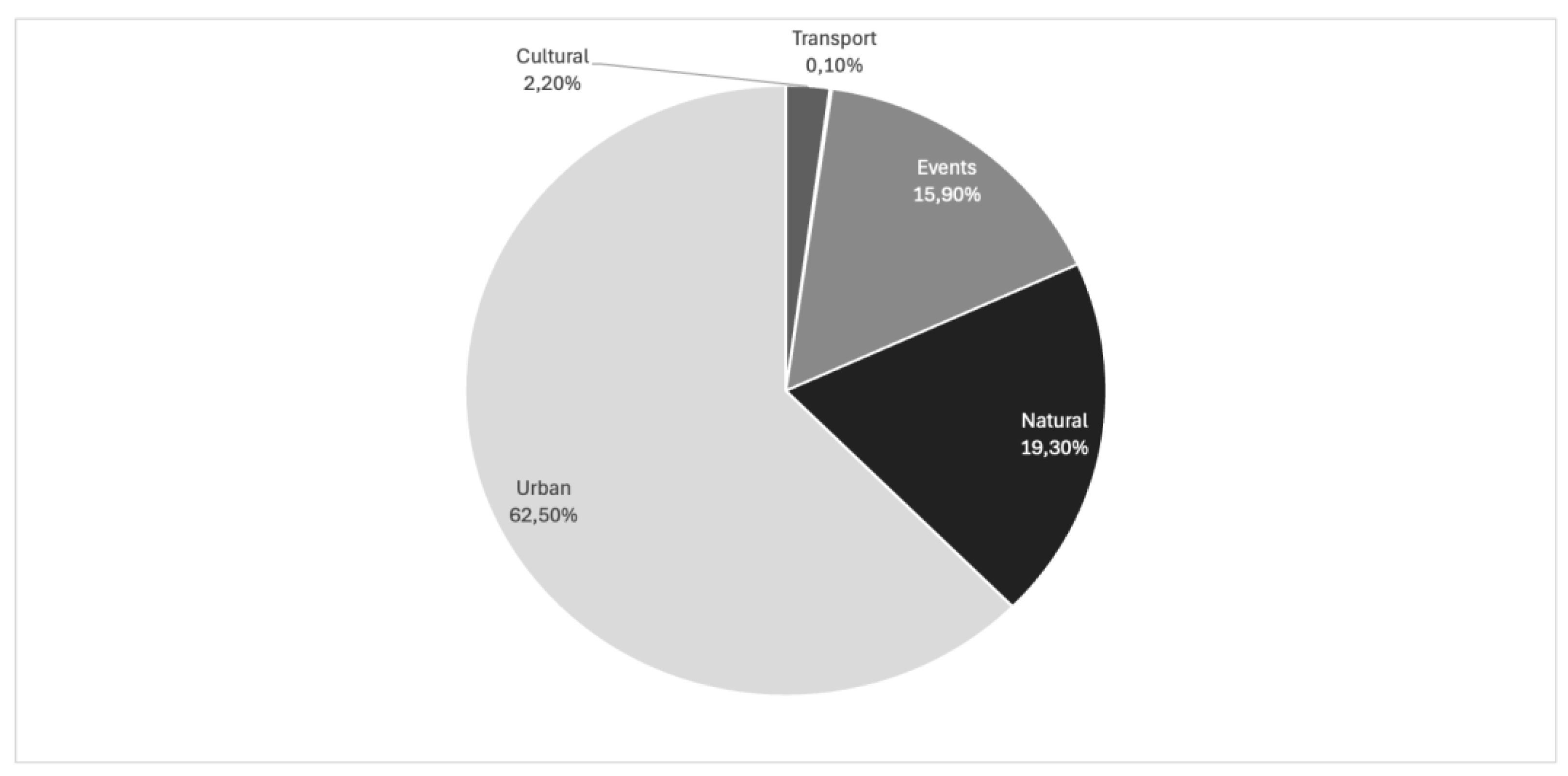
Table 1.
Sample of Travel Influencers (Forbes Ranking).
| User |
User TikTok |
Followers Instagram | Followers TikTok | Type of influencer | |
|---|---|---|---|---|---|
| @adribylus | adrybylus | 534 K | 932,3 K | Macro | |
| @abrilcols | abrilcols | 1 M | 4,2 M | Macro | |
| @borjaa_fdeez | borjaa_fdeez | 590 K | 798,3 K | Macro | |
| @vicmontanari | vicmontanari | 1,2 M | 300,1 K | Macro | |
| @hiclavero | hiclavero | 779 K | 625,8 K | Macro | |
| @lethalcrysis | rubendiezz | 1,1 M | 454,6 K | Macro | |
| @sara_ardi5 | saraardanaz | 515 K | 668,2 K | Macro | |
| @pitufollow | pitufollow | 641 K | 399,3 K | Macro | |
Table 2.
Analysis variables.
| Item | Variable | Description / Indicator |
|---|---|---|
| Influencer profile | Name | Name of the user in Instagram and Tik Tok |
| Followers | Number of followers | |
| Gender | Gender of the content creator (Female , Male) | |
| Social Media | Instagram TikTok |
|
| Type pf Influencer | Mega, macro, micro according to the number of followers | |
| Nacionality | Country of origen (Spain) | |
| Format/ content | Type of Content | Informative, Experiencial, Emotional, Promotional |
| Human Presence | Indicates whether the influencer or other people appear in the image/video. | |
| Type of Destiny | Urban, natural, cultural, event-related, or luxury | |
| Topic | Predominant style of the visual narrative (adventure, well-being, luxury, nature, entertainment) | |
| Commercial transparency and ethics | Commercial collaboration | Presence of a collaboration disclosure label (#ad, #colab, #publi). |
| Brand identification | Explicit mention or tagging of the tourism brand. | |
| Type of brand presence | Visual, textual, or verbal mention | |
|
Interaction |
Number of “likes” | Total reactions per post |
| Comments | Total number of responses or comments per post | |
| Shares | Posts shared by users | |
| Engagement rate | Interaction ratio per number of followers |
Table 3.
Distribution of publications by platform and gender.
| Category | n | % | |
|---|---|---|---|
| Platform | TikTok | 684 | 59,8% |
| 459 | 40,2% | ||
| Gender | Female | 672 | 58,8% |
| Masculine | 471 | 41,2% |
Table 4.
Content format and influencer presence.
| Category | n | % | |
|---|---|---|---|
| Format | Vídeo/reel | 983 | 86,0% |
| Photography | 106 | 9,3% | |
| Both | 54 | 4,7% | |
| Influencer presence | Yes | 1.139 | 99,6% |
| No | 4 | 0,4% |
Table 5.
Content objective.
| Objetive | n | % |
|---|---|---|
| Emotional | 427 | 37,4% |
| Experiential | 360 | 31,5% |
| Promotional | 293 | 25,6% |
| Informative | 63 | 5,5% |
Table 6.
Commercial transparency.
| Category | n | % | |
|---|---|---|---|
| Collaboration disclosure label | Yes | 72 | 6,3% |
| No | 1.064 | 93,1% | |
| ND | 7 | 0,6% | |
| Brand identification | Yes | 415 | 36,3% |
| No | 728 | 63,7% |
Disclaimer/Publisher’s Note: The statements, opinions and data contained in all publications are solely those of the individual author(s) and contributor(s) and not of MDPI and/or the editor(s). MDPI and/or the editor(s) disclaim responsibility for any injury to people or property resulting from any ideas, methods, instructions or products referred to in the content. |
© 2025 by the authors. Licensee MDPI, Basel, Switzerland. This article is an open access article distributed under the terms and conditions of the Creative Commons Attribution (CC BY) license (http://creativecommons.org/licenses/by/4.0/).
Copyright: This open access article is published under a Creative Commons CC BY 4.0 license, which permit the free download, distribution, and reuse, provided that the author and preprint are cited in any reuse.


