

Submitted:
16 December 2025
Posted:
17 December 2025
You are already at the latest version
Abstract
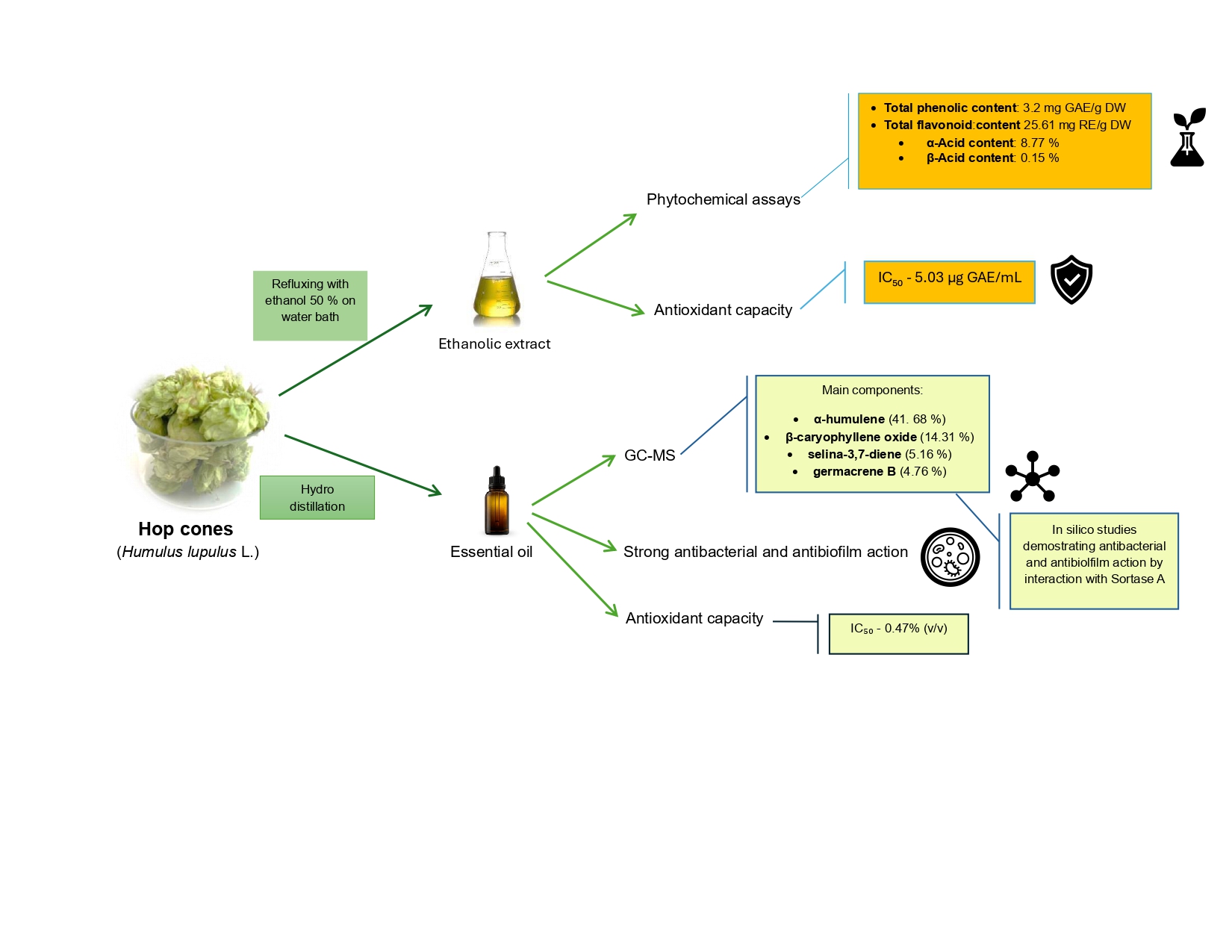
Hop (Humulus lupulus L.) is recognised as a valuable source of bioactive compounds; however, the phytochemical composition and biological potential of wild Romanian hops remain insufficiently characterized. In this study, the bioactive profile of wild hop cones was evaluated using an integrated phytochemical, biological, and in silico ap-proach. The hydroethanolic extract was characterized by a total phenolic content of 25.61 mg GAE/g DW and a total flavonoid content of 3.20 mg RE/g DW, with α-acids predominating (8.77%) and β-acids detected only at trace levels (0.15%). Hydrodistil-lation yielded 0.613 ± 0.11% essential oil, which was rich in sesquiterpene hydrocar-bons (64.61%), mainly α-humulene, β-caryophyllene oxide, selina-3,7-diene, and ger-macrene B. The hydroethanolic extract exhibited strong antioxidant activity (IC₅₀ = 5.03 µg GAE/mL), whereas the essential oil showed a moderate but dose-dependent radi-cal-scavenging capacity (IC₅₀ = 0.44% v/v). In addition, the essential oil displayed pronounced antibacterial and antibiofilm activity against Staphylococcus aureus, Escherichia coli, and Pseudomonas aeruginosa, with the highest antibiofilm inhibition observed for Pseudomonas aeruginosa (96.44%). Molecular docking analysis suggested that the major volatile constituents may interact with S. aureus Sortase A, providing a plausible mechanistic basis for the observed antibiofilm effects. Overall, these findings indicate that wild Romanian hop cones represent a promising source of antioxidant and anti-microbial bioactive compounds, supporting their potential applications in pharmaceu-tical, food, and cosmetic formulations, as well as in natural product–based drug discovery.
Keywords:
Humulus lupulus (hop)
; essential oil
; α-humulene
; β-caryophyllene oxide
; antioxidant
; antimicrobial
; biofilm
; molecular docking
; Sortase A
1. Introduction
Humulus lupulus L. (hop) is a climbing species native to Romania, predominantly in humid, shaded areas such as riparian forests, riverbanks, and alluvial meadows, where ecological conditions support its vigorous growth [1]. Hop is a deciduous, flowering plant belonging to the Cannabaceae family. The leaves are simple, opposite or alternate, with 3 or 5 lobes, acuminate tips, and serrate margins. The male flowers appear in June and have no petals. The female flowers appear in late August or September and are grouped in inflorescences called strobiles, which are cone-like and consist of membranous stipules and bracts attached to a hairy axis. Each small branch of the axis bears a bract, represented only by its pair of stipules, which subtend either 4 or 6 bracts, each enclosing a flower. The fruit is an achene that does not split at maturity [2].
The plant is widely used in the brewing industry and in phytotherapy due to its diverse pharmacological potential. Female cones of hop contain a rich array of bioactive compounds, including alpha biter acids (humulone and its derivatives), beta bitter acids (lupulone and its derivatives), prenylated chalcones (xanthohumol, isoxanthohumol), polyphenols, and essential oil [3,4]. These constituents have been reported to exhibit antibacterial, antiviral, and antifungal effects, contributing to the protective role of hop extracts against microbial contamination These effects were verified through in vitro studies on cultures of Gram-positive bacteria, including strains of Staphylococcus, as well as the methicillin-susceptible one and on resistant strains as Micrococcus, Streptomycetes, Corynebacterium, Enterococcus, and Mycobacterium [5,6].
In addition, several hop-derived compounds exhibit sedative and anxiolytic properties, supporting their traditional use in the management of sleep disorders and mild nervous tension [7]. Moreover, recently, the presence of phytoestrogenic molecules, particularly 8-prenylnaringenin, has attracted scientific interest for their potential to alleviate symptoms associated with hormonal imbalance, such as those occurring during menopause [8,9].
Biofilms are microbial communities embedded in a self-produced extracellular matrix (EPS) composed of proteins, polysaccharides, and extracellular DNA. This structure enhances microbial adhesion and provides resistance to host immunity and antimicrobial agents by limiting phagocytosis and drug penetration. Staphylococcus aureus, a major human pathogen, illustrates the clinical challenge of biofilms, as its infections—particularly in wounds—are difficult to treat due to both antibiotic resistance and biofilm formation. Therefore, disrupting the biofilm matrix is essential to weaken bacterial defence and improve therapeutic efficacy [10,11,12]. Combination therapy is usually recommended for infections involving biofilm, as it has been shown to be superior to antibiotic monotherapy. Discovering new substances to combat these bacterial infections will be a promising strategy that will improve patients’ lives.
The aim of the present study was to evaluate the phytochemical profile and biological potential of Humulus lupulus L. by quantifying polyphenols, flavonoids, and α/β-acids, and by isolating and characterizing the essential oil obtained by hydrodistillation via GC-MS analysis. Additionally, the study sought to assess the antioxidant, antimicrobial, and antibiofilm activities of hop extracts and essential oils. To elucidate possible mechanisms underlying the antibacterial effects, molecular docking analyses of the major volatile constituents of the essential oil (α-humulene, β-caryophyllene oxide, selina-3,7-diene, and germacrene B) were performed against the Sortase A enzyme of Staphylococcus aureus. By integrating chemical characterization, biological evaluation, and in silico analysis, this study provides a comprehensive perspective on the potential of hop as a source of bioactive compounds with applications in the food, pharmaceutical, and cosmetic industries.
2. Results
2.1. Phytochemical Assays
The results of the polyphenol, flavone, and α- and β-acid quantitative determinations are presented in Table 1.
The phytochemical analysis of hop cones revealed a total flavonoid content (TFC) of 3.20 mg RE/g DW and a total phenolic content (TPC) of 25.61 mg GAE/g DW. These values confirm that hop cones are a rich source of polyphenolic compounds, with flavonoids representing a substantial fraction of the total phenolics.
A pronounced imbalance was observed between the two classes of bitter acids, with α-acids occurring in high abundance (8.77%), while β-acids were detected only in low concentrations (0.15%). This distribution reflects the characteristic chemical profile of hop cones and suggests that α-acids may contribute more substantially to the species’ biological properties.
2.2. Hydrodistillation and GC-MS Analysis of the Essential Oil
By hydrodistillation, a light-yellowish essential oil with a specific, dense, and bitter smell was obtained. The essential oil yield was 0.613 ± 0.11% (mL/100 g dried mass of hop cones).
The classes of bioactive compounds of the hop cones’ essential oil revealed through GC-MS analysis were sesquiterpene hydrocarbons (64.61%), while oxygenated sesquiterpenes represented 18.03%, as presented in Table 2 and Figure S1 from the Supplementary Material. Aliphatic oxygenated compounds (aldehydes, ketones, esters) account for 10.3%, and only 3.05% constitute monoterpene hydrocarbons, while aromatics / other hydrocarbons (polyene, azulene, indene) represent 3.99% of the total composition.
It can be noticed that the predominant compounds are α-humulene, with a high concentration (41.68%), followed by β-caryophyllene oxide (14.31%), selina-3,7-diene (5.16%), germacrene B (4.76%), eudesma-4,7(14)-11-diene (3.72%) (Figure 1).
2.3. Biological Activity Determinations
2.3.1. Antioxidant Capacity
Linear regression analysis of the hydroethanolic hop cone extract revealed a strong concentration–response relationship (R² = 0.97) and yielded an IC₅₀ of 5.03 µg GAE/mL, while nonlinear fitting using a four-parameter logistic (4PL) model provided a comparable IC₅₀ value of 5.70 µg GAE/mL. The fitted inhibition curves obtained with both approaches are shown in Figure 2, demonstrating a consistent dose-dependent antioxidant response. Overall, the extract exhibited clear antioxidant activity across the tested concentration range, indicating efficient DPPH radical scavenging attributable to its polyphenolic components.
The hop cone essential oil exhibited a clear concentration-dependent DPPH radical scavenging effect, with inhibition values ranging from 75.93% at 1% (v/v) to 7.73% at 0.020% (v/v) (Figure 2). The dose–response curve showed a typical sigmoidal decrease across the tested concentration range, with the steepest decline in activity observed between 0.25% and 0.50% (v/v), indicating that this interval brackets the 50% inhibition threshold. Based on the experimental inhibition values, the IC₅₀ was initially estimated by linear interpolation between the two concentration points flanking the 50% inhibition threshold, yielding an IC₅₀ of 0.47% (v/v). To obtain a more robust, model-based estimate, the data were further fitted with a four-parameter logistic (4PL) regression, yielding an IC₅₀ of 0.44% (v/v). The close agreement between the linear and nonlinear estimates confirms the consistency of the experimental data and the reliability of the dose–response relationship.
Overall, the hop essential oil demonstrated moderate antioxidant activity, consistent with its chemical composition, which is dominated by mono- and sesquiterpenes, which typically exhibit moderate radical-scavenging efficiency compared with polyphenol-rich plant extracts. The obtained IC₅₀ values indicate that although the essential oil is not a strong DPPH scavenger, it contributes meaningfully to the antioxidant profile of hop-derived products.
2.3.2. Antimicrobial and Antibiofilm Activity
The inhibitory efficacy of hop cone essential oil against bacterial growth and biofilm formation was calculated relative to the untreated control, which was considered 100% growth or biofilm formation (Figure 3).
The essential oil demonstrated strong antibacterial activity against all tested strains, with inhibition ranging from 86.36% for Staphylococcus aureus to 94.91% for Pseudomonas aeruginosa. An intermediate efficacy level was observed for Escherichia coli (93.49%).
The antibiofilm assay showed variable responses across bacterial strains. The highest inhibition of biofilm formation was recorded for Pseudomonas aeruginosa (96.44%), followed by Staphylococcus aureus (73.08%) and Escherichia coli (43.43%). These results indicate that hop cone essential oil is particularly effective against P. aeruginosa, both in bacterial and biofilm forms, while its efficacy is comparatively lower against S. aureus and especially E. coli.
2.3.3. Molecular Docking of Hop Essential Oil Constituents with Sortase A
Molecular docking was used to evaluate the interaction of the four major volatile constituents identified in the hop cone essential oil—α-humulene, β-caryophyllene oxide, selina-3,7-diene, and germacrene B—with the catalytic pocket of Staphylococcus aureus Sortase A (SrtA). Figure 4 illustrates the predicted binding poses of the four major compounds (A–D) and the proposed mechanism through which they may interfere with biofilm formation. All ligands were successfully accommodated within the binding groove, with binding energies ranging from −6.3 to −4.8 kcal/mol, consistent with moderate inhibitory potential. Among the analysed compounds, α-humulene exhibited the most favourable binding affinity, with docking scores ranging from −6.3 to −5.4 kcal/mol, suggesting a stable interaction with the active site. Visualization in UCSF Chimera showed that α-humulene fits deeply within the hydrophobic tunnel adjacent to the Cys184–His120–Arg197 catalytic triad, interacting through extensive van der Waals contacts. This pose could sterically hinder substrate access and partially explain the essential oil’s antimicrobial effects. β-Caryophyllene oxide, the only ligand containing a reactive epoxide moiety, displayed docking energies comparable to those of α-humulene (typically around −6.1 to −5.5 kcal/mol), indicating a similarly strong affinity. The presence of the oxygen heteroatom allowed a more directed orientation within the binding site, promoting additional polar interactions or dipole–induced contacts that may enhance stability relative to purely hydrocarbon sesquiterpenes. Selina-3,7-diene and germacrene B, although structurally similar hydrophobic sesquiterpenes, exhibited slightly weaker binding affinities (approximately −5.5 to −5.0 kcal/mol). Their poses remained located within the hydrophobic cavity, but their less compact geometries generated fewer stabilizing contacts, resulting in reduced overall docking scores. These findings are consistent with their chemical structures and lower reactivity.
Overall, the docking ranking of the major oil constituents (α-humulene ≈ β-caryophyllene oxide > selina-3,7-diene ≈ germacrene B) correlates with their expected biological contributions, supporting the hypothesis that the antimicrobial and antibiofilm effects observed in vitro may arise from the combined activity of multiple hydrophobic sesquiterpenes acting on SrtA.
3. Discussion
The results of this study provide insights into the phytochemical profile and biological activities of hop cones, enabling a comparative discussion with previously reported data.
In the present study, hop cone extracts contained 25.61 mg GAE/g DW of total phenolic compounds and 3.20 mg RE/g DW of flavonoids. These values are consistent with those reported by Kowalska et al., who found up to 4.20% total phenolics and approximately 0.37% flavonoids in hop cones [13]. The total phenolic content determined in the analysed extracts exceeded the values previously reported for methanolic extracts (7.12 mg GAE/g) and was higher than the range of 11.9–21.2 mg/g described for field-grown hop cones, while remaining lower than the concentrations achieved using optimized hydroethanolic extraction protocols (approximately 44 mg GAE/g).
In contrast, the total flavonoid content measured in the present samples (3.20 mg RE/g DW) was lower than the values commonly reported for hop cone extracts, which typically range between 10 and 20 mg RE or QE/g. Such discrepancies may be attributed to differences in hop genotype, cultivation, and environmental conditions, as well as to methodological factors, including solvent polarity, extraction protocol, and the reference standards used for quantification (rutin equivalents versus quercetin equivalents) [14,15,16].
Bitter acids, particularly α- and β-acids, are recognized for their significant contribution to the pharmacological potential of hop-derived products. A pronounced imbalance was observed between the two classes of bitter acids in the Romanian wild hop, with α-acids occurring in high abundance while β-acids were detected only in low concentrations. Compared with the ranges reported for cultivated hop varieties (α-acids 2–18% and β-acids 1–10%), our sample showed an α-acid level (8%) well within the expected interval, whereas the β-acid content (0.15%) was markedly lower than typical values described in the literature [17,18,19]. Although the β-acid concentration was markedly lower than values typically reported for cultivated hop varieties, the overall bitter-acid profile may still be regarded as adequate. This is particularly relevant, given that the analysed sample originates from a wild hop population grown under non-optimized environmental and agronomic conditions. Moreover, the relatively high α-acid content observed in this Romanian wild hop genotype is noteworthy, as α-acids have been increasingly associated with beneficial neurocognitive [20,21,22], antimicrobial [23], protective [24,25], and anticancer [26] effects, according to recent clinical investigations. This enhances the functional relevance and the pharmacological potential of the Romanian wild hop sample, despite its non-domesticated origin.
In the present study, the essential oil yield from hop cones was determined to be 0.613 ± 0.11% (mL/100 g dry weight), a value close to those reported in the literature, although the percentage may vary significantly depending on the cultivar, growing conditions, and extraction method. For example, a study conducted in Italy reported an average yield of 0.82 ± 0.13% (mL/100 g dry weight), which is similar to the value obtained in our study [27]. Another study states that ‘Cluster’ hop cultivars have an average essential oil yield of 0.7-1.1 mL/100 g, whereas ‘Bullion’ cultivars can reach up to 2.5 mL/100 g [28].
The essential oil of hop cones is composed of a complex mixture of terpenes and related compounds, encompassing monoterpene and sesquiterpene hydrocarbons as well as their oxygenated derivatives. The relative abundance and chemical diversity of these constituents significantly influence both the biological activities and the aromatic profile of the essential oil. This chemical composition differs from that of the hop cones from Italy, where α-humulene is also predominant (37.01%), but β-myrcene (26.85%), β-caryophyllene (13.74%), 2-undecanone (13.63%), and α-selinene (8.70%) are the following main components [27]. Similarly, the essential oil composition is affected by various factors such as geographic region, climate, and soil characteristics.
Among these diverse constituents, α-humulene stands out for its abundance (41.68%) and its significant biological and aromatic properties. Few studies have shown antibacterial properties of α-humulene against strains of Bacteroides fragilis, Staphylococcus aureus, and Escherichia coli [29,30]. Becker and Holtmann (2024) have highlighted the anti-inflammatory action of α-humulene in a recent in vitro study, with a possible mechanism of reducing pro-inflammatory cytokines (interleukin-6) in lipopolysaccharide-induced THP-1 cells [31]. In another experimental study on mice and rats, Fernandes et al. observed that alpha-humulene diminished oedema formation induced by histamine injection, demonstrating marked inhibitory effects [32]. It is important to highlight that α-humulene has been demonstrated to have significant antitumor activity against various cancer cell lines, including hepatocellular, colorectal, and breast cancers, by inducing apoptosis through the inhibition of Akt signalling pathways, inhibiting proliferation, and acting synergistically with other bioactive compounds [33,34]. Beyond its pharmacological actions, α-humulene contributes to the aromatic profile of the essential oil through earthy, woody, and spicy notes, which are highly relevant in brewing and fragrance applications [35]. β-Caryophyllene oxide, the second predominant compound in hop cones’ essential oil, an oxygenated sesquiterpene, has been reported to exhibit notable anti-inflammatory and anticancer activities by inducing apoptosis and ferritinophagy and modulating oxidative stress pathways [36,37]. Germacrene B, an abundant sesquiterpene hydrocarbon in hop cones, exhibits antioxidant and antimicrobial activities and plays an important role in plant defense mechanisms [38].
The hydroethanolic hop cone extract exhibited a relevant antioxidant capacity, as indicated by the IC₅₀ values obtained through linear (5.03 µg GAE/mL) and nonlinear (5.70 µg GAE/mL) modeling. These results align with previous reports showing that the antioxidant activity of Humulus lupulus arises primarily from its polyphenolic constituents, including flavonoids, phenolic acids, and prenylated phenols. The close agreement between IC₅₀ values derived from two independent approaches further supports the robustness of the assessment. Comparative data reported by Abram et al. indicated IC₅₀ values of 0.005–0.010 mg/mL for hop cone extracts and approximately 0.020 mg/mL for hop leaves, suggesting that antioxidant capacity may vary with extraction method, plant maturity, genotype, and environmental conditions [39]. When expressed per µg GAE/mL, the IC₅₀ values obtained in the present study reflect a high antioxidant efficiency of the phenolic fraction, indicating that relatively low amounts of phenolic compounds are sufficient to achieve substantial radical-scavenging activity. This enhanced efficiency may be associated with the specific phytochemical profile of Romanian wild hop cones and/or the effectiveness of the hydroethanolic extraction protocol employed.
Compared with previously reported antioxidant activities of hop cone extracts—such as IC₅₀ values of 0.12 mg/mL for the Saaz 3 cultivar or 0.079–0.139 mmol Trolox/g dw for Cascade and Columbus [40] —the IC₅₀ values determined in this study, expressed per µg GAE/mL, reflect a high phenolic efficiency. Although direct quantitative comparisons are constrained by methodological differences, the strong radical-scavenging activity observed here indicates that wild Romanian hop cones possess an antioxidant capacity comparable to, or exceeding, that of several commercially cultivated hop varieties. In line with previous reports describing elevated FRAP, DPPH responses in polar hop extracts, the hydroethanolic cone extract exhibited pronounced antioxidant activity, emphasizing the importance of solvent polarity for the efficient recovery of phenolic constituents [41].
The antioxidant evaluation of hop cone essential oil revealed a moderate, yet clearly dose-dependent, radical-scavenging effect. The IC₅₀ values obtained by linear interpolation (0.47% v/v) and nonlinear four-parameter logistic (4PL) modeling (0.44% v/v) were in close agreement, supporting the robustness of the experimental data and indicating a well-defined concentration–response relationship. The moderate antioxidant activity of the essential oil is consistent with its sesquiterpene-dominated composition. Terpenes such as α-humulene, β-caryophyllene oxide, germacrene B, and selina-3,7-diene, although biologically active, generally exhibit lower hydrogen-donating capacity than polyphenolic antioxidants. Accordingly, essential oils from Humulus lupulus and other aromatic plants typically exhibit higher IC₅₀ values in DPPH assays than polyphenol-rich extracts, reflecting the modest-to-moderate radical-scavenging activity characteristic of terpene-rich oils, particularly when complex mixtures of mono- and sesquiterpenes are involved [42,43,44.].
Nevertheless, the IC₅₀ value obtained indicates a meaningful ability of the hop essential oil to scavenge DPPH radicals, suggesting that volatile constituents may contribute additively or synergistically to the overall antioxidant profile of hop-derived products.
The essential oil obtained from wild hop cones exhibited a chemical profile dominated by sesquiterpenes, particularly α-humulene (41.68%) and β-caryophyllene oxide (14.31%), both of which are widely recognized for their antimicrobial potential. These molecules are highly hydrophobic and can readily interact with lipid-rich cellular structures, enabling them to penetrate bacterial membranes, disturb membrane fluidity, alter proton gradients, and ultimately compromise metabolic homeostasis. Such mechanisms are especially relevant for Gram-positive bacteria like Staphylococcus aureus, whose thicker but more accessible peptidoglycan layer facilitates the penetration of terpenoids.
Importantly, the essential oil demonstrated good to very good antibiofilm efficacy, suggesting a capacity not only to inhibit bacterial growth but also to disrupt established biofilm matrices. Biofilm resistance is driven by the extracellular polymeric substance (EPS) network, which protects embedded bacteria from antibiotics and immune responses. The molecular docking results offer a mechanistic explanation for the antimicrobial and antibiofilm effects of the hop cone essential oil. All major volatile constituents—α-humulene, β-caryophyllene oxide, germacrene B, and selina-3,7-diene—were able to bind within the catalytic groove of Staphylococcus aureus SrtA, with energies ranging from −6.3 to −4.8 kcal/mol. The binding energies obtained in the present docking analysis fall within the range commonly reported for natural SrtA inhibitors, including flavonoids, terpenoids, and phenolic diterpenes, supporting their potential to interfere with enzyme function [45,46,47]. The docking behavior observed for the major hop sesquiterpenes is consistent with previous studies describing hydrophobic plant-derived SrtA inhibitors, which preferentially interact with the enzyme through non-covalent contacts within its catalytic region [48,49,50]. Ensemble docking and molecular dynamics analyses reported in the literature have demonstrated that SrtA accommodates ligands within a compact hydrophobic groove adjacent to the Cys184–His120–Arg197 catalytic triad [51,52], in agreement with the binding poses identified here. Among the compounds evaluated, α-humulene exhibited the most favorable binding affinity, occupying the hydrophobic tunnel near the catalytic triad. This positioning is consistent with previously described mechanisms in which hydrophobic natural products sterically block the sorting-signal binding channel, thereby preventing the anchoring of surface proteins essential for bacterial adhesion and biofilm initiation [52,53,54].
β-Caryophyllene oxide showed a similarly strong affinity, with the epoxide group enabling additional stabilizing interactions, in agreement with reports that oxygenated terpenoids enhance SrtA inhibition by improving their orientation within the active site.
The comparatively weaker binding affinities of germacrene B and selina-3,7-diene may be attributed to their less compact molecular conformations and predominantly hydrocarbon character, which limit the establishment of stabilizing van der Waals interactions within the SrtA binding pocket. Nevertheless, their concurrent presence in the essential oil may contribute to the observed in vitro antibiofilm activity through additive effects, as commonly reported for complex mixtures of terpenoid constituents.
Overall, these findings support the hypothesis that the antibiofilm activity of hop essential oil may partially arise from multi-ligand interference with SrtA, disrupting protein anchoring and impairing early biofilm development.
The antimicrobial and antibiofilm activities observed for hop cone constituents suggest a complementary mode of action to conventional antibiotics, consistent with an antivirulence or adjuvant strategy. Rather than exerting strong bactericidal effects, the major sesquiterpenes appear to interfere with biofilm formation and surface protein anchoring, as supported by SrtA docking results. Such mechanisms are increasingly recognized as effective approaches to enhance antimicrobial efficacy while reducing selective pressure for resistance, supporting the potential of hop-derived compounds as natural antibiotic adjuvants [55].
Future research should further clarify the chemical profile of this species and explore additional pharmacological activities with potential applications in modern pharmaceutical and cosmetic products.
4. Materials and Methods
4.1. Materials
Female cones of wild hop (Humulus lupulus L.) were collected from hills around Breaza city, Prahova County, in August–September 2025. The species was taxonomically authenticated at the Botany Department, Titu Maiorescu University, Faculty of Pharmacy, Bucharest, Romania (Figure 5).
Strains of Staphylococcus aureus ATCC 25923, Escherichia coli ATCC 25922, and Pseudomonas aeruginosa ATCC 27853 were procured from “Cantacuzino” National Military Medical Institute for Research and Development, Bucharest, Romania.
4.2. Chemicals
All solvents and reagents were of analytical grade. Methanol, sodium hydroxide, Folin–Ciocalteu reagent, crystal violet, gallic acid, and rutin were obtained from Sigma-Aldrich (St. Louis, USA). 2,2-Diphenyl-1-picrylhydrazyl (DPPH), Tween 20, and ethanol were purchased from Merck (Darmstadt, Germany). Culture media Mueller–Hinton agar was supplied by Thermo Fisher Scientific (Dreieich, Germany).
4.3. Phytochemical Assays
For total phenol and flavonoid assays and antioxidant activity, an alcoholic extract was made. Dried and ground hop cones (1 g) were extracted with 100 mL of 50% (w/w) ethanol under reflux in an electric water bath at 100° C for 30 minutes. The mixture was filtered through an ashless filter paper, adjusted to a final volume of 100 mL in a volumetric flask, and stored at 5 °C until further analysis.
4.3.1. Total Phenolic Content
The total polyphenolic content of the hop cone extracts was determined spectrophotometrically using the Folin–Ciocalteu method, with gallic acid as the calibration standard [56,57]. Briefly, 1 mL of extract was combined with 4.5 mL of deionized water, 2.5 mL of diluted Folin–Ciocalteu reagent, and 2 mL of a 7% sodium carbonate solution. After a 30-minute incubation at room temperature, the absorbance was recorded at 765 nm using a VWR UV-6300 PC spectrophotometer (VWR International, Vienna, Austria). The total polyphenolic content was calculated based on a gallic acid calibration curve (with R² = 0.999728) and expressed as milligrams of gallic acid equivalents per gram of dry weight (mg GAE/g DW). All assays were performed in triplicate.
4.3.2. Total Flavonoid Content
The total flavonoid content of the extracts was determined spectrophotometrically using the aluminium chloride method in the presence of sodium acetate [58,59]. 10 mL of ethanolic extract was diluted with methanol and filtered. An aliquot of 5 mL of diluted extract was mixed with 5 mL of sodium acetate solution (100 g/L) and 3 mL of aluminium chloride solution (25 g/L). The volume was adjusted to 25 mL with methanol, homogenized, and incubated at room temperature for 15 min. Absorbance was measured at 430 nm using a VWR UV-6300 PC spectrophotometer. Flavonoid content was calculated from a rutin calibration curve (having R2 = 0.99952) and expressed as milligrams of rutin equivalents per gram of dry weight (mg RE/g DW). All measurements were performed in triplicate.
4.3.3. Alpha and Beta Acids Content
The quantification of total α- and β-acids was performed through separate extraction from the hop samples, followed by spectrophotometric analysis at three distinct wavelengths [17,18].
A 2.5 g sample of finely ground hops was extracted with 50 mL of methanol by magnetic stirring for 30 minutes at room temperature, followed by a 10-minute resting period. The mixture was then filtered through a 0.45 μm Millipore membrane. A 50 μL aliquot of the filtrate was diluted to 25 mL with methanolic NaOH (0.5 mL of 6 M NaOH in 250 mL methanol). The resulting solution was analysed in a quartz cuvette (1 cm path length), with a blank prepared by adding 50 μL of methanol to 25 mL of methanolic NaOH. Absorbance was measured at 275, 325, and 355 nm, using a VWR UV-6300 PC spectrophotometer. The bitter acid content was obtained with the following equations:
where A = absorbance reading at each wavelength.
All analyses were carried out in triplicate.
4.4. Hydrodistillation and GC-MS Analysis of the Essential Oil
Fresh, finely ground hop cones underwent hydro-distillation in a closed system using a glass Clevenger-type apparatus for 3 h. For each distillation, 150 g of plant material was mixed with 600 mL of distilled water, according to the procedure described in the 10th edition of the European Pharmacopoeia [60], which ensures accurate volumetric assessment of the essential oil. The experiment was performed in triplicate.
To determine the exact yield of the essential oil, the moisture content and loss-on-drying of the raw plant material were assessed. Hop cones were placed in a desiccator over anhydrous sodium sulfate (R) at atmospheric pressure and room temperature until a constant weight was achieved. The moisture content was calculated as the difference between the mass before and after drying. The essential oil content was expressed as a percentage relative to the dried hop cones using the following formula:
The main constituents of the essential oil were identified using Gas Chromatography–Mass Spectrometry (GC–MS). Analyses were carried out on a Thermo Electron Corporation Focus gas chromatograph equipped with a splitter and coupled to a Thermo Electron Corporation DSQII mass spectrometer (Thermo Scientific, Waltham, MA, USA). Separation was achieved on a Macrogol 20,000 capillary column (30 m length, 0.25 mm internal diameter, 0.25 μm film thickness). Helium was used as the carrier gas at a flow rate of 1.5 mL/min, and the injection volume was maintained at 1.0 μL. The column oven temperature was planned to rise gradually from 65 °C to 200 °C throughout the 60-minute analytical run. Quantification was based on the integration of chromatographic peak areas, while identification was achieved by comparing the obtained mass spectra with reference spectra from the Wiley 8 and NIST 07 libraries [61,62].
4.5. Biological Activity Determinations
4.5.1. Antioxidant Activity (DPPH Radical Scavenging Assay)
The antioxidant activity of both the hydroethanolic extract and the essential oil obtained from hop cone hops was evaluated using the 2,2-diphenyl-1-picrylhydrazyl (DPPH) radical scavenging assay, a widely used method for assessing antioxidant capacity. The assay is based on the reduction of the stable DPPH• radical, which results in a color change from deep violet to yellow and a corresponding decrease in absorbance at 517 nm [63,64].
- Hydroethanolic hop extract
Different volumes of the hydroethanolic extract were transferred into 25 mL volumetric flasks, mixed with 3 mL of DPPH solution (0.1 mM in methanol), and brought to volume with methanol. The mixtures were incubated for 30 min in the dark at room temperature, after which absorbance was recorded at 517 nm using a VWR UV-6300 PC UV–Vis spectrophotometer. Methanol was used as the blank, while the control consisted of the DPPH solution without extract. IC₅₀ determination was performed by relating DPPH inhibition percentages to the total polyphenol content (GAE) of the hydroethanolic extract.
- Hop essential oil
The antioxidant activity of hop essential oil was assessed using a method adapted for hydrophobic samples. A stock solution of 1% (v/v) essential oil was prepared by dissolving 1 mL of essential oil in methanol and adjusting the final volume to 100 mL. Serial dilutions were prepared to obtain final concentrations of 1.00, 0.50, 0.25, 0.125, 0.075, 0.035, and 0.020% (v/v). A fresh 0.1 mM DPPH solution in methanol was adjusted to an initial absorbance of 0.90 ± 0.05 at 517 nm. For each assay, 2.0 mL of the DPPH solution was mixed with 1.0 mL of the essential oil dilution in a cuvette (1 cm path length). Blanks were prepared by replacing the DPPH solution with methanol. Samples were incubated for 30 min in the dark at room temperature before absorbance was measured at 517 nm.
The percentage of DPPH inhibition was calculated using Equation (4):
where
is the absorbance of the DPPH solution without sample, and
is the absorbance of the reaction mixture containing extract or essential oil.
The antioxidant activity was expressed as IC₅₀, defined as the concentration required to inhibit 50% of the DPPH radical. IC₅₀ values were determined using linear interpolation between the two experimental data points bracketing 50% inhibition, and nonlinear regression using a four-parameter logistic (4PL) model fitted to % inhibition versus the logarithm of sample concentration. The 4PL model, widely recognized as a robust method for dose–response analysis, was used as the reference for reporting IC₅₀ values. All measurements were performed in triplicate, and data are expressed as mean ± standard deviation.
4.5.2. Antimicrobial and Antibiofilm Activity
The antimicrobial activity of the hop essential oil was assessed using the microdilution method in sterile 96-well flat-bottom microplates containing Mueller–Hinton broth. The bacterial inoculum was prepared according to the Clinical and Laboratory Standards Institute (CLSI) guidelines, using the direct colony suspension method [65]. Briefly, 24 h agar-grown colonies were resuspended in 0.9% saline and adjusted to a 0.5 McFarland standard, corresponding to approximately 10⁸ CFU/mL [66].
The essential oil was incorporated into a 30% (w/w) oil-in-water (O/W) emulsion using Tween 20 (0.5%) as an emulsifier. The emulsion was diluted in sterile double-distilled water to obtain a stock solution of 25 mg/mL, followed by serial decimal dilutions. After 24 h incubation at 37 °C, bacterial growth was quantified by measuring the absorbance at 562 nm using an EnSight Multimode Plate Reader (PerkinElmer, Waltham, MA, USA). Antimicrobial efficacy was calculated using the equation:
The reference absorbance was calculated as:
where:
Positive control = bacteria + medium, without essential oil,
Negative control = medium without bacteria,
Blank = solvent without bacteria.
The efficacy was evaluated as very good (≥90%), good (75 – 89%), moderate (50–74%), satisfactory (25–49%), and unsatisfactory (0–24%).
Biofilm inhibition and biofilm disruption were evaluated using the crystal violet (CV) staining method. After incubation with the essential oil dilutions, wells were washed twice with sterile distilled water and stained with 0.1% CV for 15 min at room temperature. Excess dye was removed, and plates were air-dried, followed by drying at 50 °C for 60 min. Bound CV was solubilized, and absorbance was measured at 570 nm using the EnSight Multimode Plate Reader. Lower absorbance values indicate reduced biofilm biomass. The efficacy was considered very good (≥90%), good (75 – 89%), moderate (50–74%), satisfactory (25–49%), and unsatisfactory (0–24%).
4.5.3. Molecular Docking of Hop Essential Oil Constituents with Sortase A
The molecular docking analysis was performed using AutoDock Vina (version 1.2.3). The crystal structure of Staphylococcus aureus Sortase A (PDB ID 1T2W) was downloaded from the RCSB Protein Data Bank and prepared in AutoDockTools 1.5.7 by removing crystallographic water molecules, adding polar hydrogens, and assigning Gasteiger charges [67,68,69]. Essential oil constituents (α-humulene, β-caryophyllene oxide, germacrene B, selina-3,7-diene) were energy-minimized and converted to PDBQT (PDB with partial charges and AutoDock atom types) format with automatically assigned rotatable bonds.
Docking was carried out using a grid box centred on the catalytic region containing Cys184, with dimensions adjusted to fully include the active site. For each ligand, nine binding poses were generated, and the lowest-energy pose (kcal/mol) was selected for interpretation. Protein–ligand interactions and binding orientations were visualized using UCSF Chimera (version 1.19).
4.6. Statistical Data Processing
The data were statistically analysed using XL STAT 2022.4.5 software. The mean values and standard deviations (±SD) were calculated, and differences were assessed by analysis of variance (ANOVA). All experiments were conducted in triplicate.
5. Conclusions
This study provides an integrative chemical, biological, and in silico evaluation of Romanian wild hop cones, highlighting their potential as a valuable source of bioactive compounds with antioxidant and antimicrobial properties. The hydroethanolic extract exhibited strong radical-scavenging activity, consistent with its high polyphenolic content. The essential oil, dominated by sesquiterpenes such as α-humulene and β-caryophyllene oxide, showed pronounced antibacterial and strain-dependent antibiofilm activity against the tested bacterial species. The essential oil exhibited dose-dependent antioxidant effects, consistent with the expected reactivity of its terpene-rich composition. Biological assays demonstrated that the essential oil possesses strong antibacterial activity and strain-dependent antibiofilm efficacy, showing the highest inhibitory effect against Pseudomonas aeruginosa, followed by Staphylococcus aureus and Escherichia coli. Molecular docking further supported the biological observations, showing that the major sesquiterpenes bind within the catalytic pocket of S. aureus Sortase A with moderate affinity, with α-humulene and β-caryophyllene oxide displaying the most favourable interactions. The binding poses suggest a plausible mechanism involving steric interference with the sorting-signal binding tunnel, which may contribute to the in vitro antimicrobial and antibiofilm effects.
Overall, these results identify wild hop cones as a promising natural source of antioxidant and anti-infective agents, supporting their future exploration in pharmaceutical, nutraceutical, and antimicrobial formulations. Further studies—including mechanistic validation, synergy testing, and formulation development—are warranted to fully harness their functional properties. Investigating the synergistic effects with existing antimicrobial agents could also provide insights into combinatory therapeutic strategies.
Supplementary Materials
The following supporting information can be downloaded at the website of this paper posted on Preprints.org, Figure S1: GC-MS chromatogram of hop cones essential oil.
Author Contributions
Conceptualization, M.L.G. and M.P.; methodology, M.L.G., M.P., V.O., R.N.; software, R.M.G, and S.N.A.; validation, G.M.C. and R.M.G.; formal analysis, M.L.G. and M.P.; investigation, M.L.G., M.P., V.O., R.N, and G.M.C.; resources, G.M.C.; data curation, R.M.G, and S.N.A.; writing—original draft preparation, M.L.G. and M.P.; writing—review and editing, M.L.G. and M.P.; visualization, M.L.G. and M.P.; supervision, M.L.G. and M.P. All authors have read and agreed to the published version of the manuscript.
Funding
This research received no external funding.
Institutional Review Board Statement
Not applicable.
Informed Consent Statement
Not applicable.
Data Availability Statement
We encourage all authors of articles published in MDPI journals to share their research data. In this section, please provide details regarding where data supporting reported results can be found, including links to publicly archived datasets analysed or generated during the study. Where no new data were created, or where data is unavailable due to privacy or ethical restrictions, a statement is still required. Suggested Data Availability Statements are available in section “MDPI Research Data Policies” at https://www.mdpi.com/ethics.
Conflicts of Interest
The authors declare no conflicts of interest.
References
- Popescu, C.; Oprina-Pavelescu, M.; Dinu, V.; Cazacu, C.; Burdon, F.J.; Forio, M.A.E.; Kupilas, B.; Friberg, N.; Goethals, P.; McKie, B.G.; et al. Riparian Vegetation Structure Influences Terrestrial Invertebrate Communities in an Agricultural Landscape. Water 2021, 13, 188. [Google Scholar] [CrossRef]
- Haţieganu, E.; Gălăţanu, M.L. Botanică Farmaceutică. Sistematică Vegetală; Editura Hamangiu: Bucureşti, Romania, 2023; pp. 102–103. [Google Scholar]
- Min, B.; Ahn, Y.; Cho, H.J.; Kwak, W.K.; Jo, K.; Suh, H.J. Chemical Compositions and Sleep-Promoting Activities of Hop (Humulus lupulus L.) Varieties. J. Food Sci. 2023, 88, 2217–2228. [Google Scholar] [CrossRef]
- Rodolfi, M.; Chiancone, B.; Liberatore, C.M.; Fabbri, A.; Cirlini, M.; Ganino, T. Changes in Chemical Profile of Cascade Hop Cones According to the Growing Area. J. Sci. Food Agric. 2019, 99, 6011–6019. [Google Scholar] [CrossRef] [PubMed]
- Langezaal, C.R.; Chandra, A.; Scheffer, J.J. Antimicrobial Screening of Essential Oils and Extracts of Some Humulus lupulus L. Cultivars. Planta Med. 1992, 58, 562–564. [Google Scholar]
- Bogdanova, K.; Röderova, M.; Kolar, M.; Langova, K.; Dusek, M.; Jost, P.; Kubelkova, K.; Bostik, P.; Olsovska, J. Antibiofilm Activity of Bioactive Hop Compounds Humulone, Lupulone and Xanthohumol toward Susceptible and Resistant Staphylococci. Res. Microbiol. 2018, 169, 127–134. [Google Scholar] [CrossRef] [PubMed]
- Bravo, R.; Franco, L.; Rodríguez, A.B.; Ugartemendia, L.; Barriga, C.; Cubero, J. Tryptophan and Hops: Chrononutrition Tools to Improve Sleep/Wake Circadian Rhythms. Ann. Clin. Nutr. 2018, 1, 1004. [Google Scholar] [CrossRef] [PubMed]
- Milligan, S.R.; Kalita, J.C.; Pocock, V.; Van De Kauter, V.; Stevens, J.F.; Deinzer, M.L.; et al. The Endocrine Activities of 8-Prenylnaringenin and Related Hop (Humulus lupulus L.) Flavonoids. J. Clin. Endocrinol. Metab. 2000, 85, 4912–4915. [Google Scholar] [CrossRef]
- Chadwick, L.R.; Pauli, G.F.; Farnsworth, N.R. The Pharmacognosy of Humulus lupulus L. (Hops) with an Emphasis on Estrogenic Properties. Phytomedicine 2006, 13, 119–131. [Google Scholar] [CrossRef]
- Yang, L.; Hengzhuang, W.; Wu, H.; Damkiaer, S.; Jochumsen, N.; Song, Z.; Givskov, M.; Hoiby, N.; Molin, S. Polysaccharides Serve as Scaffold of Biofilms Formed by Mucoid Pseudomonas aeruginosa. FEMS Immunol. Med. Microbiol. 2012, 65, 366–376. [Google Scholar] [CrossRef]
- Sheppard, D.C. Molecular Mechanism of Aspergillus fumigatus Adherence to Host Constituents. Curr. Opin. Microbiol. 2011, 14, 375–379. [Google Scholar] [CrossRef]
- Høiby, N.; Bjarnsholt, T.; Givskov, M.; Molin, S.; Ciofu, O. Antibiotic Resistance of Bacterial Biofilms. Int. J. Antimicrob. Agents 2010, 35, 322–332. [Google Scholar] [CrossRef] [PubMed]
- Kowalska, G.; Bouchentouf, S.; Kowalski, R.; Wyrostek, J.; Pankiewicz, U.; Mazurek, A.; Włodarczyk-Stasiak, M. The Hop Cones (Humulus lupulus L.): Chemical Composition, Antioxidant Properties and Molecular Docking Simulations. J. Herb. Med. 2022, 33, 100566. [Google Scholar] [CrossRef]
- Afonso, S.; Rodrigues, M.; Pinto, T.; Figueiredo, A.C.; Pedro, L.G. The Phenolic Composition of Hops (Humulus lupulus L.) and Their Antioxidant Capacity. Horticulturae 2022, 8, 385. [Google Scholar]
- Lyu, J.I.; Lee, J.H.; Lee, S.Y. Comparative Study on Phenolic Compounds and Antioxidant Activities of Hop (Humulus lupulus L.) Strobile Extracts. Plants 2022, 11, 138. [Google Scholar] [CrossRef]
- Stanius, Ž.; Dūdėnas, M.; Kaškonienė, V.; Stankevičius, M.; Skrzydlewska, E.; Drevinskas, T.; Ragažinskienė, O.; Obelevičius, K.; Maruška, A. Analysis of the Leaves and Cones of Lithuanian Hops (Humulus lupulus L.) Varieties by Chromatographic and Spectrophotometric Methods. Molecules 2022, 27, 2705. [Google Scholar] [CrossRef]
- Sabino, B.C.C.; Bonfim, F.P.G.; Cabral, M.N.F.; Viriato, V.; Pak Campos, O.; Neves, C.S.; Fernandes, G.d.C.; Gomes, J.A.O.; Facanali, R.; Marques, M.O.M. Phytochemical Characterization of Humulus lupulus L. Varieties Cultivated in Brazil: Agricultural Zoning for the Crop in Tropical Areas. Horticulturae 2025, 11, 470. [Google Scholar] [CrossRef]
- Leles, N.R.; Sato, A.J.; Rufato, L.; Jastrombek, J.M.; Marques, V.V.; Missio, R.F.; Fernandes, N.L.M.; Roberto, S.R. Performance of Hop Cultivars Grown with Artificial Lighting under Subtropical Conditions. Plants 2023, 12, 1971. [Google Scholar] [CrossRef]
- Klimczak, K.; Cioch-Skoneczny, M.; Duda-Chodak, A. Effects of Dry-Hopping on Beer Chemistry and Sensory Properties—A Review. Molecules 2023, 28, 6648. [Google Scholar] [CrossRef]
- Ano, Y.; Hoshi, A.; Ayabe, T.; Ohya, R.; Uchida, S.; Yamada, K.; Kondo, K.; Kitaoka, S.; Furuyashiki, T. Iso-α-Acids, the Bitter Components of Beer, Improve Hippocampus-Dependent Memory through Vagus Nerve Activation. FASEB J. 2019, 33, 4987–4995. [Google Scholar] [CrossRef]
- Ano, Y.; Kitaoka, S.; Ohya, R.; Kondo, K.; Furuyashiki, T. Hop Bitter Acids Increase Hippocampal Dopaminergic Activity in a Mouse Model of Social Defeat Stress. Int. J. Mol. Sci. 2020, 21, 9612. [Google Scholar] [CrossRef] [PubMed]
- Ayabe, T.; Ohya, R.; Taniguchi, Y.; Shindo, K.; Kondo, K.; Ano, Y. Matured Hop-Derived Bitter Components in Beer Improve Hippocampus-Dependent Memory through Activation of the Vagus Nerve. Sci. Rep. 2018, 8, 15372. [Google Scholar] [CrossRef] [PubMed]
- Kolenc, Z.; Langerholc, T.; Hostnik, G.; Ocvirk, M.; Štumpf, S.; Pintarič, M.; Košir, I.J.; Čerenak, A.; Garmut, A.; Bren, U. Antimicrobial Properties of Different Hop (Humulus lupulus) Genotypes. Plants 2022, 12, 120. [Google Scholar] [CrossRef]
- Takase, T.; Toyoda, T.; Kobayashi, N.; Inoue, T.; Ishijima, T.; Abe, K.; Kinoshita, H.; Tsuchiya, Y.; Okada, S. Dietary Iso-α-Acids Prevent Acetaldehyde-Induced Liver Injury through Nrf2-Mediated Gene Expression. PLoS ONE 2021, 16, e0246327. [Google Scholar] [CrossRef] [PubMed]
- Mahli, A.; Thasler, W.E.; Biendl, M.; Hellerbrand, C. Hop-Derived Humulinones Reveal Protective Effects in In Vitro Models of Hepatic Steatosis, Inflammation and Fibrosis. Planta Med. 2023, 89, 1138–1146. [Google Scholar] [CrossRef]
- Saugspier, M.; Dorn, C.; Czech, B.; Gehrig, M.; Heilmann, J.; Hellerbrand, C. Hop Bitter Acids Inhibit Tumorigenicity of Hepatocellular Carcinoma Cells In Vitro. Oncol. Rep. 2012, 28, 1423–1428. [Google Scholar] [CrossRef]
- Paventi, G.; de Acutis, L.; De Cristofaro, A.; Pistillo, M.; Germinara, G.S.; Rotundo, G. Biological Activity of Humulus lupulus (L.) Essential Oil and Its Main Components Against Sitophilus granarius (L.). Biomolecules 2020, 10, 1108. [Google Scholar] [CrossRef]
- Haunold, A.; Nickerson, G.B.; Likens, S.T. Yield and Quality Potential of Hop, Humulus lupulus L. J. Am. Soc. Brew. Chem. 1983, 41, 41–46. [Google Scholar]
- Jang, H.I.; Rhee, K.J.; Eom, Y.B. Antibacterial and Antibiofilm Effects of α-Humulene Against Bacteroides fragilis. Can. J. Microbiol. 2020, 66, 389–399. [Google Scholar] [CrossRef]
- Řebíčková, K.; Bajer, T.; Šilha, D.; Houdková, M.; Ventura, K.; Bajerová, P. Chemical Composition and Determination of the Antibacterial Activity of Essential Oils in Liquid and Vapor Phases Extracted from Two Different Southeast Asian Herbs—Houttuynia cordata (Saururaceae) and Persicaria odorata (Polygonaceae). Molecules 2020, 25, 2432. [Google Scholar] [CrossRef]
- Becker, L.; Holtmann, D. Anti-Inflammatory Effects of α-Humulene on the Release of Pro-Inflammatory Cytokines in Lipopolysaccharide-Induced THP-1 Cells. Cell Biochem. Biophys. 2024, 82, 839–847. [Google Scholar] [CrossRef] [PubMed]
- Fernandes, E.S.; Passos, G.F.; Medeiros, R.; da Cunha, F.M.; Ferreira, J.; Campos, M.M.; Pianowski, L.F.; Calixto, J.B. Anti-Inflammatory Effects of Compounds α-Humulene and (-)-Trans-Caryophyllene Isolated from the Essential Oil of Cordia verbenacea. Eur. J. Pharmacol. 2007, 569, 228–236. [Google Scholar] [CrossRef]
- Chen, H.; Yuan, J.; Hao, J.; Wen, Y.; Lv, Y.; Chen, L.; Yang, X. α-Humulene Inhibits Hepatocellular Carcinoma Cell Proliferation and Induces Apoptosis through the Inhibition of Akt Signaling. Food Chem. Toxicol. 2019, 134, 110830. [Google Scholar] [CrossRef]
- Dalavaye, N.; Nicholas, M.; Pillai, M.; Erridge, S.; Sodergren, M.H. The Clinical Translation of α-Humulene—A Scoping Review. Planta Med. 2024, 90, 664–674. [Google Scholar] [CrossRef]
- Eyres, G.T.; Marriott, P.J.; Dufour, J.-P. Comparison of Odor-Active Compounds in the Spicy Fraction of Hop (Humulus lupulus L.) Essential Oil from Four Different Varieties. J. Agric. Food Chem. 2007, 55, 6252–6261. [Google Scholar] [CrossRef]
- Dahham, S.S.; Tabana, Y.M.; Iqbal, M.A.; et al. The Anticancer, Antioxidant and Antimicrobial Properties of the Sesquiterpene β-Caryophyllene from the Essential Oil of Aquilaria crassna. Molecules 2015, 20, 11808–11829. [Google Scholar] [CrossRef]
- Xiu, Z.; Zhu, Y.; Han, J.; Li, Y.; Yang, X.; Yang, G.; Song, G.; Li, S.; Li, Y.; Cheng, C.; Li, Y.; Fang, J.; Li, X.; Jin, N. Caryophyllene Oxide Induces Ferritinophagy by Regulating the NCOA4/FTH1/LC3 Pathway in Hepatocellular Carcinoma. Front. Pharmacol. 2022, 13, 930958. [Google Scholar] [CrossRef]
- dos Santos, R.D.; Matos, B.N.; Freire, D.O.; da Silva, F.S.; do Prado, B.A.; Gomes, K.O.; de Araújo, M.O.; Bilac, C.A.; Rodrigues, L.F.S.; da Silva, I.C.R.; et al. Chemical Characterization and Antimicrobial Activity of Essential Oils and Nanoemulsions of Eugenia uniflora and Psidium guajava. Antibiotics 2025, 14, 93. [Google Scholar] [CrossRef] [PubMed]
- Abram, V.; Čeh, B.; Vidmar, M.; Hercezi, M.; Lazić, N.; Bučik, V.; Smole Mozina, S.; Košir, I.J.; Kač, M.; Demšar, L.; Poklar Ulrih, N. A comparison of antioxidant and antimicrobial activity between hop leaves and hop cones. Ind. Crops Prod. 2015, 64, 124–134. [Google Scholar] [CrossRef]
- Silva, G.C.C.; da Silva, F.P.A.; Beirão, G.A.R.; Severino, J.J.; Machado, M.d.A.; Barbosa, M.P.d.S.B.; Reyes, G.B.; Rickli, M.E.; Lopes, A.D.; Jacomassi, E.; et al. Phytochemical Profile, Antioxidant Capacity, and Photoprotective Potential of Brazilian Humulus lupulus. Pharmaceuticals 2025, 18, 1229. [Google Scholar] [CrossRef] [PubMed]
- Żuk, N.; Pasieczna-Patkowska, S.; Grabias-Blicharz, E.; Pizoń, M.; Flieger, J. Purification of Spent Hop Cone (Humulus lupulus L.) Extract with Xanthohumol Using Mesoporous Superparamagnetic Iron Oxide Nanoparticles. Antioxidants 2025, 14, 314. [Google Scholar] [CrossRef]
- Silva, R.C.E.; Costa, J.S.D.; Figueiredo, R.O.; Setzer, W.N.; Silva, J.K.R.D.; Maia, J.G.S.; Figueiredo, P.L.B. Monoterpenes and Sesquiterpenes of Essential Oils from Psidium Species and Their Biological Properties. Molecules 2021, 26, 965. [Google Scholar] [CrossRef]
- Miguel, M.G. Antioxidant and Anti-Inflammatory Activities of Essential Oils: A Short Review. Molecules 2010, 15, 9252–9287. [Google Scholar] [CrossRef] [PubMed]
- Duarte, P.F.; do Nascimento, L.H.; Bandiera, V.J.; Fischer, B.; Fernandes, I.A.; Paroul, N.; Junges, A. Exploring the Versatility of Hop Essential Oil (Humulus lupulus L.): Bridging Brewing Traditions with Modern Industry Applications. Ind. Crops Prod. 2024, 218, 118974. [Google Scholar] [CrossRef]
- Volynets, G.; Vyshniakova, H.; Nitulescu, G.; Nitulescu, G.M.; Ungurianu, A.; Margina, D.; Moshynets, O.; Bdzhola, V.; Koleiev, I.; Iungin, O.; et al. Identification of Novel Antistaphylococcal Hit Compounds Targeting Sortase A. Molecules 2021, 26, 7095. [Google Scholar] [CrossRef]
- Song, W.; Wang, L.; Zhao, Y.; Lanzi, G.; Wang, X.; Zhang, C.; Guan, J.; Wang, W.; Guo, X.; Meng, Y.; Wang, B.; Zhao, Y. Hibifolin, a Natural Sortase A Inhibitor, Attenuates the Pathogenicity of Staphylococcus aureus and Enhances the Antibacterial Activity of Cefotaxime. Microbiol. Spectr. 2022, 10. [Google Scholar] [CrossRef]
- Wang, L.; Wang, G.; Qu, H.; Wang, K.; Jing, S.; Guan, S.; Su, L.; Li, Q.; Wang, D. Taxifolin, an Inhibitor of Sortase A, Interferes with the Adhesion of Methicillin-Resistant Staphylococcus aureus. Front. Microbiol. 2021, 12, 686864. [Google Scholar]
- Mazmanian, S.K.; Liu, G.; Ton-That, H.; Schneewind, O. Staphylococcus aureus Sortase, an Enzyme That Anchors Surface Proteins to the Cell Wall. Science 1999, 285, 760–763. [Google Scholar] [CrossRef]
- Suree, N.; Yi, S.W.; Thieu, W.; Marohn, M.; Damoiseaux, R.; Chan, A.; Jung, M.E.; Clubb, R.T. Discovery and Structure-Activity Relationship Analysis of Staphylococcus aureus Sortase A Inhibitors. Bioorg. Med. Chem. 2009, 17, 7174–7185. [Google Scholar] [CrossRef] [PubMed]
- Cascioferro, S.; Raffa, D.; Maggio, B.; Raimondi, M.V.; Schillaci, D.; Daidone, G. Sortase A Inhibitors: Recent Advances and Future Perspectives. J. Med. Chem. 2015, 58, 9108–9123. [Google Scholar] [CrossRef]
- Shulga, D.A.; Kudryavtsev, K.V. Ensemble Docking as a Tool for the Rational Design of Peptidomimetic Staphylococcus aureus Sortase A Inhibitors. Int. J. Mol. Sci. 2024, 25, 11279. [Google Scholar] [CrossRef] [PubMed]
- Thappeta, K.R.V.; Zhao, L.N.; Nge, C.E.; Crasta, S.; Leong, C.Y.; Ng, V.; Kanagasundaram, Y.; Fan, H.; Ng, S.B. In-Silico Identified New Natural Sortase A Inhibitors Disrupt Staphylococcus aureus Biofilm Formation. Int. J. Mol. Sci. 2020, 21, 8601. [Google Scholar] [CrossRef] [PubMed]
- Lee, J.; Choi, J.-H.; Lee, J.; Cho, E.; Lee, Y.-J.; Lee, H.-S.; Oh, K.-B. Halenaquinol Blocks Staphylococcal Protein A Anchoring on Cell Wall Surface by Inhibiting Sortase A in Staphylococcus aureus. Mar. Drugs 2024, 22, 266. [Google Scholar] [CrossRef]
- Schneewind, O.; Missiakas, D. Sortases, Surface Proteins, and Their Roles in Staphylococcus aureus Disease and Vaccine Development. Microbiol. Spectr. 2019, 7. [Google Scholar] [CrossRef]
- Wright, G.D. Antibiotic adjuvants: Rescuing antibiotics from resistance. Trends Microbiol. 2016, 24, 862–871. [Google Scholar] [CrossRef] [PubMed]
- Singleton, V.L.; Orthofer, R.; Lamuela-Raventos, R.M. Analysis of total phenols and other oxidation substrates and antioxidants by means of Folin–Ciocalteau reagent. Methods Enzymol. 1999, 299, 152–178. [Google Scholar]
- Gălăţanu, M.L.; Panţuroiu, M.; Cima, L.M.; Neculai, A.M.; Pănuş, E.; Bleotu, C.; Enescu, C.M.; Mircioiu, I.; Gavriloaia, R.M.; Aurică, S.N.; Rîmbu, M.C.; Sandulovici, R.C. Polyphenolic Composition, Antioxidant Activity, and Cytotoxic Effect of Male Floral Buds from Three Populus Species Growing in the South of Romania. Molecules 2025, 30, 913. [Google Scholar] [CrossRef]
- Agentia Natională a Medicamentului. Farmacopeea Română; Editura Medicala: București, Romania, 1993; p. 335.
- Panţuroiu, M.; Gălăţanu, M.L.; Manea, C.E.; Popescu, M.; Sandulovici, R.C.; Pănuş, E. From Chemical Composition to Biological Activity: Phytochemical, Antioxidant, and Antimicrobial Comparison of Matricaria chamomilla and Tripleurospermum inodorum. Compounds 2025, 5, 50. [Google Scholar] [CrossRef]
- European Directorate for the Quality of Medicines HealthCare of the Council of Europe. European Pharmacopoeia, 10th ed.; Council of Europe: Strasbourg, France, 2019; Volume I. Available online: https://www.edqm.eu/en/european-pharmacopoeia-ph.-eur.-11th-edition (accessed on 15 September 2025).
- Ovidi, E.; Laghezza Masci, V.; Taddei, A.R.; Torresi, J.; Tomassi, W.; Iannone, M.; Tiezzi, A.; Maggi, F.; Garzoli, S. Hemp (Cannabis sativa L., Kompolti cv.) and Hop (Humulus lupulus L., Chinook cv.) Essential Oil and Hydrolate: HS-GC-MS Chemical Investigation and Apoptotic Activity Evaluation. Pharmaceuticals 2022, 15, 976. [Google Scholar] [CrossRef]
- Panţuroiu, M.; Gălăţanu, M.L.; Cristache, R.E.; Truţă, E. Characterisation of nutraceutical fatty acids and amino acids in the buds of Populus nigra, Populus alba, and Populus × euramericana by gas chromatography. J. Sci. Arts 2025, 25, 395. [Google Scholar] [CrossRef]
- Rîmbu, M.C.; Cord, D.; Savin, M.; Grigoroiu, A.; Mihăilă, M.A.; Gălățanu, M.L.; Ordeanu, V.; Panțuroiu, M.; Țucureanu, V.; Mihalache, I.; et al. Harnessing Plant-Based Nanoparticles for Targeted Therapy: A Green Approach to Cancer and Bacterial Infections. Int. J. Mol. Sci. 2025, 26, 7022. [Google Scholar] [CrossRef]
- Danet, A.F. Recent advances in antioxidant capacity assays. In Antioxidants-Benefits, Sources, Mechanisms of Action; Waisundara, V., Ed.; IntechOpen: London, UK, 2021. [Google Scholar]
- CLSI. Performance Standards for Antimicrobial Disk and Dilution Susceptibility Tests for Bacteria Isolated from Animals, 4th ed.; CLSI Supplement VET08; Clinical and Laboratory Standards Institute: Wayne, PA, USA, 2018. [Google Scholar]
- Cermelli, C.; Fabio, A.; Fabio, G.; Quaglio, P. Effect of Eucalyptus Essential Oil on Respiratory Bacteria and Viruses. Curr. Microbiol. 2008, 56, 89–92. [Google Scholar] [CrossRef] [PubMed]
- Trott, O.; Olson, A.J. AutoDock Vina: Improving the Speed and Accuracy of Docking with a New Scoring Function, Efficient Optimization, and Multithreading. J. Comput. Chem. 2010, 31, 455–461. [Google Scholar] [CrossRef] [PubMed]
- Forli, S.; Huey, R.; Pique, M.E.; Sanner, M.F.; Goodsell, D.S.; Olson, A.J. Computational Protein–Ligand Docking and Virtual Drug Screening with the AutoDock Suite. Nat. Protoc. 2016, 11, 905–919. [Google Scholar] [CrossRef]
- Pagadala, N.S.; Syed, K.; Tuszynski, J. Software for Molecular Docking: A Review. Biophys. Rev. 2017, 9, 91–102. [Google Scholar] [CrossRef] [PubMed]
Figure 1.
The main biactive compounds from the hop cones essential oil. a) α-humulene; (b) β-caryophyllene oxide; (c) selina-3,7-diene; (d) germacrene B.
Figure 1.
The main biactive compounds from the hop cones essential oil. a) α-humulene; (b) β-caryophyllene oxide; (c) selina-3,7-diene; (d) germacrene B.
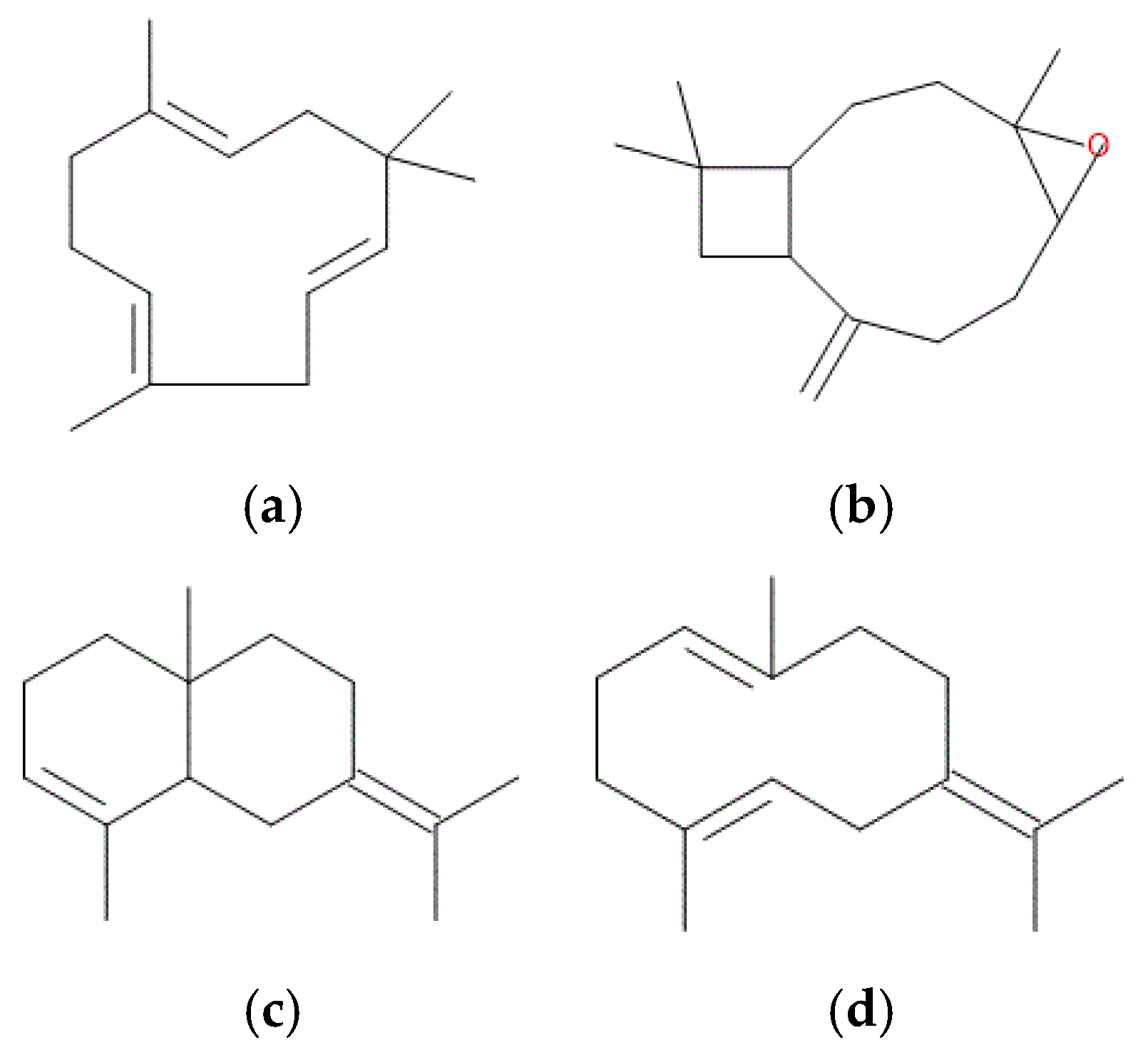
Figure 2.
DPPH radical scavenging activity of hop cones with linear and nonlinear (4PL) IC₅₀ curve fitting. (a) hop cone ethanolic extract; (b) hop cone essential oil.
Figure 2.
DPPH radical scavenging activity of hop cones with linear and nonlinear (4PL) IC₅₀ curve fitting. (a) hop cone ethanolic extract; (b) hop cone essential oil.
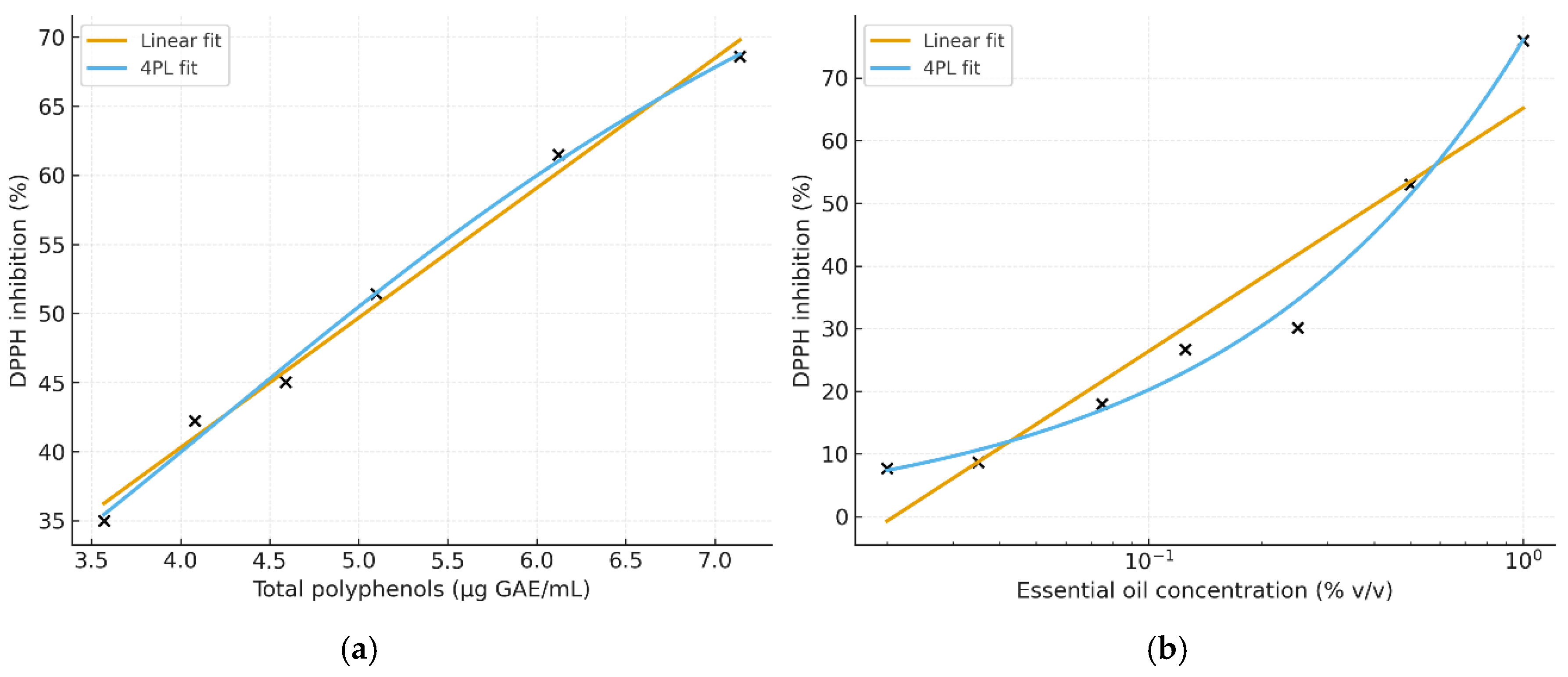
Figure 3.
Antibacterial and antibiofilm activity of hop cone essential oil.
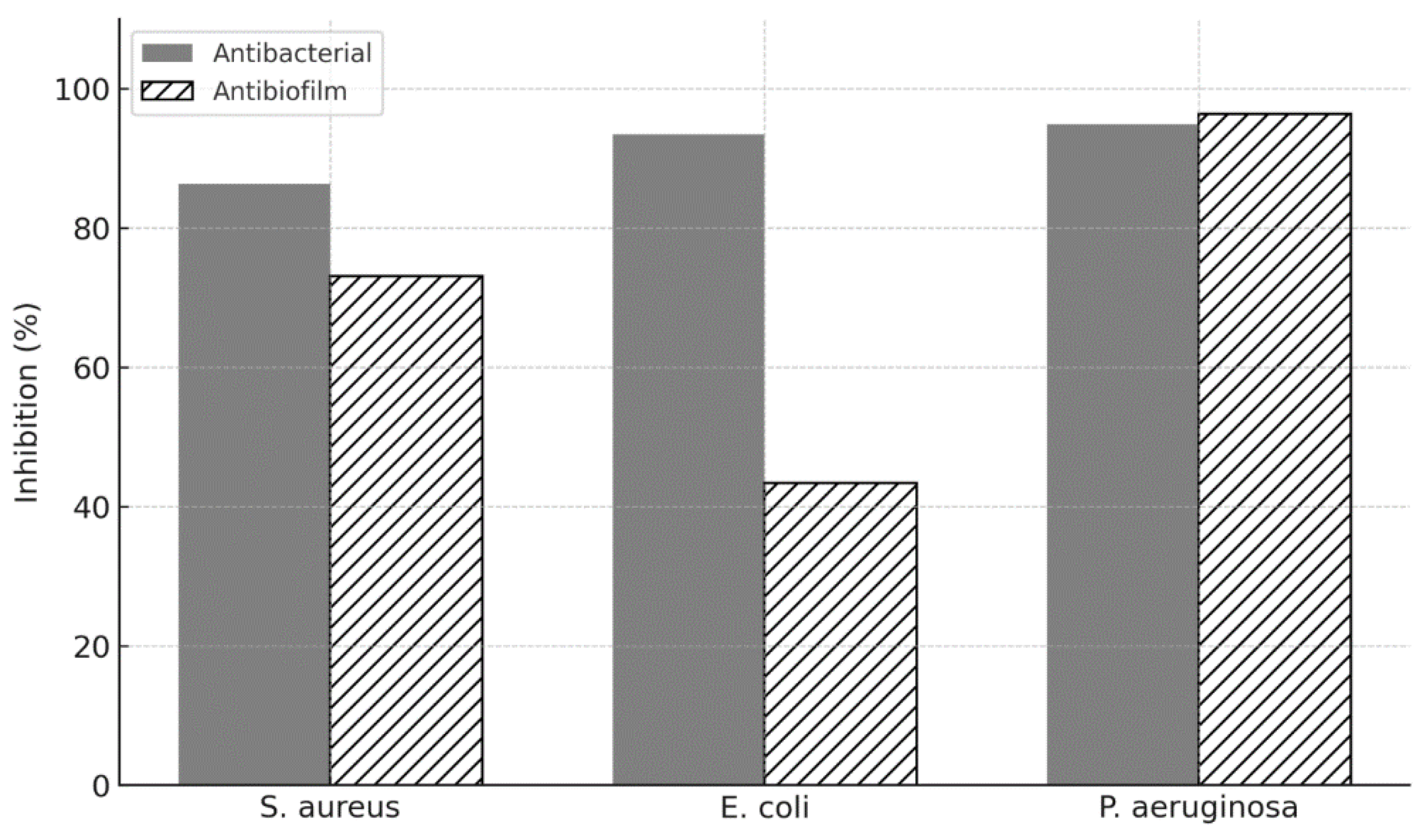
Figure 4.
Molecular docking poses of the major hop essential oil constituents (A–D) within Staphylococcus aureus Sortase A and the proposed mode of interference with biofilm formation.
Figure 4.
Molecular docking poses of the major hop essential oil constituents (A–D) within Staphylococcus aureus Sortase A and the proposed mode of interference with biofilm formation.
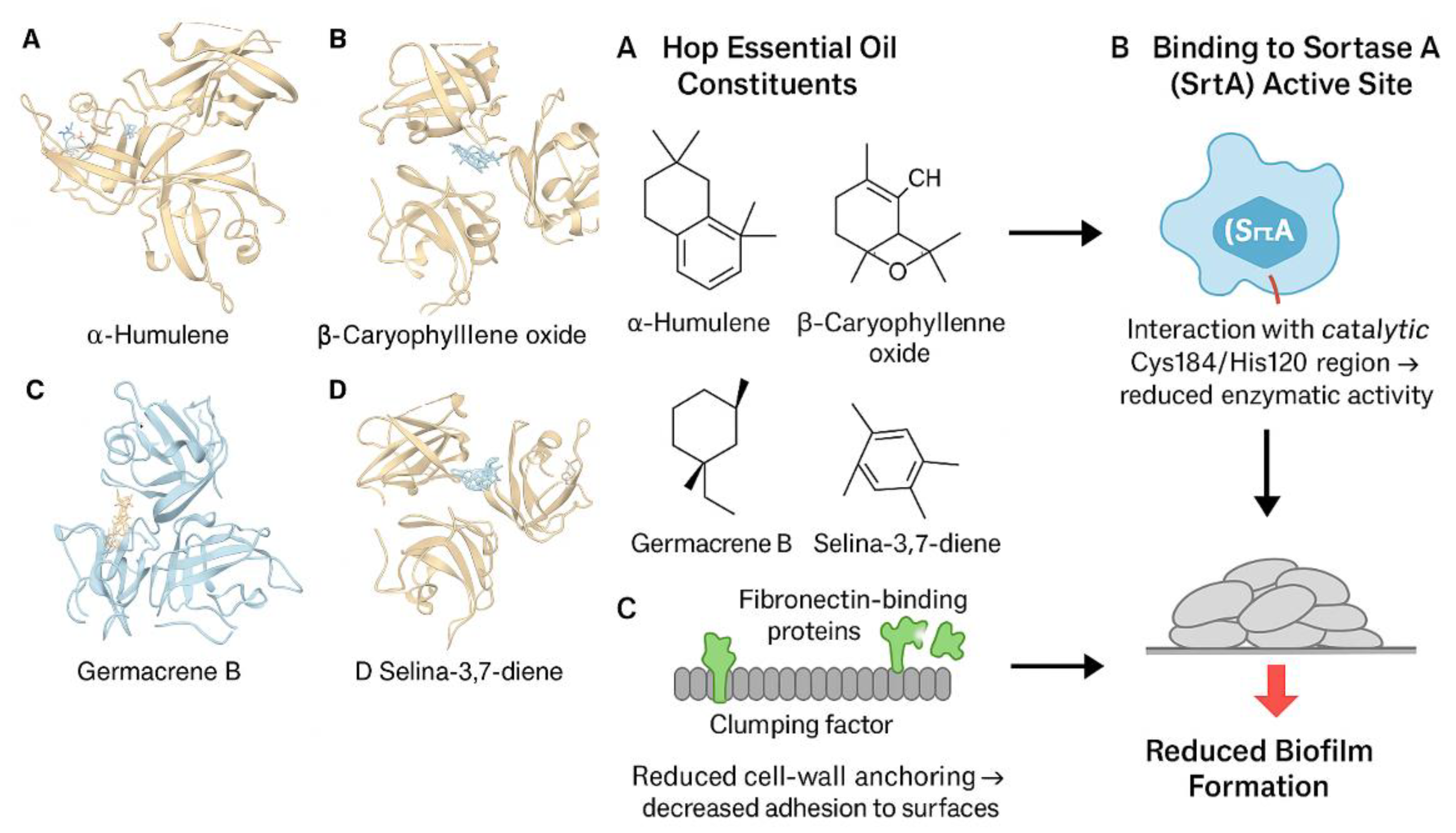
Figure 5.
Female cones of Humulus lupulus L.
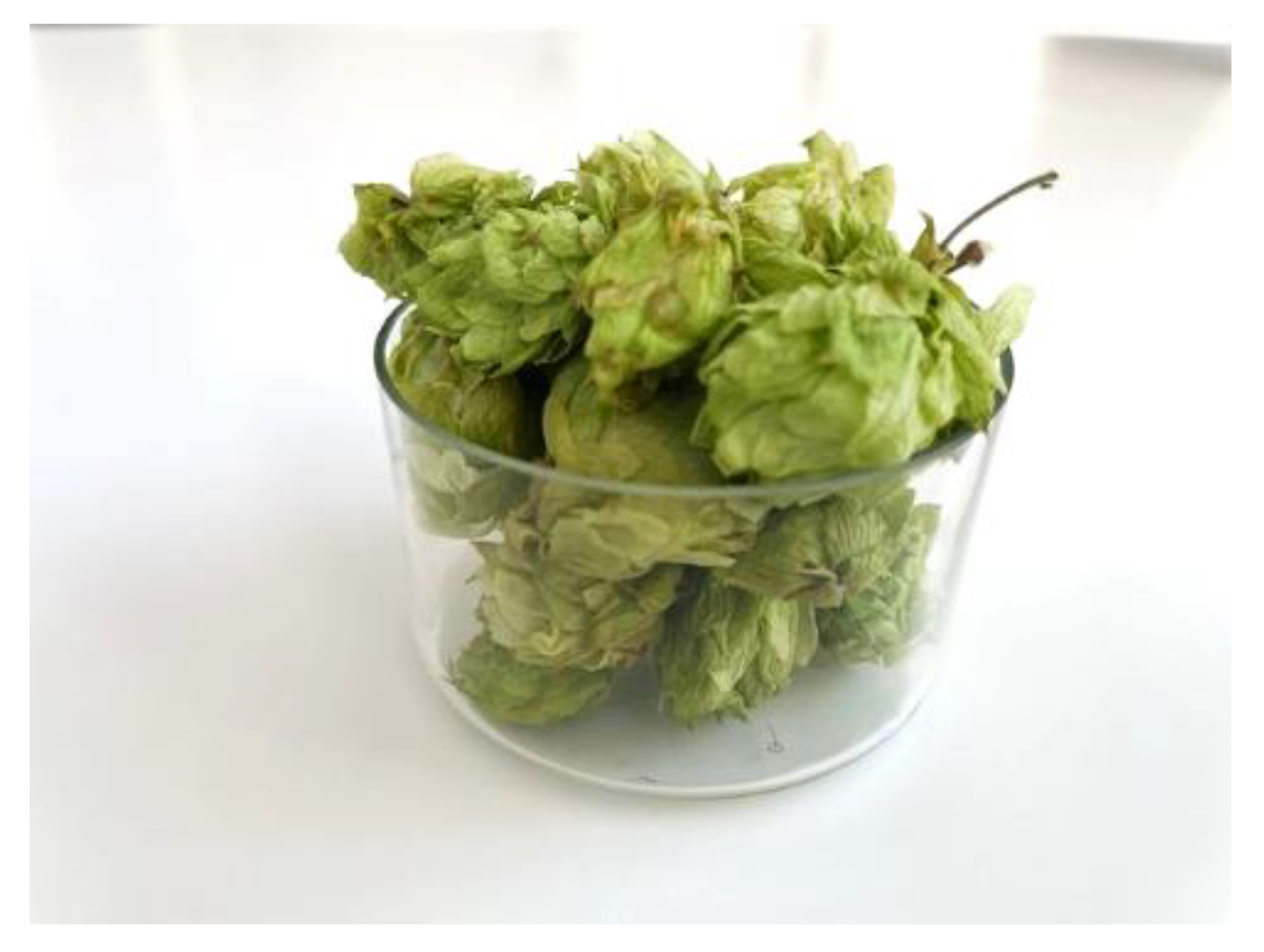

Table 1.
Total phenolic content (TPC), total flavonoid content (TFC) α-, and β-acid content in hop cones.
Table 1.
Total phenolic content (TPC), total flavonoid content (TFC) α-, and β-acid content in hop cones.
| TPC (mg GAE/g DW) |
TFC (mg RE/g DW) |
α-Acid content % |
β-Acid content % |
|---|---|---|---|
| 3.20 ± 0.05 | 25.61 ± 0.02 | 8.77.00 ± 0.007 | 0.15 ± 0.003 |
Table 2.
GC-MS analysis of the essential oil of hop cones.
| No. | Compound | Retention Time (min) | Area (min) | Area [%] |
|---|---|---|---|---|
| 1 | Myrcene | 11.245 | 1152299.825 | 3.05 |
| 2 | Nonaldehyde | 21.819 | 875454.647 | 2.32 |
| 3 | 2-Methyl-hexadecanal | 27.094 | 205137.635 | 0.54 |
| 4 | β-Caryophyllene oxide | 28.053 | 5399268.552 | 14.31 |
| 5 | Azulene | 28.346 | 521386.068 | 1.38 |
| 6 | 2-Undecanone | 28.570 | 1133910.205 | 3.00 |
| 7 | 4-Methyl-decenoate | 29.410 | 512483.171 | 1.36 |
| 8 | α-Humulene | 30.216 | 15731415.243 | 41.68 |
| 9 | Muurolene | 30.883 | 536717.160 | 1.42 |
| 10 | β-Patchoulene | 31.039 | 430720.443 | 1.14 |
| 11 | Eudesma-4,7(14)-11-diene | 31.614 | 1405668.726 | 3.72 |
| 12 | γ-Gurjunene | 31.791 | 1329138.104 | 3.52 |
| 13 | Cadina-1,4-diene | 32.852 | 1209856.356 | 3.21 |
| 14 | Selina-3,7-diene | 33.298 | 1947271.467 | 5.16 |
| 15 | 2-Tridecanone | 34.526 | 488920.421 | 1.30 |
| 16 | Germacrene B | 34.614 | 1796923.960 | 4.76 |
| 17 | Caryophyllene oxide | 38.501 | 186057.967 | 0.49 |
| 18 | 3-Cyclohexen-carboxaldehyde | 39.896 | 479370.854 | 1.27 |
| 19 | Globulol | 40.920 | 191539.36 | 0.51 |
| 20 | Nonadecatriene | 41.192 | 727835.740 | 1.93 |
| 21 | 1-H-Indene | 41.896 | 257795.907 | 0.68 |
| 22 | Methyl 4,7,10,13-hexadecatetraenoate | 42.749 | 191654.129 | 0.51 |
| 23 | α-Eudesmol | 44.276 | 469586.395 | 1.24 |
| 24 | β-Eudesmol | 44.447 | 400628.367 | 1.06 |
| 25 | Neointermedeol | 44.960 | 158055.457 | 0.42 |
| Total: | 37739095.263 | 100 | ||
Disclaimer/Publisher’s Note: The statements, opinions and data contained in all publications are solely those of the individual author(s) and contributor(s) and not of MDPI and/or the editor(s). MDPI and/or the editor(s) disclaim responsibility for any injury to people or property resulting from any ideas, methods, instructions or products referred to in the content. |
© 2025 by the authors. Licensee MDPI, Basel, Switzerland. This article is an open access article distributed under the terms and conditions of the Creative Commons Attribution (CC BY) license (http://creativecommons.org/licenses/by/4.0/).
Copyright: This open access article is published under a Creative Commons CC BY 4.0 license, which permit the free download, distribution, and reuse, provided that the author and preprint are cited in any reuse.


