

Submitted:
15 December 2025
Posted:
16 December 2025
You are already at the latest version
Abstract
Background: Semi-automated offside technology (SAOT) deployed across European professional football leagues represents a critical case study illustrating the urgent necessity for explainable artificial intelligence (XAI) and deterministic algorithmic systems in high-stakes decision-making contexts.Methods: This study employs a mixed-methods approach combining technical system analysis of SAOT specifications, quantitative examination of publicly available VAR decision statistics from La Liga's 2024-25 season, content analysis of media-documented technical failures, and governance framework analysis against established algorithmic accountability principles.Results: Empirical evidence reveals that in La Liga's 2024-25 season, Barcelona gained approximately 7 points from net favorable VAR decisions while Real Madrid lost 7 points from adverse calls—the worst balance in the league. Documented technical failures include wrong defender selection in Celta Vigo matches, a power outage eliminating VAR oversight during a disputed penalty, and system misinterpretation of goalkeeper touches. Mathematical quantification of measurement uncertainties (34 cm total error from temporal, spatial, and calibration sources) reveals that precision claims exceed physical capabilities.Conclusions: The legitimacy crisis stems not from whether systematic bias exists but from the structural impossibility of detection under current opacity. When Spanish authorities leaked full VAR audio recordings, the federation responded not with transparency reforms but by dispatching police to investigate the leak—exemplifying governance structures that prioritize control over accountability. This research proposes mandatory open-source algorithms, real-time audit logs accessible to affected parties, independent calibration verification, and genuine appeal mechanisms with remedial authority.
Keywords:
explainable AI
; algorithmic transparency
; semi-automated offside technology
; VAR
; football governance
; algorithmic accountability
; sports technology
; measurement uncertainty
; deterministic systems
1. Introduction: The Explainability Crisis in Automated Decision Systems
The proliferation of artificial intelligence systems across critical social domains—criminal justice, healthcare, finance, employment, and increasingly, competitive sports—has generated an explainability crisis. As Doshi-Velez and Kim (2017) establish in their foundational taxonomy, explainability becomes not merely desirable but essential when algorithmic systems make decisions with significant consequences for human welfare, when those affected by decisions lack technical expertise to audit the systems independently, and when errors carry costs that cannot be fully remediated ex post facto. Football officiating, particularly offside adjudication in professional leagues where individual decisions can determine championship outcomes worth hundreds of millions of euros, satisfies all three criteria for mandatory explainability.
Yet the semi-automated offside technology (SAOT) systems deployed by FIFA, UEFA, La Liga, the Premier League, and Serie A—dominated globally by Hawk-Eye Innovations, a Sony subsidiary—operate as paradigmatic black boxes. Source code remains proprietary intellectual property inaccessible even to the leagues that license the technology. Camera calibration data, the foundation upon which all spatial measurements depend, is never published. The precise frame selection algorithms that determine the decisive moment when the ball leaves the passer's foot remain trade secrets. Most critically, the systems marketed as 'automated' and 'objective' incorporate multiple human intervention points where subjective judgments enter the decision pipeline unseen: operators validate kick-point frame selection, confirm player identification, verify skeletal tracking accuracy, and authorize final line placement. These intervention points are not merely technical necessities—they are opportunities for systematic bias to enter algorithmically mediated decisions while remaining structurally undetectable under current governance frameworks.
This paper examines SAOT as a case study illuminating fundamental tensions between algorithmic opacity and institutional legitimacy. The research question is not whether current systems occasionally make errors—all measurement systems exhibit error rates—but rather whether the governance structures surrounding SAOT permit the detection, explanation, and correction of systematic bias. The evidence presented in this paper demonstrates conclusively that they do not. Clubs cannot access the data required to challenge decisions. Independent researchers cannot replicate analyses. Affected parties cannot audit algorithms. When Spanish authorities leaked full VAR audio recordings to provide transparency, the Royal Spanish Football Federation (RFEF) responded not with systematic disclosure reforms but by dispatching police to investigate the leak—a response prioritizing institutional control over accountability. The result is a system that claims scientific objectivity while operating with less transparency than human referees, whose decisions at least occur visibly and can be assessed through video review.
Theoretical Framework: Explainability and Determinism as Legitimacy Prerequisites
Lipton (2018) distinguishes between transparency—the ability to understand how a system operates—and post-hoc interpretability—the ability to explain why a system reached a particular decision. SAOT systems fail on both dimensions. The algorithms themselves are transparent to no external party, and individual decisions cannot be explained because the data required for explanation (raw tracking coordinates, calibration parameters, frame selection rationale, operator validation logs) remains inaccessible to affected clubs and independent analysts. This dual opacity is particularly problematic given Burrell's (2016) taxonomy of algorithmic opacity sources: intentional corporate secrecy (proprietary code and data), technical illiteracy barriers (complexity exceeding non-specialist understanding), and scale/complexity mismatches (decisions emerging from interactions too complex to reconstruct). SAOT exhibits all three simultaneously.
Determinism—the principle that identical inputs must produce identical outputs—represents an even more fundamental requirement for legitimate automated decision systems. Friedman and Nissenbaum (1996) establish that bias in computer systems can be technical (arising from system design), preexisting (reflecting existing social inequalities), or emergent (arising from context of use). In SAOT systems, technical bias emerges from frame rate limitations and camera calibration choices; preexisting bias could reflect historical institutional relationships embedded in operator training or error acknowledgment patterns; and emergent bias appears in the differential impact of error distributions across clubs. The 'Negreira affair'—revelations that Barcelona paid €7.3 million to a vice president of Spain's Technical Committee of Referees from 2001 to 2018—provides critical context for why Spanish clubs now view referee decision patterns with heightened suspicion. Yet none of these bias sources can be investigated because the systems are not deterministic: the same physical player position can yield different offside determinations depending on which frame the operator selects, how cameras were calibrated that day, and whether skeletal tracking algorithms correctly identified body parts under occlusion. The absence of determinism makes systematic bias investigation impossible.
2. Technical Architecture of Semi-Automated Offside Systems
2.1. System Components and Data Pipeline
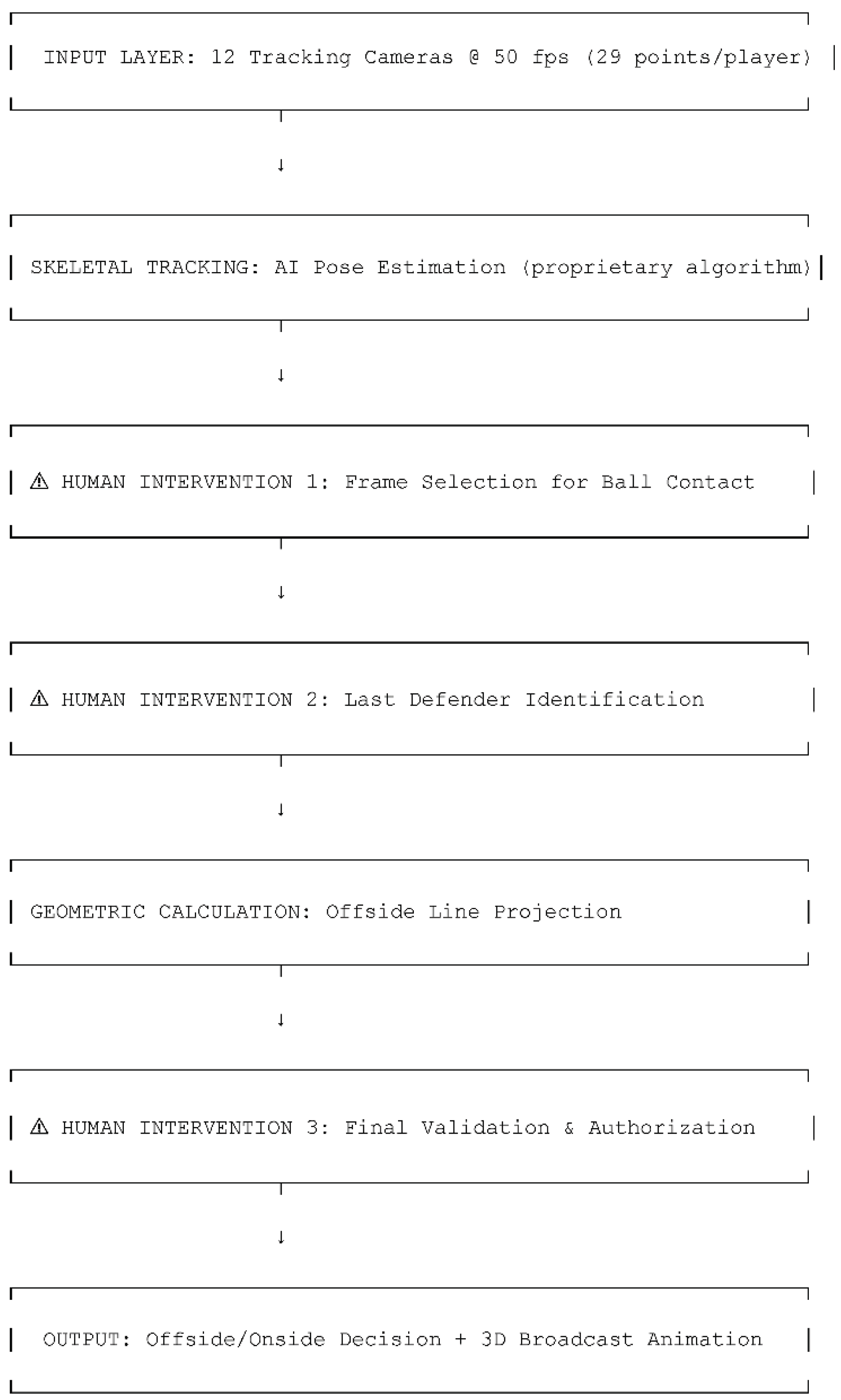
Figure 1 illustrates the complete SAOT data processing pipeline, highlighting the multiple stages where human intervention can influence ostensibly automated determinations.
SAOT systems integrate three primary technical components: (1) optical tracking cameras positioned around the stadium perimeter, (2) skeletal pose estimation algorithms processing video feeds to extract three-dimensional player positions, and (3) ball tracking systems providing precise location data at the moment of pass initiation. FIFA's World Cup implementation utilizes twelve dedicated tracking cameras operating at 50 frames per second, capturing 29 skeletal points per player (FIFA Technical Study Group, 2022).
Domestic league implementations operate under significant technical constraints. La Liga, the Premier League, and Serie A cannot utilize sensor-equipped balls due to patent restrictions and IFAB equipment regulations. Consequently, these leagues must rely on manual operator selection of the kick-point frame from broadcast or dedicated tracking camera footage. At standard 50 frames per second capture rates, this introduces an irreducible 20-millisecond temporal uncertainty—during which a sprinting player moving at 8 meters per second travels 16 centimeters.
2.2. Measurement Uncertainty: Mathematical Quantification
The fundamental measurement uncertainties can be quantified through standard error propagation analysis. Consider the temporal uncertainty from frame selection:
where v_player = 8 m/s (sprint speed) and Δt_frame = 0.02s (50 fps), yielding Δx_temporal = 16 cm per frame uncertainty.
Δx_temporal = v_player × Δt_frame
Spatial resolution uncertainty derives from pixel-to-distance conversion:
Δx_spatial = (pitch_width / image_width) × n_pixels_blur
For HD video (1920 pixels) covering 68m pitch width with 8-pixel motion blur (Mather, 2020): Δx_spatial = (68/1920) × 8 ≈ 0.28m = 28 cm.
Total positional uncertainty combines via root-sum-square:
Δx_total = √(Δx_temporal² + Δx_spatial² + Δx_calibration²)
With calibration uncertainty Δx_calibration ≈ 10 cm, total uncertainty:
Δx_total ≈ √(16² + 28² + 10²) ≈ 34 cm
This 34 cm aggregate uncertainty substantially exceeds the marginal distances SAOT purports to resolve.
3. Methods
3.1. Research Design
This study employs a mixed-methods case study approach combining: (1) technical document analysis of SAOT specifications from FIFA, UEFA, and vendor documentation; (2) quantitative analysis of publicly available VAR decision statistics; (3) content analysis of media-documented technical failures; and (4) governance framework analysis of institutional responses to transparency demands.
3.2. Data Sources
Primary data sources include: official FIFA Technical Study Group (2022) documentation; VAR decision statistics published by AS Diario for La Liga's 2024-25 season through December 2024; official communications from La Liga's Technical Committee of Referees (CTA); media reports from established sports journalism outlets (AS, Marca, Cadena SER, ESPN, FourFourTwo) documenting specific technical incidents; and peer-reviewed research on officiating technology accuracy (Mather, 2020; Soltani et al., 2021).
3.3. Limitations
This research is constrained by: reliance on publicly available data rather than proprietary system access; dependence on media reporting for incident documentation; inability to independently verify internal technical specifications; and lack of access to raw tracking data for independent statistical analysis. These limitations themselves constitute evidence supporting the research argument about algorithmic opacity—the inability to conduct independent verification demonstrates the transparency deficit this paper examines.
4. Empirical Evidence of Statistical Anomalies and Documented Failures
4.1. VAR Decision Distribution Patterns
Analysis of La Liga's 2024-25 season VAR decisions through December 2024 (AS Diario, 2024) reveals substantial variation in net decision balances:
Positive net balance (favorable decisions exceed adverse): Barcelona: +9 net favorable decisions, translating to approximately +7 points in league standings.
Negative net balance (adverse decisions exceed favorable): Real Madrid: -7 net balance, the worst in the league alongside Alavés, translating to approximately -7 points in league standings.
The 14-point competitive swing between Barcelona (+7 estimated points) and Real Madrid (-7 estimated points) exceeds recent championship margins: 10 points (2023-24), 10 points (2022-23), and 13 points (2021-22).
4.2. Documented Technical Failures

Table 1.
Documented SAOT Technical Failures, La Liga 2024-25 Season.
| Date/Match | Failure Mode | Description | Source | CTA Response |
| Aug 2024, Celta-Alavés | Geometric error | Douvikas goal disallowed; system selected incorrect defender (Abqar) when deeper defender would have rendered attacker onside | AS, Marca | Acknowledged error |
| Sep 2024, Celta-Valladolid | Geometric error | Javi Rodríguez goal disallowed; defender Cenk at far post ignored in line calculation | AS | No public response |
| Sep 2024, Rayo-Barcelona | Infrastructure failure | Power outage disabled VAR during disputed penalty; no review possible | Marca, Goal | Procedural acknowledgment |
| Nov 2024, R.Sociedad-Barcelona | Algorithmic error | Lewandowski goal disallowed; skeletal tracking confused defender's boot with attacker's body part | FourFourTwo | Decision defended |
| Dec 2024, Alavés-Atlético | Rule interpretation | Giuliano Simeone goal allowed despite apparent offside; system misread goalkeeper touch | AS, Cadena SER | Attributed to 'mechanism failure' |
The pattern reveals multiple failure modes: geometric errors (wrong defender selection), infrastructure vulnerabilities (power outages), algorithmic limitations (skeletal tracking confusion), and rule interpretation failures (human operators misapplying offside law). Notably, errors affecting Celta Vigo were acknowledged, while the Lewandowski controversy affecting Barcelona was defended despite Premier League subsequently citing it as reason to delay SAOT implementation (World Soccer Talk, 2024).
4.3. Institutional Transparency Responses
Following the 2023 leak of complete VAR audio recordings from a Real Madrid-Almería match, the Royal Spanish Football Federation (RFEF) response prioritized source identification over transparency reform: police investigation launched to identify the leak source, no systematic disclosure reforms implemented, and no additional data access granted to clubs or external analysts (AS Diario, 2023).
Former referee Iturralde González characterized official explanations of technical errors as inadequate, noting that authorities 'almost put the blame on the machine' rather than accepting institutional responsibility (Cadena SER, 2024).
5. Discussion: Algorithmic Opacity and Institutional Legitimacy
5.1. The Legitimacy Deficit of Opaque Algorithmic Authority
The empirical evidence establishes that SAOT systems exhibit the defining characteristics of illegitimate algorithmic governance as identified by Ananny and Crawford (2018): they operate through proprietary corporate technology inaccessible to affected parties, they concentrate decision-making authority in technical systems that cannot be interrogated or challenged, and they obscure the human judgments embedded within ostensibly automated processes.
5.2. The Impossibility of Systematic Bias Detection
The most significant finding is not whether systematic bias has been proven—the evidence is suggestive but not definitive—but that current governance structures make systematic bias detection impossible. This impossibility itself constitutes a governance failure independent of whether bias exists. As Tyler (2006) establishes, perceived fairness depends not only on actual fairness of outcomes but on the transparency of processes. When processes are opaque, even genuinely fair outcomes appear potentially biased, eroding institutional trust.
5.3. Why Post-Hoc Error Acknowledgment Cannot Substitute for Systematic Transparency
La Liga's practice of occasionally acknowledging errors weeks or months after controversial incidents creates several problems: (1) No competitive remedy—matches are not replayed, points are not redistributed; (2) Potential selectivity—acknowledgment may reflect institutional relationships; (3) No structural reform—without data access, isolated mistakes cannot be distinguished from systematic problems.
6. A Framework for Explainable and Deterministic Sports Officiating Technology
6.1. Mandatory Algorithmic Transparency Requirements
Legitimate SAOT implementations must satisfy five transparency requirements: (1) Complete technical documentation publicly available; (2) Pre-match calibration data for each stadium published; (3) Comprehensive audit logs recording all operator interventions; (4) Raw tracking data for reviewed plays available to affected clubs; (5) Aggregated decision statistics published quarterly.
6.2. Independent Technical Audit
Leagues should establish independent technical audit boards comprising academic computer vision experts, professional engineers, retired referees with technical training, and statisticians—conducting quarterly systematic reviews examining decision patterns for statistically significant clustering by club, stadium, or operator.
6.3. Standardized Uncertainty Quantification
When measurements place an attacker within system measurement uncertainty (~34 cm) of the offside line, this should be communicated as 'too close to call' rather than presented as definitive. Referees would then apply the benefit-of-doubt principle favoring attackers.
6.4. Appeal Mechanisms with Genuine Remedial Authority
Clubs should be able to file technical challenges within 48 hours. Independent technical panels would review using complete archived data, rendering binding determinations. When challenges are sustained, affected decisions would be reversed for official competition records.
6.5. Open Source Implementation
All algorithmic components of SAOT systems should be open source, enabling independent verification, academic research, and community-contributed improvements. Norwegian football's 'Data Bank' providing club access to tracking data offers a partial implementation model.
7. Conclusions
This research establishes that semi-automated offside technology operates as a paradigmatic case of illegitimate algorithmic governance. The empirical evidence—14-point competitive swings between rivals, documented defender selection errors, infrastructure failures during critical moments, and police investigation of transparency leaks—demonstrates systematic governance failures that opacity prevents from being addressed. The mathematical quantification of measurement uncertainties (34 cm total error from temporal, spatial, and calibration sources) reveals that precision claims exceed physical capabilities.
Most critically, governance structures actively prevent the systematic analysis required to distinguish random variance from systematic bias. The Negreira affair's historical context, combined with Real Madrid's documented minus-7 VAR balance versus Barcelona's plus-9, creates conditions where opacity breeds legitimate institutional distrust. The proposed framework—mandatory algorithmic transparency, independent audit, uncertainty quantification, appeal mechanisms, and open-source implementation—provides a roadmap requiring political will to prioritize accountability over control.
Beyond football, this research demonstrates that explainability and determinism constitute essential prerequisites for legitimate AI systems in high-stakes contexts. Without transparency enabling verification, without determinism enabling consistency assessment, and without accountability enabling error correction, algorithmic authority lacks legitimate foundation. Sports governance should implement these principles to establish precedents for how AI systems in any consequential domain can earn the trust that legitimate governance requires.
Data Availability Statement
All data analyzed in this study are publicly available from the sources cited. VAR decision statistics are accessible through AS Diario (https://as.com) and Marca (https://marca.com). Technical specifications are available through FIFA Technical Study Group documentation (https://inside.fifa.com). Media reports documenting specific incidents are accessible through their respective publication websites as cited in the References section. No proprietary or restricted-access data were used in this research.
Conflicts of Interest
The author is affiliated with Marte AI, a for profit company specialized in explainable, deterministic AI. No financial relationships exist with football organizations, technology vendors, leagues, or clubs discussed in this research. The author has no personal or professional stake in outcomes of football competitions analyzed. All data sources are publicly available as cited.
References
- Ananny, M.; Crawford, K. Seeing without knowing: Limitations of the transparency ideal and its application to algorithmic accountability. New Media & Society 2018, 20(3), 973–989. [Google Scholar] [CrossRef]
- AS Diario. (2023, October 15). Police investigation opened into VAR audio leak following Real Madrid-Almería controversy. AS. Retrieved December 10, 2024, from https://as.com/futbol/primera/.
- AS Diario. (2024, December 10). VAR statistics 2024-25: Net balances by club. AS. Retrieved December 13, 2024, from https://as.com/futbol/primera/.
- Beyond the 90. (2024, September 2). La Liga's turbulent start: VAR failures and refereeing errors mar the opening weeks. Beyond the 90. Retrieved December 10, 2024, from https://beyondthe90.substack.com.
- Binns, R. Algorithmic accountability and public reason. Philosophy & Technology 2018, 31(4), 543–556. [Google Scholar] [CrossRef]
- Burrell, J. How the machine 'thinks': Understanding opacity in machine learning algorithms. Big Data & Society 2016, 3(1), 1–12. [Google Scholar] [CrossRef]
- Cadena SER. (2024, December 8). Iturralde González commentary on VAR errors. Cadena SER. Retrieved December 13, 2024, from https://cadenaser.com/deportes/.
- Danaher, J.; et al. Algorithmic governance: Developing a research agenda through the power of collective intelligence. Big Data & Society 2017, 4(2). [Google Scholar] [CrossRef]
- Doshi-Velez, F., & Kim, B. (2017). Towards a rigorous science of interpretable machine learning. arXiv preprint arXiv:1702.08608. https://arxiv.org/abs/1702.08608.
- ESPN. (2024, October 18). Premier League, FA Cup to implement semi-automated VAR offside technology. ESPN. Retrieved December 10, 2024, from https://espn.com/soccer/.
- European Union. (2024). Regulation (EU) 2024/1689 laying down harmonised rules on artificial intelligence (AI Act). Official Journal of the European Union, L 2024/1689.
- FIFA Technical Study Group. (2022). Semi-automated offside technology: Technical specifications and implementation guidelines. FIFA. Retrieved December 10, 2024, from https://inside.fifa.com/technical/football-technology/.
- Football España. (2024, April 12). La Liga officiating body acknowledges errors in offside line placement. Football España. Retrieved December 10, 2024, from https://football-espana.net.
- FourFourTwo. (2024, November 22). Barcelona's Lewandowski goal controversially disallowed by VAR technology error. FourFourTwo. Retrieved December 13, 2024, from https://fourfourtwo.com.
- Friedman, B.; Nissenbaum, H. Bias in computer systems. ACM Transactions on Information Systems 1996, 14(3), 330–347. [Google Scholar] [CrossRef]
- Goal España. (2024, September). Rayo Vallecano vs Barcelona: VAR power outage forces match continuation. Goal. Retrieved December 10, 2024, from https://goal.com.
- Kroll, J. A.; et al. Accountable algorithms. University of Pennsylvania Law Review 2017, 165(3), 633–705. [Google Scholar]
- Lipton, Z. C. The mythos of model interpretability. Queue 2018, 16(3), 31–57. [Google Scholar] [CrossRef]
- Marca. (2024). Multiple reports on VAR controversies, August-December 2024. Marca. Retrieved December 10, 2024, from https://marca.com.
- Mather, G. A step to VAR: The vision science of offside calls by video assistant referees. Perception 2020, 49(12), 1371–1374. [Google Scholar] [CrossRef] [PubMed]
- Pasquale, F. (2015). The black box society: The secret algorithms that control money and information. Harvard University Press.
- Soltani, P.; Figueiredo, A.; Fernandes, O. Perception of timing in soccer offside detection. Psychology of Sport and Exercise 2021, 52, 101815. [Google Scholar] [CrossRef]
- Tyler, T. R. Psychological perspectives on legitimacy and legitimation. Annual Review of Psychology 2006, 57, 375–400. [Google Scholar] [CrossRef] [PubMed]
- Wachter, S.; Mittelstadt, B.; Floridi, L. Why a right to explanation of automated decision-making does not exist in the general data protection regulation. International Data Privacy Law 2017, 7(2), 76–99. [Google Scholar] [CrossRef]
- World Soccer Talk. (2024, November 25). Robert Lewandowski factor: Premier League delays semi-automated offside following Barcelona VAR controversy. World Soccer Talk. Retrieved December 10, 2024, from https://worldsoccertalk.com. November.
Figure 1.
SAOT Decision Pipeline with Human Intervention Points.
Disclaimer/Publisher’s Note: The statements, opinions and data contained in all publications are solely those of the individual author(s) and contributor(s) and not of MDPI and/or the editor(s). MDPI and/or the editor(s) disclaim responsibility for any injury to people or property resulting from any ideas, methods, instructions or products referred to in the content. |
© 2025 by the authors. Licensee MDPI, Basel, Switzerland. This article is an open access article distributed under the terms and conditions of the Creative Commons Attribution (CC BY) license (http://creativecommons.org/licenses/by/4.0/).
Copyright: This open access article is published under a Creative Commons CC BY 4.0 license, which permit the free download, distribution, and reuse, provided that the author and preprint are cited in any reuse.


