

Submitted:
15 December 2025
Posted:
16 December 2025
You are already at the latest version
Abstract
Ningbo (NGB), one of the world's most important port cities located on the East Coast of China, contains more than 100 rivers and streams across three major catchments, the Yong, Yuyao and Fenghua Rivers. During the 1970s – 2000s, extensive river engineering, including channelisation, conversion of natural rivers into artificial canals, and construction of sluice gates and embankments were undertaken to cope with rapid urbanisation and development. Since the 2010s, the Ningbo Government and Water Bureau have initiated smart river and fluvial flood management strategies to enhance digital twins and smart flood management technologies, such as 3D flood mapping and real-time water level and discharge monitoring, significantly improving precision. In this study, we demonstrate that smart technology has performed effectively in Ningbo, with applications in the recent climate extreme events such as Typhoon In-Fa and Muihua in 2021 and 2022, during which the Municipal Bureau has safeguarded public safety and welfare. This further strengthening both municipal and national commitment to enhance climate resilience. Nevertheless, further advancement of the DT platform remains necessary. Key areas for improvement include faster computational capacity, enhanced coordination across departments and open data sharing mechanisms, and integration of artificial intelligence (AI) to support more effective decision-making processes in response to the climate extremes and adverse water hazards conditions.
Keywords:
digital-twin
; climate resilience
; big-data
; artificial intelligence
; smart flood management
; climate adaptations
; sponge citie
1. Introduction
1.1. Increasing Flood Hazards
China has the most rapid urbanisation in the world, with a more than 64% urbanisation rate on average across the nation, which is considerably higher than the national growth rate of 45.9% (Chan et al., 2021a). The rapid growth of the urban population in China has led to urban environments (i.e. cities) representing dense and often disorderly sprawls of the built environment, with largely degraded urban ecosystem services and detrimental impacts on the health (mental and physical) of residents. (Dick et al., 2019), and their social well-being (Griffiths and Chan, 2022). Whilst the coastal regions in East Asia, such as the East and South coasts of Chinese provinces including Zhejiang, Fujian and Guangdong, are experiencing particularly frequent typhoon disturbances and facing a great flood risk due to rapid urbanisation and extensive development on the low-lying coastal plain with little topographic relief, and thus are prone to floods. (Bates, 2023; Lai et al., 2023).
Recognising these challenges, the Central National Government (CNG) launched the “Sponge City Program” (SCP) in 2013 to align with the national agenda of promoting “ecological civilisation” and advancing green urban development. Conceptually like Nature-based Solutions (NBS) yet embedded within Chinese planning frameworks and jurisdiction (Yang et al., 2020), which are targeted to address urban stormwater problems (i.e. urban surface floods and stormwater pollution control, etc.) through the implementation of BGI rather than only relying on conventional “grey” drainage infrastructure (Liang et al., 2020). The SCP extends beyond traditional urban greenery solutions (e.g. urban parks, urban forests, etc.). This delivers multiple benefits, combining the “blue” (e.g. ponds and wetlands) and “green” (e.g. swales and rain gardens, etc.) with bio-retention functions. (You et al., 2019), which can purify and mitigate urban stormwater pollution and enhance more resilient water storage for floods and droughts remediation in all seasons (Chan et al., 2021).
Over the last 10 years, the SCP has gradually transformed the selected 30 pilots into “Sponge Cities”. The SCP integrates blue and green spaces to enhance urban liveability, resilience and sustainability in old districts (old towns) and new development districts (new towns). Bioretention infrastructure (e.g. artificial ponds and wetlands, floating islands, etc.)(Dietz, 2007) has been widely used in Chinese sponge cities. For example, in Cicheng, an old district of Ningbo, an artificial wetland park was built in the residential area, which effectively treats local urban stormwater pollution (i.e. Suspended Solids, Nitrogen, Phosphorus, etc). (Aryal et al., 2010), through substantial reedbeds and local water grasses and perennials. It also provides substantial water storage spaces for urban stormwater runoff (Tirpak et al., 2021). The wetland park is used as a sports running trail and kids’ playground that delivers multiple benefits and promotes public participation and engagement (Griffiths et al., 2020a). The importance and function of bioretention infrastructure in newly built environments can significantly improve existing urban stormwater management practices by reducing urban runoff and peak discharge and re-enhancing the urban hydrological cycle (Takaijudin et al., 2016).
Unfortunately, even though SCP has been adopted, extreme climate events have occurred frequently recently. For example, the prospect of climate change will likely exacerbate the temperature increase of seawater and increase the magnitude of low-pressure systems associated with tropical cyclones in the West Pacific shortly (Griffiths et al., 2020a). This will impact the deltaic region of the Yangtze River and the Pearl River, two most important economic centres and logistic hubs in southeast China, where many major cities like Ningbo, Shanghai, Hong Kong, Shenzhen and Guangzhou are located(Chan et al., 2021a; Chan et al., 2023b). The Hong Kong Observatory (Hong Kong Special Administrative Region’ Meteorological Office) recorded over 40 typhoon visits in the Pearl River Delta in the 1990s and 2000s, and expected typhoons, storm surges, and intensive rainstorms will visit the region more often in the ensuing decades (Chan et al., 2024). As a result, we witnessed the compound urban flood consequences that occurred in Ningbo during 2022 and 2021 after Typhoons Muihua and In-Fa (Chan et al., 2023b; Chan et al., 2021b; Lu et al., 2024).
1.2. The Importance Towards Smart Technological Approaches
The probability of urban surface floods in coastal cities of southeast China is increasing due to the following factors: (1) more frequent and intensive rainstorms that exceed the capacity of the current land drainage system (Qi et al. 2021); (2) surge-enhanced backlash of seawater that might affect land drainage systems; (3) direct inundation by extreme tidal changes via storm surge (Chan et al. 2021) and (4) the coactive impacts of these factors. In addition, global sea level is predicted to rise by 0.2 to 0.4 m over the next 50 years (Hallegatte et al. 2013), which would be as much as 1.2 to 1.8 m by 2100 under various economic development scenarios and climate change models (Church and White, 2011; Nicholls et al., 2010; van de Wal et al., 2022). Locally, the Hong Kong Observatory and China’s State Ocean Bureau estimated an annual sea-level rise rate at 2.1–2.3 mm/year since the 1950s, implying a cumulative increase of approximately 0.6 to 0.7 m if current trends persist. These findings are in accordance with predictions made by Shanghai Municipality authorities along the East Coast of China (Chan et al., 2024; King, 2023; Lai et al., 2024; Tian et al., 2023). These dual effects would bring further challenges to flood governance.
In this study, we aim to illustrate how Ningbo managed to minimise injuries and damages in two Typhoon events, namely “In-Fa” in 2021 and “Muifa” in 2022, with the implementation of smart technologies in flood and water management strategies (e.g. digital twins, etc.). The experiences of Ningbo provide valuable lessons for typhoon/flood governance of other Chinese and Asian coastal cities prone to similar hazards. This paper has four specific key objectives:
- To assess the hazards and damages associated with recent extreme climate events.
- To assess how smart technologies have improved climate-resilient practice in Ningbo.
- To analyse the role and implications of smart technologies in enhancing climate resilience.
- To identify current challenges and propose recommendations for strengthening future climate-resilience practice.
2. Methods
Ningbo is a typical coastal city located on the east coast of China (see Figure 1), with immense annual rainfall (50% of the mean annual rainfall at about 1500 mm) during typhoon season that runs from June to October annually. By contrast, rainfall in the dry season (November to February) normally ranges from 250 to 300 mm annually. Water resources management in Ningbo focuses not only on the capacity of dams and reservoirs to prevent the outburst of dams under storms, but also on the provision of adequate water resources during the dry season (Chan et al., 2023a; Lu et al., 2024). The majority of the city’s 9816 km2 land area is flat, with elevation ranging from 2 to 10 m above sea level, whereas the tidal range is from 1.6 to 5.8 m.
Traditionally, Ningbo is equipped with a land drainage system that can only handle rainfall events at a 1-in-1 to 1-in-5 years return period. This means the city is at high risk during the typhoon period, as intensive stormwater is difficult to be discharged quickly through the drainage system and three tidal rivers (Yao River, Fenghua River, and Yong River) (Lu et al., 2022), particularly when the surges are concurrently raising the river level to decrease the runoff capacities (Griffiths et al., 2020).
Since the 1950s, fifty typhoons have hit Ningbo, causing 12 severe floods and resulting in economic losses totalling an estimated RMB93 billion (Tang et al., 2018). Taken together, surges and astronomical tidal inundation in typhoons and storms present challenges and risks to the city. Since 2015, the city has joined the nation-led Sponge City Programme (SCP) as one of the pilot cities, to raise stormwater protection capacity to handle storms at a 1-in-30-year return period. Through retrofitting the urban drainage system that aiming and construct an integral green–blue infrastructure in 80% of its urbanised area by the end of the 2030s (Chan et al., 2024; Griffiths et al., 2020a; Zeng et al., 2023).
Ningbo belongs to the subtropical monsoon climate zone. The rainfall is mostly concentrated from June to July, including typhoon seasons. The average annual rainfall is 1457mm, of which the total rainfall from May to September accounts for about 65.6% of the annual rainfall. The impact of rainfall can easily lead to the triple impact of “flooding, waterlogging and tide” in the city.
Through an analysis of 5367 days of rainfall data for the 35 years between 1981 to 2015, the design rainfall corresponding to 80% of the total annual runoff control rate in Ningbo is 24.7 mm. For example, during typhoon periods; for example, Muifa on 13-14th September 2022 recorded over 292.6mm/24hr at Cicheng (1-in-100 years return period), rainfall far exceeds the limit of SCP construction guidance (at 1-in-30 years return period) (Griffiths et al., 2020a; Griffiths and Chan, 2022). As a result, the SCP infrastructure cannot cope with such intensity and runoff capacity and will be inundated (overflowed) (see Figure 2).
Characteristics of the water system and soil. The area is mainly characterised by a floodplain water network, with coastal waters and rivers, low terrain and a dense river network. There are 56 water systems in the research area, typically characterised by low flow velocities and insufficient self-purification capacity. The soil type in the Ningbo pilot areas mainly consists of silty clay.
According to the soil permeability test, the permeability coefficient is between 1.2 and 2 × 10⁻⁷/cm·s-1. Therefore, the permeability is poor, and it lacks good infiltration ability. For example, Cicheng is in the Jiangbei district, which includes the Cicheng ancient town area and the Cicheng new town area. The 2021 Statistical Yearbook published by the Jiangbei District Bureau of Statistics indicated that people in Cicheng had a per capita disposable income of 70464 yuan in 2020. The ancient town’s current density is high, with mostly key cultural relics in protected areas.
In addition, the greening rate is low, and the overall water quality of the hydrological system is poor. Combined sewer overflow pollution is prominent, and there is a water safety problem with waterlogging commonly occurring after rainfall. The SCP construction in this area focused on eliminating or mitigating waterlogging and combined sewer overflow pollution. The Cicheng new town area is mainly based on contemporary construction, with the concept of “water sensitivity” considered at an early stage. However, the existing facilities have been lacking in operation and maintenance for a long time. The construction focus in this area was to upgrade and repair the existing SCP facilities and strengthen the planning and control of new projects.
2.2. Research Design – Qualitative Approach
This study has a case study design (Perri and Bellamy, 2012), which focuses on three SCP sites in Ningbo, connected because they all have recently built NBS urban stormwater designs for improving urban flood resilience, as well as enhancing urban water quality and increasing urban green and blue-green spaces.
In this study, we obtained information based on a qualitative approach using policy analyses and semi-structured interviews (SSIs). Interviews are verbal interchanges where one person, the interviewer, attempts to elicit information from another person (Dunn, 2005). There are three types of interviews: structured, unstructured and semi-structured, which can be placed along a continuum.
A structured interview is an interview method with a planned and rigorous set of questions, which means all interviewees get the same questions (Qi et al., 2021). We interpret public perception and participation in the three different NBS case study areas in Ningbo, within the context of the differing hydro-geographical and urban conditions in each. Consistencies and divergences in perception help us understand the current progress and development in engaging local communities in China through the Sponge City Program, as well as the willingness to participate.
2.2.1. Semi-Structured Interviews (SSIs)
The Semi-structured interviews (SSIs) unfolded conversationally, offering participants the chance to explore issues that they felt were important. For example, a study from Ireland using a similar qualitative approach performed 35 semi-structured interviews with local communities and stakeholders to understand the barriers and challenges of tackling urban flooding and climate change (Jeffers, 2013).
Here, 11 semi-structured interviews were conducted from March to August 2025. All information from the participants was anonymised, and the average interview time was between 20-30 minutes. Ethics approval was ascertained and was undertaken according to the regulations of the institution (University of Nottingham) before interviews, and all interviewees were provided with an explanation of the work and a consent form that confirmed their willingness to participate before taking part (see Table 1).
All responses were anonymous, and occupation and age were included where respondents chose to provide them. All activities met ethical conduct, and all data were stored safely and destroyed after the research project was completed to protect the privacy of all interviewees.
2.2.2. Data Analyses and Coding
For this study, it is expected to ask some interviewees/participants about their viewpoints on smart technologies and flood issues from the residents/communities and experts that familiar with the flood infrastructure or who have experienced floods before, e.g. in the Haizhu district.
We also interview various levels of local government officials and Sponge office officials, including a Sponge Office (SPO) official at the local Sponge City office located in the Ningbo Government and related Water Bureau office in Ningbo, for their viewpoints on current flood management perspectives in Ningbo.
All data were transcribed and translated from Chinese to English. The transcribed data were analysed by first coding notes and translating the transcriptions thematically (see Figure 3), followed by triangulation to verify whether the interviewee’s information was correct using government reports and documents (see section 3 for the Results and Discussions).
2.3. Digital-Twin Platform: Facts and Progress
China has moved forward with a “Digital Twin” (DT) for water resources management, which was initiated during the 14th Five-Year Plan period from 2021-2025 (Ren et al., 2021). The Chinese national government have systematically implemented the digital twin systems in the catchments according to the water conservancy sectors and industries (Li et al., 2022). The country will speed up the development of the DT to improve flood control and enhance water security. DT are data-driven digital representations of water bodies and water resources management infrastructure, thus can provide a more holistic picture of the real-time accurate changes of water resources such as water flow, discharge and water levels of dams and rivers.
In recent years, China’s Ministry of Water Resources has systematically advanced the construction of smart water conservancy, with the concept and practice of “digital twin” serving as a core driving force (Tao and Qi, 2019). Starting in 2021, the Ministry formally proposed the construction of a “digital twin catchment,” leveraging advanced information technologies such as data, algorithms, and computing power to achieve intelligent simulation and refined decision support, thereby accelerating the establishment of a smart water conservancy system capable of forecasting, warning, simulation, and contingency planning. This marked the official integration of digital twin technology with smart water conservancy. Building upon this foundation, the Ministry further clarified the overall framework for smart water conservancy in 2022, introducing the concepts of the “digital twin water conservancy project” and “digital twin water network,” and developed a corresponding top-level design. This led to the formation of the “digital twin smart water conservancy series,” which comprises three core components: the digital twin watershed, the digital twin water network, and the digital twin water conservancy project (Li et al., 2024).
The three core components correspond to physical watersheds, physical water networks, and physical water conservancy projects, respectively, and are mapped into the digital space (Ye et al., 2022). Their interrelationships are defined by the actual connections among these physical entities: the three physical entities are distinct yet interrelated, each with its own focus, relatively independent yet interconnected, and capable of sharing information. This ensures the organic integration of the three components, collectively supporting comprehensive perception, intelligent simulation, precise decision-making, and efficient operation in the field of water conservancy. China’s Ministry of Water Resources further elucidated the overall design and construction goals of ‘Digital Twins of Water Resources System’ (Peng, 2025).
Following the principles of ‘demand-driven, application-first, digital empowerment, and capability enhancement’, the initiative focuses on digitalisation, networking and intelligentisation. This aims to build digital twin river basins, conduct intelligent simulations and support precise decision-making for flood engineers and stakeholders. Efforts are being accelerated to build digital twins of water resources systems with the capabilities for forecasting, early warning, simulation and pre-planning. The ‘Digital Twins of Water Resources System’ was officially proposed in China as a key pathway for improved water resources management (Li et al., 2024; Ren et al., 2021).
The National Water Bureau set priorities to build digital twins across the regional and local river basins and catchments that connect with the water resources allocation, urban and rural water supply, flood control and drainage, water ecological protection and smart water networks. The National Government established the “Technical Outline for the Development of Digital Twins of River Basins” that translates the digital twins of water resources systems as a new type of infrastructure that takes physical basins as units quantitatively, by using the spatial-temporal data that combines of applying the hydrological models, meteorological information (e.g. rainfall, humidity, wind direction, etc.) and water resources information (river and dams water depth and volume, discharge, etc.) of all elements of physical river basins (Guo and Lv, 2022; Wang, 2025).
For example, we adopted the DT framework by Peng (2025) in the case of Ningbo, which enables intelligent simulations and disaster response operations, and operates in synchronous simulation with physical basins. That empowering interaction between the virtual and physical iterative optimisation. This allows for real-time monitoring, problem identification and optimised scheduling of physical river basins (see Figure 4).
3. Results and Discussions
In this study, we obtained information using a qualitative approach using semi-structured interviews (SSIs). We have got the primary data from the water and flood engineers, governmental officials and scholars. We interpret the viewpoints from these stakeholders in the DT application and operations in the case study of Ningbo, within the context of the differing expertise and their real experiences and challenges in their roles.
Consistencies and divergences in the current DT development in the water resources management, and their viewpoints on the challenges and opportunities of DT are obtained. The results and discussions will illustrate the application (section 3.1), such as the functions and real applications of the DT and the implications for the DT platform (section 3.2), as well as the challenges and future developments.
3.1. Application of the Digital Twin Platform
3.1.1. Data Sources and Application of the DT Platform
The stakeholders, such as governmental water and flood engineers, are the primary users of the DT system. Their viewpoints are essential for understanding current operations, system challenges, and concerns relevant to decision-making in planning and implementation. Through the SSI, we examined key operational issues in operating the DT platform.
Data source
A central challenge concerns the reliability and accuracy of data input. Engineer A stated that, “Large volumes of legacy drawings and reports normally need to be standardised before they can be double checked with the live sensor and CCTV feeds”. This reflects the necessity of validating real-time data(e.g. water levels, discharge patterns) against historical records to ensure accurate situational awareness, especially for protecting communities located adjacent to rivers in the flood-prone areas during the typhoon and rainstorm seasons (normally in the summer for Ningbo) (Griffiths et al., 2020b).
Visualisation and Intelligence
That reflected the workflow platform of the connection between visualisation and intelligent recognition in the water sector, or a case. Then another engineer also expressed more technical operational patterns that we might not be aware of. Engineer D shared his experience on handling data information, “… I can confirm we have seriously handled all data sources carefully, for example, we assess to check the flood risk mapping on the water level of reservoirs, riverbanks and all monitoring sites with the videos and real-time water-level indications coherently.”
Knowledge Graphs
Another Engineer H has echoed with Engineer D to further illustrate the connection of the model platform with the knowledge platform in the DT system as stated the key operation and connection with the hydrological model with the knowledge by using the knowledge graphs as here: “…We have optimised the connection in the DT system between the hydrological model with the knowledge platform by using the knowledge graphs (KGs) to connect dispersed information and resources.” That process strengthens real-time interpretation of hydrological conditions, such as water discharge, water level and projected flood dynamics under rainstorms and typhoons.
For example, the knowledge graph can support engineers for extracting more precise information for flood forecasting and site locations with projected scenarios, such as if the water level exceeds the mean-water level (i.e. exceeds 1-2 metres) and the effects on the surrounding areas (e.g. potential flood impacts to roads and properties) (Li et al., 2024).
3.1.2. Challenges and Limitations of the DT Operation
The DT system has substantially enhanced the effectiveness and efficiency of flood and water resources management in Ningbo. Nevertheless, engineers identified several operational limitations that constrain its performance.
Imperfect model performance
Model accuracy can decline under extreme scenarios, for example, during typhoon conditions (e.g. Typhoon Muifa in 2022) (Chan et al., 2023a). The Engineer E explained that “We normally need to recalibrate some parameters due to the water discharge and sediment fluxes during the fast flow period in storms.” Such recalibration requires immediate intervention from engineers. Engineer E further noted the importance of routine maintenance and check-ups for the calibration of parameters: “With regular updates and check-ups, we can get hold of the accuracy of results.”
Topographical and Physical Constraints
Terrain characteristics also pose challenges in ensuring the accuracy and reliability of the system, and noted, “… In the mountainous regions, such as Siming Mountain in Ningbo, the basins with steep longitudinal hillslopes, geo-spatial settings and timing issues are especially sensitive.” These physical constraints complicate numerical modelling and simulation difficulties, particularly in areas with steep and complex topography.
Climatic extreme conditions
Storms and typhoon events diminish real-time model reliability. Engineer J mentioned that “During typhoon cases, scenario simulations are constrained by computational accuracy,” indicating that the DT system faces the challenges of providing baseline estimates, particularly during rainfall that exceeds the thresholds, which might have enhanced the declines in precision and accuracy.
Graphics Processing Unit (GPU) capacity also restricts the system’s ability to simulate multiple concurrent extreme scenarios. As an Engineer I noted: “… Sometimes, we are lacking sufficient GPU capacity to expand simulations for multiple concurrent extreme scenarios.” In such cases, engineers must rely on professional judgement and experience: “This means our teams may have to rely on our experiences to make some judgements if the computational limitations happen when the storms and typhoons occur.”
Coordination and co-production
Effective DT operation during storms and typhoons depends heavily on coordination among the Water Bureau and other government departments. Engineer B commented, “…The (DT) system needs to get the approval from the frontline managers and the commanders at the same time; therefore, sometimes, because of differing priorities, it may slow down the decision-making processes.” Engineer D echoed more details here, “… for example, my role is to connect the model execution and the user interface. If the technical and operational teams and authorities are not aligned in the same direction, this may cause delays.” That said, the good communication and understanding of the real-time conditions of the hydrological simulations result, and interpretations of the user interface and priorities are the key to improving the efficiency of the system. Engineer H further explained another scenario on data access, “… some departments are reluctant to share raw data until official approval from the line manager is granted, which is sensible, but it could delay the decision or output for several hours.” Such delays could be crucial when issuing early warnings to authorities and communities.
Frequent modifications to the user interface can further reduce operational efficiency. Engineer C remarked, “…if these changes are too often, sometimes we may flatten the performance of the 3D model, and that may take more time to ensure the system runs smoothly as before.” That said, the operation teams have more time to adapt to the new changes on the user interface for the responses. Engineer A echoed and gave an example, “…if these features are relocated and renamed, staff may need to spend more time searching for the familiar operation and functions, for example, on flood analyses.” These frequent changes can disrupt workflow and reduce system productivity. Engineer D expressed similarly as “frequent changes of user interface may cause instability because some staff may revert to the manual logging system and use manual operations.” These shortages could deflate the performance of the DT system in the long run.
3.2. Discussions
Implications for the DT Platform
Smart water discharge regulations
The DT system has space to improve, but it improves the water resources and flood management effectively in Ningbo, according to the engineers in the water bureau. Ningbo is located on the East Coast of China, and annual rainfall reaches more than 1800-2200mm, and about 70-80% rainfall occurs in the summer season from May to September (Tang et al., 2018). The rainfall is particularly intense during typhoon occasions, with more than 300 to 400mm of rainfall in a few time before and after the landfall of the cyclones (Chan et al., 2024). That makes the water bureau and authorities cautious of managing the water flow, level and discharge of the whole river catchment and the water level of the dams, which potentially may require releasing extra water and avoid overflow and outburst. Such practice is common in coastal cities (Lai et al., 2023).
The chief engineer of the municipal authority stated that the DT system is important, especially for handling the causes of typhoons and extreme climate events. The chief engineer J stated, “During the typhoon and storm events, for instance, when 300–400 mm of rainfall is forecast, we work with the system and results from the simulation on getting the real-time data of water levels and discharge to determine whether pre-release is necessary to prevent flooding.” In fact, the function of reservoirs is to provide adequate freshwater storage for the local supply of freshwater and generate hydropower to provide clean energy for the coastal cities. The regulations of the water level of dams are important, targeting to balance the water storage, water supply and provide the function of flood control (Li et al., 2024). The engineer thus emphasised the importance of the case in Ningbo here, “This process serves the Zhougongzhai–Jiaokou Cascade Reservoir working well with the DT System in Ningbo. By supporting the real-time reservoir forecasting on water regulation.” That means the Water Bureau and authorities can understand the real-time discharge (including water flow and volume) on the reservoirs (e.g. Jiaokou Reservoir) precisely.
That capability has enhanced flood-response across the Fenghua River (one of the major rivers in Ningbo), and its sub-catchments in Ningbo (e.g. Hongshuiwan and Sanxipu catchments). Because of the DT system, the stakeholder gets more accurate and precise information in all locations in the upper, middle and lower parts of the catchment (or watershed). This information is vitally important to understand the potential impact of the water level of the river network, especially in the populous floodplain areas in Ningbo (e.g. Haishu Plain). Consequently, reservoir stakeholders can implement timely and adaptive discharge scheduling to regulate the water level, improving dam safety and reducing the likelihood of downstream flooding during extreme events.
Improvement in public safety
Scholar A agrees that the DT system is largely improving the water and flood management in Ningbo and noticed, “…the injuries and casualties in Ningbo during the storms and flood events have been largely reduced in recent years due to the Municipal Water Bureau adopted the system and everything is now running with digital.” Another scholar B agrees and stated, “the DT system can help the decision-maker to make the right choice such as for issuing the early warnings and taking the emergency response”. In recent years, such as the typhoon In-fa and Muifa in 2021 and 2022, Ningbo achieved zero fatalities and a marked reduction in injuries, demonstrating the effectiveness of DI-supported flood governance (Chan et al., 2021a; Chan et al., 2023a).
Chief Engineer J also echoed that such victories are important and encouraged due to their investment and implementation of the DT system, and noticed, “… In Ningbo, injuries due to floods or mountain torrents have been virtually non-existent in recent years because we apply the platform across all stages of forecasting, warning, pre-simulation, and preplanning”. The keys are the DT system, and its operation has largely increased the effectiveness and safety of understanding the facts of water information of the dams, rivers and flood-prone areas, plus the real-time performance and status of the infrastructure, such as the riverbanks, river walls, dams and all related information of channels. These practices have largely improved the safety of the communities.
Effective performance and prospects
On the national scale, the Chinese National Government has promoted the DT system in other Chinese Cities through the Outline of the “National Water Network Development Plan”, aiming to improve hydrological monitoring and forecasting, issuing precise early warnings and enhancing flood preparedness among the public and communities (Yang et al., 2024). For example, in Northern China, the Yellow River Recourses Management Bureau has adopted the DT system of the Dawen River Basin in April 2022 and achieved the successful support of improving the accuracy of the rainfall monitoring and hydrological conditions, meteorological data analyses from radars on rainfall pattern, combining with the data sources from local and regional rain gauges and hydrological stations. The DT system is powerful to achieve high-frequency to provide simulation and monitoring data in real-time for every 5 minutes on water level, velocity and flow discharge information, supporting flood forecasting up to 72 h in advance (Peng, 2025).
In Ningbo, engineers mentioned improved cross-sector cooperation that the DT system enhanced the inter-network (within the catchments) between various sections of rivers and reservoirs, and cooperation across teams and departments. Moreover, has facilitated data sharing across catchments, supporting analyses related to water intrusion prevention, cybersecurity and continued development of hydrological models.
Looking ahead, the Ningbo authorities plan to integrate Artificial Intelligence (AI) to empower the hydrological and meteorological information platform, accelerate model outputs and improve decision support during flood events. As engineer H stated, “The AI function could be very helpful and effective to consolidate the huge data sets and materials and organise this information for us to work on the hydrological models, particularly for providing faster outputs, for example, in the flood occurrence or event.” However, computational capacity remains a constraint: “The main challenge is the operational environment. Due to budget constraints, we only used a few RTX 4090 GPUs…”. In response to growing data volumes, the Ningbo Water authorities are committed to improving the computational investment and power to install and implement more capable super-powered computational tools for producing graphics and ensuring the model performance to leverage the efficiency and demands on flood and water resources management.
4. Conclusions
In conclusion, the escalation the better water resources management in the Chinese coastal cities, and the evidently higher flood risks and water problems. Urgent, innovative, and collaborative actions have been undertaken in this case study of Ningbo. China is committed to using the DT system and providing advanced, scientific-proven and systematic ways to manage water resources. That, underpinned by the “Four Key Capabilities” and propelled by the “Six Pathways,” including the pioneering development of digital twin water systems, demonstrates a viable model for enhancing resilience and sustainability. This integration of strategic vision with digital innovation has not only strengthened national water security but has also achieved practical, scalable solutions. Looking ahead, the National, Provincial and Municipal Water Bureau and related authorities are actively devoted to establishing a DT system to support knowledge sharing, enhance inclusive cooperation and technological development. The DT system doubtlessly creates the local and cross-boundary across cities, provinces in some catchments.
At larger scales, such coordinated digital governance enables the translation of cutting-edge technologies into tangible outcomes. By leveraging shared data, expertise, and infrastructure, DT systems provide a pathway to transform common water-related challenges into collective opportunities, supporting water security, protecting aquatic and terrestrial ecosystems, and accelerating progress towards the United Nations 2030 Sustainable Development Goals.
Author Contributions
Conceptualisation,F.K.S.C.; methodology, F.K.S.C.; software, X.L.P., Z.L.W.; validation, F.K.S.C.; formal analysis, F.K.S.C., X.L.P., Z.L.W., M.C., and Y.H.W.; investigation, F.K.S.C.; data curation, F.K.S.C., X.L.P. and Z.L.W. ; writing—original draft preparation, F.K.S.C.; writing—review and editing, W.W.G., F.Z., X.L.P., Z.L.W., L.W.L., M.C., Y.H.W., W.G.Z., and Y.Y.J.; visualization, X.L.P., Z.L.W; supervision, F.K.S.C.; project administration, F.K.S.C., W.W.G., and F.Z.; funding acquisition, F.K.S.C., W.W.G., and F.Z. All authors have read and agreed to the published version of the manuscript.
Data Availability Statement
We would like to share our data which can be available by enquiring the corresponding authors in this study. Suggested Data Availability Statements are available in the section “MDPI Research Data Policies” at https://www.mdpi.com/ethics.
Acknowledgments
The authors would like to thank the anonymous reviewers for their comments and suggestions that improved this manuscript.
Conflicts of Interest
The authors declare no conflicts of interest.
Abbreviations
The following abbreviations are used in this manuscript:
| DT | Digital Twin |
| AI | Artificial Intelligence |
| SCP | Sponge City Program |
| NBS | Nature-based Solutions |
| BGI | Blue-Green Infrastructure |
| CNG | Central National Government |
| SSIs | Semi-structured Interviews |
References
- Aryal, R., Vigneswaran, S., Kandasamy, J. and Naidu, R. 2010. Urban stormwater quality and treatment. Korean J. Chem. Eng. 27(5), 1343-1359. [CrossRef]
- Bates, P. 2023. Uneven burden of urban flooding. Nature Sustainability 6(1), 9-10. [CrossRef]
- Chan, F.K.S., Chen, W.Y., Sang, Y., Chen, Y.D., Huang, W., Chen, W.-Q., Griffiths, J., Li, J., Peng, Y., Cai, X., He, J., Gu, X., Qi, Y., Lu, X., Xu, Y., Wang, Z., Chau, P.Y.K., Tan-Mullins, M. and Zhu, Y.-G. 2021a. Build in prevention and preparedness to improve climate resilience in coastal cities: Lessons from China’s GBA. One Earth 4(10), 1356-1360. [CrossRef]
- Chan, F.K.S., Lu, L., Zhu, Y., Balzan, M.V., Pezzoli, A., Johnson, M., Zhu, F., Ruan, T., Luo, G., Li, G. and Xu, Y. 2023a. Exploring community perceptions and engagement of nature-based solutions: The case of Ningbo, a Chinese coastal sponge city. Nature-Based Solutions 4, 100093. [CrossRef]
- Chan, F.K.S., Lu, X., Li, J., Lai, Y., Luo, M., Chen, Y.D., Wang, D., Li, N., Chen, W.-Q., Zhu, Y.-G. and Chan, H.K. 2024. Compound flood effects, challenges and solutions: Lessons toward climate-resilient Chinese coastal cities. Ocean & Coastal Management 249, 107015. [CrossRef]
- Chan, F.K.S., Wang, Z., Chen, J., Lu, X., Nafea, T., Montz, B., Adekola, O., Pezzoli, A., Griffiths, J., Peng, Y., Li, P. and Wang, J. 2023b. Selected global flood preparation and response lessons: implications for more resilient Chinese Cities. Natural Hazards.
- Chan, F.K.S., Yang, L.E., Scheffran, J., Mitchell, G., Adekola, O., Griffiths, J., Chen, Y., Li, G., Lu, X., Qi, Y., Li, L., Zheng, H. and McDonald, A. 2021b. Urban flood risks and emerging challenges in a Chinese delta: The case of the Pearl River Delta. Environmental Science & Policy 122, 101-115. [CrossRef]
- Church, J. and White, N. 2011. Sea-Level Rise from the Late 19th to the Early 21st Century. Surveys in Geophysics 32(4-5), 585-602.
- Dick, J., Miller, J.D., Carruthers-Jones, J., Dobel, A.J., Carver, S., Garbutt, A., Hester, A., Hails, R., Magreehan, V. and Quinn, M. 2019. How are nature-based solutions contributing to priority societal challenges surrounding human well-being in the United Kingdom: a systematic map protocol. Environmental Evidence 8(1), 11.
- Dietz, M.E. 2007. Low impact development practices: A review of current research and recommendations for future directions. Water Air Soil Pollut. 186(1-4), 351-363. [CrossRef]
- Griffiths, J., Chan, F.K.S., Shao, M., Zhu, F. and Higgitt, D.L. 2020a. Interpretation and application of Sponge City guidelines in China. Philos Trans A Math Phys Eng Sci 378(2168), 20190222.
- Griffiths, J., Chan, F.K.S., Shao, M., Zhu, F. and Higgitt, D.L. 2020b. Interpretation and application of Sponge City guidelines in China. Philosophical Transactions of the Royal Society A: Mathematical, Physical and Engineering Sciences 378(2168), 20190222.
- Griffiths, J., Chan, F.K.S., Shao, M., Zhu, F.F. and Higgitt, D.L. 2020c. Interpretation and application of Sponge City guidelines in China. Philosophical Transactions of the Royal Society a-Mathematical Physical and Engineering Sciences 378(2168).
- Griffiths, J.A. and Chan, F.K.S. (2022) Reference Module in Earth Systems and Environmental Sciences, Elsevier.
- Guo, J. and Lv, Z. 2022. Application of Digital Twins in multiple fields. Multimed Tools Appl 81(19), 26941-26967.
- Jeffers, J.M. 2013. Integrating vulnerability analysis and risk assessment in flood loss mitigation: An evaluation of barriers and challenges based on evidence from Ireland. Applied Geography 37(0), 44-51.
- King, D. 2023. Controlling floods in megacities with no regrets. Nature Water.
- Lai, Y., Li, J., Chen, Y.D., Chan, F.K.S., Gu, X. and Huang, S. 2023. Compound floods in Hong Kong: Hazards, triggers, and socio-economic consequences. Journal of Hydrology: Regional Studies 46, 101321.
- Lai, Y., Li, J., Lee, T.-c., Tse, W.-P., Chan, F.K.S., Chen, Y.D. and Gu, X. 2024. A 131-year evidence of more extreme and higher total amount of hourly precipitation in Hong Kong. Environmental Research Letters 19(3), 034008.
- Li, W., Ma, Z., Li, J., Li, Q., Li, Y. and Yang, J. 2024. Digital Twin Smart Water Conservancy: Status, Challenges, and Prospects. Water 16(14), 2038. [CrossRef]
- Li, X., Luo, J., Li, Y., Wang, W., Hong, W., Liu, M., Li, X. and Lv, Z. 2022. Application of effective water-energy management based on digital twins technology in sustainable cities construction. Sustainable Cities and Society 87, 104241.
- Lu, L., Johnson, M., Zhu, F., Xu, Y., Ruan, T. and Chan, F.K.S. 2024. Harnessing the runoff reduction potential of urban bioswales as an adaptation response to climate change. Scientific Reports 14(1), 12207.
- Lu, X., Shun Chan, F.K., Chen, W.Q., Chan, H.K. and Gu, X. 2022. An overview of flood-induced transport disruptions on urban streets and roads in Chinese megacities: Lessons and future agendas. J Environ Manage 321, 115991.
- Nicholls, R.J., Church, J.A., Woodworth, P.L., Aarup, T. and Wilson, S. (2010) Understanding Sea-Level Rise and Variability.
- Peng, J. 2025. Digital twin technology and its application in water governance: China’s practices and achievements. International Journal of Water Resources Development 41(5-6), 974-989.
- Perri and Bellamy, C. 2012 Principles of Methodology: Research Design in Social Science, London.
- Qi, Y., Chan, F.K.S., O’Donnell, E.C., Feng, M., Sang, Y., Thorne, C.R., Griffiths, J., Liu, L., Liu, S., Zhang, C., Li, L. and Thadani, D. 2021. Exploring the Development of the Sponge City Program (SCP): The Case of Gui’an New District, Southwest China. Frontiers in Water 3.
- Ren, T., Niu, J., Liu, X., Wu, J., Lei, X. and Zhang, Z. 2021. An Efficient Model-Free Approach for Controlling Large-Scale Canals via Hierarchical Reinforcement Learning. IEEE Transactions on Industrial Informatics 17(6), 4367-4378.
- Takaijudin, H., Ghani, A.A. and Zakaria, N.A. 2016. Challenges and developments of bioretention facilities in treating urban stormwater runoff; A review. Pollution 2(4), 489-508.
- Tang, Y.-T., Chan, F.K.S., O’Donnell, E.C., Griffiths, J., Lau, L., Higgitt, D.L. and Thorne, C.R. 2018. Aligning ancient and modern approaches to sustainable urban water management in China: Ningbo as a “Blue-Green City” in the “Sponge City” campaign. Journal of Flood Risk Management 11(4), e12451.
- Tao, F. and Qi, Q. 2019. Make more digital twins. Nature 573(7775), 490-491.
- Tian, Z., Ramsbottom, D., Sun, L., Huang, Y., Zou, H. and Liu, J. 2023. Dynamic adaptive engineering pathways for mitigating flood risks in Shanghai with regret theory. Nature Water 1(2), 198-208.
- Tirpak, R.A., Afrooz, A., Winston, R.J., Valenca, R., Schiff, K. and Mohanty, S.K. 2021. Conventional and amended bioretention soil media for targeted pollutant treatment: A critical review to guide the state of the practice. Water Res. 189, 17.
- van de Wal, R.S.W., Nicholls, R.J., Behar, D., McInnes, K., Stammer, D., Lowe, J.A., Church, J.A., DeConto, R., Fettweis, X., Goelzer, H., Haasnoot, M., Haigh, I.D., Hinkel, J., Horton, B.P., James, T.S., Jenkins, A., LeCozannet, G., Levermann, A., Lipscomb, W.H., Marzeion, B., Pattyn, F., Payne, A.J., Pfeffer, W.T., Price, S.F., Seroussi, H., Sun, S., Veatch, W. and White, K. 2022. A High-End Estimate of Sea Level Rise for Practitioners. Earths Future 10(11).
- Wang, J. 2025 China advances digital twin systems in water conservancy sector, The State Council Information Office P.R.C. , Beijing.
- Yang, Y., Xie, C., Fan, Z., Xu, Z., Melville, B.W., Liu, G. and Hong, L. 2024. Digital twinning of river basins towards full-scale, sustainable and equitable water management and disaster mitigation. npj Natural Hazards 1(1), 43. [CrossRef]
- Ye, Y., Jiang, Y., Liang, L., Zhao, H., Gu, J., Dong, J., Cao, Y. and Duan, H. 2022. Digital twin watershed: new infrastructure and new paradigm of future watershed governance and management. Advances in Water Science 33(5), 683-704.
- You, Z., Zhang, L., Pan, S.-Y., Chiang, P.-C., Pei, S. and Zhang, S. 2019. Performance evaluation of modified bioretention systems with alkaline solid wastes for enhanced nutrient removal from stormwater runoff. Water Res. 161, 61-73. [CrossRef]
- Zeng, C., Aboagye, E.M., Li, H.J. and Che, S.R. 2023. Comments and recommendations on Sponge City-China?s solutions to prevent flooding risks. Heliyon 9(1).
Figure 1.
Location of Ningbo City, Zhejiang Province, southeast China (shaded area indicates modelled drainage network, and indicates location of rainfall and canal-level gauge data) ( Source: approved to use by Griffiths et al. (2020c)).
Figure 1.
Location of Ningbo City, Zhejiang Province, southeast China (shaded area indicates modelled drainage network, and indicates location of rainfall and canal-level gauge data) ( Source: approved to use by Griffiths et al. (2020c)).
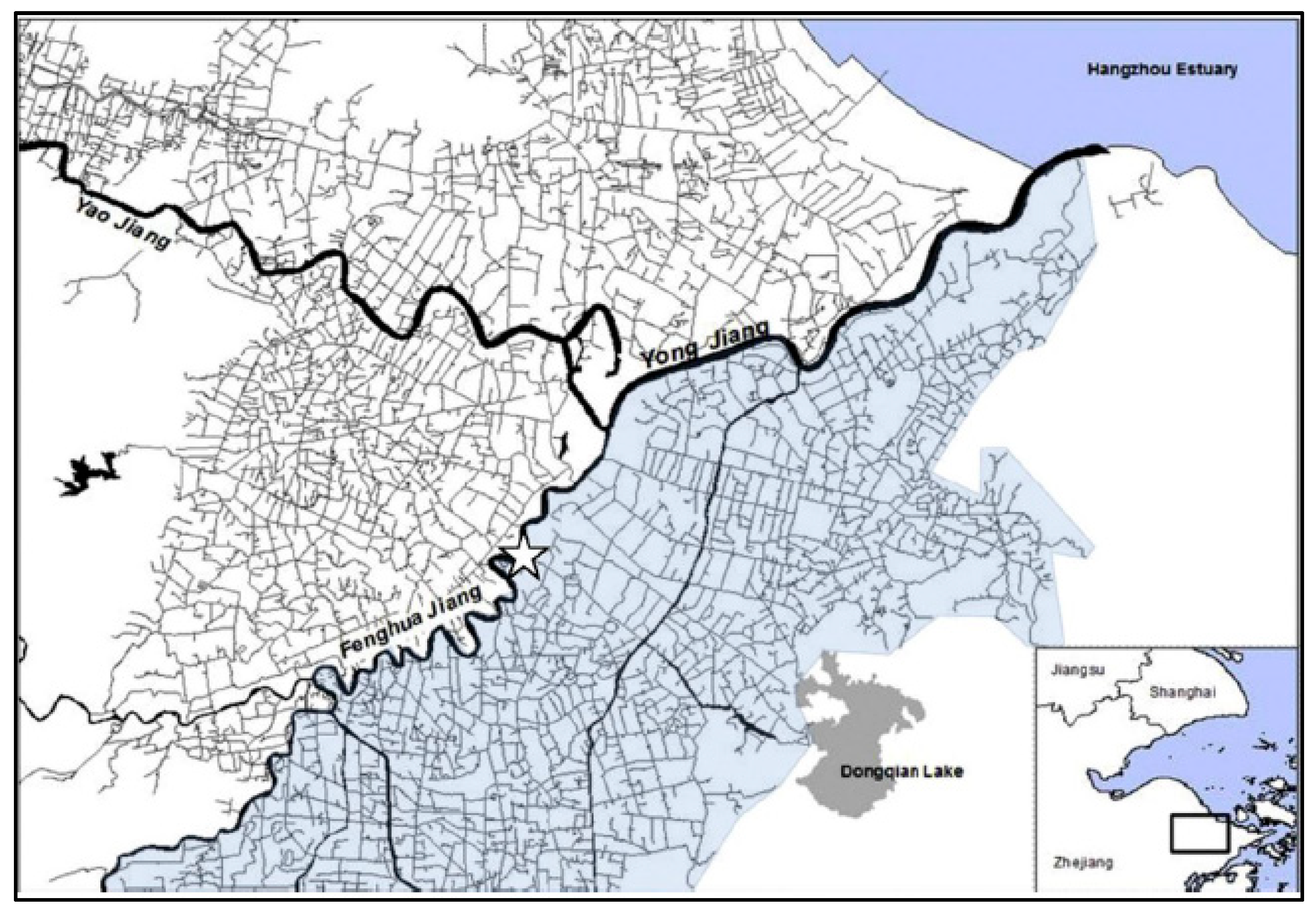
Figure 2.
Flood occurrence after typhoon Muifa on 13 September and inundation of the swale. Photo source: Lingwen Lu (approved to use the photos).
Figure 2.
Flood occurrence after typhoon Muifa on 13 September and inundation of the swale. Photo source: Lingwen Lu (approved to use the photos).
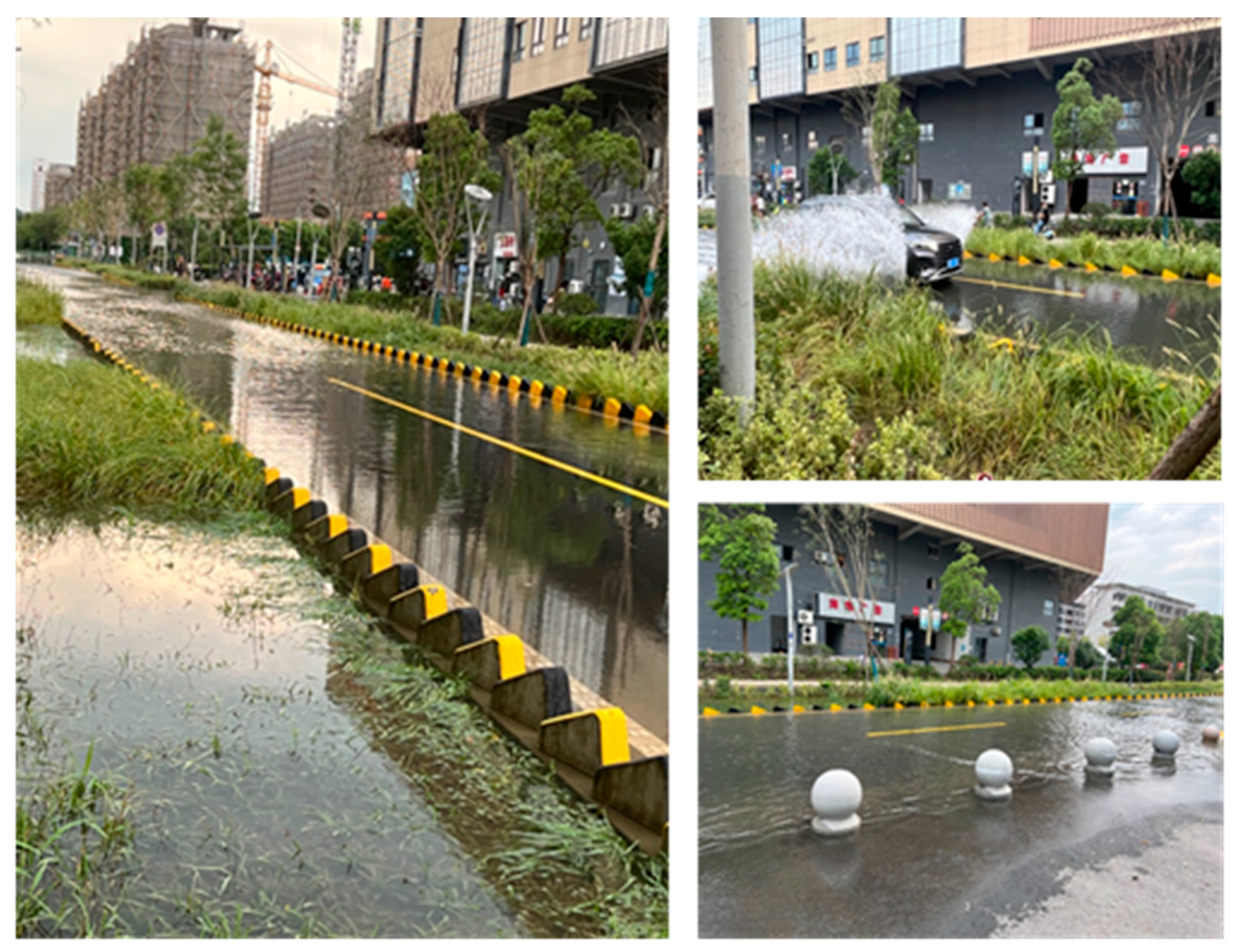
Figure 3.
Figure 3. The flow chart of the methodology and coding of this study (Source: Xiaolei Pei and Faith Ka Shun Chan).
Figure 3.
Figure 3. The flow chart of the methodology and coding of this study (Source: Xiaolei Pei and Faith Ka Shun Chan).
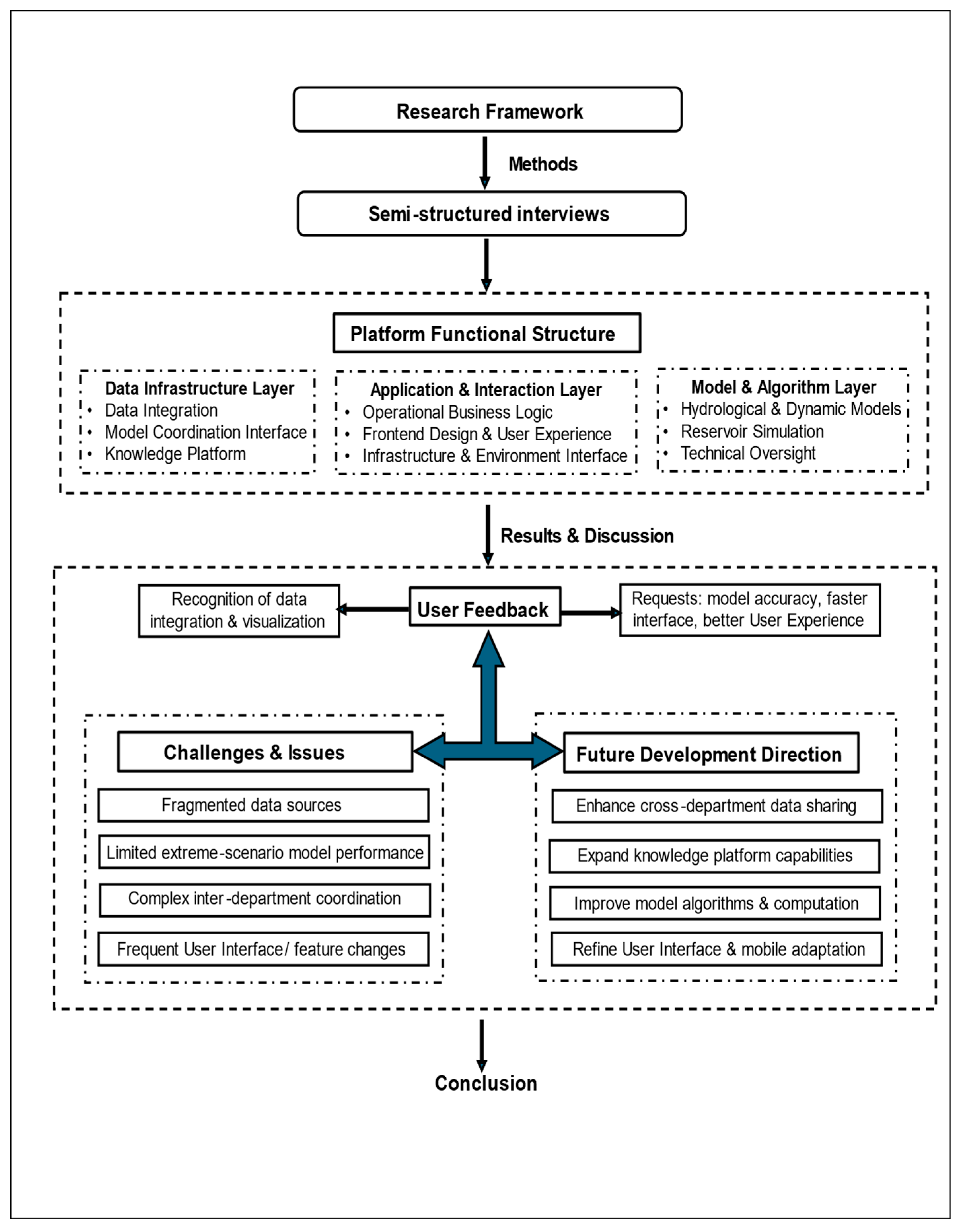
Figure 4.
Overall DT framework in the Ningbo case adopted by Peng (2025).
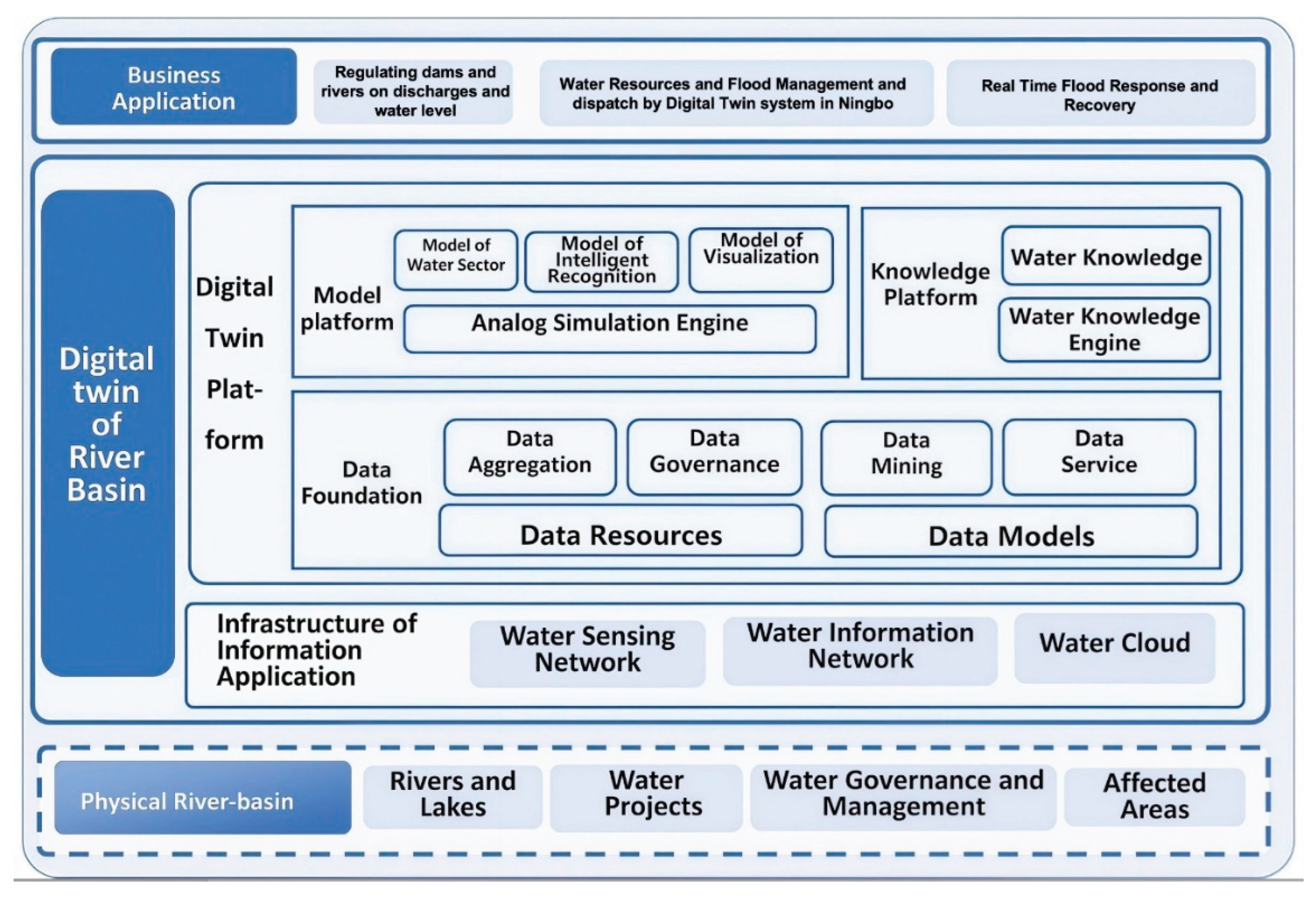

Table 1.
The information of the interviewees (N=11).
| Interviewee | Occupation and Characteristics | Job Nature |
|---|---|---|
| Engineer A | Software Developer and System Designer | Focus on system architecture and software development, ensuring stable system design and scalable platform functions. |
| Engineer B | Lead on Core Business Logic and Operational Support | Handles business rule formulation, operational logic, and decision-support functions to align platform outcomes with real-world needs. |
| Engineer C | Frontend Interface - User Experience and Functionality Optimisation | Responsible for user-facing interface design, usability, and interaction workflows to ensure intuitive and efficient system operation |
| Engineer D | Backend Developer - Model Integration and System Coordination | Specialises in backend services, coordinating different models and ensuring smooth data exchange and system stability. |
| Engineer E | Hydrological & Hydrodynamic Modelling and Computational Core Developer | Works on hydrological and hydrodynamic model kernels, numerical solvers, and simulation engines for flood forecasting and water level prediction. |
| Engineer F | Hydrological & Hydrodynamic Modelling and Computational Core Developer (Hydrological Model) | Focuses on hydrological modelling, operational rules simulation, and integrating reservoir management into system-wide hydrological forecasts. |
| Engineer J | Chief Engineer | Provides overall technical oversight, ensures cross-team coordination, and manages strategic decision-making for system reliability. |
| Engineer H | Knowledge Platform and Data System Engineer | Responsible for knowledge management, data integration, and maintaining information-sharing systems within the platform. |
| Engineer I | Infrastructure and Environmental System Engineer | Works on infrastructure-related models and environmental systems, ensuring the platform supports sustainable and resilient operations. |
| Scholar A | Dams and water scientists for hydrology and hydro-ecology | Responsible for the research of dams, water discharge and freshwater ecology |
| Scholar B | Drainage and Flood Engineering | Responsible for drainage construction, modelling and flood management |
Disclaimer/Publisher’s Note: The statements, opinions and data contained in all publications are solely those of the individual author(s) and contributor(s) and not of MDPI and/or the editor(s). MDPI and/or the editor(s) disclaim responsibility for any injury to people or property resulting from any ideas, methods, instructions or products referred to in the content. |
© 2025 by the authors. Licensee MDPI, Basel, Switzerland. This article is an open access article distributed under the terms and conditions of the Creative Commons Attribution (CC BY) license (http://creativecommons.org/licenses/by/4.0/).
Copyright: This open access article is published under a Creative Commons CC BY 4.0 license, which permit the free download, distribution, and reuse, provided that the author and preprint are cited in any reuse.