

Submitted:
15 December 2025
Posted:
16 December 2025
You are already at the latest version
Abstract
The study presents a comparative analysis of the sorption properties of natural and modified diatomite and zeolite of Kazakhstani origin under dynamic conditions of adsorption of methylene blue (MB). The aim of the study was to experimentally identify the effect of thermal and chemical treatment on the physico-chemical characteristics of minerals and their sorption efficiency. The samples were characterized by BET analysis, Fourier transform infrared spectroscopy (FTIR), X-ray Diffraction (XRD), X-ray Fluorescence (XRF), and determination of the residual dye concentration after passing the solution through the sorbent layer. It has been shown that moderate heat treatment of diatomite at 400 °C increases its specific surface area from 34.25 to 46.32 m2/g and improves sorption capacity (removal of MB ≈ 53 %), while heating to 700 °C leads to a decrease in porosity and sorption efficiency (≈ 39 %). For zeolite, it was found that the natural sample has limited sorption activity (≈ 58 %), but thermal activation (500 °C) increases the result to ≈ 72 %. The most pronounced effect is observed after acid modification and subsequent calcination: the specific surface area increases to 80.32 m2/g, and the degree of removal of methylene blue reaches about 86%, which is comparable or exceeds the literature data for similar materials. Comparative analysis shows that the sorption activity of diatomite is mainly determined by textural changes during moderate heat treatment, whereas the effectiveness of zeolite increases significantly due to chemical modification and an increase in the number of available ion exchange centers.
Keywords:
diatomite
; zeolite
; thermal modification
; acid activation
; water adsorption
; dynamic sorption
1. Introduction
Conservation of ecosystem services is a fundamental condition for sustainable development, since they ensure the functioning of key environmental processes: natural regulation of water quality, maintenance of biological diversity, reproduction of biological resources and mitigation of anthropogenic impact on the environment [1,2,3]. However, against the background of ongoing industrialization, it is the industrial sector that remains one of the most significant sources of pollution of aquatic ecosystems. Industrial wastewater contains a wide range of organic and mineral substances - phosphates, ammonium compounds and nitrates, heavy metal ions, various dyes, fat-containing components, etc. Their intake disrupts the ecological balance, accelerates the degradation of water bodies and leads to a decrease in their ability to perform ecosystem functions [4].
In recent years, increasing attention has been directed toward the development of environmentally oriented water treatment technologies aimed at mitigating harmful impacts and promoting the rational use of natural resources [5]. Among such approaches, sorption methods based on the use of natural and modified materials such as diatomite, biochar, zeolites, bentonite clays, shungite, etc. are of particular interest [6,7,8,9]. These sorbents are characterized by a high specific surface area, a developed pore structure, and the ability to effectively bind a wide range of pollutants. Their use is considered as a more environmentally friendly option compared to traditional purification methods (coagulation, flocculation, chemical precipitation), which require large volumes of reagents and often generate significant amounts of secondary waste [10].
Many studies indicate that natural mineral sorbents have significant potential for removing dangerous pollutants, including heavy metals and organic substances [11,12,13,14,15]. At the same time, the sorption capacity is determined by the mineralogical composition, specific surface area and availability of natural raw materials, which makes the choice of a specific material critically important. Kazakhstan has significant reserves of local mineral raw materials, including diatomites and zeolites, which are concentrated in a number of deposits (West Kazakhstan, Aktobe and Zhambyl regions) [10,11,12,13,14,15,16].
Diatomite is a sedimentary siliceous rock formed by shells of diatoms. It is characterized by a high content of amorphous silica (SiO₂). The porous structure (Figure 1a) and the presence of functional hydroxyl groups on the surface of the diatomite contribute to the adsorption of various organic and inorganic pollutants. However, the chemical and textural composition of diatomite can vary significantly depending on the deposit, which affects its operational properties and efficiency in wastewater treatment processes [17,18,19]. Recent studies demonstrating the effectiveness of diatomite and its modifications for the removal of various pollutants are of particular interest for wastewater and polluted water treatment. Thus, it was shown in [20] that thermally or chemically modified diatomite can act as an affordable and effective adsorbent in the purification of contaminated water. Diatomite demonstrates high phosphate removal rates: in laboratory tests, the degree of purification reaches 90-97 %, while in dynamic column systems it remains at the level of 50-70 %. An additional modification makes it possible to further enhance these properties. In particular, hydrogel granules based on diatomite treated with lanthanum compounds showed a sorption capacity of 58.9 mg/g and a removal efficiency of over 92.5 % when tested on real wastewater [21]. Additionally, a functionalized DTCₐ-Na diatomite (treated with sulfuric acid, NaCl, then calcined at 400 °C) achieved more than 80% removal of ammonium ions at pH 6–10 with a 60-minute contact time [22]. Similar results were obtained for diatomite modified with lanthanum-containing components (La₂O₂CO₃@AD), which demonstrated high phosphate binding efficiency [23].
Zeolites are crystalline aluminosilicate minerals with a microporous (Figure 1b), three-dimensional skeleton structure consisting of SiO₄ and AlO₄ tetrahedra. Due to this structure, they have a high ion exchange capacity, developed porosity, and a significant specific surface area, which makes them effective sorbents for removing organic compounds, metal ions, and ammonium from water [24,25,26].
Zeolites are characterized by a significant cation exchange capacity and a preferred interaction with heavy metal cations due to the negative charge of the aluminosilicate frame and the availability of available exchange positions. These structural and chemical features determine the high efficiency of zeolites in the extraction of ions such as Pb2⁺, Cu2⁺, Ni2⁺ and Cd2⁺ from polluted aquatic environments [27]. Their adsorption capacity is determined by chemical and structural parameters, primarily the Si/Al ratio and the type, number and location of compensating cations in the framework structure. These characteristics can be purposefully changed by modifying the natural zeolite by heat treatment or exposure to acids, alkalis and inorganic salts. This effect leads to a redistribution of cations, a change in the availability of the pore space and, consequently, to the regulation of the sorption properties of the material. During the contact of the zeolite with the solution, the mechanisms of ion exchange and adsorption act together, ensuring the effective extraction of ammonium and other cationic pollutants.
Some studies describe that additional chemical modification of zeolite with solutions of inorganic salts (NaCl, CaCl₂, BaCl₂, Nh₄Cl, FeCl₃) or cationic surfactants such as hexadecyltrimethylammonium bromide (HDTMA-Br) can significantly enhance the sorption properties of zeolite and increase its efficiency in water purification processes [28,29]. The structural and surface characteristics of zeolites can also be changed by treatment with alkaline (NaOH, Ca(OH)₂) or acidic solutions (HCl, HNO₃), which act on the framework of the mineral and regulate its physico-chemical parameters [30,31].
High purification rates are achieved not only by using individual natural sorbents, but also by combining them. The use of composites based on natural silicate materials also demonstrates high efficiency. In particular, the combination of thermally modified zeolite and diatomite in a 3:2 mass ratio ensured the removal of nitrogen and phosphorus at the level of 92.07 % and 84.61 %, respectively [32], which confirms the significant potential of natural and modified aluminosilicate sorbents in water treatment technologies. These results indicate the expediency of further study of combined systems. In this work, however, the main focus is on optimizing the properties of diatomite and zeolite separately, which is a necessary step for the subsequent formation of effective composites.
It should be emphasized that diatomite and zeolite are characterized by fundamentally different mineralogical nature, structural organization and chemical composition. Accordingly, the purpose of this study was not to directly compare their sorption efficiency as equivalent materials.
In this context, diatomite was considered as a model natural sorbent, for which the effectiveness of exclusively thermal activation as an environmentally neutral and technologically simple modification method was evaluated. Thermal activation of diatomite was chosen in order to assess the extent to which this approach is capable of providing sorption characteristics comparable to more complex thermo-chemical treatment of zeolite.
The scientific novelty of this study is to analyze the effectiveness of various approaches to the modification of natural mineral sorbents of Kazakhstani origin, taking into account their structural and chemical characteristics, as well as to assess the effect of thermal and thermo-chemical treatment on the sorption characteristics of diatomite and zeolite. The results obtained form the scientific basis for the subsequent creation of functional and composite sorption systems based on natural silicates.
The purpose of this work is to experimentally substantiate the potential of natural and modified sorbents (diatomite and zeolite) in water purification processes, as well as to evaluate the applicability of environmentally oriented and technologically sound activation methods aimed at reducing the negative impact on aquatic ecosystems.
2. Materials and Methods
2.1. Raw Materials and Preparation of Sorbents
Natural zeolite from the Shankanai deposit (Zhambyl region) and natural diatomite from the Utesai deposit (Aktobe region) were used as raw materials.
Before the experiments, the diatomite was mechanically crushed to homogeneous fractions (0.5-2 mm), after which it was dried at 105 °C to a constant weight. Natural diatomite was subjected to heat treatment at temperatures of 400, 500 and 700 °C, 60 min to identify the effect of heating on the phase composition and sorption properties.
Natural zeolite (0.5–2 mm fraction, dried at 105 °C) was subjected to the following types of activation: (1) thermal treatment at 500 °C, 60 min; (2) combined acid treatment (57 %) with HNO₃ followed by treatment at 500 °C, 60 min. The activation technique is based on the work of [33].
All adsorption experiments were performed at least in duplicate; deviations of the results did not exceed 3-5 %, therefore, for clarity, the errors are not shown on the graphs.
2.2. Assessment of Structural, Chemical, and Microstructural Characteristics
The surface morphology and microstructural features of the natural diatomite were examined using an electron-probe microanalyzer JXA-8230 (JEOL) operated at an accelerating voltage of 20 kV, beam current up to 5 nA, and a dead-time up to 20 %. Analyses were performed in the backscattered-electron (BSE) imaging mode, which provides enhanced compositional contrast (atomic-number contrast) and thus facilitates reliable discrimination of regions with different elemental composition and density.
The phase composition of the raw and thermally treated diatomite samples was determined by X-ray diffraction (XRD) using a Bruker D8 Advance diffractometer (Germany) with Cu K-α radiation (λ = 1.5406 Å). Data were collected in the 2θ = 5°–70° range with a step size of 0.02°. Mineral phase identification was performed by comparison with the PDF-2 database, allowing assessment of temperature-induced changes in crystalline structure.
The oxide composition of the starting zeolite and diatomite samples was quantified by X-ray fluorescence (XRF) analysis on a Panalytical Axios 1 kV spectrometer. The XRF results provided quantitative concentrations of the major oxides (SiO₂, Al₂O₃, Fe₂O₃, CaO, MgO, K₂O, Na₂O, TiO₂, etc.), which were used to interpret the influence of chemical composition on sorptive performance.
Surface functional groups were characterized by Fourier-transform infrared spectroscopy (FTIR) using a Bruker Alpha II spectrometer equipped with the NPVO attachment. Spectra were acquired over the 4000–400 cm⁻¹ wavenumber range. FTIR data were employed to assess changes in surface chemistry induced by thermal treatment and by the sorption process, allowing detection of the appearance or disappearance of characteristic functional groups after modification of the minerals.
2.3. Specific Surface Area and Sorption Tests
The specific surface area of the raw diatomite samples was determined by low-temperature argon adsorption using a Sorbthometer (KATACON). Prior to analysis, samples were dried at 100 °C to constant mass and degassed in the instrument sample preparation station under a flowing Ar–He gas mixture. Adsorption–desorption isotherms were recorded at liquid-nitrogen temperature, and the specific surface area was calculated automatically using the BET method.
Adsorptive performance was evaluated using methylene blue (MB) as a model organic dye. The stock MB solution was prepared in distilled water: the calculated amount of dye was dissolved in a 2 L volumetric flask and mixed until a homogeneous solution was obtained.
All sorbents were sieved to the 0.5–1.0 mm fraction and dried at 105 °C prior to the experiments. Thermally treated zeolite (Z_500 °C and Z_500 °C_chem) and diatomite samples are designated (D_400 °C and D_700 °C) according to the treatment temperature.
Sorption experiments were performed in dynamic mode at 23 °C. Before and after contact with the sorbent, the filtrates were analyzed to determine the MB concentration using a DR 3900 spectrophotometer. Dynamic adsorption tests were carried out in vertical glass columns with an internal diameter of 4.0 cm and a sorbent bed height of 2.5 cm. The mass of sorbent in each run was 10 g. The MB solution was fed by gravity at a rate of 50 mL·min⁻¹, processing a total volume of 200 mL per experiment.
3. Results and Discussion
3.1. Structural-Morphological and Elemental-Phase Characteristics of Minerals
The surface structure of natural diatomite is represented by aggregates and individual particles with dimensions from the submicron level (Figure 2a). The bulk of the particles are made up of silica fragments corresponding to amorphous SiO2 with inclusions of Mg, Al, K and Fe (Figure 2b). Along with the main structural elements, isolated impurity formations are revealed: NaCl crystals and TiO2 particles. The data obtained are consistent with the morphological features of natural diatomite described in the literature and reflect the fragmented porous structure characteristic of diatom sediments.
The results of the XRF analysis showed that the diatomite of the Utesai deposit is characterized by a high content of silicon dioxide (SiO₂), the content of which is 82.63-83.79 % (Table 1). The second most important components are Al₂O₃ (8.33-8.65 %) and Fe₂O₃ (2.63-2.82%), which are present in the form of aluminosilicate and iron-containing phases. The concentration of TiO₂ (1.22-1.33 %) and MgO (~1.1 %) indicates the presence of mineral impurities typical of diatomites of natural origin.
According to Table 1, the natural zeolite of the Shanghanai deposit is characterized by a more variable and chemically complex oxide composition compared to diatomite. The main structure-forming component is silica (SiO₂), the content of which varies between 60.0-74.0 %, reflecting the high degree of silicatization of the crystalline framework and the inherent aluminosilicate nature of zeolites. The second oxide in terms of content is Al₂O₃ (14.0-15.0 %), which provides the basis of the tectosilicate structure and determines the cation-exchange properties of the mineral.
The Fe₂O₃ content in zeolite is significantly higher than in diatomite and can range from 1.40 to 5.83 %, which indicates the presence of iron-containing phases and may affect the sorbent's resistance to redox processes. The range of concentrations of MgO (0-2,120 %) and K₂O (0.660-4.030 %) indicates the variability of impurity minerals and sorbed cations due to the geochemical features of the deposit. The presence of alkaline earth and rare earth oxide - CaO (0.130-6.400 %) - reflects the ability of zeolites to include cations of various valences in the structure due to a highly developed ion exchange system.
The content of TiO₂ (0.070-0.700 %), Na₂O (0.610-5.450 %) and P₂O₅ (0.012-0.173 %) indicates the presence of mineral oxidants and possible adsorbed compounds of a phosphate nature. The concentrations of MnO (0.067-0.199 %) also confirm the presence of manganese impurities typical of aluminosilicate rocks of volcanogenic or hydrothermal origin.
3.2. The Effect of Heat Treatment on the Oxide Composition of Diatomite
The chemical composition of natural diatomite changes slightly when heated in the range of 400-700 °C (Table 2), which indicates the stability of the silica base of the material. The most noticeable fluctuations affect the content of Cl and SO₃, which may be related to the removal of volatile impurity compounds. The concentrations of MgO and K₂O also vary within the limits typical for diatomites, which indicates the preservation of the general oxide structure even at elevated temperatures.
According to the results of XRF, diatomite contains more than 82 % SiO₂ and smaller amounts Al₂O₃, MgO, K₂O, Na₂O and TiO₂, indicating that it is silicate in nature and suggests the presence of clay and aluminosilicate minerals. These assumptions are supported by XRD analysis data, which shows that quartz is the main mineral, as well as muscovite, mica, dickite, montmorillonite, and sodium aluminosilicates (Figure 3).
Heat treatment leads to gradual phase transformations. At 400 °C, the initial mineralogical structure is preserved, but a decrease in the content of some aluminosilicate phases and the formation of stable titanium oxides is recorded. At 700 ° C, a redistribution of aluminosilicates and the formation of microcline and albite is observed against the background of a decrease in the amount of montmorillonite due to dehydration. The appearance of modified forms of SiO₂ confirms partial transformations of silica at the maximum processing temperature.
A joint analysis of the XRF and XRD data makes it possible to trace the stability of the diatomite oxide structure and the sequence of phase changes under the influence of heating. The results obtained demonstrate that heat treatment affects not only the impurity components, but also the crystallochemical state of the aluminosilicate phases.
3.3. FTIR Analysis Results
The FTIR spectra of the initial and heat-treated diatomite samples demonstrate a set of bands typical of silica-containing materials corresponding to vibrations of the silicon-oxygen framework. In all cases, the most intense band is recorded in the range of 1006-1027 cm⁻1 (absorption ≈ 0.15), which corresponds to asymmetric valence vibrations of Si–O–Si bonds and indicates the preservation of the structural backbone of amorphous silica regardless of the processing temperature (Figure 4).
Bands at 423-452 cm⁻1 (absorption ≈ 0.06) are detected in the low–frequency region due to O–Si-O deformation vibrations, which is also a characteristic feature of a diatomic silicon matrix. The intensity and position of these bands remain almost unchanged, which indicates the high temperature stability of SIO₄ structural units.
Additional small bands are observed in the ranges 528-560 cm⁻1, 695-696 cm⁻1, 797-798 cm⁻1 and 621-622 cm⁻1. They are characteristic of various types of symmetrical and deformation vibrations in silica-containing and clay phases present in natural diatomite. Their low intensity and reproducibility between samples confirm the absence of significant structural transformations during heating.
Comparison of the spectra of samples calcined at 400, 500, and 700 °C with the untreated material shows that thermal treatment within this temperature range does not lead to a noticeable shift of the main Si-O-Si and O-Si-O bands. Minor variations—for example, the shift of the maximum from 1025.17 cm⁻¹ to 1027.25 cm⁻¹ in the sample treated at 700 °C - are minimal in nature and may be associated with local rearrangement of the silica network or the removal of surface-bound water.
The FTIR spectra of natural zeolite and samples subjected to thermal treatment and acid modification exhibit the characteristic bands of aluminosilicate materials corresponding to framework Si-O-Al and Si-O-Si vibrations.
For the raw zeolite, the main intense absorption band is observed at 983 cm⁻¹ (absorbance ≈ 0.15), corresponding to the asymmetric stretching vibrations of bridging Si-O-T bonds (T = Si, Al). The presence of this band indicates a structured aluminosilicate framework typical of zeolites. In the low-frequency region, bands in the range of ≈ 423-452 cm⁻¹ (absorbance ≈ 0.02) are recorded, which are interpreted as bending/rocking (out-of-plane) vibrations of bridging Si-O-Si and Si-O-Al bonds in aluminosilicate frameworks, as well as weaker bands around 518 and 581 cm⁻¹ reflecting internal vibrations of SiO₄ and AlO₄ tetrahedra. Weak bands at 739-777 cm⁻¹ are associated with symmetric deformations of framework groups.
Thermal treatment of the zeolite at 500 °C without chemical modification does not lead to shifting or the appearance of new bands: the main band remains in the region of 981 cm⁻¹ (absorbance ≈ 0.15). Minor bands at 441 cm⁻¹ and 517 cm⁻¹ are nearly identical to those of the untreated sample, indicating high thermal stability of the framework. The presence of weak bands in the 645-740 cm⁻¹ region indicates preservation of the aluminosilicate structure and the absence of substantial degradation.
Modification of the zeolite with nitric acid followed by thermal treatment results in more pronounced changes in the FTIR profile. The main band shifts to 1012 cm⁻¹, which may be attributed to partial removal of framework aluminum centers and a relative increase in the fraction of Si-O-Si fragments, which is typical of acid decationization and dealumination. In the low-frequency region, bands at 434-448 cm⁻¹ are recorded, close to those of the original material, indicating retention of the basic framework structure. Additional weak bands at 536-584 cm⁻¹, as well as those at ~792 cm⁻¹ and 645 cm⁻¹, reflect the presence of distorted SiO₄ groups and the emergence of structural units associated with partial rearrangement of the framework under acid treatment. A small band in the range of ~1631 cm⁻1 can be associated either with residual organic impurities or with valence vibrations of adsorbed water molecules (V₂ is the deformation regime), which often manifest themselves in zeolites and aluminosilicates even after heat treatment.
Thus, FTIR analysis shows that thermal treatment at 500 °C does not significantly alter the structure of natural zeolite, whereas acid modification causes shifting of the main bands and the formation of new weak signals, indicating structural transformations associated with aluminum removal and changes in the Si/Al ratio. These changes may be important for further interpretation of differences in the sorption properties of the obtained materials.
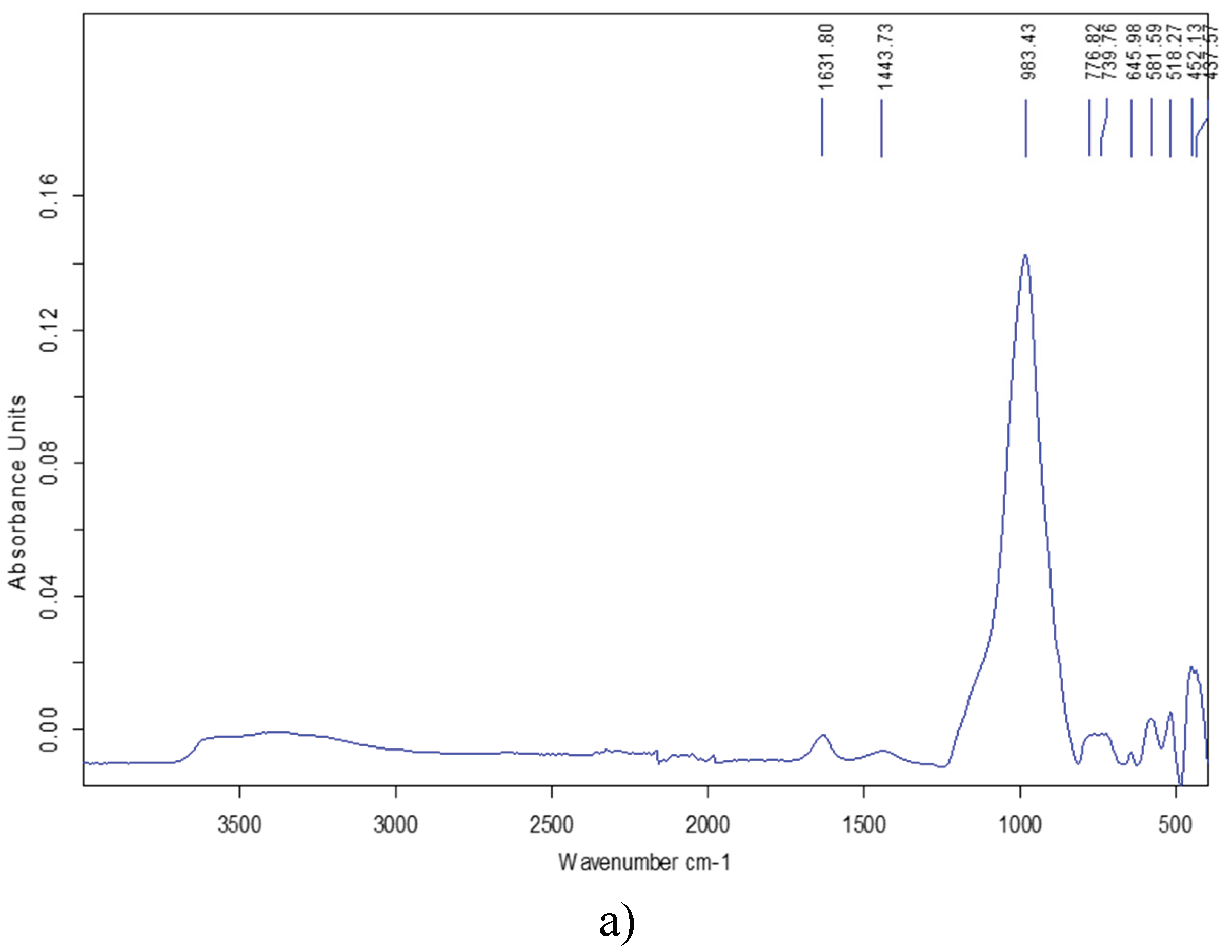
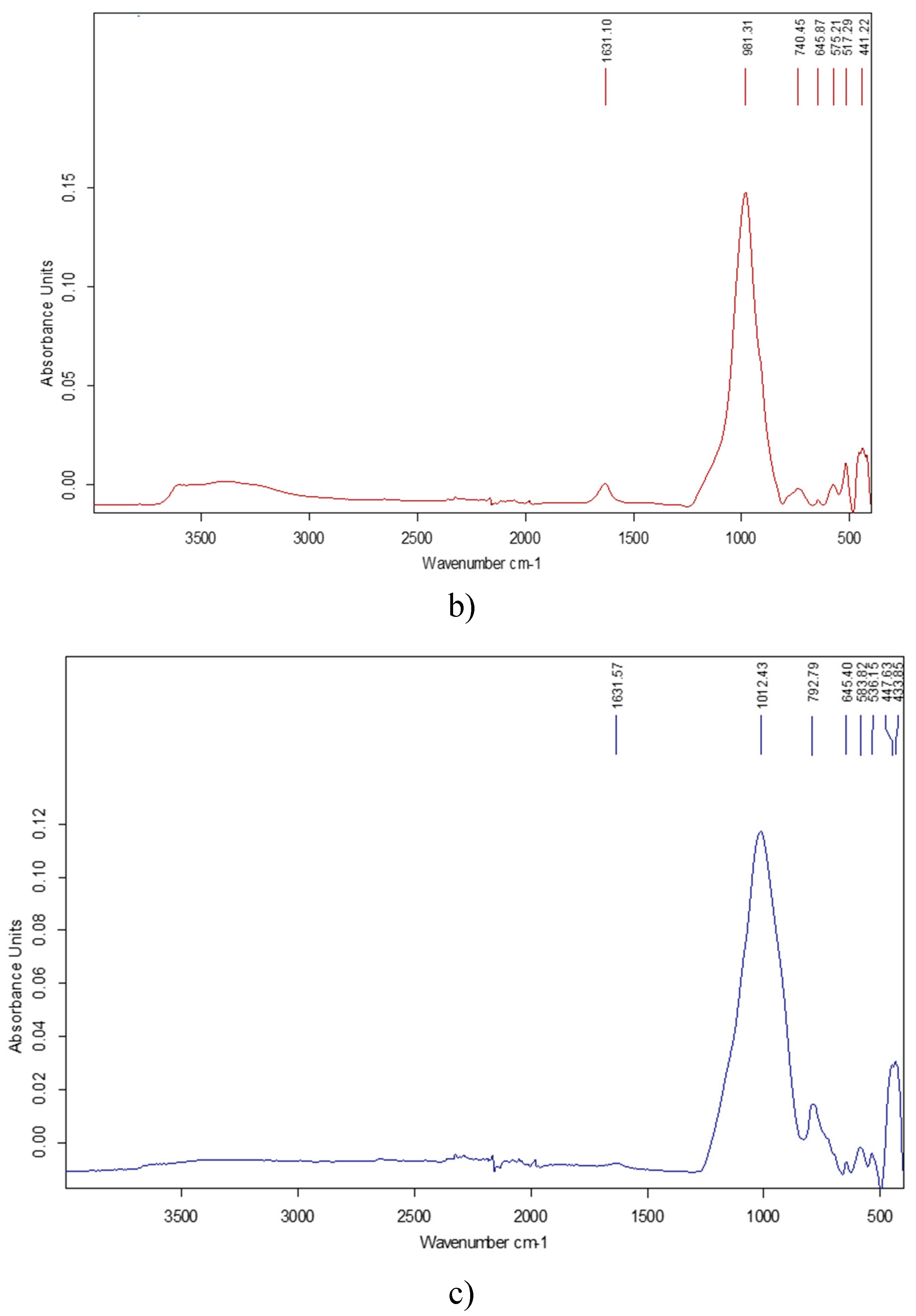
Figure 5.
IR spectra of zeolite samples: a) initial zeolite b) 500 °C zeolite without modification c) 500 °C zeolite with modification.
Figure 5.
IR spectra of zeolite samples: a) initial zeolite b) 500 °C zeolite without modification c) 500 °C zeolite with modification.
3.4. BET-Analysis and Testing of Dynamic MB Adsorption
Certain values of the specific surface area of diatomite and zeolite samples are shown in Figure 6. According to the data obtained, natural diatomite has a BET surface of 34.25 m2/g, whereas heat treatment at 400 °C increases it to 46.32 m2/g, and heating to 700 °C, on the contrary, leads to a decrease to 16.77 m2/g. These results are consistent with previously established structural changes: moderate heat treatment helps to open pores and remove volatile impurities, while high-temperature heating causes partial compaction and sintering of the structure, reducing the available porosity.
Zeolites are characterized by higher surface area values compared to diatomite: from 21.80 m2/g in the initial sample to 34.56 m2/g after heat treatment and 80.32 m2/g after acid modification. The latter indicator reflects a significant increase in the available surface due to the removal of carbonate and clay impurities, changes in acid-base properties, and partial disclosure of the microporous structure of the zeolite.
The obtained data on the removal of MB demonstrate a distinct difference in the effectiveness of sorbents depending on the processing method. At an initial dye concentration of 820 mg/l, the residual concentration after passing through the diatomite layer was 387 mg/l for untreated diatomite (52.8 % removal), 243 mg/l for a diatomite sample heat-treated at 400 °C (70.4 %), and 501 mg/l for a sample after heating to 700 °C. (38.9 %), which is consistent with some data from the literature [34,35,36]. Thus, moderate heat treatment confirms an increase in sorption activity, whereas high-temperature calcination leads to degradation of the pore structure and, as a result, a decrease in absorption efficiency.

Table 3.
The effect of physical and chemical activation on the sorption capacity of samples.
| Indicators | Value | ||||||
| Samples | D_400 °C | D_700 °C | D_untre | Z_untre | Z_500 °C | Z_500 °C_chem | |
| Initial concentration C₀, mg/l | 820 | 243 | 501 | 387 | 343 | 228 | 115 |
| Weight of sorbent (m_sorbent), g | 10 | ||||||
| Sorbent fraction, mm | 0,5-1 | ||||||
| Column diameter D, cm | 4,0 | ||||||
| Layer height H, cm | 2,5 | ||||||
| Volume of the supplied solution, ml | 200,0 | ||||||
| Flow rate Q, ml/min | 4 | ||||||
| Feed type (gravity-fed / pump-driven) | gravity-fed | - | - | ||||
A different trend is observed for zeolite: the untreated sample removed 58.2 % of MB, the sample heat-treated at 500 °C removed 72.2 %, and the sample chemically modified with nitric acid removed 86.0 %. Thus, acid treatment proved to be the most effective, which is consistent with literature data [37] and an increase in specific surface area, the formation of additional acid centers involved in the sorption of organic dyes. The improvement after chemical treatment is typical and is explained both by the opening of micropores and the removal of impurities, as well as by a change in the chemical nature of the surface (protonation/replacement of cations), which increases the affinity for cationic dyes. It should be noted that the nature of the influence of the specific surface area and textural properties of the sorbent can vary significantly depending on the nature of the target contaminant. In particular, for anionic compounds such as phosphate ions, diatomite can demonstrate significantly higher phosphate removal efficiency, which has been confirmed in a number of studies [20,23].
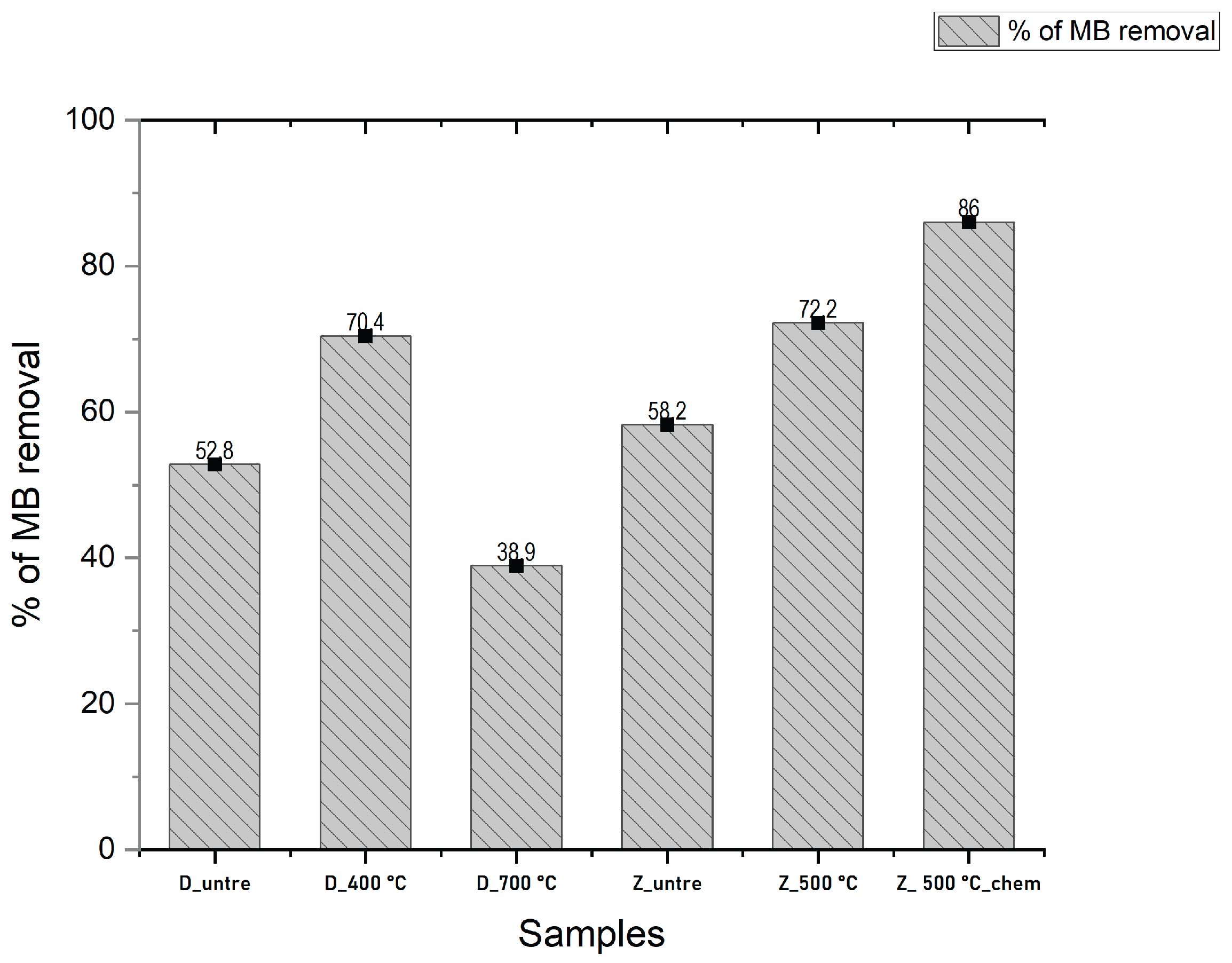
Figure 7.
Sorption efficiency of MB.
Despite the differences in experimental conditions and MB concentrations, the ranges agree fairly well and confirm the correctness of the results obtained. It should be noted that under dynamic flow conditions, sorption efficiency is usually lower than under static conditions, because the contact time is shorter and the sorbent operates under non-equilibrium conditions. However, dynamic adsorption experiments more closely approximate real-world conditions. In addition, the initial dye concentration has a significant effect on the percentage of removal: at higher values (above 500-600 mg/l), the effectiveness of most aluminosilicates may decrease due to saturation of the available centers.
The results obtained confirm the possibility of using natural diatomite and zeolite after simple activation for water purification. Zeolite is especially effective after acid activation, which, despite additional reagents, may be justified for removing persistent pollutants. Diatomite, being inexpensive and environmentally friendly, can be used for preliminary treatment or in combination with zeolite to jointly remove different types of ions [32]. Chemical modification of diatomite can be the subject of subsequent studies aimed at in-depth study of the combined effects of thermo- and chemical activation.
4. Conclusions
The conducted studies have shown that natural diatomites of Kazakhstan have a relatively low, but sufficient specific surface area for practical use, and moderate thermal activation contributes to the improvement of their structural characteristics. In particular, treatment at 400 °C increased the surface area of diatomite from ≈34.25 to ≈46.32 m2/g, which was accompanied by an increase in sorption activity. An increase in temperature to 700 °C, on the contrary, led to a decrease in the specific surface area due to partial sintering of the structure. At the same time, heat treatment did not cause significant changes in the oxide composition and the spectrum of functional groups, which indicates the preservation of the basic chemical nature of the material.
A fundamentally different behavior is noted for zeolites. Thermal activation of natural zeolite moderately increases its surface and textural characteristics, but the most significant changes are achieved with chemical modification. Acid treatment followed by calcination led to an increase in the specific surface area from ≈21.8 to ≈80.32 m2/g. This is due to the removal of impurities, the opening of the microporous structure, and an increase in the number of available ion exchange centers. Thus, unlike diatomite, whose sorption capacity is mainly determined by its mesoporous structure and relatively inert surface, the activity of zeolite significantly depends on its acid-base properties and the degree of modification.
The data obtained on the dynamic sorption of methylene blue confirm the differences between the materials: moderate heat treatment increases the efficiency of diatomite, but the potential for its chemical modification remains limited. Zeolite, on the other hand, demonstrates relatively low efficiency in its natural state, but its sorption capacity increases significantly after thermal and especially chemical activation, which is consistent with its structural and chemical nature.
The scientific significance of the work is to establish the relationship between processing methods (temperature and chemical) and changes in the sorption properties of Kazakhstani minerals, as well as to identify fundamental differences in the activation mechanisms of diatomite and zeolite. The practical value lies in the fact that the results demonstrate the possibility of creating affordable and effective sorbents based on local mineral raw materials for wastewater treatment of various compositions.
A promising area of further research is the development of composite sorbents combining diatomite and zeolite in a single functional matrix. Such materials can combine the advantages of both minerals - advanced meso- and microporosity, mechanical stability, and a wide range of active sites - providing increased sorption capacity and selectivity. Additional improvements can be achieved through the use of hydrothermal modification, deposition of functional oxide or carbon nanostructures, as well as optimization of the texture of the material for specific classes of pollutants.
Author Contributions
Conceptualization, G.B., M.A., W.P. and Ye.D.; methodology, G.B., M.A., Ye.D. and O.D.; software, L.K..; validation, D.B. and A.A.; investigation, G.B., L.K., A.Zh. and D.B.; formal analysis, W.P., A.Zh. and D.A.; data curation, G.B., D.A., D.B. and A.A.; writing—original draft preparation, G.B., Ye.D. and A.Zh.; writing—review and editing, G.B., L.K., O.D. and A.A.; visualization, G.B., D.A., A.A. and M.A.; resources, O.D., D.B. and Ye.D.; supervision, M.A., L.K., Ye.D. and O.D.; project administration, W.P. and Ye.D.; funding acquisition, Ye.D. All authors have read and agreed to the published version of the manuscript.
Funding
This work was supported by the Ministry of Science and Higher Education of the Republic of Kazakhstan grant (AP23489070).
Data Availability Statement
The data featured in this study are available on request from the corresponding author.
Conflicts of Interest
The authors declare no conflicts of interest.
Abbreviations
The following abbreviations are used in this manuscript:
| D_400 °C | Diatomite samples with heat treatment at 400 °C |
| D_500 °C | Diatomite samples with heat treatment at 500 °C |
| D_untre | Samples of untreated natural diatomite |
| Z_500 °C | Zeolite samples with heat treatment at 500 °C |
| Z_500 °C_chem | Zeolite samples with chemical activation and subsequent heat treatment at 500°C |
| Z_untre | Samples of untreated natural zeolite |
References
- Grizzetti, B.; Lanzanova, D.; Liquete, C.; Reynaud, A.; Cardoso, A. C. Assessing water ecosystem services for water resource management. Environ. Sci. Policy 2016, 61, 194–203. [Google Scholar] [CrossRef]
- Choudhary, M.; Peter, C. N.; Shukla, S. K.; Govender, P. P.; Joshi, G. M.; Wang, R. Environmental issues: a challenge for wastewater treatment. In Green Materials for Wastewater Treatment; Springer International Publishing: Cham, 2019; pp. 1–12. [Google Scholar] [CrossRef]
- Xu, Zihan; Peng, Jian. Recognizing ecosystem service's contribution to SDGs: Ecological foundation of sustainable develop-ment. Geo. and Sustain 2024, 5, 511–525. [Google Scholar] [CrossRef]
- Salgot, M.; Folch, M. Wastewater treatment and water reuse. Curr. Opin. Environ. Sci. Health 2018, 2, 64–74. [Google Scholar] [CrossRef]
- Dutta, Deblina; Arya, Shashi; Kumar, Sunil. Industrial wastewater treatment: Current trends, bottlenecks, and best practices. Chemosphere 2021, 285, 131245. [Google Scholar] [CrossRef]
- Musina, U. Sh. Environmental properties of shale shungite in the treatment of wastewater of various technogenic origins ( 2015, (2–2), 12. Available online: https://science-education.ru/ru/article/view?id=21572 (accessed on 12 June 2025).
- Caputo, D.; Pepe, F. Experiments and data processing of ion exchange equilibria involving Italian natural zeolites: a review. Microporous Mesoporous Mater. 2007, 105, 222–231. [Google Scholar] [CrossRef]
- Sabitov, A.; Atamanov, M.; Doszhanov, O.; Saurykova, K.; Tazhu, K.; Kerimkulova, A.; Orazbayev, A.; Doszhanov, Y. Surface Characteristics of Activated Carbon Sorbents Obtained from Biomass for Cleaning Oil-Contaminated Soils. Molecules 2024, 29, 3786. [Google Scholar] [CrossRef]
- Bizhanova, G. Z.; Abdibattaeva, M. M.; Musina, U. Sh.; Kurbanova, L. S.; Tusupova, B. Kh. Natural sorbents: an envi-ronmentally friendly alternative for water treatment. Geography and water resources (In Kazakh). 2025, № 3, 23–33 р. [Google Scholar] [CrossRef]
- Zahid, M.; Doszhanov, Ye.; Saurykova, K.; Ahmadi, N.; Bolatova, D.; Kurmanbayeva, M.; Aydarbek, A.; Ihsas, R.; Seitzhanova, M.; Akhmetzhanova, D.; et al. Modification and Application of Natural Clinoptilolite and Mordenite from Almaty Region for Drinking Water Purification. Molecules 2025, 30, 2021. [Google Scholar] [CrossRef] [PubMed]
- El Sayed, E. E. Natural diatomite as an effective adsorbent for heavy metals in water and wastewater treatment (a batch study). Water Sci. 2018, 32, 32–43. [Google Scholar] [CrossRef]
- Łach, M.; Pławecka, K.; Marczyk, J.; Ziejewska, C.; Hebdowska-Krupa, M.; Nykiel, M.; Hebda, M.; Miernik, K.; Mierzwiński, D.; Korniejenko, K.; Mikuła, J.; Smoroń, K. Use of diatomite from Polish fields in sustainable development as a sorbent for petroleum substances. J. Clean. Prod. 2023, 389, 136100. [Google Scholar] [CrossRef]
- Myrzalieva, S.; Bagasharova, J.; Akilbekova, S.; Serikbayev, P. Natural mineral raw materials as granular filtering materials in industrial and waste water treatment. Kompleksnoe Ispolzovanie Mineralnogo Syra = Complex Use of Mineral Resources 2024, 332(1), 70–78. [Google Scholar] [CrossRef]
- Nikolaeva, L. A.; Aikenova, N. E.; Demin, A. V. Purification of wastewater of industrial enterprises from phenols by modified energy waste. RUDN J. Ecol. Life Saf. 2021, 29, 174–181. [Google Scholar] [CrossRef]
- Zhao, Y.; Tian, G.; Duan, X.; Liang, X.; Meng, J.; Liang, J. Environmental Applications of Diatomite Minerals in Removing Heavy Metals from Water. Ind. Eng. Chem. Res. 2019, 58, 11638–11652. [Google Scholar] [CrossRef]
- Nurgain, A.; Nazhipkyzy, M.; Özsin, G.; Zhaparova, A. A.; Apaydın-Varol, E. Efficient Pb(II) Adsorption by Natural Mugaldzhar Diatomite: Isotherm, Kinetic, and Thermodynamic Analysis. J. Compos. Sci. 2025, 9, 625. [Google Scholar] [CrossRef]
- Mansour, H.; Nassar, H. F.; Zaghloul, A.; et al. Preparation and evaluation of altered zeolite and diatomite as affordable adsorbents in contaminated water treatment. Appl. Water Sci. 2025, 15, 160. [Google Scholar] [CrossRef]
- Yang, Q.; Nong, J.; Xie, Q.; Chen, N. Research progress on application of modified diatomite in wastewater treatment. New Chem. Mater. 2022, 50(1), 298–302. [Google Scholar] [CrossRef]
- Michel, M. M.; Reczek, L.; Papciak, D.; Włodarczyk-Makuła, M.; Siwiec, T.; Trach, Y. Mineral Materials Coated with and Consisting of MnOx—Characteristics and Application of Filter Media for Groundwater Treatment: A Review. Materials 2020, 13, 2232. [Google Scholar] [CrossRef] [PubMed]
- Shewatatek, S.; Gonfa, G.; Hailegiorgis, S. M.; Tessema, B. Adsorptive removal of lead ions from wastewater using modified diatomite. J. Hazard. Mater. Adv. 2025, 20, 100900. [Google Scholar] [CrossRef]
- Wu, Z.; Han, Y.; Zan, F.; Ye, Y.; Ren, Y.; Han, K.; Liu, D.; Jiang, W. Highly efficient removal of phosphate by La–diatomite and sodium alginate composite hydrogel beads. Environ. Sci.: Water Res. Technol. 2023, 4, article. [Google Scholar] [CrossRef]
- Fang, S.; Li, G.; Shi, H.; Ye, J.; Wang, H.; Ding, X.; Luo, L.; Li, G.; Yang, M. Preparation of low-cost functionalized diatomite and its effective removal of ammonia nitrogen from wastewater. Environ. Sci. Pollut. Res. 2023, 30, 98881–98894. [Google Scholar] [CrossRef]
- Dehmani, Y.; Ba Mohammed, B.; Oukhrib, R.; Dehbi, A.; Lamhasni, T.; Brahmi, Y.; El-Kordy, A.; Franco, D. S. P.; Georgin, J.; Lima, E. C.; et al. Adsorption of various inorganic and organic pollutants by natural and synthetic zeolites: A critical review. Arab. J. Chem. 2024, 17, 105474. [Google Scholar] [CrossRef]
- Doszhanov, Ye.; Zahid, M.; Ahmadi, N.; Ihsas, R.; Kerimkulova, A.; Doszhanov, O.; Zhumazhanov, A.; Baizakova, N.; Akhmetzhanova, D.; Saurykova, K.; Aydarbek, A. Investigation of ion-exchange properties of zeolite modified with hydrochloric acid for water purification. Hydrometeorology and ecology 2025, (3), 78–87. [Google Scholar] [CrossRef]
- Bare, S. R.; Knop-Gericke, A.; Teschner, D.; Hävacker, M.; Blume, R.; Rocha, T.; Schlögl, R.; Chan, A. S. Y.; Blackwell, N.; Charochak, M. E.; et al. Surface analysis of zeolites: an XPS, variable kinetic energy XPS, and low energy ion scattering study. Surf. Sci. 2016, 648, 376–382. [Google Scholar] [CrossRef]
- Misaelides, P. Application of natural zeolites in environmental remediation: A short review. Microporous Mesoporous Mater. 2011, 144, 15–18. [Google Scholar] [CrossRef]
- Kuldeyev, E.; Seitzhanova, M.; Tanirbergenova, S.; Tazhu, K.; Doszhanov, E.; Mansurov, Z.; Azat, S.; Nurlybaev, R.; Berndtsson, R. Modifying Natural Zeolites to Improve Heavy Metal Adsorption. Water 2023, 15, 2215. [Google Scholar] [CrossRef]
- Mumpton, F. A. La roca magica: uses of natural zeolites in agriculture and industry. Proc. Natl. Acad. Sci. USA 1999, 96, 3463–3470. [Google Scholar] [CrossRef]
- Li, M.; Zhu, X.; Zhu, F.; Ren, G.; Cao, G.; Song, L. Application of modified zeolite for ammonium removal from drinking water. Desalination 2011, 271, 295–300. [Google Scholar] [CrossRef]
- Margeta, K. Z. N.; Siljeg, M.; Farkas, A. Natural zeolites in water treatment. How Effective is Their Use. In Water Treatment; Elshorbagy, W., Chowdhury, R., Eds.; 2013; pp. 81–112. [Google Scholar]
- Vladimirovich, B. V.; Semenovich, K. A.; Nikolaevich, K. V.; Aleksandrovich, Z. A. Natural sorbents and their use for wastewater treatment. Water Magazine 2017 (6), (118). 2017, p. (118). Available online: https://watermagazine.ru/nauchnye-stati2/novye-stati/23081-prirodnye-sorbenty-i-ikh-ispolzovanie-dlya-ochistki-stochnykh-vod.html (accessed on 15 July 2025).
- Zhang, B.; Wang, X.; Li, S.; Liu, Y.; An, Y.; Zheng, X. Preferable Adsorption of Nitrogen and Phosphorus from Agricultural Wastewater Using Thermally Modified Zeolite–Diatomite Composite Adsorbent. Water 2019, 11, 2053. [Google Scholar] [CrossRef]
- Seitzhanova, M.; Doszhanov, Ye.; Kuldeev, E.; Mansurov, Z.; Tazhu, K.; Tanirbergenova, S.; Kanzharkan, E.; Tajkenova, G. Influence of thermal treatment on sorption characteristics of zeolite used in water treatment. Combust. Plasma Chem. 2023, 21(3), 173–179. [Google Scholar] [CrossRef]
- Korzhynbayeva, K.; Medetkhan, R.; Diaz, M.; Tazhibayeva, S.; Musabekov, K. Peculiarities of methylene blue adsorption on the diatomite surface. Chem. Bull. Kazakh Natl. Univ. 2013, 72(4), 64–69. [Google Scholar] [CrossRef]
- Mohamed, E. A.; Selim, A. Q.; Zayed, A. M.; Komarneni, S.; Mobarak, M.; Seliem, M. K. Enhancing adsorption capacity of Egyptian diatomaceous earth by thermo-chemical purification: Methylene blue uptake. J. Colloid Interface Sci. 2019, 534, 408–419. [Google Scholar] [CrossRef] [PubMed]
- Ebrahimi, P.; Kumar, A. Diatomite chemical activation for effective adsorption of methylene blue dye from model textile wastewater. Int. J. Environ. Sci. Dev. 2021, 12(1), 23–28. [Google Scholar] [CrossRef]
- Tanirbergenova, S.; Tugelbayeva, D.; Zhylybayeva, N.; Aitugan, A.; Tazhu, K.; Moldazhanova, G.; Mansurov, Z. Effect of Acid Treatment on the Structure of Natural Zeolite from the Shankhanai Deposit. Processes 2025, 13, 2896. [Google Scholar] [CrossRef]
Figure 1.
Microstructure of natural zeolite (a) and diatomite (b).
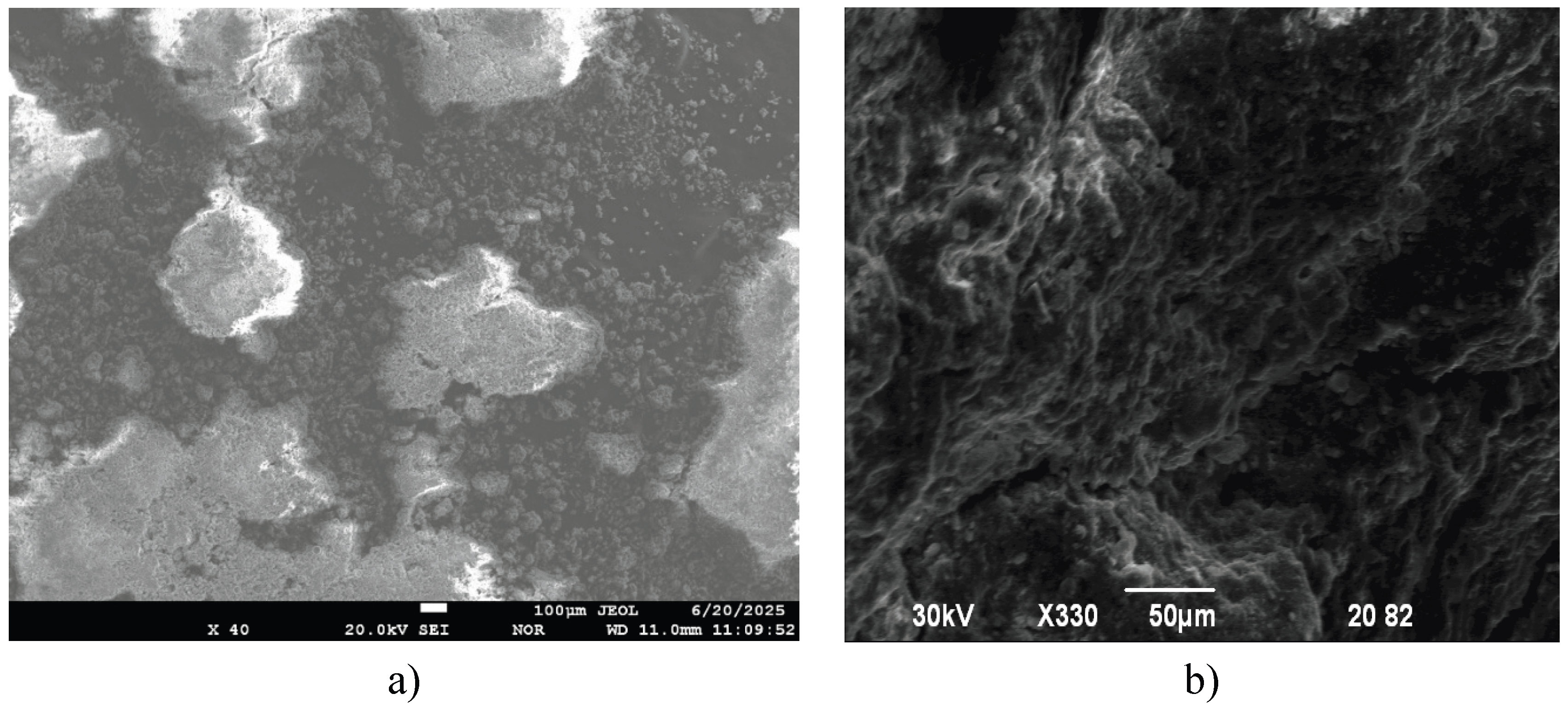
Figure 2.
Complex microstructural and elemental characteristics of the sample: a) SEM image of natural diatomite b) energy-dispersive X-ray spectrum (EDS spectrum) of natural diatomite.
Figure 2.
Complex microstructural and elemental characteristics of the sample: a) SEM image of natural diatomite b) energy-dispersive X-ray spectrum (EDS spectrum) of natural diatomite.
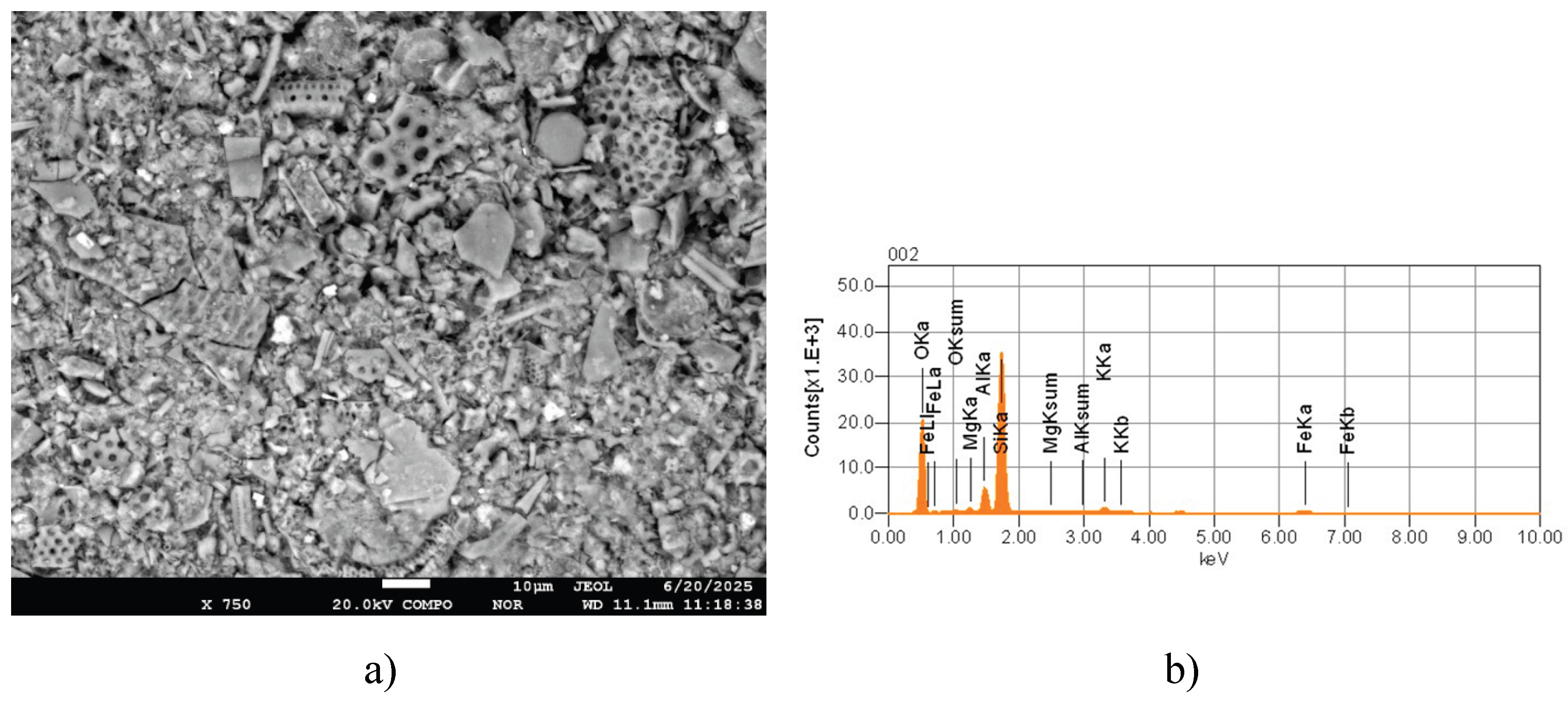
Figure 3.
Results of XRD analysis of diatomite: a) initial diatomite, b) heat-treated at 400 °C, c) heat-treated at 700 °C.
Figure 3.
Results of XRD analysis of diatomite: a) initial diatomite, b) heat-treated at 400 °C, c) heat-treated at 700 °C.
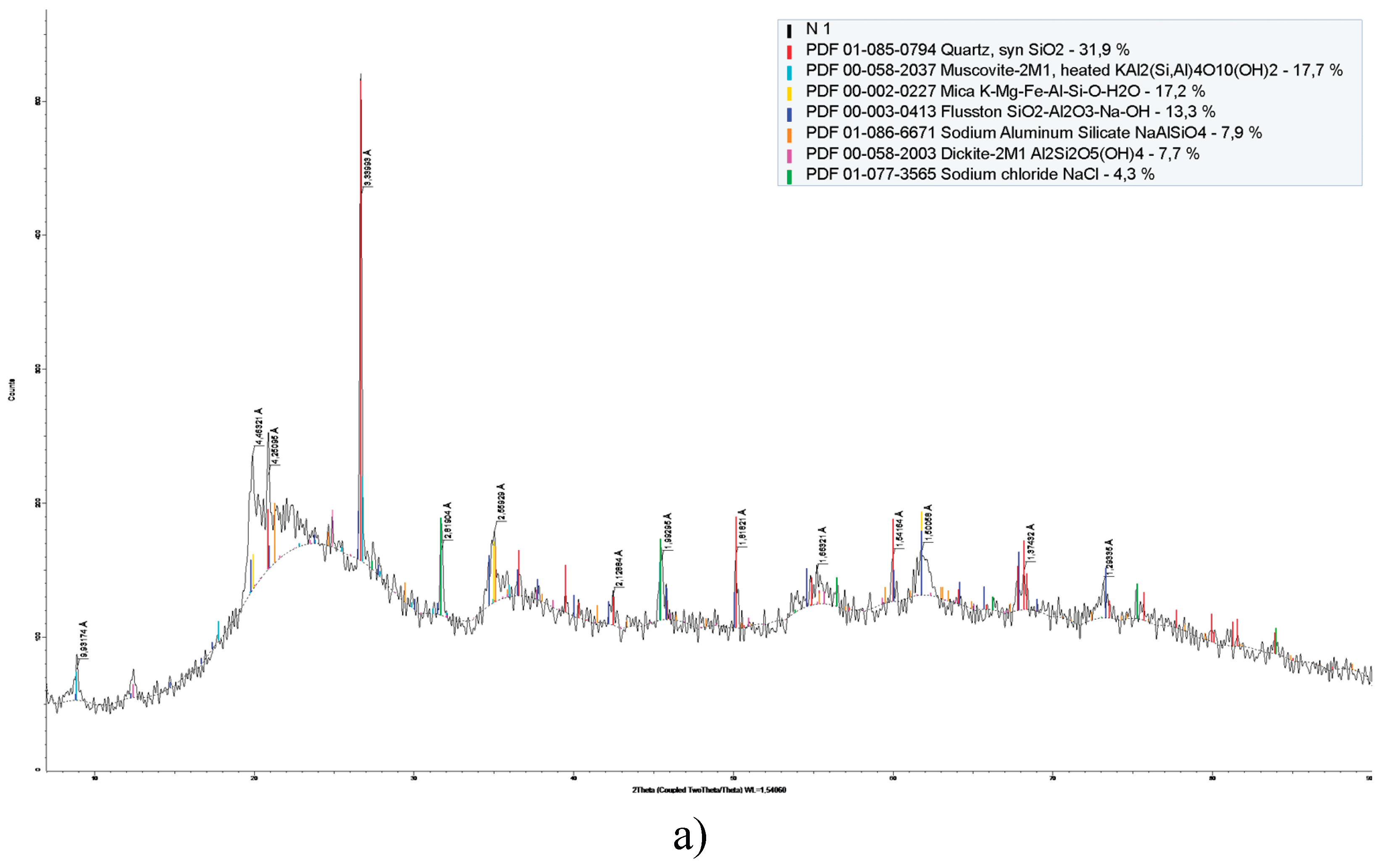
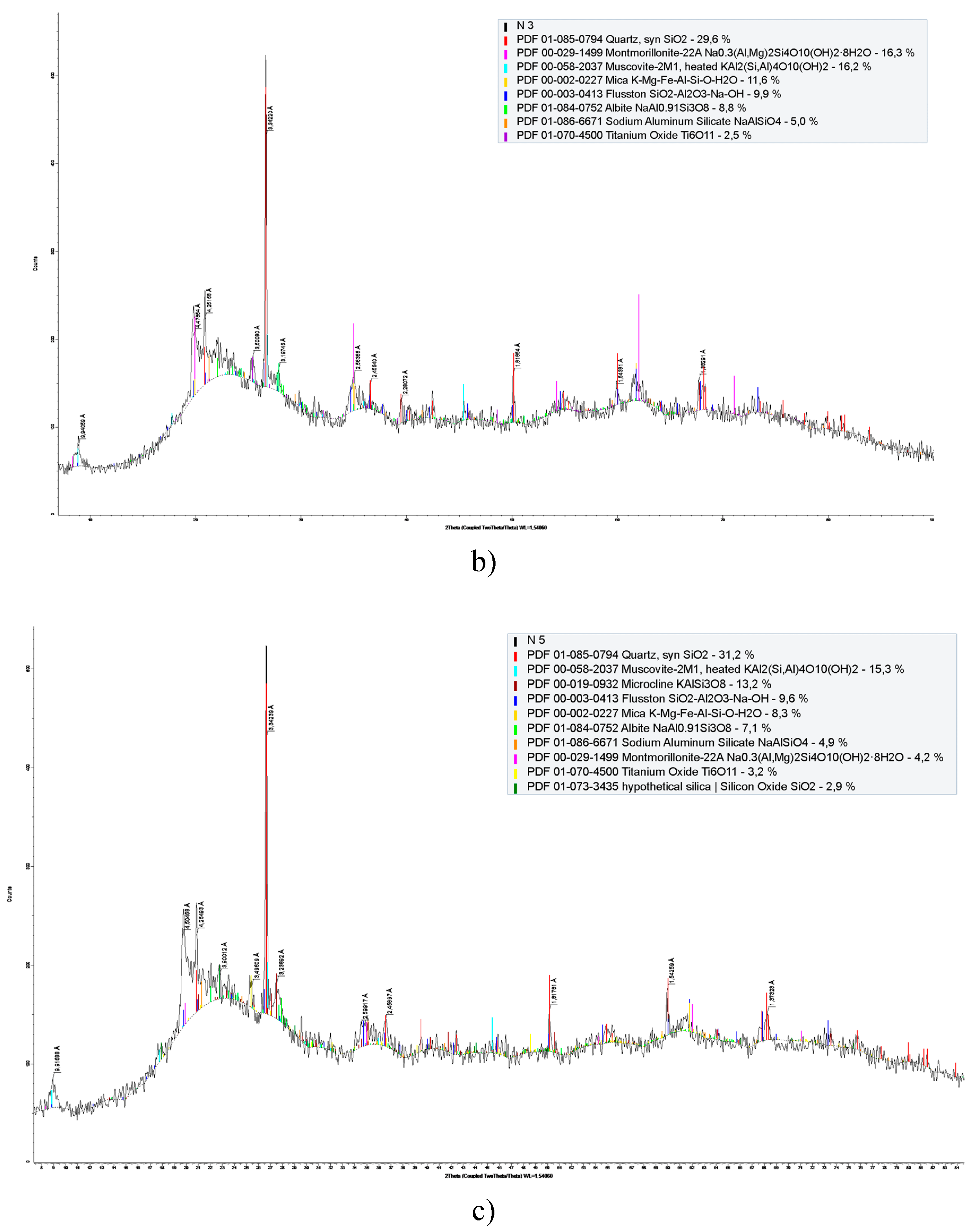
Figure 4.
IR spectra of diatomite samples: a) initial diatomite b) diatomite at 400 °C c) diatomite at 500 °C d) diatomite at 700 °C.
Figure 4.
IR spectra of diatomite samples: a) initial diatomite b) diatomite at 400 °C c) diatomite at 500 °C d) diatomite at 700 °C.
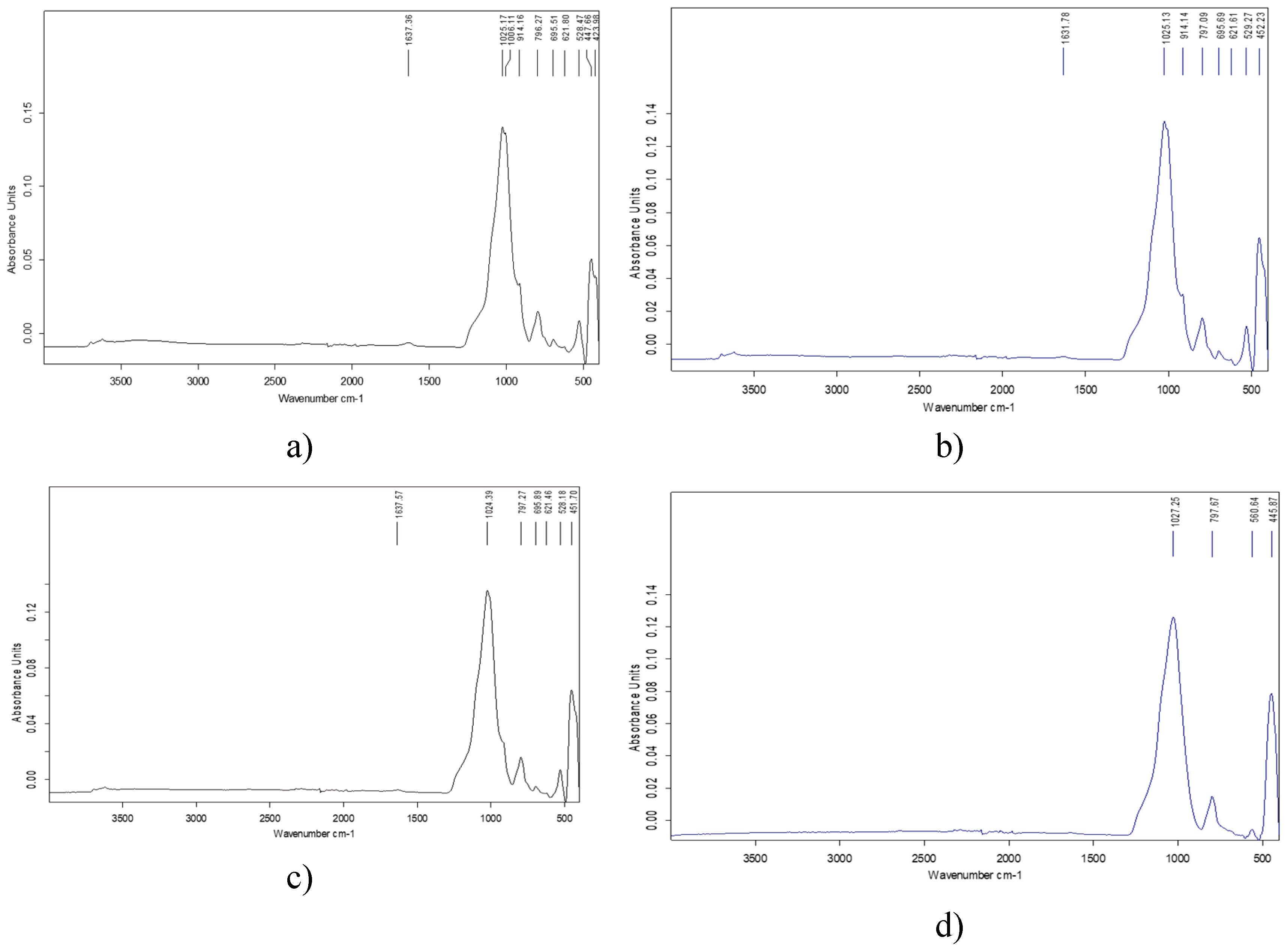
Figure 6.
Specific surface area results.
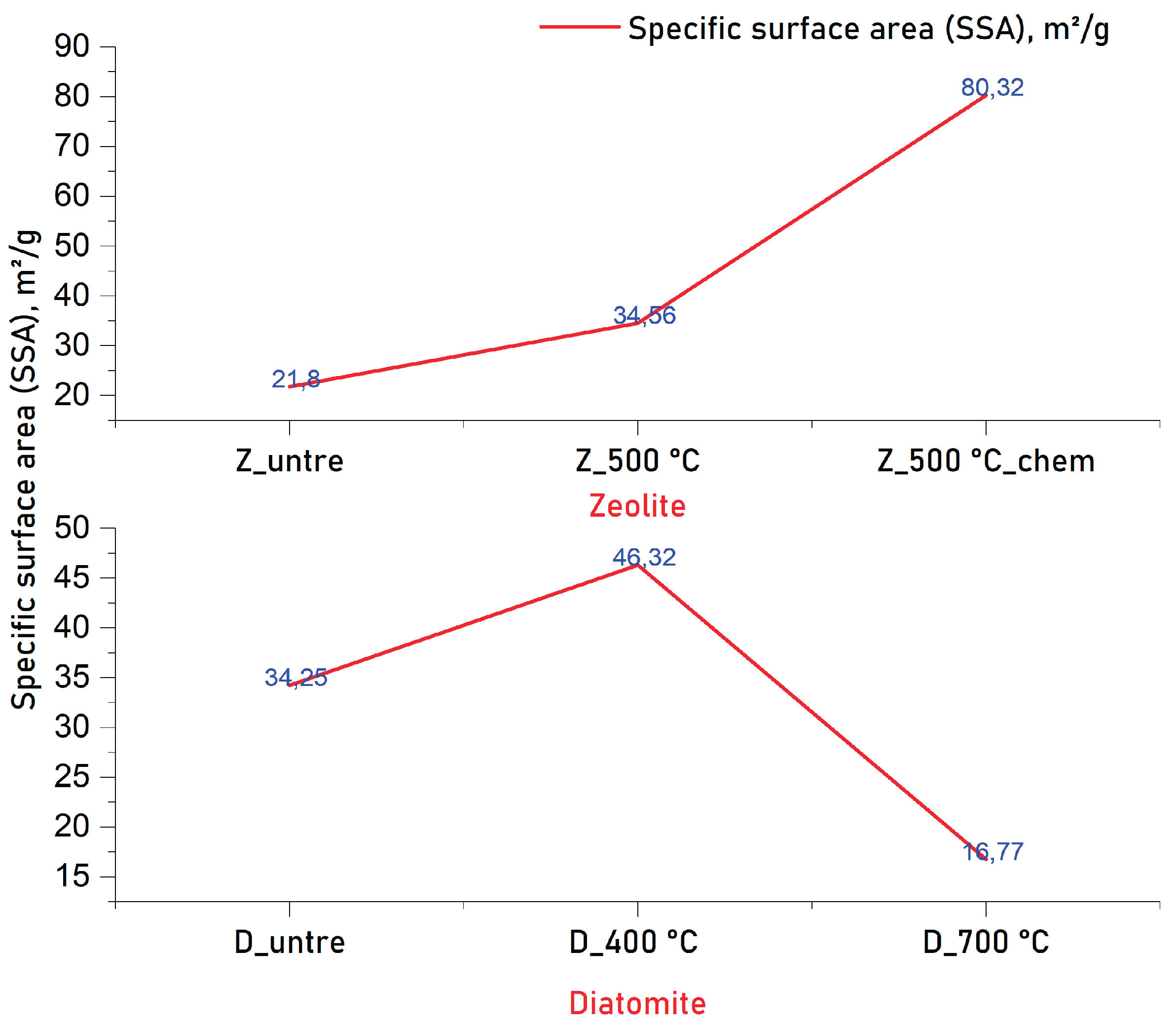
Table 1.
The content of chemical compounds in natural diatomite and zeolite.
| Component | Concentration, % | |
| Diatomite (Utesai deposit) |
Zeolite (Shanghanai deposit) [26] |
|
| SiO2 | 82,630 | 60,0-74,0 |
| Al2O3 | 8,622 | 14,0-15,0 |
| Fe2O3 | 2,819 | 1,40-5,83 |
| MgO | 1,089 | 0-2,120 |
| K2O | 0,646 | 0,660-4,030 |
| CaO | 0,191 | 0,130-6,400 |
| TiO2 | 1,320 | 0,070-0,700 |
| Na2O | 1,380 | 0,610-5,450 |
| P2O5 | 0,031 | 0,012-0,173 |
| SO3 | 0,221 | - |
| V2O5 | 0,030 | - |
| Cl | 0,936 | - |
| Cr2O3 | 0,025 | - |
| MnO | - | 0,067-0,199 |
Table 2.
The content of chemical compounds in diatomite at different temperatures.
| Component | Concentration, % | ||
| 400 °C | 500 °C | 700 °C | |
| exposure | 60 minutes | ||
| SiO2 | 83,443 | 83,791 | 83,502 |
| Al2O3 | 8,602 | 8,331 | 8,650 |
| Fe2O3 | 2,686 | 2,627 | 2,633 |
| MgO | 1,093 | 1,121 | 1,151 |
| K2O | 0,807 | 0,628 | 0,633 |
| CaO | 0,225 | 0,272 | 0,302 |
| TiO2 | 1,226 | 1,309 | 1,298 |
| Na2O | 1,051 | 1,257 | 1,330 |
| P2O5 | 0,030 | 0,029 | 0,027 |
| SO3 | 0,285 | 0,328 | 0,389 |
| V2O5 | 0,020 | - | 0,034 |
| Cl | 0,506 | 0,259 | 0,017 |
| Cr2O3 | - | 0,024 | 0,014 |
Disclaimer/Publisher’s Note: The statements, opinions and data contained in all publications are solely those of the individual author(s) and contributor(s) and not of MDPI and/or the editor(s). MDPI and/or the editor(s) disclaim responsibility for any injury to people or property resulting from any ideas, methods, instructions or products referred to in the content. |
© 2025 by the authors. Licensee MDPI, Basel, Switzerland. This article is an open access article distributed under the terms and conditions of the Creative Commons Attribution (CC BY) license (http://creativecommons.org/licenses/by/4.0/).
Copyright: This open access article is published under a Creative Commons CC BY 4.0 license, which permit the free download, distribution, and reuse, provided that the author and preprint are cited in any reuse.


