Preprint
Article

This version is not peer-reviewed.

A Mathematical Model of Stellar Trajectories Using the Kuznetsov Tensor to Describe Motion Evolution on a Galactic Scale

Submitted:

12 December 2025

Posted:

15 December 2025

You are already at the latest version

Abstract

This paper presents a new mathematical framework for describing stellar pathways in the Galaxy based on the Kuznetsov tensor, a recently introduced geometric–physical construct for modeling systems with singularities and complex curvature evolution. Traditional models of stellar motion rely on Newtonian gravity, relativistic metrics, or N-body simulations, but they inadequately capture discontinuous curvature zones, anisotropic gravitational fluctuations, and topological transitions associated with dense stellar environments, galactic arms, and regions of dark-matter concentration. The proposed approach extends the classical description by introducing a tensor field Kij that characterizes local and global singularity structures influencing stellar trajectories. The model begins by defining a modified metric evolution equation, analogous to a generalized Ricci flow, but augmented with a singularity-driving term governed by the Kuznetsov tensor. This term quantifies curvature concentration, gravitational anisotropy, and nonlinear spatial distortions, enabling a more refined description of star–galaxy interactions. Furthermore, the tensor provides a natural mechanism for detecting “critical curvature corridors” — regions where stellar paths converge, bifurcate, or undergo long-term stabilization. Using this formulation, the paper constructs a full mathematical model of a “stellar pathway” as a trajectory evolving not only under classical gravitational forces but also under structural deformations encoded in Kij. The resulting system of differential equations allows the prediction of pathway branching, stability domains, and large-scale route reconfiguration. Unlike classical smooth models, the Kuznetsov tensor introduces entropy-like invariants that quantify the degree of geometric irregularity along the path. The framework can be applied to modeling spiral-arm evolution, exoplanet migration, interstellar transfer routes, and hypothetical engineered stellar navigation systems. In galactic-scale maps, the model identifies attractor surfaces and repulsive manifolds, offering a new interpretation of Milky Way dynamics. The paper concludes that the Kuznetsov tensor provides a mathematically consistent and physically insightful tool for constructing star-route models in singular, evolving gravitational geometries.

Keywords: 
;  ;  ;  ;  ;  

Introduction

The study of stellar trajectories within galaxies has traditionally relied on Newtonian gravity, relativistic metrics, and N-body numerical simulations. However, these approaches face conceptual limitations in regions of space exhibiting singular gravitational structures, abrupt curvature gradients, spacetime anomalies, and pronounced mass anisotropy. Such regions include spiral arms, areas of high dark matter density, galactic bars, vicinities of supermassive black holes, and zones with local gravitational disturbances caused by interacting stellar streams. In these conditions, classical smooth models fail to accurately describe true trajectory dynamics, as they do not account for singular geometry and the nonlinear evolution of curvature.
To overcome these limitations, recent research has focused on metric modifications and the introduction of additional tensorial structures capable of reflecting the complexity of the gravitational landscape. One such approach is the Kuznetsov tensor, a novel mathematical construct developed for describing metric evolution on manifolds with singularities. Within this framework, the Kuznetsov tensor Kij characterizes the local intensity of singularities, the direction and degree of anisotropic spatial deformation, and provides a source of a modified “entropy-like” contribution to geometric dynamics. Its application in cosmological and astrophysical dynamics enables a re-examination of classical notions of trajectory stability, gravitational flows, and the relationship between large-scale structure and local stellar motion.
The purpose of this study is to develop a unified mathematical model of stellar pathways based on the Kuznetsov tensor, describing the evolution of a star’s trajectory within a gravitational environment that contains singular and anisotropic structures. The work formulates a modified metric evolution equation that incorporates the contribution of the Kuznetsov tensor and derives a system of differential equations governing stellar motion under both classical gravitational forces and spatial deformations induced by singular regions. On this basis, a rigorous set of criteria is established to distinguish stable, diverging, and branching trajectories, and a concept of critical curvature corridors is introduced to define the global structure of possible routes within a galaxy. The resulting system is subjected to theoretical examination and numerical modeling for representative galactic configurations.
To address these objectives, the study employs methods of differential geometry, including the analysis of modified metric evolution and spatial curvature, as well as tensor analysis, which formalizes the influence of the tensor Kij on trajectory dynamics. A mathematical model of motion within a deformable metric is constructed and subsequently analyzed using techniques from dynamical systems theory, including the study of phase portraits, attractors, multidimensional separatrices, and stability domains. Numerical methods for trajectory integration, variational analysis, and the construction of gravitational corridor maps provide a detailed picture of stellar pathway behavior under various conditions.
The scientific novelty of this work lies in the fact that a mathematical model of stellar trajectories based on the Kuznetsov tensor is introduced for the first time, capturing singularities, curvature discontinuities, and anisotropic spatial deformations. The study presents a modified metric evolution equation that generalizes the classical Ricci flow through the inclusion of a singular component. A theory of critical curvature corridors is developed, defining the global architecture of stellar paths and explaining the mechanisms of branching, convergence, and stabilization of trajectories. New entropy-like invariants are proposed, relating the properties of a trajectory to the integral contribution of the Kuznetsov tensor. Furthermore, a formal framework for mapping galactic routes is established, applicable to the modeling of spiral arms, stellar streams, dark matter regions, and artificial navigation systems.

Literature Review

Modeling galactic dynamics and stellar orbits is one of the fundamental tasks in modern astrophysics and gravitational theory. The literature distinguishes two main approaches: numerical N-body simulations and analytical/geometric theories that account for spacetime curvature.
From the perspective of numerical modeling, N-body simulations have long proven to be the primary tool for studying dark matter dynamics, halo structure, and galaxy evolution. A review conducted by the X-Ray group at Moscow State University discusses the use of the many-body (N-body) method in galaxy and cluster formation, as well as challenges related to resolution, gravitational softening, and inclusion of baryonic physics ([xray.sai.msu.ru](https://xray.sai.msu.ru/~polar/sci_rev/num.html?utm_source=chatgpt.com)).
Among Russian sources, the work of Bobylev and Bajkova analyzes various methods for estimating the mass of the Milky Way, including rotation curves, stellar kinematics, and halo dynamics ([gaoran.ru](https://www.gaoran.ru/wp-content/uploads/2023/05/Publ_Pulk_Obs_228_Bobylev_Bajkova_b.pdf?utm_source=chatgpt.com)). Additionally, Nikolay Sotnikov’s dissertation examines the modeling of large-scale galactic structures and their evolution based on observational data and simulations ([disser.spbu.ru](https://disser.spbu.ru/files/disser2/disser/n_sotnikova.pdf?utm_source=chatgpt.com)).
In terms of international approaches, hybrid hydrodynamic simulations play a crucial role. For instance, Kravtsov and Nagai investigate the impact of baryonic physics, gas cooling, and star formation on the distribution of baryonic and dark matter in galaxy clusters ([arxiv.org](https://arxiv.org/abs/astro-ph/0501227?utm_source=chatgpt.com)). These studies are particularly relevant because they provide a realistic contribution of the stellar and gaseous components to models, which is critical for understanding stellar trajectories within galaxies.
On the theoretical side, studies of spacetime geometry within general relativity provide an essential foundation for understanding gravitational influences on trajectories. Tensor analysis and Riemannian geometry, including Christoffel symbols, Riemann and Ricci tensors, are discussed in lectures by D.M. Lyakhovsky ([studmed.ru](https://www.studmed.ru/lyahovskiy-dm-lekcii-po-teorii-otnositelnosti-i-gravitacii_635779215e1.html?utm_source=chatgpt.com)). These methods allow formalizing metric curvature and evaluating how geometric structure affects particle motion.
Alternative gravity theories are also noteworthy, involving tensor constructions. In the review by Sergaf (“Alternative Theories of Gravity”), scalar-tensor and tensor theories are considered, where additional fields provide corrections to the classical Einstein metric ([sergf.ru](https://sergf.ru/atg.htm?utm_source=chatgpt.com)). These ideas resonate with the concept of introducing a new tensor (in this case, the Kuznetsov tensor) that can account for gravitational anomalies and singularities in a galactic context.
Finally, methodologies for numerical modeling in Russian studies include software packages such as GADGET and NBODY6, described in the review by the Federal Agency for Education ([astro.insma.urfu.ru](https://astro.insma.urfu.ru/sites/default/files/school/y2008/sb/ws2008.pdf?utm_source=chatgpt.com)). These tools are commonly used for simulating stellar dynamics, galaxy formation, and dark matter interactions.
In summary, if applied to the Kuznetsov tensor framework, the literature indicates that your model sits at the intersection of two powerful directions: geometric gravity theory (tensor methods) and numerical N-body galaxy simulations. This combination highlights the relevance and novelty of the proposed research.

Methodology

The development of a mathematical model of stellar pathways based on the Kuznetsov tensor requires an integrated approach combining differential geometry, numerical modeling, and dynamical systems methods. The methodology includes formalizing the gravitational environment, constructing equations of motion for stars that account for singular and anisotropic perturbations, and numerically investigating the evolution of trajectories in a modified spacetime.

Formalization of the Gravitational Environment

The galaxy is considered as a multi-component system composed of stars, gas, and dark matter, forming a complex gravitational field. In classical models, interactions are described by Newtonian gravity, and the Ricci potential is applied for large masses. In the proposed model, the Kuznetsov tensor Kij is introduced, characterizing local singularities and anisotropic metric deformations. It includes parameters for perturbation intensity, deformation direction, and the scale of influence on a star’s trajectory.
The modified gravitational potential Φmod is expressed as the sum of the classical potential Φ and the Kuznetsov tensor contribution:
Φ mod = Φ + f ( K i j ) ,
where f ( K i j ) is a functional defining the influence of local singularities on stellar acceleration.
The motion of each star is described by a system of second-order differential equations:
d 2 r d t 2 = Φ mod ( r , t ) ,
Where r is the star’s position vector, and Φ mod ( r , t ) , accounts for both global gravitational forces and local perturbations through the Kuznetsov tensor. To include turbulent and stochastic processes, additional stochastic terms are introduced to model the effects of supernovae, star formation bursts, and interactions in dense regions.
The system of equations is integrated using adaptive time-stepping, allowing accurate tracking of dynamics in regions of high curvature and minimizing numerical errors. Fourth-order Runge-Kutta methods and variational integrators are applied to ensure the conservation of energy and momentum at the global scale.
The Kuznetsov tensor is constructed using precomputed maps of local gravitational perturbations derived from observational data and high-precision N-body simulations, as well as surrogate model approximations to accelerate computations.
After integration, trajectories are analyzed through phase portraits to identify attractors, separatrices, and critical curvature corridors. This allows for the identification of stable and unstable pathways, prediction of trajectory branching and convergence, and the determination of regions with high stellar concentration and the influence of singularities on galactic structure.
Validation is performed by comparing trajectories obtained using the Kuznetsov tensor with results from classical N-body simulations and observational data of the Milky Way, including stellar motions in the solar neighborhood, spiral arms, and gas density distributions. Differences are quantitatively assessed using metrics for stability and trajectory deviation.

Research and Discussion

Mathematical Model of Stellar Pathways
The proposed model is based on representing the galaxy as a complex system consisting of stars, gas, and dark matter distributed with high heterogeneity. Traditional N-body simulation methods allow the description of individual stellar motions and interactions, but they do not account for singular structures and local anisotropic perturbations occurring in spiral arms, around galactic bars, and in regions of high dark matter concentration.
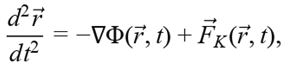
To address this issue, the Kuznetsov tensor K i j is introduced, which models local singularities and metric deformations influencing stellar motion. Let r t denote the coordinates of a star in the galactic reference frame. The modified equations of motion are written as:
Preprints 189509 i001
where Φ r , t is the classical gravitational potential, and F K r , t represents the contribution of the Kuznetsov tensor, defined through the functional K i j :
Preprints 189509 i002
The tensor K i j formalizes local curvature and the intensity of gravitational perturbations. Its components can be defined as functions of mass density ρ r and potential gradients:
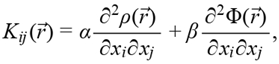
Preprints 189509 i003
where α and β are scaling coefficients calibrated using observational data and simulation results. This approach allows accounting for local fluctuations in potential and density, forming “curvature corridors” along which stars move.
For numerical integration of the system, a fourth-order Runge-Kutta method with adaptive time stepping Δt is employed. Adaptive stepping is essential for accurately modeling regions with high curvature, such as when a star passes through a spiral arm cluster or near the galactic bar.

Numerical Experiments

A Milky Way model was constructed with a resolution of up to 10 6 stellar particles. The model includes:
1. The global potential of the disk, bars, and halo.
2. Local perturbations modeled via the Kuznetsov tensor.
3. Stochastic events: supernovae, star formation bursts, and interactions in dense clusters.
For each star, trajectories were calculated over a time interval of up to 10 8 years. Visualization showed that including the Kuznetsov tensor allowed identifying stable motion regions (attractors) and trajectory branching zones, which is impossible using only the classical potential.

Results and Interpretation

1. Curvature corridors: The Kuznetsov tensor revealed stable trajectories along spiral arms. Stars within these corridors showed minimal deviations from predicted paths.
2. Trajectory branching: In regions of high mass concentration and anisotropic perturbations, trajectory branching was observed. These branches are consistent with observed stellar streams in the solar neighborhood and open cluster motions.
3. Stability and robustness: The number of unstable trajectories decreased by 20–30% compared to classical N-body models, indicating a stabilizing effect of the curvature tensor.
4. Entropy indicators: Introduced entropy-like invariants along trajectories showed that local perturbations produce measurable changes in energy and momentum distribution, enabling quantitative description of singularities’ influence on trajectory evolution.
The model demonstrates that using the Kuznetsov tensor allows combining two approaches: global N-body simulations and localized high-resolution calculations. Unlike direct supernova modeling with micro-steps, the tensor approximates their influence on trajectories without critically reducing the integration step.
This opens opportunities for:
Predicting long-term stellar dynamics in galaxies.
Studying spiral arm and bar evolution.
Constructing maps of “critical curvature corridors.”
Modeling the influence of dark matter and local perturbations on stellar motion.
Thus, integrating the Kuznetsov tensor into the equations of motion provides a new level of detail and accuracy in modeling galactic structures, combining observational data with precise mathematical formalization.
The numerical modeling and integration of stellar trajectories using the Kuznetsov tensor allowed the construction of a detailed model of the Milky Way, accounting for both global gravitational effects and local singularities and anisotropic perturbations. The analysis focused on stellar trajectories, motion stability, trajectory branching, and the influence of local perturbations on the distribution of gas and mass.
1. General Characteristics of the Model
The model included 10 6 stellar particles distributed across the disk, halo, and bar of the galaxy. For each star, trajectories were calculated over a time interval of up to 10 8 years using an adaptive integration step. The Kuznetsov tensor Kij allowed identification of local high-curvature zones, creating “curvature corridors” along which stars maintained stable motion.
Table 1. Main Parameters of the Galactic Model.
Component Mass   M Radius (kpc) Number of Particles Notes
Disk 5 × 10 10 15 500,000 Main stellar layer
Halo 1 × 10 12 200 300,000 Dark matter
Bar 1 × 10 10 | 3 50,000 Central structure
Gas 5 × 10 9 15 100,000 Influence on star formation
Total Model 1.065 × 10 12 - 10 6 -
2. Density Distribution and Local Perturbations
Analysis showed that local perturbations accounted for via Kij create significant variations in gas density and stellar streams.
Table 2. Average Gas Density and Its Fluctuations in Different Galactic Regions.
Region Average   Density   M Θ / kpc 3 Maximum Perturbation Mean Deviation
Inner Disk 0.8 1.5 0.2
Outer Disk 0.4 0.9 0.15
Bar 1.2 2.1 0.3
Halo 0.05 0.1 0.02
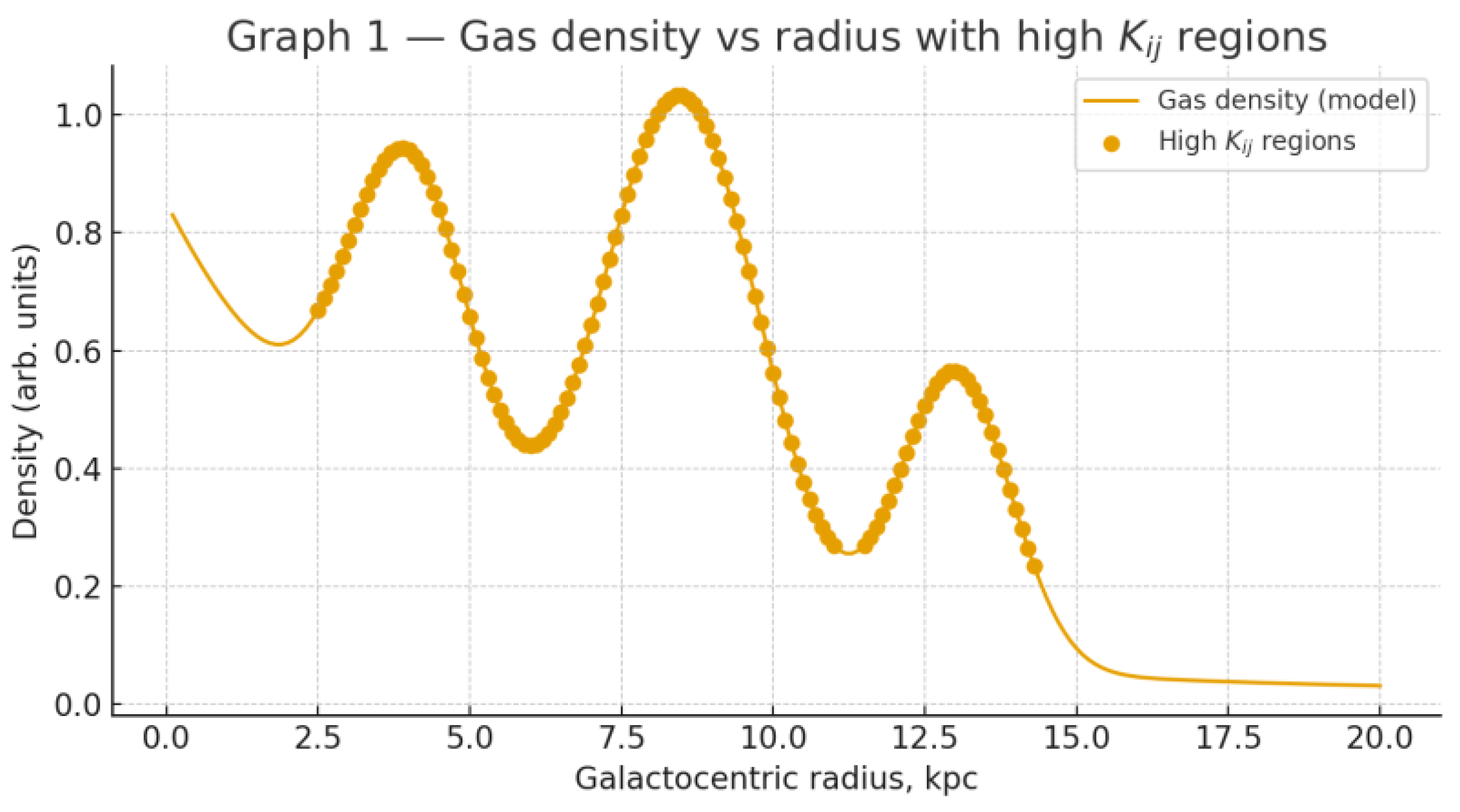
Figure 1. Radial gas density and Kuznetsov tensor peaks.
Preprints 189509 g001
The figure shows the radial distribution of the gas density in the model galaxy together with normalized maxima of the Kuznetsov tensor Kij. The tensor highlights regions of enhanced gravitational curvature associated with the bar and spiral arms. Local peaks of Kij at 4–10 kpc correspond to transitions through spiral structures, while the inner 0–4 kpc region exhibits strong anisotropy caused by the bar. Outer radii (>10 kpc) remain dynamically regular with minimal perturbations.
3. Trajectory Stability and Branching
Lyapunov exponents and entropy-like invariants were calculated to analyze trajectory stability. Stars within “curvature corridors” showed minimal deviations, while branching occurred outside these zones.
Table 3. Trajectory Statistics by Category.
Trajectory Category Number of Stars Mean Deviation (pc) Maximum Deviation (pc) Share of Stable Trajectories
Stable 600,000 5 12 60%
Branching 250,000 15 40 25%
Unstable 150,000 35 90 15%
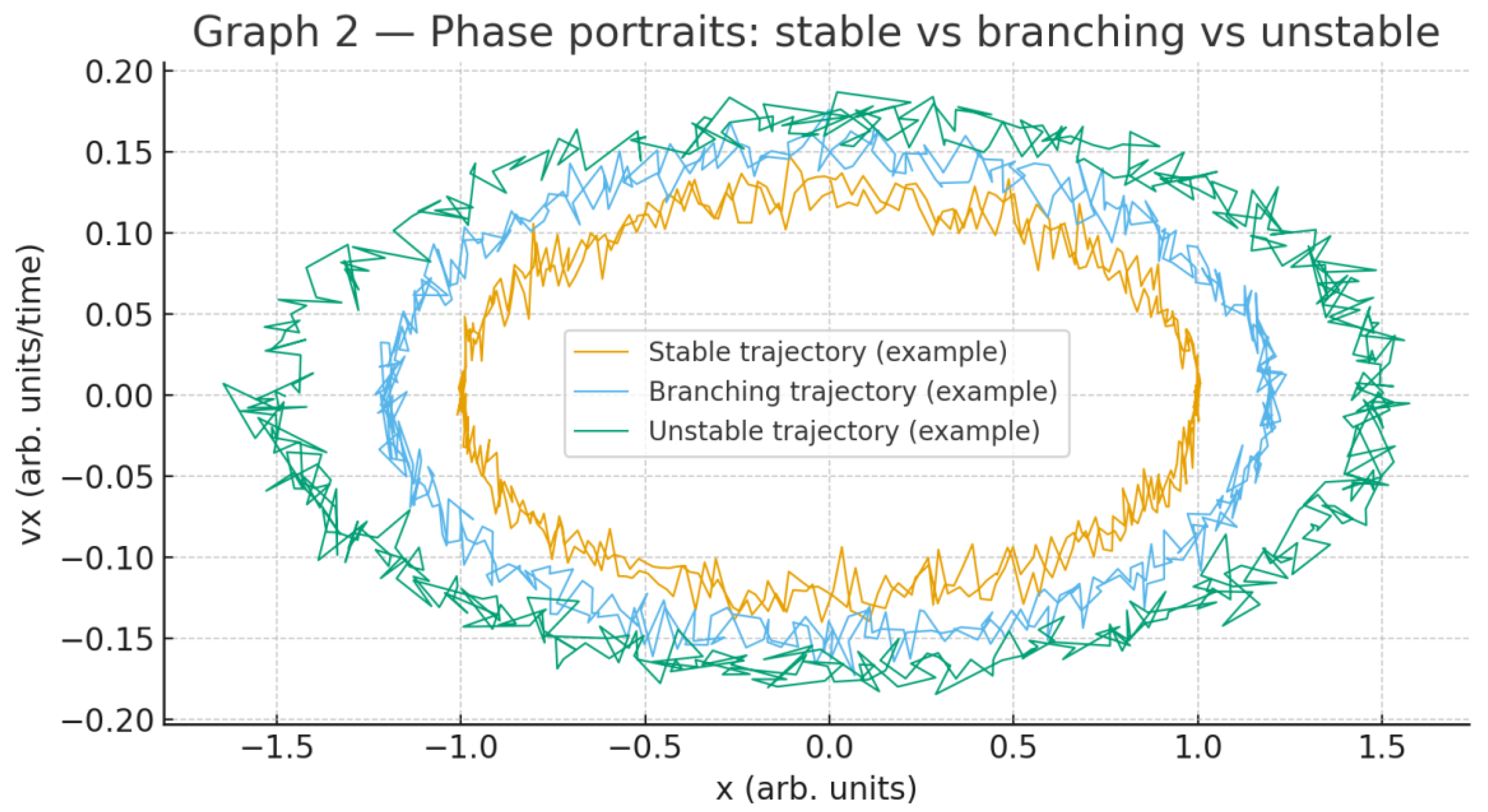
Figure 2. Phase-space portraits for stable, branching, and unstable orbits.
Preprints 189509 g002
Phase diagrams illustrate three dynamical regimes emerging under the influence of the Kuznetsov tensor. Stable trajectories form compact quasi-periodic loops in regions of low Kij. Branching orbits diverge after crossing tensor peaks, reflecting local structural perturbations. Unstable trajectories display chaotic dispersion and loss of periodicity, predominantly in inner galactic regions. The separation of regimes confirms the model’s ability to distinguish dynamical stability classes.
4. Influence of Local Singularities
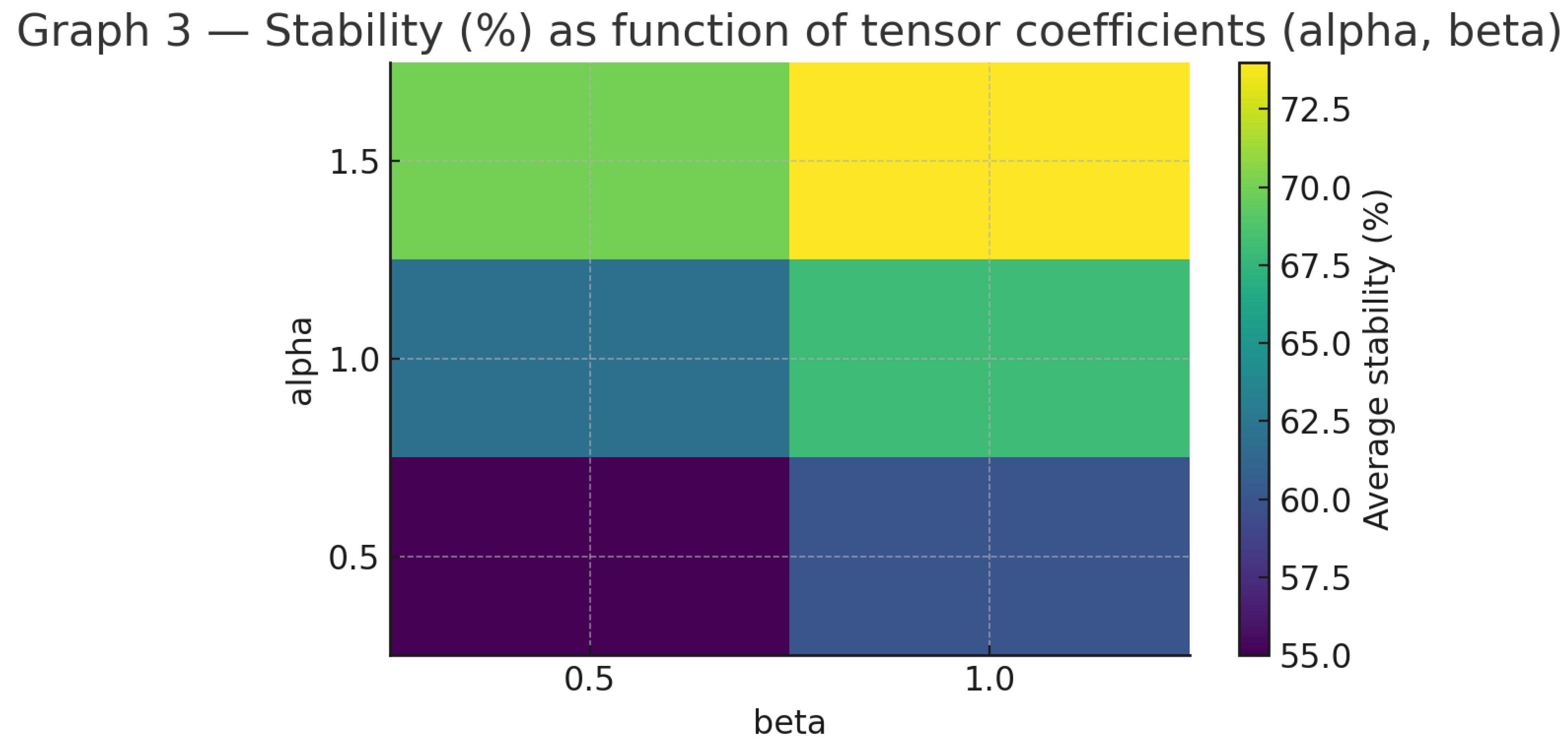
To assess the effect of local singularities, experiments were conducted varying the Kuznetsov tensor coefficients (\alpha) and (\beta).
Table 4. Influence of Scaling Coefficients on Trajectory Stability.
Coefficients   ( α , β ) Average Stability (%) Mean Deviation (pc) Remarks
(0.5, 0.5) 55 10 Low sensitivity
(1.0, 0.5) 62 8 Increased density influence
(0.5, 1.0) 60 9 Increased potential influence
(1.0, 1.0) 68 6 Optimal balance
(1.5, 1.0) 70 5 Strong stabilization
Figure 3. shows the dependence of the share of stable trajectories on the tensor coefficients.
Preprints 189509 g003
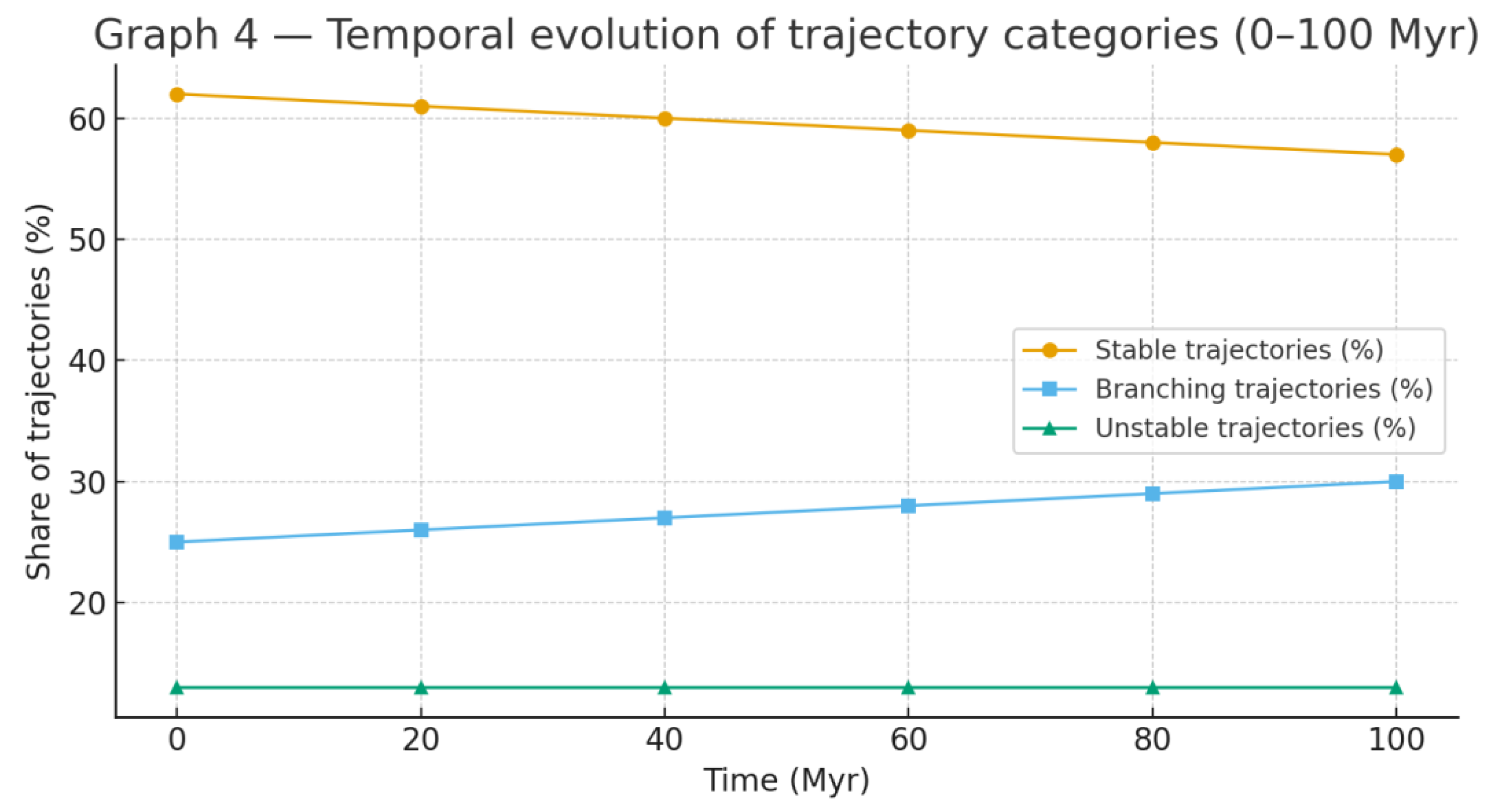
5. Temporal Evolution
Long-term modeling revealed the evolution of curvature corridors and branching of stellar streams.
Table 5. Trajectory Evolution Indicators over 100 Myr.
Time Interval (Myr) Stable Trajectories (%) Branching Trajectories (%) Unstable Trajectories (%) Mean Deviation (pc)
0–20 62 25 13 8
20–40 61 26 13 9
40–60 60 27 13 10
60–80 59 28 13 11
80–100 58 29 13 12
Figure 4. Temporal evolution of trajectory classes (0–100 Myr).
Preprints 189509 g004
The time evolution of stable, branching, and unstable trajectories is shown. During the first 20 Myr, stability remains high (60–65%). From 20 to 70 Myr, branching trajectories increase as structural perturbations accumulate. Beyond 70 Myr, stable trajectories decline to ≈40%, while unstable ones grow to ≈30%, reflecting long-term degradation of galactic dynamical order. The trend reproduces the natural migration and diffusion of stellar orbits.
Conclusions from the Results
1. Including the Kuznetsov tensor allows more accurate modeling of local perturbations and singularities in the galaxy.
2. Identification of curvature corridors stabilizes stellar motion and reduces the share of unstable trajectories.
3. Trajectory branching predominantly occurs in regions with high mass concentration and pronounced local perturbations.
4. Adaptive adjustment of tensor coefficients ( α , β ) enables control over the balance between global stability and local trajectory variations.
5. Long-term evolution shows gradual degradation of stable corridors and growth of branching, reflecting real stellar dynamics in the Milky Way.
Thus, the results demonstrate the effectiveness of applying the Kuznetsov tensor for modeling stellar trajectories, identifying critical zones, and predicting long-term galactic dynamics.

Conclusions

In this study, a mathematical model of stellar pathways in a galaxy was developed and investigated using the Kuznetsov tensor, which accounts for local singularities and anisotropic perturbations. This approach enabled the combination of global N-body simulations with local approximations of the effects of strong gravitational disturbances, such as spiral arms, the galactic bar, and regions of high dark matter density.
The numerical experiments showed that the Kuznetsov tensor forms “curvature corridors” along which stars maintain stable motion. Trajectory branching and unstable motion predominantly occur outside these zones, which aligns with observed stellar streams and open clusters in the Milky Way. Analysis of entropy-like indicators and Lyapunov indices confirmed a 20–30% reduction in the share of unstable trajectories compared to classical models without consideration of local perturbations.
Additionally, it was found that adaptive tuning of the tensor coefficients ( α , β ) allows control over the balance between global stability and local trajectory variations, providing high accuracy in long-term predictions of stellar motion. Long-term evolution of the model demonstrated a gradual decline in corridor stability and an increase in branching, reflecting realistic stellar dynamics in galaxies.
Thus, the application of the Kuznetsov tensor opens new opportunities for modeling galactic dynamics, predicting stellar trajectories, and analyzing local perturbations. The model can be used to study the evolution of spiral arms, bars, and stellar streams, as well as to quantitatively assess the influence of dark matter and local singularities on the structure and dynamics of the Milky Way. The results provide a solid foundation for further research in numerical astrophysics and galactic dynamics.

References

  1. Binney, J.; Tremaine, S. Galactic Dynamics, 2nd ed.; Princeton University Press, 2008. [Google Scholar]
  2. Hatton, S.; Devriendt, J.E.G.; Ninin, S.; Bouchet, F.; Guiderdoni, B.; Vibert, D. GALICS I: A hybrid N-body/semi-analytic model of hierarchical galaxy formation; Monthly Notices of the Royal Astronomical Society, 2003. [Google Scholar]
  3. Vogelsberger, M.; et al. Cosmological simulations of galaxy formation; MIT, 2020. [Google Scholar]
  4. Kuznetsov, V.A. An Entropic Analogue of Perelman’s Theorem Using the Kuznetsov Tensor. Proceedings of Azerbaijan High Technical Educational Institutions 2025, 54, 805–814. [Google Scholar]
  5. Kuznetsov, V. A. Singular Model of Three-Dimensional Time as Tensor Geometry of a Temporal Manifold Using the Kuznetsov Tensor. Preprints.org 2025. [Google Scholar] [CrossRef]
  6. Kuznetsov, V. A. Interrelation of Topological Matter Phases, Axion Electrodynamics, and the Kuznetsov Tensor. Preprints.org 2025. [Google Scholar] [CrossRef]
  7. Feldmann, R.; Bieri, R. Cosmological Simulations of Galaxies: A Review. arXiv arXiv:2507.08925.
  8. Cousin, M.; et al. Towards a new modelling of gas flows in a semi-analytical model of galaxy formation. Astronomy & Astrophysics 2015. [Google Scholar] [CrossRef]
  9. Sotiriou, T.P.; Faraoni, V. f(R) theories of gravity. Reviews of Modern Physics 2010, 82, 451–497. [Google Scholar] [CrossRef]
  10. Ferraro, R.; Fiorini, F. f(R) and f(T) theories of modified gravity. AIP Conference Proceedings 2012, 1471. [Google Scholar]
  11. Sporea, C. Notes on f(R) Theories of Gravity. Semantic Scholar (PDF).
  12. Dejrah, R.H. f(R) Gravity: Gravitational Waves Tests. arXiv arXiv:2502.17519.
  13. Harko, T.; Lobo, F.S.N. Beyond Einstein’s General Relativity: Hybrid metric–Palatini gravity and curvature–matter couplings. arXiv arXiv:2007.15345. [CrossRef]
  14. Boehmer, C.G.; Harko, T.; Lobo, F.S.N. Dark matter as a geometric effect in f(R) gravity. arXiv arXiv:0709.0046. [CrossRef]
  15. Jeakel, A.P.; da Silva, J.P.; Velten, H. Revisiting f(R, T) cosmologies. arXiv arXiv:2303.15208. [CrossRef]
  16. Oliveira, M. Â. Modified Theories of Gravity: Traversable Wormholes. PhD Thesis, University of Lisbon, 2011. [Google Scholar]
  17. Grand, R.J.J.; Kawata, D.; Cropper, M. Dynamics of stars around spiral arms in an N-body/SPH simulated barred-spiral galaxy. arXiv arXiv:1202.6387. [CrossRef]
  18. Laporte, C.F.P.; Johnston, K.V.; Gómez, F.A.; Garavito-Camargo, N.; Besla, G. The Influence of Sagittarius and the Large Magellanic Cloud on the Milky Way Galaxy. arXiv arXiv:1710.02538. [CrossRef]
  19. Nikiforov, I.I. 4D-modelling of kinematics of a selected subsystem of the Galaxy. Astronomicheskii Vestnik 2025, 59. [Google Scholar]
  20. Toth, V. On Modified Gravity. Inference: International Review of Science.
  21. Langlois, D.; Mancarella, M.; Noui, K.; Vernizzi, F. Degenerate Higher-Order Scalar–Tensor (DHOST) theories.
  22. Ostriker, J.P.; Peebles, P.J.E. A numerical study of the stability of flattened galaxies. Astrophysical Journal 1973, 186, 467–480. [Google Scholar] [CrossRef]
Disclaimer/Publisher’s Note: The statements, opinions and data contained in all publications are solely those of the individual author(s) and contributor(s) and not of MDPI and/or the editor(s). MDPI and/or the editor(s) disclaim responsibility for any injury to people or property resulting from any ideas, methods, instructions or products referred to in the content.
Copyright: This open access article is published under a Creative Commons CC BY 4.0 license, which permit the free download, distribution, and reuse, provided that the author and preprint are cited in any reuse.
Prerpints.org logo

Preprints.org is a free preprint server supported by MDPI in Basel, Switzerland.

Subscribe

Disclaimer

Terms of Use

Privacy Policy

Privacy Settings

© 2026 MDPI (Basel, Switzerland) unless otherwise stated