

Submitted:
10 December 2025
Posted:
12 December 2025
You are already at the latest version
Abstract
The Licorice (Glycyrrhiza glabra) is a perennial herb traditionally valued for its aromatic and therapeutic properties. In recent years, however, growing attention has shifted toward the technical and environmental potential of the plant’s industrial by-products, particularly the fibrous material left after extraction. This review integrates botanical knowledge with engineering and industrial perspectives, highlighting the role of licorice fiber in advancing sustainable innovation. The natural fiber obtained from licorice roots exhibits notable physical and mechanical qualities, including lightness, biodegradability, and compatibility with bio-based polymer matrices. These attributes make it a promising candidate for biocomposites used in green building and other sectors of the circular economy. Developing efficient recovery processes requires collaboration across disciplines, combining expertise in plant science, materials engineering, and industrial technology. The article also examines the economic and regulatory context driving the transition toward more circular and traceable production models. Increasing interest from companies, research institutions, and public bodies in valorizing licorice fiber and its derivatives is opening new market opportunities. Potential applications extend to agroindustry, eco-friendly cosmetics, bioeconomy, and sustainable construction. By linking botanical insights with innovative waste management strategies, licorice emerges as a resource capable of supporting integrated, competitive, and environ-mentally responsible industrial practices.
Keywords:
Glycyrrhiza glabra
; natural fibers
; circular economy
; sustainable bioeconomy
; green building biocomposites
; waste
; bioplastics
; bioremediation
; environmental sustainability
; renewable energy
1. Introduction
In recent years, attention to eco-sustainability has gained increasing importance across numerous sectors [1], including construction materials, fashion, the food industry, and technology [2]. The growing awareness of the environmental impact of industrial activities and the scarcity of natural resources has driven the search for more sustainable alternatives, such as the use of natural materials and industrial waste [3]. In particular, the use of natural materials such as wood, bamboo, hemp, licorice, cotton, linen, and other biological resources has become increasingly popular due to their ecological properties [4]. These materials are biodegradable, easily renewable, and require less energy for production compared to traditional materials such as cement or metals. The use of natural materials not only reduces the ecological footprint, where resources are reused and recycled, but also decreases the amount of waste generated across all sectors. At the same time, the use of industrial waste represents an innovative frontier in the design of new eco-sustainable materials [5]. Materials such as recycled wood, plastics derived from PET bottles, agricultural residues, by-products from cement or steel processing, and biomass ashes have become valuable resources for producing new materials [6]. These wastes, which would otherwise end up in landfills, are transformed into useful components, reducing the need for new raw material extraction and contributing to a more sustainable product life cycle, especially within the framework of the circular economy [7].
The integration of these natural and industrial waste materials into modern applications offers great potential not only to reduce environmental impact but also to foster innovation. In this work, particular attention is given to the possible uses of licorice root waste as a natural material. The challenges linked to this approach, such as finding solutions to ensure durability and functionality, are stimulating the creation of new technologies and production methodologies that could radically transform the industrial landscape to address sustainability challenges, paving the way for more ethical, ecological, and circular production practices [8]. Therefore, it is crucial to gain a deeper understanding of this natural material. Licorice is a plant of ancient origin with a long history of use dating back more than 5,000 years. It was already known in ancient Egypt, where it was used for medicinal purposes, and is mentioned in Greek and Roman medical texts. It is believed that Egyptians also used it for ceremonial and medicinal purposes, including on animals [9]. Archaeological excavations have revealed licorice root remains in the tombs of pharaohs, such as that of Tutankhamun (around 1323 BC) [10]. The Greeks were well aware of the therapeutic properties of licorice, as documented by the physician Dioscorides [11], who included it in De Materia Medica as a remedy for respiratory and digestive diseases. The Romans adopted licorice from earlier cultures, using it as a sweetener and for medicinal treatments [12]. In the Middle Ages, licorice became popular in Europe, especially for its therapeutic properties. Records show that in the 1200s medieval monks cultivated it in monastery gardens [13]. During the Renaissance, licorice was also used to treat digestive problems and respiratory illnesses. Physicians of the time, such as Paracelsus, recommended it as a remedy for various disorders. In the Modern era, around the 18th and 19th centuries, licorice began to be commercialized both as medicine and as an ingredient in confectionery, and licorice liqueur became popular in Europe, particularly in Italy, Spain, and the Netherlands.
After centuries of traditional use dating back to the Greco-Roman era, licorice root (Glycyrrhiza glabra) continues to represent a botanical resource of great interest, both for its phytotherapeutic properties and for its industrial applications. Today, the scientific and industrial context is re-evaluating its potential in a sustainable perspective, opening innovative investment scenarios. The growing focus on the circular economy has stimulated research into reusing root processing waste, which can be transformed into:
- ➢
- Natural fiber for composite materials, technical textiles, or biodegradable packaging.
- ➢
- Residual biomass for biogas or biochar production.
- ➢
- Substrates for microbial cultures in biotechnology.
These approaches significantly contribute to reducing environmental impact while generating added value from materials once considered mere waste. For effective use of licorice and its derivatives, it is essential to deepen knowledge of its chemical-physical characteristics, particularly regarding the valorization of industrial processing residues. Such understanding enables the identification of sustainable applications, currently under study, and outlines future prospects for the use of these by-products in various sectors. Supporting this analysis, the licorice market outlook [14], shown in the figure below, provides a useful overview of the economic and industrial potential linked to waste valorization and the promotion of more circular production practices.
Figure 1.
This image provides an overview of the licorice market, covering market dynamics and including a Porter’s Five Forces analysis, which explains the five forces: namely, the bargaining power of buyers, the bargaining power of suppliers, the threat of new entrants, the threat of substitutes, and the degree of competition in the global licorice root market. The analysis explores various participants in the market ecosystem, including system integrators, intermediaries, and end users. Furthermore, the report focuses on the detailed competitive landscape of the global licorice root market [14].
Figure 1.
This image provides an overview of the licorice market, covering market dynamics and including a Porter’s Five Forces analysis, which explains the five forces: namely, the bargaining power of buyers, the bargaining power of suppliers, the threat of new entrants, the threat of substitutes, and the degree of competition in the global licorice root market. The analysis explores various participants in the market ecosystem, including system integrators, intermediaries, and end users. Furthermore, the report focuses on the detailed competitive landscape of the global licorice root market [14].

In the coming years, Glycyrrhiza glabra is expected to become a strategic focus across multiple domains, including:
- – agro-industrial start-ups oriented toward the bioeconomy,
- – applied research projects in chemical, environmental, and biotechnological fields,
- – the cosmetic-pharmaceutical supply chain, increasingly committed to sustainability and traceability.
The integration of primary root utilization with the valorization of industrial by-products highlights licorice as a multifunctional plant, capable of generating profitability, fostering innovation, and advancing sustainable production practices. This study systematically examines these dimensions, addressing both the direct use of the root and the opportunities arising from the recovery and transformation of processing residues. Particular emphasis is placed on the applicative potential of licorice fiber and on future investment scenarios, thereby outlining its role as a strategic resource within the framework of the circular economy and the bioeconomy.
2. The Glycyrrhiza Plant: Botanical and Chemical-Physical Characteristics
The licorice plant (Glycyrrhiza glabra) is a perennial herb belonging to the Fabaceae family [15]. Global production of licorice root is mainly concentrated in certain regions of the world where climatic conditions are favorable for cultivation. Geographically, this wild plant grows naturally in areas such as North America, Europe, Asia-Pacific, South America, the Middle East, and Africa. Moreover, it is important to consider the relationship between licorice extract producers and the market, which is segmented by form (paste, block, powder, and others), application (food and beverages, cosmetics and personal care, dietary supplements, tobacco products, and other technical-scientific uses). The market was valued at approximately USD 4.7 billion in 2023 and is projected to reach USD 5.4 billion by 2031, with a CAGR of 3.7% from 2024 to 2031. This report includes various segments and an analysis of trends and factors playing a substantial role in the market. The main producing countries worldwide are:
- China: The leading producer of licorice, accounting for about 80% of global production. Chinese licorice is used both for medicinal purposes and confectionery.
- Iran: The second-largest producer, with extensive licorice cultivation across several provinces. Iran exports licorice to many countries.
- Turkey: Also, an important producer and exporter of licorice root.
- Syria and Afghanistan: These countries also contribute significantly to global licorice production.
Licorice extracts, and its main component glycyrrhizin, are widely used in food, tobacco, and both herbal and traditional medicine. Medically, licorice exhibits beneficial properties against ulcers, with anti-inflammatory, antiviral, and hepatoprotective effects [15]. Licorice extract is produced by chopping and extracting the root. The extracted liquid is filtered and then spray-dried to produce a powder, or concentrated to produce a solid block, which generally has a stronger flavor than the powder. According to a study published in 2019 in the International Journal of Plant Production [16], licorice cultivation is mainly concentrated in arid or semi-arid areas where the plant thrives. In China, the cultivated area is estimated at about 50,000 hectares, with production continuing to grow, especially in response to increasing demand in international markets.
The licorice plant, particularly its root, is characterized by a rich chemical composition including glycyrrhizin, flavonoids, saponins, and phenolic acids. These compounds provide the plant with a variety of physical and therapeutic properties, making it useful in numerous sectors such as food, pharmaceuticals, and cosmetics. The botanical characteristics of this plant can be summarized as follows: a) Appearance: The stem is erect, reaching 50–150 cm in height, woody at the base, densely dotted with glands, and covered with white hairs. Leaves are compound, with 11–17 leaflets, and the petiole is densely villous and glandular, yellow-brown in color. Flowers bloom in summer (June to August) and are insect-pollinated [17]. b) Roots: The most important part of the plant is the root, which is woody and contains a high content of glycyrrhizin, a sweet compound with aromatic properties. Roots can extend to great depths, allowing the plant to withstand drought periods. c) Fruits: Indehiscent legumes, oblong or fusiform, measuring (7)10–25 × 7–8 mm, leathery, glabrous or with few bristles, brownish, compressed, containing 2–6 subspherical seeds, 3–3.5 mm in diameter, brown or blackish [18]. d) Habitat: Licorice grows in sandy, well-drained soils and prefers temperate climates. It is frequently cultivated in various parts of the world, especially in the Mediterranean and in some regions of Asia, South America, and North Africa [19].
These characteristics make licorice not only an interesting plant from a botanical perspective but also valuable for its culinary and medicinal applications. It is important to understand its chemical-physical properties, which derive mainly from the chemical composition of the root [20], the part most commonly used in the preparation of extracts and other products. Licorice root contains a variety of bioactive compounds, many of which are responsible for its therapeutic properties. The main chemical substances present in licorice root include:
Another chemical characteristic is the acidity (pH) of licorice extracts, especially concentrated forms, which can have an acidic pH [27], generally ranging between 4–6 depending on the extraction process. Their chemical reactivity, due to the presence of glycyrrhizin and flavonoids, makes them stable in acidic environments but prone to decomposition under highly alkaline conditions or in the presence of strong oxidants. Glycyrrhizin is also light-sensitive and may degrade upon prolonged exposure to direct sunlight.
The physical properties of licorice root and its extracts depend on chemical composition and processing. Some of the main physical properties include:
- a)
- Color: Dried licorice root is dark brown externally and golden yellow internally. Concentrated licorice extract tends to have a dark hue due to glycyrrhizin and other compounds [28].
- b)
- Solubility: Glycyrrhizin and other compounds are water-soluble, which is why traditional licorice extraction is performed by infusing or boiling roots in water. Aqueous extracts are viscous and have a syrup-like consistency [29].
- c)
- Taste: Licorice has a distinctive flavor, sweet and slightly bitter, mainly due to glycyrrhizin, which is about 50 times sweeter than sugar [29].
- d)
- Density: Dried licorice root has relatively low density and is easily crumbled, facilitating grinding into powder [28].
- e)
- Thermal behavior: Licorice root has moderate heat resistance, but the extraction of glycyrrhizin and other bioactive compounds can be affected by high temperatures. For this reason, extraction processes are carried out under controlled temperatures to avoid thermal degradation of active principles [30].
- f)
- Viscosity: Concentrated licorice extracts, particularly those containing glycyrrhizin, may have a viscous consistency, making them suitable for use in candies, syrups, and other confectionery products [31].
- g)
- Stability: Licorice extracts tend to be stable over time, but their stability can be compromised by factors such as humidity and high temperature. The combined use of ultrasound and cold plasma has significantly improved the yield and concentration of bioactive compounds compared to traditional methods. The study also highlights the effect of temperature and extraction time on the stability of glycyrrhizin [32].
3. Preliminary Stages in the Licorice Supply Chain: Cultivation and Harvesting, Cleaning, and Drying
The licorice plant (Glycyrrhiza glabra) undergoes several processes to extract its active compound, glycyrrhizin, and to enable its use in various sectors such as food, pharmaceuticals, cosmetics, and even the biofuel industry [33]. Below is an overview of the main processing stages of licorice (Figure 2):
3.1. Stage 1: Cultivation and Harvesting
Cultivation: Licorice grows in sandy, well-drained soils with a temperate climate. Roots can be harvested after about 3–4 years of growth, the time required to achieve a good concentration of glycyrrhizin. Soil selection must be suitable for licorice, which thrives in well-drained, nutrient-rich soils with a neutral pH. A sunny location is essential. Cultivation can be carried out either by seeds or rhizomes. Seeds are sown in spring, while rhizomes can be planted in autumn or spring. Proper care is crucial, as the plant requires regular watering during dry periods. Weed and disease control should preferably use biological methods. The growth cycle of licorice generally takes 3–4 years to develop mature roots ready for harvesting [34]. Harvesting: Roots are extracted from the soil, usually by hand or with specialized machinery to avoid damage. The root is the most utilized part of the plant, as it contains glycyrrhizin, the main compound with therapeutic properties.
3.2. Stage 2: Root Cleaning
Soil Removal: After harvesting, roots are cleaned of soil and impurities. They are sometimes cut into small pieces to facilitate subsequent extraction and processing. Excess soil can be removed manually or with water jets. Washing: Roots are rinsed under running water to eliminate soil residues and impurities. Care must be taken not to damage the roots during this stage [20].
3.3. Stage 3: Root Drying
Cleaned roots are dried to reduce moisture content. Drying can be performed in ovens or natural environments. After washing, roots should be placed on clean clothes or racks in well-ventilated areas. Low-temperature dryers can also be used [35].
Moisture Control: It is essential to ensure that roots are completely dry before storage to prevent mold formation. This process helps preserve the product and makes it easier to handle in subsequent stages [36].
After completing the harvesting, cleaning, and washing operations of Glycyrrhiza glabra roots, the plant material is ready to undergo industrial processing. These subsequent stages are essential for the extraction of active compounds and the production of commercial derivatives, as well as for understanding current innovations within the framework of the circular economy.
4. Industrial Processing of Licorice Root
The cleaned and dried root is subjected to controlled thermal treatment, generally through infusion or boiling in water [37], in order to extract bioactive compounds. This process generates two distinct fractions, and to capture the specific features of each product derived from processing, the analysis continues with a separate examination of:
- I.
- Licorice juice extraction, which allows the desired compounds (such as glycyrrhizin and other flavonoids) to be obtained from the root, producing a juice suitable for various applications in the food, medical, and pharmaceutical sectors, as will be examined in detail in the following sections.
- I.
- II. Physical residue (waste), consisting of fibers denatured by the boiling process and non-usable parts. This highlights the need to find solutions for reusing these residues within a circular sustainability framework, which is the focus of this study.
In the following sections, the possible applications of both fractions obtained after the boiling process will be examined in detail.
4.1. Licorice Juice Extract
The extraction of licorice juice [38] from harvested roots is one of the most important processes to maximize juice yield per harvest. Two types of extraction can be employed:
- – Water extraction: This is the most common method, where dried or fresh roots are immersed in hot or boiling water for a period of time. Heat facilitates the solubilization of active compounds, dissolving soluble components such as glycyrrhizin [39]. Hot extraction increases solubility and extraction speed, allowing a more concentrated final product to be obtained in a shorter time compared to other extraction methods.
- – Solvent extraction: Ethanol, a polar solvent, can extract a wider range of compounds, including those not water-soluble. Ethanol use enables a more complete extract, containing both water-soluble and less polar compounds [40]. Another approach is the use of water-alcohol mixtures, which optimize extraction by balancing compound solubility. Mixtures can be adjusted depending on the compounds targeted. Water and ethanol are generally considered safe and accessible for use in food and herbal extracts, and are fundamental solvents for extraction processes due to their low cost and safety [41].
The concentrated extract may undergo further processing, namely purification, to remove additional impurities and obtain glycyrrhizin in a purer form. Purification can be achieved through filtration and chromatography techniques [42]:
- a)
- Simple filtration, used to separate insoluble solids from a solution. For example, after solvent extraction, it can remove solid particles [40].
- b)
- Vacuum filtration, employed for faster and more efficient separations. A pump creates a vacuum that accelerates liquid passage through the filter [43].
- c)
- Membrane filtration, which uses porous membranes to separate compounds based on size. It can be useful for concentrating or purifying liquid extracts [44].
- d)
- Thin Layer Chromatography (TLC), used for monitoring extractions and preliminary compound separation. Licorice residues may include root fragments, powders, resins, or other plant materials not fully extracted during preparation. These physical residues may still contain bioactive compounds such as flavonoids, saponins, alkaloids (e.g., glycyrrhizin), and other phenolic substances, which could be of interest for recovering additional products or for quality evaluation [45].
- e)
- High-Performance Liquid Chromatography (HPLC), one of the most advanced techniques for compound separation and purification. It uses high pressure to force solvent through a column packed with adsorbent material. It is highly effective for analyzing active components of licorice root [46].
- f)
- Ion-Exchange Chromatography, used to separate ionic compounds. It can be useful for isolating flavonoids. Beyond chromatography, this study also explores how carbonized licorice residues (char) can be used for adsorption purposes, a theme that may integrate with ion-exchange chromatography applications [47].

Table 1.
Chronological Development of Analytical and Separation Methods Applied to Licorice Juice.
| Historical Period | Main Technique | Short Description | ||
|---|---|---|---|---|
| Historical Period | Main Technique | Short Description | Advantages | Limitations |
| 1950 [40] | Simple Filtration | Separation of insoluble solids using filter paper or sieves | Easy, inexpensive | Low selectivity, does not remove fine particles |
| 1960 [43] | Vacuum Filtration | Use of a vacuum pump to accelerate filtration | Faster and more efficient | Still limited in purity |
| 1970 [44] | Membrane Filtration | Porous membranes separate molecules by size (microfiltration, ultrafiltration) | Juice concentration and purification | Higher cost, risk of membrane fouling |
| 1980 [45] | Thin Layer Chromatography (TLC) | Qualitative analysis of compounds (flavonoids, glycyrrhizin) | Quick, inexpensive, useful for screening | Not quantitative, low resolution |
| 1990 [46] | High-Performance Liquid Chromatography (HPLC) | Quantitative analysis and precise separation of active compounds | High sensitivity and accuracy | Requires costly instrumentation |
| 2000 [47] | Ion Exchange Chromatography | Separation of ionic compounds such as glycyrrhizin and salts | High selectivity | Operational complexity |
| 2020 [45,46,47] | Combined Techniques (HPLC-MS, advanced membranes, preparative chromatography) | Integrated approaches for standardized and pure extracts | Maximum efficiency, industrial standardization | High costs, need for technical expertise |
The choice of filtration or chromatography technique depends on the specific objectives of the analysis or purification. It is important to combine different techniques to achieve optimal extraction and purification of the desired compounds from the licorice root extraction and purification process [48].
This purified extract can be applied in several sectors:
- – Food industry: It is used as a natural sweetener in candies and other food products thanks to its distinctive flavor and sweetness, which is about 50 times greater than that of regular sugar. It is also often used in dietary supplements for its potential health benefits, including modulation of the immune system. In addition, it is employed in some alcoholic and non-alcoholic beverages to provide a unique flavor, such as in certain beers, liqueurs, and teas [21].
- – Herbal medicine and traditional medicine: Licorice is known for its anti-inflammatory, antioxidant, and digestive properties. It is used in infusions and teas to relieve gastrointestinal disorders, coughs, and sore throats. It is also employed in herbal and phytotherapeutic preparations for its anti-inflammatory, expectorant, and digestive effects [49].
- – Cosmetic industry: Licorice extract (Glycyrrhiza glabra) is widely used in cosmetics for its soothing, anti-inflammatory, and especially skin-lightening properties, due to compounds such as glabridin and liquiritin, which modulate melanin production and reduce skin hyperpigmentation [50].
- – Pharmaceutical industry: Licorice extract is an ingredient in certain medicines for the treatment of respiratory and gastrointestinal disorders [49]. Glycyrrhizin, an active compound of licorice, also has antiviral effects. It is important to note that licorice consumption should be moderate, as excessive intake may lead to side effects such as hypertension [51].
Table 2.
Chronological Overview of Licorice Juice Uses in Food, Medicine, Cosmetics, and Beyond.
| Historical Period | Sector | Main Applications | Notes / Added Value |
|---|---|---|---|
| Ancient Times – Middle Ages 19th–Early 20th Century Mid-20th Century (1950s–1970s) |
Herbal medicine e Traditional medicine |
Infusions, decoctions for cough, sore throat, digestive disorders | Widely used in Ayurveda, Traditional Chinese Medicine, and Greco-Roman herbalism |
| Food industry | Natural sweetener in candies, syrups, teas, and beverages | Glycyrrhizin recognized as ~50x sweeter than sucrose | |
| Pharmaceutical industry | Syrups for cough, gastroprotective preparations, anti-inflammatory remedies | Standardization of extracts begins | |
| Late 20th Century (1980s–1990s) 2000s |
Cosmetic industry | Skin-soothing creams, anti-inflammatory gels, whitening agents for hyperpigmentation | Glabridin and liquiritin studied for skin-lightening |
| Nutraceuticals and Functional foods | Dietary supplements, immune-modulating formulations, antioxidant beverages | Growing demand for natural health products | |
| 2010s 2020s Historical Period Ancient Times – Middle Ages |
Broader food and beverage industry | Flavoring in beers, liquors, herbal teas, functional drinks | Expansion into craft beverages and niche markets |
| Integrated applications | Combined use in food, pharma, cosmetics, nutraceuticals, veterinary medicine, and biotechnology | Research on antiviral properties, nanocarriers for cosmetics, and sustainable valorization of by-products | |
| Sector | Main Applications | Notes / Added Value | |
| Herbal medicine e Traditional medicine | Infusions, decoctions for cough, sore throat, digestive disorders | Widely used in Ayurveda, Traditional Chinese Medicine, and Greco-Roman herbalism | |
| 19th–Early 20th Century Mid-20th Century (1950s–1970s) |
Food industry | Natural sweetener in candies, syrups, teas, and beverages | Glycyrrhizin recognized as ~50x sweeter than sucrose |
| Pharmaceutical industry | Syrups for cough, gastroprotective preparations, anti-inflammatory remedies | Standardization of extracts begins |
Alongside the value of licorice juice, there is an often overlooked but highly significant aspect: the industrial waste derived from root processing. After the extraction of active compounds and concentrated juice, fibrous residues and plant materials remain, which for a long time were considered mere waste. In recent years, however, growing attention to sustainability and the circular economy has led to a re-evaluation of these by-products, which have proven to be rich in residual bioactive compounds (flavonoids, saponins, traces of glycyrrhizin). From this arises the idea of transforming waste into a resource, reducing environmental impact and creating new opportunities for valorization. This study focuses precisely on this aspect: analyzing the possible applications of licorice residues, the techniques of use and processing already available, and future perspectives.
4.2. Industrial Residue Waste
This residue resulting from the boiling and extraction process may appear as a fibrous, dark compound, consisting of parts of the root itself, such as plant fibers and other insoluble compounds [52]. It is mainly composed of substances not soluble in water, such as fibers, polysaccharides, and other plant compounds that do not dissolve during extraction. Depending on the extraction method and boiling duration, the quantity and composition of the residue may vary. This residue can be discarded or, in some cases, used for other purposes, such as compost or dietary supplements, depending on local, regional, and industrial practices and regulations [53]. Therefore, it is useful to list the various applications currently in use:
- a)
- b)
- c)
- d)
- e)
- f)
- g)
- h)
- Environmental impact and sustainable construction: Licorice root processing residues, rich in cellulose and lignin, can be transformed into bioplastics, compostable materials, and biocomposites for green building. Recent studies, including that of L. Madeo [75], have demonstrated the validity of this approach within the framework of the circular bioeconomy.
- i)
- Smoke filtration: Standardized extracts of Glycyrrhiza glabra root [76,77] (in powder, block, or liquid form) are used in cigarette filters and additives for their flavoring, humectant, and partly antioxidant properties. However, there is no consolidated evidence that the tobacco industry employs industrial licorice residues as toxic attenuators; this remains under study.
- j)
These applications highlight the versatility of licorice root and the importance of valorizing its residues. Often, licorice root processing generates waste that is neglected or considered useless; however, the valorization of these materials can have significant economic and environmental impacts [82]. The processing and extraction of licorice involves several stages, from cultivation to harvesting, through extraction and purification of extracts, up to the production of various types of products.
Table 3.
Timeline integrating the years of development for each sector of use of licorice root residues.
Table 3.
Timeline integrating the years of development for each sector of use of licorice root residues.
| Sector of Use | Development Period | Indicative Years | Market Phase | Future Prospects (2025–2035) |
|---|---|---|---|---|
| Fertilizer / Compost [54,55,56] | Historical → Current | <2000 – present | Already widespread in organic farming | Certified compost, integration with biochar, green agricultural market |
| Biomass for energy [57,58,59,60] | Initial development → Current | 2005 – present | Pilot plants and research | Second-generation bioethanol, advanced gasification |
| Food industry [61,62,63,64] | Historical → Current | <1980 – present | Widely used as flavoring | New “clean label” products, standardized natural additives |
| Cosmetics [65,66,67] | Current | 2010 – present | Growth in the natural cosmetics market | Eco-friendly product lines for hair and scalp |
| Phytotherapy (ointments, creams) [68,69] | Historical → Current | <2000 – present | Consolidated use in herbal medicine | Certified dermatological creams, innovative topical products |
| Biomaterials / Bioplastics [70,71] | Initial development → Current | 2015 – present | Prototypes and industrial research | Compostable packaging, green start-ups, sustainable construction |
| Bioremediation and water purification [72,73,74] | Current | 2018 – present | Advanced studies and pilot applications | Industrial bio-adsorbents for water treatment plants and industries |
| Sustainable green building [75] | Current (Madeo 2025) | 2020 – present | First applications in green construction | Certified insulating panels, EU incentives, sustainable building market |
| Smoke filtration (treated residues) [76,77] | Historical → Current | <1970 – present | Use of standardized extracts | Research on alternative natural filters |
| Textile industry (fiber, dye, antimicrobial) [78,79,80,81] | Current | 2020 – present | Research and initial applications | Antimicrobial fabrics for sports/medical use, sustainable fashion |
Ongoing research into new methods of extraction and valorization of residues is leading to increasingly sustainable and innovative developments. Specifically, in the following paragraph, we focus on sharing the scientific progress regarding the various applications of licorice root residues currently under study, as well as their potential future applications.
5. Fiber: Characteristics and Potential Applications
The residual fiber from licorice root, long regarded as a mere industrial by-product, is now emerging as a resource of significant value for the circular bioeconomy (Figure 3).
Its lignocellulosic composition, combined with characteristics such as porosity, absorbent capacity, and biodegradability, makes it suitable for multiple production sectors. Although available studies are still limited, research conducted so far has demonstrated that this material can be effectively transformed into innovative and sustainable solutions, reducing environmental impact and replacing fossil-based resources or virgin cellulose. The main identified applications include:
- – Green building and construction materials – use of the fiber as reinforcement in insulating panels, lightweight plasters, and eco-compatible composites.
- – Eco-friendly paper and cardboard – employment of fibers as an alternative raw material for paper production, reducing dependence on wood-derived cellulose.
- – Agriculture and organic substrates – direct or composted use as a soil amendment, improving soil structure, water retention, and resilience under saline conditions.
- – Sustainable textiles – valorization of the fiber as a source of natural pigments and as reinforcement in technical fabrics with antimicrobial and fire-resistant properties.
- – Biodegradable packaging – integration of the fiber into biopolymers for the production of lightweight, compostable, and environmentally friendly packaging.
In this context, residual licorice fiber emerges as a strategic material, capable of combining technological innovation, sustainability, and waste valorization, opening concrete prospects for the development of more circular and resilient production chains. Its versatile applications, ranging from sustainable construction to biodegradable packaging, highlight its potential as a multifunctional resource across different industrial sectors.
To systematically explore these possibilities, a specific paragraph will be dedicated to each application, analyzing the treatments and characteristics in detail.
5.1. Green Building and Construction Materials
The valorization of residual licorice fiber in the green building sector represents one of the most promising applications within the framework of the circular economy. After appropriate treatments of cleaning, drying, grinding (Figure 4), and mixing with natural binders such as lime, gypsum, or starches, these lignocellulosic residues can be used as reinforcement in decorative wall panels, lightweight plasters, and eco-compatible composite materials.
From a technical perspective, licorice fiber is distinguished by its porous structure and lignocellulosic composition, which provide thermal and acoustic insulation properties, while also ensuring lightness and breathability in building materials. These characteristics not only improve building performance in terms of living comfort but also contribute to reducing environmental impact by replacing synthetic materials with a high carbon footprint. Studies have shown that plant fibers derived from licorice residues can be effectively integrated into sustainable building products [75], highlighting improvements in mechanical properties and a reduction in material density. At the same time, research has chemically, thermally, and mechanically characterized licorice root residues, confirming their suitability as a natural filler in polymer composites and construction materials [83]. In this context, licorice fiber is not merely a by-product to be discarded, but a strategic resource capable of contributing to the transition toward more sustainable construction, reducing industrial waste, and promoting the use of renewable materials.
5.2. Eco-Friendly Paper and Cardboard
The use of residual licorice fiber in the production of eco-friendly paper and cardboard represents a concrete opportunity to reduce dependence on virgin cellulose and to valorize an agro-industrial by-product otherwise destined for disposal. Licorice fiber, being rich in cellulose, hemicellulose, and lignin, can be treated with mechanical pulping or mild chemical processes to separate the fibrous components and make them suitable for papermaking. The fibrous residue of licorice root, rich in cellulose, hemicellulose, and lignin, can be transformed into pulp through targeted pre-treatment that enhances its structural properties.
In the first phase, the fiber is dried and ground to reduce residual moisture, decrease particle size, and increase specific surface area, thereby facilitating subsequent disintegration. At this point, two complementary approaches can be applied: mechanical pulping, which exploits the physical fragmentation of fibers to obtain pulp with high cellulose yield, preserving much of the lignin and thus imparting robustness and natural tones to the product, albeit with higher energy consumption; or mild chemical pulping, based on low-concentration alkaline solutions or enzymatic treatments, which selectively remove part of the lignin and foreign substances without compromising cellulose integrity, unlike the aggressive processes typical of conventional papermaking.
The fibrous pulp thus obtained is finally pressed and dried to form sheets of paper or cardboard characterized by good mechanical strength, biodegradability, and environmental sustainability, with the added advantage of maintaining natural brown-yellowish tones that reduce the need for chemical bleaching. Scientific investigations conducted by Huang and colleagues [63] confirmed the effectiveness of these treatments: FTIR analyses highlighted partial lignin removal, while SEM observations showed cleaner and more compact fibrous surfaces, suitable for forming stronger inter-fiber bonds. These results demonstrate that properly treated licorice fiber can serve as a valid alternative to traditional cellulose sources, contributing to the development of a more sustainable papermaking chain in line with the principles of the circular bioeconomy.
After treatment, paper and cardboard obtained from residual licorice fiber exhibit a set of properties confirming their validity as sustainable alternatives to traditional raw materials. The presence of relatively long fibers and a residual lignin fraction gives the material robustness and flexibility, qualities confirmed by mechanical tests such as tensile strength and burst index, which showed values comparable to those of papers produced from other non-wood fibers [78].
From an environmental perspective, these products are fully biodegradable, as demonstrated by degradation tests under controlled composting conditions, and they help reduce pressure on wood-derived cellulose, positively contributing to deforestation mitigation. An additional advantage lies in their intrinsic aesthetic value: residual lignin imparts natural brown-yellowish tones, allowing bleaching processes to be limited or eliminated, thereby reducing the overall environmental impact of the production chain. Scientific investigations have further confirmed the quality of the material through various analytical techniques. Thermogravimetric analysis (TGA) revealed good thermal stability of the treated fiber, while X-ray diffraction (XRD) confirmed an adequate degree of cellulose crystallinity, a parameter closely linked to mechanical strength. Finally, scanning electron microscopy (SEM) observations showed the formation of a compact and well-interconnected fibrous network, responsible for the final mechanical performance and structural cohesion of the material.
In summary, paper and cardboard derived from licorice fiber combine technical performance, biodegradability, and environmental sustainability, standing as a concrete example of applying the principles of the circular bioeconomy.
5.3. Agriculture and Organic Substrates
The fibrous residue of licorice root, thanks to its lignocellulosic composition and residual bioactive compounds, represents a resource of great interest for sustainable agriculture. Its use as a soil amendment or component of organic substrates improves the physical, chemical, and biological properties of soil while reducing agro-industrial waste production. The treatment required is relatively simple and low-impact: the fiber can be shredded to reduce particle size and increase surface area, promoting microbial decomposition; it can be composted, mixed with other organic residues such as manure or plant waste, initiating aerobic processes that stabilize organic matter and reduce phytotoxicity; or it can be used directly, exploiting its ability to retain water and improve soil porosity. Recent studies have also shown that solid-state fermentation applied to licorice residues not only improves stability but also enables recovery of flavonoids and bioactive compounds, with positive effects on soil microflora and the agronomic value of compost [84].
Functionally, applying residual licorice fiber to soil provides several benefits. Its porous structure ensures high water retention capacity, particularly useful in arid environments, while the organic matter input enriches soil carbon content and stimulates microbial activity. The fiber also contributes to improving soil physical structure, increasing porosity and aggregate stability, and reducing compaction phenomena. A particularly relevant aspect concerns salinity reduction: research has shown that adding sweet licorice root improves the physico-chemical properties of saline soils, reducing soluble salt concentrations and promoting crop growth [85]. In parallel, integrating licorice extracts with melatonin has demonstrated biostimulant effects, improving growth and productivity of fava beans in cadmium-contaminated and highly saline soils, confirming the synergistic role of fiber and its residual metabolites as agents mitigating abiotic stress [86].
Overall, scientific evidence converges in demonstrating that residual licorice fiber is not a mere by-product, but a multifunctional amendment capable of improving soil quality, increasing crop resilience, and reducing the environmental impact of agricultural systems, fully consistent with the principles of the circular bioeconomy.
5.4. Sustainable Textiles
The fibrous residue of licorice root represents an interesting resource for the sustainable textile sector, both as a source of natural pigments and as fibrous reinforcement in composite materials for technical fabrics.
From a treatment perspective, pigments can be extracted through aqueous processes or eco-compatible solvents, obtaining natural dyes in yellow-brown tones. These pigments, as demonstrated [79], can be successfully applied to bio-mordanted cotton fabrics, ensuring good color yield and stability, while reducing environmental impact compared to synthetic dyes.
In parallel, raw licorice fiber can be used as natural reinforcement in technical fabrics and composite materials. Its lignocellulosic structure provides additional mechanical properties and, above all, introduces functional characteristics of interest. In particular, natural dyes derived from licorice have shown antimicrobial activity, as evidenced by the systematic review [80], which highlighted the potential of plant pigments in limiting microbial proliferation on fabrics. Furthermore, experimental studies have highlighted the flame-retardant potential of the fiber and its extracts: research reported in the Journal of Textile Research demonstrated that incorporating licorice root into fabrics can reduce flame propagation [87], opening prospects for applications in technical clothing and protective equipment.
Overall, the use of residual licorice fiber in sustainable textiles combines aesthetic and functional performance: on one hand, it provides natural and biodegradable colorations; on the other, it introduces antimicrobial and flame-retardant properties that enhance durability and safety of materials. These characteristics, together with reduced environmental impact compared to conventional processes, make licorice a promising candidate for the development of innovative and circular textiles.
5.5. Biodegradable Packaging
The fibrous residue of licorice root, when properly treated, serves as a natural filler for the production of biodegradable packaging materials, representing a valid alternative to fossil-based plastics. Pre-treatment of the fiber is a crucial phase: it is first dried to reduce residual moisture and stabilize its properties, then ground to obtain a fine and homogeneous particle size, capable of improving dispersion within the polymer matrix. Subsequently, the fiber can be pressed or directly mixed with biopolymers such as PLA (polylactic acid) or modified starches, thereby increasing the mechanical strength and dimensional stability of the final material.
From a performance perspective, the resulting composites exhibit lightness, biodegradability, and a significant reduction in the use of fossil plastics, with a lower environmental impact compared to conventional materials. Moreover, the presence of lignocellulosic fiber contributes to improving certain functional properties, such as stiffness and fracture resistance, while maintaining a good degree of flexibility.
Scientific investigations have provided solid evidence supporting these applications. Studies have characterized licorice root residues as potential fillers in composite materials, highlighting that their integration reduces material density and enhances overall sustainability [78]. Other studies have further examined the chemical, thermal, and mechanical characterization of the fiber, revealing its composition rich in cellulose, hemicellulose, and lignin—elements that confer robustness and versatility [75,83]. Significant thermal stability and good resistance to degradation have emerged, qualities fundamental for use in industrial processes such as extrusion and molding. The fiber has shown thermal transitions compatible with bio-based polymer matrices and a surface morphology capable of promoting effective adhesion within composites. Structural property tests confirmed a significant improvement compared to pure biopolymers, making licorice fiber a highly valuable functional reinforcement.
These results demonstrate how an agro-industrial by-product can be transformed into a high value-added resource, contributing to waste reduction and the development of innovative materials perfectly aligned with the principles of the circular bioeconomy.
5.6. Comparison among the Main Application Sectors of Licorice Fiber
The comparative analysis of the different sectors of use highlights how, through simple and low environmental impact treatments, residual licorice fiber acquires physico-mechanical and functional properties of great interest, establishing itself as a versatile resource for the development of sustainable materials (Table 4).
Thanks to its chemical-physical versatility, licorice fiber adapts to different production contexts, generating environmental benefits (waste and CO2 reduction), economic benefits (new production chains), and social benefits (local employment and sustainable innovation). In summary, it embodies the concept of active circular material, capable of transforming an agro-industrial residue into a strategic lever for sustainable multi-sector innovation.
6. Market Outlook and Future Investments
The valorization of licorice root residues is positioned at the center of the transition toward production models based on the circular bioeconomy, combining waste reduction, resource efficiency, and value creation across multiple supply chains. Lignocellulosic residues can be transformed into secondary raw materials for high-demand market sectors (bioplastics, green building, water purification, natural cosmetics, sustainable textiles), generating economic, industrial, and environmental benefits.
European policies reinforce this trajectory: the Green Deal [88] aims for climate neutrality by 2050, the Circular Economy Action Plan (2020) promotes bio-based materials and extended producer responsibility, while the European Bioeconomy Strategy [89] valorizes biomass and agro-industrial residues as feedstock for innovative materials.
In this context, licorice residues become a strategic asset for decarbonization and product innovation, thanks to their versatility (natural additives, bio-adsorbents, fillers for biocomposites, dyes, and antimicrobial finishes). To maximize impact, investment strategies should focus on three main directions:
- i.
- Industrial scalability, with pilot plants and modular lines for biomaterials and green building.
- i.
- ii. Supply chain integration, through supply agreements, traceability, and quality standards.
- i.
- iii. Green finance, leveraging European programs (Horizon Europe, LIFE, Innovation Fund) and ESG instruments to reduce CAPEX and OPEX.
To clarify the framework of opportunities, Table 5 summarizes the main utilization sectors of licorice root residues, indicating for each the estimated market value, expected growth rate (CAGR), required investment level (CAPEX), technological maturity (TRL), and scientific interest.
From the analysis, two macro-categories emerge:
- Mature sectors (food, phytotherapy, fertilizers), characterized by consolidated technologies, reduced CAPEX, and moderate growth.
- Emerging high-potential sectors (bioplastics, green building, bioremediation, sustainable textiles), with high CAGR, strong scientific interest, and medium-to-high investment requirements, but with significant return prospects.
To visualize the dynamics of investments and technological maturity, (Figure 5) presents a functional scheme and a timeline highlighting the relationships between the intrinsic characteristics of licorice fiber (lignocellulosic composition, natural pigments, adsorptive capacity) and the specific needs of different sectors (thermal insulation for green building, natural dyes for textiles, bio-adsorbents for water purification, bioactives for cosmetics).
The timeline shows the distribution of projected capital between 2025 and 2035 across the main strategic sectors of the bioeconomy, linking economic scale and TRL: from already consolidated sectors (natural cosmetics, green building) to those still in development (bioplastics, textiles).
Between 2025 and 2035, licorice root residues will become a strategic resource for several industrial sectors, with a total investment volume estimated at over €8.5 billion. The priority sectors will be Green Building (€2.5 billion), Bioremediation and Water Purification (€2.0 billion), and Bioplastics and Biomaterials (€1.2 billion), which together will absorb more than 65% of the projected capital. In these areas, a four-phase trajectory is expected: launch of pilot projects between 2025 and 2027, large-scale expansion in the period 2027–2030, market consolidation between 2030 and 2032, and finally diversification and internationalization by 2035.
Alongside these leading sectors, emerging fields such as Sustainable Textiles (€1.0 billion) and Natural Cosmetics (€0.8 billion) show strong potential, supported by growing demand for eco-friendly and clean-label products. More mature sectors, such as Food and Phytotherapy (€0.4 billion), will continue to ensure stability and continuity, while Bioenergy (€0.6 billion) will remain marginal but may grow as a complement to the energy transition.
Overall, the investment trajectory highlights a clear shift toward high value-added applications with strong environmental impact, confirming licorice residues as a key raw material for the circular bioeconomy of the coming decade.
5. Conclusions
In this review, an overall overview has been provided on the characteristics and applications of licorice, with particular attention to processing residues and, above all, to the recovery of the lignocellulosic fiber obtained from them.
The analysis highlights how licorice root, already widely used in the food, pharmaceutical, and cosmetic sectors for its functional properties, generates a significant amount of lignocellulosic residues during industrial processes. From these residues, a valuable plant fiber can be obtained, characterized by chemical-physical properties that make it suitable to replace fossil or synthetic resources. It is therefore not merely a by-product, but a circular raw material capable of being transformed into innovative solutions for high-potential sectors: bioplastics and biomaterials, green building, natural cosmetics, bioremediation and water purification, sustainable textiles, and bioenergy.
Scientific research has demonstrated that this fiber possesses versatility and multifunctionality, being able to act as structural reinforcement, natural pigment, bio-adsorbent, or bioactive component. In this way, it contributes not only to reducing pollution and the use of virgin resources, but also to promoting a greener and more resilient economy. At the same time, the licorice market is continuously expanding, with growing demand in the food and pharmaceutical sectors: a context that encourages companies to invest in research and development, as shown by recent collaborations between industrial enterprises and venture capital funds, aimed at integrating scientific innovation and economic sustainability. The fiber derived from licorice residues emerges as a strategic, high value-added resource, capable of simultaneously meeting industrial, economic, and environmental needs. The future challenge will be to develop innovative methodologies and advanced technologies to optimize its use, maximizing benefits for both industry and society. In this perspective, licorice becomes an emblematic example of how scientific research, industrial investments, and sustainability policies can converge to build a more circular, competitive, and environmentally respectful future.
Author Contributions
Conceptualization, L.M., A.M., F.N. and P.D.L.; methodology, L.M., A.M. and P.D.L.; validation, L.M., A.M., F.N.and P.D.L.; investigation, L.M; resources, L.M., A.M.; data curation, L.M., F.N.; writing—original draft preparation, L.M., F.N.; writing—review and editing, L.M. and P.D.L.; supervision, L.M., A.M., F.N., P.D.L.; All authors have read and agreed to the published version of the manuscript.
Funding
This research received no external funding.
Acknowledgments
The authors wish to express their gratitude to Romano Liquirizia S.R.L., Corigliano-Rossano (Italy), for the valuable contribution in providing information and data useful for the preparation of this review on licorice and its industrial and waste-related applications.
Conflicts of Interest
The authors declare no conflicts of interest.
References
- INSTM. Bilancio di Sostenibilità 2023: innovazione, ricerca e impatti delle attività. Available online: https://www.instm.it/bilancio_di_sostenibilita_2023_innovazione_ricerca_e_impatti_delle_attivita_instm.aspx (accessed on 24 November 2025).
- INSTM. Materiali sostenibili per l’industria. Available online: https://www.instm.it/materiali_sos_industria.aspx (accessed on 24 November 2025).
- European Commission. Circular Economy Action Plan. Available online: https://eur-lex.europa.eu/resource.html?uri=cellar:9903b325-6388-11ea-b735-01aa75ed71a1.0020.02/DOC_1&format=PDF (accessed on 24 November 2025).
- Egamberdieva, D.; Nam, N.A.M. Potential Use of Licorice in Phytoremediation of Salt Affected Soils. In Plants, Pollutants and Remediation; 2019; pp. 309–318. [Google Scholar] [CrossRef]
- Steger, B.; Bleischwitz, R. Resource Targets in Europe and Worldwide: An Overview. Wuppertal Institute for Climate, Environment, Energy 2015, 4(3), 597–620. [Google Scholar]
- Silva, A.M.; Alan, R.L. Performance of ash from Amazonian biomasses as an alternative source of essential plant nutrients. J. Clean. Prod. 2022, 360, 132145. [Google Scholar] [CrossRef]
- Bugaian, L. Circular economy: concepts and principles. J. Soc. Sci. 2020, 3, 5–12. [Google Scholar]
- Robinson, B.H. E-waste: An assessment of global production and environmental impacts. Sci. Total Environ. 2009, 408(2), 183–191. [Google Scholar] [CrossRef]
- Al-Zuhairy, M.A.H.M. Influence of different levels of liquorice (Glycyrrhiza glabra Inn.) and garlic (Allium sativum) mixture powders supplemented diet on broiler productive traits. Iraqi J. Vet. Med. 2015, 39(1), 9–14. [Google Scholar]
- Carter, H. The Discovery of the Tomb of Tutankhamun; London, 1923. [Google Scholar]
- Matthioli, P.A. The Discourses of M. Pietro Andrea Matthioli; Venice, 1712. [Google Scholar]
- Morese, G. The Lucanian Ionian landscape. Landscape History 2014, 35, 45–60. [Google Scholar] [CrossRef]
- Saeed, M.; Saeed, S.M. The Pharmacology of Glycyrrhizin: A Review. Pharmacology 2018, 102(3), 123–135. [Google Scholar] [CrossRef]
- Market Research Intellect. Global Licorice Root Market Size and Forecast. Available online: https://www.marketresearchintellect.com/it/product/global-licorice-root-market-size-and-forecast/ (accessed on March 2025).
- Cerulli, A.; Pomponi, M.M.; et al. Licorice (Glycyrrhiza glabra, G. uralensis, and G. inflata) and Their Constituents as Active Cosmeceutical Ingredients. Cosmetics 2022, 9(2), 25. [Google Scholar] [CrossRef]
- Allen, D.; Bilz, M.; Leaman, D.J.; Miller, R.M.; Timoshyna, A.; Window, J. European Red List of Medicinal Plants; Publications Office of the European Union: Luxembourg, 2014. [Google Scholar] [CrossRef]
- WFO. Glycyrrhiza glabra. Available online: http://www.worldfloraonline.org/taxon/wfo-0000212813 (accessed on October 2025).
- Acta Plantarum. Flora d’Italia. Available online: https://www.actaplantarum.org/flora/flora_info.php?id=3582 (accessed on 24 November 2025).
- Pignatti, S. Flora d’Italia; Edagricole: Bologna, 2017; Vol. 2, p. 495. [Google Scholar]
- Chiavazza, P.M. Analisi dei componenti bioattivi estratti da radice di Glycyrrhiza glabra. ResearchGate. 2015. Available online: https://www.researchgate.net/publication/313636482 _ANALISI_DEI_COMPONENTI_BIOATTIVI_ESTRATTI_DA_RADICE_DI_GLYCYRRHIZA_GLABRA.
- Nassiri-Asl, M.; Hosseinzadeh, H. Review of pharmacological effects of Glycyrrhiza sp. and its bioactive compounds. Phytother. Res. 2008, 22(6), 709–724. [Google Scholar] [CrossRef]
- Fiore, C.; Eisenhut, M.; Krausse, R.; Ragazzi, E.; Pellati, D.; Armanini, D.; Bielenberg, J. Antiviral effects of Glycyrrhiza species. Phytother. Res. 2008, 22(2), 141–148. [Google Scholar] [CrossRef]
- AF, A.-M. The physiological effect of liquorice roots on the antioxidant status of local female quail. Mesopotamia J. Agric. 2019, 47(1), 25–35. [Google Scholar]
- Zhang, H.; Wang, Z.; Li, Y.; Wu, M. Study of flavonoid components in Glycyrrhiza glabra. Northern Pharmacology 2013, 10(7), 6–10. [Google Scholar]
- Wang, Z. Glycyrrhizin and glycyrrhetinic acid: pharmacological and toxicological effects. Molecules 2015, 20(3), 6130–6146. [Google Scholar] [CrossRef]
- Taarji, N.; Bouhoute, M.; Hafidi, A.; Kobayashi, I.; Neves, M.A.; Tominaga, K.; Isoda, H.; Nakajima, M. Interfacial and emulsifying properties of purified glycyrrhizin and non-purified glycyrrhizin-rich extracts from liquorice root. Food Chem. 2021, 333, 127949. [Google Scholar] [CrossRef] [PubMed]
- Makino, T.; Ota, M. History and the immunostimulatory effects of heat-processed licorice root products with or without honey. J. Ethnopharmacol. 2022, 292, 115108. [Google Scholar] [CrossRef]
- Panja, P.; Mukhopadhyay, M. A novel process for extraction of natural sweetener from licorice (Glycyrrhiza glabra) roots. Sep. Purif. Technol. 2008, 63(3), 539–545. [Google Scholar] [CrossRef]
- Lee, S.-C.; Baek, J.-Y.; Lee, J.-M. Extraction of nutraceutical compounds from licorice roots with subcritical water. Sep. Purif. Technol. 2008, 63(3), 661–664. [Google Scholar] [CrossRef]
- Azmir, J.; Zaidul, I.S.M.; Rahman, M.M.; et al. Techniques for extraction of bioactive compounds from plant materials: A review. J. Food Eng. 2013, 117(4), 426–436. [Google Scholar] [CrossRef]
- Budiman, A.; et al. Advancing the Physicochemical Properties and Therapeutic Potential of Plant Extracts Through Amorphous Solid Dispersion Systems. Polymers 2024, 16, 3489. [Google Scholar] [CrossRef]
- Hosseinzadeh Samani, B. Advanced Extraction of Glycyrrhiza. Nature (DOI not available). 2025. [Google Scholar]
- Durak, H. Hydrothermal liquefaction of Glycyrrhiza glabra L. (Liquorice): Effects of catalyst on variety compounds and chromatographic characterization. Energy Sources, Part A: Recovery, Utilization, and Environmental Effects 2020, 42, 1–12. [Google Scholar] [CrossRef]
- Douglas, D.R.L.H.D.J.M.D.M.F.J.J.J.A. Effect of plant density and depth of harvest on the production and quality of licorice (Glycyrrhiza glabra) root harvested over 3 years. N.Z. J. Crop Hortic. Sci. 2004, 32, 327–335. [Google Scholar] [CrossRef]
- Zhu, L.; Zhang, Y.; Wang, Y.; Li, H. Effects of Different Drying Methods on Drying Characteristics and Quality of Glycyrrhiza uralensis (Licorice). Foods 2023, 12, 1234. [Google Scholar] [CrossRef] [PubMed]
- Mattioli, E. Liquirizia. Nutrition Foundation Italia, 2024. Available online: https://nutrition-foundation.it/wp-content/uploads/2024/05/Liquirizia-APB_3_24.pdf (accessed on 24 November 2025).
- Ota, M.; Makino, T. History and the immunostimulatory effects of heat-processed licorice root products with or without honey. J. Ethnopharmacol. 2022, 292, 115108. [Google Scholar] [CrossRef]
- Panja, P.; Mukhopadhyay, M. A novel process for extraction of natural sweetener from licorice (Glycyrrhiza glabra) roots. Sep. Purif. Technol. 2008, 63, 539–545. [Google Scholar] [CrossRef]
- Lee, S.-C.; Baek, J.-Y.; Lee, J.-M. Extraction of nutraceutical compounds from licorice roots with subcritical water. Sep. Purif. Technol. 2008, 63, 661–664. [Google Scholar] [CrossRef]
- Azmir, J.; Zaidul, I.S.M.; Rahman, M.M.; et al. Techniques for extraction of bioactive compounds from plant materials: A review. J. Food Eng. 2013, 117(4), 426–436. [Google Scholar] [CrossRef]
- Dai, J.; Mumper, R.J. Plant phenolics: Extraction, analysis and their antioxidant and anticancer properties. Molecules 2010, 15(10), 7313–7352. [Google Scholar] [CrossRef]
- Wang, T.; Xu, Y.; Yuan, Q.; Liang, H.; Lv, J. Preparative Purification of the Major Flavonoid Glabridin from Licorice Roots by Solid Phase Extraction and Preparative High Performance Liquid Chromatography. Sep. Sci. Technol. 2010, 45, 1104–1111. [Google Scholar] [CrossRef]
- Mukherjee, P.K. Quality Control of Herbal Drugs: An Approach to Evaluation of Botanicals. In Business Horizons; 2008; ISBN 978-8190646710. [Google Scholar]
- Curci, M. Tesi di Laurea: Studio sulla liquirizia. Alma Mater Studiorum Università di Bologna, 2013. Available online: https://amslaurea.unibo.it/id/eprint/22133/1/Curci_Marco_tesi.pdf (accessed on 24 November 2025).
- Avula, B.; Bae, J.-Y.; Chittiboyina, A.G.; Wang, Y.-H.; Wang, M.; Zhao, J.; Ali, Z.; Brinckmann, J.A.; Li, J.; Wu, C.-H.; Khan, I.A. Chemometric analysis and chemical characterization for the botanical identification of Glycyrrhiza species using LC-QTOF-MS. J. Food Compos. Anal. 2022, 112, 104679. [Google Scholar] [CrossRef]
- Shen, S.; Chang, Z.; Liu, J.; Sun, X.; Hu, X.; Liu, H. Simultaneous Determination of Glycyrrhizic Acid and Liquiritin in Glycyrrhiza uralensis Extract by HPLC with ELSD Detection. J. Liq. Chromatogr. Relat. Technol. 2007, 29, 2387–2397. [Google Scholar] [CrossRef]
- Najmi, S.; Hatamipour, M.S.; Sadeh, P.; Najafipour, I.; Mehranfar, F. Activated carbon produced from Glycyrrhiza glabra residue for the adsorption of nitrate and phosphate: batch and fixed-bed column studies. SN Appl. Sci. 2020, 2, 773. [Google Scholar] [CrossRef]
- Tian, M.; Yan, H.; Row, K.H. Simultaneous extraction and separation of liquiritin, glycyrrhizic acid, and glabridin from licorice root with analytical and preparative chromatography. Biotechnol. Bioproc. Eng. 2009, 13, 671–676. [Google Scholar] [CrossRef] [PubMed]
- Pastorino, G.; Cornara, L.; Soares, S.; Rodrigues, F.; Oliveira, M.B.P.P. Liquorice (Glycyrrhiza glabra): A phytochemical and pharmacological review. Phytother. Res. 2018, 32(12), 2323–2339. [Google Scholar] [CrossRef] [PubMed]
- Draelos, Z.D. Skin lightening preparations and the hydroquinone controversy. Dermatol. Ther. 2007, 20(5), 308–313. [Google Scholar] [CrossRef]
- Di Sotto, A. La liquirizia: l’oro nero non sempre luccica. SIF Magazine, 2023. Available online: https://www.sifweb.org/sif-magazine/articolo/la-liquirizia-l-oro-nero-non-sempre-luccica-2023-06-29 (accessed on 24 November 2025).
- Noochuay, A.; Kumphai, P.; Suangtho, S.; Antika, K.S. Scouring Cotton Fabric by Water-Extracted Substance from Soap Nut Fruits and Licorice. Appl. Mech. Mater. 2014, 535, 768–771. [Google Scholar] [CrossRef]
- Zhang, Z.; Liu, Y.; Deng, R.; et al. Agricultural Waste. Water Environ. Res. (DOI not available). 2013, 85, 1377–1451. [Google Scholar] [CrossRef]
- Hosseinifarahi, M.; Yousefi, A.; Kamyab, F.; Jowkar, M.M. Effects of Organic Amendment with Licorice (Glycyrrhiza glabra) Root Residue and Humic Acid on the Vegetative Growth, Fruit Yield, and Mineral Absorption of Bell Pepper (Capsicum annuum). J. Plant Nutr. 2024, 47(8), 1262–1272. [Google Scholar] [CrossRef]
- Muhamediyeva, D.; et al. Modeling the Use of Sweet Licorice Root to Improve the Physicochemical Properties of Saline Soils. AIP Conf. Proc., The 4th International Conference on Sustainable Engineering Techniques (ICSET), (DOI not available). Baghdad, Iraq, 2022. [Google Scholar]
- Egamberdieva, D.; Ma, H.; Alaylar, B.; Zoghi, Z.; Kistaubayeva, A.; Wirth, S.; Bellingrath-Kimura, S.D. Biochar Amendments Improve Licorice (Glycyrrhiza uralensis) Growth and Nutrient Uptake under Salt Stress. Plants 2021, 10(10), 2135. [Google Scholar] [CrossRef]
- Askarova, E.I.; et al. Advancing Carbon Adsorbents from Biomass: Physicochemical Analysis of Licorice Root Waste. AIP Conf. Proc., (DOI not available). 2025. [Google Scholar]
- Prestipino, M. IRIS UniMe Repository Record. 2022. Available online: https://iris.unime.it/retrieve/handle/11570/3105434/149914 (accessed on 24 November 2025).
- Fraunhofer Institute. Biomass Gasification – Conversion of Forest Residues into Heat, Electricity and Base Chemicals. Fraunhofer Publica Reports (DOI not available). 2023. [Google Scholar]
- Zhang, Y.; Li, J.; Wang, H. Decarbonising Bioenergy through Biomass Utilisation in Chemical Looping Combustion and Gasification. Environ. Chem. Lett. 2023, 21(5), 2893–2910. [Google Scholar] [CrossRef]
- El-Sayed, M.; Abdel-Moneim, A.; El-Hafez, A. Valorization of Licorice Root Residues: Extraction of Bioactive Compounds and Potential Applications in Food and Nutraceuticals. J. Clean. Prod. 2023, 412, 137002. [Google Scholar] [CrossRef]
- Li, J.; Wang, X.; Yu, C.; et al. Green Extraction of Flavonoids from Glycyrrhiza glabra Residues Using Ultrasound-Assisted Methods and Their Application as Natural Food Additives. Food Chem. 2022, 388, 132981. [Google Scholar] [CrossRef]
- Zhang, H.; Li, Q.; Liu, Z.; et al. Circular Bioeconomy Approaches for Herbal Processing Residues: Case Study on Licorice Root Waste for Functional Food Applications. Bioresour. Technol. 2024, 389, 129842. [Google Scholar] [CrossRef]
- U.S. Food and Drug Administration (FDA). Substances Added to Food (formerly EAFUS): Licorice Extract (Glycyrrhiza spp.). 2025. Available online: https://www.cfsanappsexternal.fda.gov/scripts/fdcc/index.cfm?set=FoodSubstances&id=LICORICEEXTRACTGLYCYRRHIZASPP (accessed on 24 November 2025).
- Cerulli, A.; Masullo, M.; Montoro, P.; Piacente, S. Licorice (Glycyrrhiza glabra, G. uralensis, and G. inflata) and Their Constituents as Active Cosmeceutical Ingredients. Cosmetics 2022, 9(1), 7. [Google Scholar] [CrossRef]
- Cosmetic Ingredient Review (CIR). Safety Assessment of Glycyrrhiza (Licorice)-Derived Ingredients as Used in Cosmetics. Int. J. Toxicol. 2021, 40 Suppl. 1, 5S–29S. [CrossRef] [PubMed]
- Sharma, R.G. Herbal Cosmeceuticals for Scalp and Hair Care: An Overview. J. Pharmacogn. Phytochem. (DOI not available). 2020, 9(5), 199–205. [Google Scholar]
- Fatoki, T.H.; Ajiboye, B.O.; Aremu, A.O. In Silico Evaluation of the Antioxidant, Anti-Inflammatory, and Dermatocosmetic Activities of Phytoconstituents in Licorice (Glycyrrhiza glabra L.). Cosmetics 2023, 10(3), 69. [Google Scholar] [CrossRef]
- Patil, C.D.; More, R.U.; Bhandare, P.S. Hydrotropic Cream Preparation from Licorice Extract: Formulation and Skin Effects. Int. J. Trend Sci. Res. Dev. (DOI not available). 2019, 3(5), 707–710. [Google Scholar]
- Gabrielli, S.; Caviglia, M.; Pastore, G.; Marcantoni, E.; Nobili, F.; Bottoni, L.; Catorci, A.; Bavasso, I.; Sarasini, F.; Tirillò, J.; et al. Chemical, Thermal and Mechanical Characterization of Licorice Root, Willow, Holm Oak, and Palm Leaf Waste Incorporated into Maleated Polypropylene (MAPP). Polymers 2022, 14, 4348. [Google Scholar] [CrossRef]
- Nigam, S.; Das, A.K.; Matkawala, F.; Patidar, M.K. An Insight Overview of Bioplastics Produced from Cellulose Extracted from Plant Material: Applications and Degradation. Environ. Sustain. 2022, 5(4), 423–441. [Google Scholar] [CrossRef]
- Yin, X.; Ke, T.; Zhu, H.; Xu, P.; Wang, H. Efficient Removal of Heavy Metals from Aqueous Solution Using Licorice Residue-Based Hydrogel Adsorbent. Gels 2023, 9(7), 559. [Google Scholar] [CrossRef] [PubMed]
- Sonker, S.F.; Azad, A.B.M.; et al. Recent Trends on Bioremediation of Heavy Metals: An Insight with Reference to the Potential of Natural and Microbial Systems. Int. J. Environ. Sci. Technol. 2024, 21(12), 9763–9774. [Google Scholar] [CrossRef]
- Yin, X.Z.; Zhang, N.D.; Mao, M.Z.; Huang, K.T. Preparation of Bio-Absorbents by Modifying Licorice Residue via Chemical Methods and Removal of Copper Ions from Wastewater. Water Sci. Technol. 2021, 84(12), 3528–3540. [Google Scholar] [CrossRef] [PubMed]
- Madeo, L.M.A.C.S.D.L.P. Recovery of Vegetable Fibers from Licorice Processing Waste and a Case Study for Their Use in Green Building Products. Clean Technol. 2025, 7(3), 55. [Google Scholar] [CrossRef]
- Deutsches Krebsforschungszentrum (DKFZ). Additives in Tobacco Products: Liquorice Extract. 2012. Available online: https://www.dkfz.de/fileadmin/user_upload/Krebspraevention/Download/pdf/FS/FS_2012_PITOC_Additives-in-Tobacco-Products_Liquorice-Extract.pdf (accessed on 24 November 2025).
- Lermines, E.L.L.R.G.C. Toxicologic Evaluation of Licorice Extract as a Cigarette Ingredient. Food Chem. Toxicol. 2005, 43(9), 1303–1322. [Google Scholar] [CrossRef]
- Santulli, C.R.M.P.D.G.S.T.L.M.E. Characterization of Licorice Root Waste for Prospective Use as Filler in More Eco-Friendly Composite Materials. Processes 2020, 8(6), 733. [Google Scholar] [CrossRef]
- Adeel, S.K.S.A.M.B.F.H.M.A.N. Sustainable Isolation of Licorice (Glycyrrhiza glabra L.)-Based Yellow Natural Colorant for Dyeing of Bio-Mordanted Cotton. Environ. Sci. Pollut. Res. 2022, 29(21), 31270–31277. [Google Scholar] [CrossRef]
- Mao, D.X.H. The Antimicrobial Potential of Plant-Based Natural Dyes for Textile Dyeing: A Systematic Review. UTEX Res. J. (DOI not available). 2024, 24(1), 16–29. [Google Scholar] [CrossRef]
- Pizzicato, B.P.S.C.D.M.G.R.-M.M. Advancements in Sustainable Natural Dyes for Textile Applications: A Review. Molecules 2023, 28(16), 5954. [Google Scholar] [CrossRef]
- Zhang, M.Z.M.K.A.M.B.Z. Environmental Impacts of Hazardous Waste, and Management Strategies to Reconcile Circular Economy and Eco-Sustainability. Sci. Total Environ. 2022, 807, 150856. [Google Scholar] [CrossRef] [PubMed]
- Gabrielli, S.C.M.P.G.N.F.; Santulli, S.C. Chemical, Thermal and Mechanical Characterization of Licorice Root Waste in Composites. Polymers 2022, 14(20), 4348. [Google Scholar] [CrossRef] [PubMed]
- Wang, X.Z.G.; Deng, Y. Enhanced Extraction of Flavonoids from Licorice Residues by Solid-State Mixed Fermentation. Waste Biomass Valorization 2022, 13, 4481–4493. [Google Scholar] [CrossRef]
- Muhamediyeva, D.; et al. Modeling the Use of Sweet Licorice Root to Improve the Physicochemical Properties of Saline Soils. AIP Conf. Proc. 2025, 3347(1), 020048. [Google Scholar] [CrossRef]
- Abd El Mageed, S.A. Integrative Application of Licorice Root Extract and Melatonin Improves Faba Bean Growth and Production in Cd-Contaminated Saline Soil. BMC Plant Biol. 2025, 25(26), 1123. [Google Scholar] [CrossRef]
- DergiPark. Investigation of Flame Retardancy Effect of Licorice Root in Textile Applications. J. Textile Res. (DOI not available). 2023, 45(2), 112–120. [Google Scholar]
- European Commission. The European Green Deal. 2020. Available online: https://op.europa.eu/en/publication-detail/-/publication/6e6be661-6414-11ea-b735-01aa75ed71a1/language-en (accessed on 24 November 2025).
- European Commission. EU Bioeconomy Strategy Progress Report. (DOI not available). 2022. [Google Scholar]
- Pharma, TES. Scientific Research Agreement between Foro delle Arti Srl, TES Pharma Srl and Fondo XGEN Venture. 2024. Available online: https://www.tespharma.com/news/solomeo-hamlet-of-arts-crafts-and-science/ (accessed on 24 November 2025).
- Jafarzadeh, A.; Rahman, M. Glycyrrhiza glabra: A Comprehensive Review on Its Traditional Uses, Phytochemistry, Pharmacology, and Toxicology. J. Ethnopharmacol. 2021, 278, 114244. [Google Scholar] [CrossRef]
- International Journal of Plant Production. Current Status of Licorice Cultivation in the World. Int. J. Plant Prod. 2019, 13(4), 345–356. [Google Scholar] [CrossRef]
- Market Research Intellect. Global Licorice Root Market Size and Forecast. Available online: https://www.marketresearchintellect.com/it/product/global-licorice-root-market-size-and-forecast/ (accessed on 24 November 2025).
- Maffè, S.; Paffoni, P.; Colombo, M.L.; Davanzo, F. Cardiotossicità da Erbe Selvatiche. G. Ital. Cardiol. 2013, 14(6), 445–455. [Google Scholar] [CrossRef]
Figure 2.
Phase of licorice root processing: from cultivation and harvesting through cleaning, and finally to preparation and drying.
Figure 2.
Phase of licorice root processing: from cultivation and harvesting through cleaning, and finally to preparation and drying.
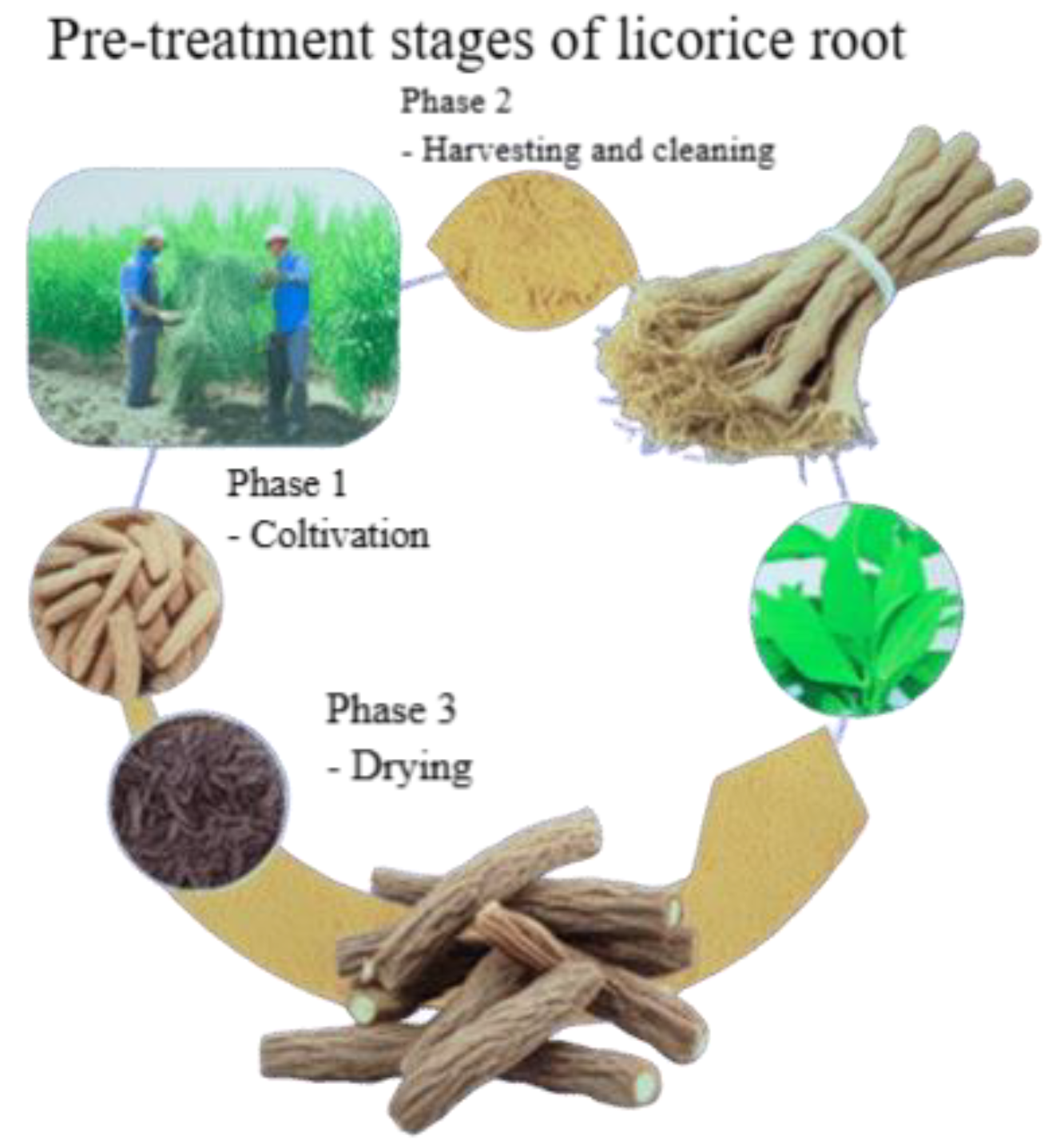
Figure 3.
Licorice root fiber residue, this is the common industrial waste in its raw form without any treatment. The material under examination comes from the company Romano S.r.l., located in Corigliano-Rossano, Cosenza, Italy.
Figure 3.
Licorice root fiber residue, this is the common industrial waste in its raw form without any treatment. The material under examination comes from the company Romano S.r.l., located in Corigliano-Rossano, Cosenza, Italy.
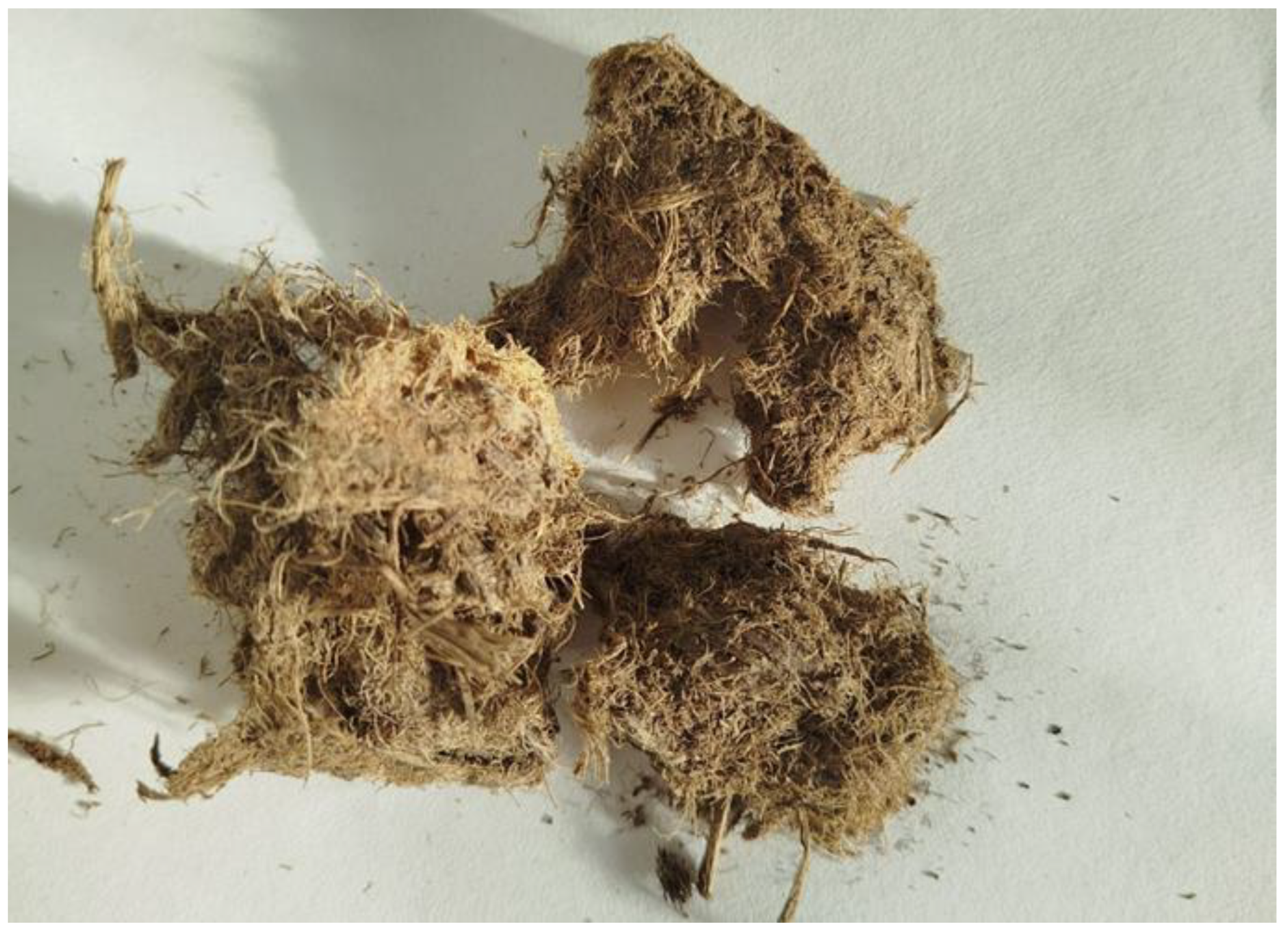
Figure 4.
Industrial waste licorice root, pulverized after the grinding process (a), industrial waste licorice root, broken after the segmentation process (b).
Figure 4.
Industrial waste licorice root, pulverized after the grinding process (a), industrial waste licorice root, broken after the segmentation process (b).
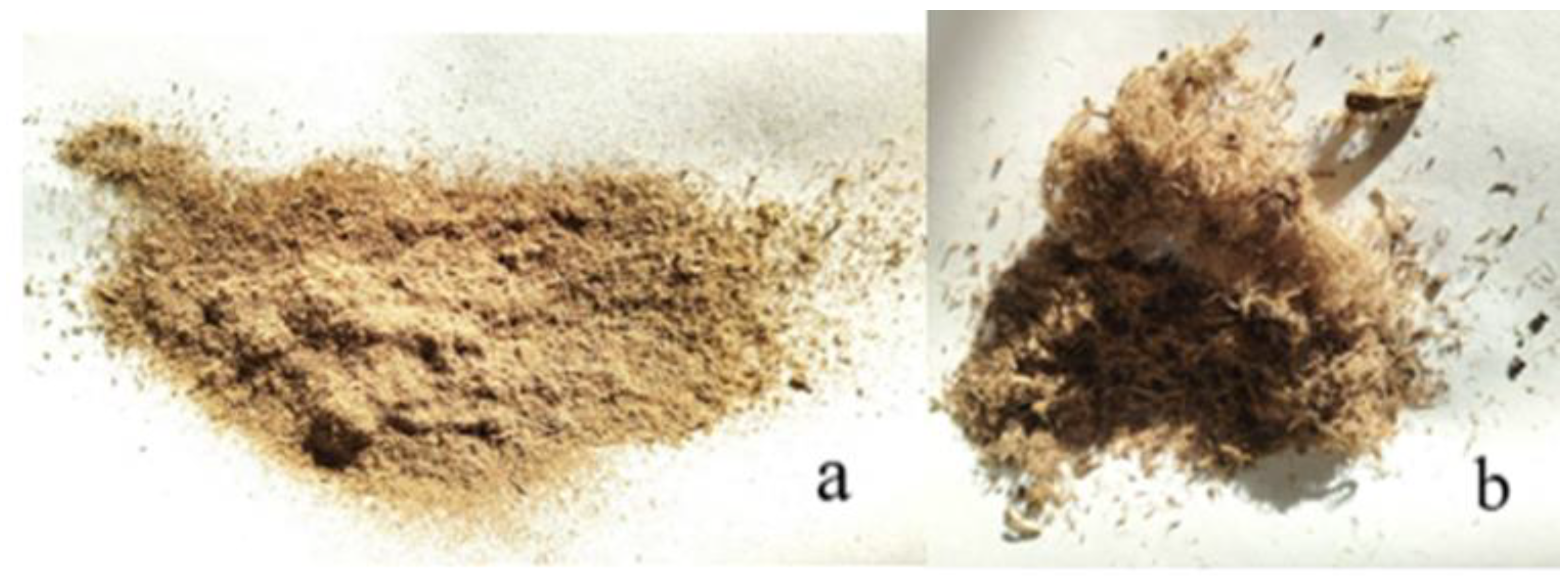
Figure 5.
Timeline of projected investments (2025–2035) in key sectors using licorice root residues, with indication of technological maturity (TRL).
Figure 5.
Timeline of projected investments (2025–2035) in key sectors using licorice root residues, with indication of technological maturity (TRL).
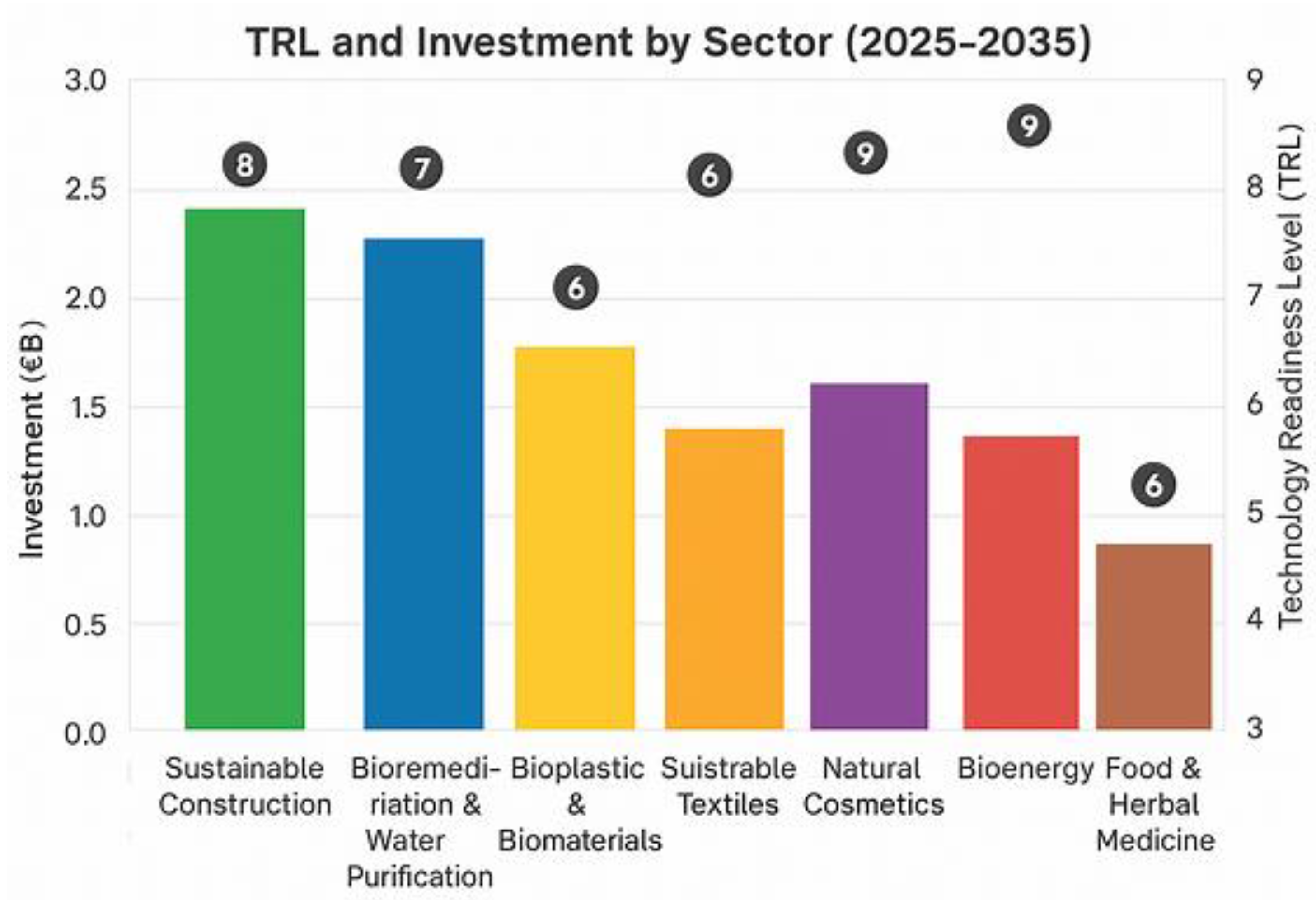
Table 4.
Main applications of residual licorice fiber, with indication of treatment, characteristics, and strategic importance.
Table 4.
Main applications of residual licorice fiber, with indication of treatment, characteristics, and strategic importance.
| Application sector | Fiber treatment | Obtained characteristics | Importance |
|---|---|---|---|
| Bio-construction and building materials [75,83] | Drying, grinding, mixing with natural binders (lime, gypsum, starches) | Thermal and acoustic insulation, lightness, breathability, good mechanical strength | Reduces the use of synthetic materials with high carbon footprint; contributes to sustainable construction and housing comfort |
| Eco-friendly paper and cardboard [63,78] | Mild mechanical or chemical pulping to separate cellulose; pressing and drying | Good mechanical strength, biodegradability, natural coloration without intensive bleaching | Alternative to virgin cellulose; reduces deforestation and valorizes agro-industrial residues |
| Agriculture and organic substrates [84,85,86] | Crushing, composting, direct use as soil amendment | High water retention capacity, supply of organic matter, improvement of soil structure, reduction of salinity | Improves soil fertility and resilience; supports crops under water or saline stress conditions |
| Sustainable textiles [79,80,81,82,83,84,85,86,87] | Extraction of natural pigments (water or eco-compatible solvents); use of raw fiber as reinforcement | Natural yellow-brown dyes, antimicrobial properties, potential flame retardancy | Provides ecological alternatives to synthetic dyes; enhances safety and durability of fabrics |
| Biodegradable packaging [75,78,83] | Drying, grinding, pressing; combination with biopolymers (PLA, starches) | Lightness, biodegradability, good mechanical strength, reduction of fossil-based plastics | Promotes the development of compostable and circular packaging; reduces the environmental impact of traditional plastics |
Table 5.
Utilization sectors of licorice root residues: estimated market value, CAGR (2025– 2030), required CAPEX, technological maturity (TRL), and scientific interest.
Table 5.
Utilization sectors of licorice root residues: estimated market value, CAGR (2025– 2030), required CAPEX, technological maturity (TRL), and scientific interest.
| Utilization sector | Estimated market value | CAGR (2025–2030) | Required CAPEX | Technological maturity (TRL) | Scientific interest | ||||
|---|---|---|---|---|---|---|---|---|---|
| Fertilizer / Compost | ~€2 billion | 4–5% | Low (composting plants already widespread) | TRL 8–9 (consolidated technology) | Moderate: studies on organic amendments and biochar | ||||
| Biomass for energy | ~€10 billion | 6–7% | Medium-high (gasification/digestion plants) | TRL 6–7 (pilot/industrial) | High: research on bioethanol and bioenergy from lignocellulosic residues | ||||
| Food industry (flavorings, additives) | ~€12 billion | 3–4% | Low (extraction and standardization) | TRL 9 (consolidated use) | High: numerous studies on natural extracts and clean label products | ||||
| Natural cosmetics (shampoo, conditioner) | ~€50 billion | 5–6% | Medium (extraction and formulation lines) | TRL 7–8 (pre-commercial/industrial) | High: growing research on licorice bioactives (antioxidants, soothing agents) | ||||
| Phytotherapy (ointments, creams) | ~€8 billion | 3–4% | Low | TRL 9 (consolidated use) | Moderate: clinical and pharmacognostic studies | ||||
| Biomaterials / Bioplastics | ~€15 billion | 10–12% | High (biopolymer and compounding plants) | TRL 5–6 (advanced research, prototypes) | Very high: strong academic interest in lignin and cellulose from residues | ||||
| Bioremediation / Water purification | ~€200 billion | 7–8% | Medium (water treatment plants) | TRL 5–6 (pilot) | Very high: recent studies on natural adsorbents and licorice-derived biochar | ||||
| Eco-sustainable construction (Bio-construction) | ~€600 billion | 8–9% | High (production lines for panels and composites) | TRL 6–7 (pilot/industrial) | Very high: works by Madeo et al. (2025) and others on biocomposites | ||||
| Smoke filtration (extracts, not residues) | ~€5 billion | Stable (0–1%) | Low | TRL 9 (consolidated use) | Low: few studies, more related to additives than residues | ||||
| Textile industry (fiber, dye, antimicrobial) | ~€40 billion | 6–7% | Medium (natural spinning and dyeing plants) | TRL 5–6 (research and prototypes) | High: recent studies on natural dyes and plant fibers | ||||
Disclaimer/Publisher’s Note: The statements, opinions and data contained in all publications are solely those of the individual author(s) and contributor(s) and not of MDPI and/or the editor(s). MDPI and/or the editor(s) disclaim responsibility for any injury to people or property resulting from any ideas, methods, instructions or products referred to in the content. |
© 2025 by the authors. Licensee MDPI, Basel, Switzerland. This article is an open access article distributed under the terms and conditions of the Creative Commons Attribution (CC BY) license (http://creativecommons.org/licenses/by/4.0/).
Copyright: This open access article is published under a Creative Commons CC BY 4.0 license, which permit the free download, distribution, and reuse, provided that the author and preprint are cited in any reuse.


