

Submitted:
09 December 2025
Posted:
10 December 2025
You are already at the latest version
Abstract
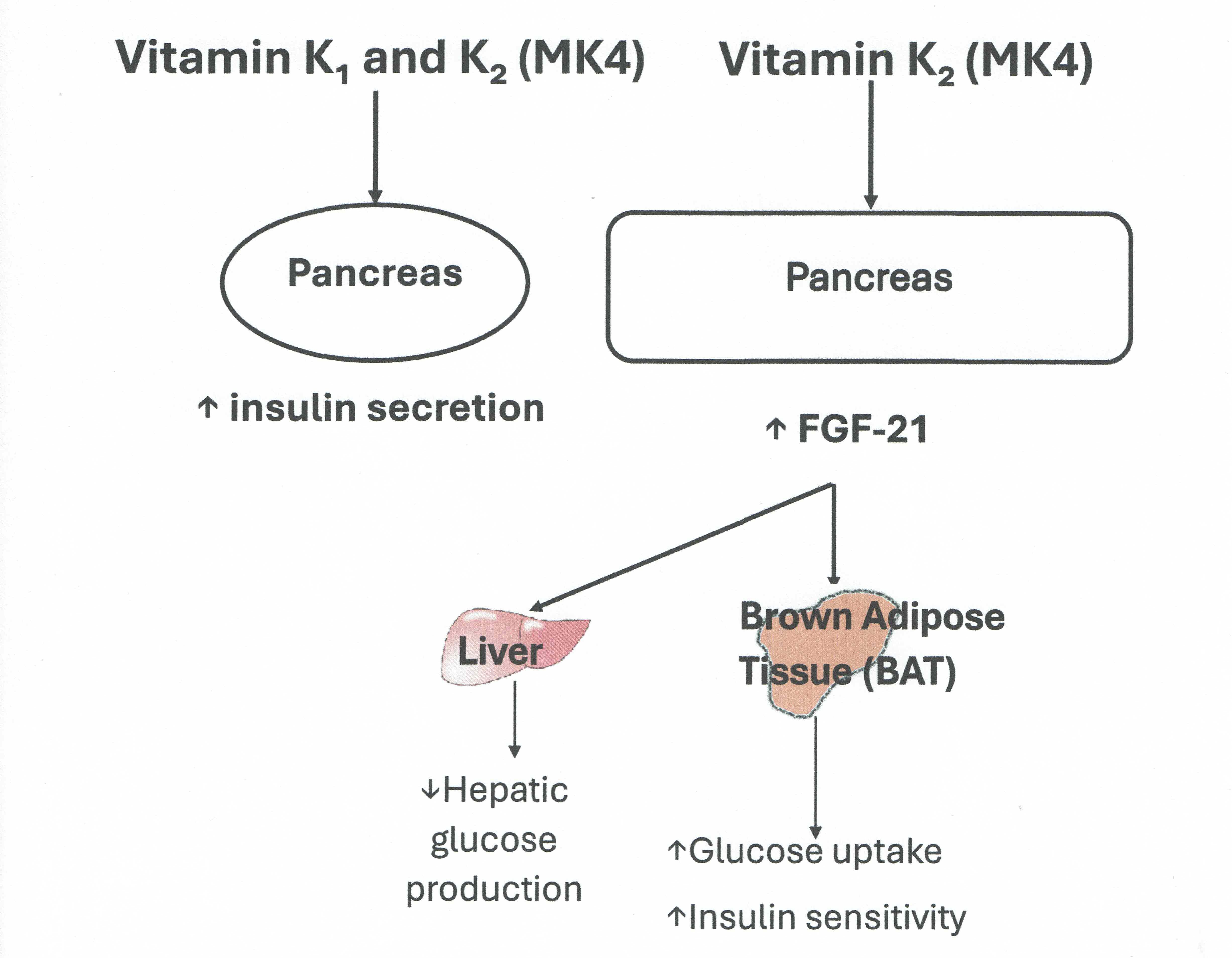
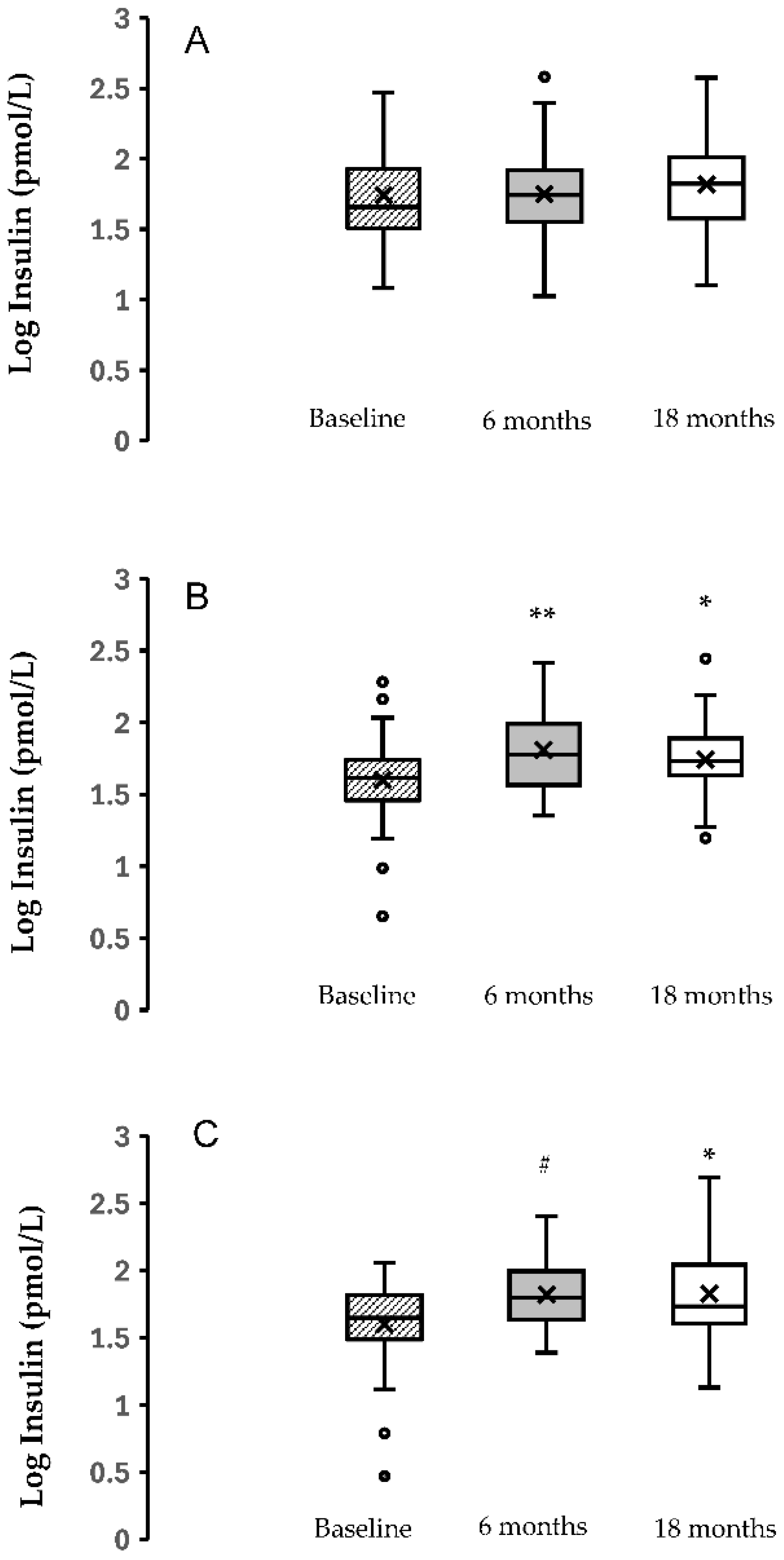
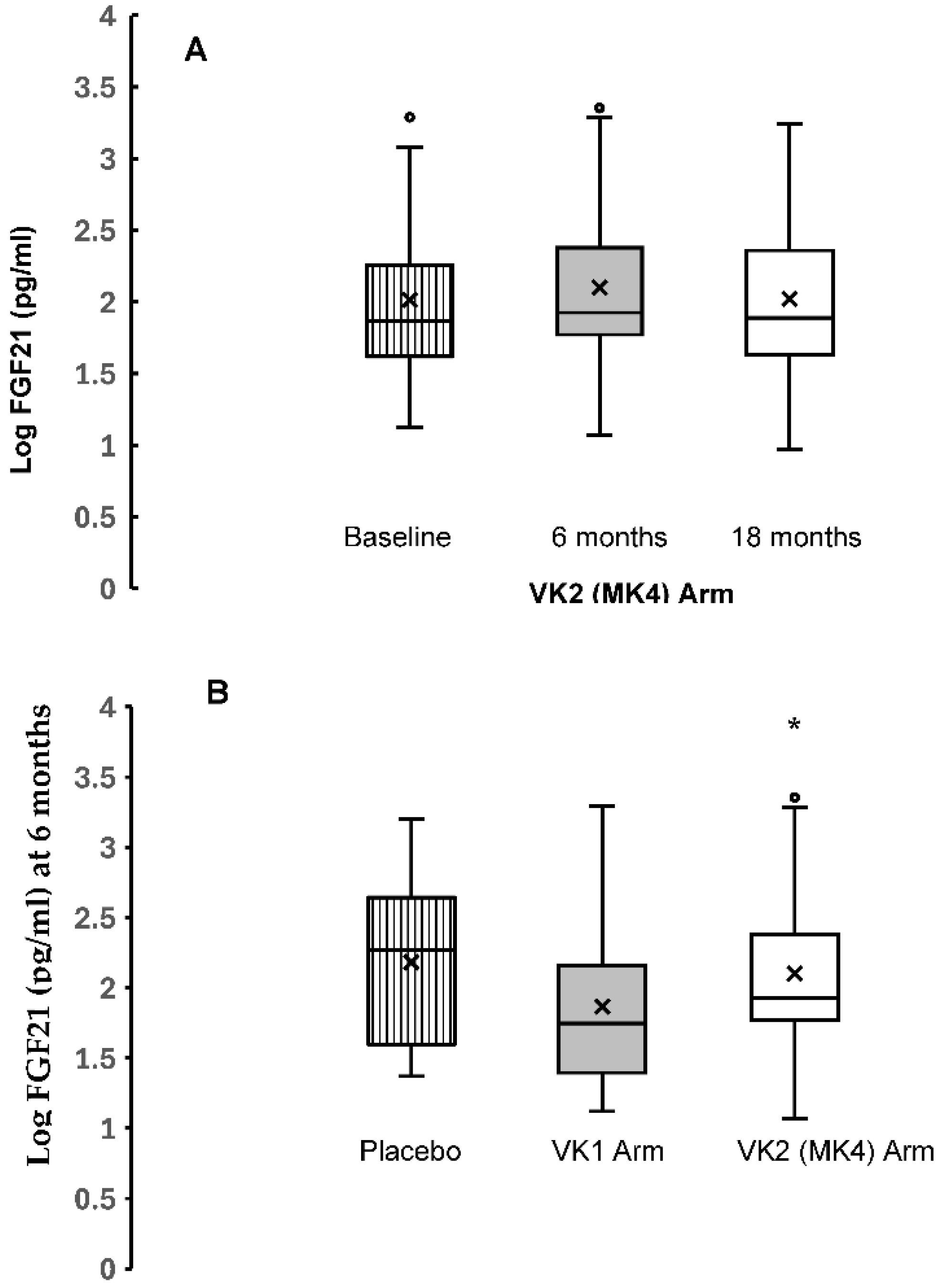
Introduction: We hypothesised that vitamin K (VK) may have potential effect on insulin secretion and FGF-19 and FGF 21 may modulate the vitamin K/insulin pathway. We investigated whether vitamin K1 or K2 supplementation for 18 months can affect insulin secretion and FGF19 and FGF21 production. Methods: We conducted exploratory analyses using stored samples from an 18-month randomised double-blind placebo controlled trial of VK1 (1 mg/day) or VK2 (menaquinone-4, MK4 45 mg/day)) in 105 post-menopausal women with osteoporosis (PMO) aged between 55-85 years which looked at the effect of VK supplementation on bone mineral density. In the current study, plasma insulin (primary outcome), FGF19 and FGF21 (secondary outcomes) were measured at baseline, 6 and 18 months. Results: Plasma insulin at 6 and 18 months increased significantly compared to baseline value in both treatment arms (VK1 and VK2 (MK4) ) (Median Insulin [IQR] VK1: baseline : 41.2 [29.3, 54.3] pmol/L, 6 months: 59.7 [37.8, 89.5] pmol/L p<0.001, 18 months: 54.3[43.5, 73] pmol/L (p= 0.05), VK2 (MK4) arm (Median Insulin [IQR]: baseline: 44.3[30.6, 60.9], 6 months: 63.2[43.5, 97] pmol/L p=0.011, 18 months: 54.2[40.7, 103.5] pmol/L p=0.05) in within-group analyses. No significant changes were seen in the placebo group. Circulating FGF21 tended to be higher at 6 months (p=0.045) compared to baseline following VK2 (MK4) only. Conclusions: Improving VK status in post-menopausal women may improve insulin secretion. Our data suggest that MK4’s effect on the insulin axis may be mediated, at least in part, by FGF21. Further studies are needed for confirmation.
Keywords:
1. Introduction
2. Material and Methods
2.1. Study Design and Intervention
2.2. Routine Laboratory Analyses
2.3. FGF19 and FGF21 Assays
2.4. Statistical Analyses
3. Results
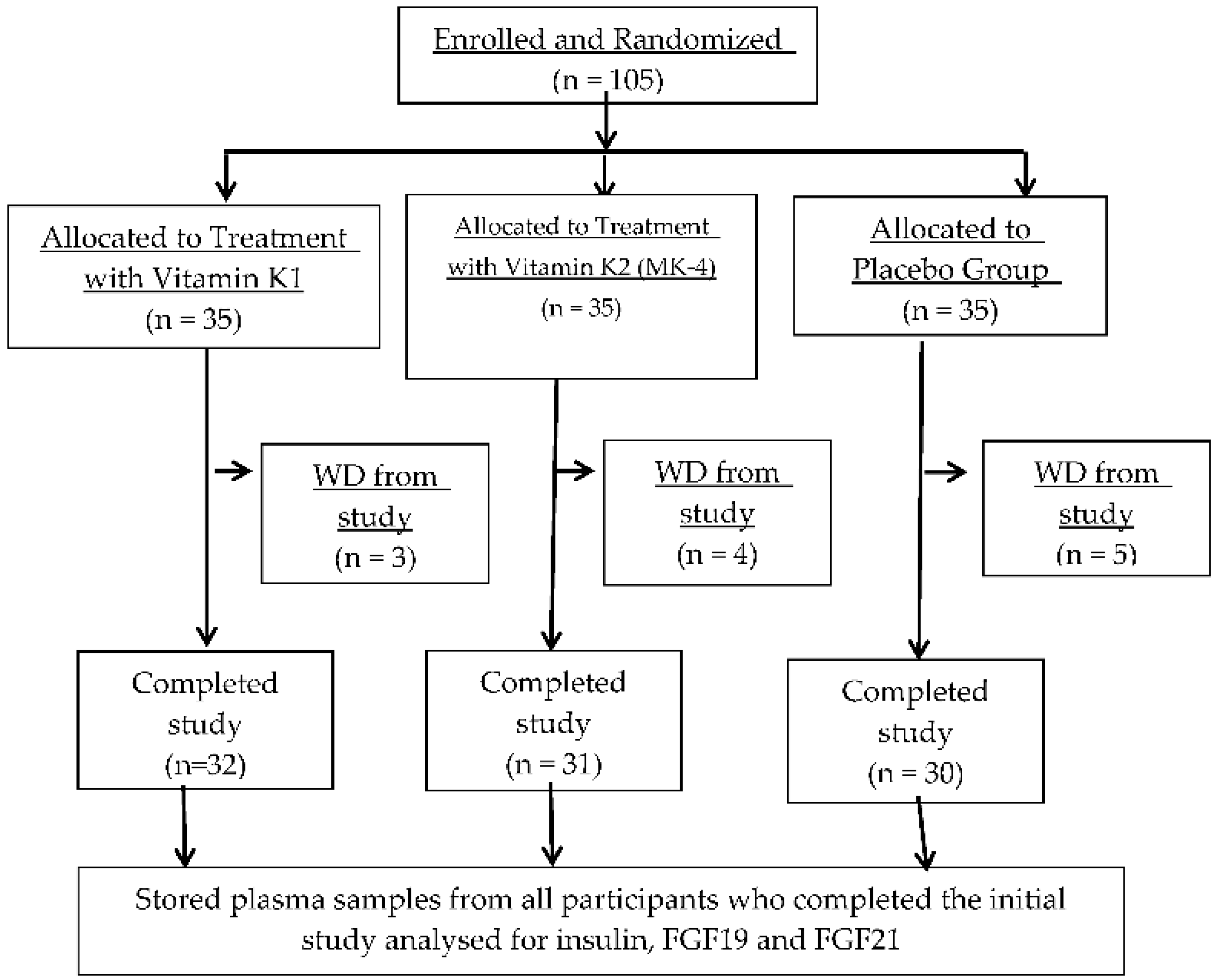
3.1. Study Participants
3.2. Changes in Plasma Insulin Following VK1 and VK2
3.3. Changes in FGF19 and FGF21 Following VK1 and VK2

| Characteristics |
VK1 N=35 |
VK2 (MK-4) N=35 |
Placebo N=35 |
P-Value |
| Completed study (n) |
32 | 31 | 30 | |
| Age (years) Mean [SD] |
65 [6] | 69 [7] | 67 [7] | 0.064 |
| BMI (kg/) Mean [SD] |
24.5 [5.6] | 23.4 [2.5] | 24.9 [5.6] | 0.9 |
| Creatinine (µmol/L) Mean [SD} | 65 [9] | 65 [9] | 67[1]) | 0.9 |
| eGFR (ml/min) Mean [SD] |
81 [14] | 81 [16] | 79 [15] | 0.9 |
| Serum Vitamin K1 (µg/L) Mean [SD] |
0.38 [0.23] | 0.34 [0.26] | 0.45 [0.26] | 0.067 |
4. Discussion
Author Contributions
Funding
Statement of Ethics
Data Availability Statement
Conflicts of Interest
References
- Ho, H. J.; Komai, M.; Shirakawa, H. Beneficial Effects of Vitamin K Status on Glycemic Regulation and Diabetes Mellitus: A Mini-Review. Nutrients 2020, 12(8), 2485. [Google Scholar] [CrossRef]
- Shearer, MJ; Newman, P. Recent trends in the metabolism and cell biology of vitamin K with special reference to vitamin K cycling and MK-4 biosynthesis. J Lipid Res. 2014, 55(3), 345–62. [Google Scholar] [CrossRef]
- Varsamis, NA; Christou, GA; Kiortsis, DN. A critical review of the effects of vitamin K on glucose and lipid homeostasis: its potential role in the prevention and management of type 2 diabetes. Hormones (Athens) 2021, 20(3), 415–22. [Google Scholar] [CrossRef]
- Ibarrola-Jurado, N; Salas-Salvado, J; Martinez-Gonzalez, MA; Bullo, M. Dietary phylloquinone intake and risk of type 2 diabetes in elderly subjects at high risk of cardiovascular disease. Am J Clin Nutr. 2012, 96(5), 1113–8. [Google Scholar] [CrossRef]
- Dumitru, N; Carsote, M; Cocolos, A; Petrova, E; Olaru, M; Dumitrache, C; Ghemigian, A. The Link Between Bone Osteocalcin and Energy Metabolism in a Group of Postmenopausal Women. Curr Health Sci J 2019, 45(1), 47–51. [Google Scholar] [PubMed]
- Ferron, M; Hinoi, E; Karsenty, G; Ducy, P. Osteocalcin differentially regulates beta cell and adipocyte gene expression and affects the development of metabolic diseases in wild-type mice. Proc Natl Acad Sci U S A 2008, 105(13), 5266–70. [Google Scholar] [PubMed]
- Hill, HS; Grams, J; Walton, RG; Liu, J; Moellering, DR; Garvey, WT. Carboxylated and uncarboxylated forms of osteocalcin directly modulate the glucose transport system and inflammation in adipocytes. Horm Metab Res. 2014, 46(5), 341–7. [Google Scholar] [CrossRef]
- Bullo, M; Moreno-Navarrete, JM; Fernandez-Real, JM; Salas-Salvado, J. Total and undercarboxylated osteocalcin predict changes in insulin sensitivity and beta cell function in elderly men at high cardiovascular risk. Am J Clin Nutr. 2012, 95(1), 249–55. [Google Scholar] [CrossRef]
- Dolegowska, K; Marchelek-Mysliwiec, M; Nowosiad-Magda, M; Slawinski, M; Dolegowska, B. FGF19 subfamily members: FGF19 and FGF21. J Physiol Biochem. 2019, 75(2), 229–40. [Google Scholar] [CrossRef]
- Yan, J; Nie, Y; Cao, J; Luo, M; Yan, M; Chen, Z; He, B. The Roles and Pharmacological Effects of FGF21 in Preventing Aging-Associated Metabolic Diseases. Front Cardiovasc Med. 2021, 8, 655575. [Google Scholar] [CrossRef] [PubMed]
- Jin, L; Yang, R; Geng, L; Xu, A. Fibroblast Growth Factor-Based Pharmacotherapies for the Treatment of Obesity-Related Metabolic Complications. Annu Rev Pharmacol Toxicol. 2023, 63, 359–82. [Google Scholar] [CrossRef]
- Yan, J; Nie, Y; Cao, J; Luo, M; Yan, M; Chen, Z; He, B. The Roles and Pharmacological Effects of FGF21 in Preventing Aging-Associated Metabolic Diseases. Front Cardiovasc Med. 2021, 8, 655575. [Google Scholar] [CrossRef]
- Loomba, R; Sanyal, AJ; Kowdley, KV; Bhatt, DL; Alkhouri, N; Frias, JP; et al. Randomized, Controlled Trial of the FGF21 Analogue Pegozafermin in NASH. N Engl J Med. 2023, 389(11), 998–1008. [Google Scholar] [CrossRef]
- Wu, AL; Coulter, S; Liddle, C; Wong, A; Eastham-Anderson, J; French, DM; et al. FGF19 regulates cell proliferation, glucose and bile acid metabolism via FGFR4-dependent and independent pathways. PLoS One 2011, 6(3), e17868. [Google Scholar]
- Barutcuoglu, B; Basol, G; Cakir, Y; Cetinkalp, S; Parildar, Z; Kabaroglu, C; et al. Fibroblast growth factor-19 levels in type 2 diabetic patients with metabolic syndrome. Ann Clin Lab Sci. 2011, 41(4), 390–6. [Google Scholar] [PubMed]
- Ryan, PM; Hayward, NE; Sless, RT; Garwood, P; Rahmani, J. Effect of bariatric surgery on circulating FGF-19: A systematic review and meta-analysis. Obes Rev. 2020, 21(8), e13038. [Google Scholar]
- Moore, AE; Dulnoan, D; Voong, K; Ayis, S; Mangelis, A; Gorska, R; et al. The additive effect of vitamin K supplementation and bisphosphonate on fracture risk in post-menopausal osteoporosis: a randomised placebo controlled trial. Arch Osteoporos. 2023, 18(1), 83. [Google Scholar] [CrossRef]
- Shea, MK; Booth, SL. Concepts and Controversies in Evaluating Vitamin K Status in Population-Based Studies. Nutrients 2016, 8(1), 8. [Google Scholar] [CrossRef] [PubMed]
- Górska, RM. Methods for assessment of vitamin K. In Laboratory Assessment of Vitamin Status; Harrington, DJ, Ed.; Academic Press: London; K, 2019; pp. 107–147. [Google Scholar]
- Frank, EA; Shubha, MC; D'Souza, CJ. Blood glucose determination: plasma or serum? J Clin Lab Anal. 2012, 26(5), 317–20. [Google Scholar] [CrossRef] [PubMed]
- Zhang, H; Zhu, R; Sun, Q; Du, L. Research progress on the role of FGF21 in insulin resistance. Front Endocrinol (Lausanne) 2025, 16, 1619462. [Google Scholar] [CrossRef]
- Samms, RJ; Lewis, JE; Norton, L; Stephens, FB; Gaffney, CJ; Butterfield, T; et al. FGF21 Is an Insulin-Dependent Postprandial Hormone in Adult Humans. J Clin Endocrinol Metab. 2017, 102(10), 3806–13. [Google Scholar] [CrossRef]
- Yoshida, M; Jacques, PF; Meigs, JB; Saltzman, E; Shea, MK; Gundberg, C; et al. Effect of vitamin K supplementation on insulin resistance in older men and women. Diabetes Care 2008, 31(11), 2092–6. [Google Scholar] [CrossRef]
- Sakamoto, N; Nishiike, T; Iguchi, H; Sakamoto, K. Possible effects of one week vitamin K (menaquinone-4) tablets intake on glucose tolerance in healthy young male volunteers with different descarboxy prothrombin levels. Clin Nutr 2000, 19, 259–263. [Google Scholar] [CrossRef]
- Thijssen, H H W; Drittji-Reijnders, M J. Vitamin K distribution in rat tissues: dietary phylloquinone is a source of tissue menaquinone-4. Br J Nutr 1994, 72, 415±425. [Google Scholar] [CrossRef]
- Ellis, JL; Fu, X; Karl, JP; Hernandez, CJ; Mason, JB; DeBose-Boyd, RA; Booth, SL. Multiple Dietary Vitamin K Forms Are Converted to Tissue Menaquinone-4 in Mice. J Nutr. 2022, 152(4), 981–93. [Google Scholar] [CrossRef] [PubMed]
- Ho, HJ; Shirakawa, H; Hirahara, K; Sone, H; Kamiyama, S; Komai, M. Menaquinone-4 Amplified Glucose-Stimulated Insulin Secretion in Isolated Mouse Pancreatic Islets and INS-1 Rat Insulinoma Cells. Int J Mol Sci. 2019, 20(8). [Google Scholar]
- Hussein, AG; Mohamed, RH; Shalaby, SM; Abd El Motteleb, DM. Vitamin K(2) alleviates type 2 diabetes in rats by induction of osteocalcin gene expression. Nutrition 2018, 47, 33–8. [Google Scholar] [CrossRef] [PubMed]
- Lan, T; Morgan, DA; Rahmouni, K; Sonoda, J; Fu, X; Burgess, SC; et al. FGF19, FGF21, and an FGFR1/beta-Klotho-Activating Antibody Act on the Nervous System to Regulate Body Weight and Glycemia. Cell Metab. 2017, 26(5), 709–18 e3. [Google Scholar]
- Xie, T; Leung, PS. Fibroblast growth factor 21: a regulator of metabolic disease and health span. Am J Physiol Endocrinol Metab. 2017, 313(3), E292–E302. [Google Scholar] [CrossRef]
Disclaimer/Publisher’s Note: The statements, opinions and data contained in all publications are solely those of the individual author(s) and contributor(s) and not of MDPI and/or the editor(s). MDPI and/or the editor(s) disclaim responsibility for any injury to people or property resulting from any ideas, methods, instructions or products referred to in the content. |
© 2026 by the authors. Licensee MDPI, Basel, Switzerland. This article is an open access article distributed under the terms and conditions of the Creative Commons Attribution (CC BY) license (https://creativecommons.org/licenses/by/4.0/).


