

Submitted:
09 December 2025
Posted:
10 December 2025
You are already at the latest version
Abstract
This conceptual paper proposes a purpose-driven experiential marketing framework for film-inspired destinations, integrating sustainability and emotional engagement into destination management. The model comprises five interconnected dimensions — integrated experience, branding, people, emotional touchpoints and processes — articulated through purpose-driven marketing principles and aligned with relevant Global Reporting Initiative (GRI) indicators. This alignment reinforces the model’s capacity to support ethical, transparent, and sustainability-oriented destination strategies.
The framework was developed through an interdisciplinary literature review and is illustrated with insights from an exploratory case study of Monsanto, a rural Portuguese village recently featured in HBO's House of the Dragon. Semi-structured interviews were conducted with a purposive sample of local stakeholders, including tourists, residents, entrepreneurs, and institutional representatives, and analysed thematically to assess the model’s relevance and practical applicability.
The findings suggest that emotional engagement, co-creation, and territorial authenticity play a central role in shaping memorable, film-related tourism experiences that align with the destination’s purpose and value creation. The study also highlights the strategic importance of storytelling, audiovisual narratives and stakeholder collaboration in strengthening place identity and achieving sustainable differentiation.
Although the study is exploratory in scope, the framework offers practical guidance for destination management organisations (DMOs), cultural programmers, and creative industry actors. The article concludes by identifying avenues for future research, including cross-regional validation, digital experimentation, and the quantitative assessment of experience dimensions.
Keywords:
film-induced tourism
; experiential marketing
; emotional branding
; GOBE model
; destination experience
; GRI indicators
; value-based marketing
; cultural events
1. Introduction
The prominence of sustainability as a theme in the 2030 Agenda for Sustainable Development has rendered it a critical topic in the tourism industry, particularly evident in targets 8.9, 12.b, and 14.7 of the Sustainable Development Goals - SDGs ( ONU, 2015). These targets aim to design, implement, develop, and monitor policies and tools to promote sustainable tourism that generates employment, fosters cultural appreciation, supports local products, assesses developmental impacts, and enhances economic benefits for the region or country.
The concept of sustainable tourism is characterized by the prioritization of management strategies aimed at preserving the environment, addressing social needs, maintaining cultural integrity and aesthetic diversity, and ensuring economic viability without compromising environmental quality, social well-being, and the interests of future generations (Arteaga et al., 2018; Broccardo et al., 2017; Swarbrooke, 1999; Yi et al., 2021). Regarding tourism organizations, those that demonstrate greater commitment to sustainability may enhance their social and economic value, promote long-term prosperity, and exhibit an increased likelihood of satisfying and retaining customers (Arora et al., 2024; Méndez-Leon et al., 2021).
One of the numerous forms of tourism is cinematographic/television tourism, which, since the study by Riley and Van Doren (1992), has sparked academic interest in the relationship between audiovisual content and destinations, specifically the potential of audiovisual fiction to attract tourists to filming locations, a phenomenon called film-induced tourism (Beeton, 2016).
Film-induced tourism is typically promoted by DMOs, which are entities responsible for the development, image, branding, promotion, and marketing of a destination on behalf of private and public tourism entities (Hudson & Ritchie 2006). Their function is to attract tourists who desire to view the architecture, sets, or landscapes associated with specific films/series, or who are interested in experiencing the narratives and themes associated with the locations represented in these productions in order to get involved in the tangible and intangible cultural heritage of urban or rural landscapes (Strielkowski, 2017). Consequently, film-induced tourism establishes connections between the film and tourism industries, enhancing their overall economic impact while providing tourists with an escape from quotidian routines, offering pleasure and satisfaction, and facilitating an innovative experience with cultural learning (Yi et al., 2022).
As previously stated, tourists in this segment seek innovative, authentic, and unique experiences at specific and differentiated filming locations. This attribute makes the place and all aspects related to the film both rare and valuable to tourists, potentially representing a competitive advantage over other tourist concepts and destinations (Barney & Clark, 2019; Cardoso et al., 2017). However, to capitalize on this advantage, the positioning in the tourist's mind must reflect a genuine and authentic purpose (Fernandes et al., 2024). This is particularly crucial as tourists are increasingly aware of this issue and are more adept at spotting corporate greenwashing inauthentic claims regarding sustainability and well-being. Consequently, the DMOs should define its purpose, which is to equitably enhance the well-being of all stakeholders tourists, employees, suppliers, local communities, and shareholders and effectively reflect this in its marketing practices (Hurth & Vrettos, 2021). This approach changes the relationship between the DMO and the market segment it aims to attract. Specifically, the focus shifts to areas where the DMO has the opportunity to improve well-being, add distributed value, and ensure sustainability, rather than emphasizing financial value alone. This represents a move away from limited product, sales and market orientations, towards more environmentally sustainable operations, positive social impact and improved collective well-being, thus enabling the DMO to respond to the needs and expectations of individuals, which are two antecedents of organizational goal (van Ingen et al., 2021).
Adopting the stance of a purpose-conscious practitioner is imperative for the DMO, as it is the only approach that guarantees sustainability and the well-being of stakeholders from the perspective of tourists (Galuppo et al., 2022). This position develops within the DMO, initiated by those with the authority to do so, and influences the DMO’s tangible operational methods. This affects how the DMO selects suppliers, determines investments, makes decisions regarding service and product development, and many other aspects. Nevertheless, by envolving purpose-oriented individuals, it is mandatory to provide meaningful work aligned with the DMO’s purpose (Lysova et al., 2019; van Ingen et al., 2021). Specifically, it serves as a mediator in the relationship between the DMO’s purpose and work outcome. Simultaneously, meaningfulness is crucial in marketing to achieve desired outcomes (Zuo et al., 2019), thus underscoring the significant role of DMO in marketing strategies.
It can be stated that the DMOs should design its essence and brand according to purpose-led branding, guided by purpose-driven strategies (Fernandes et al., 2024; Jones-Khosla & Gomes, 2023), and must implement a series of marketing-based initiatives to ensure optimal positioning in a highly competitive market such as that of tourist attractions (Cardoso et al., 2017; Vagionis & Loumioti, 2011). By achieving this goal, the DMO gains a competitive advantage, thus facilitating the development of tourism and sustainable business, since these two aspects are intrinsically linked (Schaltegger et al., 2016).
Marketing strategies and initiatives supported by the marketing-mix are the maindrivers of the DMO's purpose. Several authors state that it is essential to understand the influence and contribution of marketing mix purpose on tourist experiences and value creation (Jones-Khosla & Gomes, 2023; Sheth, 2021; Wichmann et al., 2022), and to gather empirical evidence on the practical significance of the business purpose (George et al., 2023). Consequently, academic research is needed to elucidate the appropriate marketing-mix configuration for a goal-oriented DMO. This study addresses two research questions: How does the purpose influence the operational marketing of film-induced destinations? What is the optimal marketing-mix configuration that DMOs can employ to attract tourists and to design innovative and authentic experiences in film-induced destinations?
Given these research opportunities, this study aims to improve the understanding of the influence of organizational purpose on operational marketing. Based on the literature, we postulatet that organizational purpose serves as the guiding principle for a DMO's marketing-mix. Furthermore, we propose that tourists’ needs and expectations can be conceptualized as antecedents of both organizational purpose and the marketing mix, mediated by the mechanism of being invested with meaningfulness (Lysova et al., 2019; van Ingen et al., 2021; Zuo et al., 2019). In addition, we examine the evolution from the traditional service and product-centred marketing-mix to a purpose-driven experiential marketing approach for DMO (Batat, 2024). Despite the conceptual nature of the study, exploratory validation was integrated with primary data collected in Monsanto, thereby enabling the applicability of the proposed model to be assessed among tourists, businesspeople, and local decision-makers. Furthermore, the model was associated with the Global Reporting Initiative (GRI) indicators, thereby reinforcing its utility as a strategic and sustainable instrument for tourist destinations with film potential. The model integrates macro and micro level drivers in the film-induced destination segment and is further aligned with sustainability standards, including indicators from the Global Reporting Initiative (GRI). These variables may serve as a basis for future research on the influence of purpose on marketing. Finally, by elucidating the link between organizational purpose and operational marketing through the marketing-mix, we contribute to the theory and practice of film-induced destination research. Specifically, we aim to mitigate the potential for corporate greenwashing, in which purpose and marketing-mix are employed as fallacious tools for profit generation rather than social benefits.
This study has a special focus on Monsanto, a village in central Portugal. It is known as "the most Portuguese village in Portugal" and was given this title in 1938 through the Galo de Prata (Silver Rooster) distinction. Monsanto is famous for its granite buildings and history, and it was recently chosen as a place to film the HBO series House of the Dragon. This special meeting of cultural heritage and international media exposure positions Monsanto as an interesting example of film-induced tourism in a rural setting. It provides a useful background for looking at emotional branding, place attachment and value-based experiential design.
Although centred on film tourism, the proposed model also contributes to the design and implementation of immersive and emotionally resonant experiences within cultural events and festivals inspired by cinematic narratives.
In this context, the present article proposes a conceptual model for reconfiguring the marketing mix for film tourism. This model is based on extant literature and insights gathered from stakeholders in the sector. The purpose of this model is to make a contribution to the debate on symbolic and narrative strategies in the promotion of territories through audiovisual media.
2. Literature Review
2.1. The Relationship Between Purpose and Marketing
Purpose clarifies both the nature (what) and the justification (why) of DMO’s actions, serving as the foundation of its marketing strategy (Busco et al., 2024; Sinek, 2017). It is an existential intention that guides decisions and practices (Gulati, 2024), and its effectiveness lies in articulating strategic goals while motivating the workforce (Blount & Leinwand, 2019). When aligned with stakeholders, purpose not only sustains the DMO financially but also generates social and community value (Drucker, 1974; Harrison et al., 2020; Ocasio et al., 2023).
Integrating purpose into marketing allows DMOs to engage tourists authentically, aligning experiences with values beyond profit (Blount & Leinwand, 2019; Batat, 2024). This conscious, purpose-driven marketing cultivates long-term relationships by connecting emotions with enduring meaning (Fernandes et al., 2024). In this way, the DMO brand becomes part of tourists’ self-perception while fostering innovation, value delivery, and sustainable relationships among stakeholders (Daugherty et al., 2018; Kotler & Keller, 2016).
Marketing in tourism must therefore be both experiential and sustainable. By using marketing-mix variables to enhance tourist experiences while protecting the environment and benefiting communities, DMOs balance emotional engagement with sustainable development (Han, 2021; Kemper et al., 2019). Choosing the appropriate mix requires contextual awareness of tourists, communities, and competitors, but ultimately serves as a strategic tool for achieving the organisation’s purpose (Vissak et al., 2020; Jones-Khosla & Gomes, 2023).
This conceptual articulation between purpose and strategy sets the foundation for aligning the marketing-mix with the expectations of experience-driven tourism.
2.2. The Common Antecedents and Mediator of Purpose and Marketing
Tourist needs and expectations tangible, intangible, individual, and social form the basis of a DMO’s marketing strategies, shaping authentic experiences and competitive advantage (Luo & Ye, 2021; Grönroos & Voima, 2013). Expectations are dynamic and influenced by factors such as price, prior experience, and communication, requiring continuous adjustment of strategies (Kotler & Keller, 2016). As guiding principles, needs and expectations can thus be considered antecedents of both purpose and marketing (Blount & Leinwand, 2019; Fernandes et al., 2024).
Conscious, purpose-driven marketing aligns organisational practices with these antecedents, ensuring authenticity, trust, and transparency, while adapting to evolving tourist demands through experiential approaches (Han, 2021; Rust, 2020). Success therefore depends on integrating tourist needs with sustainability and organisational objectives.
Human capital is a critical foundation of competitive advantage (Elsharnouby & Elbanna, 2021). Meaningfulness, the perception that work contributes to individual well-being and broader organisational or social goals emerges as the main mediator linking needs, expectations, purpose, and marketing (Pratt et al., 2013; Lysova et al., 2019). When employees perceive alignment between personal values and organisational purpose, they show greater engagement, commitment, and performance, which enhances the DMO’s ability to detect opportunities, manage the marketing-mix and brand, and co-create memorable experiences with tourists (Lysova et al., 2019; Woods & Sofat, 2013).
2.3. Marketing-Mix from the “P”roduct to “E”xperience
The marketing mix variables used by DMO vary according to the available resources and capabilities, market conditions, and the evolving needs of tourists. The configuration and meaning of these variables are subject to change at any time, and considering one variable without considering its impact on others may result in incoherence because the marketing-mix constitutes a complex adaptive system (Arraya, 2024; Khalilzadeh et al., 2024; Leinwand et al., 2016).
Research on marketing-mix has had a major influence on the development of marketing theory and practice, as well as on the improvement of long and short-term tactical programmes (Moller, 2006; Wichmann et al., 2022). Borden (1964) defined the marketing-mix as a combination of 12 variables research and analysis of facts, product planning, advertising, branding, distribution channels, displays, packaging, personal selling, physical handling, pricing, promotions, and services under the management of a marketeer to satisfy the target market. McCarthy (1964) refined this concept and regrouped Borden's 12 elements into four variables, known as the: product, price, promotion, and placement. Later, Magrath (1986) suggested the addition of 3 Ps -personnel, physical facilities, and process management; Judd (1987) proposed people; Vignali and Davis (1994) suggested the addition of service; and Kotler (1999) incorporated political power and the formation of public opinion into the concept.
Regarding the marketing mix of services, Booms and Bitner (1981) added three more Ps to the traditional concept: people, processes, and physical evidence. Lim (2021), in an article on integrated care the integration of health and social care systems advocates for 10 dimensions: to by McCarthy’s traditional four (1964) and to the three introduced by Booms and Bitner (1981), he adds three new packaging Ps: price a single price offer with a guarantee of the service provided, partnership cooperation between various stakeholders, and politics policy and governance of the authority.
Goldsmith (1999) suggests personalization, proposing that it becomes a standard part of the marketing-mix, forming the 8P's configuration product, price, place, promotion, personnel, physical assets, procedures, and personalization.
Regarding tourism and hospitality, the meta-analysis by Lim and Ok (2024) identified 10 dimensions: product, place, promotion, price, customer satisfaction, employee performance, human resource practices, operational efficiency, perceived quality, and satisfaction, that extend the traditional 4Ps and link tourist satisfaction to hotel performance. In parallel, Lim (2021) proposed a marketing-mix typology for integrated care, introducing the ‘10 Ps’ framework, which, although from another field, reinforces the relevance of expanded mix approaches. Govers and Go (2009) state that "place branding", by means to build the integrity and identity of the brand in relation to the region and country, is an important dimension in the marketing-mix for tourist destinations that sought position and promote cultural attraction.
Recently, Batat (2024) presented the experiential marketing-mix as a guide to building innovative and emotional experiences in physical and digital environments that consumers find hard to forget, featuring 7Es: experience, exchange, extension, emphasis, empathy capital, emotional touchpoints, and emic/etic processes.
In this study, our focus is on the tourist experience in a film-induced destination. As such, we conceptualize the tourist's experience in this type of proposal as their journey from the experience of choice from research to purchase, which is a process that incorporates past experiences, latent expectations, and external factors through the various emotional touchpoints, only some of which are under the control of the DMO to the memorable emotions that are recorded at the end of the experience. This process acts as a guide for examining tourists’ experiences during their trip, as well as for modeling the effects of different emotional touchpoints on their experiences. As shown in Figure 1, tourists’ journeys are conceptualized in three stages: choice, experience, and post-experience.
Choice. This stage covers all pre-purchase interactions with the film-induced destination, shaped by expectations, recognition needs, and information overload. Credibility, trust in operators, and previous experiences are decisive factors from the recognition of needs to purchase (Pieters et al., 2001).
Experience. This stage covers all the interactions tourists have with the film-induced destination during the purchase of access to the destination, stay, and experience. This stage is significantly influenced by marketing activities, such as the marketing-mix (Kotler & Keller, 2015), the environment and atmosphere (Steadman et al., 2021), and the service environment (Berry et al., 2006) during the experience.
Post-Experience. This stage includes behaviors such as post-stay engagement, which is reflected in the tourist’s integrated experience and their emotional touchpoints, and non-purchase behaviors, such as word of mouth and other forms of tourist engagement, particularly on digital networks.
In the context of a tourist's journey, emotional touchpoints serve as stimuli that elicit specific affective responses to the experience. Understanding and addressing these emotional touchpoints improves the tourists’ journey and facilitates a deeper connection with the destination. This study identified four categories of emotional touchpoints that influence experiences during a tourist's journey: brand, partners, co-creation, and social/external factors.
Brand. These emotional touchpoints are interactions with tourists during the experience that are designed, manipulated, and managed by the DMO. They include online and offline advertising, websites, tourist attraction programs, and other variables of the marketing-mix. Search engine advertising has also been extensively studied.
Partners. These emotional points of contact interact with tourists during the experience that are jointly designed, handled, managed, and controlled jointly by the DMO and its partners, understood as all entities that promote, complement, and contribute directly to the DMO's business model.
Co-creation. These emotional touchpoints are actions of the tourist that are part of their experience and which no entity directly influences or controls. This concept is related to the tourist being a co-creator of value, independently or together with the DMO and its partners (Vargo et al. 2020).
Social/external. These emotional touchpoints recognize the significant role of known and unknown individuals in the tourist experience. Throughout the experience, tourists are influenced by external touchpoints that can affect the experience, such as other tourists, influences from acquaintances, individual or collective opinion leaders Booking and TripAdvisor and the surrounding environment in its diverse forms economic, political, and security.
These categories of emotional touchpoints provide the DMO with a coherent framework for understanding the potential points that can influence and enhance the tourist experience, thus making important contributions to the configuration of the marketing-mix.
2.4. The Configuration of the Marketing-Mix in the Context of the Film-Induced Destination
2.4.1. The Configurational Process
The marketing-mix is a holistic entity whose totality makes it dynamic and more powerful than the sum of its variables; failing to recognise this weakens strategic understanding (Carvalho, 2012; MacInnis et al., 2020). Examining it through the lens of complexity highlights its multidimensional nature, shaped by tourists, purpose, ethics, sustainability, culture, and stakeholders (Morin, 1986; Carvalho, 2012).
Conceptualising the mix as a complex adaptive system enables DMOs to detect threats and opportunities, anticipate tourist preferences, and enhance adaptability and competitiveness (Filser et al., 2021). This configurational approach organises and aligns variables into coherent strategies that avoid simplification and serve as a rational guide (Ghedin & Franco, 2008). It requires theory-based learning, rigorous analysis, and creativity, encouraging adaptability, exploration, and collaboration as innovative sources of value (Godin, 2020).
A marketing-mix configuration is therefore a constellation of interdependent variables whose coherence generates superior performance (Leinwand & Mainardi, 2011; Pinto & Curto, 2007). Because of equifinality and non-linearity, multiple configurations can lead to effective outcomes depending on context (Grandori & Furnari, 2013).
2.4.2. The Driving Forces in the Segment Film-Induced Destination
The multiplicity of configurations available in the marketing mix represents a challenge in terms of choice and decision-making; however, it remains imperative to consider the main causal factors and trends in tourist behavior, particularly those associated with film-induced destinations. Thus, and in consideration of authors such as Rust (2020) and Zhang and Watson IV (2020), we have identified five influential trends in film-induced destination marketing: (1) market developments, new business models, and sustainability; (2) technological advances, (3) socioeconomic changes, (4) geopolitical changes and (5) environmental changes in terms of the sustainability of natural resources.
Market environments are continuously changing and transforming (Arraya, 2022), and consequently, the dynamism of tourists and the development of the marketplace influence the emergence of new business models. These models must prioritize objectives that go beyond profits, emphasizing the local community, the environment, and relationships between internal and external stakeholders to share a common purpose (Collins & Saliba, 2020).
Technological advances result from the increasing interconnectivity between individuals and objects, facilitated by equipment, Internet efficiency, the Internet of Things (IoT), greater computing power, and the consequent greater ability to collect and analyze/use data (i.e., lead flow data, location data, user-generated content), more sophisticated mobile applications and social networks, artificial intelligence, and robotics (Davenport, 2018; Grewal et al., 2020; Mende et al., 2019).
Socioeconomic changes are attributed to income disparities between different strata of the population, economic growth in emerging markets, and dichotomous trends, such as globalization, free trade facilitation, and the rise of protectionism in certain regions of the world (Rust, 2020).
Geopolitical changes are a result of new political, religious, and moral realities as well as cultural shifts, often exacerbated by deepfakes and the dissemination of disinformation (Shams et al., 2024).
Environmental concerns are increasingly significant for numerous consumers, users, and policymakers (Rust, 2020), with evident implications for marketers in the tourism industry.
In Table 1, we list some of the main effects of each of the trends that condition the marketing-mix of film-induced destinations.
Data and insights from these trends clarify the trajectory of film-induced destinations and are fundamental for shaping the marketing-mix, as they reveal tourist attitudes and behaviours and the prospects for sustainable development and growth of DMOs (Bowen & Whalen, 2017). DMOs can configure variables and improve offerings through a deeper understanding of preferences and market dynamics, capitalising on opportunities aligned with competencies, capabilities, local resources, and locations. The capacity to identify and adapt to these changes is therefore critical for competitiveness (Bowen & Whalen, 2017). At the same time, tourism in natural areas often used as filming locations may generate negative impacts such as overuse of sites, resource conflicts, and biodiversity loss, with implications for local communities (Breiby et al., 202; Lindberg et al., 2021). These trends directly affect decision-makers and operators of DMOs, influencing both marketing-mix strategies and the spectrum of sustainability issues crucial for the future of tourism.
2.4.3. Variables of the Experiential Marketing-Mix in the Film-Induced Segment Destination
In this subsection, we propose a configuration of the variables of the DMO marketing-mix, turning it into a personalized and competitive tool. A marketing-mix variable is defined as a dimension that represents a significant marketing function, oriented towards the organization's purpose and market, integrated into the marketing strategy, and which, when handled appropriately, positively influences tourists’ purchasing decisions or choices, generating value for stakeholders.
The marketing-mix of DMOs requires different configuration decisions compared to the marketing of goods, services, or personalization, and closely aligns with Batat's (2024) approach to experiential marketing. Our aim was to present a configuration that reorganizes the variables in a complex adaptive system, considering the specificity of the film-induced destination.
Following Batat's (2024) approach, the proposed marketing-mix configuration focuses on an integrated tourist experience and incorporates the emotional, sensory, social, cognitive, behavioral, and relational elements and attributes of the experience at filming locations. Consequently, the configuration incorporates five controllable variables: integrated experience, branding, people, emotional touchpoints, and processes. This allows for the implementation of effective strategies to design successful experiences for tourists, sustainable practices for the environment, socially relevant initiatives for the community, and profitable outcomes for operators and DMO.
- Integrated Experience
Tourism, particularly film-induced tourism, conceptualised as a complex product, requires an integrated approach that combines cultural offerings, gastronomy, and hospitality (Du & Girault, 2018). The integrated experience is thus a crucial variable of the marketing-mix, facilitating reciprocal value creation through co-creation among filming locations, available services/products, and tourists themselves (Vargo et al., 2020; Wu et al., 2018). Co-creation enables coordinated dynamics between agents, enhancing perceived value, satisfaction, and revisit intention (Meng & Cui, 2020). Cooperation among diverse providers artisans, hoteliers, restaurateurs, and cultural institutions must converge towards cohesive goals, fostering innovation and tangible benefits for territories (Sugathan & Ranjan, 2019).
This integrated dynamic strengthens memorability and authenticity (Duxbury et al., 2021; Maia et al., 2023; Shakya & Vagnarelli, 2024), value creation (Aquino et al., 2020), recommendation behaviour (Tien et al., 2021), and competitive advantage (Leite et al., 2021). Moreover, experiences generate lasting memories: even when minor negative episodes occur, positive aspects dominate tourist perceptions (Wang et al., 2021; Papadopoulou et al., 2022).
- Branding
Branding, as a variable of the marketing mix, is a critical component of the DMO’s marketing strategy, which aims to position itself effectively, valorize local culture, and establish emotional connections that facilitate identification with the destination (Neves et al., 2024; Ahmed & Ünüvar, 2022). Specifically, the aim is to develop, with a focus on sustainability, reputation, image, and identity of the destination as a brand, which is essential for positively influencing the memories of tourists and stakeholders (Maurya & Mishra, 2012). This approach is in line with the concept of "place branding," which aims to build brands for localities, generate positive associations, and differentiate a place from others (Acharya & Rahman, 2016; Eshuis et al., 2014).
For a place branding strategy to be effective, in accordance with conscientious purpose-driven marketing, it must be predicated on authenticity consistency, trust, transparency, and a well-defined value proposition and connect to tourists’ needs and expectations, fostering an emotional connection that increases trust in the experiences offered and facilitates purchase decisions (Chang, 2020; Huerta-Viso et al., 2024; Fernandes et al., 2024).
Another central element of marketing strategy is the people variable, which encompasses the employees of the DMOs. These professionals play a vital role in the tourist experience by shaping brand identity through direct and meaningful interaction.
- People
The "People" variable is essential for creating quality experiences, promoting satisfaction, and fostering tourist loyalty (Agyeiwaah et al., 2021). Tourist experience and satisfaction depend on employees, who are crucial in interactions as co-producers of the service, ensuring pleasantness and personal connections (Zhang et al., 2023). Tourist orientation, which refers to prioritizing tourists’ interests, is of particular importance (Kusumawati et al., 2021; Marques et al., 2018). Employees who focus on tourists' needs and expectations exhibit attitudes and behaviors aimed at their satisfaction, and provide authentic, reliable, and empathetic services (Franke & Park, 2006). This translates into adapted behaviors focused on creating a memorable experience (Novitasari et al., 2022). The authenticity of emotions shown by employees has a direct impact on tourists' perceptions and reactions, even influencing their emotional states (Lam et al., 2022). This occurs through rational evaluations of the experienced events and the phenomenon of emotional contagion (Barsade, 2002). The manifestation of these emotions can be seen in job satisfaction and organizational commitment, which are reflected in positive results in terms of visitor satisfaction and loyalty (Agyeiwaah et al., 2021; Homburg & Hoyer, 2009).
The DMOs should ensure that a tourist experience meets or exceeds visitors' expectations (Pike & Page, 2014; Toma & Mihai, 2022). By promoting high-quality standards among employees, the DMO contributes to a memorable tourist experience and a positive perception of the destination, encouraging loyalty and recommendations to other potential tourists (Surahman et al., 2020). Therefore, the DMOs should invest in employee development and promote a culture of excellence reflected in tourist satisfaction (Lee and Kim, 2023).
- Emotional touchpoints
Emotional contact refers to the interaction between DMO employees and tourists, characterized by the exchange and management of emotions, which directly shapes the tourist experience (Delcourt et al., 2016). The tourist experience involves a series of emotional contacts that include planning, consumption of the experience itself, and post-trip recollection (Larsen, 2007). At these touchpoints, key interactions can be identified, known as Moments of Truth (Carlzon (1987), where customers and employees emotions can influence each other (Liu et al., 2019). Positive emotional experiences are associated with tourist satisfaction and can contribute to pleasant and memorable experiences (Hosany & Gilbert, 2010).
In tourism activity, emotional contacts play a decisive role in tourist satisfaction, influencing the overall evaluation of the experience, perception of the destination, and intention to repeat or to recommend it (Larsen, 2007; Liu et al., 2019). In this regard, it is essential that in moments of truth, in addition to technical competencies, all human capital involved demonstrate differentiated emotional competencies (e.g., the ability to recognize, understand, express, and manage emotions) in order to establish a positive impact on both the perceived quality of the service and the emotional connection with the tourist (Delcourt et al., 2016; Delcourt et al., 2017).
In a process-oriented approach, effective management of the moment of truth may require a detailed analysis of the sequence of key moments throughout the tourist experience journey to identify critical points and highlight specific areas for improvement (Liu et al., 2019).
- Process
The process variable comprises a structured and interactive set of activities aimed at enabling a DMO to deliver value to tourists and to achieve strategic goals (Guha et al., 1997; Strnadl, 2006). Specifically, it emphasizes the way in which the other variables of the marketing-mix are conducted and represents a defined sequence of tasks organized to meet the expectations, needs, and unique experiences of tourists during their journey (Lemanska-Majdzik & Okreglicka, 2015). Comprising events and activities (Goel et al., 2023), events occur naturally and are the immediate beginning of the process. An activity refers to a single unit of work or task (Dumas et al., 2018). One characteristic of this process is that it consists of logically ordered activities with well-defined inputs and outputs to achieve the DMO goal (Weske, 2019).
When well-defined, the process plays a crucial role in optimizing and maintaining efficiency in marketing-mix configurations, in dynamic adaptations of an internal and external nature, and must be executed systematically with the involvement of all DMO personnel and agents/operators to ensure consistent quality in DMO operations (Goryachev et al., 2021; Romero et al., 2015). The execution of tasks to increase the efficiency of the DMO, including the marketing-mix processes, lies in the field of the formation of network structures, in increasing the degree of development, interaction, and integration of the process within the DMO, ensuring the organizational alignment of the process, the creation of value, the adaptation and use of new market opportunities, and the alignment of the DMO with its purpose and business environment (Dumas et al., 2018; Wagner & Eggert, 2016; Ziggers & Henseler, 2016).
By establishing clear task guidelines, this process can prevent errors and reduce the time required for completion. The lack of a process definition can lead to inconsistent results, which can affect the quality of tourists’ experience (Tregear, 2015). Finally, the process cannot neglect the psychology of the tourist's experience, more specifically the importance of the memory modeling exercise that determines their reference behavior. Therefore, the process should identify emotional touchpoints, sequence them, and strategically structure them to highlight positive memories. The process is thus the starting point that makes the tourist experience unique and exceptional and contributes to the overall success of the DMO (Godin, 2020).
As a tactical task, the marketing-mix configuration can influence DMO's strategy and facilitates a broader understanding of the film-induced destination. However, its efficacy is optimized when it is consistently implemented as a framework for planning, executing, evaluating, and re-evaluating the DMO's marketing initiatives. We propose the following checklist for each variable in Table 2.
2.5. Value, Experience and Innovation in Film Tourism
Several studies have demonstrated the importance of film tourism in the construction of tourist images and the creation of distinctive experiences. As posited by Osácar Marzal, Fraiz Brea and Araújo-Vila (2022), audiovisual narratives function as instruments of cultural mediation, with the capacity to influence perceptions, nurture imaginaries and draw tourist flows motivated by fictional content. The city of Barcelona, for instance, has been subject to extensive analysis as a recurring setting in international films and series, thereby contributing to its symbolic repositioning as a cosmopolitan and creative destination (Osácar Marzal, 2020).
A few studies have demonstrated the importance of film tourism in the construction of tourist images and the creation of distinctive experiences. As posited by Osácar Marzal, Fraiz Brea and Araújo-Vila (2022), the function of audiovisual narratives is that of devices of cultural mediation, with the capacity to shape perceptions, foster imaginaries and attract tourist flows motivated by fictional content. The city of Barcelona, for example, has been subject to extensive analysis as a recurring setting in international films and series, thereby contributing to its symbolic repositioning as a cosmopolitan and creative destination (Osácar Marzal, 2020).
Recent studies have explored the interactions between cinema and regional identity in Brazil. For instance, Silveira, Baptista and Barros (2023) emphasised the importance of narrative experiences for the emotional rooting and cultural recognition of territories. Teng (2021) advances the argument that tourists' engagement with the plot, characters and symbolic context of film production increases their intention to visit and enhances participatory behaviour.
In this context, the present article proposes an approach focused on value creation and experiential innovation in film tourism. The concept of value creation is understood as the intersection between the interests of tourists, local communities, stakeholders, and organisations. The creation of value is predicated on the design of experiences that resonate with visitors, are rooted in the cultural identity of the local, and promote sustainable practices. The concept of co-creation is pivotal to this process, as it enables tourists to actively participate in defining their experiences (Monteiro et al., 2025).
Moreover, the proposal for integrated tourist experiences combining cultural immersion, storytelling, and interactive activities aims to surpass conventional visitation models, thereby facilitating the establishment of emotional bonds with destinations and encouraging more conscious and lasting behaviours (Monteiro et al., 2025).
The model proposed in this article is structured around four guiding principles, which form the foundation of the conceptual framework. As illustrated in Figure 2, the diagram demonstrates how stakeholder co-creation, immersive and narrative-driven tourist experiences, and audiovisual cultural mediation contribute to the achievement of long-term sustainable outcomes, while reinforcing both the attractiveness and the symbolic identity of tourist destinations. The importance of convergence between narrative innovation, territorial authenticity and ethical commitment to sustainability is reinforced by these principles.
Taken together, the relationships illustrated in Figure 2 demonstrate that film tourism operates as an integrated system in which co-creation, narrative immersion and audiovisual mediation produce emotional, symbolic and sustainability-oriented value. This synthesis provides the conceptual basis for the experiential marketing framework developed in the following sections.
3. Study
3.1. Research Design and Conceptual Development
This article adopts a predominantly conceptual, exploratory and qualitative research design centred on developing a purpose-driven experiential marketing framework for film-induced destinations. The methodological strategy combines:
- an interdisciplinary literature review.
- the construction of a conceptual model.
- An illustrative application using stakeholder insights from Monsanto (Portugal).
- ✓
- Literature review and conceptual sources
The conceptual framework was developed through an extensive review of literature on the following topics:
- Experiential marketing and emotional branding (Batat, 2024; Gobé, 2001);
- Purpose-driven strategy and marketing-mix evolution (Blount & Leinwand, 2019; Vargo et al., 2020).
- Film-induced tourism and place branding (Beeton, 2016; Connell, 2012; Hudson & Ritchie, 2006).
- Sustainability frameworks applied to tourism, particularly the Global Reporting Initiative (GRI) (2021).
These sources informed the structuring of the model's five dimensions: integrated experience, branding, people, emotional touchpoints and processes.
- ✓
- Why GRI instead of ESG?
The study adopts the GRI framework due to its operational suitability for destination management organisations (DMOs).
While ESG indicators primarily address investor-oriented risk, GRI standards provide process-level guidance (e.g. GRI 203, 413 and 418) that can be mapped directly onto:
- Visitor Journeys.
- Stakeholder involvement.
- Experiential design and digital touchpoints.
- Digital touchpoints.
- Community impacts.
These factors make GRI more appropriate for purpose-driven marketing in film-induced destinations.
3.2. Empirical Illustration: Stakeholder Insights from Monsanto
This is not an empirical validation study, but an exploratory illustration has been included to demonstrate the applicability of the model in a real-world context.
The context is Monsanto, a rural Portuguese village with a strong cultural identity that recently gained international exposure as a filming location for House of the Dragon. This setting is relevant for exploring the intersection of:
- Film narratives.
- Emotional engagement.
- Place identity.
- Experiential marketing.
- ✓
- Data collection
Between May and July 2025, 25 semi-structured interviews were conducted with a range of stakeholders.
To preserve material for future, more comprehensive empirical work, eight interviews were purposively selected for illustrative analysis in this article.
- Three tourists (diversity in terms of age, nationality and motivation).
- Two local entrepreneurs from the accommodation and restaurant sectors.
- Two institutional representatives (one from the regional tourism board and one from the local authority).
- One long-term resident.
The interviews (lasting 30–45 minutes) were recorded with consent, transcribed, and examined through thematic coding.
- ✓
- Analytical approach
Coding was guided by the five dimensions of the conceptual model and relevant GRI indicators.
The analysis does not seek to validate the model statistically; rather, it aims to:
- Illustrate how each dimension manifests in a real destination.
- Identify convergences and divergences across stakeholders.
- Demonstrate conceptual-to-practical coherence.
This exploratory illustration demonstrates the framework's relevance and potential for transferability.
3.3. Alignment with Global Reporting Initiative (GRI)
To reinforce operational and ethical consistency, each dimension of the model was mapped to relevant GRI indicators, strengthening its applicability for DMOs adopting sustainability-oriented management.
Key links include:
- GRI 203 – Indirect Economic Impact: local value creation via integrated experiences.
- GRI 413 – Local Community Engagement: co-creation, resident involvement and authenticity.
- GRI 401/404 – Employment & Training: emotional competence of staff (People dimension).
- GRI 418 – Customer Privacy: digital touchpoints and post-visit engagement.
- GRI 102-43 – Stakeholder Participation: participatory processes and governance.
This mapping is summarised in Table 3, which presents the correspondence between the five dimensions of the experiential marketing model and the relevant GRI indicators.
This alignment positions the model simultaneously as: a strategic marketing framework; a sustainability-oriented management tool; useful for DMOs; cultural programmers; event organisers and film-related initiatives.
Finally, stakeholder comments highlight how emotional appeal, narrative identity and audiovisual influence shape value creation in film-induced destinations, reinforcing the multidimensional nature of the proposed framework.
4. Findings, Discussion and Conclusions
4.1. Findings
The exploratory validation conducted in Monsanto confirms the relevance and applicability of the proposed purpose-driven experiential marketing model. The five dimensions integrated experience, branding, people, emotional touchpoints and processes emerged consistently across stakeholder narratives. Illustrative examples include:
- Integrated Experience:
"We joined a guided tour that mixed history and filming spots, it felt authentic." (Entrepreneur #1)
→ Demonstrates co-creation, experiential integration, and perceived authenticity.
- Branding:
“We came because the series made the village famous.” (Tourist #2)
→This reinforces the mediating role of audiovisual narratives in shaping expectations and the image of a destination.
- People:
“The staff welcomed us warmly and explained the filming story.” (Tourist #1)
→This highlights the importance of emotional intelligence and moments of truth in service interactions.
- Emotional touchpoints:
“Sharing photos online was part of the fun.” (Tourist #3)
→This indicates the growing importance of digital engagement and user-generated content (UGC).
- Processes:
“The booking app was easy to use and respected privacy.” (Institutional #1)
→This shows the operational relevance of transparent, user-friendly and privacy-aware systems.
To clarify how empirical insights relate to sustainability principles, Table 4 maps the key experiential themes to the corresponding GRI indicators.
This table illustrates how key dimensions of the proposed purpose-driven experiential marketing model (integrated experience, branding, people, emotional touchpoints and processes) are reflected in the perspectives of interview participants and how these align with relevant Global Reporting Initiative (GRI) standards.
4.2. Discussion
The findings provide coherent validation of the purpose-driven experiential marketing model, demonstrating how its five dimensions operate in film-induced destinations. Three overarching insights emerge.
Firstly, the results demonstrate that purpose is not merely a strategic statement, but rather a factor that shapes operational marketing practices by guiding the incorporation of emotional, cultural and sustainability elements into the tourist experience. Second, stakeholders’ statements reveal that visitors favour experiences combining authenticity, narrative immersion, and ethical positioning, suggesting that purpose functions as an anchor for trust, differentiation, and value creation.
Secondly, the experiential marketing mix derived from the literature integrated experience, branding, people, emotional touchpoints and processes proves applicable in a real-world context. Insights from Monsanto confirm that these dimensions reinforce each other: branding attracts tourists, people mediate emotional meaning, emotional touchpoints stimulate sharing and identification, and processes ensure consistency, efficiency and protection (e.g. data privacy). This supports the claim that experiential marketing in film tourism requires an integrated, interdependent approach rather than isolated tactical actions.
Thirdly, mapping the findings onto GRI indicators shows that experiential marketing can serve communicative, promotional, sustainability reporting, and governance purposes. Alignment with GRI 203 (indirect economic impact), 413 (community involvement), 404 (training) and 418 (privacy) indicates that destination marketing organisations (DMOs) can operationalise sustainability through the experiential journey itself rather than treating sustainability as an external or parallel policy layer.
These findings have three implications for destinations inspired by films:
(1) Cinematic narratives act as emotional mediators, amplifying place identity.
(2) Co-creation and user-generated content (UGC) strengthen loyalty and symbolic attachment.
(3) Sustainability frameworks such as the Global Reporting Initiative (GRI) can meaningfully structure destination management strategies that prioritise transparency, community well-being and long-term competitiveness.
Overall, the discussion confirms the importance of a purpose-driven, experiential approach as a strategic tool for destinations seeking to leverage audiovisual exposure whilst promoting social, cultural and environmental responsibility.
4.3. Theoretical Implications
This study makes several theoretical contributions that advance our understanding of experiential marketing and film-induced tourism.
Firstly, it broadens the theoretical basis of experiential marketing by sitting it within the context of film-induced tourism and anchoring it in organisational purpose. While previous research has emphasised the role of film in shaping destination image and travel motivation (Beeton, 2016; Hudson & Ritchie, 2006), our model goes further than considering the effects on image. It introduces purpose-driven experiential marketing as a multidimensional construct in which emotional value, territorial authenticity, and sustainability act as the primary drivers of experience design. This addresses recent calls to incorporate ethical, emotional and socio-cultural dimensions into frameworks for tourism experiences (Batat, 2024; Araújo-Vila et al., 2024).
Secondly, the study contributes to literature on place branding and cultural tourism by emphasising the role of audiovisual narratives in strengthening territorial identity. While traditional place branding approaches tend to focus on positioning strategies and promotional imagery (Anholt, 2007; Morgan, Pritchard & Pride, 2011), the proposed model suggests that cinematic representation can encourage symbolic co-creation between tourists and destinations. Consequently, it enriches theoretical discussions at the intersection of cultural mediation, narrative authenticity, and territorial marketing (Connell, 2012; Richards, 2011)
Thirdly, the model incorporates sustainability into film tourism theory, an area which remains underdeveloped. By aligning its five dimensions with the indicators of the Global Reporting Initiative (GRI) and the United Nations Sustainable Development Goals (SDGs), the study introduces a systematic approach to evaluating the socio-economic, cultural and environmental impacts of film-based experiences. This strengthens emerging discussions on responsible tourism development and the balance between cultural valorisation and commercialisation (Méndez-León et al., 2021; Fernandes et al., 2024).
Finally, while Monsanto is used as an illustrative case study, the conceptual model can be applied to other film-induced destinations. Its emphasis on purpose, experiential design and sustainability provides a versatile theoretical framework that can be applied to diverse territorial and cultural contexts. Consequently, it makes a valuable contribution to debates on the evolution of experiential tourism and the strategic role of audiovisual narratives in shaping future destination management practices.
4.4. Limitations and Future Research
Although this study makes an integrated conceptual contribution to the field of purpose-driven experiential marketing in film-induced destinations, several limitations must be acknowledged.
Firstly, the empirical component is illustrative rather than confirmatory. While the qualitative insights from Monsanto exemplify how the proposed dimensions may operate in practice, they do not constitute systematic empirical validation of the model. While the strategic subsample of interviews is diverse, it is insufficient for generalisation and was not designed to support claims of representativeness. Future studies should therefore incorporate the full dataset and apply rigorous qualitative protocols, such as multi-coder thematic analysis or grounded theory, to strengthen analytical depth and reliability.
Secondly, the model was examined within a single cultural and geographical context, at an early stage of the destination's film-induced visibility. Film tourism dynamics often evolve over time, being shaped by media exposure cycles, infrastructure development, and resident attitudes. Therefore, longitudinal research would be valuable in assessing how the five dimensions, particularly emotional touchpoints and integrated experience, shift across phases of destination maturity.
Thirdly, while the framework aligns with GRI sustainability indicators, operational measurement was beyond the scope of this study. Future research should explore how destination management organisations (DMOs) can translate these indicators into actionable metrics and integrate them into monitoring systems for visitor experience, community impact, and environmental performance. Mixed-methods designs combining surveys, digital trace data (user-generated content, platform analytics) and socio-economic indicators would offer a more comprehensive evaluation.
Fourthly, the experiential and narrative components of film tourism involve complex psychological processes, such as identity projection, media-place affinity and co-creation on digital platforms, that remain understudied in sustainability-oriented tourism marketing. Drawing on psychology, cultural studies and digital anthropology to refine the emotional and symbolic dimensions of the model may benefit future research.
Finally, comparative research across multiple film-induced destinations that vary in terms of scale, media reach, governance structures, and cultural heritage would enhance our understanding of how transferable the model is. Applying it to urban, rural and cross-border destinations, or to festivals and creative events, may reveal different configurations and boundary conditions.
Overall, the model provides a basis for further theoretical development and empirical investigation. Comprehensive validation will depend on broader samples, diversified destinations, quantitative metrics and interdisciplinary approaches capable of capturing the multidimensional nature of experiential marketing induced by film.
Author Contributions
Conceptualization: Anabela Monteiro; Methodology: Anabela Monteiro and Sara Rodrigues de Sousa; Investigation: Anabela Monteiro and Sara Rodrigues de Sousa; Formal Analysis: Anabela Monteiro and Sara Rodrigues de Sousa; Data Curation: Anabela Monteiro and Sara Rodrigues de Sousa; Literature Review: Anabela Monteiro, Sara Rodrigues de Sousa Gabriela Marques and Marco Arraya; Writing—Original Draft Preparation: Anabela Monteiro; Writing—Review and Editing: Anabela Monteiro; Visualization: Anabela Monteiro; Supervision: Anabela Monteiro; Project Administration: Anabela Monteiro; Conceptual Idea (Group Origin), Anabela Monteiro, Sara Rodrigues de Sousa, Gabriela Marques and Marco Arraya.
Funding
This research was funded by the Universidade Europeia, through the internal research project PI24AM.The APC was funded by the Universidade Europeia.
Institutional Review Board Statement
The study was conducted in accordance with the Declaration of Helsinki and approved by the Ethics Committee of Universidade Europeia/ENSILIS – Educação e Formação (Ethical Statement issued on 21 October 2024). In addition, a favourable opinion from the institution’s Data Protection Officer confirmed compliance with GDPR principles and data protection requirements (Data Protection Opinion issued on 11 October 2024).
Informed Consent Statement
Informed consent was obtained from all subjects involved in the study. All participants were informed of the purpose of the research, the voluntary nature of their participation, the confidentiality and anonymisation procedures, and their rights under the General Data Protection Regulation (GDPR). Permission to audio-record the interviews and to use anonymised demographic information for research purposes was explicitly granted by each participant.
Data Availability Statement
The data collected in this study consist of confidential interview recordings and anonymised transcripts. Due to privacy and ethical restrictions, and in accordance with the General Data Protection Regulation (GDPR), the audio files and full transcripts cannot be made publicly available. An anonymised subset of thematic codes may be provided by the corresponding author upon reasonable request and subject to ethics compliance. No publicly archived datasets were generated or analysed in this study.
GenAI Note:
During the preparation of this manuscript, the authors used ChatGPT (OpenAI, GPT-5.1) to assist with linguistic refinement and formatting. The authors have reviewed, edited, and approved all content and take full responsibility for the final version of the manuscript.
Acknowledgments
The authors thank the Municipality of Idanha-a-Nova, local entrepreneurs, residents, and visitors of Monsanto for their collaboration during the fieldwork phase of this study. We also acknowledge the administrative support provided by Universidade Europeia throughout the research process.
Conflicts of Interest
The authors declare no conflicts of interest.
Abbreviations
The following abbreviations are used in this manuscript:
| DMO | Destination Management Organisation |
| ESG | Environmental, Social and Governance |
| GDPR | General Data Protection Regulation |
| GRI | Global Reporting Initiative |
| SDGs | Sustainable Development Goals |
| UGC | User-Generated Content |
References
- Agyeiwaah, E.; Dayour, F.; Zhou, Y. How does employee commitment impact customers' attitudinal loyalty? Journal of Hospitality and Tourism Insights 2021, 5(2), 350–376. [Google Scholar] [CrossRef]
- Alcalá-Ordóñez, A.; Segarra, V. Tourism and economic development: A literature review to highlight main empirical findings. Tourism Economics 2023, Vol. 0, 1–28. [Google Scholar] [CrossRef]
- Almeida, L. G. B. Cinema, representações do urbano e identidades: um olhar sobre o marketing de destinos em Vicky Cristina Barcelona. TURYDES: Revista sobre Turismo y Desarrollo local sostenible 2015, 8(1), 18. [Google Scholar]
- ntunes, I. M. A. (2014). A influência dos media na percepção de produtos turísticos: Caso de estudo: o golfe em Portugal.
- Arora, N.; Gandotra, R.; Dhiman, N. Consumer happiness and sustainable consumption. Global Business and Organizational Excellence (GBOE) 2024, 43(6), 59–73. [Google Scholar] [CrossRef]
- Arraya, M. The relationship between distinctive capabilities system, learning orientation, leadership and performance. European Journal of Management Studies 2022, 27(2), 205–227. [Google Scholar] [CrossRef]
- Arraya, M. Capabilities configurational method for organizations’ sustainability: antecedents and consequences. International Journal of Management Concepts and Philosophy 2024, 17(2), 215–233. [Google Scholar] [CrossRef]
- Arteaga, Y.; Espinoza, R.; Zuñiga, X.; Espinoza, E.; Villegas, F.; Campos, H. Alternativa Para el Desarrollo Sostenible del Turismo en el Cantón Milagro (Ecuador): Viveros, los Nuevos Emprendimientos. Espacios 2018, 39(48), 18. [Google Scholar]
- Barcelona: la imagen turística de la ciudad proyectada en las películas y series internacionales. Estudios Turísticos 220, 165–194. Available online: https://turismo.janium.net/janium/Objetos/REVISTAS_ESTUDIOS_TURISTICOS/ET220.08.Barcelona.pdf.
- Barney, J. B; Clark, D. N. Resource-Based Theory: Creating and Sustaining Competitive Advantage; Oxford University Press, 2019; pp. 79–92. [Google Scholar]
- Barsade, S. G. The ripple effect: Emotional contagion and its influence on group behavior. Administrative Science Quarterly 2002, 47(4), 644–675. [Google Scholar] [CrossRef]
- Batat, W. Why is the traditional marketing mix dead? Towards the “experiential marketing mix” (7E), a strategic framework for business experience design in the phygital age. Journal of Strategic Marketing 2024, 32(2), 101–113. [Google Scholar] [CrossRef]
- Beeton, S. Film-Induced Tourism, 2nd ed.; Bristol, Blue Ridge Summit; Channel View Publications, 2016. [Google Scholar]
- Berry, L. L.; Wall, E. A.; Carbone, L. P. Service Clues and Customer Assessment of the Service Experience: Lessons from Marketing. The Academy of Management Perspectives 2006, 20(2), 43–57. [Google Scholar] [CrossRef]
- Blount, S.; Leinwand, P. Why Are We Here? Harvard Business Review 2019, 132–139. [Google Scholar]
- Booms, B. H.; Bitner, B. J. Marketing Strategies and Organization Structures for Service Firms. In Marketing of services; Donnelly, J.H., George, W. R., Eds.; American Marketing Association; Chicago, IL, 1981; pp. 47–51. [Google Scholar]
- Borden, N. H. The Concept of the Marketing Mix. Journal of Advertising Research 1964, 4, 2–7. [Google Scholar] [CrossRef]
- Bowen, J.; Whalen, E. Trends that are changing travel and tourism. Worldwide Hospitality and Tourism Themes 2017, 9(6), 592–602. [Google Scholar] [CrossRef]
- Breiby, M.; Øian, H.; Aas, Ø; Fredman, P.; Haukeland, J. V. ‘Good’, ‘bad’ or ‘ugly’ tourism? Sustainability discourses in nature-based tourism. In Nordic perspectives on nature-based tourism. From place-based resources to value-added experiences; Edward Elgar Publishing, 2021; pp. 130–142. [Google Scholar]
- Broccardo, L.; Culasso, F.; Truant, E. Unlocking value creation using an agritourism business model. Sustainability 2017, 9(9). [Google Scholar] [CrossRef]
- Busco, C.; Giovannoni, E.; Riccaboni, A.; Frigo, M.L. The micro-foundations of corporate purpose: Performance management in dynamic environments. Management Accounting Research 2024, 63, 100890. [Google Scholar] [CrossRef]
- Cardoso, L.; Estêvão, C.; Fernandes, C.; Alves, H. Film-induced tourism: a systematic literature review. Tourism & Management Studies 2017, 13(3), 23–30. [Google Scholar]
- Carlzon, J. Moments of truth; Ballinger Publishing Company, 1987. [Google Scholar]
- Carvalho, E. A.; Moraes, M. C.; Almeida, M. C. A. Pensamento complexo e trajeto antropológico dos saberes. Os sete saberes necessários à Educação do presente: por uma educação transformadora 2012, 93–104. [Google Scholar]
- Chapain, C.; Stachowiak, K. Innovation dynamic in the film industry: The case of the Soho cluster in London; Creative industries in Europe; Drivers of new sectoral and spatial dynamics, 2017; pp. 65–94. [Google Scholar]
- Collins, H.; Saliba, C. Connecting people to purpose builds a sustainable business model at Bark House. Global Business and Organizational Excellence 2020, 39(3), 29–37. [Google Scholar] [CrossRef]
- Daugherty, T.; Hoffman, E.; Kennedy, K.; Nolan, M. Measuring consumer neural activation to differentiate cognitive processing of advertising: Revisiting Krugman. European Journal of Marketing 2018, 52(1/2), 182–198. [Google Scholar] [CrossRef]
- Davenport, T.H. The AI advantage: How to put the artificial intelligence revolution to work; Cambridge; MIT Press, 2018. [Google Scholar]
- Delcourt, C.; Gremler, D. D.; De Zanet, F.; van Riel, A. C. R. An analysis of the interaction effect between employee technical and emotional competencies in emotionally charged service encounters. Journal of Service Management 2017, 28(1), 85–106. [Google Scholar] [CrossRef]
- Delcourt, C.; Gremler, D. D.; van Riel, A. C. R.; van Birgelen, M. J. H. Employee emotional competence: Construct conceptualization and validation of a customer-based measure. Journal of Service Research 2016, 19(1), 72–87. [Google Scholar] [CrossRef]
- di Cesare, F.; La Salandra, A. Film-induced, steps for a real exploitation in Europe. Almatourism-Journal of Tourism, Culture and Territorial Development 2015, 6(4), 1–17. [Google Scholar]
- Drucker, P.F. Management: Tasks, Responsibilities, Practices; Harper & Row, 1974. [Google Scholar]
- Dumas, M.; Rosa, M. L.; Mendling, J.; Reijers, H. A. Fundamentals of Business Process Management, 2nd ed.; Springer, 2018; pp. 75–115. [Google Scholar]
- Elsharnouby, T.H.; Elbanna, S. Change or perish: examining the role of human capital and dynamic marketing capabilities in the hospitality sector. Tourism Management 2021, 82, 104184. [Google Scholar] [CrossRef]
- Fernandes, T.; Guzmán, F.; Mota, M. Purpose is the new branding: understanding conscientious purpose-driven marketing and its impact on brand outcomes. Journal of Product & Brand Management 2024, 33(6), 761–782. [Google Scholar] [CrossRef]
- Filser, M.; Kraus, S.; Breier, M.; Nenova, I.; Puumalainen, K. Business model innovation: Identifying foundations and trajectories. Business Strategy and the Environment 2021, 30(2), 891–907. [Google Scholar] [CrossRef]
- Franke, G. R.; Park, J. E. Salesperson adaptive selling behavior and customer orientation: A meta-analysis. Journal of Marketing Research 2006, 43(4), 693–702. [Google Scholar] [CrossRef]
- Galuppo, L.; Anselmi, P.; De Paoli, I. The challenge of generating sustainable value: narratives about sustainability in the Italian tourism sector. Frontiers in Psychology 2020, 11, 577612. [Google Scholar] [CrossRef]
- George, G.; Haas, M. R.; McGahan, A. M.; Schillebeeckx, S. J. D.; Tracey, P. Purpose in the for-profit firm: a review and framework for management research. Journal of Management 2023, 49(6), 1841–1869. [Google Scholar] [CrossRef]
- Ghedin, E.; Franco, M.A.S. Questões de método na construção da pesquisa em educação; Cortez, 2008. [Google Scholar]
- Global Reporting Initiative. GRI standards: Consolidated set of GRI sustainability reporting standards 2021. GRI. 2021. Available online: https://www.globalreporting.org/standards/.
- Godin, S. The Practice: Shipping Creative Work; Penguin Random House, 2020. [Google Scholar]
- Goel, K.; Bandara, W.; Gable, G. Conceptualizing business process standardization: A review and synthesis. Schmalenbach Journal of Business Research 2023, 75(1), 195–237. [Google Scholar] [CrossRef]
- Goldsmith, R. E. The personalised marketplace: beyond the 4Ps. Marketing Intelligence and Planning 1999, 17(4), 178–185. [Google Scholar] [CrossRef]
- Govers, R.; Go, F. Place Branding: Virtual and Physical Identities, Glocal, Imagined and Experienced; Palgrave-Macmillan; Basingstoke, 2009. [Google Scholar]
- Grandori, A.; Furnari, S. Configurational Analysis and Organization Design: Towards a Theory of Structural Heterogeneity. In Configurational Theory and Methods in Organizational Research; Fiss, P. C., Cambré, B., Marx, A., Eds.; Emerald Group Publishing, 2013; pp. 77–105. [Google Scholar]
- Grewal, D.; Hulland, J.; Kopalle, P. K.; Karahanna, E. The future of technology and marketing: A multidisciplinary perspective. Journal of the Academy of Marketing Science 2020, 48(1), 1–8. [Google Scholar] [CrossRef]
- Grönroos, C.; Voima, P. Critical service logic: Making sense of value creation and co-creation. Journal of the Academy of Marketing Science 2013, 41(2), 133–150. [Google Scholar] [CrossRef]
- Guha, S.; Grover, V.; Kettinger, W. J.; Teng, J. T. C. Business process change and organizational performance: Exploring an antecedent model. Journal of Management Information Systems 1997, 14(1), 119–154. [Google Scholar] [CrossRef]
- Gulati, R. The Messy but Essential Pursuit of Purpose. Harvard Business Review 2022, 100(2), 45–55. [Google Scholar]
- Han, H. Consumer behavior and environmental sustainability in tourism and hospitality: A review of theories, concepts, and latest research. Journal of Sustainable Tourism 2021, 29(7), 1021–1042. [Google Scholar] [CrossRef]
- Harrison, J. S.; Phillips, R. A.; Freeman, R. E. On the 2019 business roundtable ‘statement on the purpose of a corporation’. Journal of Management 2020, 46(7), 1223–1237. [Google Scholar] [CrossRef]
- Herbert, D. Literary Places, Tourism and the Heritage Experience. Annals of Tourism Research 2001, 28(2), 312–333. [Google Scholar] [CrossRef]
- Homburg, C. W.; Hoyer, W. D. Social Identity and the Service–Profit Chain. Journal of Marketing 2009, 73(2), 38–54. [Google Scholar] [CrossRef]
- Homer, S. T.; Lim, W. M. Bridging “Doing as the Romans Do” with “Understanding Why the Romans Do It”. Global Business and Organizational Excellence 2024, 43, 127–138. [Google Scholar] [CrossRef]
- Hosany, S.; Gilbert, D. Measuring tourist’s emotional experiences toward hedonic holiday destinations. Journal of Travel Research 2010, 49(4), 513–526. [Google Scholar] [CrossRef]
- Hudson, S.; Ritchie, J. R. B. Promoting Destinations via Film Tourism: An Empirical Identification of Supporting Marketing Initiatives. Journal of Travel Research 2006, 44(4), 387–396. [Google Scholar] [CrossRef]
- Hurth, V.; Vrettos, A. Unleashing the sustainable business: how purpose transforms an organisation; Cambridge, UK; University of Cambridge Institute for Sustainability Leadership, 2021. [Google Scholar]
- Jones-Khosla, L. A.; Gomes, J. F. S. Purpose: From theory topractice. Global Business and Organizational Excellence 2023, 43(1), 90–103. [Google Scholar] [CrossRef]
- Judd, V. C. Differentiate with the 5th P: people. Industrial Marketing Management 1987, 16(4), 241–247. [Google Scholar] [CrossRef]
- Kemper, J. A.; Hall, C. M.; Ballantine, P. W. Marketing and Sustainability: Business as Usual or Changing Worldviews? Sustainability 2019, 11, 780. [Google Scholar] [CrossRef]
- Khalilzadeh, J.; Kozak, M.; Chiappa, G. Tourism motivation: A complex adaptive system. Journal of Destination Marketing & Management 2024, 31, 100861. [Google Scholar] [CrossRef]
- Kotler, P. Marketing Management: The Millennium Edition; Prentice Hall; Upper Saddle River, 1999. [Google Scholar]
- Kotler, P.; Keller, K. L. Marketing Management, 15th ed.; Pearson, 2016. [Google Scholar]
- Kusumawati, A.; Rahayu, M. The effect of market orientation and service quality on hotel performance: The mediating role of customer satisfaction. Journal of Asian Finance, Economics and Business 2021, 8(1), 1013–1023. [Google Scholar]
- Lam, R.; Cheung, C.; Lugosi, P. The impacts of cultural intelligence and emotional labor on the job satisfaction of luxury hotel employees. International Journal of Hospitality Management 2022, 100, 103084. [Google Scholar] [CrossRef]
- Larsen, S. Aspects of a psychology of the tourist experience. Scandinavian Journal of Hospitality and Tourism 2007, 7(1), 7–18. [Google Scholar] [CrossRef]
- Lee, M.; Kim, B. Effect of employee experience on organizational commitment: Case of South Korea. Behavioral Sciences 2023, 13(7), 521. [Google Scholar] [CrossRef]
- Leinwand, P.; Mainardi, C.; Kleiner, A. Strategy that works: how winning companies close the strategy-to-execution gap; Harvard Business Review Press, 2016. [Google Scholar]
- Leite, F.; Correia, R.; Carvalho, A. Modelo Integrado 360° para gestão de experiências holísticas de bem-estar nos destinos turísticos. In 16th Iberian Conference on Information Systems and Technologies (CISTI); Iberian Association for Information Systems and Techonologies (AISTI), 2021; pp. 4–10. [Google Scholar]
- Lemanska-Majdzik, A.; Okreglicka, M. Identification of business processes in an enterprise management. Procedia Economics and Finance 2015, 27, 394–403. [Google Scholar] [CrossRef]
- Lim, M.W. A marketing mix typology for integrated care: the 10 Ps. Journal of Strategic Marketing 2021, 29(5), 453–469. [Google Scholar] [CrossRef]
- Lim, S. E.; Ok, C. M. Meta-analytically linking the marketing mix to hospitality organizations’ performance. Journal of Hospitality & Tourism Research 2024, 48(3), 434–449. [Google Scholar]
- Lim, S.E.; Ok, C.M. A meta-analytic review of antecedents of hospitality and tourism firms’ performance: A cross-cultural comparison. Tourism Management 2021, 86(1), 104325. [Google Scholar] [CrossRef]
- Lindberg, K.; Forbord, M.; Sivertsvik, R. M. Nature-based tourism and community resilience. In Nordic perspectives on nature-based tourism. From place-based resources to value-added experiences; Fredman, P., Haukeland, J. V., Eds.; Edward Elgar Publishing, 2021; pp. 64–79. [Google Scholar]
- Liu, X.-Y.; Chi, N.-W.; Gremler, D.D. Emotion cycles in services: Emotional contagion and emotional labor effects. Journal of Service Research 2019, 22(3), 285–300. [Google Scholar] [CrossRef]
- Luo, J. M.; Ye, B. H. “Role of generativity on tourists’ experience expectation, motivation and visit intention in museums”. Journal of Hospitality and Tourism Management 2020, 43, 120–126. [Google Scholar] [CrossRef]
- Lysova, E. I.; Allan, B.A.; Dik, B. J.; Duffy, R. D.; Steger, M. F. Fostering meaningful work in organizations: A multi-level review and integration. Journal of Vocational Behavior 2019, 110(Part B), 374–389. [Google Scholar] [CrossRef]
- MacInnis, D. J.; Morwitz, V. G.; Botti, S.; Hoffman, D. L.; Kozinets, R. V.; Lehmann, D. R.; Lynch, J. G.; Pechmann, C. Creating Boundary-Breaking, Marketing-Relevant Consumer Research. Journal of Marketing 2020, 84(2), 1–23. [Google Scholar] [CrossRef]
- Macionis, N. Understanding the film-induced tourist. In International tourism and media conference proceedings; Tourism Research Unit, Monash University; Melbourne, Australia, 2004; Volume 24, pp. 86–97. [Google Scholar]
- Magrath, A. J. When marketing services, 4Ps are not enough. Business Horizons 1986, 29(3), 44–50. [Google Scholar] [CrossRef]
- Maia, M.; Correia, R.; Dias, Á.; Costa, R.; Pereira, L. Centralidade do estilo de vida e experiência como determinantes do comportamento do turista. Uma análise comparativa de hotel e hostel. In VII International Forum on Management:“Recuperação Incerteza e Transformação Digital”; Universidade da Madeira, 2023. [Google Scholar]
- Marques, G.; Correia, A.; Costa, C. The influence of customer orientation on emotional labour and work outcomes: A study in the tourism industry. European Journal of Tourism Research 2018, 20, 59–77. [Google Scholar] [CrossRef]
- Osácar Marzal, E.; Fraiz Brea, J. A.; Araújo-Vila, N. Tourist images of Spanish cities based on audiovisual fiction. Boletín de la Asociación de Geógrafos Españoles 2022, (95), 1–39. [Google Scholar] [CrossRef]
- Osácar Marzal, E. Barcelona: la imagen turística de la ciudad proyectada en las películas y series internacionales. Estudios Turísticos 2020, 220, 165–194. Available online: https://turismo.janium.net/janium/Objetos/REVISTAS_ESTUDIOS_TURISTICOS/ET_220_08_Barcelona.pdf. [CrossRef]
- Mende, M.; Scott, M.L.; van Doorn, J.; Grewal, D.; Shanks, I. Service robots rising: How humanoid robots influence service experiences and food consumption. Journal of Marketing Research 2019, 56(4), 535–556. [Google Scholar] [CrossRef]
- Méndez-Leon, E.; Reyes-Carrillo, T.; Díaz-Pichardo, R. Towards a holistic framework for sustainable value analysis in business models: A tool for sustainable development. Business Strategy and the Environment 2021, 31(1), 15–31. [Google Scholar] [CrossRef]
- Meng, B.; Cui, M. The role of co-creation experience in forming tourists’ revisit intention to home-based accommodation: Extending the theory of planned behavior. Tourism Management Perspectives 2020, 33, 100581. [Google Scholar] [CrossRef]
- Moller, K. The Marketing Mix Revisited: Towards the 21st Century Marketing by E. Constantinides. Journal of Marketing Management 2006, 22(3/4), 439–450. [Google Scholar] [CrossRef]
- Monteiro, A.; Marques, G.; Rodrigues, S.; Arraya, M. Unlocking tourism potential: Value creation and integrated tourist experiences in Monsanto's 'House of Dragons' Project. Comunicação apresentada na II International Conference on Literary and Film Tourism, Leiria, Portugal, Julho; 2025. Available online: https://citur-tourismresearch.com/event/ii-international-conference-on-literary-and-film-tourism/.
- Morin, E. La Connaissance de la connaissance (t. 3). In Le Seuil, Nouvelle édition; coll. Points, 1986. [Google Scholar]
- Nicosia, E. The Marche Film Commission: a Tool for Promoting Territorial Development and Regional Tourism. Almatourism - Journal of Tourism, Culture and Territorial Development, [S. l.] 2015, 6(4), 161–179. [Google Scholar]
- Novitasari, D.; Asbari, M.; Purwanto, A. Tourist satisfaction and performance of tourism industries: how the role of innovative work behaviour, organizational citizenship behaviour? Journal of Industrial Engineering & Management Research 2022, 3(1). [Google Scholar]
- Ocasio, W.; Kraatz, M.; Chandler, D. Making sense of corporate purpose. Strategy Science 2023, 8(2), 123–138. [Google Scholar] [CrossRef]
- Osácar Marzal, E.; Fraiz Brea, J. A.; Araújo-Vila, N. Tourist images of Spanish cities based on audiovisual fiction. Boletín de la Asociación de Geógrafos Españoles 2022, (95), 1–39. [Google Scholar] [CrossRef]
- Oshriyeh, O.; Capriello, A. Film-Induced Tourism: A Consumer Perspective. In Contemporary Approaches Studying Customer Experience in Tourism Research; Jaziri, D., Rather, R.A., Eds.; Emerald Publishing Limited; Leeds, 2022; pp. 223–244. [Google Scholar]
- Papagiannil, E.; Evgenidis, A.; Tsagkanos, A.; Megalooikonomou, V. Tourism Demand in the Face of Geopolitical Risk: Insights From a Cross-Country Analysis. Journal of Travel Research 2024, 63(8), 2094–2119. [Google Scholar] [CrossRef]
- Parray, W. A.; Soudager, M. A.; Dada, Z. A.; Yasmin, E.; Darzi, T. A. Impact of geopolitical risk on tourism demand: evidence from asymmetric NARDL approach. Journal of Hospitality and Tourism Insights 2023, Vol. ahead-of-print No. ahead-of-print. [Google Scholar] [CrossRef]
- Pham, D. D.; Hwang, YH. Halo effects of a Country in film-induced tourism: A case study of the Ha Long Bay, Vietnam in ‘Kong: Skull Island’. Journal of Destination Marketing & Management 2022, 25, 100722. [Google Scholar] [CrossRef]
- Pieters, R.; Allen, D.; Baumgartner, H. A means–end conceptualization of goal-directed consumer behavior. In Understanding consumer decision making: The means-end approach to marketing and advertising strategy; Reynolds, T. J., Olson, J. C., Eds.; Lawrence Erlbaum Associates Publishers, 2001; pp. 413–433. [Google Scholar]
- Pike, S.; Page, S. J. Destination marketing organizations and destination marketing: A narrative analysis of the literature. Tourism Management 2014, 41(1), 202–227. [Google Scholar] [CrossRef]
- Pinto, J. C.; Curto, J. D. Configuration Concept as a Contribution to the Performance Explanation: The Case of the Pharmaceutical Industry in Portugal. European Management Journal 2007, 25(1), 60–78. [Google Scholar] [CrossRef]
- Pratt, M.G.; Pradies, C.; Lepisto, D.A. Doing Well, Doing Good, and Doing With: Organizational Practices For Effectively Cultivating Meaningful Work. In Purpose and Meaning in the Workplace; Dik, B. J., Byrne, Z. S., Steger, M. F., Eds.; American Psychological Association, 2013; pp. 173–196. [Google Scholar]
- Raffiee, J.; Coff, R. Micro-foundations of firm-specific human capital: when do employees perceive their skills to be firm-specific? Academy Management Journal 2016, 59(3), 766–790. [Google Scholar] [CrossRef]
- Rewtrakunphaiboon, W. Film-induced tourism: Inventing a vacation to a location. BU Academic Review 2009, 8(1), 33–42. [Google Scholar]
- Riley, R. W.; Van Doren, C. S. Movies as tourism promotion: A ‘pull’ factor in a ‘push’ location. Tourism Management 1992, 13(3), 267–274. [Google Scholar] [CrossRef]
- Rosso, B.D.; Dekas, K.H.; Wrzesniewski, A. On the meaning of work: A theoretical integration and review. Research in Organizational Behavior 2010, 30, 91–127. [Google Scholar] [CrossRef]
- Rust, R.T. The future of marketing. International Journal of Research in Marketing 2020, 37(1), 15–26. [Google Scholar] [CrossRef]
- Schaltegger, S.; Lüdeke-Freund, F.; Hansen, E. G. Business models for sustainability: A co-evolutionary analysis of sustainable entrepreneurship, innovation, and transformation. Organization & Environment 2016, 29(3), 264–289. [Google Scholar]
- Schamp, C.; Heitmann, M.; Katzenstein, R. Consideration of ethical attributes along the consumer decision-making journey. Journal of the Academy of Marketing Science 2019, 47(1), 328–348. [Google Scholar] [CrossRef]
- Shams, R.; Sohag, K.; Islam, M. M.; Vrontis, D.; Kotabe, M.; Kumar, V. B2B marketing for industrial value addition: How do geopolitical tension and economic policy uncertainty affect sustainable development? Industrial Marketing Management 2024, 117(1), 253–274. [Google Scholar] [CrossRef]
- Sheth, J. New areas of research in marketing strategy, consumer behavior, and marketing analytics: the future is bright. Journal of Marketing Theory and Practice 2021, 29(1), 3–12. [Google Scholar] [CrossRef]
- Silveira, V. P.; Baptista, M. L. C.; Barros, R. C. Turismo cinematográfico; turismo; Serra Gaúcha; “O Filme da Minha Vida”. Cenário: Revista Interdisciplinar em Turismo e Território 2023, 11(1), 283–297. [Google Scholar] [CrossRef]
- Sinek, S. O. Start with Why: How Great Leaders Inspire Everyone to Take Action; Penguin Publishing Group, 2017. [Google Scholar]
- Steadman, C.; Roberts, G.; Medway, D.; Millington, S.; Platt, L. (Re)thinking place atmospheres in marketing theory. Marketing Theory 2021, 21(1), 135–154. [Google Scholar] [CrossRef]
- Steger, M.F.; Dik, B.J.; Duffy, R.D. Measuring meaningful work: The work and meaning inventory (WAMI). Journal of Career Assessment 2012, 20(3), 322–337. [Google Scholar] [CrossRef]
- Strielkowski, W. Promoting tourism destination through film-induced tourism: the case of Japan. Market-Tržište 2017, 29(2), 193–203. [Google Scholar] [CrossRef]
- Strnadl, C.F. Aligning business and it: The process-driven architecture model. Information Systems Management 2006, 23(4), 67–77. [Google Scholar] [CrossRef]
- Surahman, I.G. N.; Yasa, P.N.S.; Wahyuni, N.M. The Effect of Service Quality on Customer Loyalty Mediated by Customer Satisfaction in Tourism Villages in Badung Regency. Jurnal Ekonomi dan Bisnis Jagaditha 2020, 7(1), 46–52. [Google Scholar] [CrossRef]
- Swarbrooke, J. Sustainable Tourism Management; CABI, 1999. [Google Scholar]
- Teng, H. Y. Can film tourism experience enhance tourist behavioural intentions? The role of tourist engagement. Current Issues in Tourism 2021, 24(18), 2588–2601. [Google Scholar] [CrossRef]
- Tien, N. H.; Anh, D. B. H.; Duc, L. D. M.; Trang, T. T. T.; Ngoc, P. B. Subjective well-being in tourism research. Psychology and education 2021, 58(5), 3317–3325. [Google Scholar]
- Toma, S.; Mihai, D. The roles and functions of Destination Management Organizations (DMOs) in the success and performance of tourism destinations. Ovidius University Annals, Economic Sciences Series 2022, 22(2), 786–793. [Google Scholar] [CrossRef]
- United Nations. Transforming our world: The 2030 agenda for sustainable development. United Nations General Assembly. 2015. Available online: https://sdgs.un.org/2030agenda.
- United Nations. Transforming our world: the 2030 Agenda for Sustainable Development. 2015. Available online: https://sdgs.un.org/2030agenda.
- Vagionis, N.; Loumioti, M. Movies as a tool of modern tourist marketing. Tourismos: na International Multidisciplinary Journal of Tourism 2011, 6(2), 353–362. [Google Scholar]
- van Ingen, R.; Peters, P.; De Ruiter, M.; Robben, H. Exploring the Meaning of Organizational Purpose at a New Dawn: The Development of a Conceptual Model Through Expert Interviews. Frontiers in Psychology 2021, 12, 675543. [Google Scholar] [CrossRef] [PubMed]
- Venaik, S.; Midgley, D. F. Archetypes of marketing mix standardization-adaptation in MNC subsidiaries: Fit and equifinality as complementary explanations of performance. European Journal of Marketing 2018, 53(2), 366–399. [Google Scholar] [CrossRef]
- Vignali, C.; Davies, B. J. The marketing-mix redefined and mapped. Management Decision 1994, 32(8), 11–16. [Google Scholar] [CrossRef]
- Vissak, T.; Francioni, B.; Freeman, S. Foreign market entries, exits and re-entries: the role of knowledge, network relationships and decision-making logic. International Business Review 2020, 29(1), 101592. [Google Scholar] [CrossRef]
- Wagner, S. M.; Eggert, A. Co-management of purchasing and marketing: Why, when and how? Industrial Marketing Management 2016, 52, 27–36. [Google Scholar] [CrossRef]
- Wang, Y.; Tziamalis, A. International tourism and income inequality: The role of economic and financial development. Tourism Economics 2023, 29(7), 1836–1864. [Google Scholar] [CrossRef]
- Weske, M. Business process modelling foundation. In Business Process Management; Springer, 2019; pp. 71–122. [Google Scholar]
- Wichmann, J.R.K.; Uppal, A.; Sharma, A.; Dekimpe, M.G. A global perspective on the marketing-mix across time and space. International Journal of Research in Marketing 2022, 39(2), 502–521. [Google Scholar] [CrossRef]
- Woods, S. A.; Sofat, J. A. Personality and engagement at work: The mediating role of psychological meaningfulness. Journal of Applied Social Psychology 2013, 43(11), 2203–2210. [Google Scholar] [CrossRef]
- Wrzesniewski, A.; Dutton, J.E.; Debebe, G. Interpersonal sensemaking and the meaning of work. In Research in organizational behavior: An annual series of analytical essays and critical reviews; Kramer, R. M., Staw, B. M., Eds.; Elsevier Science Ltd, 2003; Volume 25, pp. 93–135. [Google Scholar]
- Wu, J.; Law, R.; Liu, J. Co-creating value with customers: a study of mobile hotel bookings in China. International Journal of Contemporary Hospitality Management 2018, 30(4), 2056–2074. [Google Scholar] [CrossRef]
- Yi, K.; Wang, Q.; Xu, J.; Liu, B. Attribution model of travel intention to internet celebrity spots: A systematic exploration based on psychological perspective. Frontiers Psychology 2021, 12, 797482. [Google Scholar] [CrossRef]
- Yi, K.; Zhu, J.; Zeng, Y.; Xie, C.; Tu, R.; Zhu, J. Sustainable Development for Film-Induced Tourism: From the Perspective of Value Perception. Frontiers Psychology 2022, 13, 875084. [Google Scholar] [CrossRef]
- Zhang, J. Z.; Watson, G. F., IV. Marketing ecosystem: An outside-in view for sustainable advantage. Industrial Marketing Management 2020, 88(1), 287–304. [Google Scholar] [CrossRef]
- Zhang, S.; Chen, N.; Hsu, C.H.C.; Hao, J.-X. Multi-Modal-based Emotional Contagion from Tourists to Hosts: The Dual-Process Mechanism. Journal of Travel Research 2023, 62(6), 1328–1346. [Google Scholar] [CrossRef]
- Ziggers, G.W.; Henseler, J. The reinforcing effect of a firm's customer orientation and supply-base orientation on performance. Industrial Marketing Management 2016, 52(1), 18–26. [Google Scholar] [CrossRef]
- Zuo, L.; Fisher, G. J.; Yang, Z. Organizational learning and technological innovation: the distinct dimensions of novelty and meaningfulness that impact firm performance. Journal of the Academy of Marketing Science 2019, 47, 1166–1183. [Google Scholar] [CrossRef]
Figure 1.
Process model for tourist journeys and experience. Source: Elaboration by the authors (2025).
Figure 1.
Process model for tourist journeys and experience. Source: Elaboration by the authors (2025).
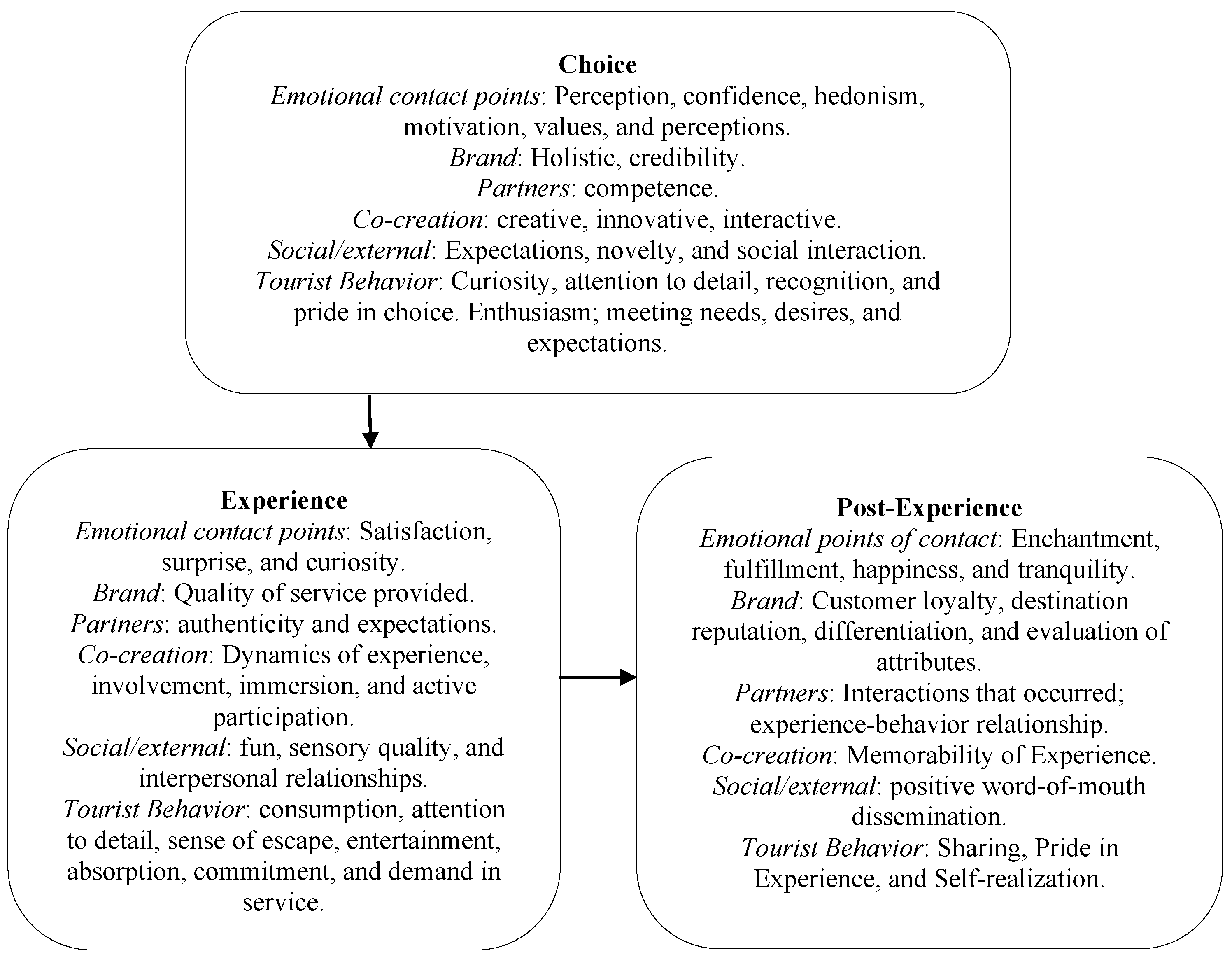
Figure 2.
Mind map of co-creation, tourist experiences, audiovisual narratives, and sustainable outcomes in film tourism. Source: Elaborated by the authors with conceptual and visual assistance from ChatGPT (OpenAI, 2025).
Figure 2.
Mind map of co-creation, tourist experiences, audiovisual narratives, and sustainable outcomes in film tourism. Source: Elaborated by the authors with conceptual and visual assistance from ChatGPT (OpenAI, 2025).
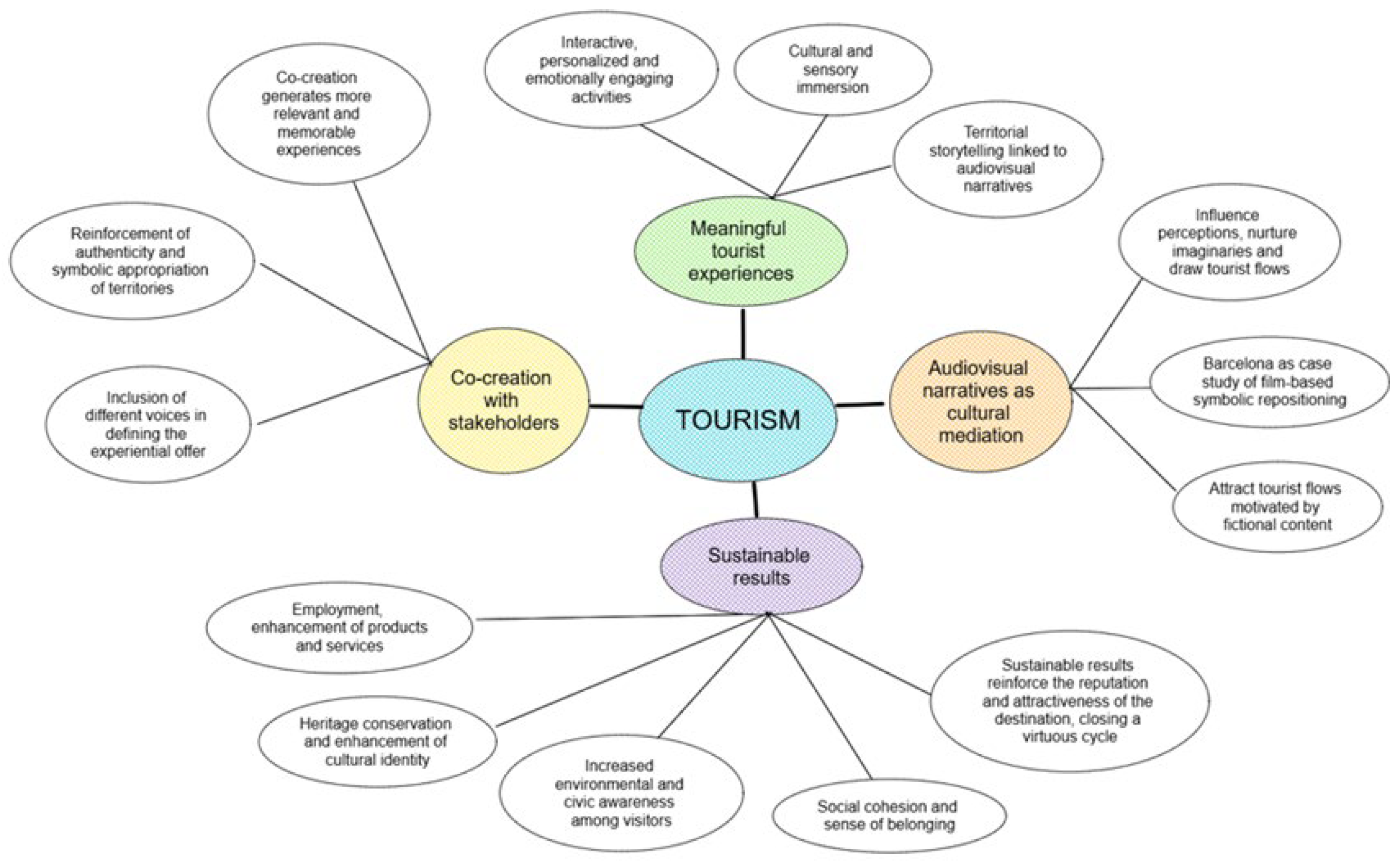

Table 1.
Driving trends and their effect on film-induced destinations.
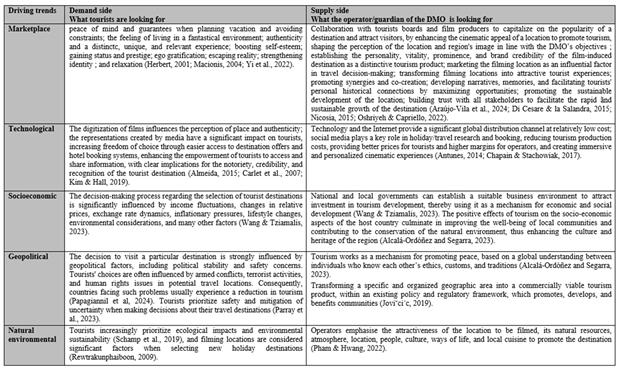 |
Source: Elaboration by the authors (2025).
Table 2.
Checklist for a film-induced destination marketing-mix.
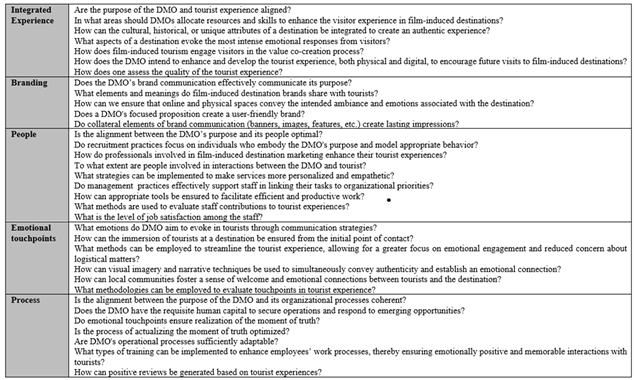 |
Source: Elaboration by the authors (2025).
Table 3.
Correspondence between the dimensions of the experiential marketing model and GRI indicators.
Table 3.
Correspondence between the dimensions of the experiential marketing model and GRI indicators.
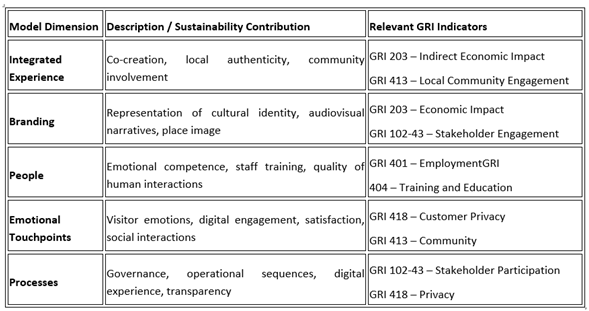 |
Source: Elaboration by the authors based on the proposed model and the GRI Standards (2021).
Table 4.
Mapping experiential marketing themes to GRI indicators.
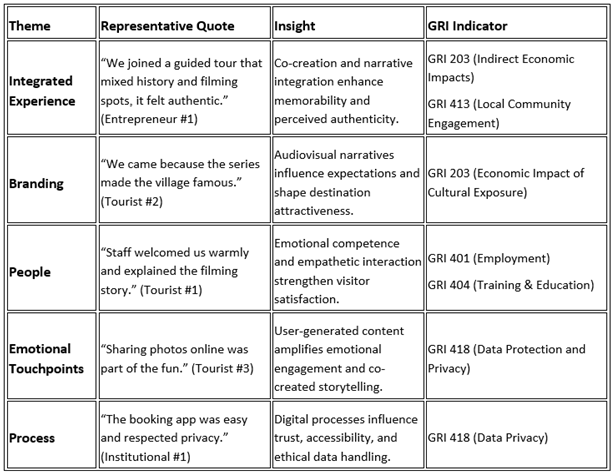 |
Source: Authors’ elaboration based on interview data and the GRI Standards (2021).
Disclaimer/Publisher’s Note: The statements, opinions and data contained in all publications are solely those of the individual author(s) and contributor(s) and not of MDPI and/or the editor(s). MDPI and/or the editor(s) disclaim responsibility for any injury to people or property resulting from any ideas, methods, instructions or products referred to in the content. |
© 2025 by the authors. Licensee MDPI, Basel, Switzerland. This article is an open access article distributed under the terms and conditions of the Creative Commons Attribution (CC BY) license (http://creativecommons.org/licenses/by/4.0/).
Copyright: This open access article is published under a Creative Commons CC BY 4.0 license, which permit the free download, distribution, and reuse, provided that the author and preprint are cited in any reuse.


