1. Introduction
Algeria's economy is growing quickly and heading for a big turning point. We should not depend so much on oil and petrol money for our land. To get to this point, Algeria works hard to make its economy safer and more varied. Algeria's economy has long relied on oil and gas. They bring in more than 90% of the country's export money and give the government most of its cash (Bank of Algeria, 2022). But the fact that energy markets are changing, reserves are running out, and local energy needs are rising shows that the economy needs to be stronger and more varied (World Bank, 202^).
The Sustainable Development Goals (SDGs) set by the United Nations for 2030 and other world goals for sustainable development are important to Algeria. He is begun to make changes to his business. Some of these are programs to update industries and a plan to use renewable energy sources and make energy use more efficient. (Ministry of Energy for the Transition to Renewable Energy, 2023) The aim is to enhance agriculture, business, green energy, and technology, among other areas. In recent years, there has been a heightened focus on the long-term economic development of Algeria. This study explores innovative concepts, environmental concerns, energy transitions, and business competitiveness [
1]. The diversity of research locations and fields presents challenges in forming a comprehensive understanding. A thorough analysis is required to identify opportunities for collaboration, emerging writing trends, new research areas, and key challenges. The study argues that this analysis should concentrate on research related to Algeria's long-term growth and economic diversification from 2010 onward to 2025. It will utilize articles indexed by Scopus to pinpoint new and important themes, authors, and institutions within the academic field. This information will be valuable for those analysing development, formulating policies, and conducting research. It will also help individuals gain a deeper understanding of Algeria's scientific contributions to sustainable development.
1.1. Background
Countries that rely on oil and gas for most of their income need to focus on long-term growth and on diversifying their economies. Algeria and other oil- and gas-producing nations in the Middle East and North Africa (MENA) are fantastic examples of how to make money. The price of oil, the energy markets, and how it is used have all altered in the previous ten years. Because of these changes, we need a robust, long-term growth plan. Algeria has begun initiatives to enhance industries, facilitate the establishment of new enterprises, promote renewable energy, modernise agriculture, and advocate for technological advancement [
2]. Strong institutions, solid governance, research, and expansion in knowledge-based fields are all necessary for these projects to succeed and progress swiftly. These are necessary for long-term safety. Even if Algeria has certain problems, it is positive for the country's future that it is focused on long-term growth and economic development. The economy will need a variety of growth; thus, many groups will have to work together.
1.2. Problem Statement
Large oil and gas-based economies need to work on long-term growth and make their economies more diverse. The ability to make money is shown by MENA countries like Algeria, which mainly sell oil and gas [
3]. In the past ten years, oil prices, energy markets, and on-site use have all changed. These modifications have shown us the necessity of a strong and long-lasting growth plan. Algeria has begun projects to improve industries, help new businesses get started, use green energy, bring agriculture up to date, and push for technological progress (Haddoum et al., 2018). For these projects to work and move quickly, though, they need strong institutions, good governance, study, and growth in areas based on knowledge. These are needed to keep things safe in the long run. Algeria has issues, but its focus on long-term growth and economic development is good for the country's future [
4]. Many groups will need to work together for the economy to grow in many ways.
1.3. Research Questions and Hypotheses
1.3.1. Research Questions
To guide the investigation and structure the analytical focus of this study, the following research questions were formulated.
What are the temporal trends in Algeria-related scientific publications on sustainable development and economic diversification between 2010 and 2025?
Which authors, institutions, and countries are most influential in this research domain?
What thematic clusters dominate the literature, and how have they evolved over time?
Which research gaps and emerging themes can be identified?
1.3.2. Hypotheses
A set of hypotheses has been formulated to guide the empirical study. These hypotheses examine the dynamics of publication, collaboration patterns, thematic emphasis, and research gaps in the literature concerning Algeria's economic diversification and sustainability. The bibliometric analysis enabled the evaluation of the following hypothesis. Consistent with the study's aims and theoretical framework, the following hypotheses are proposed to direct the empirical analysis:
H1: Since 2010, there has been a notable rise in research output concerning sustainable development and economic diversification in Algeria, reflecting increased policy focus and alignment with global sustainability goals.
H2: International partnerships, mainly with Europe and North Africa, play a crucial role in shaping Algeria's research landscape on sustainability.
H3: The central intellectual framework of the field centres around topics like renewable energy, environmental policy, and economic transition.
H4: There are research gaps in vital areas such as the circular economy, green finance, and digital transformation, which hinder sustainable competitiveness.
1.4. Study Contribution and Originality
This is the inaugural comprehensive bibliometric analysis of research pertaining to sustainable development and economic diversity in Algeria over a span of 15 years. This paper significantly contributes to the existing literature in this domain. It provides insights into actual phenomena such as publication trends, networks of authors, collaborations between international and domestic entities, and the principal thematic categories. This examines the evolution of academic discourse by integrating success indicators with network visualisations of co-authorship and co-occurrence. Additionally, one may discover underexplored elements that could influence future educational strategies and policy modifications. The findings indicate that data must be utilised to strategies for a sustainable transition. Their findings illustrate how the generation of information influences the developmental trajectories of nations.
2. Review of Literature
Literature indicates that Algeria's efforts at economic diversification, while ambitious, encounter substantial obstacles because to its dependence on hydrocarbons and prevailing institutional impediments ([
5]. Confronting these problems is essential for attaining sustainable development and enhancing national resilience.
2.1. Summary of Current Research on Sustainable Development in Algeria
The purpose is to improve agricultural, business, green energy, and technology, among other things. Still, there are problems. Bad business conditions, excessive unemployment, and water shortages are just a few of the problems that hinder progress and put long-term security at risk [
5].
There has been greater interest in Algeria's long-term economic growth in the last several years. The study looks at new ideas, environmental issues, changes in energy, and how competitive companies are [
5]. There are many different places and fields conducting research, which makes it hard to see the whole picture. We need to undertake a comprehensive analysis to determine how to work together, stay up to date on writing trends, and identify new areas to study and critical issues.
This study asserts that an analysis must be predicated on research concerning Algeria's long-term growth and economic diversification from 2010 to 2025. It will examine the academic discipline by utilising articles indexed by Scopus to identify novel and significant themes, authors, and institutions. People who analyse development, create rules, and do research will find this knowledge useful. It will also assist people learn more about Algeria's scientific work on sustainable development.
Collectively, these studies highlight the intricacy of Algeria's sustainability transition and the necessity for cohesive, data-informed methodologies to direct next research and policy.
2.2. Synthesis and Gap Identification
A variety of academic writings underscore several pivotal themes: the ongoing reliance on hydrocarbons and the shortcomings of current policies; the burgeoning interest in renewable energy, the green economy, and industrial modernization; and the institutional and financial challenges that obstruct a sustainable transition. Furthermore, there is an acknowledged necessity for integrated multi-sectoral strategies and heightened public awareness. Despite these insights, a significant gap remains unaddressed: no research has systematically employed bibliometric methods to analyze the research structure, collaboration networks, and intellectual progression related to economic diversification and sustainable development in Algeria from 2010 to 2025. This study aims to fill this gap by employing bibliometric and network-visualization techniques to discern and evaluate scholarly trends and thematic directions.
2.3. Economic Diversification in Algeria: Historical Context
Algeria has undertaken various initiatives to enhance its economic landscape; however, the oil and gas sectors remain critically significant. This dependency originated in the 1970s, with over 40% of Algeria's GDP derived from these resources, resulting in challenges such as diminished production and elevated prices in certain regions [
6]. There is a prevailing argument that Algeria requires transformation, yet progress has been sluggish. In 2021, a mere 11.7% of total exports were unrelated to oil and gas, indicating the ineffectiveness of current strategies [
7].
To address these challenges, Algeria is channelling investments into renewable energy, tourism, agriculture, and industry [
7]. Nevertheless, advancements are gradual, and the economy remains vulnerable to external fluctuations due to its dependence on a limited range of exports [
8]. The government has established organizations to promote non-oil products. It is posited that small and medium-sized enterprises are crucial for sustainable growth, robust economies, and the Human Development Index (HDI) [
9].
The oil refining sector holds potential for economic diversification; however, it suffers from insufficient funding and is unable to satisfy local demand, even at full capacity (Korichi, n.d.). Some experts advocate for a developmental state approach that emphasizes competitiveness and local production [
10]. Nonetheless, rapid diversification is challenging when initial conditions are unfavourable and there is substantial debt. Economic reforms are progressing slowly [
11].
In conclusion, while Algeria has achieved some progress, a more robust strategy is necessary to strengthen and diversify its economy. This strategy should aim to address challenges, guide investments, and foster development across all sectors [
10].
2.4. Bibliometric Analysis: Concepts and Methodologies
The bibliometric analysis will utilize various metrics, including publication counts, citation analysis, and co-authorship networks, to offer a comprehensive overview of research trends in Algeria. This study will also explore the impact of institutional collaborations and the field's thematic evolution, providing insights into the future of sustainable development and economic diversification in Algeria. The findings of this bibliometric analysis will not only shed light on current research trends but also guide future efforts to enhance Algeria's economic resilience and sustainability. This study highlights the critical need for strategic interventions to overcome existing challenges and foster a diversified and sustainable economic framework in Algeria.
3. Materials and Methods
The proposed bibliometric analysis will serve as a foundational tool for understanding the dynamics of research in sustainable development and economic diversification in Algeria.
3.1. Data Collection
The Scopus database was used for this study. This database is known for containing many important academic works. The information includes journal articles, conference papers, reviews, and book chapters from 2010 to 2025 that discuss Algeria's economic diversification and long-term growth. This time was chosen to show recent policy changes, new technology trends, and progress in research, all matching Algeria's energy goals and the UN Sustainable Development Goals (SDGs) [
12].
To make sure the research was consistent, only English-language sources were used. Notes, opinions, and other non-scholarly content were left out. Scopus's data was very thorough and included things like titles, authors, abstracts, keywords, affiliations, citation counts, and reference lists.
3.2. Ethical Considerations
The ethical rules that apply to the analysis of secondary data are followed in this study. The study used bibliometric data from the Scopus website, which only has academic articles that are open to the public. No private, sensitive, or personally identifiable information about a person was viewed or used. All the information about the authors, affiliations, and publications that were used in the research was already available to the public and indexed for scholarly use. This made sure that all ethical standards for data use and privacy were met. There was no need for institutional review board (IRB) approval or informed consent for this study because it did not use private datasets, people as subjects, or experimental interventions. In line with the rules for bibliometric research and the terms and conditions of the Scopus platform, all data were handled responsibly and only for academic and research reasons. It was seen that proper academic reference and citation practices were used to credit original work and stop plagiarism. The point of this study is to encourage openness, protect academic honesty, and make sure that scientists use scientific data in a smart way.
3.3. Search Strategy
A structured search strategy was employed to retrieve all relevant publications related to sustainable development and economic diversification in Algeria. Scopus was selected as the primary data source due to its broad coverage of peer-reviewed journals and its compatibility with bibliometrics. The search targeted studies published between 2010 and 2025 to capture contemporary developments aligned with Algeria’s sustainability and diversification policies.
Boolean operators and field tags were applied to refine the query. The search string focused on retrieving documents where target concepts appear in the title, abstract, or keywords, ensuring adequate recall without compromising precision. The final search string executed in Scopus was:
TITLE-ABS-KEY("sustainable development" OR "economic diversification"
OR "renewable energy" OR "non-oil sector" OR "economic growth")
AND TITLE-ABS-KEY("Algeria")
AND PUBYEAR > 2009 AND PUBYEAR < 2026
Only peer-reviewed journal articles, conference papers, and review articles were included. Duplicate records were excluded prior to analysis. The exported metadata encompassed authors, affiliations, year of publication, source title, citations, abstracts, author keywords, and references, adhering to standard bibliometric methods. This final dataset was utilized as input for analyses using VOSviewer and Bibliometric.
3.4. Software and Tools
Two primary tools were employed to examine and interpret the content. VOSviewer version 1.6.20 was instrumental in creating network maps that depicted elements such as co-authorship, keyword connections, temporal overlays, and density visualizations. Bibliophagy, part of the R-Bibliometric package, was used for conducting basic statistical analyses and evaluating performance. It facilitated the assessment of annual scientific output, prominent authors, journals, and institutions, as well as citation and international collaboration analyses. Initially, individuals used Microsoft Excel to track data and verify its accuracy. These software tools are frequently used in bibliometric research to ensure the reproducibility of results. In Google Colab (colab.research.google.com), we utilized matplotlib to produce basic statistics and visualizations in Python, using data from Scopus RIS files and VOSviewer network files.
3.5. Final Dataset and Database Justification
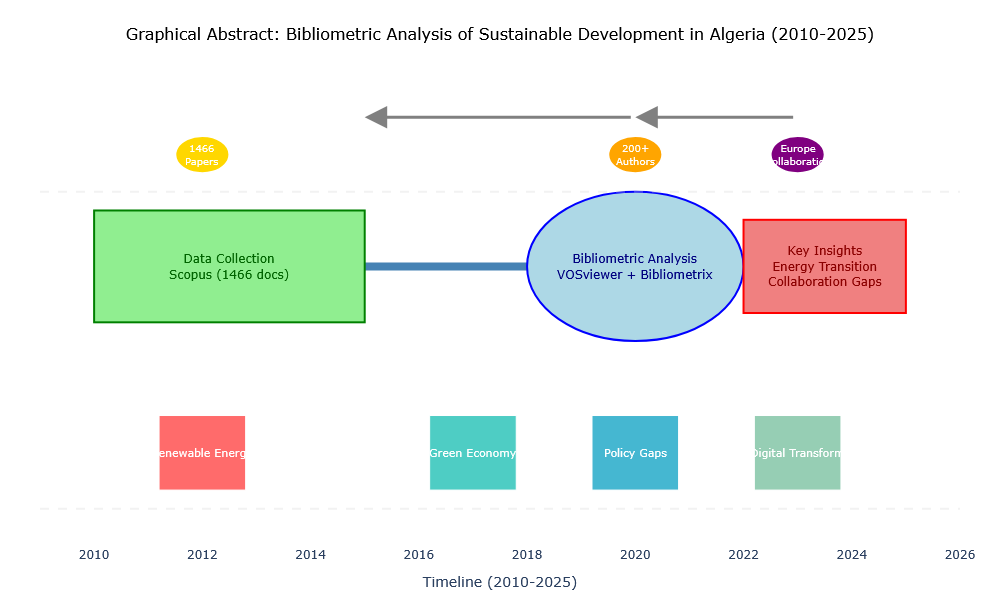
The final dataset included 1,466 papers indexed in Scopus from 2010 to 2025. To compile this, we used predefined criteria for inclusion and exclusion, removed duplicates, ensured consistency, and applied threshold filtering. This collection consists of peer-reviewed journal articles, conference papers, and review studies focusing on Algeria's non-hydrocarbon economy and topics like economic diversification, sustainable development, and the shift to renewable energy. The screening process was designed to retain only significant, high-quality academic work, highlighting the extensive research activity in this field within the country. Scopus was chosen as the main data source because of its vast repository of scholarly work across various disciplines and its complex metadata structure, which is ideal for bibliometric analysis. Scopus is generally the best platform for locating research on energy, economics, and sustainability, which are the core areas of this study. This platform integrates seamlessly with bibliometric tools like VOSviewer and Bibliometric, aiding in the extraction, cleaning, and visualization of data networks. It ensures that the results are consistent, reproducible, and meet high research standards.
3.6. Data Cleaning and Threshold Settings
The data retrieved from Scopus was meticulously cleaned to ensure a reliable and uniform analysis. Initially, all exported records were scrutinized to remove duplicates and incomplete entries. Author names, institutional affiliations, and keywords were standardized to correct any inconsistencies in spelling, punctuation, and author initials. This standardization was crucial to prevent unnecessary inflation of nodes in network maps, in line with bibliometric best practices. Records that were non-scholarly, not in English, or irrelevant to the theme were excluded. Following the data cleaning, threshold settings were applied to pinpoint key authors and significant collaboration patterns. A minimum of three publications per author was set for the co-authorship analysis to include only active contributors. The dataset was further refined to the top 200 authors based on total link strength, enhancing visibility and preventing the over-representation of less significant contributors. Papers with more than 25 co-authors were excluded to avoid bias from large collaborative groups. These thresholds ensured a robust and comprehensible network structure, allowing the study to focus on the most influential individuals shaping Algeria's research landscape in sustainable development and economic diversification.
The
Table 1 below shows the main steps and parameters used to get the data ready for co-authorship and co-occurrence analysis.
3.7. Co-Authorship and Co-Occurrence Procedures
Researchers set up networks to study how people work together in them. Every author was shown as a node, and the links between them were their joint writings. All co-authorships were given the same amount of weight, and the study only looked at writers who had at least three publications. Papers with more than 25 writers were not included so that big group projects would not change the results. The researchers also looked at keywords and terms from titles and abstracts, using VOSviewer to find important topics and new study trends. Using this method, they were able to learn about the main ideas, themes, and ways that sustainability-focused Algerian experts worked together.
3.8. VOSviewer Term Extraction and Mapping Settings
This study employed VOSviewer to examine commonalities and illustrate how research on economic growth and sustainable development in Algeria is founded on concepts and theories. The study aimed to compare the most significant terms within the selected Scopus collection. It will be easy to identify organisations with similar interests, study themes, and fresh ways to look at things. The words came from the message heads and notes in all the files that were transmitted. We painted a thorough picture of the essential ideas by going both ways. Most of the time, headings cover a lot of ground, while annotations use more specific phrases to explain what the headings are about. The bibliometric map is more accurate and useful when these two elements are put together. To get rid of terms that are not used very often or are not vital, you need to learn five words. This was done to make less noise. This means that the list only utilised words that are on it at least five times. This wall keeps out words and phrases that are only used in some places or not at all. This makes it easier for individuals to grasp and follow the remaining topic categories. VOSviewer gave each word a relevance value depending on how often and where it was used in documents. We kept 60% of the most essential phrases for the final graphic because that is how bibliometrics works. This puts the most significant and often used terms at the top of the list. This way, you can see the network's layout better and the map will not get too full. Some terms were automatically stripped out because they could make the ideas harder to understand or make the margins of groupings less evident. The terminological network map shows groups of concepts that are related to each other and shows the main topics of research in this discipline. We do not need to rely on hydrocarbons, government, environmental policies, or renewable energy sources anymore. These organisations help us think of great ideas. It also indicates how closely words are related to each other, which illustrates how in-depth the study is, how themes develop over time, and how sub-themes connect to each other. Bibliometric standards suggest that this rigorous procedure makes sure that the match analysis is complete, can be repeated, and makes sense. Algeria has learnt lessons from 2010 to 2025 that help explain how to build a more diverse economy and growth that lasts.
4. Results
4.1. Co-Authorship Network Results
To examine collaboration patterns and identify influential contributors within Algeria’s sustainability research landscape, a co-authorship network analysis was conducted.
4.1.1. Density Visualization Analysis
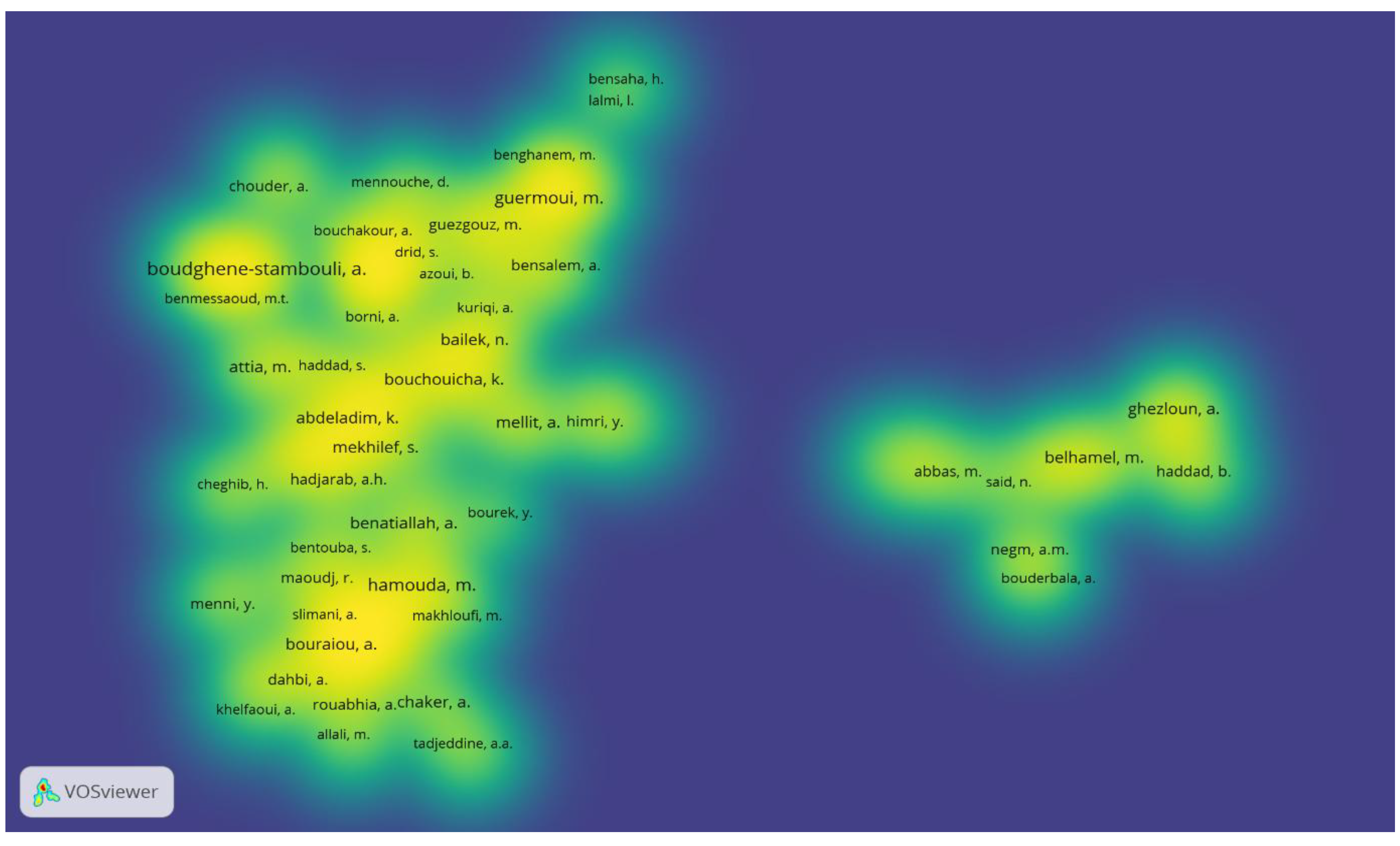
Density visualization presents intensity and concentration of co-authorship relations within the Algerian sustainable development and diversification research network. Areas with warmer tones (yellow and green) indicate regions of higher collaboration and author influence, whereas darker regions denote limited interaction. As shown in
Figure 1 below, the network is dominated by several central authors, including but not limited to
boudghene-stambouli, a.,
bouraiou, a.,
bouchouicha, k., and
hamouda, m., who appear in core hotspots, suggesting their pivotal role in shaping research directions and fostering interdisciplinary collaboration. cluster density further suggests that renewable energy, energy storage and sustainable industrial systems serve as central research themes. This spatial concentration indicates the presence of strong research communities and intellectual hubs driving the sustainability agenda in Algeria.
4.1.2. Overlay Visualization Analysis Overlay
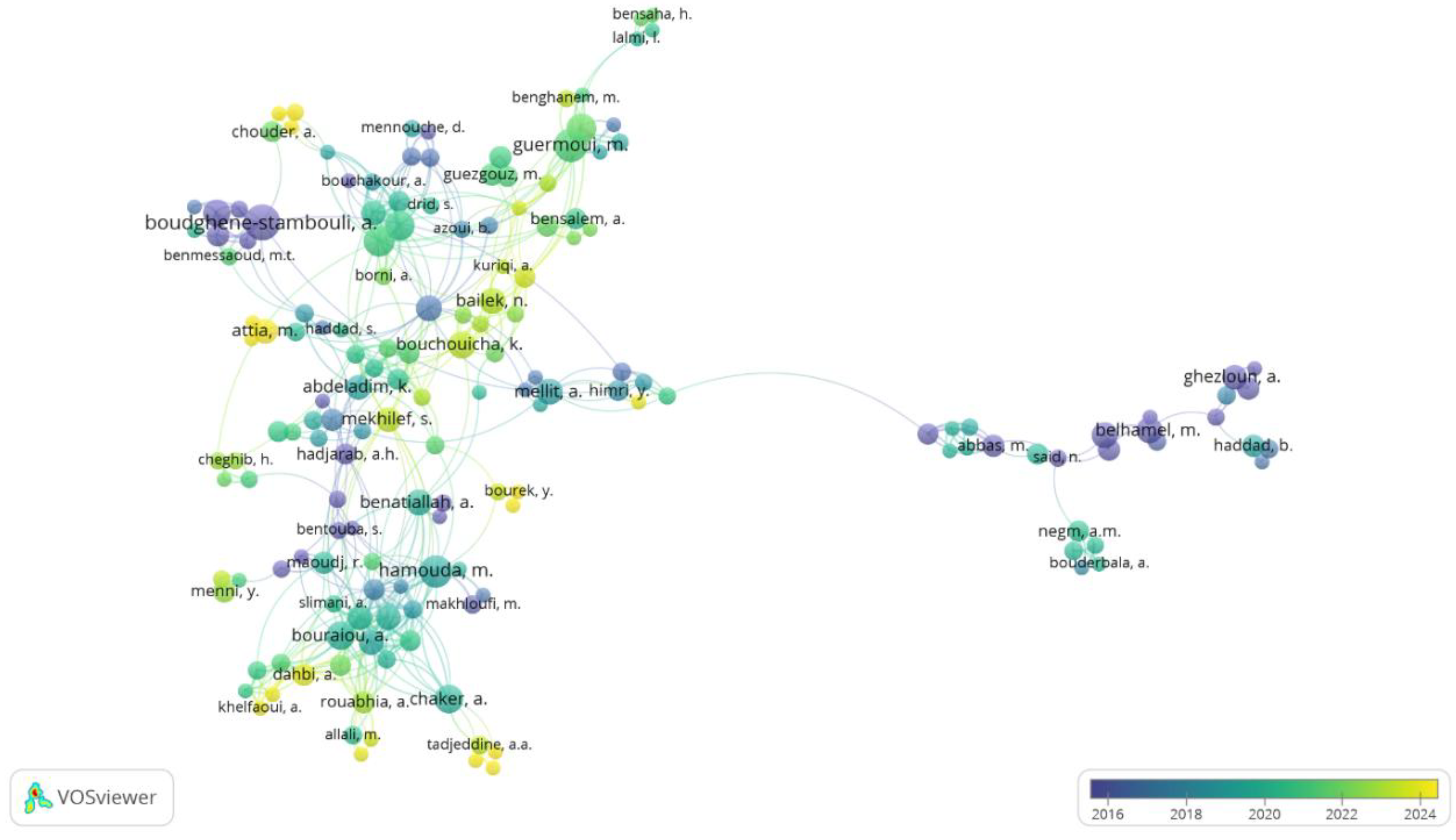
Visualization provides insight into the temporal evolution of scholarly contributions in the field. Node colours represent average publication year, shifting from darker to lighter tones as research becomes more recent. As illustrated in
Figure 2 below, early research activity clustered around foundational authors such as
boudghene-stambouli, a. and
benatiallah, a., signifying their early and sustained involvement in the field. More recent nodes appear in bright green-yellow tones, indicating emerging researchers and growing academic participation after 2019, aligning with Algeria's national strategies for renewable energy expansion and economic diversification. The presence of new peripheral contributors signifies expanding research interest and increasing specialization within sustainability topics.
4.1.3. Network Visualization Analysis
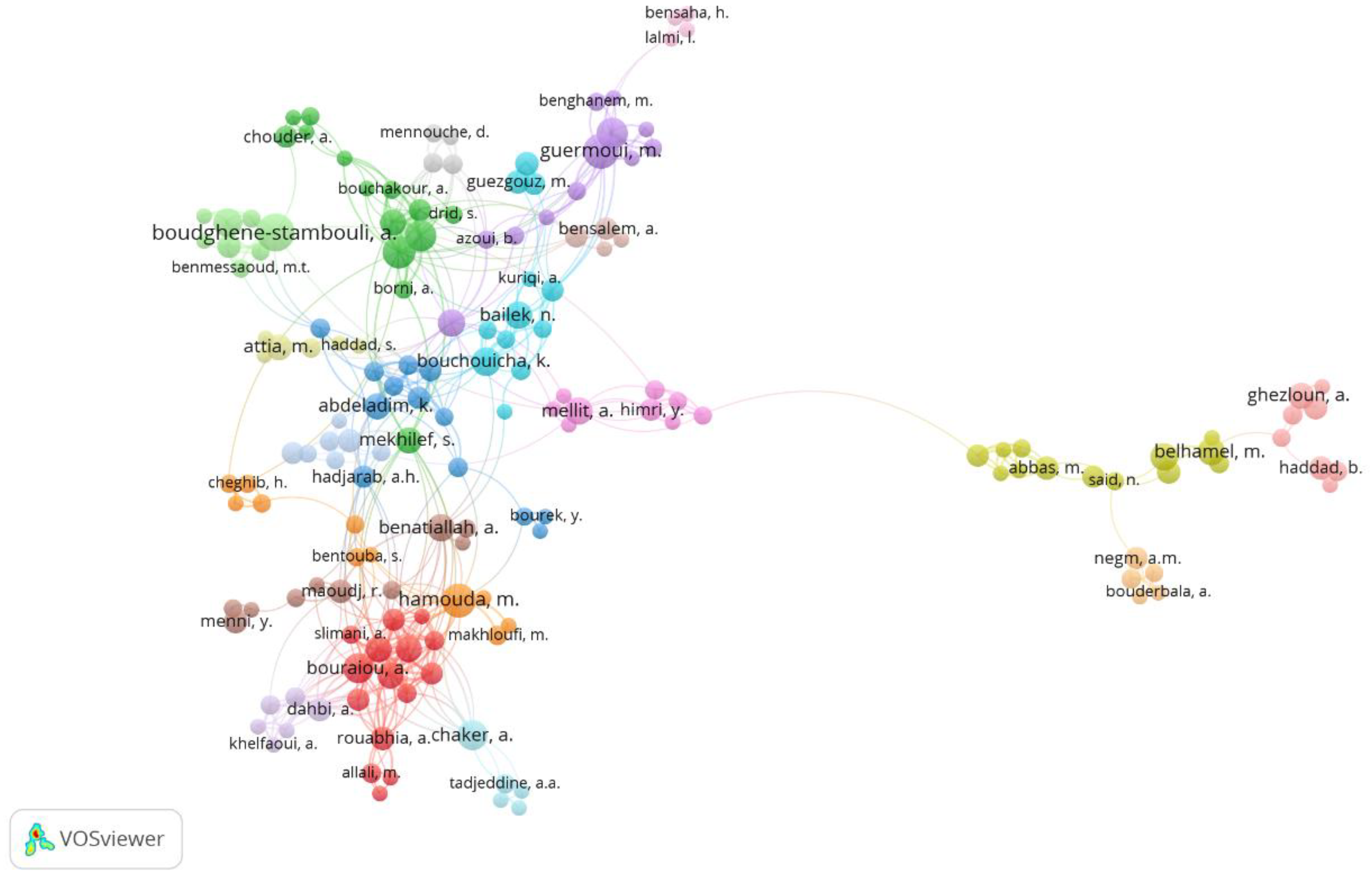
Network visualization maps co-authorship connections and thematic clusters based on author interlinkages. Distinct colors represent different research clusters, highlighting collaboration communities and thematic specialization. As seen in
Table 3 below, network shows dense interconnections around key authors, with clear cluster formations emphasizing research specialization in renewable energy, hybrid power systems, energy optimization and sustainable industrial processes. central positioning of highly collaborative authors, including
bouraiou, a.,
bouchouicha, k., and
hamouda, m., indicates their bridging roles between research clusters. Meanwhile, smaller, isolated group on right of network suggests emerging or more internationally-oriented research groups. structure evidences increasing collaboration, knowledge integration and multidisciplinary growth within field.
Figure 3.
Network Visualization of Co-Authorship Clusters (VOSviewer Output). Note. Colors represent distinct co-authorship clusters. Edge thickness indicates link strength between authors. Generated using VOSviewer (2025).
Figure 3.
Network Visualization of Co-Authorship Clusters (VOSviewer Output). Note. Colors represent distinct co-authorship clusters. Edge thickness indicates link strength between authors. Generated using VOSviewer (2025).
4.2. Bibliometric Performance Analysis
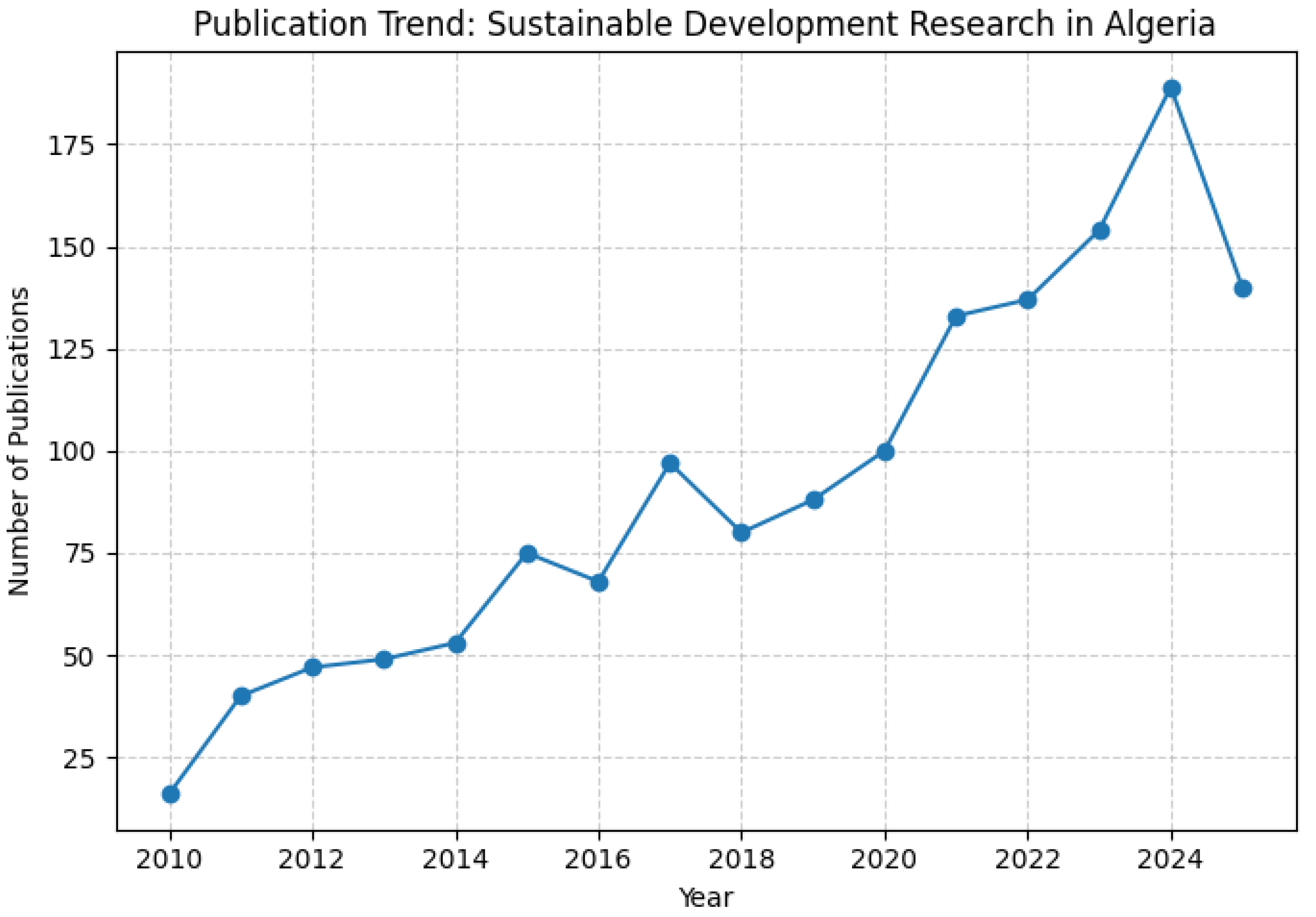
Between 2010 and 2025, bibliometric analysis indicates a continuous increase in academic work focused on sustainable development and economic diversification in Algeria. Initially, the number of papers was limited, reflecting the nascent attention scholars were beginning to pay to sustainability issues. However, after 2018, there was a significant surge in publications, aligning with national policy objectives that advocate for renewable energy adoption, effective environmental management, and efforts to stabilize the economy. This upward trend shows that researchers are becoming more interested in changing society, the economy, and the environment. Citation trends also show that academics are becoming more influential, with newer publications becoming more well-known. This shows that the quality of research is improving and that people around the world is becoming more interested in Algeria's sustainability problems.
Table 2 summarizes the annual evolution of publications related to sustainable development and economic diversification in Algeria.
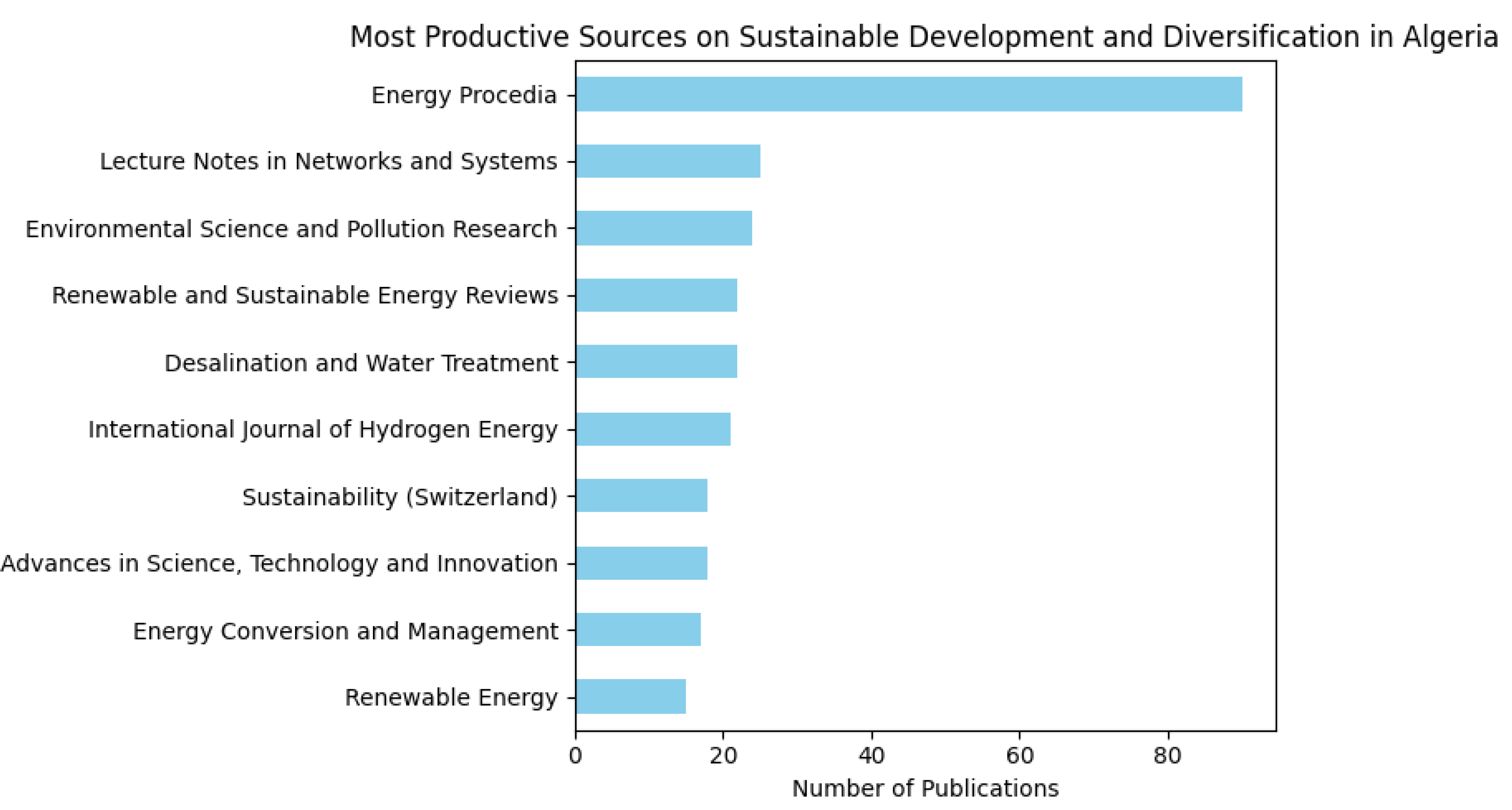
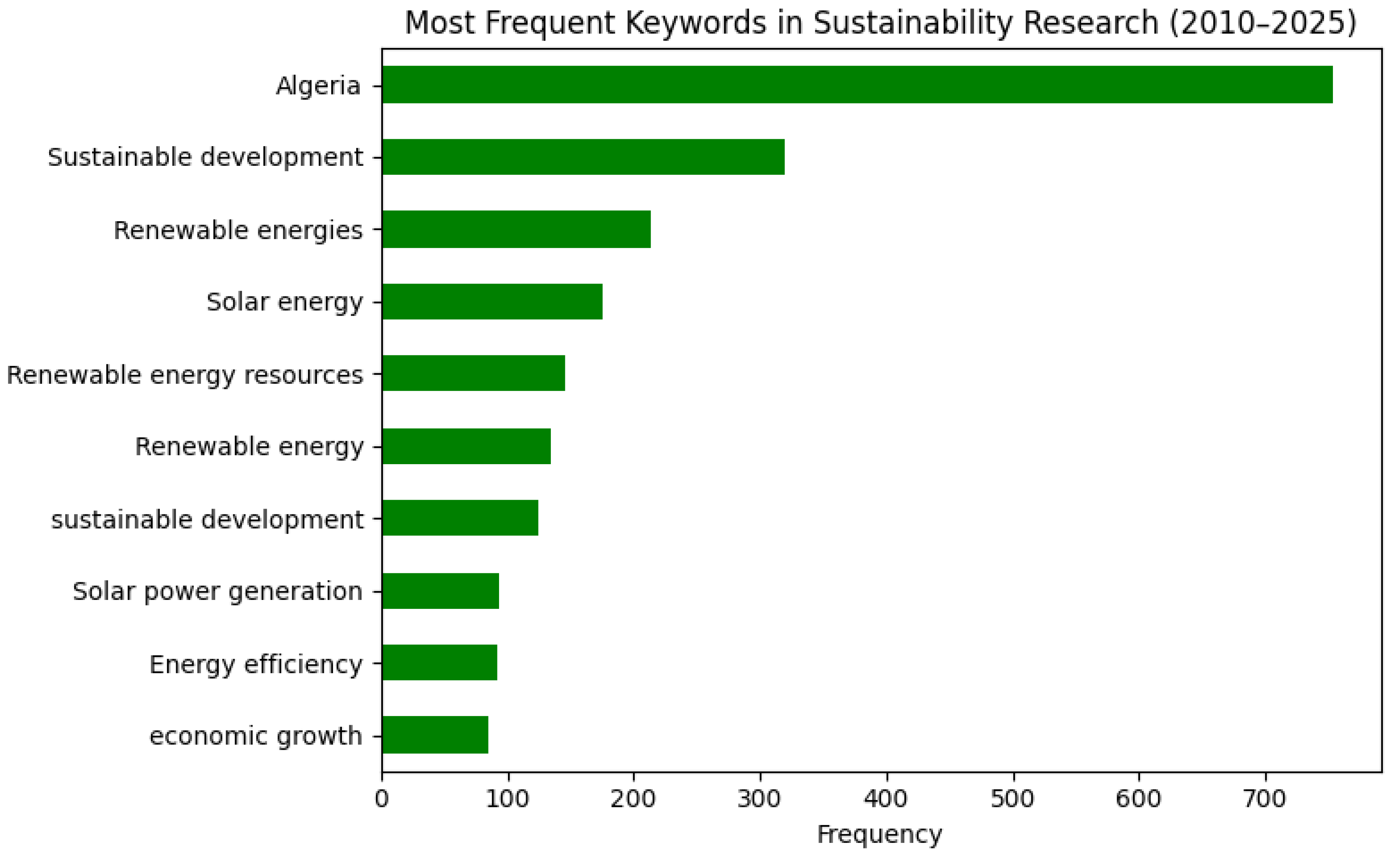
The following visualizations present the most productive publication sources and the most frequent keywords identified in sustainability and economic diversification research in Algeria between 2010 and 2025.
Figure 4.
Figure 1. Most productive sources publishing on sustainable development and diversification in Algeria.
Note. Generated from Scopus dataset (2010–2025) using Python (Matplotlib) in Google Colab.
Figure 4.
Figure 1. Most productive sources publishing on sustainable development and diversification in Algeria.
Note. Generated from Scopus dataset (2010–2025) using Python (Matplotlib) in Google Colab.
Figure 5.
Most frequent keywords in sustainability research (2010–2025). Note. Generated from Scopus dataset (2010–2025) using Python (Matplotlib) in Google Colab.
Figure 5.
Most frequent keywords in sustainability research (2010–2025). Note. Generated from Scopus dataset (2010–2025) using Python (Matplotlib) in Google Colab.
4.3. Network and Cluster Analysis
The co-authorship network visualisation shows a structured yet evolving research ecosystem, with many clusters linked to one another. Well-established study groups can be seen in dense clusters around key authors. This is especially true in renewable energy engineering, hybrid power systems, environmental management, and sustainable industrial development. Peripheral nodes show new authors and specialised subfields. It is important to note that keyword co-occurrence analysis supports the main themes even more, with a focus on solar energy systems, energy economy, climate adaptation, and sustainable resource use. There are many thematic clusters, which shows both specialisation and cross-disciplinary integration. This shows that there is a growing variety of study that looks at the technical, environmental, and economic aspects of sustainability.
Table 3 shows the top journals by output and citations, which you can use to find the publications that are changing the field.
4.4. Temporal Trends
Temporal overlay mapping uncovers a clear evolution in scholarly pursuits. Prior to 2016, publications predominantly concentrated on fundamental renewable energy systems and environmental monitoring. However, from 2020 onwards, there is a noticeable shift towards applied sustainability topics, including energy storage technologies, smart grid systems, and the socio-economic dimensions of diversification. This shift towards more intricate and integrated subjects reflects a growing national focus on economic resilience and climate-aware development. This pattern indicates that Algerian research is transitioning from a foundational engineering focus to a broader emphasis on sustainability innovation, aligning with global energy transition trends and national development objectives..
Figure 6 shows annual publication counts to reveal the field’s growth trajectory.
4.5. Collaboration Analysis
The study shows that there are strong national networks for working together, with groups of researchers focussing on state universities and research centres. International cooperation exists, but it is not very strong. It mostly involves European partners and a few global groups. Authors in central network positions have a lot of strong links, which shows that they play important roles in sharing information and leading research. Separated nodes and smaller clusters, on the other hand, show that institutions and subjects could work together better.
Getting people to work together more, especially across borders, would probably speed up the sharing of study, the building of skills, and compliance with global sustainability standards.
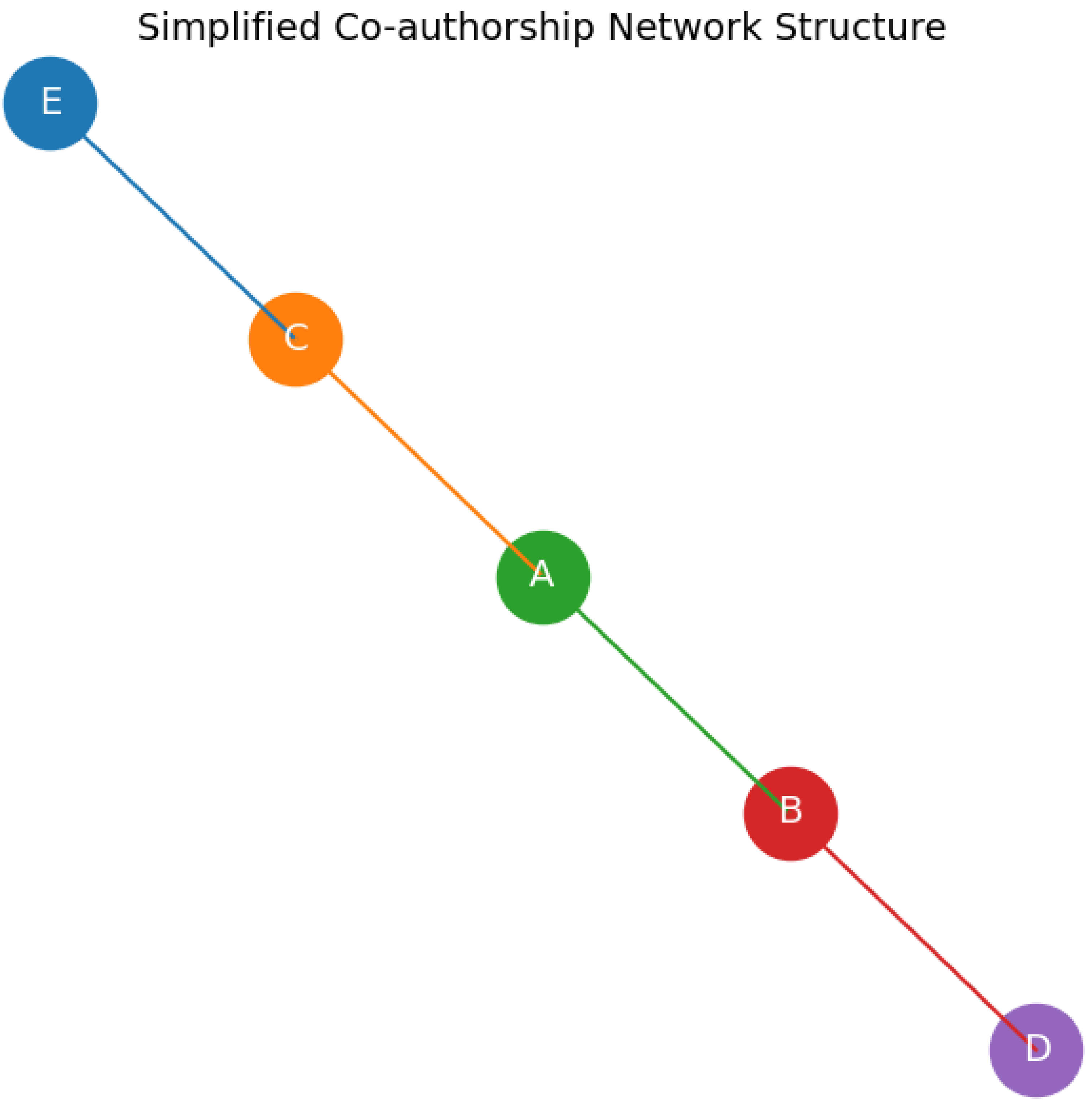
Figure 7 represents a simplified co-authorship network structure.
4.6. Interpretation of Key Authors and Research Themes
The research highlights the existence of extensive national networks for collaboration, with groups of scholars concentrating on state institutions and research centres. While there is some international collaboration, it lacks strength. The partnerships are primarily European, with a few global alliances. Authors in key network roles possess numerous strong connections, making them crucial for disseminating information and leading research efforts. Conversely, isolated nodes and smaller clusters indicate that institutions and disciplines could enhance their collaboration. Increased cooperation, particularly across borders, would undoubtedly accelerate research exchange, skill development, and adherence to global sustainability standards.
4.7. Cluster-by-Cluster Thematic Explanation
Cluster 1 (Green cluster): Focuses on photovoltaic systems, solar energy conversion, and hybrid energy architectures, reflecting Algeria’s strategic emphasis on solar resource exploitation.
Cluster 2 (Blue cluster): Concentrates on electrical engineering, power electronics, and optimization models for energy efficiency, bridging applied engineering with sustainability outcomes.
Cluster 3 (Red cluster): Engages in wind energy applications, energy storage solutions, and performance modelling of hybrid systems.
Cluster 4 (Yellow cluster): Addresses environmental sustainability, climate variability, and hydrological or agricultural system dynamics.
Cluster 5 (Smaller clusters): Represent emerging themes in sustainable industrial development, green innovation, and policy-oriented sustainability research.
These clusters collectively demonstrate a multi-dimensional research structure where energy transition constitutes the core focus, supplemented by emerging contributions in environmental and socio-economic sustainability.
4.8. Hypotheses Evaluation
This section evaluates proposed research hypotheses by examining whether empirical bibliometric results support expected relationships and patterns.
H1: Since 2010, a lot more research has been done on sustainable growth and economic diversification in Algeria. The findings back up this theory. The number of publications has been clearly going up since around 2015, and growth has sped up since 2018. This rise is in line with major national policy efforts that encourage the use of renewable energy and strategies for economic diversification. The temporal overlay visualisation confirms that most of the new publications happened between 2020 and 2024, which shows that academics are becoming more interested in sustainability problems. So, H1 is a good answer.
H2: An important part of Algeria's sustainability research is international collaboration, with most of the partnerships being in Europe and North Africa.
Findings from the real world partly support the theory. The co-authorship network shows a number of foreign collaboration nodes, many of which are connected to academic institutions in Europe. However, the level of collaboration is still much higher within Algerian institutions than with companies outside of Algeria. Cooperation between countries is present and growing, but it is not yet the main way people work together. In this way, H2 is partly supported.
H3: Renewable energy, environmental policy and economic transition themes form core intellectual structure of field. cluster analysis validates this hypothesis. Core clusters are strongly oriented toward renewable and solar energy systems, energy efficiency and applied environmental engineering. Economic diversification and sustainability policy appear as complementary but less dense thematic clusters. These results indicate that Algeria's research base remains primarily technologically focused, with policy and socio-economic topics emerging but not yet central. Therefore, H3 is accepted.
H4: Research gaps exist in areas such as circular economy, green finance and digital transformation for sustainable competitiveness. analysis confirms hypothesis. Despite robust activity in renewable energy and environmental systems, limited representation is observed in research domains related to circular economy models, green finance, sustainability governance and digital transformation strategies. These gaps suggest opportunities for interdisciplinary expansion and alignment with global sustainability research trends. Thus, H4 is accepted.
Table 4 summarizes the evaluation of the proposed hypotheses based on the bibliometric results and thematic findings.
5. Discussion
5.1. Interpretation of Findings
Algeria is leading in sustainability research, especially in renewable energy and environmental systems. There are strong connections in collaboration networks, and new frameworks are being created to meet industry and policy needs. The move from basic to applied research shows stronger scientific infrastructure and a clearer focus. Few people are working on social, economic, or governance aspects of sustainability, highlighting the need for more collaboration between technical and policy research.
5.2. Theoretical Implications
Studies indicate that Algeria has surpassed other nations in sustainability research, particularly in the areas of renewable energy and environmental systems. There are robust intellectual ties within collaborative networks, and innovative transdisciplinary frameworks are being crafted to meet the evolving demands of industry and policy. The transition from fundamental to applied research underscores advancements in scientific infrastructure and an increased strategic emphasis. The limited number of individuals addressing sustainability challenges related to social, economic, or governance aspects underscores the necessity for enhanced collaboration between technical and policy research.
5.3. Practical Implications
The findings illuminate the evolution of research in resource-dependent economies as they transition towards sustainability. The observed clustering patterns suggest that technological innovation is crucial in the early stages of sustainability research. Subsequently, attention shifts to examining politics, economics, and institutions. This methodology aligns with developmental theories that emphasize the link between technological advancement and institutional transformation. Algeria exemplifies how research networks are essential in guiding the pathways of structural change in hydrocarbon-rich nations.
5.4. Policy Implications Based on Network Findings
Algeria aims to diversify its energy sources and establish enduring infrastructure. While they have extensively studied renewable energy and power systems, there is a lack of research on green financing, the circular economy, digital transformations in sustainable industries, and governance. These areas require greater focus from policymakers. By boosting research funding, doctoral education, and international collaborations in economic policy, environmental regulations, and sustainable business practices, Algeria can expand its knowledge beyond just energy systems. Collaboration in engineering, economics, and environmental sciences will assist Algeria in achieving its long-term sustainable development objectives.
5.5. Comparison to Regional and Global Research Trends
In Algeria, there is a significant focus on research concerning renewable energy and low-carbon technologies, which aligns with global trends in sustainability studies. Similar to Morocco, Tunisia, and the Gulf states, Algeria places a high priority on solar energy and hybrid systems within its research efforts. This emphasis is driven by the country's plentiful resources and the aim of crafting a national energy policy that serves the entire population. However, Algerian research does not align as closely with global interdisciplinary themes like digital sustainability, green finance, and circular innovation ecosystems when compared to leading international research centers. These differences highlight the evolving priorities in research funding and infrastructure development. By expanding collaborations with more countries and exploring new research areas, Algeria could improve its position in global sustainability research networks.
Table 5 illustrates the collaboration between partner countries on international projects.
4. Conclusion
changing things, especially when it comes to using green energy sources. Broadening study in areas like technology policy, green finance, sustainable entrepreneurship, and environmental governance is necessary for a fully diverse economy. Encouraging interdisciplinary collaboration, promoting research integration between institutions, and strengthening global scientific partnerships are all things that should be done to make Algeria a leader in the area in research and practice for sustainable development. Using a bibliometric approach, the goal of this study was to present and analyse the intellectual structure, thematic progression, and collaborative models in research about economic diversification and sustainable development in Algeria from 2010 to 2025. The data show that scientists are clearly and growingly interested in subjects related to sustainable development, especially after the year 2018. They are especially interested in managing the environment, using energy more efficiently, and finding new sources of energy. These networks suggest that there is increasing national unity around important academic centres and a growing, but still small, amount of international cooperation. Things are getting better, but research in areas like digital transformation, closed-loop economics, green finance, and sustainable governance is still not very far advanced. These results show that we need to work together more on topics that are not technology. The aggregate results show that there is already a research ecosystem in place that fits the needs of the country's transition moment. Also, they show that the economy needs to be fixed if it is going to continue longer. To help Algeria reach its comprehensive sustainable development goals, it would be helpful to improve teamwork between government agencies, create more international research partnerships, and promote research that combines engineering, economics, politics, and innovation systems. As the first organised bibliometric map of this field in Algeria, this study adds to the body of knowledge and will be used as a starting point for further research. Keeping an eye on research trends and investing wisely in policy and academia will help turn new knowledge into real progress towards a more stable and diverse Algerian economy.
Recommendations
The results of this bibliometric analysis allow us to make the following suggestions to help Algeria make the next steps towards sustainable growth and economic diversification:
To support multifaceted sustainability plans, combine study in engineering, economics, environmental science, and digital innovation.
Create priority for collaborative research projects, mobility programs, and co-funded initiatives with the world's top sustainability research schools.
Assist Algerian universities and research centres in working together, mainly by offering joint PhD programs and study grants.
Set up specific funding methods for projects that use renewable energy, support the circular economy, and create new, environmentally friendly products and processes.
Support training in advanced research analytics, bibliometric tools, and policy analysis based on data to help shape national strategy.
For sustainable competitiveness, focus on areas that have not been studied much, like green finance, clean-tech entrepreneurship, environmental governance, and digital transformation.
Universities and businesses should work together on innovation clusters and pilot projects, especially in manufacturing, agriculture, and green energy.
For a bigger global effect, encourage publication in journals that are indexed by search engines around the world and the creation of open research repositories.
Through these steps, Algeria can improve its academic and governmental abilities to better carry out its plans for diversification and sustainable development.
Author Contributions
The author confirms sole responsibility for research design, data collection, analysis, interpretation, visualization, manuscript preparation and revision.
Funding
Disclosure author declares that this research received no specific grant from any funding agency, commercial institution or public body.
Data Availability Statement
The bibliometric dataset analysed in this study was retrieved from Scopus. Processed data, cleaned keyword lists and analysis scripts used for network visualization and descriptive statistics are available from author upon reasonable request.
Acknowledgments
The author would like to thank the LDNA Laboratory, University of 8 May 1945 Guelma (Algeria), for their continuous support and encouragement throughout this research. Language editing and writing-quality assistance were facilitated using Grammarly, ChatGPT, Perplexity, and Paperpal, and code refinement was performed in Google Colab, under the full responsibility of the author. These tools were used exclusively to improve clarity, language quality, and code formatting; the intellectual content, analysis, and conclusions remain entirely the author's own.
Conflict of Interest Declaration
The author declares no conflict of interest related to conception, execution, interpretation or publication of this research.
Ethical Statement
This study relied exclusively on secondary bibliometric data extracted from Scopus and publicly available scholarly sources. No human subjects, personal data or confidential information were involved. Ethical research principles and academic integrity standards were fully respected throughout the research process.
References
- Boumaraf, H.; Dahmouche, F.; Amireche, L. Boumaraf H, Dahmouche F, Amireche L. Influence of economic and industrial policy on the environmental situation in Algeria. Business Excellence and Management [Internet]. 2022. [Google Scholar] [CrossRef]
- Haddoum, S.; Bennour, H.; Zaïd, T.A. Haddoum S, Bennour H, Zaïd TA. Algerian Energy Policy: Perspectives, Barriers, and Missed Opportunities. 2018. [Google Scholar] [CrossRef]
- Seddiki, S.; Kiheli, A.S. Seddiki S, Kiheli AS. Oil Price Shocks and Algerian Economy: Evidence from the ‘New Economic Model. 2019. [Google Scholar] [CrossRef]
- Hadj Henni, I. Hadj Henni I. Sustainable development in Algeria: Investigating challenges and potential pathways. Journal of Environmental Science and Economics 2024. [Google Scholar] [CrossRef]
- Henneberg, S. Henneberg S. Strategic U.S. Engagement with Algeria: A Pathway amid Shifting Global Dynamics. 2025.
- Ainas, Y.; Ouarem, N.; Souam, S. Ainas Y, Ouarem N, Souam S. Les hydrocarbures: atout ou frein pour le développement de l’Algérie? 2012.
- Bachir, B.T.G. Bachir BTG. Towards Activating the Policy of Economic Diversification in Algeria. European Economics Letters [Internet]. 2024. [Google Scholar] [CrossRef]
- Lefgoum, S. Lefgoum S. Diversification et sophistication des exportations et transformation structurelle en Algérie. 2017; Available from, 2017. [Google Scholar] [CrossRef]
- Rédha, B.M.; Mohamed, Y. Rédha BM, Mohamed Y. L’impact De La Création Des PME/PMI Sur L’idh En Algérie « Étude Économétrique 2001-2013 ». Eur Sci J [Internet]. 2017. [Google Scholar] [CrossRef]
- Testas, A.; Karagiannis, N. Testas A, Karagiannis N. Towards an alternative industrial and trade profile for Algeria: the challenge of the developmental state model. The Journal of North African Studies [Internet]. 2012. [Google Scholar] [CrossRef]
- Bouklia-Hassane, R. Bouklia-Hassane R. L’économie algérienne face à la diversification : quelles perspectives ? Revue Économique Internationale. 2013. [Google Scholar]
- Yusuf, R.; Wahyudi, E. Yusuf R, Wahyudi E. Exploring Research Development on Renewable Energy Technology Innovation in Sustainable Development. 2023. [Google Scholar] [CrossRef]
|
Disclaimer/Publisher’s Note: The statements, opinions and data contained in all publications are solely those of the individual author(s) and contributor(s) and not of MDPI and/or the editor(s). MDPI and/or the editor(s) disclaim responsibility for any injury to people or property resulting from any ideas, methods, instructions or products referred to in the content. |
© 2025 by the authors. Licensee MDPI, Basel, Switzerland. This article is an open access article distributed under the terms and conditions of the Creative Commons Attribution (CC BY) license (http://creativecommons.org/licenses/by/4.0/).