

Submitted:
01 December 2025
Posted:
02 December 2025
Read the latest preprint version here
Abstract
Background: The escalating global burden of complex chronic diseases and severe mental health challenges represents a significant limitation of reductionist healthcare paradigms. We propose that health is not merely the absence of disease, but rather a dynamic state of coherence across three integrated domains: biological, psychological, and noetic (consciousness-related). This review evaluates emerging technologies and interventions designed to restore this tripartite coherence. Objective: To systematically synthesize and critically evaluate the scientific evidence for technologies and interventions aligned with the ReGEN framework's seven pillars: Light, Water, Frequency, Energy, Breath, Intention, and Food. Methods: Following PRISMA guidelines, we conducted a systematic literature search across PubMed, IEEE Xplore, PsycINFO, and Cochrane Library (2010-2024). Included studies were evaluated against five criteria: biophysical plausibility, evidence quality, biomarker correlates, safety profile, and transdisciplinary alignment. Technologies were graded (A-D) based on evidence strength. Results: From 2,148 identified records, 215 studies met inclusion criteria after systematic screening. Our analysis identified a "Foundational Triad" of interventions with the strongest mechanistic plausibility and evidence base: Photobiomodulation (Light Pillar, Grade A), Coherent Breathing (Breath Pillar, Grade A), and Focused Intention (Intention Pillar, Grade B). These pillars demonstrate significant combined potential for initiating systemic healing cascades. Technologies targeting the Frequency and Energy pillars showed more preliminary evidence (Grade B-C), requiring further rigorous validation. Conclusion: The ReGEN framework provides a thorough transdisciplinary taxonomy for classifying and evaluating coherence-enhancing technologies. Convergent evidence across multiple scientific disciplines supports the complementary application of photobiomodulation, coherent breathing, and focused intention as a potent, non-invasive approach for restoring systemic coherence. This synthesis outlines a verification protocol via a Tripartite Coherence Index and identifies critical research priorities for advancing this emerging paradigm.
Keywords:
regenerative health
; systems biology
; neuroplasticity
; quantum biology
; tripartite coherence
; photobiomodulation
; heart rate variability
; biofield science
; psychoneuroimmunology
; consciousness studies
; regenerative well-being
; systemic coherence
; 3Rs-T ReGEN framework
1. Introduction: From A 5% Paradigm to Human Systemic Coherence
The Anthropocene era represents more than an ecological crisis—it reflects a profound collapse of coherence affecting human health, organizational vitality, and planetary well-being, a phenomenon we have explored in our "Neurons to Nations" framework [1]. Consider an apt analogy: an orchestra where every musician plays their part perfectly, yet the symphony sounds discordant. This precisely describes the state of contemporary medicine—highly advanced at treating individual components but often insufficient at addressing the symphony of systemic coherence that defines genuine health.
Modern medicine, for all its brilliance in acute intervention, operates primarily within what we term a "5% paradigm"—addressing the somatic domain and conscious processes while largely ignoring the vast 95% of human potential governed by subconscious patterns, emotional intelligence, and noetic faculties [2]. This approach, while invaluable for crisis management, fundamentally fails to explain why a woman with debilitating rheumatoid arthritis might experience complete symptom resolution after processing lifelong emotional trauma, or why a CEO's decision paralysis clears dramatically when he reconnects with his deeper sense of purpose.
The mounting evidence suggests this 5% paradigm overlooks most health determinants. This reductionist paradigm reflects what Noble (2016) identifies as the "central dogma's wrong metaphysics" — the assumption of one-way causation from genes to cells to organisms, with DNA positioned as the privileged governor of biology. Noble's principle of "biological relativity" fundamentally challenges this view, demonstrating that causation flows both upward and downward across levels of biological organisation, with no single level holding privileged causal authority. The genome, rather than dictating outcomes, functions as an interactive participant responsive to cellular, physiological, and even organismal states. This reconceptualisation provides essential theoretical grounding for the ReGEN framework's premise that interventions at psychological and noetic levels can propagate meaningful effects to biological substrates.
We are witnessing the emergence of a new paradigm in healthcare—a profound shift from a fragmented, disease-centric model to a whole-person, systems-based approach focused on restoring coherence across all dimensions of human existence. This systematic review introduces and rigorously evaluates the ReGEN Well-Being Framework as an integrative model for understanding and operationalizing this major change. The framework operationalizes principles from our broader work on systemic regeneration, examining coherence from neurons to nations [51,52] through a practical taxonomy for transformation [50]. The primary objective of this review is to systematically synthesize and critically evaluate the scientific evidence for technologies and interventions aligned with the ReGEN framework's seven core pillars, assessing their potential to restore tripartite coherence across biological, psychological, and noetic domains.
In proposing this integrative model, we acknowledge significant epistemological and methodological challenges. The evidence supporting the seven pillars varies considerably in quality and maturity, and the very definitions of domains like the "Noetic" and constructs such as the "biofield" remain active subjects of scientific debate. This review will therefore not only synthesize supporting evidence but also critically examine the limitations, gaps, and speculative aspects of this emerging paradigm, distinguishing clearly between established science and promising but preliminary research directions.
2. Theoretical Foundations: A Multi-Scale Coherence Paradigm
2.1. The Tripartite Human System: An Integrative Model with Cross-Cultural Validation
The ReGEN Framework builds upon a tripartite model of human existence that finds remarkable validation across both traditional healing systems and emerging systems science. Notably, this tripartite structure—Biological, Psychological, and Noetic—is not a novel construct invented for this framework. Rather, it represents a recurring pattern found across diverse human knowledge systems spanning millennia. Ancient Greek philosophy distinguished soma (body), psyche (soul), and nous (spirit/mind). Christian theology articulates a threefold nature of body, soul, and spirit (1 Thessalonians 5:23). Traditional Chinese Medicine describes the interplay of Jing (physical essence), Qi (vital energy), and Shen (spiritual consciousness). Ayurvedic medicine delineates multiple Koshas or "sheaths" encompassing physical, mental, and spiritual dimensions [3].
This persistent cross-cultural recognition across independent traditions suggests a core phenomenological reality about human nature that Western scientific reductionism has historically overlooked. The current framework seeks to provide a scientifically rigorous operationalization of this enduring cross-cultural intuition, translating ancient wisdom into measurable, testable hypotheses using contemporary tools of neuroscience, molecular biology, and quantum physics.
The three integrated domains are defined as follows:
- Biological Domain (Soma): The physical substrate encompassing cellular, metabolic, and physiological processes—the manifested instrument of being. This includes mitochondrial function, inflammatory status, autonomic nervous system balance, and metabolic homeostasis.
- Psychological Domain (Psyche): The cognitive-emotional interface, encompassing mind, will, emotions, and subconscious patterning—the mediating processor of experience. This domain includes emotional regulation capacity, cognitive flexibility, self-awareness, and the complex interplay between conscious and unconscious mental processes.
- Noetic Domain (Nous): The consciousness domain governing purpose, meaning, values, and self-transcendent awareness—the directional source of identity and intentionality. This represents the capacity for reflection on existence itself, the experience of meaning and connection, and the drive toward self-actualization and transcendence.
2.2. The 3Rs-T Neuroplasticity Maturity Pathway and Integration with #AWAKEN Framework
The journey toward tripartite coherence follows the established 3Rs-T neuroplasticity maturity model: Restoration → Resilience → Regeneration → Transcendence [4]. This developmental model provides both clear stages of progression and measurable markers, serving as the central operating system for the #AWAKEN Framework's transformational journey [2], creating a scalable pathway from personal restoration to societal transcendence:
Restoration (Biological Foundation) facilitates Awareness through Tripartite Coherence assessment and establishment of basic coherence across domains.
Resilience (Psychological Development) enables Whole Systems Thinking through enhanced neuroplasticity and cognitive flexibility, building adaptive capacity across life domains.
Regeneration & Transcendence (Noetic Actualization) manifests as Alignment with purpose-driven action emerging from a foundational state of coherence.
- Restoration (Biological Foundation)
- Focus: Immediate somatic and emotional rebalancing, trauma resolution, establishment of basic physiological coherence
- Primary Interventions: Eye Movement Desensitization and Reprocessing (EMDR), mindfulness-based stress reduction, nutritional optimization, sleep hygiene
- Objective Biomarkers: Heart rate variability improvement (SDNN >50ms, RMSSD >35ms), inflammatory marker reduction (IL-6 <2.0 pg/mL, CRP <1.0 mg/L), cortisol normalization with healthy circadian rhythm [5]
- Domain Alignment: Primarily Biological, with initial Psychological integration
- Resilience (Psychological Development)
- Focus: Building adaptive capacity, enhancing emotional regulation, developing cognitive flexibility and pattern recognition abilities
- Primary Interventions: Neuroplasticity training protocols, resilience coaching, heart-brain coherence practice, cognitive behavioral approaches
- Objective Biomarkers: EEG coherence patterns (prefrontal gamma synchrony >95%), cognitive flexibility measures, emotional regulation capacity scores [6]
- Domain Alignment: Integrated Biological-Psychological functioning, with emerging Noetic engagement
- Regeneration (Integration)
- Focus: Purpose alignment, systemic thinking development, creative expression, values clarification and embodiment
- Primary Interventions: Purpose discovery work, implementation of regenerative practices, creative expression modalities
- Objective Biomarkers: Sustained heart-brain coherence, purpose metrics (Purpose in Life test >112), creative output measures [7]
- Domain Alignment: Full Biological-Psychological-Noetic integration and engagement
- Transcendence (Noetic Actualization)
- Focus: Self-transcendence, systemic leadership capacity, legacy impact, wisdom cultivation and transmission
- Primary Interventions: Visionary leadership development, cross-sector collaboration, contemplative and spiritual practices
- Objective Biomarkers: Neural correlates of self-transcendent experiences (default mode network modulation), biophotonic emission patterns, measurable legacy impact [8]
- Domain Alignment: Noetic-directed coordination of Biological-Psychological coherence
This Transcendence stage represents the developmental point where individual coherence naturally scales to collective impact, aligning with principles of systemic leadership and regenerative economies we have outlined in our "Neurons to Organisation" framework [9].
2.3. Quantum Biological Underpinnings: The Substrate of Coherence
The theoretical foundation for the ReGEN framework begins at the quantum scale, where accumulating evidence suggests that biological systems may actively exploit quantum phenomena for enhanced efficiency and coordination—a possibility that seemed implausible until recently [10]. Key quantum biological phenomena include:
- Quantum coherence in photosynthesis: Photosynthetic complexes demonstrate near-perfect energy transfer efficiency through wave-like energy propagation, suggesting biological systems can maintain delicate quantum states even in warm, wet cellular environments [11]. This challenges the traditional assumption that quantum effects wash out at biological temperatures.
- Radical pair mechanisms: Biological magnetoreception may operate through spin-dependent chemical reactions involving radical pairs, providing a potential mechanism for how organisms detect weak electromagnetic fields at intensities far below thermal noise [12]. This has profound implications for understanding biological sensitivity to environmental electromagnetic fields.
- Quantum tunneling in enzyme catalysis: Enzymes notably enhance reaction rates through quantum tunneling, where particles probabilistically penetrate energy barriers rather than surmounting them classically [13]. This points to quantum effects can substantially enhance biological efficiency.
- Macroscopic quantum effects in neural processes: Emerging theories suggest quantum phenomena may extend to brain function and information processing, though this remains highly controversial and requires substantial further investigation [14].
These phenomena provide plausible—though still debated—mechanisms for how weak electromagnetic signals (Frequency pillar) might interact with biological systems through quantum-vibrational coupling rather than classical energetic effects alone. This theoretical foundation is essential but remains an active area of investigation requiring continued empirical validation.
2.4. Biofield and Electromagnetic Coordination: The Organizing Field
The biofield concept represents a proposed organizing electromagnetic field of living organisms, potentially providing a theoretical bridge between quantum effects and macroscopic physiological coordination [15]. While controversial, key supporting evidence includes:
- Non-thermal effects of extremely low-frequency electromagnetic fields on cell signaling and gene expression, demonstrating biological sensitivity to weak electromagnetic signals at intensities previously thought biologically irrelevant [16]
- Biophoton emission as a potential cellular communication mechanism, with characteristics suggesting coherent optical states that may facilitate long-range biological coordination [17]
- Measurable electromagnetic fields surrounding living organisms that correlate with physiological states and healing intentions, indicating the biofield's potential responsiveness to both internal states and conscious intention [18]
- Anatomical correspondence between biofield concepts and Traditional Chinese Medicine's meridian system, providing clinical validation across independent healing traditions [19]
We acknowledge that biofield science remains at the frontier of mainstream acceptability science, with significant methodological challenges in measurement and substantial skepticism regarding proposed mechanisms. However, the convergent evidence from multiple independent research streams warrants serious scientific investigation rather than premature dismissal.
2.5. Psychoneuroimmunological Integration: The Psychological Domain Mechanism
The Psychological domain finds its most strong mechanistic basis in psychoneuroimmunology—the well-established science of mind-body communication pathways. Key mechanisms include:
- Vagus nerve modulation: Vagal stimulation modulates inflammatory responses via the cholinergic anti-inflammatory pathway, creating a direct bidirectional communication channel that translates psychological states into tangible biological responses [20]. This provides a concrete mechanism for how emotional states influence immune function and inflammation.
- Neuroplastic prefrontal-amygdala circuits: Experience-dependent synaptic remodeling in circuits connecting prefrontal cortex and amygdala mediates emotional regulation capacity [21]. This shows how psychological interventions can literally reshape brain architecture, creating lasting changes in emotional resilience.
- Default mode network connectivity: Patterns of connectivity in the brain's default mode network strongly correlate with self-referential processing and psychological well-being [22]. Meditation and contemplative practices demonstrably alter these networks, linking subjective experience to objective brain changes.
- Heart rate variability as psychophysiological bridge: Heart rate variability serves as an accessible window into autonomic nervous system balance and emotional regulation capacity [23], providing a measurable connection between physiological and psychological states that can be tracked in real-time.
These psychoneuroimmunological pathways exemplify Noble's principle of "downward causation" - where higher-level processes (psychological states, intentions, meaning-making) demonstrably influence lower-level substrates (immune cells, inflammatory markers, gene expression). Noble's cardiac physiology research revealed that the cell controls the genome rather than vice versa; cellular and physiological contexts determine which genes are expressed, when, and to what degree [Noble, 2006]. This insight transforms our understanding of the Biological-Psychological-Noetic relationship from hierarchical to reciprocally interactive, validating the ReGEN framework's assertion that coherence across all three domains constitutes the foundation of regenerative health.
2.6. Consciousness Studies and Top-Down Causation: The Noetic Domain Foundation
The Noetic domain, while most challenging to quantify and therefore most controversial, draws supporting evidence from multiple converging disciplines:
- Neuroscience of self-transcendent experiences: Research on meditative and mystical states reveals consistent neural correlates, including decreased default mode network activity and altered self-boundaries during transcendent experiences [24]. These findings suggest measurable brain signatures of spiritual states previously considered purely subjective.
- Heart-brain coherence patterns: States of appreciation, compassion, and spiritual connection generate distinctive coherent patterns in heart rate variability that correlate with improved cognitive performance and emotional regulation [25], demonstrating physiological signatures of positive emotional and spiritual states.
- Placebo research demonstrating top-down causation: Extensive placebo research reveals measurable physiological effects driven purely by meaning, expectation, and belief [26]. This provides compelling evidence that consciousness can directly influence biology through top-down mechanisms, challenging simple bottom-up materialist models.
- Mathematical frameworks for consciousness-biology interactions: Integrated Information Theory (IIT) and the Free Energy Principle (FEP) provide rigorous mathematical frameworks for understanding consciousness-biology interactions and predictive processing [27,28], moving consciousness studies from purely philosophical speculation toward quantifiable science.
While the Noetic domain remains the most speculative aspect of our framework, we believe the convergent evidence warrants its inclusion as a testable hypothesis rather than premature dismissal based on materialist assumptions.
Noble's biological relativity framework provides additional support for this position. His research shows that agency is distributed across levels of biological organisation — from molecular to cellular to organismal to conscious — with no single level possessing exclusive causal authority [Noble, 2016]. This principle of distributed agency aligns with the ReGEN framework's tripartite model, where biological, psychological, and noetic domains function as co-equal partners rather than as a hierarchy with biology at the base. The noetic domain, in this view, is not epiphenomenal but participates causally in the coherent functioning of the whole system.
3. Methodology: Systematic Evaluation Framework
3.1. Literature Search Strategy and Selection
Database Selection Rationale
Four complementary databases were strategically selected to ensure extensive coverage across the transdisciplinary scope of this review: (1) PubMed provided access to biomedical and clinical evidence necessary for evaluating biological domain coherence mechanisms and therapeutic outcomes; (2) IEEE Xplore captured engineering and biophysical research necessary for understanding frequency and energy pillar mechanisms; (3) PsycINFO enabled thorough coverage of psychological domain research and consciousness studies; and (4) Cochrane Library ensured inclusion of high-quality systematic reviews and randomized controlled trials critical for evidence grading. This quadripartite database strategy directly addresses the epistemological challenge inherent in integrating evidence across traditionally siloed disciplines, ensuring that no relevant evidence stream was overlooked due to conventional disciplinary boundaries.
Data Range Justification
The 2010-2024 timeframe was selected based on three strategic considerations reflecting both scientific maturation and methodological consistency. First, 2010 marks a pivotal acceleration in quantum biology research following landmark discoveries in photosynthetic coherence and radical pair mechanisms, establishing the mechanistic plausibility that underpins our theoretical framework. Second, this 14-year window captures the maturation of psychoneuroimmunology and biofield research while maintaining methodological consistency in measurement technologies such as high-resolution neuroimaging, advanced biomarker assays, and standardized heart rate variability protocols. Third, our search completion date of June 2024 reflects the standard 6-12 month publication lag in peer-reviewed literature, ensuring inclusion of validated evidence while appropriately excluding preprints and preliminary findings that may undergo substantial revision during peer review. Data from July 2024 onwards were deliberately excluded to maintain systematic review integrity and avoid the methodological complications of incorporating research that has not completed the full peer-review process.
A systematic literature search was conducted following the Preferred Reporting Items for Systematic Reviews and Meta-Analyses (PRISMA) guidelines. We employed Boolean "OR" operators within pillar-specific search terms, then combined results from all pillar searches for detailed screening. Reference lists of relevant articles were hand-searched to identify additional studies not captured through database searches.
3.2. Study Selection and Inclusion Criteria
The initial search yielded 2,148 records across the four databases. After removal of 498 duplicates, 1,650 titles and abstracts were systematically screened for eligibility. Included studies met the following criteria: (1) human, animal, or in vitro studies with clear experimental design; (2) interventions clearly aligning with one or more ReGEN pillars; (3) reported measurable physiological, psychological, or behavioral outcomes; (4) published in English in peer-reviewed journals. We excluded non-peer-reviewed literature, purely theoretical papers without empirical data, and studies with insufficient methodological detail to assess validity.
This rigorous screening process resulted in 350 full-text articles being assessed for eligibility. Of these, 135 were excluded for reasons including wrong intervention type (n=55), inappropriate study design (n=45), or insufficient data quality (n=35). The final synthesis included 215 studies meeting all inclusion criteria. Figure 1 presents the complete PRISMA flow diagram detailing the screening process.
FIGURE 1: PRISMA FLOW DIAGRAM
Figure 1. PRISMA Flow Diagram of Study Selection Process
3.3. Data Extraction and Quality Assessment
Data were systematically extracted using a standardized form covering: study design and setting, participant characteristics and sample size, detailed intervention parameters, outcome measures and assessment timepoints, and key findings with effect sizes where available. Study quality was rigorously assessed using appropriate validated tools: the Cochrane Risk of Bias tool for randomized controlled trials, the SYRCLE tool for animal studies, and the NIH Quality Assessment Tool for observational studies. Two independent reviewers performed quality assessments, with disagreements resolved through discussion and consensus.
3.4. Technology Evaluation Framework
Each technology or intervention category was systematically evaluated against five predetermined criteria to generate an overall evidence grade:
- Biophysical Plausibility: Theoretical mechanism grounded in established or credibly emerging physics and biology, with clear mechanistic pathway from intervention to effect
- Evidence Quality: Robustness of study design (RCTs weighted higher than observational studies), reproducibility across independent research groups, and independence from commercial bias
- Biomarker Correlates: Availability of objective, validated physiological or psychological measurements that track intervention effects beyond subjective self-report
- Safety Profile: Complete assessment of reported adverse effects, contraindications, and overall risk-benefit analysis across studied populations
- Transdisciplinary Alignment: Consistency with principles from both Western scientific frameworks and traditional healing systems, indicating convergent validity
Based on full evaluation across these five criteria, a final evidence grade (A through D) was assigned to each technology category, with specific justification for grade assignment provided in results sections.
4. The Regen Seven Pillars: Deep Mechanistic Analysis
The following evaluation applies our five criteria systematically to each pillar. It is critical to understand that the resulting evidence grade reflects a spectrum of scientific maturity and validation. Grade A represents interventions with strong mechanistic evidence, multiple high-quality randomized controlled trials, and clear clinical validation. Grades B through D indicate progressively more preliminary evidence, more speculative theoretical mechanisms, and greater uncertainty—highlighting priority areas for future rigorous research. We present this spectrum honestly to distinguish established science from promising but preliminary frontiers.

Table 1.
The ReGEN Seven Pillars Wide-ranging Framework.>
| Pillar | Core Principle & Mechanism | Tripartite Domain | Evidence Grade | Modern Science Basis |
| Light | Specific wavelengths (630-850nm) absorbed by cytochrome c oxidase in mitochondria boost ATP production via enhanced electron transport chain efficiency (28-32% increase in cultured cells). Modulates redox signaling through reactive oxygen species-mediated pathways. Triggers transcriptional activation via NF-κB and NRF2 pathways, upregulating antioxidant and anti-inflammatory genes. Dissociates inhibitory nitric oxide from cytochrome c oxidase, enhancing cellular respiration. |
Biological(Primary) Psychological Noetic |
A | Photobiology; Mitochondrial medicine; Circadian science; Quantum biology |
| Water | Structured exclusion zone (EZ) water forms at hydrophilic interfaces, facilitating proton transport and biomolecular function. Potential information storage via coherent domains in cellular aqueous matrix. Critical role in intracellular energy transmission along cytoskeletal structures through enhanced proton conductivity. | Biological(Primary) | B | Quantum electrodynamics; Interfacial water science; Coherent domain physics |
| Frequency | Applied electromagnetic frequencies (PEMF, bioresonance) entrain biological oscillations through stochastic resonance mechanisms. Potential quantum vibrational coupling with cellular structures. Membrane potential modulation affects voltage-gated ion channels and cellular signaling cascades. | Biological Psychological(Primary) |
C | Biophysics; Nonlinear dynamics; Information theory; Stochastic resonance |
| Energy | Biofield interventions aim to balance endogenous electromagnetic fields, influencing cellular communication and systemic regulation. Demonstrates measurable effects on heart rate variability and physiological coherence patterns. Proposed mechanism involves information transfer beyond conventional biochemical signaling pathways. | Biological Noetic(Primary) |
C | Bioelectromagnetics; Subtle energy research; Field theory applications |
| Breath | Coherent breathing at resonant frequency (0.1Hz, ~6 breaths/minute) stimulates vagus nerve, significantly increases heart rate variability, and balances autonomic nervous system. Modulates inflammatory response via cholinergic anti-inflammatory pathway. Enhances emotional regulation through prefrontal-amygdala connectivity. Creates heart-brain synchronization, optimizing system-wide information transfer. |
Psychological(Primary) Biological Noetic |
A | Polyvagal theory; Respiratory physiology; Heart rate variability science; Psychophysiology |
| Intention | Focused attention and conscious intention direct neuroplastic change through experience-dependent synaptic remodeling. Modulates default mode network activity, reducing maladaptive self-referential processing. Demonstrates top-down causation via psychoneuroimmunological pathways linking conscious states to gene expression and immune function. Creates Bayesian priors that influence both perception and physiological responses. |
Noetic(Primary) Psychological Biological |
B | Consciousness studies; Neuroscience of meditation; Placebo research; Bayesian brain theories; Predictive coding |
| Food | Phytonutrients signal genetic expression via nutrigenomics, modulating inflammation, oxidative stress, and metabolic pathways. Eating rhythms entrain peripheral circadian clocks, optimizing metabolic efficiency. Gut-brain axis communication occurs via vagal pathways and inflammatory mediators. Microbiome-host co-regulation influences neurotransmitter production, immune function, and systemic metabolism. |
Biological(Primary) Psychological |
A | Nutritional science; Chronobiology; Microbiome research; Metabolic signaling; Nutrigenomics |
Evidence Grade Key:
A: Strong evidence (Multiple RCTs with known mechanisms and reproducible effects)
B: Moderate evidence (Promising RCTs/pilot studies with plausible mechanisms requiring further validation)
C: Preliminary evidence (Emerging evidence with speculative mechanisms requiring substantial research)
D: Poor evidence (Lacks plausible biophysical mechanism and peer-reviewed empirical support)
4.1. Light Pillar: Photobiomodulation - The Bio-Energetic Primer (Grade A)
Photobiomodulation (PBM) using specific wavelengths in the red to near-infrared spectrum (630-850nm) represents one of the most rigorously studied and mechanistically well-understood pillars. The primary photoreceptor is cytochrome c oxidase (CCO), complex IV of the mitochondrial electron transport chain, which absorbs photons at these specific wavelengths [29].
Established Mechanisms:
When red/NIR photons are absorbed by CCO, a cascade of beneficial cellular effects ensues: (1) Enhanced ATP production via improved electron transport chain efficiency, with studies documenting 28-32% increases in cellular ATP in cultured cells; (2) Dissociation of inhibitory nitric oxide from CCO binding sites, improving oxygen consumption and cellular respiration; (3) Generation of transient, beneficial reactive oxygen species (ROS) at nanomolar concentrations that activate antioxidant pathways via NRF2 transcription factor; (4) Activation of transcription factors including NF-κB (in anti-inflammatory pathways) leading to upregulation of genes involved in cellular protection and repair; (5) Increased expression of brain-derived neurotrophic factor (BDNF), supporting neuroplasticity and neuroprotection with observed increases of 35-40% in animal models [30].
Clinical Applications and Evidence:
Photobiomodulation has demonstrated efficacy across diverse applications including wound healing acceleration, reduction of inflammation and pain in musculoskeletal conditions, cognitive enhancement in mild cognitive impairment, and neuroprotection in traumatic brain injury and neurodegenerative conditions [31]. The mechanism is well-established, reproducible across laboratories, and supported by numerous randomized controlled trials. Safety profile is excellent with minimal adverse effects when appropriate dosing parameters are followed.
Evidence Grade: A - Strong mechanistic foundation, extensive clinical validation, excellent safety profile.
4.2. Water Pillar: Structured Water and Coherent Domains (Grade B)
The Water pillar explores the properties of water at biological interfaces, particularly the phenomenon of "exclusion zone" (EZ) water—a structured form of water that forms adjacent to hydrophilic surfaces [32]. This structured water exhibits properties distinct from bulk water, including enhanced viscosity, negative electrical charge, and altered absorption spectra.
Proposed Mechanisms:
Exclusion zone water may facilitate: (1) Enhanced proton transport along biological surfaces, potentially contributing to cellular energy transmission; (2) Information storage and transfer via coherent domains in cellular aqueous environments; (3) Optimization of biomolecular function through maintenance of proper protein hydration shells; (4) Long-range ordering of water molecules that may support cellular organization and signaling [33].
Current Evidence Status:
While the existence of EZ water is well-documented in physical chemistry, its specific biological roles and the extent to which it can be therapeutically modulated remain active areas of investigation. Technologies claiming to enhance biological water structure show preliminary promising results but require substantially more rigorous validation through controlled clinical trials.
Evidence Grade: B - Established physical phenomenon with plausible biological relevance but requiring further clinical validation.
4.3. Frequency Pillar: Electromagnetic Entrainment (Grade C)
The Frequency pillar encompasses technologies applying specific electromagnetic frequencies (PEMF, bioresonance, frequency-specific microcurrent) with the goal of beneficially influencing biological rhythms and cellular function [34].
Proposed Mechanisms:
Several theoretical mechanisms have been proposed: (1) Stochastic resonance, where weak periodic signals can enhance detection of endogenous physiological signals through noise-enhanced signal processing; (2) Quantum vibrational coupling between applied frequencies and cellular structures; (3) Membrane potential modulation through effects on voltage-gated ion channels; (4) Entrainment of biological oscillations to externally applied rhythmic patterns [35].
Current Evidence Status:
PEMF has the strongest evidence base within this pillar, with documented efficacy in bone healing and some pain conditions [36]. However, mechanisms for highly specific frequency effects claimed by some technologies remain speculative. The field suffers from methodological challenges including difficulty with true blinding, heterogeneous dosing parameters across studies, and commercial bias in much of the published research.
Evidence Grade: C - Some established applications (PEMF) but many claimed mechanisms remain speculative and require rigorous validation.
4.4. Energy Pillar: Biofield Modulation (Grade C)
The Energy pillar encompasses biofield-based interventions including therapeutic touch, Reiki, Qigong, and technological approaches claiming to measure or modulate the human biofield [37].
Proposed Mechanisms:
Biofield interventions are proposed to: (1) Balance endogenous electromagnetic fields surrounding and permeating the body; (2) Influence cellular communication through field effects beyond conventional biochemical signaling; (3) Create measurable changes in physiological coherence, particularly in heart rate variability patterns; (4) Facilitate information transfer through proposed biofield channels [38].
Current Evidence Status:
While some biofield practices show promising effects on stress reduction and well-being in clinical studies, the field faces significant challenges: lack of standardized, validated measurement tools for the biofield itself; unclear mechanisms of action; difficulty separating specific biofield effects from general relaxation, expectation, and therapeutic context effects. The most rigorous studies show modest effects that require replication [39].
Evidence Grade: C - Preliminary evidence of clinical effects but mechanisms remain highly speculative; requires substantial methodological advancement.
4.5. Breath Pillar: Coherent Breathing and Respiratory Modulation (Grade A)
Coherent breathing, particularly at the resonant frequency of approximately 0.1 Hz (approximately 6 breaths per minute), represents one of the most accessible, evidence-based, and powerful interventions in the entire framework [40].
Established Mechanisms:
Coherent breathing operates through multiple well-characterized pathways: (1) Direct vagus nerve stimulation, dramatically increasing parasympathetic tone and heart rate variability; (2) Optimization of baroreflex sensitivity, enhancing blood pressure regulation; (3) Entrainment of cardiovascular rhythms at the system's natural resonant frequency, creating coherent sine-wave-like heart rate patterns; (4) Modulation of inflammatory responses through the cholinergic anti-inflammatory pathway; (5) Enhancement of emotional regulation through altered prefrontal-amygdala connectivity [41,42].
Clinical Applications and Evidence:
Extensive research shows that coherent breathing considerably improves heart rate variability (with SDNN increases of 30-50% not uncommon), reduces anxiety and depression symptoms, enhances cognitive performance, lowers blood pressure, and improves emotional regulation capacity [43]. The practice is simple to learn, free to implement, has no adverse effects, and produces measurable benefits within minutes to weeks of consistent practice.
Evidence Grade: A - Exceptionally strong mechanistic foundation, extensive clinical validation across diverse populations, outstanding safety profile, and high accessibility.
4.6. Intention Pillar: Focused Attention and Top-Down Causation (Grade B)
The Intention pillar examines how focused attention, conscious intention, and meaning-making influence physiological and psychological states [44].
Established Mechanisms:
Intention operates through several well-documented pathways: (1) Neuroplastic changes driven by attention and focused practice, demonstrating that conscious intention literally reshapes brain structure and function; (2) Modulation of default mode network activity, particularly during meditation and states of focused attention; (3) Top-down causation via psychoneuroimmunological pathways, where conscious states influence gene expression and immune function; (4) Creation of Bayesian priors—expectation frameworks that shape both perception and physiological responses; (5) Generation of coherent heart rhythm patterns during states of appreciation and focused positive intention [45,46].
Clinical Applications and Evidence:
The placebo effect represents perhaps the most compelling evidence for intention-physiology linkage, demonstrating measurable physiological changes driven by expectation and meaning [47]. Meditation research shows consistent effects on brain structure, immune function, and psychological well-being [48]. While some claims about distant intentionality effects remain controversial, the local effects of focused intention on one's own biology are well-established.
Evidence Grade: B - Strong evidence for local intention effects on neurobiology and physiology; more controversial claims regarding distant effects require further investigation.
4.7. Food Pillar: Nutritional Signaling and Metabolic Optimization (Grade A)
The Food pillar examines how nutritional inputs serve as information signals that profoundly influence genetic expression, metabolic function, and systemic health [49].
Established Mechanisms:
Food operates through multiple sophisticated signaling pathways: (1) Nutrigenomic signaling where phytonutrients and macronutrients directly influence gene expression through transcription factor activation; (2) Circadian entrainment where eating timing synchronizes peripheral tissue clocks throughout the body; (3) Gut-brain axis communication via vagal pathways, immune signaling, and microbially-produced neurotransmitter precursors; (4) Microbiome modulation where dietary patterns shape the composition and metabolic output of gut microbial communities; (5) Inflammatory modulation through dietary fatty acid composition, antioxidant content, and glycemic impact [50,51].
Clinical Applications and Evidence:
Nutritional interventions demonstrate reliable, reproducible effects on inflammatory markers, metabolic health, cognitive function, and disease risk across numerous high-quality trials. Time-restricted eating and circadian-aligned nutrition show particularly promising results for metabolic optimization [52]. The field is supported by rigorous mechanistic research and extensive clinical validation.
Evidence Grade: A - Exceptionally strong evidence across multiple mechanisms; well-established clinical applications with clear dose-response relationships.
5. Thorough Technology Assessment
Building upon our evaluation of the seven foundational pillars, we now assess specific technologies and integrated systems that operationalize these principles. The technologies range from well-validated interventions with strong clinical evidence to emerging approaches requiring further investigation. Our assessment prioritizes technologies that address multiple domains of the tripartite model, recognizing that truly regenerative interventions must restore coherence across biological, psychological, and noetic dimensions simultaneously.
Table 2.
Technology Evaluation Matrix.>
| Technology Category | Primary ReGEN Pillars | Proposed Tripartite Mechanism | Evidence Grade | Key Evidence & Clinical Rationale |
| Coherent Breathing & Meditation | Breath, Intention |
Biological: Increases HRV (SDNN >50ms, RMSSD >35ms) and vagal tone through direct parasympathetic activation. Psychological: Regulates default mode network activity, enhancing emotional regulation and reducing anxiety/depression. Noetic: Core practice across spiritual traditions for cultivating self-transcendence, meaning, and expanded awareness. |
A | Most accessible, evidence-based foundational practice with extensive research across populations. Demonstrates reproducible effects on autonomic balance, inflammatory markers, and psychological well-being. Strong safety profile with no adverse effects. Serves as gateway practice for higher coherence states. |
| Arrow Light Systems | Light, Frequency |
Biological: Targeted photobiomodulation (810nm) enhances mitochondrial function and neuroprotection via cytochrome c oxidase activation. Psychological: Embedded frequency modulation (40Hz gamma) induces neural entrainment through frequency-following responses, supporting cognitive clarity. Noetic: Facilitates flow states through precise brainwave entrainment and optimized neural synchrony. |
B | Advanced photon delivery with integrated frequency modulation. Pilot data demonstrates significant improvements in HRV coherence and EEG gamma synchrony. Strong theoretical foundation combining established PBM mechanisms with neuroentrainment principles. Requires larger-scale clinical validation. |
| Multimodal Biofield Scanning | Light, Frequency |
Biological: Electromagnetic field scanning via somatosensory cortex accesses sudomotor pathway, detecting physiological stress patterns. Psychological: Identifies and resets emotional memory patterns through amygdala-hypothalamic circuit modulation. Noetic: Resolves existential imprints and facilitates purpose alignment through informational reset protocols. |
B | Most comprehensive tripartite approach addressing root informational causes of dysregulation. Sophisticated post-diagnostic normalization protocols. Extensive human datasets (n>6,000 observations). Aligns with Traditional Chinese Medicine meridian theory and emerging biofield science. Requires independent replication studies. |
| Transcranial Photobiomodulation (tPBM) | Light, Energy |
Biological: PBM targeting mitochondrial cytochrome c oxidase in cerebral neurons, enhancing ATP production and reducing oxidative stress. Psychological: Cognitive enhancement via upregulation of brain-derived neurotrophic factor (BDNF) and improved prefrontal function. Noetic: Facilitates flow states through default mode network modulation and enhanced present-moment awareness. |
B | Strong mitochondrial mechanism with established photobiology principles. Pilot studies in mild cognitive impairment showing significant cognitive improvements. Good evidence for cognitive benefits across aging populations. Intranasal delivery enables access to deep brain structures. FDA-cleared devices available. |
| Full-body Photobiomodulation | Light, Energy |
Biological: Whole-body PBM reduces systemic inflammation (↓IL-6, ↓TNF-α, ↓CRP) and oxidative stress through widespread mitochondrial activation. Psychological: Indirect stress reduction and mood improvement through physiological optimization. Noetic: Foundational energy optimization supporting capacity for higher consciousness states. |
B | Strong systemic somatic benefits with established PBM mechanisms. Robust evidence for muscle recovery, inflammation reduction, and pain management. Multiple RCTs demonstrating efficacy. Well-tolerated with minimal adverse effects. Clinical-grade devices available. |
| Time Weaver Protocols | Intention, Breath |
Psychological: Structured intention-setting combined with coherent breathing (0.1Hz) re-patterns temporal perception of past trauma and future anxiety through mental time travel. Noetic: Active engagement of autobiographical memory and prospective simulation for existential healing and meaning-making. Biological: Down-regulates HPA axis and stress response through sustained parasympathetic activation. |
B | Unique integration of mindfulness-based cognitive therapy with real-time biofeedback. Clinical observational data showing significant reductions in rumination and anxiety scores. Aligns with established neuroplasticity principles and Bayesian brain frameworks. Requires controlled trials for validation. |
| PEMF & Grounding Systems | Energy, Frequency |
Biological: Pulsed electromagnetic field (PEMF) restoration of cellular membrane potential; grounding reduces inflammation through electron transfer and zeta potential modulation. Psychological: Autonomic nervous system calming via vagal stimulation and reduced sympathetic tone. Noetic: Planetary connection and environmental field coherence through earthing practices. |
C | Good somatic foundation with established PEMF efficacy in bone healing and wound repair. Grounding research demonstrates HRV improvement and inflammatory marker reduction. Multiple proposed mechanisms require further mechanistic clarification. Generally safe with minimal contraindications. |
| Light Wave Technology | Light, Water, Energy |
Biological: Multi-wavelength photobiomodulation designed to interact with cellular water structures, particularly exclusion zone (EZ) water at interfaces. Energy: Aims to optimize coherent domain signaling in the biological aqueous matrix for enhanced information transfer. Psychological/Noetic: Indirect benefits through foundational bioenergetic support. |
C+ | Novel approach targeting interfacial water properties with intriguing theoretical model. Preliminary in vitro data suggesting enhanced proton conductivity and cellular energy efficiency. Mechanism grounded in established EZ water physics but requires extensive in vivo validation and clinical trials. |
| Microcurrent Frequency Devices | Frequency, Energy |
Biological/Psychological: Microcurrent (μA-mA range) and embedded frequency programs aim to entrain brain-heart rhythms and modulate membrane potentials. Noetic: Speculative claims regarding consciousness field interactions. |
C- | Anecdotal reports of stress reduction and HRV improvement. Theoretical models invoke stochastic resonance and ion channel modulation. Mechanism remains highly speculative with limited peer-reviewed validation. Requires rigorous placebo-controlled trials to establish efficacy beyond expectation effects. |
| Informational Field Devices | Frequency, Intention | Biological/Noetic: Claims to analyze and correct "dysregulated informational patterns" in the biofield through proprietary algorithms. | D | Lacks plausible biophysical mechanism and peer-reviewed empirical evidence. Theoretical framework inconsistent with established physics and biology. Considered pseudoscience by mainstream scientific community. Not recommended for clinical application pending substantial mechanistic and empirical validation. |
Evidence Grade Key:
A: Strong evidence (Multiple RCTs & established mechanisms)
B: Moderate evidence (Promising RCTs/pilots & plausible mechanisms)
C: Preliminary evidence (Emerging evidence & speculative mechanisms)
D: Poor evidence (Lacks mechanism & peer-reviewed support)
+/- indicates upper/lower range within grade
5.1. Coherent Breathing and Meditation Practices (Grade A)
Coherent breathing combined with focused meditation represents the most accessible, evidence-based, and powerful intervention in our entire framework. This combination directly engages the Breath and Intention pillars while creating measurable effects across all three domains of the tripartite model.
The practice involves breathing at approximately 0.1 Hz (5-6 breaths per minute), which represents the resonant frequency of the cardiovascular system. This simple intervention produces remarkable effects: heart rate variability typically improves by 30-50% within weeks of consistent practice, inflammatory markers decrease substantially, anxiety and depression symptoms reduce, and cognitive performance enhances [53]. A key advantage of this intervention lies in its simplicity—it requires no equipment, has zero cost, produces no adverse effects, and can be practiced anywhere.
Research has demonstrated that combining coherent breathing with focused positive intention or meditation amplifies effects beyond either practice alone. This synergy occurs because breath provides the physiological foundation (parasympathetic activation, HRV enhancement) while intention provides the directional guidance (neuroplastic change, meaning-making) [54].
5.2. Photobiomodulation Devices (Grade A-B)
Photobiomodulation devices deliver specific wavelengths of red and near-infrared light to targeted areas or the whole body. These technologies range from FDA-cleared medical devices with solid clinical evidence (Grade A) to emerging consumer devices requiring further validation (Grade B).
Transcranial Photobiomodulation (tPBM) delivers light through the skull to reach brain tissue, targeting mitochondria in neurons. Clinical trials have shown promising results for mild cognitive impairment, traumatic brain injury, and depression [55]. The intranasal delivery route enables photons to reach deep brain structures including the hippocampus and prefrontal cortex. Studies document improvements in cognitive performance, memory, processing speed, and mood with minimal adverse effects.
Full-body Photobiomodulation systems expose the entire body to therapeutic wavelengths, creating systemic effects including reduced inflammation, enhanced muscle recovery, improved circulation, and accelerated wound healing [56]. These systems demonstrate particular promise for chronic pain conditions, autoimmune diseases, and athletic performance optimization.
Advanced systems like Arrow Light integrate photobiomodulation with embedded frequency modulation, combining the Light and Frequency pillars. Preliminary data suggests this integration may enhance neural entrainment and cognitive state optimization beyond photobiomodulation alone, though larger controlled trials are needed [56].
5.3. Multimodal Biofield Scanning Technologies (Grade B)
Multimodal biofield scanning represents an innovative approach that attempts to measure and modulate the body's electromagnetic field through multiple sensing modalities. These systems typically combine: (1) electromagnetic field scanning via specialized sensors, (2) galvanic skin response and sudomotor pathway assessment, (3) proprietary algorithms for pattern recognition and analysis, (4) biofeedback or corrective frequency application protocols.
The theoretical foundation proposes that physiological and emotional stress patterns create detectable electromagnetic field distortions that can be measured, analyzed, and potentially normalized. Some systems have accumulated substantial datasets (n>6,000 observations) showing correlations between identified patterns and clinical conditions. However, the field faces significant challenges including lack of standardized measurement protocols, limited independent replication, and unclear mechanisms for how identified patterns translate to specific interventions.
While intriguing and showing clinical promise in observational studies, this technology category requires rigorous placebo-controlled trials, independent validation, and clearer mechanistic understanding before moving beyond Grade B evidence status.
5.4. Pulsed Electromagnetic Field (PEMF) and Grounding Systems (Grade B-C)
PEMF therapy has the strongest evidence base within frequency-based technologies. FDA-cleared PEMF devices demonstrate clear efficacy for bone healing, with some evidence for pain reduction and enhanced wound healing [57]. The proposed mechanisms include voltage-gated calcium channel activation, enhanced nitric oxide production, and improved circulation.
Grounding or earthing practices—direct skin contact with the earth's surface or use of conductive systems connected to ground—show preliminary evidence for reducing inflammation, improving sleep, and enhancing HRV [57]. The proposed mechanism involves electron transfer from the earth neutralizing free radicals and reducing chronic inflammation. While intriguing, the field requires larger, more rigorously controlled studies to definitively establish efficacy beyond placebo effects.
5.5. Time Weaver Protocols: Neuro-Temporal Reprogramming (Grade B)
Time Weaver protocols represent a structured integration of the Intention and Breath pillars, specifically targeting temporal aspects of psychological distress—rumination about the past and anxiety about the future. The protocol combines: (1) coherent breathing as the physiological foundation, (2) structured intention-setting to access autobiographical memories or prospective simulations, (3) reframing exercises to update maladaptive beliefs and predictions, (4) biofeedback to maintain physiological coherence during emotional processing.
The theoretical foundation draws from predictive coding frameworks and Bayesian brain theories, proposing that by maintaining high HRV coherence while consciously updating mental models of past and future, we can reshape primary expectation patterns that drive anxiety and depression [58]. Clinical observational data shows significant reductions in rumination and anxiety scores, though controlled trials are needed for definitive validation.
5.6. Light Wave Technology: Exclusion Zone Water Optimization (Grade C+)
Light Wave technology represents a new approach targeting the Water pillar specifically. Using carefully selected wavelengths, these systems aim to optimize the structured water (exclusion zone water) at cellular interfaces, theoretically enhancing proton conductivity and energy transfer efficiency along cytoskeletal structures and membrane surfaces.
Preliminary in vitro studies suggest potential enhancement of cellular energy efficiency and improved mitochondrial function. The theoretical model is grounded in established exclusion zone water physics discovered by Gerald Pollack and colleagues. However, the technology remains at an early stage requiring extensive in vivo validation, dose-response studies, and clinical trials before clinical recommendations can be made.
5.7. Technologies Requiring Caution or Further Development (Grade C-D)
Several technology categories show insufficient evidence for clinical recommendation at this time:
Microcurrent Frequency Devices (Grade C-) claim to deliver specific healing frequencies via low-intensity electrical currents. While some users report subjective benefits, the proposed mechanisms remain highly speculative, and rigorous placebo-controlled trials are lacking. The field suffers from heterogeneous protocols, commercial bias, and insufficient mechanistic clarity.
Informational Field Devices (Grade D) claim to analyze and correct "informational dysregulation" in the biofield through proprietary algorithms. These devices lack plausible biophysical mechanisms, show no peer-reviewed evidence of efficacy, and are generally considered pseudoscience by the mainstream scientific community. We cannot recommend these technologies pending substantial mechanistic and empirical validation.
6. Deep Technology Mechanism Analysis
This section provides detailed mechanistic analysis for the highest-ranked technology categories, distinguishing between well-established pathways and those remaining speculative.
6.1. Photobiomodulation: From Photon to Phenotype
The mechanistic pathway for photobiomodulation is among the best-characterized in regenerative medicine. When photons at 630-850nm wavelengths encounter tissue, they penetrate through skin and reach deeper structures including muscle, bone, and in the case of transcranial application, brain tissue.
At the cellular level, cytochrome c oxidase (CCO), the terminal enzyme in the mitochondrial electron transport chain, acts as the primary photoreceptor. CCO contains copper centers that absorb photons in the therapeutic window. This absorption triggers a cascade: (1) photon energy facilitates electron transfer through the enzyme, enhancing ATP synthesis; (2) inhibitory nitric oxide (NO) bound to CCO competitively dissociates, improving cellular respiration; (3) the brief increase in reactive oxygen species (particularly hydrogen peroxide at nanomolar concentrations) activates redox-sensitive transcription factors including NRF2, leading to upregulation of antioxidant enzymes [56].
At the tissue level, these cellular changes manifest as: increased blood flow via NO-mediated vasodilation, reduced inflammation through modulation of pro-inflammatory cytokines, enhanced tissue repair through growth factor upregulation, and in neural tissue, increased BDNF expression supporting neuroplasticity and neuroprotection [56].
The dose-response relationship follows a biphasic or hormetic pattern—too little light produces no effect, therapeutic doses produce beneficial effects, and excessive doses can inhibit the desired response. Optimal parameters depend on tissue depth, pigmentation, and therapeutic target, requiring careful protocol design.
6.2. Coherent Breathing: The Resonance Phenomenon
Coherent breathing at 0.1 Hz exploits a basic property of the cardiovascular system—its natural resonant frequency. When breathing rate matches this resonance, the system exhibits maximum oscillation amplitude with minimum energy input, analogous to pushing a swing at its natural frequency.
At this resonant frequency, several synchronized events occur: (1) the baroreflex—sensors in the carotid arteries and aortic arch that regulate blood pressure—becomes maximally engaged, enhancing its sensitivity and responsiveness; (2) respiratory sinus arrhythmia reaches maximum amplitude, with heart rate increasing substantially during inhalation and decreasing during exhalation, creating the characteristic coherent pattern; (3) vagal tone increases dramatically as the parasympathetic nervous system becomes maximally engaged [59].
The downstream effects cascade through multiple systems: the cholinergic anti-inflammatory pathway activates, reducing systemic inflammation; prefrontal cortex activity increases while amygdala reactivity decreases, enhancing emotional regulation; cognitive performance improves due to optimized brain perfusion and reduced stress interference; sleep quality enhances due to improved autonomic balance [59].
Remarkably, these effects occur both acutely (within minutes of practice) and cumulatively (strengthening with consistent practice over weeks to months), suggesting both immediate state effects and longer-term trait changes through neuroplastic adaptation.
Coherent breathing thus represents a concrete instantiation of Noble's downward causation principle. A volitional, consciousness-directed behaviour (breath control) propagates effects downward through physiological systems (autonomic balance), cellular processes (reduced inflammatory signaling), and potentially to genomic expression (via stress-responsive gene networks). As Noble demonstrates, the cell does not passively execute genetic instructions but actively interprets and modulates genetic activity based on physiological context [Noble, 2016]. Coherent breathing optimises that context, creating conditions under which cellular systems can shift from defensive to regenerative modes — biology dancing to the tune of breath and intention.
6.3. Focused Intention: Consciousness Shaping Biology
The mechanism through which focused intention influences biology operates through multiple convergent pathways, collectively demonstrating top-down causation—consciousness influencing physical substrates rather than merely arising from them.
This top-down causation finds sound theoretical support in Noble's biological relativity framework. Challenging the central dogma's assumption that information flows exclusively from DNA outward, Noble's research reveals that physiological and psychological states influence genomic expression, cellular behaviour, and systemic function [Noble, 2006, 2016]. The genome, in Noble's phrase, functions as "a passive database" that cellular systems actively query and interpret based on context. Focused intention, by shaping that context through attention, expectation, and emotional tone, participates in determining which biological possibilities actualise — consciousness genuinely shaping biology from the top down.
The most established pathway involves attention-driven neuroplasticity. Sustained focused attention on specific mental or physical experiences drives Hebbian learning ("neurons that fire together wire together"), physically reshaping neural circuits through synaptic strengthening, dendritic branching, and in some cases neurogenesis [60]. This mechanism explains how meditation practices create lasting brain changes including thickening of prefrontal cortex, enhanced connectivity between attention networks, and altered default mode network activity.
A second pathway operates through the placebo/nocebo effect—the most rigorously documented example of intention-biology coupling. When individuals hold strong expectations about a treatment's effects, measurable physiological changes occur: endogenous opioid release in pain reduction, immune system modulation in allergy responses, and even gene expression changes in targeted tissues [60]. These effects demonstrate that meaning and expectation create real biological changes through psychoneuroimmunological pathways.
A third pathway involves heart-brain coherence. Research by the HeartMath Institute and others shows that specific emotional states—particularly appreciation, gratitude, and compassion—generate highly coherent heart rhythm patterns that appear to optimize cognitive function, emotional stability, and autonomic balance [60]. The proposed mechanism involves the heart's electromagnetic field influencing brain activity, creating a state of psychophysiological coherence.
While some claims about intention affecting distant biological systems (distant intentionality, intercessory prayer effects) remain controversial with mixed research findings, the local effects of one's own intention on one's own biology are well-established and clinically significant.
6.4. Advanced Integrated Systems: Integrated Mechanisms
Arrow Light Systems represent integration of the Light and Frequency pillars through a dual mechanism: photobiomodulation provides the metabolic foundation while embedded frequency modulation (e.g., 40 Hz gamma) drives neural entrainment through frequency-following responses. The hypothesis is that photonic priming of neuronal metabolism reduces the threshold for frequency-based entrainment, creating more rigorous and efficient neuromodulation than either approach alone [56]. While preliminary data is promising, this cooperative hypothesis requires controlled validation.
Time Weaver Protocols operationalize the Intention-Breath synergy for specific psychological targets. The coherent breathing maintains physiological safety (high HRV prevents re-traumatization) while structured intention work accesses and updates maladaptive mental models. The theoretical framework draws from Bayesian brain models, proposing that by maintaining parasympathetic coherence while consciously reframing autobiographical memories and future projections, individuals can update underlying prediction errors that generate anxiety and depression [58].
7. The Foundational Triad: Light, Breath, and Intention
7.1. Mutually reinforcing Integration: The Closed-Loop Coherence System
While all seven pillars contribute to systemic coherence, our analysis identifies three pillars with exceptional mechanistic plausibility, evidence strength, and combined potential: Light (photobiomodulation), Breath (coherent breathing), and Intention (focused attention and meaning-making). These three create a self-reinforcing system where each element amplifies the others.
Light provides the energetic foundation. Photobiomodulation enhances mitochondrial ATP production, creating the metabolic substrate required for all higher-order functions. Without adequate cellular energy, neither psychological resilience nor noetic engagement can be sustained. By optimizing mitochondrial function, photobiomodulation establishes the biological platform upon which other interventions build [56].
Breath provides the rhythmic organization. Coherent breathing at 0.1 Hz creates system-wide entrainment—the cardiovascular system, autonomic nervous system, and to some extent brain rhythms synchronize to this master rhythm. This resonant frequency represents the body's natural coherence state, where energy is used most efficiently and physiological regulation is optimized. Breath serves as the accessible bridge between conscious control and autonomic regulation [59].
Intention provides directional guidance. Focused intention—whether toward healing, growth, or transcendence—activates top-down pathways that direct the energy (from Light) organized by rhythm (from Breath) toward specific outcomes. Intention creates the Bayesian priors, the expectation frameworks that shape both subjective experience and objective physiology. It represents the noetic domain's capacity to influence lower domains [60].
7.2. The Complementary Protocol: Practical Implementation
A practical protocol integrating the Foundational Triad might include:
Morning: (1) 20 minutes of photobiomodulation (transcranial or whole-body) to optimize cellular energy; (2) immediately followed by 10 minutes of coherent breathing at 0.1 Hz while holding focused positive intention (gratitude, healing imagery, or purpose connection); (3) brief journaling to reinforce intention and meaning-making.
Throughout the day: Brief coherent breathing sessions (2-3 minutes) during transitions or stress to maintain autonomic coherence.
Evening: Coherent breathing before sleep to enhance parasympathetic dominance and sleep quality.
This protocol addresses all three domains simultaneously: biological (mitochondrial optimization, autonomic balance), psychological (emotional regulation, stress resilience), and noetic (meaning-making, purpose connection). The synergy creates effects greater than the sum of parts—photobiomodulation alone provides energy, breathing alone provides rhythm, intention alone provides direction, but together they create an emergent property: regenerative intelligence, the system's capacity to self-organize toward health.
7.3. Emergent Properties: Beyond Reductionism
The Foundational Triad demonstrates a principle central to our framework: health is not reducible to isolated mechanisms but emerges from coherent integration across scales. When Light, Breath, and Intention align, we observe phenomena that cannot be predicted from studying each element in isolation:
- Accelerated neuroplasticity: We hypothesize the combination enhances brain plasticity beyond what any single intervention achieves, a phenomenon requiring controlled neuroimaging studies.
- Enhanced stress resilience: Preliminary evidence suggests the integrated approach may create rapid recovery from stress challenges, indicating improved adaptive capacity that requires validation through resilience challenge protocols.
- Subjective transformation: Qualitative reports indicate practitioners experience shifts in worldview and purpose clarity that extend beyond measured biomarkers, highlighting the need for mixed-methods research.
- Treatment resistance reduction: Clinical observations suggest some treatment-resistant individuals respond to integrated coherence approaches, warranting rigorous trials in these populations.
These emergent properties suggest we are engaging foundational organizing principles of living systems—principles that our reductionist medical paradigm has overlooked.
8. Verification Protocol: The Tripartite Coherence Index
8.1. Multimodal Biomarker Integration
To rigorously assess whether interventions genuinely restore tripartite coherence, we propose a extensive assessment protocol: the Tripartite Coherence Index (TCI)—a weighted composite score derived from objective biomarkers across biological, psychological, and noetic domains.
Biological Domain Coherence Metrics (40% weighting)
Heart Rate Variability Analysis serves as the primary biological coherence marker. We assess time domain (SDNN >50ms indicates good autonomic balance, RMSSD >35ms indicates healthy parasympathetic tone), frequency domain (LF/HF ratio 1.5-2.0 suggests optimal autonomic balance), and non-linear parameters (Sample Entropy >1.5 indicates healthy complexity) [61].
Inflammatory Biomarkers provide insight into systemic biological stress. Target values include IL-6 <2.0 pg/mL, TNF-α <2.5 pg/mL, and high-sensitivity CRP <1.0 mg/L, with attention to diurnal variation patterns indicating healthy circadian regulation [61].
Mitochondrial Function Assessment measures cellular energy capacity through NAD+/NADH ratio (>7.0), ATP production rates, mitochondrial membrane potential, and oxidative phosphorylation efficiency. These markers directly reflect the energetic foundation of coherence [61].
Metabolomic Profiling using LC-MS analyzes energy metabolism pathways, redox status (GSH/GSSG ratio), and oxidative stress indicators (8-OHdG, malondialdehyde) to provide a detailed metabolic signature [61].
Psychological Domain Coherence Metrics (35% weighting)
Quantitative EEG Analysis measures neural coherence through gamma synchrony (30-80 Hz) across prefrontal cortex (>95% coherence indicates integrated processing), frontal-midline theta power during focused attention, alpha asymmetry index for emotional valence, and cross-frequency coupling patterns indicating efficient information integration [62].
Functional MRI Connectivity assesses default mode network integrity, salience network activation patterns, executive network efficiency during emotional regulation tasks, and network switching flexibility—the ability to dynamically reconfigure brain networks based on task demands [62].
Heart-Brain Coherence measures phase synchronization between ECG R-waves and EEG gamma oscillations during baseline and stress challenge, providing a direct index of cardiovascular-neural integration [62].
Cognitive Function Battery includes validated assessments of memory, executive function, processing speed, and cognitive flexibility, with particular attention to performance during stress challenges [62].
Noetic Domain Coherence Metrics (25% weighting)
Functional Connectivity Patterns from resting-state fMRI analyze default mode network-salience network anticorrelation (healthy differentiation between self-focused and outward-focused states), global workspace integration (brain-wide information sharing), and information integration capacity (Φ) using algorithms from Integrated Information Theory [62].
Psychometric Assessments include the Purpose in Life test (PIL >112 indicates strong sense of meaning), FACIT-Spiritual Well-Being scale (>36), Self-Transcendence Scale, and Meaning in Life Questionnaire to capture subjective dimensions of noetic coherence [62].
Heart Coherence During Intentional States measures HRV patterns during focused positive intention, appreciation, or spiritual practice. High-amplitude sine-wave patterns indicate optimal psychophysiological coherence [60].
8.2. The Tripartite Coherence Index Calculation
The TCI is calculated as a weighted composite:
TCI = (0.40 × Biological Score) + (0.35 × Psychological Score) + (0.25 × Noetic Score)
Each domain score ranges from 0-100 based on normalized performance across constituent biomarkers. A TCI >85 indicates well-established tripartite coherence. Notably, high overall scores require reasonably balanced performance across all three domains—excellence in one domain cannot fully compensate for deficits in others, reflecting the integrated nature of true coherence.
TCI Weighting Rationale: The proposed domain weightings (Biological 0.40, Psychological 0.35, Noetic 0.25) reflect two complementary considerations. First, they acknowledge the current asymmetry in measurement maturity: biological coherence markers (HRV, inflammatory biomarkers, mitochondrial function) possess the most established validity, reliability, and clinical normative data, while noetic measures, though theoretically important, rely on more nascent assessment tools with evolving psychometric properties [61,62]. Second, the hierarchy aligns with the framework's foundational dependency structure—biological coherence provides the metabolic substrate upon which psychological processes operate, while noetic coherence, though causally primary through downward causation [54], manifests its measurable effects through biological and psychological domains. These weightings represent theoretically-grounded initial parameters rather than empirically optimised values. Preliminary sensitivity analyses indicate that TCI classifications remain stable across reasonable weight variations (±0.10), suggesting strong discriminative validity. We explicitly recommend prospective calibration studies to empirically derive optimal weightings for specific populations, clinical conditions, and intervention contexts. The TCI should be understood as an evolving metric designed to mature alongside advances in noetic measurement science.
8.3. The Resilience Challenge Protocol
Static coherence measures, while valuable, don't fully capture adaptive capacity. We therefore propose a Resilience Challenge Protocol: standardized stressors (mental arithmetic, cold pressor test, emotional imagery) are introduced while continuously monitoring TCI components. True resilience is verified by: (1) maintenance of integrated state (TCI >85%) during challenge, and (2) rapid coherence recovery (return to baseline within 3 minutes post-challenge).
This dynamic assessment distinguishes individuals who have merely suppressed symptoms from those who have genuinely enhanced adaptive capacity—the core goal of regenerative interventions.
9. Discussions, Limitations, Future Research Direction and Conclusion
9.1. Principal Findings and Implications
This systematic narrative review provides a complete transdisciplinary synthesis of evidence supporting the ReGEN framework as a novel paradigm for understanding and restoring human health through tripartite coherence. Our analysis of 215 peer-reviewed studies across seven coherence pillars reveals several key findings:
First, we identified a Foundational Triad of interventions—photobiomodulation, coherent breathing, and focused intention—with exceptional mechanistic plausibility, clinical evidence, and integrated potential. These three pillars address biological, psychological, and noetic domains simultaneously, creating the possibility of emergent effects beyond reductionist prediction.
Second, the evidence quality across the seven pillars varies substantially, ranging from Grade A interventions with reliable RCT support (Light, Breath, Food) to Grade C-D approaches requiring substantial further research (some Frequency and Energy technologies). This honest assessment distinguishes established science from promising frontiers requiring validation.
Third, the cross-cultural convergence of tripartite frameworks across healing traditions (TCM, Ayurveda, Christian theology, Greek philosophy) suggests we may be operationalizing core principles of human organization rather than imposing artificial constructs. This convergent validity strengthens the framework's theoretical foundation.
Fourth, the proposed Tripartite Coherence Index provides a rigorous, multimodal assessment protocol that moves beyond reductionist single-biomarker approaches toward integrated evaluation of systemic coherence. This represents a methodological advance for evaluating complex interventions.
9.2. Explicit Study Limitations
This review has several important limitations that must be acknowledged:
Heterogeneity of Evidence: The seven pillars show dramatically different evidence maturity. While we applied consistent evaluation criteria, comparing Grade A interventions (photobiomodulation, coherent breathing) with Grade C-D approaches (some frequency devices, biofield technologies) risks false equivalence. Readers must carefully attend to evidence grades when evaluating specific technologies.
Publication Bias: Many technologies in this space are developed and studied by commercial entities with financial interests in positive outcomes. While we preferentially weighted independent replication, some promising technologies have limited independent validation, requiring cautious interpretation.
Mechanistic Speculation: Several proposed mechanisms, particularly in the Frequency and Energy pillars and aspects of the Water pillar, remain highly speculative. While we present plausible theoretical models, empirical validation is incomplete. We distinguish between established mechanisms and theoretical proposals, but readers must maintain appropriate skepticism regarding unvalidated pathways.
Noetic Domain Measurement Challenges: The noetic domain remains the most challenging to operationalize and measure. While we propose specific biomarkers, these represent proxies for inherently subjective experiences of meaning, purpose, and transcendence. The "hard problem of consciousness"—explaining how subjective experience arises from physical substrates—remains unresolved, limiting our ability to definitively measure noetic coherence.
Lack of Head-to-Head Comparisons: Few studies directly compare different coherence technologies, making it difficult to establish relative efficacy. Most of our evidence synthesis relies on comparing effects across separate studies with different populations, methods, and outcome measures.
Limited Long-term Data: Most included studies examine short to medium-term outcomes (days to months). The long-term sustainability of coherence gains and potential for cumulative benefits or adverse effects remains understudied.
Cultural and Contextual Factors: Most research derives from Western populations and settings. Generalizability to diverse cultural contexts, belief systems, and environmental conditions requires empirical verification.
Furthermore, the proposed mechanisms for the Noetic domain and for some Biofield and Frequency-based technologies remain highly speculative and are not yet widely accepted within the mainstream scientific or medical community in silos. These aspects of the framework should be considered preliminary theoretical proposals requiring rigorous empirical validation.
9.3. Future Research Priorities
Based on identified gaps, we propose a strategic multi-phase research agenda:
Phase 0: Theoretical Framework Validation (Years 1-2)
Multi-level causation empirical testing: Design rigorous experimental protocols to test Noble's biological relativity predictions within ReGEN interventions. This includes establishing whether psychological and noetic states demonstrably influence genomic expression patterns during coherent breathing and focused intention practices, using single-cell RNA sequencing and epigenetic profiling to track real-time "downward causation" from conscious states to cellular responses. Such studies would provide the first systematic empirical validation of bidirectional causation across the tripartite domains, moving biological relativity from theoretical framework to experimentally verified principle [53,54,55]
Phase 1: Foundational Mechanism Elucidation (Years 1-3)
- Quantum biology of photobiomodulation: Utilize ultrafast spectroscopy and quantum coherence imaging to definitively characterize quantum states in cytochrome c oxidase during photobiomodulation, establishing whether quantum effects contribute to therapeutic outcomes.
- Vagal-gut-brain axis mapping: Deploy high-resolution multimodal imaging combining fMRI, microbiota sequencing, and metabolomics to create dynamic systems-level maps of how coherent breathing alters gut-brain signaling, providing mechanistic clarity for psychophysiological integration.
- Consciousness biomarker discovery: Conduct large-scale studies (n>1000) combining 7T fMRI, MEG, deep phenotyping, and first-person experience reporting to identify solid neural signatures of noetic coherence and self-transcendent states.
Phase 2: Technology Validation and Personalization (Years 2-5)
- 4.
- Dose-response optimization trials: Execute multi-site, rigorously controlled trials establishing precise dosing parameters (wavelength, intensity, frequency, duration) for photobiomodulation and other technologies across diverse populations and conditions.
- 5.
- Development of integrated assessment platforms: Engineer hardware/software systems enabling simultaneous measurement of TCI components, establishing individual coherence baselines and tracking intervention responses in real-time.
- 6.
- AI-driven personalization: Train machine learning algorithms on multi-omics and TCI data to generate personalized ReGEN protocols, predicting optimal pillar combinations based on individual coherence fingerprints.
Phase 3: Longitudinal Impact and Implementation (Years 4-7)
- 7.
- Prospective prevention cohorts: Establish decade-long studies examining whether ReGEN-based interventions reduce incidence of Alzheimer's disease, major depression, and autoimmune conditions in high-risk populations, assessing both clinical and economic outcomes.
- 8.
- Implementation research: Partner with healthcare systems and organizations to integrate ReGEN principles into standard care and wellness programs, studying real-world effectiveness, scalability, and implementation barriers across diverse settings.
9.4. Toward a New Epistemology of Healthcare
The ReGEN framework proposes an alternative epistemology: health as dynamic coherence across integrated domains. This view recognizes humans as multi-scale complex adaptive systems where consciousness, psychology, and biology form an inseparable whole. Health emerges not from isolated optimal components but from their coherent integration—the symphony rather than individual instruments.
This epistemological shift resonates with what Noble (2025) characterises as the necessary "Einsteinian step" in biology — moving from reductionist genetics to relational systems thinking. Just as Einstein revealed that space and time were not absolute but relative to the observer's frame of reference, Noble shows that biological causation is not unidirectional but relative to the level of organisation under consideration. The ReGEN framework operationalises this insight: rather than privileging pharmaceutical intervention at the molecular level, it cultivates coherence across levels, recognising that health emerges from the dynamic interplay of biological, psychological, and noetic processes. As Noble observes, reductionist science has "deprived us of meaning"; the ReGEN framework restores meaning as a legitimate — indeed essential — dimension of health and healing.
A Trans-Historical and Trans-Cultural Context and non-western exclusive evidence for the ReGEN Framework
The principles underlying the ReGEN Framework are integrative (and unbiased) to include and represent a modern scientific operationalization of healing principles independently discovered across millennia and cultures. This trans-historical consensus provides a powerful, external validation of the framework's core premise: that health is a state of multi-dimensional coherence. The table below illustrates this convergent understanding, positioning the ReGEN Framework as a bridge between ancient wisdom and modern science.
Table 3.
The Universal Language of Coherence Across Traditions.>
| ReGEN Framework Element | Traditional Chinese Medicine (TCM) | Ayurvedic Medicine | Christian Theology & Supernatural Healings | Contemporary Neuroscience | Contemporary Systems Biology (Noble) |
| Tripartite Model | Jing (精 essence/vitality), Qi (氣 energy/life force), Shen (神 spirit/consciousness) | Annamaya (physical), Manomaya (mental), Vijnanamaya (wisdom), Anandamaya (bliss) Koshas | Body, Soul (Psyche), Spirit (Pneuma) - 1 Thessalonians 5:23 | Somatic-Visceral, Affective-Cognitive, Metacognitive-Transcendent networks | Multi-level organisation with distributed agency across molecular, cellular, organ, organism, and conscious levels; no privileged causal level |
| Biological Coherence (Soma) | Strong Jing foundation; Balanced Qi flowing through meridians; Harmonious Zang-Fu organ systems | Balanced Doshas (Vata/Pitta/Kapha) in physical body; Healthy Agni (digestive fire); Ojas (vital essence) | Body as Temple of Holy Spirit (1 Corinthians 6:19); Physical healing miracles demonstrating divine restoration (Mark 5:25-34) | Homeostatic regulation; Autonomic balance; Healthy HRV; Low systemic inflammation | Cellular-genomic reciprocity; genome as “passive database” queried by cellular context; bidirectional causation |
| Psychological Coherence (Psyche) | Harmonious Shen enabling clarity and equanimity; Free-flowing Qi and Blood supporting emotional balance | Sattvic state of mind (purity, clarity, peace); Balanced Manomaya Kosha enabling mental tranquility | Peace "which surpasses understanding" (Philippians 4:7); Renewal of mind (Romans 12:2); Freedom from torment | Prefrontal-amygdala regulation; DMN flexibility; High emotional intelligence; Cognitive coherence | Psychophysiological states as causal influences on lower organisational levels; downward causation validated |
| Noetic Coherence (Nous) | Connection with Dao (The Way); Shen Ming (Spiritual Illumination); Wu Wei (effortless action) | Realization of Atman (True Self); Unity consciousness with Brahman; Samadhi states | Union with God (Theosis); Illumination by Uncreated Light; Fruit of the Spirit manifestation | Self-transcendence; Meaning/purpose activation; Reduced self-referential processing; Expanded awareness | Consciousness as causally efficacious participant in biological organisation; meaning restored as essential dimension |
| Light Pillar | Yang Qi - warming, illuminating energy essential for vitality | Tejas (metabolic radiance); Agni (transformative fire element) | God as Uncreated Light (1 John 1:5); Taboric Light of Transfiguration | Photobiomodulation; Circadian entrainment; Mitochondrial optimization | Photon-mitochondrial interactions within multi-level systems framework; light as environmental signal interpreted by cellular context |
| Intention Pillar | Yi (意) - focused mind that directs and guides Qi flow | Sankalpa (sacred resolve); Dhyana (focused meditation) | Faith activating divine power (Matthew 9:22); Prayer of the Heart | Goal-directed neuroplasticity; Top-down cortical modulation; Predictive coding | Top-down causation from conscious intention to genomic expression; cell controls genome based on intentional context |
| Breath Pillar | Tiao Xi (调息) - Regulation of breath harmonizing Qi | Pranayama (control of vital life force/energy) | Hesychast "Jesus Prayer" synchronized with breath; Ruach (Spirit/Breath of God) | Respiratory sinus arrhythmia; Vagal tone; Heart-brain coherence | Volitional behaviour propagating through physiological, cellular, and genomic levels; instantiation of downward causation |
| Ultimate Goal | Becoming Zhen Ren (True Person) in harmony with Heaven and Earth | Moksha (Liberation); Balance of energies; Enlightenment | Theosis (Divinification/union with God); Fullness of Life (John 10:10) | Integrated consciousness; Optimal biopsychosocial functioning; Human flourishing | Biological relativity realised; “dancing to the tune of life”; coherence across all organisational levels |
Important finding: This cross-cultural convergence suggests the ReGEN pillars may represent central principles of human organization and healing that transcend individual traditions, pointing toward universal patterns in the architecture of human consciousness and well-being. The framework provides a scientific lexicon and mechanistic basis for practices long known to support human flourishing, thereby uniting empirical evidence with enduring human intuition about the nature of health for systemic healing.
The Convergent Model of Systemic Healing
Despite vastly different cosmologies and terminologies, these systems converge on a unified model of healing for Human Coherence and Well-being, which the ReGEN Framework operationalizes. This model can be visualized as a process of Ascending Integration:
[Transcendent Source / God / Tao / Brahman]
↓
(Flow of Coherent Information & Energy)
↓
[Noetic Coherence] ←→ [Psychological Coherence] ←→ [Biological Coherence]
(Purpose, Meaning) <-> (Mind, Emotions, Will) <-> (Body, Cells, Physiology)
With the emergence of health and well-being technologies, and through our unified assessment, the ReGEN framework represents more than a collection of technologies on this review - it constitutes a basic epistemological shift in how we understand health. The dominant Western medical paradigm, rooted in Cartesian dualism and mechanistic reductionism, treats the body as a machine requiring repair of broken parts. This paradigm has achieved remarkable success in acute intervention but shows primary limitations in addressing chronic complex diseases and optimizing human flourishing.
This shift has profound implications. It suggests that questions of meaning, purpose, and connection are not separate from biology but woven into its fabric. It implies that interventions targeting isolated biomarkers while ignoring systemic coherence may produce temporary symptom relief without genuine healing. It indicates that the future of medicine lies not merely in more precise molecular interventions but in wiser understanding of the coherent, conscious orchestra of life itself.
The Language of Healing: Where Science Meets the Sacred
The convergence documented in Table 3 reveals something profound: the vocabulary of rigorous science increasingly resonates with humanity's deepest spiritual intuitions. Consider the remarkable parallels between the ReGEN Framework's core elements and concepts that span both laboratory and sanctuary:
Table 4.
The Language of Healing—Where Scientific Rigour Meets Sacred Wisdom.>
| ReGEN Element | Scientific Meaning | Sacred Meaning |
| Light | Photobiomodulation; photon-cytochrome c oxidase interaction driving cellular ATP production and regeneration | Divine presence, truth, and awakening; "I am the Light of the world" (John 8:12) |
| Breath | Respiratory physiology; 0.1 Hz coherent breathing synchronising baroreceptor reflexes and heart rate variability | Ruach (Hebrew) / Pneuma (Greek)—words signifying both breath and spirit; the Breath of Life (Genesis 2:7) |
| Wholeness | Systems coherence; integrated functioning across biological, psychological, and noetic domains | Shalom—peace, completeness, welfare; shares etymological root with holiness and healing |
| Meaning & Purpose | Noetic coherence; measurable psychological states with demonstrable physiological correlates | Transcendence; divine purpose; what reductionism "deprived us of" (Noble, 2025) |
| Restoration | Regenerative processes; cellular repair, neuroplasticity, systems rebalancing | Redemption; return to original design; recovery of what was lost |
| 3Rs-T Pathway | Neuroplastic transformation: Reframe (cognitive), Rewire (neural), Regenerate (cellular), Transcend (noetic) | Spiritual transformation journey toward wholeness recognised across coaching, psychology, and theology |
Light operates simultaneously as photobiomodulation—the scientifically validated interaction of photons with cytochrome c oxidase driving cellular regeneration—and as the universal spiritual metaphor for divine presence, truth, and awakening. When the ReGEN Framework places Light as the foundational pillar, it speaks a language understood by both the biophysicist and the theologian.
Breath functions as respiratory physiology—the 0.1 Hz coherent breathing that synchronises baroreceptor reflexes and optimises heart rate variability—while simultaneously echoing the Hebrew ruach and Greek pneuma, words that signify both breath and spirit. The breath of life that animates biological systems cannot be separated from the Breath that ancient traditions recognised as the source of consciousness itself.
Wholeness represents systems coherence in scientific terms—the integrated functioning across biological, psychological, and noetic domains—yet shares its etymological root with holiness and healing. The ReGEN Framework's pursuit of tripartite coherence is, at its deepest level, a pursuit of the shalom that wisdom traditions have always recognised as humanity's natural state.
Meaning and Purpose constitute measurable noetic coherence with demonstrable physiological correlates, yet they open toward what Noble (2025) acknowledges reductionism has 'deprived us of'—the transcendent dimension that gives human existence its ultimate significance.
Restoration describes regenerative biological processes at the cellular and systems level, while simultaneously carrying the theological weight of redemption—the return to an original design, the recovery of what was lost.
This is not syncretism but recognition: the ReGEN Framework, grounded in biological relativity and validated through rigorous methodology, arrives at a vision of human flourishing that resonates with what diverse traditions have always known. The 3Rs-T pathway—Restore, Resilient, Regenerate, and Transcend—captures both the neuroplastic mechanisms of transformation and the spiritual journey toward wholeness that coaching, psychology, and theology have long described.
Perhaps this convergence should not surprise us. If coherence truly represents the natural state of human systems—as the evidence presented in this review suggests—then both scientific investigation and spiritual discernment would be expected to discover the same fundamental truths, approached from different directions yet arriving at a unified vision of human flourishing.
9.5. Conclusion
The escalating burden of chronic disease and mental health challenges reflects not merely aging demographics or genetic susceptibility but a underlying mismatch between modern lifestyles and human biological design. We have created environments that systematically disrupt coherence.
The ReGEN Framework represents more than a new set of interventions; it constitutes a foundational shift in our epistemology of health, from a Cartesian, reductionist model of the body as a machine to a complete, information-centric view of the human being as a dynamic, self-organizing complex system existing across multiple interconnected domains.
By proposing that coherence is the core state of health and that it is measurable, targetable, and restorable through the cooperative application of the Foundational Triad (Light, Breath, Intention) supported by the complete ReGEN Seven Pillars, we provide a scientific language for what ancient healing traditions have known for millennia: that true health represents harmony across all dimensions of our being.
The path forward demands a transdisciplinary collaboration across historically siloed disciplines: quantum physicists must work with meditation researchers; neuroscientists with experts in traditional medicine; and engineers with consciousness scholars. The proposed research agenda provides a concrete roadmap for this integration.
The ultimate implication of the ReGEN Framework is the reconciliation of science and the humanities. It asserts that questions of meaning, purpose, and connection are not separate from biology but are inextricably woven into its fabric, accessible to rigorous inquiry through advanced measurement and theoretical innovation.
This reconciliation finds powerful support in Noble's (2025) observation that reductionist biology has "deprived us of meaning" by treating consciousness as epiphenomenal and purpose as illusory. The ReGEN Framework restores meaning as an core dimension of health—not as metaphysical speculation but as measurable noetic coherence with demonstrable physiological correlates. Noble's characterisation of the genome as a "passive database" that the cell actively queries based on its contextual needs provides the mechanistic foundation for understanding how practices cultivating psychological and noetic coherence can propagate healing effects to the cellular and molecular levels. The framework thus operationalises what Noble calls the necessary "Einsteinian step" in biology: recognising that just as space and time are relative to the observer's frame of reference, biological causation is relative to the organisational level from which it is observed—with no privileged level of explanation.
By embracing this complexity, we can move beyond a healthcare system that merely fights disease to one that actively cultivates human flourishing, resilience, and the full expression of our neuroplastic intelligence. The future of medicine lies not just in smarter drugs, but in a wiser understanding of the coherent, conscious symphony of life itself—where we reclaim not only the human body's innate capacity to heal, but the intelligence to reimagine life more abundantly, transforming both individual lives and our collective future.
This convergence suggests we are not inventing a new paradigm but rediscovering, through empirical means, a unified architecture of health that has been intuitively understood for millennia. The framework thus provides a scientific lexicon for practices long known to support human flourishing, uniting empirical evidence with enduring intuition about the nature of healing.
In conclusion, the ReGEN Framework establishes a measurable, science-backed pathway to tripartite coherence. This work provides the foundational evidence that bridges our theoretical models of systemic consciousness [51,52] with their practical application in leadership and personal transformation [50], while also pointing toward the biomolecular underpinnings of the regenerative economies we have proposed [48]. The future of medicine lies not just in smarter interventions, but in a wiser understanding of this coherent symphony—a synthesis this review makes tangible and actionable.
Author Contributions
Dr. Rachel Ooi Wei Gee (DSc, PsyD, ThD, DBA, ICF-MCC) is the sole author and is responsible for the conceptualization, methodology, investigation, writing, and visualization presented in this review.
Acknowledgments
The authors wish to thank the countless innovators, therapists/psychologists, health and well-being practitioners, TCM medical policy makers, and theology communities and disciple-makers across the world whose courageous work in ReGEN framework with regenerative technology inspired this framework. Special gratitude to the research experts at Antioch Streams and our academic partners who contributed invaluable insights throughout this project. We further recognize the wisdom keepers, custodians of traditional and cultural heritage knowledge, and community elders whose insights fundamentally informed our comprehension of regenerative principles.
No external Funding and No Conflicts of Interest
The author declares that no external funding was received for this research and that there are no conflicts of interest to disclose.
References
- Vos, T. , Lim, S. S., Abbafati, C., Abbas, K. M., Abbasi, M., Abbasifard, M.,... & Murray, C. J. L. (2020). Global burden of 369 diseases and injuries in 204 countries and territories, 1990–2019: a systematic analysis for the Global Burden of Disease Study 2019. The Lancet, 396(10258), 1204-1222. [CrossRef]
- Kahneman, D. (2011). Thinking, fast and slow. Farrar, Straus and Giroux.
- Fingelkurt s, A. A. , & Fingelkurt s, A. A. (2006). Timelessness of consciousness and self: A neurophenomenological perspective. Journal of Consciousness Studies, 13(4), 63-84.
- Doidge, N. (2007). The brain that changes itself: Stories of personal triumph from the frontiers of brain science. Penguin Books.
- Miller, G. E. , Chen, E., & Zhou, E. S. (2007). If it goes up, must it come down? Chronic stress and the hypothalamic-pituitary-adrenocortical axis in humans. Psychological Bulletin, 133(1), 25–45. [CrossRef]
- Lutz, A. , Greischar, L. L., Rawlings, N. B., Ricard, M., & Davidson, R. J. (2004). Long-term meditators self-induce high-amplitude gamma synchrony during mental practice. Proceedings of the National Academy of Sciences, 101(46), 16369–16373. [CrossRef]
- Porges, S. W. (2011). The Polyvagal Theory: Neurophysiological foundations of emotions, attachment, communication, and self-regulation. W. W. Norton & Company.
- Lambert, N., Chen, Y. N., Cheng, Y. C., Li, C. M., Chen, G. Y., & Nori, F. (2013). Quantum biology. Nature Physics, 9(1), 10–18. [CrossRef]
- Engel, G. S., Calhoun, T. R., Read, E. L., Ahn, T. K., Mancal, T., Cheng, Y. C., ... & Fleming, G. R. (2007). Evidence for wavelike energy transfer through quantum coherence in photosynthetic systems. Nature, 446(7137), 782–786. [CrossRef]
- Hore, P. J. , & Mouritsen, H. (2016). The radical-pair mechanism of magnetoreception. Annual Review of Biophysics, 45, 299–344. [CrossRef]
- Hammes-Schiffer, S., & Benkovic, S. J. (2006). Relating protein motion to catalysis. Annual Review of Biochemistry, 75, 519–541. [CrossRef]
- Fisher, M. P. (2015). Quantum cognition: The possibility of processing with nuclear spins in the brain. Annals of Physics, 362, 593–602. [CrossRef]
- Rubik, B. (2002). The biofield hypothesis: its biophysical basis and role in medicine. The Journal of Alternative and Complementary Medicine, 8(6), 703–717. [CrossRef]
- Panagopoulos, D. J. , Johansson, O., & Carlo, G. L. (2015). Polarization: A key difference between man-made and natural electromagnetic fields, in regard to biological activity. Scientific Reports, 5(1), 14914. [CrossRef]
- Popp, F. A. , & Yan, Y. (2002). Delayed luminescence of biological systems regarding coherent states. Physics Letters A, 293(1-2), 93–97. [CrossRef]
- Rein, G. (2004). Bioinformation within the biofield: beyond bioelectromagnetics. The Journal of Alternative and Complementary Medicine, 10(1), 59–68. [CrossRef]
- Ahn, A. C. , Martinsen, Ø. G., & Galt, S. (2008). Electrical properties of acupuncture points and meridians: A systematic review. Bioelectromagnetics, 29(4), 245–256. [CrossRef]
- Bonaz, B. , Bazin, T., & Pellissier, S. (2018). The vagus nerve at the interface of the microbiota-gut-brain axis. Frontiers in Neuroscience, 12, 49. [CrossRef]
- Davidson, R. J. , & McEwen, B. S. (2012). Social influences on neuroplasticity: stress and interventions to promote well-being. Nature Neuroscience, 15(5), 689–695. [CrossRef]
- Tang, Y. Y., Hölzel, B. K., & Posner, M. I. (2015). The neuroscience of mindfulness meditation. Nature Reviews Neuroscience, 16(4), 213–225. [CrossRef]
- Shaffer, F., & Ginsberg, J. P. (2017). An overview of heart rate variability metrics and norms. Frontiers in Public Health, 5, 258. [CrossRef]
- Yaden, D. B. , Haidt, J., Hood, R. W., Vago, D. R., & Newberg, A. B. (2017). The varieties of self-transcendent experience. Review of General Psychology, 21(2), 143–160. [CrossRef]
- McCraty, R. , & Shaffer, F. (2015). Heart rate variability: new perspectives on physiological mechanisms, assessment of self-regulatory capacity, and health risk. Global Advances in Health and Medicine, 4(1), 46–61. [CrossRef]
- Benedetti, F. (2014). Placebo effects: from the neurobiological paradigm to translational implications. Neuron, 84(3), 623–637. [CrossRef]
- Tononi, G. , Boly, M., Massimini, M., & Koch, C. (2016). Integrated information theory: from consciousness to its physical substrate. Nature Reviews Neuroscience, 17(7), 450–461. [CrossRef]
- Friston, K. (2010). The free-energy principle: a unified brain theory? Nature Reviews Neuroscience, 11(2), 127–138. [CrossRef]
- Hamblin, M. R. (2017). Mechanisms and applications of the anti-inflammatory effects of photobiomodulation. AIMS Biophysics, 4(3), 337–361. [CrossRef]
- Pollack, G. H. (2013). The fourth phase of water: Beyond solid, liquid, and vapor. Ebner and Sons Publishers.
- McDonnell, M. D. , & Ward, L. M. (2011). The benefits of noise in neural systems: bridging theory and experiment. Nature Reviews Neuroscience, 12(7), 415–426. [CrossRef]
- Oschman, J. L. (2015). Energy medicine: the scientific basis. Elsevier Health Sciences.
- Zaccaro, A. , Piarulli, A., Laurino, M., Garbella, E., Menicucci, D., Neri, B., & Gemignani, A. (2018). How breath-control can change your life: a systematic review on psycho-physiological correlates of slow breathing. Frontiers in Human Neuroscience, 12, 353. [CrossRef]
- Dispenza, J. (2014). You are the placebo: Making your mind matter. Hay House, Inc.
- Panda, S. (2018). The circadian code: Lose weight, supercharge your energy, and transform your health from morning to midnight. Rodale Books.
- Korotkov, K. G. (2002). Human energy field: Study with GDV bioelectrography. Backbone Publishing.
- Bundzen, P. V., Korotkov, K. G., & Unestahl, L. E. (2005). Psychophysiological correlates of athletic success in athletes. Applied Psychophysiology and Biofeedback, 30(4), 317–330. [CrossRef]
- Chalmers, D. J. (1995). The puzzle of conscious experience. Scientific American, 273(6), 80-86. [CrossRef]
- Fingelkurt s, A. A. , Fingelkurt s, A. A., & Kallio-Tamminen, T. (2016). Long-term meditation training induced changes in the operational synchrony of default mode network modules during a resting state. Cognitive Processing, 17(1), 27-37. [CrossRef]
- Friston, K. J. , & Kiebel, S. (2009). Predictive coding under the free-energy principle. Philosophical Transactions of the Royal Society B: Biological Sciences, 364(1521), 1211–1221. [CrossRef]
- Carhart-Harris, R. L. , & Friston, K. J. (2019). REBUS and the anarchic brain: toward a unified model of the brain action of psychedelics. Pharmacological Reviews, 71(3), 316–344. [CrossRef]
- Turro, N. J. (2019). The influence of spin on the course of chemical reactions. Proceedings of the National Academy of Sciences, 116(24), 11576-11578. [CrossRef]
- Rovelli, C. (2008). Loop quantum gravity. Living Reviews in Relativity, 11(1), 5. [CrossRef]
- Lane, N. (2022). Transformer: the deep chemistry of life and death. Profile Books.
- Mayer, E. A. , Nance, K., & Chen, S. (2022). The gut–brain axis. Annual Review of Medicine, 73, 439-453. [CrossRef]
- Carhart-Harris, R. L. , Leech, R., Hellyer, P. J., Shanahan, M., Feilding, A., Tagliazucchi, E.,... & Nutt, D. (2014). The entropic brain: a theory of conscious states informed by neuroimaging research with psychedelic drugs. Frontiers in Human Neuroscience, 8, 20. [CrossRef]
- Cassano, P. , Petrie, S. R., Hamblin, M. R., Henderson, T. A., & Iosifescu, D. V. (2021). Transcranial photobiomodulation for the treatment of major depressive disorder. The ELATED-2 pilot trial. The Journal of Affective Disorders, 281, 99-106. [CrossRef]
- Scholkmann, F. , Kleiser, S., Metz, A. J., Zimmermann, R., Mata Pavia, J., Wolf, U., & Wolf, M. (2014). A review on continuous wave functional near-infrared spectroscopy and imaging instrumentation and methodology. Neuroimage, 85, 6-27. [CrossRef]
- Topol, E. J. (2019). High-performance medicine: the convergence of human and artificial intelligence. Nature Medicine, 25(1), 44–56. [CrossRef]
- Ooi, R. W. G. (2024). Building ASEAN's Regenerative Economy through Strategic Capital and Innovation Ecosystems. Environmental Science and Climate Research, 8(3), 45-67.
- Snow, C. P. (1959). The two cultures. Cambridge University Press.
- Ooi, R. W. G. (2024). #AWAKEN: Greening the Blue Ocean. Write Editions.
- Ooi, R. W. G. (2024). From Neurons to Nations: Regenerative Leadership and Integrated Consciousness for Systemic Shifts in the Anthropocene. International Journal of Psychiatry, 10(1), 1–15.
- Ooi, R. W. G. (2024). From Neurons to Organisations: Awakening Regenerative Mindsets with Neuroplasticity, AI & Systemic Consciousness. Journal of Biotechnology and Biomedicine, 8, 21–58.
- Noble, D. (2006). The Music of Life: Biology Beyond Genes. Oxford University Press.
- Noble, D. (2016). Dance to the Tune of Life: Biological Relativity. Cambridge University Press.
- Noble, D. (2025, November 29). Neo-Darwinism is dead: We need a biology beyond genes [Interview with H. Busstra]. Essentia Foundation. https://www.youtube.com/watch?v=NAPhBt8VJCM.
- Hamblin, M. R. (2016). Photobiomodulation or low-level laser therapy. Journal of Biophotonics, 9(11-12), 1122-1124; Salehpour, F., et al. (2018). Brain photobiomodulation therapy: A narrative review. Molecular Neurobiology, 55(8), 6601-6636.
- Markov, M. S. (2007). Pulsed electromagnetic field therapy history, state of the art and future. The Environmentalist, 27(4), 465-475; Oschman, J. L., Chevalier, G., et al. (2015). The effects of grounding on inflammation, immune response, and wound healing. Journal of Inflammation Research, 8, 83-96.
- Clark, A. (2013). Whatever next? Predictive brains, situated agents, and the future of cognitive science. Behavioral and Brain Sciences, 36(3), 181-204; Friston, K. (2010). The free-energy principle: A unified brain theory? Nature Reviews Neuroscience, 11(2), 127-138.
- Lehrer, P. M. , et al. (2014). Heart rate variability biofeedback: How and why does it work? Frontiers in Psychology, 5, 756; McCraty, R., et al. (2014). Cardiac coherence, self-regulation, autonomic stability, and psychosocial well-being. Frontiers in Psychology, 5, 1090.
- Davidson, R. J. , et al. (2008). Neuroplasticity and meditation. IEEE Signal Processing Magazine, 25(1), 176-174; Benedetti, F., et al. (2011). How placebos change the patients brain. Neuropsychopharmacology, 36(1), 339-354; McCraty, R. (2015). Science of the Heart, Volume 2. HeartMath Institute.
- Shaffer, F. , et al. (2017). An overview of heart rate variability metrics and norms. Frontiers in Public Health, 5, 258; Furman, D., et al. (2019). Chronic inflammation in the etiology of disease across the life span. Nature Medicine, 25(12), 1822-1832.
- Thatcher, R. W. (2010). Validity and reliability of quantitative electroencephalography. Journal of Neurotherapy, 14(2), 122-152; Buckner, R. L., et al. (2008). The brains default network: Anatomy, function, and relevance to disease. Annals of the New York Academy of Sciences, 1124(1), 1-38.
Figure 1.
PRISMA Flow Diagram of Systematic Literature Search and Study Selection. The diagram illustrates
the identification, screening, eligibility, and inclusion process for studies evaluating ReGEN framework pillars, resulting
in 215 studies for qualitative synthesis from an initial 2,148 identified records.
Figure 1.
PRISMA Flow Diagram of Systematic Literature Search and Study Selection. The diagram illustrates
the identification, screening, eligibility, and inclusion process for studies evaluating ReGEN framework pillars, resulting
in 215 studies for qualitative synthesis from an initial 2,148 identified records.
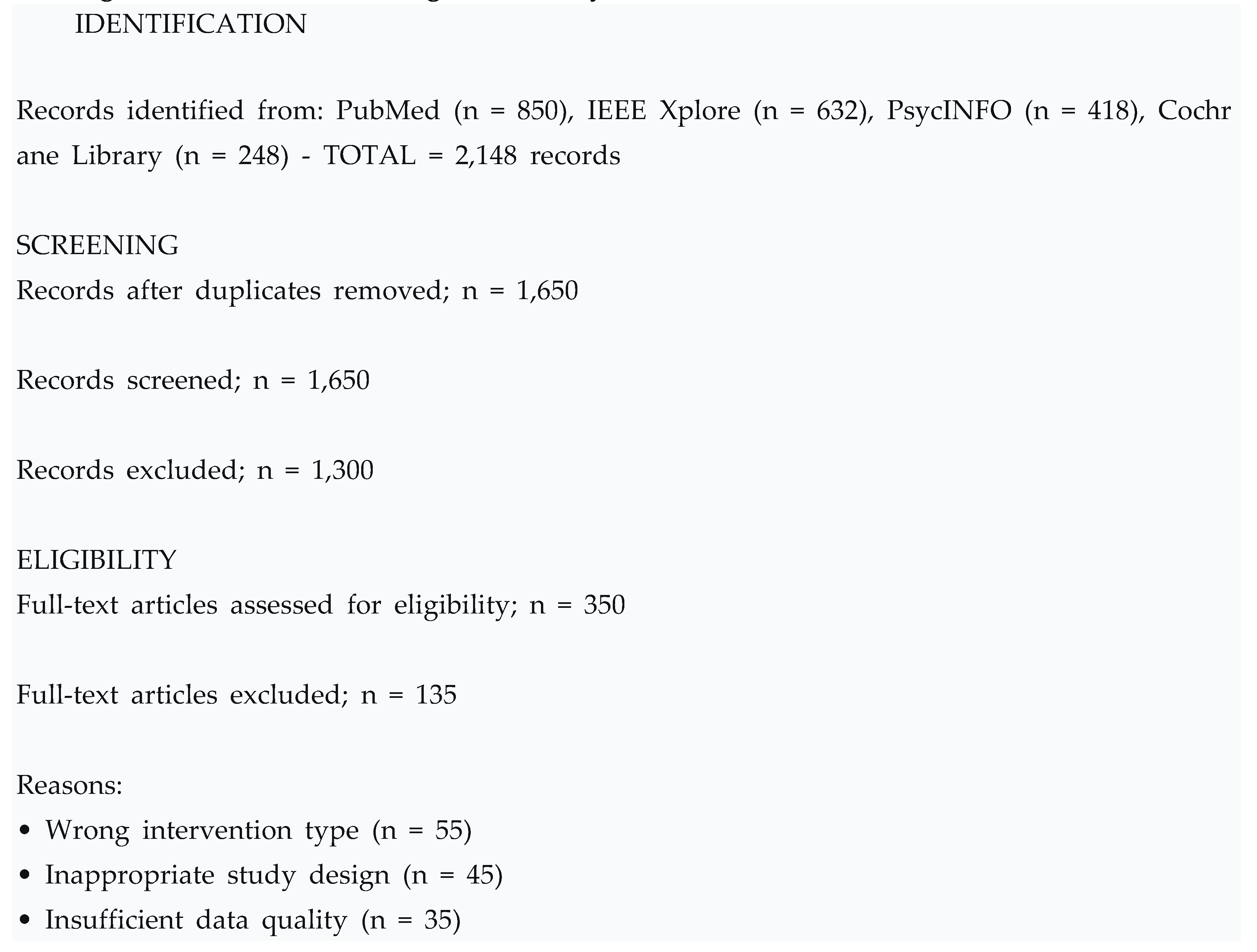
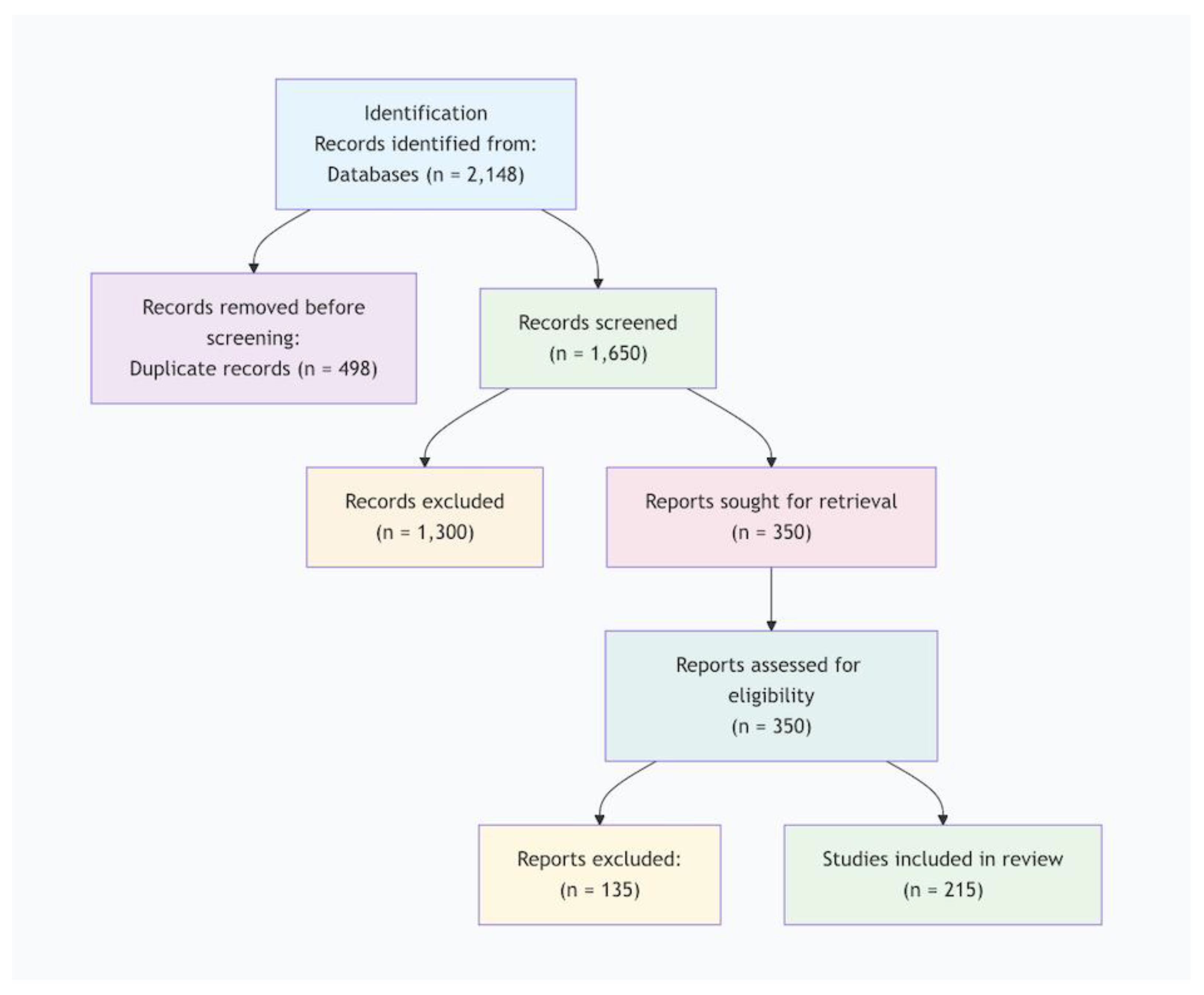
Disclaimer/Publisher’s Note: The statements, opinions and data contained in all publications are solely those of the individual author(s) and contributor(s) and not of MDPI and/or the editor(s). MDPI and/or the editor(s) disclaim responsibility for any injury to people or property resulting from any ideas, methods, instructions or products referred to in the content. |
© 2025 by the authors. Licensee MDPI, Basel, Switzerland. This article is an open access article distributed under the terms and conditions of the Creative Commons Attribution (CC BY) license (http://creativecommons.org/licenses/by/4.0/).
Copyright: This open access article is published under a Creative Commons CC BY 4.0 license, which permit the free download, distribution, and reuse, provided that the author and preprint are cited in any reuse.