

Submitted:
26 November 2025
Posted:
28 November 2025
You are already at the latest version
Abstract
Food loss and waste (FLW) is a chronic problem across food systems worldwide, with meat being one of the most resource-intensive and perishable categories. The perishable character of meat combined with complex cold chain requirements and consumer behav-iour, makes the sector particularly sensitive to inefficiencies and loss across all stages from production to consumption. This review synthesizes the latest advancements in new preservation technologies and supply chain efficiency strategies to minimize meat wast-age, and also outlines current challenges and future directions. New preservation technologies such as high-pressure processing, cold plasma, pulsed electric fields, and modified atmosphere packaging have substantial potential to extend shelf life while preserving nutritional and sensory quality. Active and intelligent packag-ing, bio-preservatives, and nanomaterials act as complementary solutions to enhance safety and quality control. At the same time, blockchain, IoT sensors, AI, and predictive analytics-driven digitalization of the supply chain are opening new opportunities in traceability, demand forecasting, and cold chain management. Nevertheless, regulatory uncertainty, high capital investment requirements, heterogeneity among meat types, and consumer hesitancy towards novel technologies remain significant barriers. Furthermore, the scalability of advanced solutions is limited in emerging nations due to digital inequal-ities. Convergent approaches that combine technical innovation with policy harmonization, stakeholder capacity building, and consumer education are essential to address these challenges. System-level strategies based on circular economy principles can further re-duce meat loss and waste, while enabling by-product valorisation and improving climate resilience. By integrating preservation innovations and digital tools within the framework of UN Sustainable Development Goal 12.3, the meat sector can make meaningful progress towards sustainable food systems, improved food safety, and enhanced environmental outcome.
Keywords:
meat loss and waste
; innovative preservation technologies
; supply chain optimization
; circular economy
; sustainable meat systems
1. Introduction
The Global Challenge of Food Loss and Waste (FLW) is a pressing issue that undermines sustainability, economic efficiency, and food safety. The Food and Agriculture Organization (FAO) estimates that nearly one-third of all food produced worldwide—approximately 1.3 billion tons - is lost each year [1]. The massive quantity calls for immediate solutions. FLW also translates into the loss of valuable resources such as energy, water, and land, and accounts for about 8–10% of global greenhouse gas (GHG) emissions due to the decomposition of organic waste in landfills ([2].
1.1. The Vulnerability of the Meat Industry
FLW directly challenges the achievement of United Nations Sustainable Development Goal (SDG) 12.3, which seeks to halve per capita food loss and waste by 2030 as a pathway to reducing GHG emissions [3]. The meat industry is particularly vulnerable to FLW due to its highly perishable nature and complex supply chains[3]. Beef production, in particular, is resource-intensive—requiring substantial inputs of water, feed, and energy—making the economic and environmental consequences of losses especially severe [4]. Estimates suggest that up to 20% of global beef production is lost or wasted, representing a major sustainability concern [5]. Unlike other food products, meat is subject to stringent safety standards and cold chain requirements, which, when disrupted, result in product rejection or spoilage [3]. Losses occur at multiple points along the supply chain, including slaughter, processing, transportation, retail, and consumption [6,7]
1.2. Drivers of Meat Loss and Waste Across Economies
In high-income economies, over-purchasing, improper storage, and misinterpretation of expiration dates are the primary consumer-related drivers of waste [8,9]. In contrast, in low- and middle-income countries (LMICs), infrastructural limitations-such as inadequate refrigeration and logistics inefficiencies-are the dominant contributors [10].
1.3. Understanding FLW Through the Food Waste Hierarchy
To address the multidimensional nature of FLW, the Food Waste Hierarchy has been proposed as a conceptual framework prioritizing prevention strategy over recovery and disposal [11,12].
Effective implementation requires a clear understanding of drivers at three interconnected levels:
Micro level - Individual behaviours and attitudes, such as poor meal planning, low awareness, and aesthetic-driven purchasing, contribute significantly to waste [3].
Meso level - Supply chain inefficiencies, including inadequate inventory management and cold chain failures, are key factors [13]
Macro level - Broader systemic issues such as market dynamics, subsidies, and trade policies strongly shape FLW patterns [14].
1.4. Integrating Preservation Technologies to Reduce Meat Losses and Waste
Meat preservation technologies play a crucial role in extending shelf life ensuring safety, and reducing spoilage rates. Methods such as high-pressure processing (HPP), cold plasma, modified atmosphere packaging (MAP), and bio-preservatives provide alternatives or complements to conventional preservation methods [15,16].
Meanwhile, smart packaging and antimicrobial films are emerging solutions offering real-time monitoring of freshness and improved safety [16]. HPP, for example, effectively inactivates spoilage microorganisms with minimal impact on the sensory quality [17] Cold plasma and pulsed electric fields (PEF) are non-thermal technologies that preserve nutritional integrity while extending shelf life [17]. Meanwhile mart packaging and antimicrobial films are emerging solutions offering real-time monitoring of freshness and improved safety [16].
In parallel, digital innovations are increasingly applied to supply chain optimization. Blockchain enhances traceability and transparency, reducing counterfeiting and improving recall efficiency [18]. Internet of Things (IoT) devices monitor environmental conditions along the cold chain to prevent spoilage [19]. Artificial intelligence (AI) algorithms are now used to predict demand and optimize inventory, reducing both surplus and stock-outs [20]. Together, these tools enhance coordination across supply chain actors, minimizing delays, and improving routing efficiency [21].
Despite their promise, several challenges hinder large-scale adoption. High capital investment requirements, particularly for technologies such as HPP and PEF, remain a significant barrier for small and medium-sized enterprises (SMEs) [22]. Regulatory uncertainty also complicates the introduction of bio-preservatives and nanomaterials [3]. Consumer scepticism toward novel technologies perceived as "unnatural" adds another layer of resistance [23]. Additionally, the heterogeneity of meat categories (beef, poultry, pork) and local consumption patterns limits the feasibility of one-size-fits-all solutions [24]. Variability in spoilage behaviour and storage needs requires product-specific approaches. Furthermore, digital divides within supply chains, especially in developing economies, restrict the scalability of IoT- or AI-driven solutions [25].
Nonetheless, evidence suggests that combining preservation technologies with digital innovations can yield synergistic benefits [26,27]. These integrated strategies not only enhance shelf-life extension but also improve logistics and inventory accuracy, leading to greater economic and environmental gains over the long term.
Overall, reducing FLW in the meat sector requires systemic, cross-cutting solutions By coupling novel preservation methods with supply chain digitalization, significant progress can be made toward building a more resilient and sustainable global meat-system. Future interventions must prioritize affordability, regulatory harmonization, stakeholder capacity, building, and consumer education to achieve effective, large-scale impact [28]. Advancing this agenda will contribute directly to global food security, climate resilience, and sustainable development. Thus, this review aims to integrate recent research and innovation in preventing meat FLW through two major avenues: novel preservation-technologies and supply-chain-optimization.
2. Research Methodology
To conduct this study, a systematic and comprehensive literature review methodology was undertaken, aiming to analyze existing knowledge on innovative production, processing and preservation technologies, as well as supply chain optimization strategies designed to reduce meat loss and waste at different stages of the food system. The defined methodological framework ensured accuracy, transparency and reproducibility by following established protocols for conducting systematic narrative reviews in food science [29,30]. Research Design and Scope: Two core thematic areas guided the design and scope of the review. The first focused on advanced production, processing, and storage technologies applied to meat and meat products, including primary production, thermal, non-thermal and packaging innovations. The second addressed interventions related to supply chain and logistics optimization strategies aimed at reducing meat losses from farm to fork. To capture the most recent research progress and development trends, the review included journal articles, book chapters, institutional reports, and grey literature published between 2015 and2025. To ensure global relevance, the review covered studies from high-, middle-, and low-income countries [11]. Data Sources and Search Strategy: Major scientific databases, including Scopus, Web of Science, ScienceDirect, PubMed and Google Scholar, were searched systematically. A combination of keywords and Boolean operators was applied to identify relevant studies, such as "primary meat production challenges", "meat waste prevention", "meat waste valorization", "meat preservation technologies", "food supply chain optimization", "smart packaging", "non-thermal storage" and "food loss reduction logistics" [31].
Screening and Inclusion Criteria:
Titles and abstracts were first screened for relevance using a reference management program. Articles were included if they: (a) presented primary or secondary research on meat production, preservation, valorization, or supply chain optimization (b) reported results on meat loss or reduction waste, (c) provided multidisciplinary insights on technological feasibility, economic sustainability or environmental impacts, and (d) were published in English. Exclusion criteria applied to studies focused on plant-based foods, lacking empirical or theoretical foundations, or published before 2010. After reviewing the full text, articles that met the inclusion criteria were analysed in depth [32].
Data Extraction and Thematic Analysis:
A standardized approach was applied to extract data from each article, including publication year, research focus, type of meat product, technology or methodology, supply chain stage, and main findings Thematic analysis followed Braun and Clarke’s (2019) guidelines [33] allowing for comparative insights across technologies, regions, and stages of the value chain.
Quality Assessment:
The methodological quality of the included studies was assessed using the Critical Appraisal Skills Program (CASP) checklist [34] focusing on their relevance to meat loss, waste reduction, and valorization. Studies were categorized as high, moderate, or low quality, and those with insufficient methodological rigor were excluded from the synthesis.
Synthesis and Reporting: Findings were synthesized narratively, with emphasis on evidence-based results, replicable methodologies, technological challenges, research gaps, and interdisciplinary approaches to meat production, preservation, and supply chain management. This integrative approach enabled the identification of best practices and future perspectives to support comprehensive and sustainable solutions [31].
3. Extent and Relevance of Meat Losses and Waste
3.1. Global Significance of Meat Losses and Waste
Meat loss and waste are increasingly recognized as critical bottlenecks within global food systems. Although it is estimated that around one-third of all food produced worldwide is lost or wasted annually [1], the specific contribution of meat often receives less attention, despite its disproportionate environmental and economic impact. Animal-based foods are highly resource-intensive and perishable, making their wastage especially costly.
Recent studies indicate that nearly 20% of global beef production and 10–12% of pork and poultry are lost at various stages of the supply chain [35] With global demand for animal protein projected to rise by 14% by 2030 [36], reducing these losses becomes increasingly urgent to safeguard both planetary boundaries and food security.
Compared with plant-based commodities, meat waste carries a disproportionately large environmental footprint. Whereas discarded cereals or fruits primarily represent the loss of agricultural inputs and land, wasted meat implies that feed, water, energy, veterinary services, and ultimately the life of the animal itself were expended without benefit. This not only aggravates the sustainability concerns but also raises ethical questions regarding animal welfare and society’s responsibility to minimize avoidable waste.
3.2. Extent of Losses Across the Supply Chain
Losses occur at every stage of the meat supply chain, although their magnitude and causes differ significantly between regions.
- ○
- Production and slaughterhouses: Carcass rejection due to sanitary issues, anatomical defects, or processing inefficiencies can result in losses of 2–5% at the slaughter stage. In developing countries, limited access to adequate slaughter facilities exacerbates these problems.
- ○
- Processing and logistics: Maintaining the cold chain is a major determinant of meat quality. Interruptions during storage or transport create opportunities for microbial growth and spoilage, leading to economic downgrading or outright rejection of products.
- ○
- Retail stage: Overstocking, inaccurate demand forecasting, and rigid product presentation standards are common drivers of loss. For example, meat approaching its expiration date is frequently discarded despite being safe for consumption.
- ○
- Consumers: In high-income countries, households are the single largest contributors to meat waste, primarily due to over-purchasing, inadequate storage, and misunderstanding of “best before” versus “use by” labels. In contrast, in low- and middle-income countries, infrastructural deficits such as unreliable refrigeration, weak transport logistics, and limited cold storage capacity dominate upstream losses.
Regional comparisons illustrate these differences clearly. In sub-Saharan Africa, up to 15% of meat losses occur before products reach markets, whereas in Europe and North America, over 50% of total meat waste occurs at the retail and household levels [36]. This distinction highlights the need for tailored solutions sensitive to local conditions.
3.3. Mass Balance Perspective
Adopting a mass balance approach enables quantification of inefficiencies across the meat supply chain. By mapping inputs and outputs at each stage, it is possible to identify underutilized streams and recovery opportunities.
- ○
- Beef: On average, only 60–70% of a carcass is converted into prime meat cuts. The remainder includes hides, bones, fat, blood, and offal. While some these by-products are processed into secondary products, others remain underused or discarded.
- ○
- Pork: Utilization rates are typically higher (75–80%), due to broader acceptance of processed cuts and by-products in many culinary traditions.
- ○
- Poultry: Carcass yields hover around 70%, with feathers, viscera, and bones. Often a practical example is the breakdown of a 600 kg beef carcass: roughly 370 kg is transformed into edible cuts, while about 230 kg consists of materials that, if not valorized, represent both economic loss and environmental burden. From this perspective, meat loss is not only visible spoilage but also insufficient valorization of non-prime fractions.
3.4. Sustainability Implications and LCA Evidence
- ○
- The environmental consequences of meat loss and waste are among the most severe in the food sector. Life Cycle Assessment (LCA) consistently demonstrates that meat—particularly beef—has one of the highest carbon footprints per kilogram of edible product [37].
- ○
- Carbon footprint: Wasted beef generates approximately 27 kg CO₂-eq per kilogram of discarded product, compared with 7–12 kg for pork and 5–6 kg for poultry.
- ○
- Water footprint: Producing 1 kg of beef may require up to 15,000 liters of water (including virtual water for feed crops). The loss of such products therefore represents a substantial inefficiency in freshwater use.
- ○
- Energy footprint: Case studies from Germany report that discarding one ton of pork sausages at the retail stage results in more than 6 MWh of embodied energy loss, excluding additional emissions associated to packaging and refrigeration [38].
Beyond economic concerns, these figures carry an ethical dimension: millions of animals are raised and slaughtered each year without fulfilling their nutritional purpose, an issue that increasingly resonates with consumer awareness.
3.5. Critical Action Points and Optimization Potential
- ○
- Despite the scale of the problem, several critical intervention points remain underexploited.
- ○
- Valorization of by-products: Significant potential exists in the utilization of blood, fat, bones, skin, and viscera. These materials can be converted into high-value outputs such as collagen, gelatin, biofertilizers, biogas, nutraceutical ingredients, and pharmaceutical precursors. Barriers include cultural aversions, strict sanitary regulations, and logistical challenges yet successful models are already implemented in regions such as Asia and Northern Europe.
- ○
- Shelf-life extension: Intelligent packaging solutions-including time–temperature indicators, oxygen scavengers, and antimicrobial coatings- can markedly reduce spoilage. Modified atmosphere packaging, already established in commercial practice, has extended the shelf life of chilled meat by several days. Digital supply chain management: Artificial intelligence tools are increasingly employed to predict demand, optimize stock rotation, and support dynamic pricing based on real-time freshness indicators. Retail have demonstrated reductions of up to 30% in meat waste when AI-driven pricing systems.
- ○
- Redistribution networks: Legal and logistical frameworks enabling the redistribution of surplus meat to food banks, charities, or community kitchens remain underutilized in many regions. Countries such as France and Denmark are frequently cited as best-practice examples, where legislation actively promotes redistribution.
- ○
- Consumer education: Misinterpretation of date labeling is one of the most avoidable drivers of household-level waste. Public campaigns clarifying the distinction between “use by” and “best before” dates, combined with practical guidance on meal planning and domestic refrigeration, have shown effectiveness in pilot programs.
3.6. Visualization and Communication Strategies
Effectively communicating the magnitude of meat losses in an accessible and engaging manner is crucial for mobilizing stakeholders across the food system. Tools such as Sankey diagrams and mass flow charts provide intuitive representations of where losses occur along the supply chain and their relative significance. For policymakers and consumers, visualizations that link meat waste to its associated carbon and water footprint have been particularly impactful in shaping awareness and influencing behavior. Emerging digital dashboards, often integrated with Internet of Things (IoT) sensors, enable real-time monitoring of cold chain conditions and product quality. These systems not only reduce spoilage by enabling rapid interventions but also generate valuable datasets that inform evidence-based policymaking. Reducing meat loss and waste requires systemic integration of technological, managerial, and social innovations. Transitioning towards a circular economy framework in which every output is valorized, represents a critical pathway forward. Advances in biotechnology, such as the extraction of bioactive peptides from by-products or the development of sustainable packaging derived from animal residues, highlight promising solutions that combine environmental and economic value. At the same time, digitalization of supply chains is poised to redefine optimization strategies in the coming decade. Predictive analytics, blockchain-enabled traceability, and digital twin-simulations of logistics scenarios offer new avenues to enhance efficiency, transparency, and accountability. However, the successful adoption of these tools depends on regulatory and policy frameworks that incentivize innovation and align industry practices with the United Nations’ Sustainable Development Goal 12.3, which calls for halving global food waste at retail and consumer levels by 2030. Finally, consumer engagement remains a cornerstone. Without behavioral change at the household level, upstream technological and managerial gains risk being offset by downstream inefficiencies. Education campaigns, greater transparency, and participatory approaches that reconnect citizens with the value of animal products are therefore essential for achieving meaningful reductions in meat loss and waste.
4. Technologies with Transformation Potential
4.1. Measures to Prevent Food Losses and Waste During the Production Stage
Losses of food during production stages in meat supply chains have a considerable danger to food safety, environmental care, and financial performance. Such losses result from animal mortality, disease, inefficiencies in feeding, and incompetent farm practice. These concerns need a multi-disciplinary solution through animal health management, nutritional optimization, precision farming, and slaughterhouse improvement practice. Loss reduction at this stage not only preserves natural resources but also improves profitability and availability of food [39,40]. Control of animal health is the most important to avoid losses in poultry and livestock farming. Pandemics of African Swine Fever, Foot-and-Mouth Disease, and Avian Influenza caused massive culling activities, and millions of lost foods were accounted for. Enhancing biosecurity, organizing vaccination drives, and developing disease monitoring systems at an early age are able to reduce death rates by large percentages [41,42]. Advances in genomic selection have also enhanced the resistance of livestock against diseases, leading to improved herds and loss minimization [43]. In aquaculture, control of disease outbreaks with probiotics and enhanced water quality management has proved effective in reducing losses [44,45]. Proper planning of feeding and nutrition management are key to reducing food loss. Malnutrition and unbalanced feeding lead to sub-potential growth performance, increased mortality, and reduced feed conversion efficiency. Precise feeding methods, designed to meet the specific nutritional needs of animals, are found to activate growth rates and reduce waste [46,47]. In addition, the use of agro-industrial by-products such as distillers' grains and citrus pulp as substitute feed materials promotes resource efficiency with reduced food loss [48,49]. Supplementation with enzymes in poultry production has improved nutrient digestibility, leading to enhanced feed utilization with reduced mortality [50,51]. Precision livestock farming (PLF) technologies have proved to be an effective way of reducing food loss at the production level. PLF utilizes data-driven decision-making, real-time monitoring, and automation to optimize animal welfare, health, and productivity. Wearable sensors and machine learning algorithms can detect initial signs of illness, allowing timely interventions that prevent losses associated with disease [52,53]. Automatic feeding systems enhance feed efficiency by delivering nutrients accurately, minimizing overfeeding and underfeeding [54,55]. Drone usage in extensive livestock systems has also improved herd management, a reduction in loss due to predation and environmental aspects [56,57]. Reproductive efficiency is also a critical factor in food loss in meat production. Reproductive inefficiency is characterized by non-conception cows or the conception of weak calves and prolonged calving periods that all translate into inefficiencies of meat production. Advanced reproductive techniques (ART), including artificial insemination, embryo transfer, and genomic selection, have evolved remarkably in raising success rates in reproductive efforts [58,59]. Heat stress forms one of the central reasons underlying reproductive deficiencies within livestock, primarily in the tropical and subtropical regions. Interventions such as genetic selection of heat-tolerant breeds, improved housing design, and feeding interventions have mitigated the impact of heat stress on reproductive efficiency [60,61]. Sound farm management practices also have a vital role to play in minimizing food loss at production stage. Properly trained farm personnel, housing conditions, and ventilation guarantee animal welfare and productivity. Excessive stocking of poultry and pigs results in stress, trauma, and elevated mortality. Maximum stocking density and environmental enrichment can lower survival rates and meat production significantly [62]. Improved pond management like aeration and water quality monitoring has enhanced fish survival and growth rate in aquaculture [63,64]. Handling and transportation are the most important areas in which stress-related loss, death, and injury take place. Long-distance transport without ample resting stations, insufficient ventilation, and overloading makes an animal vulnerable to further deaths. Starvation prior to transportation, custom-fitted transports, and specialized workers operating the cattle will reduce loss during transit [65,66]. In poultry, reducing transport time and top stocking densities for transport crates reduce transport-related stress death [67,68]. In aquaculture, live fish transport with ideal temperatures and oxygen improve survival rates [69,70]. The level to which the abattoir also recovers food waste throughout production time. Stress management, stunning accidents, and carcass contamination lead to downgrading or condemnation of meat. Conformity of the stunning process, enhanced sanitizing processes, and automation processing technology use enhance the quality of meat and reduce loss [71,72]. Cold chain management from the slaughtering point prevents spoilage and bacterial contamination. Technology has improved meat preservation and safety by better rapid chilling equipment and intelligent monitoring systems [73,74]. Extreme weather, heatwaves, and droughts can be able to cause increased food loss during meat production because of environmental conditions. Drought-resistant feeds, shaded shelter, and heat-resistant animal species play a critical role in an attempt to halt climate-related losses [75,76]. Scarcity of water is also a big concern, particularly in arid regions where livestock production is dependent on water. Strategies for effective use of water, such as recycling wastewater for irrigation and minimizing drinking water supply systems, are being considered in sustainable meat production [77]. Application of circular economy principles to meat production also helps in lessening food loss. Application of slaughterhouse by-products such as blood, bones, and offal to be used as animal feed, biofuel, and pharmaceutical feedstock maximizes resource use [78]. Insect-based protein generation through food waste as a raw material is emerging technology that seeks to reduce food wastage and establish new alternatives in animal feeding material [79,80]. Anaerobic organic waste and manure digestion for the production of biogas not only eliminates wastes but also provides clean renewable energy for agriculture [81,82].
Table 1 shows that a combination of health management, technological interventions and welfare practices have a direct impact on preventing meat losses during the production phase. In the first place, the main strategies include veterinary care, disease management and vaccination, which can reduce the mortality of farm animals by 3-7%. Also, proper handling and transport management reduces stress, bruising and carcass damage, preserving 1-3% of the carcass value. Nowadays, the use of precision livestock breeding tools, such as real-time monitoring and sensors, helps in the early detection of health or nutritional problems, reducing inefficiency by 2-5%. The productive potential of animals in the production process, accompanied by optimal feeding practices, reduces mortality, preventing up to 4% of losses. Significant impact on reducing stress and pre-slaughter mortality by up to 2%, play animal management in slaughterhouses and mobile slaughterhouse units. Animal welfare and training of producers - especially in climate changes (hot or cold temperatures), reduce additional losses by up to 1-5%. All these actions and concrete integrated strategies, address critical points of loss in the production chain, studied with evidence from FAO, (2023) [39] Dongo et al, (2023) [84] and other recent studies that highlight their effectiveness in reducing avoidable meat waste.
4.2. Measures to Prevent Food Losses and Waste During the Food Processing
Overview of Traditional and Emerging Processing and Preservation Methods
The Farm-to-Fork Strategy Framework constitutes a key element of the European Green Deal [38]. There are many directions where the Farm-to-Fork strategy is targeted to such as in supporting the agroecological transition of farming systems, enhancing the reduction of waste and losses in the food systems and promoting the development of healthy, fair and environmentally friendly food systems. The recent FAO Strategic Framework 2022–203[99] accelerates sustainable development goals through (better nutrition, production, environment, and life) [36], and through interconnection of economic, social and environmental dimensions facilitates the redesign of the agri-food systems.
Moreover, according to the Opinion of the European Economic and Social Committee on circular economy and bioeconomy, emphasis is given on the reuse and recirculation of raw materials through eco-design s [100].
Figure 1 shows the ‘One Quality’ concept integrating the intrinsic and extrinsic qualities of pork within sustainability pillars of production and consumption [101].
The ‘One Quality’ concept has been proposed by Gagaoua et al. (2025) [101] strengthening the interrelations existing between the intrinsic and extrinsic qualities of pork throughout the value chain.
One quality approach encourages the participation of all stakeholders considering all the dimensions of environment, society and governance.
European Fat Processors and Renderers Association (EFPRA) published a circular bioeconomy model for animal by-products and edible co-products to ensure a sustainable, healthy, and animal-based food value chain. This model was categorized into: (1) Environment and Climate: decarbonisation of the value chain, positively affecting the climate by low carbon footprint products and renewable fuels. (2) Society and Health: Protection of the health of animals, humans, and the environment while employing safe and nutritious ingredients. (3) Society: animal by-products and edible co-products innovation strategies and effect on the socio-economic environmental aspects [102].
Generation of waste is transferred to “rendering” units.
Rendering means transformation of waste into a usable form covering thermal processes along with other ones such as grinding, pressing, and separation [103,104].
Appropriate pre-treatment and bioconversion methods refer to a circular bioeconomy model as addressed as by Sagar et al. (2024) [105]. In addition, Ragasri and Sabumon (2023) [106] underlined the association of slaughterhouse waste management with circular economy.
Sustainable pig farming and sustainable pork production and consumption [107] will also reduce food waste.
Significant sustainability aspects include more sustainable feed sources, recycling nutrients to reduce or minimize waste, improvement of waste management practices, and optimization of production systems for local breeds.
Simultaneous livestock diversity and circularity in intensive pig farming [108] is another factor addressing biomass circularity.
Optimization of feed ingredient resource use, upcycling agri-industrial by-products and appropriate sources of food loss and waste, improvement of manure management, and maintainance of pig health along with reduction of nitrogen losses and emissions to the environment from pig production have been reported [109].
Moreover, environmental messages can create awareness. A highly effective strategy engaging the population to actively participate in environmentally friendly actions is to pay attention to the adverse ramifications of climate change. In addition, focusing on the detrimental outcomes (e.g., food loss and waste) associated with climate change, individuals could adopt sustainable practices and try to mitigate these effects (Kapeller, & Jager, 2020).
Excessive disposal of meat, contributes to nearly 20 per cent of the carbon footprint caused by FWL on a global scale as reported by Islam and Zheng (2025).
Food loss and waste can be reduced by the 4R’s” as reduce, reuse, recycle, and resource recovery from waste [106].
Waste can be converted into valuable components by green technologies such as enzymatic hydrolysis, ultrasound-assisted extraction, supercritical fluid extraction, instant catapult steam explosion, and ohmic heating [72,110,111,112,113]
Upcycling of food waste (FW) could employ LCA for the evaluation of environmental, social, and economic impacts, in alignment with the UN’s Sustainable Development Goals (SDGs).
The “farm to fork” approach of the meat chain has been explored [114].
The whole life cycle of meat production was investigated by Kowalski et al. [115] in the Śmiłowo Eco-Industrial Park. The production of meat and bone meal as well as the use of pig and poultry waste for fertilization have been employed to address the efficient valorization of meat waste.
In Figure 2 a pyramid is proposed similar to the hierarchy model based on prevention and reduction of surplus food, redistribution, recycling and recovery of by-products and waste disposal.
4.3. Food Packaging
Nearly every food product is packaged at least once during its life cycle. Irrespective of the specific application, food packaging thereby serves four primary objectives, namely containment, protection, convenience and information. The first two functions in particular facilitate the preservation of the existing or obtained attributes of (processed) food for an extended period of time, which in turn helps to increase food safety and shelf-life and, in the end, can help to prevent or reduce food losses and waste. This is primarily facilitated by the packaging’s barrier against chemical, biological and physical factors that contribute to product degradation, including gases (e.g., oxygen, water vapor), light, physical and mechanical stress, migration, and microbial (re)contamination. In addition, the other two functions mentioned above support the simple and correct handling of the products (e.g., opening, (re)closing, emptying) and provide legally required (e.g., ingredients) or other relevant information (e.g., instructions for storage and use) [117,118,119,120,121].
Due to various factors such as shifting conditions (e.g., trends, demands, supply chain, demographics, new processes and methods), the wide range of available materials (e.g., metal, glass, (bio)plastics, paper and board, laminates), different container forms (e.g., bags, pouches, cans, bottles) as well as packaging aids (e.g., closures, labels), there is a seemingly endless and constantly evolving range of packaging concepts and applications on the market today [117,118,122,123].
Modified atmosphere packaging (MAP), for example, is a well-known and established method in the food industry due to its advantages, such as improved shelf-life and product quality. In essence, this is accomplished by alternating the natural occurring atmosphere within the packaging container either actively or passively, or by eliminating it completely, as in the case of vacuum packaging. Since it is particularly important for meat and meat products (e.g., ham, sausages), only active modification will be discussed here. In this case, the atmosphere in the product packaging is initially evacuated and then replaced with a synthetically generated atmosphere. The packaging, which itself requires a suitable gas barrier to maintain the atmosphere, is then sealed [118,124].
The gases utilized and their mixtures depend upon the application. For instance, oxygen (O2) is predominantly utilized in high-oxygen MAP to preserve the color of red meat (e.g., beef: 80 % O2 and 20 % CO2). However, the majority of MAP applications seek to minimize or eliminate O2 due to its facilitation of microbial growth and oxidative decay mechanisms of the product, therefore categorizing them as low-oxygen MAP. Thus, the two gases commonly utilized are carbon dioxide (CO2) and nitrogen (N2). The former is favored for its capacity to limit microbial growth, whereas the latter is preferred for its inertness and appropriateness as a filler gas, along with its potential to indirectly suppress aerobic microbial growth. A standard gas mixture for processed meat products including, for example, cured, cooked, and sliced meats like ham, consists of 30 % CO2 and 70 % N2. Although these and other MAP mixtures have been used extensively in the food industry for decades, the topic of MAP research is far from being exhausted. For example, noble gases permitted for use in food products, such as argon (Ar) gas are assessed as potential effect enhancers (e.g., antimicrobial efficacy, product quality, sensory qualities) [118,124,125,126].
Active and intelligent packaging (AIP), unlike MAP, has not yet reached its full potential, but is on the verge of wider application and is the subject of intense research and development activities [127,128]. Accordingly, the following passages outline the concept of AIP and highlight the applications most relevant to meat and meat products.
In comparison to conventional packaging, which is designed to be inert and does not interact in a significant amount with the food product, active packaging deliberately includes active components that are either aimed to be released to the food or aim at absorbing substances from it. Therefore, active packaging can be divided into so-called “releaser” and “absorber” systems [129,130]. Reflecting answers to food quality and safety related challenges [118,120], key technologies are emitters (e.g., CO2, antimicrobials, antioxidants), scavengers (e.g., O2, CO2, ethylene), absorbers (e.g., H20, flavor, odor) but also self-venting packaging, microwave susceptors, as well as temperature control packaging [118,131].
Intelligent packaging, by contrast, is a collective term for packaging solutions that monitor the food product and provide information about its actual condition [129]. Key technologies encompass indicators and sensors (e.g., temperature, time) as well as related processing and communication systems (e.g., printed electronics), tamper evident packaging and anti-counterfeiting applications [118,131].
Some examples from the scientific literature in which AIP demonstrates the potential to prevent or reduce food losses and waste in the meat sector are discussed in the next paragraphs:
On the one hand, active packaging such as oxygen scavengers reduces oxygen levels in packages, thereby inhibiting aerobic microbial growth and oxidative spoilage. Martín Mateos et al. (2023) [132] demonstrated the potential of oxygen scavengers to improve the shelf life of fresh beef by maintaining color stability and suppressing spoilage bacteria during cold storage.
To mitigate surface microbial contamination and extended shelf life, recent studies show need for embedding natural antimicrobials such as essential oils in biodegradable films and coatings having direct inhibitory effect [132,133]. For example, chitosan films enriched with oregano essential oil slowed the growth of Listeria monocytogenes in ready-to-eat meat products, significantly extending shelf life [134]. It should also be mentioned that Modified Atmosphere Packaging (MAP) has found widespread use, combined with active ingredients, including CO₂ absorbers and emitters to control the concentration of gases in the package. The use of CO₂ absorbers [135] and CO2 emitters [136] as active packaging techniques that releases CO₂ detergents or antimicrobial compounds has also been shown to increase shelf life and reduce the rate of returns of spoiled products, by regulating uniform MAP conditions in packaged and observed microbial growth and increased freshness [136].
Internal humidity control is considered the second most suitable method which, in addition to affecting the prevention and loss of drops, also affects microbial growth by controlling water activity with the help of moisture-absorbing pads. Castrica et al. (2020) [138] showed that such pads in beef packages can reduce surface moisture and thus inhibit bacterial spoilage during shelf life. Nanotechnology has also been found to improve packaging functionality by improving the barrier and providing antimicrobial action. Neves et al. (2023) [139] demonstrated that antibacterial films based on silver nanoparticles are effective against microorganisms that cause pork spoilage, which validates the use of nanomaterials in providing greater product protection. To better explain the complex challenges of meat preservation and extended shelf life, researchers also address the need for combining biodegradable packaging materials with active packaging technologies, especially those considering natural antimicrobial and antioxidant compounds [133,140].
On the other hand, the most evident result of intelligent packaging globally is Time-Temperature Indicators (TTI), which provide visible visual signals of accumulated temperature abuse, providing useful freshness information to consumers and retailers. The study by Waldhans et al. (2024) [141] point out that TTIs effectively ensure cold chain integrity in cold meat supply chains by enabling timely identification of temperature abuse and preventing consumer misperception and spoilage.
An advancement in the identification and detection of biochemical reactions due to microbial action and meat spoilage for the detection of TTIs, colorimetric pH sensors are also used today. Anthocyanin pH sensors incorporated into packaging materials change color in response to meat spoilage, thus providing an immediate non-destructive freshness signal that, as Ma et al. (2024) [142] claim, has been proven effective. In parallel, the integration of electronic sensors - also called electronic noses - into packages allows for real-time detection of volatile organic compounds (VOCs) associated with meat spoilage [143]. In an attempt to support timely decision-making and minimize losses, the study by Mehdizadeh et al. (2025) [144] presents the use of sensor-integrated packages that can identify amine compounds produced by emissions during spoilage. These data are communicated to consumers through smartphone-based applications. In summary, smart and active packaging technologies constitute a meat preservation system that includes real-time monitoring of freshness and intervention in environmental changes in the meat and meat products food chain, promote consumer confidence and stimulate sustainability in the meat chain.
4.4. Identification and Assessment of Sustainable Packaging
A current and comprehensive definition of sustainable food packaging comes from Dörnyei et al. (2023) [145] and reads as follows: “Sustainable food packaging is an optimized, measured (quantified) and validated solution, which takes into consideration the balance of social, economic, ecological and safe implementations of the circular value chain, based on the entire history (life cycle) of the food product-package unit.”
Life cycle assessment (LCA), which has been used since the 1970s (e.g., Coca Cola case study) and continuously further developed and standardized since then, is currently the most widely used method for determining the actual direct (e.g., influenced by material production, end-of-life) as well as indirect (e.g., influenced by food waste, logistic efficiency) environmental impacts (e.g., greenhouse gas emissions) of a specific product or service and for identifying critical areas where improvements are needed (eco-design), as required in the above definition [146,147,148,149].
Although often not sufficiently considered in food LCAs [148], past experience has shown that food packaging generally accounts for a relatively small proportion, namely approximately five percent, of total greenhouse gas emissions associated with food [37,150]. However, it is not permissible to draw hasty conclusions, as on the one hand the values themselves vary greatly within a product group and between individual applications, and on the other hand it has been shown that the more or less resource-intensive production of food has an influence on the ratio of food to packaging. For instance, it was shown that packaging for resource-intensively produced meat accounts for approximately two percent, while packaging for fruits, vegetables and nuts account for approximately ten percent of the greenhouse gas emissions of the food-packaging system analyzed [37,151,152,153,154,155]. This underscores the importance of effective packaging, particularly for high-impact foods such as meat and meat products [153,154,156,157,158]. Optimized and, where necessary, increased use of packaging can therefore help to reduce food waste along the food supply chain while also reducing the overall environmental impact [159,160], as for example shown by Casson et al. (2022)[161] on the example of different meat packaging (overwrap, high-oxygen MAP and vacuum skin packaging).
A summary of key studies addressing sustainable meat packaging is presented in Table 2.
While meat packaging contributes only a small fraction (≈2–10%) of total GHG emissions, these studies demonstrate that innovative and efficient packaging systems—especially recyclable and active ones—can substantially reduce food waste and improve environmental performance across the meat supply chain.
5. Conclusions
Meat loss and wastage can be reduced by interdependent convergence of supply chain management, technological innovation, and systemic stakeholder involvement. The review highlights that new preservation technologies like high-pressure processing, cold plasma, pulsed electric fields, and smart packaging realize enormously important shelf-life extensions and assurances with regard to safety, where digital technologies like blockchain, IoT sensors, and artificial intelligence assist in enhancing traceability, transparency, and demand forecasting throughout the supply chain. Nevertheless, high investment cost, lack of sure regulations, consumer acceptability issues, and uneven uptake of technology—particularly in low- and middle-income economies—continue to slow down full utilization of these solutions. Scaling up circular economy approaches through by-product valorisation, access, capability-building across technology silos, and support policies are needed for future success. Lastly, the incorporation of preservation technology with digital supply chain solutions offers a feasible route to sustainable meat systems that improve environmental sustainability, food security, and achievement of environmental goals.
Author Contributions
Conceptualization, H.B, A.N.B, V.K, S.S, and T.V..; methodology, H.B, A.N.B, V.K, S.S, and T.V.; software, X.X.; validation, H.B, A.N.B, V.K, S.S, and T.V.; formal analysis, H.B, A.N.B, V.K, S.S, and T.V.; investigation, H.B, A.N.B, V.K, S.S, and T.V.; resources, T.V.; data curation, H.B, A.N.B, V.K, S.S, and T.V.; writing—original draft preparation, H.B, A.N.B, V.K, S.S, and T.V.; writing—review and editing, H.B, A.N.B, V.K, S.S, and T.V.; visualization, H.B, A.N.B, V.K, S.S, and T.V.; supervision, H.B, A.N.B, V.K, S.S, and T.V.; project administration, X.B.; funding acquisition, T.V. All authors have read and agreed to the published version of the manuscript.
Funding
This research received no external funding.
Institutional Review Board Statement
Not applicable.
Informed Consent Statement
Not applicable..
Data Availability Statement
no new data were created.
Acknowledgments
The authors have reviewed and edited the output and take full responsibility for the content of this publication.
Conflicts of Interest
The authors declare no conflicts of interest.
References
- FAO: The State of Food and Agriculture 2019. Moving forward on food loss and waste reduction, (2019).
- Mezgebe, T.T., Alemu, M.: Climate change and food security nexus in Ethiopia: A systematic review. Front Sustain Food Syst. 9, 1563379 (2025).
- An, H. , Galera-Zarco, C.: Tackling food waste and loss through digitalization in the food supply chain: A systematic review and framework development. Technol Forecast Soc Change. 217, 124175 (2025). [CrossRef]
- Buzby, J.C., Farah-Wells, H., Hyman, J.: The estimated amount, value, and calories of postharvest food losses at the retail and consumer levels in the United States. (2014).
- Parfitt, J. , Barthel, M., Macnaughton, S.: Food waste within food supply chains: quantification and potential for change to 2050. Philosophical Transactions of the Royal Society B: Biological Sciences. 365, 3065-3081 (2010). [CrossRef]
- Jones-Garcia, E. , Bakalis, S., Flintham, M.: Consumer Behaviour and Food Waste: Understanding and Mitigating Waste with a Technology Probe. Foods. 11, 2048 (2022). [CrossRef]
- Seyam, A. , EI Barachi, M., Zhang, C., Du, B., Shen, J., Mathew, S.S.: Enhancing resilience and reducing waste in food supply chains: a systematic review and future directions leveraging emerging technologies. International Journal of Logistics Research and Applications. 1-35 (2024). [CrossRef]
- Aschemann-Witzel, J. , Giménez, A., Ares, G.: Household food waste in an emerging country and the reasons why: Consumer´s own accounts and how it differs for target groups. Resour Conserv Recycl. 145, 332-338 (2019). [CrossRef]
- Torres, M., Ceglar, A.: The carbon footprint of astronomical observatories, (2024).
- Grandin, T., Buhr, R.J.: Investigating the impact of pre slaughter management factors on indicators of fed beef cattle welfare – a scoping review. Frontiers in Animal Science. 4, 107384 (2022).
- Teigiserova, D.A. , Hamelin, L., Thomsen, M.: Towards transparent valorization of food surplus, waste and loss: Clarifying definitions, food waste hierarchy, and role in the circular economy. Science of The Total Environment. 706, 136033 (2020). [CrossRef]
- Smith, J.A. , García Ruiz, A.: Exploring incentives to move up the food waste hierarchy: A case study of circular practices in hospitality. J Clean Prod. 395, (2025).
- Huang, I.Y. , Manning, L., James, K.L., Grigoriadis, V., Millington, A., Wood, V., Ward, S.: Food waste management: A review of retailers’ business practices and their implications for sustainable value. J Clean Prod. 285, 125484 (2021). [CrossRef]
- Ammann, J. , Arbenz, A., Mack, G., Nemecek, T., El Benni, N.: A review on policy instruments for sustainable food consumption. Sustain Prod Consum. 36, 338-353 (2023). [CrossRef]
- Jayasena, D.D. , Kang, T., Wijayasekara, K.N., Jo, C.: Innovative Application of Cold Plasma Technology in Meat and Its Products. Food Sci Anim Resour. 43, 1087-1110 (2023). [CrossRef]
- Dodero, A. , Escher, A., Bertucci, S., Castellano, M., Lova, P.: Intelligent Packaging for Real-Time Monitoring of Food-Quality: Current and Future Developments. Applied Sciences. 11, 3532 (2021). [CrossRef]
- Goraya, R.K., Singla, M., Kaura, R., Singh, C.B., Singh, A.: Exploring the impact of high pressure processing on the characteristics of processed fruit and vegetable products: a comprehensive review. Crit Rev Food Sci Nutr. (2024).
- Anyibama, J,.B., K. Orjinta, K., F. Onotole, E., A. Olalemi, A., Temitope Olayinka, O., E. Ogunwale, G., O. Fadipe, E., O. Daniels, E.: Blockchain Application in Food Supply Chains: A Critical Review and Agenda for Future Studies. Int J Innov Sci Res Technol. 2345-2352 (2025). [CrossRef]
- Ivanov, D. : Supply Chain Viability and the COVID-19 pandemic: a conceptual and formal generalisation of four major adaptation strategies. Int J Prod Res. 59, 3535-3552 (2021). [CrossRef]
- Hunka, A.D. , Daniel, A.M., Lindahl, C., Rydberg, A.: From farm to fork: Swedish consumer preferences for traceable beef attributes. Food and Humanity. 5, 100673 (2025). [CrossRef]
- Roe, S. , Streck, C., Beach, R., Busch, J., Chapman, M., Daioglou, V., Deppermann, A., Doelman, J., Emmet-Booth, J., Engelmann, J., Fricko, O., Frischmann, C., Funk, J., Grassi, G., Griscom, B., Havlik, P., Hanssen, S., Humpenöder, F., Landholm, D., Lomax, G., Lehmann, J., Mesnildrey, L., Nabuurs, G., Popp, A., Rivard, C., Sanderman, J., Sohngen, B., Smith, P., Stehfest, E., Woolf, D., Lawrence, D.: Land-based measures to mitigate climate change: Potential and feasibility by country. Glob Chang Biol. 27, 6025-6058 (2021). [CrossRef]
- Pires, I. , Machado, J., Rocha, A., Liz Martins, M.: Food Waste Perception of Workplace Canteen Users—A Case Study. Sustainability. 14, 1324 (2022). [CrossRef]
- Spang, E.S. , Moreno, L.C., Pace, S.A., Achmon, Y., Donis-Gonzalez, I., Gosliner, W.A., Jablonski-Sheffield, M.P., Momin, M.A., Quested, T.E., Winans, K.S., Tomich, T.P.: Food Loss and Waste: Measurement, Drivers, and Solutions. Annu Rev Environ Resour. 44, 117-156 (2019). [CrossRef]
- Lisboa, H.M. , Pasquali, M.B., dos Anjos, A.I., Sarinho, A.M., de Melo, E.D., Andrade, R., Batista, L., Lima, J., Diniz, Y., Barros, A.: Innovative and Sustainable Food Preservation Techniques: Enhancing Food Quality, Safety, and Environmental Sustainability. Sustainability. 16, 8223 (2024). [CrossRef]
- Scholten, K. , Stevenson, M., van Donk, D.P.: Dealing with the unpredictable: supply chain resilience. International Journal of Operations & Production Management. 40, 1-10 (2019). [CrossRef]
- Bajželj, B. , Quested, T.E., Röös, E., Swannell, R.P.J.: The role of reducing food waste for resilient food systems. Ecosyst Serv. 45, 101140 (2020). [CrossRef]
- Akkerman, R. , Cruijssen, F.: Food Loss, Food Waste, and Sustainability in Food Supply Chains. Présenté à (2024).
- Bytyqi, H. , Ender Kunili, I., Mestani, M., Adam Antoniak, M., Berisha, K., Ozge Dinc, S., Guzik, P., Szymkowiak, A., Kulawik, P.: Consumer attitudes towards animal-derived food waste and ways to mitigate food loss at the consumer level. Trends Food Sci Technol. 159, 104898 (2025). [CrossRef]
- Page, M.J., McKenzie, J.E., Bossuyt, P.M., Boutron, I., Hoffmann, T.C., Mulrow, C.D., Shamseer, L., Tetzlaff, J.M., Akl, E.A., Brennan, S.E., Chou, R., Glanville, J., Grimshaw, J.M., Hróbjartsson, A., Lalu, M.M., Li, T., Loder, E.W., Mayo-Wilson, E., McDonald, S., McGuinness, L.A., Stewart, L.A., Thomas, J., Tricco, A.C., Welch, V.A., Whiting, P., Moher, D.: The PRISMA 2020 statement: an updated guideline for reporting systematic reviews. BMJ. n71 (2021). [CrossRef]
- Munn, Z. , Peters, M.D.J., Stern, C., Tufanaru, C., McArthur, A., Aromataris, E.: Systematic review or scoping review? Guidance for authors when choosing between a systematic or scoping review approach. BMC Med Res Methodol. 18, 143 (2018). [CrossRef]
- Alvarez-Cisneros, M. , de Lourdes Pérez-Chabela, M., Ponce-Alquicira, E.: New Technologies in Meat Preservation. Dans: Food Processing - Novel Technologies and Practices [Working Title]. IntechOpen (2025).
- Snyder, H. : Literature review as a research methodology: An overview and guidelines. J Bus Res. 104, 333-339 (2019). [CrossRef]
- Braun, V. , Clarke, V.: Reflecting on reflexive thematic analysis. Qual Res Sport Exerc Health. 11, 589-597 (2019). [CrossRef]
- CASP: CASP Checklists, Critical Appraisal Checklists. (2018).
- Gustavsson, J. , Cederberg, C., Sonesson, U., van Otterdijk, R., Meybeck, A.: Global food losses and food waste: Extent, causes and prevention, (2011).
- FAO: World Food and Agriculture – Statistical Yearbook 2021, (2021).
- Poore, J. , Nemecek, T.: Reducing food’s environmental impacts through producers and consumers. Science (1979). 360, 987-992 (2018). [CrossRef]
- Commission, E. Communication from the Commission to the European Parliament, the Council, the European Economic and Social Committee and the Committee of the Regions: A farm to fork strategy for a fair, healthy and environmentally-friendly food system COM/2020/381 final, (2020).
- Taglioni, C. , Rosero Moncayo, J., Fabi, C.: Food loss estimation: SDG 12.3.1a data and modelling approach. FAO (2023).
- Kafa, N. , Jaegler, A.: Food losses and waste quantification in supply chains: a systematic literature review. British Food Journal. 123, 3502-3521 (2021). [CrossRef]
- Alarcón, L.V. , Allepuz, A., Mateu, E.: Biosecurity in pig farms: a review. Porcine Health Manag. 7, 5 (2021). [CrossRef]
- Maye, D. , Chan, K.W. (Ray): On-farm biosecurity in livestock production: farmer behaviour, cultural identities and practices of care. Emerg Top Life Sci. 4, 521-530 (2020). [CrossRef]
- Poland, J. , Rutkoski, J.: Advances and Challenges in Genomic Selection for Disease Resistance. Annu Rev Phytopathol. 54, 79-98 (2016). [CrossRef]
- KS, M. , EG, J.: Review on probiotics as a functional feed additive in aquaculture. Int J Fish Aquat Stud. 9, 201-207 (2021). [CrossRef]
- Naiel, M.A.E. , Abdelghany, M.F., Khames, D.K., Abd El-hameed, S.A.A., Mansour, E.M.G., El-Nadi, A.S.M., Shoukry, A.A.: Administration of some probiotic strains in the rearing water enhances the water quality, performance, body chemical analysis, antioxidant and immune responses of Nile tilapia, Oreochromis niloticus. Appl Water Sci. 12, 209 (2022). [CrossRef]
- Cloutier, L. , Galiot, L., Sauvé, B., Pierre, C., Guay, F., Dumas, G., Gagnon, P., Létourneau Montminy, M.-P.: Impact of Precision Feeding During Gestation on the Performance of Sows over Three Cycles. Animals. 14, 3513 (2024). [CrossRef]
- Pomar, C. , van Milgen, J., Remus, A.: 18: Precision livestock feeding, principle and practice. Dans: Poultry and pig nutrition. p. 397-418. Brill | Wageningen Academic (2019).
- Sun, X. , Dou, Z., Shurson, G.C., Hu, B.: Bioprocessing to upcycle agro-industrial and food wastes into high-nutritional value animal feed for sustainable food and agriculture systems. Resour Conserv Recycl. 201, 107325 (2024). [CrossRef]
- Mustapa, M.A.C. , Kallas, Z.: Towards more sustainable animal-feed alternatives: A survey on Spanish consumers’ willingness to consume animal products fed with insects. Sustain Prod Consum. 41, 9-20 (2023). [CrossRef]
- Naseem, M. , Iqbal, M.: Enzyme supplementation in poultry diets: Implications for performance, gut health, and environmental sustainability. Poult Sci. 102, (2023).
- Cowieson, A.J. , Toghyani, M., Kheravii, S.K., Wu, S.-B., Romero, L.F., Choct, M.: A mono-component microbial protease improves performance, net energy, and digestibility of amino acids and starch, and upregulates jejunal expression of genes responsible for peptide transport in broilers fed corn/wheat-based diets supplemented with xylanase and phytase. Poult Sci. 98, 1321-1332 (2019). [CrossRef]
- Benjamin, M. , Yik, S.: Precision Livestock Farming in Swine Welfare: A Review for Swine Practitioners. Animals. 9, 133 (2019). [CrossRef]
- BERCKMANS, D. : Precision livestock farming technologies for welfare management in intensive livestock systems. Revue Scientifique et Technique de l’OIE. 33, 189-196 (2014). [CrossRef]
- Da Borso, F. , Chiumenti, A., Sigura, M., Pezzuolo, A.: Influence of automatic feeding systems on design and management of dairy farms. Journal of Agricultural Engineering. 48-52 (2017). [CrossRef]
- Tullo, E. , Finzi, A., Guarino, M.: Review: Environmental impact of livestock farming and Precision Livestock Farming as a mitigation strategy. Science of The Total Environment. 650, 2751-2760 (2019). [CrossRef]
- Rejeb, A. , Abdollahi, A., Rejeb, K., Treiblmaier, H.: Drones in agriculture: A review and bibliometric analysis. Comput Electron Agric. 198, 107017 (2022). [CrossRef]
- Jinya, L. : Genomic Selection in Livestock Breeding: Advances and Applications. Animal Molecular Breeding. (2024). [CrossRef]
- Hansen, P.J. : Implications of Assisted Reproductive Technologies for Pregnancy Outcomes in Mammals. Annu Rev Anim Biosci. 8, 395-413 (2020). [CrossRef]
- Menchaca, A. : Assisted Reproductive Technologies (ART) and genome editing to support a sustainable livestock. Anim Reprod. 20, e20230074 (2023). [CrossRef]
- Oliveira, C.P. , Sousa, F.C. de, Silva, A.L. da, Schultz, É.B., Valderrama Londoño, R.I., Souza, P.A.R. de: Heat Stress in Dairy Cows: Impacts, Identification, and Mitigation Strategies—A Review. Animals. 15, 249 (2025). [CrossRef]
- Mondal, S. , Reddy, I.J.: Impact of climate change on livestock production. Dans: Singh, S.S. et Kumar, N. (éd.) Biotechnology for sustainable agriculture. p. 235-256. Elsevier (2018).
- Tahamtani, F.M. , Pedersen, I.J., Riber, A.B.: Effects of environmental complexity on welfare indicators of fast-growing broiler chickens. Poult Sci. 99, 21-29 (2020). [CrossRef]
- Pucher, J. , Ngoc, T.N., ThiHanhYen, T., Mayrhofer, R., El-Matbouli, M., Focken, U.: Earthworm Meal as Fishmeal Replacement in Plant based Feeds for Common Carp in Semi-intensive Aquaculture in Rural Northern Vietnam. Turk J Fish Aquat Sci. 14, (2014). [CrossRef]
- Boyd, C.E. , McNevin, A.A.: Aerator energy use in shrimp farming and means for improvement. J World Aquac Soc. 52, 6-29 (2021). [CrossRef]
- Grandin, T. : Livestock handling and transport. CABI (2019).
- Terlouw, E.M.C. , Veissier, I.: Animal welfare during transport and slaughter: an issue that remains to be solved. Animal Frontiers. 12, 3-5 (2022). [CrossRef]
- González, L.A. , Faucitano, L.: Road transport of livestock: Implications for animal welfare and meat quality. Animal Frontiers. 13, 22-30 (2023).
- Wurtz, K.E. , Herskin, M.S., Riber, A.B.: Water deprivation in poultry in connection with transport to slaughter—a review. Poult Sci. 103, 103419 (2024). [CrossRef]
- Gupta, S. , Makridis, P., Henry, I., Velle-George, M., Ribicic, D., Bhatnagar, A., Skalska-Tuomi, K., Daneshvar, E., Ciani, E., Persson, D., Netzer, R.: Recent Developments in Recirculating Aquaculture Systems: A Review. Aquac Res. 2024, (2024). [CrossRef]
- Yang, Y. , Narayan, E., Rey Planellas, S., Phillips, C.J.C., Zheng, L., Xu, B., Wang, L., Liu, Y., Sun, Y., Sagada, G., Shih, H., Shao, Q., Descovich, K.: Effects of stocking density during simulated transport on physiology and behavior of largemouth bass ( Micropterus salmoides ). J World Aquac Soc. 55, (2024). [CrossRef]
- Zainalabidin, F.A. , Hassan, F.M., Zin, N.S.M., Azmi, W.N.W., Ismail, M.I.: Halal System in Meat Industries. Malaysian Journal of Halal Research. 2, 1-5 (2019). [CrossRef]
- Qin, X. , Shen, Q., Guo, Y., Liu, J., Zhang, H., Jia, W., Xu, X., Zhang, C.: An advanced strategy for efficient recycling of bovine bone: Preparing high-valued bone powder via instant catapult steam-explosion. Food Chem. 374, 131614 (2022). [CrossRef]
- Mercier, S. , Villeneuve, S., Mondor, M., Uysal, I.: Time–Temperature Management Along the Food Cold Chain: A Review of Recent Developments. Compr Rev Food Sci Food Saf. 16, 647-667 (2017). [CrossRef]
- Niu, Z. , Yang, J., Zhu, Y., Xu, L., Yang, S., Li, M., Zhao, L., Zhang, Y., Guo, Q., Zhao, G.: Development and design of an intelligent monitoring system for cold chain meat freshness. Food Materials Research. 3, 1-10 (2023). [CrossRef]
- Food, (FAO), A.O.: Climate change and livestock sector (1st ed., 2 pages), (2020).
- Rojas-Downing, M.M. , Nejadhashemi, A.P., Harrigan, T., Woznicki, S.A.: Climate change and livestock: Impacts, adaptation, and mitigation. Clim Risk Manag. 16, 145-163 (2017). [CrossRef]
- Wisser, D. , Grogan, D.S., Lanzoni, L., Tempio, G., Cinardi, G., Prusevich, A., Glidden, S.: Water Use in Livestock Agri-Food Systems and Its Contribution to Local Water Scarcity: A Spatially Distributed Global Analysis. Water (Basel). 16, 1681 (2024). [CrossRef]
- Toldrá, F. , Mora, L., Reig, M.: New insights into meat by-product utilization. Meat Sci. 120, 54-59 (2016). [CrossRef]
- van Huis, A. , Oonincx, D.G.A.B.: The environmental sustainability of insects as food and feed. A review. Agron Sustain Dev. 37, 43 (2017). [CrossRef]
- Halloran, A. , Roos, N., Eilenberg, J., Cerutti, A., Bruun, S.: Life cycle assessment of edible insects for food protein: a review. Agron Sustain Dev. 36, 57 (2016). [CrossRef]
- Sevillano, C.A. , Pesantes, A.A., Peña Carpio, E., Martínez, E.J., Gómez, X.: Anaerobic Digestion for Producing Renewable Energy—The Evolution of This Technology in a New Uncertain Scenario. Entropy. 23, 145 (2021). [CrossRef]
- Bywater, A. , Adam, J.A.H., Kusch-Brandt, S., Heaven, S.: Co-Digestion of Cattle Slurry and Food Waste: Perspectives on Scale-Up. Methane. 4, 8 (2025). [CrossRef]
- Buzdugan, S.N. , Alarcon, P., Huntington, B., Rushton, J., Blake, D.P., Guitian, J.: Enhancing the value of meat inspection records for broiler health and welfare surveillance: longitudinal detection of relational patterns. BMC Vet Res. 17, 278 (2021). [CrossRef]
- Dongo, D. , Torre, G.: Animal transport and welfare: 5 EFSA opinions to define new EU rules.
- Fuseini, A. : Pre-slaughter handling and possible impact on animal welfare and meat quality. Dans: Halal Slaughter of Livestock: Animal Welfare Science, History and Politics of Religious Slaughter. p. 49-86. Springer (2022).
- Nath, D. : Smart Farming: Automation and Robotics in Agriculture. Dans: Recent Trends in Agriculture. p. 281-310. Integrated Publications (2023).
- Papakonstantinou, G.I. , Voulgarakis, N., Terzidou, G., Fotos, L., Giamouri, E., Papatsiros, V.G.: Precision Livestock Farming Technology: Applications and Challenges of Animal Welfare and Climate Change. Agriculture. 14, 620 (2024). [CrossRef]
- Food, of the United Nations, A.O.: The State of Food and Agriculture 2023: Unlocking the potential of livestock systems, (2023). U: The State of Food and Agriculture 2023.
- Food, of the United Nations, A.O.: Pathways towards lower emissions – A global assessment of greenhouse gas emissions and mitigation options from livestock agrifood systems, (2023).
- Caccialanza, A. , Cerrato, D., Galli, D.: Sustainability practices and challenges in the meat supply chain: a systematic literature review. British Food Journal. 125, 4470-4497 (2023). [CrossRef]
- Davis, M. , Sullivan, P., Bretón, J., Dean, L., Edwards-Callaway, L.: Investigating the impact of pre-slaughter management factors on indicators of fed beef cattle welfare – a scoping review. Frontiers in Animal Science. 3, (2022). [CrossRef]
- Kappes, A. , Tozooneyi, T., Shakil, G., Railey, A.F., McIntyre, K.M., Mayberry, D.E., Rushton, J., Pendell, D.L., Marsh, T.L.: Livestock health and disease economics: a scoping review of selected literature. Front Vet Sci. 10, (2023). [CrossRef]
- García-Machado, J.J. , Greblikaitė, J., Iranzo Llopis, C.E.: Risk Management Tools in the Agriculture Sector: an Updated Bibliometric Mapping Analysis. Studies in Risk and Sustainable Development. 398, 1-26 (2024). [CrossRef]
- Food, of the United Nations, A.O.: Voluntary Code of Conduct for Food Loss and Waste Reduction, (2022).
- Gbaguidi, L.A.M. , Münstermann, S., Sow, M.: Manual for the Management of Operations during an Animal Health Emergency (FAO Animal Production and Health Manual No. 27), (2022).
- Collins, L.M. , Smith, L.M.: Review: Smart agri-systems for the pig industry. animal. 16, 100518 (2022). [CrossRef]
- Prates, J.A.M. : Heat Stress Effects on Animal Health and Performance in Monogastric Livestock: Physiological Responses, Molecular Mechanisms, and Management Interventions. Vet Sci. 12, 429 (2025). [CrossRef]
- Schrobback, P. , Zhang, A., Loechel, B., Ricketts, K., Ingham, A.: Food Credence Attributes: A Conceptual Framework of Supply Chain Stakeholders, Their Motives, and Mechanisms to Address Information Asymmetry. Foods. 12, 538 (2023). [CrossRef]
- FAO: FAO strategic framework 2022–31, (2021).
- Commission, E. : Opinion of the European Economic and Social Committee – Aligning the circular economy and the bioeconomy at EU and national level (own-initiative opinion), https://eur-lex.europa.eu/eli/C/2025/109/oj, (2025).
- Gagaoua, M. , Gondret, F., Lebret, B.: Towards a ‘One quality’ approach of pork: A perspective on the challenges and opportunities in the context of the farm-to-fork continuum – Invited review. Meat Sci. 226, 109834 (2025). [CrossRef]
- EFPRA: European Fat Processors and Renderers Association Sustainability charter for a circular bioeconomy, version 1, https://efpra.eu/sustainability/, (2021).
- Alibekov, R.S. , Alibekova, Z.I., Bakhtybekova, A.R., Taip, F.S., Urazbayeva, K.A., Kobzhasarova, Z.I.: Review of the slaughter wastes and the meat by-products recycling opportunities. Front Sustain Food Syst. 8, (2024). [CrossRef]
- Shirsath, A.P. , Henchion, M.M.: Bovine and ovine meat co-products valorisation opportunities: A systematic literature review. Trends Food Sci Technol. 118, 57-70 (2021). [CrossRef]
- Sagar, N.A. , Pathak, M., Sati, H., Agarwal, S., Pareek, S.: Advances in pretreatment methods for the upcycling of food waste: A sustainable approach. Trends Food Sci Technol. 147, 104413 (2024). [CrossRef]
- S, R. , Sabumon, P.C.: A critical review on slaughterhouse waste management and framing sustainable practices in managing slaughterhouse waste in India. J Environ Manage. 327, 116823 (2023). [CrossRef]
- Shurson, G.C. , Urriola, P.E.: Sustainable swine feeding programs require the convergence of multiple dimensions of circular agriculture and food systems with One Health. Animal Frontiers. 12, 30-40 (2022). [CrossRef]
- Alvarez-Rodriguez, J. , Ryschawy, J., Grillot, M., Martin, G.: Circularity and livestock diversity: Pathways to sustainability in intensive pig farming regions. Agric Syst. 213, 103809 (2024). [CrossRef]
- Shurson, G.C. : We Can Optimize Protein Nutrition and Reduce Nitrogen Waste in Global Pig and Food Production Systems by Adopting Circular, Sustainable, and One Health Practices. J Nutr. 155, 367-377 (2025). [CrossRef]
- Ozturk-Kerimoglu, B. , Tkacz, K., Modzelewska-Kapituła, M., Ozdikicierler, O., Urgu-Ozturk, M.: Current perspectives on sustainable technologies for effective valorization of industrial meat waste: Opening the door to a greener future. Dans: Advances in Food and Nutrition Research. p. 239-294 (2025).
- Binhweel, F. , Ahmad, M.I., H.P.S., A.K., Hossain, M.S., Shakir, M.A., Senusi, W., Shalfoh, E., Alsaadi, S.: Kinetics, thermodynamics, and optimization analyses of lipid extraction from discarded beef tallow for bioenergy production. Sep Sci Technol. 1-20 (2024). [CrossRef]
- Jeon, Y.-W. , Kim, H.-J., Shin, M.-S., Pak, S.-H.: Ultrasonic treatment of waste livestock blood for enhancement of solubilization. Environmental Engineering Research. 21, 22-28 (2016). [CrossRef]
- Kadem, Z.A. , Al-Hilphy, A.R., Alasadi, M.H., Gavahian, M.: Combination of ohmic heating and subcritical water to recover amino acids from poultry slaughterhouse waste at a pilot-scale: new valorization technique. J Food Sci Technol. 60, 24-34 (2023). [CrossRef]
- Chatti, W. , Majeed, M.T.: Meat production, technological advances, and environmental protection: evidence from a dynamic panel data model. Environ Dev Sustain. 26, 31225-31250 (2024). [CrossRef]
- Kowalski, Z. , Kulczycka, J., Makara, A., Mondello, G., Salomone, R.: Industrial Symbiosis for Sustainable Management of Meat Waste: The Case of Śmiłowo Eco-Industrial Park, Poland. Int J Environ Res Public Health. 20, (2023). [CrossRef]
- Varzakas, T.; Smaoui, S. Global Food Security and Sustainability Issues: The Road to 2030 from Nutrition and Sustainable Healthy Diets to Food Systems Change. Foods 2024, 13, 306. [Google Scholar] [CrossRef] [PubMed]
- Floros, J.D. , Newsome, R., Fisher, W., Barbosa-Cánovas, G. V., Chen, H., Dunne, C.P., German, J.B., Hall, R.L., Heldman, D.R., Karwe, M. V., Knabel, S.J., Labuza, T.P., Lund, D.B., Newell-McGloughlin, M., Robinson, J.L., Sebranek, J.G., Shewfelt, R.L., Tracy, W.F., Weaver, C.M., Ziegler, G.R.: Feeding the World Today and Tomorrow: The Importance of Food Science and Technology. Compr Rev Food Sci Food Saf. 9, 572-599 (2010). [CrossRef]
- Robertson, G.L. Food packaging : principles and practice. CRC Press (2016).
- Falkman, M. Ann.: Fundamentals of packaging technology. Institue of Packaging Professionals (2014).
- Singh, Preeti., Wani, A.Abas., Langowski, H.-Christian.: Food Packaging Materials : Testing & Quality Assurance. CRC Press (2017).
- HLPE: Food losses and waste in the context of sustainable food systems, (2014).
- Falkman, M. Ann.: Fundamentals of packaging technology. Institue of Packaging Professionals (2014).
- King, T. , Cole, M., Farber, J.M., Eisenbrand, G., Zabaras, D., Fox, E.M., Hill, J.P.: Food safety for food security: Relationship between global megatrends and developments in food safety. Trends Food Sci Technol. 68, 160-175 (2017). [CrossRef]
- Mullan, M. , McDowell, D.: Modified Atmosphere Packaging. Dans: Food and Beverage Packaging Technology. p. 263-294. Wiley (2011).
- Spencer, K.C. : Modified atmosphere packaging of ready-to-eat foods. Dans: Innovations in Food Packaging. p. 185-203. Elsevier (2005).
- Heinrich, V. , Zunabovic, M., Nehm, L., Bergmair, J., Kneifel, W.: Influence of argon modified atmosphere packaging on the growth potential of strains of Listeria monocytogenes and Escherichia coli. Food Control. 59, 513-523 (2016). [CrossRef]
- Tiekstra, S. , Dopico-Parada, A., Koivula, H., Lahti, J., Buntinx, M.: Holistic Approach to a Successful Market Implementation of Active and Intelligent Food Packaging. Foods. 10, 465 (2021). [CrossRef]
- COST Action FP1405 (ActInPak): Active and Intelligent Fibre-Based Packaging – Innovation and Market Introduction. A: Action FP1405 (ActInPak).
- European Commission: Commission Regulation (EC) No 450/2009 of 29 May 2009 on Active and Intelligent Materials and Articles Intended to Come into Contact with Food (Text with EEA Relevance). (2009).
- Parliament, E. of the European Union, C.: Regulation (EC) No 1935/2004 of the European Parliament and of the Council of 27 October 2004 on materials and articles intended to come into contact with food and repealing Directives 80/590/EEC and 89/109/EEC, (2004).
- Han, J.H. Innovations in Food Packaging. Elsevier (2005).
- Martín-Mateos, M.J. , Amaro-Blanco, G., Manzano, R., Andrés, A.I., Ramírez, R.: Efficacy of modified active packaging with oxygen scavengers for the preservation of sliced Iberian dry-cured shoulder. Food Science and Technology International. 29, 318-330 (2023). [CrossRef]
- Zhang, J. , Zhang, J., Zhang, L., Qin, Z., Wang, T.: Review of Recent Advances in Intelligent and Antibacterial Packaging for Meat Quality and Safety. Foods. 14, 1157 (2025). [CrossRef]
- Smaoui, S. , Ben Hlima, H., Tavares, L., Ennouri, K., Ben Braiek, O., Mellouli, L., Abdelkafi, S., Mousavi Khaneghah, A.: Application of essential oils in meat packaging: A systemic review of recent literature. Food Control. 132, 108566 (2022). [CrossRef]
- Gaba, S. , Morsy, M., Abdel-Daim, M., Mahgoub, S.: Protective impact of chitosan film loaded with oregano and thyme essential oils on the microbial profile and quality attributes of beef meat. Antibiotics. 11, 583 (2022).
- Jeong, S. , Lee, H., Lee, S.Y., Yoo, S.: Preparation of food active packaging materials based on calcium hydroxide and modified porous medium for reducing carbon dioxide and kimchi odor. J Food Sci. 89, 419-434 (2024). [CrossRef]
- Mortazavi, S.M.H. , Kaur, M., Farahnaky, A., Torley, P.J., Osborn, A.M.: Microbial and Quality Attributes of Beef Steaks under High-CO2 Packaging: Emitter Pads versus Gas Flushing. Foods. 13, 2913 (2024). [CrossRef]
- Castrica, M. , Miraglia, D., Menchetti, L., Branciari, R., Ranucci, D., Balzaretti, C.M.: Antibacterial Effect of an Active Absorbent Pad on Fresh Beef Meat during the Shelf-Life: Preliminary Results. Applied Sciences. 10, 7904 (2020). [CrossRef]
- das Neves, M. da S., Scandorieiro, S., Pereira, G.N., Ribeiro, J.M., Seabra, A.B., Dias, A.P., Yamashita, F., Martinez, C.B. dos R., Kobayashi, R.K.T., Nakazato, G.: Antibacterial Activity of Biodegradable Films Incorporated with Biologically-Synthesized Silver Nanoparticles and the Evaluation of Their Migration to Chicken Meat. Antibiotics. 12, 178 (2023). [CrossRef]
- Baghi, F. , Gharsallaoui, A., Dumas, E., Ghnimi, S.: Advancements in Biodegradable Active Films for Food Packaging: Effects of Nano/Microcapsule Incorporation. Foods. 11, 760 (2022). [CrossRef]
- Waldhans, C. , Albrecht, A., Ibald, R., Wollenweber, D., Sy, S.-J., Kreyenschmidt, J.: Temperature Control and Data Exchange in Food Supply Chains: Current Situation and the Applicability of a Digitalized System of Time–Temperature-Indicators to Optimize Temperature Monitoring in Different Cold Chains. J Packag Technol Res. 8, 79-93 (2024). [CrossRef]
- Ma, Y. , Wen, L., Liu, J., Du, P., Liu, Y., Hu, P., Cao, J., Wang, W.: Enhanced pH-sensitive anthocyanin film based on chitosan quaternary ammonium salt: A promising colorimetric indicator for visual pork freshness monitoring. Int J Biol Macromol. 279, 135236 (2024). [CrossRef]
- Commission, E. Final report summary – TOXDTECT (Innovative packaging for the detection of fresh meat quality and prediction of shelf-life) [Project ID 603425], (2024).
- Mehdizadeh, S.A. , Noshad, M., Chaharlangi, M., Ampatzidis, Y.: AI-driven non-destructive detection of meat freshness using a multi-indicator sensor array and smartphone technology. Smart Agricultural Technology. 10, 100822 (2025). [CrossRef]
- Dörnyei, K.R. , Uysal-Unalan, I., Krauter, V., Weinrich, R., Incarnato, L., Karlovits, I., Colelli, G., Chrysochou, P., Fenech, M.C., Pettersen, M.K., Arranz, E., Marcos, B., Frigerio, V., Apicella, A., Yildirim, S., Poças, F., Dekker, M., Johanna, L., Coma, V., Corredig, M.: Sustainable food packaging: An updated definition following a holistic approach. Front Sustain Food Syst. 7, (2023). [CrossRef]
- ISO: ISO 14040:2006, https://www.iso.org/standard/37456.html, (2006).
- Hunt, R.G. , Franklin, W.E., Welch, R.O., Cross, J.A., Woodall, A.E.: Resource and Environmental Profile Analysis of Nine Beverage Container Alternatives, (1974).
- Molina-Besch, K. , Wikström, F., Williams, H.: The environmental impact of packaging in food supply chains—does life cycle assessment of food provide the full picture? Int J Life Cycle Assess. 24, 37-50 (2019). [CrossRef]
- United Nations Environment Programme: Single-use supermarket food packaging and its alternatives: Recommendations from life cycle assessments. , Nairobi, Kenya (2022).
- Crippa, M. , Solazzo, E., Guizzardi, D., Monforti-Ferrario, F., Tubiello, F.N., Leip, A.: Food systems are responsible for a third of global anthropogenic GHG emissions. Nat Food. 2, 198-209 (2021). [CrossRef]
- Vermeulen, S.J. , Campbell, B.M., Ingram, J.S.I.: Climate Change and Food Systems. Annu Rev Environ Resour. 37, 195-222 (2012). [CrossRef]
- Jungbluth, N. : Environmental consequences of food consumption: A modular life cycle assessment to evaluate product characteristics. Int J Life Cycle Assess. 5, 143-144 (2000). [CrossRef]
- Williams, H. , Verghese, K., Lockrey, S., Crossin, E., Clune, S., Rio, M., Wikström, F.: The greenhouse gas profile of a “Hungry Planet”; quantifying the impacts of the weekly food purchases including associated packaging and food waste of three families. Dans: 19th IAPRI World Conference on Packaging. , Melbourne, Australia (2014).
- Heller, M.C. , Selke, S.E.M., Keoleian, G.A.: Mapping the Influence of Food Waste in Food Packaging Environmental Performance Assessments. J Ind Ecol. 23, 480-495 (2019). [CrossRef]
- Krauter, V. , Bauer, A.-S., Milousi, M., Dörnyei, K.R., Ganczewski, G., Leppik, K., Krepil, J., Varzakas, T.: Cereal and Confectionary Packaging: Assessment of Sustainability and Environmental Impact with a Special Focus on Greenhouse Gas Emissions. Foods. 11, (2022). [CrossRef]
- Hellström, D. , Olsson, A., Nilsson, F.: Managing Packaging Design for Sustainable Development. Wiley (2016).
- Licciardello, F. : Packaging, blessing in disguise. Review on its diverse contribution to food sustainability. Trends Food Sci Technol. 65, 32-39 (2017). [CrossRef]
- Wikström, F. , Williams, H.: Potential environmental gains from reducing food losses through development of new packaging – a life-cycle model. Packaging Technology and Science. 23, 403-411 (2010). [CrossRef]
- Williams, H. , Wikström, F.: Environmental impact of packaging and food losses in a life cycle perspective: a comparative analysis of five food items. J Clean Prod. 19, 43-48 (2011). [CrossRef]
- Tetteh, H. , Balcells, M., Sazdovski, I., Fullana-i-Palmer, P., Margallo, M., Aldaco, R., Puig, R.: Environmental comparison of food-packaging systems: The significance of shelf-life extension. Cleaner Environmental Systems. 13, 100197 (2024). [CrossRef]
- Casson, A. , Giovenzana, V., Frigerio, V., Zambelli, M., Beghi, R., Pampuri, A., Tugnolo, A., Merlini, A., Colombo, L., Limbo, S., Guidetti, R.: Beyond the eco-design of case-ready beef packaging: The relationship between food waste and shelf-life as a key element in life cycle assessment. Food Packag Shelf Life. 34, 100943 (2022). [CrossRef]
Figure 1.
One quality approach associating the intrinsic and extrinsic pork qualities within sustainable production and consumption [101].
Figure 1.
One quality approach associating the intrinsic and extrinsic pork qualities within sustainable production and consumption [101].
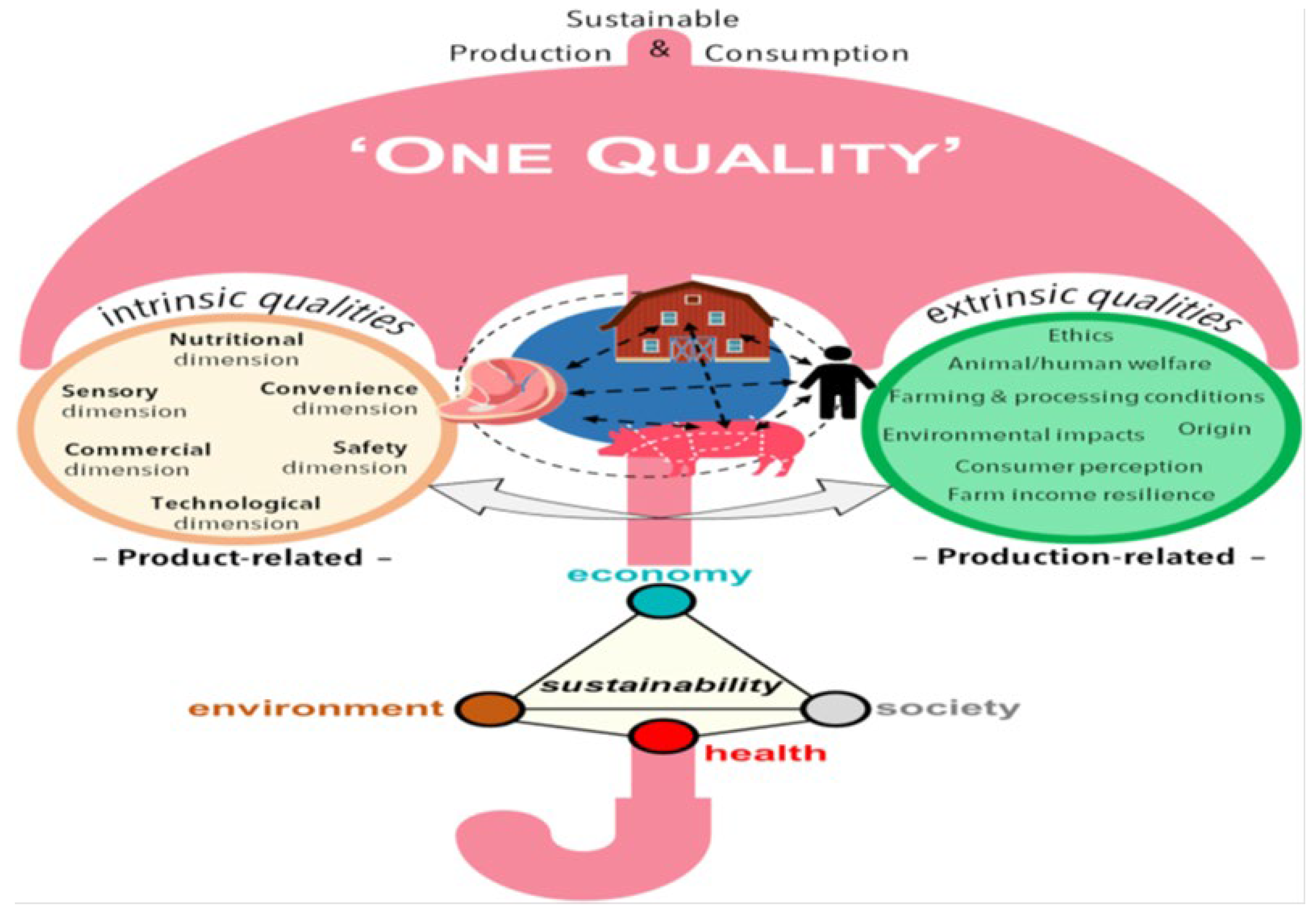
Figure 2.
Pyramid for prioritisation of food surplus, by-products and food waste (FW) prevention [116].
Figure 2.
Pyramid for prioritisation of food surplus, by-products and food waste (FW) prevention [116].
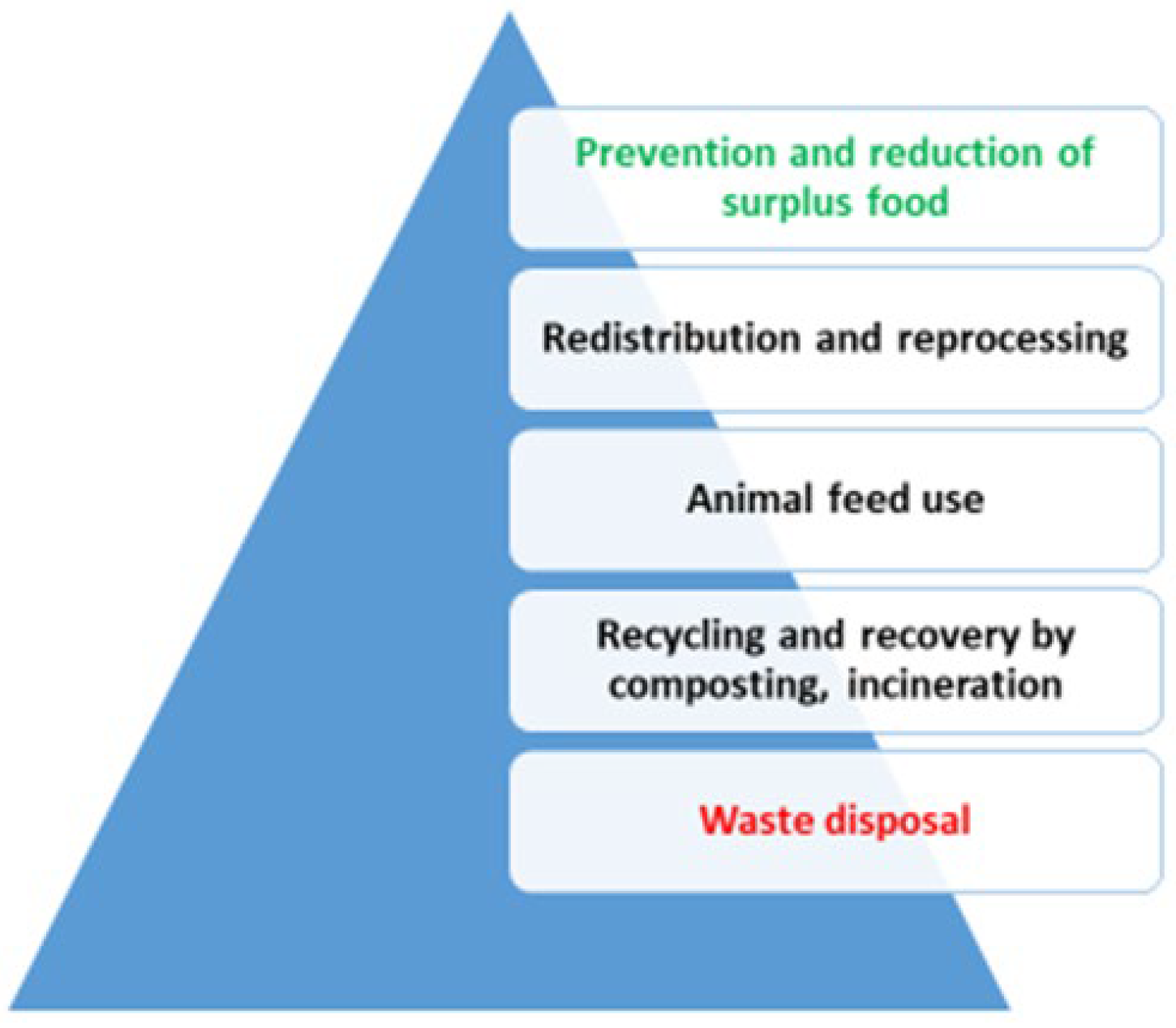

Table 1.
Prevention of Meat Losses and Waste during the Production Stage (Estimated Loss Reduction %).
Table 1.
Prevention of Meat Losses and Waste during the Production Stage (Estimated Loss Reduction %).
| Preventive Actions | Application | Impact |
Estimated Losses Prevented (%) |
Recent Sources |
| Animal Health Management | Use of veterinary services, vaccinations, early disease detection, and improved hygiene. | Reduces mortality and condemned carcasses. | 3–7% (on-farm mortality reduction) | FAO, 2023; Buzdugan et al., 2021 [83] |
| Improved Animal Handling & Transport | Trained staff, reduced transport time, gentle handling. | Reduces bruising, DFD/PSE meat, transport deaths. | 1–3% of total carcass value preserved | Dongo et al., 2022; [84] Fuseini, 2022 [85] |
| Precision Livestock Farming (PLF) | Smart sensors, real-time health/feed monitoring. | Prevents early losses, improves efficiency. | 2–5% mortality and inefficiency reduction | Nath, 2023[86]; Papakonstantinou, 2021 [87] |
| Genetic Improvement and Breeding | Selecting traits, feed conversion, disease resistance. | Better survivability and consistency in meat production. | 1–3% long-term yield increase | Li, 2024[57]; FAO, 2023a[88] |
| Feed Quality and Management | Balanced rations, proper storage, clean water access. | Reduces digestive issues, improves weight gain. | 2–4% mortality reduction & improved conversion | FAO, 2023b [89]; Caccialanza et al., 2023[90] |
| Slaughterhouse Scheduling and Coordination | Aligning transport and slaughter capacity. | Minimizes animal stress and holding-time losses. | Up to 2% reduction in pre-slaughter losses | Davis et al., 2022 [91] |
| On-farm Mortality Surveillance and Reduction Programs | Continuous tracking and timely interventions. | Reduces unexplained livestock deaths. | 1–2.5% fewer unproductive deaths | Kappes et al., 2023[92]; García-Machado et al., 2024[93] |
| Training and Capacity Building for Producers | Educating on welfare, nutrition, handling. | Improves productivity and reduces error-related losses. | Variable, but up to 5% efficiency improvement | FAO, 2022[94]; Gbaguidi, 2022[95] |
| Environmental Control in Animal Housing | Ventilation, cooling, proper bedding and lighting. | Prevents heat/cold stress and death. | 1–4% loss reduction in hot/cold climates | Collins & Smith, 2022;[96] Prates, 2025[97] |
| Use of Mobile/Decentralized Slaughter Units | Slaughter units near farms to reduce transport. | Lowers stress, mortality, and meat defects. | Up to 2% pre-slaughter loss reduction | Schrobback et al., 2023;[98] FAO, 2022[94] |
Table 2.
Studies of sustainable meat packaging.
| Study Focus | Packaging Type | Key Findings | Reference |
| Assessment of greenhouse gas emissions in food–packaging systems | General comparison across food categories | Packaging contributes about 5% of total GHG emissions in the food–packaging system; values vary depending on the product group | [37,150] |
| Environmental contribution of meat vs. plant-based food packaging | Overwrap and MAP packaging in meat products | Meat packaging accounts for ~2% of total GHG emissions, while fruits and vegetables packaging accounts for ~10% | [151,152,153,154,155] |
| Optimization of packaging for high-impact foods | Meat and meat products | Effective packaging plays a key role in reducing food waste and overall environmental impact | [153,154,156,157,158] |
| Role of packaging in reducing food waste | Various optimized packaging systems | Well-designed and, where needed, increased packaging use helps minimize total environmental impact | [159,160] |
| Comparative LCA of different meat packaging systems | Overwrap, high-oxygen MAP, and vacuum skin packaging | Vacuum skin packaging showed better environmental performance and extended shelf life compared to traditional methods | [161] |
Disclaimer/Publisher’s Note: The statements, opinions and data contained in all publications are solely those of the individual author(s) and contributor(s) and not of MDPI and/or the editor(s). MDPI and/or the editor(s) disclaim responsibility for any injury to people or property resulting from any ideas, methods, instructions or products referred to in the content. |
© 2025 by the authors. Licensee MDPI, Basel, Switzerland. This article is an open access article distributed under the terms and conditions of the Creative Commons Attribution (CC BY) license (http://creativecommons.org/licenses/by/4.0/).
Copyright: This open access article is published under a Creative Commons CC BY 4.0 license, which permit the free download, distribution, and reuse, provided that the author and preprint are cited in any reuse.


