
Preprint
Article

This version is not peer-reviewed.

Parenting Young Children: The Interplay Between Mothers’ and Fathers’ Daily Behaviors and Well-Being

Submitted:

24 November 2025

Posted:

26 November 2025

You are already at the latest version

Abstract

This study highlights the distinction between parents’ general well-being and parental well-being. It reveals the interplay between daily parenting behaviors and individual well-being, as well as the impact of one partner’s (particularly fathers’) behaviors on the other partner’s well-being. These findings contribute to broadening the discourse on parenting by shifting the focus beyond child outcomes to include the role of parenting behaviors in promoting parents’ own well-being and family resilience. This study examined mothers’ and fathers’ daily parenting behaviors through the lens of the Parenting Pentagon Model, which identifies five constructs of beneficial parenting: Partnership, Leadership, Expressions of Love, Encouraging Independence, and Adherence to Rules. The study explored the associations between parenting behaviors and parents’ general and parental well-being. Participants included 170 Israeli parents (85 couples) with young children aged six months to nine years. They completed self-report measures assessing parenting behaviors, well-being, and sociodemographic factors (e.g., family size, education, employment). Analyses explored how sociodemographic factors and parenting behaviors explain parental and general well-being within and across genders. Parents reported frequent beneficial parenting behaviors, with Love being the most prevalent. Mothers reported significantly higher Love behaviors, while other constructs showed no gender differences. Parenting behaviors strongly predicted well-being: Mothers’ behaviors explained 48% (parental) and 44% (general) of their well-being, while fathers’ behaviors explained 35% and 23%, respectively. Fathers’ behaviors more strongly predicted mothers’ well-being (24% parental, 22% general) than mothers’ behaviors predicted fathers’ well-being (13% parental, 11% general). Socio-demographic factors (family size and employment) were associated with maternal well-being.

Keywords: 
;  ;  ;  ;  ;  ;  ;  ;  
Subject: 
Social Sciences  -   Education

1. Introduction

Parenting is a dynamic and challenging process that fosters growth and development in parents as they navigate their roles [1]. Researchers examining beneficial parenting often highlight behaviors such as sensitivity and responsiveness to children’s needs, ex- pressions of affection and acceptance, and discipline [2,3,4]. However, parenting studies frequently focus on one parent and specific aspects of their behaviors, such as mothers’ angry behavior [5] or mothers’ persistence [6].
The present research examines parental behaviors using the Parenting Pentagon Model (PPM) [7]. This model adopts a holistic view of the family unit, emphasizing five key constructs of beneficial parenting behaviors: a partnership between the primary caregivers, humanistic leadership, expressions of love, encouragement for independence, and adherence to rules. While research has extensively explored the impact of parental behaviors on a child’s development and well-being [8], relatively few studies have focused on how these behaviors affect the parents’ well-being [9]. This study investigates the behaviors of fathers and mothers of young children and their general and parental well-being. Furthermore, it evaluates how the parental behaviors of one parent affect the general and parental well- being of the other beyond socio-demographic factors such as gender, age, education, working hours, and number of children in the family.
Parenthood is a long-term journey requiring substantial commitment, responsibility, and emotional investment (Bornstein, 2015). Parents often regard raising their children as one of their most fulfilling commitments in life [9]. Contemporary parenting demands that parents balance sensitivity to their child’s needs with fostering self-expression and societal competence [10]. Baumrind’s seminal work on parenting (1966) highlights the importance of balancing’ responsiveness and control. Studies across cultures and age groups underscore the benefits of this balance [11,12,13]. The Parenting Pentagon Model (PPM) expands upon Baumrind’s framework by incorporating five constructs that capture the complexity of family dynamics [14,15]. The PPM [7] captures five constructs of parenting behaviors: Partnership between the primary caregivers, Leadership, Expressions of Love, Encouraging Independence, and Adherence to Rules. Studies conducted across diverse cultural contexts demonstrate that these constructs collectively contribute to children’s welfare and overall development, offering cohesive parenting behaviors within a family.

Partnership

Partnership refers to levels of collaboration and communication between the child’s primary caregivers. It encompasses mutual support in parenting tasks, shared responsibilities, and consistent involvement in the child’s life. Studies indicate that children of parents who show a high degree of partnership are more independent, exhibit stronger self-regulation, and develop superior social skills [16,17,18].

Leadership

Leadership involves parents’ behaviors that determine the family’s values and lifestyle, organize and monitor daily activities, gather information, take responsibility for decisions concerning their children, and serve as role models. Effective leadership fosters children’s autonomy and academic achievements by creating an environment that aligns with clear family goals [19,20,21].

Expressions of Love

Expressions of Love encompass parents’ affectionate behaviors, sensitivity, empathic behaviors, shared time with the child, and elimination of criticism. These behaviors strengthen the child’s attachment to their caregivers and are associated with positive emotions, self-regulation, and cooperative behavior [8,22,23].

Encouraging Independence

Encouraging Independence highlights the role of parents in fostering independence and encouraging age-appropriate autonomy. Supporting young children’s autonomy encourages the development of executive functions, emotional regulation, prosocial behaviors, and academic achievement [24,25,26].

Adherence to Rules

Adherence to Rules emphasizes establishing and maintaining consistent household norms. Parents’ adherence to rules has been positively linked to children’s health and the development of normative behaviors [27,28,29].

Focus on Early Childhood

This study focuses on parenting behaviors during the early years of development (birth to eight), a period for foundational learning and societal adaptation. During these years, parents are responsible for all aspects of children’s well-being, including physical and emotional security, health, and opportunities for play and education (United Nations Committee on the Rights of the Child, 2005).
The PPM has been validated in cross-cultural studies [7,30], illustrating its relevance to diverse parenting contexts. Also, PPM behaviors have been linked to children’s behaviors, such as better sleep patterns (Even Tov, 2020) and balanced digital uses [15].

Links to Parental Well-Being

Parenting is tied to parents’ sense of happiness and life meaning [31]. While extensive research has examined the links between parenting and child outcomes, fewer studies have explored how parenting behaviors are related to parents’ well-being [9]. Existing studies often focus on socio-demographic factors such as age, income, and work hours [32]. Also, much of the research has predominantly focused on mothers [18,33] with limited attention to fathers. This study seeks to address these gaps by examining how beneficial parenting behaviors contribute to the well-being of both parents within the family unit, as well as the way that the behavior of one parent relates to the well-being of the other parent.

General and Parental Well-Being

Research indicates that dimensions such as general life satisfaction, satisfaction with the role of parenting, and satisfaction with marital life are interconnected but conceptually distinct. Each is influenced differently by factors such as stressful life events and social support. Therefore, it is important to differentiate between general and parental well- being [34].
General well-being is frequently equated with happiness, emotional balance, and
overall contentment [35,36]. It focuses on people’s assessment of their joy and life satisfaction, as well as an equilibrium between positive and negative emotions in their lives [37,38]. A higher level of subjective general well-being is associated with fewer mental health symptoms, stronger relationships, and improved functional health [39,40].
Parental well-being refers to subjective well-being reflected in the parenting experience. Researchers evaluate parental well-being through the parents’ report of ‘positive’ emotions like joy and a sense of meaning and ‘negative’ emotions such as sadness, stress, and fatigue [18,41,42]. Since parents make decisions that affect all family members, parental well-being plays a significant role in the family dynamic and well-being, which predicts the child’s well-being and resilience [8].
For example, [35], who analyzed data from 1500 households in Ireland, found that the quality of parents’ relationships with their children is affected by (1) both parents’ psychological well-being with a particular emphasis on the mother’s emotional state, (2) the quality of the relationship between the spouses; (3) the mother’s emotional state; and (4) father’s approach to the traditional versus egalitarian parenting roles, where more liberal attitudes towards role division correlated with a better parent-child relationship.
Studies examining the relationship between parenting and parental well-being have often focused on comparative analyses. These include differences between parents and non-parents [43], shifts in well-being during the transition to parenthood [44], and parents’ well-being when they are with their children compared to when they are engaged in other activities without their children [45].
The current study investigates parental well-being through the lens of daily parenting behaviors. It explores how mothers’ and fathers’ everyday behaviors relate to their own well-being and examines the extent to which one parent’s behaviors relate to the other parent’s well-being.

Parental Behavior and Parental Well-Being

Evidence supports the existence of positive relationships between the behaviors included in the Parenting Pentagon Model (PPM) and parental well-being. However, the present study examined these constructs collectively.
For example, studies have shown that a sense of parental competence and effectiveness, which is part of the Leadership construct, is positively associated with the emotional well-being of parents of adolescents [46]. Similarly, parent-child shared time (part of Love behavior in the PPM) has been linked to parents’ overall well-being [47]. Also, an association was found between the level of independence parents encourage in their 10 to 15-year-old children (captured within the Independence construct in the PPM) and parents’ self-identity, self-image, and life satisfaction [48]. Furthermore, parents of asthmatic children (aged 9) who maintain consistent family routines (reflecting the Adherence to Rule’s construct) report a greater sense of parental competence [49].
Socio-demographic Measures Related to Parenting and Parents’ Wellbeing Gender. Parents’ gender significantly influences the relationship between parenting behaviors and well-being [9]. In the present study, we examined the interplay between the parenting behaviors of mothers and fathers and their respective general and parental well-being.
Although researchers indicate an increase in fathers’ involvement, persistent gender disparities in housework and childcare responsibilities remain evident across much of the Western world [50,51]. The rise in women’s employment has not substantially lessened their caregiving burden, with many mothers continuing to shoulder most family care responsibilities [52,53]. Despite these differences, evidence suggests alignment in parenting styles between fathers and mothers [54].
Regarding well-being, fatherhood is often linked with positive outcomes, as fathers report higher life satisfaction and happiness and lower depression rates compared to childless men [18]. Findings regarding mothers are more complex: while some studies indicate higher well-being among mothers compared to non-mothers (e.g., Nomaguchi & Milkie, 2023), others report no differences or even lower well-being for mothers [55,56].
Age. The link between parental age and well-being remains unresolved. Some studies indicated that younger first-time parents experience more depressive symptoms (McMahon et al., 2011, before the age of 30; Mirowsky & Ross, 2002, before the age of 23). How- ever, contrasting findings suggest no relationship between maternal age and depression symptoms in the first two years postpartum [57].
Number of children. Research on the impact of family size on well-being offers somewhat mixed results. Some studies report that life satisfaction decreases as the number of children increases [58], while others find that the first child increases life satisfaction, but additional children have no further effect [59].
Parents’ education. Higher parental education levels appear to influence well-being in nuanced ways. Studies suggest that highly educated parents derive fewer subjective benefits from parenting [9]. [60] found that more educated parents report more stress and fatigue than less educated parents.
Working hours. Parents’ subjective well-being is closely tied to labor market participation and work arrangements [59]. Studies that examined the work-family interface indicate that career experience can enrich parenting roles [61,62]. However, parents who experience high levels of conflict between home and work are at greater risk of fatigue and burnout [63].
In conclusion, parenting is a meaningful life role that combines satisfaction with challenges. In contemporary society, parenting has become increasingly complex, practically and ideologically. All of these may affect parental behaviors and well-being, both within their role as parents and in their lives in general.

Research Aims

The study examined the daily parenting practices of fathers and mothers of young children through the lens of the PPM. The study has three goals:
(1)
To describe and compare the daily parenting behaviors of mothers and fathers as defined by the PPM and assess their parental and general well-being.
(2)
To explore the relationship between mothers’ and fathers’ parenting behaviors and their respective levels of parental and general well-being, controlling for demographic factors (parents’ education, parents’ age, number of weekly working hours, and number of children in the family).
(3)
To examine the associations between mothers’ parenting behaviors and fathers’ parental and general well-being, and vice versa, between fathers’ parenting behaviors and mothers’ parental and general well-being.
Some of our questions lack a foundation in previous research; hence, we formulated them as open-ended questions. However, based on the literature, we hypothesized the following:

Parenting Behaviors of Mothers and Fathers

  • Both mothers and fathers will exhibit more Love and Partnership behaviors com- pared to Rules and Independence behaviors.
  • Positive correlations will be observed among the five PPM constructs, indicating that parents who demonstrate a high level of parental behavior in one construct are likely to show high levels of behavior in the other.
  • Within families, positive correlations will be found between the parenting behavior of fathers and mothers.
  • Parents’ well-being
  • Fathers will report higher levels of general and parental well-being than mothers. Parental daily behaviors and well-being:
  • Mothers’ and fathers’ beneficial parenting behavior will positively correlate with their general well-being, even while controlling for demographic factors.
  • Fathers’ beneficial parenting behavior, according to the PPM, will positively predict mothers’ general well-being, and vice versa, beyond demographic factors

2. Materials and Methods Participants

The participants included 170 Israeli parents (85 couples – mothers and fathers). The families had two to four children, with 54.10% having two children, 38.8% having three children, and 7.1% having four children. The children’s age range was six months to nine years.
The parents’ ages ranged from 25 to 47 years (M = 35.46, SD = 4.61) for the mothers and 30 to 54 years for the fathers (M = 38.17, SD = 5.08). Mothers’ education varied: 21.20% had secondary education, 10.60% held a professional diploma, 28.20% had a bachelor’s degree (BA), 37.60% had a master’s degree (MA), and 2.4% held a Ph.D. Fathers’ education levels were as follows: 24.7% had secondary education, 12.9% held a professional diploma, 36.5% had a BA, 20.2% had an MA, and 4.7% held a Ph.D. Average weekly working hours were 33.43 (SD = 14.50) for mothers and 46.83 (SD = 7.47) for fathers.

Measurements

Parental Behaviors Questionnaire. Each of the parents completed a self-report questionnaire that included 74 items characterizing daily parenting behaviors according to each of the five constructs of the PPM. Parents were requested to report the frequency of their behaviors on a typical week on a scale of (1) = never to (6) = always. The items referred to each of the constructs:
Partnership—14 items described parents’ daily collaboration behaviors, such as “I support my partner in their reactions to our child” or “My partner and I discuss issues relating to our parenting.”
Leadership – 18 items described daily behaviors that emphasize the parents’ role as the family leaders who organize family life and model desired behaviors. For example: ‘I behave according to goals I have for raising my child’ or “I plan my parenting behaviors. For example, I prepare for toilet training, weaning off a pacifier, and transitioning from preschool – I gather information, seek advice, etc.”
Love—18 items described daily physical (e.g., I hug my child) and verbal expressions of love, sensitivity, and empathy towards the child, for example: “I do small actions that will make my child happy (e.g., preparing food that he/she loves, buying him/her little things).”
Independence— 10 items describe encouraging the child to perform tasks that match his age and abilities independently, for example: “When my child asks me for help, I first suggest that he tries on his/her own” or “I encourage my child to be independent in his/her day-to-day activities (e.g., dress, shower, eat, brush teeth on their own).”
Rules—14 items described parents’ daily adherence to home rules and routines, such as: “When my child does not follow the rules, I make sure that there is a consequence (e.g., if my child refuses to take a shower, he/she doesn’t get to watch television)” or “I remind my child the rules of the house.”
The average score across each construct’s items constituted the construct’s score.
Higher scores indicated more beneficial parenting behaviors.
The questionnaire was developed by two child development researchers and three couple and family therapists. It drew upon existing questionnaires that assess key aspects of parenting (e.g., joint parenting, parental warmth, positive parenting, and parental authority). The reliability of the questionnaire was tested in a pilot study with 40 parents (20 mothers and 20 fathers) and was high (Partnership - 14 items, α = .87; Leadership- 18 items, α = .87; Love- 18 items, α = .87; Independence- 11 items, α = .77; and Rules - 14 items, α = .83). We used M plus to conduct a Confirmatory Factor Analysis (CFA), which confirmed the questionnaire’s overall fit. The items were positively loaded onto the various constructs they aim to measure (α>.30), except for one item from the construct of independence, which was removed after the pilot study (reducing the original 11 statements to 10 in this research questionnaire).
Reliabilities for the present study were Partnership: Cronbach’s α = .93 (mothers), α = .87 (fathers); Leadership: α = .88 (mothers), α = .83 (fathers); Love: α = .89 (mothers), α = .88 (fathers); Independence: α = .77 (mothers), α = .78 (fathers); Rules: α = .84 (mothers), α = .82 (fathers).
A shorter version of the questionnaire has been used with parents from diverse cultural contexts, including American, Bulgarian, Israeli Arabs, Israeli-Jewish, and Spanish populations (Alon et al., 2025; Aram et al., 2022; Karabanov Meoded et al., 2021; Montesino et al., 2021) [7,14,30].
Parental well-being questionnaire . A self-report questionnaire that includes 21 items
that assess positive feelings towards parenting (e.g., “I feel joy from my parenting,” “the children give me satisfaction and pleasure,”) and negative feelings towards parenting (e.g., “I am frustrated with my function as a mother,” “I feel overwhelmed by the amount of demands of being a father”). Parents rated the extent of their agreement with each statement on a 6-point scale (1=never to 6=always). To ensure consistency, scores for items related to negative feelings were reversed, so higher scores indicated fewer negative feelings toward parenting. Consequently, a higher overall score reflected higher parental well-being.
The questionnaire was constructed specifically for this study, drawing on existing instruments that address various elements of parental well-being, including well-being and optimality, parental joy, satisfaction with parenting, parenting stress, parenting burden, parental behavior, parental partnership, parental authority, and positive parenting.
The reliability of the questionnaire was demonstrated in the pilot study with 40 parents (α = .94). In the current study, reliability was high, with Emotional-positive reliabilities for mothers, α = .95, and .92 for fathers, and Emotional-negative reliabilities of α = .89 for mothers and α = .86 for fathers.
General well-being questionnaire [64]. We used the Hebrew version of the Mental
Health Inventory (MHI) questionnaire [65]. This instrument includes 21 items designed to assess parents’ perceptions of their well-being over the past month, focusing on positive feelings about life (e.g., “How happy or satisfied were you with your personal life?”, “In what part of the time did you feel loved and desired?”) and negative feelings (In what part of the time did you feel sad?). Parents rated each item on a 6-point scale (1=never to 6=always). To ensure consistency, scores for items related to negative feelings were reversed, so higher scores indicated fewer negative feelings toward parenting. The average score across all items was calculated to represent overall general well-being. The questionnaire’s reliability was high, with Positive Reliabilities of α =.91 for mothers and .89 for fathers and Emotional-negative reliabilities of α = .90 for mothers and .83 for fathers.
Demographic questionnaire. The questionnaire includes 14 items capturing key
family-related information. Participants were asked about the number of children in the family, the parents’ age, level of education, and weekly working hours for each parent, among other details.

Procedure

The ethics committee of Tel Aviv University approved the study protocol. Participants were recruited using a snowball sampling method. The researcher visited participants’ homes, where each parent completed the questionnaires individually in her presence. Parents were instructed to complete the questionnaires independently, without consulting one another. To protect anonymity, no identifying information (e.g., names or addresses) was collected. Each pair of completed questionnaires was sealed in a plain white envelope to ensure confidentiality. The envelopes were subsequently shuffled and opened only at the university.
The study included 85 heterosexual couples, of whom 20 participated in the initial pilot study. Based on findings from the pilot, two additions were made to the final version of the questionnaire: a demographic item regarding the number of working hours and the General Well-Being Questionnaire. As a result, data for these two variables were available for 65 couples only.

Data Analysis

We first describe mothers’ and fathers’ daily parenting behaviors based on the PPM and their parental and general well-being. Using t-tests for dependent variables, we compared mothers’ and fathers’ parenting behaviors and well-being measures. Via two- way analyses of variance (GLM with repeated measures), we examined the differences in the implementations of the five PPM constructs between mothers and fathers. Pearson correlations were used to analyze the relations among the five PPM constructs and parental well-being measures for mothers and fathers.
Next, we examined the correlations between the family background measures (number of children, fathers’ and mothers’ ages, education level, and weekly working hours) and parental and general well-being of mothers and fathers. Finally, we conducted a series of hierarchical regression analyses to predict mothers’ and fathers’ parental and general well-being based on the family’s background measures and daily parenting behaviors (PPM constructs).

3. Results

The results provide insights into mothers’ and fathers’ daily parenting behaviors, their well-being, and the relationships between these factors. Key findings highlight gender- specific differences and the impact of background measures and beneficial parenting behaviors on parental well-being.

Descriptive Statistics

Mothers’ and fathers’ daily parenting behaviors resents parents’ daily parenting behaviors according to the PPM and their well-being.
It also displays comparisons between the mothers and the fathers on each variable.
*p < .05; **p < .01
1Possible range 1-6; 2N=65 mothers and 65 fathers
demonstrates that fathers and mothers reported a relatively high application of the five PPM constructs. The highest averages were observed in Love behaviors, with mothers scoring M = 4.86 and fathers scoring M = 4.70. These scores, close to five (“very often”), indicate that mothers and fathers frequently expressed love toward their children through touch, hugs, empathy, and shared parent-child time. T-tests for dependent samples revealed significant differences between fathers and mothers only in the Love construct, where mothers report significantly higher Love behaviors than fathers. Additionally, moderate correlations were found across the PPM constructs between the parents (r = .27 to .65), suggesting that the more one parent engaged in beneficial parenting behavior, the more the other parent did as well.
Table 1. Description of parents’ report of their parenting behaviors (PPM) and their well-being, along with comparisons between mothers and fathers (N = 85).
Mothers Fathers
Range M (SD) Range M (SD) t-test r
The PPM1
Partnership 1.43-5.79 4.48 (0.83) 3.23-5.86 4.58 (0.66) -1.43 .65***
Leadership 3.11-5.67 4.54 (0.55) 3.22-5.78 4.52 (0.51) 0.36 .54***
Love 2.82-5.88 4.86 (0.57) 3.06-5.71 4.70 (0.57) 2.38** .44***
Independence 3.36-5.55 4.28 (0.48) 2.45-5.27 4.23 (0.53) 0.80 .27**
Rules 2.43-5.50 4.27 (0.60) 3.36-5.64 4.30 (0.52) -0.29 .49***
Parental well-being
Positive feelings 2.90-6.00 4.92 (0.79) 3.00-6.00 4.88 (0.70) 0.38 .41***
Negative feelings 1.00-5.09 2.74 (0.82) 1.00-4.45 2.51 (0.71) 2.32* .31**
General well-being1,2
Positive feelings 2.36-5.91 4.15 (0.83) 2.36-5.55 4.24 (0.68) -0.80 .38**
Negative feelings 1.33-4.80 2.82 (0.76) 1.50-3.89 2.48 (0.61) 3.07** .21
An Analysis of Variance (ANOVA) revealed significant differences among the five PPM constructs for both mothers F(4,336)=27.65, p<.001, eta2=.25 and fathers F(4,85)=25.65***,p<.001, eta2 =.23. For mothers, Bonferroni post hoc tests revealed that Love was significantly higher than all other constructs. Leadership did not differ significantly from Partnership but was significantly higher than Independence and Rules. For fathers, Love was also significantly higher than Leadership, Independence, and Rules. Leadership did not differ significantly from Partnership but was significantly higher than Independence and Rules. The Partner- ship construct did not differ from Leadership and Love but was significantly higher than Independence Rules (see Figure 1).
  • Figure 1. Description of parents’ report of their implementation of the five PPM constructs.
To examine the relationship between the constructs, we conducted Pearson correlation analyses. The results revealed medium-to-high correlations among the constructs for mothers (r = .31, p < .01 to r = .79, p < .001) and = fathers (r = .44, p < .001 to r = .81, p < .001), indicating a consistent interrelation across parenting behaviors.

Mothers’ and Fathers’ Parental and General Well-Being

shows that both mothers and fathers reported positive feelings related to their parenting (parental well-being) and their overall life satisfaction (general well-being). Negative feelings, however, were reported less frequently. T-tests for dependent samples identified significant differences in negative feelings, with mothers reporting significantly more negative feelings about their parenting (t = 2.32, p < .05) and general life (t = 3.07, p < .01) compared to fathers.
Significant correlations were observed between mothers’ and fathers’ feelings towards parenting—both positive and negative—as well as their general positive feelings. These correlations suggest that the emotional experiences of one parent may reflect on the other, underscoring the interconnected nature of parental well-being within families.

Associations Between Parenting Behaviors (PPM) and Parents’ Parental and General Well-Being: Relations within Gender

Based on the medium to high positive correlations among the parenting measures for mothers and fathers, we created an integrated beneficial parenting variable for mothers and fathers as the mean score of the five PPM constructs to address multicollinearity within the regressions.
Reliabilities among items were α = .94 and α = .91 for the mothers and the fathers, respectively. Similarly, we created an integrated parental well-being variable (reliabilities among items were α = .95 and α = .93 for the mothers and the fathers, respectively) and an integrated general well-being variable (reliabilities among items were α = .86 and α = .87 for the mothers and the fathers, respectively.
Before analyzing the impact of parenting behaviors (PPM) on well-being, we con- ducted Pearson correlation analyses between the family background measures (number of children, fathers’ and mothers’ age, education, and weekly working hours) and the mothers’ and fathers’ well-being measures (parental and general). Significant correlations emerged, indicating that the number of children in the family was negatively correlated with mothers’ parental well-being (r = -.29, p < .01). Additionally, mothers’ weekly working hours were positively correlated with mothers’ parental (r = .24, p < .05) and general well-being (r = .20, p = .05), as well as with fathers’ parental well-being (r = .22, p < .05). Mothers with more children reported lower parental well-being, while mothers who worked more hours reported higher parental and general well-being. Fathers whose spouses worked more hours reported higher parental well-being.
To explore how mothers’ and fathers’ parenting behaviors predict their parental and general well-being beyond these family’s background measures. We conducted four two- step hierarchical regression analyses. In the first step, we included the family background measures that significantly correlated with parents’ well-being (number of children in the family and mothers’ working hours per week). In the second step, we added the integrated beneficial parenting variable (PPM) to the model (see Table 3)
Table 2. Hierarchical regression analyses predicting mothers’ and fathers’ parental and general well-being from the background measures and their parenting behaviors (PPM) (N = 170).

Mothers (n = 85) Fathers (n = 85)
Parental
well-being
(β)
General
well-being
(β)
Parental
well-being
(β)
Parental
well-being
(β)
Step 1
No. of children -.22^ .09 -.12 -.14
M. Working hours .22^ .22 .21 .01
Step 2
No. of children -.21* .09 -.11 -.13
M. Working hours .07 .07 .09 -.07
Parenting (PPM) .71*** .68*** .61*** .49***
R2 ΔR2 R2 ΔR2 R2 ΔR2
Step 1
Background measures .10* .05 .06 .02
Step 2
Parenting (PPM) .58 .48** .49 .44*** .41 .35*** .25 .23***
^ p .07. *p < .05. **p < .01. ***p < .001.
Table 3 revealed that beyond the background measures, mothers’ beneficial parenting behaviors (PPM) accounted for a significant difference in their parental well-being (48%) and general well-being (44%). The more the mother reported beneficial parenting, the higher her parental and general well-being. Likewise, fathers’ parenting behaviors significantly predicted their parental well-being (35%) and general well-being (23%). The
more the father reported beneficial parenting, the higher his parental and general well- being.

The Relationship Between Parenting Behaviors (PPM) and Parents’ Parental and General Well-Being Beyond the Family Background Measures: Relations Across Genders
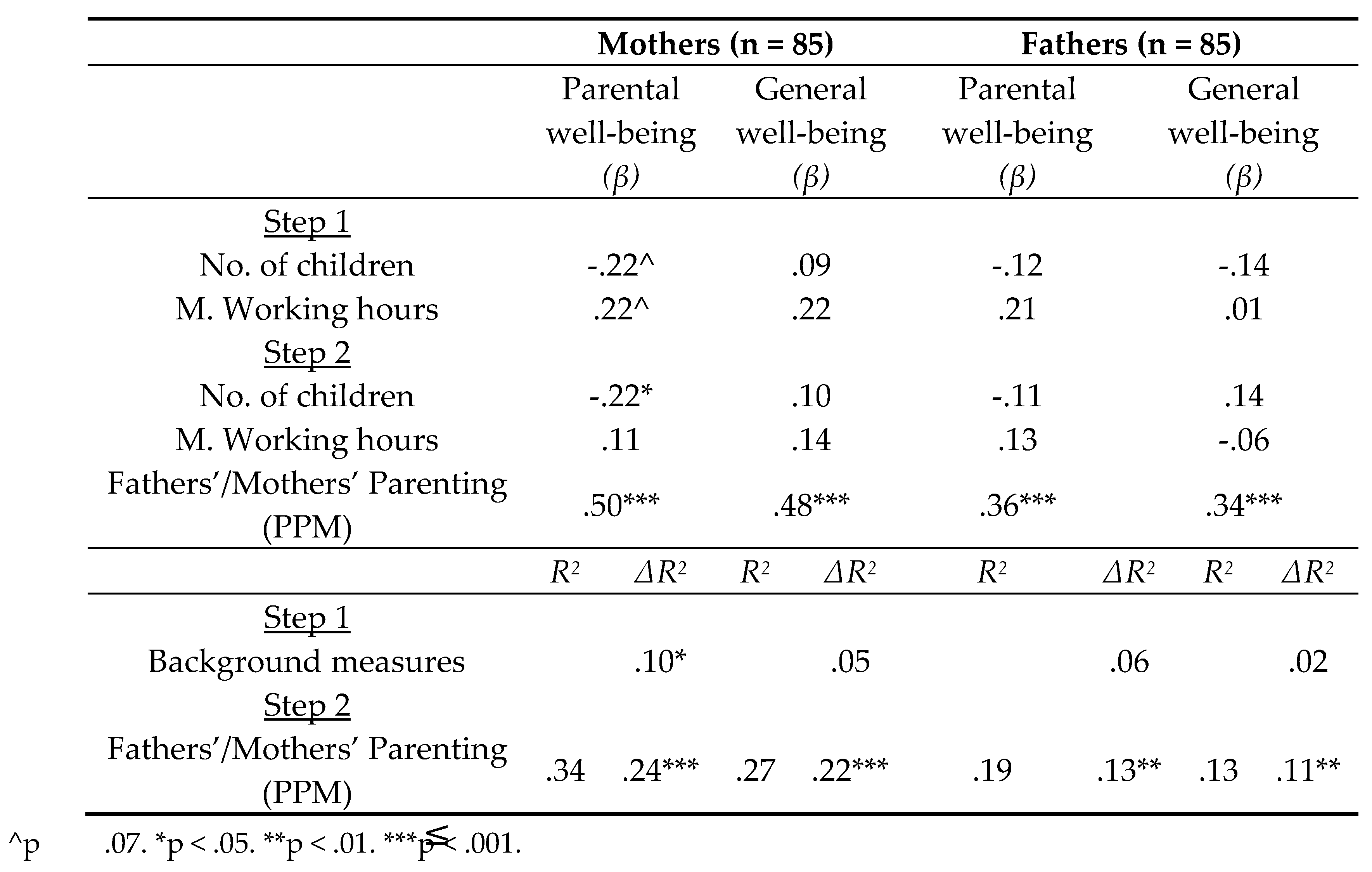
We investigated how mothers’ parental behaviors predict fathers’ parental and general well-being beyond the family’s background measures. Likewise, we explored how fathers’ parental behaviors predict mothers’ parental and general well-being beyond the family’s background measures. We conducted four two-step hierarchical regression analyses, ex- plaining the mothers’ and the fathers’ well-being measures. In the first step, we included the family background measures related to parents’ well-being (number of children in the family and mothers’ working hours per week). In the second step, we incorporated fathers’ parenting behaviors (PPM) to assess mothers’ well-being and mothers’ parenting behaviors (PPM) to assess fathers’ well-being (see Table 4).
Table 3. 4. Hierarchical regression analyses predicting mothers’ well-being from the fathers’ parenting behaviors and fathers’ well-being from the mothers’ parenting behaviors (N = 170).
Preprints 186606 i001
Table 4 indicates that, beyond the background c measures, fathers’ parenting behaviors predicted a significant proportion of the variance in mothers’ parental well-being (24%) and general well-being (22%). The more the father reported beneficial parenting, the higher his partner’s parental and general well-being. Likewise, beyond the background measures, mothers’ beneficial parenting behaviors (PPM) predicted a significant proportion of the variance in fathers’ parental well-being (13%) and general well-being (11%). The more the mother reported beneficial parenting, the higher her partner’s parental and general well-being.

4. Discussion

This research presents a comprehensive view of parenting behaviors exhibited by both mothers and fathers of young children through the “Parenting Pentagon Model (PPM) lens. It also studies the relationships between these behaviors and the parents’ parental and general well-being beyond family background measures (number of children, fathers’ and mothers’ age, education, and weekly working hours). The research addressed three key aims: (1) to describe the beneficial parenting behaviors of both mothers and fathers according to the PPM; (2) to examine the associations between these behaviors and parents’ general and parental well-being while accounting for socio-demographic factors; and (3) to assess the extent to which one parent’s behaviors explains the well-being of the other parent.

Parenting Behaviors and Gender Differences

The PPM focuses on five beneficial parenting behaviors: Partnership between the primary caregivers, Leadership, Love, encouragement of Independence, and adherence to Rules. Consistent with prior studies, both mothers and fathers reported frequent engagement in beneficial parenting behaviors across the five PPM constructs. Love emerged as the most frequently applied construct, followed by Leadership and Partnership, while behaviors of Rules and Independence were less reported. Love behaviors toward young children are significant parental behaviors across cultures [66]. A study using the PPM to study the parenting of young children in Bulgaria, Israel, Spain, and the USA during the first COVID-19 lockdown indicated that parents across cultures report more loving behaviors than behaviors of the other constructs [7].
Significant gender differences were observed in the Love construct, with mothers reporting higher expressions of love than fathers. This difference likely reflects mothers’ greater involvement in daily caregiving of young children, heightened emotional sensitivity, and societal norms that reinforce caregiving as central to maternal identity [67,68]. Neuroimaging studies indicate that while mothers of babies exhibit increased activation in limbic regions associated with emotional processing, fathers engage in more social- cognitive areas of the brain [69]. Although increasingly involved, fathers often conceptualize their role differently, focusing on indirect support, such as contributing to family stability through leadership and partnership roles [70].
Interestingly, no significant gender differences were found in the other PPM constructs (Leadership, Partnership, Rules, and Independence), suggesting a growing alignment in parenting styles within families. Fathers increasingly see themselves as partners in raising young children, engaging in shared caregiving roles, and supporting their partners (Gervais et al., 2020; Jeong et al., 2018; Hodkinson & Brooks, 2020; Van Holland et al., 2018) [71,72]. The relatively low emphasis on the Rules and Independence constructs aligns with research indicating that Israeli parents often take a flexible approach to rules, prioritizing emotional closeness over fostering autonomy [73]. Parents tend to give freedom to children [74] and provide few restrictions [75]. While this parenting style promotes strong emotional bonds, it may also contribute to increased dependency on parents, particularly for mothers, who often shoulder emotional and organizational caregiving responsibilities. Positive correlations between mothers’ and fathers’ behaviors across all PPM con- structs underscore the interdependence of parenting roles. These findings support the concept of “spillover,” where one parent’s behaviors influence the other’s attitudes and actions [76]. Similarities in parenting styles may result from shared values, reciprocal learning, and intentional co-regulation of parenting strategies [77,78].
These dynamics reinforce parenting as a collaborative process that benefits from shared goals and mutual influence
The PPM focuses on five beneficial parenting behaviors: Partnership between the primary caregivers, Leadership, Love, encouragement of Independence, and adherence to Rules. Consistent with prior studies, both mothers and fathers reported frequent engagement in beneficial parenting behaviors across the five PPM constructs. Love emerged as the most frequently applied construct, followed by Leadership and Partnership, while behaviors of Rules and Independence were less reported. Love behaviors toward young children are significant parental behaviors across cultures [66]. A study using the PPM to study the parenting of young children in Bulgaria, Israel, Spain, and the USA during the first COVID-19 lockdown indicated that parents across cultures report more loving behaviors than behaviors of the other constructs [7].
Significant gender differences were observed in the Love construct, with mothers reporting higher expressions of love than fathers. This difference likely reflects mothers’ greater involvement in daily caregiving of young children, heightened emotional sensitivity, and societal norms that reinforce caregiving as central to maternal identity [67,68]. Neuroimaging studies indicate that while mothers of babies exhibit increased activation in limbic regions associated with emotional processing, fathers engage in more social- cognitive areas of the brain [69]. Although increasingly involved, fathers often conceptualize their role differently, focusing on indirect support, such as contributing to family stability through leadership and partnership roles [70].
Interestingly, no significant gender differences were found in the other PPM constructs (Leadership, Partnership, Rules, and Independence), suggesting a growing alignment in parenting styles within families. Fathers increasingly see themselves as partners in raising young children, engaging in shared caregiving roles, and supporting their partners (Gervais et al., 2020; Jeong et al., 2018; Hodkinson & Brooks, 2020; Van Holland et al., 2018) [71,72]. The relatively low emphasis on the Rules and Independence constructs aligns with research indicating that Israeli parents often take a flexible approach to rules, prioritizing emotional closeness over fostering autonomy [73]. Parents tend to give freedom to children [74] and provide few restrictions [75]. While this parenting style promotes strong emotional bonds, it may also contribute to increased dependency on parents, particularly for mothers, who often shoulder emotional and organizational caregiving responsibilities. Positive correlations between mothers’ and fathers’ behaviors across all PPM con- structs underscore the interdependence of parenting roles. These findings support the concept of “spillover,” where one parent’s behaviors influence the other’s attitudes and actions [76]. Similarities in parenting styles may result from shared values, reciprocal learning, and intentional co-regulation of parenting strategies [77,78]. These dynamics reinforce parenting as a collaborative process that benefits from shared goals and mutual influence.

Parents’ Well-Being (General and Parental) and Its Predictors

Both mothers and fathers reported relatively high levels of general and parental well- being, reflecting the general positive attitude of parents towards life [79]. However, mothers reported more negative emotions than fathers in both general and parental well-being. These results are in line with findings that mothers face greater role strain due to the dual burden of work and caregiving [41,80] and report less happiness and subjective well-being than fathers [81]. In addition to caregiving demands, mothers frequently shoulder family life’s emotional and organizational responsibilities, contributing to heightened stress levels and emotional fatigue.
Socio-demographic factors further contextualize these findings. Larger family sizes were negatively correlated with maternal well-being, likely due to increased caregiving demands that amplify stress and reduce opportunities for self-care. Vu and Phung’s (2021) study supports our results, showing that the number of children in the family relates negatively to parents’ physical and psychological health. Conversely, mothers’ working hours were positively associated with well-being, suggesting that employment may provide financial security and a sense of fulfillment that buffers against caregiving strain [82]. This finding challenges traditional assumptions that employment inherently conflicts with parenting responsibilities, highlighting the nuanced role of work-family dynamics in shaping parental well-being.
Beneficial parenting behaviors were strongly associated with both parental and general well-being. Mothers’ behaviors accounted for 48% and 44% of the variance in their parental and general well-being, respectively. Fathers’ behaviors explained 35% and 23% of the variance in their corresponding measures. These results emphasize the critical role of positive parenting daily practices, not only in promoting child outcomes but also in supporting parents’ emotional health. Partnership, Leadership, love, encouraging Independence, and adherence to Rules foster a sense of competence and fulfillment that enhances parental well-being. These findings are supported by [83], showing that flow experiences during interactions with children relate to parents’ well-being.

Cross-Gender Influences

The findings reveal a significant cross-gender impact of parenting behaviors on well- being, emphasizing the interdependent nature of parenting roles. The family functions as a dynamic and interdependent system where one parent’s behaviors influence the other’s emotional and psychological state [76]. Mothers’ beneficial parenting behaviors significantly predicted fathers’ well-being, explaining 13% of parental and 11% of general well-being. Conversely, fathers’ behaviors had an even more pronounced effect on mothers, accounting for 24% of parental and 22% of general well-being.
This asymmetry highlights the critical role fathers play in supporting mothers’ well- being. Fathers’ engagement in positive parenting practices—such as emotional sensitivity to the children, active involvement in the children’s lives, and shared caregiving decisions and practices —can alleviate the caregiving burden that often falls disproportionately on mothers. Mothers, who frequently face societal pressures to adopt intensive parenting practices, benefit significantly from fathers’ partnership and leadership behaviors, which promote family harmony and reduce maternal stress [68,84].

Practical Implications

The present study’s findings have significant implications for parenting interventions and family counseling. They present a holistic view of parenting (The PPM) that refers to daily behaviors rather than ideas, beliefs, etc. This view can help parents be aware of their parenting strengths and weaknesses and get help improving them. Programs promoting shared parenting across the five constructs can help reduce caregiving burdens, enhance the well-being of both parents, and create better family dynamics. Seeing the global importance of beneficial parenting, programs that relate to the five constructs can address different cultural norms, such as collectivist versus individualist parenting styles.
Policymakers should consider designing comprehensive parental education programs that relate to different aspects of beneficial parenting, align with developmental stages in children’s growth, and integrate them into existing educational frameworks. These programs would provide targeted support at transition points, such as when children begin preschool or enter primary school. The programs can operate as a continuous learning journey, offering initial training sessions followed by structured refresher courses corresponding to developmental milestones. This systematic approach can ensure that parents receive timely, relevant guidance that enhances their ability to support their children’s and their own well-being.

Limitations and Future Directions

This study’s participants were recruited through a snowball sampling method, and the data relied on self-reports, which may be subject to social desirability bias. Future research could recruit participants using sampling strategies that better reflect the broader population. In addition, incorporating observational methods or reports from external informants could help validate and strengthen the findings. Additionally, while this study focused on parents of young children in Israel, cross-cultural studies are needed to generalize the findings to other populations.

5. Conclusion

This study advances our understanding of the interplay between beneficial parenting behaviors and parents’ well-being within the family system. The PPM framework provided a comprehensive lens for examining these dynamics, revealing both similarities and differences in how mothers and fathers engage in parenting. These findings underscore the importance of parenting practices and their profound impact on family well-being.

References

  1. Demick, J. (2019). Stages of parental development. In M. H. Bornstein (Ed.), Handbook of parenting: Volume 3 Being and becoming a parent (pp. 556–595). Third edition. Routledge.
  2. Ferguson, E. D., Hagaman, J., Grice, J. W., & Peng, K. (2006). From leadership to parenthood: The applicability of leadership styles to parenting styles. Group Dynamics: Theory, Research, and Practice, 10(1), 43–55. [CrossRef]
  3. Grych, J. (2012). Marital relationships and parenting. In M. H. Bornstein (Ed.), Handbook of parenting: Volume 4 social conditions and applied parenting. Psychology Press.
  4. Margolin, G., Gordis, E. B., & John, R. S. (2001). Coparenting: A link between marital conflict and parenting in two-parent families.Journal of Family Psychology, 15(1), 3–21. [CrossRef]
  5. Chung, K. S., & Kim, M. (2017). Anger factors impacting on life satisfaction of mothers with young children in Korea: Does mother’s age matter? Personality and Individual Differences, 104, 190–194. [CrossRef]
  6. Imafuku, M., Saito, A., Hosokawa, K., Okanoya, K., & Hosoda, C. (2021). Importance of maternal persistence in young children’s persistence. Frontiers in Psychology, 12, 726583. [CrossRef]
  7. Aram, D., Asaf, M., Karabanov, G. M., Ziv, M., Sonnenschein, S., Stites, M., & López-Escribano, C. (2022). Beneficial parenting according to the “Parenting Pentagon Model”: A cross-cultural study during a pandemic. In The impact of COVID-19 on early childhood education and care: International perspectives, challenges, and responses (pp. 215–236). Springer International Publishing.Newland, L. Family well-being, parenting, and child well-being: Pathways to healthy adjustment. Clinical Psychologist 2015, 19, 3–14.
  8. Nelson, S. K., Kushlev, K., & Lyubomirsky, S. (2014). The pains and pleasures of parenting: When, why, and how is parenthood associated with more or less well-being?Psychological Bulletin, 140(3), 846–895. [CrossRef]
  9. Faircloth, C., & Murray, M. (2015). Parenting: Kinship, Expertise, and Anxiety. Journal of Family Issues, 36(9), 1115-1129. [CrossRef]
  10. Cipriano, E. A., & Stifter, C. A. (2010). Predicting preschool effortful control from toddler temperament and parenting behavior. Journal of Applied Developmental Psychology, 31(3), 221–230. [CrossRef]
  11. Gorman-Smith, D., Tolan, P. H., Henry, D. B., & Florsheim, P. (2000). Patterns of family functioning and adolescent outcomes among urban African American and Mexican American families. Journal of Family Psychology, 14(3), 436–457. [CrossRef]
  12. Mandara, J., Murray, C. B., Telesford, J. M., Varner, F. A., & Richman, S. B. (2012). Observed gender differences in African American mother-child relationships and child behavior. Family Relations, 61(1), 129–141. [CrossRef]
  13. Alon, R., Bergman Deitcher, D., & Aram, D. (2025). The roles of parental identity and behaviors in Ultra-Orthodox Israelis’ parental well-being. Journal of Child and Family Studies. [CrossRef]
  14. Meoded Karabanov, G., Asaf, M., Ziv, M., & Aram, D. (2021). Parental behaviors and involvement in children’s digital activities among Israeli Jewish and Arab families during the COVID-19 lockdown. Early Education and Development, 32(11), 1–22. [CrossRef]
  15. Karreman, A., van Tuijl, C., van Aken, M. A., & Deković, M. (2008). Parenting, coparenting, and effortful control in preschoolers. Journal of Family Psychology, 22(1), 30-40. [CrossRef]
  16. Newland, L. I., Coyl, D. D., & Freeman, H. (2008). Predicting preschoolers’ attachment security from fathers’ involvement, internal working models, and use of social support. Early Child Development and Care, 178(7–8), 785–801. [CrossRef]
  17. Ashton-James, C. E., Kushlev, K., & Dunn, E. W. (2013). Parents reap what they sow: Child-centrism and parental well-being. Social Psychological and Personality Science, 4(6), 635–642. [CrossRef]
  18. Bellon, E. O., Ngware, M. W., & Admassu, K. (2017). The Role of Parental Leadership in Academic Performance: A Case of Pupils in the Free Primary Education Program in Kenya. Education and Urban Society, 49(1), 110-130. [CrossRef]
  19. Yu, S., Assor, A., & Liu, X. (2015). Perception of parents as demonstrating the inherent merit of their values: Relations with self-congruence and subjective well-being. International Journal of Psychology, 50(1), 70–74. [CrossRef]
  20. Yuliani, F., Awalya, A., & Suminar, T. (2019). Influences of parenting style on independence and confidence characteristics of pre-school children. Journal of Primary Education, 8(7), 83–87. https://journal.unnes.ac.id/sju/index.php/jpe/article/view/34279.
  21. Perra, O., Paine, A. L., & Hay, D. F. (2021). Continuity and change in anger and aggressiveness from infancy to childhood: The protective effects of positive parenting. Development and Psychopathology, 33(3), 937–956. [CrossRef]
  22. Shin, E., Smith, C. L., Devine, D., Day, K. L., & Dunsmore, J. C. (2023). Predicting preschool children’s self-regulation from positive emotion: The moderating role of parental positive emotion socialization. Early Childhood Research Quarterly, 62, 53–63. [CrossRef]
  23. Carlson, S. M. (2023). Let me choose: The role of choice in the development of executive function skills. Current Directions in Psychological Science, 32(3), 220–227. [CrossRef]
  24. Guay, F., Ratelle, C. F., Duchesne, S., & Dubois, P. (2018). Mothers’ and fathers’ autonomy-supportive and controlling behaviors: An analysis of interparental contributions. Parenting, 18(1), 45–65. [CrossRef]
  25. Laurin, J. C., & Joussemet, M. (2017). Parental autonomy-supportive practices and toddlers’ rule internalization: A prospective observational study. Motivation and Emotion, 41, 562-575. [CrossRef]
  26. LeCuyer, E. A. (2014). African American and European American mothers’ limit-setting with their 36-month-old children. Journal of Child and Family Studies, 23(2), 275-284. [CrossRef]
  27. Mueller, C., Zeinstra, G. G., Forde, C. G., & Jager, G. (2024). Sweet rules: Parental restriction linked to lower free sugar and higher fruit intake in 4–7-year-old children. Food Quality and Preference, 113, 105071. [CrossRef]
  28. Roskam, I., Stievenart, M., Meunier, J. C., & Noël, M. P. (2014). The development of children’s inhibition: Does parenting matter? Journal of Experimental Child Psychology, 122, 166–182. [CrossRef]
  29. Montesino, S. V., Martín, M. C. M., & Canales, I. S. (2021). Parenting practices of Spanish families during the coronavirus lockdown period. Electronic Journal of Research in Educational Psychology, 19(54), 325–350.
  30. Herbst, C.M.; Ifcher, J. The increasing happiness of US parents. Review of Economics of the Household 2016, 14, 529–551.
  31. Nomaguchi, K.; Milkie, M.A. Parenthood and well-being: A decade in review. Journal of Marriage and Family 2020, 82, 198–223.
  32. Sirois, F.M.; Bögels, S.; Emerson, L.M. Self-compassion improves parental well-being in response to challenging parenting events. The Journal of Psychology 2019, 153, 327–341.
  33. Luhmann, M.; Hawkley, L.C.; Eid, M.; Cacioppo, J.T. Time frames and the distinction between affective and cognitive well-being. Journal of Research in Personality 2012, 46, 431–441.
  34. Mckeown, K.; Pratschke, J.; Haase, T. Family well-being: What makes a difference? Study based on a representative sample of parents and children in Ireland. The Céifin Centre 2003.
  35. Pirralha, A.; Dobewall, H. Does becoming a parent change the meaning of happiness and life satisfaction? Evidence from the European Social Survey. Proceedings of the 48th Scientific Meeting of the Italian Statistical Society SIS2016 Proceedings 2016.
  36. Buecker, S.; Luhmann, M.; Haehner, P.; Bühler, J.L.; Dapp, L.C.; Luciano, E.C.; Orth, U. The development of subjective well-being across the life span: A meta-analytic review of longitudinal studies. Psychological Bulletin 2023, 149, 418–446.
  37. Diener, E.; Suh, E.M.; Lucas, R.E.; Smith, H.L. Subjective well-being: Three decades of progress. Psychological Bulletin 1999, 125, 276–302.
  38. Mathentamo, Q.; Lawana, N.; Hlafa, B. Interrelationship between subjective wellbeing and health. BMC Public Health 2024, 24, 2213–2213.
  39. Suldo, S.M.; Shaffer, E.J. Looking Beyond Psychopathology: The Dual-Factor Model of Mental Health in Youth. School Psychology Review 2008, 37, 52–68.
  40. Musick, K.; Meier, A.; Flood, S. How parents fare: Mothers’ and fathers’ subjective well-being in time with children. American Sociological Review 2016, 81, 1069–1095.
  41. Voydanoff, P.; Donnelly, B.W. Parents’ risk and protective factors as predictors of parental well-being and behavior. Journal of Marriage and the Family 1998, 60, 344–355.
  42. Aassve, A.; Goisis, A.; Sironi, M. Happiness and Childbearing Across Europe. Social Indicators Research 2012, 108, 65–86.
  43. Ballas, D.; Dorling, D. Measuring the impact of major life events upon happiness. International Journal of Epidemiology 2007, 36, 1244–1252.
  44. Impett, E.A.; English, T.; John, O.P. Women’s emotions during interactions with their grown children in later adulthood: The moderating role of attachment avoidance. Social Psychological and Personality Science 2011, 2, 42–50.
  45. Bandura, A.; Caprara, G.V.; Barbaranelli, C.; Regalia, C.; Scabini, E. Impact of family efficacy beliefs on quality of family functioning and satisfaction with family life. Applied Psychology 2011, 60, 421–448.
  46. Offer, S. Time with children and employed parents’ emotional well-being. Social Science Research 2014, 47, 192–203.
  47. Silverberg, S.B.; Steinberg, L. Adolescent autonomy, parent-adolescent conflict, and parental well-being. Journal of Youth and Adolescence 1987, 16, 293–312.
  48. Fiese, B.H.; Wamboldt, F.S.; Anbar, R.D. Family asthma management routines: Connections to medical adherence and quality of life. The Journal of Pediatrics 2005, 146, 171–176.
  49. Edlund, J.; Öun, I. Equal sharing or not at all caring? Ideals about fathers’ family involvement and the prevalence of the second half of the gender revolution in 27 societies. Journal of Family Studies 2023, 29, 2576–2599.
  50. Lee, Y. Undoing gender’ or selection effects?: fathers’ uptake of leave and involvement in housework and childcare in South Korea. Journal of Family Studies 2023, 29, 2430–2458.
  51. Craig, L.; Mullan, K. How Mothers and Fathers Share Childcare: A Cross-National Time-Use Comparison. American Sociological Review 2011, 76, 834–861.
  52. Sayer, L.C.; Gornick, J.C. Cross-national variation in the influence of employment hours on child care time. European Sociological Review 2011, 28, 421–442.
  53. Rinaldi, C.M.; Howe, N., 2012.
  54. Giallo, R.; Rose, N.; Vittorino, R. Fatigue, wellbeing and parenting in mothers of infants and toddlers with sleep problems. Journal of Reproductive and Infant Psychology 2011, 29, 236–249.
  55. Orchard, E.R.; Ward, P.G.; Egan, G.F.; Jamadar, S.D. Evidence of subjective, but not objective, cognitive deficit in new mothers at 1-year postpartum. Journal of Women’s Health 2022, 31, 1087–1096.
  56. Mcmahon, C.A.; Boivin, J.; Gibson, F.L.; Hammarberg, K.; Wynter, K.; Fisher, J.R. Older maternal age and major depressive episodes in the first two years after birth: Findings from the Parental Age and Transition to Parenthood Australia (PATPA) study. Journal of Affective Disorders 2015, 175, 454–462.
  57. Stutzer, A.; Frey, B.S. Does marriage make people happy, or do happy people get married? The Journal of Socio-Economics 2006, 35, 326–347.
  58. Pollmann-Schult, M. Parenthood and life satisfaction: Why don’t children make people happy? Journal of Marriage and Family 2014, 76, 319–336.
  59. Augustine, J.M.; Negraia, D.V. Exploring education differences in the parental well-being gap. Sociological Inquiry 2024, 94, 66–87.
  60. Greenhaus, J.H.; Powell, G.N. When work and family are allies: A theory of work-family enrichment. Academy of Management Review 2006, 31, 72–92.
  61. Wayne, J.H.; Grzywacz, J.G.; Carlson, D.S.; Kacmar, K.M. Work-family facilitation: A theoretical explanation and model of primary antecedents and consequences. Human Resource Management Review 2007, 17, 63–76.
  62. Paulin, M.; Lachance-Grzela, M.; Mcgee, S. Bringing work home or bringing family to work: Personal and relational consequences for working parents. Journal of Family and Economic Issues 2017, 38, 463–476.
  63. Veit, C.T.; Ware, J.E. The structure of psychological distress and well-being in general populations. Journal of Consulting and Clinical Psychology 1983, 51, 730–742.
  64. Florian, V.; Drori, Y. Mental Health Inventory (MHI): Psychometric characteristics and normative data regarding the Israeli population. Psychology 1990, pp. 26–35.
  65. Deater-Deckard, K.; Lansford, J.E.; Malone, P.S.; Alampay, L.P.; Sorbring, E.; Bacchini, D.; Bombi, A.S.; Bornstein, M.H.; Chang, L.; Giunta, L.D.; et al. The association between parental warmth and control in thirteen cultural groups. Journal of Family Psychology 2011, 25, 790–794.
  66. Lin, X.; Xie, S.; Li, H. Chinese mothers’ and fathers’ involvement in toddler play activity: Type variations and gender differences. Early Child Development and Care 2018, 189, 179–190.
  67. Milkie, M.A.; Bianchi, S.M.; Mattingly, M.J.; Robinson, J.P. Gendered division of childrearing: Ideals, realities, and the relationship to parental well-being. Sex Roles 2002, 47, 21–38.
  68. Rajhans, P.; Goin-Kochel, R.P.; Strathearn, L.; Kim, S. It takes two! Exploring sex differences in parenting neurobiology and behaviour. Journal of neuroendocrinology 2019, 31.
  69. Lewis, C.; Lamb, M.E. Fathers’ influences on children’s development: The evidence from two-parent families. European journal of psychology of education 2003, 18, 211–228.
  70. Gervais, C.; Lavoie, K.; Garneau, J.; Dubeau, D. Conceptions and experiences of paternal involvement among Quebec fathers: A dual parental experience. Journal of Family Issues 2020, 41, 2329–2351.
  71. Hodkinson, P.; Brooks, R. Interchangeable parents? The roles and identities of primary and equal carer fathers of young children. Current Sociology 2020, 68, 780–797.
  72. Sotzker-Cohen, R. 15 notes on Israeli parenting. Panim: A Journal for Culture, Society and Education 2002, 19, 112–117.
  73. Dwairy, M.; Achoui, M. Introduction to three cross-regional research studies on parenting styles, individuation, and mental health in Arab societies. Journal of Cross-Cultural Psychology 2006, 37, 221–229.
  74. Chen, P.; Aram, D.; Tannenbaum, M. Forums for parents of young children: Parents’ online conversations in Israel and France. International Journal About Parents in Education 2014, 8, 11–25.
  75. Repetti, R.L.; Reynolds, B.M.; Sears, M.S. Families under the microscope: Repeated sampling of perceptions, experiences, biology, and behavior. Journal of Marriage and Family 2015, 77, 126–146.
  76. Schofield, T.J.; Conger, R.D.; Martin, M.J.; Stockdale, G.D.; Conger, K.J.; Widaman, K.F. Reciprocity in parenting of adolescents within the context of marital negativity. Developmental Psychology 2009, 45, 1708–1722.
  77. Steenhoff, T.; Tharner, A.; Væver, M.S. Mothers’ and fathers’ observed interaction with preschoolers: Similarities and differences in parenting behavior in a well-resourced sample. Article e0221661 2019, 14.
  78. Helliwell, J.F.; Layard, R.; Sachs, J.D.; Neve, D.; 2024.
  79. Skreden, M.; Skari, H.; Malt, U.F.; Pripp, A.H.; Björk, M.D.; Faugli, A.; Emblem, R. Parenting stress and emotional well-being in mothers and fathers of preschool children. Scandinavian Journal of Public Health 2012, 40, 596–604.
  80. Nelson-Coffey, S.K.; Killingsworth, M.; Layous, K.; Cole, S.W.; Lyubomirsky, S. Parenthood is associated with greater well-being for fathers than mothers. Personality and Social Psychology Bulletin 2019, 45, 1378–1390.
  81. Bird, L.; Sacker, A.; Mcmunn, A. Relationship satisfaction and concordance in attitudes to maternal employment in British couples with young children. Journal of Social and Personal Relationships 2020, 37, 3066–3088.
  82. Shoshani, A.; Yaari, S. Parental flow and positive emotions: Optimal experiences in parent-child interactions and parents’ well-being. Journal of Happiness Studies 2022, 23, 789–811.
  83. Kouros, C.D.; Papp, L.M.; Goeke-Morey, M.C.; Cummings, E.M. Spillover between marital quality and parent-child relationship quality: Parental depressive symptoms as moderators. Journal of Family Psychology 2014, 28, 315–325.
Disclaimer/Publisher’s Note: The statements, opinions and data contained in all publications are solely those of the individual author(s) and contributor(s) and not of MDPI and/or the editor(s). MDPI and/or the editor(s) disclaim responsibility for any injury to people or property resulting from any ideas, methods, instructions or products referred to in the content.
Copyright: This open access article is published under a Creative Commons CC BY 4.0 license, which permit the free download, distribution, and reuse, provided that the author and preprint are cited in any reuse.
Prerpints.org logo

Preprints.org is a free preprint server supported by MDPI in Basel, Switzerland.

Subscribe

Disclaimer

Terms of Use

Privacy Policy

Privacy Settings

© 2025 MDPI (Basel, Switzerland) unless otherwise stated
