Preprint
Article

This version is not peer-reviewed.

Enhancing Plastic Soils with Biosolid Ashes for Sustainable Geotechnical Applications: Experimental Insights from Tarija

Submitted:

25 November 2025

Posted:

26 November 2025

You are already at the latest version

Abstract

This study presents a sustainable and eco-friendly methodology to enhance the physico-mechanical properties of fine-grained soils through the incorporation of biosolid ashes (BA) derived from the San Blas Wastewater Treatment Plant in Tarija. Currently, this approach provides an alternative for the reuse of more than 3,500 tons of sludge per year, a figure expected to increase significantly with the planned operation of the plant on the left bank of the Río Guadalquivir. The methodology not only improves the mechanical performance of local silt-clay soils but also promotes the valorization of residual sludge, aligning with circular economic principles and reducing the environmental impacts associated with conventional waste disposal. The biosolids were subjected to controlled incineration at 900–1000 °C, generating ashes with a specific gravity of up to 2.52, which were then incorporated into soils at dosages ranging from 5% to 30%. Comprehensive laboratory testing included Atterberg limits, moisture content, specific gravity, modified Proctor tests for maximum and optimum dry density, consolidation, direct shear, and CBR tests on both natural soils and treated mixtures. Results demonstrated reductions in plasticity index of up to 9.5%, substantial increases in shear strength and bearing capacity, and compressibility reductions of up to 45%. CBR strength improved by more than 100% for mixtures containing 30% BA, with optimal performance observed at 10–15% BA content (average specific gravity 2.40). These findings confirm that biosolid ashes are an effective and environmentally responsible additive for geotechnical soil stabilization, offering a sustainable solution that simultaneously addresses construction requirements and promotes ecological waste management in Tarija.

Keywords: 
;  ;  ;  ;  

1. Introduction

By 2030, an estimated 2.1 billion additional people will be living in cities [1,2]. This growth increases the demand for wastewater treatment, a process in which sewage sludge is generated by removing suspended solids and converting soluble organic matter into bacterial biomass [2].
Bianchini et al. [3] describe sewage sludge (SS) as a mixture of organic and inorganic fractions whose composition is strongly influenced by the type of treatment and the origin of the influent. According to Gherghel et al. [4], SS can be classified into primary sludge, resulting from the sedimentation of suspended solids; secondary sludge, consisting of the excess biomass generated in biological processes; and tertiary sludge, produced in advanced treatments aimed at removing nutrients such as nitrogen and phosphorus.
Kelessidis and Stasinakis [5], as well as Bertanza et al. [6], point out that population growth and urban expansion in recent years have driven both the proliferation of wastewater treatment plants (WWTPs) and the significant increase in the generation of residual sludge.
Furthermore, Shehu et al. [7], Pérez-Elvira et al. [8], and Sever et al. [9] indicate that stricter effluent quality requirements in wastewater treatment plants not only increase sludge production but also deteriorate its characteristics. Like other types of waste, sewage sludges must be minimized, not only to comply with directives but also because of the cost of its management [10].
On the other hand, Collivignarilli et al. [10] point out that sludge minimization technologies are usually structured in three main approaches: (i) decrease in sludge production; (ii) reduction of its water content through dehydration processes; and (iii) decrease in the fraction of volatile solids through stabilization stages.
Residual activated sludge generated in wastewater treatment plants is considered problematic, as it can be a significant source of secondary pollution due to the presence of various contaminants. Therefore, the development of innovative and economically viable treatment methods is essential to ensure its safe and environmentally sustainable management [11].
Raheem et al. [11] describe various routes for the disposal, volume reduction, or energy recovery of sewage sludge, including anaerobic digestion, incineration, pyrolysis, gasification, and enhanced digestion processes assisted by fuel cells. However, Fuerhacker and Haile [12] point out that one of the most widespread and recommended alternatives remains the application of sewage sludge to soil. Nevertheless, this option faces growing concern globally due to the presence of organic contaminants and the debate surrounding the need for stricter regulations.
Nguyen et al. [13] states that reduced access to landfills, increased disposal costs, and the zero-waste concept are driving different approaches to sludge management and disposal. The principles of the Circular Economy, which promote regenerative design, waste reduction, and the continuous use of resources, are becoming increasingly important for water authorities.
Nguyen et al. [13] also points out that the analysis of the general properties of sludge and current disposal and sustainable management practices are alternatives that allow for reuse, recycling and recovery options with social, economic and environmental approaches.
Vouk et al. [14] proposes the reuse of sewage sludge or its treatment byproducts using ash. The incineration process of sewage sludge generates a special type of ash, the volume of which is three to five times smaller than that of stabilized and dewatered sludge.
In their research, Vouk et al. [14] proposes, for example, that the ash from wastewater sludge can be used in cement mortars, highlighting its significant potential for incorporation into the concrete industry.
According to Kumar et al. [15], biosolids are sewage sludge and are generated as a byproduct of municipal wastewater, sewage effluents, and wastewater treatment plants. Treatment plants generate a large quantity of biosolids. Biosolids can have various applications, such as biogas production, landfill, organic fertilization, soil amendment, and improving agricultural crop yields. However, Kumar et al. [15] points out that, due to their high content of heavy metals and microorganisms, their applications may be limited if pretreatment is not carried out.
In this same respect, Smith, S. [16] asserts that organic chemicals discharged in wastewater or those that enter by atmospheric deposition in paved areas concentrate in sewage sludge, with possible implications for the agricultural use of sludge as soil improvers.
According to Krüger et al. [17], sludge incineration degrades organic compounds almost completely but concentrates heavy metals and phosphorus. However, sewage sludge ash almost eliminates all the compounds that limit the use of biosolids.
Current options for biosolids management are diverse; however, sludge incineration is a promising technology. Incineration is attractive for both volume reduction and energy recovery. Emissions reported from biosolids incineration were compared with various regulations to identify challenges and future directions for biosolids incineration research [18].
Roy et al. [18] points out that most of the gaseous and metallic emissions generated during incineration were lower than those established by current regulations or could be offset by existing technologies.
Several researchers, such as Lin et al. [19], Arulrajah et al. [20,21], and Tastan et al. [22], point out that biosolids and ash are widely used in various engineering fields. However, stabilization of these materials is necessary due to the wide variation in their properties and the need to improve them to make them suitable for civil engineering applications.
Wanare et al. [23] analyzes the various uses of biosolids and their ash. They note that the water content of biosolids is usually less than 80%, although some studies have reported values exceeding 200%. The organic content can reach up to 28%. The maximum dry density varies between 7.5 and 8.5 g/cm³, and the optimum water content is between 50 and 76%, showing considerable variability. Therefore, it is necessary to apply appropriate stabilization methods to ensure optimal use in engineering.
Kumar et al. [15] notes that the application of sewage sludge is very productive for the yield of agricultural crops.
Franz, M. [24], states that sewage sludge incineration results in a high phosphorus content, ranging from 4% to 9%, and that approximately 90% of the phosphorus can be extracted from the sewage sludge ash to produce a suitable phosphate fertilizer. He also notes that approximately 37% of the sewage sludge produced is applied to agricultural land. Fytili et al. [25] indicate that other major uses include land reclamation and restoration (12%) and incineration (11%).
For their part, Lundin et al. [26] in their research concluded that two sludge management options, incineration and direct application to agricultural soil, however, these alternatives present economic and environmental restrictions, respectively.
The Environmental Protection Agency (EPA) [27,28] notes that sewage sludge can be processed using various methods to reduce pathogens. The most important methods are aerobic digestion, air drying, anaerobic digestion, composting, and lime stabilization. In the air-drying method, the sludge is dried for months or longer in sand drying beds or paved tanks.
Walker, J. [29], demonstrates that sewage sludge can be used for soil applications, and for this purpose, the wastewater treatment plant must transform it into biosolids. Liang et al. [30] and Tejada et al. [31], demonstrate that the application of biosolids increases the microbial biomass of the soil and some enzymatic activities, such as urease, alkaline phosphatase and β-glucosidase, linked to the C, N, P and S cycles of the soil.
Liang et al. [32] also propose that the incorporation of organic amendments into the soil stimulates dehydrogenase activity, since the added material may contain intracellular and extracellular enzymes, and may also stimulate microbial activity in the soil.
For their part, Tejada et al. [31] and Walker, J. & Bernal, M. [33] found that compost or sewage sludge were effective for the remediation of saline soil. Abdelbasset et al. [34] reports that the use of compost from municipal solid waste (13.3 g kg-1) and sewage sludge (26.6 g kg-1) significantly improves the physicochemical properties of the soil, especially the carbon and nitrogen content.
Donatello and Cheeseman [35] point out that Portland cement mainly contains calcium, silica, aluminum, and iron, elements that are also found in the ash of waste sludge. Husillos et al. [36] propose using this sludge in clinker production, taking advantage of its calorific value when dry.
Jamshidi et al. [37], Donatello, S. & Cheeseman, C. [35], Monzo et al. [38,39], Pan et al. [40], Cyr et al. [41] and Garces et al. [42], published that the partial substitution of Portland cement by biosolids ash influences the workability and strength of cement pastes, mortars or concrete. The considerable content of SiO₂ and Al₂O₃ in the residual sludge ash guarantees its use as a pozzolanic material [35].
Regarding concrete strength, Pan et al. [40], Paya et al. [43], and Tay et al. [44] show considerable differences. For example, replacing 20% of Portland cement with biosolids ash results in varying reductions in compressive strength.
In another investigation, Jamshidi et al. [37] states that replacing 10% of cement with biosolids ash causes an 8% reduction in compressive strength.
Kalogo and Monteith [45] propose using sewage sludge to generate and recover energy. Bachmann [46] highlights that dried sludge is a renewable source with a calorific value similar to lignite. Pöschl et al. [47] suggest converting biogas into biomethane for the natural gas grid. Halls [48] explains that anaerobic digestion stabilizes organic waste and produces biogas, composed of methane and carbon dioxide.
In the ceramic industry, the addition of residual sludge or its ash can increase porosity and reduce the density, thermal conductivity and mechanical strength of bricks [49]; however, its inclusion up to 10% allows maintaining the required strength Weng et al., [50]; Teixeira et al., [51], and biosolids ash can be used as an additive or substitute for clay or sand, Petavratzi & Wilson, [52]; Anderson & Skerratt, [53].
Al-Sharif, M. & Attom, M. [54], demonstrate that, by incorporating biosolids ash into soft and cohesive soils, these improve in stabilization by decreasing the soil plasticity index.
Lin et al. [55] and Chen [56] show that incorporating up to 7.5% biosolids ash increases the maximum dry density of the soil, reduces its swelling potential and improves its basic properties; in addition, stabilization with ash decreases the plasticity index, improving the bearing capacity of soft foundation soil.
Sato et al. [57] have concluded that biosolids ash can be used as filler in asphalt mixtures, but that the quality of the mixtures is slightly lower than that of conventional mixtures. Lim et al. [55] demonstrate that the reduction of the liquid limit is approximately 60-65% when a significant proportion of biosolids ash has been used.
In another investigation, Maghoolpilehrood et al. [58] attribute the increase to the porosity of the biosolids and ash mixture. Furthermore, they demonstrated a reduction in the void ratio from 1.34 to 1.01 and in the consolidation coefficient from 4.8 × 10² m²/year to 3.67 × 10² m²/year for biosolids treated with 5% cement, compared to untreated biosolids.
Disfani, et al. [59], establishes that the application of stabilized biosolids in road embankments is a sustainable solution in geotechnical engineering applications. The application of sewage sludge ash (SSA) and hydrated lime to stabilize soft cohesive subgrade soils, in proportions of 2%, 4%, 8%, and 16%, shows increases in unconfined compressive strength and shear strength with triaxial testing, improving from 30 to 50-70 kPa. [19].
Tests conducted on clay soils with biosolids ash mixed in proportions of 10%, 15%, and 20% of the soil dry weight showed an increase in the soil’s uniaxial compressive strength, while the bearing capacity decreased. A biosolids ash percentage of 10% provided the optimum CBR value [60].
Sewage sludge ash (SSA), obtained from the incineration of sewage sludge, differs significantly from fly ash/bottom ash in its chemical, physical, and cementing characteristics. Soil stabilization is essential due to the increase in construction. Several studies have demonstrated that sewage sludge ash possesses pozzolanic properties and has the potential to stabilize soft soils [61].
The combustion product of sewage sludge and its combination with sand meets all regulatory requirements for materials suitable for embankments. It reduces the breaking strength by 30% after immersion of the waste, resulting in relatively low California Bearing Ratio (CBR) values [62].
Demir, S and Cabalar, A. [63], carried out experiments on clays mixed with sewage sludge ash (SSA) in percentages of 10, 20 and 30%, demonstrating that the addition of SSA increased the estimated values of the liquid limit and the undrained shear strength of the mixtures.
Zang, et al. [64] and Han et al. [65] They point out that the mud is characterized by a high water content, low permeability, and low load-bearing capacity, which hinders its sustainable use in engineering. However, it is claimed that stabilizing and treating this mud significantly improves soil permeability and, with special methods, its shear strength can be increased, resulting in a much denser and more stable microstructure.
The Wastewater Treatment Plant (WWTP) on the right bank of the city of Tarija has been operating since 2021 and generates approximately 3,500 tons of sewage sludge annually [66], the only current reuse of which is in the agricultural sector. The planned construction of a second WWTP on the left bank will significantly increase sludge production, without a strategy yet in place for its sustainable management.
Recently, the Universidad Católica Boliviana, Tarija Campus, evaluated the use of biosolids ash as an additive in H17-type concrete [67]. Biosolids exhibit high variability in their properties—including high water and organic matter content—and therefore require prior stabilization. Incineration allows for the reduction of heavy metals and the production of ash with more stable characteristics [68].
This paper presents the results of an experimental investigation exploring the use of sewage sludge transformed into ash as a sustainable, eco-friendly, and environmentally responsible solution for geotechnical soil improvement. The study examines soil-biosolid ash mixtures in varying proportions and evaluates their impact on the physical and mechanical properties of the soil. Conducted in the city of Tarija, Bolivia, this research addresses the growing generation of sludge from wastewater treatment plants and proposes a sustainable and circular alternative for its management and valorization, contributing to ecological conservation and the development of environmentally sound engineering practices.

2. Materials and Methods

This section details the current characteristics of the waste sludge collection and handling process and describes the theory used for the experimental geotechnical process employed to determine the physical and mechanical properties of the soil in its natural state and those mixed with sludge ash.

2.1. Sampling and Study Areas

The research was conducted in the urban area of the municipality of Tarija, Bolivia. Five sampling areas of fine soil were selected, located in areas of urban expansion and characterized by the presence of plastic soils. The sludge used came from the San Blas Wastewater Treatment Plant. Figure 1 shows the soil sampling areas and the location of the treatment plant.

2.2. Residual Sludge

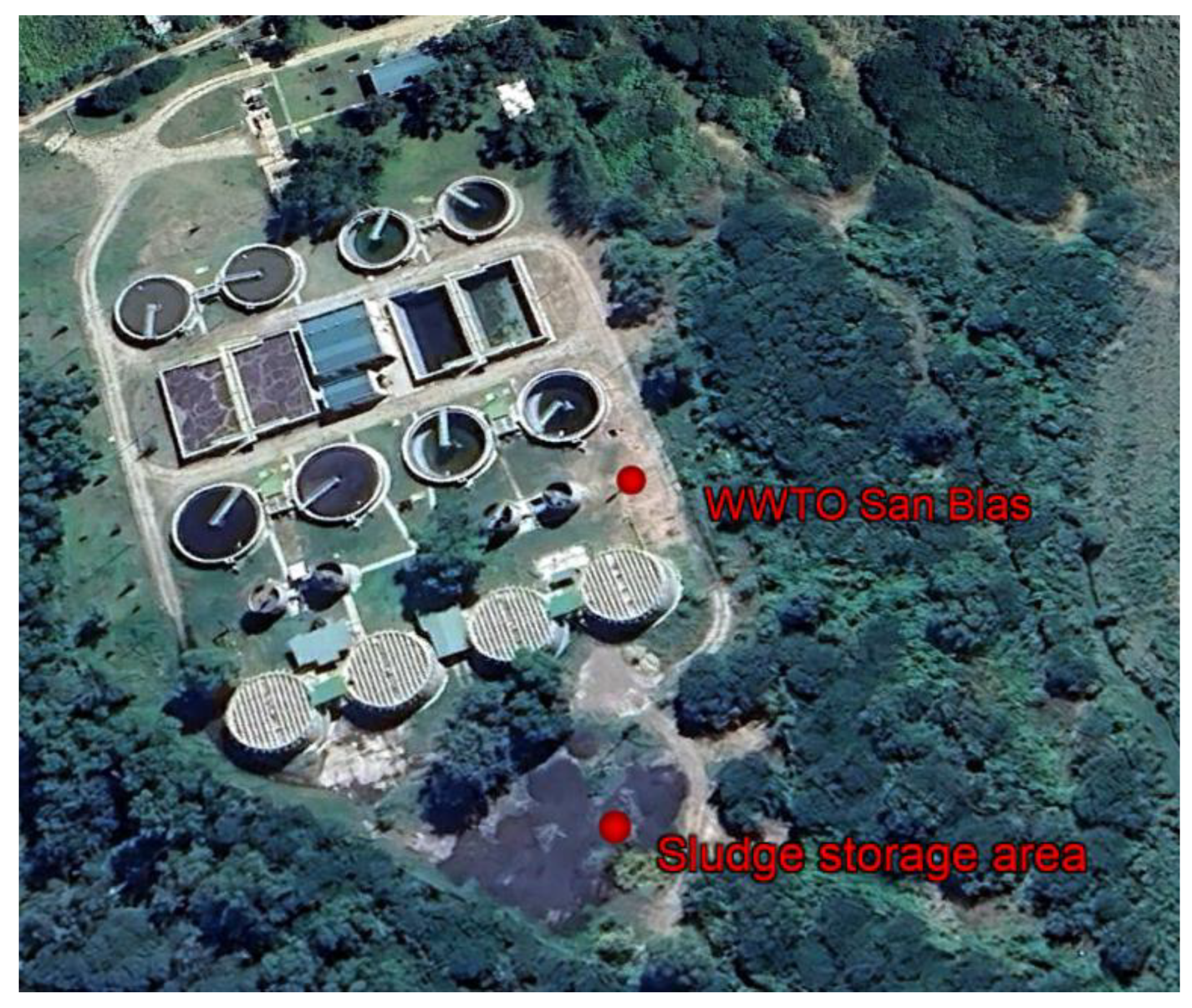
The wastewater treatment plant (WWTP) located on the right bank of the city of Tarija began operations in 2021 and currently generates approximately 3,500 tons per year of sewage sludge [66], its only known use being agricultural. The sludge generated during the treatment process is initially dried and stored in the open air, from where independent agricultural producers collect it for reuse as fertilizer. Figure 2 shows the storage area and the location of the sludge within WWTP.

2.3. Laboratory Test

Laboratory tests were conducted using soil samples from the study area. Sludge was obtained from the storage facilities of the San Blas Wastewater Treatment Plant (PTAR San Blas), Figure 2. Experiments were performed with conditioned soils, untreated biosolids, and previously generated biosolids ash.
The sludge samples were cured for 24 hours at room temperature (20–25 °C). Subsequently, they were oven-dried at 110 °C and finally calcined in a muffle furnace.
In detail, the trials and research included the following:
  • • Moisture content according to ASTM D2216-90 [69];
  • • Specific gravity, ASTM D854 [69];
  • • Ability to Work, Liquid Limit, and Plastic Limit according to ASTM D 4318 [69];
  • • Modified Proctor compaction tests according to ASTM D 1557-78 [69];
  • • Direct shear tests according to ASTM D 3080-90 [69];
  • • One-dimensional consolidation (primary) tests according to ASTM D2435 [70].
  • • CBR test according to ASTM D 1883-87 [69].

2.4. Methodology

The extracted sludge was incinerated in a Vector muffle furnace at temperatures between 800 and 900 °C. The resulting ash was ground to obtain fine particles of a size like that of the soil and characterized, determining physical properties such as specific gravity.
The soil samples were dried at room temperature and pulverized to homogenize them, following the procedures established by ASTM for each test. The natural soil was characterized by physical and mechanical tests, obtaining natural moisture content, specific gravity, consistency limits (liquid and plastic limits), internal friction and cohesion by direct shear, compressibility index by consolidation, as well as expansion and resistance through the CBR test.
Mixtures of natural soil with sludge ash were prepared in proportions of 5, 10, 15, 20, 25, and 30% by weight of the dry soil, and the same tests were subsequently performed. The results obtained allowed us to analyze and compare the properties of the natural soil against the different mixtures with sludge ash, evaluating their effect on the physical and mechanical behavior of the material.

3. Results

The results obtained during the geotechnical experimental process of fine soils and in combinations with residual sludge ash in concentrations of 5, 10, 15, 20, 25 and 30% are shown.

3.1. Sludge and Ash Assessment

The residual sludge used in this study was extracted from WWTP, presenting an initial moisture content of 70% and a specific gravity of 1.69. Incineration aimed at obtaining ash must be carried out under controlled thermal conditions and incorporating suitable gas purification systems, to minimize the emission of dioxins, furans, NOx, N₂O, SOx, HCl, HF, volatile organic compounds (VOCs) and fly ash [71,72,73,74].
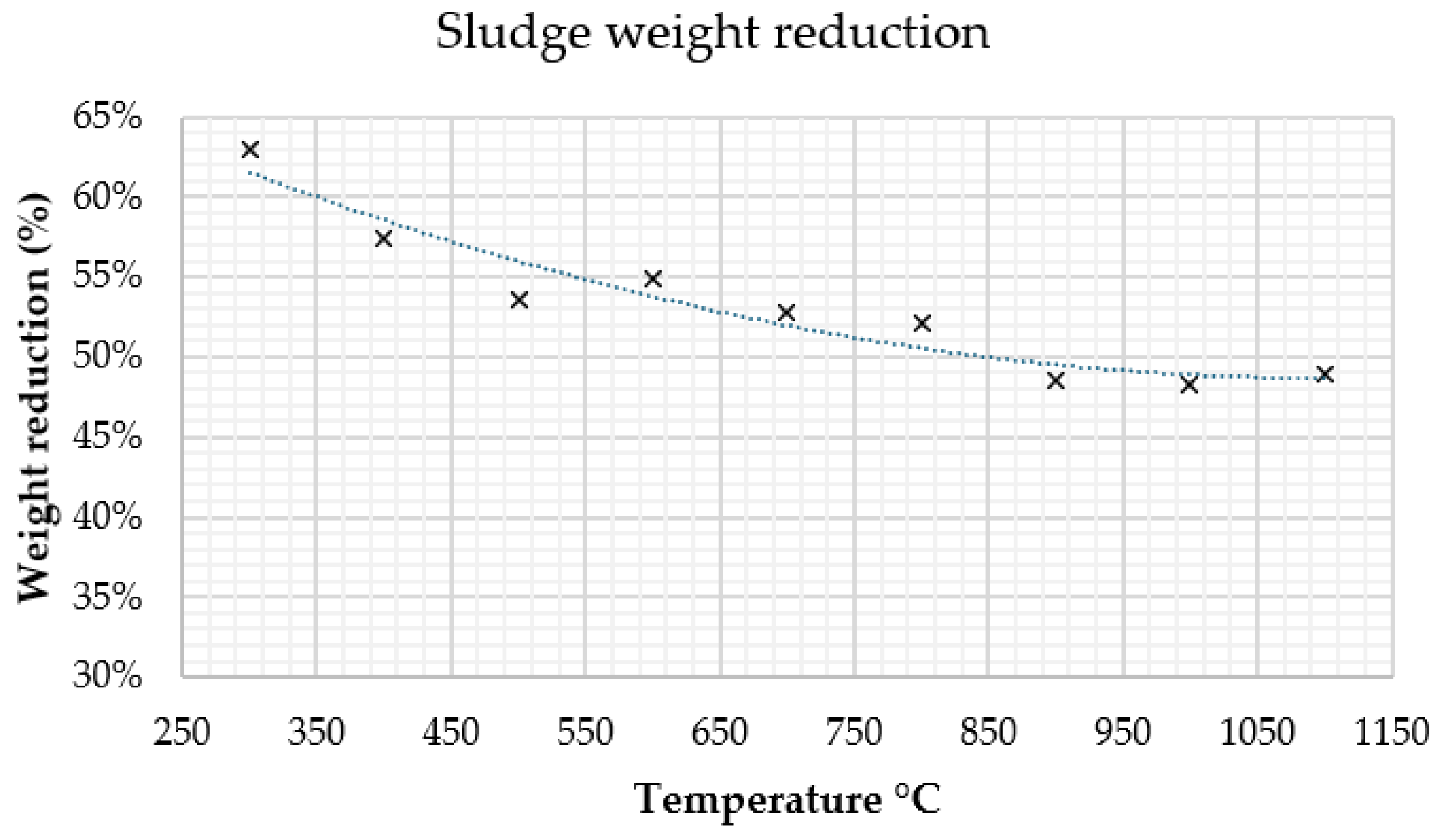
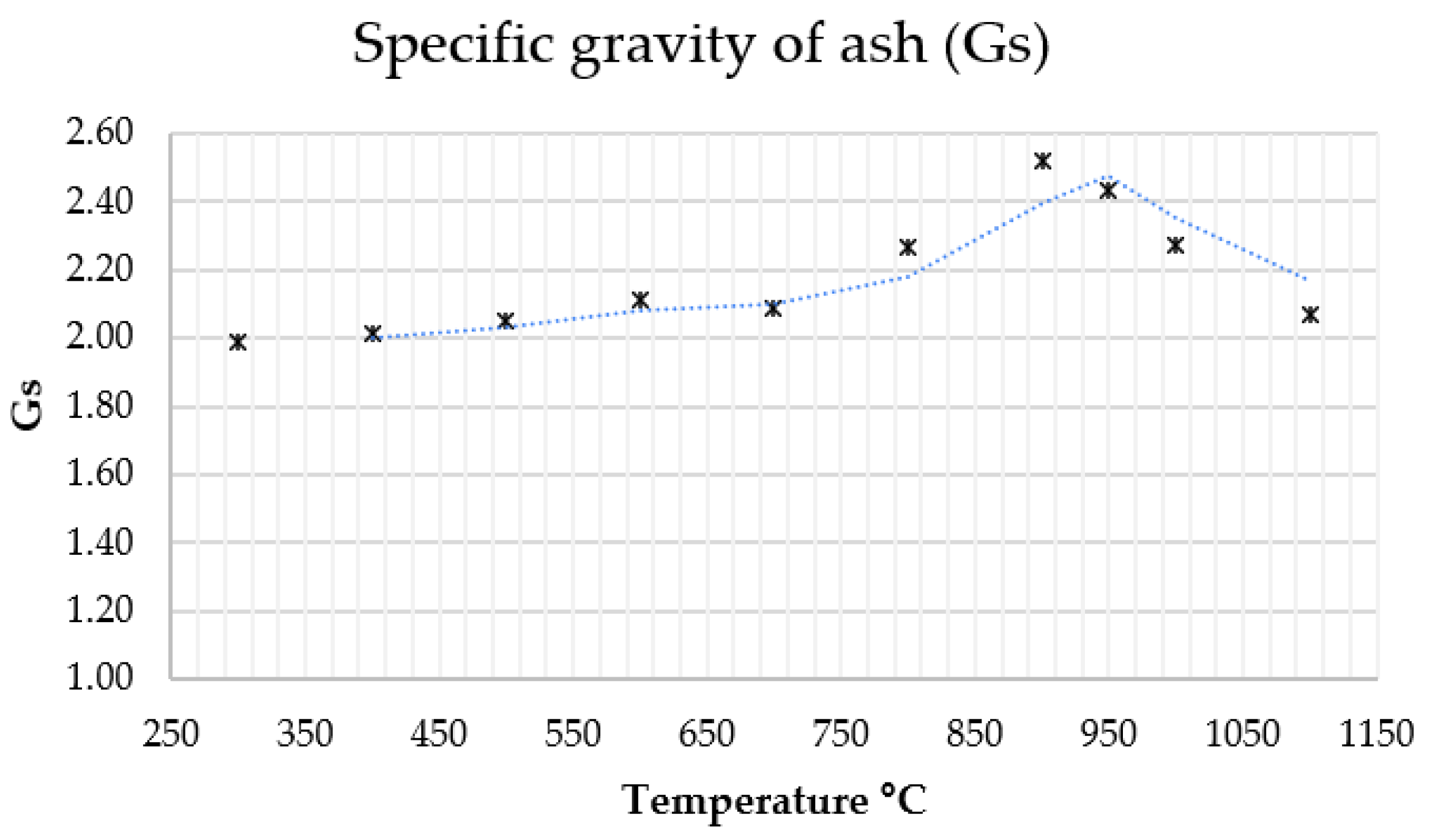
For this study, the sludge was subjected to incineration processes in a muffle furnace, using different temperatures to evaluate the physical properties of the ash generated under each thermal condition. Figure 3 shows the mass reduction associated with the temperature increase, while Figure 4 shows the variations in the specific gravities of the ash obtained at each incineration level.
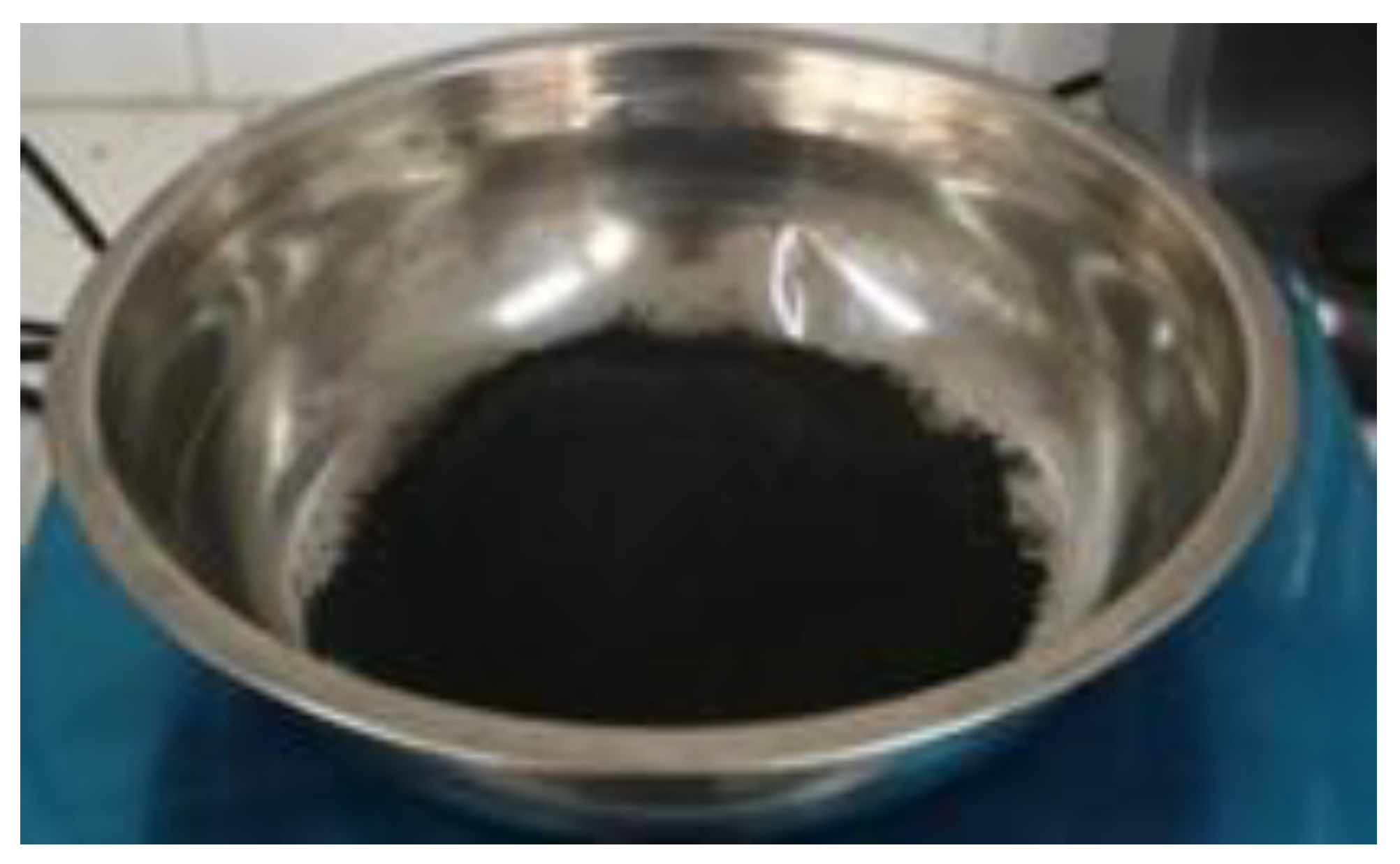
Figure 3 shows a progressive decrease in sludge mass, reducing by approximately 35% at 300 °C and reaching up to 55% at 1100 °C, confirming the high organic matter content present in the material. Figure 4 shows that the highest specific gravities are obtained when incineration is carried out at temperatures between 900 and 1000 °C. Figure 5 illustrates the appearance of the ash generated at 900 °C.

3.2. Results of Soils Combined with Biosolids Ash

3.2.1. Specific Gravity of Soil and Ash

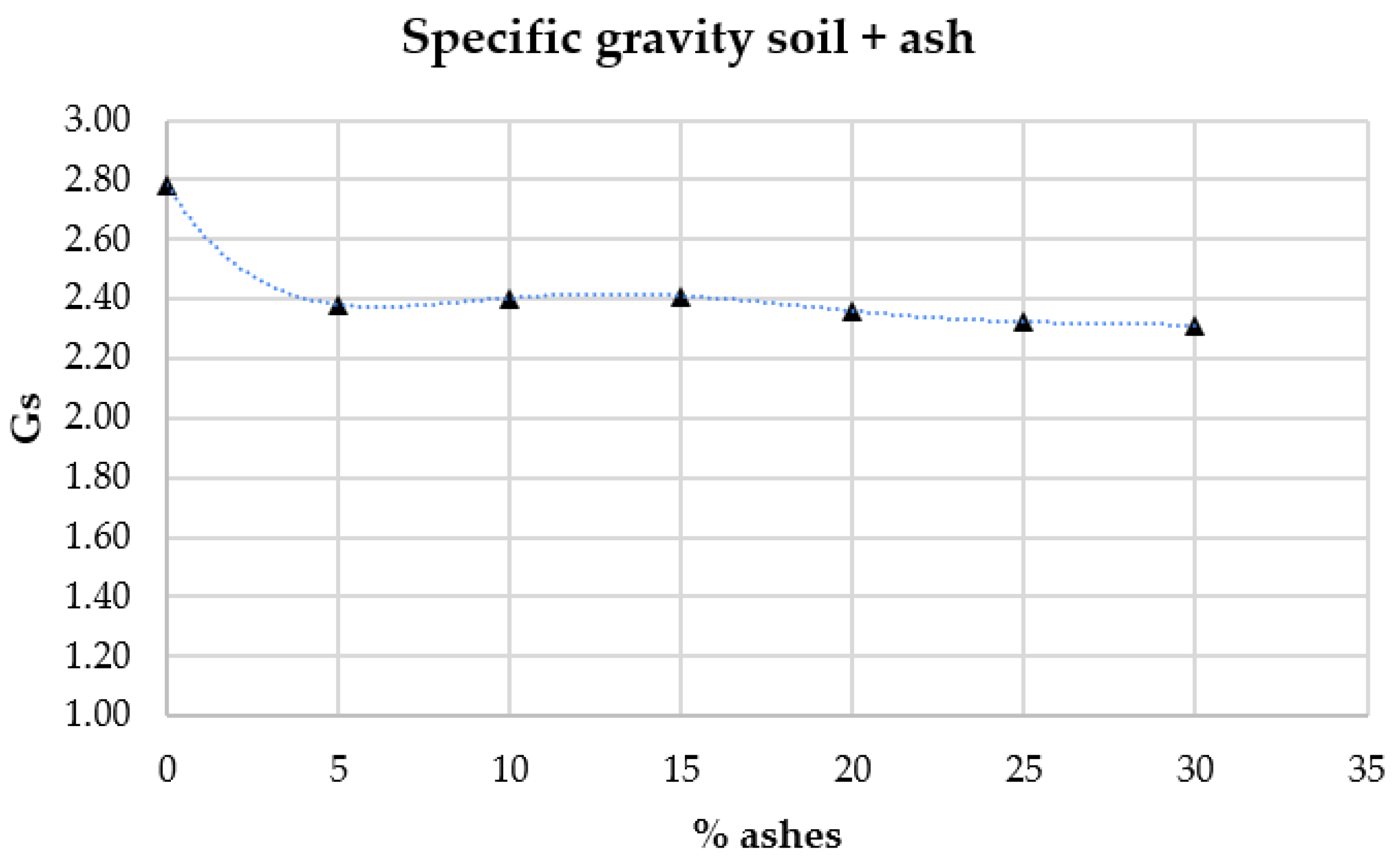
The specific gravity of the soil was determined in its natural state and in mixtures with biosolids ash, using proportions of 5, 10, 15, 20, 25, and 30%. Table 1 and Figure 6 present the results obtained, as well as the variation in the material’s behavior for each of the soil-ash combinations evaluated.
The results in Table 1 and Figure 4 show that the specific gravity of the soil in its natural state of 2.78 decreases to 17% when there is 30% ash; however, between 10 and 15% is the combination with the lowest degrees of reduction in soil density.

3.2.2. Consistency Limits: Liquid Limit and Plastic Limit

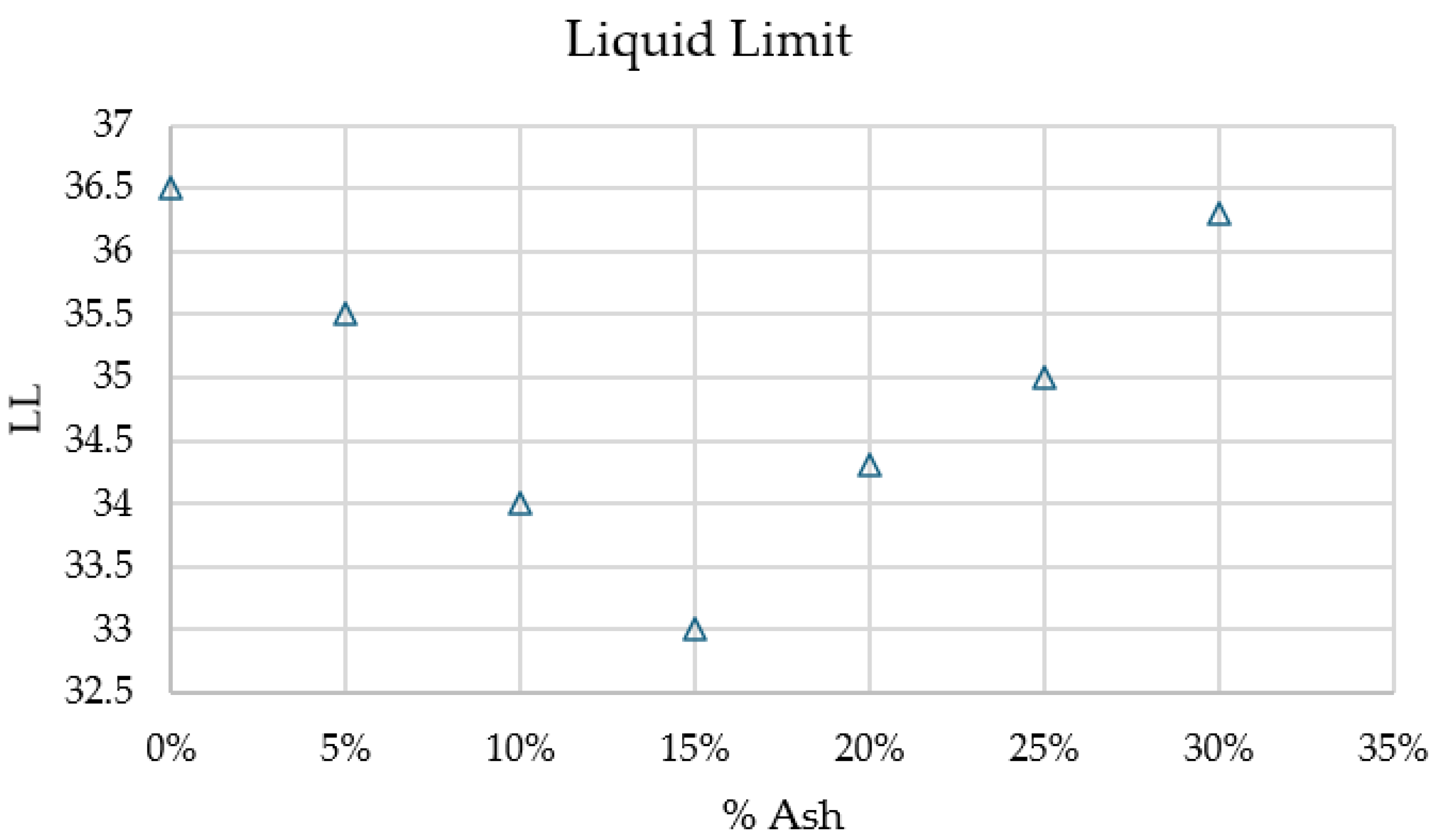
The results of the Liquid Limit and Plastic Limit for the different combinations are shown in Table 2 and Figure 7.
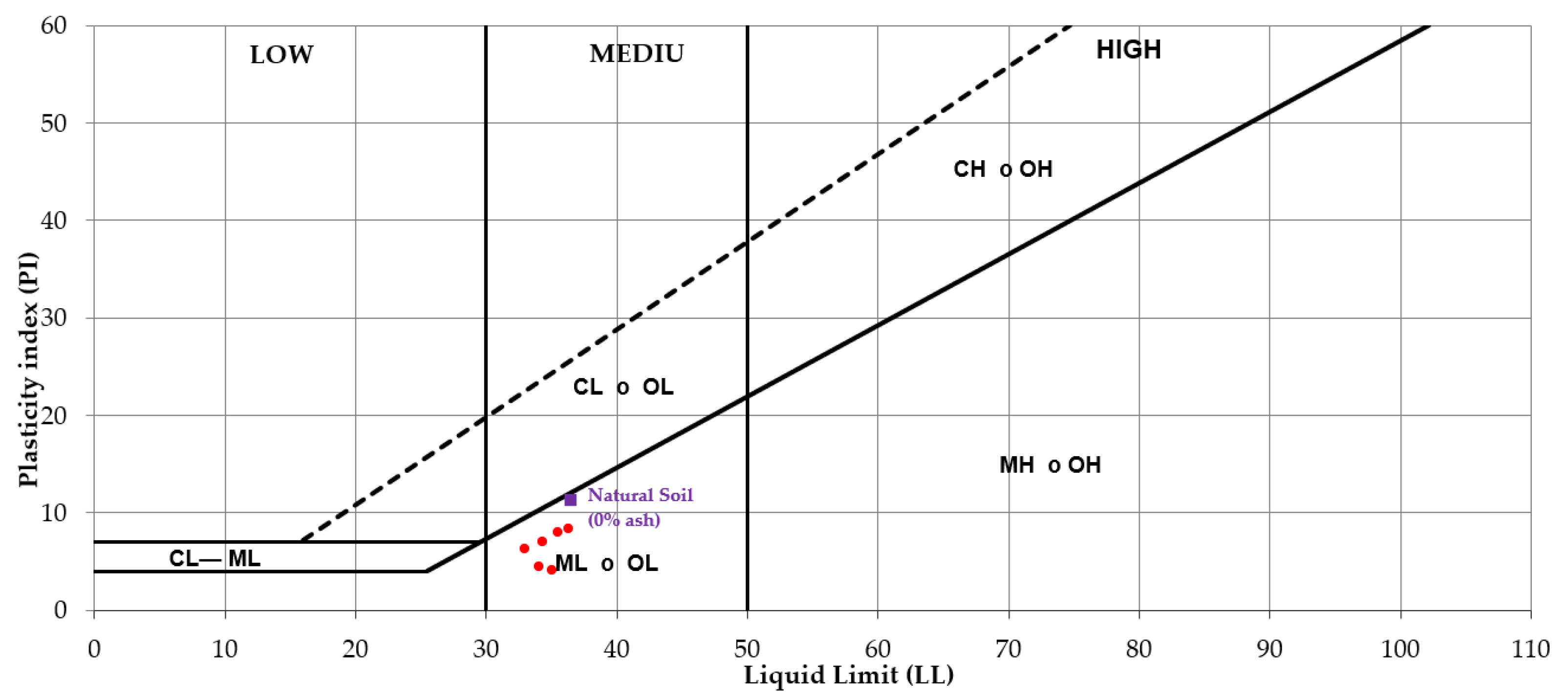
The results show a significant reduction in soil plasticity when sewage sludge ash is incorporated, with the lowest liquid limit (LL) values observed when between 10 and 15% ash is added, representing an approximate 10% decrease in plasticity. Although the plasticity chart presented in Figure 8 classifies the soil as having medium plasticity, a notable reduction in plasticity with the incorporation of sewage sludge ash is clearly evident.

3.2.3. Proctor T-180 Compaction

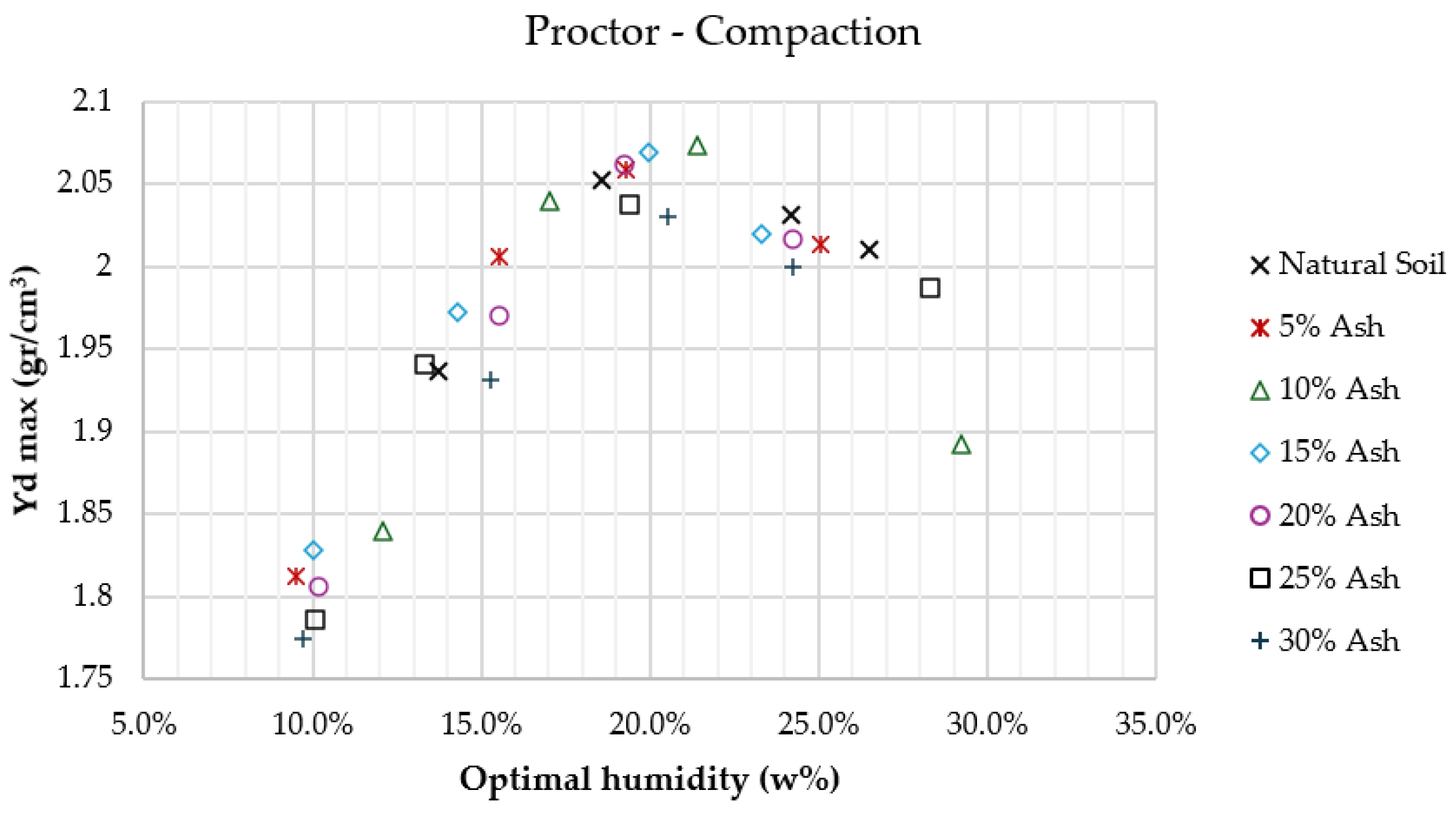
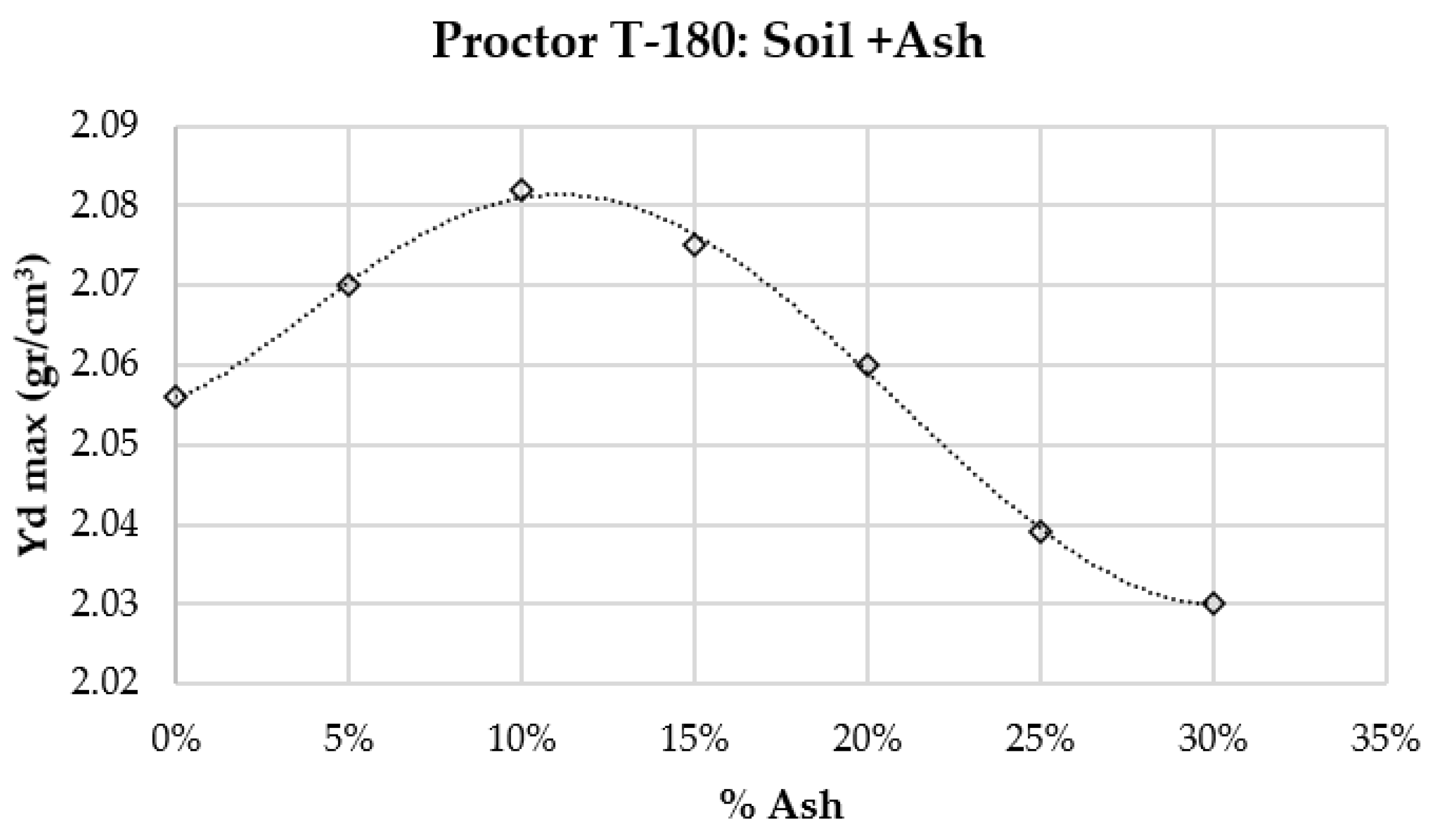
The modified Proctor T-180 compaction test was performed on both the natural soil and each of the mixtures with biosolids ash. Figure 9 shows the soil behavior as a function of water content for each combination, while Figure 10 shows the maximum densities achieved in each case.
The results indicate that maximum dry densities are achieved in soil mixtures with 10–15% sludge ash, reaching a value of 2,082 g/cm³, which represents an approximate 13% increase compared to the density of the natural soil. Figure 9 also shows that the optimum moisture content for these mixtures is close to 20%.

3.2.4. Direct Shear: Resistance Parameters

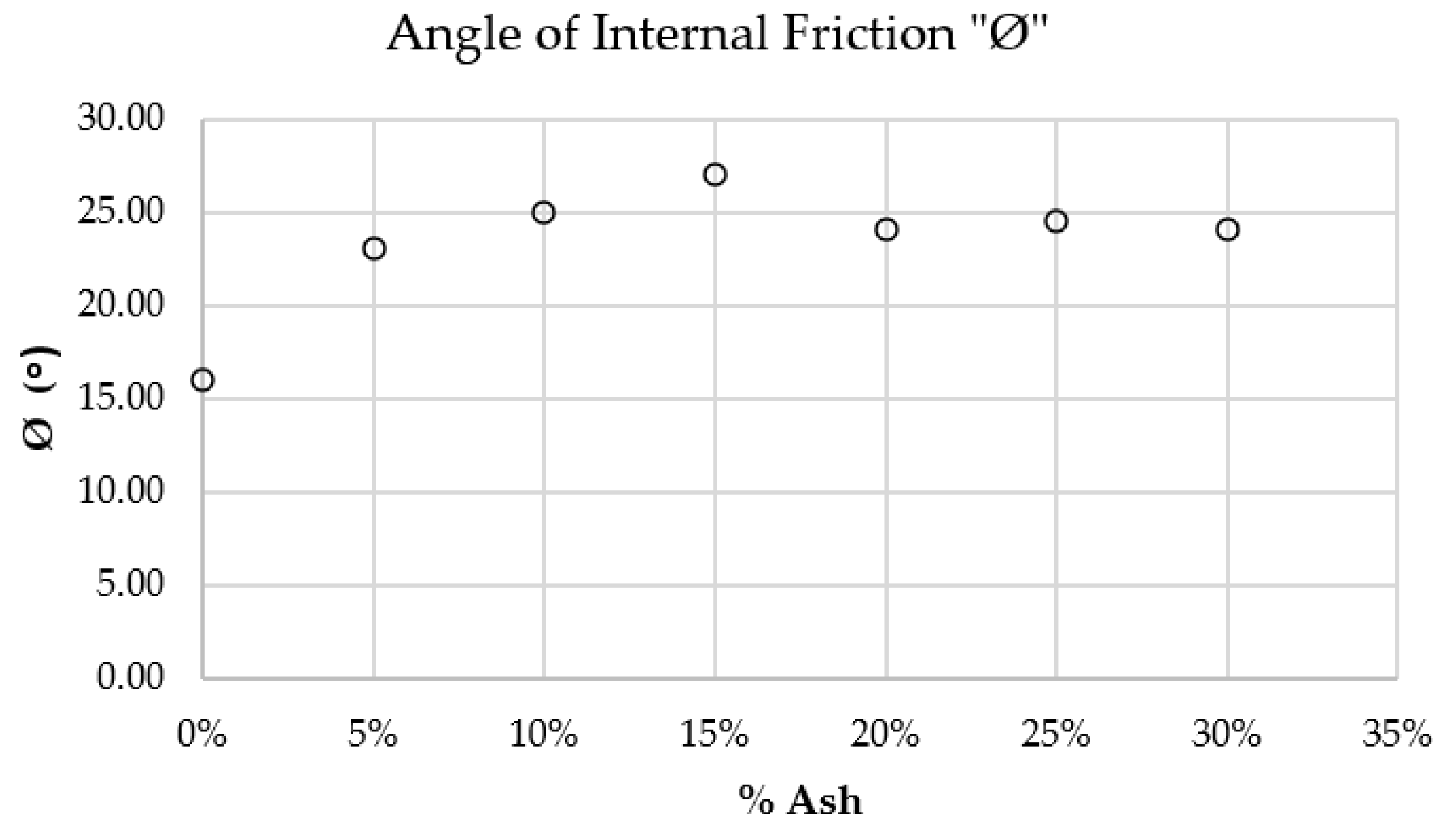
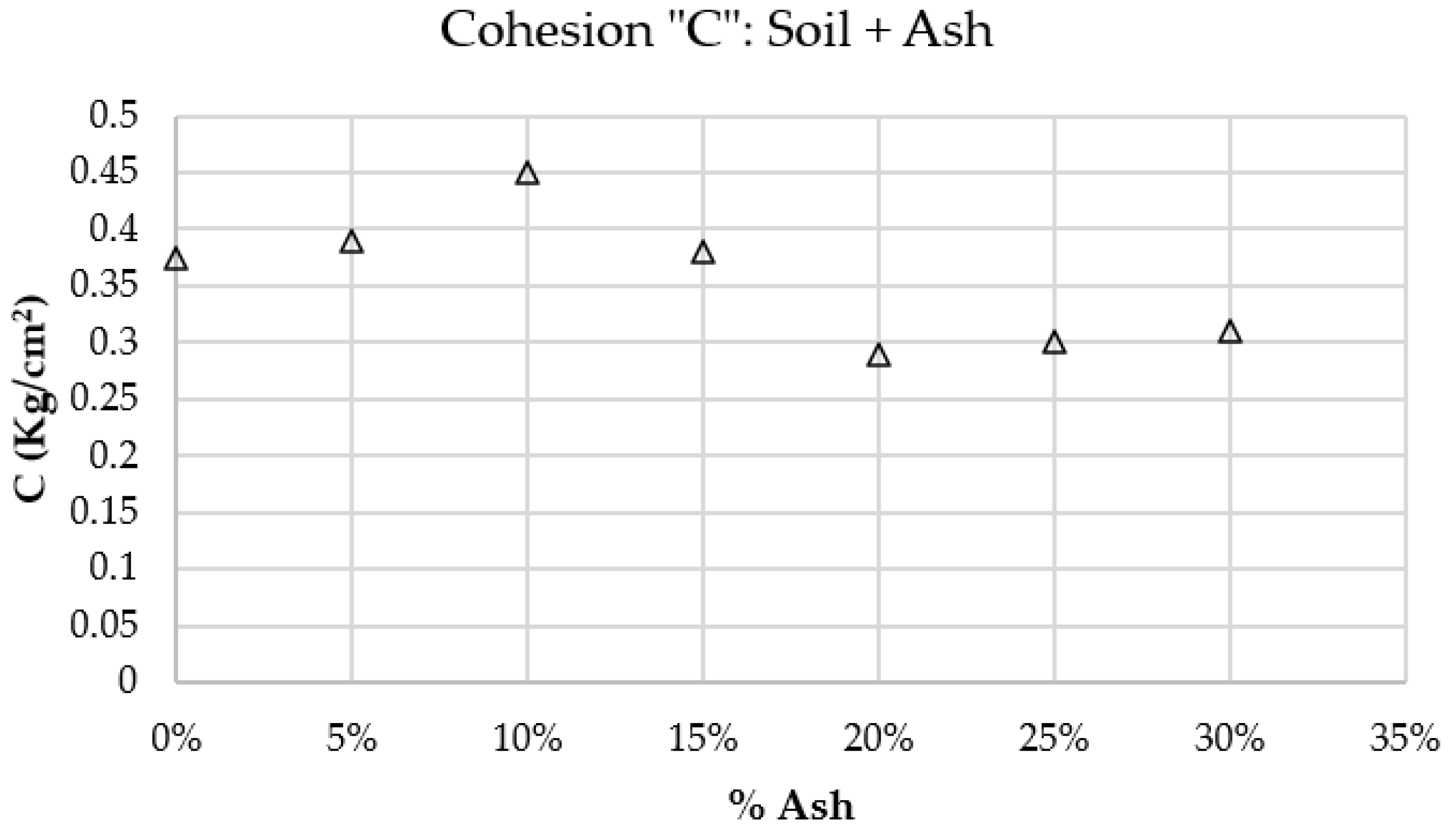
The direct shear test was carried out for the different soil mixtures with sludge ash, determining the fundamental parameters for evaluating shear strength: the angle of internal friction and cohesion. Figure 11 and Figure 12 show the behavior of both parameters with respect to the different proportions of ash.
Both graphs show that both the angle of internal friction and the cohesion of the soil increase significantly when 10 to 15% ash is incorporated into the clays. Compared to the natural soil, internal friction increases by approximately 60%, while cohesion increases by around 80%.

3.2.5. One-Dimensional Consolidation: Compressibility Index

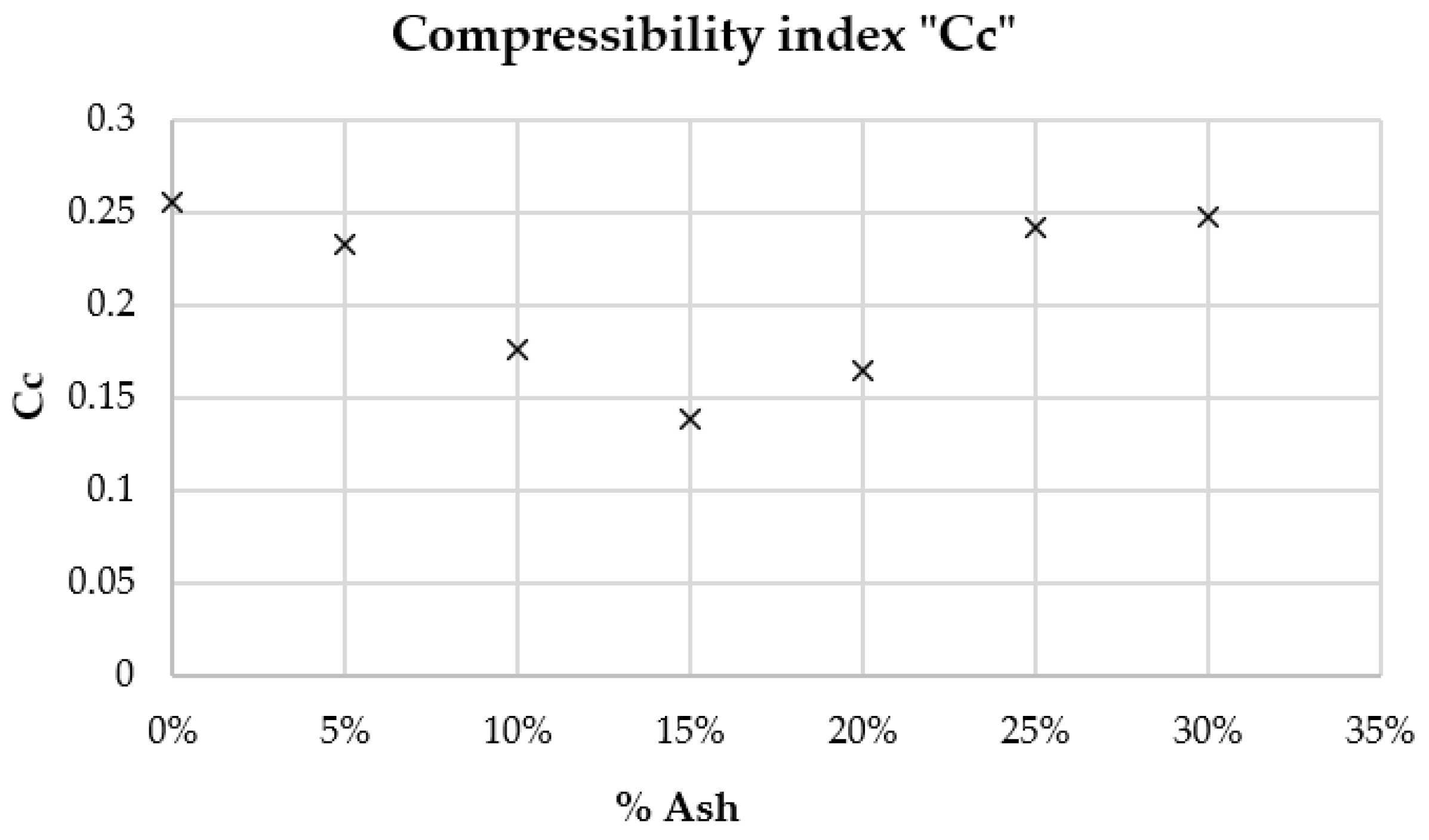
The consolidation test performed on the soil and its various mixtures allowed for the evaluation of the material’s compressibility. Figure 13 shows the variation in the compressibility index for each combination evaluated.
The behavior shown in Figure 12 indicates that the lowest compressibility is achieved by incorporating 15% ash into the soil, which represents an improvement of up to 45%.

3.2.6. California Bearing Ratio (CBR) Test: Expansion and Deformation

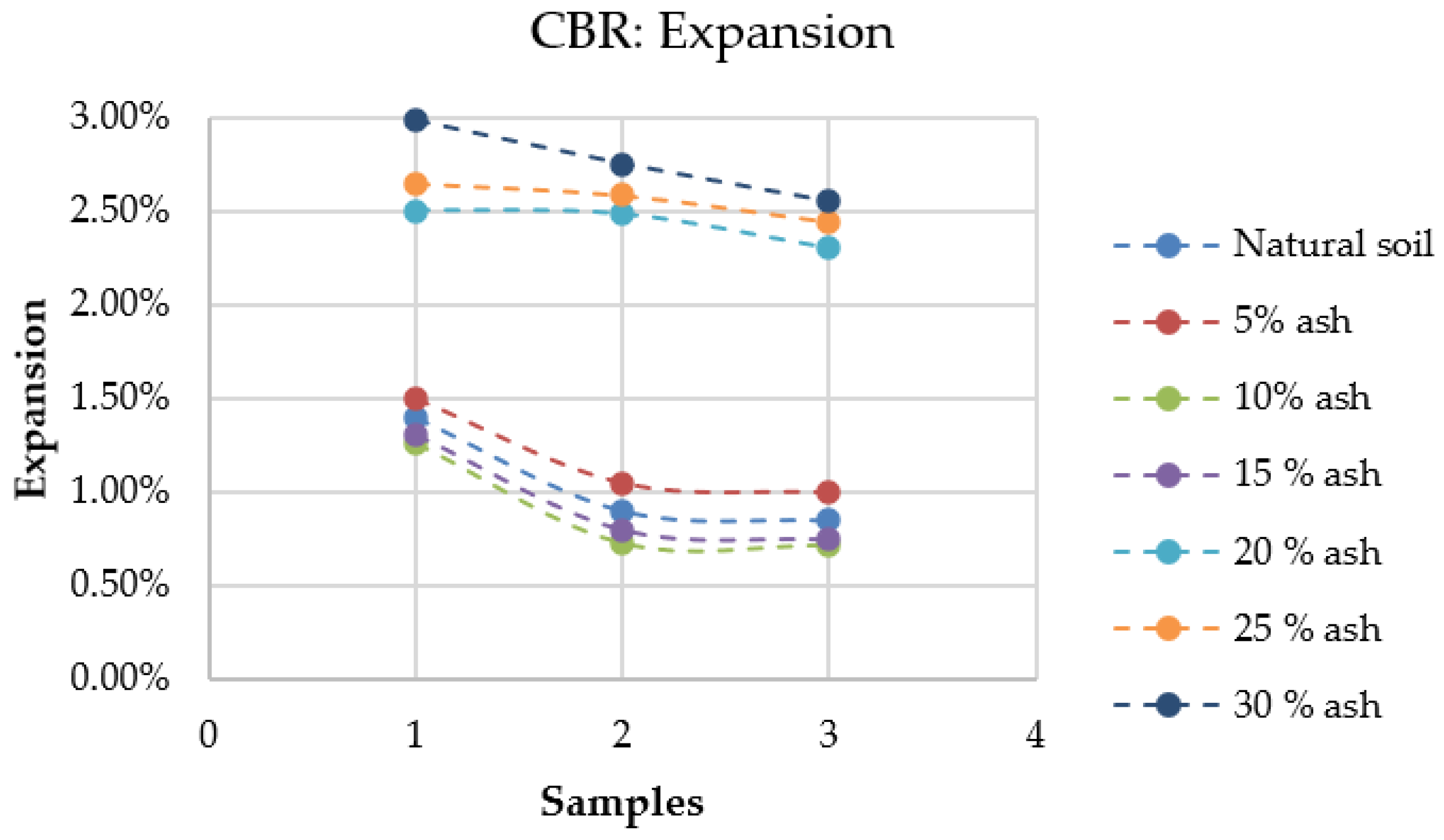
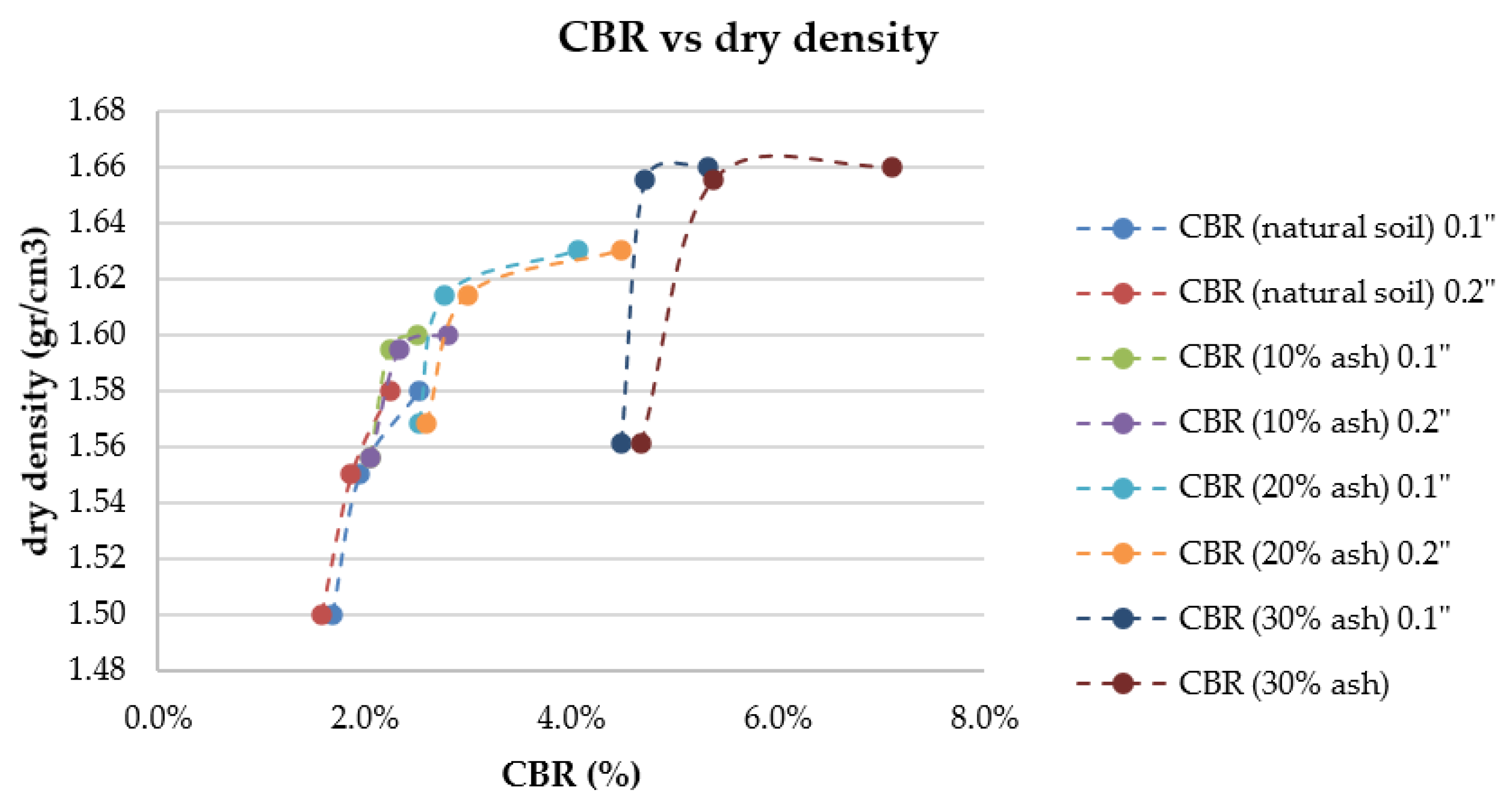
The CBR test allowed for the evaluation of soil expansion and resistance to deformation, both in its natural state and in mixtures with ash. Figure 14 and Figure 15 illustrate the behavior of these properties, while Table 3 details the expansion values of the samples. In this table, the sample columns correspond to the different compaction energy levels: No. 1 (12 blows), No. 2 (26 blows), and No. 3 (56 blows).
The results presented in Figure 14 indicate that soil expansion decreases when incorporating between 10 and 15% biosolids ash, while it increases in mixtures with higher proportions. Furthermore, the CBR values shown in Figure 15 demonstrate a significant increase for all ash percentages evaluated, for both 0.1” and 0.2” strains.

4. Discussion

Incineration of dried sludge at 900 °C yielded biosolids ash used to stabilize clays in proportions of 5 to 30%. Although the specific gravity of the mixtures decreased, the geotechnical properties of the soil improved, in accordance with that reported by Kadhim et al. [60] and Demir & Cabalar [63].
Soil plasticity, assessed by the liquid and plastic limits, decreases markedly with the incorporation of ashes, with reductions consistent with those reported by Kadhim et al. [60], Demir & Cabalar [63], and Al-Sharif & Atton [54], who documented decreases in the liquid limit of up to 40%. In contrast to the results of Kadhim et al. [60], the modified Proctor T-180 test shows an increase in maximum dry density for mixtures containing between 10 and 15% biosolids ash.
CBR tests show a significant increase in soil strength, accompanied by a reduction in its expansion, for ash contents between 10 and 15%. These results are consistent with the findings of Kadhim et al. [60] and Maghoolpilehrood et al. [58], who report substantial improvements in CBR values through the incorporation of biosolids ash as a stabilizing agent.
Soil compressibility is significantly reduced with the incorporation of ash, in accordance with the results of Maghoolpilehrood et al. [58] and Disfani et al. [59], who reported decreases in both the consolidation coefficient and compressibility parameters when using biosolids-derived additives, especially at concentrations close to 10%.
Regarding shear strength, direct shear tests show significant increases in both the angle of internal friction and soil cohesion. Although Maghoolpilehrood et al. [58] used triaxial tests, their results are consistent, showing substantial improvements in shear strength after the incorporation of ash. Similarly, Zabielska [62] indicates that sludge ash, used as an additive or replacement material in soil, improves various geotechnical properties—including the CBR—which coincides with the results obtained in the present investigation.
esidual sludge exhibits properties that, in its natural state, are unfavorable for the mechanical improvement of soils. However, its stabilization, treatment, and transformation can be beneficial, enhancing the soil’s mechanical properties. This approach aligns with the criteria proposed by Zhang and Han. [64,65]

5. Conclusions

The results of this research allow us to draw the following main conclusions:
1. The geotechnical tests carried out confirm that sewage sludge ash can be used as an additive to improve the physical and mechanical properties of medium-plastic clay soils.
2. The ash obtained by incinerating dry sludge was mixed with the soil in proportions of 5, 10, 15, 20, 25, and 30% by weight, resulting in a reduction of up to 55% in the sludge mass and a maximum specific gravity of 2.52 g/cm³ at 900 °C, dependent on the incineration temperature.
3. The specific gravity of the mixtures is lower than that of the natural soil; however, the maximum density is reached with 15% ash, a proportion that also reduces the soil’s plasticity by approximately 10%.
4. The maximum dry density, evaluated using the modified Proctor T-180 test, is obtained in mixtures with 10–15% ash.
5. The soil’s mechanical strength improves significantly with the incorporation of 15% ash: the angle of internal friction increases by 60% and cohesion by 80% compared to the natural soil.
6. Soil compressibility decreases by up to 45% with the 15% ash mixture, while bearing capacity, evaluated by using the CBR, shows significant increases and a reduction in expansion of approximately 20%.
7. Overall, the results show that a 15% ash content from residual sludge optimizes the soil’s geotechnical properties, improving its physical and mechanical behavior.
8. Research shows that the reuse of residual sludge is an effective strategy for soil improvement in civil works, also offering an environmental benefit by valorizing waste from treatment plants.
9. This research demonstrates that the reuse of residual sludge represents a sustainable, environmentally friendly and ecologically responsible strategy for the geotechnical improvement of soil, providing engineering benefits for civil works and a significant solution for the valorization of wastewater treatment plants.

Author Contributions

Conceptualization, Methodology, Software, Validation, Formal analysis, Investigation, Resources, Data curation, Writing—Original draft, Visualization, E.M.V.-M.; Conceptualization, Methodology, Investigation, L.S.B.

Funding

This study was supported and funded by the Universidad Católica Boliviana “San Pablo” and FRICA funds.

Data Availability Statement

Not applicable.

Acknowledgments

The authors appreciate the support of the national and regional authorities of the Universidad Católica Boliviana “San Pablo”. The research has been carried out with the support of the Center for Research in Engineering and Exact Sciences of the Department of Basic Sciences and Infrastructure (CIICE) belonging to the Institute of Engineering Research of the Universidad Católica Boliviana Sede Tarija.

Conflicts of Interest

The authors declare that they have no known competing financial interest or personal relationships that could have appeared to influence the work reported in this paper.

Abbreviations

The following abbreviations are used in this manuscript:
BA Biosolid Ashes
CBR California Bearing Ratio
SSA Sewage Sludge Ash
LD Linear dichroism
SS Sewage Sludge
WWTP Wastewater treatment plants
EPA Environmental Protection Agency
VOC Volatile Organic Compounds

References

  1. Xu, G. Analysis of sewage sludge recovery system in EU in perspectives of nutrients and energy recovery efficiency, and environmental impacts. Norwegian University of Science and Technology 2014, 88. Obtained from: http://hdl.handle.net/11250/235441.
  2. Javier, Mateo-Sagasta.; Liqa, Raschid-Sally.; Anne, Thebo. Global wastewater and sludge production, treatment and use. P. Drechsel et al. (eds.). Wastewater Economic Asset in an Urbanizing World 2015. [CrossRef]
  3. Bianchini, A.; Bonfiglioli, L.; Pellegrini, M.; Saccani, C. Sewage sludge drying process integration with a waste-to-energy power plant. Waste Manag 2015, 42, 159–165. [CrossRef]
  4. Gherghel, A.; Teodosiu, C.; De Gisi, S. A review on wastewater sludge valorisation and its challenges in the context of circular economy. J. Clean. Prod 2019, 228, 244–263. [CrossRef]
  5. Kelessidis, A.; Stasinakis, A.S. Comparative study of the methods used for treatment and final disposal of sewage sludge in European countries. Waste Manag 2012, 32, 1186–1195. [CrossRef]
  6. Bertanza, G.; Papa, M.; Canato, M.; Collivignarelli, M.C.; Pedrazzani, R. How can sludge dewatering devices be assessed? Development of a new DSS and its application to real case studies. J. Environ. Manag 2014, 137, 86–92. [CrossRef]
  7. Shehu, M.S.; Abdul Manan, Z.; Wan Alwi, S.R. Optimization of thermo-alkaline disintegration of sewage sludge for enhanced biogas yield. Bioresour. Technol 2012, 114, 69–74. [CrossRef]
  8. Pérez-Elvira, S.I.; Nieto Diez, P.; Fdz-Polanco. F. Sludge minimisation technologies. Rev. Environ. Sci. Bio/Technol 2006, 5, 375–398. [CrossRef]
  9. Sever Akdağ, A.; Atak, O.; Atimtay, A.T.; Sanin, F.D. Co-combustion of sewage sludge from different treatment processes and a lignite coal in a laboratory scale combustor. Energy 2018, 158, 417–426. [CrossRef]
  10. Collivignarelli, M. C.; Abbà, A.; Carnevale Miino, M.,; Torretta, V. What Advanced Treatments Can Be Used to Minimize the Production of Sewage Sludge in WWTPs?. Applied Sciences 2019, 9(13), 2650. [CrossRef]
  11. Raheem, A.; Singh-Sikarwar, V.; Wafa Dastyar, J-H.; Dionysiou, D.; Wang, W.; Zhao, M. Opportunities and challenges in sustainable treatment and resource reuse of sewage sludge: A review. Chemical Engineering Journal 2018, 337, 616-641. [CrossRef]
  12. Fuerhacker, M.; Haile, T. M. Treatment and reuse of sludge. Waste water treatment and reuse in the mediterranean region 2011, 63-92. Obtained from: https://link.springer.com/chapter/10.1007/698_2010_60.
  13. Nguyen, M. D.; Thomas, M.; Surapaneni, A.; Moon, E. M.; Milne, N. A. Beneficial reuse of water treatment sludge in the context of circular economy. Environmental Technology & Innovation 2022, 28, 102651. [CrossRef]
  14. Vouk, D.; Nakic, D.; Stirmer, N. Reuse of sewage sludge–problems and possibilities. In Proceedings of the international conference IWWATV 2015, 1-021. Obtained from: chrome-extension://efaidnbmnnnibpcajpcglclefindmkaj/https://d1wqtxts1xzle7.cloudfront.net/114529626/Vouk_et_al-libre.pdf?1715677524=&response-content-disposition=inline%3B+filename%3DReuse_of_Sewage_Sludge_Problems_and_Poss.pdf&Expires=1763153688&Signature=RjUTRTiQM32902IoHfB1uzBoahjz8HQz0oADEUBPAFdRWtIPW3JMS~29WpGfIjQpp2UW2Xrz00Y-Rtyjef9wg2CE0TjEYuKV9Nef0G1QwDWaFJl4J0AQgEtZ6d4d-ZYyYZz2Gu2UaxFJI5EJdnYej4MeA1qeXxp665fQc89Muu1oxIHXjr60Ynzsa09DgqBGigh4BfkkGpC-evrpHrmSFkCs0f1IXcw2-32mtil-NZ0zh9Xc1L1lAbcNj8aZ9MO~dMglUsXb5xN8mn~79W5ClpoEzvfo99QnnnCGETy5CheGi3Vk39uKKlVQHf9d3QEgwdwyAaObSvmjuTCkWe~l9Q__&Key-Pair-Id=APKAJLOHF5GGSLRBV4ZA.
  15. Kumar, V.; Chopra, A. K.; Kumar, A. A review on sewage sludge (Biosolids) a resource for sustainable agriculture. Archives of Agriculture and Environmental Science 2017, 2(4), 340-347. [CrossRef]
  16. Smith, S. R. Organic contaminants in sewage sludge (biosolids) and their significance for agricultural recycling. Philosophical Transactions of the Royal Society A. Mathematical, Physical and Engineering Sciences. 2009, 367(1904), 4005-4041. [CrossRef]
  17. Krüger, O.; Grabner, A.; Adam, C. Complete survey of German sewage sludge ash. Environmental science & technology 2014, 48(20), 11811-11818. [CrossRef]
  18. Roy, M. M.; Dutta, A.; Corscadden, K.; Havard, P.; Dickie, L. Review of biosolids management options and co-incineration of a biosolid-derived fuel. Waste Management 2011, 31(11), 2228-2235. [CrossRef]
  19. Lin, D.F.; Lin, K.L.; Hung, M.J.; Luo, H.L. Sludge ash/hydrated lime on the geotechnical properties of soft soil. J. Hazard. Mater 2007, 145 (1-2), 58-64. [CrossRef]
  20. Arulrajah, A.; Dsifani, M.; Suthagaran, V. Imteaz, Select chemical and engineering properties of wastewater biosolids. J. Waste Manage 2011, 31, 2522–2526. [CrossRef]
  21. Arulrajah, A.; Disfani, M.; Suthagaran, V.; Bo, M. Laboratory evaluation of the geotechnical characteristics of wastewater biosolids in road embankment. J. Mater. Civ. Eng 2013, 25, 1943–5533. [CrossRef]
  22. Tastan, E.; Edil, T.; Benson, C.; Adilek, H. Stabilization of organic soils with fly ash. J. Geotech. Geoenviron. Eng 2011, 137, 1943–5606. [CrossRef]
  23. Wanare, R.; Iyer, K. K.; Dave, T. N. Application of biosolids in civil engineering: State of the art. Materials Today: Proceedings 2022, 65, 1146-1153. [CrossRef]
  24. Franz, M. Phosphate fertilizer from sewage sludge ash (SSA). Waste Management 2008, 28(10): 1809-1818. [CrossRef]
  25. Fytili, D.; Zabaniotou, A. Utilization of sewage sludge in EU application of old and new methods - A review. Renewable and Sustainable Energy Reviews 2008, 12, 116-140. [CrossRef]
  26. Lundin, M.; Olofsson, M.; Pettersson, G.J.; Zetterlund, H. Environmental and economic assessment of sewage sludge handling options. Resource, Conservation and Recycling 2004, 41(4): 255-278. [CrossRef]
  27. EPA. Handbook Estimating Sludge Management Costs. EPA/625/6-85/010. U.S. Environmental protection agency, Cincinnati, Ohio 1985.
  28. EPA. http//www.epa.gov/ORD/WebPubs/Landap.html> September 1995. Retrieved on October, 2000.
  29. Walker, J.M. Production, use, and creative design of sewage sludge biosolids 1994, Pages 67 -74 in C.E. Clapp, W.E. Larson, and R.H. Dowdy, editors. Sewage Sludge: land utilization and the environment. American Society of Agronomy, Inc., Crop Science Society of America, Inc., Soil Science Society of America, Inc. Madison, WI. [CrossRef]
  30. Liang, Y.; Yang, Y.; Yang, C.; Shen, Q.; Zhou, J.; Yang, L. Soil enzymatic activity and growth of rice and barley as influenced by organic manure in an anthropogenic soil. Geoderma 2003, 115: 149-160. [CrossRef]
  31. Tejada, M.; Garcia, C.; Gonzalez, J.L.; Hernandez, M.T. Use of organic amendment as a strategy for saline soil remediation: influence on the physical, chemical and biological properties of soil. Soil Biology and Biochemistry 2006, 38: 1413-1421. [CrossRef]
  32. Liang, Y.; Nikolic, M.; Peng, Y.; Chen, W.; Jiang, Y. Organic manure stimulates biological activity and barley growth in soil subject to secondary salinization. Soil Biology and Biochemistry 2005, 37: 1185-1195. [CrossRef]
  33. Walker, D.J.; Bernal, M.P. The effects of olive mill waste compost and poultry manure on the availability and plant uptake of nutrients in a highly saline soil. Bioresource Technology 2008, 99: 396-403. [CrossRef]
  34. Abdelbasset, L.; Scelza, R.; Scotti, R.; Rao, M.; Jedidi, N.; Gianfreda, L.; Chedly Abdelly. The effect of compost and sewage sludge on soil biologic activities in salt affected soil. Revista de la Ciencia del Suelo y Nutrición Vegetal 2010, 10(1): 40-47. [CrossRef]
  35. Donatello, S.; Cheeseman, C.R. Recycling and recovery routes for incinerated sewage sludge ash (ISSA): A review. Waste Manage 2013, 33, 2328-2340. [CrossRef]
  36. Husillos R.; Martinez-Ramirez, S.; Blanco-Varela M.T.; Donatelo, S.; Guillem, M.; Puig, J.; Fos, C.; Larrotcha, E.; Flores, J. The effect of using thermally dried sewage sludge as an alternative fuel on Portland cement clinker production. Journal of Cleaner Production 2013, 52, 94-102. [CrossRef]
  37. Jamshidi, A.; Mehrdadi, N.; Jamshidi, M. Application of sewage dry sludge as fine aggregate in concrete. J. Envir. Stud 2011, Vol. 37, No. 59, 7-14. Obtained from: https://www.sid.ir/paper/3270/en.
  38. Monzo, J.; Paya, J.; Borrachero, M.V.; Bellver, A.; Peris-Mora, E. Study of cement-based mortars containing spanish ground sewage sludge ash. Stud. Environ. Sci 1997, 71, 349-354. [CrossRef]
  39. Monzo, J.; Paya, J.; Borrachero, M.V.; Girbes, I. Reuse of sewage sludge ashes (SSA) in cement mixtures: the effect of SSA on the workability of cement mortars. Waste Manage 2003, 23, 373-381. [CrossRef]
  40. Pan, S.C.; Tseng, D.H.; Lee, C.C.; Lee, C. Influence of the fineness of sewage sludge ash on the mortar properties. Waste Manage 2003, 33, 1749-1754. [CrossRef]
  41. Cyr, M.; Coutand, M.; Clastres, P. Technological and environmental behaviour of sewage sludge ash (SSA) in cement-based materials. Cem. Concr. Res 2007, 37, 1278-1289. [CrossRef]
  42. Garces P.; Perez-Carrion, M.; Garcia-Alcocel, E.; Paya, J.; Monzo, J.; Borrachero, M.V. Mechanical and physical properties of cement blended with sewage sludge ash. Waste Manage 2008, 28, 2495-2502. [CrossRef]
  43. Paya, J., Monzo, J., Borrachero, M.V., Amahjour, F., Girbes, I., Velazquez, S.; Ordonez, L.M. Advantages in the use of fly ashes in cements containing pozzolanic combustion residues: silica fume, sewage sludge ash, spent fluidized bed catalys and rice husk ash. Journal of Chemical Technology and Biotechnology 2002, 77, 331-335. [CrossRef]
  44. Tay, J.H. Potential use of sewage sludge ash as construction material. Resour. Conserv. Recy 1986, 13, 53-58. Obtained may 2025 from: https://www.osti.gov/etdeweb/biblio/7141288.
  45. Kalogo, Y.; Monteith, H.; Eng, P. STATE OF SCIENCE REPORT: ENERGY AND RESOURCE RECOVERY FROM SLUDGE 2012. Obtained may 2025 from: https://library.wur.nl/WebQuery/titel/1887162.
  46. Bachmann, N. Sustainable biogas production in municipal wastewater treatment plants. IEA Bioenergy, ENVI Concept Route de Chambovey 2CH-1869 Massongex, Switzerland 2015. Obtained may 2025 from: chrome-extension://efaidnbmnnnibpcajpcglclefindmkaj/https://kh.aquaenergyexpo.com/wp-content/uploads/2022/12/Sustainable-Biogas-Production-In-Municipal-Wastewater-Treatment-Plants.pdf.
  47. Pöschl, M.; Ward, S.; Owende, P. Evaluation of energy efficiency of various biogas production and utilization pathways. Applied. Energy 2010, 87(11): 3305-3321. [CrossRef]
  48. Halls, S. Environmentally Sound Technologies for Wastewater and Stormwater Management. Japan, Newsletter and Technical Publications 2000.
  49. Bories, C.; Borredon, M.-E.; Vedrenne, E.; Vilarem, G. Development of eco-friendly porous fired clay bricks using pore-forming agents: A review. Journal of Environmental Management 2014, 143, 186-196. [CrossRef]
  50. Weng, C.-H.; Lin, D.-F.; Chiang, P.-C. Utilization of sludge as brick materials. Advances in Environmental Research 2003, 7, 679-685. [CrossRef]
  51. Teixeira, S.R.; Santos, G.T.A.; Souza, A.E.; Alessio, P.; Souza, S.A.; Souza, N.R. The effect of incorporation of a Brazilian water treatment sewage sludge on the properties of ceramic materials. Appl. Clay Sci 2011, 53, 561-565. [CrossRef]
  52. Petavratzi, E.; Wilson, S., Incinerated sewage sludge ash in facing bricks. Characterisation of Mineral Wastes, Resources and Processing technologies – Integrated waste management for the production of construction material. WRT177/WR0115. 2007. Obtained may 2025 from: chrome-extension://efaidnbmnnnibpcajpcglclefindmkaj/https://d1wqtxts1xzle7.cloudfront.net/114529626/Vouk_et_al-libre.pdf?1715677524=&response-content-disposition=inline%3B+filename%3DReuse_of_Sewage_Sludge_Problems_and_Poss.pdf&Expires=1763155054&Signature=bTqWL9Xo8npiyXH0p4bVP9GAujvkUq2GgaVcmKGCuEGPkr7t6b5sfRUsm0VTxLqxv-5QWkIwpY2Hi5ZM~yj2FsZCEVbsTEMPU-Du7V~o4HZGaQN~Tw~f8hNbEB8Repop76wDWu543nRhgrB30ZCyPy7LgC0BhwJ1z8SF38-tTmZe66HGhi1iy76EF3ykPz8txhlKwV1TQlEspYM7A-V0CzoNDyozUKuRZrMnSiCFYYoVh5fpBd5Z6v0sFYuiq5922iJ2xp79yNTTsBFmM09I182Yqqc3RIv5rk6wm~uBHscMH88JkTqQwJkacGx1EHTH1qLODU5VvHqUjnIt8ohg1A__&Key-Pair-Id=APKAJLOHF5GGSLRBV4ZA.
  53. Anderson, M.; Skerratt, R.G. Variability study of incinerated sewage sludge ash in relation to future use in ceramic brick manufacture. Brit. Ceram. T 2 003, 102 (3), pp 109-113. [CrossRef]
  54. Al-Sharif, M.M.; Attom, M.F. A geoenvironmental application of burned wastewater sludge ash in soil stabilization. Environ. Earth Sci. 2013. . Obtained may 2025 from: https://link.springer.com/article/10.1007/s12665-013-2645-z. [CrossRef]
  55. Lim, S.; Jeon, W.; Lee, J.; Lee, K.; Kim, K. Engineering properties of water/ wastewater-treatment sludge modified by hydrated lime, fly ash and loess. J. Water Res 2007, 36, 4177–4184. [CrossRef]
  56. Chen, L. & Lin, D.F. Stabilization treatment of soft subgrade soil by sewage sludge ash and cement. J. Hazard. Mater. 2009, 162 (1), pp 321-327. [CrossRef]
  57. Sato, Y.; Oyamada, T.; Hanehara, S. Applicability of sewage sludge ash (SSA) for paving materials: A study on using SSA as filler for asphalt mixture and base course material. Third International Conference on Sustainable Construction Materials and Technologies 2013. Obtained may 2025 from: chrome-extension://efaidnbmnnnibpcajpcglclefindmkaj/http://www.claisse.info/2013%20papers/data/e283.pdf.
  58. Maghoolpilehrood, F., Disfani, M.; Arulrajah, A. Geotechnical characteristics of aged biosolids stabilized with cement and lime. Aust. Geomech. J. 2013, 48, 113–120. https://www.researchgate.net/publication/274712346.
  59. Disfani, M. M.; Arulrajah, A.; Maghoolpilehrood, F.; Bo, M. W.; Narsilio, G. A. Geotechnical characteristics of stabilised aged biosolids. Environmental geotechnics 2015, 2(5), 269-279. [CrossRef]
  60. Kadhim, Y. M.; Al-Obaidi, S.; Alrub, F. Y.; Igwe, D. Geotechnical properties of clayey soil improved by sewage sludge ash. Environmental Technology & Innovation 2022, 34-47. [CrossRef]
  61. Aparna, R. P. Sewage sludge ash for soil stabilization: A review. Materials Today: Proceedings 2022, Vol part 2, 392-399. [CrossRef]
  62. Zabielska-Adamska, K. Sewage Sludge Bottom Ash Characteristics and Potential for Use in Geotechnical Engineering. Sustainability 2019, 12(1), 39. [CrossRef]
  63. Demir, S.; Cabalar, A. F. USE OF SEWAGE SLUDGE ASH IN SOIL IMPROVEMENT. The International Journal of Energy and Engineering Sciences 2017, 2(3), 4-9. Obtained may 2025 from: https://dergipark.org.tr/en/pub/ijees/issue/48360/612287.
  64. Zhang, H.; Tu, C.; He, C. Study on Sustainable Sludge Utilization via the Combination of Electroosmotic Vacuum Preloading and Polyacrylamide Flocculation. Sustainability 2025, 17(21), 9802. [CrossRef]
  65. Han, C.; Li, H.; Duan, K.; Zhang, R.; Peng, Q.; Liu, L.; Guo, Y.; Sun, K.; Tu, P. Optimization of Technical Parameters for the Vacuum Preloading-Flocculation-Solidification Combined Method for Sustainable Sludge Utilization. Sustainability 2025, 17(6), 2710. [CrossRef]
  66. Cooperativa de Servicios de Agua y Alcantarillado Sanitario de Tarija [COSAALT], 2025.
  67. López, R. Uso de cenizas de Biosólidos como reemplazante parcial del cemento en concreto no estructural. 29th International Congress on Project Management and Engineering Ferrol 2025, 1629-1642. [CrossRef]
  68. Villena, E.; Sánchez. L.; Lo Iacono. V.; Torregrosa, J-I. & Lora, J. ALTERNATIVAS DE REUSO DE LOS RESIDUALES DE UNA PTAR: ESTUDIO DE CASO EN TARIJA. 29th International Congress on Project Management and Engineering Ferrol 2025, 1222-1237. [CrossRef]
  69. Bowles, J. E. Engineering properties of soils and their measurement. 1992.
  70. ASTM International, “ASTM D2435. Standard Test Methods for One-Dimensional Con- solidation Properties of Soils Using Incremental Loading,”. pp. 1-15, 2011. 187. Obtained may 2025 from: https://store.astm.org/d2435-04.html.
  71. Shen L.; Zhang D. Low-temperature pyrolysis of sewage sludge and putrescible garbage for fuel oil production. Fuel 2005, 84, 809-815. [CrossRef]
  72. Principi P.; Villa F.; Bernasconi M.; Zanardini E. Metal toxicity in municipal wastewater activated sludge investigated by multivariate analysis and in situ hybridization. Water Research 2006, 40, 199-106. [CrossRef]
  73. Chin S.; Jurng J.; Lee J.; Hur J.H. Oxygen-enriched air for co-incineration of organic sludges with municipal solid waste: A pilot plant experiment. Waste Management 2008, 28, 2684-2689. [CrossRef]
  74. Ramírez M.C.; Larrubia M.A.; Herrera M.C.; Guerrero-Pérez M.O.; Malpartida I., Alemany L.J.; Palacios C. Valorización energética de biosólidos: algunos aspectos económicos y ambientales en la EDAR Guadalhorce (Málaga). Residuos: Revista técnica 2007, 98, 60-67. Obtained may 2025 from: https://dialnet.unirioja.es/servlet/articulo?codigo=2355624.
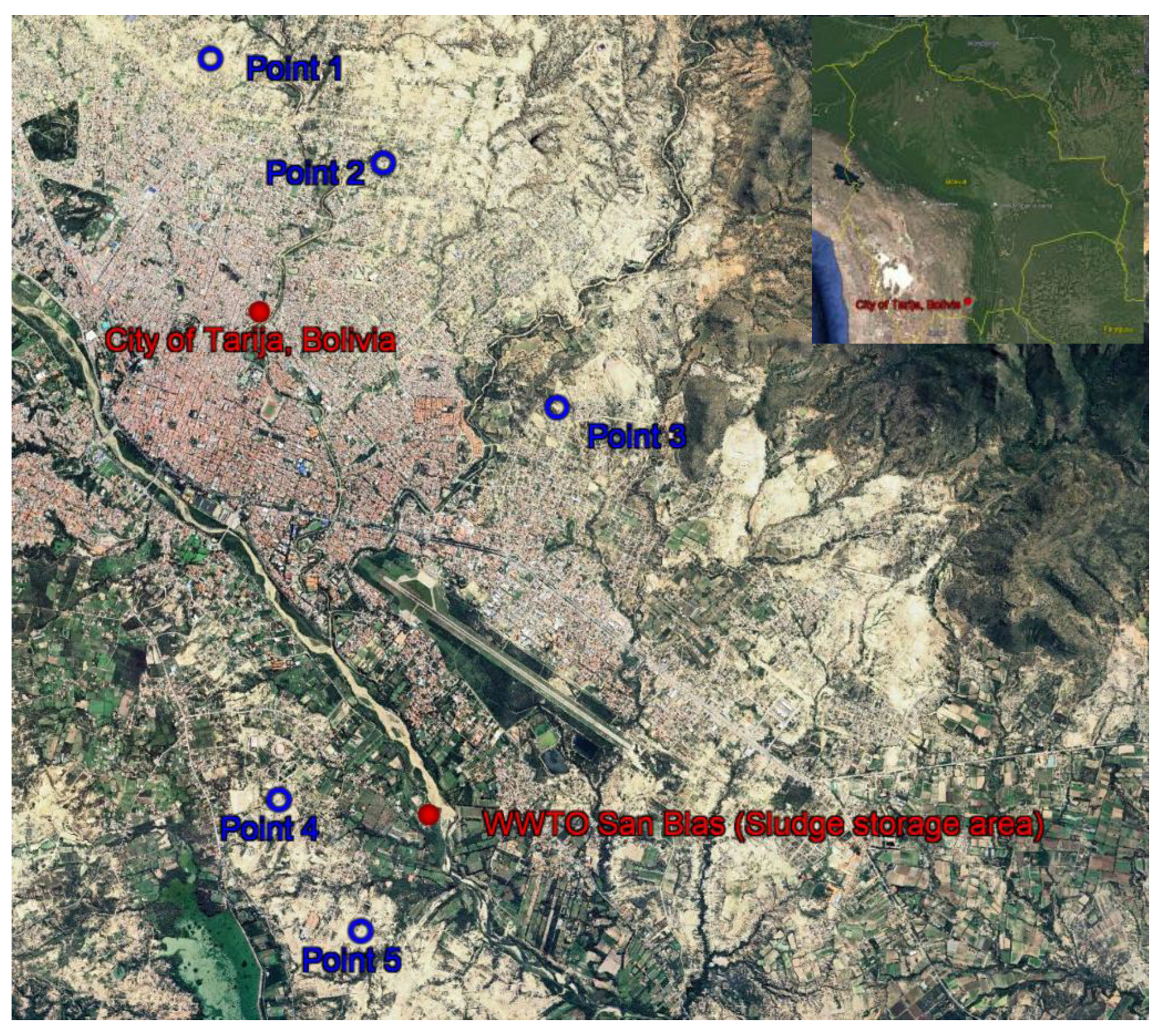
Figure 1. sampling and study areas.
Preprints 186813 g001
Figure 2. Collection and location of residual sludge.
Preprints 186813 g002
Figure 3. sludge weight reduction for each increase in incineration temperature.
Preprints 186813 g003
Figure 4. Specific gravity of the ashes for each incineration.
Preprints 186813 g004
Figure 5. Ash from biosolids generated by incineration at 900 °C.
Preprints 186813 g005
Figure 6. Specific gravity of the ashes for each incineration.
Preprints 186813 g006
Figure 7. Liquid Limit soil + biosolids ash.
Preprints 186813 g007
Figure 8. Plasticity chart: soil + biosolids ash.
Preprints 186813 g008
Figure 9. Proctor soil + biosolids ash.
Preprints 186813 g009
Figure 10. Maximum dry density: Proctor soil + biosolids ash.
Preprints 186813 g010
Figure 11. Internal Friction: soil + biosolids ash.
Preprints 186813 g011
Figure 12. Cohesion: soil + biosolids ash.
Preprints 186813 g012
Figure 13. Compressibility index: soil + biosolids ash.
Preprints 186813 g013
Figure 14. CBR Expansion: soil + biosolids ash.
Preprints 186813 g014
Figure 15. CBR Vs. dry density: soil + biosolids ash.
Preprints 186813 g015
Table 1. Specific gravity of soil + biosolids ash.
Test % ash Gs Decrease
1 0 2.78 0.00
2 5 2.38 -14.36
3 10 2.40 -13.55
4 15 2.41 -13.31
5 20 2.36 -15.12
6 25 2.32 -16.43
7 30 2.31 -16.91
Table 2. Liquid Limit and Plastic Limit of soil + biosolids ash.
Soil + Ashes LL LP IP
0% 36.5 25.2 11.3
5% 35.5 27.5 8
10% 34 29.5 4.5
15% 33 26.7 6.3
20% 34.3 27.3 7
25% 35 30.9 4.1
30% 36.3 28 8.3
Table 3. CBR: Soil expansion + biosolids ash.
Samples (number of blows) Expansion (natural soil) Expansion (5% Ash) Expansion (10% Ash) Expansion (15% Ash) Expansion (20% Ash) Expansion (25% Ash) Expansion (30% Ash)
1 1.40% 1.500% 1.261% 1.30% 2.50% 2.65% 2.98%
2 0.90% 1.050% 0.730% 0.80% 2.48% 2.58% 2.75%
3 0.85% 1.000% 0.720% 0.75% 2.30% 2.44% 2.55%
Disclaimer/Publisher’s Note: The statements, opinions and data contained in all publications are solely those of the individual author(s) and contributor(s) and not of MDPI and/or the editor(s). MDPI and/or the editor(s) disclaim responsibility for any injury to people or property resulting from any ideas, methods, instructions or products referred to in the content.
Copyright: This open access article is published under a Creative Commons CC BY 4.0 license, which permit the free download, distribution, and reuse, provided that the author and preprint are cited in any reuse.
Prerpints.org logo

Preprints.org is a free preprint server supported by MDPI in Basel, Switzerland.

Subscribe

Disclaimer

Terms of Use

Privacy Policy

Privacy Settings

© 2025 MDPI (Basel, Switzerland) unless otherwise stated