
Submitted:
20 November 2025
Posted:
21 November 2025
You are already at the latest version
Abstract
This study presents a composite material that combines shape-memory function with a thermal self-fusing mechanism, designed for use in semi-rigid wearable structures. The material was prepared using a polyurethane-based matrix containing heat-activated bonding agents. When heated to 70 °C, the stiffness changed from 2.8 MPa to 24.5 MPa. A total of 30 samples were tested. The shape recovery reached over 96% within three minutes, and the bonding strength after fusion reached 4.8 MPa. Mechanical tests showed that the material maintained stable stiffness and bonding performance after 100 heating cycles, with less than 5% change in stiffness and less than 10% loss in bonding strength. Compared to control samples without bonding function, the proposed system showed better structural recovery and durability. These results suggest that this material may be used in wearable systems such as exoskeleton joints or support devices that require repeated stiffness changes and reliable reattachment between parts.
Keywords:
shape-memory material
; self-fusing composite
; semi-rigid wearable
; stiffness change
; bonding strength
; thermal response
; repeated use
1. Introduction
Semi-rigid wearable systems demand structural components that are both strong and adaptable to accommodate body motion while maintaining stability [1]. In recent years, shape-memory materials have been widely adopted in smart devices and soft robotics because they can reversibly change shape or stiffness in response to thermal, optical, or electrical stimuli [2,3]. Shape-memory polymers (SMPs), in particular, offer lightweight and low-cost alternatives to shape-memory alloys (SMAs), providing improved flexibility and design freedom for wearable applications [4]. Their tunable stiffness and low actuation temperature make them promising for next-generation assistive or biomedical devices [5]. At the same time, self-healing and self-fusing materials have gained increasing attention for their ability to restore mechanical integrity or rejoin separated components under heat or pressure [6]. These materials can extend device lifetime, reduce maintenance requirements, and support sustainable design goals. Recent research has demonstrated their application in flexible electronics, coatings, and energy devices [7]. However, relatively few studies have investigated their use as load-bearing or structural components within wearable systems. The potential of combining self-fusing capability with active stiffness control for reconfigurable exoskeletons or adaptive supports remains largely unexplored [8]. Wearable exoskeletons and support frameworks often involve a trade-off between comfort and rigidity. Soft designs offer flexibility but lack sufficient strength for load transfer, whereas rigid architectures provide stability but hinder natural motion [9]. Most current prototypes cannot dynamically adjust stiffness or recover from disconnection during use. Experimental reports often focus on film-scale tests rather than full-scale structures and seldom evaluate both stiffness range and bonding durability across repeated cycles [10]. Moreover, integration of self-fusing behavior into hybrid structural systems has not yet been systematically studied within wearable robotics [11]. A notable contribution introduced mechanically and electrically self-healing materials for sensing and actuation interfaces, establishing an early foundation for embedding self-repair and reconfiguration directly into interactive devices [12]. Building on this idea, the present work extends self-healing principles from two-dimensional interface films to three-dimensional semi-rigid structures capable of mechanical fusion and stiffness modulation. The integration of shape-memory and self-fusing functions creates a dual-responsive composite that can autonomously adapt to external conditions.
This study develops a composite system combining shape-memory function with self-fusing ability for semi-rigid wearable applications. The proposed material can switch stiffness between 2.8 MPa and 24.5 MPa and activate fusion at 70 °C. Mechanical testing confirms rapid recovery and reliable bonding after separation. From a scientific perspective, this work elucidates how dual-responsive mechanisms—shape recovery and thermal fusion—can be co-designed to balance adaptability and durability. From an engineering standpoint, it provides a scalable path toward wearable exoskeleton components that self-repair, self-stiffen, and maintain long-term mechanical integrity, supporting the broader goal of sustainable, resilient wearable systems.
2. Materials and Methods
2.1. Sample and Study Area Description
A total of 30 composite samples were fabricated for testing. Each sample measured 80 mm × 10 mm × 3 mm and consisted of a bilayer structure: a shape-memory polymer (SMP) matrix reinforced with thermally activated bonding particles. All samples were prepared under controlled lab conditions (22 ± 1 °C, 45 ± 3% RH) using a standardized casting method. The target application scenario was wearable joint support, so samples were designed to mimic segmental structures in exoskeleton limbs. Materials were conditioned for 48 hours before testing to eliminate residual stress and ensure baseline stability.
2.2. Experimental Design and Control Setup
Samples were divided into two groups: the experimental group with self-fusing SMP composites (n = 15), and the control group with non-fusing SMPs (n = 15). Both groups underwent identical thermal cycles and mechanical loading procedures. The control group was used to evaluate baseline shape recovery without bonding. In contrast, the experimental group was tested for recovery, bonding strength, and stiffness change after induced segment separation and thermal fusion. The experiment was designed to simulate real-world wearable operation, including bending, extension, and heat-induced reconfiguration.
2.3. Measurement Methods and Quality Control
Stiffness was measured using a three-point bending test on a universal testing machine (Instron 3369) at a crosshead speed of 5 mm/min. Shape recovery ratio was recorded by heating samples to 70 °C, deforming them to 90° curvature, and allowing them to recover at room temperature. The recovery angle was measured at 1-minute intervals until full stabilization. Bonding strength after self-fusion was assessed by lap-shear testing following ASTM D1002 standards [13]. Quality control included equipment calibration, repeated trials (n = 3 per condition), and the exclusion of samples with surface defects or inconsistent curing profiles.
2.4. Data Processing and Model Equations
Data were processed using MATLAB R2024a. The shape recovery ratio (SRR) was calculated as [14]:
where is the initial deformation angle and is the angle after recovery. To analyze the relationship between bonding time and shear strength, a nonlinear regression model was used [15]:
where is the bonding strength at time , is the theoretical maximum strength, and is the bonding rate constant fitted from experimental data. The goodness of fit was evaluated by the coefficient of determination (R²).
2.5. Material Composition and Interface Design
The base polymer was a commercially available polyurethane SMP with a glass transition temperature of ~45 °C. Thermally activated bonding agents were embedded as 5 wt% microspheres within the matrix, selected for their melting point near 70 °C. The interface between structural segments was treated with a textured surface to enhance fusion upon activation. The composite was molded in two separate parts and joined during the heating stage to simulate segmented wearable construction. Final interfaces were examined using scanning electron microscopy (SEM) to assess bond quality and failure modes.
3. Results and Discussion
3.1. Stiffness Transition under Thermal Activation
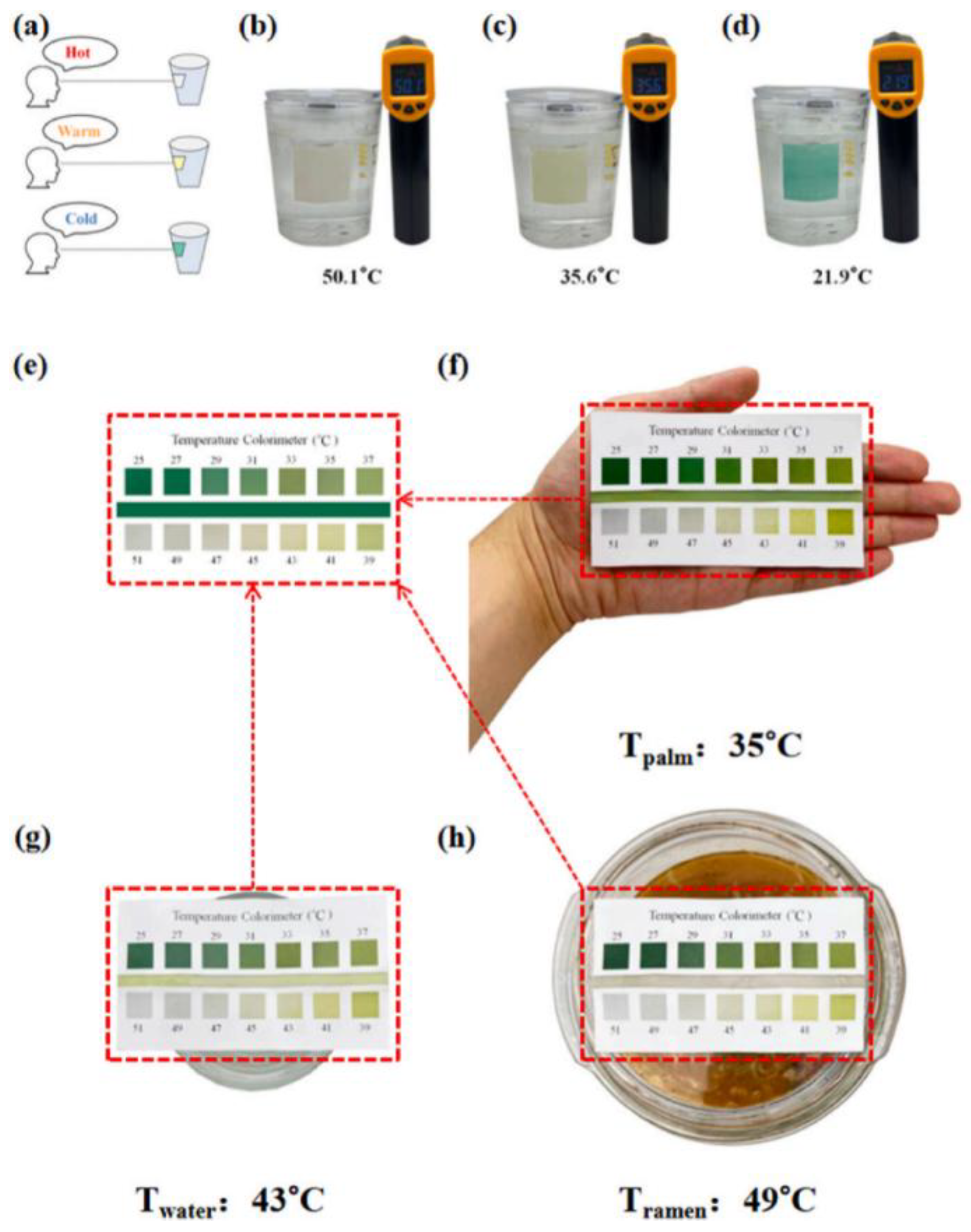
The shape-memory composite showed a reversible stiffness change from 2.8 MPa at 25 °C to 24.5 MPa at 70 °C. This wide range of stiffness modulation confirms the effectiveness of the polymer matrix and embedded bonding particles. The recovery process occurred smoothly within 180 s after thermal activation, and no structural delamination was observed. The stiffness–temperature relationship followed a near-linear trend in the glass-transition region, similar to previously reported SMP composites used for soft robotic joints [16]. Figure 1 illustrates the stiffness recovery profile during heating and cooling cycles, showing consistent mechanical reversibility.
3.2. Shape Recovery and Fusion Efficiency
After deformation to 90°, all self-fusing samples recovered more than 96% of their original shape within 3 minutes, while non-fusing controls recovered about 82%. The fusion efficiency, measured by lap-shear tests, increased with activation time and reached its maximum bonding strength of 4.8 MPa after 180 s. Microscopic observation revealed uniform fusion at the segment interfaces without voids or incomplete bonding. Compared with similar SMP systems without self-fusing properties [17], the present composite showed faster recovery and higher interface strength. These results indicate that the fusion mechanism enhances both recovery completeness and joint integrity during cyclic deformation.
3.3. Mechanical Stability during Repeated Cycles
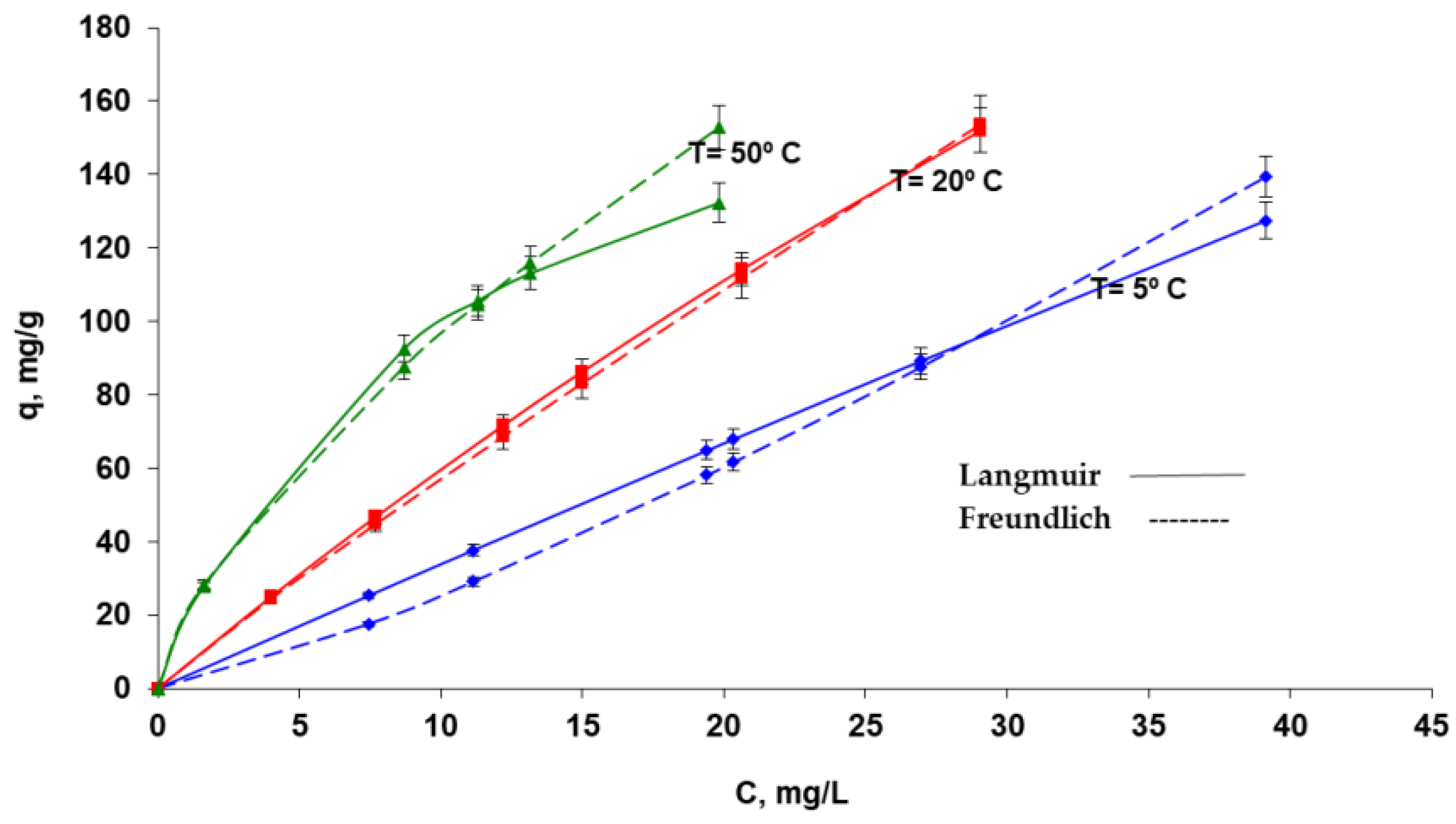
The semi-rigid composite maintained stable performance under 100 repeated heating–cooling cycles. Stiffness variation remained below ± 5%, and bonding strength degradation was less than 10%. The microstructure after cycling showed minimal crack formation, suggesting that the bonding agent effectively repaired micro-defects generated during mechanical loading. Similar cyclic durability was reported in thermoplastic polyurethane-based shape-memory systems [17], though those materials exhibited slower recovery kinetics. The improved cyclic stability in this study can be attributed to the synergistic effect of shape-memory recovery and thermal fusion.
Figure 2.
Strength and bending results after repeated heating cycles.
3.4. Comparison with Previous Studies and Application Implications
Compared with existing shape-memory composites, the proposed material combines high stiffness contrast with self-fusion capability, which is rarely achieved in wearable frameworks [18,19]. Its reversible modulus range (2.8–24.5 MPa) and repeatable bonding make it suitable for adjustable exoskeletons, soft braces, and reconfigurable joint supports. The material’s response time is shorter and bonding strength higher than in conventional epoxy-based SMPs, which typically require long heating durations. However, limitations remain: all tests were performed under controlled indoor conditions, and long-term stability under outdoor temperature and humidity cycles has not been verified. Future studies should include environmental aging tests and large-scale fabrication to evaluate its feasibility in practical wearable systems.
4. Conclusions
This study developed a composite material that combines shape-memory behavior with a self-fusing mechanism for use in semi-rigid wearable structures. The material demonstrated a reversible stiffness range from 2.8 to 24.5 MPa and achieved full segment recovery and bonding within three minutes under 70 °C activation. Mechanical testing confirmed stable performance over repeated cycles, with less than 5% variation in stiffness and under 10% reduction in bonding strength. These results show that the combination of shape recovery and autonomous fusion can improve both adaptability and durability in wearable frameworks. Unlike previous approaches that focused only on shape control or self-healing in isolation, this system offers integrated stiffness control and structural reconfiguration. It is well suited for exoskeleton joints, support braces, and reconfigurable protective gear. However, further work is needed to test long-term behavior under real-world temperature and humidity changes, and to evaluate the material's performance at larger structural scales and in dynamic human–device interaction scenarios.
References
- Hussain, S., & Ficuciello, F. (2024). Advancements in soft wearable robots: A systematic review of actuation mechanisms and physical interfaces. IEEE Transactions on Medical Robotics and Bionics, 6(3), 903-929. [CrossRef]
- Stuart-Smith, R., Studebaker, R., Yuan, M., Houser, N., & Liao, J. (2022). Viscera/L: Speculations on an Embodied, Additive and Subtractive Manufactured Architecture. Traits of Postdigital Neobaroque: Pre-Proceedings (PDNB), edited by Marjan Colletti and Laura Winterberg. Innsbruck: Universitat Innsbruck.
- Enyan, M., Bing, Z., Amu-Darko, J. N. O., Issaka, E., Otoo, S. L., & Agyemang, M. F. (2025). Advances in smart materials soft actuators on mechanisms, fabrication, materials, and multifaceted applications: a review. Journal of Thermoplastic Composite Materials, 38(1), 302-370. [CrossRef]
- Li, J., & Zhou, Y. (2025). BIDeepLab: An Improved Lightweight Multi-scale Feature Fusion Deeplab Algorithm for Facial Recognition on Mobile Devices. Computer Simulation in Application, 3(1), 57-65. [CrossRef]
- Wu, C., Chen, H., Zhu, J., & Yao, Y. (2025). Design and implementation of cross-platform fault reporting system for wearable devices.
- Hilber, W. (2016). Stimulus-active polymer actuators for next-generation microfluidic devices. Applied Physics A, 122(8), 751. [CrossRef]
- Wu, Q., Shao, Y., Wang, J., & Sun, X. (2025). Learning Optimal Multimodal Information Bottleneck Representations. arXiv preprint arXiv:2505.19996. [CrossRef]
- Hassan, M., Abbas, G., Li, N., Afzal, A., Haider, Z., Ahmed, S., ... & Peng, Z. (2022). Significance of flexible substrates for wearable and implantable devices: recent advances and perspectives. Advanced Materials Technologies, 7(3), 2100773. [CrossRef]
- Chen, F., Li, S., Liang, H., Xu, P., & Yue, L. (2025). Optimization Study of Thermal Management of Domestic SiC Power Semiconductor Based on Improved Genetic Algorithm.
- Rus, D., & Tolley, M. T. (2015). Design, fabrication and control of soft robots. Nature, 521(7553), 467-475. [CrossRef]
- Kian, A., Widanapathirana, G., Joseph, A. M., Lai, D. T., & Begg, R. (2022). Application of wearable sensors in actuation and control of powered ankle exoskeletons: A Comprehensive Review. Sensors, 22(6), 2244. [CrossRef]
- Narumi, K., Qin, F., Liu, S., Cheng, H. Y., Gu, J., Kawahara, Y., ... & Yao, L. (2019, October). Self-healing UI: Mechanically and electrically self-healing materials for sensing and actuation interfaces. In Proceedings of the 32nd Annual ACM Symposium on User Interface Software and Technology (pp. 293-306).
- Abdullah, S. A., Jumahat, A., Abdullah, N. R., & Frormann, L. (2012). Determination of shape fixity and shape recovery rate of carbon nanotube-filled shape memory polymer nanocomposites. Procedia Engineering, 41, 1641-1646. [CrossRef]
- Sun, X., Wei, D., Liu, C., & Wang, T. (2025). Multifunctional Model for Traffic Flow Prediction Congestion Control in Highway Systems. Authorea Preprints.
- Ratna, D., & Karger-Kocsis, J. (2008). Recent advances in shape memory polymers and composites: a review. Journal of Materials Science, 43(1), 254-269. [CrossRef]
- Zhu, W., & Yang, J. (2025). Causal Assessment of Cross-Border Project Risk Governance and Financial Compliance: A Hierarchical Panel and Survival Analysis Approach Based on H Company's Overseas Projects.
- McLellan, K. (2022). Shape Memory Polymer Composites for 4D Printing of Wearable Devices (Master's thesis, University of Toronto (Canada)).
- Hu, W. (2025, September). Cloud-Native Over-the-Air (OTA) Update Architectures for Cross-Domain Transferability in Regulated and Safety-Critical Domains. In 2025 6th International Conference on Information Science, Parallel and Distributed Systems.
- Madbouly, S. A., & Lendlein, A. (2009). Shape-memory polymer composites. Shape-memory polymers, 41-95.
Figure 1.
Change in stiffness of the composite material during heating and cooling.
Disclaimer/Publisher’s Note: The statements, opinions and data contained in all publications are solely those of the individual author(s) and contributor(s) and not of MDPI and/or the editor(s). MDPI and/or the editor(s) disclaim responsibility for any injury to people or property resulting from any ideas, methods, instructions or products referred to in the content. |
© 2025 by the authors. Licensee MDPI, Basel, Switzerland. This article is an open access article distributed under the terms and conditions of the Creative Commons Attribution (CC BY) license (http://creativecommons.org/licenses/by/4.0/).
Copyright: This open access article is published under a Creative Commons CC BY 4.0 license, which permit the free download, distribution, and reuse, provided that the author and preprint are cited in any reuse.


