

Submitted:
04 January 2026
Posted:
07 January 2026
You are already at the latest version
Abstract
Drug discovery is a complex, multi-parameter optimization process. I argue that a greater emphasis on optimizing binding affinity will accelerate the development of new medicines. Note that “optimizing” is not always synonymous with “maximizing.” While affinity is certainly not the only thing that matters, the value of optimizing drug – receptor interactions is profound and often underappreciated. Optimizing affinity provides seven distinct benefits: achieving potent tool compounds more quickly; making compounds with increased potency; making more selective compounds; optimizing drug candidates more quickly; encouraging the pursuit of more synthetically challenging compounds; expanding chemical diversity during lead optimization; and minimizing interactions with "avoid-ome” targets that lead to poor ADME and tox properties. Affinity should be viewed as a key strategic component throughout the entire discovery process – balancing the level of on-target engagement appropriate to the specific mechanism being pursued alongside the need for chemical diversity and the proactive de-risking of off-targets including the avoid-ome. A “checklist” of practical suggestions is offered to enable project teams to more fully embrace the challenges of affinity optimization.
Keywords:
drug discovery
; affinity
; potency
; efficacy
Introduction
A commonly held view among drug discovery scientists is that “potency is the easy part.” According to this view, it is simple to find compounds that bind to the desired target with nanomolar affinity and exert a desirable biological effect, i.e., are “active” or “potent.” Unfortunately, potency is necessary but not sufficient; as Ralph Hirschmann said, “Discovering an active compound is relatively easy, discovering an important new drug remains unbelievably difficult [1]. The challenges that must be overcome to produce a useful medicine are well understood: demonstrating pharmacological benefit; achieving sufficient selectivity, DMPK, and safety; being able to manufacture the medicine; designing and executing appropriate clinical trials; understanding the true medical benefit versus alternative therapies; and so forth. Successful drug discovery teams understand and address these diverse challenges using a wide variety of strategies. [2]
Potency is here defined as the concentration of drug required to achieve a given biological effect in a biochemical or cellular assay, while efficacy is the degree of pharmacological response at a given dose [1,3]. Both potency and efficacy measure the effect of a drug; they are functional readouts. Conversely, binding affinity is the strength or tightness of the interaction between the biomolecule and the drug. Higher affinity generally, but certainly not always, corresponds with higher potency or efficacy.
While potency is not the whole story, being able to optimize potency dramatically enhances our ability to discover breakthrough medicines. When we can optimize the binding of our drugs to the desired target, it increases the chance of achieving the desired pharmacological response; conversely, when binding to an unintended target, it may lead to toxic effects, or to the metabolic elimination of the drug, or to a tissue distribution which prevents the drug from reaching the desired site of action. Each event, favorable or unfavorable, is driven by intermolecular interactions between the drug and a biomolecule (typically a protein or nucleic acid) in the body. Therefore, the pursuit of improved strategies to measure, predict, and modulate affinity will have profound benefits for drug discovery. I am arguing that we do not put enough effort into optimizing affinity.
For clarity, please note that I am not saying maximize affinity. Optimal affinity depends on the specific case – the drug modality, the pharmacological mechanism of action, the kinetics of binding, and other factors. For simple inhibitors or antagonists, it will generally be true that maximal affinity is better. However, for other situations, the optimal affinity will not be the greatest achievable affinity. This will be discussed below.
To be abundantly clear, I am certainly not suggesting that the optimization of a drug’s other properties is unimportant. [3] Successful drugs must balance multiple parameters. Drugs need to reach the site of action in high enough concentration for a long enough period to enable the desired effect. Drugs must also be safe, formulatable, and manufacturable. But any drug must first have sufficient intermolecular interactions to enable a pharmacological response.
The Advantages of Affinity
There are seven distinct advantages that result from optimizing affinity.
Faster to measurable cellular potency.
PROBLEM: Starting points on a drug discovery campaign are generally quite weak – often in the mid-μM or even the mM range. The conversion of these starting points to potent lead molecules, whether by de novo design, optimization of screening hits, or modification of prior known compounds, is generally a slow and error-prone process. At these early stages, the goal is to achieve the threshold level of affinity necessary to exhibit cellular potency.
BENEFIT: Potent tool compounds (lacking fully optimized DMPK properties) enable rapidly evaluating and de-risking novel targets, while providing insights into possible off-target effects. This is a hugely valuable contribution, critically enabled by a deep understanding of, and emphasis on, affinity. Further, for projects in the fields of cancer or infectious disease, potent tool compounds may enable the more rapid identification of problematic drug resistance. The ability to rapidly achieve potency also encourages the exploration that leads to additional diverse chemical starting points, which is hugely valuable for confirming what is learned from target evaluation studies. Similar results achieved with several diverse chemotypes are inherently more trustworthy. Finally, potent tool compounds may provide early insights into possible off-target effects leading to toxicity, giving the team a head start at crafting their design strategy and experimental workflows.
Achieve greater potency.
PROBLEM: Teams often struggle to create molecules with sufficient potency even on well-understood targets.
BENEFIT: Improved binding affinity may lead to greater potency (i.e., a pharmacological response at a lower dose) or greater efficacy (a greater pharmacological response at the same dose). See Figure 1. Improved potency and efficacy, when achieved without worsening the ADME properties of the drug, can lead to lower dose; this reduces the risk of off-target toxicity and may enable alternate routes of administration. [4] Finally, greater affinity enables complex “rule-breaker” molecules to be dosed orally because, despite low oral bioavailability, sufficient concentrations can be delivered to achieve the desired pharmacological benefit. Recent compelling examples include the PCSK9 inhibitor enlicitide [5] and the IL-23 antagonist icotrokinra. [6]
Accelerate the lead optimization process.
PROBLEM: Drug discovery is a frustrating multi-parameter optimization process. While other properties such as bioavailability are being optimized, affinity can be lost, requiring additional rounds of optimization. Even in late-stage lead optimization, a high percentage of compounds lack the requisite affinity to become drug candidates.
BENEFIT: Maintaining the desired levels of affinity and selectivity while optimizing other properties reduces the time and cost of lead optimization and enables exploration of additional lead series. Note also that if fewer resources are needed to optimize the drug candidate, that enables putting effort into additional lead series.
Embolden teams to pursue synthetically challenging compounds.
PROBLEM: Structure-activity relationships are inevitably quite complex. Even “trivial” changes, such as adding a methyl [10] or fluorine [11] can have profound effects but be difficult to synthesize. Naturally, more extensive chemical modifications are often more problematic. (This is why continued investment in advancing the art of chemical synthesis is crucial. [12,13]) Any synthetically challenging molecules will be deprioritized without a compelling case.
BENEFIT: A greater ability to predict affinity would embolden a team to rise to the synthetic challenge. In the best case, it would enable synthesis of a superior compound that would otherwise never be made.
Explore diverse chemical space.
PROBLEM: It is well understood that any given chemical series may ultimately fail, so finding multiple, diverse, novel, attractive chemotypes that offer fundamentally different molecular solutions to the design problem increases the odds of producing a clinical candidate. Many teams do, at the hit to lead stage, pursue multiple series to identify a preferred chemotype. However, even if a team begins with several interesting chemical series, these are typically winnowed out rapidly, and teams rarely put significant efforts on multiple series in the late lead optimization stage.
BENEFIT: Identifying and pursuing multiple, diverse, novel, attractive chemotypes is one of the best ways to increase the odds of producing a clinical candidate. Having multiple leads provides both insurance (in case the first series fails) and the potential for better medicines (if the second series ultimately proves superior). Therefore, teams with a superior understanding of affinity gain a considerable advantage because they can navigate the exploratory process far more effectively.
Avoid the “avoid-ome.”
PROBLEM: The ADME properties and potential safety liabilities of drug candidates are dependent on the interactions of drug candidates with a large and diverse class of proteins such as cytochrome P450s, organic anion transporters, hERG, PXR, serum albumin, and so forth. At a rough estimate there are on the order of a thousand such proteins throughout the body, with more than 250 well characterized in the liver alone. [14] 4The size and diversity of this set of anti-targets, which has been called the “avoid-ome,” [15] creates a daunting kind of selectivity challenge for drug discovery teams.
BENEFIT: By reducing or eliminating the interactions that drug candidates make with anti-targets responsible for undesirable ADME/tox consequences, we can expect both more and better drug candidates. Gradually, the three-dimensional structures of these avoid-ome proteins will be solved, and reliable high-throughput, low-cost assays will be developed to measure the interactions of our drugs with these anti-targets. Our ability to minimize the interactions of our drug candidates with the avoid-ome targets will dramatically speed the lead optimization process.
Possible Objections to an Emphasis on Affinity
It is worth considering a wide range of possible objections to the emphasis that I am placing on affinity. The following list summarizes many discussions with scientists around the world during the past decade. The list can be subdivided into two parts: objections that an emphasis on affinity is misguided or misleading, and objections to its applicability to more challenging discovery efforts.
- (A)
- Objections that a Focus on Affinity is Misguided or Misleading
Objection: You are casting drug discovery as a problem of binding affinity and ignoring everything else - that is your hammer.
- No. I am not suggesting that we ignore other properties! I agree that many other complex properties contribute to achieving low dose effective medicines. However, intermolecular interactions drive biological consequences; understanding binding is fundamental. I am arguing that somewhat more emphasis should be placed on optimizing these interactions.
Objection: If I focus too much on binding affinity, I am likely to harm the physical properties of my compounds – either adding too much grease, or too many hydrogen bonding groups. So by emphasizing affinity, I fear that I will actually lower my odds of success.
- As mentioned above, affinity is not the only thing that matters, and the design process must take other factors into consideration. Focusing on practical measures to balance affinity and lipophilicity is essential, as is keeping track of hydrogen bonding groups that cannot be shielded within intramolecular H-bonds. In the end, the goal is the lowest possible dose, which will depend on multiple factors.
Objection: How can you measure affinity in a relevant way? Experiments in a test tube do not incorporate the complex environment within a living organism.
- I agree one must be mindful of the risk that a simple biochemical measurement will not capture important subtleties of the intermolecular environment in which the drug interacts with its target. However, empirical evidence shows there is a reasonable correlation between biochemical affinity and cellular potency; biochemical measurements generally provide valuable information.
Objection: Lead optimization teams achieve potency already – what is the problem?
- The process is highly inefficient. Even on late-stage projects, a significant percentage (typically one-third to two-thirds) of the compounds being made do not bind with sufficient affinity and selectivity to become drug candidates. [16]
- The process is painfully slow. Teams will typically spend at least a year – and usually much longer -- optimizing their lead compounds. [16]
- Most teams put significant effort only into a single lead series, increasing the risk of failure.
- Many teams fail to produce a development candidate, especially when working on challenging targets.
Objection: More potent drugs will hit structurally related anti-targets harder, leading to toxicology risks.
- Yes, improved affinity puts a greater emphasis on selectivity. If we can design for affinity, we can also design away from anti-targets.
Objection: Isn’t the real point that you need to improve potency – the activity of compounds in cellular assays?
- Yes, cellular potency will help achieve an effective low-dose medicine [Figure 1], and in most cases, greater affinity will help achieve greater cellular potency. Further, for agonists, being able to optimize the precise intermolecular interactions between ligand and target will help produce the desired pharmacological effects.
- (B)
- Objections that a Focus on Affinity is Irrelevant
Objection: What about phenotypic programs with unknown targets?
- As chemical biology techniques continue to evolve, it will become increasingly common for the target(s) of our drugs to be known.
- However, even where that is not the case, understanding the binding of our drugs to the “avoid-ome” [15] will enable faster and more certain candidate optimization.
Objection: My biggest problem is target selection and biological validation.
- Often the best way to assess a target is with “tool” compounds, which complement information available from human genetics or knock-out or knock-down technologies. Such tool compounds must be reasonably potent, selective, and ideally possess DMPK properties suitable (not optimized) for dosing in a target animal. Shortening the time required to produce such tool compounds would dramatically improve the target validation process.
Objection: My biggest problem is toxicology.
- Optimized affinity (coupled with maintaining excellent ADME properties) will enable a lower dose, reducing the chance of random off-target toxicities, including the risk of idiosyncratic tox. [17]
- Improved selectivity against neighboring “anti-targets” also reduces toxicological risk.
- Having multiple structurally distinct chemotypes increases the chance of project success because toxic effects seen in preclinical studies often differ between chemical series.
- Eliminating interactions with “avoid-ome” targets will further reduce qwqtoxicological risk and improve ADME.
Objection: How does affinity help me with respect to novel modalities such as glues and heterobifunctionals?
- The field of proximity enhancement is progressing rapidly. [18] Such drugs share a common mechanistic trait: they form ternary complexes with two biomolecules. The analysis of such three-body systems is complex and counter-intuitive. [19] Understanding the mechanistic subtleties of protein degradation is equally challenging. [20] In such complex three-body systems, a deeper understanding of the relationship between the strength of the intermolecular interactions and the resulting pharmacology will guide the design of optimal compounds. This is also why advances in chemoproteomics [21] and biophysics [22] are so crucial.
Objection: How does affinity apply to drugs with long residency times?
- The binding of covalent compounds depends on molecular recognition to form the necessary reaction intermediates on a reasonable time scale. Further, the binding of slow off-rate reversible inhibitors generally involves protein conformational changes which depend on favorable intermolecular interactions between drug and protein.
Objection: How does affinity apply to agonists?
- As with heterobifunctional drugs and glues, the analysis is highly complex. An agonist must first bind to its target with affinity sufficient to trigger the requisite conformational changes to achieve a pharmacological response. Understanding these intermolecular interactions enables design.
Objection: Late stage, idiosyncratic tox can arise for many reasons, none of which can currently be predicted. How do you address this?
- While relatively rare, this is indeed a serious medical issue. Understanding the underlying mechanisms driving such events, and learning how to avoid them, is a challenging problem that is likely to continue to plague the field for several decades.
- Indirectly, a deeper understanding of affinity enables the generation of multiple diverse chemotypes which are unlikely to suffer from the same idiosyncratic effects. However, since idiosyncratic toxicity may not appear until late in clinical trials, the availability of multiple chemotypes at the research stage may not offer immediate relief. What will have a far greater impact will be the ability to identify the potential for idiosyncratic toxicology at the preclinical stage, assisted by a deeper understanding of the avoid-ome and the ability to predict the range of possible human metabolites with greater accuracy.
- Optimized affinity leading to lower dose reduces the risk of idiosyncratic tox. [17]
Objection: How does this help me with biologics?
- Potency and selectivity are equally relevant to the design of biologics.
- For biologic drugs that form multimeric complexes (ADCs, bispecifics, and the like) understanding the intermolecular interactions will be equally challenging – and equally important – as in small molecule proximity enhancing medicines.
- The incorporation of non-standard amino acids and post-translational modifications (sugars, phosphates, sumoyl groups, and so forth) holds the potential to greatly increase the utility of many biologic agents. This requires optimizing the interactions of these non-standard moieties with macromolecular targets.
Objection: Most of my targets these days are highly complex molecular machines where obtaining relevant insight into drug binding affinity is quite challenging.
- Many targets remain “undruggable” because we lack a useful chemical starting point. If a target is “un-screenable” (meaning no suitable screen can be devised and executed) or “un-ligandable” (meaning a screen is possible but fails to produce useful chemical matter), that target is de facto “undruggable.”
- Even in cases with chemical matter, discerning the structure-function relationships of complex intracellular multi-component machines will remain daunting for some time.
- In cases without information about the target structure(s), we can view them as comparable to phenotypic programs, for which structural insights into avoid-ome targets should assist with compound optimization by preventing ADME and tox challenges.
- Of great utility is the continued evolution [23,24,25] of the field of chemical proteomics. [26] Emerging methods can accurately measure compound affinity directly in cells or cell lysates. Such assays are particularly useful for drugging complex molecular machines that are best studied in their native cellular environments.
- Finally, as the field of structural biology continues to mature, and as we further improve our ability to predict structures in silico, our ability to understand the binding of our drugs to these complex multi-component systems will improve.
Discussion
An increased emphasis on affinity provides significant benefits for drug discovery in the seven distinct ways described above: achieving multiple potent early tool compounds more quickly; making compounds with increased potency; making more selective compounds; optimizing drug candidates more quickly; pursuing more synthetically challenging compounds; expanding chemical diversity during lead optimization; and making better drugs by evading the avoid-ome: the many targets responsible for ADME and tox challenges. These benefits will occur to differing degrees at different stages of different projects.
To amplify one of these seven advantages, consider the challenge of validating biologically novel, risky targets. Generally, such targets will be viewed as very difficult to drug. The rapid creation of tool compounds is of immense value; however, such compounds rarely have desirable ADME properties. Fortunately, there now exists a range of exposure-enabling technologies such as the use of P450 inhibitors, [27] efflux pump blockers, [28,29] or diverse strategies to formulate and deliver drugs through non-oral routes. [30,31] Such methods often render such compounds suitable for achieving pharmacologically relevant exposures, enabling sufficient target validation to justify further efforts at PK optimization.
Another important advantage of gaining a detailed understanding of affinity is its transferability. Discovery of high-affinity compounds against one difficult target often enables success against related but even harder targets. The recent discovery of non-covalent KRAS G12D inhibitors, building on the previous success of the covalent G12C compounds, nicely illustrates this point. [32]
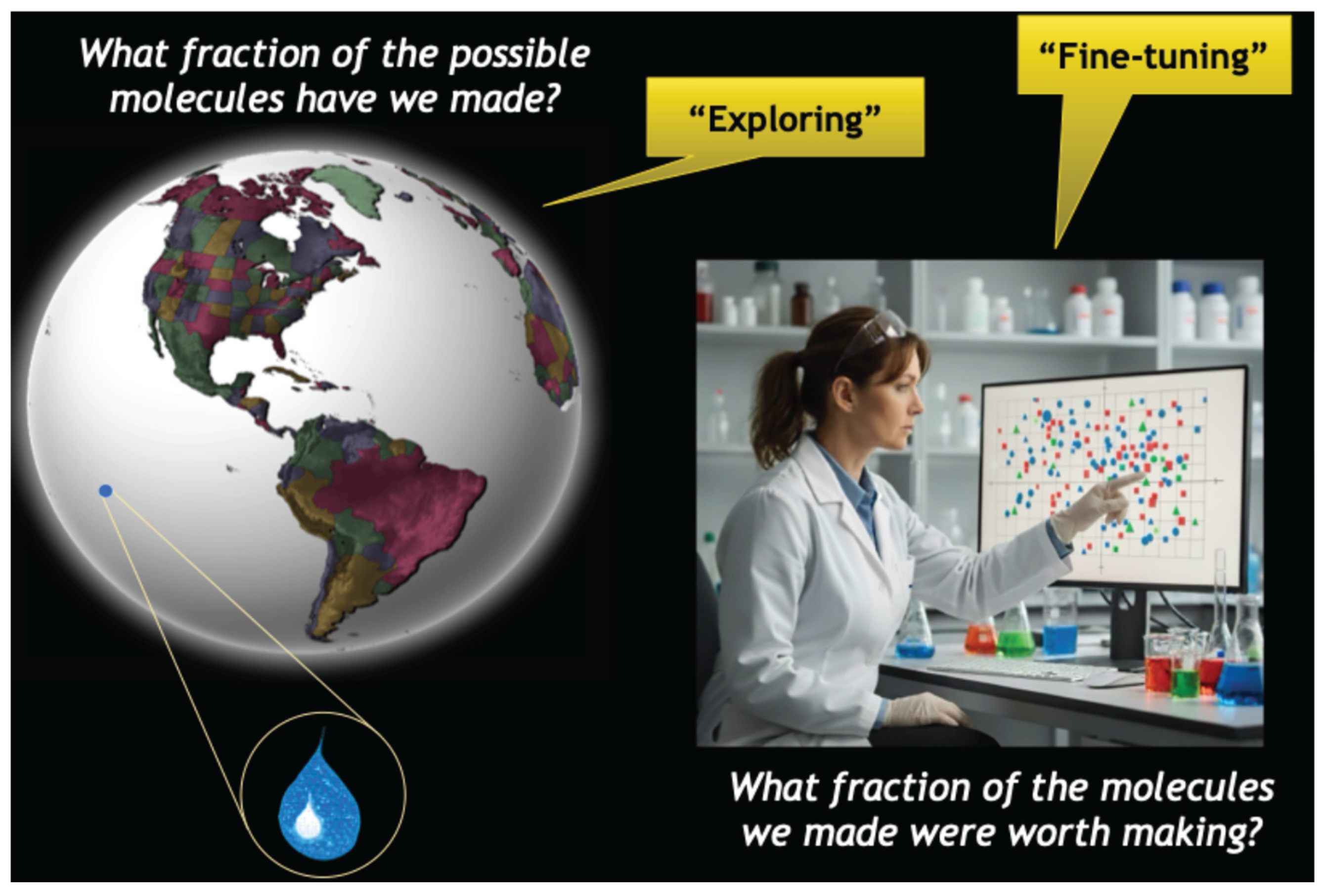
To clarify the varied ways in which these seven benefits will be realized, consider how the chemical strategy of any discovery team may be described as a mix of exploring and fine-tuning. [Figure 2].
- Exploring refers to sampling chemical space broadly. The operative questions are, “How much of chemical space have I explored?” and “How can I prioritize my exploration?” However, in the history of medicinal chemistry we have collectively sampled only a tiny fraction of the potential “drug space” – literally less than “a drop in the ocean.” Project teams often struggle to find multiple distinct lead series and have limited insights into how best to carry out a broader search of chemical space. Fortunately, our community appears to have overcome the destructive mindset that considered only a narrow spectrum of molecules to be “drug-like” based on arbitrarily defined “rules.” Teams are more adventurous now, and a deeper understanding of affinity helps to guide exploration.
- Fine-tuning refers to our ability to make more subtle changes to optimize the properties within a lead series. The relevant question while fine-tuning is, “What fraction of the molecules I’m making are good choices?” When we choose to make specific analogs within a given series, we are attempting to optimize multiple parameters simultaneously. We must admit that we are not very effective at fine-tuning. Many project teams never produce a drug candidate, and the teams that do succeed generally make thousands of compounds during a multi-year process to select one “winner.” A deeper understanding of affinity can dramatically improve the overall efficiency of the search process.
Broadly speaking, project teams tend to explore in earlier stages and fine-tune during lead optimization. However, each of the seven affinity benefits can be applied to both the exploration and fine-tuning phase, to varying degrees, depending on the specific challenges of a given project. In the exploration phase, a dramatically improved chemotype may be discovered that would have otherwise been missed. In the fine-tuning stage, a more subtle understanding of affinity may enable the refinement of molecular properties within an existing series or provide impetus to pursue synthetically challenging molecules.
Cellular potency much higher than binding affinity is always noteworthy. It may provide clues to the drug’s mechanism of action, or suggest promiscuity, or it may indicate that the drug has favorable properties such as unexpectedly high intracellular or tissue concentration. Sorting out these possible explanations is always necessary and benefits greatly from understanding the molecule’s affinity.
Understanding affinity can be challenging, especially when dealing with complex targets and novel drug modalities. Continued advances in both experimental [21,22] and computational [33] methods will help us navigate such situations.
Given the prominence and complexity of glues and heterobifunctional molecules, it is worth highlighting the fact that even here, affinity plays a crucial role. Higher ternary complex affinity and favorable cooperativity do correlate with stronger cellular degradation, [34,35,36] and the kinetics of PROTAC ternary complex formation plays an essential role in effective target degradation. [20,37] Robust biophysical and biochemical methods now enable the quantification of these critical parameters. [37,38,39]w Taken together, the emerging literature strongly supports the relevance of “affinity thinking” in the design of glues and degraders.
It should be obvious that it would be foolish either to pursue poor chemical series with high affinity or to focus solely on affinity. Rather, my point is that chemists often stop trying to improve affinity once nanomolar levels have been achieved. While such levels are often sufficient, additional affinity may dramatically simplify the multi-parameter optimization process, especially for challenging targets. PK challenges simply become more manageable if less circulating drug is needed at the site of action to achieve the desired effect. [40] Lower total body dose compounds also tend to be safer.
For these reasons, I am suggesting that throughout the duration of a research project, the pursuit of further intrinsic affinity gains is a sound strategy. Improved affinity, if not offset by setbacks in ADME parameters, will generally lead to better outcomes. For this reason, deliberately simple rubrics such as LipE [41] and VLE [42] are useful in practice, as is careful attention to half-life. [43]
I also do not wish to minimize the importance of addressing the many other challenges that plague drug discovery. In this Perspective I have already mentioned such topics as: idiosyncratic tox; the ability to run a suitable screen to identify viable chemical starting points; and the complex behaviors of proximity enhancing drugs. Some other challenges include: the effects of residency time on drug action; the subtleties of receptor pharmacology (biased signaling, partial and inverse agonism, and so forth); discerning the structure-function relationships in complex, dynamic, multi-component intracellular machines; and biological target validation. An understanding of ligand-target affinity will only partially address each of these challenges.
Taken together, the arguments presented here suggest an “affinity checklist” for drug discovery teams; for clarity, these practical recommendations are summarized in Box 1.
While not the whole story, affinity matters greatly – and often more than we realize. The path forward is clear. A greater emphasis on the optimization of affinity provides clear, diverse, and significant benefits and will accelerate the creation of revolutionary medicines.
Box 1. The Affinity Advantage: Practical Implications for Project Teams.
- Treat affinity optimization as a primary objective throughout the entire discovery process. It’s a powerful lever that can speed and de-risk multi-parameter optimization.
- Optimize, don’t blindly maximize, affinity. Define the optimal affinity for your modality / mechanism of action. Always consider the effect of the drug’s target engagement e.g., off-rate.
- Use affinity optimization to rapidly generate cell-potent tool compounds. These can help validate targets and identify off-target liabilities.
- Enable lower dose through optimized affinity. Of course, this requires that desirable ADME properties are maintained; focusing only on affinity will lead to failure. In cases where maximal affinity is desirable, do not reflexively stop at single digit nanomolar.
- Protect affinity (and selectivity) while tuning other properties. Maintaining a sharp focus on affinity will avoid “giving it away,” reducing the number of required optimization cycles.
- Treat selectivity as inseparable. Understand the degree of selectivity required. Ensure the design process emphasizes the binding to closely related anti-targets, including mutant versus wild-type when required.
- Actively profile and design away from the avoid-ome. To the greatest extent possible given the available knowledge, steer clear of such targets as CYPs, transporters, hERG, and PXR to prevent ADME/tox surprises and speed lead optimization.
- Don’t prematurely collapse down to one lead series. Deliberately keep multiple, structurally distinct chemotypes alive deeper into lead optimization as insurance and to find better solutions.
- Let affinity predictions justify harder synthesis. When the binding hypothesis is compelling, prioritize synthetically challenging analogs that could unlock step-changes in SAR.
- Use biochemical affinity as a practical guide, but with caveats. Assume it’s informative and often correlates with cellular potency but remain mindful of the essential contextual differences between test tube and organism.
- Be explicit about whether you are “exploring” or “fine-tuning” and use affinity appropriately in each situation. Whether seeking broader chemical coverage of your target at the hit-finding stage or attempting to precisely tweak molecular properties in late lead opt, your understanding of affinity should guide your design process.
Acknowledgments
I am deeply grateful to the reviewers for their thoughtful and constructive comments, which I have endeavored to address carefully. I believe the manuscript has been substantially strengthened by their contributions.
References
- Hirschmann, R. Medicinal Chemistry in the Golden Age of Biology: Lessons from Steroid and Peptide Research. Angewandte Chemie International Edition in English 1991, 30, 1278–1301. [Google Scholar] [CrossRef]
- Murcko, M. A. What Makes a Great Medicinal Chemist? A Personal Perspective. J Med Chem 2018, 61, 7419–7424. [Google Scholar] [CrossRef]
- Brunton, L. L..; Knollmann, B. C. Goodman & Gilman’s The Pharmacological Basis of Therapeutics; McGraw Hill, 2023. [Google Scholar]
- Vargason, A. M.; Anselmo, A. C.; Mitragotri, S. The evolution of commercial drug delivery technologies. Nat Biomed Eng 2021, 5, 951–967. [Google Scholar] [CrossRef]
- Johns, D. G.; et al. Orally Bioavailable Macrocyclic Peptide That Inhibits Binding of PCSK9 to the Low Density Lipoprotein Receptor. Circulation 2023, 148, 144–158. [Google Scholar] [CrossRef]
- Fourie, A. M.; et al. JNJ-77242113, a highly potent, selective peptide targeting the IL-23 receptor, provides robust IL-23 pathway inhibition upon oral dosing in rats and humans. Sci Rep 2024, 14, 17515. [Google Scholar] [CrossRef]
- Varkaris, A.; et al. Discovery and Clinical Proof-of-Concept of RLY-2608, a First-in-Class Mutant-Selective Allosteric PI3Kα Inhibitor That Decouples Antitumor Activity from Hyperinsulinemia. Cancer Discov 2024, 14, 240–257. [Google Scholar] [CrossRef] [PubMed]
- Ryszkiewicz, P.; Malinowska, B.; Schlicker, E. Polypharmacology: new drugs in 2023–2024. Pharmacological Reports 2025, 77, 543–560. [Google Scholar] [CrossRef]
- Aebersold, R.; et al. How many human proteoforms are there? Nat Chem Biol 2018, 14, 206–214. [Google Scholar] [CrossRef]
- Pinheiro, P. de S. M.; Franco, L. S.; Fraga, C. A. M. The Magic Methyl and Its Tricks in Drug Discovery and Development. Pharmaceuticals 2023, 16, 1157. [Google Scholar] [CrossRef]
- Gillis, E. P.; Eastman, K. J.; Hill, M. D.; Donnelly, D. J.; Meanwell, N. A. Applications of Fluorine in Medicinal Chemistry. J Med Chem 2015, 58, 8315–8359. [Google Scholar] [CrossRef] [PubMed]
- Baran, P. S. Natural Product Total Synthesis: As Exciting as Ever and Here To Stay. J Am Chem Soc 2018, 140, 4751–4755. [Google Scholar] [CrossRef]
- Gaich, T.; Baran, P. S. Aiming for the Ideal Synthesis. J Org Chem 2010, 75, 4657–4673. [Google Scholar] [CrossRef]
- Couto, N.; et al. Quantification of Proteins Involved in Drug Metabolism and Disposition in the Human Liver Using Label-Free Global Proteomics. Mol Pharm 2019, 16, 632–647. [Google Scholar] [CrossRef]
- Fraser, J. S.; Murcko, M. A. Structure is beauty, but not always truth. Cell 2024, 187, 517–520. [Google Scholar] [CrossRef] [PubMed]
- Beckers, M.; Fechner, N.; Stiefl, N. 25 Years of Small-Molecule Optimization at Novartis: A Retrospective Analysis of Chemical Series Evolution. J Chem Inf Model 2022, 62, 6002–6021. [Google Scholar] [CrossRef] [PubMed]
- Nakayama, S.; et al. A Zone Classification System for Risk Assessment of Idiosyncratic Drug Toxicity Using Daily Dose and Covalent Binding. Drug Metabolism and Disposition 2009, 37, 1970–1977. [Google Scholar] [CrossRef]
- Deshaies, R. J. Multispecific drugs herald a new era of biopharmaceutical innovation. Nature 2020, 580, 329–338. [Google Scholar] [CrossRef] [PubMed]
- Douglass, E. F.; Miller, C. J.; Sparer, G.; Shapiro, H.; Spiegel, D. A. A Comprehensive Mathematical Model for Three-Body Binding Equilibria. J Am Chem Soc 2013, 135, 6092–6099. [Google Scholar] [CrossRef]
- Riching, K. M.; Caine, E. A.; Urh, M.; Daniels, D. L. The importance of cellular degradation kinetics for understanding mechanisms in targeted protein degradation. Chem Soc Rev 2022, 51, 6210–6221. [Google Scholar] [CrossRef]
- Niphakis, M. J.; Cravatt, B. F. Ligand discovery by activity-based protein profiling. Cell Chem Biol 2024, 31, 1636–1651. [Google Scholar] [CrossRef]
- Garbagnoli, M.; et al. Biophysical Assays for Investigating Modulators of Macromolecular Complexes: An Overview. ACS Omega 2024, 9, 17691–17705. [Google Scholar] [CrossRef]
- Yin, Y.; et al. Quantification of Binding of Small Molecules to Native Proteins Overexpressed in Living Cells. J Am Chem Soc 2024, 146, 187–200. [Google Scholar] [CrossRef] [PubMed]
- Spradlin, J. N.; Zhang, E.; Nomura, D. K. Reimagining Druggability Using Chemoproteomic Platforms. Acc Chem Res 2021, 54, 1801–1813. [Google Scholar] [CrossRef] [PubMed]
- Conway, L. P.; Li, W.; Parker, C. G. Chemoproteomic-enabled phenotypic screening. Cell Chem Biol 2021, 28, 371–393. [Google Scholar] [CrossRef]
- Leung, D.; Hardouin, C.; Boger, D. L.; Cravatt, B. F. Discovering potent and selective reversible inhibitors of enzymes in complex proteomes. Nat Biotechnol 2003, 21, 687–691. [Google Scholar] [CrossRef]
- Doran, A. C.; et al. Defining the Selectivity of Chemical Inhibitors Used for Cytochrome P450 Reaction Phenotyping: Overcoming Selectivity Limitations with a Six-Parameter Inhibition Curve-Fitting Approach. Drug Metabolism and Disposition 2022, 50, 1259–1271. [Google Scholar] [CrossRef] [PubMed]
- Breedveld, P.; Beijnen, J. H.; Schellens, J. H. M. Use of P-glycoprotein and BCRP inhibitors to improve oral bioavailability and CNS penetration of anticancer drugs. Trends Pharmacol Sci 2006, 27, 17–24. [Google Scholar] [CrossRef]
- Dei, S.; Braconi, L.; Romanelli, M. N.; Teodori, E. Recent advances in the search of BCRP- and dual P-gp/BCRP-based multidrug resistance modulators. Cancer Drug Resistance 2019. [Google Scholar] [CrossRef] [PubMed]
- An, L.; et al. Early Stage Preclinical Formulation Strategies to Alter the Pharmacokinetic Profile of Two Small Molecule Therapeutics. Pharmaceuticals 2024, 17, 179. [Google Scholar] [CrossRef]
- Shah, S. M.; Jain, A. S.; Kaushik, R.; Nagarsenker, M. S.; Nerurkar, M. J. Preclinical Formulations: Insight, Strategies, and Practical Considerations. AAPS PharmSciTech 2014, 15, 1307–1323. [Google Scholar] [CrossRef] [PubMed]
- Wang, X.; et al. Identification of MRTX1133, a Noncovalent, Potent, and Selective KRAS G12D Inhibitor. J Med Chem 2022, 65, 3123–3133. [Google Scholar] [CrossRef] [PubMed]
- Ross, G. A.; et al. The maximal and current accuracy of rigorous protein-ligand binding free energy calculations. Commun Chem 2023, 6, 222. [Google Scholar] [CrossRef] [PubMed]
- Yoon, H.; Rutter, J. C.; Li, Y.-D.; Ebert, B. L. Induced protein degradation for therapeutics: past, present, and future. Journal of Clinical Investigation 2024, 134. [Google Scholar] [CrossRef]
- Kozicka, Z.; et al. Design principles for cyclin K molecular glue degraders. Nat Chem Biol 2024, 20, 93–102. [Google Scholar] [CrossRef]
- Wurz, R. P.; et al. Affinity and cooperativity modulate ternary complex formation to drive targeted protein degradation. Nat Commun 2023, 14, 4177. [Google Scholar] [CrossRef]
- Roy, M. J.; et al. SPR-Measured Dissociation Kinetics of PROTAC Ternary Complexes Influence Target Degradation Rate. ACS Chem Biol 2019, 14, 361–368. [Google Scholar] [CrossRef]
- Shaik, S.; Kumar Reddy Gayam, P.; Chaudhary, M.; Singh, G.; Pai, A. Advances in designing ternary complexes: Integrating in-silico and biochemical methods for PROTAC optimisation in target protein degradation. Bioorg Chem 2024, 153, 107868. [Google Scholar] [CrossRef]
- de Castro, G. V.; Ciulli, A. Estimating the cooperativity of PROTAC-induced ternary complexes using 19 F NMR displacement assay. RSC Med Chem 2021, 12, 1765–1770. [Google Scholar] [CrossRef]
- Miller, R. R.; et al. Integrating the Impact of Lipophilicity on Potency and Pharmacokinetic Parameters Enables the Use of Diverse Chemical Space during Small Molecule Drug Optimization. J Med Chem 2020, 63, 12156–12170. [Google Scholar] [CrossRef]
- Leeson, P. D.; Springthorpe, B. The influence of drug-like concepts on decision-making in medicinal chemistry. Nat Rev Drug Discov 2007, 6, 881–890. [Google Scholar] [CrossRef] [PubMed]
- Roecker, A. J.; et al. Pyrazole Ureas as Low Dose, CNS Penetrant Glucosylceramide Synthase Inhibitors for the Treatment of Parkinson’s Disease. ACS Med Chem Lett 2023, 14, 146–155. [Google Scholar] [CrossRef] [PubMed]
- Gunaydin, H.; et al. Strategy for Extending Half-life in Drug Design and Its Significance. ACS Med Chem Lett 2018, 9, 528–533. [Google Scholar] [CrossRef] [PubMed]
Figure 1.
One benefit of greater affinity is that in some situations, greater affinity can enable greater potency, giving the potential for a lower concentration of drug to be required. All analogies are flawed, but the concept here is that one powerful magnet can secure your child’s drawing to the refrigerator more effectively than many weaker ones. See text for discussion.
Figure 1.
One benefit of greater affinity is that in some situations, greater affinity can enable greater potency, giving the potential for a lower concentration of drug to be required. All analogies are flawed, but the concept here is that one powerful magnet can secure your child’s drawing to the refrigerator more effectively than many weaker ones. See text for discussion.

Figure 2.
The distinction between the stages of “exploring” and “fine-tuning.” While these stages require confronting different challenges, each of the seven benefits of affinity can provide benefits to differing degrees, depending on the specifics of the situation. See text for more details.
Figure 2.
The distinction between the stages of “exploring” and “fine-tuning.” While these stages require confronting different challenges, each of the seven benefits of affinity can provide benefits to differing degrees, depending on the specifics of the situation. See text for more details.
Disclaimer/Publisher’s Note: The statements, opinions and data contained in all publications are solely those of the individual author(s) and contributor(s) and not of MDPI and/or the editor(s). MDPI and/or the editor(s) disclaim responsibility for any injury to people or property resulting from any ideas, methods, instructions or products referred to in the content. |
© 2026 by the authors. Licensee MDPI, Basel, Switzerland. This article is an open access article distributed under the terms and conditions of the Creative Commons Attribution (CC BY) license (http://creativecommons.org/licenses/by/4.0/).
Copyright: This open access article is published under a Creative Commons CC BY 4.0 license, which permit the free download, distribution, and reuse, provided that the author and preprint are cited in any reuse.


