

Submitted:
14 November 2025
Posted:
18 November 2025
You are already at the latest version
Abstract
Copper slag, a by-product of copper ore and concentrate smelting, is rich in non-ferrous metals; therefore, it has been considered a valuable raw material in recent years. This study aimed to compare the extraction of zinc, copper, and cobalt from two types of copper slag from a dump located near the village of Eliseyna, Bulgaria, which differ in mineralogical composition and chemical content, using indirect bioleaching with a spent medium of Aspergillus niger and Penicillium ochrochloron. Chemical leaching with sulphuric acid revealed that zinc and cobalt existed mainly as an acidic-soluble phase in both types of copper slag. In contrast, it contained 50-75% of the total copper content. Each fungal species was cultivated for one week, and the biomass and the spent medium were separated a week later. Owing to the production of citric acid at a higher concentration, A. niger facilitated more efficient base metal recovery. However, their effective recovery from the acidic-soluble phase required leaching at a 5% pulp density and supplementing the spent medium with sulphuric acid. The temperature played a secondary role. Conclusions: The non-ferrous metal extraction from copper slag exposed to weathering using a spent medium supplemented with sulphuric acid was achieved under milder leaching conditions and with better selectivity. In contrast, slag unaffected by weathering behaved as a refractory due to the worsened results of base metal extraction under similar experimental conditions.
Keywords:
copper slag
; fungi
; organic acids
; non-ferrous metals
; spent medium
; bioleaching
; recovery
; selectivity coefficient
1. Introduction
The social evolution of human beings is closely tied to the discovery of new raw materials and the development of suitable methods for their extraction and processing into usable final products. Copper is one of the primary base metals, whose classical method of processing involves ores rich in sulphide, followed by their processing through flotation and smelting at higher temperatures into anodic copper with higher purity as a final product and slag, along with slag, a solid waste, generated at a ratio of 1:2.2 [1]. Due to the growth of industrial sectors such as IT and technologies for green transitions, the higher demand for base metals and some critical raw materials over the past few decades has resulted in the annual growth of copper pyrometallurgy at 2.6% and the worldwide annual copper slag generation of 37.7 million tons [2]. Apart from copper, copper slags contain a significant amount of iron, other valuable metals, such as cobalt and nickel, as well as some toxic elements (arsenic and lead) in some cases [3,4,5]. Therefore, the copper slag, as well as other industrial waste [6,7,8], is regarded as a raw material containing valuable chemical elements whose processing and extraction are a part of their use as a resource of the circular economy [2,9,10,11].
Base metals exist in several different phases in copper slag, such as sulphides, zero valency, oxides, absorbed or encapsulated in the crystal lattice of fayalite, silicates or magnetite, as the distribution of each element among them depends on its specific geochemical properties, characteristic of the raw materials being processed, and the conditions at which the smelting took place [12,13,14]. Therefore, classical methods of mineral resources processing, such as flotation, aim to collect and concentrate sulphides and metallic copper, resulting in a final copper recovery of around 50% of the total copper content in the slag [15]. The method’s inefficiency further increases due to the loss of cobalt and nickel in the generated flotation tailing [16].
Another approach to copper slag processing involves integrating pyrometallurgy and hydrometallurgy, followed by leaching of the treated slag with water or weak acidic solutions. In this case, the recovery of non-ferrous metals is very high, regardless of their initial phase distribution in the slag. For example, copper extraction ranges from 92% to 96% [16,17,18]. It could be achieved by copper slag smelting with a wide range of roasting agents, such as sulphuric acid [19,20,21], slag disintegration at an alkaline pH with different reagents (sodium hydroxide [22], ammonium chloride/ ammonium sulphate [18,23]), as well as in the presence of some strong oxidants (hydrogen peroxide [24,25], sodium chlorate [26], potassium bichromate [27], ferric ions [28],). Although the efficiency and selectivity of base metal extraction from copper slag surpass those of iron and silicon extraction, the industrial application of the processes is limited by the higher operational costs for energy and reagents.
Therefore, another substantial part of the studies is oriented towards the use of (bio)hydrometallurgy for the recovery of valuable metals from copper slags [29,30,31,32]. Their main advantages are that they operate at ambient temperature and pressure, and that lixiviants participating in the leaching process are generated/recycled due to the microbial growth. The process efficiency depends on several factors, including pH, temperature, the liquid-to-solid ratio at which the leaching is carried out, duration of bioleaching, and the chemical and mineral content in the raw material [33,34,35]. Several studies utilise chemolithotrophic bacteria with sulphur-oxidising/ ferrous-oxidising abilities, related to the species Acidithiobacillus thiooxidans, Acidithiobacillus ferrooxidans, and Leptospirillum ferrooxidans, which grow at highly acidic pH levels, thereby enhancing efficient copper and other base metal extraction [36,37,38]. The main drawback of this copper slag bioprocessing approach is the intensive co-leaching of silicon and iron from slag. When the process is carried out at a higher pulp density, it results in a higher iron concentration in the pregnant leach solution and silica gel formation [13,32], respectively.
Apart from chemolithotrophic bacteria, heterotrophic microorganisms also participate in mineral transformations, especially at slightly acidic to alkaline pH levels. In that case, the leaching of metals is mainly due to the following microbial features [7,39,40]:
- Synthesis of exopolysaccharides with a higher surface area, complex chemical structure, and enriched with different functional groups whose role is to leach from the biotope and supply to the microbial cell with macro and microelements needed in their metabolism;
- Metabolic products of the specific oxidation process carried out by microbial cells and secreted into the microenvironment, including organic acids, alcohols, amino acids, CO2, ammonia, and cyanide;
- Complex enzyme systems related to the detoxification of secondary products formed due to the use of oxygen as a final acceptor of electrons in microbes with aerobic respiration.
Several bioleaching mechanisms, including acidolysis, complexolysis, redoxolysis, biosorption, bioaccumulation, and alkalolysis, driven by heterotrophic microorganisms, participate in the bioleaching of base metals from raw materials [41]. Each microbial species with heterotrophic metabolism utilises a narrow range of the aforementioned mechanisms. Accordingly, certain ecological groups, such as fungi producing citric acid, bacteria producing amino acids, ammonifying bacteria, silicate-solubilising bacteria, and cyanogenic bacteria, are distinguished [40].
Therefore, heterotrophic microorganisms are widely studied in the biorecovery of different types of raw material (ores and industrial waste), especially those with a higher content of oxides, carbonates, and silicates [6,39,42]. However, the interaction between heterotrophic microorganisms and raw materials is a complex process. The efficiency of the valuable metals biorecovery depends on factors apart from those aforementioned for chemolithotrophic bacteria, but also on factors, such as microbial adaptation to higher concentrations of heavy metals, indirect control of microbial metabolism by the concentration of some microelements co-leached from the raw material, shear stress of the solid particles on the microbial population in logarithmic growth, etc. [43,44,45]. Therefore, three different techniques of bioleaching, both direct and indirect, are widely studied to determine the optimal conditions for the biorecovery of valuable metals from raw materials, driven by the growth of heterotrophic microorganisms [7,45]. Direct techniques of bioleaching rely on the intimate contact between microbial cells and raw materials. Considering the beginning of this contact, there are two different variants of direct bioleaching. In the direct one-step technique, contact begins from the very start of the leaching process, and the efficiency of base metals bioleaching is strongly related to the rate of microbial growth under relevant conditions (pulp density, pH, agitation rate, etc.). In the direct two-step technique, the contact begins with a delay relative to the start of the strain cultivation, when a substantial amount of microbial biomass has already accumulated. The indirect technique of bioleaching utilises the spent medium, obtained from the growth of the relevant microbial strain, which contains the microbial products (types and concentrations) synthesised at the optimal cultivation conditions. Therefore, bioleaching is a flexible technique that can be adapted to the specific requirements of the solid sample and the raw materials it contains. Operating at ambient pressure and temperature enables the technique to achieve low investment and operational costs, which are the main advantages compared to conventional technological alternatives for processing raw materials [7,38].
This study aimed to compare the biorecovery of copper, zinc, and cobalt from two copper slag samples taken at different depths from a dump near the village of Eliseyna, Bulgaria (distinguishing from each other in the base metals content, mineralogy, and properties), using the indirect technique of bioleaching with a spent medium of the fungi Aspergillus niger and Penicillium ochrochloron and what the effect of pulp density, temperature, and supplementation with different amount of sulphuric acid is on their selectivity over iron leaching. The principal conclusion from the studies being carried out is that the acidity of the spent medium is the primary factor controlling the rate and selectivity of non-ferrous metal leaching from copper slag. However, a higher percentage of copper, zinc, and cobalt recovery requires supplementing the spent medium with sulphuric acid, resulting in a non-selective acidolysis process and the accumulation of iron in the pregnant leach solution.
2. Materials and Methods
2.1. Copper Slag Samples Collection and Characterisation
Two copper slag samples were collected from a copper slag dump near Eliseyna, a village in Northwestern Bulgaria. Copper slag sample F originated from the dump surface where the seasonal amplitude of the temperature and humidity values affected the structure of the solid material. Therefore, the collected copper slag, already fragmented into small pieces, with a size ranging from 2.5 to 10 cm, was sampled. Copper slag sample III was collected at a depth of 1.0 m below the surface from the dump zone, where the material fragmentation is in its initial stage. Therefore, the chemical content and mineralogy of that sample closely reflect the characteristics of copper slag before the onset of secondary weathering and leaching processes. Both samples were transported to a laboratory for grinding by a ball mill to a dominant particle size of 75 µm to 25 µm. The grounded samples were put in dust-free buckets and stored at a lower temperature for further use.
A representative portion of each copper slag sample was subjected to digestion with aqua regia. The content of chemical elements in the resulting liquid was analysed by atomic absorption spectrometry and inductively coupled plasma.
The copper slag pH was determined in distilled water at a pulp density of 10 % after one hour of agitation with an overhead mixer at 150 rpm. A representative portion of each copper slag sample was sterilised at 2 atmospheres of pressure and 180 °C for 2 hours. It was used in all leaching experiments in that form.
2.2. Sulphuric Acid Consumption of Copper Slag and pH-Dependent Leaching of Base Metals
The acid consumption of the slag was studied at 25 °C. The addition of sulphuric acid (30% H2SO4) to the pulp was performed in a regime of agitation using an overhead mixer at a rate of 300 rpm. The acid addition stopped when the pulp’s pH reached the targeted value (5.0, 4.0, 3.5, 2.5, and 1.5) and remained constant for 6 hours.
The pH-dependent leaching of copper, zinc, and cobalt was determined in the transparent solutions obtained from pulp samples taken at the respective pH values and after solid particles had sedimented by centrifugation (10,000 rpm, 10 minutes).
2.3. Microorganisms and Cultivation
The leaching abilities of fungal species Aspergillus niger and Penicillium ochrochloron to change the mineral composition and to leach the non-ferrous metal content of copper slag samples were studied and compared. Aspergillus niger originated from the Microbial Culture Collection maintained at the Department of General and Industrial Microbiology, University of Sofia. Penicillium ochrochloron CCM F-158 was obtained from the Czech Collection of Microorganisms at the Department of Experimental Biology at Masaryk University. The strains were maintained on Czapek Dox medium by sub-culturing at 25 °C and were preserved at 4 °C when needed. Each fungal species was cultivated in a medium consisting of sucrose (185 g/L), KH2PO4 (3.0 g/L), NH4Cl (0.96 g/L), MgSO4. 7H2O (1.2 g/L), and traces of FeSO4. 7H2O, ZnSO4. 7H2O, CuSO4. 7H2O. The medium was inoculated with 106 spores/ mL and incubated for 7 days at 25 °C under continuous shaking (150 rpm). The spent medium for further experiments was obtained by separating the fungal biomass with vacuum filtration.
2.4. Non-Ferrous Metals Bioleaching from Copper Slag with Spent Medium
The leaching experiments were performed using the shake-flask technique with a 500 mL Erlenmeyer flask, containing 150 mL of spent medium and copper slag at pulp densities of 5%, 10%, or 15%, respectively. The pulp was homogenised by an orbital shaker (150 rpm) at temperatures of 25 °C or 55 °C, respectively. The effect of the spent medium supplementation with different dosages of sulphuric acid (5 g, 10g, and 25 g/L) on the efficiency of non-ferrous metals extraction was also studied. Regular monitoring of pH and the concentration of non-ferrous metals in the pregnant leach solution was conducted during the experiments. The solid particles were separated by centrifugation at 5000 rpm for 10 minutes at room temperature. The resulting transparent supernatants were then acidified with hydrochloric acid and stored at 5 °C until analysis. The total duration of the leaching experiments was 72 hours. At the end of the experiments, the copper slag residues from each Erlenmeyer flask were separated by filtration and washed with tap water until the pH reached 7.0. They were then dried to a constant weight at 250 °C for 2 hours and ground in an agate mortar.
All experiments were repeated in triplicate, and the results represent the mean value.
2.5. Analyses
Concentrations of citric and oxalic acids in the spent medium of both fungal species were determined using titration and spectrophotometric methods [46,47]. The alkaline consumption (0.2 N NaOH) of the spent medium, up to a pH of 8.5, was determined using a Metrohm 718 STAT Titrino titrator.
The concentration of non-ferrous metals and iron in the pregnant leach solution were determined by atomic absorption spectrophotometry and inductively coupled plasma.
The chemical content of the copper slag residue was determined after preliminary digestion at strongly acidic/alkaline pH, followed by AAS-ICP methods, respectively.
The mineralogical composition of the raw copper slag samples and the residues obtained after bioleaching with spent medium at the relevant experimental conditions was determined using an EMPYREAN X-ray Diffraction Analyser, which operates with Cu-Kα radiation and at 40 kV and 30 mA. The surface morphology of the copper slag was determined using an electron microscope (JEOL 6390) with an INCA Oxford EDS detector.
Element recovery (Er) in liquid samples was calculated according to Equation (1) shown below:
where Er – element recovery, %
CEl – concentration of leached element in the pregnant leaching solution, mg/L;
V – volume of the solution during the leaching test, mL;
m – copper slag mass during the leaching test, kg;
ECm – concentration of element in raw copper slag, mg/kg.
The efficiency of metals (non-ferrous metals and iron) extraction from the copper slag sample under relevant experimental conditions (ER) was calculated according to the following formula:
where Er – element recovery, %
C2 – metal concentration in the copper slag residue, mg/kg;
C1 – metal concentration in the raw copper slag, mg/kg.
Selectivity coefficient (S) of the non-ferrous leaching from the copper slag sample at the relevant experimental conditions was calculated according to the following formula:
where S – selectivity coefficient;
– sum of copper, zinc, and cobalt concentration in the pregnant leach solution, mg/L;
Ciron – iron concentration in the pregnant leach solution, mg/L.
3. Results and Discussions
3.1. Chemical Content and Mineralogy
A copper slag dump near Eliseyna, a village in Northwestern Bulgaria, had been forming for more than a century, resulting from the industrial smelting of copper ores and concentrates applied in the area. During that period, millions of tons of this industrial waste were deposited on a vast area, as its chemical content, mineralogy, and properties reflected the technologies applied in the processing of raw materials. The copper slag dump is situated at an altitude of 330 in an area with a typical humid continental climate. Therefore, the secondary process of weathering and leaching of copper slag is readily observable, especially on the dump surface. That was the reason for collecting two kinds of copper slag samples from the dump. Sample F was collected from the surface of the dump. In contrast, sample III originated from a depth of 1.0 m below the surface where slag fragmentation and leaching are still in an initial stage. One of the aims of this study was to reveal the effect that storage conditions have on the mineralogy and leachability of the base metals contained in the copper slag samples.
The results of the chemical content analysis revealed that copper, zinc, and cobalt are the base metals present in the studied copper slag samples in higher amounts (Table 1).
Zinc is a non-ferrous metal with a significantly higher content compared to other non-ferrous metals, reaching a value of 1.93% and 1.34% in copper slag samples F and III, respectively (Table 1). Copper is a non-ferrous metal, whose content in both samples determined it as the second significant base metal. The cobalt content in both samples was below 0.1%. These results are in accordance with data from other studies and reviews, which reported the base metals content in the same order in copper slags from different countries [2,4]. The copper content is significantly higher in the converter slag (reaching up to 15%), which is an intermediate product in terms of the modern technology of copper-containing raw materials smelting [5,28].
Considering the formation of copper slag, iron and silicon are the chemical elements that dominate in terms of their chemical content and structure. The iron content in sample III, at 36.3%, is 25% higher than that of sample F. There is no significant difference in the content of silicon, other metals, phosphorus, and sulphur between the two samples.
Both copper slag samples have slightly alkaline to alkaline pH, which reflects their chemical content and mineralogy.
An X-ray diffraction study revealed that fayalite, a member of the olivine group, with a content of 33% and 56% in samples F and III, respectively (Figure 1; Table 2).
It is in accordance with the published results about the mineralogy of copper slag, considering the flowsheet and operational conditions maintained during the smelting processes [3,4,5,6,7,8,9,10,11,12,13,14,15,16,17,18,19,20,21,22,23,24,25,26,27,28,29,30,31,32,33,34,35,36,37,38,39,40,41,42,43,44,45,46,47,48,49,50,51,52,53,54,55,56,57]. The study carried out by Mihailova et al. [48] revealed that the structure of fayalite enhanced isomorphic substitution between ferrous iron ions from the mineral cell and bivalent cations from the solution, thereby entrapping the latter in its structure and decreasing the rate of their leaching.
The second most common mineral in sample III was diopside, a member of the pyroxene group, with a content of 44%. An unidentified type of clinopyroxene, also a member of the pyroxene group with a formula (Ca0.949Fe1Na0.051O6Si2), was described in sample F, as its relative content is 10%.
Beside the olivine and pyroxene groups of minerals, the aforementioned reviews about copper slag also described the following in their structure: other silicate minerals, members of the groups of melitite, feldspar, quartz; free metal oxides presented by the spinel group with a standard formula AB2O4 (typically presenting a mixture between bivalent and trivalent metal ions, for example, magnetite (Fe3O4)) and wustite; and some phases as glass. None of the mineral groups mentioned above was described in the studied copper slag samples from Eliseyna. They are probably present in the studied samples, but their content is below the detection limit of the analytical apparatus used in X-ray diffraction analyses. Instead of this, the mineral of protomangano-ferro-anthophyllite (H2Fe4.48Mg1.08Mn1.44O24Si8), a member of the group of protoamphiboles, was described as the third constituent in the structure of copper slag sample F with a relative content of 57%. The higher content of hydroxyl groups, in comparison to their content in the pyroxene group of minerals, enhances the appearance of pH-dependent charge on the mineral surface, which plays a crucial role in the specific adsorption of the already leached ions. Its presence, as well as that of the unidentified type of clinopyroxene (Ca0.949Fe1Na0.051O6Si2), provided solid evidence of the secondary weathering and chemical processes (leaching, co-precipitation, and adsorption) that have been carried out in copper slag after its deposition and storage for decades at the dump under changing environmental conditions.
X-ray diffraction analyses did not reveal the presence of metal in zero valency forms, such as Fe, Cu, and Zn, sulphides (especially sulphides of copper and sphalerite (ZnS)), as well as some intermetallic compounds.
3.2. Sulphuric Acid Consumption and pH-Dependent Leaching of Base Metals from Copper Slags
Several researchers [16,33,49,50] have shown that the leaching of non-ferrous metals from copper slags and other industrial wastes, such as fly ashes, red mud, etc., is a strongly pH-dependent process and follows a U-shaped curve, with a minimum efficiency at neutral to slightly alkaline pH, and maximum efficiency at a highly acidic and highly alkaline pH, as well as process efficiency is better at highly acidic pH. Therefore, the sulphuric acid consumption of copper slag samples and related pH-dependent non-ferrous metals leaching was studied in accordance with steadily decreasing values of the target pH.
The chemical composition, mineralogy, and surface area of both finely ground copper slag samples determine their alkaline properties and significant acid consumption during the pH-dependent leaching test (Figure 2a), especially if the target pulp’s pH was lower than 4.50. For example, the acid consumption by both samples was similar, enabling them to achieve the target pH of 5.0 with minimal addition of sulphuric acid. It increased significantly to values higher than 70g and 300g H2SO4/kg copper slag for samples F and III, respectively, when the target pH was 4.0 (Figure 2a). The difference in sulphuric acid consumption between the two samples steadily diminished in order to reach a highly acidic target pH value of 2.5, and values in the range of 568-648 g H2SO4/kg copper slag.
Having in mind similarities in the chemical content and mineralogy of the studied copper slag samples and copper slag that were the objects of other studies, the reported values about their acid consumption were in the range of 650-700g H2SO4/kg copper slag to reach the target pH of 2.5 [9,26,30,34]. The higher concentration of protons during the pH-dependent leaching test is necessary to trigger and accelerate the process of mineral acidolysis, which involves the decomposition of the mineral’s structure and the liberation of non-ferrous metals, entrapped in their crystal lattices, into the pregnant solution. The leaching of secondary minerals, including iron oxides and carbonates, is crucial in determining the value of acid consumption at a slightly acidic pH (5.0-4.0). Conversely, the leaching of silicates, fayalite, and diopside mainly governs the primary zones of sulphuric acid consumption at highly acidic pH levels (3.5 – 1.5) [51]. For example, fayalite dissolution at acidic pH is according to the following reaction:
pH-dependent leaching of non-ferrous metals from raw materials follows the pattern of a variety of phases and ratios between them by which each of the metals is present. The graphs in Figure 2b-2d revealed that the respective values of non-ferrous metals extraction from copper slag samples exhibited a direct correlation with an increase in the amount of sulphuric acid. For example, the value of zinc extraction at a pH of 5.0 was 12.6% and 18.5% for sample III and sample F. Process efficiency further increased to 68.9% and 74.9% at a pH of 2.5, respectively (Figure 2c). Regarding cobalt leaching, the process efficiency improved substantially at a target pH below 3.5, reaching values of 54.4% and 73.3% for samples F and III, respectively, at a target pH of 2.5. At a pH of 1.5, the recovery of both non-ferrous metals varied in a narrow range, 79.1-85.5% for zinc, and 87.6-92.2% for cobalt, which was in accordance with the results from other studies [12,14,32]. The chemical extraction of copper from copper slag samples is less efficient than that of zinc and cobalt at a pH of 2.5, reaching 61.7% and 37.7%, respectively, for samples F and III. When the studies ended at a target pH of 1.5, the process efficiency increased up to 49.8% and 76.2%. The results of this study support the observations made by other researchers [12,25], who found that compared to copper, zinc and cobalt were more readily leached from copper slag during pH-dependent leaching at acidic pH levels. It resulted from the distribution of the base metals among different phases and in the conditions in which their leaching occurred. For example, numerous studies have demonstrated that silicates and ferrites can entrap approximately 95% of the total cobalt in copper slags. Therefore, the highly acidic pH and the acidolysis process are sufficient for the substantial recovery of the base metal at a higher rate. Zinc follows a similar pattern of distribution among phases to cobalt, as it can be present as sulphides (e.g., sphalerite (ZnS), marmatite (Zn, Fe)S) and also entrapped in glass [26,31].
Fe2SiO4 + 2H2SO4 →2FeSO4 +H4SiO4
In contrast, as a rule, an insignificant amount of the total copper content in copper slag is trapped in the structure of silicates, ferrites, and glass. A significant part (50-70%) of it is present as sulphides (covellite (CuS), chalcocite (Cu2S), bornite (Cu5FeS4), and chalcopyrite (CuFeS2)) and zero-valency copper [12,28,31,52]. Therefore, chemical leaching with strong oxidants such as H2O2, K2Cr2O7, KClO3 [25,26,27] or bioleaching with chemolithotrophic bacteria [27,52] at acidic pH has a strongly positive effect on the copper leaching from slags (12, 32, 53). The pH-dependent leaching test revealed that at a target pH of 1.5, the recovery amounts of copper were 75.2% and 49.8% for samples F and III, respectively. These results indirectly demonstrate that the remaining amount of copper in the studied copper slag samples from Eliseyna existed in refractory forms that resist acidic leaching, such as sulphides and zero-valence copper.
3.3. Selectivity of the Non-Ferrous Metal Chemical Leaching from Copper Slag Using Sulphuric Acid
Non-ferrous metal recovery from raw materials by acidic leaching is concomitant with substantial leaching of some structural elements, such as calcium, magnesium, or aluminium. In that case, iron and silicon co-leached from copper slag samples due to their treatment with sulphuric acid solutions. For instance, 68.9% and 48.5% of iron and silicon, respectively, were leached at a pH of 3.0 from sample F, while the respective values for sample III were 44.7% and 21.4%.
At a pH below 3.0, silicon co-leaching from both samples further increased, and therefore dropped significantly due to the rapid transformation of silicic acid (H4SiO4) into silica gel (SiO2) according to the following reaction:
2H4SiO4 → SiO2-SiO2 + 4H2O
The higher surface area of silica gel and the surface charge carried on it enhance the losses of non-ferrous metals due to the adsorption process. Beside some loss of base metals already leached, it increases operational costs due to the need for some reagents and the inclusion of auxiliary steps in the flow sheet for pregnant leach processing.
In contrast to silicon, ferrous iron, liberated due to the degradation of copper slag minerals, was a stable iron form at a pH below 3.00, and it enhanced its accumulation in the laden leach solution. Therefore, the selectivity of chemical leaching of non-ferrous metals from copper slag samples with sulphuric acid, as determined by the calculation of the selectivity coefficient, was assessed in terms of iron concentration in the pregnant leach solution.
Due to the higher total content of zinc and cobalt in copper slag sample F, its values of the selectivity coefficient (S) of base metals over iron recovery during pH-dependent leaching with sulphuric acid were higher in a wide pH interval (5.0-3.5) than the respective values of sample III (Figure 3).
Because of the identical mineralogy of both samples and the intensive leaching of silicate minerals, the contrast between the calculated values of S diminished at a target pH of 2.5. It indicated a higher iron concentration in the pregnant leach solutions and characterised sulphuric acid as a non-selective leaching agent. Other researchers have observed a similar relationship between the higher acid concentration used in the leaching process and its positive effect on the recovery of non-ferrous metals from the respective raw material, as well as the higher iron leaching and lower selectivity of the leaching process [30,54,55].
The selectivity of acidic leaching with sulphuric acid improved when the studied raw material was blast furnace and converter slags, due to their higher content of base metals [33,52].
The values further improved in variants that combined acidic leaching with chemical oxidation (using H2O2), due to the oxidation of ferrous iron ions to ferric iron and their selective precipitation as ferric iron hydroxides. Numerous laboratory studies have been conducted on the physicochemical pre-treatment of copper slags as a preliminary step for the selective extraction of non-ferrous metals. They are based on the combination of higher temperature treatment [16] in the presence of acid [17,21] or alkaline agents [22,23], as well as some strong oxidants, such as higher pressure of oxygen [19,20], sodium chlorate [26] or potassium bichromate [27]. As a result, the recovery of base metals improved significantly. At the same time, iron and/or silicon leaching was inhibited, allowing to produce a pregnant leach solution with a higher concentration of non-ferrous metals. However, significant operating costs hinder the scaling up of the results.
3.4. Indirect Copper Slag Bioleaching with Spent Medium of Aspergillus niger and Penicillium ochrochloron
The selected strain of A. niger was included in this study due to its bioleaching potential, which has been extensively evaluated and proven for a broad spectrum of raw materials, including laterite, copper slag, and black shale [39,56,57]. The strain of P. ochrochloron was selected due to its ability to grow in biotopes with elevated copper ion concentrations.
A. niger and P. ochrochloron were cultivated on a nutrient medium optimal for citric acid synthesis, and both species exhibited a similar reaction, with branched microbial biomass formation, displaying a bulbous appearance and distinguishing colour and morphology for each species. Following a week of cultivation under shaking conditions at 25°C, designed to enhance citric acid production, the color of A. niger biomass and its spent medium is intense yellow, indicating a significant accumulation of citric acid. For the same period, the microbial biomass of P. ochrochloron and its spent medium has a greyish-milky color, indicating accumulation of other organic acids as main products. The chemical analyses of the spent medium prove that A. niger exhibit a higher rate of sucrose oxidation to citric acid than P. ochrochloron and accumulation of 24.8 g/L citric acid after a week of cultivation (Table 3).
It resulted in the synthesis of a higher amount of fungal biomass and a highly acidic pH value. Furthermore, the total amount of protons in the spent medium of A. niger available for acidolysis reached almost 1.0 g H+/L, which was equal to the presence of 46.1 g H2SO4. In contrast, P. ochrochloron grew slowly and it produced oxalic acid as a primary metabolite of its growth and significantly lower concentration of citric acid; therefore, the value of acidity in its spent medium was lower than that of A. niger, and it relates to the presence of 31.9 g H2SO4/L in the spent medium.
Fungi produce a dozen of organic acids, such as citric, oxalic, gluconic, malic, and tartaric acids. Citric and oxalic acids are usually found in higher concentrations, and some reviews have shown their significant role in the leaching of base and precious metals from various types of industrial waste [45]. The advantages of leaching raw materials with natural organic acids over leaching with inorganic acids include better selectivity in the leaching of non-ferrous metals and a lower environmental risk due to their biodegradability [58]. The trait similar to all of these metabolites is that they are polycarboxylic acids containing more than one carboxylic group, which donate hydrogen ions in a wide pH range. For example, oxalic acid is a diprotonic strong acid with lower pKa values of the carboxylic groups (1.25 and 4.14, respectively). In contrast, citric acid is a weak triprotonic acid with pKa values of 3.13, 4.76, and 6.39, respectively. The hydrogen ions donated due to the organic acid deprotonation facilitate the proton attack of minerals in the biotope, resulting in the release of ions needed for fungal growth. The main advantage of citric acid is its excellent chelating properties towards already leached cations, resulting in the formation of soluble complexes with a net negative charge that enables their migration even at slightly acidic to alkaline pH levels.
The following set of reactions could be described as the processes carried out during copper slag bioleaching with spent medium:
- Deprotonation of organic acids:(COOH)2 → (C2O4)2- + 2H+
- Proton attack and mineral acidolysis:Fe2SiO4 + 4H+ → 2Fe2+ + H4SiO4
- Formation of complexes between cations and organic anions, which possess different solubilities (complexolysis):Zn2+ + 3C6H707- → Zn(C6H7O7)3-Cu2+ + C2O42- + nH2O→ CuC2O4.nH2O↓
The indirect bioleaching of non-ferrous metals from copper slags using the spent medium of A. niger was more efficient compared to the results of their leaching with the spent medium of P. ochrochloron (Table 4). The higher total acidity value facilitated maintaining a lower pH during the leaching experiments of both copper slag samples.
For example, the pH at the end of sample F leaching with the spent medium of A. niger was 4.39, whereas in the experiment with P. ochrochloron, it was 5.27. Therefore, the amount of leached copper, zinc, and cobalt determined at the end of the experiment with A. niger was in the range of 9.3-13.7% higher than the values obtained in the experiment with P. ochrochloron. Therefore, all subsequent experiments on the indirect bioleaching of copper slags were conducted using a spent medium of A. niger.
Copper leaching in the experiments with the spent medium of P. ochrochloron is further limited due to the higher concentration of oxalic acid in the spent medium, which facilitated its further precipitation as highly insoluble copper oxalate, as shown in reaction 6. A similar phenomenon was observed in the experiments about the one-step direct technique of bioleaching of sample F, where A. niger and P. ochrochloron reacted to the higher concentration of copper in the pregnant leach solution with oxalic acid overproduction due to the dominance of the acidic-soluble copper phase [59]. Therefore, copper recovery in that case was in the range of 5.5% to 8.3%.
The indirect bioleaching of non-ferrous metals from sample III was a less efficient process compared to the results of the respective experiments with sample F. This was attributed to the higher acid-consuming potential of the sample, which was necessary to achieve the target pH. Consequently, the leaching process was carried out at a slightly acidic or neutral pH, depending on the spent medium used in the experiment. However, the calculated amount of non-ferrous metals bioleached from copper slag samples F and III was higher than the respective values of base metals leached with sulphuric acid, considering the value of pH at which the leaching took place. For example, the leaching efficiency of copper and cobalt from sample F by the spent medium of A. niger was approximately two- and five-fold higher than the respective recovery values obtained by chemical leaching with sulphuric acid. The results of sample III revealed a similar trend, where the copper and cobalt leaching with the spent medium of both fungal species was higher than the respective results of chemical leaching at a target pH of 5.0, even though the pH in one case (A. niger spent medium) was slightly acidic (6.03) and neutral (7.19) in another case (P. ochrochloron spent medium) (Table 3, Figure 2b, 2c). Therefore, the positive effect of organic acids, contained in the spent medium, on the leaching of base metals from the studied copper slag samples, even at slightly acidic and neutral pH levels, was revealed.
The selectivity of non-ferrous metals leaching from the studied copper slag samples using the spent medium of the respective fungal strains is presented in Figure 4. It revealed that the non-ferrous metal leaching from copper slag samples using the spent medium of P. ochrochloron were combined with less base metals along with iron co-leaching, resulting in a higher value of the selectivity coefficient compared to the respective experiment with the spent medium of A. niger where a higher total content of organic acids enhanced base metals extraction but with lower process selectivity due as well to better iron co-leaching. For example, the indirect bioleaching of sample F at 5% pulp density yielded a selectivity value of 0.239 using the spent medium of P. ochrochloron and 0.171 using the spent medium of A. niger. It revealed that the desorption and release of non-ferrous metals adsorbed on the surface of copper slag particles consumed the limited concentrations of hydrogen ions in the spent medium of P. ochrochloron due to the lower total content of organic acids. In contrast, the spent medium of A. niger, containing a higher concentration of citric acid, demonstrated a positive effect of the combined action of acidolysis and complexolysis on base metal extraction, with a selectivity better than the respective results with chemical leaching using sulphuric acid at a target pH of 4.5. The direct technique of sample F bioleaching in the presence of active biomass from the respective fungal strains, employing a one-step approach, yielded higher selectivity for non-ferrous metal recovery due to a significant increase in the recovery of zinc and cobalt [59].
Due to the higher acid-consuming potential and a lower sum of total content of non-ferrous metals in sample III compared to the characteristics of sample F, the selectivity of base metals leaching was lower than the respective value of sample F, regardless of the origin of the spent medium being used. It revealed that the tested fungal strains were unable to produce a spent medium with characteristics suitable for substantial bioleaching of non-ferrous metals from copper slags with similar characteristics. This limitation could be improved by supplementing the native spent medium with a suitable inorganic/organic acid. For example, Meshram et al. [60] reported a significant improvement in zinc and nickel extraction from granulated copper slag with increasing the citric acid concentration to 2.0N in the chemical leaching test.
Experiments conducted at a pulp density of copper slag exceeding 5% reveal the negative impact of this factor on the leaching of non-ferrous metals using the spent medium of A. niger. This impact was more pronounced with sample III, which exhibits acid-consuming properties higher than those of sample F (Figure 5a, 5b). Consequently, the constant concentration of hydrogen ions in the spent medium limited the acidolysis of copper slag minerals and the recovery of base metals. For example, the equilibrium pH at the end of the indirect bioleaching test with sample F increased from 4.39 (at a 5% pulp density) to 6.85 (at a 15% pulp density). In contrast, the pH at the end of the leaching experiment for sample III under the same conditions was slightly alkaline (8.43). The efficiency of copper bioleaching from sample F dropped from 22.5% (at a 5% pulp density) to 18.7% (at a 15% pulp density), whereas for sample III, the respective values were 3.2% and 2.4%.
A review of the results from more than twenty studies published recently, conducted by Weng et al. [35], revealed that the pulp density, acidity of leaching solution, and temperature at which the process occurs are the three most important factors which limit the recovery of non-ferrous metals from copper slags. Therefore, bioleaching with acidophilic chemolithotrophic bacteria is a more competitive approach for raw material processing due to the maintenance of higher non-ferrous metal extraction at higher pulp densities (15% and above), resulting from the biological oxidation of sulphides and S° to sulphuric acid [31,32].
The value of the selectivity coefficient steadily increases in experiments conducted at a pulp density exceeding 5% for both types of copper slags. For the copper slag sample F, the value increases from 0.171 (at a 5% pulp density) to 0.253 (at a 15% pulp density) (Figure 5c), and from 0.102 to 0.165 for sample III, respectively. Two factors determine this trend. Firstly, the zinc concentration in both copper slag samples was higher compared to the content of copper and cobalt, and it is soluble even at neutral to slightly alkaline pH, which enhanced its accumulation in the pregnant leach solution after the leaching processes from copper slag particles had taken place.
Secondly, apart from the lower leaching of ferrous iron from the solid particles, its content in the solution further decreased during the tests due to secondary processes, such as chemical oxidation and hydrolysis of the produced ferric iron ions.
Therefore, another set of experiments was conducted to investigate the effect of sulphuric acid concentration supplementation of the A. niger spent medium on the bioleaching of non-ferrous metals from both copper slags and the corresponding values of the selective coefficient. These experiments were carried out at a 5 % pulp density.
3.4.1. Indirect Copper Slags Bioleaching with Spent Medium of A. niger at 25°C /55 °C and Supplemented with Different Dosages of Sulphuric Acid
The indirect technique of raw materials bioleaching with the spent medium, containing lixiviants, due to the growth of specific microbial species, has some advantages, in comparison to the direct techniques, such as carrying out the leaching at a temperature higher than the optimal value of the microbial species and/or manipulation of the spent medium by adding a respective dosage of compound with limited concentration. Therefore, the effect of temperature (at 25 °C and 55 °C) and spent medium supplementation with different dosages of sulphuric acid (ranging from 5 to 25 g/L) on the recovery of base metals from both types of copper slags was investigated.
The leaching efficiency of copper, zinc, and cobalt from sample F was between three- to six-fold higher than the respective efficiency from sample III when the indirect bioleaching was carried out with the native spent medium of A. niger and at a temperature of 25 °C, reaching values of 22.5, 25.1, and 44.4%, respectively (Figure 6c). The process started with a very high value for sample F (0.607), indicating about the preferential non-ferrous metal extraction over iron co-leaching four hours from the start of experiment (Figure 8a). It resulted in 12.2% of the total amount of base metal extraction and 1.7% iron co-leaching for that period. The respective values increased to 25.5% and 10.1% by the end of the experiment, resulting in a final selectivity value of 0.221.
In contrast, the selectivity coefficient of sample III was 0.093 for the same period, and it increased slightly to 0.102 by the end. It indicated that both processes, non-ferrous metal extraction and iron co-leaching, occurred at approximately constant rates throughout the entire experiment.
Comparative experiments about bioleaching of both types of copper slag using a one-step direct technique, with the presence of the hyphae of the same strain of A. niger at 25 °C, resulted in selectivity values for non-ferrous metals extraction of 0.061 and 0.109 for samples III and F, respectively. Base metals, especially copper, were extracted from both types of copper slags to varying extents because of the distinctive features of their mineralogy as well as the higher proportion of the acidic-soluble phase of copper in sample F, resulting in oxalic acid overproduction and secondary copper precipitation as oxalate [59,61], which resulted in the lower selectivity of the bioleaching process.
The leaching experiments of both types of copper slags with native spent medium of A. niger, carried out at a temperature of 55 °C, revealed a higher rate of both processes, non-ferrous metal extraction and iron co-leaching, however, in different ratios, depending on the mineralogy of the respective copper slag sample.
Figure 6.
Monitoring of the non-ferrous metal leaching from sample F with spent medium of Aspergillus niger at 5% pulp density and a temperature of 25 °C/55 °C without and with sulphuric acid supplementation: (a) Monitoring of pH at a temperature of 25 °C; (b) Monitoring of pH at a temperature of 55 °C; (c) Monitoring of the non-ferrous leaching.
Figure 6.
Monitoring of the non-ferrous metal leaching from sample F with spent medium of Aspergillus niger at 5% pulp density and a temperature of 25 °C/55 °C without and with sulphuric acid supplementation: (a) Monitoring of pH at a temperature of 25 °C; (b) Monitoring of pH at a temperature of 55 °C; (c) Monitoring of the non-ferrous leaching.
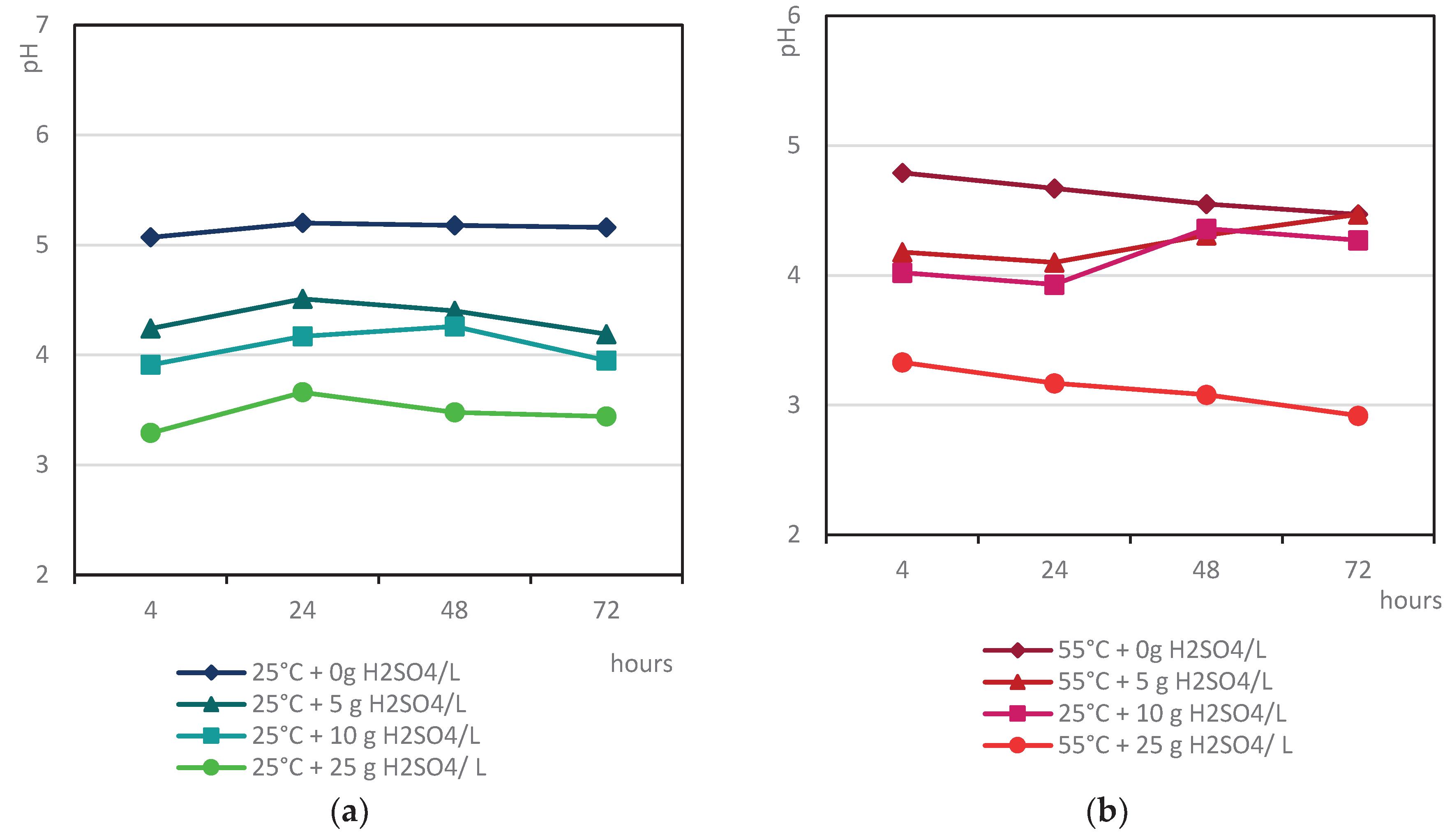
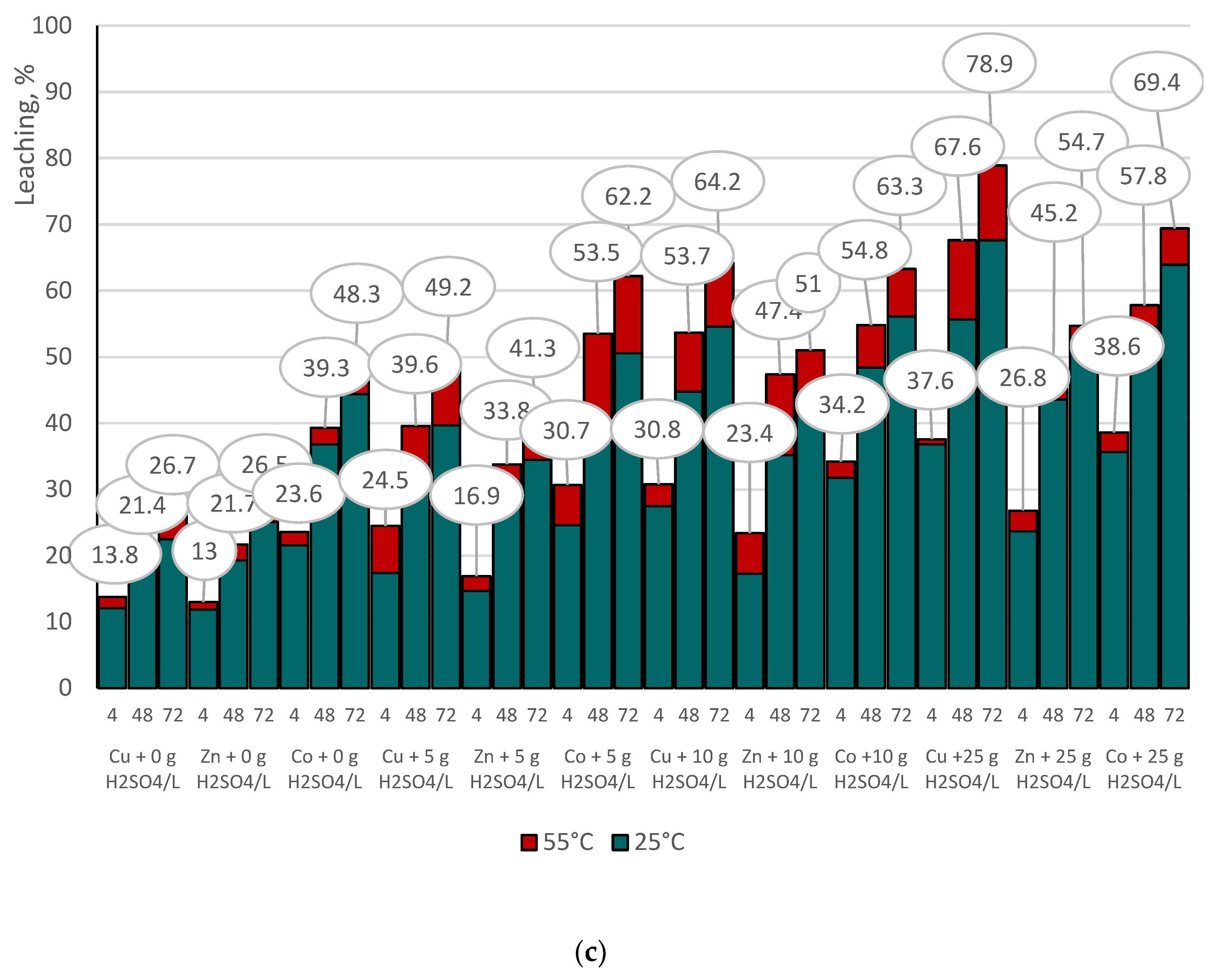
For example, the higher temperature enhanced the extraction of base metals, reaching 26.7% and 26.5% from the respective total content of copper and zinc, over iron co-leaching, 7.1%, from sample F, with a selectivity value of 0.335. Under the same leaching conditions, native spent medium and 55 °C, iron co-leaching dominated over base metals extraction from sample III (Figure 7c), resulting in a selectivity value of 0.079 (Figure 8b). A significant improvement of zinc and cobalt from sample III at 55 C and higher value of their selectivity leaching were observed due to the spent medium supplementation with a minimal dosage of 5 g H2SO4/ L.
Figure 7.
Monitoring of the leaching of non-ferrous metal from sample III with spent medium of Aspergillus niger at 5% pulp density and a temperature of 25 °C/55 °C without and with sulphuric acid supplementation: (a) Monitoring of pH at a temperature of 25 °C; (b) Monitoring of pH at a temperature of 55 °C; (c) Monitoring of the non-ferrous leaching.
Figure 7.
Monitoring of the leaching of non-ferrous metal from sample III with spent medium of Aspergillus niger at 5% pulp density and a temperature of 25 °C/55 °C without and with sulphuric acid supplementation: (a) Monitoring of pH at a temperature of 25 °C; (b) Monitoring of pH at a temperature of 55 °C; (c) Monitoring of the non-ferrous leaching.
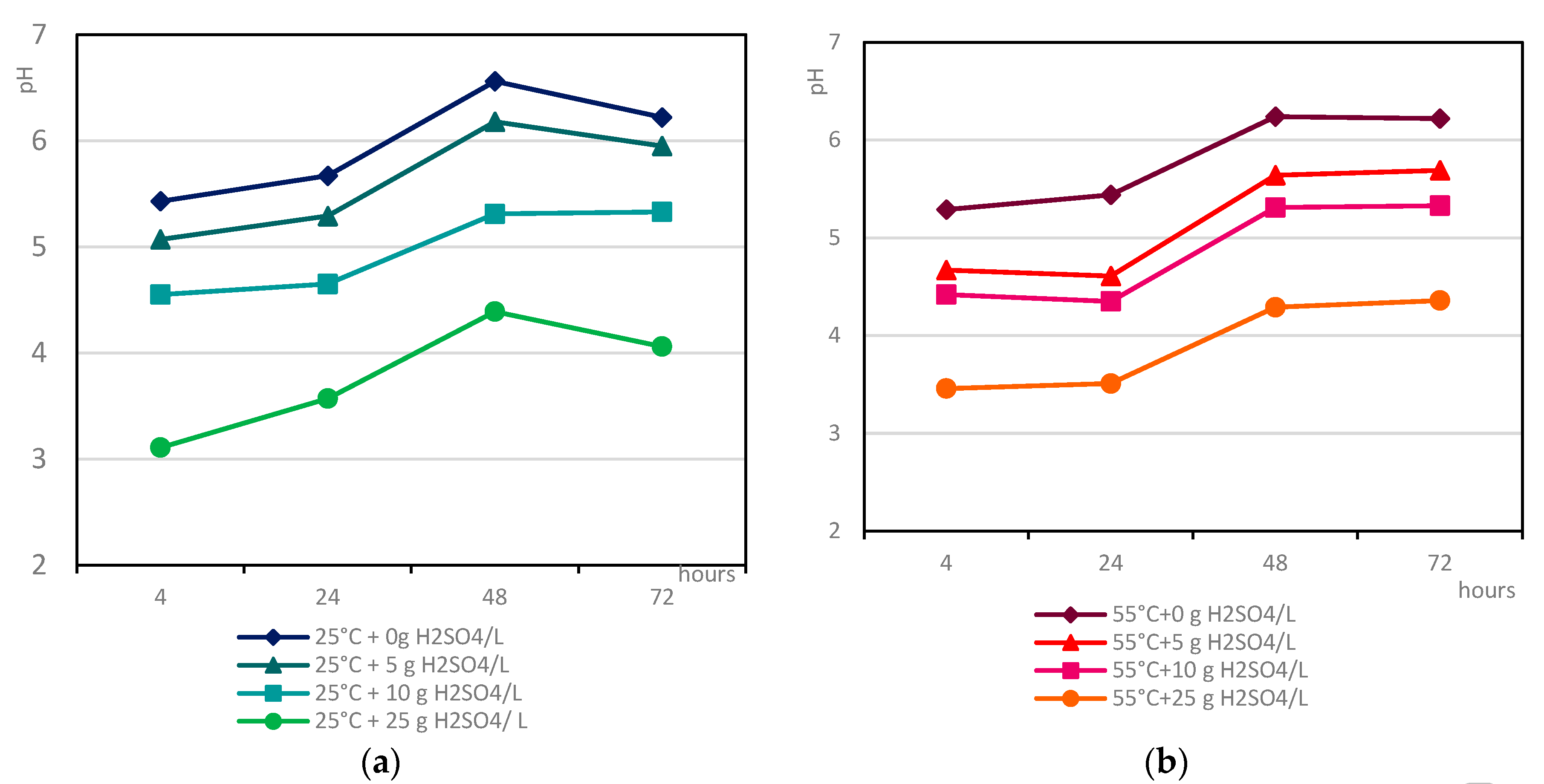
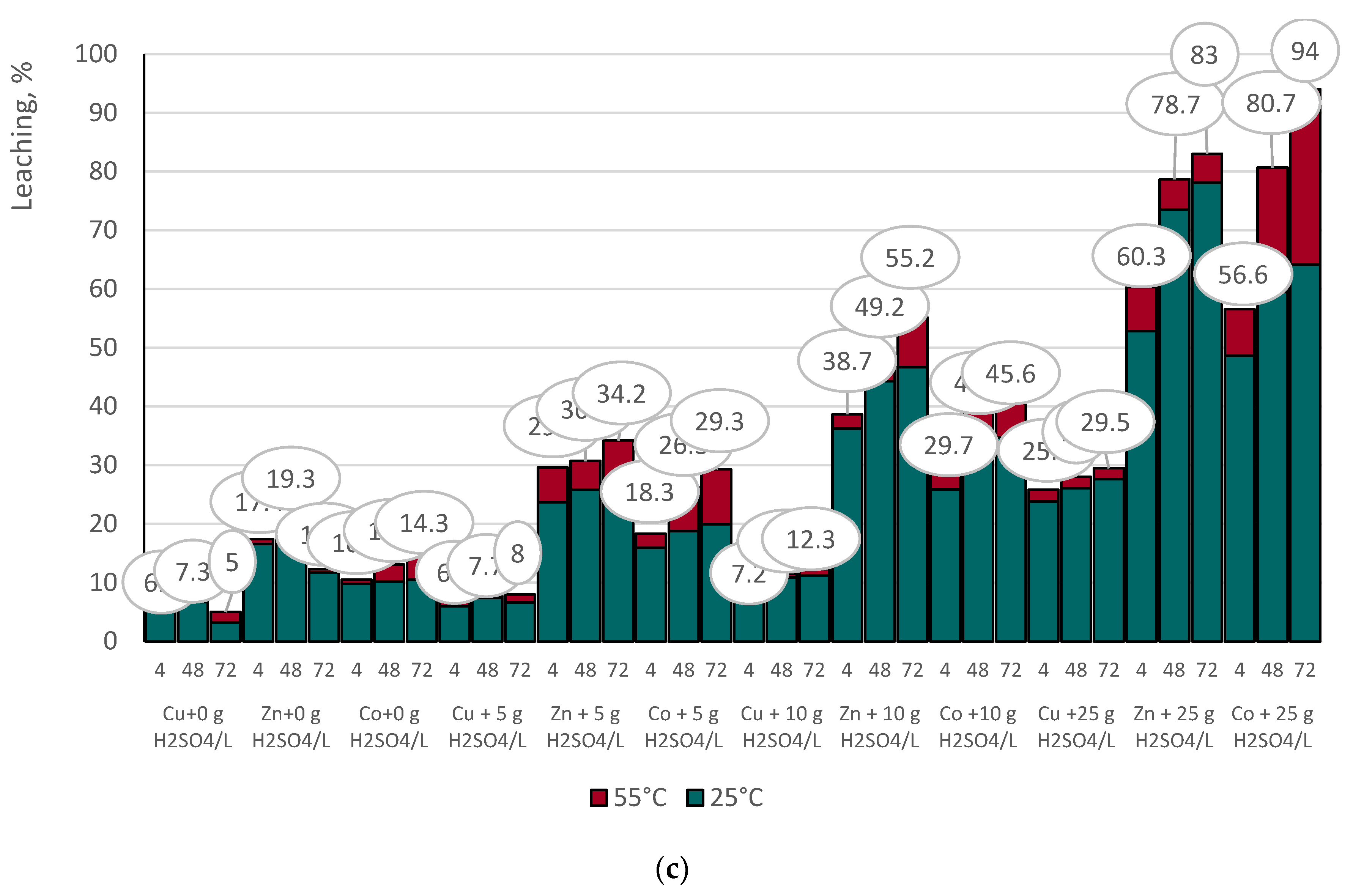
Figure 8.
Selectivity coefficient of non-ferrous metals over iron leaching with spent medium of Aspergillus niger at 5% pulp density and a temperature of 25 °C/55 °C without and with sulphuric acid supplementation from: (a) Copper slag sample F; (b) Copper slag sample III.
Figure 8.
Selectivity coefficient of non-ferrous metals over iron leaching with spent medium of Aspergillus niger at 5% pulp density and a temperature of 25 °C/55 °C without and with sulphuric acid supplementation from: (a) Copper slag sample F; (b) Copper slag sample III.
When comparing the selectivity coefficients of both samples under similar experimental conditions, we must consider how the pH changes during the leaching processes. It could indicate a process of net iron loss due to enhanced acid consumption, resulting in a solution pH increase above 6.0. Therefore, the pH of the leaching solution increased from 5.43 (at the fourth hour) to 6.22 (at the end) in the experiment about sample III leaching, causing approximately 35% precipitation of already dissolved iron and 30% net loss of the base metals due to their co-sorption (Figure 6a). The pH of the leaching solutions remains within a narrow range (5.07-5.16) during sample F leaching due to its lower acid-consuming potential (Figure 7a). It prevents the net losses of already leached iron and base metals, and their amounts increase during the experiment.
The significant difference in the selectivity of non-ferrous metal recovery from both types of copper slags revealed how the native spent medium composition, its supplementation with sulphuric acid, and the leaching temperature interacted with the mineralogical composition of the relevant type of copper slag during the experiments. It also revealed their cumulative effect on the extraction of non-ferrous metals and iron co-leaching. For example, protomangano-ferro-anthophylite, described in copper slag sample F , a product of the weathering process carried out at the dump surface, acts as a filter that adsorbs the base metals that have already been leached. Therefore, the recovery of base metals was carried out efficiently, even with the characteristics of the native spent medium of A. niger and at a temperature of 25 °C. Moreover, their recovery steadily increased with the addition of sulphuric acid to the spent medium, which accelerated the acidolysis and weathering of the minerals. The iron content of protomangano-ferro-anthophyllite, according to its idealised formula (3H2Fe4.48Mg1.08Mn1.44Si8O24), is 25.8%, which explains the higher values for the selectivity coefficient of base metal extraction compared to those obtained for the copper slag sample III under similar experimental conditions.
In contrast, fayalite and diopside, as typical products of the smelting process, were minerals described in copper slag III by X-ray diffraction analyses. It is well known that diopside is less susceptible to acidolysis compared to fayalite reactivity (Hausrath et al., 2008). Therefore, the process of fayalite dissolution governed the acid consumption potential of the copper slag sample during pH-dependent leaching test as well as in the leaching test with the spent medium of A. niger at 25 °C and 55 °C, respectively. The iron content of fayalite, according to its idealised formula (Fe2SiO4), is 54.8%, resulting in substantially higher iron co-leaching, especially at highly acidic pH, and lower values of selectivity of the base metal leaching.
The reasonable explanation for the more than two-fold difference in the selectivity of base metal extraction from both types of copper slag, apart from the difference in the mineralogy of thesamples, was probably also the significantly lower content of zinc and cobalt in sample III, which reduced the probability of interaction between the base metals from copper slag and protons from the leaching solution, thus enhancing iron co-leaching.
Supplementation of the spent medium with different amounts of sulphuric acid aimed to enhance proton attack and mineral acidolysis by providing the processes with a higher concentration of hydrogen ions. Therefore, the leaching process was carried out at pH values lower than those measured in the variants with the native spent medium of A. niger (Figure 6a, 7a). Apart of the enhanced mineral acidolysis, spent medium supplementation with sulphuric acid had other beneficial effects on the efficiency of base metal leaching, especially for copper, expressed in maintaining a pH lower than 6.0 (minimising copper loss due to the base metal hydrolysis in case of sample III leaching (as is visible in Figure 7c) or a pH lower than 4.5 (minimising copper loss due to its co-precipitation/sorption by ferric iron oxides (as visible in Figure 9a, 9b)). For example, the final pH measured at the end of the leaching experiments with samples F and III, carried out at 25 °C, was 5.16 and 6.22, respectively.
However, the efficiency of the base metal extraction was between two and four times higher than the respective efficiency calculated at the chemical leaching with sulphuric acid at a target pH of 5.00, revealing the positive effect of citric acid from the native spent medium, which acted both as donor of hydrogen ions for proton attack and acidolysis as well as a ligand, particularly to copper ions, thereby enhancing their accumulation in the pregnant leach solution.
The spent medium supplementation with 5 g/L corresponded to approximately 1040 g H2SO4/kg of copper slag, if expressed as the total available acidity as sulphuric acid, allowing the final pH of the leaching experiments at 25°C to drop to 4.19 and 5.95 for samples F and III, respectively. Therefore, the efficiency of copper extraction from both copper slags increased almost twofold, while zinc and cobalt extraction improved by 29-100% to the values obtained from the respective variants with native spent medium, reaching values of 26.6% and 19.9% for sample III and 34.5% and 50.6% for sample F, respectively (Figure 6c, 7c).
Combination of spent medium supplementation with 5 or 10 g H2SO4/L and 55 °C temperature of indirect bioleaching had a clearly noticeable positive effect on the extraction of copper, zinc, and cobalt from sample F and only on zinc and cobalt extraction from sample III, increasing their results by 7 to 15% compared to the respective results obtained at 25 °C (Figure 6c, 7c).
Any further supplementation of the spent medium with a higher concentration of sulphuric acid resulted in a lower final pH, as measured at the end of the experiments. Therefore, the spent medium supplementation with 25 g H2SO4/L, corresponding to 1440 g H2SO4/kg of copper slag (if expressed as the total available acidity as sulphuric acid), resulted in the final pH levels falling to a strongly acidic (3.42 for sample F) and a moderately acidic range (4.06 for sample III) (Figure 6a, 7a). In all leaching experiments, the final pH of sample F was lower than the values measured at the end of sample III leaching due to the lower acid-consuming potential of the raw sample. The copper, zinc, and cobalt extraction efficiencies further increased, reaching values of 27.6%, 78.1%, and 64.1% for sample III, and 67.6%, 52.8%, and 63.9% for sample F, respectively (Figure 6c, 7c). The values mentioned above were at least equal to (regarding zinc and cobalt) or two times higher (regarding copper) than the respective results obtained from the chemical leaching with sulphuric acid at the respective target pH (3.5, sample F; 4.0, sample III). Moreover, the respective values for copper and zinc recovery were more than twice as high as those obtained with native spent medium leaching at the same temperature (for samples ” and’I)I).
Regarding copper, a nearly complete recovery of the acidic-soluble phase of copper from sample F, previously determined by pH-dependent chemical leaching with sulphuric acid to a pH of 1.5, was achieved under these conditions, regardless of the temperature. Therefore, it revealed that the concentration of sulphuric acid had a more pronounced positive effect on base metal recovery compared to the effect of increasing the temperature from 25 °C to 55 °C. In contrast, under these conditions of indirect bioleaching, only 55% of the above phase of copper in sample III was susceptible to leaching. Therefore, comparing copper leaching between the two types of copper slags, sample III was a refractory raw material due to its mineralogy, resulting in a higher requirement for sulphuric acid for the efficient recovery of copper.
The positive effect of the combination of 55 °C and sulphuric acid dosage was more pronounced for cobalt extraction compared to zinc from sample III, as cobalt recovery increased by approximately 30% with a dosage of 25 H2SO4 g/L, compared to the result obtained at 25 °C, reaching 94% of its total content (Figure 7c).
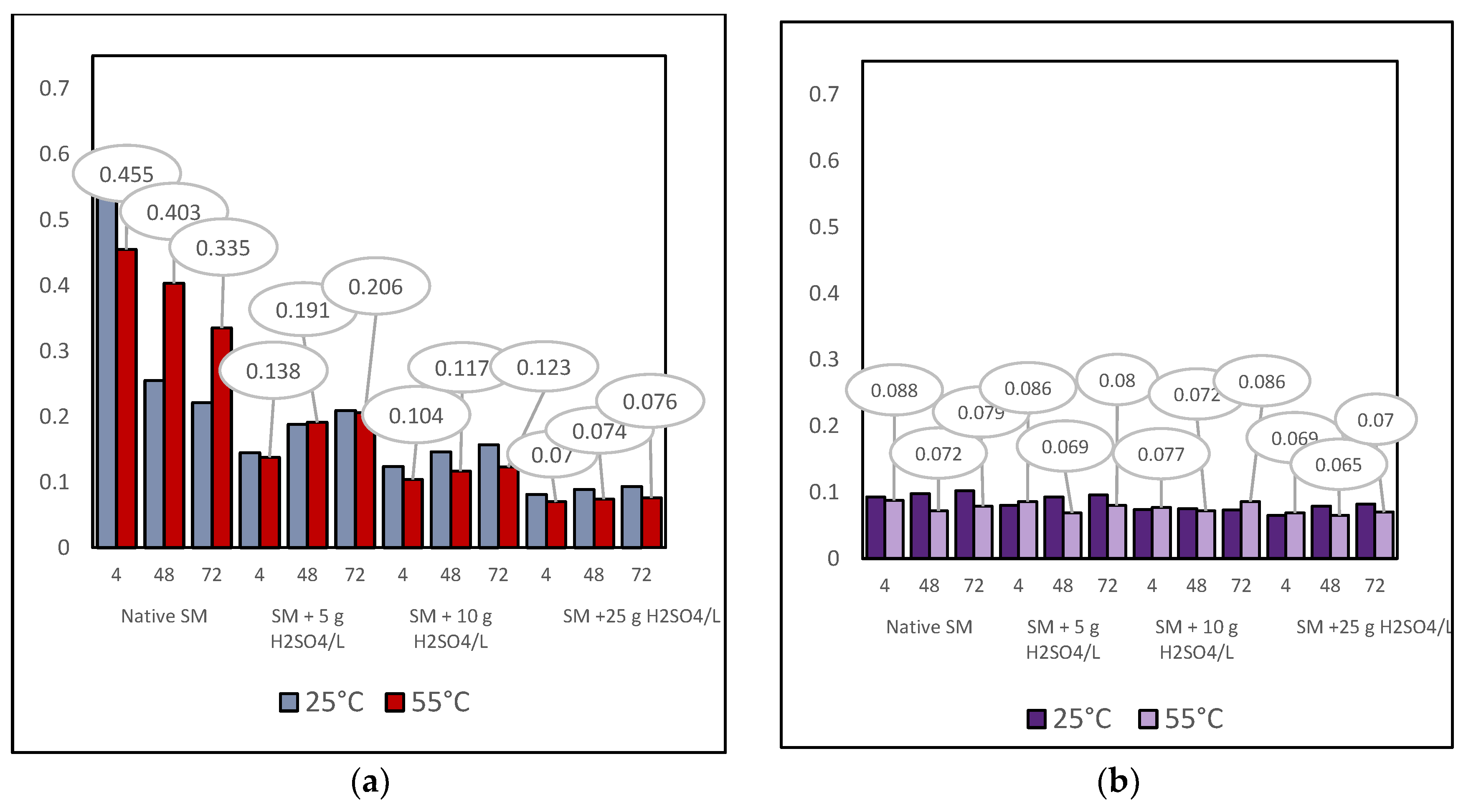
Supplementation of the spent medium of A. niger with 25 g H2SO4/L resulted in the substantial iron co-leaching from both copper slags, reaching a value of up to 51.8% and 67.3% for sample F, and 53.9% and 67.7% for sample III at temperatures of 25 °C and 55 °C, respectively. Therefore, the selectivity of non-ferrous metal extraction dropped significantly, reaching a value of 0.076 for sample F and 0.07 for sample III at 55 °C, respectively (Figure 8a, 8b).
Having in mind the results about the selectivity of the non-ferrous metal extraction from both copper slag samples determined at the used set of experimental conditions, we can sum them up as follows:
- The acidity of the spent medium (native or supplemented with sulphuric acid), but not the temperature, was the main crucial factor that controlled the efficiency of base metal extraction from the studied copper slags;
- The insignificant difference in the selectivity values of base metal extraction at the tested temperatures indicated that copper slag III was more refractory to leaching, considering the extent of base metal extraction from sample F.
The results from the experiments on copper, zinc, and cobalt recovery define the research directions for the near future. Firstly, to study the indirect leaching of both types of copper slag at 55 °C and with spent medium supplemented with 25 g H2SO4/L, in the presence of different chemical oxidants (such as H2O2, Fe3+, etc.), with the primary aim of recovering the oxidisable phase of copper. Secondly, to study the recovery of base metals from both types of copper slag due to the growth of acidophilic chemolithotrophic bacteria, which grow at acidic pH and 35 °C or 55 °C, and enhance the oxidisable phase of non-ferrous metal extraction through direct/indirect mechanisms of bioleaching. Thirdly, to elaborate on and test a suitable flow sheet for pregnant leaching processing, with the main aim of separating and concentrating copper, zinc, cobalt, and iron into value-added products.
3.5. XRD Diffractograms of Copper Slag Leaching Residues
Fayalite (Fe2SiO4) has been identified as the most common mineral in both types of copper slags, with a relative content ranging between 33% (copper slag taken from the surface of the slag dump) to 56% (copper slag taken from a depth of 1 meter below the surface) (Table 5). The diffractograms of both samples revealed that fayalite forms peaks located at 15°, 20°, 25°, 29°, 32°, 35°–37°, 52°, and 61° 2θ copper positions (marked as 1 in Figure 1a, 1b). Clinopyroxene and diopside, members of the pyroxene group, have been identified as the second most abundant minerals in slag samples F and III, with relative contents of 10% and 44%, respectively. The XRD pattern indicated that the peaks of clinopyroxene are located at 11°, 20°, 30°, 35°, 40°-45°, and 50°, and were distributed uniformly between 52° and 72° 2θ copper positions (marked as 2 in Figure 1a). The peaks of diopside, described in the copper slag unaffected by weathering, occupied the aforementioned positions as well as positions 15°, 18°, 24°, 28°, 36°–37°, and 46°–48° (marked as 2 in Figure 1b). Protomangano-ferro-anthophyllite (H2Fe4.48Mg1.08Mn1.44Si8O24) was the third mineral described only in the copper slag sample taken from the surface of the dump, whose presence was an indication that weathering had occurred there (marked as 3 in Figure 1a).
The diffractograms of both samples revealed that protomangano-ferro-anthophyllite forms peaks located at 11°, 20°, 30°, 35°, 40°–45°, and 50°, as well as uniformly distributed between 52° and 72° 2θ copper positions. Its relative content in the raw copper slag sample was 30%.
The diffractograms in Figure 9 compare the transformations of minerals which have been carried out due to the applied indirect bioleaching of both types of copper slag under the same experimental conditions. The graphs (Figure 9a) showed that protomangano-ferro-anthophyllite was the mineral most susceptible to bioleaching at 55 °C and in the presence of citric and oxalic acids contained in the native spent medium of A. niger, resulting in its accelerated acidolysis and decomposition of its structure. Therefore, the mineral was not observed in the copper slag residue obtained after the end of the experiment. Moreover, the higher reactivity of protomangano-ferro-anthophyllite protected fayalite from proton attack and decomposition, increasing its relative content in the copper slag residue to 60% (Table 5). However, the higher temperature of indirect leaching and the presence of organic acids in the native spent medium initiated the decomposition of pyroxene minerals, clinopyroxene and diopside, resulting in the description of augite, another member of the pyroxene group, in the copper slag residues of both raw samples. Its chemical content, determined by XRD analyses, varied in a narrow range, Al0.3Ca0.8Fe(0.27-0.38)Mg(0.65-0.8)O6Si(1.8-2.0), as well as with a minimal content of Na, Mn, Cr, and Ti, and it depended on the presence or absence of sulphuric acid in the spent medium.
Under these conditions, copper, zinc, and cobalt recovery were 26.7%, 26.5%, and 48.3%, respectively, with a process selectivity value of 0.335 (Figure 6c, 8a). Dissolution of protomangano-ferro-anthophyllite to such an extent was not observed in the copper slag residue obtained after one month of direct, two-step bioleaching of the same copper slag in the presence of A. niger at a 5% pulp density at 25 °C [59].
In contrast, in the respective experiment under the same experimental conditions with the slag sample unaffected by the weathering process, the hydrogen ions attacked fayalite and diopside as members of the pyroxene group, degrading their structure, which resulted in lower content in the slag residue, 40% and 32% for augite, respectively (Table 5). The clearance only of the fayalite micro-peaks between 20° and 30°, 50° and 58°, and 60° and 68° positions in the diffractograms of the slag residue was an indication of the enhanced decomposition of the mineral (Figure 9c). It supported the observation of other researchers that diopside is a mineral more resistant to proton attack compared to fayalite [51]. The values of copper, zinc, and cobalt recovery from copper slag, as well as their overall selective extraction over iron co-leaching, were 5.0%, 12.3%, 14.3%, and 0.079, respectively (Figure 7C, 8b).
It is interesting to note that magnetite (Fe3O4) was described in both copper slag residues, with a relative content of 3% and 25% in copper slag residues (marked as 4 in Figure 9a-9c) of samples F and III, respectively. The combination of factors, such as 55 °C, intensive pulp mixing, the duration of the experiment, a moderate acidic or almost neutral pH, a higher ferrous concentration in the pregnant leach solutions, and enhanced chemical oxidation of ferrous iron to the ferric state, all contribute to its formation under these experimental conditions. Moreover, monitoring applied during the bioleaching of sample III confirmed the iron net loss in the solution between 4 and 24 hours.
The combination of 55 °C and the spent medium supplemented with a dosage of 5 g H2SO4/L during bioleaching further accelerated the acidolysis process, affecting not only the recovery of non-ferrous metals but also the degradation of the structure of the copper slag. In that case, fayalite consumed a higher concentration of hydrogen ions in the solutions, resulting in lower content in the copper slag residues, with values of 40% and 33%, respectively (Table 5). Practically, the spent medium supplementation with 5 g H2SO4/L resulted in a twice lower fayalite content in the residue of the slag sample unaffected by weathering. The minerals from the pyroxene group, clinopyroxene and diopside, were refractory at the aforementioned conditions, and the augite content, the product of their transformation, increased to 28% and 45.0% in the copper slag residues of samples F and III, respectively (Table 5). These mineral transformations resulted in the significant extraction of copper, zinc, and cobalt from copper slag taken from a dump surface, with values up to 49.2%, 41.3%, and 62.2%, respectively (Figure 6c). The selectivity value of their overall extraction over iron co-leaching was 0.206 (Figure 8a). In contrast, the accelerated acidolysis under these experimental conditions resulted in a lower recovery of all non-ferrous metals from the copper slag unaffected by weathering and enhanced iron co-leaching, with a selectivity value of 0.08 (Figure 8b).
Magnetite was also observed in both copper slag residues obtained at 55 °C and spent medium supplemented with 5 g H2SO4/L, with relative contents of 32% and 22% (Table 5). The diffractograms revealed the more pronounced peaks of magnetite at 18°, 30°, 35°, 37°, 44°, 53°, and 62° positions (Figure 9b, 9d). In contrast, the magnetite formation was not observed in the residues obtained after the direct, two-step, one-month bioleaching of both types of copper slag in the presence of A. niger at a 5% pulp density and 25 °C [59,61].
3.6. Morphological Analysis of Copper Slag Leaching Residues
The morphological analysis of the copper slag, carried out by SEM, revealed that both samples consisted of small particles with a grainy structure, distributed almost evenly on a base on which medium- and large-sized particles were disposed. These particles had an almost regular form, flat surfaces, and sharp edges (Figure 10, images a and d).
The indirect leaching of copper slag with the spent medium of Aspergillus niger had a substantial effect on the surface of the solid particles, as evidenced by observations of furrows with different sizes, irregular forms, and orientations (Figure 10, image b and e). The furrows were visible only on the surface of medium- and large-sized particles of both copper slags. It is interesting to note that the marks of the acidolysis process, carried out due to the presence of citric and oxalic acids in the native spent medium, were observed easily at a 650x magnification level on the surface of particles of sample F, where they formed a net of tiny furrows oriented parallel to each other and with an average size of 20-30 micrometers. In contrast, the marks of bioleaching in sample III were observed at a magnification level of 750x, where furrows were larger in size and width, but with a lower density. That observation, as well as the results regarding the recovery of non-ferrous metals and the X-ray analysis, confirmed that sample F is more chemically reactive among the studied copper slags.
The insignificant supplementation of the spent medium of A. niger with 5 g H2SO4/L had a significant effect on the surface of solid particles with the formation of grainy surface structures divided from each other by furrows shorter in size but with a higher depth, in the case of copper slag sample F (Figure 10, image c), and tiny scratches, larger in size, in the case of copper slag sample III (Figure 10, image d).
The morphological analysis revealed a positive effect of supplementing the spent medium with sulphuric acid on acidolysis and enhanced recovery of non-ferrous metals; however, it also led to intensive erosion of the flat surface and the edges of medium- and larger-sized copper slag particles. Similar changes in the surface of red mud and lateritic chromite overburden particles were observed by other researchers [62,63] due to the raw materials bioleaching with the spent medium of Aspergillus niger/Penicillium tricolor.
The superficial architecture of both copper slag which underwent indirect bioleaching under these conditions (spent medium supplementation with a dosage of 5 g H2SO4/L and a temperature of 55 °C for 72 h) looked similar to the marks of Aspergillus niger hyphae due to the direct one-step bioleaching of copper slag at a temperature of 25 °C for a month [59].
4. Conclusions
The chemical leaching with sulphuric acid revealed that the acidic-soluble phase of zinc and cobalt comprised between 80% and 90% of their total content in the studied copper slags. In contrast, the copper content in that phase was 50%, increasing to 75% due to weathering that had occurred at the dump surface, as the residual amount constituted the oxidisable phase of metal in the respective type of copper slag. The effective extraction of non-ferrous metals from the acidic-soluble phase required a substantial amount of sulphuric acid, and the process exhibited lower selectivity due to the significant co-leaching of iron.
Compared to Penicillium ochrochloron, Aspergillus niger, a fast-growing fungus, produced a spent medium with a lower pH and organic acid content, which facilitated better extraction of non-ferrous metals from both types of copper slag. The main mechanisms for extracting base metals from copper slags were acidolysis and complexolysis, as the amount of copper, zinc, and cobalt extracted at an equilibrium pH of 5.0-5.5 was equal to the amount extracted with sulphuric acid at a target pH of 4.5. However, the extraction of base metals was inefficient, even at a pulp density of 5%, due to the limited acidity of the spent medium of A. niger.
The bioleaching of non-ferrous metals from both types of copper slag at 55 °C using a spent medium of A. niger supplemented with sulphuric acid resulted in almost complete extraction of non-ferrous metals from their acidic-soluble phase, as the suitable doses were 10 g/L and 25 g/L for copper slag affected by weathering and the slag sample unaffected by this process, respectively. However, due to the reduced extraction of base metals and intensive iron co-leaching under similar experimental conditions, copper slag unaffected by weathering process can be defined as a raw material refractory to bioleaching with the spent medium of A. niger.
The accelerated acidolysis and decomposition of the protomangano-ferro-anthophyllite (regarding copper slag, affected by weathering) and fayalite, comprising the structure of both types of copper slags, resulting from supplementing the spent medium of A. niger with sulphuric acid, provided a foundation for the efficient recovery of non-ferrous metals.
Author Contributions
Conceptualisation, P.G. and M.N.; methodology, P.G. and M.N.; validation, P.G., M.N., I.S., M.I. and R.I.; formal analysis, P.G. and M.I.; investigation, P.G. and I.S.; resources, P.G., M.N., M.I. and R.I.; data curation, M.N. and I.S.; writing—original draft preparation, P.G.; writing—review and editing, P.G. and M.N.; visualisation, M.N. and I.S.; supervision, P.G.; project administration, M.N.; funding acquisition, P.G. All authors have read and agreed to the published version of the manuscript.”
Funding
This research has been funded by the Bulgarian “Scientific Research” Fund, Ministry of Education and Science, Bulgaria (Grant number KP-06-D002/6), ERAMIN-3 Call 2023, Project “Innovative copper slag processing for raw materials supply”.
Acknowledgements
The authors acknowledge EVOMET Ltd. for their provision of permission to Eliseyna copper slag dump and logistical support in the collection of samples for this study. The authors express their gratitude to linguist Chief Assist. Prof. Milena Purvanova for reviewing and editing the manuscript.
Conflicts of Interest
The authors declare that they have no conflicts of interest.
References
- Gorai, B., Jana, R.K., Premchand. Characteristics and utilization of copper slag-a review. Resources, Conservation, and Recycling 2003, 39(4), 299-313. [CrossRef]
- Phiri, T., Singh, P, Nikoloski, A.N. The potential for copper slag waste as a resource for a circular economy. A review – part I. Minerals Engineering 2022, 180, 107474. [CrossRef]
- Potysz, A., van Hullebusch, E.D., Kierczak, J., Grybos, M., Lens, P.N.L., Guibaud, G. Copper Metallurgical Slags – Current Knowledge and Fate: A review. Critical Review in Environmental Science and Technology 2015, 45(22), 2424–2488. [CrossRef]
- Piatak, N.M. Environmental characteristics and utilization potential of metallurgical slags. In Environmental Geochemistry, 2nd ed., De Vivo B., Belkin, H.E., Lima, A., Eds., Publisher: Elsevier, 2018, pp. 487-519. [CrossRef]
- Zhang, C., Zhang, Y., Zhang, Z., Zhang, G. Effective separation and recovery of valuable metals from copper slag: A comprehensive review. Environmental Research 2025, 283, 122145. [CrossRef]
- Sethurajan, S., van Hullebusch, E.D., Nancharaih, Y.V. Biotechnology in management and resource recovery from metal bearing solid wastes: Recent advances. Journal of Environmental Management 2018, 211, 138-153. [CrossRef]
- Srichandan, H., Mohapatra, R. K., Parhi, P. K., & Mishra, S. Bioleaching Approach for Extraction of Metal Values from Secondary Solid Wastes: A Critical Review. Hydrometallurgy 2019, 189, 105122. [CrossRef]
- Kinnunen, P., Hedrich, S. Biotechnological strategies to recover value from waste. Hydrometallurgy 2023, 222, 106182. [CrossRef]
- He, R., Zhang, S., Zhang, X., Zhang, Z., Zhao, Y., Ding, H. Copper slag: The leaching behavior of heavy metals and its applicability as a supplementary cementitious material. Journal of Environmental Chemical Engineering 2021, 9, 105132. [CrossRef]
- Sarfo, P., Das, Wyss, G., Young, C. Recovery of metal values from copper slag and reuse of residual secondary slag. Waste Management 2017, 70, 272-281. [CrossRef]
- Mansourkiyaei, S., Golzary, A. Innovative approaches for circular economy in copper slag management: Maximizing resource efficiency and sustainability. Results in Engineering 2025, 27, 106903. [CrossRef]
- Deng, T., Ling, Y. Processing of copper converter slag for metals reclamation. Part I: Extraction and recovery of copper and cobalt. Waste Manag. Res. 2007, 25(5), 440-448. [CrossRef]
- Kaksonen, A.H., Särijärvi, S., Peuraniemi, E., Junnikkala, S., Puhakka, J.A., & Tuovinen, O.H. Metal biorecovery in acid solutions from a copper smelter slag. Hydrometallurgy 2017, 168, 135–140. [CrossRef]
- Pang, L., Wand, D., Wang, H., An, M., Wang, Q. Occurrence and leaching behavior of heavy-metals elements in metallurgical slags. Construction and Building Materials 2022, 330, 127268. [CrossRef]
- Fan, J., Li, H., Wei, L., Li, C., Sun, S. The Recovery of Copper from Smelting Slag by Flotation Process. In Applications of Process Engineering Principles in Materials Processing, Energy and Environmental Technologies. The Minerals, Metals & Materials Series; Wang, S., Free, M., Alam, S., Zhang, M., Taylor, P., Eds., Publisher: Springer, Cham, 2017; pp. 231-237. [CrossRef]
- Kart, E.U., Yazgan, Z.H., Gümüssoy, A. Investigation of iron selectivity behavior of copper smelter slag flotation tailing with hemetitization baking and base metals leaching methods. Physicochem. Probl. Miner. Proces 2021, 57(5), 164-175. [CrossRef]
- Dimitrievic, M.D., Urosevic, D.M., Jankovic, Z.D., Milic, S.M. Recovery of copper from smelting slag by sulphation roasting and water leaching. Physicochem. Probl. Miner. Process. 2016, 52(1), 409-421. [CrossRef]
- Gargul, K. Ammonia leaching of slag from direct-to-blister copper smelting technology. AIMS Materials Science 2020, 7(5), 565-580. [CrossRef]
- Khalid, M.K., Hamuyuni, J., Agarwal, V., Pihlasalo, J., Haapalainen, M., Lundström, M. Sulphuric acid leaching for capturing value from copper rich converter slag. Journal of Cleaner Production 2019, 215, 1005-1013. [CrossRef]
- Shi, G., Liao, Y., Su, B., Zhang, Y., Wang, W., Xi, J. Kinetics of copper extraction from copper smelting slag by pressure oxidative leaching with sulphuric acid. Separation and Purification Technology 2020, 241, 116699. [CrossRef]
- Zhang, Z., Zeng, Q., Feng, Y., Wang, R., Huang, W., Wang, F., Liu, Z., Recovery of valuable elements from copper slag through low-temperature sulphuric acid curing and water leaching. Journal of Environmental Chemical Engineering 2024, 12, 114880. [CrossRef]
- Zhang, S., Zhu, N., Mao, F., Zhang, J., Huang, X., Li, F., Li, X., Wu, P., Dang, Z. A novel strategy for harmlessness and reduction by alkali disaggregation of fayalite (Fe2SiO4) coupling with acid leaching. Journal of Hazardous Materials 2021, 402, 123791. [CrossRef]
- Nadirov, R.K., Syzdykova, L.I., Zhussupova, A.K., Usserbaev, M.T. Recovery of value metals from copper smelter slag by ammonium chloride treatment. International Journal of Mineral Processing 2013, 124, 145-149. [CrossRef]
- Sun J., Zhang, T., Shan, P., Liu, D., Dong, L. Kinetic analysis of copper extraction from copper smelting slag by sulphuric acid oxidation leaching. Minerals Engineering 2024, 216, 108886. [CrossRef]
- Ospanova, A., Kokibasova, G., Kadirbekova, A., Sadykov, T., Sydykanov, M., Ospanova, G. Study on the leaching process for copper from the production waste of the Balkhash copper smelter with the addition of an oxidizing agent. Journal of the University of Chemical Technology and Metallurgy 2025, 60(5), 3, 861-868. [CrossRef]
- Yang, Z., Rui-lin, M., Wang-dong, N., Hui, W. Selective leaching of base metals from copper smelter slag. Hydrometallurgy 2010, 103, 25-29. [CrossRef]
- Mussapyrova, L., Nadirov, R., Baláž, P., Rajnák, M., Bureš, R., Baláž, M. Selective room temperature leaching of copper from mechanically activated copper smelter slag. Journal of Materials Research and Technology 2021, 12, 2011–2025. [CrossRef]
- Carranza, F., Romero, R., Mazuelos, A., Iglesias, N., Forcar, O. Biorecovery of copper from converter slags: Slag characterization and exploratory ferric leaching tests. Hydrometallurgy 2009, 97, 39-45. [CrossRef]
- Babaian, I., Chen, J., Shevchenko, M., Shishin, D., Jak, E. Characterization of slag leachability in support of slag recycling: Development of experimental methodology. Sustainable Materials and Technology 2025, 44, e01409. [CrossRef]
- Potysz, A., Kierczak, J., Fuchs, Y., Grybos, M., Guibaud, G., Lens, P.N.L., van Hullebusch, E.D. Characterization and pH-dependent leaching behavior of historical and modern copper slags. Journal of Geochemical Exploration 2016, 160, 1-15. [CrossRef]
- Kaksonen, A.H., Särkijärvi, S., Puhakka, J.A., Peuraniemi, E., Junnikkala, S., Tuovinen, O.H. Chemical and bacterial leaching of metals from a smelter slag in acid solutions. Hydrometallurgy 2016, 159, 46-53. [CrossRef]
- Georgiev, P., Spasova, I., Groudeva, V., Nicolova, M., Spasova, I., Lazarova, A., Iliev, M., Ilieva, R., Groudev, S. Bioleaching of valuable components from a pyrometallurgical final slag. Solid State Phenomena 2017, 262, 696-699. [CrossRef]
- Jarosikova, A., Ettler, V., Mihaljevic, M., Kribek, B., Mapani, B. The pH-dependent leaching behavior of slags from various stages of copper smelting process; environmental implications. Journal of Environmental Management 2017, 187, 178-186. [CrossRef]
- Harimana, J., Makangila, M., Mundike, J., Maseka, K.K. Effect of particle size, pH, and residence time on mobility of copper and cobalt from copper slag. Scientific African 2024, 23, e02117. [CrossRef]
- Weng, W., Lan, Y., Tang, D., Chen, H., Xia, J., Chen J., Zhong, S. Acid leaching of copper from copper slag based on machine leaching analysis. Separation and Purification Technology 2025, 379(3), 135025. [CrossRef]
- Kaksonen, A.H., Lavonen, L., Kuusenaho, M., Kolli, A., Närhi, H., Vestola, E., Puhakka, J.A., Tuovinen, O.H. Bioleaching and recovery of metals from final slag waste of the copper smelting industry. Minerals Engineering 2011, 24, 1113-1121. [CrossRef]
- Potysz, A., Lens, P.N.L., van de Vossenberg, J., Rene, E.R., Grybos, M., Guibaud, G., Kierczak, J., van Hullebusch, E.D. Comparison of Cu, Zn, and Fe bioleaching from Cu-metallurgical slags in the presence of Pseudomonas fluorescens and Acidithiobacillus thiooxidans. Applied Geochemistry 2016, 68, 39-52. [CrossRef]
- Mikoda, B., Potysz, A., Kmiecik, E. Bacterial leaching of critical metal values from Polish copper metallurgical slags using Acidithiobacillus thiooxidans. Journal of Environmental Management 2019, 236, 436-445. [CrossRef]
- Groudeva, V.I., Krumova, K., Groudev, S.N. Bioleaching of a rich-in-carbonates copper ore at alkaline pH. Advanced Materials Research 2007, 20-21, 103-106. [CrossRef]
- Chiang, Y.W., Santos, R.M., Monballiu, A., Gryselbrecht, K., Martens, J.A., Matos, M.L.T., Gerven, T.V., Meesschaert, B. Effect of bioleaching on the chemical, mineralogical and morphological properties of natural and waste-derived alkaline materials. Minerals Engineering 2013, 48, 116-125. [CrossRef]
- Kumar, V., Singh, G., Dwivedi, S.K. Application of bioleaching for metal recovery. In Resource Recovery in Industrial Waste Waters, 1st ed.; Sillanpää, M.K.., Khadir, A., Gurung, K., Eds.; Publisher: Elsevier, 2023, pp. 295-318. [CrossRef]
- Lee, J.C. & Pandey, B.D. (2012). Bio-processing of solid wastes and secondary resources for metal extraction — A review. Waste Management, 2012, 32 (1), 3–18. [CrossRef]
- Potysz, A., Grybos, M., Kierczak, J., Guibaud, G., Lens, P.N.L., van Hullebusch, E.D. Bacterially-mediated weathering of crystalline and amorphous Cu-slags. Applied Geochemistry 2016, 64, 92-106. [CrossRef]
- Ghosh S, Paul AK. Bioleaching of nickel by Aspergillus humicola SKP102 isolated from Indian lateritic overburden. J. Sust. Min, 2016;15(3), 108-114. [CrossRef]
- Dusengemungu, L., Kasali, G., Gwanama, C., Mubemba, B. Overview of fungal bioleaching of metals. Environmental Advances 2021, 5, 100083. [CrossRef]
- Marier, J. & Boulet, M. Direct determination of citric acid in milk with an improved pyridine acetic anhydride method. Journal of Dairy Science 1958, 41, 1683. [CrossRef]
- Bergermann, J. & Elliot, J.S. (1955). Method for direct colourimetric determination of oxalic acid. Analytical Chemistry 1955, 27(6), 101401015. [CrossRef]
- Mihailova, I., Mehandjiev, D. Characterization of fayalite from copper slags. Journal of the University of Chemical Technology and Metallurgy 2010, 45, 3, 317-326.
- Bosshard, P.P., Bachofen, R., & Brandl, H. Metal leaching of fly ash from municipal waste incineration by Aspergillus niger. Environmental Science & Technology 1996, 30, 3066-3070. [CrossRef]
- Qu, Y., Li, H., Tian, W., Wang, X., Wang, X., Jia, X., Shi, B., Song, G., & Tang, Y. (2015). Leaching of valuable metals from red mud via batch and continuous processes by using fungi. Minerals Engineering 2015, 81, 1–4. [CrossRef]
- Hausrath, E.M., Navarre-Sitchler, A.K.N., Sak, P.B., Steefel, C.I., Brantley, S.L. Basalt weathering rates on Earth and the duration of liquid water on the plains of Gusev Crater Mars. Geology 2008, 36(1), 67-70. [CrossRef]
- Turan, M.D., Sari, Z.A., Nizamoglu, H., Özcan, T. Dissolution behavior and kinetics of copper slag under oxidative conditions. Chemical Engineering Research and Design 2024, 205, 324-334. [CrossRef]
- Panda, S., Mishra, S., Rao, D.S., Pradhan, N., Mohapatra, U., Angadi, S., Mishra, B.K. Extraction of copper from copper slag: Mineralogical insights, physical beneficiation and bioleaching studies. Korean Journal of Chemical Engineering 2015, 32, 667-676. [CrossRef]
- Kaksonen, A.H., Särkijärvi, S., Puhakka, J.A., Peuraniemi, E., Junnikkala, S., Tuovinen, O.H. Solid phase changes in chemically and biologically leached copper smelter slag. Minerals Engineering 2017, 106, 97-101. [CrossRef]
- Elomoa, H., Seisko, S., Lethola, J., Lundström, M. A study on selective leaching of heavy metals vs. from fly ash. Journal of Material Cycles and Waste Management 2019, 21, 1004-1013. [CrossRef]
- Sukla, L.B., Kar, R.N. & Panchanadikar, V. Leaching of copper converter slag with Aspergillus niger culture filtrate. Biometals 1992, 5, 169–172. [CrossRef]
- Georgiev, P., Nicolova, M., Spasova, I., Iliev, M., Ilieva, R., Groudeva, V., & Groudev, S. Bioleaching of magnesium and non-ferrous metals from nickel-silicate ore. In: Proceedings of XIX Mineral Processing Congress; Kelmendi, S., Basholli, H., Demi, G., Fetahu, K., & Domi, S., Eds., Publisher: Institute of raw materials processing, energetics and environment, Prishtine. Kosove, 2023, pp. 45-53. ISBN 978-9951-9138-0-5.
- Safari, H., Rezaee, M., Chelgani, S.C. Ecofriendly leaching agents for copper extraction-An overview of amino and organic acid applications. Green and Smart Mining Engineering 2024, 1, 336-345. [CrossRef]
- Georgiev, P., Nicolova, M., Spasova, I., Iliev, M., Ilieva, R. Biological leaching of copper, zinc, and cobalt from pyrometallurgical copper slags using Aspergillus niger and Penicillium ochrochloron. Journal of Ecological Engineering 2025, 26(12), 197-213. [CrossRef]
- Meshram, P., Bhagat, L., Prakash, U., Pandey, B.D., Abhilash. Organic acid leaching of base metals from copper granulated slag and evaluation of mechanisms. Canadian Metallurgical Quarterly 2017, 56(2), 168-178. [CrossRef]
- Georgiev, P., Nicolova, M., Spasova, I., Iliev, M., Ilieva, R. Non-ferrous metals extraction from copper slags by bioleaching with Aspergillus niger. Journal of Chemical Technology and Metallurgy (accepted for publication).
- Qu, Y., Li, H., Wang, X., Tian, W., Shi, B., Yao, M., Cao, L., Yue, L. Selective parameters and bioleaching kinetics for leaching vanadium from red using Aspergillus niger and Penicillium tricolor. Minerals, 2019, 9, 697. [CrossRef]
- Biswas, S., Dey, R., Mukherjee, S., Banerjee, P.C. Bioleaching of nickel and cobalt from lateritic chromite overburden using the culture filtrate of Aspergillus niger. Applied Biochemistry & Biotechnology, 2013, 170, 1547-1559. [CrossRef]
Figure 1.
XRD pattern of: (a) Copper slag sample F; (b) Copper slag sample III. 1 – fayalite (Fe2SiO4), 2 – pyroxenes ((XY(Si,Al)2O6)), 3 – protomangano-ferro-anthophyllite (3H2Fe4.48Mg1.08Mn1.44Si8O24).
Figure 1.
XRD pattern of: (a) Copper slag sample F; (b) Copper slag sample III. 1 – fayalite (Fe2SiO4), 2 – pyroxenes ((XY(Si,Al)2O6)), 3 – protomangano-ferro-anthophyllite (3H2Fe4.48Mg1.08Mn1.44Si8O24).
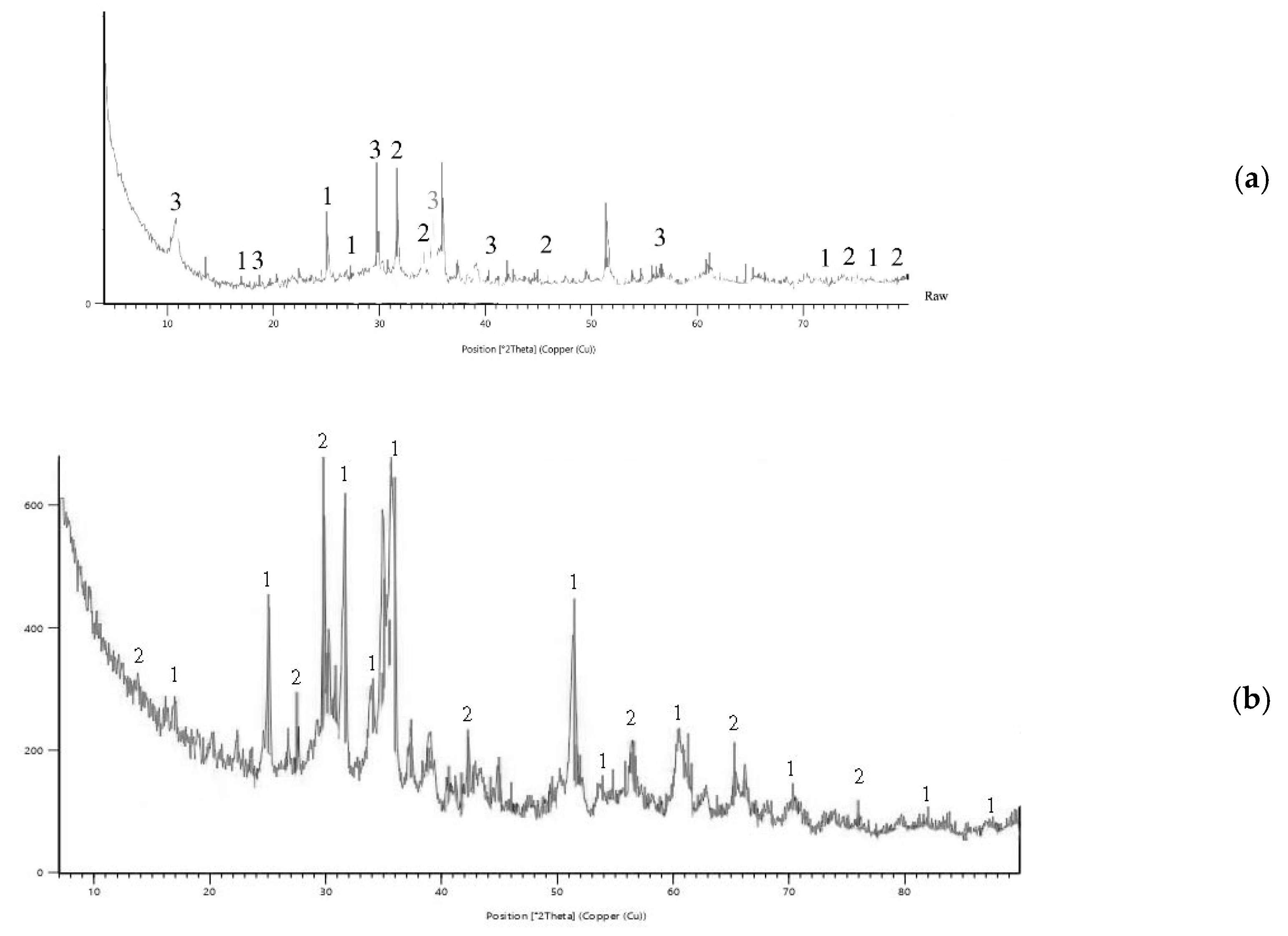
Figure 2.
(a) Sulphuric acid consumption by studied copper slags; (b) Copper chemical leaching from studied copper slags in dependence on the target pH; (c) Zinc chemical leaching from studied copper slag in dependence on the target pH; (d) Cobalt chemical leaching from studied copper slag in dependence on the target pH.
Figure 2.
(a) Sulphuric acid consumption by studied copper slags; (b) Copper chemical leaching from studied copper slags in dependence on the target pH; (c) Zinc chemical leaching from studied copper slag in dependence on the target pH; (d) Cobalt chemical leaching from studied copper slag in dependence on the target pH.
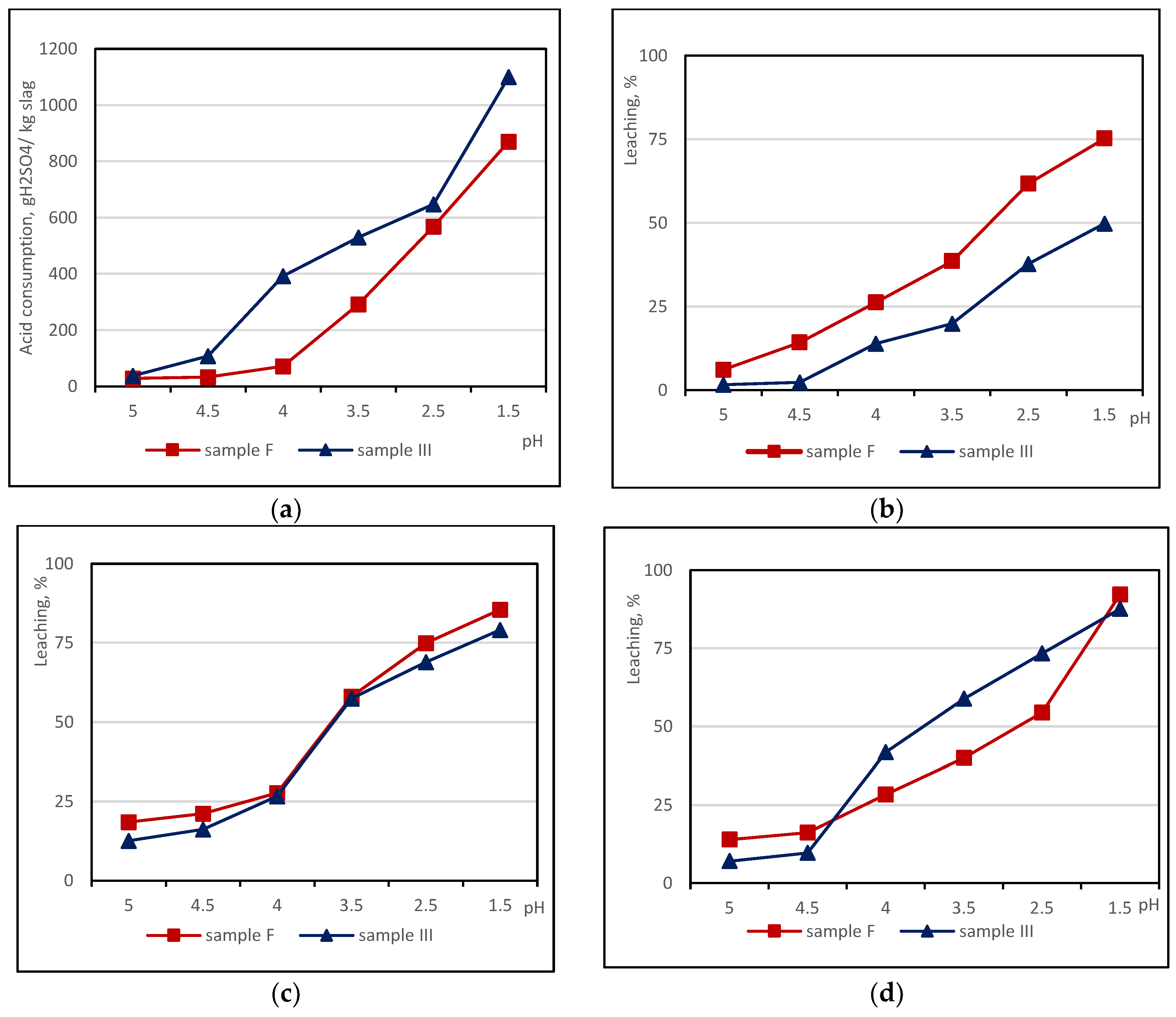
Figure 3.
Effect of the target pH on the selectivity coefficient of the non-ferrous metals and iron chemical leaching using sulphuric acid from the studied copper slag.
Figure 3.
Effect of the target pH on the selectivity coefficient of the non-ferrous metals and iron chemical leaching using sulphuric acid from the studied copper slag.
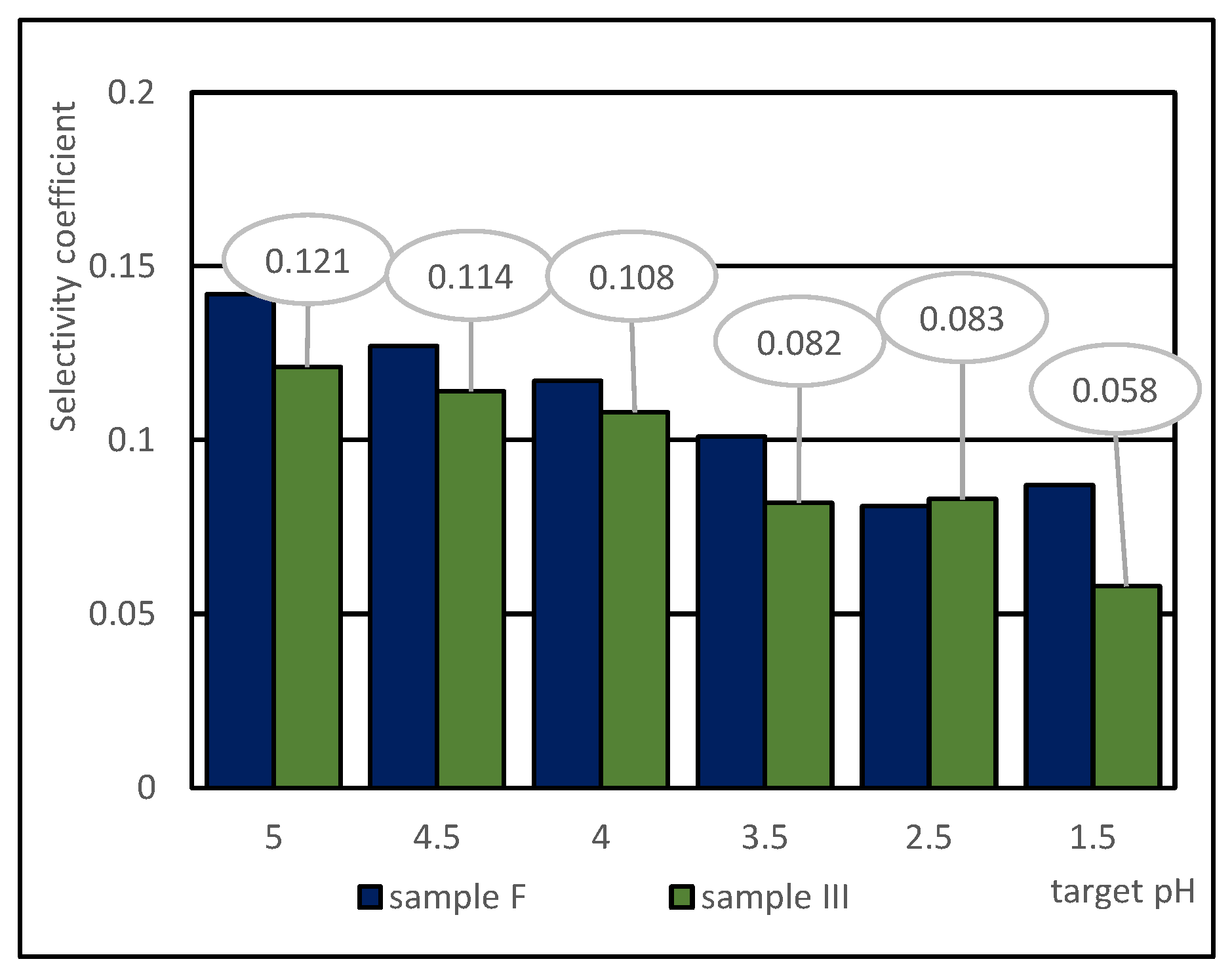
Figure 4.
Selectivity coefficient of non-ferrous metals over iron leaching from the studied copper slag samples with spent medium of the fungal species at 5% pulp density.
Figure 4.
Selectivity coefficient of non-ferrous metals over iron leaching from the studied copper slag samples with spent medium of the fungal species at 5% pulp density.
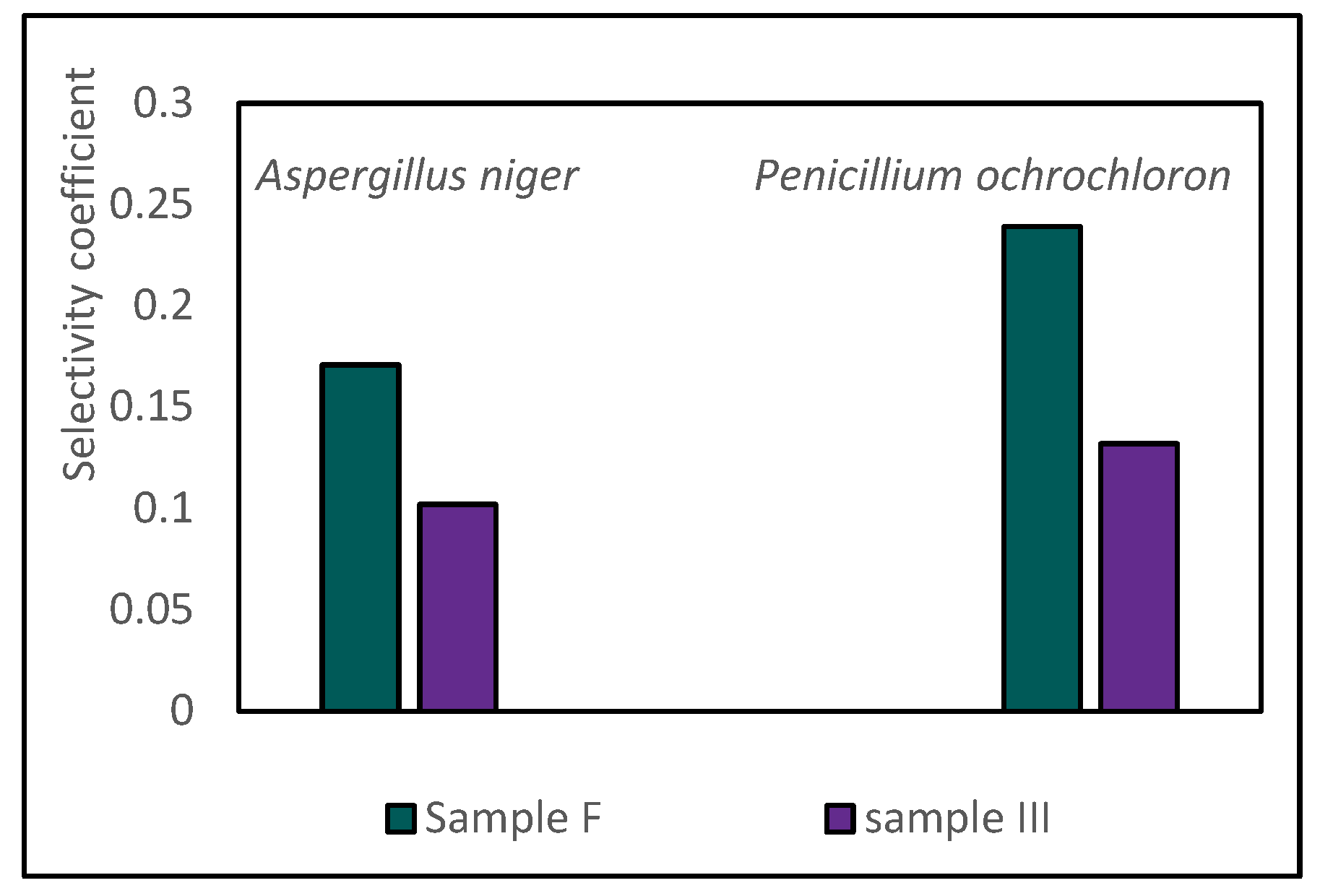
Figure 5.
Effect of the pulp density on the non-ferrous metal leaching with spent medium of Aspergillus niger from: (a) Copper slag sample F; (b) Copper slag sample III; (c) Selectivity coefficient.
Figure 5.
Effect of the pulp density on the non-ferrous metal leaching with spent medium of Aspergillus niger from: (a) Copper slag sample F; (b) Copper slag sample III; (c) Selectivity coefficient.
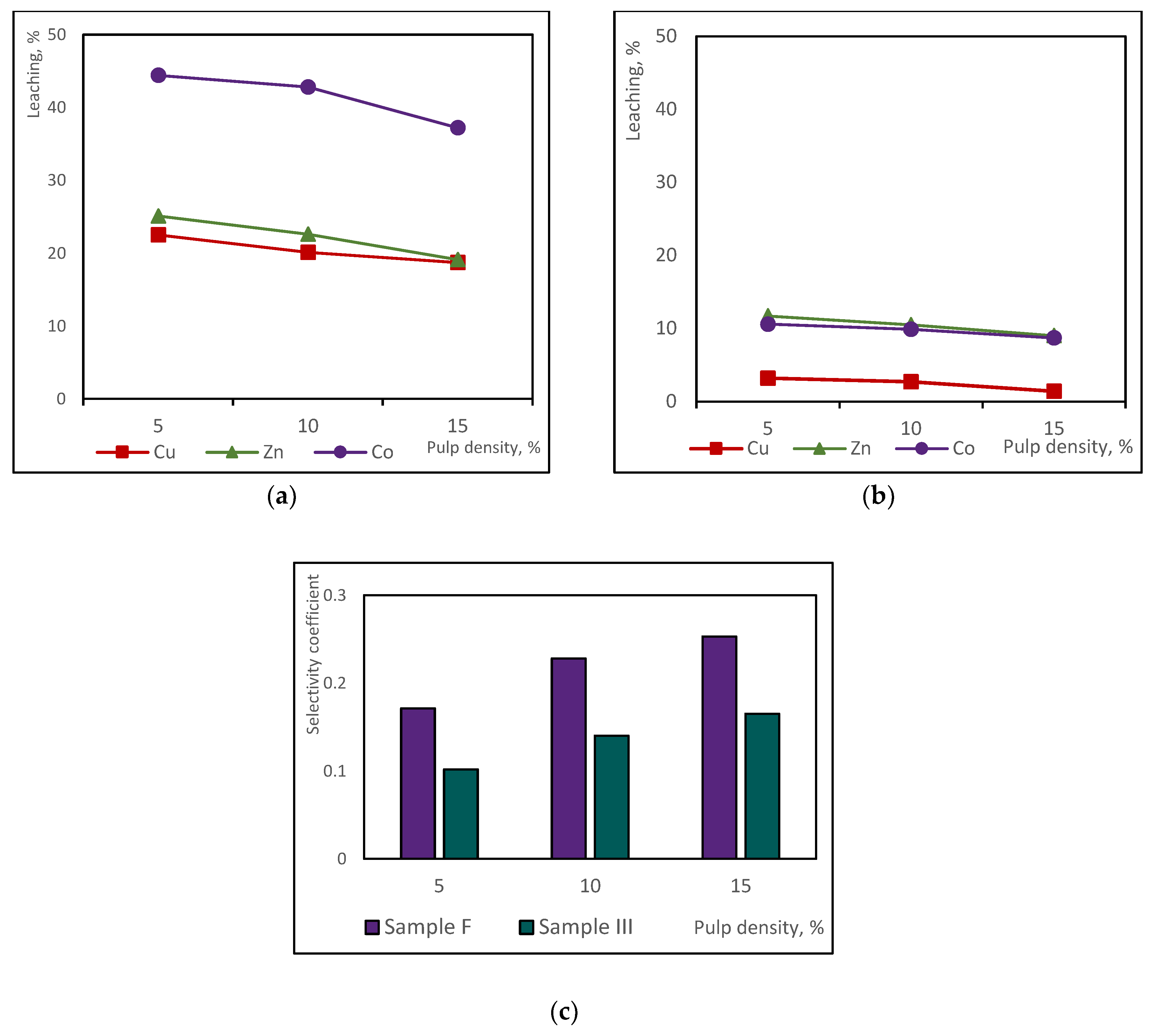
Figure 9.
XRD pattern of copper slag samples F and III after indirect bioleaching with the spent medium of A. niger: (a) Sample F, leaching at a 5% pulp density and 55 °C; (b) Sample F, leaching at a 5% pulp density, 55 °C and the spent medium supplementation with 5 g H2SO4/L; (c) Sample III, leaching at a 5% pulp density and 55 °C; (d) Sample III, leaching at a 5% pulp density, 55 °C and the spent medium supplementation with 5 g H2SO4/L.
Figure 9.
XRD pattern of copper slag samples F and III after indirect bioleaching with the spent medium of A. niger: (a) Sample F, leaching at a 5% pulp density and 55 °C; (b) Sample F, leaching at a 5% pulp density, 55 °C and the spent medium supplementation with 5 g H2SO4/L; (c) Sample III, leaching at a 5% pulp density and 55 °C; (d) Sample III, leaching at a 5% pulp density, 55 °C and the spent medium supplementation with 5 g H2SO4/L.
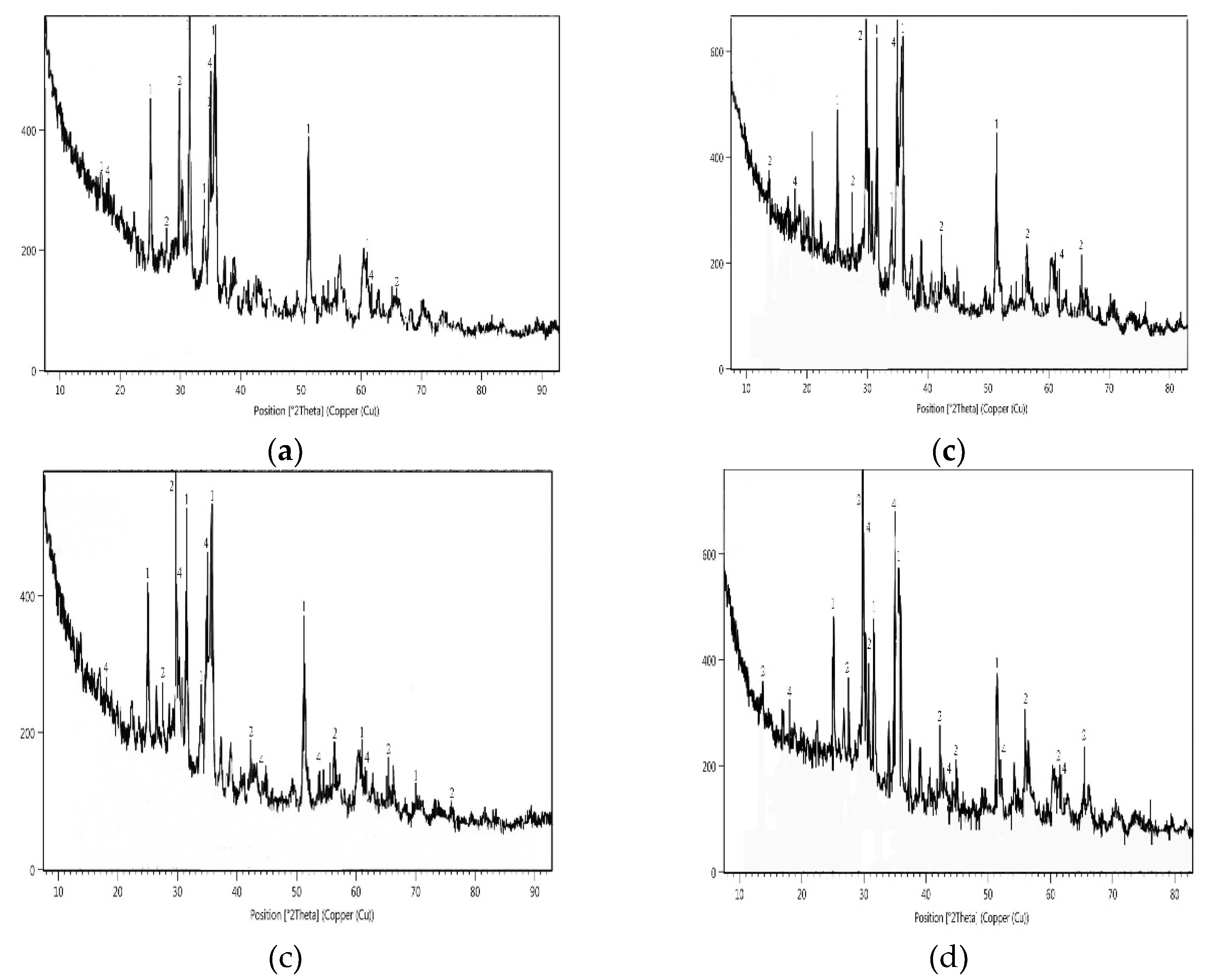
Figure 10.
SEM morphology of raw copper slags and their residues obtained after the applied indirect bioleaching with the spent medium of A. niger: (a) Raw copper slag sample F; (b) Residue of sample F obtained from leaching at 55 °C; (c) Residue of sample F obtained from leaching at 55 °C and the spent medium supplementation with 5 g H2SO4/L; (d) Raw copper slag sample III; (e) Residue of sample III obtained from leaching at 55 °C; (f) Residue of sample III obtained from leaching at 55 °C and the spent medium supplementation with 5 g H2SO4/L.
Figure 10.
SEM morphology of raw copper slags and their residues obtained after the applied indirect bioleaching with the spent medium of A. niger: (a) Raw copper slag sample F; (b) Residue of sample F obtained from leaching at 55 °C; (c) Residue of sample F obtained from leaching at 55 °C and the spent medium supplementation with 5 g H2SO4/L; (d) Raw copper slag sample III; (e) Residue of sample III obtained from leaching at 55 °C; (f) Residue of sample III obtained from leaching at 55 °C and the spent medium supplementation with 5 g H2SO4/L.
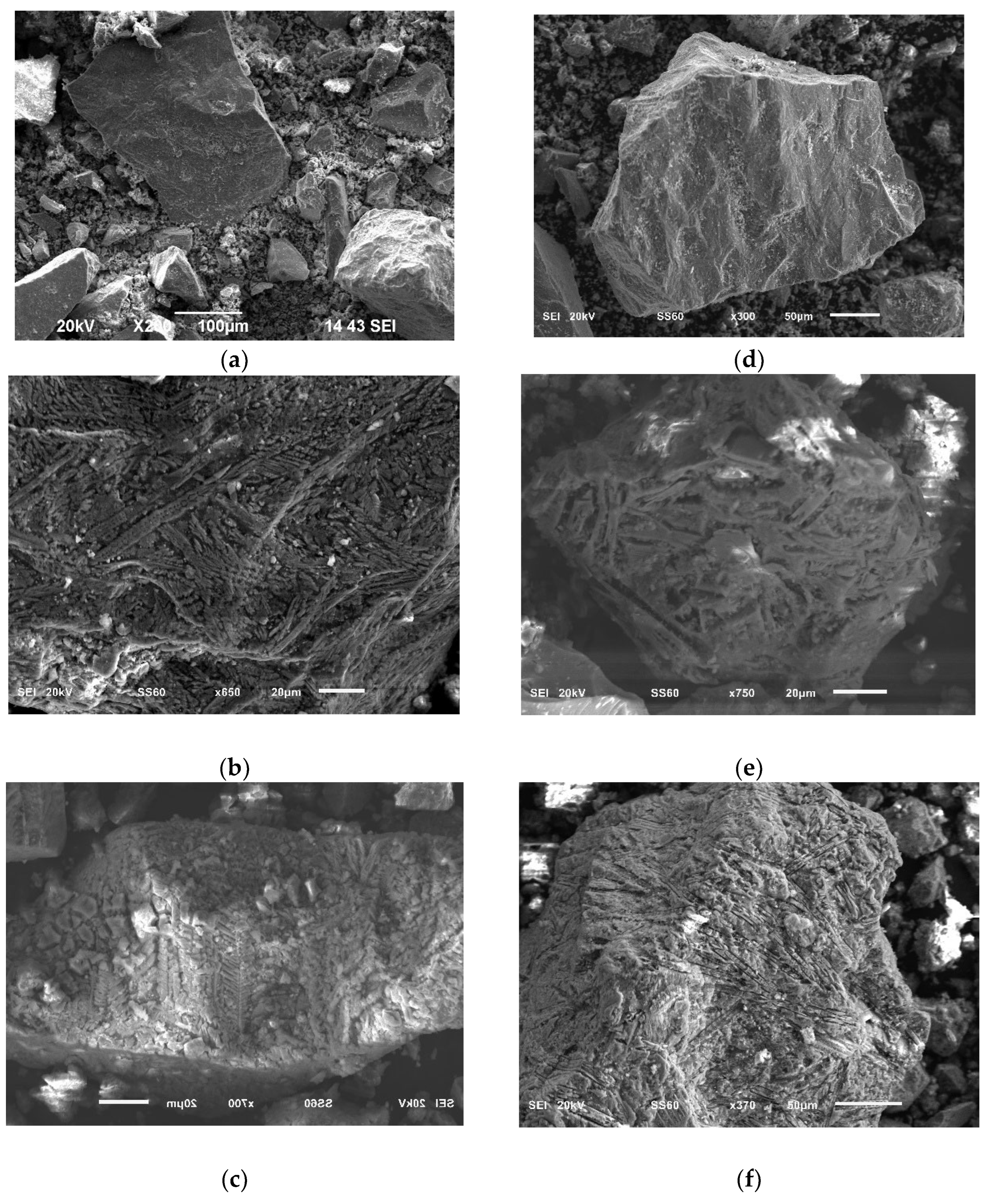

Table 1.
Chemical content of the copper slag samples used in this study.
| Chemical element, % | Sample F | Sample III |
|---|---|---|
| Cu | 0.36 | 0.47 |
| Zn | 1.93 | 1.34 |
| Co | 0.09 | 0.05 |
| Fe | 27.2 | 36.3 |
| Si | 15.9 | 16.0 |
| Ca | 6.9 | 6.9 |
| Mn | 0.8 | 0.3 |
| Al | 2.78 | 2.58 |
| P | 0.08 | 0.07 |
| S | 0.91 | 1.06 |
| pH (H2O) | 7.95 | 8.81 |
Table 2.
Mineral content of the copper slag samples used in this study.
| Chemical element, % | Sample F | Sample III |
|---|---|---|
| Fayalite (Fe2SiO4) | 33 | 56 |
| Pyroxene group (XY(Si,Al)2O6): | ||
|
10 | - |
|
- | 44 |
| Protomangano-ferro-anthophyllite ( ) | 56 | - |
Table 3.
Spent medium of the fungal strains used in the study after a week of cultivation.
| Index | Penicillium ochrochloron | Aspergillus niger |
|---|---|---|
| pH | 3.24 | 2.58 |
| Citric acid, g/L | 18.9 | 24.8 |
| Oxalic acid, g/L | 10.9 | 8.1 |
| Acidity, g/L | 0.65 | 0.94 |
| Fungal biomass, g/L | 7.92 | 9.75 |
Table 4.
Effect of the spent medium on the non-ferrous metal leaching from the studied copper slag samples at 5% pulp density and 25 °C.
Table 4.
Effect of the spent medium on the non-ferrous metal leaching from the studied copper slag samples at 5% pulp density and 25 °C.
| Index | Penicillium ochrochloron | Aspergillus niger | ||
|---|---|---|---|---|
| Sample F | Sample III | Sample F | Sample III | |
| pH | 5.27 | 7.19 | 4.39 | 6.03 |
| Cu leached, mg/kg | 715 | 97 | 810 | 151 |
| Cu leaching, % | 19.9 | 2.1 | 22.5 | 3.2 |
| Zn leached, mg/kg | 4490 | 1407 | 4850 | 1568 |
| Zn leaching, % | 23.3 | 10.5 | 25.1 | 11.7 |
| Co leached, mg/kg | 345 | 61 | 400 | 69 |
| Co leaching, % | 38.3 | 12.2 | 44.4 | 13.8 |
Table 5.
Relative content of minerals identified by XRD-analysis in the copper slag residues obtained due to the indirect bioleaching of slags samples at a 5% pulp density under the relevant experimental conditions.
Table 5.
Relative content of minerals identified by XRD-analysis in the copper slag residues obtained due to the indirect bioleaching of slags samples at a 5% pulp density under the relevant experimental conditions.
| Copper slag/copper slag residue | Relative content, % | |||||
|---|---|---|---|---|---|---|
|
Fayalite |
Pyroxene group | Proto- mangano-ferro-anthophyllite |
Magnetite |
|||
| Clinopyroxene | Diopside | Augite | ||||
| Sample F | ||||||
| Raw sample | 50 | 20 | - | - | 30 | - |
| Leaching with the spent medium at 55 °C | 60 | - | - | 37 | - | 3 |
| Leaching with the spent medium supplementation with 5 g H2SO4/L at 55 °C | 40 | - | - | 28 | - | 32 |
| Sample III | ||||||
| Raw sample | 65 | - | 35 | - | - | - |
| Leaching with the spent medium at 55 °C | 40 | - | - | 32 | - | 25 |
| Leaching with the spent medium supplementation with 5 g H2SO4/L at 55 °C | 33 | - | - | 45 | - | 22 |
Disclaimer/Publisher’s Note: The statements, opinions and data contained in all publications are solely those of the individual author(s) and contributor(s) and not of MDPI and/or the editor(s). MDPI and/or the editor(s) disclaim responsibility for any injury to people or property resulting from any ideas, methods, instructions or products referred to in the content. |
© 2025 by the authors. Licensee MDPI, Basel, Switzerland. This article is an open access article distributed under the terms and conditions of the Creative Commons Attribution (CC BY) license (http://creativecommons.org/licenses/by/4.0/).
Copyright: This open access article is published under a Creative Commons CC BY 4.0 license, which permit the free download, distribution, and reuse, provided that the author and preprint are cited in any reuse.


