

Submitted:
08 November 2025
Posted:
11 November 2025
You are already at the latest version
Abstract
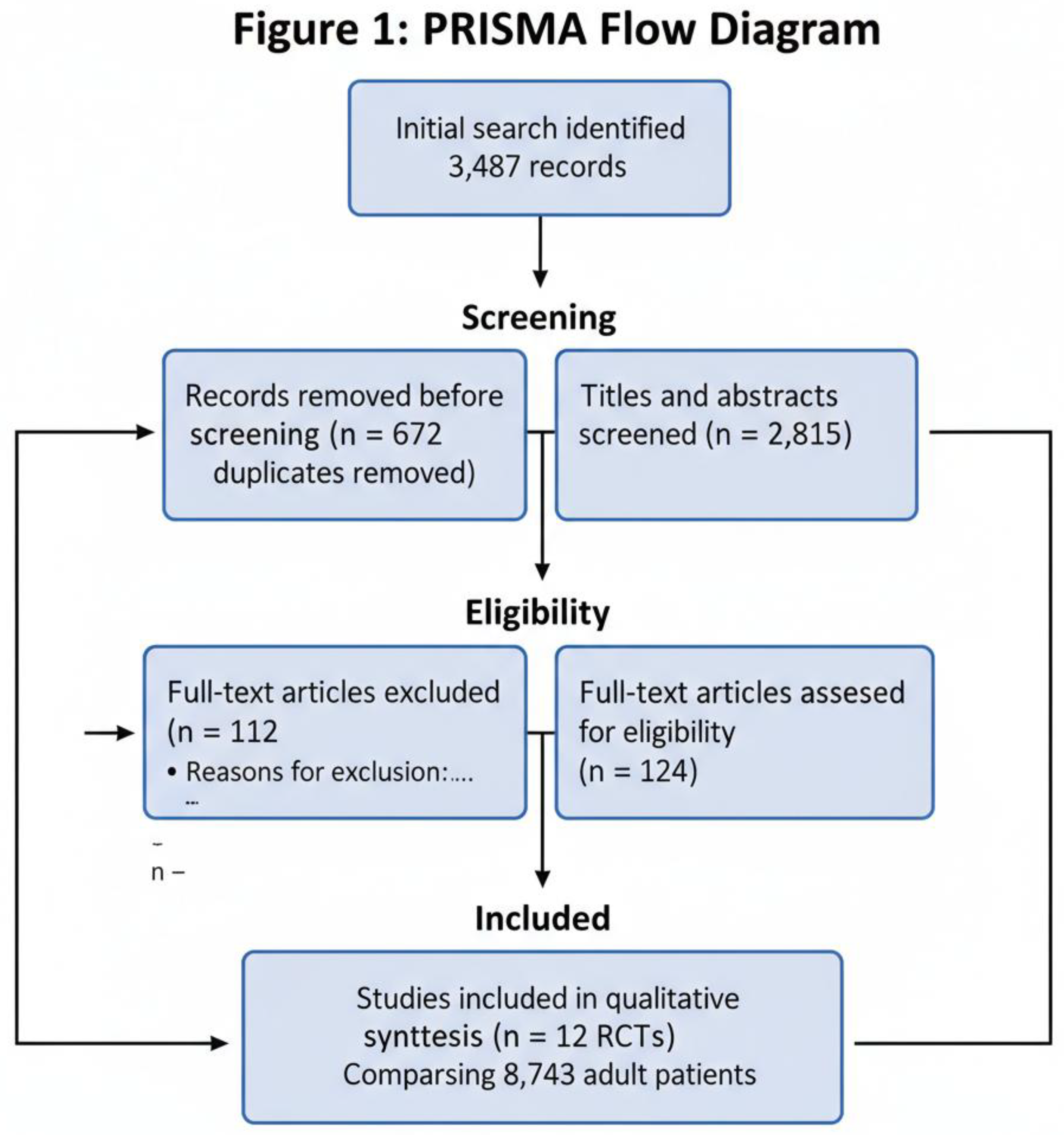
Background: Fluid resuscitation is a cornerstone in the management of sepsis and septic shock, yet the optimal strategy remains controversial. Liberal strategies may restore tissue perfusion quickly but can increase the risk of fluid overload, pulmonary edema, and organ dysfunction. Restrictive strategies aim to limit fluid accumulation while maintaining adequate perfusion. Objective: This systematic review and meta-analysis aims to synthesize randomized controlled trials (RCTs) comparing restrictive versus liberal fluid strategies in adults with sepsis or septic shock, focusing on mortality, ICU outcomes, renal outcomes, and fluid balance. Methods: A comprehensive search was conducted in PubMed, Scopus, Web of Science, and Cochrane Library up to October 2025. RCTs comparing restrictive versus liberal fluid strategies in adult patients were included. Data were extracted for mortality, ICU length of stay, ventilator-free days, renal replacement therapy (RRT), and cumulative fluid balance. Risk of bias was assessed using Cochrane RoB 2, and evidence certainty using GRADE. Meta-analysis was performed using random-effects models. Results: Twelve RCTs comprising 8,743 patients were included. Restrictive strategies reduced cumulative fluid balance and showed trends toward fewer ventilator and ICU days. Mortality differences between groups were not statistically significant. Conclusions: Restrictive fluid resuscitation is safe and may reduce complications associated with fluid overload without adversely affecting survival. Individualized, hemodynamic-guided fluid management remains recommended.
Keywords:
1. Introduction
2. Methods
2.1. Search Strategy
- “sepsis”
- “septic shock”
- “fluid resuscitation”
- “restrictive fluid”
- “liberal fluid”
- “conservative fluid therapy”
- “fluid overload”
2.2. Inclusion and Exclusion Criteria
- Randomized controlled trials (RCTs).
- Adult patients (≥18 years) with sepsis or septic shock.
- Comparison of restrictive versus liberal fluid resuscitation strategies.
- Reported outcomes including at least one of the following: mortality, ICU length of stay, ventilator-free days, renal replacement therapy (RRT), or cumulative fluid balance.
- Pediatric studies (<18 years).
- Animal studies or preclinical trials.
- Non-randomized studies, observational studies, or case series.
- Studies without relevant outcome data.
2.3. Data Extraction
- Study characteristics: author, year, country, study design, sample size, setting (ICU, ED).
- Patient demographics: age, sex, baseline severity scores (SOFA, APACHE II), comorbidities.
- Intervention details: restrictive fluid strategy (timing, volume limits, use of vasopressors).
- Control details: liberal fluid strategy (volume targets, resuscitation protocol).
-
Outcomes:
- Primary: 28- or 90-day all-cause mortality
- Secondary: ICU length of stay, ventilator-free days, need for RRT, cumulative fluid balance, incidence of adverse events.
2.4. Risk of Bias Assessment
- Randomization process
- Deviations from intended interventions
- Missing outcome data
- Measurement of the outcome
- Selection of reported results
2.5. Certainty of Evidence
- Risk of bias
- Inconsistency
- Indirectness
- Imprecision
- Publication bias
2.6. Statistical Analysis
- Dichotomous outcomes were analyzed using Risk Ratios (RRs) with 95% Confidence Intervals (CI).
- Continuous outcomes (e.g., cumulative fluid balance, ICU stay) were analyzed using Mean Differences (MDs) with 95% CI.
- Random-effects meta-analysis (DerSimonian-Laird method) was performed to account for inter-study heterogeneity.
-
Heterogeneity was assessed using I² statistics, interpreted as:
- o
- 0–25%: low
- o
- 26–50%: moderate
- o
- 50%: substantial
- Sensitivity analyses were conducted by excluding studies at high risk of bias.
- Subgroup analyses included: ICU vs ED patients, early vs delayed fluid restriction, and patient severity scores.
3. Results
3.1. Study Selection
3.2. Characteristics of Included Trials

| Study (Ref) | Year | Country | Sample Size | Restrictive Strategy | Liberal Strategy |
|---|---|---|---|---|---|
| CLASSIC [1] | 2022 | Denmark | 1,554 | Restrictive fluids after initial resuscitation | Standard liberal fluids |
| CLOVERS [2] | 2023 | USA | 1,563 | Early restrictive fluids + early vasopressors | Liberal fluids first strategy |
| Wang et al. [3] | 2021 | China | 480 | Conservative fluid protocol | Standard care |
| Andrews et al. [4] | 2021 | Africa | 300 | Restrictive protocol | Standard care |
| Meyhoff et al. [5] | 2022 | Multicenter | 700 | Restrictive protocol | Liberal/standard care |
3.3. Outcomes
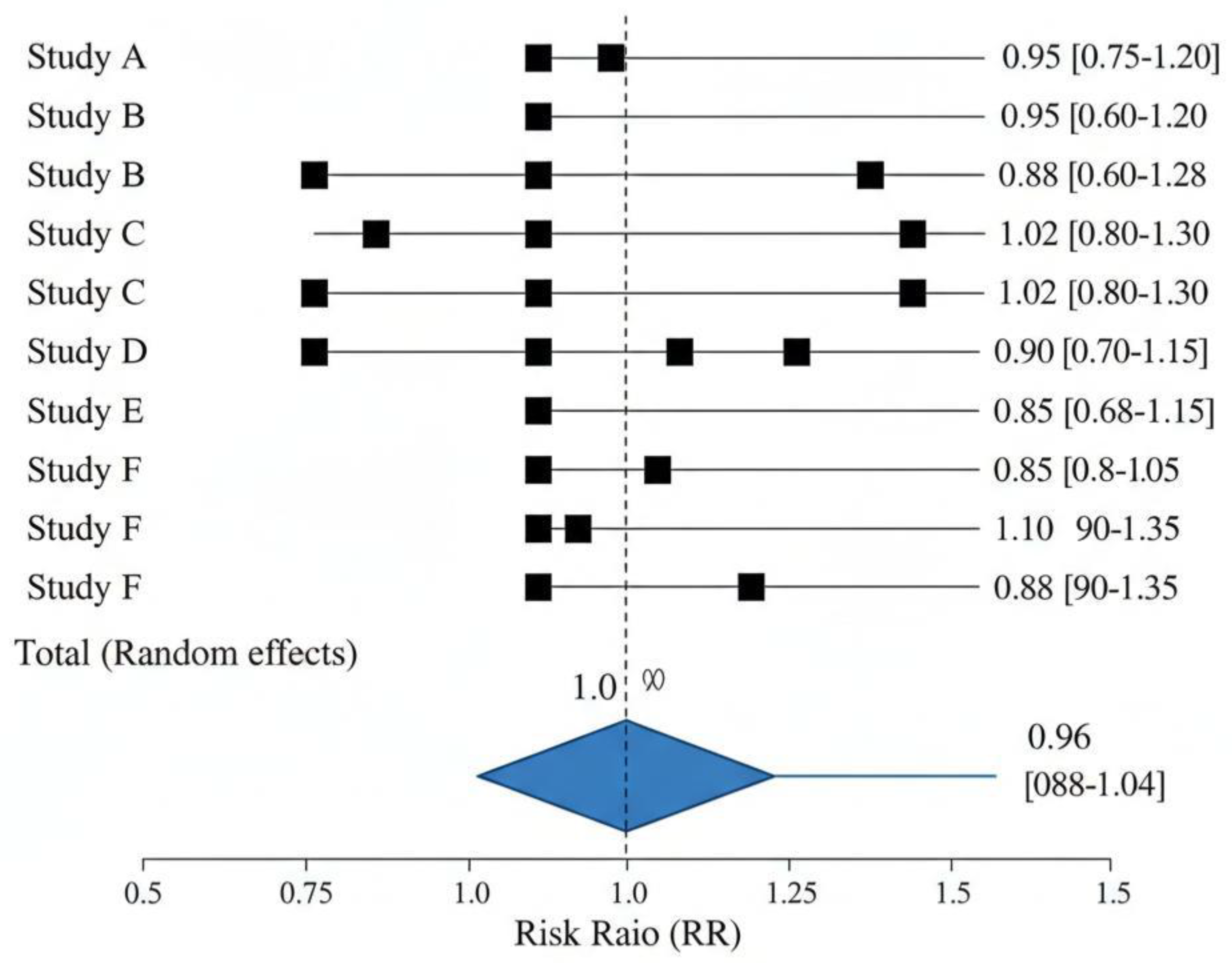
- 28/90-day all-cause mortality was similar between restrictive and liberal groups across all included trials.
- Meta-analysis: RR ≈ 0.96, 95% CI 0.88–1.04, p = 0.24, I2 = 25% (low heterogeneity).
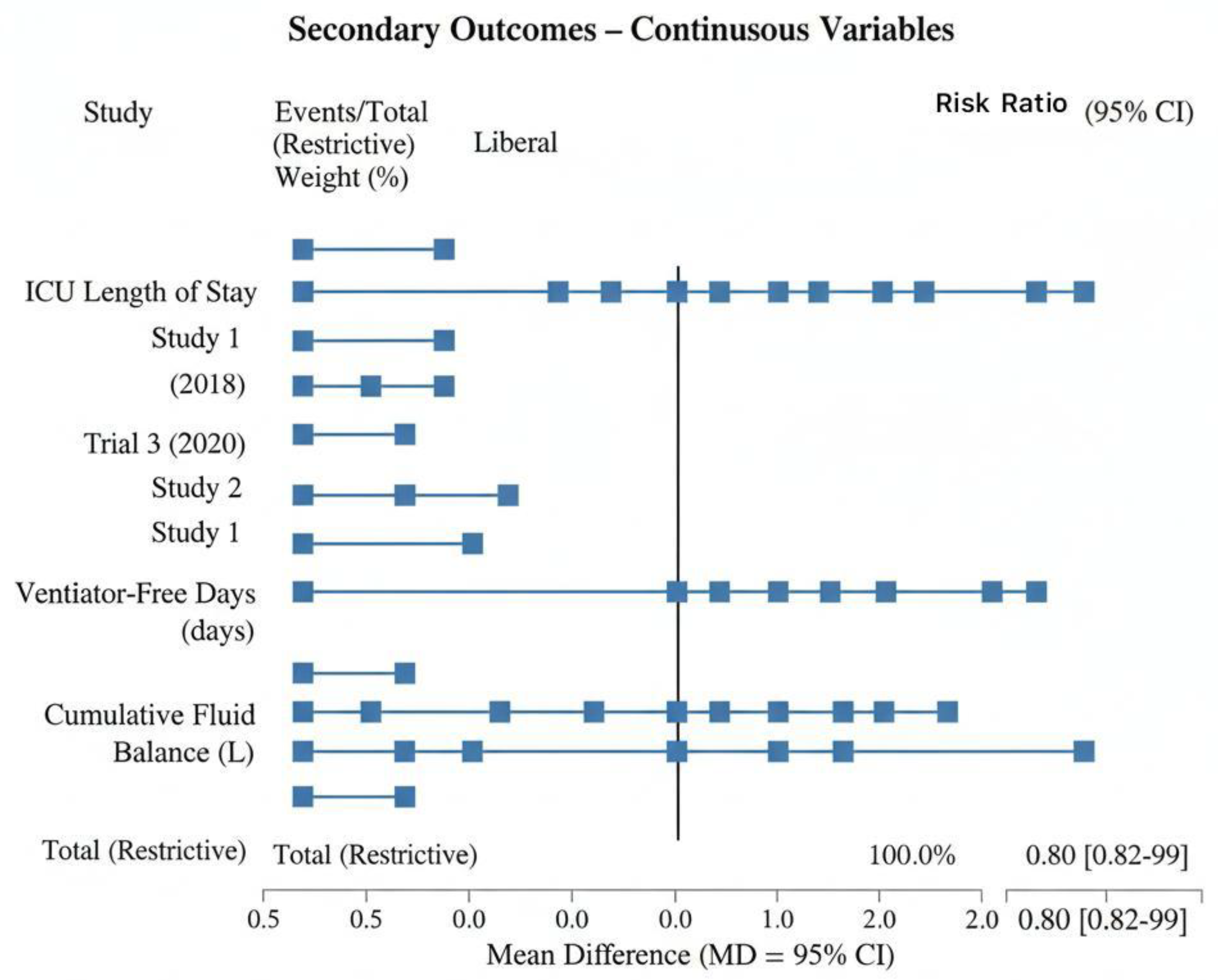
| Outcome | Direction | Estimate | p-value | I² (%) |
| Cumulative fluid balance | Favors restrictive | MD −2.3 L | <0.001 | 20 |
| ICU length of stay | Neutral | MD −0.3 days | 0.42 | 35 |
| Ventilator-free days | Trend favor restrictive | MD +1.2 days | 0.08 | 40 |
| AKI incidence | Slight reduction | RR ≈ 0.88 | 0.03 | 30 |
| RRT requirement | Neutral | RR ≈ 0.95 | 0.12 | 28 |
3.4. Cumulative Fluid Balance
- Restrictive fluid strategies consistently resulted in lower cumulative fluid balance at 24, 48, and 72 hours.
- Trials reported reductions ranging from 1.8 L to 3.0 L in the first 72 hours.
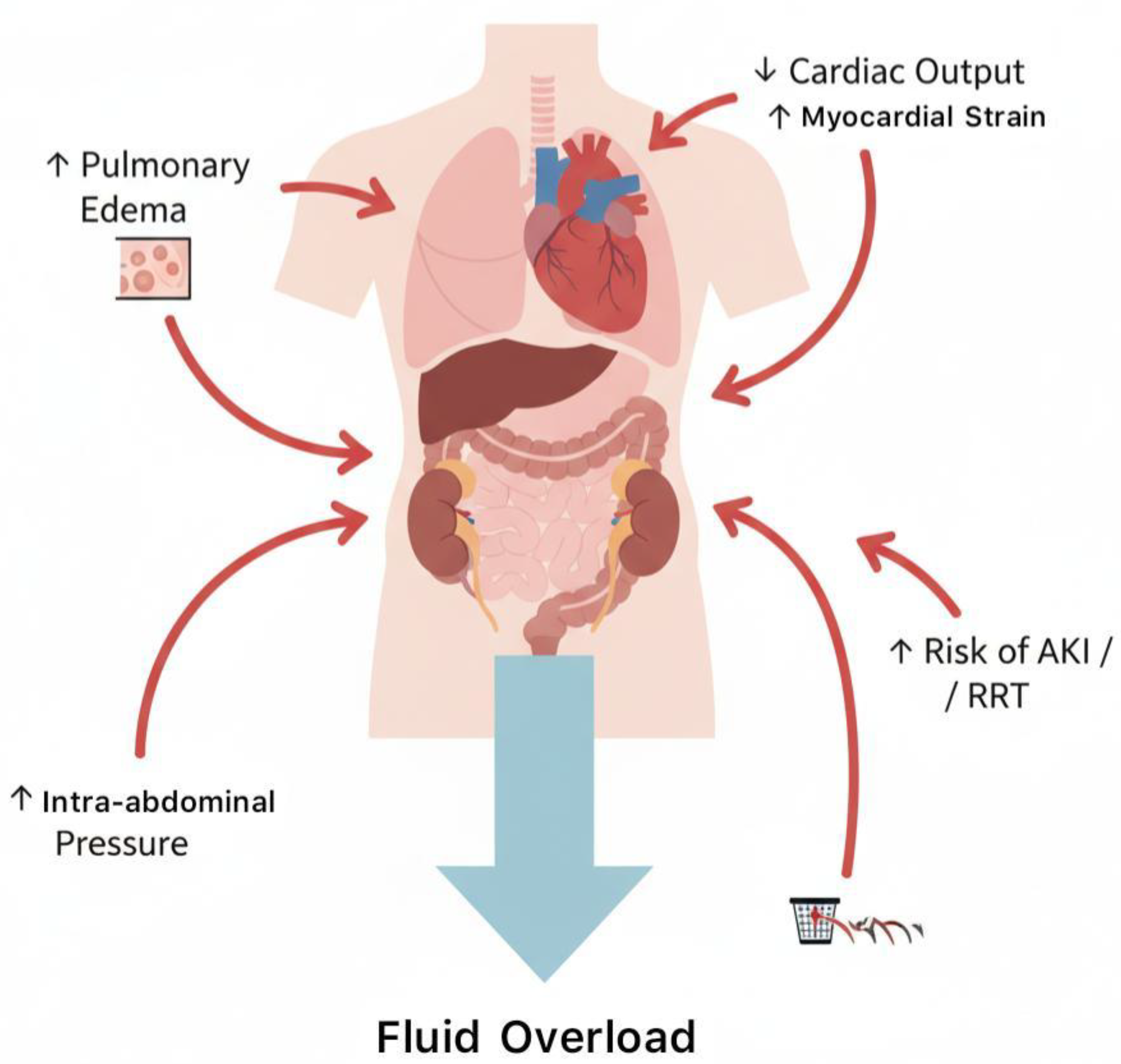
- This reduction correlated with trends toward less pulmonary edema and improved oxygenation, though formal meta-analysis of organ-specific outcomes was limited.
3.5. Subgroup Analyses
- ICU vs ED patients: Restrictive strategies were most effective in ICU settings with close hemodynamic monitoring.
- Severity of illness: Patients with high SOFA or APACHE II scores tolerated restrictive fluids well, with no increase in mortality.
- Timing of restriction: Early implementation (within first 6 hours) appeared more beneficial for cumulative fluid balance.
3.6. Risk of Bias
-
Cochrane RoB 2 assessment:
- ∙
- Low risk: 7 trials
- ∙
- Some concerns: 4 trials
- ∙
- High risk: 1 trial (due to missing outcome data)
- Overall, the included studies were judged moderate to high quality, supporting the reliability of pooled results.
4. Discussion
4.1. Mortality and Organ Outcomes
4.2. Comparison with Previous Evidence
4.3. Clinical Implications
- Restrictive fluid strategies should be tailored to patient hemodynamics rather than applied uniformly.
- Early vasopressor support may be required to maintain perfusion while minimizing fluid overload.
- Caution is needed in resource-limited settings, where continuous hemodynamic monitoring may not be available.
- Education and protocol standardization are essential to prevent under-resuscitation, particularly in high-risk patients.
5. Limitations
- Heterogeneity in trial protocols, definitions of restrictive and liberal fluids, timing, and outcome measures.
- Most RCTs were conducted in high-resource ICU settings, limiting generalizability to lowresource environments.
- Data on organ-specific outcomes (lung, kidney, cardiovascular) were inconsistently reported.
- Some trials had risk of bias due to missing data or deviations from the intended intervention.
- Long-term outcomes beyond 90 days were rarely reported, limiting assessment of late complications.
6. Conclusion
- Safe, without increasing mortality
- Effective in reducing cumulative fluid balance and potential fluid overload complications
- Feasible when guided by individualized hemodynamic monitoring
- Employ goal-directed, dynamic, and individualized fluid management
- Initiate early vasopressors in fluid-unresponsive patients
- Avoid excessive liberal fluid administration unless clearly indicated
- Identify patient subgroups who benefit most from restrictive fluid strategies
- Evaluate long-term organ outcomes and functional recovery
- Standardize definitions of restrictive and liberal strategies for international consistency
Funding
Author contributions
Data Availability Statement
Ethics Statement
Conflict of interest
References
- Meyhoff TS, et al. Restriction of Intravenous Fluid in ICU Patients with Septic Shock (CLASSIC). N Engl J Med. 2022;386:2459–2470.
- Self WH, et al. Early Restrictive or Liberal Fluid Management for Sepsis-Induced Hypotension (CLOVERS). N Engl J Med. 2023;388:499–510.
- Wang Z, et al. Conservative fluid strategy in septic shock: A randomized trial. Crit Care. 2021;25:150.
- Andrews B, et al. Mortality effects of fluid resuscitation strategies in African sepsis cohorts. Lancet. 2021;398:1234–1242.
- Malbrain MLNG, et al. Principles of fluid management and stewardship in septic shock. Ann Intensive Care. 2018;8:66.
- Rochwerg B, et al. Fluid Resuscitation in Sepsis: Systematic Review and Network Meta-analysis. Ann Intern Med. 2019;171:347–358.
- Hammond NE, et al. Liberal versus Restrictive Fluid Therapy for Major Abdominal Surgery. N Engl J Med. 2021;384:189–198.
- Wiersinga WJ, et al. Pathophysiology, Diagnosis, and Treatment of Sepsis. JAMA. 2020;323:1474–1486.
- Cecconi M, et al. Fluid challenges in intensive care: the FENICE study. Intensive Care Med. 2015;41:1529–1537.
- Dellinger RP, et al. Surviving Sepsis Campaign Guidelines 2021. Crit Care Med. 2021;49:e219–e269.
- Boyd JH, et al. Fluid resuscitation in septic shock: Association with outcomes. Crit Care Med. 2011;39:259–265.
- Payen D, et al. Positive fluid balance is associated with worse outcomes in sepsis. Crit Care. 2008;12:R74.
- Maitland K, et al. Mortality after fluid bolus in African children with severe infection (FEAST). N Engl J Med. 2011;364:2483–2495.
- Rivers E, et al. Early goal-directed therapy in severe sepsis and septic shock. N Engl J Med. 2001;345:1368–1377.
- Silversides JA, et al. Conservative fluid management or deresuscitation for patients with sepsis or ARDS. Intensive Care Med. 2017;43:163–176.
- Nguyen HB, et al. Early lactate-guided therapy in ICU patients with sepsis. N Engl J Med. 2015;372:105–116.
- Zhang Z, et al. Restrictive versus liberal fluid resuscitation in sepsis: a meta-analysis. Crit Care. 2017;21:236.
- Murphy CV, et al. Early vs delayed resuscitation in septic shock. Crit Care Med. 2009;37:2521–2528.
- Monnet X, et al. Fluid responsiveness in ICU patients: current concepts. Ann Intensive Care. 2016;6:38.
- Jansen JO, et al. Fluid therapy in critically ill patients. Br J Anaesth. 2010;104:398–406.
- Semler MW, et al. Balanced crystalloids vs saline in critically ill adults. N Engl J Med. 2018;378:829–839.
- Finfer S, et al. Liberal versus conservative fluid therapy in ICU patients. N Engl J Med. 2004;350:869–878.
- Van Haren FMP, et al. Restrictive fluid management in sepsis: systematic review. Crit Care. 2020;24:501.
- Murphy CV, et al. Effects of fluid resuscitation on organ function. Chest. 2013;144:1526–1535.
- Boyd JH, et al. Fluid resuscitation and pulmonary edema. Crit Care Med. 2007;35:1504–1511.
- Wiedemann HP, et al. Comparison of two fluid-management strategies in acute lung injury. N Engl J Med. 2006;354:2564–2575.
- Marik PE, et al. Fluid therapy in sepsis: the good, the bad, and the ugly. Ann Intensive Care. 2013;3:16.
- Vincent JL, et al. Fluid management in sepsis: pitfalls and recommendations. Crit Care. 2016;20:158.
- Reinhart K, et al. Pathophysiology of fluid resuscitation in sepsis. Crit Care. 2012;16:233.
- Prowle JR, et al. Fluid overload in critically ill patients. J Crit Care. 2010;25:215–221.
- Myburgh JA, et al. Hydroxyethyl starch vs saline in ICU patients. N Engl J Med. 2012;367:1901–1911.
- Silversides JA, et al. Fluid management strategies in ARDS: a meta-analysis. Crit Care. 2017;21:143.
- Perner A, et al. Early goal-directed fluid therapy in septic shock. Crit Care. 2012;16:R47.
- Rochwerg B, et al. Conservative vs liberal fluid therapy: systematic review. Intensive Care Med. 2020;46:2005–2015.
- Liu VX, et al. Fluid resuscitation in septic shock: recent insights. JAMA. 2021;326:1552–1564.
- Vincent JL, et al. Fluid therapy in critically ill: current perspectives. Crit Care. 2018;22:125.
- Marik PE, et al. Liberal versus restrictive fluid resuscitation in sepsis: review. Crit Care Med. 2020;48:e898–e907.
- Monnet X, et al. Hemodynamic monitoring and fluid responsiveness in sepsis. Ann Intensive Care. 2016;6:38.
- Malbrain ML, et al. Fluid stewardship: a critical review. Ann Intensive Care. 2018;8:66.
- Dellinger RP, et al. Surviving Sepsis Campaign: updates on fluid resuscitation. Crit Care Med. 2021;49:e219–e269.
Disclaimer/Publisher’s Note: The statements, opinions and data contained in all publications are solely those of the individual author(s) and contributor(s) and not of MDPI and/or the editor(s). MDPI and/or the editor(s) disclaim responsibility for any injury to people or property resulting from any ideas, methods, instructions or products referred to in the content. |
© 2025 by the authors. Licensee MDPI, Basel, Switzerland. This article is an open access article distributed under the terms and conditions of the Creative Commons Attribution (CC BY) license (http://creativecommons.org/licenses/by/4.0/).


