

Submitted:
05 November 2025
Posted:
06 November 2025
You are already at the latest version
Abstract
This research presents a detailed assessment of the wind power potential in six Palestinian cities: Bethlehem, Jericho, Jenin, Nablus, Ramallah, and Tulkarm, utilizing daily wind speed data from the years 2015 to 2021. The primary goal of this study is to formulate a robust, data-driven framework for the strategic placement of turbines and the economical production of energy in areas with limited wind resources. A critical aspect of this research is the application of nine numerical methods, including the Maximum Likelihood Method (MLM) and the Energy Pattern Factor Method (EPF), to analyze the wind data. These methods were employed to estimate the shape and scale parameters of the Probability Distribution Function (PDF) that represents the Weibull distribution for various shape factor values. The accuracy of the numerical methods was validated through five statistical tools, including the Root Mean
Square Error (RMSE) and Chi-square tests (X^2). The Weibull parameters obtained from the numerical techniques indicated shape factors ranging from 1.27 to 1.96 and scale factors between 1.16 and 3.21 m/s. The energy output was calculated based on the swept area of the wind turbine, following Betz's limit. The estimated annual en
ergy production per square meter in the six cities is as follows: Ramallah – 123.0175 kWh/m², Bethlehem – 24.42256 kWh/m², Jenin – 31.12444 kWh/m², Nablus – 21.99244 kWh/m², Tulkarm – 15.48823 kWh/m², and Jericho – 10.36153 kWh/m². A 5-kW small-scale wind turbine was utilized to evaluate the technical feasibility, sustainability, and economic viability of small-scale wind energy applications. The anticipated energy output from the proposed wind turbine is 2260 KWhr, with an estimated payback period of approximately 11 years.
Keywords:
probability distribution function (PDF)
; cumulative distribution function (CDF)
; Weibull
; shape factor
; scale factor
; numerical methods
; statistical tools
; wind energy potential
1. Introduction
The global electric energy crisis has become a significant issue in the past decade. Many governments have been striving to incorporate sustainable energy sources like wind and solar power into their electrical grids. In response to the energy crisis, countries worldwide have adopted policies and strategies to promote the use of renewable resources for energy production [1]. According to a recent study by the International Energy Agency (IEA), global renewable energy capacity is projected to increase by 50% in the next year and by 75% (2400 GW) over the next five years [2]. The IEA highlights PV and wind energy as the most promising and rapidly growing sectors, driven by their competitive commercial costs [3].
Figure 1 illustrates the historical development of wind turbine installations according to the Global Wind Energy Council (GWEC). The global wind energy market is projected to grow by 8.8% annually [4].
GWEC’s market intelligence forecasts that new installations will surpass the previous record and reach 138 GW in 2025. A total of 982 GW of new capacity is expected to be added this year and in the next five years under current policies. This would result an average of 164 GW of new installations annually until 2030. GWEC’s Market Outlook offers the industry’s perspective on expected installations of new capacity over the next five years. The outlook is based on input from regional wind associations, government targets, tender results, announced auction plans, available project pipeline, and insights from industry experts and GWEC members.
Figure 2 (a) illustrates the total onshore installations of wind turbines in gigawatts (GW). The Global Wind Energy Council (GWEC) reported that new wind power reached approximately 1052.3 GW in 2024, indicating significant global growth in renewable energy. In Figure 2 (b), the total installations of offshore wind turbines are shown. According to the GWEC report, the total installations of offshore wind turbines reached around 83.2 GW. Figure 2 (a) showcases the increasing new installations of onshore wind turbine capacities in leading nations such as China, the USA, Germany, India, followed by Brazil. China and the USA are highlighted for their impressive achievements in managing high levels of wind penetrations based on onshore wind turbines.
Figure 2(b) depicts offshore installations of wind turbines. However, embarking on a wind energy generation project requires careful planning and a thorough assessment of meteorological data to analyze the potential for harnessing wind power in a specific region [4].
Recently, there’s a rising interest in the utilization of wind energy in Palestine as an option to decrease the importation of electricity and seek sustainability [5]. Alsamamra, et al. in [6] conducted a study that assessed the wind power potential of East Jerusalem, presenting the opportunities for small-scale wind turbines in the area despite lower wind speeds.
These studies demonstrate the increasing interest in wind energy in Palestine and serve as the foundation for the current study that will assess the wind energy potential in six cities across the West Bank. By enhancing previous research and offering a more detailed and comparative analysis, this study contributes to the promotion of renewable energy integration into Palestine’s energy mix.
In ref. [7] analyzed wind energy potential in Nablus, Ramallah, and Gaza using daily wind speed data fitted to the Weibull distribution. Their results showed significant annual energy production (927.1–1,008 kWh/m2), demonstrating the feasibility of wind energy in Palestine and supporting investment in renewable energy.
The research aims to explore the viability of implementing a small-scale wind turbine in the region. Wind forecasting entails conducting thorough surveys at potential wind farm sites, including installing measuring towers with anemometers to collect wind speed and direction data at various heights. These measurements are critical for assessing the power generation potential of a wind farm, considering factors such as turbine efficiency, electrical infrastructure, transmission capacity, and local energy demand.
In this study, the Probability Distribution Function (PDF) is used to analyze wind data, which will be used to assess wind energy production in Palestine. The volatile political and economic conditions in Palestine can result in an outdated energy sector with minimal growth. Long-term analysis of actual wind speed can provide valuable insights into wind power availability, economic viability, and technical design of wind turbine systems [8,9].
The k and c parameters of the Weibull PDF have been extensively studied in the literature in a variety of global locales [10,11]. Furthermore, a number of approaches have been successfully tested in this context [12,13], as has the applicability of each approach in relation to the distribution of sample wind data and the meteorological station’s location. The Empirical Method (EM), proposed by Justus et al., is a method for calculating the Weibull parameters by utilizing the data average and standard deviation (SD). The Maximum Likelihood Method (MLM), which uses numerical iterative methods to estimate the two Weibull parameters, was proposed in Ref. [14]. The Graphical Method (GM) that uses linear least-squares regression to obtain the best estimated values of the Weibull parameters was provided in Ref. [15]. A different approach, the Energy Pattern Factor Method (EPF), was suggested by Ref. [16] to evaluate the research site’s possible wind power density while accounting for wind speed change. Moreover, a number of statistical analyses were used to compare the Weibull parameters estimation techniques. For instance, Ref. [17] compared and contrasted the Modified Maximum Likelihood Method (MMLM), the Graphical Method, and the MLM for estimating the Weibull parameters using sample wind speed. According to [18], in order to determine the best technique for estimating the Weibull parameters, the wind speed data from a Canadian study site were analyzed. Five approaches were compared: EM, GM, MLM, MMLM, and EPF. The graphical technique was shown to be the least effective, however, the EPF and EM were highly favorable. Similarly, SD, MLM, ML using a modified iterative approach, ML using an iterative method, EPF, and the equivalent energy method were the six methods for estimating the Weibull parameters that Shabana et al. In [19] examined. Four statistical indicators were employed to evaluate the accuracy of the approach. The equivalent energy approach performs better than the others with the maximum estimation accuracy, according to the experimental results. Bingöl as per Ref. [20] compared various Weibull estimation techniques using wind speed data collected from a meteorological tower situated 101 meters above sea level. The outcomes demonstrate that the MLM offers superior estimation, particularly when there is a lot of variation in wind speed. In order to ascertain which estimating technique performed the best in a study site situated in the Adana region of Turkey, Kaplan in Ref. [21] evaluated the performance of six estimation approaches utilized to estimate the coefficients of the Weibull distribution function.
Prior research examined how well the probability distribution functions represent the statistical features of the observed wind speed by comparing measured wind speed values with statistical distributions [22,23]. The Weibull distribution function is the most often employed mathematical function that offers the best match for characterizing wind speed profiles [24,25,26].
The histogram frequency of mean wind speed, diurnal variation, and wind power curves can summarize wind speed data for a specific site. Statistical characteristics of PDF, Cumulative Distribution Function (CDF), and diurnal variation of wind speed can lead to an efficient wind turbine system tailored to the actual wind speed data of the targeted site [27].
Palestine relies entirely on neighboring countries for its fossil fuel needs and over two-thirds of its electricity consumption [7]. Due to Palestine’s high population density and rapid industrial expansion, there is a significant demand for energy, leading to unjustifiable price controls on resources [28]. The Palestinian government has recently launched numerous initiatives to invest in renewable energy, primarily solar and wind energy, and has adopted policies aimed at increasing the use of sustainable energy resources [29]. These actions are part of a larger exertion to reduce reliance on energy consumption from neighboring countries. Wind energy is one of the fastest-growing sustainable energy sources in terms of the percentage of annual increase in total installed capacity [30,31].
One of the key factors in wind power generation is wind speed, which is a random phenomenon [32]. To ascertain the most accurate estimate of wind energy potential, it is essential to conduct a comprehensive analysis of wind speed data sourced from a meteorological station situated at the same geographic coordinates [33]. However, factors such as the time of day, the elevation of the meteorological station, and the terrain type can lead to significant variations in wind speed estimates. Therefore, it is crucial to thoroughly review and analyze wind speed data [34]. Only a small number of studies have been published in the literature on the assessment of wind resources in the Palestinian territory [35]. For the wind energy industry to deploy small- to medium-sized wind energy conversion systems and provide energy-based solutions, precise and reliable assessments of wind resources are essential [36,37].
Figure 3 depicts the data collection locations in the West Bank, Palestine. The Palestinian government is actively promoting investment in renewable energy projects. However, conducting analytical research and modeling of renewable energy resources, such as wind power, is crucial to ensure secure and profitable investments in renewable energy. The literature emphasizes the site-specific nature of wind assessment and modeling, despite the availability of similar studies globally. This suggests that estimating accurate Weibull parameters at one location may not be suitable for other locations [38]. Furthermore, based on previous research, this study is considered to be the first analysis of long-term wind data in the West Bank. This research provides a solid foundation and a general overview of the wind conditions in the area for potential investors in wind energy.
While large-scale maps showing wind patterns at high altitudes are widely available, there is limited information on wind speed and patterns in low-altitude urban areas [39,40].
In the past two to three decades, there has been an energy shift towards renewable energy due to environmental issues, energy security, and economic sustainability. Despite these global trends, Palestine still faces challenges in exploiting renewable energy, hindered by geopolitical, economic, and infrastructural insecurities that interfere with energy independence [41].
Additionally, the irregular topography and scattered climatic conditions within Palestine add another layer of variability regarding wind energy potential [42]. Consequently, by conducting a comprehensive wind power potential analysis for six cities in Palestine using nine numerical techniques of Weibull parameter estimation, this study addresses a potential research gap. It aims to provide a comparative study of each method and insights into their accuracy and applicability in the local setting context. By establishing a methodological framework for wind resource assessment studies, the article seeks to facilitate the development of renewable energy projects in Palestine as a strategic step towards sustainable development of energy in the country.
2. Enhancing the Grid Stability Based Wind Power Integration
The intermittent and variable nature of wind power presents significant challenges to the security, reliability, and efficiency of power grids, particularly in regions with constrained energy infrastructure like Palestine [43]. The integration of wind energy brings technical issues such as voltage fluctuations, power system transients, reactive power imbalances, and harmonics, which are exacerbated by the low mean wind speeds (1.2–3.52 m/s) observed in the six Palestinian cities studied (Bethlehem, Jericho, Jenin, Nablus, Ramallah, and Tulkarm). These challenges are critical in Palestine, where the energy sector relies heavily on imported electricity from Israel, Jordan, and Egypt, and faces political and economic constraints that hinder grid modernization [44,45].
Low-Voltage Ride-Through (LVRT) is essential for maintaining the stability of wind power plants; and ensuring they stay connected to the grid during voltage dips; to prevent outages [46,47,48].
Figure 4 illustrates the low voltage ride through (LVRT) curve, with a specific emphasis on the code constructed by German utility operators, known as the E-ON code [49,50].
It is essential for wind turbine generators to remain connected to the utility network during a grid dip when the line voltage remains above the specified limit shown in Figure 4 (a). Apart from meeting the requirement of active power, Wind Energy Conversion System (WECS) must also inject reactive current, as indicated in Figure 4 (b), while ensuring that it does not exceed the converter’s current limits.
This injection of reactive power assists the utility in stabilizing the grid voltage. The amount of reactive power to be injected depends on the extent of the grid voltage dip, the level of reactive current present before the dip, and the grid’s current rating. According to Figure 4b, LVRT capability should be activated when a voltage sag is detected below 90% of its nominal value. For a voltage sag between 50% and 90%, a reactive current of 2% should be provided for each 1% voltage dip. When a 50% drop in the grid voltage occurs, WECS will deliver a 100% reactive current [51]. The WECS can significantly improve system stability, particularly for low and medium voltage sags, making it a promising solution for reliable wind power integration [48]. Under normal grid voltage conditions (≥ 90% of nominal voltage), the WECS operates in Maximum Power Point Tracking (MPPT) mode to extract maximum aerodynamic power from the wind [52,53,54,55].
The fluctuating nature of wind power, as evidenced by the Weibull shape factor (k) ranging from 1.27 to 1.96 across the studied cities, underscores the need for advanced control strategies.
In Palestine, the grid’s limited capacity to handle reactive power demands and frequent voltage dips at connection points can lead to feeder regulation disruptions and potential voltage collapse [56]. This is particularly relevant for small-scale wind turbines, which are the focus of this study due to their suitability for the region’s low wind speed profile (e.g., 1.8 m/s mean wind speed). For instance, the high wind speed variability in Ramallah (scale factor c from 2.7 to 3.2 m/s) increases the risk of transient disturbances, which Master Power Control (MPC) can mitigate by optimizing reactive power control and voltage regulation. Ongoing research is essential to adapt MPC for small-scale systems, ensuring compatibility with Palestine’s constrained grid environment.
For instance, the West Bank’s fragmented grid and frequent power outages exacerbate voltage fluctuation risks, particularly in high-potential areas like Ramallah, where wind power density reaches 3385.75 W/m2. To address these issues, strategic investments in grid infrastructure, such as reinforcing transmission lines and deploying battery storage, are critical [57,58].
To optimize wind power integration in Palestine, the following actions are proposed, tailored to the region’s context:
Evaluating Resource Variability: The statistical analysis in this study, using nine numerical methods to estimate Weibull parameters, provides a robust foundation for modeling wind speed variability. Accurate forecasting of wind production, particularly in Ramallah and Jenin with higher wind energy potential, can inform grid management strategies to mitigate voltage fluctuations and transients [59,60].
Examining Flexibility: Enhancing grid flexibility through energy storage systems. For small-scale turbines, battery storage can buffer intermittent output, while MPC can optimize reactive power control, reducing the risk of voltage collapse during sudden wind speed changes [28,61].
Examining Transmission Line Improvements: Targeted upgrades to Palestine’s aging transmission infrastructure are necessary to accommodate new RES projects. Reinforcing lines in high-potential areas like Ramallah can facilitate the integration of small-scale wind farms, ensuring efficient power flow to local consumers [62].
Recognizing Reliability Challenges: Scenario-driven analyses, incorporating this study’s wind speed data, can identify reliability issues associated with increased wind penetration[63].
Scalability is a critical consideration for Palestine’s future energy strategy. While this study focuses on small-scale turbines, increasing wind penetration to meet growing demand (driven by population density and industrial expansion) will require scalable grid stability solutions.
The findings of this study highlight the potential for small-scale wind turbines to contribute to energy security, particularly in Ramallah and Jenin. By coupling these efforts with advanced grid stability solutions like MPC, strategic infrastructure upgrades, and hybrid system integration, Palestine can move toward a sustainable, resilient energy future [64,65].
3. Numerical Methods to Determine the Weibull Parameters
Statistical models have been favored and utilized to forecast the distribution of wind speed. These models provide in-depth details regarding the local possibilities that might exist at a specific location [66]. Selecting an appropriate (PDF) is essential for sustaining long-term advantages of wind speed profiles.
Parameterizing the distribution of wind resources to discover the best fits, can make the estimation process more challenging especially when there is a lot of variation in the distribution of wind speeds [67,68]. To determine which statistical distribution most accurately represents the wind regime, a variety of probability functions were combined with the wind speed data. Researchers have concluded that the Weibull PDF can be used to characterize the wind variations in a certain wind regime since its accuracy level is adequate [34,69]. Additionally, it may offer a true representation of the wind frequency distribution at various altitudes above sea level [70]. Therefore, studying the statistical characteristics of wind speed is essential for calculating energy output. The Weibull PDF is usually considerated for the statistical distribution of the wind speed data analysis because of its high accuracy and ease of application [71,72]. The dimensionless shape parameter (k) and the scale parameter (c) in units of m/s are the two main variables that the Weibull PDF uses to fairly and accurately reflect the daily average wind speed [72,73]. These variables demonstrate an accurate and valid probabilistic model for wind speed at a particular geographical area [34]. The nine numerical techniques that were analyzed to find the ideal values of k and c include the standard deviation method (STDM), method of moments (MM), EM, MLM, GM, MMLM, least mean square method (LSM), second modified maximum likelihood method (SMMLM), and EPF.
4. Comprehensive Methodological Approach for Evaluating Wind Resources: Estimation of Weibull Parameters and Statistical Validation
Among the nine numerical methods evaluated, MLM and EPF consistently showed high accuracy across all cities. The varying performance of the methods may be linked to the unique wind speed distributions in each city, which affect the randomness of Weibull fitting. This evaluation clarifies the preferred methods for estimating wind energy in different regions of Palestine.
The study collected average wind speed data from six cities in the West Bank and used statistical analysis tools to assess efficiency, error percentage, and actual wind speed data.
4.1. Experimental Setup and Data Collection
Wind speed data used in this study was obtained from the Palestinian Meteorological Department. The measurement setup is shown in Figure 5. The wind speed monitor is usually positioned at a height of approximately 10 meters.
Figure 6 illustrates the monthly mean wind speed data for six cities in Palestine on an hourly basis. It can be observed that the maximum wind speed is about 3.37 m/s in Ramallah, particularly in June to August. The minimum average wind speed is around 1.1-1.46 m/s in Jericho and Tulkarm. The wind speed varies slightly in Nablus and Jenin, ranging from 1.5 to 2 m/s. The peak wind speed reaches 2.38 m/s in Jenin, while the maximum wind speed in Nablus is about 1.8 m/s. Tulkarm shows a consistent average wind speed throughout the period. Overall, based on the wind speed data, the cities analyzed exhibit a low wind speed profile.
In Figure 7, the highest wind speed was recorded in Ramallah city, followed by Jenin city. The maximum wind speed fluctuates from January to April and from September to December. The peak of the maximum wind speed occurred in March in both cities, with Ramallah city experiencing the highest peak wind speed.
4.2. Estimation of Wind Power Density
The assessment of wind speed information heavily relies on the wind power density metric. To estimate the potential wind energy that can be harnessed at a specific site, there are two primary methods available.
The first method involves utilizing the frequency distribution function, specifically the two-parameter Weibull method.
The second method involves calculating the available power based on the recorded mean wind speed from the meteorological station. This is considered a direct and efficient method to determine the output energy according to actual data [74].
For this study, the evaluation of wind power exclusively employed the Weibull distribution. The Weibull PDF was selected to illustrate the distribution of wind speeds and compute wind power density.
4.3. Weibull Parameters Calculation
The wind potential in a specific area is characterized by a random variable known as the Weibull PDF. The Weibull curve’s shape factor (k) and scale factor (c) are determined based on two main parameters. These parameters are commonly used in statistical analyses [22,23,24]. To utilize them, time-series records of wind speed data need to be obtained. The Weibull PDF f(ν), and the CDF, F(ν), can be used to model wind speed data [66,77,78,79,80]. The integral of the PDF is computed to obtain the CDF, which is ultimately calculated using the following equation [81,82,83]:
The probability function derivation is denoted as follows:
where; v is the mean wind speed (m/s). Parameter k represents the width of the wind speed probability distribution or the peak of the wind probability distribution for a specific region [84]. On the other hand, parameter c represents the abscissa scale of the wind probability distribution, indicating the wind speed at a particular site [78,85,86].
Numerical Methods for Determining Weibull Parameters
Nine numerical methods were utilized to achieve optimal parameter estimation of PDF, MLM, MM, EM, STDM, MMLM, SMMLM, GM, LSM, and EPF.
The methods used are summarized in Table 1 below:
4.4. Goodness of Fit (GOF)
An assessment was conducted to evaluate the effectiveness of five parameter estimation techniques for computing the Weibull PDF [106,107]. Multiple numerical and statistical methods were employed, along with five statistical indicators, to facilitate a comparative evaluation. The Index of Agreement (IA), Chi-square test (X2), RMSE, Relative Root Mean Square Error (RRMSE), and Mean Absolute Percentage Error (MAPE) were utilized, along with other statistical tools[108,109].
The Root Mean Square Error (RMSE), a statistical metric, was used to evaluate the accuracy of the six different approaches. This study focused on the distribution of wind speed to identify the optimal values of k and c through Weibull methods. These approaches are effective in estimating wind speed for energy-related issues in six different Palestinian cities.
The Figures 8, 10, 12, 14, 16, and 18 illustrate the PDF of six cities in the West Bank in Palestine. It is evident that all curves represent the Weibull distribution based on nine numerical analyses, with a shape factor around 2, using wind speed data from Tulkurm, Ramallah, Jinen, Jericho, Nablus, and Bethlehem.

Table 2.
Statistical tools to calculate the percentage of errors of the numerical analysis.
| Statistical tool | Description of the tool | Equation |
| Root Mean Square Error (RMSE) [67,110]. |
The accuracy of a model can be assessed through the RMSE, which quantifies the deviations between the values predicted by the Weibull function and the actual measurement data. | (18) |
| Chi-Square Test (X2) [85,111]. |
is utilized to examine the ratios of independent variables, specifically, the potential disparity between the anticipated frequencies and the observed frequencies of event occurrences. | (19) |
| Index of Agreement (IA) [112,113,114]. |
The IA calculates the level of accuracy in the predicted values compared to the observed values. The IA is calculated by a formula that ranges from 0 to 1. | (20) |
| Mean Absolute Percentage Error (MAPE) [115,116,117]. |
The MAPE is a statistical measure that evaluates the average absolute percentage deviation between the estimated wind power derived from the implementation of the Weibull probability function and the wind power computed from the observed data. | (21) |
| Relative Root Mean Square Error (RRMSE) [67,107,118]. | By dividing the RMSE with the mean wind power calculated from the observed values, one can obtain the RRMSE. | ×100 (22) |
4.5. PDF and CDF Curves
The frequencies of mean wind speed are depicted by the Weibull distribution for all years of mean wind speed on an hourly basis. Statistical data on wind speed shows that the frequency range of mean wind speed data is from 0.5-2.5 m/s for Tulkarm, Nablus, Jericho, Jenin, and Bethlehem, while for Ramallah, it is from 0.5-4 m/s. Ramallah exhibits the highest wind speed over the seven years compared to the other cities.
In Tulkurm and Ramallah, it can be observed from Figures 8, 10, 12, 14, 16 and 18 that the measured PDF represents Weibull curves based on nine numerical approaches. The measured Weibull curves align with EPF, MLM, FMLM, EM, STDM, and MM, which are considered the most fitting curves with the ultimate efficiency performance, followed by SMMLH. In Jenin and Jericho, the measured Weibull curves are identical to MLM, EPF, MM, STDM, and EM, which are considered the most efficient methods based on the wind data series for the Jenin and Jericho cities. The FMLM shows lower efficiency performance compared to the other methods. In Nablus city, as shown in Figure 10, the Weibull curve of the measured method is identical with EPF, MLM, SMLM, MM, EM, and FMLM, representing the best fitting of wind speed records. In Bethlehem, the measured method Weibull curve is identical with MLM, illustrating the best efficiency, followed by EM and STDM.
The EPF Weibull curve demonstrates lower efficiency compared to GM and FMLM, with SMLM showing the lowest efficiency performance.
Figures 9, 11, 13, 15, 17, and 19 display the CDF of the six cities. MM, STDM, EM, MLM, SMLM, FMLM, and EPF show the best fitting of the CDF in Nablus, Ramallah, and Tulkarm (as shown in Figures 9, 11, and 19). In Jericho and Jenin, MM, STDM, EM, MLM, SMLM, and EPF exhibit the best efficiency, followed by FMLM, with GM and LMS showing the lowest efficiency performance.
In Bethlehem, GM, LSM, STDM, MM, EM, SMLM, EPF, and GM display similar fitting CDF curves and good efficiency performance, followed by FMLM.
It is important to note that all the curves represent CDF based on mean wind speed data for all six cities. According to the CDF STDM, MM, EM, SMMLM and EPF demonstrate the best efficiency performance and identical curves to the measured CDF, followed by FMLM. On the other hand, GM and LMS exhibit the lowest efficiency performance in Ramallah, Nablus, Tulkarm, Jericho, and Jenin.
Figure 8.
Weibull curves of Ramallah city.
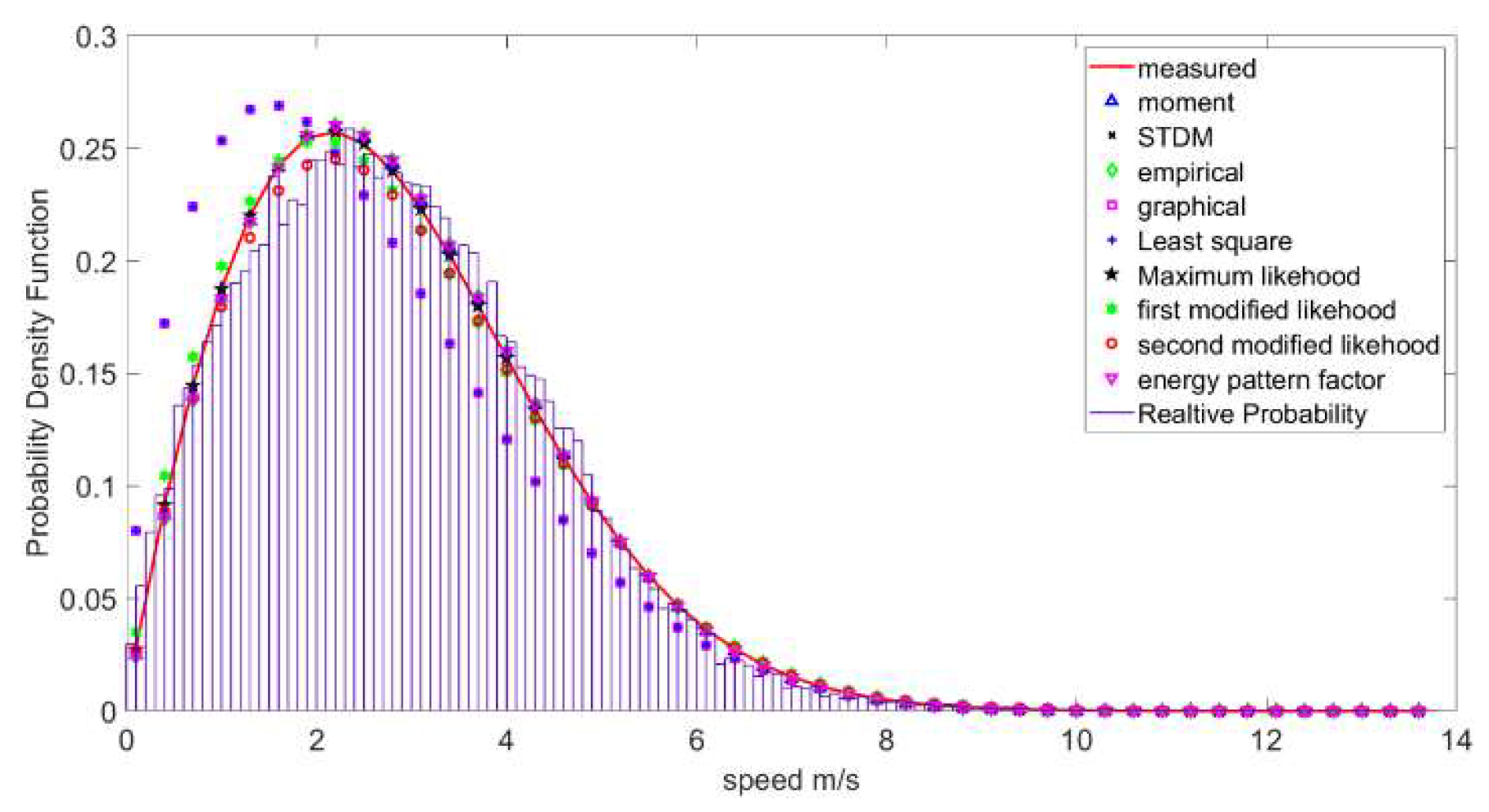
Figure 9.
Weibull curves of Nablus city.
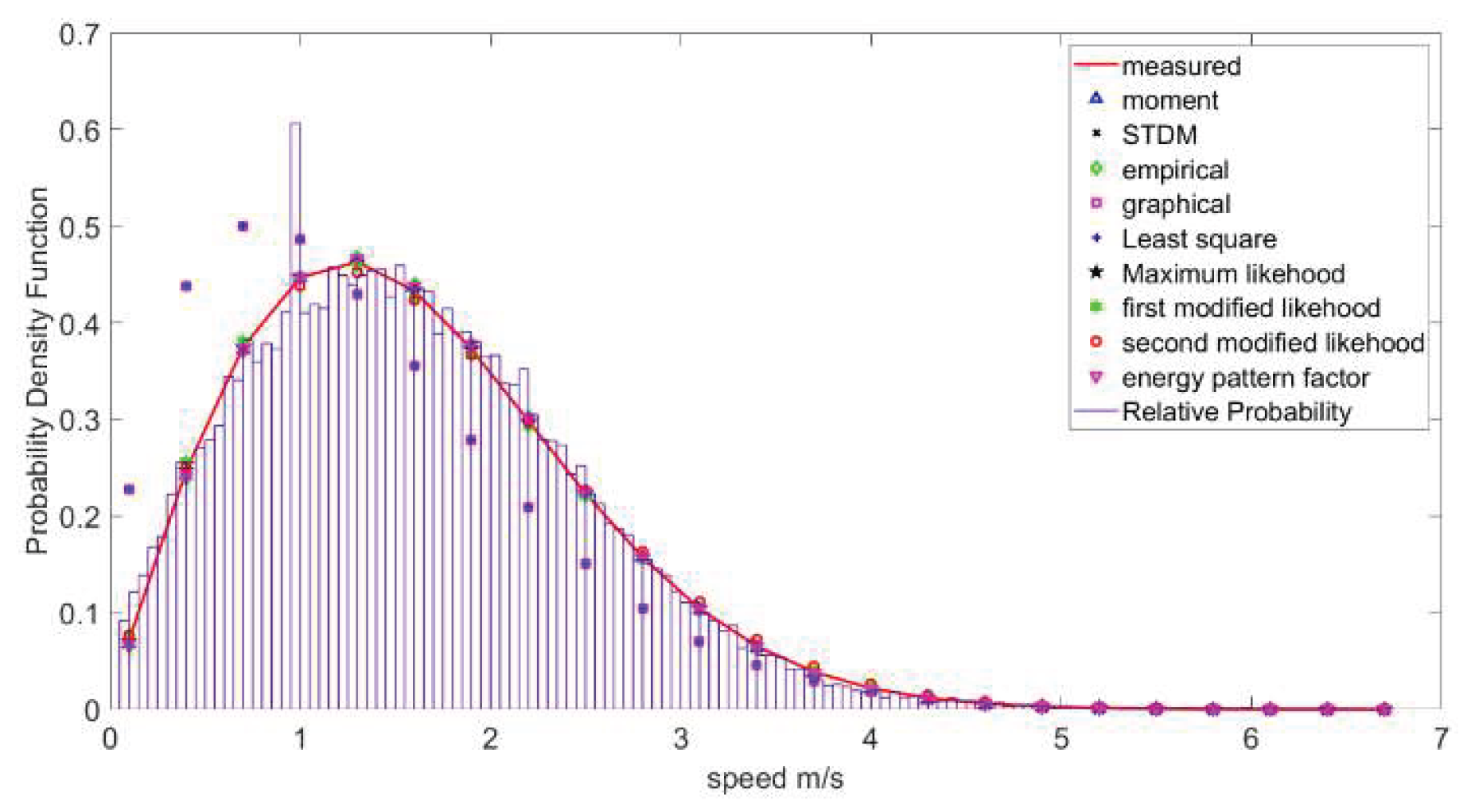
Figure 10.
Weibull curves of Jenin city.
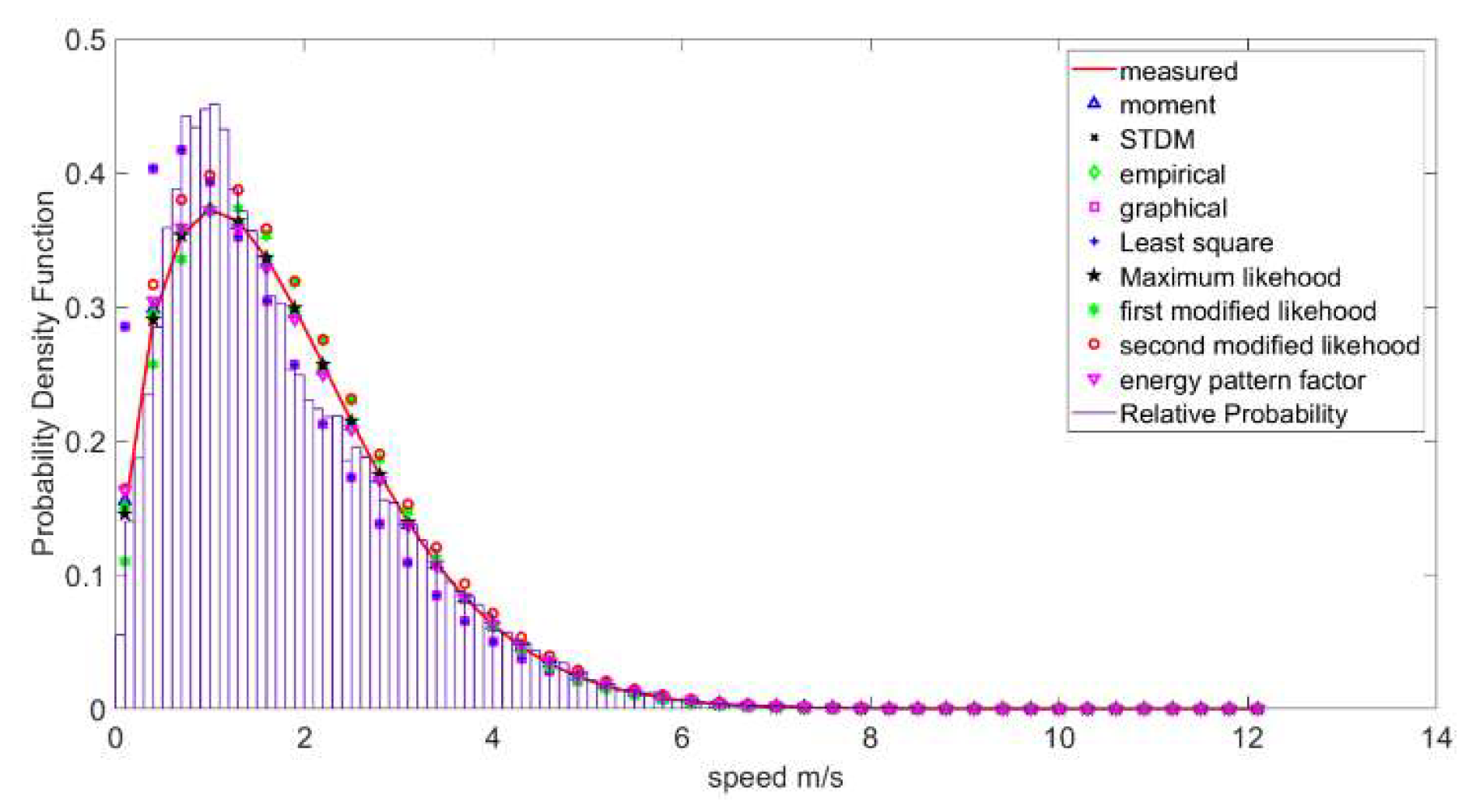
Figure 11.
Weibull curves of Jericho city.
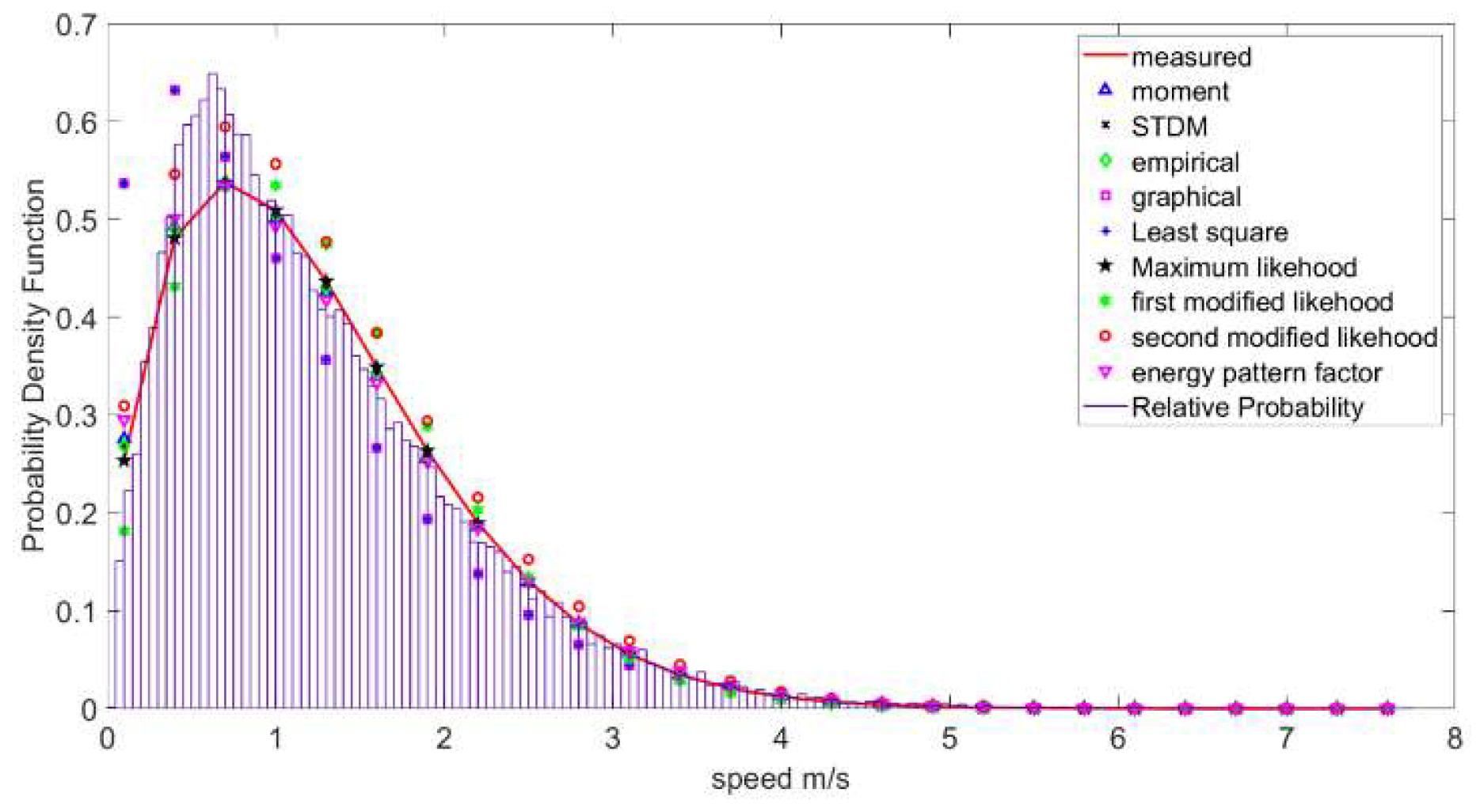
Figure 12.
Weibull curves of Bethlehem city.
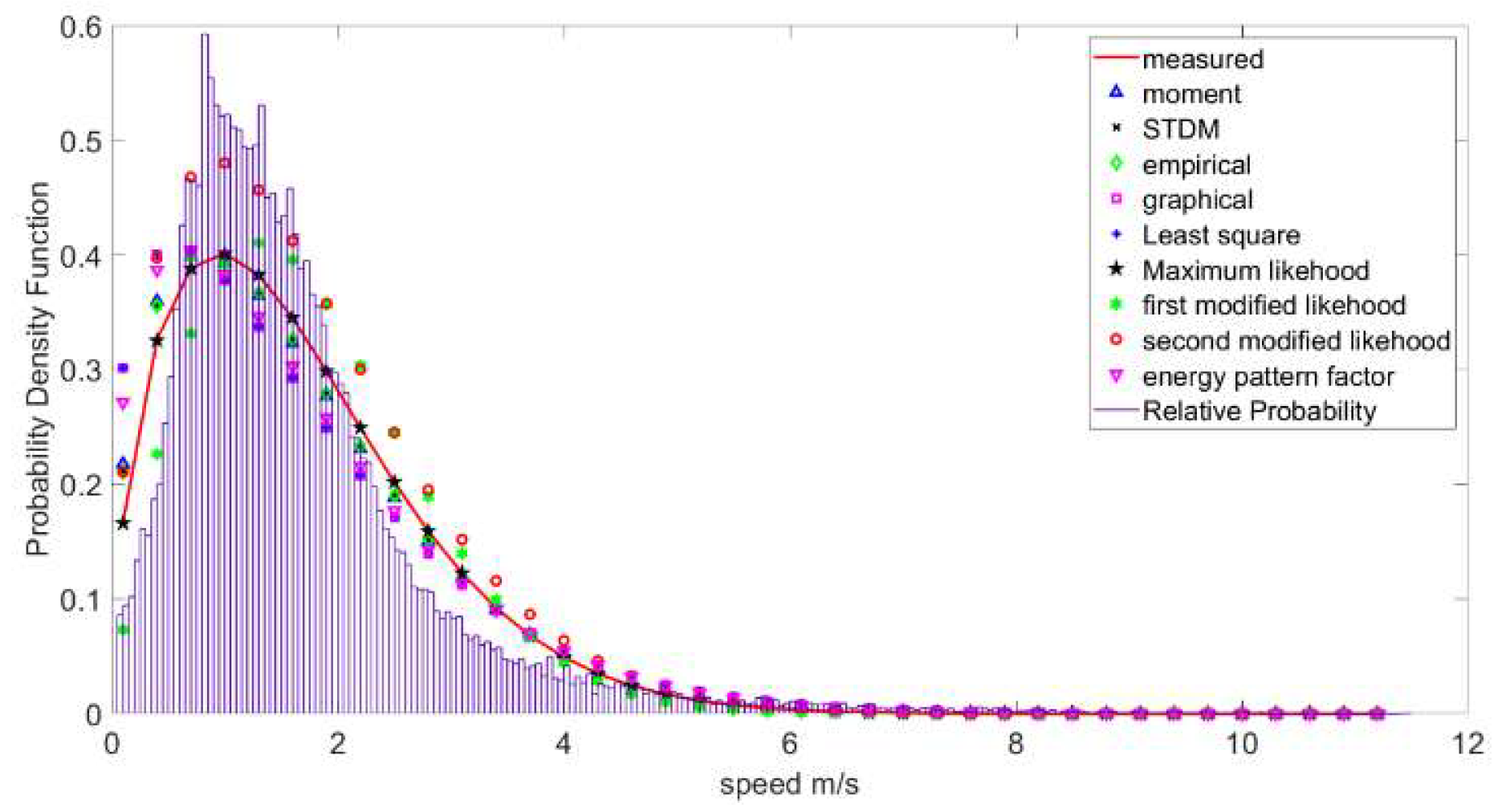
Figure 13.
Weibull curves of Tulkarm city.
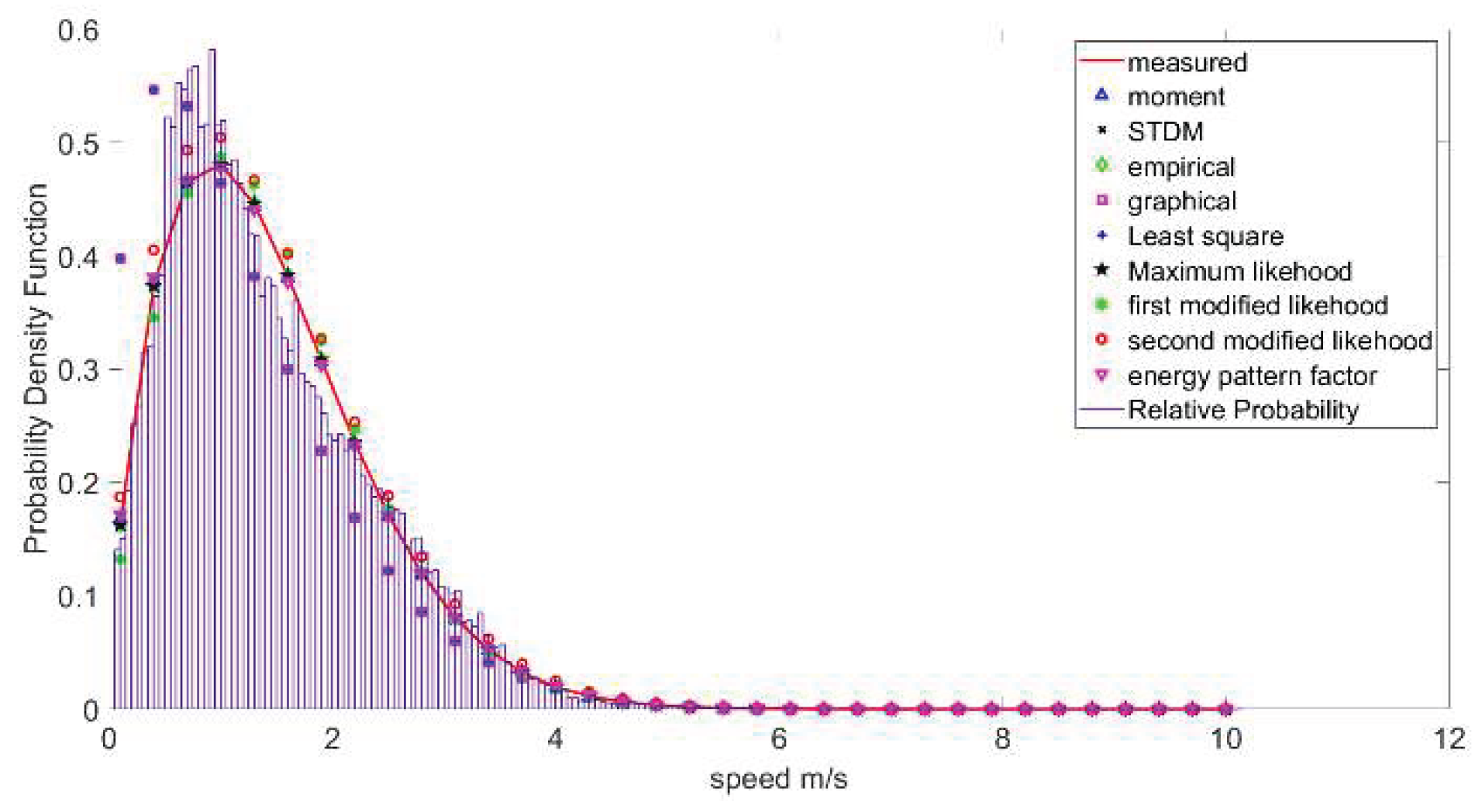
Figure 14.
CDF curves of Ramallah city.
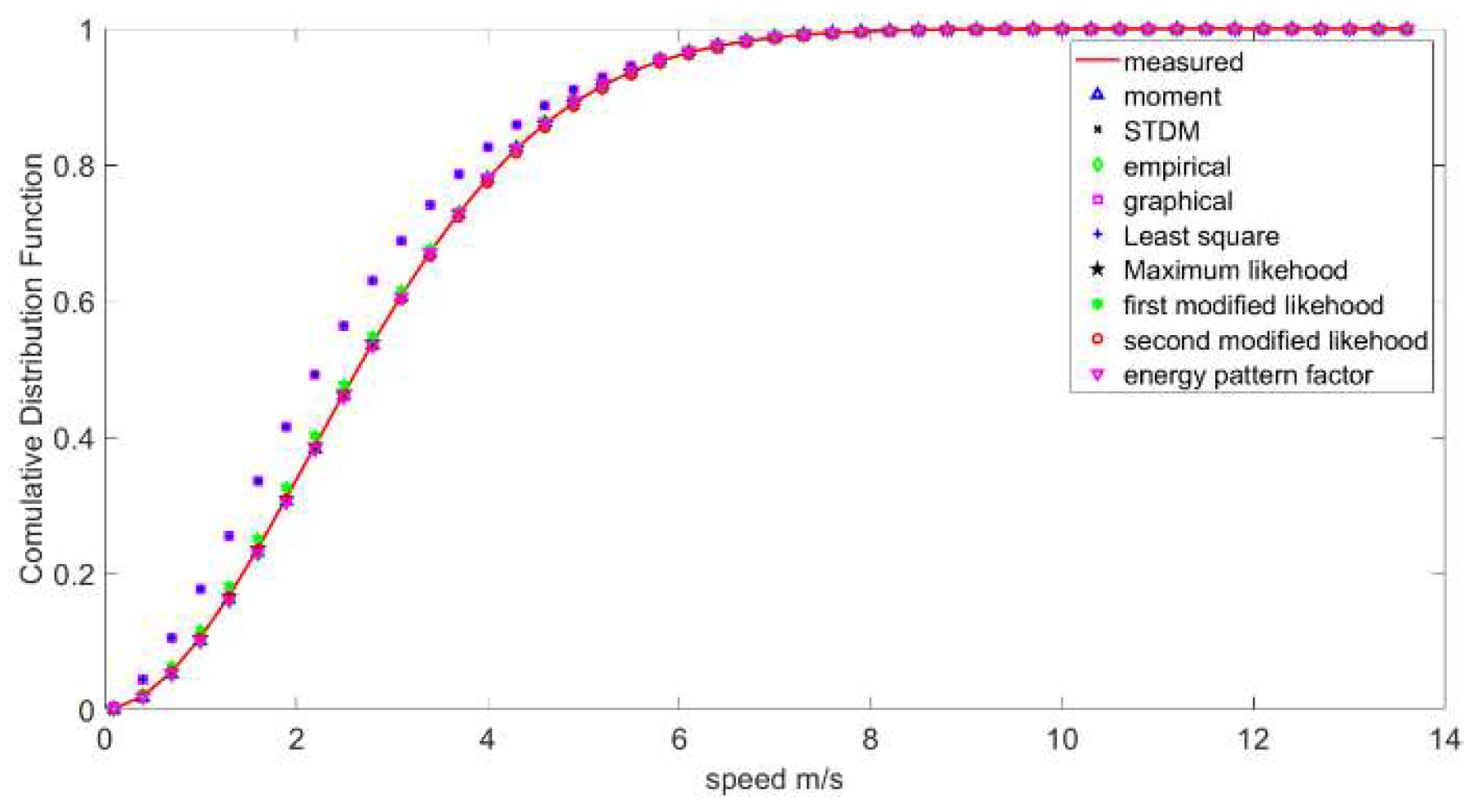
Figure 15.
CDF curves of Nablus city.
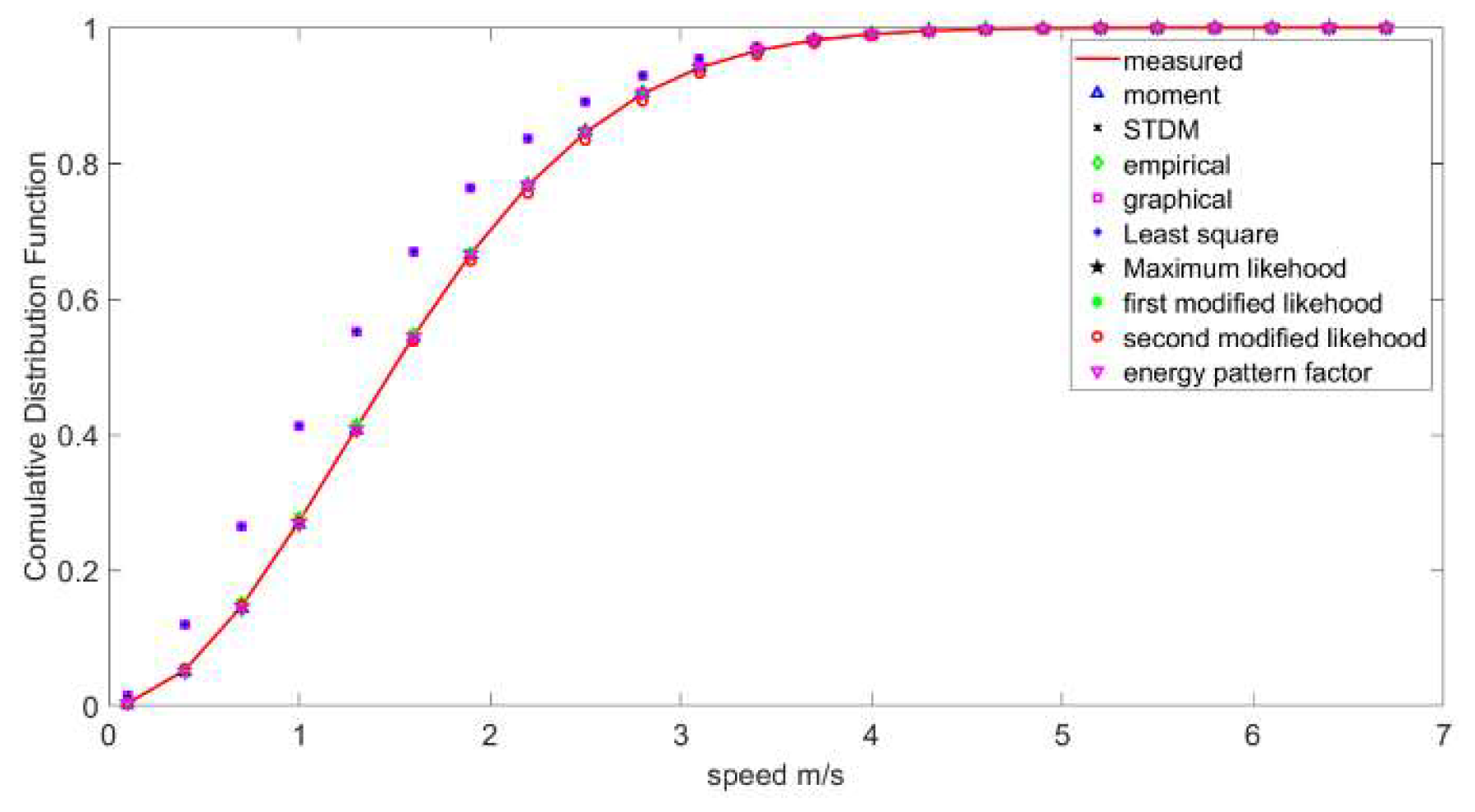
Figure 16.
CDF curves of Jenin city.
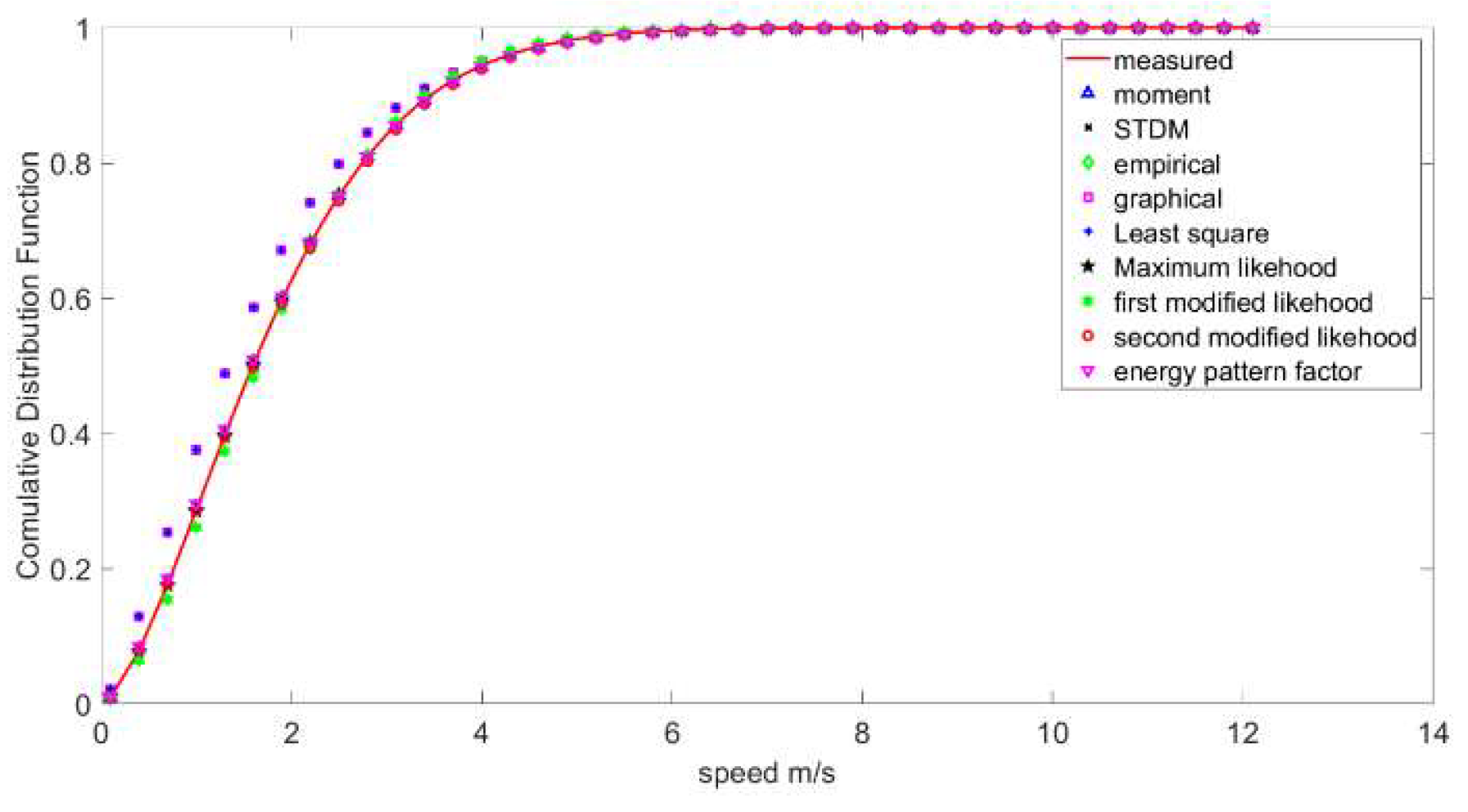
Figure 17.
CDF curves of Jericho city.
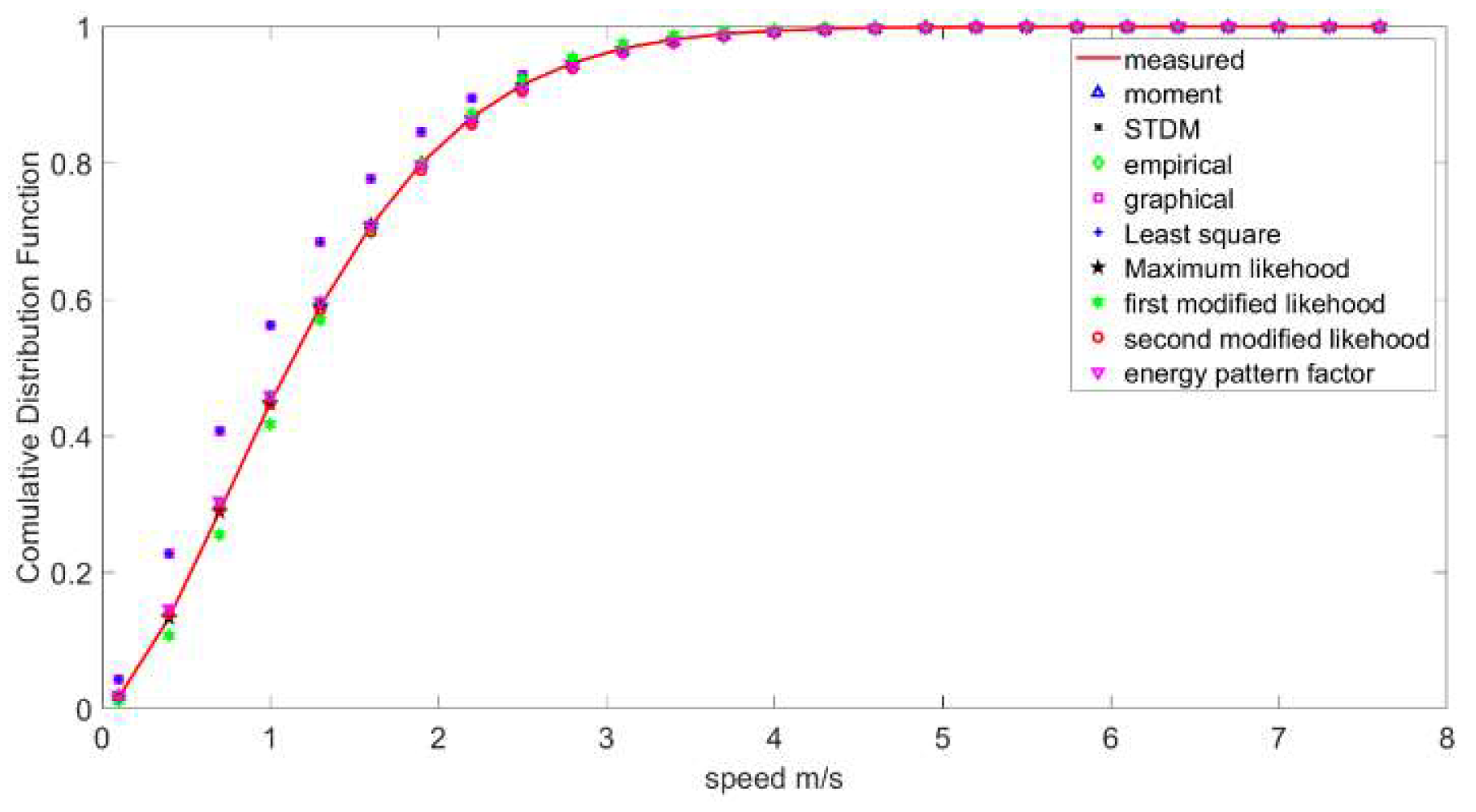
Figure 18.
CDF curves of Bethlehem city.
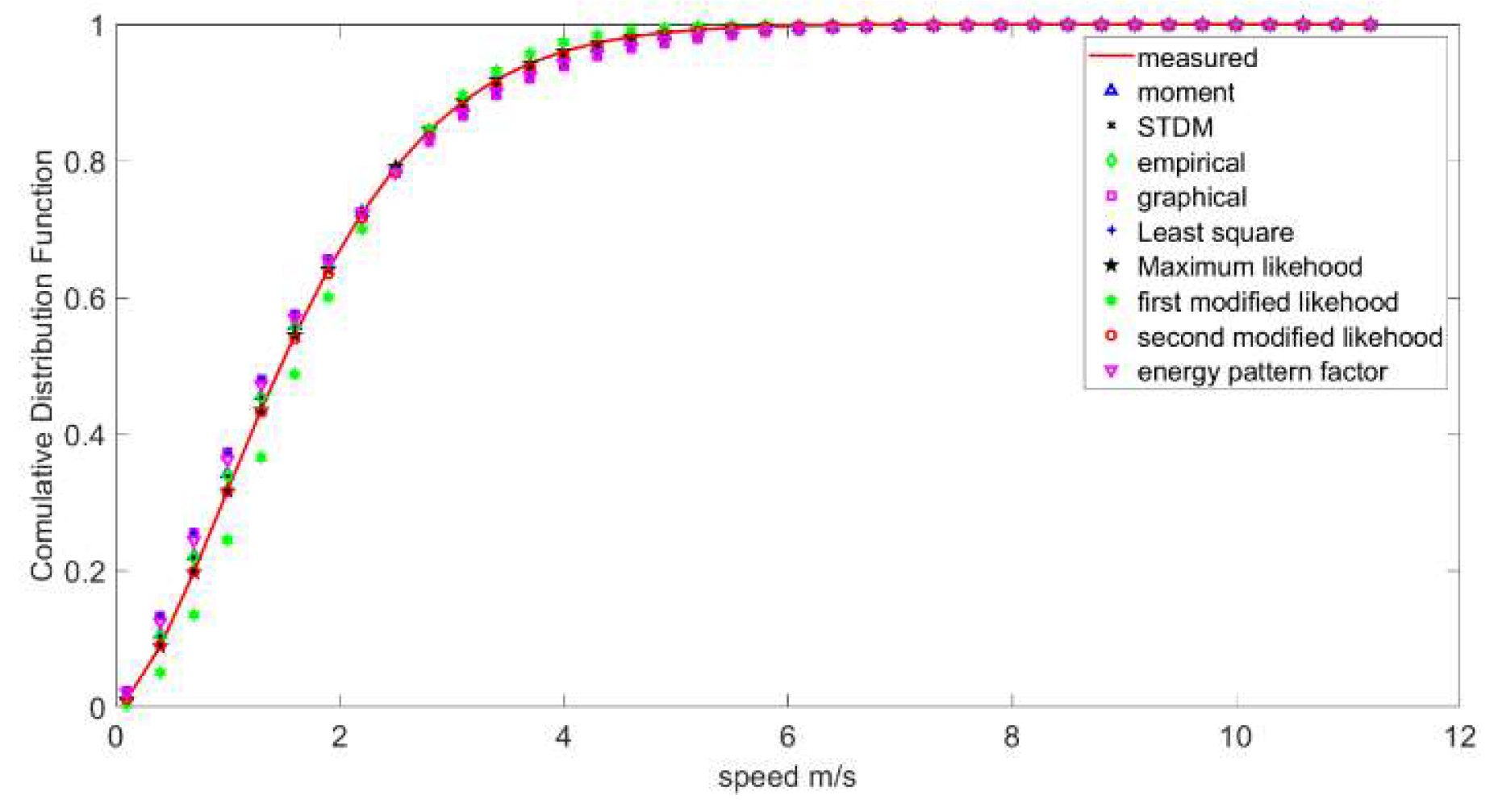
Figure 19.
CDF curves of Tulkarm city.
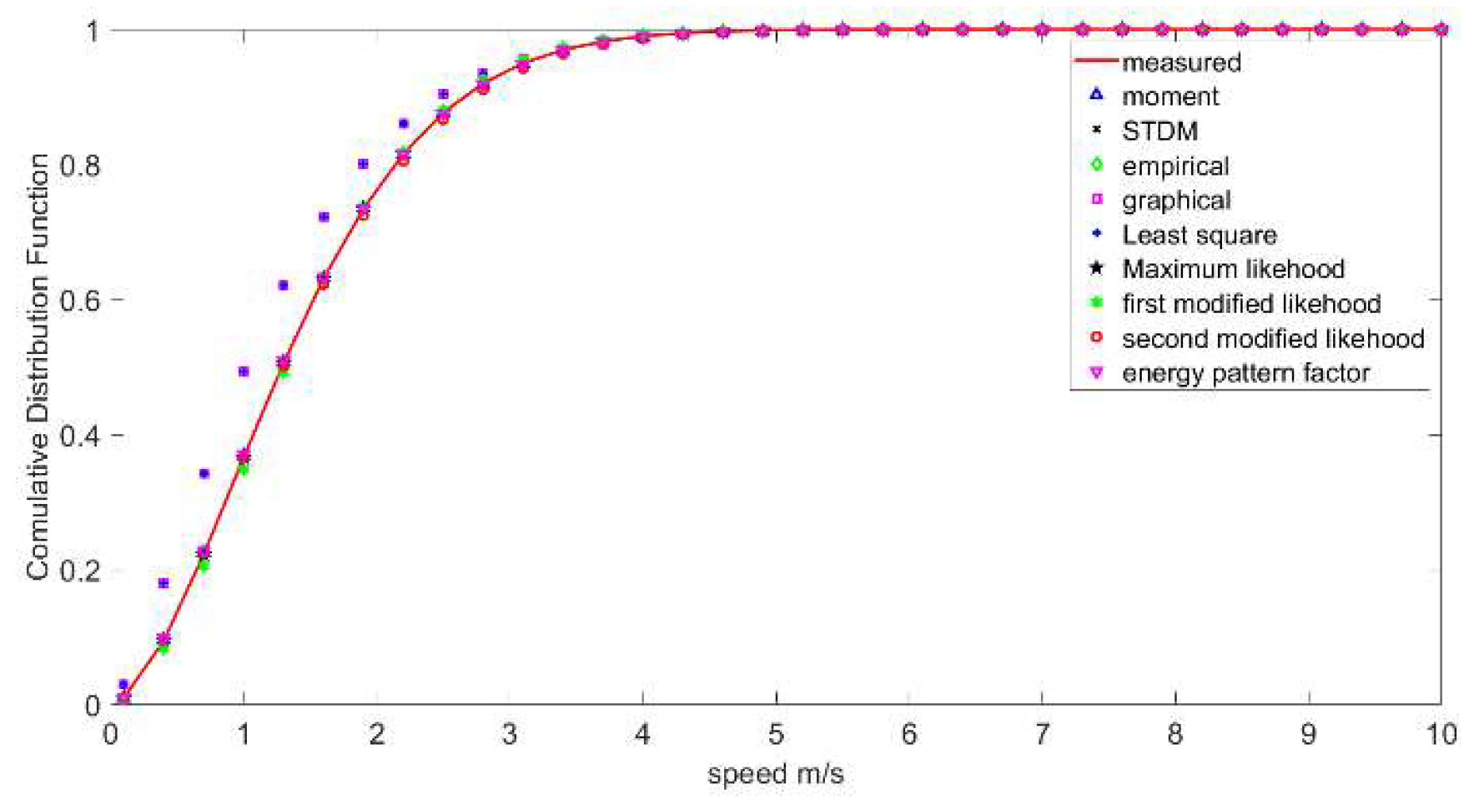
4.6. Wind Direction
Wind direction is a key factor in investigating wind power production [119,120]. It helps determine the ideal location by evaluating wind power potential. Wind speed direction is crucial for maximizing wind power energy production [121]. By installing wind energy conversion systems against the wind speed direction, the most power can be harvested from the wind [122,123]. The frequency distribution of wind speed was analyzed to understand the number of hours the wind remains in a certain direction in the six cities.
Figure 20, Figure 21, Figure 22, Figure 23, Figure 24, Figure 25, Figure 26, Figure 27, Figure 28, Figure 29, Figure 30 and Figure 31 illustrate the wind rose on a monthly basis for seven years. The figures show that the wind direction for January, February, and March was from the west and northwest, while the largest number of hours of wind speed direction from April to October was northwest for all seven years of wind speed data. The wind speed direction in November and December was predominantly from the east and southeast in Ramallah city, while in the west, southwest, and northwest, the wind speed direction was also observed.
Figure 32 shows the wind rose for Ramallah, illustrating the average wind speed direction across various velocities. The wind rose reveals that the wind came from sixteen cardinal points. The predominant wind directions in Ramallah were from the east, northeast, and southeast. The figure highlights that the primary wind directions were from the west, southwest, and northwest, comprising 78.6% of the total occurrences.
4.7. Weibull Parameters Values
The Weibull parameter values were estimated using nine numerical approaches for six cities based on the mean wind speed data. The scale factor values ranged from 1.16 to 2 m/s in all sites except for Ramallah city, where the scale factor range was 2.8 to 3.3 m/s.
Figure 33 displays the scale factor of the mean wind speed for six cities using nine numerical methods. The maximum scale factor was observed in Ramallah city, with a range of values from 2.7 m/s to 3.2 m/s. In Jenin city, the scale factor was approximately 2 m/s. Tulkarm, Bethlehem, and Nablus showed fluctuating scale factor values ranging from 1.8 m/s to 1.6 m/s. Jericho city had the lowest scale factor value, consistently less than 1.4 m/s for all months.
Figure 34 illustrates the shape factor values according to nine numerical approaches. It can be observed that the shape factor is around 1.96 for Ramallah and Nablus cities. In Jericho and Jenin, the shape factor value is about 1.5 based on the measured PDF, EM, EPF, MLM, SMLM, and MM, while it is less than 1.5 according to GM and LMS.
The shape factor value of Bethlehem fluctuated from 1.84 according to FMLM to a minimum value of 1.29 according to LMS and GM. Tulkarm city’s shape factor value was around 1.7 according to all numerical techniques except GM and LMS, which were less than 1.4. The numerical approaches indicate that the shape factor values were between 1.3 and 2, suggesting a Weibull curve, as shown in the figures above. In six cities in the West Bank, the scale factor and shape factor values were determined to be 3.21-1.16 m/s and 1.96-1.27, respectively.
Ramallah city exhibits the highest wind energy potential, followed by Jenin, based on the mean wind speed compared to the other cities. Tulkarm, Jericho, and Nablus show the lowest wind energy potential on a monthly basis, except for October. In conclusion, wind power density values were the highest in October and March, while they were lowest in August and September.
4.8. Validation Using Five Statistical Tools
The GOF test was used to calculate the percentage of errors in the numerical analysis. Table 2 displays five statistical tools that were applied to assess the efficiency of the numerical analysis. MLM demonstrated the highest efficiency performance among the statistical tools, followed by MM, EPF, EM, and MLM. On the other hand, SMMLM and LSM exhibited the lowest efficiency performance. The numerical analysis was ranked based on the percentage of errors, as shown in Table 3.
5.8. Wind Power Density Calculation In Ramallah City
For the evaluation of the methodology’s reliability, the wind power density in the West Bank region was analyzed to estimate the wind energy potential per square meter of a wind turbine. In this analysis, it was found that the wind speed in Ramallah city was higher than in other cities. Therefore, Ramallah city was chosen for the power density and energy calculation pe`r unit area. The energy production from a wind generator is crucial for determining economic feasibility [9,124]. The power extracted from wind energy can be estimated using the following equations [125,126,127]:
where:
: power coefficient,
ρ: Air density,
: Swept area,
the mean wind speed,
λ: the tip speed ratio,
β: pitch angle of the wind turbine,
: radius rotor blade.
The maximum value of the power coefficient is around 53% according to the Betz law, which is considered a theoretical value [128,129,130].
In practical applications, the power coefficient typically ranges between 25% and 45% [32]. The air density in the West Bank is approximately 1.21 kg/m3 [131].
In practical applications, the power coefficient typically ranges between 25% and 45% [32]. The air density in the West Bank is approximately 1.21 kg/m3 [131].
Figure 35 illustrates the annual estimated wind energy (in kW) per unit area. According to the figure, Ramallah city has the highest estimated energy due to favorable wind speed characteristics. The energy estimated in Ramallah city ranges from 110 to 250 kWh/m2 per square meter, which is considered feasible for wind power energy generation. In contrast, Jericho exhibits the lowest wind energy potential due to its relatively low wind speeds.
According to Equation (25), the mean wind speed is cubically proportional to the output power, thus the mean wind speed is essential for wind power production. The figure shows that Ramallah city has the best fitting curve for wind energy production, followed by Jenin and Nablus. Whereas the lowest energy estimation was in Tulkarm and Jericho due to the lower wind speed. The average annual wind energy production in the targeted cities is as follows: Ramallah – 123.0175 kWh/m2, Bethlehem – 24.42256 kWh/m2, Jenin – 31.12444 kWh/m2, Nablus – 21.99244 kWh/m2, Tulkarm – 15.48823 kWh/m2, and Jericho – 10.36153 kWh/m2.
Table 4 shows the wind speed ranges for Ramallah city. The mean wind speed (μ) was calculated for each range. The wind speed ranges were counted on an hourly basis using six years of wind speed data. The percentage of occurrence was estimated by dividing the number of hours in each range over the total hours of years data collection. The power was calculated using equation (23), with the air density in Ramallah estimated to be ρ = 1.21 kg/m3 and A=1 m2 representing the power per unit area. The power density was calculated by multiplying the power by the occurrence percentage (%). The energy was calculated in kWhr/m2 by multiplying the output power by the total number of hours in each wind speed frequency on an annual basis. As per Table 4 the wind power density per unit area on an annual basis is 3385.75 W/m2. Theoretically the amount of energy per unit area according to the annual basis is 296.5 kW.hr/m2.
Figure 36 displays the monthly iteration of the mean wind speed for Ramallah city. It is evident that the frequency of the mean wind speed follows a Weibull distribution. The peak of the frequency curve is at 3 m/s.
The wind power density of Ramallah city over a six-year period is illustrated in Figure 37, showing daily measurements. This power density is computed by multiplying the percentage of the mean wind speed with the wind power value for the mean wind speed per unit area. The graph indicates that the highest wind power density was observed when the mean wind speed fell within the range of 5 to 6 m/s. Additionally, there was a significant increase in wind potential that corresponded with the frequency value of the wind speed.
Figure 38 illustrates the output energy per square meter for Ramallah city. It can be observed that the energy reached its peak value at 68.93 kWh/m2 at 5.1 m/s. Comparing figures 38 and 37, it is evident that the energy curve behavior follows the power density and the frequency of the mean wind speed due to the cubically proportional relationship between power and the mean wind speed.
5. Economic Payback Period
The payback period of wind turbines can be estimated by calculating the annual return and total installation cost [59,132,133,134]. In this study, Ramallah city exhibits the highest estimated energy production, making it suitable for evaluating small-scale wind turbines to determine the payback period. This information can help in making design decisions, assessing the economic efficiency of the system, and comparing energy solutions to optimize the scale, type, and site selection. It ensures that the technical feasibility aligns with financial viability. Based on the mean wind speed in Ramallah city, 5 kW wind turbines were used to estimate the output power and energy per unit area. The chosen wind turbine is relatively small, resulting in lower installation costs compared to larger turbines. Table 5 presents the annual estimated energy production from a 5-kW wind turbine in Ramallah city, with an energy output practically of 273.72 kWh/m2 per unit area. Table 5 provides detailed specifications of the wind turbine used in this study.
The Table 6 presents the annual estimated energy production from a 5-kW wind turbine in Ramallah city, with an energy output of 273.72 kWh/m2 per unit area. The annual energy produced from WECS. The output energy production of the proposed wind turbine is approximately 2260 kWh/m2. The annual return for a 5-kW wind turbine per year is $479. The payback period, including maintenance and operating fees, is around 11 years. Table 6 outlines the estimated payback period.
6. Conclusion
This research estimates the wind energy potential in Palestine by analyzing daily wind speed data from 2015 to 2021 in six cities: Bethlehem, Jericho, Jenin, Nablus, Ramallah, and Tulkarm. Nine numerical methods, including the MLM and EPF, were used to determine the parameters of Weibull for low wind speeds (mean: 1.8 m/s), resulting in shape factors ranging from 1.27 to 1.96 and scale factors from 1.16 to 3.21 m/s.
The comparative study of numerical methods provides energy planners with the tools to select the most accurate and cost-effective methods for evaluating wind resources. In areas characterized by moderate wind potential, it is vital for policymakers to promote small-scale wind energy projects.
Five statistical tools along with RMSE and X2 were used to validate the parameters of Weibull and to check the efficiency performance of the numerical technique. The wind energy potential was evaluated per unit area for each city. Ramallah emerged as the most promising location with an annual energy production potential of 123.02 kWh/m2 due to its higher mean wind speed (3.37 m/s) and prevailing wind directions (78.6% west, southwest, and northwest). On the other hand, Jericho showed the least promising potential (10.36 kWh/m2), highlighting the site-specific nature of wind resources in Palestine.
An economic feasibility study for Ramallah using a 5-kW horizontal-axis wind turbine indicated a payback period of approximately 11 years with minimal maintenance and no subsidies. The research emphasizes the viability of small-scale wind turbines, supported by the analysis of payback period.
The findings presented show significant implications for energy policymakers and stakeholders in Palestine. Recognizing cities with high wind potential, such as Ramallah, emphasizes the importance of prioritizing investments in renewable energy.
References
- Kabeyi, M.J.B. and O.A. Olanrewaju, Sustainable energy transition for renewable and low carbon grid electricity generation and supply. Frontiers in Energy research, 2022. 9: p. 743114.
- Sharma, P. and R.K. Mishra, Comprehensive study on photovoltaic cell’s generation and factors affecting its performance: A Review. Materials for Renewable and Sustainable Energy, 2025. 14(1): p. 1-28.
- Balakrishnan, P. , Global Renewable Energy Transition Challenges and Strategic Solutions, in Geopolitical Landscapes of Renewable Energy and Urban Growth. 2025, IGI Global Scientific Publishing. p. 63-96.
- Council, G.W.E. , GWEC Global Wind Report 2023. Global Wind Energy Council: Brussels, Belgium, 2023.
- Badawi, A. , et al., Evaluation of wind power for electrical energy generation in the mediterranean coast of Palestine for 14 years. International Journal of Electrical & Computer Engineering (2088-8708), 2019. 9(4).
- Alsamamra, H. and J.A.H. Shoqeir, Assessment of Wind Power Potential at Eastern-Jerusalem, Palestine. 2020.
- Badawi, A. , et al., Energy and power estimation for three different locations in Palestine. Indonesian Journal of Electrical Engineering and Computer Science, 2019. 14(3): p. 1049-56.
- de Oliveira Azevêdo, R. , et al., Identification and analysis of impact factors on the economic feasibility of wind energy investments. International Journal of Energy Research, 2021. 45(3): p. 3671-3697.
- Ouerghi, F.H. , et al., Feasibility evaluation of wind energy as a sustainable energy resource. Alexandria Engineering Journal, 2024. 106: p. 227-239.
- Eliwa, M.S. , et al., Theoretical framework and inference for fitting extreme data through the modified Weibull distribution in a first-failure censored progressive approach. Heliyon, 2024. 10(14).
- Kneib, T., J. -C. Schlüter, and B. Wacker, Revisiting Maximum Log-Likelihood Parameter Estimation for Two-Parameter Weibull Distributions: Theory and Applications. Results in Mathematics, 2024. 79(6): p. 224.
- Zhang, S. , et al., Extreme wind speed distribution in a mixed wind climate. Journal of Wind Engineering and Industrial Aerodynamics, 2018. 176: p. 239-253.
- Badawi, A. , et al., Wind Power Potential of Southeast Brazil: Analytical Study for São Paulo and Rio de Janeiro. Wind Energy, 2025. 28(11): p. e70066.
- Stevens, M. and P. Smulders, The estimation of the parameters of the Weibull wind speed distribution for wind energy utilization purposes. Wind engineering, 1979: p. 132-145.
- Deaves, D. and I. Lines, On the fitting of low mean windspeed data to the Weibull distribution. Journal of Wind Engineering and Industrial Aerodynamics, 1997. 66(3): p. 169-178.
- Akdağ, S.A. and A. Dinler, A new method to estimate Weibull parameters for wind energy applications. Energy conversion and management, 2009. 50(7): p. 1761-1766.
- Seguro, J. and T. Lambert, Modern estimation of the parameters of the Weibull wind speed distribution for wind energy analysis. Journal of wind engineering and industrial aerodynamics, 2000. 85(1): p. 75-84.
- Mohammadi, K. , et al., Assessing different parameters estimation methods of Weibull distribution to compute wind power density. Energy Conversion and Management, 2016. 108: p. 322-335.
- Shaban, A.H., A. K. Resen, and N. Bassil, Weibull parameters evaluation by different methods for windmills farms. Energy Reports, 2020. 6: p. 188-199.
- Bingöl, F. , Comparison of Weibull estimation methods for diverse winds. Advances in Meteorology, 2020. 2020.
- Kaplan, Y.A. , Calculation of Weibull distribution parameters at low wind speed and performance analysis. Proceedings of the Institution of Civil Engineers-Energy, 2022. 175(4): p. 195-204.
- Sireesha, P.V. and T. Sandhya, Statistical analysis of wind power density using different mixture probability distribution functions in coastal region of Andhra Pradesh. Electrical Engineering, 2024. 106(3): p. 3061-3082.
- Huang, X., C. Wang, and S. Zhang, Research and application of a Model selection forecasting system for wind speed and theoretical power generation in wind farms based on classification and wind conversion. Energy, 2024. 293: p. 130606.
- Fanfoni, M. , et al., Weibull function to describe the cumulative size distribution of clumps formed by two-dimensional grains randomly arranged on a plane. Physical Review E, 2024. 109(4): p. 044131.
- Badawi, A. , et al., Weibull probability distribution based on four years wind speed data using nine numerical methods, in Innovation and Technological Advances for Sustainability. 2024, CRC Press. p. 193-200.
- de Souza, A. , et al., A comprehensive analysis of Weibull distribution parameter estimation methods to improve wind potential assessment. Ciência e Natura, 2024. 46: p. e87369-e87369.
- Barantiev, D. and E. Batchvarova, Wind speed profile statistics from acoustic soundings at a black sea coastal site. Atmosphere, 2021. 12(9): p. 1122.
- Abuhelwa, M. , et al., Exploring the Prevalence of Renewable Energy Practices and Awareness Levels in Palestine. Energy Science & Engineering, 2025.
- Morrar, R. , Investment in Green Infrastructure and Adaptation with Climate Change in Palestine. Priorities for Palestine’s Economy in the Midst of War, 2024: p. 111.
- Bilgili, M. and H. Alphan, Global growth in offshore wind turbine technology. Clean Technologies and Environmental Policy, 2022. 24(7): p. 2215-2227.
- Guchhait, R. and B. Sarkar, Increasing growth of renewable energy: A state of art. Energies, 2023. 16(6): p. 2665.
- Badawi, A.S. , An analytical study for establishment of wind farms in palestine to reach the optimum electrical energy. An Analytical Study for Establishment of Wind Farms in Palestine to Reach the Optimum Electrical Energy, 2013.
- Megantoro, P. , et al., Modeling the uncertainties and active power generation of wind-solar energy with data acquisition from telemetry weather measurement. Results in Engineering, 2025. 25: p. 104392.
- Hadjipetrou, S. and P. Kyriakidis, High-Resolution Wind Speed Estimates for the Eastern Mediterranean Basin: A Statistical Comparison Against Coastal Meteorological Observations. Wind, 2024. 4(4): p. 311-341.
- Hamada, S. and A. Ghodieh, Mapping of solar energy potential in the west bank, Palestine using Geographic Information Systems. Papers in Applied Geography, 2021. 7(3): p. 256-273.
- Yaseen, E.B. , Renewable energy applications in Palestine. 2009.
- Donkoh, C. , Optimal design of grid connected pvwind power generation for urban healthcare facility using homer environment. 2022, University of Education Winneba.
- Liu, J., G. Xiong, and P.N. Suganthan, Differential evolution-based mixture distribution models for wind energy potential assessment: A comparative study for coastal regions of China. Energy, 2025. 321: p. 135151.
- Azad, A.K., M. G. Rasul, and T. Yusaf, Statistical diagnosis of the best Weibull methods for wind power assessment for agricultural applications. Energies, 2014. 7(5): p. 3056-3085.
- Habali, S. , et al., Wind as an alternative source of energy in Jordan. Energy Conversion and Management, 2001. 42(3): p. 339-357.
- Juaidi, A. , et al., An overview of renewable energy strategies and policies in Palestine: Strengths and challenges. Energy for sustainable development, 2022. 68: p. 258-272.
- Salah, S., H. R. Alsamamra, and J.H. Shoqeir, Exploring wind speed for energy considerations in eastern Jerusalem-Palestine using machine-learning algorithms. Energies, 2022. 15(7): p. 2602.
- Abuhomos, M. , et al., The effect of geopolitical factors on local energy system performance: Examining the case of Palestine. Energy Strategy Reviews, 2025. 58: p. 101681.
- Salamanca, O.J. Hooked on electricity: The charged political economy of electrification in Palestine. in New Direction in Palestine Studies Workshop, Brown University. 2014.
- Badawi, A.S., et al. Maximum power point tracking controller technique using permanent magnet synchronous generator. in 2021 6th IEEE International Conference on Recent Advances and Innovations in Engineering (ICRAIE). 2021. IEEE.
- Mahela, O.P. , et al., Comprehensive overview of low voltage ride through methods of grid integrated wind generator. Ieee Access, 2019. 7: p. 99299-99326.
- Mostafa, M.A., E. A. El-Hay, and M.M. Elkholy, An overview and case study of recent low voltage ride through methods for wind energy conversion system. Renewable and Sustainable Energy Reviews, 2023. 183: p. 113521.
- Badawi, A. , et al., Optimizing Low-Voltage Ride-Through in DFIG Wind Turbines via QPQC-Based Predictive Control for Grid Compliance. International Journal of Robotics and Control Systems, 2025. 5(1): p. 86-104.
- Srivastava, P.K., A.N. Tiwari, and S.N. Singh, Impacts of Wind Energy Integration to the Utility Grid and Grid Codes: A Review. Recent Advances in Electrical & Electronic Engineering (Formerly Recent Patents on Electrical & Electronic Engineering), 2020. 13(4): p. 446-469.
- Tsili, M. and S. Papathanassiou, A review of grid code technical requirements for wind farms. IET Renewable power generation, 2009. 3(3): p. 308-332.
- Huang, M. , et al., Bifurcation and large-signal stability analysis of three-phase voltage source converter under grid voltage dips. IEEE Transactions on Power Electronics, 2017. 32(11): p. 8868-8879.
- Badawi, A. , et al., Wind energy production using novel HCS algorithm to reach MPPT for small-scale wind turbines under rapid change wind speed, in Innovation and Technological Advances for Sustainability. 2024, CRC Press. p. 183-192.
- Ahmed Badawi, H.A., I. Elzein, and A.M. Zyoud, Performance Evaluation of Incremental Conductance and Adaptive HCS MPPT Algorithms for WECS.
- Badawi, A., et al. Robust adaptive HCS MPPT algorithm-based wind generation system using power prediction mode. in 2024 IEEE 8th Energy Conference (ENERGYCON). 2024. IEEE.
- Badawi, A. , et al., Boost efficiency performance through the enhancement of duty cycle based MPPT algorithm. International Journal of Applied, 2025. 14(3): p. 541-550.
- Azareer, A. , Optimal Sizing and Allocation of DG Techniques for Enhancing Active Distribution Network in Palestine. 2023.
- Medina, C., C. R.M. Ana, and G. González, Transmission grids to foster high penetration of large-scale variable renewable energy sources–A review of challenges, problems, and solutions. International Journal of Renewable Energy Research (IJRER), 2022. 12(1): p. 146-169.
- Blarke, M.B. and B.M. Jenkins, SuperGrid or SmartGrid: Competing strategies for large-scale integration of intermittent renewables? Energy Policy, 2013. 58: p. 381-390.
- Badawi, A.S. , et al., Practical electrical energy production to solve the shortage in electricity in palestine and pay back period. International Journal of Electrical and Computer Engineering, 2019. 9(6): p. 4610.
- Nassar, Y.F. , et al., Renewable energy potential in the State of Palestine: Proposals for sustainability. Renewable Energy Focus, 2024. 49: p. 100576.
- Maghalseh, M. , et al. Investigation of Grid-Tied Photovoltaic Power Plant on Medium-Voltage Feeder: Palestine Polytechnic University Case Study. in Solar. 2025. MDPI.
- Ahmed, M., S. Mirsaeidi, and M.A. Koondhar, Mitigation Uncertainty Problems of Renewable Energy Resources with Efficient Integration of Hybrid solar PV/Wind system into Power Networks.
- Wu, D. , et al., Grid integration of offshore wind power: Standards, control, power quality and transmission. IEEE Open Journal of Power Electronics, 2024. 5: p. 583-604.
- Rantissi, T. , et al., Transforming the water-energy nexus in Gaza: A systems approach. Global Challenges, 2024. 8(5): p. 2300304.
- Garba, B.M.P. , et al., Energy efficiency in public buildings: Evaluating strategies for tropical and temperate climates. World Journal of Advanced Research and Reviews, 2024. 23(03): p. 409-421.
- Badawi, A. , et al., Extensive Numerical Analysis of PDF Parameters for Wind Energy in Brazil: A Study Across 27 Cities for 60 Years Wind Speed. IEEE Access, 2025.
- Yadav, A.K. , et al., Comparative analysis of Weibull parameters estimation for wind power potential assessments. Results in Engineering, 2024. 23: p. 102300.
- ul Haq, M.A., S. Hashmi, and M. Aslam, Marshall-Olkin length biased exponential distribution for wind speed analysis alternative to Weibull distribution. Modeling Earth Systems and Environment, 2024. 10(1): p. 1095-1108.
- Shambira, N., P. Mukumba, and G. Makaka, Assessing the Wind Energy Potential: A Case Study in Fort Hare, South Africa, Using Six Statistical Distribution Models. Applied Sciences, 2025. 15(5): p. 2778.
- Chen, Y. , et al., Comparative analysis of offshore wind resources and optimal wind speed distribution models in China and Europe. Energies, 2025. 18(5): p. 1108.
- Okakwu, I. , et al., Performance evaluation of ten numerical methods for Weibull distribution parameter estimation applied to Nigerian wind speed data. Scientia Africana, 2024. 23(2): p. 427-444.
- Badawi, A.S. , et al., Weibull probability distribution of wind speed for gaza strip for 10 years. Applied Mechanics and Materials, 2019. 892: p. 284-291.
- Chakraborty, U., D. S. Boning, and C.V. Thompson, Bound-Constrained Expectation Maximization for Weibull Competing-Risks Device Reliability. IEEE Transactions on Device and Materials Reliability, 2024.
- dos Santos, F.S. , et al., Brazilian wind energy generation potential using mixtures of Weibull distributions. Renewable and Sustainable Energy Reviews, 2024. 189: p. 113990.
- Shambira, N., L. Luvatsha, and P. Mukumba, Comparative Analysis of Five Numerical Methods and the Whale Optimization Algorithm for Wind Potential Assessment: A Case Study in Whittlesea, Eastern Cape, South Africa. Processes, 2025. 13(5): p. 1344.
- Shirzadi, N. , et al., Smart urban wind power forecasting: Integrating weibull distribution, recurrent neural networks, and numerical weather prediction. Energies, 2023. 16(17): p. 6208.
- Duman, N., H. İ. Acar, and L. Ertürk, Estimation of wind power potential in sivas cumhuriyet university campus using various probability density functions. The European Physical Journal Plus, 2025. 140(4): p. 1-15.
- Badawi, A.S., et al. The simplest estimation method of weibull probability distribution parameters. in 2021 6th IEEE International Conference on Recent Advances and Innovations in Engineering (ICRAIE). 2021. IEEE.
- Gómez, Y.M. , et al., An in-depth review of the Weibull model with a focus on various parameterizations. Mathematics, 2023. 12(1): p. 56.
- Ahmad, Z. , et al., On predictive modeling using a new flexible Weibull distribution and machine learning approach: Analyzing the COVID-19 data. Mathematics, 2022. 10(11): p. 1792.
- Jerez, D. , et al., Operator norm-based determination of failure probability of nonlinear oscillators with fractional derivative elements subject to imprecise stationary Gaussian loads. Mechanical Systems and Signal Processing, 2024. 208: p. 111043.
- Chen, X. , et al., A novel derivative search political optimization algorithm for multi-area economic dispatch incorporating renewable energy. Energy, 2024. 300: p. 131510.
- Ezeah, S. , et al., On a Variant Weibull-Weibull Distribution: Theory and Properties. Statistics, 2024. 12(5): p. 401-408.
- Marzouk, O.A. , Wind Speed Weibull Model Identification in Oman, and Computed Normalized Annual Energy Production (NAEP) From Wind Turbines Based on Data From Weather Stations. Engineering Reports, 2025. 7(3): p. e70089.
- Mrabet, N., et al. Enhancing Wind Power Estimation for Dakhla, Morocco: A Comparative Exploration of Four Numerical Methods Leveraging the Weibull Distribution. in 2024 International Conference on Global Aeronautical Engineering and Satellite Technology (GAST). 2024. IEEE.
- Shi, H. , et al., Wind speed distributions used in wind energy assessment: a review. Frontiers in Energy Research, 2021. 9: p. 769920.
- Aljeddani, S.M. and M. Mohammed, A novel approach to Weibull distribution for the assessment of wind energy speed. Alexandria Engineering Journal, 2023. 78: p. 56-64.
- Vu, C.-C. and H.-H. Tran, Performance analysis of methods to estimate Weibull parameters for the compressive strength of concrete. Case Studies in Construction Materials, 2023. 19: p. e02330.
- Liu, K. , Moment Monotonicity of Weibull, Gamma and Log-normal Distributions. arXiv preprint. arXiv:2502.11366, 2025.
- Badawi, A. , et al., Data bank: nine numerical methods for determining the parameters of weibull for wind energy generation tested by five statistical tools. International Journal of Power Electronics and Drive Systems (IJPEDS), 2021.
- Kang, S. , et al., Comparison of different statistical methods used to estimate Weibull parameters for wind speed contribution in nearby an offshore site, Republic of Korea. Energy Reports, 2021. 7: p. 7358-7373.
- Alanazi, M.A. , et al., Wind energy assessment using Weibull distribution with different numerical estimation methods: a case study. Emerg. Sci. J., 2023. 7(6): p. 2260-2278.
- Okakwu, I. , et al., Comparative assessment of numerical techniques for Weibull parameters’ estimation and the performance of wind energy conversion systems in Nigeria. IIUM Engineering Journal, 2023. 24(1): p. 138-157.
- Abdelhadi, H. , et al., Innovative hierarchical control of multiple microgrids: Cheetah meets PSO. Energy Reports, 2024. 11: p. 4967-4981.
- Aziz, A. , et al., Influence of Weibull parameters on the estimation of wind energy potential. Sustainable Energy Research, 2023. 10(1): p. 5.
- Ikbal, N.A.M., S. A. Halim, and N. Ali, Estimating Weibull parameters using maximum likelihood estimation and ordinary least squares: Simulation study and application on meteorological data. Stat, 2022. 10(2): p. 269-292.
- Emam, W. , On statistical modeling using a new version of the flexible Weibull model: Bayesian, maximum likelihood estimates, and distributional properties with applications in the actuarial and engineering fields. Symmetry, 2023. 15(2): p. 560.
- Liang, W. , et al., Monitoring ai-modified content at scale: A case study on the impact of chatgpt on ai conference peer reviews. arXiv preprint. arXiv:2403.07183, 2024.
- Puthenpura, S. and N.K. Sinha, Modified maximum likelihood method for the robust estimation of system parameters from very noisy data. Automatica, 1986. 22(2): p. 231-235.
- Cohen, C.A. and B. Whitten, Modified maximum likelihood and modified moment estimators for the three-parameter Weibull distribution. Communications in Statistics-Theory and Methods, 1982. 11(23): p. 2631-2656.
- Yaniktepe, B. , et al., Comparison of eight methods of Weibull distribution for determining the best-fit distribution parameters with wind data measured from the met-mast. Environmental Science and Pollution Research, 2023. 30(4): p. 9576-9590.
- Deji, A., S. Khan, and M.H. Habaebi, Mathematical Differential Analysis of Atlantic Ocean Wind to Electrical Energy Generation in Lekki Peninsular Lagos Nigeria. International Journal for Multidisciplinary Research (IJFMR). 6(3): p. 1-28.
- Doungpan, S., V. Chatchavong, and K. Janchitrapongvej. Applicability of Weibull distribution in Generating Model for Evaluating Lifespan Closed Circuit Television System (CCTV). in Journal of Physics: Conference Series. 2023. IOP Publishing.
- Mdee, O.J. , Performance evaluation of Weibull analytical methods using several empirical methods for predicting wind speed distribution. Energy Sources, Part A: Recovery, Utilization, and Environmental Effects, 2025. 47(1): p. 1626-1649.
- Bulut, A. and O. Bingöl, Weibull parameter estimation methods on wind energy applications-a review of recent developments. Theoretical and Applied Climatology, 2024. 155(10): p. 9157-9184.
- Krit, M., O. Gaudoin, and E. Remy, Goodness-of-fit tests for the Weibull and extreme value distributions: A review and comparative study. Communications in Statistics-Simulation and Computation, 2021. 50(7): p. 1888-1911.
- Safari, M.A.M. , et al., Robust estimation of the three parameter Weibull distribution for addressing outliers in reliability analysis. Scientific Reports, 2025. 15(1): p. 11516.
- Badawi, A.S.A. , Maximum power point tracking control scheme for small scale wind turbine. 2019, PhD Thesis.
- Dawlah, A. and A.S. Alghamdi, A New Extended Weibull Distribution: Estimation Methods and Applications in Engineering, Physics, and Medicine. Mathematics, 2025. 13(20): p. 3262.
- El-Bayoumi, M.A. , A Direct Iterative Technique for Weibull Parameters Estimation Optimized for lowest Root Mean Square Error. Journal of International Society for Science and Engineering, 2024. 6(2): p. 47-51.
- Ige, P. and R. Israel, Diameter distribution, maximum likelihood estimation, probability distribution function, generalized Weibull, 3-parameter gamma, parameter estimation. Nigeria Agricultural Journal, 2024. 55(3): p. 257-268.
- Wu, S.-F. and K.-Y. Chiang, Assessment of the overall lifetime performance index of Weibull products in multiple production lines. Mathematics, 2024. 12(4): p. 514.
- Li, Z., H. Fu, and J. Guo, Reliability Assessment of a Series System with Weibull-Distributed Components Based on Zero-Failure Data. Applied Sciences, 2025. 15(5): p. 2869.
- He, Y., et al. Reliability Assessment for Wind Turbine under Index Weight and Failure of Subsystem. in 2024 6th International Conference on Power and Energy Technology (ICPET). 2024. IEEE.
- Kaplan, A.G. and Y.A. Kaplan, Using of the Weibull distribution in developing global solar radiation forecasting models. Environmental Progress & Sustainable Energy, 2024. 43(4): p. e14380.
- Wang, S. , et al., Constant-Stress ADTs and Weibull-Based Lifetime Estimation of LED Lamp. Journal of Electronic Materials, 2024. 53(6): p. 2903-2909.
- Muhamad Jamil, S.A., J. Lai, and M.A.A. Abdullah, Measuring the performances of covariates using exponential survival analysis with partly-interval censored simulation data. 2024.
- Eidous, O. and H. Maqableh, On Inference of Weitzman Overlapping Coefficient in Two Weibull Distributions. arXiv preprint. arXiv:2409.02950, 2024.
- Wang, Z. and W. Liu, Wind energy potential assessment based on wind speed, its direction and power data. Scientific reports, 2021. 11(1): p. 16879.
- Tiwari, U.D., N. S. Ghaisas, and K. Mitra, Wind Farm Performance Assessment Using CFD: Key Factors, SOWFA, and Yaw Misalignment Case Study, in Optimization, Uncertainty and Machine Learning in Wind Energy Conversion Systems. 2025, Springer. p. 79-104.
- Elkelawy, M., H. A.-E. Bastawissi, and H.E. Seleem, Cutting-Edge Innovations in Wind Power: Enhancing Efficiency, Sustainability, and Grid Integration. Pharos Engineering Science Journal, 2025. 2(1): p. 143-156.
- Liu, S. , et al., Advances in urban wind resource development and wind energy harvesters. Renewable and Sustainable Energy Reviews, 2025. 207: p. 114943.
- Yang, Y. and E.V. Solomin, Wind direction prediction based on nonlinear autoregression and Elman neural networks for the wind turbine yaw system. Renewable Energy, 2025. 241: p. 122284.
- Spiru, P. and P.L. Simona, Wind energy resource assessment and wind turbine selection analysis for sustainable energy production. Scientific Reports, 2024. 14(1): p. 10708.
- Bilendo, F. , et al., Applications and modeling techniques of wind turbine power curve for wind farms—A review. Energies, 2022. 16(1): p. 180.
- Zhang, J. , et al., Power prediction of a wind farm cluster based on spatiotemporal correlations. Applied Energy, 2021. 302: p. 117568.
- Castillo, O.C. , et al., Comparison of power coefficients in wind turbines considering the tip speed ratio and blade pitch angle. Energies, 2023. 16(6): p. 2774.
- Pellegri, A. , The complementary betz theory. arXiv preprint. arXiv:2201.00181, 2022.
- Wang, Y. , et al., A new method for prediction of power coefficient and wake length of a horizontal axis wind turbine based on energy analysis. Energy Conversion and Management, 2022. 252: p. 115121.
- Hernández Montoya, E.E., E. Mendoza, and E.J. Stamhuis, Biomimetic design of turbine blades for ocean current power generation. Biomimetics, 2023. 8(1): p. 118.
- Abdel-Qader, M.S.I. , Simulation of a hybrid power system consisting of wind turbine, PV, storage battery and diesel generator with compensation network: design, optimization and economical evaluation. 2008.
- Lewicki, W., M. Niekurzak, and A. Koniuszy, Evaluation of the Possibility of Using a Home Wind Installation as Part of the Operation of Hybrid Systems—A Selected Case Study of Investment Profitability Analysis. Energies, 2025. 18(8): p. 2016.
- Saleh, Y.A.S., M. Durak, and C. Turhan, Enhancing Urban Sustainability with Novel Vertical-Axis Wind Turbines: A Study on Residential Buildings in Çeşme. Sustainability, 2025. 17(9): p. 3859.
- Badawi, A.S. , et al., Practical electrical energy production to solve the shortage in electricity in palestine and pay back period. International Journal of Electrical and Computer Engineering (IJECE), 2019. 9(6): p. 4610-4616.
Figure 1.
New installations of the wind turbines between 2001 and 2024 (GW) [4].
Figure 1.
New installations of the wind turbines between 2001 and 2024 (GW) [4].
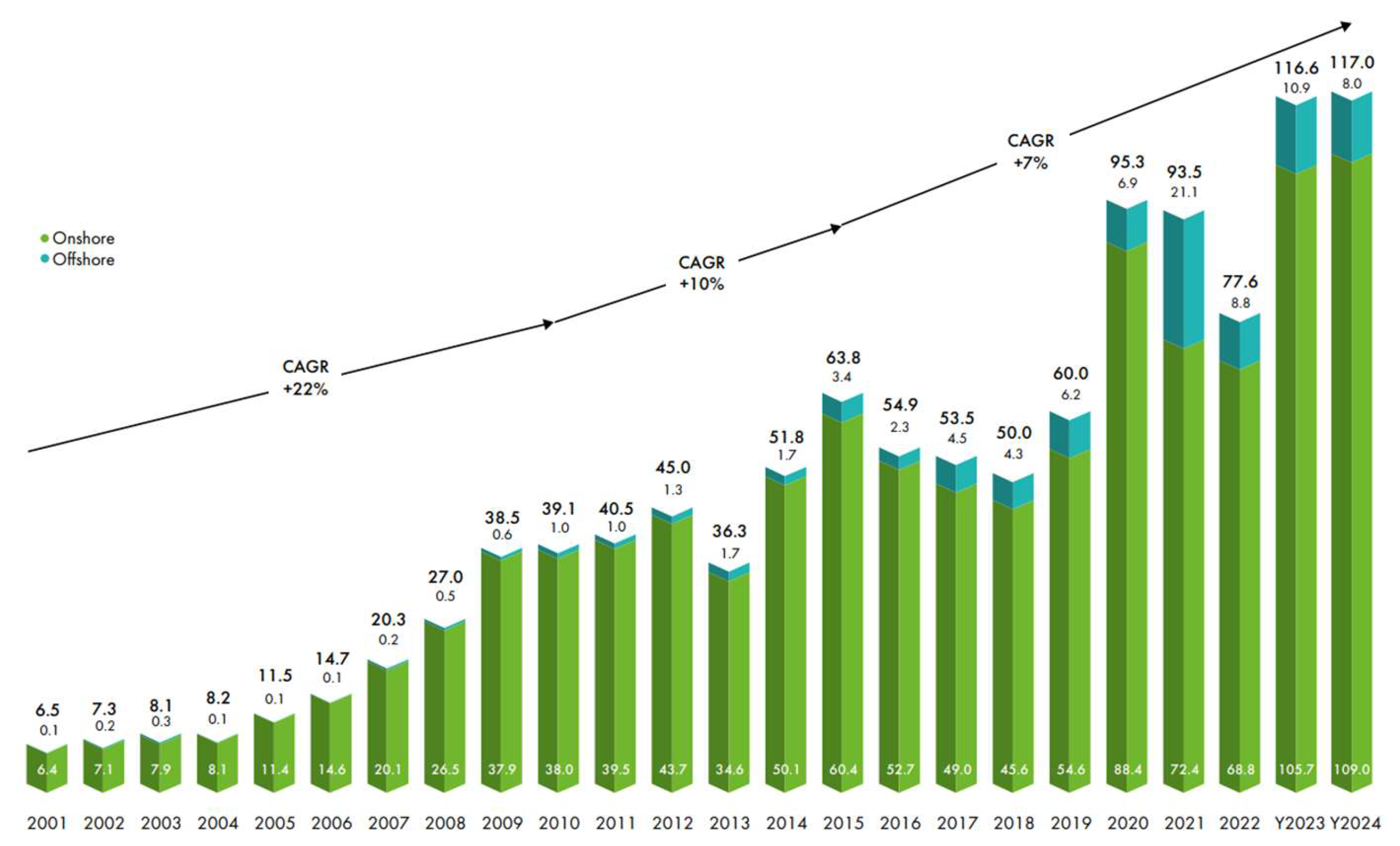
Figure 2.
(a) The total installations onshore wind turbine (GW) [4]. (b) The total installations offshore wind turbine (GW) [4].
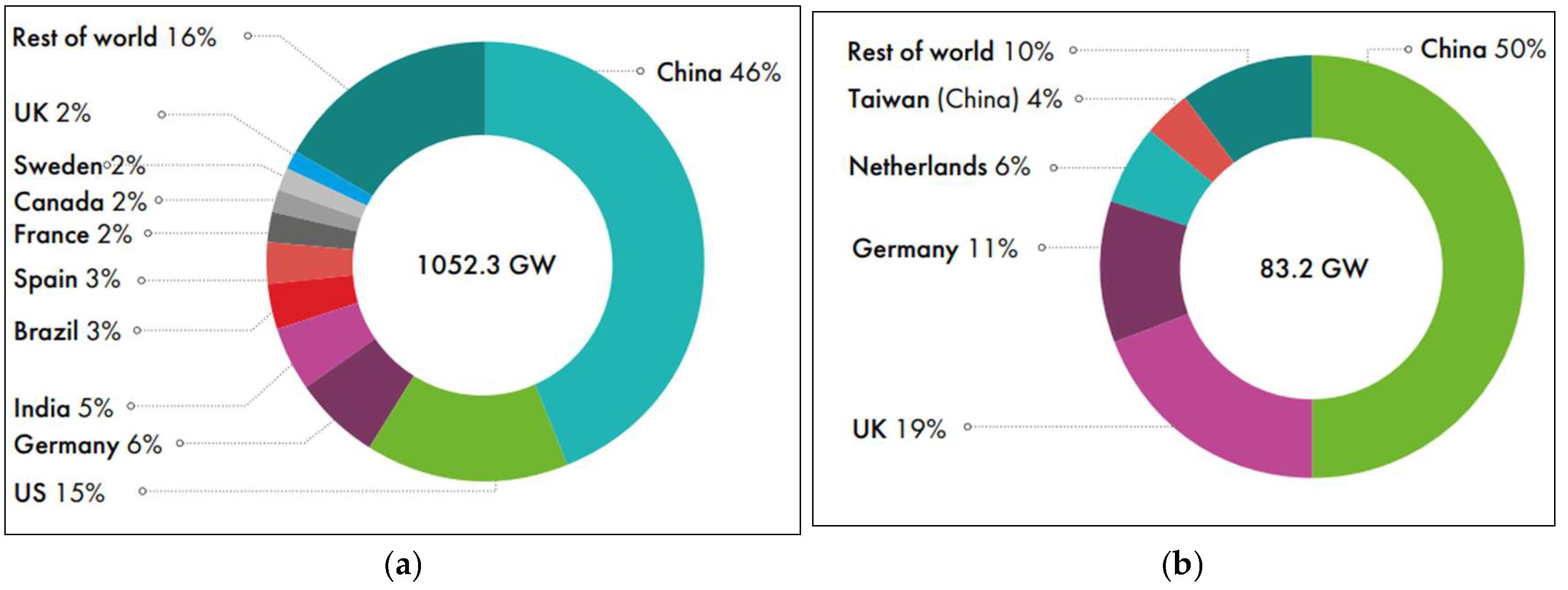
Figure 3.
West bank cities of the selected wind speed data.
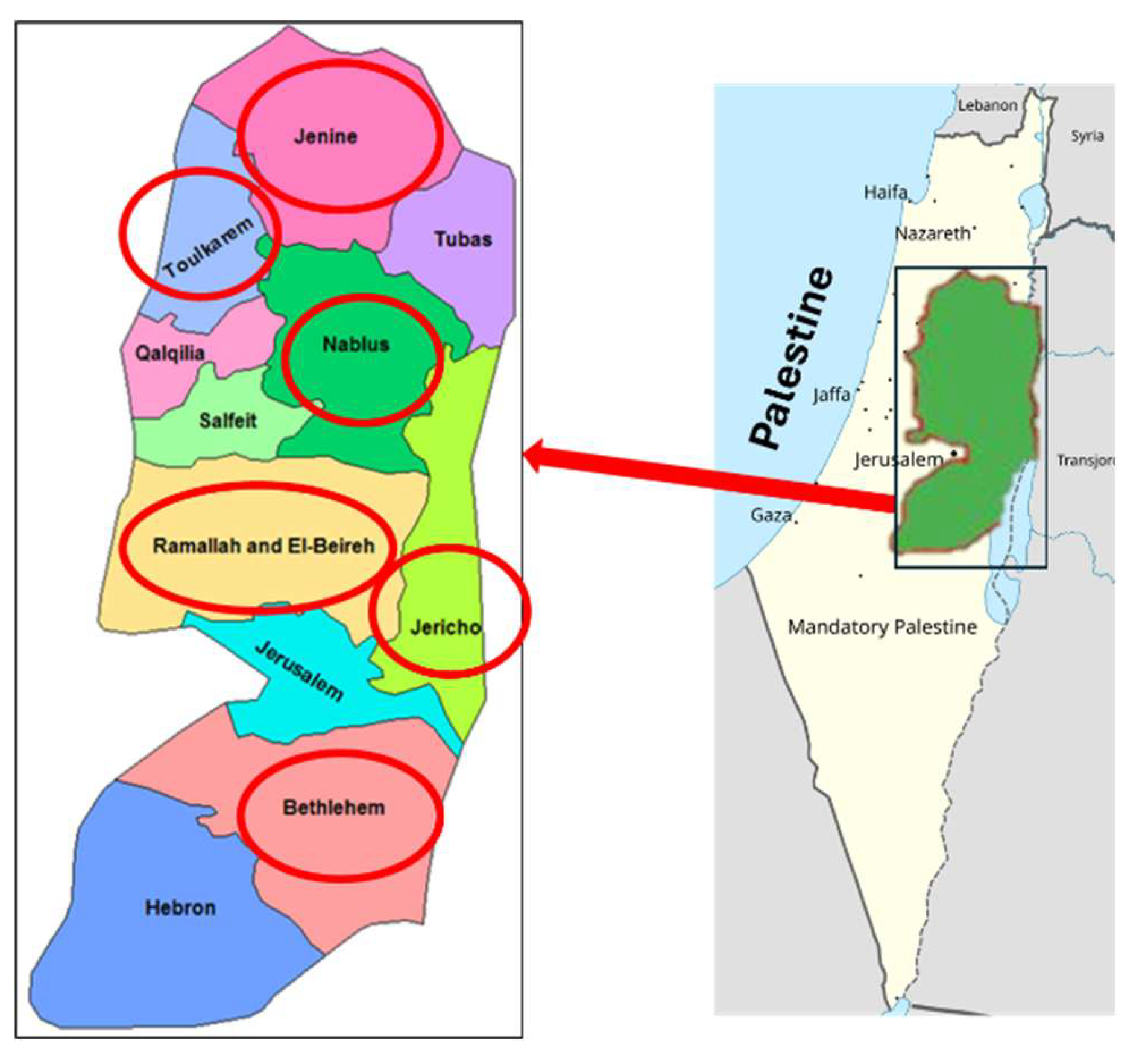
Figure 4.
(a) LVRT requirement voltage limit curves. (b) reactive current injection during fault.
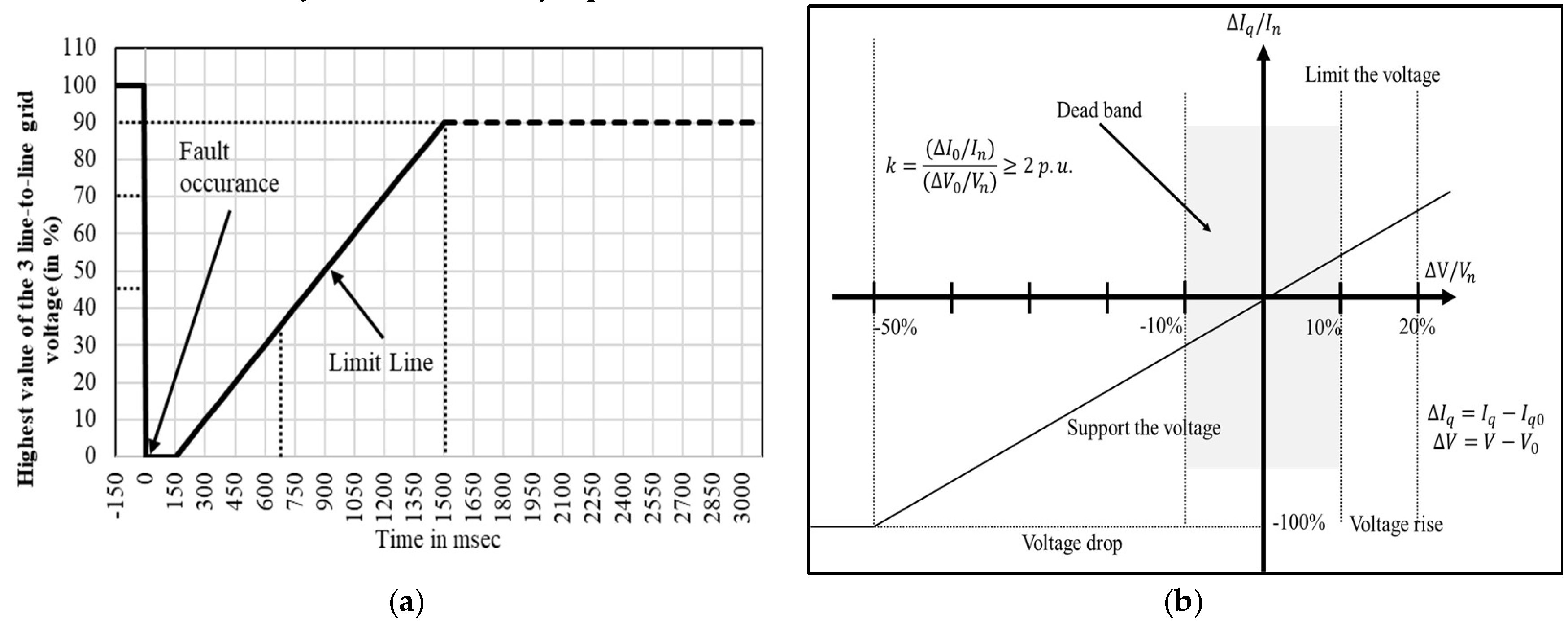
Figure 5.
Photograph of the experimental setup.
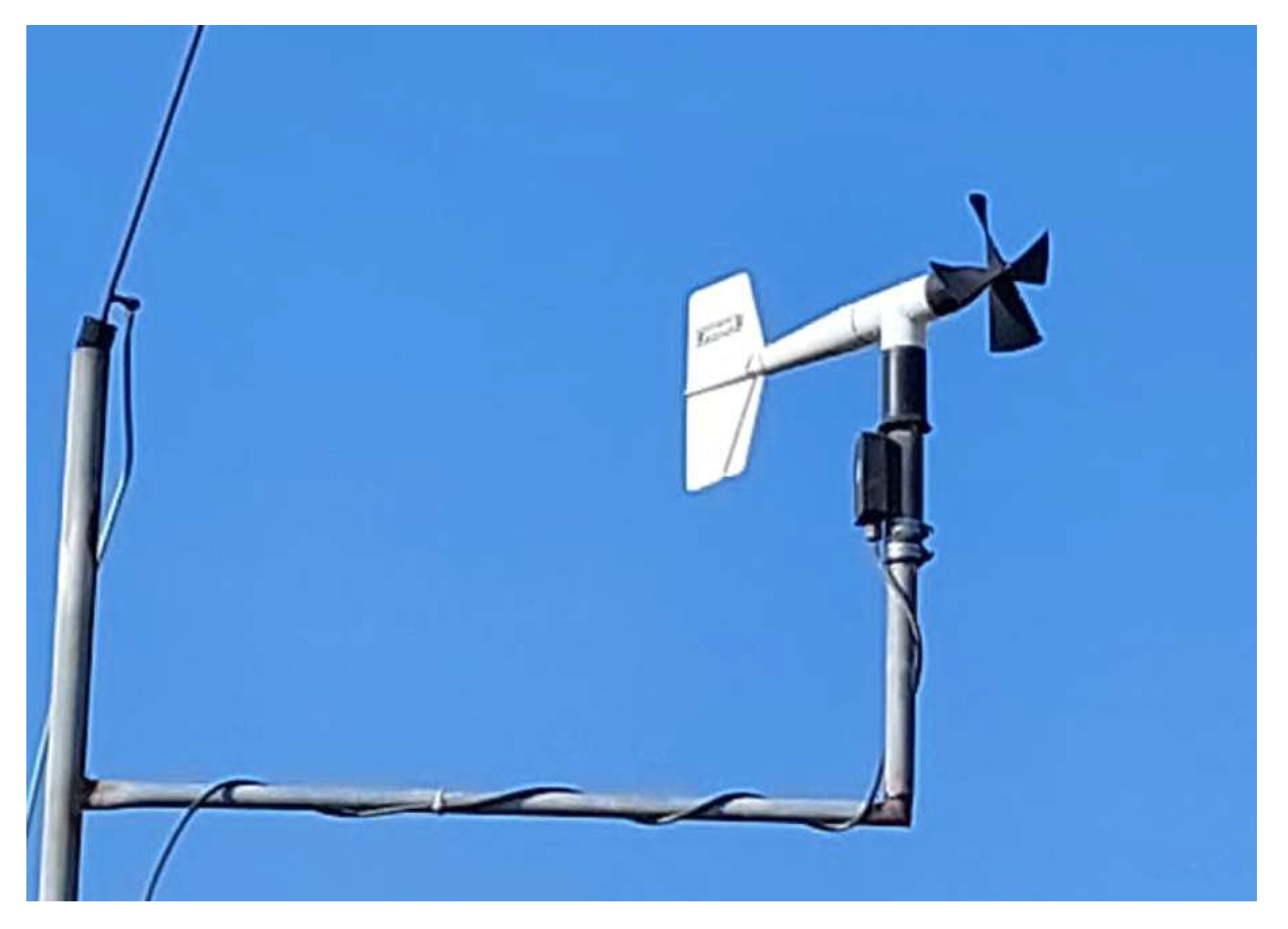
Figure 6.
Mean wind speed for six cities in West bank-Palestine.
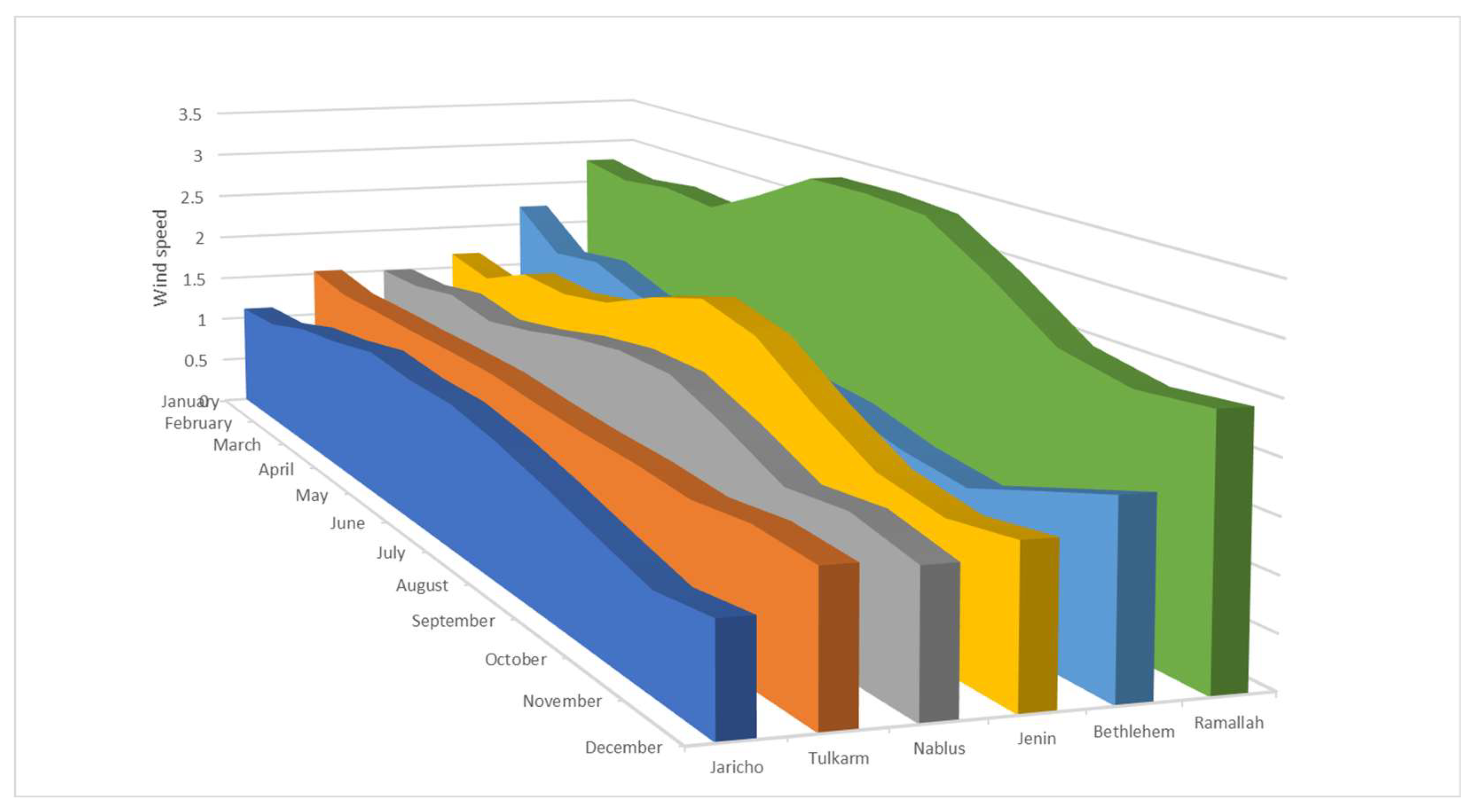
Figure 7.
Maximum wind speed for six cities in West Bank-Palestine.
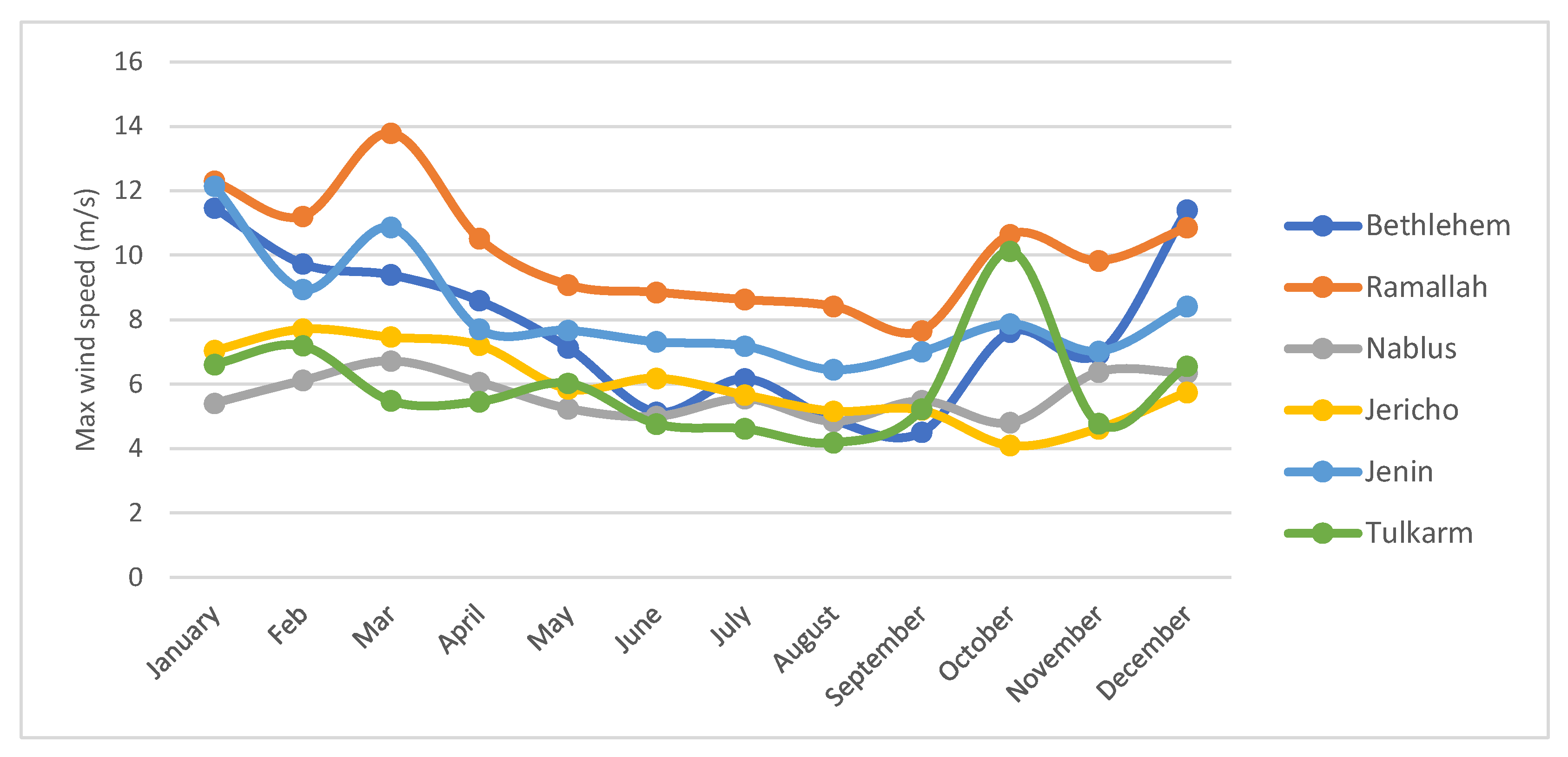
Figure 20.
Wind rose for the Ramallah site in January.
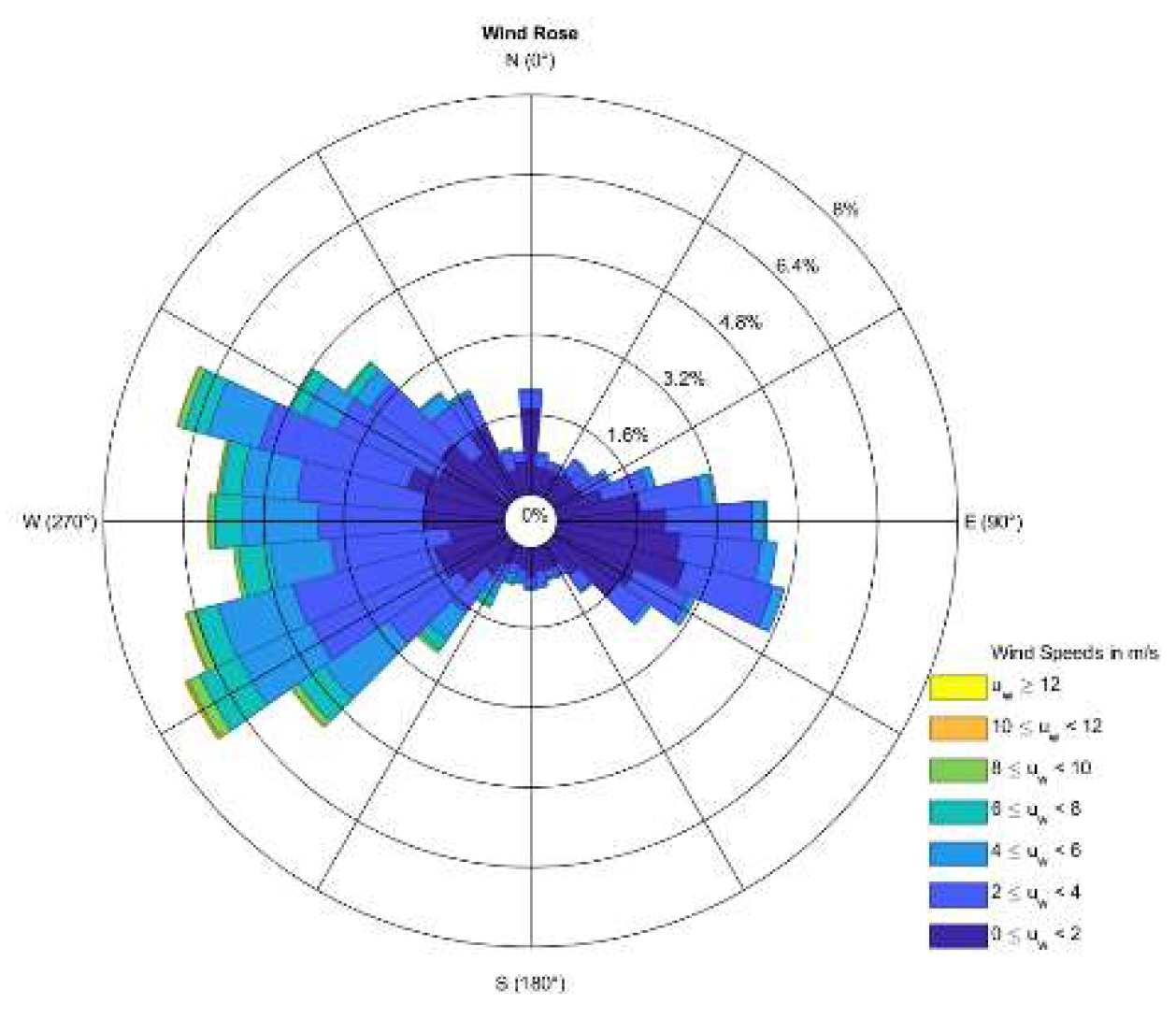
Figure 21.
Wind rose for the Ramallah site in February.
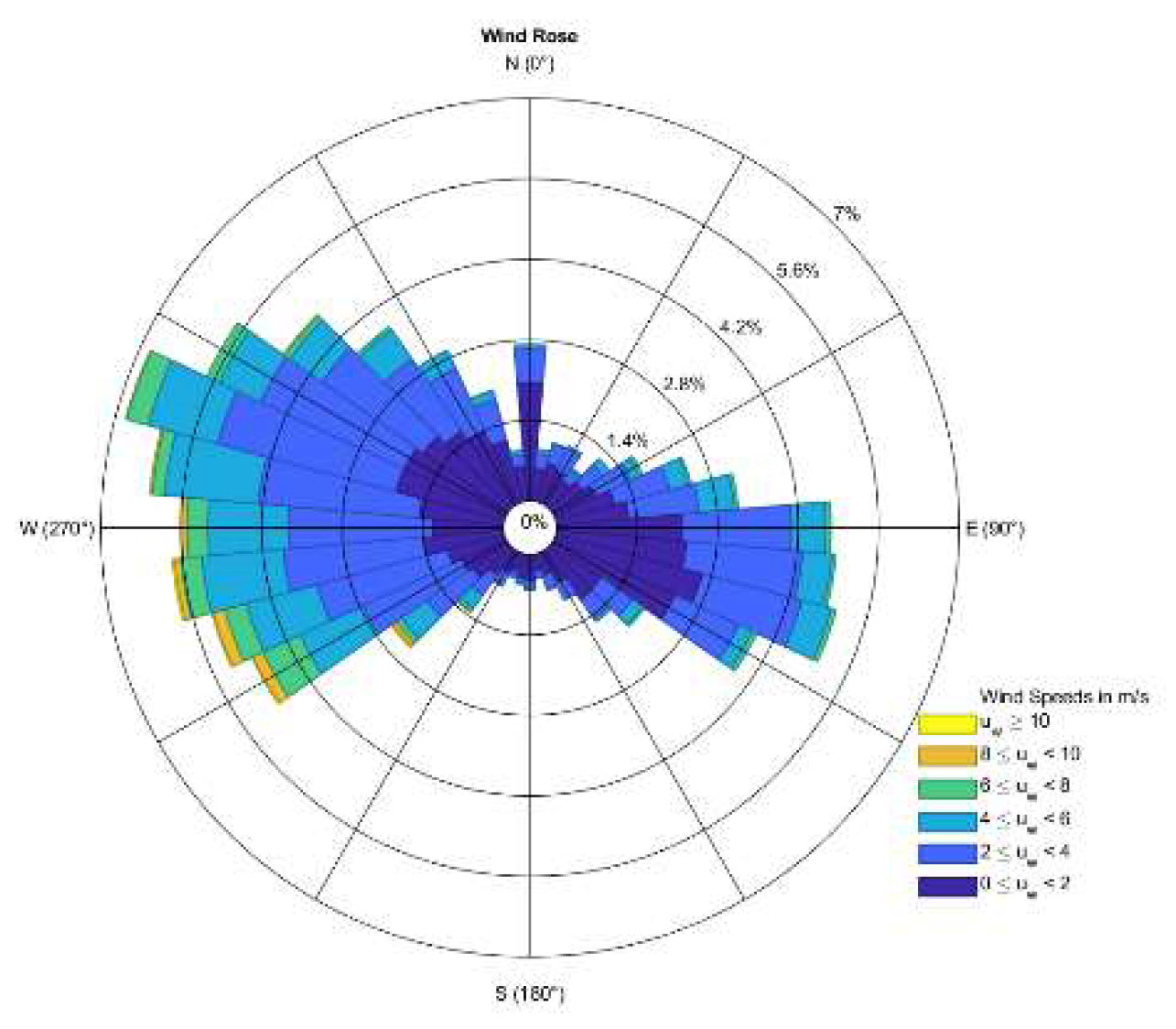
Figure 22.
Wind rose for the Ramallah site in March.
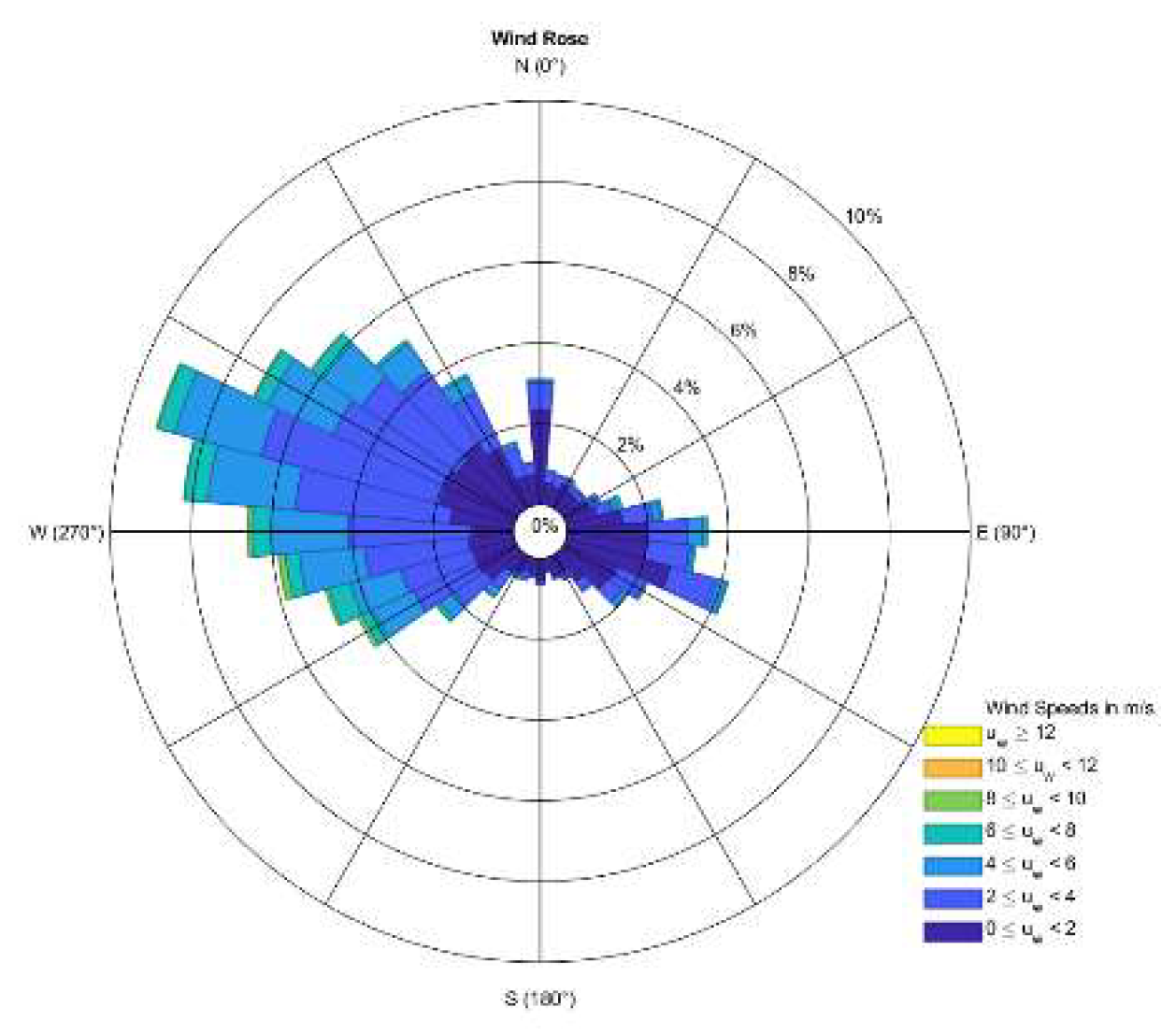
Figure 23.
Wind rose for the Ramallah site in April.
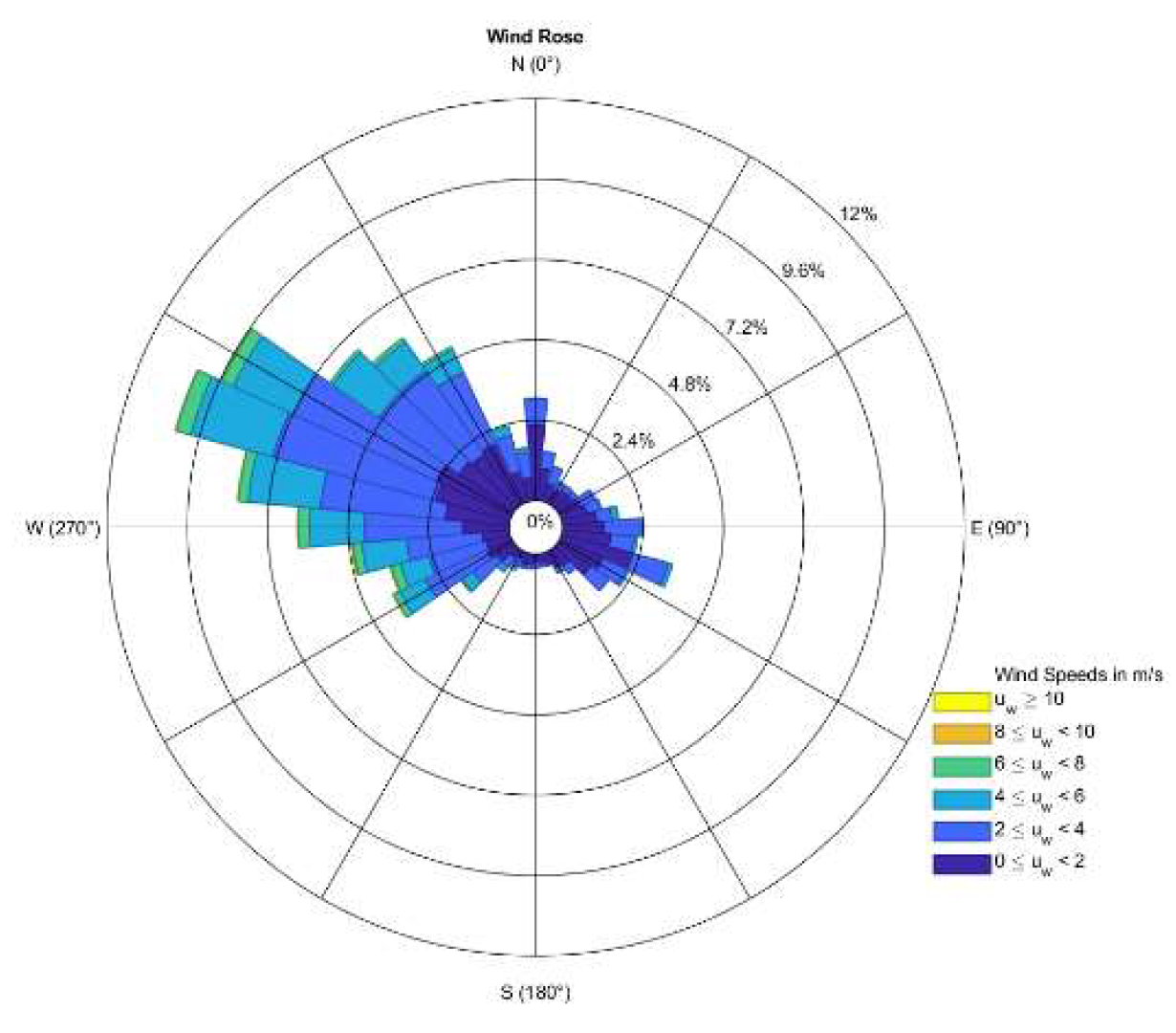
Figure 24.
Wind rose for the Ramallah site in May.
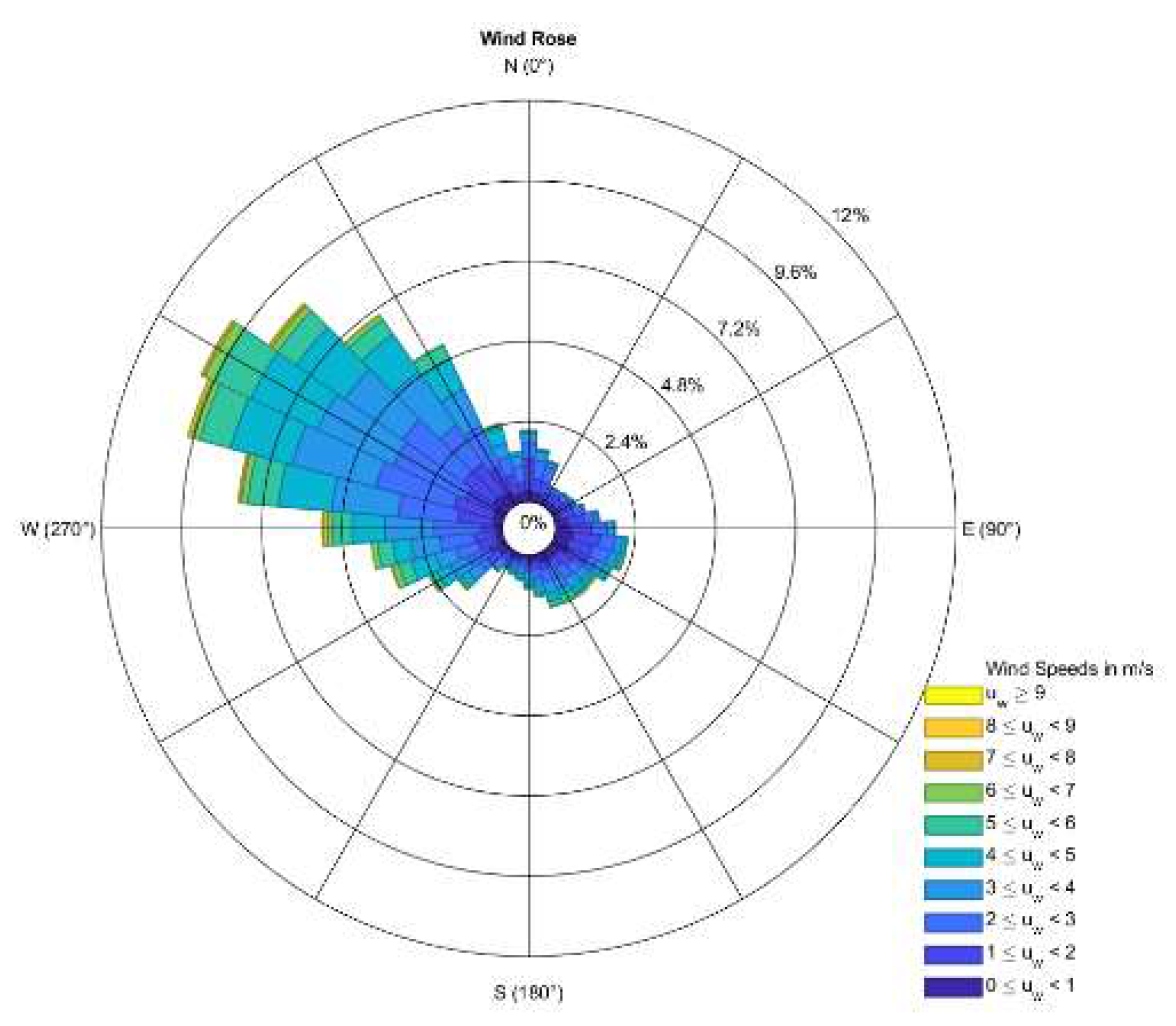
Figure 25.
Wind rose for the Ramallah site in June.
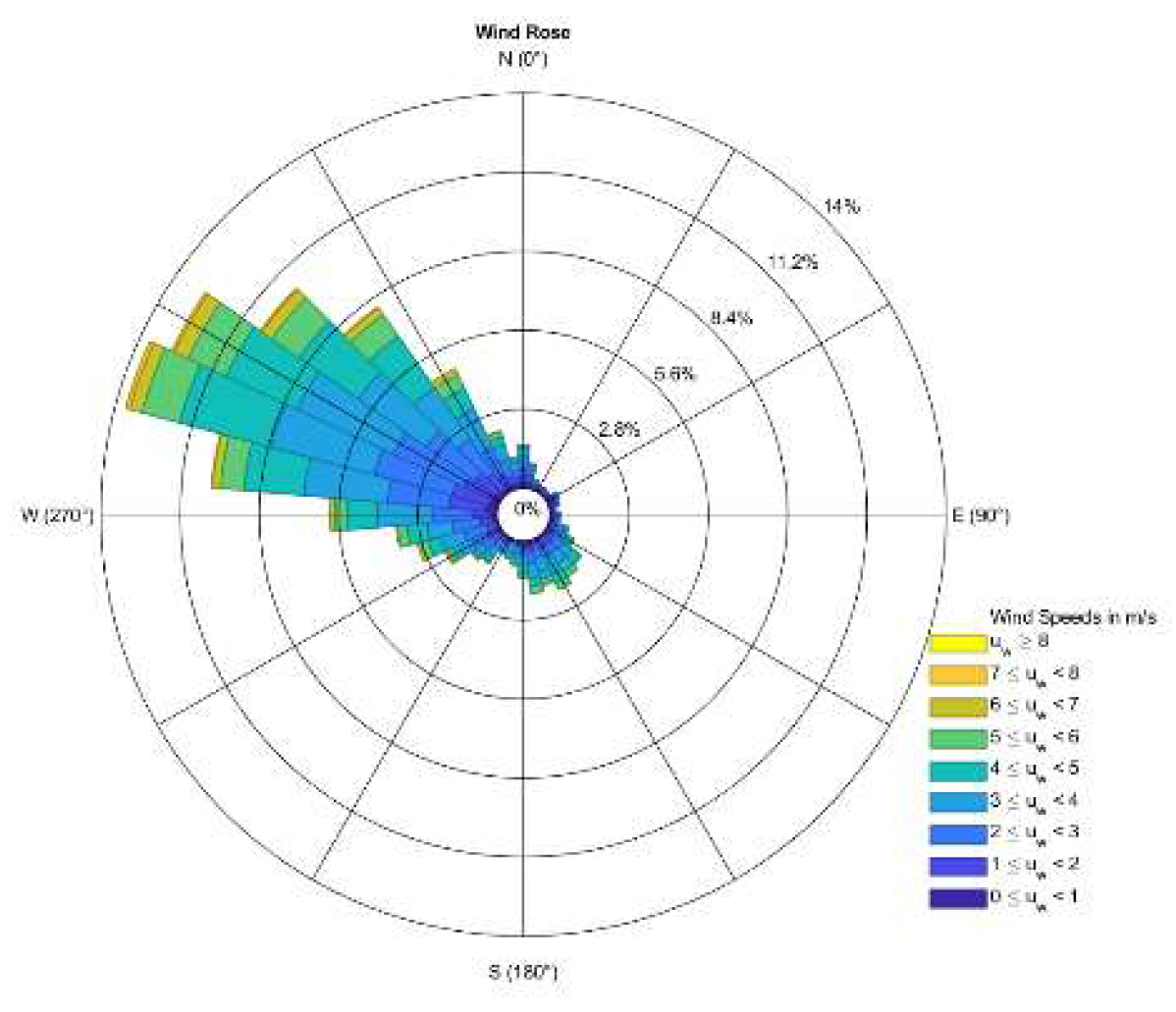
Figure 26.
Wind rose for the Ramallah site in July.
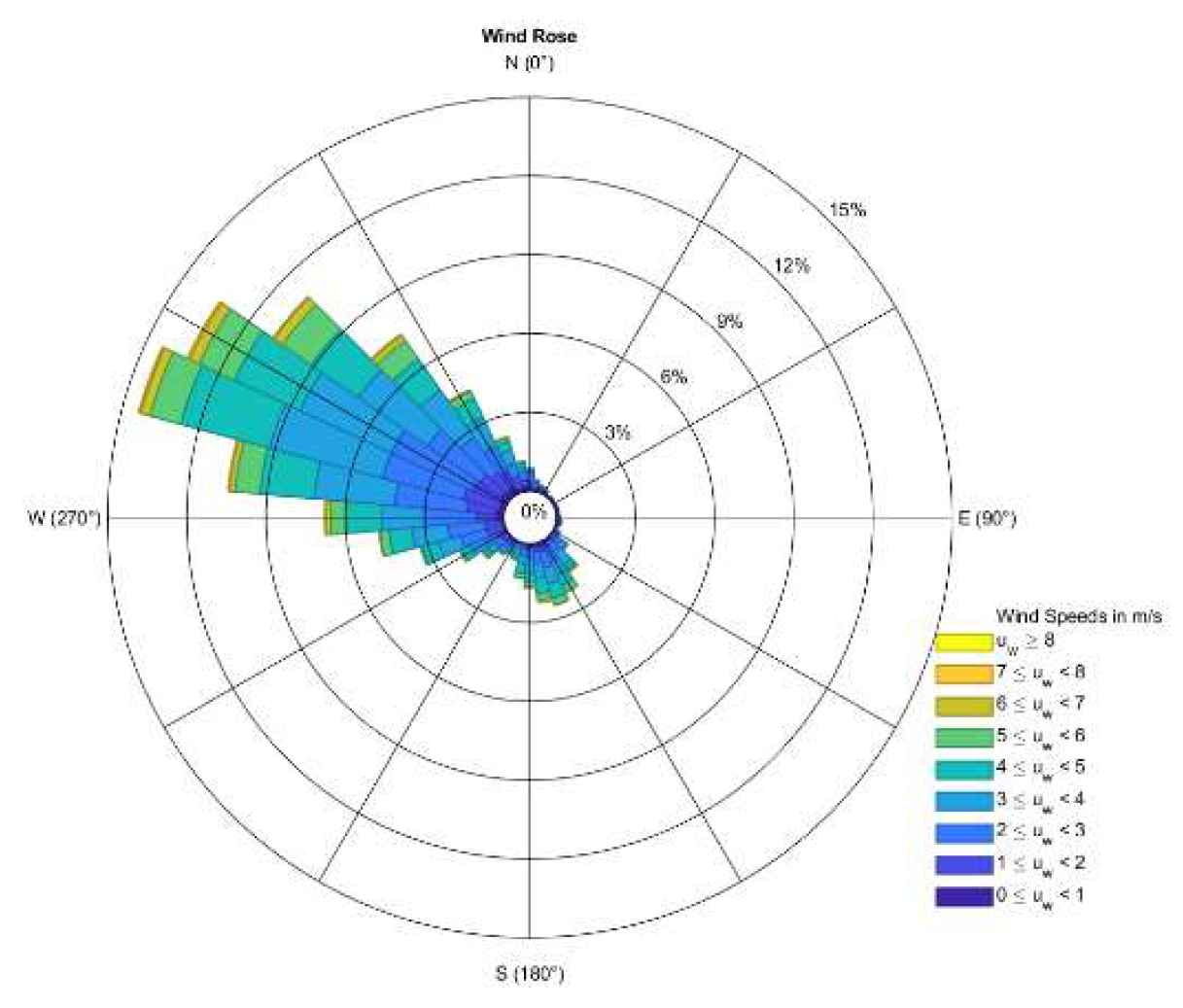
Figure 27.
Wind rose for the Ramallah site in August.
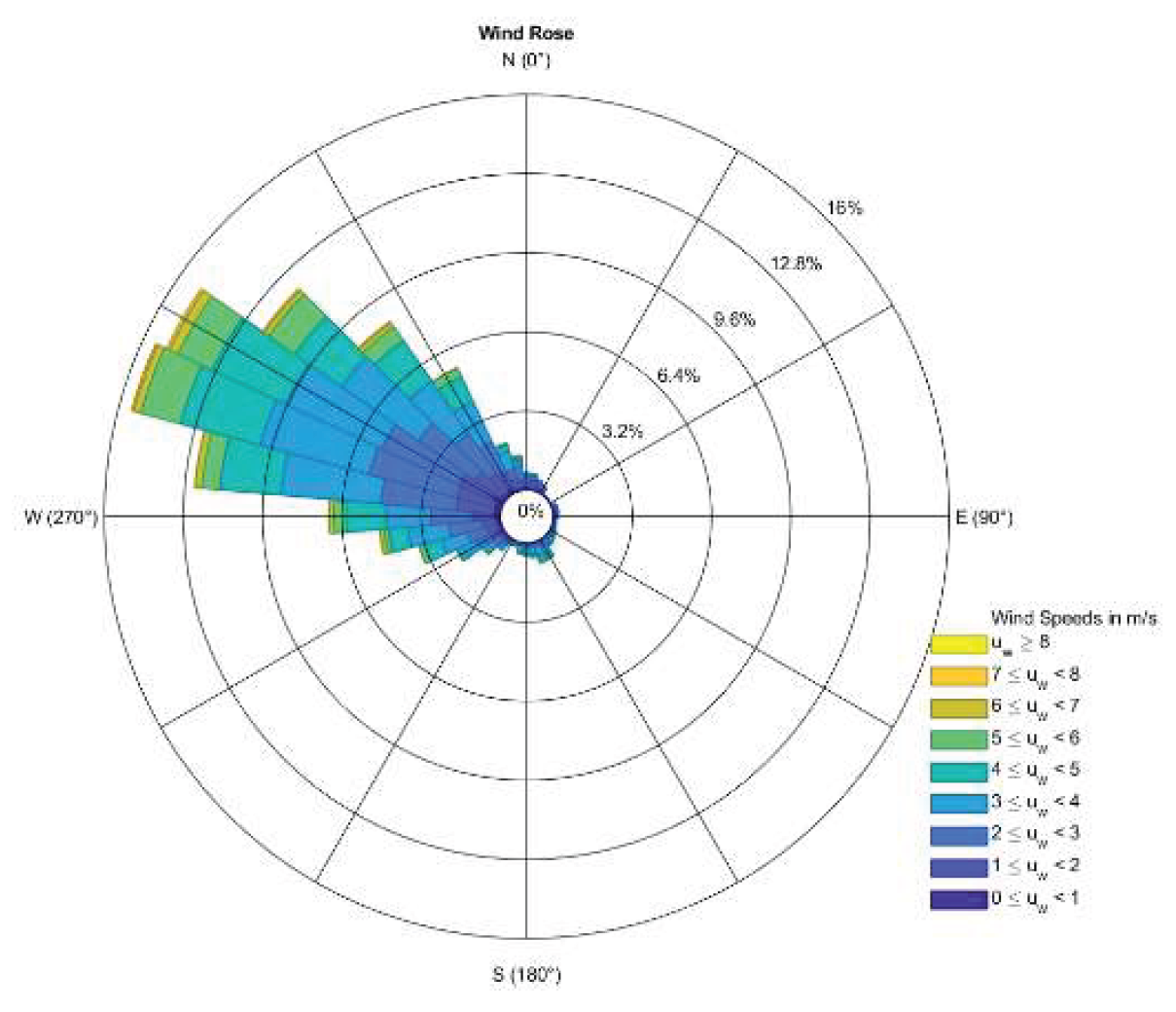
Figure 28.
Wind rose for the Ramallah site in September.
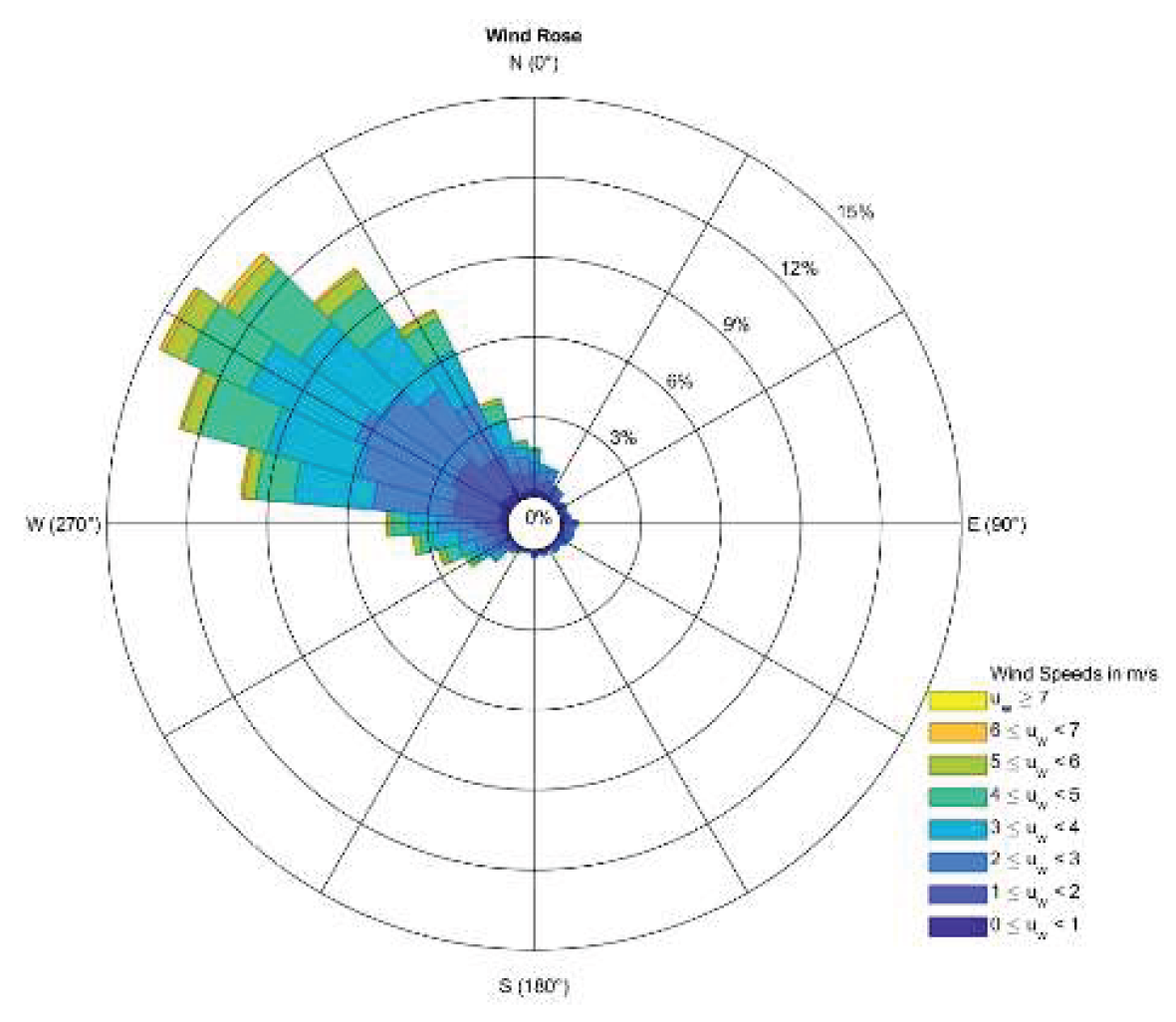
Figure 29.
Wind rose for the Ramallah site in October.
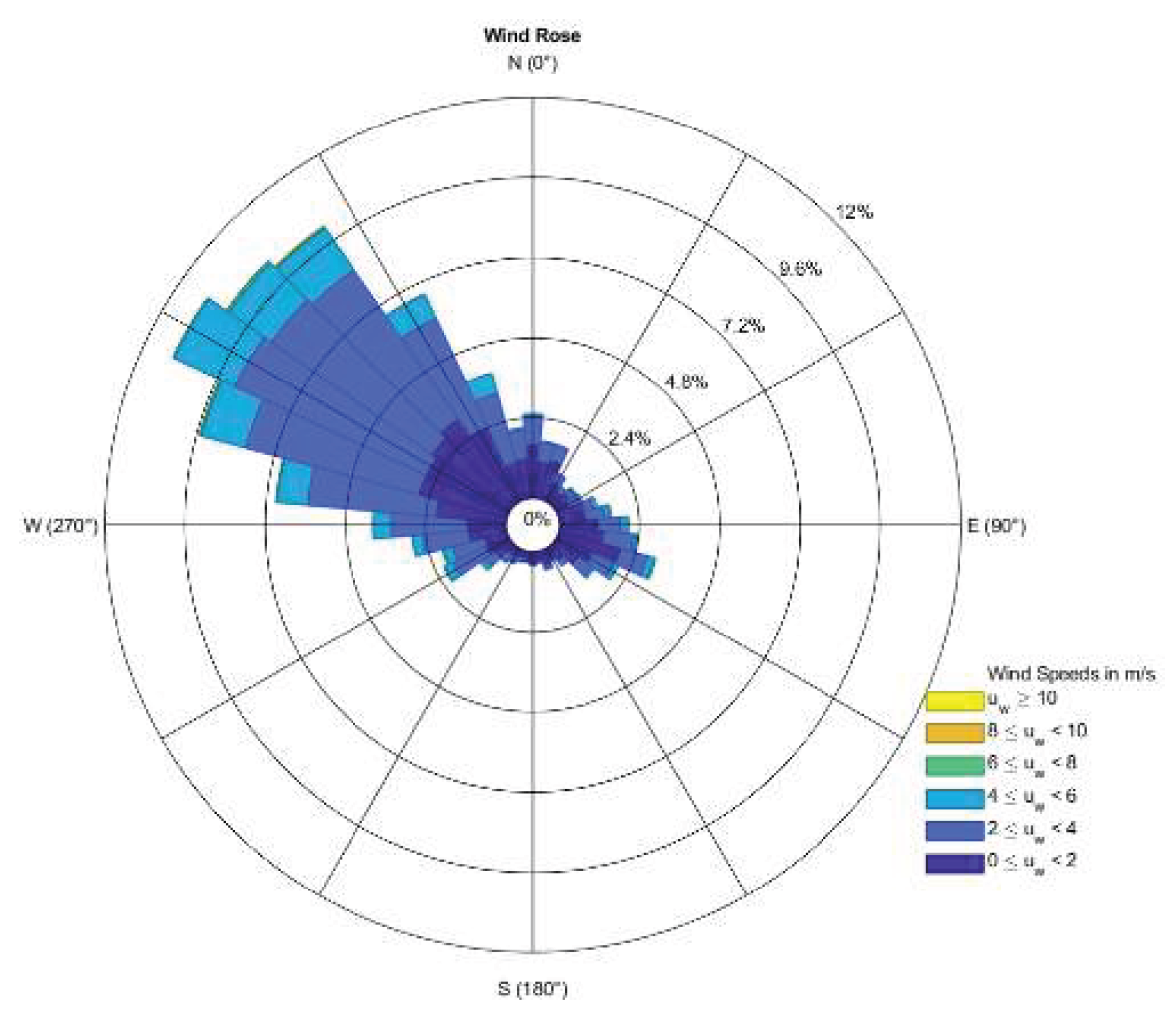
Figure 30.
Wind rose for the Ramallah site in November.
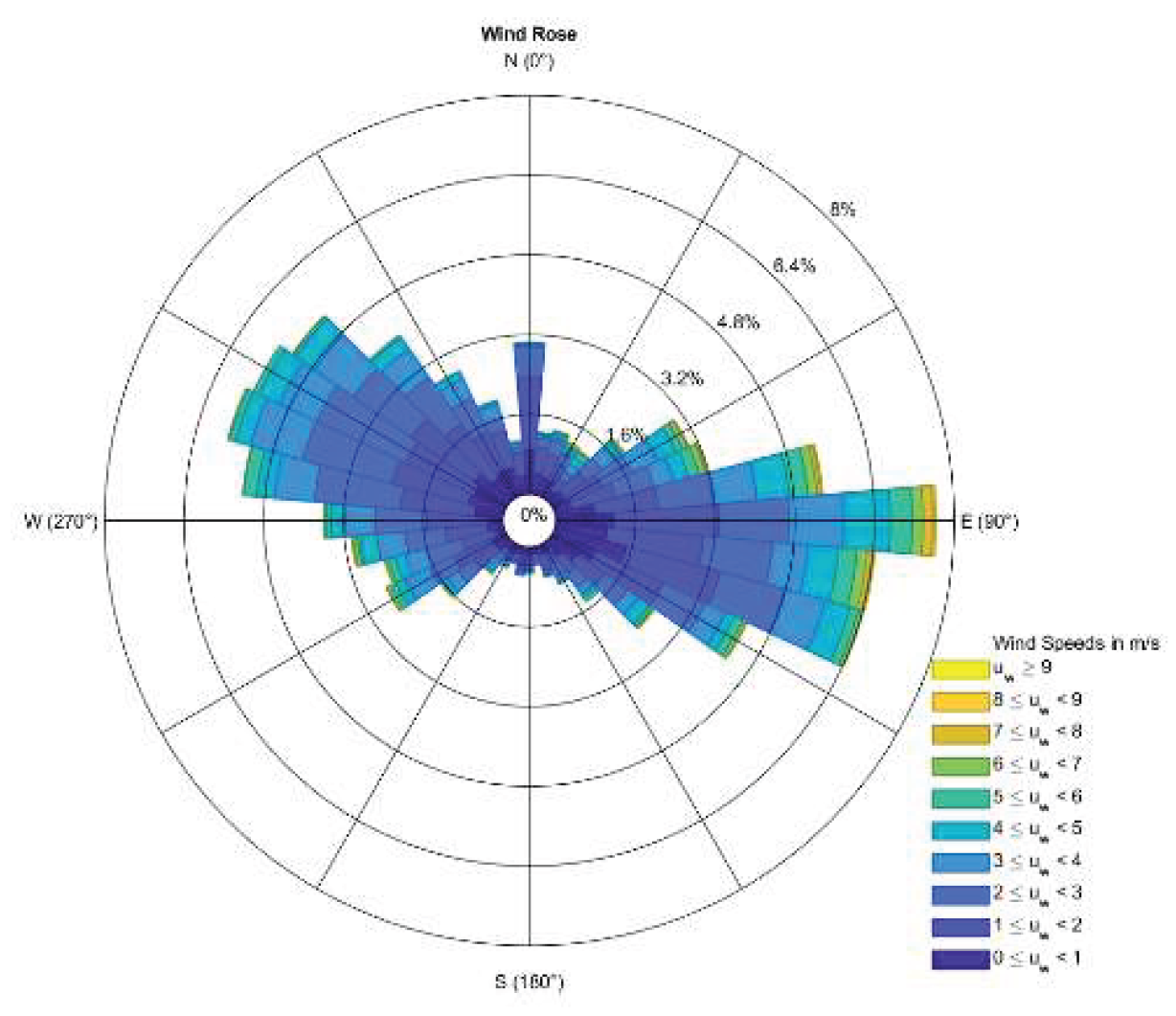
Figure 31.
Wind rose for the Ramallah site in December.
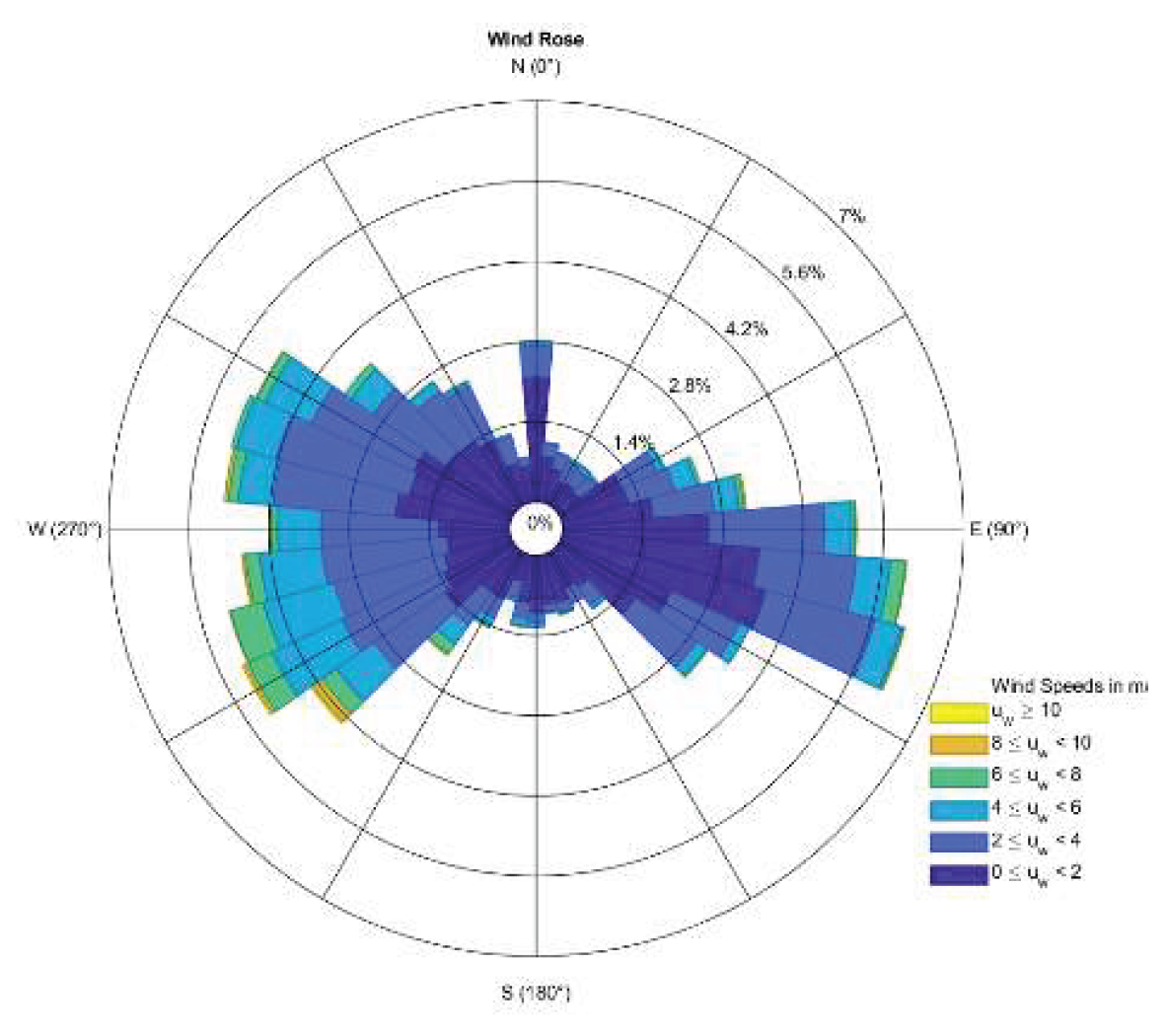
Figure 32.
Wind rose for Ramallah over a seven years period.
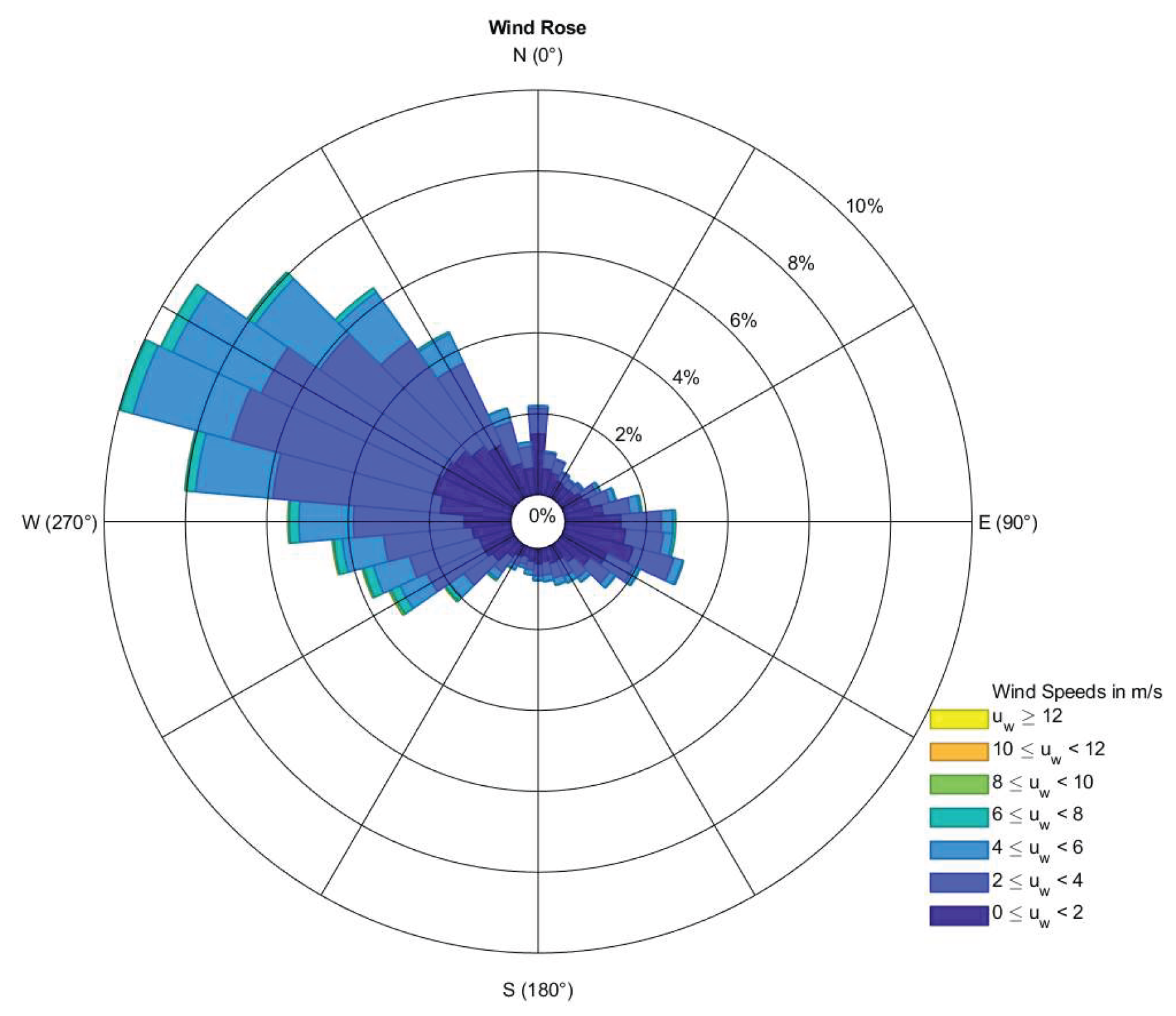
Figure 33.
Scale factor (c) of six cities using nine numerical techniques.
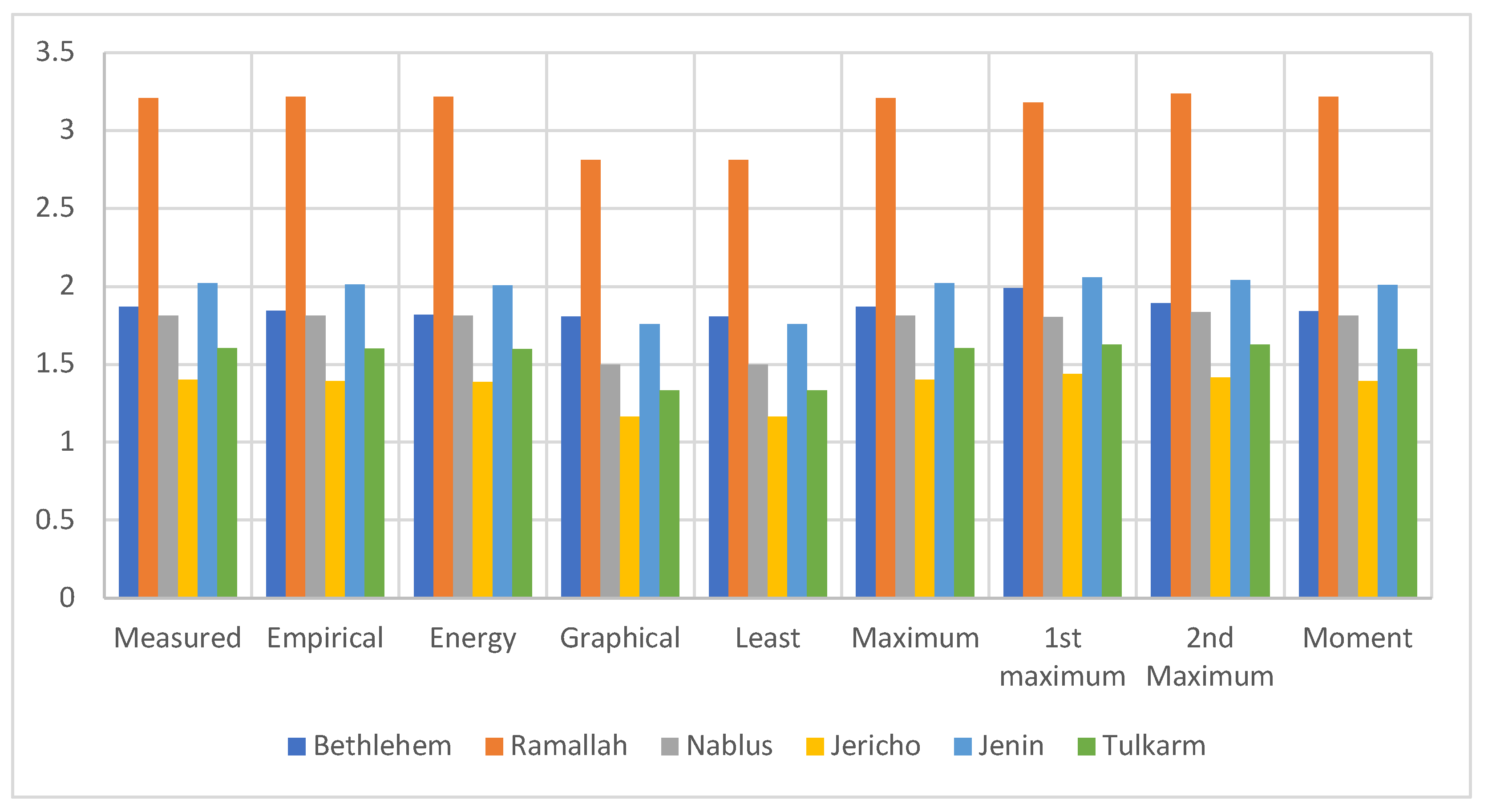
Figure 34.
Shape factor (k) of six cities using nine numerical techniques.
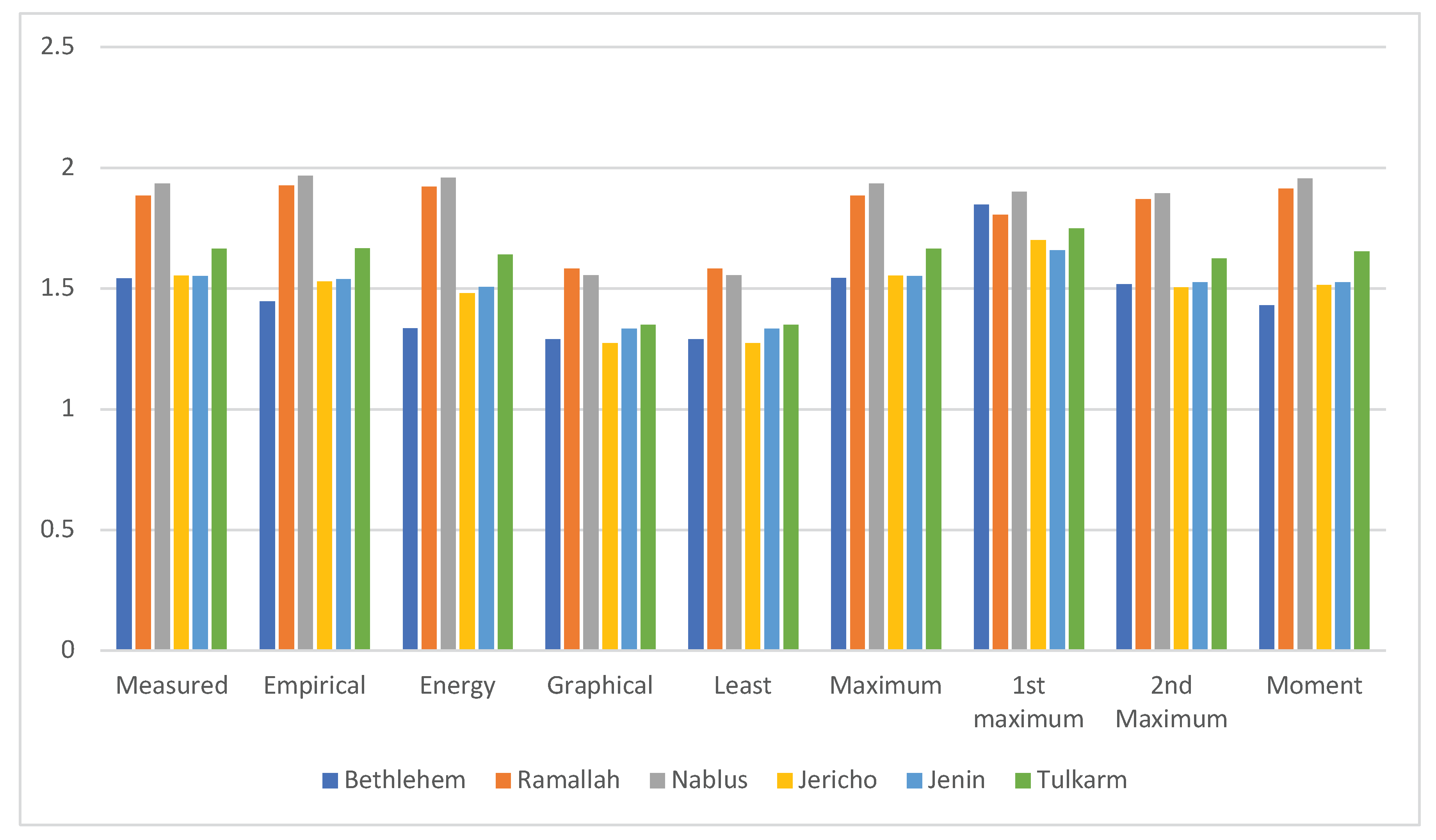
Figure 35.
Illustrates the harvest Energy per square meter.
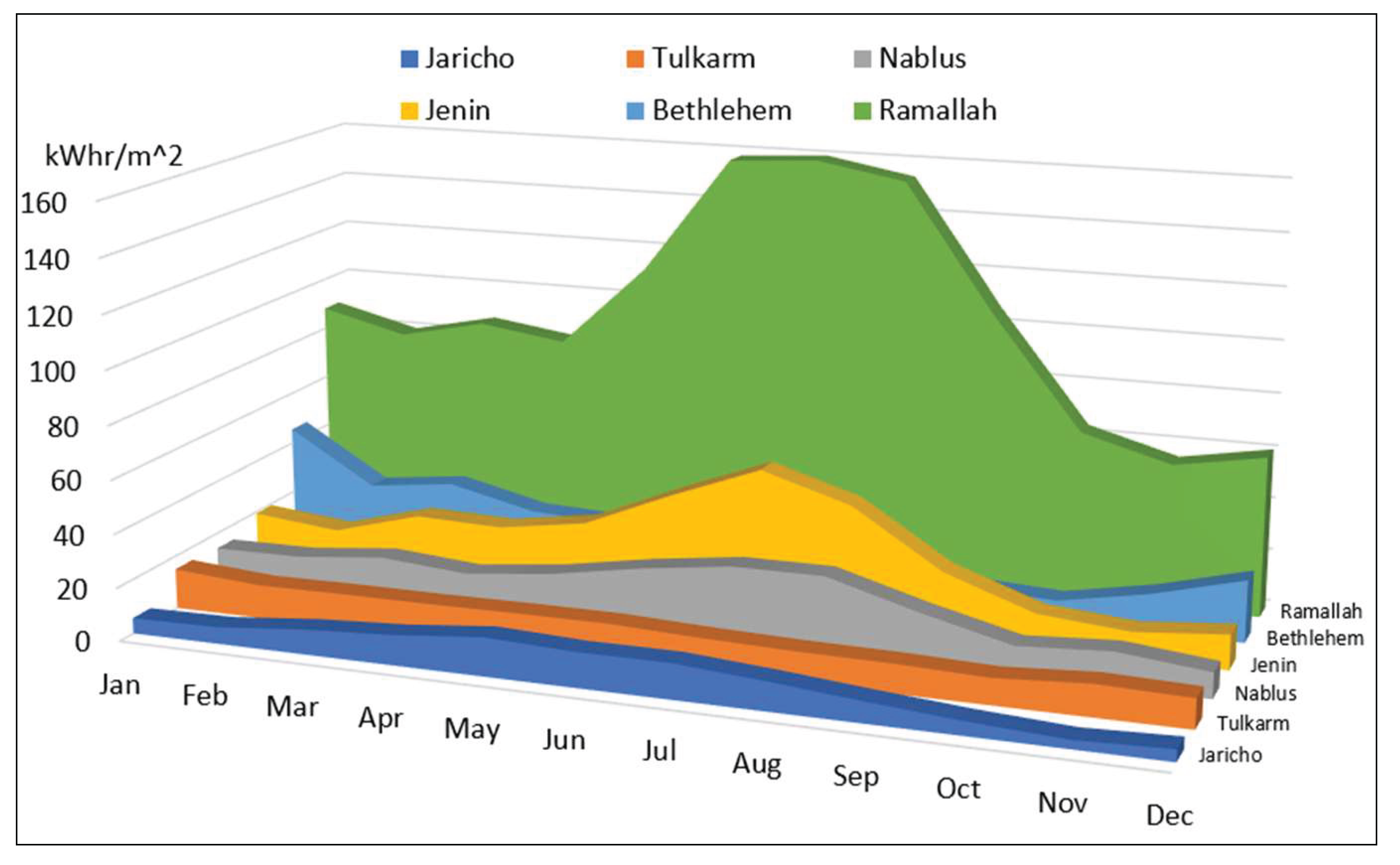
Figure 36.
Frequency of mean wind speed monthly basis.
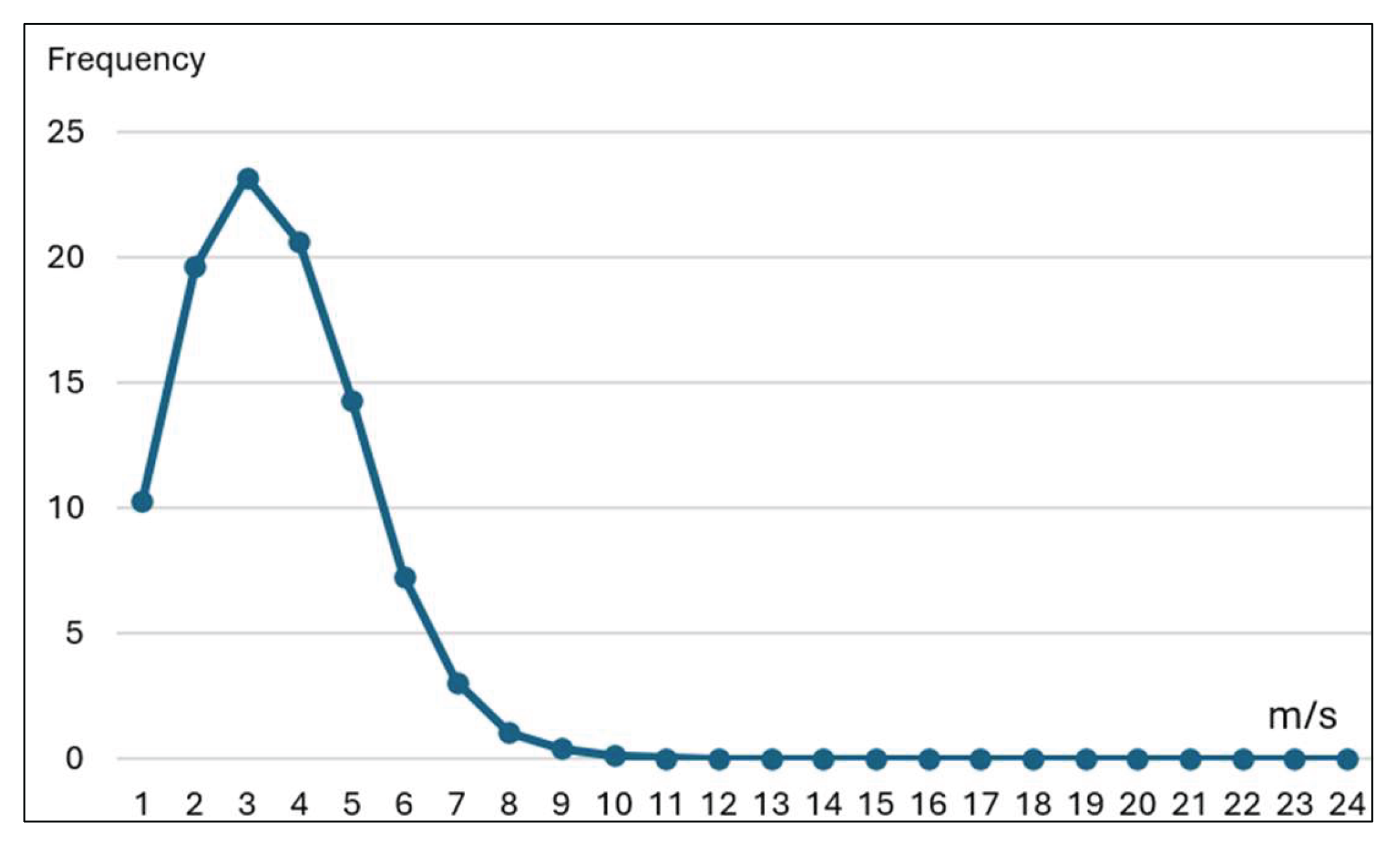
Figure 37.
Wind power density for Ramallah city.
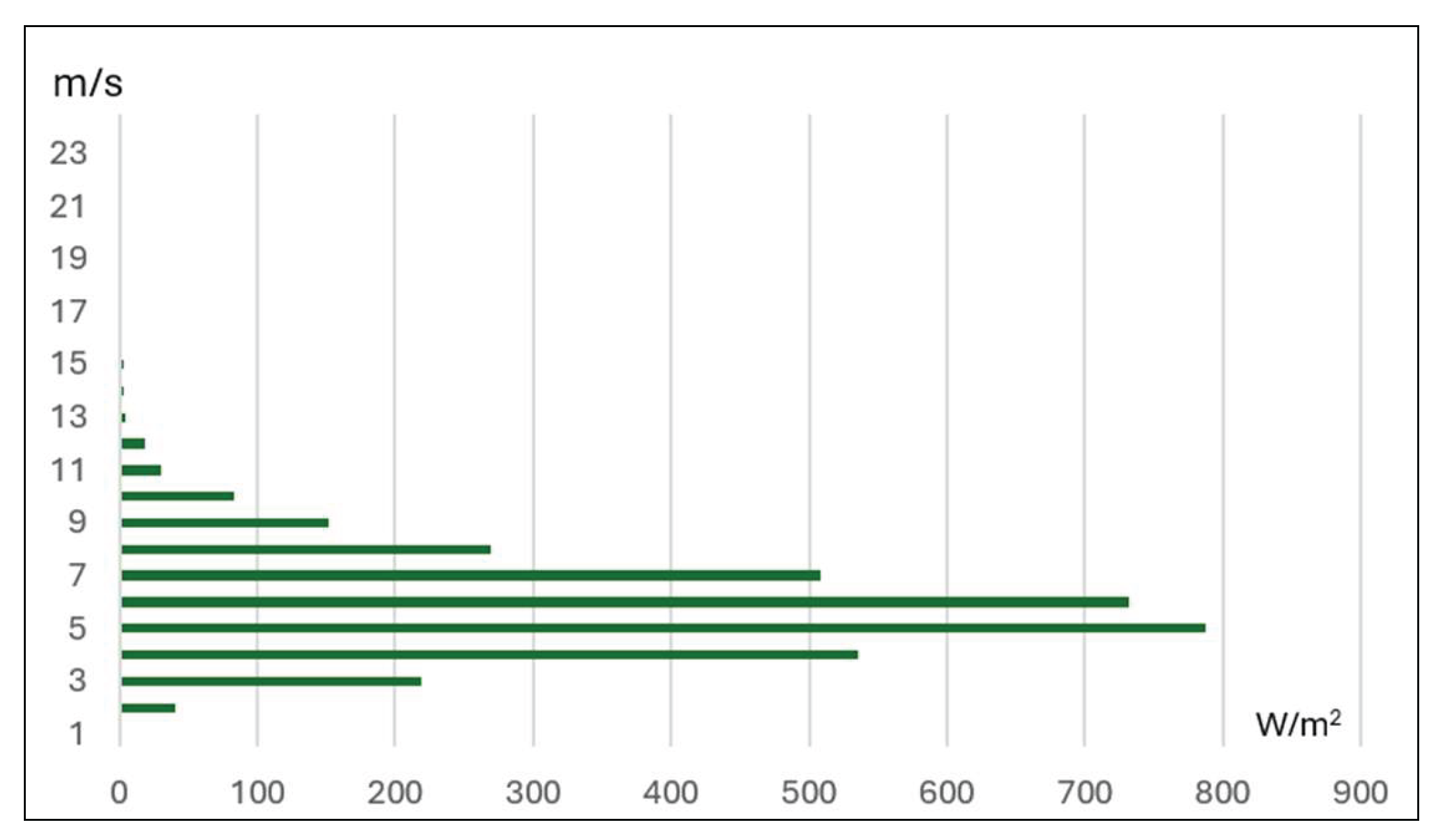
Figure 38.
Harvesting energy per square meter.
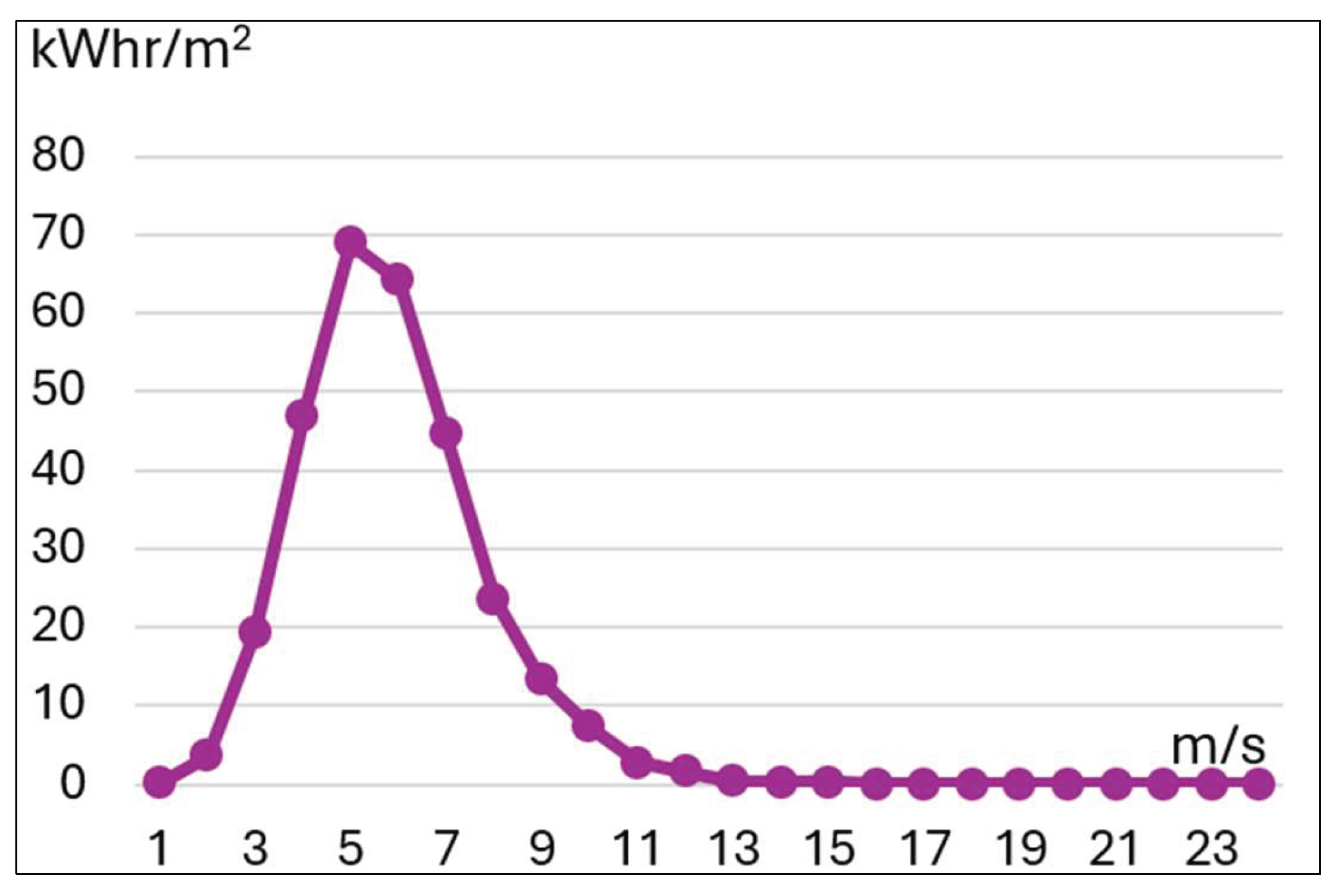
Table 1.
Summarization of numerical methods.
| Method Name | Description of Method | Method’s Equations |
| Method of Moments (MM) [87,88]. | Utilizing the MM approach is a highly efficient strategy for obtaining the Weibull parameters. The 1st moment corresponds to the origin, whereas the 2nd moment is relevant to the mean. Moments serve as the basis for computing the parameters k and c [83,89]. |
, (3) (4) , (5) , (6) where; is the total number of non-zero wind speed data points, and Γ(x) is the gamma function, and can be calculated as in (7): (7) |
| Empirical Method (EM) or Standard Deviation Method (STDM) [90,91,92,93]. | The empirical approach presents a direct and practical solution that merely requires knowledge of mean wind speed and standard deviation σ [94]. |
(8) (9) |
| Maximum Likelihood Method (MLM) [95,96,97]. |
Used in the research of finding information about the wind speed. The k and c parameters are obtained by an associated set of equations. |
(10) (11) |
| Modified Maximum Likelihood Method (MMLM) [98,99,100]. | MMLM can only be applied when the wind speed data is presented in the form of a frequency distribution. It involves multiple iterations in order to calculate the Weibull parameters [101]. |
(12) , (13) |
| Second Modified Maximum Likelihood Method (SMMLM)[25,90]. | SMMLM eliminates the need for iterative estimation of the shape parameter and does not require any iteration or data sorting [102]. |
, (14) |
| Graphical Method (GM) or Least Mean Square Method (LSM) [102,103,104]. | In the context of GM, it is necessary to initially classify the wind speed record into specific bins. |
(15) |
| Energy Pattern Factor Method (EPF) [75,105]. |
The EPF is correlated with the average records of wind speed. |
, (16) where is given as (17). , (17) |
Table 3.
GOF for Ramallah city to check the performance of numerical methods.
| Numerical methods | GOF for Ramallah of wind speed data | ||||||||||
| R: Ranking based on the percentage of errors | |||||||||||
| Comparative analysis | |||||||||||
| RMSE | R | X2 | R | IA | R | MAPE | R | RRMSE | R | ||
| 1 | MM | 5.9333e-05 | 2 | 0.0015 | 2 | 0.9999 | 2 | 0.0011 | 2 | 0.0818 | 2 |
| 2 | STDM, EM | 8.0679e-05 | 4 | 0.0031 | 4 | 0.99982 | 4 | 0.0015 | 4 | 0.1112 | 4 |
| 3 | MLM | 3.2486e-08 | 1 | 4.0035e-10 | 1 | 1 | 1 | 5.7298e-07 | 1 | 4.4793e-05 | 1 |
| 4 | MMLM | 1.8832e-04 | 5 | 0.0097 | 6 | 0.9993 | 5 | 0.0029 | 6 | 0.2596 | 5 |
| 5 | SMMLM | 0.0171 | 7 | 0.0056 | 5 | 0.9992 | 6 | 0.0027 | 5 | 23.7037 | 7 |
| 6 | GM, LSM | 0.0013 | 6 | 0.2199 | 7 | 0.9782 | 7 | 0.0157 | 7 | 1.8855 | 6 |
| 7 | EPF | 7.2081e-05 | 3 | 0.0024 | 3 | 0.99986 | 3 | 0.00136 | 3 | 0.0993 | 3 |
Table 4.
The power density and energy for Ramallah city.
|
μ m/s |
Times (hr.) |
Incident (%) | Power (W) | Power Density (W/m2) |
Energy kW.hr/m2 |
| 0.5 | 899.8 | 10.27 | 0.075625 | 0.78 | 0.07 |
| 1.5 | 1718.8 | 19.62 | 2.041875 | 40.06 | 3.51 |
| 2.5 | 2030.6 | 23.18 | 9.453125 | 219.12 | 19.2 |
| 3.5 | 1806.3 | 20.62 | 25.93938 | 534.87 | 46.85 |
| 4.5 | 1250.3 | 14.27 | 55.13063 | 786.84 | 68.93 |
| 5.5 | 637.5 | 7.28 | 100.6569 | 732.48 | 64.17 |
| 6.5 | 268.2 | 3.07 | 166.1481 | 508.77 | 44.56 |
| 7.5 | 92.5 | 1.06 | 255.2344 | 269.37 | 23.61 |
| 8.5 | 35.9 | 0.41 | 371.5456 | 152.11 | 13.34 |
| 9.5 | 14 | 0.16 | 518.7119 | 82.68 | 7.26 |
| 10.5 | 3.8 | 0.04 | 700.3631 | 30.55 | 2.66 |
| 11.5 | 1.8 | 0.02 | 920.1294 | 18.52672 | 1.66 |
| 12.5 | 0.3 | 0.00 | 1181.641 | 3.96537 | 0.35 |
| 13.5 | 0.1 | 0.00 | 1488.527 | 2.50 | 0.15 |
| 14.5 | 0.1 | 0.00 | 1844.418 | 3.09 | 0.18 |
| 15.5 | 0 | 0 | 2252.944 | 0 | 0 |
| 16.5 | 0 | 0 | 2717.736 | 0 | 0 |
| 17.5 | 0 | 0 | 3242.422 | 0 | 0 |
| 18.5 | 0 | 0 | 3830.633 | 0 | 0 |
| 19.5 | 0 | 0 | 4485.999 | 0 | 0 |
| 20.5 | 0 | 0 | 5212.151 | 0 | 0 |
| 21.5 | 0 | 0 | 6012.717 | 0 | 0 |
| 22.5 | 0 | 0 | 6891.328 | 0 | 0 |
| 23.5 | 0 | 0 | 7851.614 | 0 | 0 |
| Sum 8760 | 100% | 50137.56 | 3385.75 | 296.5 | |
Table 5.
Specification of the wind turbine.
| Type | Wind Power Generator |
| Cut-in wind speed | 3m/s |
| Rotor diameter | 6 m |
| Rated output power | 5 kW at 10m/s |
| Max output power | 7.5 kW |
| Generator type | Permanent magnet synchronous generator (PMSG), 3 phase AC |
| wind turbine type | Horizontal axis |
| Output voltage | 48 volts |
Table 6.
Payback period for wind energy conversion system.
| Type | Wind Power Generator |
| Cut-in wind speed | 3m/s |
| Rotor diameter | 6 m |
| Rated output power | 5 kW at 10m/s |
| Max output power | 7.5 kW |
| Generator type | Permanent magnet synchronous generator (PMSG), 3 phase AC |
| wind turbine type | Horizontal axis |
| Output voltage | 48 volts |
Disclaimer/Publisher’s Note: The statements, opinions and data contained in all publications are solely those of the individual author(s) and contributor(s) and not of MDPI and/or the editor(s). MDPI and/or the editor(s) disclaim responsibility for any injury to people or property resulting from any ideas, methods, instructions or products referred to in the content. |
© 2025 by the authors. Licensee MDPI, Basel, Switzerland. This article is an open access article distributed under the terms and conditions of the Creative Commons Attribution (CC BY) license (http://creativecommons.org/licenses/by/4.0/).
Copyright: This open access article is published under a Creative Commons CC BY 4.0 license, which permit the free download, distribution, and reuse, provided that the author and preprint are cited in any reuse.


