Preprint
Article

This version is not peer-reviewed.

Introducing a Managed Aquifer Recharge Feasibility Index (MARFI): A Tool for Discursive Decision Making

Submitted:

05 November 2025

Posted:

05 November 2025

You are already at the latest version

Abstract

Water is fundamental to the economy of Pakistan, and to many of the county’s 250 million people. Increasing groundwater use in Pakistan is occurring against a backdrop of climate change, dwindling surface water, and human population growth. Historically there has been little groundwater resource management in the country, and that little has mainly related to its use, that is to demand side management. There is some potential for Managed Aquifer Recharge (MAR) to contribute to groundwater supplies, that is, to supply side management. MAR is a complex process which to be effective requires consideration of social, institutional, environmental, technical, financial, and economic parameters. This paper introduces a methodology that has been developed to assess and sum the effect of multiple parameters into single numerical value, to enable the feasibility of proposed MAR projects; the “Managed Aquifer Recharge Feasibility Index (MARFI)”. MARFI was developed using a case study of an MAR project currently being implemented by the Punjab Irrigation Department in the bed of Old Mailsi Canal. MARFI is a suitable tool for examining the pre-project feasibility of any MAR scheme for contributing to wise investment decision making.

Keywords: 
;  ;  ;  ;  ;  

1. Introduction

Only 1% of the total water on earth is suitable for use by humans (Qureshi & Ashraf, 2019). With the increasing population and climate change, water scarcity has become one of the major global issues of the 21st century (Maheshwari, 2023; Pahl-Wostl et al., 2013; RockstrÖm et al., 2009). Around 96% of the planet’s unfrozen freshwater is available as groundwater (Giordano, 2009; Reinecke et al., 2020). Most of the 750-800 billion m3/year global groundwater withdrawals are used for agriculture; indeed, groundwater has become the mainstay of irrigated agriculture in many parts of Asia, especially in South Asia (Maheshwari, 2023; Qureshi, 2018).
Water is of crucial importance to the economy of Pakistan, and to many of the county’s 250 million people. The primary water sources of Pakistan are glacial melt, rainfall, and groundwater (WB, 2019). Over 70% of Pakistan’s surface water resources are from the Indus River Basin (IRB) (Qureshi, 2015). The IRB has an arid to sub-arid climate with an average annual rainfall of 240 mm. Around 90% of Pakistan’s food production is from irrigated agriculture (Qureshi & Ashraf, 2019).
An extensive network of diversion structures, link canals, main canals, minor canals, and watercourses is collectively called the Indus Basin Irrigation System (IBIS). The IBIS conveys water across Pakistan; however, this surface supply is now insufficient for Pakistan’s needs, and groundwater has become significantly important. The reduction in surface water supplies and the increased use of groundwater of marginal quality poses a significant risk to Pakistan’s food security(Watto & Mugera, 2016).
The demands for food and fiber for its rapidly increasing population have led Pakistan to become fourth largest user of the groundwater globally (Muzammil et al., 2020; Zakir-Hassan, Shabir, Hassan, et al., 2022). Groundwater management in Pakistan has historically focused on seeking technical solutions related to its use, that is, on how to manage the demands on groundwater through reduced extractions (Bhatti et al., 2017; Zakir-Hassan, Akhtar, et al., 2022). There is, however, some potential to manage the supply of groundwater. In the Indus Basin groundwater is sourced from a large aquifer, which is replenished naturally by rivers, canals and irrigated fields (Punthakey et al., 2016). Floods are also important hydrological event which cause aquifer replenishment (Ashraf, 2022).
Artificial or managed aquifer recharge (MAR) is the planned human activity for augmenting the amount of groundwater available through works designed to increase the natural replenishment of surface waters into the groundwater aquifers, resulting in a corresponding increase in the amount of groundwater available for abstraction as and when required (Ahirwar et al., 2020; El Moneam, 2022; IRI, 2009; Singh et al., 2017)
There is rapidly gaining interest in MAR as a tool for replenishing depleted aquifers, improving water quality, and combating water scarcity in many regions of the world (Dillon et al., 2018). While MAR has potential as a reliable supply side management tool (Glaude et al., 2023) there are many associated costs and risks. For example, artificial recharge may contaminate groundwater with organic and inorganic pollutants (Madhavan et al., 2023), and MAR schemes are usually costly, so it is always necessary to evaluate the potential anticipated barriers/risks to implementation of any MAR (Diedhou et al., 2023). MAR is a complex undertaking, and its feasibility depends on a range of multi-sectoral parameters, including social, institutional, environmental, technical, financial, and economic considerations. The essential elements for assessing the feasibility of MAR projects include hydrogeological considerations, institutional feasibility, and economic analysis (Govt of Australia, 2008; Halytsia et al., 2022). It is also important to consider infrastructure-related considerations and institutional design (Tiwari & Yadav, 2023; Ulibarri et al., 2021). Therefore, assessing the overall feasibility of any MAR project involves multidisciplinary and multi-parameter analysis and evaluation (Dashora et al., 2019). At present a comprehensive methodological framework for this purpose is generally not available and experts in different discipline deal with feasibility assessment in a piecemeal fashion.
This paper presents the first iteration of an index developed to assist with assessing the pre-project feasibility for any MAR scheme before heavy investments of time, money and other resources are made. The development of this “Managed Aquifer Recharge Feasibility Index (MARFI) is presented below, followed by reflection on its potential use and future improvement.

2. Methods

MARFI was developed as part of a larger study that examined MAR using the case of a government initiated large-scale project in the Punjab province of Pakistan. As part of that project 144 recharge wells have been constructed in the bed of the long-disused Old Mailsi Canal (OMC). Pre-existing structures enable flood water, when available, to be diverted into the OMC, and via these wells into the aquifer. Although there have been small scale aquifer recharge projects undertaken in Pakistan, especially in urban areas, the OMC is the first large scale MAR in Pakistan’s Punjab (Zakir-Hassan, Shabir, Yasmin, et al., 2022).

2.1. Study Site

The case study includes the area around a proposed MAR experimental site that is part of the Vehari district, Punjab province, Pakistan as shown in Figure 1. The area is located between latitude 29.9719 °N, longitude 72.4258 °E, with an area of 1522 km2. The elevation is roughly 140 meters above sea level, and the area includes both rural and urban areas. The population of district Vehari is approximately 2.9 million, with a 2.23 percent annual growth rate, and the majority of people rely on agriculture for their income (GOP, 2018b; Sindhu, 2010). The nearest large town is Multan, which is approximately 130 km from the study area. The average annual rainfall ranges from 160 mm to 186 mm with an annual average of 173 mm (IRI, 2015). Water is supplied to the area by the Sutlej River and Pakpatan Canal. The river is subject to extreme variations of flow, with the mean monthly discharge during the summer months about 15-20 times that of the winter months (IRI, 2019; Zakir-Hassan, 2023).
The climate of the study area is generally hot and dry during the summer season that starts in April and continues until October. May, June, and July are the hottest months, with mean maximum and minimum temperatures for these months about 47 oC and 28 oC respectively. The Vehari district is located within an agricultural region of the country, with limited industrial development. The agriculture in the study area depends upon groundwater supply due to a shortage of canal water (WAPDA, 2009). Only 32% of irrigation requirements are fulfilled through non-perennial canal and rainfall (Fatima et al., 2018). Wheat is the major winter crop grown in the area followed by cotton, fodders, rice, maize sunflower and sugarcane during summer (Sindhu, 2010). Until 2012, the main farming pattern in Vehari was cotton-wheat. The district’s predominant planting pattern, however, has recently emerged as maize-wheat (Khalid et al., 2020). Vehari is the food basket for the province as well as being called the city of cotton and is an intensively cropped area (GoP_BoS, 2019; GoPb_P&D, 2009). Major food crops include wheat, rice and maize, and cash crops comprise cotton and sugarcane and orchards. The fodder crops broadly include Kharif and Rabi fodder like jowar, maize, bajra, berseem, lucerne, shaftal.

2.2. Experimental Layout of MAR Site

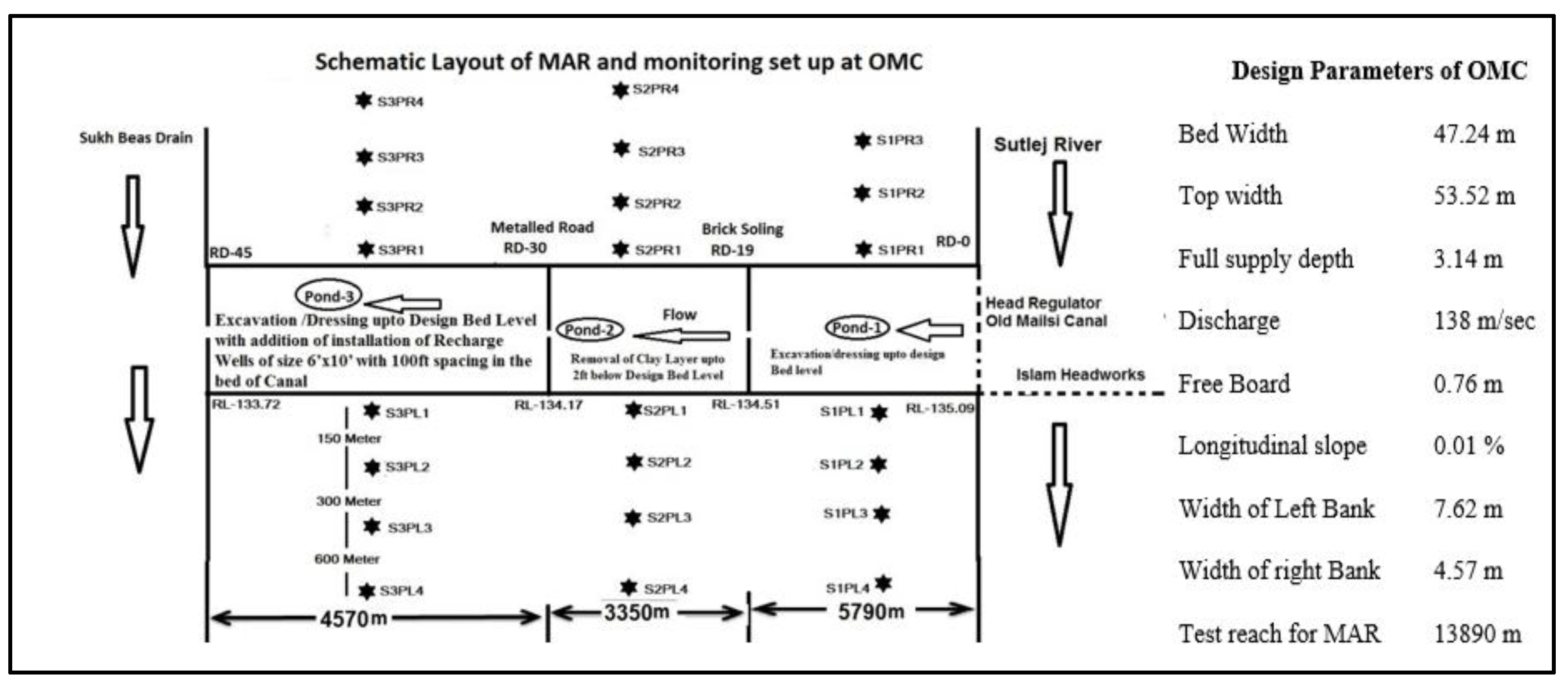
The Figure 2 shows the schematic layout of the proposed MAR site in the OMC. This is the first of its kind large-scale MAR project that aims to augment the supply side for irrigated agriculture and to decrease the rate of decline in groundwater in the Vehari district.

2.3. Developing MARFI

Because MAR is a complex undertaking there is a wide spectrum of parameters which need to be considered while examining the feasibility, which can be broadly considered as technical, social, institutional, financial, economic, legal, and environmental (Arshad et al., 2014). Different aspects of these were addressed by the range of different research approaches used in the larger study.
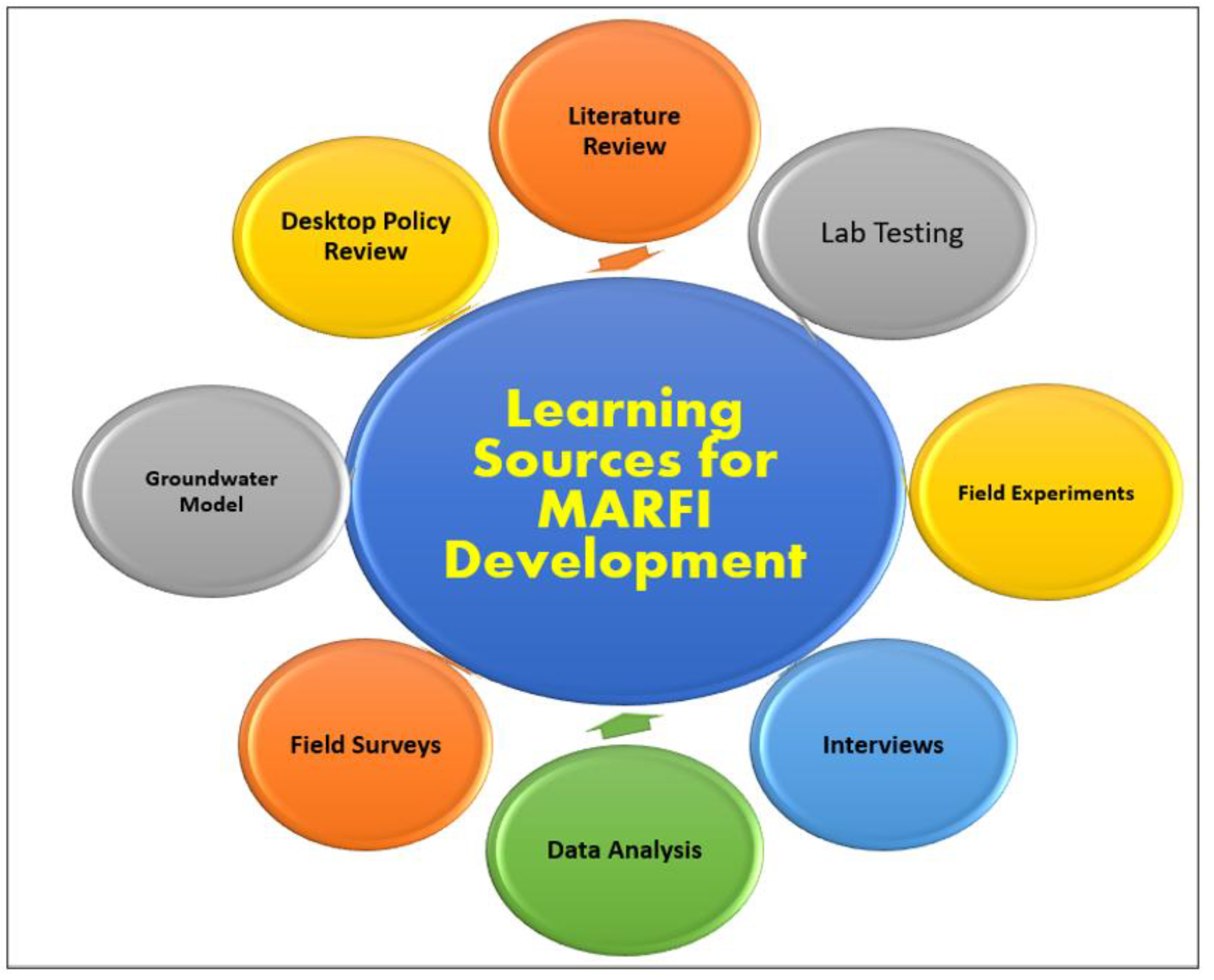
As summarized in Figure 3 the research included a wide range of components including developing and interrogating a groundwater model (MODFLOW) to estimate the water balance components and future response of the aquifer to different scenarios up to 2035 including with and without MAR situations (Zakir-Hassan, Punthakey, et al., 2025); water quality assessments of source water (river/flood) and ambient water (aquifer). Other physical parameters evaluated include the storage potential of the aquifer (Zakir-Hassan et al., 2024), availability of water for MAR, subsurface lithology/soil profile, sediment concentration in source water, and soil chemistry. Field surveys, investigations and sampling were carried out for ground-trothing of data observations and performance geohydrological tests. In addition, literature was reviewed, and a detailed institutional analysis included a desktop-review of major policy documents and semi-structured interviews 31 water experts from different levels, sectors, and categories (Zakir-Hassan, 2023). Groundwater governance is the biggest challenge for its sustainable management and utilization (Zakir-Hassan, Allan, et al., 2023), to address and mitigate this challenge some tools like MARFI are imperative.
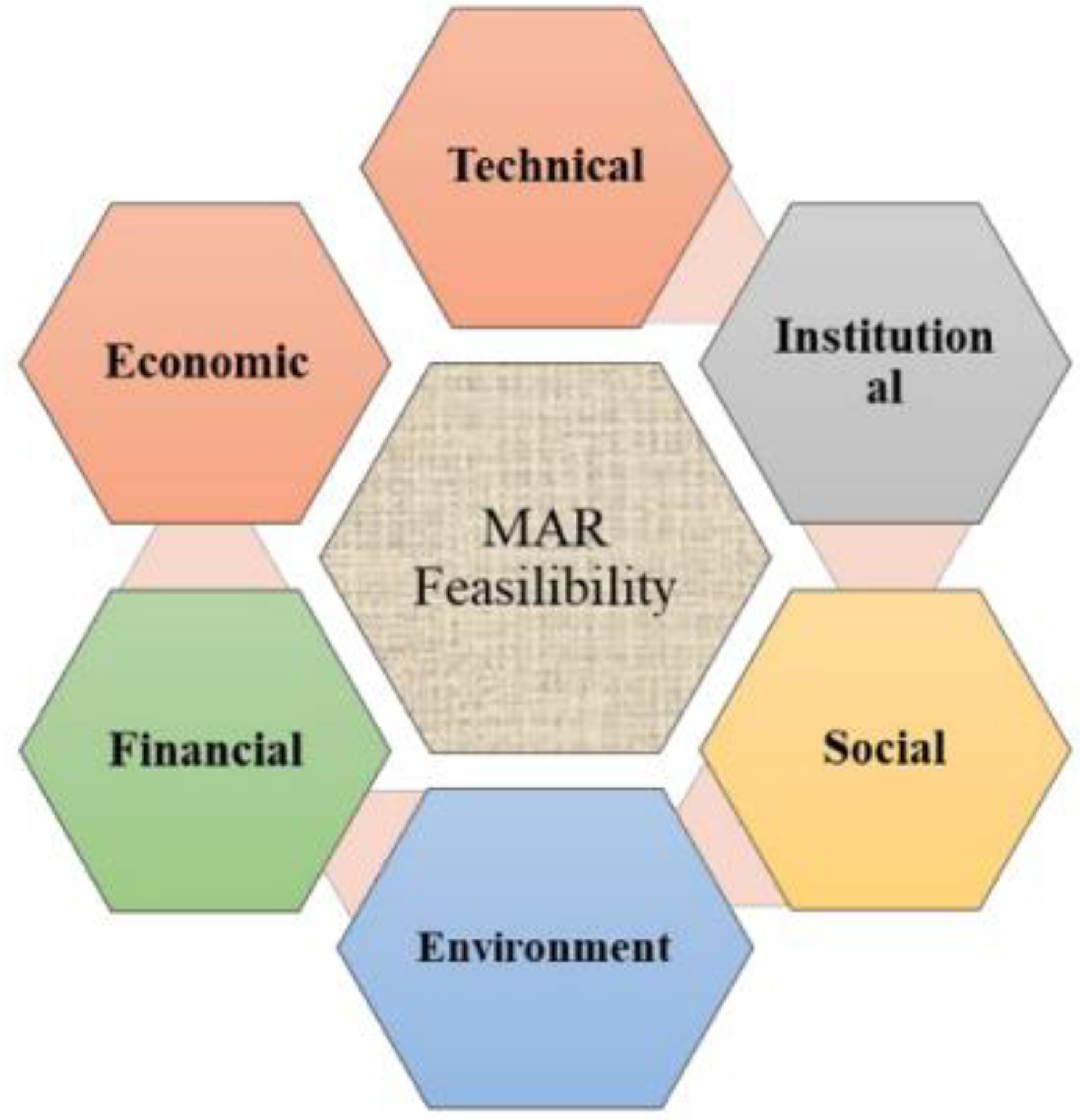
Together these inquiries suggest six main feasibility parameters for consideration before undertaking MAR; technical/physical social, economic, financial, environmental, and the institutional arrangements for these.

Technical/Physical Parameters

Effective MAR relies on suitable physical conditions, and technical capabilities. Physiographic characteristics such as drainage density, surface geology, lineament/topography, rainfall patterns, and land cover/use, soil texture, soil structure have a direct influence on MAR (Vaddadi et al., 2023), with aquifer characteristics playing a vital role in success of any AMR scheme (Tiwari & Yadav, 2023). Technical parameters of importance include the aquifer characteristics supporting infiltration and then recovery, availability of ‘surplus’ water, adequate underground storage potential, and means to transport the surplus water to the target aquifer. These physical and technical parameters can be assessed through field investigations/tests, such as drilling, soil sampling, geophysical investigation, pump test, well logging, permeability test, and infiltration tests, and through analysis of historical hydrological data including frequency analysis of hydrological extreme events, groundwater levels, surface water flows. Laboratory analyses will also be required, including permeability, grainsize distribution and bore logs. The availability of and natural characteristics of the landscape also need consideration. High infiltration rates support easy and fast storage, and whether the flow to recharge can occur by gravity or if some lift is required; these types of parameters influence social and economic considerations.

Social Considerations

MAR requires land and infrastructure, and public or other investment of resources, with benefits such as increased access to water not necessarily distributed equally across the region or province. Projects are more likely to be successfully used and maintained if there is social acceptance or social ‘licence,’ to operate (Gehman et al., 2017), although care is needed with this term and concept paralleling the need for physical investigations, the knowledge and views of various stakeholders should be assessed. Approaches such as Social Impact Assessment (Becker, 2001) can highlight negative and positive impacts ideally the people most impacted by the potential development should have some mechanism to contribute to the assessment and planning. Beyond simple acceptance and licence to operate, there may be opportunities for stakeholders, including individual and community, participation in monitoring operational aspects of the MAR proposal if it went ahead. Social research methods may include surveys, including Participatory Rural Appraisal (Khair et al., 2021) and is best situated in an adaptive, systemic social-ecological framework (Mitchell et al., 2021).

Economic Feasibility

Economic and financial parameters are generally considered together but as financial feasibility deals with the benefits and costs of a particular investment/business, and economic feasibility deals with a range of costs and benefits to the whole economy they should be considered separately. (Maliva, 2014) has provided details of various types of costs and benefits involved in the economic, social, and financial analysis of a MAR project, noting that economic parameters are most often approached through cost benefit analysis (CBA) are generally performed by calculating the net present value (NPV) of the project considering with-project and without-project scenarios. Some economic approaches measuring the willingness to pay (WTP) and willingness to accept compensation (WTA) of all positive and negative impacts of a project. CBAs of MAR schemes also incorporate the uncertainties and risks involved in design and execution of MAR schemes (Govt of Australia, 2008).

Financial Analysis

Financial feasibility differs from the economic feasibility as it deals with the market prices while economic analysis deals with the economic costs and values (Ulibarri et al., 2021; WMO, 2007). The financial analysis of any project includes the monetary components which include the project (rather than general) cost benefit ratio (CBR), internal rate of return (IRR), financial internal rate of return (FIRR), and other financial aspects of MAR. Through a financial feasibility study, the decision-makers arrive at the conclusion that what are the expectations about the success of the project. Such a type of feasibility involves the costs of the project which are generally known/calculated and the benefits of the project which are expected. The costs components involve the capital costs and the maintenance costs after completion of the project. Benefits can be tangible and non-tangible, including the monetary value of water recharged to aquifer, and/or water improved by MAR systems.

Environmental Aspects

There are a range of assessments currently used to consider the impacts of large projects that can be used for MAR to assess positive and negative impacts on groundwater dependent and landscape ecosystems and natural habitats. These include initial environmental impact assessment (IEIA), environmental impact assessment (EIA), and strategic environmental assessment (SEA) (Halytsia et al., 2022; WMO, 2007)...

Institutional Arrangements

Institutional feasibility is a wide term and covers many important parameters which can play significant role in success of a MAR project. ‘Institutions’ in this sense include organizations, policies, rules, laws, norms, traditions, and customs which influence MAR and the legal ¡aspects supporting or hindering the MAR (Mukherji & Shah, 2005). It covers a broad spectrum of important parameters; for example, any policy which supports the MAR, laws and rules which illustrate the legal aspects of MAR, regulatory framework which advocates the governance of MAR related activities. Other important attributes include the local customs, traditions, cultural trends, and religious thoughts which strengthen the MAR objectives and scope. Organizations may include departments, ministries, authorities, divisions, and units, at international, national, provincial, and local level in public sector and the INGDs, NGOs, CBOs, WUAs, FOs in private sectors. Organizational capacity with respect to human resource, infrastructure, computer-based knowledge management systems, and groundwater models prerequisite for the monitoring, modelling and management of the MAR schemes play a vital role in the institutional feasibility of the MAR projects. Resource monitoring, information storage, data retrieval its accessibility and sharing the key factors towards the institutional strength. Organisational norms can also support or oppose the MAR projects and are required to be evaluated for assessing the viability of a MAR project.

2.4. The Design of MARFI

MARFI has been designed by quantifying the different as shown in Figure 4. Different types of feasibilities have been grouped together to come up at a single numerical value for quick and prompt decision making.
All parameters identified above are linked with the feasibility of any MAR project, have been linked together using a rank (R) and weight (W) system Appendix 1 (supplementary material). The R and W have been assigned to each parameter based on the significance and role towards as determined through the multi-disciplinary case study. This system of weights and ranks is flexible having wide range. Assigning ranks is a relative action and no absolute ranks can be assigned to the physical properties related to feasibility of MAR. Allocation of ranks and weights is subjective, and depends upon the wisdom, vision, and expert knowledge of the rankers. The suggested relative ranks between 1 and 5 assigned to parameters are justified in Appendix 2 (supplementary material)
The weights and ranks method is used when there are several factors having variable effects and importance, their combined impact is converted into a single numerical value to make suitable decision about success or failure of any process. This is done by assigning weights and ranks to different parameters and their weighted impact is calculated. (Mondal et al., 2012; Noshin et al., 2018; Zakir-Hassan, Hassan, et al., 2022). The weighted index –MARFI- can be calculated by using Equation (1).
M A R F I = 1 n i = 1 n R i * W i (1)
where, n is the number of factors/parameters (F1 – F24) (n = 24), Ri is the rank of ith parameter, Wi is the weight of ith parameter (F). Keeping in view the ranks and weight system of parameters, a classification of feasibility of MAR schemes based on MARFI has been proposed as given in Table 1.

3. Results and Discussions

The first iteration of MARFI has been applied to the case study site. Although the logic is somewhat circular, doing so is useful to demonstrate how MARFI can be used, and to check its overall congruence. In the sections below some details of the case study are provided, followed by how these are converted in the MARFI to provide a feasibility ‘score’.
The Irrigation Research Institute (IRI) of Punjab Irrigation Department (PID) is executing a MAR project at OMC in in Vehari district, Punjab province of Pakistan, at latitude 29.9719°N, longitude 72.4258°E. The district’s population is approximately 2.9 million, growing annually by over 2 percent annual growth rate, and with the majority relying on agriculture for their livelihood (GOP, 2018b; Sindhu, 2010). The river Sutlej originates from India and enters Pakistan downstream Ganda Singh Wala. The Mailsi Canal had been diverting water from the Sutlej River at Islam Headworks since 1928 but was abandoned in 1960 due to Indus Water Treaty between India and Pakistan (WB, 1962) . It is now referred to as the Old Mailsi Canal (OMC). The OMC is 53.4 km long, and the first 15 Km have been taken for an MAR project. The aim is to use the existing Islam Headworks to divert Sutlej floodwaters into the bed of the canal where 144 recharge wells have been constructed. OMC is about 47 m wide and 4 m deep existing channel, into which the floodwater from Islam Headworks is diverted during rainy/flood season (July-September).
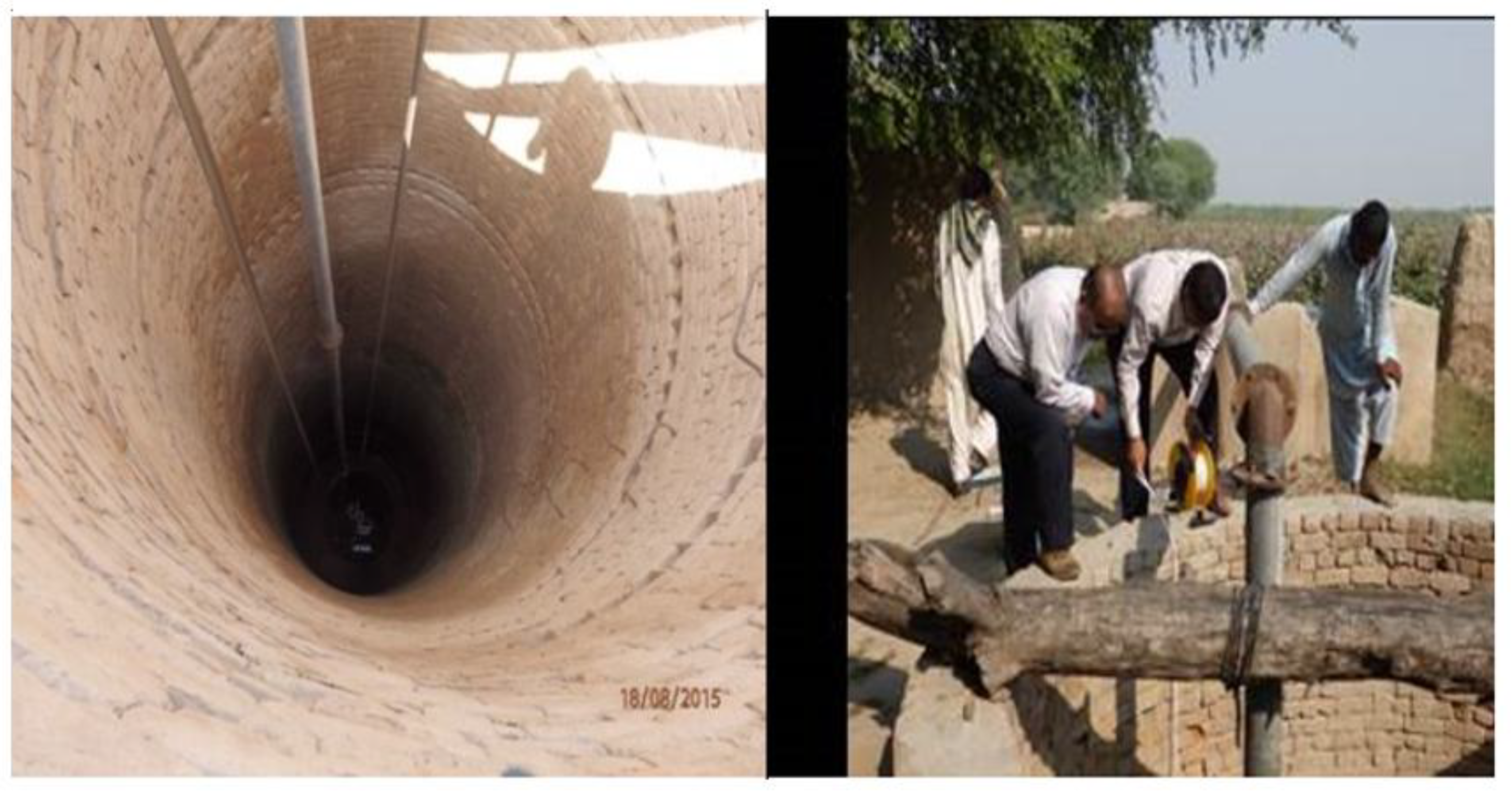
At this site, the land is available except for a small reach which has been occupied illegally by local people. Infrastructure in the shape of the abandoned Old Mailsi Canal (OMC) is also available, which is not being used for any purposes and can be utilized for MAR after rehabilitation. Flood water is available during monsoon period. Groundwater levels are depleting at about 0.5 to 1 m per year (Zakir-Hassan, Shabir, et al., 2023), increasing the cost of groundwater extraction, an example is shown in Figure 5.
In addition to agricultural purposes groundwater is being used for drinking, industrial, livestock, fish-farming and other miscellaneous functions. Groundwater quality is also a challenge. Groundwater is not suitable for drinking purposes, how is fit for irrigation uses (Zakir-Hassan, Baumgartner, et al., 2025; Zakir-Hassan, Shabir, et al., 2025). Sediment loads in the floodwater are higher as compare to normal flows in the river (IRI, 2023). The topography of the study area is very mild i.e., 0.02% with suitable geologic characteristics having sandy aquifer after few meters’ depth. Local people are generally supportive of the MAR project as the cost of extraction of groundwater has increased due to falling water levels.
It this case study improved water quality has been anticipated to have a positive environmental impact on human and crops health. There were no adverse impacts of the OMC MAR projects identified as per environmental impact assessment (EIA) conducted by (WAPDA, 2009) as the OMC was an existing canal.
The anticipated benefits of the project include increase in crop production, opportunities for increasing area under high value cash crops, improved drinking water and other household needs of the community, improved financial conditions of the farmers by income from raising of livestock and livestock products, increased volume of water in the aquifer, reduced pumping cost due rise in water table and tax receipts of the government in the form of water rates and income tax will increase due to higher cropping intensities. The project has created some jobs for labour during execution and in the long run employment opportunities will be created in agriculture sector (Hassan et al., 2016). The Water and Power Development Authority carried out the economic and financial analysis of this MAR project and the estimated values of different parameters include i) Economic Internal Rate of Return (EIRR) = 23%; Financial Internal Rate of Return (FIRR) = 13.71%; Benefit Cost Ratio (BCR) = 1.82; and opportunity cost of capital = 12%. They noted that the project is economically viable as it yields EIRR higher than the opportunity cost of capital, and BCR is greater than 1. They further reported that the project is financially viable as FIRR is 13.71%. (IRI, 2019; WAPDA, 2009)
While there were some short-term impacts on livestock during the construction works the project does not pose any long-lasting significant threat to the existing highly modified environment. To mitigate the few trees removed from the bed of canal, one percent of the project cost has been earmarked for tree planation at the project site (IRI, 2019). Another, minor adverse impact for the community is disturbance in village roads and water courses which were crossing the OMC. Culverts have been constructed on such points to facilitate the local community.
Results from the water analysis have indicated that groundwater as well as the river water are suitable for irrigation use. Overall, it has been noted that the project will not have any sever threats or long-lasting adverse impacts; however minor impacts have been safeguarded by ensuring mitigation measures.
Institutionally the National Water Policy (GoP, 2018a), Punjab Water Policy (GoPb_PID, 2018), and Punjab Water Act 2019 are the major legal instruments which cover and support the MAR. Rules and regulations are also being framed in this context. As per classification of the projects under (GoP_EPA, 1997), the project has been classified as “Category A” (WAPDA, 2009).
These various factors assigned Ranks (1 to 5) and weights (10 to 100) at the case study site are listed in Table 2, which shows the application of MARFI at OMC.
Different ranks and weights have been assigned to all factors, after due examination, deliberation, and assessment as per case site conditions at OMC project. Detailed calculations on MARFI for OMC project are given in Table 3. It is an example of application of the MARFI to the study area with specific site conditions. Equation 1 has been applied to the case study site.
The calculated MARFI for the MAR project of Old Mailsi Canal is 282, which suggests the project has overall feasibility.

4. Conclusions and Recommendations

MAR has potential to contribute to supply side management of groundwater, and thus to enhanced water security, not just in Pakistan but in all areas reliant on groundwater for continued survival. However, MAR undertaken at scales that can make a major contribution is resource heavy, and not without risks. This study has shown how multiple parameters can be combined to aid decision making about whether to implement a MAR project The MARFI presented here is a first attempt. Because MARFI has been developed and tested in a real case study, it goes beyond theory into something that could be effective in the field. MARFI is particularly suited for large scale MAR projects designed for replenishing aquifers which are heavily exploited for irrigation, which is a significant emerging challenge in South Asia. The methodology developed is an innovation which can be applied for any MAR project in Pakistan, the South Asia region, and globally because the details of the fields and weighting decisions can be varied over time and across regions.
Assessing the feasibility of any MAR scheme is very complex, laborious, costly, and time consuming exercise. Before investing the huge amounts for replenishment of the stressed aquifers through MAR; detailed investigations including drilling at site, sampling, and lab analysis are required. The hydrogeologists always look for a framework to declare any site suitable for detailed investigations and design of a MAR project. Under these circumstances quick assessment of any site is imperative before making heavy financial and HR commitments for MAR systems. The methodology developed under this research is a quick check-list arranged under a framework which guides the decision makers about the fate of a site before going into detailed design and construction for any MAR intervention. The index, MARFI, designed and introduced here provides a vital role in planning and designing any MAR project. This index can be used widely in Indus River Basin in Pakistan and other regions as well where MAR is gaining importance for combating the challenges of water scarcity.

Data Availability Statement

All the data pertaining to the study has been made part of the paper, however, any requests for further information, clarification, comments can be referred to the corresponding author.

Acknowledgments

This paper is part of a PhD research study financially supported by the Charles Sturt University (CSU) Australia through AGRTP Scholarship; and Gulbali Institute CSU Australia has supported financially for preparation and publication of the article. Both supports are duly acknowledged. Support extended by Punjab Irrigation Department (PID) for provision of information/data and access to MAR case study site for this research is also acknowledged.

Conflicts of Interest

The first author is an employee of IRI in PID, who was on study leave from the department while conducting this study as Part of PhD thesis research at Charles Sturt University Australia. Other authors declare no conflict of interest.

Note

Views expressed in the article are those of the authors, and do not reflect the point of view of any organization/department.

References

  1. Ahirwar, S., M. S. Malik, R. Ahirwar, and J. P. Shukla. 2020. Identification of suitable sites and structures for artificial groundwater recharge for sustainable groundwater resource development and management. Groundwater for Sustainable Development 11, 100388. [Google Scholar] [CrossRef]
  2. Arshad, M., J. Guillaume, and A. Ross. 2014. Assessing the Feasibility of Managed Aquifer Recharge for Irrigation under Uncertainty. Water 6, 9: 2748–2769. [Google Scholar] [CrossRef]
  3. Ashraf, M. 2022. Delineating Climatic Causes of Floods 2022: The Way Forward. Hilal. Available online: https://www.hilal.gov.pk/eng-article/detail/NjY1MA==.html.
  4. Becker, H. A. 2001. Social impact assessment. European Journal of Operational Research 128, 2: 311–321. [Google Scholar] [CrossRef]
  5. Bhatti, M. T., A. A. Anwar, and M. Aslam. 2017. Groundwater monitoring and management: Status and options in Pakistan. Computers and Electronics in Agriculture 135, 143–153. [Google Scholar] [CrossRef]
  6. Dashora, Y., P. Dillon, B. Maheshwari, P. Soni, H. K. Mittal, R. Dashora, and P. Katara. 2019. Hydrologic and cost benefit analysis at local scale of streambed recharge structures in Rajasthan (India) and their value for securing irrigation water supplies. Hydrogeology journal 27, 6: 1889–1909. [Google Scholar] [CrossRef]
  7. Diedhou, M., S. Ndoye, H. Celle, S. Faye, S. Wohnlichs, and P. Le Coustumer. 2023. Hydrogeochemical Appraisal of Groundwater Quality and Its Suitability for Drinking and Irrigation Purposes in the West Central Senegal. Preprints, 2023020013. [Google Scholar] [CrossRef]
  8. Dillon, P., P. Stuyfzand, T. Grischek, M. Lluria, R. D. G. Pyne, R. C. Jain, and M. Sapiano. 2018. Sixty years of global progress in managed aquifer recharge. Hydrogeology journal 27, 1: 1–30. [Google Scholar] [CrossRef]
  9. El Moneam, M. A. 2022. Review of artificial recharge prospects for augmentation of groundwater in Egypt: A case study of El Bustan extension area. Ain Shams Engineering Journal. [Google Scholar] [CrossRef]
  10. Fatima, S., I. Hussain, A. Rasool, T. Xiao, and A. Farooqi. 2018. Comparison of two alluvial aquifers shows the probable role of river sediments on the release of arsenic in the groundwater of district Vehari, Punjab, Pakistan. Environmental Earth Sciences 77, 10. [Google Scholar] [CrossRef]
  11. Gehman, J., L. M. Lefsrud, and S. Fast. 2017. Social license to operate: Legitimacy by another name? Canadian Public Administration 60, 2: 293–317. [Google Scholar] [CrossRef]
  12. Giordano, M. 2009. Global Groundwater? Issues and Solutions. Annual Review of Environment and Resources 34, 1: 153–178. [Google Scholar] [CrossRef]
  13. Glaude, R., N. Simon, P. Orban, and S. Brouyère. 2023. Chemical characterization of urban waters aimed for managed aquifer recharge in the Hesbaye chalk aquifer (Liège, Belgium). EGU General Assembly 2023, Vienna, Austria, 24–28 April. EGU23-2642. [Google Scholar] [CrossRef]
  14. GoP. 2018a. National Water Policy 2018: Ministry of Water Resources, Government of Pakistan. Islamabad: Available online: https://mowr.gov.pk/SiteImage/Misc/files/National%20Water%20Policy.pdf.
  15. GOP. 2018b. Pakistan Bureu of Statisctics, Governmnet of Pakistan. Available online: www.pbs.gov.pk/.
  16. GoP_BoS. 2019. Vehari district at a glance: Pakistan Bureu of Statistiics, Govt of the Pakistan. Islamabd, Pakistan. [Google Scholar]
  17. GoP_EPA. 1997. Pakistan Environmental Protection Act (PEPA) 1997. Retrieved from. [Google Scholar]
  18. GoPb_P, D. 2009. Multiple Indicator Cluster Survey (MICS) Punjab 2007-8, Volume 25-District Vehari. Planning and Dvelopment Deptt, Bureu of Statistics, Govt of the Punjab, Lahore, Pakistan.
  19. GoPb_PID. 2018. Punjab Water Policy; December 2018: Irrigation Department, Govt of the Punjab, Lahore, Pakistan. Available online: https://irrigation.punjab.gov.pk/.
  20. Govt of Australia. 2008. The feasibility of managed aquifer recharge (MAR) for agriculture: Waterlines Occasional Paper, National Water Commission, Govt of Australia, Retrieved from.
  21. Halytsia, O., M. Vrachioli, K. Janik, S. Sitek, G. Wojtal, A. Imig, and J. Sauer. 2022. Assessing Economic Feasibility of Managed Aquifer Recharge Schemes: Evidence from Cost-benefit Analysis in Poland. Water Resources Management. [Google Scholar] [CrossRef]
  22. Hassan, G. Z., G. Shabir, and F. R. Hassan. 2016. Groundwater management through artificial recharge - a potential for jobs: pp 87-108, on World Water Day. Pakistan Engineering Congress, Lahore, Pakistan. [Google Scholar]
  23. IRI. 2009. Research Studies on Artificial Recharges of Aquifer in Punjab: Research Report No IRR-Phy/552, Irrigation Research Institute (IRI) Government of the Punjab, Irrigation Department. Lahore, Pakistan. [Google Scholar]
  24. IRI. 2015. PC-1 on Recharge of aquifer for groundwater management in Punjab: Irrigation Research Institute (IRI). Punjab Irrigation Deptt: Lahore, Pakistan. [Google Scholar]
  25. IRI. Recharge of aquifer for groundwater management in Punjab (2016-2019): Report No IRR-GWMC/121, Groundwater Management Cell, Irrigation Reserach Institute (IRI), Irrigation Department, Lahore, Pakistan. Retrieved from.
  26. IRI. 2023. Sedimnet study at Islam Headworks: IRI Report No. IRI/Phy/SM/167 March 2023.
  27. Khair, S., M. Ashfaq, A. Ali, S. Akhtar, T. Mangan, and C. Allan. 2021. Participatory Rural Appraisal: starting the co-inquiry into groundwater and livelihoods: Report No 148, Institute for Land Water and Society, Charles Sturt University, Albury, NSW 2640, Australia. Available online: https://www.csu.edu.au/research/ilws/publications/ilws-reports/2021-reports/PRA-ACIAR-Report-148.pdf https://www.csu.edu.au/research/ilws/publications/ilws-reports/2021-reports/PRA-ACIAR-Report-148.pdf.
  28. Khalid, S., M. Shahid, Natasha, A. H. Shah, F. Saeed, M. Ali, and C. Dumat. 2020. Heavy metal contamination and exposure risk assessment via drinking groundwater in Vehari, Pakistan. Environ Sci Pollut Res Int 27, 32: 39852–39864. [Google Scholar] [CrossRef] [PubMed]
  29. Madhavan, S., S. R. Kolanuvada, V. Sampath, P. D. Roy, P. Moorthy, L. Natarajan, and L. Chokkalingam. 2023. Assessment of groundwater vulnerability using water quality index and solute transport model in Poiney sub-basin of south India. Environ Monit Assess 195, 2: 272. [Google Scholar] [CrossRef]
  30. Maheshwari, B. 2023. Edited by H. Ojha and et al. Managing the Invisible Under Changing Climate: A Participatory Approach for Sustaining Groundwater Use. In Climate Risks to Water Security; Palgrave Studies in Climate Resilient Societies. Springer International Publishing: pp. 61–87. [Google Scholar] [CrossRef]
  31. Maliva, R. 2014. Economics of Managed Aquifer Recharge. Water 6, 5: 1257–1279. [Google Scholar] [CrossRef]
  32. Mitchell, M., C. Allan, J. F. Punthakey, C. M. Finlayson, and M. R. Khan. 2021. Edited by M. A. Watto, M. Mitchell and S. Bashir. Improving water management in Pakistan using social-ecological systems research. In Water resources of Pakistan: Issues and impacts. Cham: Springer: pp. 249–271. [Google Scholar] [CrossRef]
  33. Mondal, M., G. S. Bhunia, and P. K. Shit. 2012. Vulnerability analysis of embankment breaching – a case study of Moyna drainage basin in Purba Medinipur West Bengal India. International Journal of Geology, Earth and Environmental Sciences 2, 3: 89–102. [Google Scholar]
  34. Mukherji, A., and T. Shah. 2005. Groundwater socio-ecology and governance: a review of institutions and policies in selected countries. Hydrogeology journal 13, 1: 328–345. [Google Scholar] [CrossRef]
  35. Muzammil, M., A. Zahid, and L. Breuer. 2020. Water Resources Management Strategies for Irrigated Agriculture in the Indus Basin of Pakistan. Water 12, 1429. [Google Scholar] [CrossRef]
  36. Noshin, S., M. Alam, S. Sadiq, and S. J. Mandokhail. 2018. Stability Analysis of Flood Bunds: A Study on Geotechnical Health Evaluation of Embankments. IOP Conf. Ser.: Mater. Sci. Eng. 414, 012035. [Google Scholar] [CrossRef]
  37. Pahl-Wostl, C., C. Vörösmarty, A. Bhaduri, J. Bogardi, J. Rockström, and J. Alcamo. 2013. Towards a sustainable water future: shaping the next decade of global water research. Current Opinion in Environmental Sustainability. [Google Scholar]
  38. Punthakey, J. F., M. Khan, R. Niaz Ahmad, M. Riaz, M. Javed, G. Z. Hassan, and J. Blackwell. 2016. Optimising canal and groundwater management to assist water user associations in maximizing crop production and managing salinisation in Australia and Pakistan: Australian Centre for International Agricultural Research (ACIAR); Research Out put. In Charles Sturt University, Australia. Retrieved from. [Google Scholar]
  39. Qureshi, A. S. 2015. Improving food security and livelihood resilience through groundwater management in Pakistan. Global Advanced Research Journal of Agricultural Science: Vol. 4, 10, pp. 687–710. Available online: http://garj.org/garjas/home.
  40. Qureshi, A. S. 2018. Edited by A. Mukherjee. Challenges and Opportunities of Groundwater Management in Pakistan. In Groundwater of South Asia. pp. 735–757. [Google Scholar]
  41. Qureshi, R. H., and M. Ashraf. 2019. Water security issues of agriculture in Pakistan: Pakistan Academy of Sciences (PAS). Islamabad, Pakistan: pp. 41., pp. 41. [Google Scholar]
  42. Reinecke, R., A. Wachholz, S. Mehl, L. Foglia, C. Niemann, and P. Doll. 2020. Importance of Spatial Resolution in Global Groundwater Modeling. Ground Water 58, 3: 363–376. [Google Scholar] [CrossRef]
  43. RockstrÖm, J., W. Steffen, K. Noone, Å. Persson, S. F. Chapin, E. F. Lambin, and U. Svedin. 2009. A safe operating space for humanity. Nature Vol 461. [Google Scholar] [CrossRef] [PubMed]
  44. Sindhu, A. S. 2010. District Vehari: Hazard, vulnerability and development profile. : Rural Development Policy Institute (RDPI): Islamabad, Pakistan. [Google Scholar]
  45. Singh, L. K., M. K. Jha, and V. M. Chowdary. 2017. Multi-criteria analysis and GIS modeling for identifying prospective water harvesting and artificial recharge sites for sustainable water supply. Journal of Cleaner Production 142, 1436–1456. [Google Scholar] [CrossRef]
  46. Tiwari, S., and B. K. Yadav. 2023. Edited by M. Sherif, V. P. Singh, A. Sefelnasr and M. Abrar. Factors Influencing the Site Selection Criteria for Efficient Aquifer Storage and Recovery (ASR) System in Saline Regions. In Water Resources Management and Sustainability: Solutions for Arid Regions. Cham: Springer Nature Switzerland: pp. 219–229. [Google Scholar]
  47. Ulibarri, N., N. Escobedo Garcia, R. L. Nelson, A. E. Cravens, and R. J. McCarty. 2021. Assessing the Feasibility of Managed Aquifer Recharge in California. Water Resources Research 57, 3: e2020WR029292. [Google Scholar] [CrossRef]
  48. Vaddadi, N., C. Vansarochana, and V. Raghavan. 2023. Identification of Potential Groundwater Recharge Zones Using GIS Based Multi-Criteria and AHP Technique: A Case Study of Pune City, Western Maharashtra. Environment and Natural Resources Journal 21, 3: 1–13. [Google Scholar] [CrossRef]
  49. WAPDA. 2009. Feasibility report for underground storage of flood water: Water and Power Development Authority (WAPDA), Lahore, Pakistan. Retrieved from. [Google Scholar]
  50. Watto, M. A., and A. W. Mugera. 2016. Groundwater depletion in the Indus Plains of Pakistan: imperatives, repercussions and management issues. International Journal of River Basin Management 14, 4: 447–458. [Google Scholar] [CrossRef]
  51. WB. 1962. Indus Waters Treaty 1960-An agrement between India and Pakistan: United Nations-Treat Series No 6030: The World Bank Retrieved from. Available online: https://www.worldbank.org/en/region/sar/brief/fact-sheet-the-indus-waters-treaty-1960-and-the-world-bank.
  52. WB. 2019. Opportunities-for-a-Clean-and-Green-Pakistan-A Country Environmental-Analysis: The World Bank, Washington DC 20433. Retrieved from. [Google Scholar]
  53. WMO. 2007. Economic Aspects of Integrated Flood Management: World Meteorological Organization, Switzerland. Available online: https://www.floodmanagement.info/floodmanagement/wp-content/uploads/2020/06/Economic_Aspects_of_IFM_En.pdf.
  54. Zakir-Hassan, G. 2023. Improving Sustainable Groundwater Management: A Case Study of Managed Aquifer Recharge in Punjab Pakistan. PhD thesis, 2023, School of Agricultural, Environmental, and Veterinary Sciences Charles Sturt University, Australia. [Google Scholar]
  55. Zakir-Hassan, G., S. Akhtar, J. F. Punthakey, and G. Shabir. 2022. Assessnment of groundwater potential and threats for its sustainable use, case study of Greater Thal Canal area from Punjab Pakistan. Water Productivity Journal 2, 4: 53–71. [Google Scholar] [CrossRef]
  56. Zakir-Hassan, G., C. Allan, J. F. Punthakey, L. Baumgartner, and M. Ahmad. 2023. Edited by M. Ahmad. Groundwater Governance in Pakistan: An Emerging Challenge. In Water Policy in Pakistan: Issues and Options. Cham: Springer International Publishing: pp. 143–180. [Google Scholar]
  57. Zakir-Hassan, G., L. Baumgartner, C. Allan, J. F. Punthakey, and H. Rasheed. 2025. Risk Assessment of Heavy Metals in Groundwater for a Managed Aquifer Recharge Project. Water 17, 21. [Google Scholar] [CrossRef]
  58. Zakir-Hassan, G., A. Hassan, and G. Shabir. 2022. Evaluation of Impact of Soil Properties on Strength of Flood Levees in Indus River Basin of Pakistan. Australian Journal of Engineering and Innovative Technology 4, 3: 52–64. [Google Scholar] [CrossRef]
  59. Zakir-Hassan, G., J. F. Punthakey, C. Allan, and L. Baumgartner. 2025. Integrating Groundwater Modelling for Optimized Managed Aquifer Recharge Strategies. Water 17, 14. [Google Scholar] [CrossRef]
  60. Zakir-Hassan, G., J. F. Punthakey, G. Shabir, and F. R. Hassan. 2024. Assessing the potential of underground storage of flood water: A case study from Southern Punjab Region in Pakistan. Journal of Groundwater Science and Engineering 12, 4: 387–396. [Google Scholar] [CrossRef]
  61. Zakir-Hassan, G., G. Shabir, and S. Akhtar. 2023. Precision Agriculture and Groundwater- Challenges and Options for Sustainability in Indus Basin of Pakistan. Paper presented at the Internnational Conference on Precision and Sustainable Agriculture under Climate change, (IPSAC-2023), Khawja Fareed University of Engineering and Information Technology; Rahim Yar Khan Pakistan. [Google Scholar]
  62. Zakir-Hassan, G., G. Shabir, F. R. Hassan, and S. Akhtar. 2022. Groundwater-food security nexus under changing climate-historical prospective of Indus basin irrigation system in Pakistan. Int. J. Social Science Humanities Research 5, 10: 28–38. [Google Scholar] [CrossRef]
  63. Zakir-Hassan, G., G. Shabir, F. Yasmeen, and F. R. Hassan. 2025. Assessment of Groundwater quality- A case study of a groundwater recharge project in Vehari Pakistan. ICON Journal of Engineering Applications of Artificial Intelligence 1, 3: 27–38. [Google Scholar]
  64. Zakir-Hassan, G., G. Shabir, F. Yasmin, and M. A. Ghaffar. 2022. Environmental challenges for groundwater-irrigated agriculture in Punjab Pakistan. Paper presented at the International Conference on Recent Trends in Environmental Sustainability, 21-23 February. [Google Scholar]
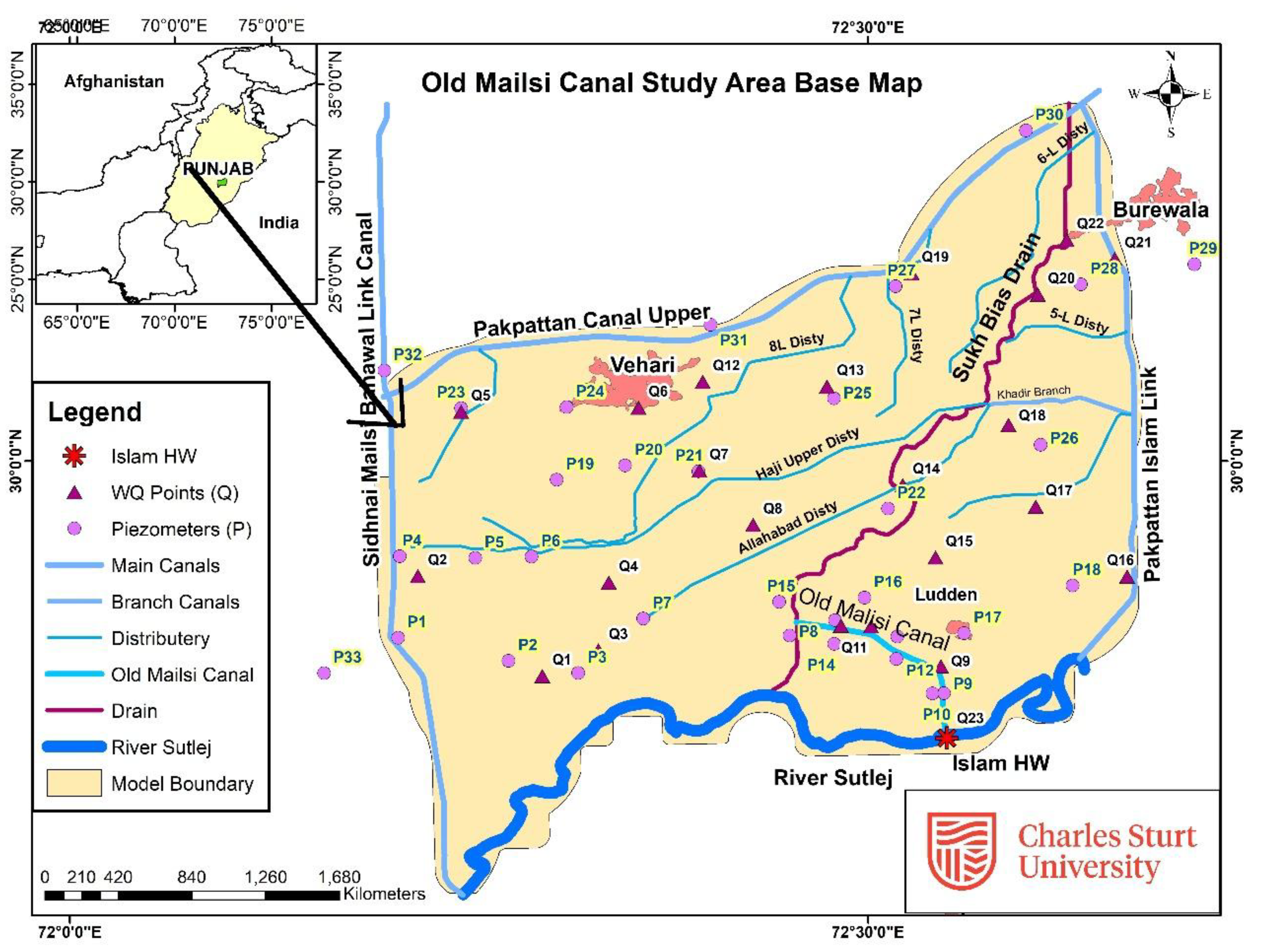
Figure 1. Study area map showing major features and boundaries.
Preprints 183854 g001
Figure 2. Schematic Layout for large scale MAR in Old Mailsi Canal.
Preprints 183854 g002
Figure 3. Learning sources for development of MARFI.
Preprints 183854 g003
Figure 4. Feasibility framework of a typical MAR project-.
Preprints 183854 g004
Figure 5. Depleted groundwater levels in district Vehari Punjab Pakistan (Zakir-Hassan, 2023).
Preprints 183854 g005
Table 1. Proposed classification of MARFI.
MARFI Value Class of MAR
400-500 Highly Feasible
200-400 Feasible
100-200 Low feasible
10-100 Not feasible
Table 2. Application of MARFI to case study of MAR at Old Mailsi Canal in Punjab Pakistan.
ID Factor/parameter (F)
with description
Ranks (R)
(Most important-R=5; least important-R =1)
Weights (W)
Maximum = 100
Minimum = 10
Weights assigned for OMC MAR project.
F1 Geophysical Conditions (Land slope, topography-flow possible under gravity or required lift, infrastructure, site accessibility) 4
  • Accessible with gravity flow: 100
  • Difficult to access, but gravity flow possible: 80.
  • Very remote/hard area but gravity flow possible: 50.
  • Hard area and lift/pump required: 10
90
F2 Subsurface Lithology/ Soil Texture and structure
(Texture -sandy, clayey, silty, mixed; infiltration rate-low or high; structure- well graded or poorly graded)
4
  • Sand, poorly graded with high infiltration rate: 100.
  • Sandy with high infiltration rate, with normal gradation: 100
  • Clayey sand with moderate infiltration rate: 80
  • Sandy clay with low infiltration rate: 40
  • Sand-silt-clay mixed with very low infiltration rate: 30.
  • Silty with impermeable layer, well graded: 10
80
F3 Aquifer Parameters/type
(Aquifer type, transmissivity, porosity)
3
  • Highly Transmissive: 100
  • Medium Transmissive: 50
  • Low Transmissive, unconfined: 30
  • Low Transmissive and confined aquifer: 10
70
F4 Water Availability
(Historic surplus water,
quantity, frequency, duration, Source of water rainfall, floodwater, wastewater, seawater)
5
  • Adequate volume of water is available: 100.
  • Medium availability: 50
  • Low water availability: 20
  • No water available: 10
90
F5 Water Recovery
(Option for aquifer storage and recovery)
2
  • Stored water can be recovered as, when and where required: 100.
  • Partial recovery: 50
  • Poor recovery: 10
80
F6 Suitable Recharge Method
(Infiltration, injection, spreading)
1
  • All methods are suitable: 100.
  • Only infiltration is possible: 50.
  • Injection is the only way: 10
70
F7 Sediments
(Physical and chemical properties like, suspended load in source water, chances of clogging, sediment load, concentration, sediment size, sediment type, turbidity level)
3
  • Low sediment concentration, less chances of clogging: 100
  • Medium chances: 50
  • High chances of clogging (more concentration of sediments, more silt load, natural filtration possible): 30
  • Heavy silted water, high chances of clogging, not possible to use without costly artificial filtration: 10
70
F8 Underground Storage Potential
(How much water can be stored in aquifer)
5
  • Sufficient potential: 100
  • Medium Potential: 50
  • Low Potential: 10
100
F9 Groundwater Depletion Rate
(Historical water table depletion trends, annual depletion rates)
4
  • Highly depleted: 100
  • Medium depletion: 50
  • Low depletion: 30
  • Waterlogging: 10
100
F10 Climatic Conditions
(Rainfalls, floods, droughts)
2
  • More droughts, low rainfall, low floods: 100
  • Moderate: 50
  • No droughts, high rains, and floods: 10
F11 Quality of Source Water
(Quality of source water to be recharged into the aquifer- chemical, biological, physical)
4
  • Suitable for irrigation/drinking: 100
  • Marginally fit for irrigation/marginally fit for drinking: 80
  • Marginally fit for irrigation/not fit for drinking: 50
  • Not fit for irrigation/drinking: 10
90
F12 Quality of Sink/target Water
(What is quality of host water in the aquifer- physical, chemical, and biological quality for different uses)
4
  • Suitable for irrigation/drinking: 100
  • Marginally fit for irrigation/marginally fit for drinking: 80
  • Marginally fit for irrigation/not fit for drinking: 50
  • Not fit for irrigation/drinking: 10
80
F13 Resultant Water Quality
(Quality of water in aquifer after recharge- Physical, chemical, biological quality for different uses)
3
  • Suitable for irrigation: 100
  • Marginally fit: 50
  • Not suitable: 10
70
F14 Environmental Impacts
(Rehabilitation of wetlands, groundwater dependent ecosystems, improvement in value of the place, improved landscape, cutting of trees, temperature controlled, new plants, greenery, temperature control, Recreational value addition, EIA, IEE, loss of flora and fauna, improvement of Aesthetic value of place)
4
  • Positive impacts/environmentally sound: 100
  • Some positive Impacts: 70
  • No impacts (positive or negative): 50
  • Some adverse impacts: 30
  • Adverse impacts: 10
80
F15 Soil Chemistry
(Chemistry of soil /vadose zone through which recharge water will flow before reaching the saturated zone/groundwater. It might be saline, sodic, or good soil. For example, soil pH, Ec)
3
  • Good soil: 100
  • Medium good: 50
  • Saline or Sodic: 10
80
F16 Monitoring System for MAR
(Monitoring system is in place or not- as no management without monitoring, pre and post monitoring)
3
  • Adequate monitoring system in place: 100
  • Partial system in place: 50
  • Poor or no system: 10
60
F17 Organizational Capacity
(Capacity of agencies for implementation, adequate HRs)
4
  • Adequate capacity: 100
  • Medium capacity: 50
  • Poor capacity: 10
60
F18 Policy and Legal Support
(Legal aspects including policy, regulatory framework, Laws, Rules, supporting MAR). b
3
  • Policy supports MAR regulation in place with implementation framework = 100
  • Only policy- no regulation or implementation: 50
  • Policy regulation exist but poor implementation: 30.
  • Not supported by policies and no regulatory framework = 10
70
F19 Social Aspects
(Social license, cultural/social considerations, improved livelihood; displacement of people, plants, animals; alternate land for community, livelihood, water is life, business of opportunities, creation of jobs,
drinking water for animals,)
Increase Crop Production
Opportunities for increasing area under high value cash crops.
4
  • Community willing/support MAR, benefits for community: 100
  • Some positive impacts: 70
  • Partially willing positive and adverse impacts more or less are: 50.
  • Least willing/no ownership: 10
90
F20 Demand for Groundwater
(Irrigation, and others- like drinking, livestock, industries, aquaculture)
3
  • High demand for all sectors: 100
  • Moderate demand/limited uses: 50
  • Medium demand/only few uses: 30
  • Low demand/ not much use: 10
90
F21 Economic Analysis
Cost Benefit Analysis (CBA), anticipated returns on the investment (ROI), Economic internal rate of return-EIRR and other parameters, increase in cropped area, more crops, manpower required, economic value of water through MAR0, Contribution to GDP)
5
  • Economically viable and feasible: 100
  • Medium feasibility/viability: 50
  • Low viability/feasibility: 30
  • Not feasible: 10
70
F22 Financial Viability
(Cost benefit ratio-CBR, Financial internal rate of return-FIRR, reduction in pumping cost,)
5
  • Financially viable: 100
  • Not viable: 10
70
F23 Site/Land Availability
(Land for construction of recharging system, Alternate use of land)
5
  • Land available -state land = 100
  • Land donated by community= 80
  • Land to be purchased: 30.
  • Suitable Land not available: 10
90
F24 Funding
(Priority of the Govt for funding, funds available or not)
2
  • Top priority: 100
  • Moderate: 50
  • Least priority: 10
60
Table 3. Calculation of MARFI for MAR project at OMC.
Factor ID Old Mailsi Canal Ranks (R) Old Mailsi Weights (W) R x W
F1 4 90 360
F2 4 80 320
F3 3 70 210
F4 5 90 450
F5 2 80 160
F6 1 70 70
F7 3 70 210
F8 5 100 500
F9 4 100 400
F10 2 90 180
F11 4 80 320
F12 4 70 280
F13 3 70 210
F14 4 80 320
F15 3 80 240
F16 3 60 180
F17 4 60 240
F18 3 70 210
F19 4 90 360
F20 3 90 270
F21 5 70 350
F22 5 70 350
F23 5 90 450
F24 2 60 120
Sum 6760
n = 24
MARFI = 282
Disclaimer/Publisher’s Note: The statements, opinions and data contained in all publications are solely those of the individual author(s) and contributor(s) and not of MDPI and/or the editor(s). MDPI and/or the editor(s) disclaim responsibility for any injury to people or property resulting from any ideas, methods, instructions or products referred to in the content.
Copyright: This open access article is published under a Creative Commons CC BY 4.0 license, which permit the free download, distribution, and reuse, provided that the author and preprint are cited in any reuse.
Prerpints.org logo

Preprints.org is a free preprint server supported by MDPI in Basel, Switzerland.

Subscribe

Disclaimer

Terms of Use

Privacy Policy

Privacy Settings

© 2025 MDPI (Basel, Switzerland) unless otherwise stated