

Submitted:
04 November 2025
Posted:
06 November 2025
You are already at the latest version
Abstract
Academic health systems are increasingly recognized as environments where education, research, and clinical practice intersect to drive innovation in patient care. Yet, the potential of design-led methods to enable such integration is still emerging within academic discourse. This paper presents a case study of the Dubai Academic Health Corporation’s initiative to embed design thinking and patient journey mapping within the medical curriculum at the Mohammed Bin Rashid University of Medicine and Health Sciences. Through a six-week innovation capstone and an intensive Design4Health Bootcamp, pre-clinical medical students engaged as co-designers in reimagining patient experiences across emergency, dental, and homecare services. Using design thinking frameworks, students conducted research, mapped journeys, and developed prototypes addressing real system challenges, including triage inefficiencies and care accessibility. Findings suggest that involving students in design-led innovation strengthens competencies in empathy, systems thinking, and collaborative problem-solving, while providing health institutions with new perspectives on service improvement. The initiative demonstrates how co-design processes can bridge the gap between education and practice, positioning academic health systems as enablers of patient-centered transformation and cultural change in healthcare.
Keywords:
design thinking
; academic health systems
; co-design
; medical education
; patient journey mapping
; Dubai health
1. Introduction
Academic health systems serve as catalysts for innovation by integrating clinical care, education, and research to develop patient-focused solutions [1,7,11]. However, hierarchical structures and legacy processes often limit inclusive problem-solving and grassroots engagement within these institutions [1,9,11]. A critical oversight in traditional healthcare design is the exclusion of key stakeholders - particularly medical students - from co-creation processes, despite their fresh perspectives, digital fluency, and capacity for user-centered thinking [2,10,12].
Pre-clinical students represent an untapped resource for healthcare innovation. While increasingly exposed to technology and innovation education, they rarely have opportunities to apply this knowledge to real clinical challenges, creating a gap between medical education and improvements in healthcare systems [9,10,12]. Simultaneously, healthcare systems face growing complexity in patient journeys - the varied pathways from health awareness through treatment and long-term management that span physical, digital, and emotional domains [1,2,5,8,13].
Design thinking, with its emphasis on empathy and iteration, has emerged as a powerful framework for addressing these challenges [3]. When combined with case-based learning and positioned within strategic organizational initiatives, design thinking can transform students from passive learners into active agents of healthcare innovation [6,9,14].
This study examines how Dubai Academic Health Corporation implemented an inclusive design thinking approach to engage pre-clinical medical students in strategic patient journey mapping initiative. Our objective is to demonstrate how students can meaningfully contribute to real-world healthcare challenges while developing essential competencies for future practice.
2. Context: Dubai Academic Health Corporation (Dubai Health)
Dubai Academic Health Corporation (Dubai Health) is Dubai’s first integrated academic health system, established to elevate care standards and promote research and innovation. The system comprises 6 hospitals, 26 ambulatory health centers, 21 medical fitness centers, Mohammed Bin Rashid University (MBRU), and the Al Jalila Foundation. Together, these entities serve patients through integrated care, learning, discovery, and philanthropy, collaborating across multidisciplinary teams to prioritize patient needs [1,4,7,11]. The integrated structure is anchored in a shared mission: to provide patient-first, value-based care that aligns with national objectives and global standards. To achieve this, Dubai Health’s strategic five-year plan was proposed to create a structure aligning with the future goals of the ecosystem where ‘Care’, ‘Learning’, ‘Discovery’ and ‘Giving’ are 4 core and interconnected pillars. Following this, Dubai Health has the potential to serve as a benchmark and source of inspiration for other integrated healthcare systems globally.
2.1. PJM Strategic Initiative Foundation
Dubai Health’s core value of “Patient First” is deeply reflected in its institutional commitment to prioritizing patient-centered care as the guiding principle of its operations and mission. This promise serves as the driver of the patient-centered philosophy, practiced by every member of the Dubai Health family [4]. In alignment with broader Dubai-wide strategic priorities, such as the advancement of personalized medicine, data-driven care models, and integrated digital infrastructure, Dubai Health is strategically positioned to lead in delivering precision, value-based healthcare that anticipates and adapts to the evolving needs of its population [6]. These priorities reflect Pillar 1: Pioneering a human-centered health system in the Dubai Health Sector Strategy 2026, a framework designed to embed trust, quality, and patient care excellence through sustainable integration and innovation [6]. By embedding patient-first values within this strategy, Dubai Health strengthens its commitment to the emirate’s broader vision of healthcare leadership, sustainability, and global impact. Collaborative design processes are essential, and incorporating the voices of those directly engaged in providing care effectively translates this value into practice. As a result, it was essential to prioritize patient experiences and improve their journeys throughout the different clinical settings within the organization. This is meant to serve as a tool to identify friction points and opportunities for innovation in terms of digital and practical solutions. Through such initiatives, Dubai Health continues to enhance the quality of healthcare services, placing the needs and experiences of patients at the forefront of their efforts.
3.1. Methodology: A Multi-Phased Design Thinking Approach
As an academic arm of Dubai Health, MBRU serves as the center for integrating the core pillars of Dubai Health and as a driver of achieving strategic goals. By aligning academic pursuits, research, and clinical work towards patient-centricity, we aim to prepare medical students for future of care.
The core value of “Patient First” drives the choice and prioritization of strategic initiatives undertaken. In alignment with this commitment, the concept of patient journey mapping was introduced as a strategic initiative to better understand, evaluate, and ultimately improve the continuum of patient experience across care settings. The patient journey encompasses the stages a patient may undergo from the moment they become aware of a potential health concern through to follow-up care or end-of-life support. These stages include: Awareness, Consideration, Decision/Pre-Visit, Engagement, Treatment/Post-Treatment, Follow-Ups/Maintenance, and End-of-Life Care.
Figure 2.
Patient Journey Mapping Touch-points.

To understand the current and ideal patient journeys across different clinical settings in the Dubai Health system, a comprehensive approach was employed. In the initial stages of the project, key internal stakeholders participated in an exercise to map and identify patient-initiated journeys, engaging multiple departments in a multidisciplinary effort. This exercise revealed 45 patient-initiated journeys across Dubai Health. Subsequently, a prioritization workshop was conducted with key stakeholders, including Executives and Dubai Health Leadership Academy members from the Enhancement of Patient Journey Group, alongside Red Blue Blur Ideas (RBBi), the consulting company. They evaluated each journey using a scoring matrix based on four main parameters: the personas impacted, departments affected, complaint volume, and traffic volume, while also ensuring alignment with the organization’s business needs.
Figure 3.
Patient Persona Mapped Through Patient Journey Mapping Framework.
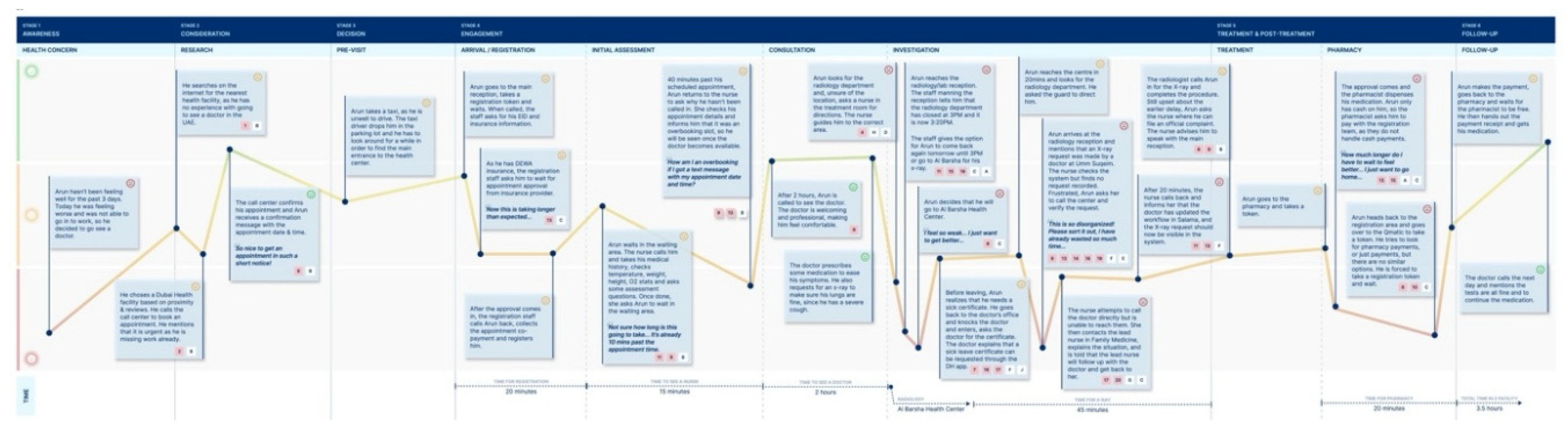
This thorough process led to identifying the top 20 patient-initiated journeys from the original 45. Some of these top journeys were later grouped and integrated to enhance the patient experience and provide an in-depth analysis of specific journeys. Each journey was owned by a dedicated service line to support and foster collaboration and expertise in that specific area. To activate this concept into practice, Dubai Health conducted a comprehensive analysis of service traffic, complaint patterns, and clinical workflows, which resulted in the shortlisting of 20 unique patient journeys, which reflected diverse clinical scenarios and demographic needs.
3.2. Educational Integration
MBRU offers foundational innovation course focused on design-thinking and digital health in the first year of the undergraduate medical curriculum, aimed at equipping pre-clinical students with core competencies in design thinking, systems-based approaches, and interdisciplinary collaboration. This positions the university as a testbed for pioneering educational models that integrate design-led system redesign into early medical education. Once equipped with foundational knowledge of design thinking’s five key stages - empathize, define, ideate, prototype, and test [5] . One of the deliverables for the course is a capstone project for which they should apply the design-thinking principle for real-life issues.
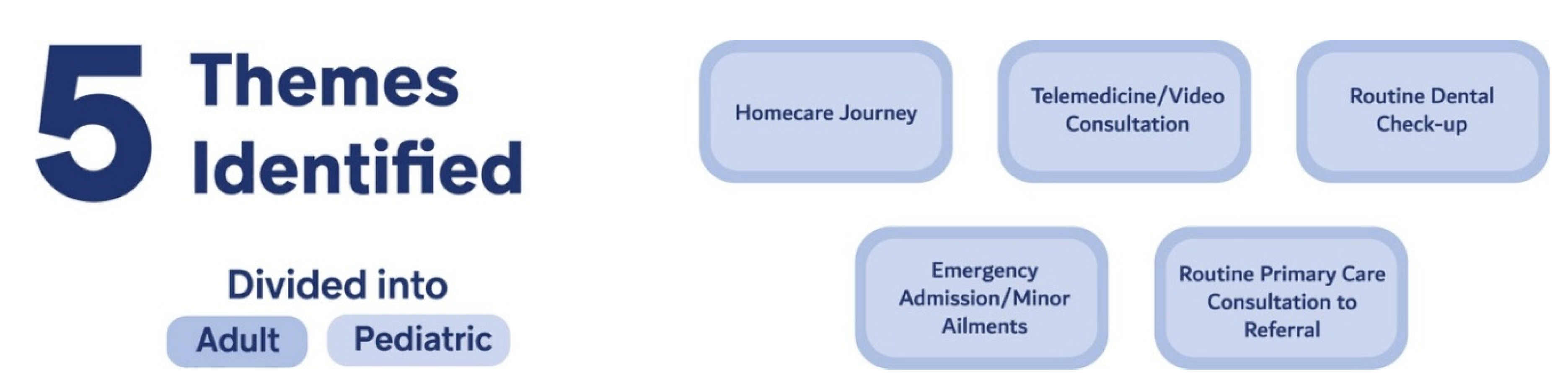
For the 2024-2025 academic year, the Patient Journey Mapping (PJM) project was chosen to align on strategic initiatives within organization. From this set, five key journeys were selected as priority use cases: routine primary care consultation to referral, emergency admission with minor injury, routine dental check-up, telemedicine/video consultation, and homecare services. Each of these was examined through both adult and pediatric lenses, resulting in a total of 10 journey frameworks that were used to engage first-year medical students at the MBRU. Each team was assigned a specific journey to investigate, with the goal of identifying systemic challenges across one or more of the patient journey stages. This marked the beginning of a six-week innovation sprint, during which students were expected to conduct stakeholder research, analyze barriers to care, and develop actionable concepts that could be refined into early-stage prototypes.
3.3. Six Week Capstone Structure
To support this effort, MBRU partnered with RBBi, a consultancy specializing in user experience and service design, to co-develop the structure and methodology of the sprint. Together, they designed a scaffolded process with research frameworks, design templates, and feedback loops tailored to each phase of the design thinking process.
Figure 4.
Six-Week Project Timeline for MBRU Students.
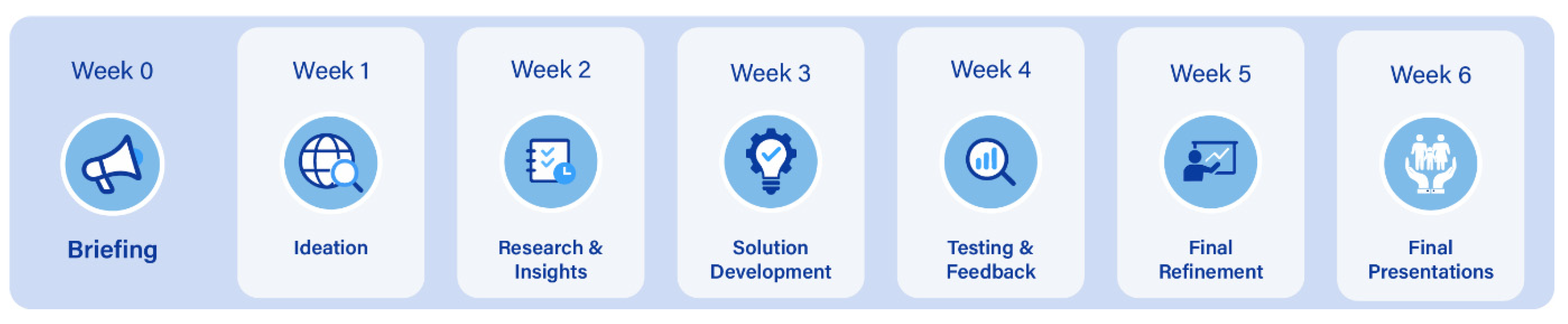
Week 1: This process began in Week 1 with ideation and team formation, where students were introduced to the project scope and provided with templates and research frameworks to guide their exploration of the patient journey. Each team engaged in initial brainstorming sessions, establishing connections with dedicated sponsors for mentorship and alignment.
Week 2: Students embarked on field research, conducting interviews and surveys with healthcare professionals to meticulously map the current patient journey, capturing key stages and emotional touchpoints. This informed their understanding and allowed for the clustering of insights through methods such as affinity mapping.
Week 3: Focused on solution development, where teams prioritized challenges using an effort-impact matrix and initiated the creation of early low-fidelity prototypes targeting specific needs.
During Weeks 4 and 5, teams tested their designs with sponsors, refining their concepts based on feedback and finalizing journey maps and developing video prototypes, which visually illustrated the proposed improvements.
Week 6: Each group presented their findings and solutions, showcasing the practical impact on patient experience.
At the conclusion of the course, the teams presented their work to a jury comprising faculty members and representatives from the Innovation in Digital Health and Health Sciences department, as well as broader organization, including IT, clinical and operations. Based on criteria such as feasibility, patient impact, and creativity, four standout projects were selected to move forward to a more intensive development phase.
Figure 5.
Main Focus of Patient Journey Maps for Bootcamp.
3.4. Design4Health Bootcamp
Building upon the foundational PJM activities, the initiative was significantly advanced through the implementation of the Design 4 Health Bootcamp - an intensive, 2.5-day immersive co-development event strategically positioned as a pivotal accelerator within the overall project timeline. This Bootcamp encompassed a series of rigorously structured phases, including rapid problem framing, comprehensive stakeholder mapping, expedited prototyping, and iterative real-time feedback cycles. Organized as part of the broader Capstone Innovation initiative, the Bootcamp gathered students from diverse academic backgrounds - including medicine, design, computer science, and engineering-and placed them into multidisciplinary teams. These teams were tasked with advancing the preliminary concepts generated during the capstone course into more refined prototypes, supported by design mentors, policy experts, and clinical professionals from Dubai Health. The condensed, high-intensity format enabled robust cross-disciplinary collaboration, thereby expediting innovation cycles and promoting the seamless integration of emergent solutions into existing organizational workflows.
Figure 6.
Process After Patient Journey Maps Identified.
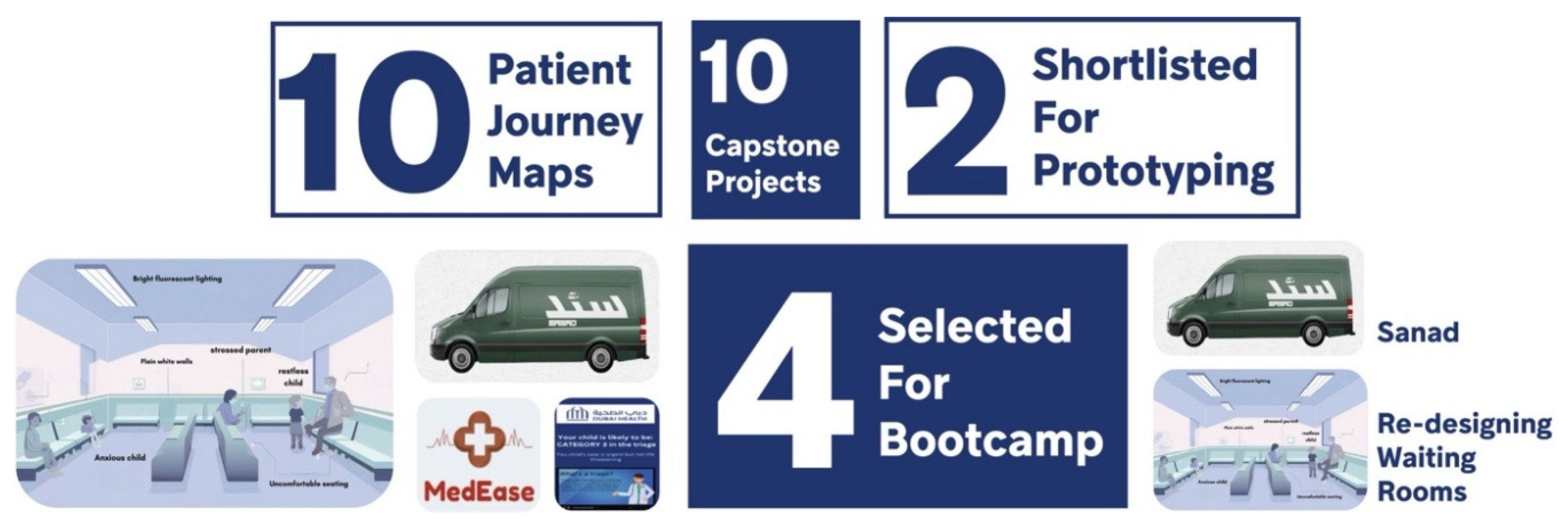
These selected projects-Sanad (homecare van), Medease (emergency triage app for adults), Najd (emergency triage app for pediatric patients), and a redesign of pediatric dental waiting rooms-were invited to participate in the Design4Health Bootcamp, held from February 21st to 23rd, 2025. This marked a critical milestone in the co-design model, transitioning student engagement from the classroom to a real-world, collaborative innovation environment.
Importantly, the Bootcamp was designed not only as a space for ideation but also as a structured environment for translational learning. Each team received training in marketing strategy, pitching, and impact storytelling, enabling them to present their ideas to a jury of stakeholders. The final presentations were attended by Dubai Health leaders from across the system’s four mission pillars: Care, Learning, Discovery, and Giving - highlighting the institutional commitment to nurturing innovation from within its academic pipeline.
The initiative’s effectiveness extended beyond methodological fidelity. A key differentiator was the integration of co-design principles, where students were not positioned as passive learners but rather as co-creators of system-level change. This paradigm shift reflects a broader transition in medical education: from knowledge acquisition to design-enabled agency. Instead of being detached observers, students actively engaged with systemic pain points, conducted interviews with front-line healthcare workers, and synthesized design opportunities grounded in empathy and systems thinking.
Figure 7.
Co-designing Disicplines.
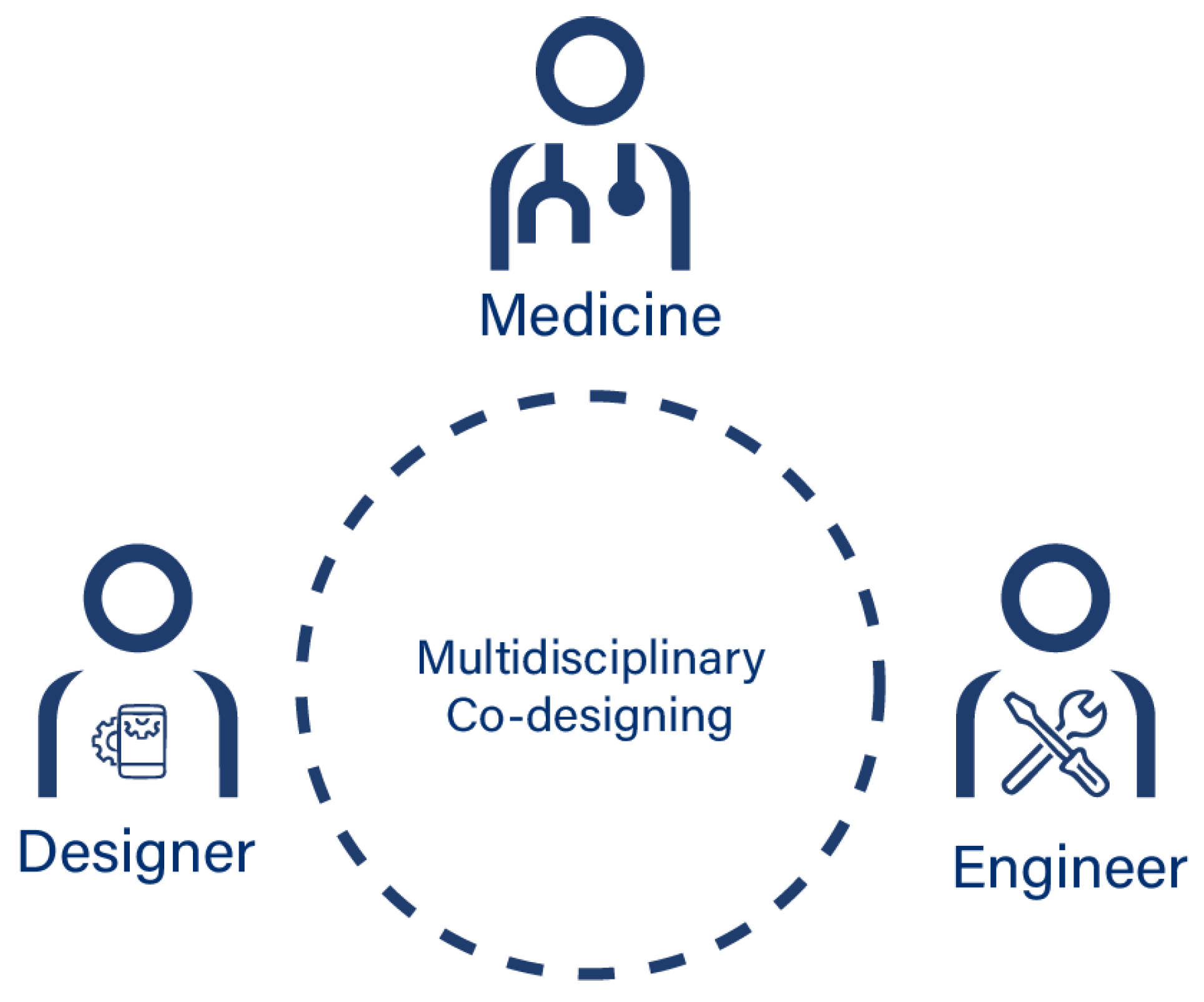
The co-design process was further supported by structured mentorship from senior clinical faculty, many of whom served as department chairs within Dubai Health. Students also had access to Dubai Health’s Command Center, where they consulted with the Clinical Operations Team to analyze service data, patient complaints, and patterns of care inefficiencies. These insights directly informed their prototype development and solution testing.
The culmination of this iterative process was not only the creation of usable prototypes but also a broader cultural shift in how students viewed their role within healthcare systems. Through this co-design approach, students moved from academic observers to active contributors-equipped with the skills, confidence, and interdisciplinary tools to participate meaningfully in the ongoing transformation of Dubai Health.
Ultimately, the Co-Design Approach exemplifies a replicable model of student-powered innovation embedded within a larger academic health system. By positioning students as collaborators in care redesign-and doing so at such an early stage in their medical education-Dubai Health and MBRU have not only advanced specific innovation projects but also invested in a future clinical workforce that is agile, empathetic, and systems-minded.
4.1. Key Project Outcomes
MedEase (Emergency Triage Application): Addressed overcrowding and patient uncertainty in emergency departments through a digital platform providing real-time updates, streamlined registration, and AI-supported triage guidance while preserving clinical decision-making authority. The app featured intuitive navigation and AI-supported triage guidance, while ensuring final decisions remained with medical staff to preserve clinical integrity. Although still a prototype, MEDEASE prompted sponsor feedback emphasizing usability, system integration, and stakeholder engagement, reinforcing the project’s potential to enhance patient experience and operational efficiency.
Sanad (Homecare Van Service): Proposed mobile healthcare delivery for chronically ill patients through modular vans equipped with diagnostic tools and digital connectivity to hospital systems. Inspired by conversations with community health workers and elderly caregivers, students recognized the emotional and logistical strain experienced by patients requiring frequent outpatient visits. Though the idea was in its early stage, the proposal triggered conversations with operational leaders around the feasibility of mobile outreach services.
Pediatric Dental Room Redesign: Reimagined clinical spaces using child-centered aesthetics, interactive elements, and spatial reconfiguration to reduce anxiety and improve patient experience.
Najd (Pediatric Emergency Triage): Developed an AI-powered feature for the Dubai Health app to guide parents through digital triage processes, reducing unnecessary emergency visits while providing appropriate care pathway recommendations. The prototype demonstrated how technology, empathy, and design could converge to optimize pediatric care experiences and resource allocation.
In just a few days, these examples showcased the students’ capability to blend design thinking principles with contextual insight. Throughout all projects, students engaged in stakeholder interviews, journey mapping, and developed low-fidelity prototypes, using an iterative process to uncover previously unnoticed system issues. These included the absence of culturally responsive intake processes, the need for community-based care solutions, and the emotional dynamics within clinical spaces. This hands-on experience allowed them to apply core learnings from the Innovation in Technology and Health Science curriculum in real-world scenarios.
Although none of the projects were immediately scaled, they initiated valuable discussions within the academic health system. Clinical mentors and faculty noted the deep insights students contributed, especially when freed from clinical hierarchy constraints. Many teams received encouragement to further develop their prototypes, which have been preserved for incorporation in subsequent innovation cycles. Importantly, several student-generated solutions - including the Emergency Triage App, the Tooth Fairy App, and Waiting Room Redesign - have been formally integrated into Dubai Health’s actionable solutions portfolio. These initiatives are slated for inclusion in the organization’s forthcoming 3-5-year strategic implementation plan, thereby institutionalizing student contributions and fostering ongoing collaboration.
Ultimately, these student-led initiatives embodied the core aim of the program: repositioning students as co-creators in healthcare system design. By providing structured, time-bound exposure to real healthcare challenges, students were empowered not only to comprehend the system but to question, reimagine, and suggest improvements.
5. Organization-Wide impact: Ideal Journeys Workshops
Internally, the workshop was aimed at reimagining the patient experience across key areas of care. Participants were thoughtfully selected through a combination of strategic nominations and prior involvement in project activities. This ensured balanced representation from critical stakeholder groups, including frontline clinical staff, operations and administrative leaders, patient experience teams, medical students, and – importantly - patients themselves. By bringing together this diverse mix of voices, the workshops enabled a comprehensive, 360-degree exploration of existing system challenges.
Figure 8.
Journey Mapping Process with the Example of the Emergency Department in-Depth Until the Workshops.
Figure 8.
Journey Mapping Process with the Example of the Emergency Department in-Depth Until the Workshops.
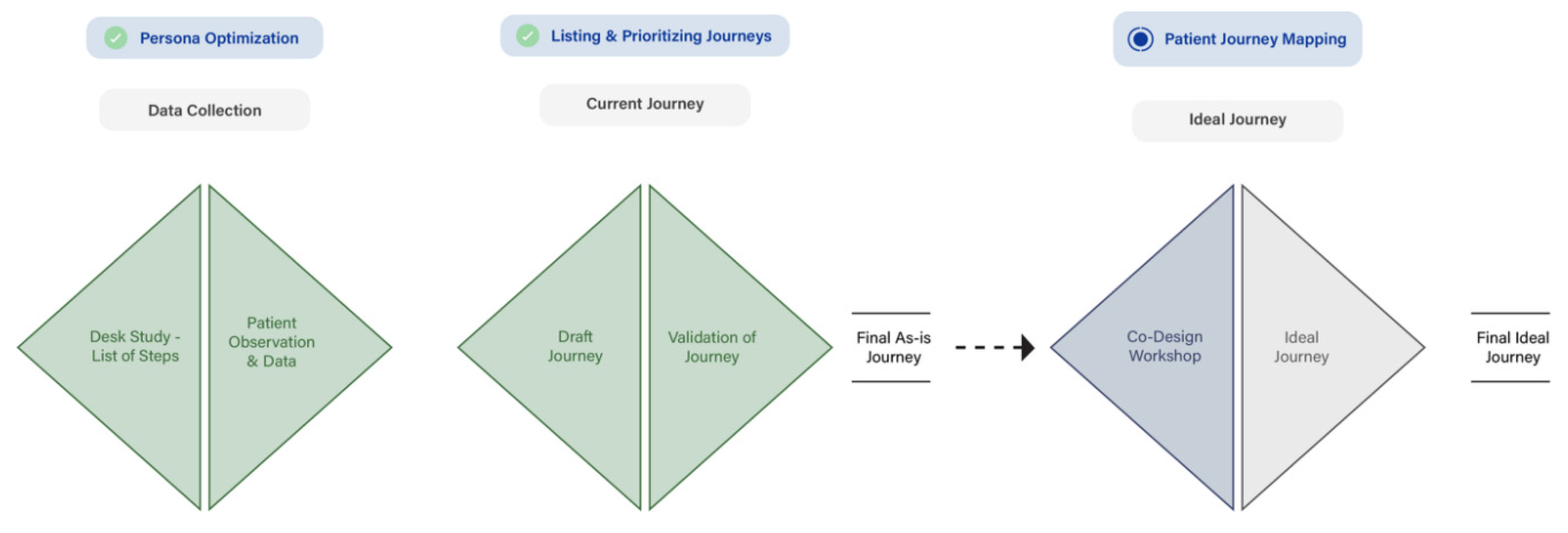
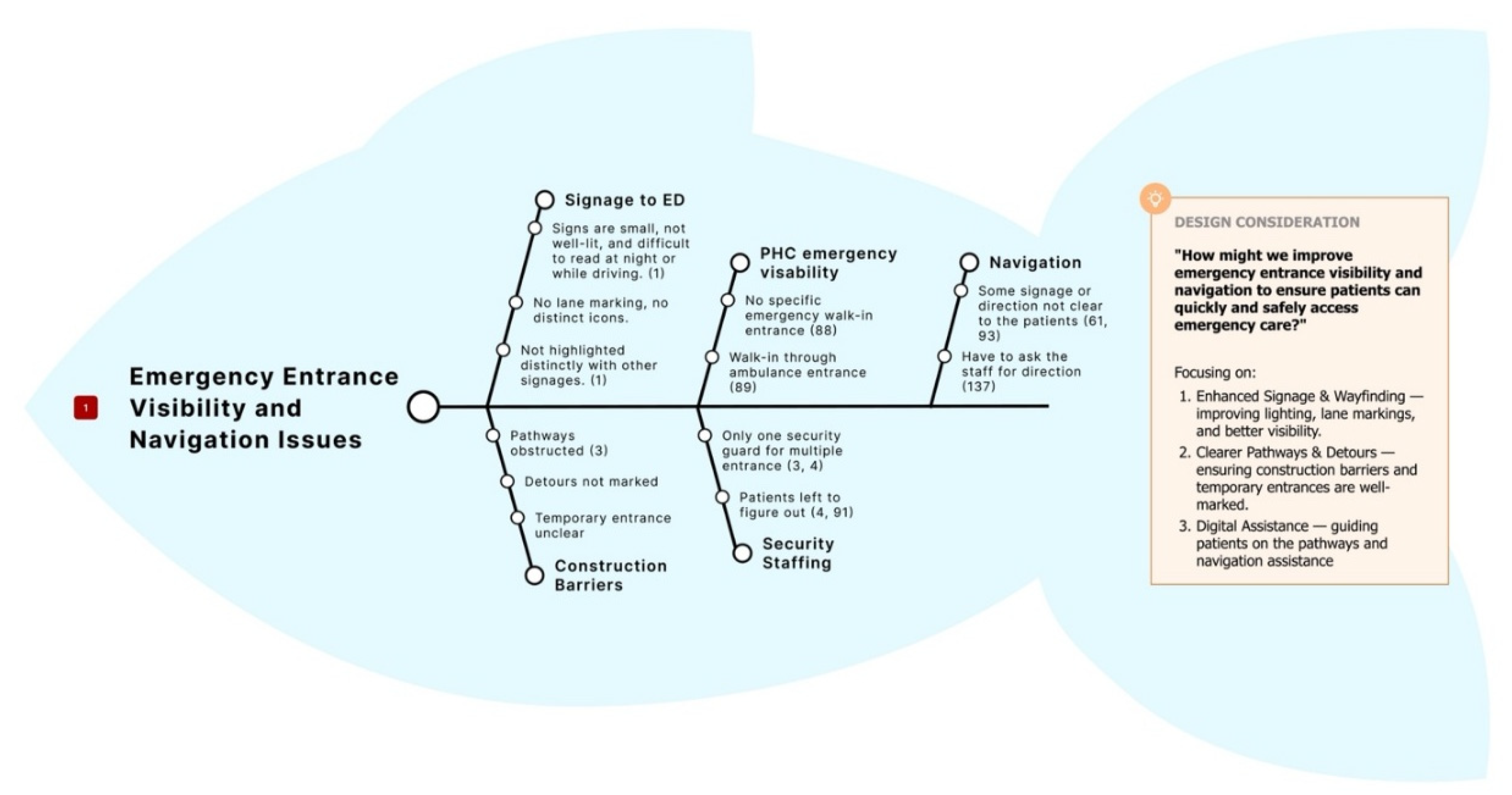
Three workshops were conducted, each focusing on a distinct area of care: Emergency, Routine Care, and Dental. These workshops were structured around real patient personas, thematic findings, and visual storytelling techniques, and pre-validated journey maps informed by a rigorous research phase. Participants engaged directly with these personas, facilitating a collaborative exploration of root causes informed by actual data and lived experiences from the field. The incorporation of patient voices, whether through direct participation or previously collected narratives, further enriched these discussions. During this phase, a comprehensive body of data was collected and analyzed-including system traffic metrics, complaint logs, and primary research insights. The primary research phase was particularly valuable, involving direct interviews with patients, frontline staff, and administrative personnel to uncover lived pain points across the care continuum. These insights were distilled into thematic findings and further analyzed using a structured Root Cause Analysis (RCA) tool in the form of a Fishbone diagram. This layered analysis formed the foundation for the workshops, enabling participants to quickly grasp core systemic issues and engage with them meaningfully.
To ensure participants were well-prepared, a pre-read document was shared in advance. It included an overview of the workshop’s objectives, key questions for reflection, and examples of relevant benchmarks to inspire solutioning. This helped align all participants around the patient-first philosophy driving the initiative. Multidisciplinary teams were then formed, blending clinical, non-clinical, and student perspectives to encourage cross-functional dialogue. The workshops followed a carefully scaffolded structure. They began with validation of issues identified through RCA, enabling teams to deeply explore underlying challenges across domains such as process, technology, staffing, environment, and patient experience. To support prioritization, participants conducted a structured severity voting exercise using criteria adapted from the WHO Patient Safety and Quality framework. Issues were assessed across three key dimensions: Patient Safety & Quality of Care, Operational Impact & Resource Management, and Equity & Access Experience. This helped highlight the most critical problems, those with the greatest risk or burden, and directed team focus toward high-impact areas during solution development.
Figure 9.
Sample from Fish-Bone Diagram as part of the findings analysis of the Emergency Department.
Figure 9.
Sample from Fish-Bone Diagram as part of the findings analysis of the Emergency Department.
Building on this analytical foundation, teams entered collaborative brainstorming sessions guided by design thinking principles. Each group was provided with detailed patient persona profiles to deepen their understanding of lived experiences and emotional touchpoints throughout the journey. Using these insights, teams generated solution ideas that were not only innovative but also feasible within Dubai Health’s operational context and aligned with its broader “Patient-First” ethos.
5.3. Strategic Outcomes
The workshops culminated in the creation of high-level “ideal patient journey” maps, each integrating a set of key solutions to improve care experience, operational efficiency, and patient outcomes. At the conclusion of each workshop, the co-created ideas were compiled into a consolidated Solution Bank - a structured list of proposed improvements addressing key friction points across the patient journeys. This repository captured the breadth of innovation generated during the sessions.
To prioritize these ideas, a follow-up survey was circulated to all workshop participants. They were asked to rate each solution based on two dimensions: the effort required and the potential impact. This enabled a transparent, data-driven prioritization process, surfacing the most feasible and meaningful interventions through collective input. The key solutions were then used to draft the Master Ideal Journey for each of the three care areas-Emergency, Routine Care, and Dental. These journey maps integrated the prioritized interventions into a cohesive future-state experience, balancing aspirational design with practical feasibility. The final outputs now serve as strategic reference points for implementation planning and continuous quality improvement across Dubai Health. In addition to effort-impact ratings, each solution was also assigned an impact score based on its alignment with the most critical pain points identified during the severity voting exercise. This ensured that interventions were directly tied to the highest-priority challenges. By creating this clear linkage between solutions and core systemic issues, the process enabled the execution team to chart a focused implementation roadmap. This structured traceability now forms the foundation for driving forward a strategic, patient-centered execution strategy aligned with Dubai Health’s long-term improvement goals.
The ideal patient journey represents a meticulously designed pathway that optimizes the care experience from initiation to completion. This framework emphasizes collaboration, accessibility, efficiency, a patient-centric focus, technology integration, standardized processes, and personalization-all aimed at enhancing patient interactions within healthcare environments.
To actualize this vision, the framework entails a structured process with several key phases. Initially, stakeholders engage in a co-design workshop to collaboratively assess challenges within the current journey and identify opportunities for enhancement. Subsequently, an ideal journey is drafted, integrating prioritized solutions into a cohesive journey map aligned with Key Performance Indicators (KPIs) while addressing identified pain points.
The ideal patient journey workshop encompassed a thorough review of the existing patient journey, issue validation through Fishbone RCA, and brainstorming sessions utilizing design thinking methodologies. This collaborative effort culminates in a draft of the ideal journey, which undergoes stakeholder feedback and refinement. Once finalized, the approved ideal journey serves as a blueprint for implementation, guiding phased rollouts, monitoring mechanisms, and iterative improvements necessary to sustain high-quality patient care.
By adopting this structured approach, healthcare organizations can significantly enhance patient satisfaction and overall experience. Supporting materials, including persona profiles, thematic findings, thematic analysis documents, and industry benchmarks, were provided to participants, bolstering critical thinking and idea generation. This ensured that proposed improvements were contextually grounded and aligned with innovative, scalable strategies for sustainable advancements in patient care.
6. Discussion
Integrating students into healthcare system design through structured innovation programming yields significant insights for academic institutions, policy leaders, and global healthcare organizations. This approach reaffirms the role of academic health systems as innovation hubs, particularly when they facilitate collaboration among diverse stakeholders and promote design-led thinking. Unlike traditional healthcare institutions, academic systems possess the curricular flexibility and intellectual capital necessary for experimenting with new models and should embrace this responsibility more proactively.
The Dubai Health model exemplifies the feasibility and advantages of student-driven innovation. Involving students in co-design processes early in their education nurtures a new generation of healthcare leaders who are not only clinically proficient but also system-literate and design-oriented. These individuals serve as essential links among disciplines, users, and decision-makers, thereby enhancing the effectiveness of health systems aiming to improve patient experience.
6.1. Educational Impact
By integrating design thinking into the MBRU Bootcamp, intersectionality among medical education, institutional innovation, and healthcare system transformation was redefined. As first-year medical students, they were introduced early to complex healthcare challenges and were empowered to think beyond textbooks and clinical protocols. Notable educational outcomes for participating students included early exposure to complex healthcare challenges, fostering skills in systems thinking, empathy, collaboration, and innovation literacy-skills essential for modern healthcare but often underemphasized in traditional curricula.
The interdisciplinary bootcamp provided students with invaluable opportunities to engage directly with real stakeholders, conduct interviews, and co-create tangible prototypes. These hands-on experiences enriched their understanding of healthcare delivery, encompassing the patient’s emotional journey, institutional workflows, and relevant policy implications. Such early immersion cultivates future clinicians who are not only medically knowledgeable but also empathetic, system-aware, and adept at navigating uncertainty through creative problem-solving. The inclusion of students from design and technology disciplines enhanced their exposure to innovative methodologies, incorporating digital tools and visual communication that amplified their project outcomes.
6.2. Institutional Innovation
At the institutional level, the bootcamp served as a catalyst for innovation and collaboration, bringing together faculty and leaders from Mohammed Bin Rashid University (MBRU), Dubai Institute of Design and Innovation (DIDI), and Rochester Institute of Technology (RIT) to foster dynamic interdisciplinary dialogue and rapid idea generation. By creating a low-risk environment for testing and iterating ideas, the bootcamp circumvented the slow-moving processes typical of academic institutions. Insights derived from student-led initiatives offered faculty and administrative leaders fresh perspectives on frontline challenges, illuminating care delivery inefficiencies that might otherwise remain hidden. Moreover, the workshops instilled design practices within the institution’s framework, promoting shared ownership in redesigning patient journeys and deepening participants’ understanding of their roles in influencing patient outcomes.
Overall, the bootcamp showcased how academic institutions can forge sustainable innovation pipelines by embedding co-creation in their structural fabric. Students transitioned from passive learners to active contributors, reinforcing the university’s mission to cultivate a responsive, resilient healthcare ecosystem. Collaborations with external partners and design mentors emphasized the potential for continued student involvement as a renewable resource for systemic change.
This initiative aligns seamlessly with Dubai Health’s “Patient First” value, as all student projects were firmly rooted in real patient experiences. The prototypes addressed significant service delivery challenges, demonstrating both empathy and feasibility while highlighting scalability within existing workflows. Ultimately, by centering students-many of whom lacked prior clinical experience-as key contributors to healthcare reform, the bootcamp challenged traditional hierarchies and illustrated that meaningful innovation can emerge from any level within the system, transforming how academic health systems engage communities and harness collective intelligence to create a better future.
6.3. Replicability and Scalability
Additionally, the Dubai Health model offers a replicable framework. While contextual variations will influence implementation, core components-such as PJM, design thinking workshops, and stakeholder engagement-are adaptable. Institutions aspiring to implement similar models should focus on securing leadership support, establishing mentorship infrastructure, and creating flexible curricular spaces for innovation.
Crucially, this initiative emphasizes that co-design is not merely an extracurricular endeavour but a vital element of healthcare transformation. The integration of medical education and system improvement is mutually reinforcing, and institutions that align these pathways stand to benefit from a more engaged and creative healthcare workforce.
6.4. Policy Implications
From a policy standpoint, the initiative indicates that co-design should not be restricted to senior clinicians or policymakers; medical students, design students, engineers, and patients must be recognized as co-creators of solutions. To amplify these efforts, policies should support interprofessional education, fund student-driven research, and provide protected time for innovation projects. This deliberate and methodologically coherent approach ensured the clarity of each intervention’s role and maximized the efficacy of student contributions within the broader context of healthcare system transformation.
7. Challenges and Limitations
Despite its many strengths, the implementation of a student-powered innovation initiative within a complex academic health system was not without challenges.
Operationalization at Scale: While bootcamp prototypes were creative and relevant, translating them into implementable interventions required alignment with administrative processes, budget approvals, and regulatory standards. The path from concept to pilot, let alone system-wide adoption, is inherently slow and complex, often extending beyond the academic cycle of participating students.
Institutional Resistance: Embedding students into system design meant disrupting traditional hierarchies and challenging established workflows. In some cases, clinicians and administrators were skeptical of student contributions, especially when their insights questioned entrenched practices. Bridging this gap required intentional relationship-building and leadership buy-in, which was not uniformly achieved across all departments.
Resource Constraints: Design thinking bootcamps, while highly engaging, are intensive in terms of faculty time, mentorship capacity, and logistical planning. Ensuring equitable access to these experiences, without overburdening staff or creating elitist participation models, emerged as an ongoing concern.
Momentum Maintenance: Students returned to demanding coursework, while system leaders resumed their institutional roles. Sustaining engagement and further developing promising ideas required structured follow-ups, which were not always built into the process. Without a formal pipeline for mentorship and incubation, many projects risked remaining as exciting but unrealized ideas.
Stakeholder Inclusivity: Limited timeframes constrained meaningful engagement with vulnerable populations, highlighting the need for more robust community partnerships.
9. Conclusion
This case study illustrates the significant potential of integrating medical students into healthcare systems through design methodologies rooted in design thinking and PJM. In the vibrant context of Dubai Health and MBRU, students emerged as catalysts of innovation, identifying critical system gaps, prototyping actionable solutions, and championing patient-centric care from the grassroots level. By engaging individuals across the organization and beyond, these efforts forged a connection between personal narratives and institutional reforms.
Reframing students as contributors rather than mere consumers of innovation furthered a cultural shift within the academic health ecosystem. This initiative accentuated the importance of co-design, interdisciplinary collaboration, and real-world problem-solving as essential components of medical education. It also highlighted the vital role of academic health systems in cultivating grassroots innovation and translating it into system-level impact.
Looking ahead, the vision should be to institutionalize this co-creation pipeline, ensuring every student has access to innovation training and that promising ideas flourish beyond the classroom. Establishing a structured framework is crucial for sustaining these innovation efforts, which may include implementing feedback loops that continuously gather patient insights. By integrating co-design milestones into strategic roadmaps and appointing interdisciplinary innovation liaisons, academic institutions can create blueprints for developing human-centered healthcare systems. This proactive approach will not only educate better-prepared physicians but also empower future healthcare leaders to design and implement impactful solutions. The promise of a future steeped in these principles is indeed compelling.
Notes on Contributors
Areeba Shahid is industrial designer, researcher and innovation practitioner, whose work lies at the intersection of product design, emerging technologies, and health and fitness innovation. She holds a bachelor’s in design (BDes, First Class Honors) from the Dubai Institute of Design and Innovation. Her practice explores how interactive systems, data-driven interfaces, and experimentation can contribute to more inclusive and human-centred approaches to healthcare and wellbeing. Areeba currently works as an Innovation Designer at Dubai Health, where she contributes to the development of digitally enhanced patient experiences and service innovation strategies within urban, mobility, sports and healthcare contexts. Her professional experience spans roles in product development, design strategy, and technological prototyping. She designs and develops medical tools, devices, and interactive experiences through design thinking and research. She teaches design thinking and prototyping to the first-year medical students in the Design4Health course and facilitates workshops for healthcare professionals to promote innovative mindsets. Her projects have been exhibited internationally at Ars Electronica (Austria), Prototypes for Humanity (UAE), and Ithra Tanween (Saudi Arabia). Through her research-by-design practice, she aims to examine how speculative and participatory design methods can inform systemic innovation in the future of health and wellbeing. Dr Anna Berbenyuk is a medical doctor and project manager at Dubai Health Innovations, Mohammed Bin Rashid University of Medicine and Health Sciences (MBRU), Dubai, UAE, with expertise in clinical practice, biomedical research, and project management. She has led multiple educational and clinical research projects, including studies on COVID-19 education, collaborative care in child and adolescent psychiatry, and clinical trials data analysis. Her work integrates innovative technologies, including AI-driven health education methods, to enhance healthcare practices. She has authored peer-reviewed publications in leading journals and actively contributes to interdisciplinary research teams, bridging clinical practice, data analytics, and medical education. Dr Hannan Sharif, MBBS, is a Foundation Year 1 (FY1) doctor within the United Kingdom’s National Health Service (NHS) and a graduate of the Mohammed Bin Rashid University of Medicine and Health Sciences (MBRU), class of 2024. Before beginning her clinical training, Dr. Sharif worked as a Research Assistant in the Innovation in Digital Health and Health Sciences Department at MBRU, where she contributed to multiple projects exploring the role of emerging technologies in improving healthcare delivery and patient experience. Her work particularly focused on examining how digital innovation can enhance accessibility, efficiency, and sustainability within healthcare systems. She is a co-author of a conceptual framework on environmental, social, and governance (ESG) principles in Digital Health, which has been submitted for publication. Dr. Sharif’s combined research and clinical experience reflect a growing interest in bridging evidence-based innovation with everyday clinical practice. She continues to be engaged in interdisciplinary collaborations aimed at advancing patient-centered care through the responsible use of technology and innovation in healthcare. Dr Aaesha AlHarmi is a Senior Project Manager and General Dentist at Dubai Health’s Digital & AI Sector, bringing a strong clinical foundation in dentistry to system-wide healthcare transformation and innovation. She holds a Bachelor of Dental Surgery and an MSc in Management: Digital Transformation in Healthcare from Northeastern University (USA) in collaboration with Mayo Clinic. With professional experience spanning patient care, digital health strategy, and human-centric service design, she bridges clinical insight with leadership in digital transformation and governance. Her background enables her to design solutions that strengthen access, efficiency, and experience across Dubai Health’s integrated academic health system. Dr. AlHarmi developed and implemented Dubai Health’s Human-Centric Experience Framework and Methodology (7E’s), a first-of-its-kind approach driving system-wide change across Care, Learning, Discovery, and Giving missions. She has led multidisciplinary teams in redesigning patient journeys across Emergency, Dental, Pediatrics, and Family Medicine - projected to enhance over one million patient interactions annually. Dr. AlHarmi is also part of the inaugural cohort of the Dubai Health Leadership Academy’s System Leadership Programme, taught by Saïd Business School, University of Oxford, where she continues to advance system leadership principles to drive sustainable transformation across the healthcare ecosystem. Reem Hamad Ahmed Kazim is a healthcare strategy and HR management expert specializing in data-driven decision-making, workforce planning, and operational efficiency. She began her career at PwC as a digital health and public health consultant, contributing to national healthcare initiatives, and moved to working on Total Rewards frameworks and policies at M42, supporting a diverse healthcare network. Her role focused on aligning compensation and benefits with organizational goals to enhance employee guidance and reflecting appropriate compensation mechanisms based on performance metrics. This perspective shed a light on internal organizational processes of a health tech holding company, which fed into her ultimate passion in improving healthcare systems through sustainable, people-centered solutions that boost patient outcomes and workforce effectiveness. With a strategic mindset and commitment to innovation, her aim is to support clinical and non-clinical teams in excelling both technically, in advancing healthcare provision and quality of care, and in their mindset, in challenging the status quo driven from organizational values and vision. Shikha Devadiga is an experience and service design practitioner helping shape interactions between people and the systems that serve them. Having been brought up and worked in the UAE, she brings a deep understanding of regional behaviours, expectations, and cultural nuances that influence how people experience products and services. With more than 13 years of experience across UX, usability, and service design, Shikha previously served as Head of Research at RBBi, the region’s first UX and usability consultancy. She led large-scale, human-centred transformation projects across government, banking, healthcare, hospitality, and retail sectors, shaping digital products and services that improved customer experience, accessibility and engagement through design research and service innovation, helping organisations build stronger connections between people and purpose. Now as a Co-founder of Xperience Design Code (XDC), she connects user needs with organisational goals through service design. Shikha mentors emerging designers and helps teams adopt human-centred design thinking. Amol Kadam is a service design leader with 30 years of experience across India and the GCC, shaping experiences at the intersection of user needs, business goals, and technology. With a background in design and a Master’s in Human-Computer Interaction, he blends strategic thinking with deep user insight. He spent six years leading the digital division at Fortune Promoseven, before co-founding RBBi in 2011 - the region’s first UX and usability consulting firm. There, he introduced lab-based user research and service design thinking to some of the most influential government and private sector clients in the region. In 2025, recognizing the shift toward experience-first transformation, Amol co-founded XDC, a consultancy dedicated to reimagining services and journeys across both physical and digital touchpoints. Amol is also a frequent speaker at global UX, CX, and usability conferences, and has published several widely read articles on experience design, service transformation, and design ethics. He’s actively involved in the startup ecosystem through workshops that guide early-stage teams on building user-centric products and services. As a guest lecturer at UAE universities, he regularly shares his expertise in service design and experience strategy, helping shape the next generation of design thinkers and leaders. Dr Yacine Hadjiat holds a medical degree with a specialization in Pain Management, a PhD in Public Health as well as an MBA in Healthcare Management. He has also completed several training courses and specializations in clinical research, health economics, healthcare technologies and Artificial Intelligence for Healthcare. Throughout his career, he has covered several senior executive positions such as chief scientific officer, chief innovation officer in the life-science industry, innovation & technology, education as well as clinical practice and academic medical research in Europe, US and Asia. Currently Dr Yacine HADJIAT is leading Dubai Health efforts in Innovations and Digital Health. Dr HADJIAT is also an Associate Professor of Innovation in the College of Medicine - MBRU. He is also a visiting lecturer on Innovation and technology in Paris V medical school, ESCP and ESM Business school for MSc and MBA programs in Paris-France and Singapore.
Acknowledgments
We would like to thank the Rochester Institute of Technology (RIT) and the Dubai Institute of Design and Innovation (DIDI) for their collaboration and participation during the Innovation Week Bootcamp. The technical expertise and support provided by their students to contributed to the advancement of the MBRU student projects.
Disclosure Statement
No conflict of interest was reported by the author(s).
References
- Dzau VJ, Ackerly DC, Sutton-Wallace P, Merson MH, Williams RS, Krishnan KR, et al. The role of academic health science systems in the transformation of medicine. Lancet. 2010;375(9718):949–53. [CrossRef]
- Skochelak SE, Hawkins RE, Lawson LE, Starr SR, Borkan JM, Gonzalo JD. Health Systems Science. 2nd ed. Philadelphia: Elsevier; 2020.
- Brown T, Wyatt J. Design Thinking for Social Innovation. Stanford Soc Innov Rev. 2010;8(1):30–5. [CrossRef]
- Home - Dubai Health - Dubai Academic Health Corporation [Internet]. Dubai Health. Available from: https://dubaihealth.ae/about-dubai-health.
- Wang C, Wahab S, Vogel C. Healthcare Design Practice for Humanizing the Patient Journey. In: Service Design Practices for Healthcare Innovation. 2022. p. 1–20.
- Høiseth M, Forshaug AK. Design students’ take on co-design in health: reflections from learning and education perspectives. Proc Des Soc. 2021;1:1–10. [CrossRef]
- Jackson C, Shaw S, Greenhalgh T, Janamian T. Achieving Research Impact Through Co-creation in Community-Based Health Services: Literature Review and Case Study. Milbank Q. 2016;94(2):392–429. [CrossRef]
- Fristedt S, Grynne A, Ahlberg K, Browall M, Smith F. Integrating perspectives of patients, healthcare professionals, system developers and academics in the co-design of a digital information tool. PLoS One. 2021;16(7):e0254826. [CrossRef]
- Dart J, Palermo C, Fossey E, Abbonizio J, Buus N, Brand G. Co-designing formal health professions curriculum in partnership with students: A scoping review. Med Teach. 2024;46(4):1–13. [CrossRef]
- Rae V, Tallentire VR, Hopkins SR, Smith SE. From corners to community: exploring medical students’ sense of belonging through co-creation in clinical learning. BMC Med Educ. 2024;24(1):1–10. [CrossRef]
- Cooke J, Langley J, Wolstenholme D. ‘Collective making’ as knowledge mobilisation: the contribution of participatory design in the co-creation of knowledge in healthcare. BMC Health Serv Res. 2018;18(1):1–10. [CrossRef]
- Staniszewska S, Chu L, Nelken Y, Price A, Clarke M, Tembo D, et al. Patient and Public Involvement in research: A journey to co-production. Patient Educ Couns. 2021;104(7):1642–8. [CrossRef]
- Bain R, Wallace A, Ball J, Davidson N, Battersby A. G545(P) Co-production of a patient experience project exploring patients moving through the transition from paediatric to adult healthcare. Arch Dis Child. 2020;105(Suppl 1):A222.
- Ghunaim H, Eskridge T, Weekes T. Designing an AI Assistant for Student Telehealth: A Case Study Using Human-Centered Design. 2022 IEEE 3rd International Conference on Human-Machine Systems (ICHMS). 2022 Nov 17:1–6.
- Liedtka J, Ogilvie T. Designing for Growth: A Design Thinking Toolkit for Managers. Columbia University Press; 2011.
- Dubai Health Authority. DHA Guidelines for Customer Experience Maturity. Dubai: DHA; 2025 Mar 6. In support of the Dubai Health Sector Strategy 2026.
Disclaimer/Publisher’s Note: The statements, opinions and data contained in all publications are solely those of the individual author(s) and contributor(s) and not of MDPI and/or the editor(s). MDPI and/or the editor(s) disclaim responsibility for any injury to people or property resulting from any ideas, methods, instructions or products referred to in the content. |
© 2025 by the authors. Licensee MDPI, Basel, Switzerland. This article is an open access article distributed under the terms and conditions of the Creative Commons Attribution (CC BY) license (http://creativecommons.org/licenses/by/4.0/).
Copyright: This open access article is published under a Creative Commons CC BY 4.0 license, which permit the free download, distribution, and reuse, provided that the author and preprint are cited in any reuse.