

Submitted:
27 October 2025
Posted:
28 October 2025
You are already at the latest version
Abstract
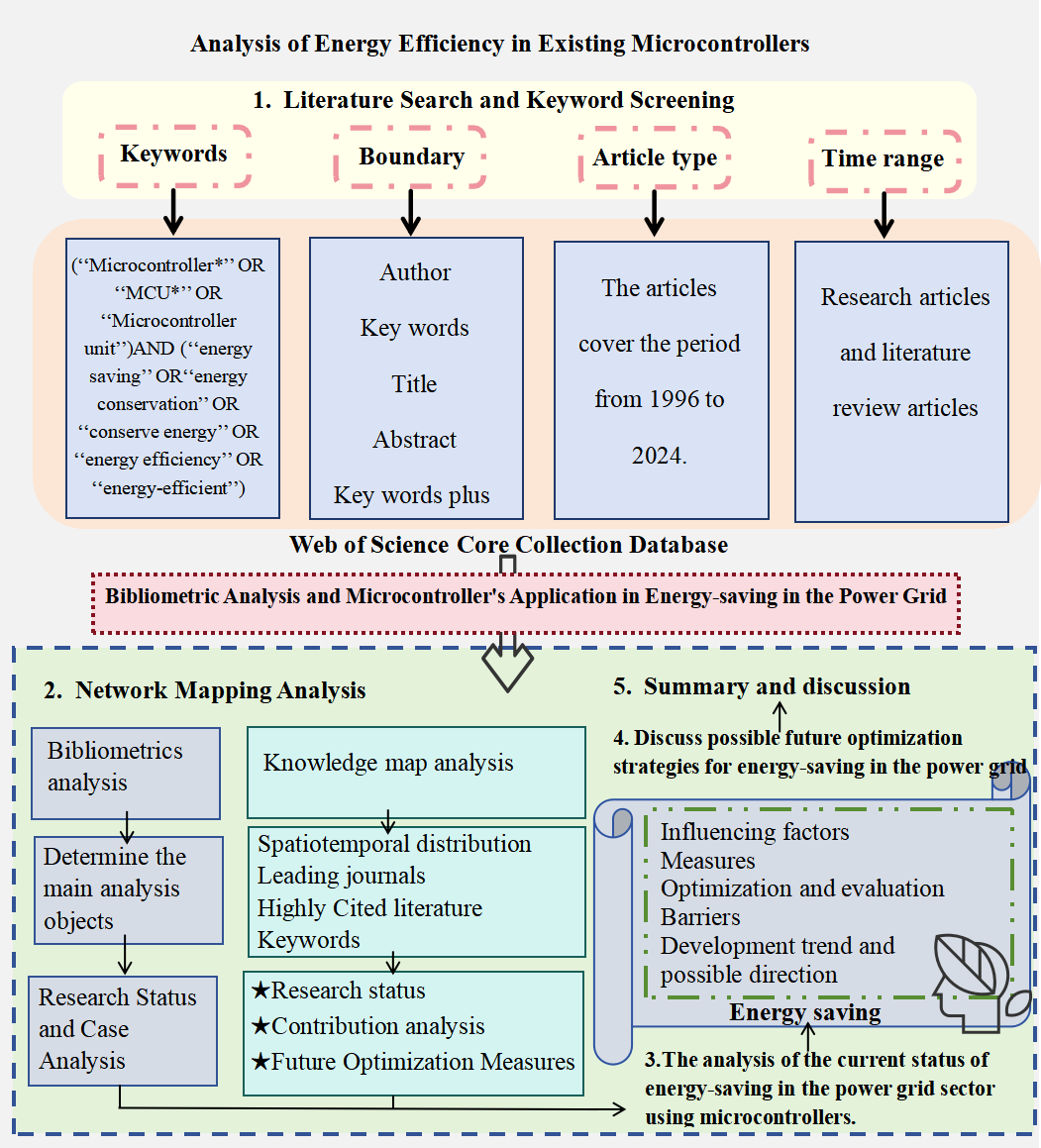
With the continuous growth of energy consumption and the increasing importance of energy conservation and emission reduction, microcontrollers, as an efficient control technology, have great potential in the field of energy saving. This paper investigates the application of microcontrollers in the energy-saving sector, focusing on grid optimization, distribution transformer energy consumption management, and intelligent control systems. Through bibliometric analysis, literature was selected from the Web of Science database, and network mapping analysis was conducted using Vosviewer to reveal the main themes, development trends, and hot topics in microcontroller-based energy-saving research. Additionally, case studies were employed to explore the energy-saving mechanisms and technological pathways of microcontrollers in various fields, especially in the power grid domain. The research shows that microcontrollers can effectively improve device efficiency and reduce energy waste by optimizing control strategies and intelligent adjustment mechanisms. Particularly in grid and distribution transformer energy consumption management, the integration of microcontrollers significantly enhances the stability and efficiency of the system, especially by dynamically adjusting and monitoring in real time, thereby optimizing power supply and energy flow. Finally, this paper proposes future research directions, emphasizing the integration of microcontrollers with reinforcement learning, the Internet of Things, renewable energy, and other fields, aiming to achieve more efficient energy-saving strategies and provide experience for the optimization and promotion of microcontroller-based energy-saving technologies.
Keywords:
1. Introduction
2. Research Method
2.1. Bibliometric Analysis and Mining
2.2. Case Study Method
3. Bibliometric Analysis Results
3.1. Temporal and Spatial Distribution and Representative Journals
3.2. Keyword and Highly Cited Literature Analysis
- (1)
- (2)
- (3)
- (4)
4. Research Status Analysis and Future Research Trends
4.1. Research Status of Microcontrollers in Various Fields
4.2. Innovations of Microcontrollers in the Energy Sector
4.2.1. Analysis of Energy Consumption Influencing Factors and Causes
- (1)
- Energy Type Impact
- (2)
- Load Fluctuations
- (3)
- Transformer Efficiency
- (4)
- Energy Storage and Scheduling
- (5)
- Level of Intelligent Control
4.2.2. Case Study
- (1)
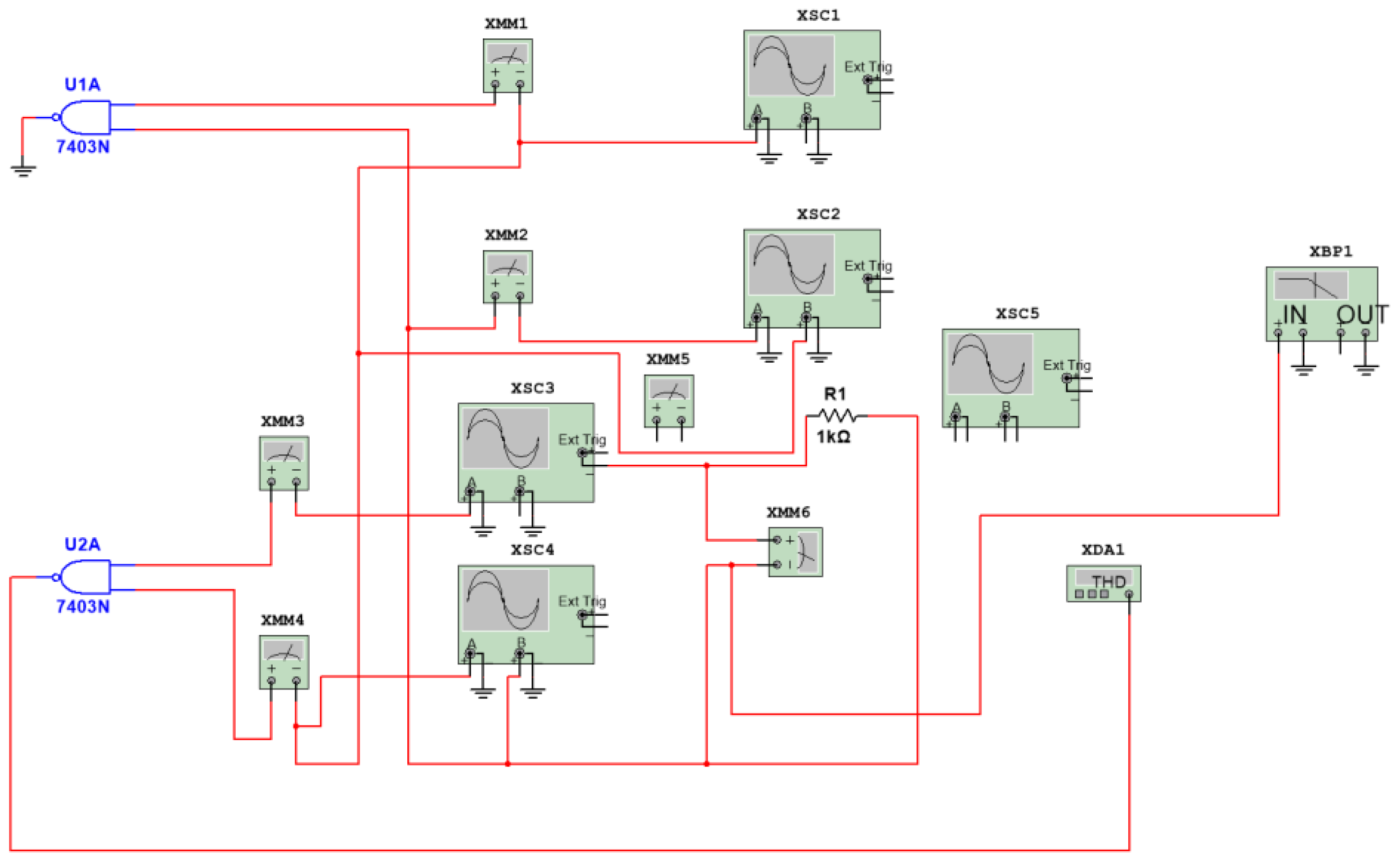
- Overall System Control and Scheduling: The microcontroller serves as the central control unit of the entire intelligent hybrid energy system. It monitors load demand, the status of the fuel cell stack, and the battery in real time, adjusting the system's operating mode accordingly. Specifically, the microcontroller dynamically determines whether to use battery power, a combination of battery and fuel cell power or switch to fuel cell power alone, based on load demand and battery charging status. Through intelligent scheduling, the system is able to maintain an efficient and continuous power supply even in unstable energy environments.
- (2)
- Stable Regulation of Voltage and Frequency: When ensuring grid connectivity, the microcontroller is responsible for regulating the system’s output voltage and frequency, reducing power instability caused by fluctuations in renewable energy sources such as wind and solar power. When the fuel cell is the energy source, it can be affected by load fluctuations, potentially causing voltage instability or frequency deviation from the standard range [63]. The microcontroller balances grid frequency and voltage by controlling the power output of the fuel cell in real time, smoothing power fluctuations and improving the power quality and reliability of the grid.
- (3)
- Energy Management and Optimization: The microcontroller regulates the frequency of current and voltage through pulse-width modulation (PWM) signals, further optimizing the charge and discharge processes of the batteries and fuel cells. For instance, during load changes, the microcontroller responds quickly, adjusting the power supply mode. The system may rely solely on battery power to avoid unnecessary energy waste, or it may simultaneously utilize both the battery and fuel cell to ensure an adequate power supply [64,65]. Through precise adjustments, the microcontroller ensures optimal energy supply, enhancing system efficiency and reducing energy waste.
- (4)
- Energy Storage and Battery Management: Battery charging management is another key function of the microcontroller. It continuously monitors the state of charge (SOC) of the battery and initiates fuel cell charging when the battery charge falls below a certain threshold. This precise battery management not only extends the lifespan of the battery but also ensures that the battery is charged at the appropriate time, preventing damage due to over-discharge or insufficient charging.
- (1)
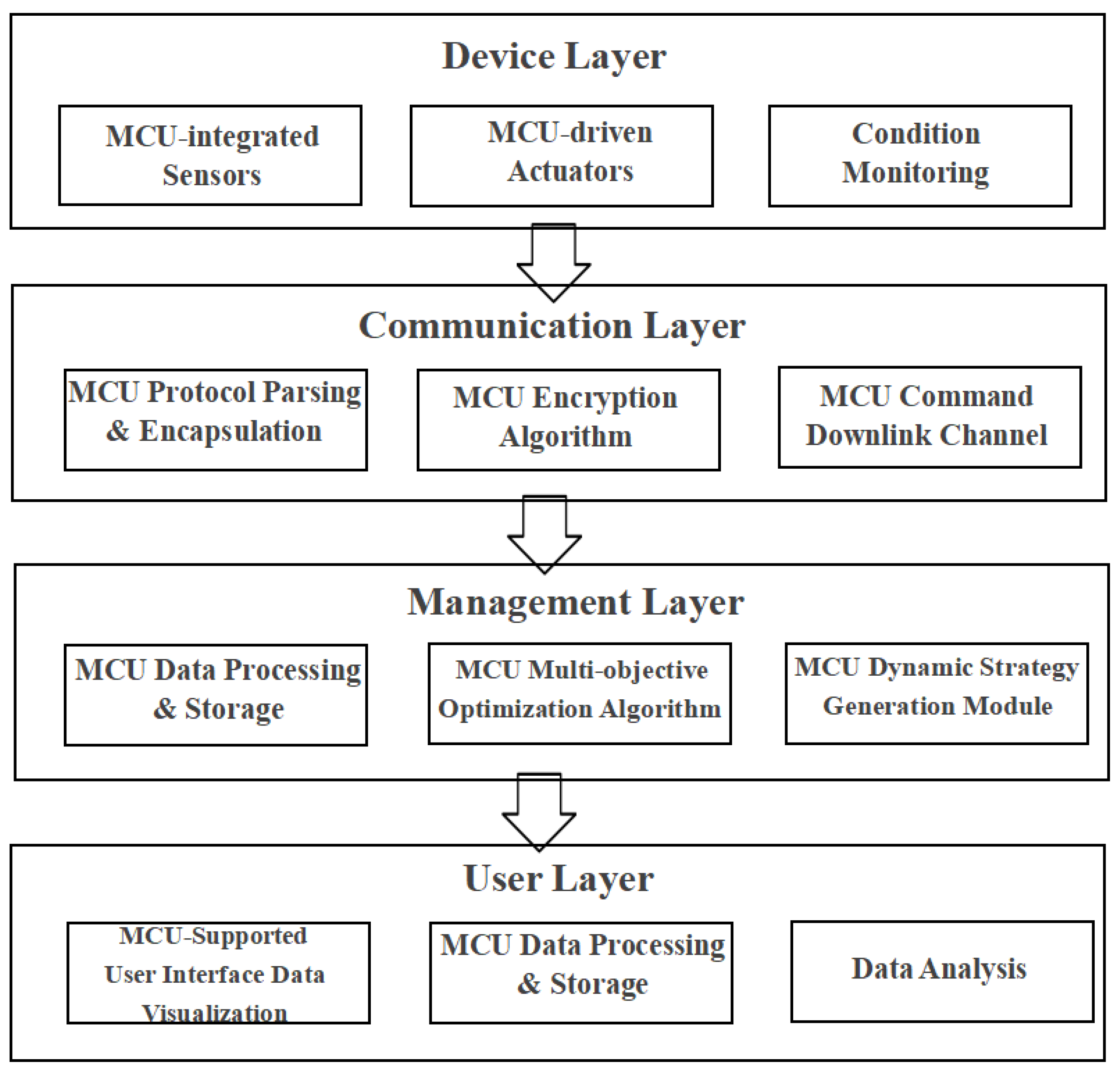
- Assisting in System Architecture and Guiding Hierarchical Design: The automatic energy consumption control system for distribution network transformers adopts a microcontroller-based hierarchical architecture. The system is divided into user, management, communication, and device layers, with each layer performing different functions. The microcontroller plays a core role in this architecture by making intelligent control decisions and applying optimization algorithms, thus improving the energy utilization efficiency of the transformer and the stability of the system [67].
- (2)
- Application of Multi-objective Optimization Algorithms: In the management layer, the microcontroller implements multi-objective optimization algorithms to develop optimal operating strategies [68]. This algorithm considers factors such as the energy consumption characteristics of the transformer, load demand, and grid operation constraints. For instance, the optimization of no-load losses and load losses, as well as improving voltage quality by adjusting reactive power compensation devices. These strategies are then communicated to the device layer through the communication layer for implementation. Through this intelligent optimization, the transformer can dynamically adjust its operating parameters under different loads and operating conditions, reducing unnecessary energy consumption and improving system energy utilization.
- (3)
- Real-time Monitoring and Optimization Control: The microcontroller, integrated with sensors, collects real-time operational data of the transformer, including voltage, current, and temperature, reflecting the operational status of the transformer. The management layer uses this data for energy consumption analysis and, combined with optimization algorithms (such as genetic algorithms and particle swarm optimization), generates control strategies to optimize the transformer’s working state. The optimization objectives include minimizing energy consumption, improving load adaptability, and maintaining voltage deviation within specified limits [68]. For example, the microcontroller helps dynamically adjust the output voltage of the transformer by modifying the position of the transformer’s tap changer and the switching state of capacitors, ensuring the transformer operates in the optimal state under varying load conditions and reducing energy consumption.

| Indicator | Unoptimized | Optimized |
| Daily Total Energy Consumption(/KWh) | 232 ~ 236 | 212 ~ 218 |
| No-load Loss(/KWh) | 25 ~ 27 | 23 ~ 25 |
| Load Loss(/KWh) | 210 ~ 212 | 190 ~ 192 |
| Average Load Factor | 65% ~ 68% | 72% ~ 75% |
| Average Circuit Deviation | 4% ~ 5.5% | 3% ~ 4% |
5. Conclusions and Recommendations
- (1)
- Enhancing Intelligent Control and Adaptive Capabilities
- (2)
- Strengthening the Integration of Microcontrollers with the Internet of Things (IoT)
- (3)
- Improving Integration with Renewable Energy Systems
- (4)
- Strengthening Collaboration with Big Data and Cloud Computing
- (5)
- Promoting Applications in Agriculture and Industry
- (6)
- Continuously Optimizing Energy Storage and Scheduling
Author Contributions
Funding
Data Availability Statement
Conflicts of Interest
Appendix A
Appendix A.1
References
- Ali, M.; Koondhar, M.A.; Ogale, J.; Ali, A.; Khan, B. Intelligent hybrid energy system and grid integration using microcontrollers. Comput. Electr. Eng. 2023, 110. [Google Scholar] [CrossRef]
- Ameur, S.; Laghrouche, M.; Adane, A. Monitoring a greenhouse using a microcontroller-based meteorological data-acquisition system. Renew. Energy 2001, 24, 19–30. [Google Scholar] [CrossRef]
- Barkunan, S.; Bhanumathi, V.; Sethuram, J. Smart sensor for automatic drip irrigation system for paddy cultivation. Comput. Electr. Eng. 2019, 73, 180–193. [Google Scholar] [CrossRef]
- Bolanakis, D.E. A Survey of Research in Microcontroller Education. IEEE Rev. Iberoam. de Tecnol. del Aprendiz. 2019, 14, 50–57. [Google Scholar] [CrossRef]
- Demirtas, M.; Sefa, I.; Irmak, E.; Colak, I. Low-cost and high sensitive microcontroller based data acquisition system for renewable energy sources. In Proceedings of the International Symposium on Power Electronics, Electrical Drives, Automation and Motion, Ischia, Italy, 11–13 June 2008; pp. 196–199. [Google Scholar] [CrossRef]
- Guan, X.; Lou, S.; Li, H.; Tang, T. Intelligent control of quad-rotor aircrafts with a STM32 microcontroller using deep neural networks. Ind. Robot. Int. J. Robot. Res. Appl. 2021, 48, 700–709. [Google Scholar] [CrossRef]
- Kober, T.; Schiffer, H.-W.; Densing, M.; Panos, E. Global energy perspectives to 2060 – WEC's World Energy Scenarios 2019. Energy Strat. Rev. 2020, 31. [Google Scholar] [CrossRef]
- Lee, S.-W.; Sung, J.-M.; Kwon, J.-W. Optimizing RGB Convolution on Cortex-M7 MCU: Approaches for Performance Improvement. IEEE Access 2024, 12, 140594–140604. [Google Scholar] [CrossRef]
- Marnerides, A.K.; Smith, P.; Schaeffer-Filho, A.; Mauthe, A. Power Consumption Profiling Using Energy Time-Frequency Distributions in Smart Grids. IEEE Commun. Lett. 2014, 19, 46–49. [Google Scholar] [CrossRef]
- Wu, H.; Chen, C.; Weng, K. An Energy-Efficient Strategy for Microcontrollers. Appl. Sci. 2021, 11, 2581. [Google Scholar] [CrossRef]
- Zhao, W.; Xia, F. (2006). An Efficient Approach to Energy Saving in Microcontrollers. Advances in Computer Systems Architecture Lecture Notes in Computer Science, 595-601. [CrossRef]
- Zemanová, A.; Zeman, J.; Janda, T.; Schmidt, J.; Šejnoha, M. On modal analysis of laminated glass: Usability of simplified methods and Enhanced Effective Thickness. Compos. Part B: Eng. 2018, 151, 92–105. [Google Scholar] [CrossRef]
- Elsts, A.; McConville, R. Are Microcontrollers Ready for Deep Learning-Based Human Activity Recognition? Electronics 2021, 10, 2640. [Google Scholar] [CrossRef]
- Guan, X.; Lou, S.; Li, H.; Tang, T. Intelligent control of quad-rotor aircrafts with a STM32 microcontroller using deep neural networks. Ind. Robot. Int. J. Robot. Res. Appl. 2021, 48, 700–709. [Google Scholar] [CrossRef]
- Huang, J.; Wang, S.; Teng, F.; Feng, W. Thermal performance optimization of envelope in the energy-saving renovation of existing residential buildings. Energy Build. 2021, 247. [Google Scholar] [CrossRef]
- Ilchev, S.; Andreev, R.; Ilcheva, Z. Autonomous Microcontroller System for Sensor Data Gathering Relying on Solar-Power and Ultracapacitors. Wirel. Pers. Commun. 2021, 121, 2393–2405. [Google Scholar] [CrossRef]
- Jayakumar, H.; Raha, A.; Raghunathan, V. Sleep-Mode Voltage Scaling. ACM Trans. Embed. Comput. Syst. 2016, 16, 1–25. [Google Scholar] [CrossRef]
- Jovanović, B.; Damnjanović, M.; Petković, P.; Litovski, V. Standard Cell-Based Low Power Embedded Controller Design. J. Circuits, Syst. Comput. 2015, 24. [Google Scholar] [CrossRef]
- Krongtripop, T.; Kirdpipat, P. Implementation of neural network based on the microcontroller for energy saving of electric kettle. 2016 13th International Conference on Electrical Engineering/Electronics, Computer, Telecommunications and Information Technology (ECTI-CON). LOCATION OF CONFERENCE, ThailandDATE OF CONFERENCE; pp. 1–4.
- Krongtripop, T.; Kirdpipat, P. Implementation of neural network based on the microcontroller for energy saving of electric kettle. 2016 13th International Conference on Electrical Engineering/Electronics, Computer, Telecommunications and Information Technology (ECTI-CON). LOCATION OF CONFERENCE, ThailandDATE OF CONFERENCE; pp. 1–4.
- Kurzątkowska, K.; Santiago, T.; Hepel, M. Plasmonic nanocarrier grid-enhanced Raman sensor for studies of anticancer drug delivery. Biosens. Bioelectron. 2017, 91, 780–787. [Google Scholar] [CrossRef]
- Manimegalai, M.; Sebasthirani, K. An Optimal Model for Power Quality Improvement in Smart Grid using Gravitational Search-based Proportional Integral Controller and Node Microcontroller Unit. Electr. Power Components Syst. 2022, 50, 989–1005. [Google Scholar] [CrossRef]
- Wang, J.; Gao, F.; Zhang, Y. Topology Configuration of Actuator Failure Mode of a Novel Quadruped Robot. J. Mech. Robot. 2014, 6, 041015. [Google Scholar] [CrossRef]
- Wu, H.; Chen, C.; Weng, K. An Energy-Efficient Strategy for Microcontrollers. Appl. Sci. 2021, 11, 2581. [Google Scholar] [CrossRef]
- Yu, J.; Lukefahr, A.; Das, R.; Mahlke, S. TF-Net. ACM Trans. Embed. Comput. Syst. 2019, 18, 1–21. [Google Scholar] [CrossRef]
- Ionescu, C.; Baracu, T.; Vlad, G.-E.; Necula, H.; Badea, A. The historical evolution of the energy efficient buildings. Renew. Sustain. Energy Rev. 2015, 49, 243–253. [Google Scholar] [CrossRef]
- Zhao, J. T. , Ruan, J. T. ( 65(24), 76–78.
- Zhao, J. T. , Ruan, J. T. ( 65(24), 76–78.
- Li, Z.-W.; Pan, J.-J.; Zhang, J.-B. [Study on intelligent system of hyper-spectral data gathering based on wireless data communication technology in farm machinery]. . 2006, 26, 1813–6. [Google Scholar]
- Rashid, Y.; Rashid, A.; Warraich, M.A.; Sabir, S.S.; Waseem, A. Case Study Method: A Step-by-Step Guide for Business Researchers. Int. J. Qual. Methods 2019, 18. [Google Scholar] [CrossRef]
- 2001.
- Saponara, S.; Fanucci, L.; Terreni, P. Architectural-Level Power Optimization of Microcontroller Cores in Embedded Systems. IEEE Trans. Ind. Electron. 2007, 54, 680–683. [Google Scholar] [CrossRef]
- Cheour, R.; Khriji, S.; Abid, M.; Kanoun, O. Microcontrollers for IoT: Optimizations, Computing Paradigms, and Future Directions. 2020 IEEE 6th World Forum on Internet of Things (WF-IoT). LOCATION OF CONFERENCE, USADATE OF CONFERENCE; pp. 1–7.
- Ramasubramanian, M.; Babu, T.R.; Krishna, V.A.; Syed, K. Design of Intelligent Control and Monitoring System for Agriculture Based on Renewable Energy and IoT.CONFERENCE NAME, LOCATION OF CONFERENCE, COUNTRYDATE OF CONFERENCE;
- Saha, S.S.; Sandha, S.S.; Srivastava, M. Machine Learning for Microcontroller-Class Hardware: A Review. IEEE Sensors J. 2022, 22, 21362–21390. [Google Scholar] [CrossRef] [PubMed]
- Fang, X.; Misra, S.; Xue, G.; Yang, D. Smart Grid — The New and Improved Power Grid: A Survey. IEEE Commun. Surv. Tutorials 2011, 14, 944–980. [Google Scholar] [CrossRef]
- Kalkal, P.; Garg, V.K. Transition from conventional to modern grids: Modern grid include microgrid and smartgrid. 2017 4th International Conference on Signal Processing, Computing and Control (ISPCC). LOCATION OF CONFERENCE, IndiaDATE OF CONFERENCE; pp. 223–228.
- Mustapha, M.; Mustafa, M.W.; Khalid, S.N.; Abubakar, I.; Shareef, H. Classification of electricity load forecasting based on the factors influencing the load consumption and methods used: An-overview. 2015 IEEE Conference on Energy Conversion (CENCON). LOCATION OF CONFERENCE, MalaysiaDATE OF CONFERENCE; pp. 442–447.
- Yao, X.; Yi, B.; Yu, Y.; Fan, Y.; Zhu, L. Economic analysis of grid integration of variable solar and wind power with conventional power system. Appl. Energy 2020, 264. [Google Scholar] [CrossRef]
- A, E.S.; M, S. ENVIRONMENTAL AND HEALTH IMPACT OF COAL USE FOR ENERGY PRODUCTION. Egypt. J. Occup. Med. 2013, 37, 181–194. [Google Scholar] [CrossRef]
- He, C.; Zhang, X.; Liu, T.; Wu, L.; Shahidehpour, M. Coordination of Interdependent Electricity Grid and Natural Gas Network—a Review. Curr. Sustain. Energy Rep. 2018, 5, 23–36. [Google Scholar] [CrossRef]
- Brunner, C.; Deac, G.; Braun, S.; Zöphel, C. The future need for flexibility and the impact of fluctuating renewable power generation. Renew. Energy 2020, 149, 1314–1324. [Google Scholar] [CrossRef]
- Liserre, M.; Buticchi, G.; Andresen, M.; De Carne, G.; Costa, L.F.; Zou, Z.-X. The Smart Transformer: Impact on the Electric Grid and Technology Challenges. IEEE Ind. Electron. Mag. 2016, 10, 46–58. [Google Scholar] [CrossRef]
- Solomon, A.; Kammen, D.M.; Callaway, D. The role of large-scale energy storage design and dispatch in the power grid: A study of very high grid penetration of variable renewable resources. Appl. Energy 2014, 134, 75–89. [Google Scholar] [CrossRef]
- Werbos, P.J. Computational Intelligence for the Smart Grid-History, Challenges, and Opportunities. IEEE Comput. Intell. Mag. 2011, 6, 14–21. [Google Scholar] [CrossRef]
- Prostejovsky, A.M.; Brosinsky, C.; Heussen, K.; Westermann, D.; Kreusel, J.; Marinelli, M. The future role of human operators in highly automated electric power systems. Electr. Power Syst. Res. 2019, 175. [Google Scholar] [CrossRef]
- Rana, M.; Uddin, M.; Sarkar, R.; Meraj, S.T.; Shafiullah, G.; Muyeen, S.; Islam, A.; Jamal, T. Applications of energy storage systems in power grids with and without renewable energy integration — A comprehensive review. J. Energy Storage 2023, 68. [Google Scholar] [CrossRef]
- Gouveia, J.; Moreira, C.L.; Lopes, J.A.P. Influence of Load Dynamics on Converter-Dominated Isolated Power Systems. Appl. Sci. 2021, 11, 2341. [Google Scholar] [CrossRef]
- Zhao, C.; He, J.; Cheng, P.; Chen, J. Consensus-Based Energy Management in Smart Grid With Transmission Losses and Directed Communication. IEEE Trans. Smart Grid 2016, 8, 2049–2061. [Google Scholar] [CrossRef]
- Luo, D.; Wang, R.; Yan, Y.; Sun, Z.; Zhou, W.; Ding, R. Comparison of different fluid-thermal-electric multiphysics modeling approaches for thermoelectric generator systems. Renew. Energy 2021, 180, 1266–1277. [Google Scholar] [CrossRef]
- Bhuiyan, M. S. , & Ahmed, F. (2020). Energy-efficient microcontroller-based communication for smart grid applications. Smart Grid, 11(2), 348-357. [CrossRef]
- Nigam, R.; Pawar, S.; Sharma, M. Modified Bayesian algorithm-based compressive sampling for wideband spectrum sensing in cognitive radio network using wavelet transform. Int. J. Commun. Syst. 2020, 34. [Google Scholar] [CrossRef]
- Kruger, J.; Zeranka, S.; van Zijl, G. 3D concrete printing: A lower bound analytical model for buildability performance quantification. Autom. Constr. 2019, 106. [Google Scholar] [CrossRef]
- Long, L. Research on status information monitoring of power equipment based on Internet of Things. Energy Rep. 2022, 8, 281–286. [Google Scholar] [CrossRef]
- Da Silva, B.; Braeken, A.; Touhafi, A. FPGA-Based Architectures for Acoustic Beamforming with Microphone Arrays: Trends, Challenges and Research Opportunities. Computers 2018, 7, 41. [Google Scholar] [CrossRef]
- Pandey, S. , & Prakash, R. (2021). Energy optimization in microcontroller-based systems for industrial automation. IEEE Transactions on Industrial Informatics, 17(3), 2211-2219. [CrossRef]
- Rahman, M. M. , & Hasan, M. (2020). Real-time monitoring and control system for renewable energy sources using microcontroller. Renewable and Sustainable Energy Reviews, 121, 109690. [CrossRef]
- Du, R.; He, Y.; Chen, H.; Xu, Y.; Li, W.; Deng, J. Performance and economy of trigenerative adiabatic compressed air energy storage system based on multi-parameter analysis. Energy 2022, 238. [Google Scholar] [CrossRef]
- Wang, T. , & Zhang, W. (2021). Design of an energy-efficient control system for microcontroller-based autonomous vehicles. Journal of Electrical Engineering & Technology, 16(5), 1947-1955. [CrossRef]
- Lemos, H.G.; Barba, D.; Selopal, G.S.; Wang, C.; Wang, Z.M.; Duong, A.; Rosei, F.; Santos, S.F.; Venancio, E.C. Water-dispersible polyaniline/graphene oxide counter electrodes for dye-sensitized solar cells: Influence of synthesis route on the device performance. Sol. Energy 2020, 207, 1202–1213. [Google Scholar] [CrossRef]
- Mou, Y.; Zhang, Q.; Yu, H.; Lian, Z.; Zhao, Z. Study on prediction method of crack propagation in absorber weld by experiment and simulation. Energy Rep. 2021, 7, 1055–1067. [Google Scholar] [CrossRef]
- Idrovo-Novillo, J.; Gavilanes-Terán, I.; Veloz-Mayorga, N.; Erazo-Arrieta, R.; Paredes, C. Closing the cycle for the cut rose industry by the reuse of its organic wastes: A case study in Ecuador. J. Clean. Prod. 2019, 220, 910–918. [Google Scholar] [CrossRef]
- Zhang, X. , & Liu, Z. ( 168, 798–804. [CrossRef]
- Shahid, S.; Agelin-Chaab, M. Experimental and numerical studies on air cooling and temperature uniformity in a battery pack. Int. J. Energy Res. 2018, 42, 2246–2262. [Google Scholar] [CrossRef]
- Park, S. , & Kim, J. ( 121, 109685. [CrossRef]
- Chen, J.; Li, S.; Lu, W. Align to locate: Registering photogrammetric point clouds to BIM for robust indoor localization. Build. Environ. 2022, 209. [Google Scholar] [CrossRef]
- Yang, G.; Xu, R.; Chen, Y.; Wu, Z.; Du, Y.; Liu, S.; Qu, Z.; Guo, K.; Peng, C.; Chang, J.; et al. Identifying the greenhouses by Google Earth Engine to promote the reuse of fragmented land in urban fringe. Sustain. Cities Soc. 2021, 67. [Google Scholar] [CrossRef]
- Syahputra, R.; Soesanti, I. Renewable energy systems based on micro-hydro and solar photovoltaic for rural areas: A case study in Yogyakarta, Indonesia. Energy Rep. 2021, 7, 472–490. [Google Scholar] [CrossRef]
Disclaimer/Publisher’s Note: The statements, opinions and data contained in all publications are solely those of the individual author(s) and contributor(s) and not of MDPI and/or the editor(s). MDPI and/or the editor(s) disclaim responsibility for any injury to people or property resulting from any ideas, methods, instructions or products referred to in the content. |
© 2025 by the authors. Licensee MDPI, Basel, Switzerland. This article is an open access article distributed under the terms and conditions of the Creative Commons Attribution (CC BY) license (https://creativecommons.org/licenses/by/4.0/).


