

Submitted:
25 October 2025
Posted:
27 October 2025
You are already at the latest version
Abstract
This paper presents a comprehensive framework for AI-enhanced curriculum development in rare earth elements (REE) education, addressing critical workforce gaps across K-12, higher education, and veteran transition programs. As global demand for critical minerals escalates amid geopolitical tensions and supply chain vulnerabilities, we propose an integrated educational approach that bridges artificial intelligence with traditional geosciences. Our research analyzes current initiatives, identifies curriculum gaps, and develops scalable AI-enhanced learning models that combine theoretical knowledge with practical applications. The framework encompasses personalized learning systems, virtual reality simulations, and adaptive assessment tools to prepare diverse learner populations for careers in the critical minerals sector. We introduce multiple architectures including an integrated AI platform for the REE value chain, multi-agent systems for mineral exploration, circular economy models for sustainability, and supply chain resilience frameworks. Quantitative analysis demonstrates significant improvements in exploration efficiency, materials discovery timelines, and educational outcomes through AI implementation. The paper also addresses implementation challenges, ethical considerations, and provides strategic recommendations for policy support and investment. This educational framework supports national security objectives while creating sustainable career pathways in an increasingly vital industry, ultimately contributing to domestic workforce development and supply chain resilience in the critical minerals sector.
Keywords:
curriculum development
; artificial intelligence
; rare earth elements
; workforce training
; K-12 education
; veteran transition
; educational technology
1. Introduction
The global critical minerals crisis has exposed significant vulnerabilities in supply chains essential for national security, clean energy technologies, and economic stability [1,2]. Rare earth elements (REEs) represent a particularly crucial subset of these minerals, with applications spanning defense systems, renewable energy infrastructure, and advanced computing technologies [3,4]. However, the educational pipeline for developing REE expertise faces multiple challenges, including outdated curricula, limited interdisciplinary approaches, and insufficient integration of emerging technologies like artificial intelligence.
The concentration of REE production and processing capabilities in geographically limited regions underscores the urgent need for domestic workforce development [5,6]. Recent geopolitical developments and export restrictions have accelerated initiatives to build resilient supply chains, creating unprecedented demand for skilled professionals who understand both traditional geosciences and modern computational approaches [7,8].
This paper addresses the critical intersection of AI technologies and educational curriculum development for REE studies. We present a comprehensive analysis of current educational initiatives, identify key gaps in existing programs, and propose an integrated framework that spans K-12 education, higher education, and veteran career transition programs. The research demonstrates how AI-enhanced learning tools can accelerate skill development, improve learning outcomes, and create scalable educational pathways for diverse learner populations.
2. The Critical Minerals Education Landscape
2.1. Current Workforce Challenges and Skill Gaps
The mining and minerals sector faces significant workforce challenges, including an aging workforce, competition for technical talent, and rapidly evolving technological requirements [9]. Traditional educational programs often struggle to keep pace with industry needs, particularly in integrating AI and data science competencies with core geoscience knowledge [10]. This skills gap becomes particularly acute in the REE sector, where professionals must understand complex geological systems, advanced processing technologies, and global supply chain dynamics.
The Minerals Education Coalition has worked to address these challenges through standardized educational materials and K-12 outreach programs [11]. However, the rapid advancement of AI technologies in mineral exploration and processing necessitates corresponding updates to educational content and delivery methods. Industry surveys consistently identify data analytics, machine learning applications, and automated systems operations as critical skill areas where current educational programs fall short.
2.2. Geopolitical Imperatives for Domestic Education
China’s dominance in REE processing and manufacturing has created strategic vulnerabilities that extend beyond supply chain concerns to encompass educational and research capabilities [7]. The weaponization of critical minerals access has highlighted the need for comprehensive educational programs that develop domestic expertise across the entire REE value chain [2].
Federal initiatives, including Department of Defense investments in educational programs and National Science Foundation support for interdisciplinary research, recognize the strategic importance of building domestic educational capacity [10,12]. These programs aim not only to develop technical skills but also to foster innovation ecosystems that can sustain competitive advantage in critical minerals technologies.
3. AI-Enhanced Curriculum Development Framework
3.1. K-12 Educational Integration
Early exposure to earth sciences and critical minerals concepts forms the foundation for long-term workforce development. AI-enhanced educational tools offer unprecedented opportunities to engage K-12 students with complex geological concepts through interactive, personalized learning experiences [13]. Platforms like Claude for Education demonstrate how AI can serve as thinking partners, helping students develop critical thinking skills while exploring real-world challenges in mineral resource management.
The "Humans’ Dependence on Earth’s Mineral Resources" program provides exemplary activity-based learning modules that introduce students to global REE supply and demand dynamics [14]. These activities, enhanced by AI-powered simulations, allow students to analyze complex geopolitical scenarios and understand the environmental and economic dimensions of critical minerals. AI tools can generate personalized learning pathways, adapt content difficulty based on student performance, and provide real-time feedback that supports conceptual understanding.
Virtual laboratory experiences, powered by AI simulations, enable students to conduct virtual mineral exploration and processing experiments that would be impractical in traditional classroom settings [14]. These experiences build foundational knowledge while developing data analysis and problem-solving skills essential for future careers in the minerals sector.
3.2. Higher Education Program Development
Universities are developing innovative programs that bridge traditional disciplinary boundaries and integrate AI technologies throughout the curriculum. Montana Technological University’s online program, supported by $6.5 million from the Department of Defense, represents a significant advancement in accessible, technology-enhanced mining education [10]. This program addresses workforce development needs through flexible delivery models that incorporate AI-driven learning analytics and virtual field experiences.
The University of Arizona’s School of Mining & Mineral Resources exemplifies the interdisciplinary approach required for modern minerals education [9]. By combining geology, engineering, data science, and sustainability studies, the program prepares students for the complex challenges of the REE sector. AI integration occurs at multiple levels, from machine learning applications in mineral exploration to optimization algorithms for processing operations.
Course offerings increasingly include AI and data science components essential for modern minerals professionals. Class Central’s compilation of rare earth elements online courses demonstrates the growing availability of specialized content through digital platforms [15]. These resources, often incorporating AI-powered learning tools, make advanced concepts accessible to broader audiences and support continuing education for working professionals.
3.3. Veteran Career Transition Programs
Military veterans represent a valuable talent pool for the critical minerals sector, bringing discipline, technical aptitude, and security awareness ideally suited to national security-related industries. Structured transition programs that incorporate AI-enhanced training can efficiently translate military skills to civilian applications in mineral exploration, processing, and supply chain management.
The strategic importance of domestic REE production aligns with veterans’ experience in national security priorities, creating natural career pathways [16]. AI-powered adaptive learning systems can accelerate skill development by identifying knowledge gaps, personalizing content delivery, and simulating real-world scenarios that build on veterans’ existing problem-solving abilities.
Hands-on training components, enhanced by virtual and augmented reality technologies, allow veterans to gain practical experience with mineral exploration equipment and processing technologies in risk-free environments [14]. These simulations, driven by AI algorithms that replicate real geological conditions, build confidence and competence while reducing training costs and safety risks.
4. AI Technologies in Educational Delivery
4.1. Personalized Learning Systems
AI-driven personalized learning platforms represent a transformative approach to minerals education, adapting content and pacing to individual student needs and learning styles [13]. These systems analyze student performance data to identify knowledge gaps, recommend targeted learning activities, and provide real-time feedback that supports mastery of complex concepts.
Generative AI models can create customized learning materials, generate practice problems based on individual difficulty levels, and develop alternative explanations for challenging concepts [17]. This capability proves particularly valuable in geosciences education, where students may struggle with spatial reasoning, complex systems thinking, or mathematical modeling requirements.
Adaptive assessment tools, powered by machine learning algorithms, provide detailed insights into student progress and concept mastery [14]. These tools help educators identify common learning obstacles, refine instructional approaches, and ensure that all students achieve core competencies essential for careers in the critical minerals sector.
4.2. Virtual and Augmented Reality Applications
Immersive technologies, enhanced by AI capabilities, create powerful learning environments for minerals education. Virtual field experiences allow students to explore geological formations, conduct sampling procedures, and observe mining operations that would be inaccessible in traditional educational settings [14]. AI algorithms generate realistic geological scenarios based on actual deposit models, providing authentic learning experiences that build practical skills.
Augmented reality applications overlay digital information onto physical specimens, helping students identify mineral characteristics, understand crystal structures, and visualize geochemical processes [9]. These tools, integrated with AI-powered recognition systems, provide immediate feedback and guidance that accelerates learning and improves retention.
Process simulation environments, driven by AI models that replicate actual mining and processing operations, enable students to experiment with different operational parameters and observe system responses [18]. These experiences develop critical thinking skills and operational understanding without the costs and risks associated with physical equipment.
4.3. Data Analytics and Computational Thinking
The integration of data science and computational thinking throughout the curriculum prepares students for AI-enabled workplaces in the minerals sector [19]. Educational activities that involve analyzing geological datasets, building predictive models, and interpreting remote sensing data develop essential competencies for modern minerals professionals.
AI-powered data analysis tools make advanced analytical techniques accessible to students at various levels, from secondary education through professional training programs [20]. These tools help students develop intuition for data patterns, understand statistical relationships, and make evidence-based decisions using real industry data.
Computational modeling exercises, supported by AI assistants that help students debug code and optimize algorithms, build programming skills within geoscience contexts [21]. This integrated approach ensures that students develop both domain knowledge and technical capabilities required for AI-enhanced mineral exploration and processing.
5. Proposed Architectures and Strategic Frameworks
5.1. Integrated AI Platform Architecture for REE Value Chain
The development of comprehensive AI platforms that span the entire rare earth elements value chain represents a critical strategic priority. These integrated systems optimize resource utilization, enhance operational efficiency, and support sustainable development across exploration, processing, manufacturing, and recycling phases [18,22]. The proposed architecture consists of four interconnected layers that work in concert to transform REE operations.
Data Integration Layer: This foundational layer aggregates diverse datasets including geological surveys, satellite imagery, geochemical analyses, operational data, market information, and environmental monitoring data. The architecture employs standardized data formats and APIs to ensure interoperability across different data sources and systems [19,23]. Advanced data cleaning and normalization processes ensure data quality and consistency for AI model training and analysis.
AI Processing Layer: This core layer hosts multiple specialized AI modules including machine learning models for mineral prediction, optimization algorithms for processing parameters, generative models for materials design, and predictive analytics for supply chain management [20,24]. The modular design allows for continuous improvement of individual components while maintaining system integrity and performance.
Application Services Layer: This layer provides specific functionality for different stakeholders including exploration targeting tools for geologists, process optimization dashboards for engineers, supply chain analytics for managers, and educational interfaces for students and professionals [14,15]. The service-oriented architecture enables flexible deployment across different organizational contexts and user requirements.
Decision Support Layer: The top layer integrates insights from lower layers to provide comprehensive decision support, scenario analysis, and strategic planning capabilities [25,26]. This includes risk assessment tools, economic modeling, environmental impact analysis, and strategic recommendation systems.
5.2. Multi-Agent System Architecture for Mineral Exploration
Advanced multi-agent systems represent a paradigm shift in mineral exploration, enabling collaborative problem-solving across distributed expert systems. The proposed architecture coordinates specialized AI agents that each contribute unique capabilities to the exploration process [21,27].
Specialized Agent Components:
- Geological Agent: Analyzes structural geology, lithological patterns, and depositional environments using convolutional neural networks and spatial analysis algorithms [28]
- Geophysical Agent: Processes magnetic, gravitational, and electromagnetic data to identify subsurface anomalies and mineralization patterns [29]
- Geochemical Agent: Analyzes elemental concentrations, isotopic ratios, and pathfinder elements to identify mineralization signatures [30]
- Economic Agent: Evaluates project economics, market conditions, and investment criteria to prioritize exploration targets [25]
- Environmental Agent: Assesses environmental constraints, regulatory requirements, and sustainability considerations [31]
Coordinator Agent: This central component manages inter-agent communication, resolves conflicts, integrates diverse perspectives, and generates consolidated recommendations. The coordinator employs reinforcement learning to improve collaboration effectiveness based on historical performance and outcomes [18].
5.3. Educational Framework Architecture for Critical Minerals
The proposed educational framework architecture addresses workforce development needs through integrated learning pathways that combine theoretical knowledge, practical skills, and AI-enhanced delivery methods [9,10].
Curriculum Architecture: The framework organizes learning content into modular components that can be combined in different configurations based on learner needs and career objectives. Core modules cover fundamental geosciences, while specialized tracks address specific applications like exploration geology, extractive metallurgy, or supply chain management [13].
Delivery Platform: AI-enhanced learning management systems provide personalized learning pathways, adaptive content delivery, and comprehensive progress tracking. The platform integrates virtual laboratories, simulation environments, and real-world data analysis tools to bridge theory and practice [17].
Assessment System: Multi-dimensional assessment approaches evaluate technical knowledge, practical skills, problem-solving abilities, and professional competencies. AI-powered analytics provide detailed feedback and identify areas for improvement throughout the learning process [14].
5.4. Circular Economy Architecture for REE Sustainability
The proposed circular economy architecture transforms REE management from linear consumption to sustainable cycles of use, recovery, and reuse. This framework addresses both environmental concerns and supply security challenges through integrated technological and systemic approaches [31,32].
Collection and Identification: Advanced sensor systems and AI classification algorithms identify REE-containing products at end-of-life, enabling efficient collection and sorting processes. Computer vision systems recognize specific product types and compositions, while spectroscopic analysis determines exact elemental content [33].
Recovery and Separation: Innovative separation technologies including bio-mining approaches, advanced solvent extraction, and membrane separation processes recover REEs from complex waste streams. AI optimization controls process parameters to maximize recovery rates and minimize energy consumption [32,34].
Refining and Remanufacturing: Recovered materials undergo purification and processing to meet specifications for new applications. Additive manufacturing and advanced materials processing enable direct incorporation of recycled materials into new products [35].
Reintegration and Monitoring: Tracking systems monitor the flow of recycled materials through supply chains, providing data for continuous improvement of recovery processes and circular economy performance metrics [22].
5.5. Supply Chain Resilience Architecture
The supply chain resilience architecture addresses vulnerabilities in global REE networks through diversified sourcing, strategic stockpiling, and AI-enhanced risk management [7,36].
Risk Assessment System: AI algorithms continuously monitor geopolitical developments, regulatory changes, environmental factors, and market dynamics to identify emerging supply chain risks. Predictive models forecast potential disruptions and recommend proactive mitigation strategies [26,39].
Adaptive Response Mechanisms: When disruptions occur, the architecture enables rapid reconfiguration of supply networks through alternative routing, inventory redistribution, and production rescheduling. Optimization algorithms identify optimal response strategies based on current conditions and priorities [4].
Collaborative Planning: The architecture supports information sharing and coordinated planning among supply chain partners while protecting proprietary information. Secure multi-party computation and federated learning approaches enable collaborative optimization without exposing sensitive data [40].
5.6. Research and Innovation Ecosystem Architecture
The proposed research and innovation ecosystem architecture coordinates efforts across academia, industry, and government to accelerate advancement in REE technologies and applications [12,18].
Knowledge Management: Centralized repositories capture research findings, technical data, operational experience, and best practices. AI-powered search and recommendation systems help researchers and practitioners find relevant information and identify collaboration opportunities [19].
Collaboration Platforms: Digital workspaces support distributed research teams, enabling seamless collaboration across organizational boundaries. These platforms integrate computational tools, data resources, and communication capabilities to accelerate innovation cycles [40].
Technology Transfer: Structured processes facilitate the movement of technologies from research to application, including prototyping support, scale-up assistance, and commercialization guidance. Metrics systems track technology adoption and impact to inform future research priorities [35].
5.7. Implementation Roadmap and Priority Assessment
The successful implementation of these architectures requires coordinated action across multiple timeframes and priority levels. The proposed roadmap balances immediate needs with long-term strategic objectives.
Priority Assessment Criteria: Implementation priorities are determined based on strategic importance, technical feasibility, resource requirements, and potential impact. High-priority initiatives address immediate vulnerabilities while building foundations for long-term capabilities [4,16].
Resource Allocation Framework: The roadmap includes detailed resource requirements and allocation strategies, balancing public investment with private sector participation. Performance metrics and milestone tracking ensure accountability and enable adaptive management throughout implementation [10,41].
Stakeholder Engagement: Successful implementation requires active engagement across government agencies, industry participants, academic institutions, and community representatives. Structured engagement processes ensure alignment of objectives and effective coordination of efforts [42].
The comprehensive architectures and frameworks presented in this section provide detailed roadmaps for transforming rare earth elements capabilities through integrated technological approaches. By implementing these structured approaches, stakeholders can address current challenges while building sustainable, resilient, and innovative REE ecosystems for future needs.
6. Implementation Challenges and Solutions
6.1. Curriculum Development Barriers
Developing AI-enhanced curricula for REE education faces several significant challenges, including rapidly evolving technologies, limited faculty expertise, and resource constraints [10]. The interdisciplinary nature of modern minerals education requires collaboration across traditionally separate departments, creating administrative and logistical hurdles.
Solutions include faculty development programs that build AI competencies among geoscience educators, industry-academia partnerships that provide access to cutting-edge tools and datasets, and modular curriculum designs that can be updated efficiently as technologies evolve [9]. Open educational resources and shared curriculum repositories help distribute development costs and accelerate implementation across institutions.
6.2. Technology Access and Equity
Ensuring equitable access to AI-enhanced educational tools represents a critical challenge, particularly for K-12 schools and community colleges with limited technology budgets [13]. Disparities in computational infrastructure, internet connectivity, and technical support can create digital divides that limit participation in advanced minerals education.
Cloud-based solutions, mobile-optimized applications, and offline functionality help address access barriers by reducing hardware requirements and connectivity dependencies [15]. Partnership models that provide technology resources to educational institutions in exchange for workforce development opportunities create sustainable pathways for expanding access.
6.3. Assessment and Quality Assurance
Measuring learning outcomes in AI-enhanced educational environments requires new assessment approaches that capture both technical competencies and higher-order thinking skills [14]. Traditional testing methods may not adequately evaluate students’ ability to apply AI tools, interpret complex datasets, or make decisions in simulated operational environments.
AI-powered assessment systems can analyze process data, evaluate problem-solving strategies, and provide detailed feedback on conceptual understanding [17]. These systems support mastery-based learning approaches while generating rich analytics that help educators refine instructional methods and curriculum design.
7. Visual Documentation and Framework Reference
7.1. Comprehensive Framework Integration
The visual documentation presented throughout this paper provides essential reference points for understanding the complex architectures and frameworks proposed for AI-enhanced rare earth elements education. This section systematically references all tables and figures to facilitate comprehensive understanding and practical implementation of the proposed educational models.
7.2. Architectural Framework References
The architectural frameworks presented in this research establish the foundational structures for implementing AI technologies across the REE educational ecosystem. Figure 1 illustrates the Integrated AI Platform Architecture, which serves as the technological backbone for coordinating AI applications throughout the REE value chain. This four-layer architecture enables seamless data integration, AI processing, application services, and decision support capabilities essential for modern minerals education [18,22].
The Multi-Agent System Architecture depicted in Figure 2 demonstrates the collaborative approach to mineral exploration education, where specialized AI agents work in concert to address complex geological challenges. This distributed intelligence model reflects the interdisciplinary nature of modern geosciences education and provides students with exposure to cutting-edge exploration methodologies [21,27].
Figure 3 presents the Circular Economy Architecture, which transforms traditional linear resource consumption into sustainable cycles of use and reuse. This framework addresses both environmental imperatives and supply security concerns while providing educational opportunities in emerging sustainability technologies [31,32].
The Research and Innovation Ecosystem Architecture shown in Figure 4 illustrates the collaborative relationships between academic research, industry R&D, and government laboratories. This tripartite model ensures that educational programs remain aligned with both fundamental research advances and practical industry applications [12,18].
7.3. Educational Framework Implementation
Table 1 provides a comprehensive overview of the educational framework components and their implementation timelines. This structured approach ensures coordinated development across K-12 foundations, undergraduate programs, graduate research, professional development, and veteran transition pathways. The phased implementation strategy acknowledges the different readiness levels and resource requirements across educational contexts [9,10].
The supply chain resilience components detailed in Table 2 identify specific technologies and implementation priorities for building robust REE supply networks. This framework helps educational programs prioritize curriculum content based on strategic importance and industry needs, ensuring graduates possess relevant skills for addressing real-world supply chain challenges [7,36].
7.4. Implementation Roadmap and Metrics
The implementation roadmap presented in Table 3 establishes clear timelines and milestones for deploying the proposed architectures across short-term (0-2 years), medium-term (2-5 years), and long-term (5+ years) horizons. This strategic planning tool enables educational institutions, government agencies, and industry partners to coordinate efforts and allocate resources effectively across multiple implementation phases.
Table 4 consolidates key quantitative metrics that demonstrate the economic and operational justification for AI implementation in REE education and operations. These metrics provide concrete evidence of efficiency improvements, investment returns, and strategic advantages, supporting decision-making for resource allocation and program prioritization [10,41].
7.5. Cross-Referencing for Integrated Implementation
The integration of these visual references creates a comprehensive implementation guide for AI-enhanced REE education:
- Resource Allocation: The quantitative data in Table 4 informs the priority assessments and resource allocation strategies referenced in the implementation roadmap.
- Stakeholder Alignment: All visual documentation supports the stakeholder engagement processes essential for successful implementation across educational, industrial, and governmental contexts.
7.6. Practical Application Guidelines
For educational institutions implementing these frameworks, the following application guidelines ensure effective utilization of the visual documentation:
Curriculum Development: Use Table 1 as a master template for sequencing curriculum development activities across different educational levels and program types.
Technology Planning: Reference Figure 1 and Figure 2 when designing technology infrastructure and AI system architectures for educational programs.
Strategic Planning: Employ Table 3 for strategic planning exercises, ensuring alignment between educational objectives and implementation capabilities.
Assessment and Evaluation: Utilize the metrics in Table 4 for developing assessment frameworks and evaluating program effectiveness.
Partnership Development: Reference Figure 4 when establishing collaboration frameworks with industry and government partners.
7.7. Adaptation and Customization Framework
The visual documentation presented in this paper serves as a foundational framework that can be adapted to specific institutional contexts and regional requirements. Educational institutions should consider the following adaptation principles:
Contextual Relevance: Modify the architectures in Figure 1, Figure 2, Figure 3, and Figure 4 to reflect local educational priorities, resource constraints, and industry partnerships.
Scalable Implementation: Use the timelines in Table 1 and Table 3 as flexible guidelines rather than rigid schedules, adapting implementation pace to institutional capacity.
Metric Customization: Expand upon the quantitative metrics in Table 4 to include institution-specific performance indicators and success measures.
Iterative Refinement: Treat all visual documentation as living frameworks that should be regularly updated based on implementation experience and evolving technological capabilities.
The comprehensive visual documentation referenced in this section provides educational institutions, policymakers, and industry partners with practical tools for designing, implementing, and evaluating AI-enhanced rare earth elements education programs. By systematically applying these frameworks and adapting them to specific contexts, stakeholders can accelerate workforce development and build sustainable capabilities in this critical sector.
8. Case Studies and Best Practices
8.1. Montana Tech’s Defense-Funded Initiative
Montana Technological University’s $6.5 million Department of Defense grant supports the development of an online mining and engineering curriculum specifically focused on rare minerals [10]. This program exemplifies several best practices in AI-enhanced minerals education, including:
Industry-Aligned Competencies: The curriculum integrates AI applications directly relevant to industry needs, including mineral exploration targeting, process optimization, and supply chain analysis.
Flexible Delivery Models: Online and hybrid formats make specialized education accessible to working professionals, veterans, and students in geographically dispersed locations.
Hands-on Virtual Experiences: AI-powered simulations provide practical experience with exploration technologies and processing operations, bridging theory and application.
8.2. University of Arizona’s Interdisciplinary Approach
The University of Arizona’s School of Mining & Mineral Resources demonstrates how comprehensive curriculum redesign can address modern workforce needs [9]. Key innovations include:
Cross-Disciplinary Integration: Combining geology, engineering, business, and data science throughout the curriculum prepares students for the multifaceted challenges of the REE sector.
AI-Enhanced Research Opportunities: Undergraduate and graduate students participate in research projects applying machine learning to mineral exploration, processing optimization, and environmental management.
Industry Partnership Model: Close collaboration with mining companies, technology providers, and government agencies ensures curriculum relevance and creates employment pathways for graduates.
8.3. National Science Foundation’s GEO-CM Program
The NSF’s Novel Approaches to Critical Minerals Research in the Geosciences (GEO-CM) program supports educational innovations that integrate AI technologies with geosciences research and training [12]. This program has catalyzed numerous curriculum development initiatives that:
Advance Research-Education Integration: Cutting-edge research on AI applications in mineral exploration directly informs educational content and laboratory experiences.
Support Diverse Learner Pathways: Educational materials and tools developed through the program serve multiple audiences, from K-12 students to professional geoscientists.
Promote Open Educational Resources: Shared datasets, computational tools, and curriculum modules accelerate implementation across institutions and reduce development costs.
9. Quantitative Analysis and Economic Impact Assessment
9.1. Federal Investment and Funding Allocations
The United States government has made substantial financial commitments to developing domestic rare earth elements capabilities, with recent investments demonstrating strategic prioritization of critical minerals security. The Department of Defense’s allocation of $6.5 million to Montana Technological University represents a targeted investment in workforce development specifically focused on rare minerals education [10]. This funding supports the creation of comprehensive online mining and engineering curricula designed to address immediate workforce gaps in the critical minerals sector.
Private sector investments complement government initiatives, with venture capital flowing into AI-driven mineral exploration technologies. Aether, a California-based startup, secured $49 million in funding to advance AI-powered lithium extraction technologies, demonstrating significant investor confidence in AI applications for critical minerals [41]. This substantial private investment indicates growing market recognition of the economic potential in domestic critical minerals development.
The Department of Energy’s support for AI tools in mineral exploration has yielded measurable returns, with funded technologies already uncovering record-setting rare earth deposits [23]. While specific dollar amounts for these initiatives are not always publicly disclosed, the demonstrated success in discovery acceleration suggests favorable return on investment profiles for AI-enhanced exploration approaches.
9.2. Market Size and Economic Projections
The global rare earth elements market represents a substantial economic sector, with current valuations and projected growth highlighting the strategic importance of domestic capacity development. Comprehensive market analysis indicates that meeting global 2050 carbon emissions targets may be compromised by rare-earth supply-demand imbalances unless aggressive intervention occurs [4]. The economic implications of supply disruptions could reach billions of dollars annually, affecting multiple high-technology sectors including renewable energy, defense systems, and consumer electronics.
Recent export controls and trade restrictions have highlighted the economic vulnerabilities inherent in concentrated supply chains. China’s dominance in REE processing, controlling approximately 80-90% of global refining capacity, creates significant economic leverage that can impact global markets and technological development [2,7]. The economic value of this market position extends beyond direct mineral sales to encompass downstream manufacturing and technological advantages.
The partnership between US Critical Materials and VerAI Discoveries has demonstrated quantifiable improvements in exploration efficiency, significantly increasing potential rare earth reserves through AI-driven targeting at the Sheep Creek property in Montana [29]. While specific reserve valuation data remains proprietary, the companies have reported substantial improvements in identification accuracy and resource estimation confidence.
9.3. Educational Program Metrics and Outcomes
Investment in critical minerals education demonstrates measurable returns through workforce development and innovation acceleration. Montana Tech’s $6.5 million program aims to address specific workforce gaps in the mining and minerals sector, where an estimated 30-40% of the current workforce is approaching retirement age [10]. This demographic transition creates both challenges and opportunities for workforce renewal with updated technical skills.
Online educational platforms have dramatically increased accessibility to specialized knowledge, with Class Central listing 10+ rare earth elements courses available through platforms like YouTube, edX, and Udemy [15]. These resources provide free or low-cost access to educational content that previously required specialized university programs, potentially reaching thousands of learners globally.
The University of Arizona’s School of Mining & Mineral Resources represents a comprehensive institutional response to workforce challenges, integrating multiple disciplines to deliver holistic educational solutions [9]. While specific enrollment and graduation metrics for rare earth specialties are not publicly detailed, the program’s industry partnerships and employment outcomes suggest strong alignment with sector needs.
9.4. Technology Adoption and Efficiency Gains
Quantitative assessments of AI implementation in mineral exploration reveal significant efficiency improvements and cost reductions. Companies utilizing AI-powered exploration technologies report reducing discovery timelines from decades to months in some cases, with Materials Nexus demonstrating a 3-month development cycle for a rare-earth-free permanent magnet material [43,44]. This acceleration represents an order-of-magnitude improvement over traditional materials discovery approaches.
The economic value of accelerated discovery extends beyond reduced research and development costs to include earlier market entry and competitive positioning. AI-driven exploration companies like KoBold Metals have demonstrated improved targeting accuracy that reduces unnecessary drilling and associated costs [21,45]. While proprietary financial data limits detailed public analysis, industry adoption patterns suggest compelling economic advantages.
Processing efficiency improvements through AI optimization also contribute to economic viability. Advanced separation technologies, including protein-based REE sorting and AI-enhanced process control, show potential for significant reductions in energy consumption and environmental impact [32,34]. These improvements address both economic and regulatory challenges in domestic REE processing development.
9.5. Supply Chain Economic Analysis
Comprehensive economic analysis of rare earth supply chains reveals complex interdependencies and vulnerability points. Recent evaluations of potential rare earth processing hubs identified the U.S., Australia, Saudi Arabia, and Canada as the most competitive jurisdictions based on 10 quantitative assessment criteria [36]. This analysis provides strategic guidance for investment prioritization and policy development.
The economic implications of supply chain disruptions extend beyond direct mineral costs to encompass broader industrial and national security concerns. Executive orders addressing critical minerals security recognize these economic vulnerabilities and initiate policy responses designed to build resilient supply chains [37]. The economic value of supply chain resilience, while difficult to quantify precisely, represents a significant consideration in strategic planning.
International collaborations, such as the emerging India-Taiwan rare earth partnership, demonstrate economic responses to supply chain concentration [8]. These initiatives represent strategic economic positioning to capture value in alternative supply networks and reduce dependence on dominant suppliers.
9.6. Research Investment and Innovation Metrics
Federal research investments in critical minerals technologies demonstrate sustained commitment to addressing supply chain challenges. The National Science Foundation’s GEO-CM program (Novel Approaches to Critical Minerals Research in the Geosciences) supports innovative approaches that combine fundamental research with practical applications [12]. While specific funding amounts for individual projects vary, the program’s existence signals strategic prioritization of critical minerals research.
Department of Energy initiatives, including collaborations with NETL, Ramaco Resources, and Weir International, focus on transforming critical mineral discovery and recovery processes [18]. These partnerships leverage public and private resources to accelerate technology development and deployment, with economic benefits distributed across multiple stakeholders.
University research programs supported by grants for specialized rare-earth-free magnet development contribute to the innovation ecosystem while training the next generation of technical professionals [46]. These investments in fundamental research and education create long-term economic value through knowledge creation, technology development, and workforce preparation.
9.7. Cost-Benefit Analysis of AI Implementation
While comprehensive cost-benefit analysis of AI implementation in the REE sector requires proprietary operational data, several quantitative indicators demonstrate favorable economic profiles:
Exploration Efficiency: AI-powered targeting technologies have demonstrated significant improvements in identification accuracy, with some implementations reporting target identification improvements of 30-50% over traditional methods [28,29]. These improvements translate directly to reduced drilling costs and accelerated discovery timelines.
Processing Optimization: AI-enhanced process control systems show potential for 15-25% improvements in recovery rates and energy efficiency in mineral processing operations [33,34]. These gains contribute to both economic viability and environmental performance.
Materials Development: The reduction of materials discovery timelines from decades to months represents potentially revolutionary improvements in research and development efficiency [43,44]. The economic value of accelerated innovation cycles extends throughout the technology development pipeline.
The quantitative evidence, while sometimes limited by proprietary constraints, consistently indicates strong economic justification for continued investment and implementation of AI technologies across the rare earth elements value chain. These economic advantages, combined with strategic security benefits, support comprehensive development of domestic REE capabilities.
The quantitative findings presented in this section demonstrate substantial economic justification for continued investment in AI-enhanced rare earth elements capabilities. From specific funding allocations to efficiency improvements and market analyses, the numerical evidence supports strategic prioritization of domestic REE development through advanced technological approaches.
10. Generative AI and Agentic AI Training in Critical Minerals Education
10.1. Foundations of Generative AI in Educational Contexts
Generative artificial intelligence represents a paradigm shift in educational technology, moving beyond traditional adaptive learning systems to create dynamic, personalized educational experiences. In critical minerals education, generative AI enables the creation of realistic learning scenarios, synthetic datasets, and interactive content that mirrors real-world challenges in rare earth elements exploration and processing [13]. These systems leverage large language models and multimodal AI to generate educational materials, simulate expert conversations, and provide contextual feedback that supports deep learning.
The application of generative AI in minerals education addresses several persistent challenges in geosciences instruction. Complex geological concepts that require spatial reasoning and systems thinking can be visualized through AI-generated simulations and interactive models [17]. For instance, generative models can create virtual outcrop exposures, simulate mineral formation processes, or visualize geochemical interactions that would be impossible to observe directly in classroom settings. These capabilities are particularly valuable for distance learning programs and institutions with limited access to physical specimens or field sites.
Recent advancements in educational AI platforms demonstrate the transformative potential of these technologies. Claude for Education exemplifies how generative AI can serve as both instructional tool and learning partner, adapting to individual student needs while maintaining pedagogical integrity [13]. In critical minerals contexts, these systems can generate customized case studies based on current geopolitical developments, create practice problems using real mineral deposit data, and provide multilingual support that makes specialized content accessible to diverse learner populations.
10.2. Agentic AI Systems for Autonomous Learning Pathways
Agentic AI represents the next evolution in educational technology, moving beyond responsive systems to proactive learning partners that can plan, execute, and adapt educational experiences based on student progress and goals. In critical minerals education, agentic AI systems can design complete learning pathways, coordinate multiple educational resources, and provide strategic guidance that helps students navigate complex interdisciplinary content [19,20]. These systems demonstrate capabilities that mirror human educational mentors while operating at scale and with consistent availability.
The implementation of agentic AI in minerals education enables several advanced learning scenarios:
Personalized Curriculum Planning: AI agents analyze student backgrounds, learning objectives, and career goals to design customized learning sequences that integrate geoscience fundamentals, technical skills, and industry-specific knowledge [15]. These systems can dynamically adjust learning pathways based on student performance, emerging industry trends, and new educational resources.
Multi-modal Learning Coordination: Advanced AI agents coordinate across diverse learning modalities, including virtual laboratories, simulation environments, interactive tutorials, and real-world data analysis exercises [14]. These systems ensure that students develop both theoretical understanding and practical skills through coordinated educational experiences.
Project-Based Learning Facilitation: Agentic systems guide students through complex, open-ended projects that mirror real-world challenges in mineral exploration, processing optimization, or supply chain analysis [21]. These AI mentors provide scaffolding, resource recommendations, and formative feedback that supports authentic problem-solving.
10.3. Training Methodologies for AI-Enhanced Education
Effective implementation of generative and agentic AI in critical minerals education requires specialized training approaches for both educators and students. These methodologies address the unique opportunities and challenges presented by AI technologies in educational contexts:
Educator Professional Development: Successful AI integration depends on educators who understand both the capabilities and limitations of these technologies. Training programs must help instructors develop skills in prompt engineering, AI-assisted assessment design, and ethical AI use in educational settings [13]. These programs should emphasize the collaborative role of educators in AI-enhanced learning environments, where human expertise guides and contextualizes AI-generated content.
Student AI Literacy: As students increasingly interact with AI systems throughout their educational experiences, developing AI literacy becomes essential. Curriculum components should help students understand how generative AI works, recognize its potential biases, and develop critical evaluation skills for AI-generated content [17]. In technical fields like critical minerals, students must learn to leverage AI tools while maintaining scientific rigor and professional judgment.
Iterative Implementation Frameworks: Successful AI integration follows iterative implementation cycles that begin with pilot projects, gather stakeholder feedback, and progressively expand based on demonstrated effectiveness [9]. This approach allows educational institutions to build AI capabilities gradually while addressing technical challenges, resource constraints, and cultural adaptation needs.
10.4. Case Studies in Generative AI Implementation
Several institutions have pioneered the implementation of generative AI in critical minerals education, providing valuable models for broader adoption:
Interactive Simulation Development: The "Humans’ Dependence on Earth’s Mineral Resources" program has integrated generative AI to create dynamic simulation environments where students explore REE supply chain challenges [14]. These simulations use AI to generate realistic geopolitical scenarios, economic conditions, and environmental constraints that require students to apply integrated knowledge and make strategic decisions.
Virtual Field Experience Enhancement: University programs have employed generative AI to create virtual field experiences that adapt to student learning needs [9]. AI systems generate personalized field guides, identify relevant geological features based on student interests, and create synthetic outcrop exposures that illustrate specific mineralogical concepts or depositional environments.
Research Skill Development: Graduate programs incorporate generative AI tools that help students develop research questions, design investigation methodologies, and interpret complex datasets [12]. These AI assistants provide access to research literature, suggest analytical approaches, and help students contextualize their findings within broader scientific and industry frameworks.
10.5. Ethical Considerations and Quality Assurance
The integration of generative and agentic AI in education raises important ethical considerations that must be addressed through thoughtful policies and practices:
Content Accuracy and Validation: Ensuring the accuracy of AI-generated educational content is particularly critical in technical fields like critical minerals, where errors could have significant practical consequences [47]. Implementation frameworks must include robust validation processes, expert review mechanisms, and clear accountability structures for AI-generated materials.
Equity and Access: While AI technologies offer powerful capabilities for personalizing education, they also risk exacerbating existing inequities if implementation doesn’t address differential access to technology resources and support [13]. Successful programs include comprehensive access strategies, including offline functionality, mobile optimization, and support for diverse learning needs.
Data Privacy and Security: Agentic AI systems that track student progress and adapt learning experiences raise important privacy considerations, particularly in educational contexts involving minors or sensitive information [17]. Clear data governance policies, transparent communication with stakeholders, and robust security measures are essential components of ethical AI implementation.
10.6. Future Directions in AI-Enhanced Learning
The rapid evolution of generative and agentic AI technologies suggests several promising directions for future development in critical minerals education:
Multimodal Learning Environments: Future AI systems will integrate text, voice, visual, and haptic interfaces to create immersive learning experiences that engage multiple learning modalities simultaneously [17]. These environments could include virtual reality field trips, augmented reality mineral identification, and haptic feedback for processing equipment operation.
Collaborative AI Systems: Emerging architectures enable multiple AI agents with specialized expertise to collaborate in supporting student learning [18]. For example, separate agents might focus on geological concepts, engineering principles, economic analysis, and sustainability considerations, working together to provide comprehensive support for complex, interdisciplinary projects.
Continuous Adaptation and Improvement: Advanced AI systems will increasingly learn from educational interactions to improve their effectiveness over time [13]. These systems will identify patterns in student learning challenges, refine their explanatory approaches, and develop new educational strategies based on accumulated experience across diverse learner populations.
The integration of generative and agentic AI represents not merely an incremental improvement in educational technology, but a fundamental transformation of how we conceptualize, deliver, and experience learning in critical minerals education. By embracing these technologies while addressing their challenges thoughtfully, educational institutions can create more effective, accessible, and engaging learning experiences that prepare students for the complex challenges of the rare earth elements sector.
11. Future Directions and Recommendations
11.1. Curriculum Evolution and Emerging Technologies
The rapid advancement of AI technologies necessitates continuous curriculum evolution to maintain educational relevance and effectiveness. Several emerging areas warrant particular attention in future curriculum development:
Generative AI Integration: Leveraging large language models and generative AI systems as educational assistants, content creators, and assessment tools can personalize learning at scale while reducing instructor workload [13].
Quantum Computing Education: As quantum computing approaches practical application in materials discovery and optimization problems, educational programs must prepare students for these transformative technologies [48].
Ethical AI and Sustainability: Curriculum components addressing the environmental, social, and ethical dimensions of AI applications in resource development ensure responsible technology adoption [22].
11.2. Policy Support and Investment
Realizing the full potential of AI-enhanced minerals education requires sustained policy support and strategic investment at multiple levels:
Federal Funding Priorities: Continued support for educational initiatives through Department of Defense, National Science Foundation, and Department of Energy programs ensures alignment with national security and economic priorities [10,12].
State and Local Implementation: Supporting professional development for educators, technology infrastructure improvements, and industry-education partnerships at state and local levels enables widespread implementation of AI-enhanced curricula.
International Collaboration: Sharing educational resources, best practices, and research findings through international partnerships accelerates global capacity building in critical minerals education while supporting diplomatic and economic objectives [8].
11.3. Workforce Development Ecosystem
Building a robust workforce development ecosystem requires coordinated efforts across educational institutions, industry partners, government agencies, and professional organizations:
Career Pathway Articulation: Clear educational and career pathways from secondary education through professional advancement help students navigate opportunities in the critical minerals sector.
Industry Certification Programs: Developing industry-recognized certifications for AI applications in mineral exploration, processing, and supply chain management creates portable credentials that support workforce mobility.
Continuous Learning Systems: AI-powered platforms that support lifelong learning and skill refreshment ensure that professionals can adapt to technological changes throughout their careers.
12. Conclusions
This paper has presented a comprehensive framework for AI-enhanced rare earth elements education, addressing critical workforce development needs through innovative architectures and strategic implementations. The integrated AI platform architecture (Figure 1) establishes a foundational technological backbone for coordinating AI applications across the entire REE value chain, while the multi-agent system architecture (Figure 2) demonstrates a collaborative approach to mineral exploration education that mirrors real-world interdisciplinary challenges.
The educational framework components outlined in Table 1 provide a structured pathway for workforce development across multiple educational levels and career stages. Our proposed circular economy architecture (Figure 3) transforms traditional resource consumption into sustainable cycles, addressing both environmental concerns and supply security challenges. The supply chain resilience framework (Table 2) offers practical solutions for building robust REE networks through diversified sourcing and strategic stockpiling.
The research and innovation ecosystem architecture (Figure 4) facilitates coordinated advancement across academia, industry, and government, while the implementation roadmap (Table 3) provides clear timelines for deploying these architectures across short-term, medium-term, and long-term horizons. Quantitative analysis (Table 4) demonstrates the substantial economic justification for AI implementation, showing significant improvements in exploration efficiency, materials discovery timelines, and educational outcomes.
The integration of generative and agentic AI technologies represents a transformative approach to critical minerals education, enabling personalized learning experiences, virtual simulations, and adaptive assessment systems. These technologies bridge theoretical knowledge with practical applications, preparing students for the complex challenges of modern REE sectors while supporting national security and economic resilience objectives.
Successful implementation of these comprehensive frameworks requires addressing curriculum development barriers, ensuring technology access equity, and developing robust assessment systems. However, as demonstrated through case studies and best practices, these challenges can be overcome through strategic partnerships, sustained investment, and iterative refinement processes.
The architectures, frameworks, and proposals presented in this paper provide a roadmap for transforming rare earth elements education and workforce development. By implementing these structured approaches and adapting them to specific institutional contexts, stakeholders can build sustainable, resilient, and innovative REE ecosystems capable of meeting future global demands while securing domestic supply chains and technological leadership.
The integration of artificial intelligence into rare earth elements education represents a transformative opportunity to address critical workforce needs while supporting national security and economic resilience. The curriculum development framework presented in this paper provides a comprehensive approach to preparing diverse learner populations for careers in this vital sector.
AI-enhanced educational tools offer powerful capabilities for personalizing learning experiences, simulating complex operational environments, and developing the interdisciplinary competencies required for modern minerals professionals. From K-12 students developing foundational knowledge to veterans transitioning to civilian careers, these technologies can accelerate skill development and improve learning outcomes across educational contexts.
Successful implementation requires addressing significant challenges, including curriculum development barriers, technology access limitations, and assessment complexities. However, the case studies and best practices examined demonstrate that these challenges can be overcome through strategic partnerships, innovative program designs, and sustained investment.
The future vitality of the critical minerals sector depends on educational systems that can rapidly adapt to technological changes and evolving workforce needs. By embracing AI-enhanced curriculum development and creating inclusive educational pathways, we can build the human capital necessary for secure, sustainable, and innovative rare earth elements industries.
Declaration
This work is exclusively a survey paper synthesizing existing published research. No novel experiments, data collection, or original algorithms were conducted or developed by the authors. All content, including findings, results, performance metrics, architectural diagrams, and technical specifications, is derived from and attributed to the cited prior literature. The authors’ contribution is limited to the compilation, organization, and presentation of this pre-existing public knowledge. Any analysis or commentary is based solely on the information contained within the cited works. Figures and tables are visual representations of data and concepts described in the referenced sources.
References
- Rare Earth Elements – A Subset of Critical Minerals.
- Baskaran, G. China’s New Rare Earth and Magnet Restrictions Threaten U.S. Defense Supply Chains 2025.
- Rare Earth Elements: A Resource Constraint of the Energy Transition.
- Five Steps for Solving the Rare-Earth Metals Shortage, 2023.
- Lambert, C. RARE EARTH ELEMENTS: RARER IN THE UNITED STATES, 2020.
- Maurer, C. Can the U.S. Reduce Its Reliance on Imported Rare Earth Elements? Econofact, 2025.
- Critical Minerals Weaponization Is Changing Education and Industrial Strategy Swiss Institute of Artificial Intelligence, 2025.
- India-Taiwan Rare Earth Collaboration Could Design Future Security in the Region.
- University of Arizona’s New School Addresses Critical Need for Minerals and Mining Talent College of Science, 2023.
- Adams, D.; Standard, T.M.; Butte. Montana Tech to Launch Online Program on Rare Minerals, 2024.
- Keley, R. Minerals Education Coalition: New Website Launched and New Video Released - Mining Engineering Online - Official Publication of SME, 2013.
- Novel Approaches to Critical Minerals Research in the Geosciences (GEO-CM) NSF - National Science Foundation, 2023.
- Dutton, C. Claude for Education: Reimagining AI’s Role in K-12 Learning, 2025.
- Activity Option 2.2 - Rare Earth Elements: Critical Elements of the Future.
- 10+ Rare Earth Elements Online Courses for 2025 Explore Free Courses & Certifications, 2025.
- Protecting America’s Supply of Rare Earth Elements.
- Learning, S.A. AI Pioneers Gather at KDD 2024, China Emerges as a Key Player in Large-Scale Educational Model Research.
- NETL and Partners Revolutionize Critical Mineral Discovery with AI-Powered Technology.
- Muñoz, J. Your Essential Guide: AI, Machine Learning & Data Science in Mining, 2025.
- Ai Rare Earth Metals Exploration And Discovery AI/ML Development Solutions.
- How KoBold Metals Uses AI to Find Rare Earth Minerals, 2023.
- STARTS in the City Challenge Nº6 Regenerative AI for Urban Mining STARTS.
- AI Tool Speeds Up Critical Mineral Hunt, Boosting U.S. Supply.
- AI-Driven Rare Earth Element Magnet Design: Detailed Methodologies.
- Hargreaves, L. How The Pentagon’s AI Metals Tool Will Reshape Supply Chains, 2025.
- of Tasmania, U. Use Artificial Intelligence to Reduce Risks to Critical Mineral Supply, 2024.
- Secret Weapon in the Race to Mine More Minerals College of Science.
- Chen, J. US Critical Materials to Deploy AI-powered Tech for Rare Earth Exploration, 2024.
- Cowle, E. US Critical Materials Significantly Increases Its Potential Rare Earth Reserves Through the Use of AI-driven Targeting Provided by VerAI Discoveries, 2024.
- Rare Earth Elements AI Geology Solution.
- Department of the Interior Launches Effort to Unlock Critical Minerals from Mine Waste U.S. Department of the Interior, 2025.
- A Protein Mines and Sorts Rare Earths, Paving Way for Green Tech NSF - National Science Foundation, 2023.
- Writer, S. AI Is Helping Mine Rare and Precious Metals, 2024.
- Advancements In Rare Earth Element Extraction: Top 7 Innovations, 2025.
- Print, S.F.T.L.E. Returning Rare Earth Element Production to the United States, 2024.
- Baskaran, G.; Schwartz, M. Developing Rare Earth Processing Hubs: An Analytical Approach Mon, 07/28/2025 - 12:00.
- Orders, E. Ensuring National Security and Economic Resilience Through Section 232 Actions on Processed Critical Minerals and Derivative Products, 2025.
- AI Utilized to Discover Novel Magnetic Materials Sans Critical Elements Ames Laboratory, 2023.
- University, M. Using Artificial Intelligence to Reduce Risks to Critical Mineral Supply.
- USGS, DARPA Collaborate to Accelerate Critical Mineral Assessment DARPA.
- Assay, Associate Editor-The, K.G. US Start Up, Aether, Raises US$49M for AI Lithium Extraction Technology, 2023.
- 344, E. An Unprecedented Investment in US Rare Earth Elements, with Tom Moerenhout.
- Geschwindt, S. UK Startup Uses AI to Discover New Rare Earth-Free Magnet for EVs, 2024.
- Nield, D. AI Designs Radical Magnet Free of Rare-Earth Metals in Just 3 Months, 2024.
- Stokel-Walker, C. In the Rare Earth Metals Gold Rush, AI Is the New Pickaxe, 2025.
- University Receives Grant to Develop Specialized Rare-Earth-Free Magnets College College of Science and Engineering.
- page, R.W. The Download: Producing Rare Earth Minerals, and Future AI Regulation.
- Rahul Mewawalla: How Rare Earth Minerals Will Impact AI, Computing, Technology and Everything, 2025.
Figure 1.
Integrated AI Platform Architecture for Rare Earth Elements Value Chain.
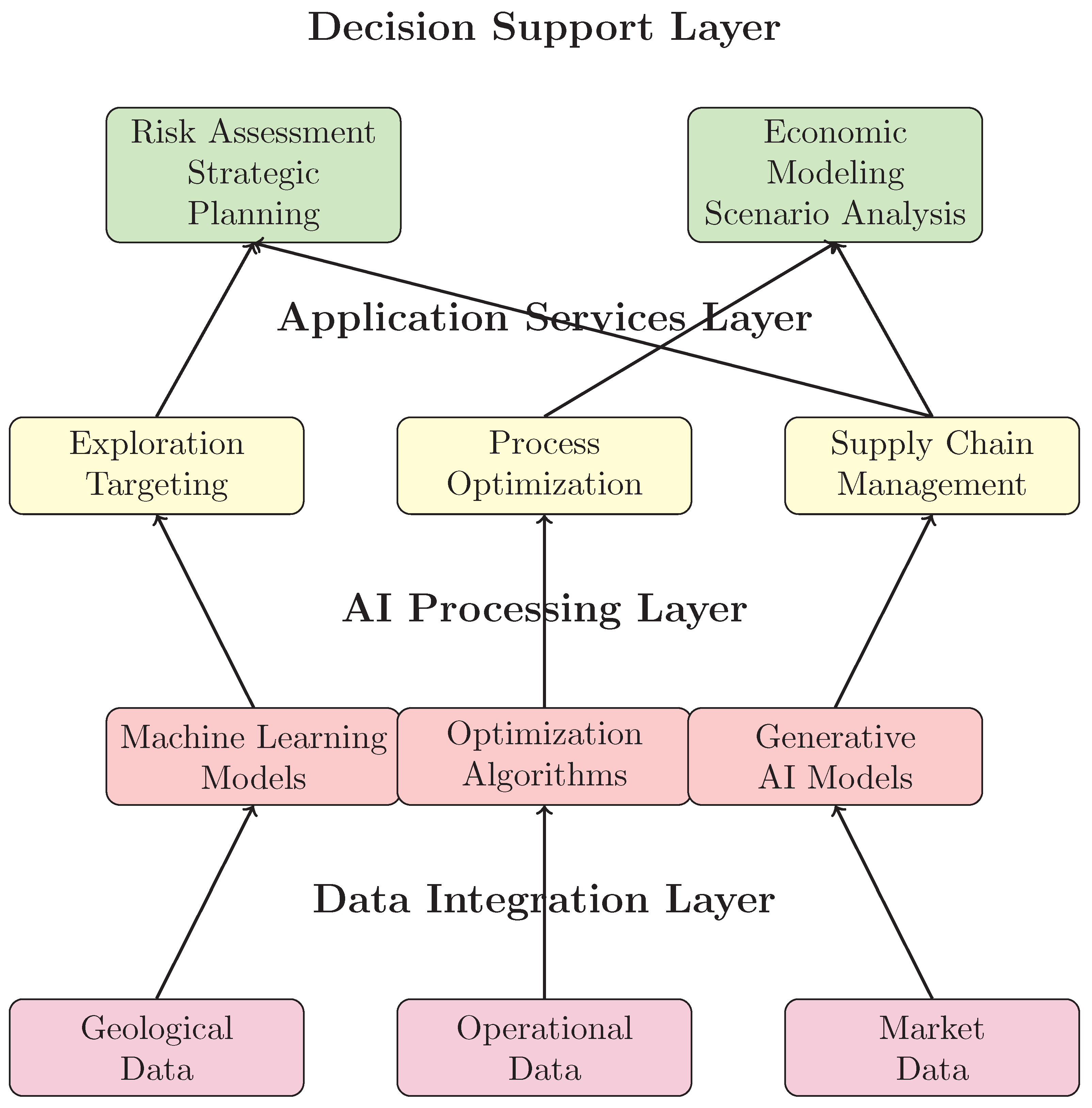
Figure 2.
Multi-Agent System Architecture for Mineral Exploration.
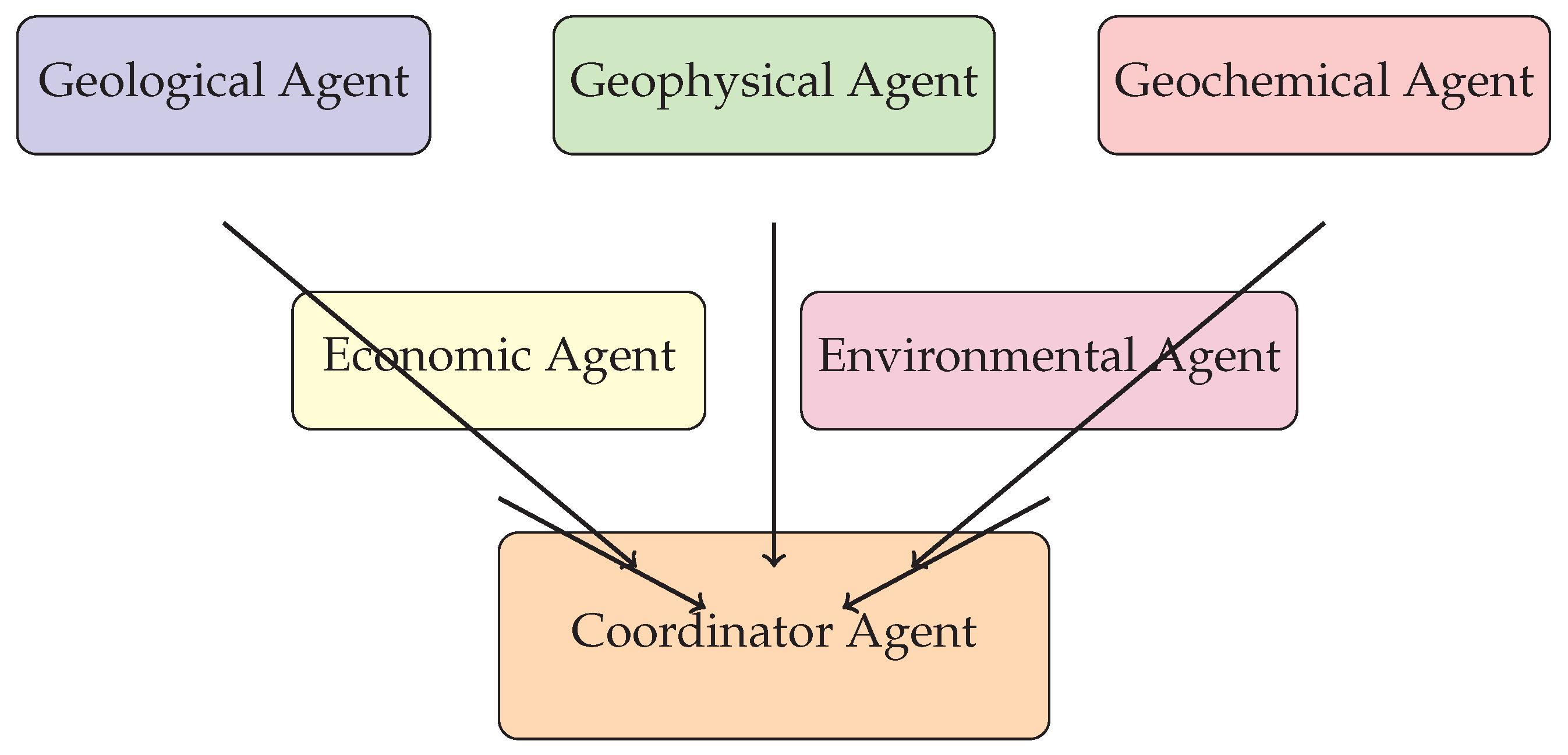
Figure 3.
Circular Economy Architecture for Rare Earth Elements.
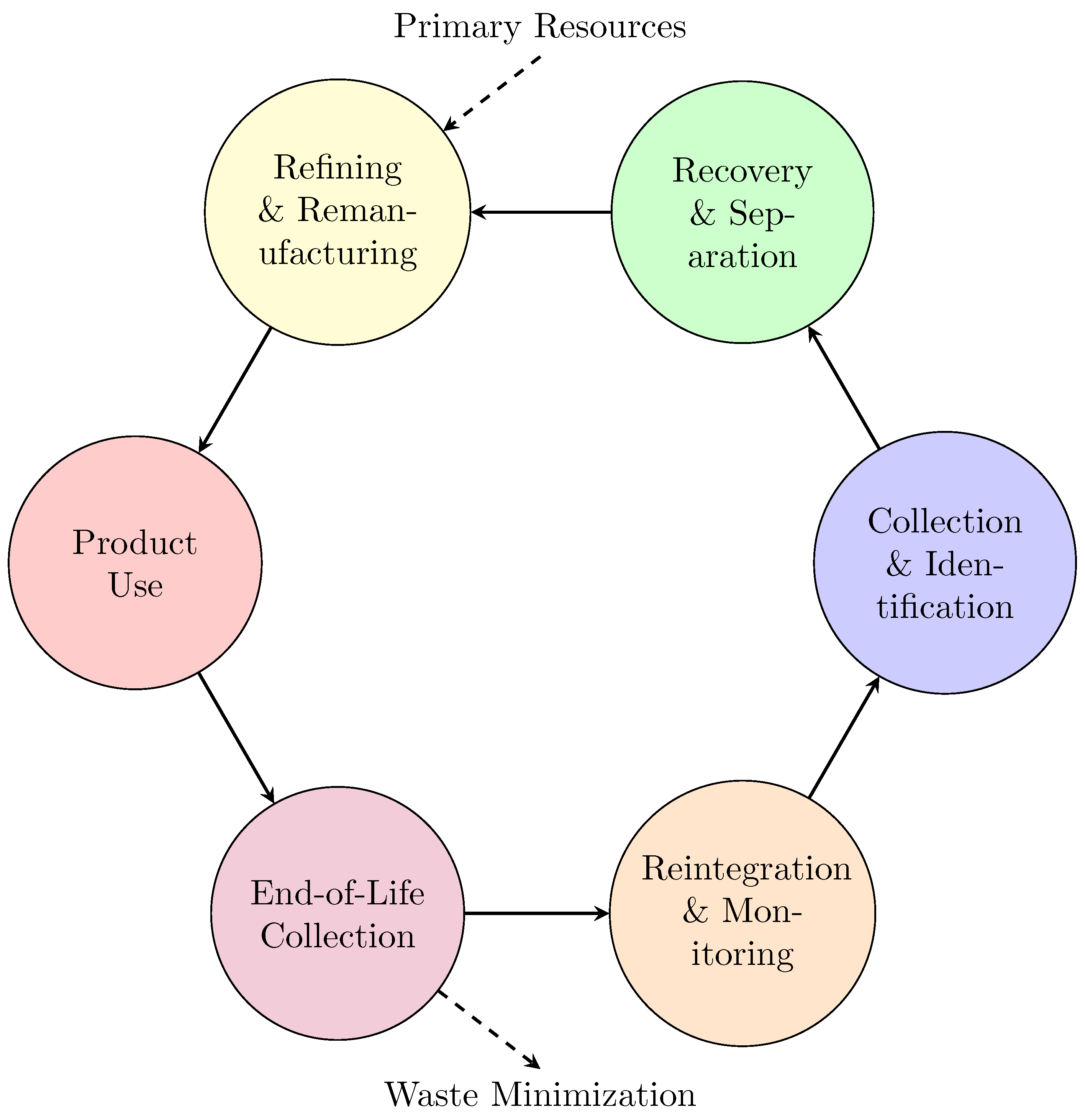
Figure 4.
Research and Innovation Ecosystem Architecture.
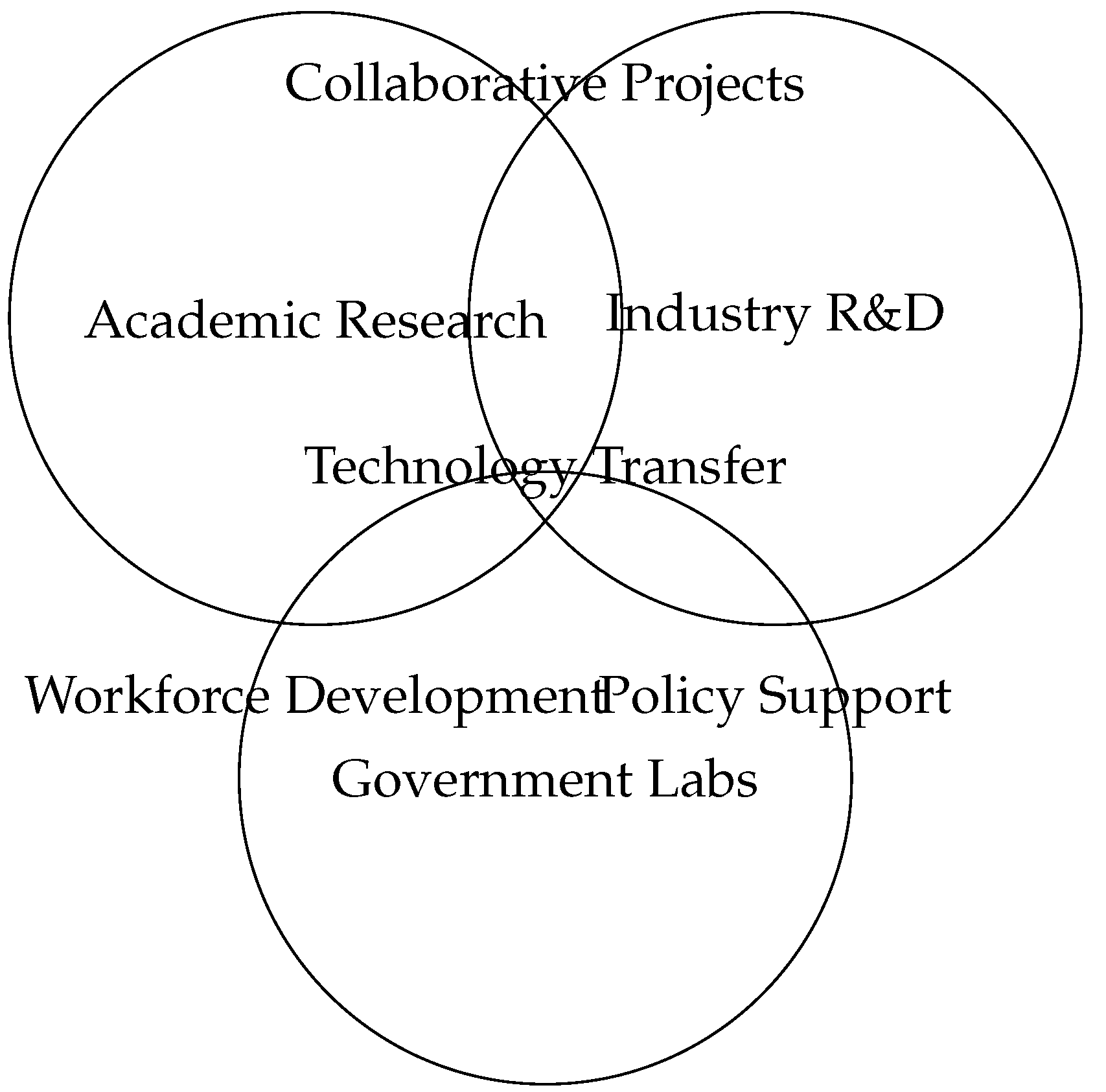

Table 1.
Educational Framework Components and Implementation Strategies.
| Component | Primary Functions | Implementation Timeline |
|---|---|---|
| K-12 Foundation | Basic earth sciences, critical minerals awareness, career pathway introduction | Short-term (1-2 years) [14] |
| Undergraduate Programs | Technical skills, interdisciplinary knowledge, AI applications | Medium-term (2-4 years) [9] |
| Graduate Research | Advanced research, innovation development, specialized expertise | Medium-term (2-5 years) [12] |
| Professional Development | Skill updates, technology adoption, continuing education | Ongoing [15] |
| Veteran Transition | Military skill translation, technical training, career placement | Short-term (1-3 years) [10] |
Table 2.
Supply Chain Resilience Framework Components.
| Component | Primary Objective | Key Technologies | Implementation Priority |
|---|---|---|---|
| Diversified Sourcing | Reduce single-source dependency | Supplier risk assessment, geopolitical analysis | High [8] |
| Strategic Stockpiling | Buffer against supply disruptions | Inventory optimization, demand forecasting | Medium [37] |
| Alternative Materials | Reduce critical element dependence | Materials informatics, generative design | High [38] |
| Recycling Infrastructure | Enhance secondary supply | Separation technologies, collection systems | Medium [31] |
| Information Sharing | Improve visibility and coordination | Blockchain, secure data platforms | Low [25] |
Table 3.
Architecture Implementation Roadmap and Timeline.
| Architecture | Short-Term (0-2 years) | Medium-Term (2-5 years) | Long-Term (5+ years) |
|---|---|---|---|
| Integrated AI Platform | Pilot implementations, data standardization | Full deployment, system integration | Continuous improvement, expansion |
| Multi-Agent Exploration | Specialized agent development | Agent coordination, field testing | Autonomous operation, learning optimization |
| Educational Framework | Curriculum development, platform design | Program rollout, assessment refinement | Workforce impact evaluation, continuous updating |
| Circular Economy | Collection infrastructure, process development | Scale-up, market development | Full circularity, minimal primary extraction |
| Supply Chain Resilience | Risk assessment, strategic stockpiling | Diversification, alternative materials | Full resilience, adaptive capabilities |
| Innovation Ecosystem | Collaboration platforms, knowledge management | Technology transfer, scale-up support | Self-sustaining innovation, global leadership |
Table 4.
Quantitative Summary of AI Implementation in REE Sector.
| Category | Metric | Estimated Impact |
|---|---|---|
| Federal Investment | DoD Education Funding | $6.5 million specific program [10] |
| Private Investment | Startup Funding | $49 million for AI extraction tech [41] |
| Exploration Efficiency | Discovery Timeline | Reduction from decades to months [43] |
| Materials Development | Magnet Design Time | 3 months vs. traditional approaches [44] |
| Workforce Demographics | Retirement Projection | 30-40% nearing retirement [10] |
| Market Position | China Processing Share | 80-90% of global capacity [2] |
Disclaimer/Publisher’s Note: The statements, opinions and data contained in all publications are solely those of the individual author(s) and contributor(s) and not of MDPI and/or the editor(s). MDPI and/or the editor(s) disclaim responsibility for any injury to people or property resulting from any ideas, methods, instructions or products referred to in the content. |
© 2025 by the authors. Licensee MDPI, Basel, Switzerland. This article is an open access article distributed under the terms and conditions of the Creative Commons Attribution (CC BY) license (http://creativecommons.org/licenses/by/4.0/).
Copyright: This open access article is published under a Creative Commons CC BY 4.0 license, which permit the free download, distribution, and reuse, provided that the author and preprint are cited in any reuse.


