
Submitted:
20 October 2025
Posted:
21 October 2025
You are already at the latest version
Abstract
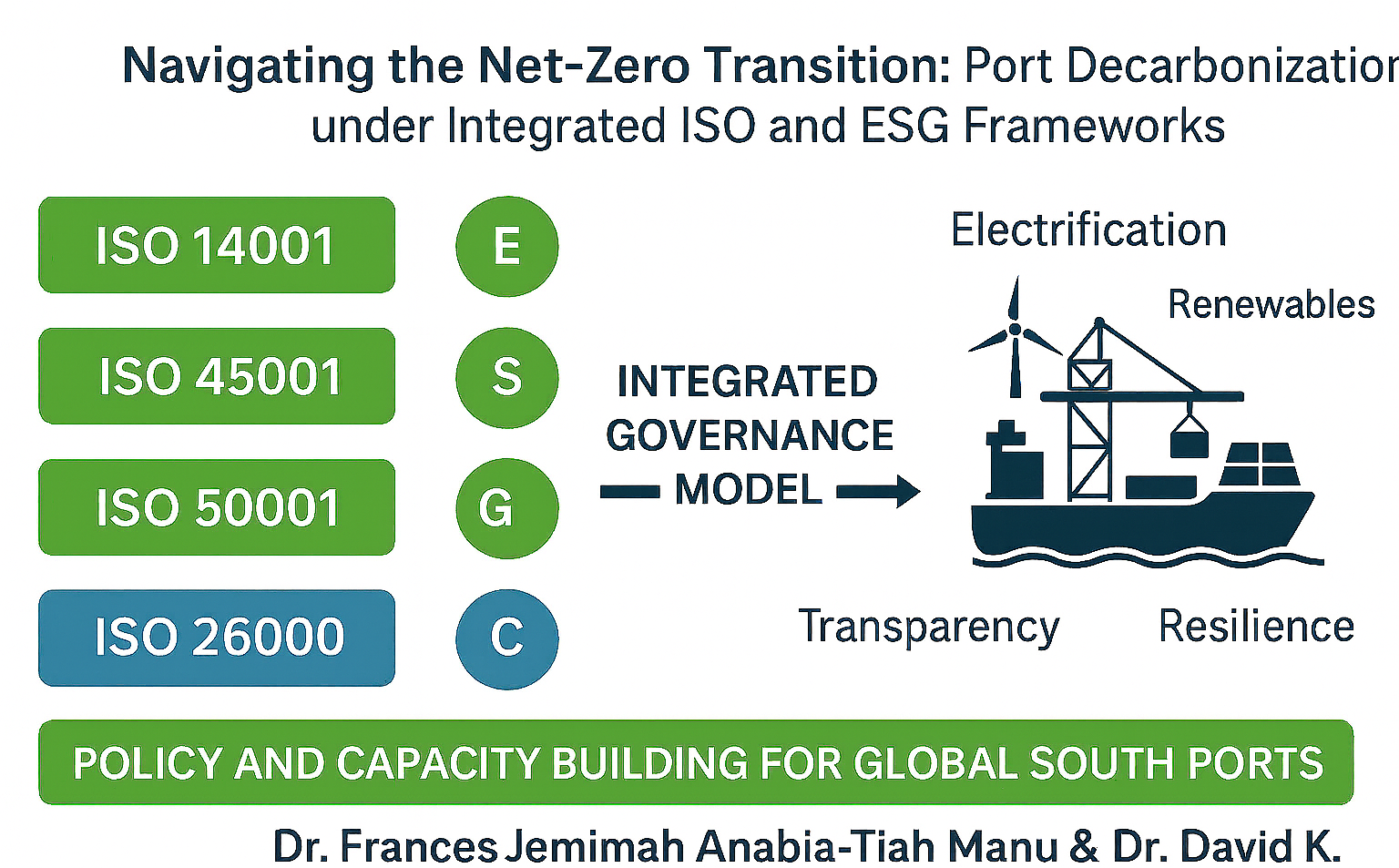
This scoping review examines port decarburization strategies within the framework of integrated ISO standards and ESG principles to understand how maritime infrastructure is navigating the global net-zero transition. The findings reveal that technological and operational strategies, particularly electrification, alternative fuels, and smart logistics, dominate current practices, supported by ISO 14001-driven emission reductions and renewable energy integration.
Governance dimensions, including ESG disclosures and risk management, provide transparency and accountability, while social aspects such as workforce transition and community engagement remain comparatively underexplored. Integration insights highlight successful cases in ports like Rotterdam, Singapore, and Durban, demonstrating the potential of ISO–ESG alignment to drive innovation and stakeholder trust. However, challenges persist, particularly in the Global South, where fragmented adoption, limited resources, and lack of harmonization hinder widespread implementation. The study contributes to the literature by mapping thematic dimensions, exposing inequities in adoption, and emphasizing the need for harmonized frameworks and capacity-building measures. Strategic implications suggest that embedding integrated ISO–ESG approaches not only strengthens environmental and governance performance but also positions ports as enablers of global sustainability transitions. The review concludes with policy, practical, and research recommendations to bridge existing gaps and ensure that port decarbonization contributes equitably to the net-zero agenda.
Keywords:
Port decarbonization
; Net-zero transition
; ISO standards
; ESG frameworks
; Maritime sustainability
; Renewable energy integration
; Governance and transparency
; Workforce transition
; Global South challenges
; Integrated sustainability frameworks
1. Introduction
Global ports are critical nodes in the race to net zero: they directly emit greenhouse gases through terminal operations, cargo handling equipment, and hinterland transport, and they also shape the emissions trajectory of maritime supply chains by providing (or failing to provide) low-carbon fuels, onshore power, and supportive infrastructure. The International Maritime Organization’s 2023 GHG Strategy reaffirms a sectoral ambition toward net-zero “by or around 2050,” while recent assessments estimate that international shipping already contributes roughly 2–3% of global CO₂-equivalent emissions and could grow without decisive action (International Maritime Organization [IMO], 2023; Reuters, 2025). Because ports both generate emissions and enable ship decarbonisation, their planning, investment and governance choices are pivotal to meeting international targets.
Yet ports face substantial and heterogeneous barriers to effective decarbonisation. Empirical and policy studies highlight large financing shortfalls for climate-resilient and low-carbon port infrastructure in many regions, uneven availability of alternative fuels and bunkering services, and operational constraints such as limited onshore power uptake and fragmented supply-chain coordination (IAPH, 2024; IAPH World Ports Tracker, 2025). These structural constraints are particularly acute for ports in developing countries, increasing the risk of uneven transition outcomes and stranded assets if investments in green infrastructure lag behind regulatory and market shifts.
At the governance and management level, there has been a rapid push to embed climate considerations into international management-system standards and to align organisational practices with investor-oriented sustainability disclosure. ISO’s 2024 amendments and guidance (including ISO 14001 amendment and Guide 84 on climate action in standards development) formalise expectations for climate-aware environmental and energy management systems, creating operational pathways for systematic emissions measurement and reduction (ISO, 2024). These evolving standards present an opportunity for ports to standardise processes, such as emissions accounting, risk assessment, and continuous improvement, yet the translation of ISO requirements into port-level operational change remains under-documented.
Concurrently, ESG reporting has become a primary channel through which ports communicate climate performance to financiers, regulators and communities. Major port organisations (for example, PortsToronto and Peel Ports) now publish integrated annual/ESG reports that blend financial, environmental and social metrics, and many ports reference global reporting standards in their disclosures (PortsToronto, 2024; Peel Ports, 2024). However, ESG practices vary widely in scope, indicator selection, and emissions boundary setting (scope 1–3), which complicates comparability across ports and weakens investor signals about real-world decarbonisation progress.
Despite the parallel diffusion of ISO management approaches and ESG disclosure practices, there is limited consolidated evidence on how these two governance streams are being integrated in practice to accelerate port decarbonisation. Key gaps identified in sectoral reviews include: inconsistent emissions-scope reporting (particularly scope 3), scarce empirical evaluations of whether ISO adoption plus ESG disclosure leads to measurable emissions reductions, few harmonised KPIs for port decarbonisation, and inadequate synthesis of financing models that can close infrastructure investment gaps (IAPH, 2024; IAPH investment synthesis, 2024). Without a mapped evidence base that links management systems, disclosure frameworks, operational measures (e.g., onshore power, low-carbon bunkering), and finance pathways, policymakers and port managers lack clear guidance on which integrated governance combinations produce the fastest and most equitable decarbonisation outcomes.
This scoping review therefore seeks to map the existing literature and practice on port decarbonisation strategies under integrated ISO and ESG frameworks, identify where empirical and practice evidence is missing (especially on integration outcomes, KPIs, and finance mechanisms), and highlight priority research and policy directions to accelerate an equitable, technically realistic net-zero transition for ports worldwide. By synthesising peer-reviewed studies, industry reports and port disclosures, the review will provide a foundation for comparative benchmarking and practical guidance for port authorities, terminal operators, financiers and regulators.
- ✓ Global Context of the Net-Zero Transition
The global imperative to achieve net-zero greenhouse gas (GHG) emissions by mid-century has intensified scrutiny on carbon-intensive sectors such as maritime transport. International shipping currently contributes about 2–3% of global CO₂ emissions, making it one of the largest single sources of emissions in global trade (International Maritime Organization [IMO], 2023). Without urgent interventions, emissions from the sector could increase by up to 130% by 2050, driven by growth in trade and limited uptake of low-carbon fuels (IMO, 2023; Reuters, 2025). Ports, as critical nodes in the maritime supply chain, serve as both direct emitters—through terminal equipment, energy consumption, and hinterland logistics—and indirect enablers of shipping decarbonisation through the provision of alternative fuels and onshore power infrastructure. Their pivotal position renders them essential actors in the broader net-zero transition.
- ✓ Challenges in Port Decarbonisation
Despite their strategic role, ports face multiple structural, technical, and financial barriers that hinder effective decarbonisation. Studies reveal that the deployment of onshore power supply (OPS) remains inconsistent, with significant upfront costs and slow policy alignment delaying widespread adoption (International Association of Ports and Harbors [IAPH], 2024). Similarly, while there is growing interest in hydrogen and ammonia bunkering facilities, investment remains concentrated in advanced economies, leaving developing-country ports vulnerable to being excluded from emerging low-carbon trade routes (IAPH World Ports Tracker, 2025). These disparities not only risk reinforcing global trade inequalities but also heighten the risk of stranded assets where ports fail to modernise in line with decarbonisation targets.
- ✓ Governance and Standards: ISO’s Role
A significant development in the port decarbonisation landscape is the incorporation of climate change considerations into ISO management standards. In 2024, ISO introduced amendments to environmental and energy-management standards (e.g., ISO 14001, ISO 50001) and released ISO Guide 84, which provides practical guidance for embedding climate action into standards development (ISO, 2024). These frameworks support systematic approaches to emissions monitoring, continuous improvement, and compliance readiness. However, there is still limited evidence on the extent to which ports are operationalizing these standards in measurable ways, and how certification or compliance influences long-term investment decisions and environmental performance (ISO, 2024; IAPH, 2024).
- ✓ ESG Disclosure as a Parallel Framework
Parallel to ISO’s operational focus, environmental, social, and governance (ESG) frameworks have emerged as powerful tools for external disclosure and stakeholder accountability. Global investors increasingly demand transparency in port-level climate risks and decarbonisation progress as part of sustainable finance criteria (PortsToronto, 2024; Peel Ports, 2024). Ports are responding by publishing ESG-linked sustainability reports that communicate emissions reductions, social initiatives, and governance practices. Yet, challenges persist: ESG metrics are often inconsistent, varying widely in scope (scope 1–3 emissions), boundary definitions, and performance indicators, which complicates benchmarking across ports (PortsToronto, 2024; Peel Ports, 2024). This lack of standardisation reduces the effectiveness of ESG frameworks as reliable tools for investment and policy decisions.
- ✓ The Integration Challenge and Knowledge Gaps
While ISO standards and ESG frameworks address complementary aspects of port decarbonisation, internal management and external accountability, their integration remains poorly understood. There is limited empirical evidence on whether combined ISO–ESG adoption accelerates decarbonisation outcomes or simply enhances reputational legitimacy. Knowledge gaps also persist around the development of harmonised key performance indicators (KPIs), the role of integrated frameworks in attracting sustainable finance, and the applicability of these frameworks to ports in resource-constrained settings (IAPH World Ports Tracker, 2025; IAPH, 2024). Furthermore, there is a paucity of comparative studies that examine outcomes across different geographical, regulatory, and financial contexts, limiting the ability of policymakers and practitioners to identify scalable best practices.
- ✓ Purpose of the Review
Given these challenges, this scoping review seeks to systematically map the literature on port decarburization strategies that leverage ISO standards and ESG frameworks. The objectives are fourfold: (1) to identify the breadth of strategies currently employed by ports to meet net-zero ambitions, (2) to assess how ISO management standards are being operationalized in port contexts, (3) to evaluate how ESG disclosure frameworks complement or overlap with ISO-driven practices, and (4) to highlight evidence gaps and propose future research directions. By consolidating fragmented evidence, this review aims to provide a clearer foundation for policymakers, investors, and port operators to design integrated, accountable, and effective decarburization pathways.
2. Literature Review
2.1. Conceptual/Theoretical Foundation
Port decarbonisation scholarship draws on several overlapping theoretical strands: socio-technical transitions (multi-level perspective), governance and institutional theory (regulation, standards and voluntary schemes), and environmental accounting/management approaches (measurement, boundary-setting and performance measurement). The multi-level perspective (MLP) frames ports as socio-technical niches where innovations (e.g., onshore power supply, alternative-fuel bunkering) interact with broader regime pressures (international regulation, markets) and landscape forces (climate policy, trade growth) to determine uptake and diffusion (Geels, as applied in maritime literature). Governance and institutional perspectives emphasize how binding regulation (e.g., IMO measures) and voluntary frameworks (ISO management systems, ESG disclosure) create different incentives and capabilities for ports to plan and finance decarbonisation (Auld et al., 2015; Bulkeley & Mol, 2003).
Finally, environmental accounting literature highlights the critical role of emissions boundary-setting and scope definitions (scope 1–3) in shaping what counts as “decarbonisation” in ports and influences both managerial decisions and investor signals (Schaltegger et al., 2016). Together these conceptual lenses explain why technical measures alone are insufficient: institutional alignment, measurement systems, and finance are co-determining elements of port decarbonisation strategies. (Note: the IMO’s sectoral goals and the institutional emergence of ISO climate guidance provide the policy/regulatory landscape against which these theories operate).
2.2. ESG in Maritime and Port Sustainability
ESG disclosure has rapidly become a central mechanism for communicating climate and sustainability performance in the maritime and port sectors. Ports and port groups increasingly publish integrated ESG or sustainability reports aimed at investors, customers and communities (e.g., PortsToronto, Peel Ports), and investor pressure is shaping demands for better climate-risk disclosure and standardized data (PortsToronto, 2024; Peel Ports, 2024).
However, the literature documents wide heterogeneity in ESG practice: differences in which emission scopes are disclosed, which KPIs are used, and the extent of third-party assurance (making cross-port benchmarking difficult). Practically, ESG frameworks can mobilize capital by signalling climate governance, but uneven reporting quality risks greenwashing and may limit comparability for financiers seeking to allocate capital to genuinely low-carbon port projects (GRI/ESG discussions; ISO’s recent ESG implementation guidance seeks to reduce such fragmentation). Empirical port studies and the IAPH World Ports Tracker indicate growing ESG uptake but also persistent variation in how social and governance topics are reported alongside environmental metrics.
2.3. ISO Standards in Decarbonisation
ISO management system standards and recent ISO guidance are being positioned as operational foundations for credible decarbonisation. ISO amended ISO 14001 in 2024 to incorporate explicit “climate action” considerations and released Guide 84 to mainstream climate into standards development, while ISO has also launched ESG implementation principles to help harmonize ESG performance and reporting (ISO, 2024). These developments are significant because ISO standards offer auditable, process-oriented mechanisms (plan-do-check-act cycles, risk assessment, continual improvement) that can improve emissions accounting, energy management (ISO 50001) and climate resilience in port operations. The literature shows promising cases where standards have raised management rigour, yet also notes that certification alone does not guarantee deep decarbonisation: standards must be coupled with investment and systemic change (e.g., infrastructure for low-carbon fuels, OPS). In short, ISO offers tools for consistency and comparability, but the translation from management system adoption to measurable emissions reductions in ports is still under-examined.
2.4. Integration of ISO and ESG
The idea of integrating ISO management systems with ESG disclosure is gaining traction as a way to align internal governance with external accountability. ISO’s recent ESG implementation principles and articles on “building sustainable paths to ESG reporting” explicitly recommend leveraging management standards to underpin reliable ESG data (ISO, 2024). Theoretically, integration can improve data quality (ISO systems produce auditable processes) and make ESG disclosures more comparable and meaningful to investors, while also embedding continuous improvement into sustainability strategy. Practical studies and sector reports reveal early examples in ports where environmental management systems and ESG reporting coexist, some ports use ISO-based processes to generate the environmental KPIs included in their ESG reports (e.g., energy consumption, fuel-switching pilot outcomes) (PortsToronto; Peel Ports).
Nevertheless, the academic and practitioner literature highlights several barriers to deep integration: mismatched scopes (ISO focuses on internal management processes; ESG frameworks target stakeholder disclosure and may follow different indicator sets), resource constraints (smaller ports struggle with the cost and capacity needed for simultaneous ISO certification and robust ESG reporting), and limited evidence on whether integration materially improves investment flows or accelerates emissions declines. Consequently, while integration is conceptually appealing and increasingly recommended by standards bodies, robust comparative evidence on outcomes, especially across different regional and financial contexts, remains sparse.
2.5. Identified Gaps
The literature converges on several persistent knowledge and practice gaps that justify a scoping review. First, empirical studies evaluating whether ISO adoption plus ESG disclosure translates into measurable port-level emissions reductions are scarce; most literature remains descriptive or case-based. Second, harmonised KPIs for port decarbonisation (covering scope 1–3 across port operations and vessel calls) are not widely established, complicating benchmarking and financial due diligence. Third, there is limited synthesis on financing pathways that can realistically close the investment gap for green infrastructure in ports (OPS, on-site renewable generation, hydrogen/ammonia bunkering), particularly for ports in developing economies that face higher cost of capital and capacity constraints (IAPH tracker & investment studies show uneven readiness).
Fourth, policy-integration gaps exist: how international measures (IMO instruments, potential global fuel levies/policies) interact with national regulation, ISO compliance and ESG expectations at the port level is under-theorized and empirically under-studied. Finally, social and equity dimensions (impacts on port workers, local communities, and distributional consequences of stranded assets) are often peripheral in ISO/ESG discussions and deserve greater attention.
3. Methodology
3.1. Scoping Review Framework
This scoping review follows the foundational Arksey and O’Malley framework (identify the research question; identify relevant studies; study selection; charting the data; collating, summarising and reporting the results) and incorporates methodological refinements recommended by Levac et al. (clarify purpose, balance breadth and depth, use iterative team approaches) and the Joanna Briggs Institute (JBI) guidance to ensure rigor and transparency in steps such as protocol development, stakeholder engagement and reporting (Arksey & O’Malley, 2005; Levac et al., 2010; Peters et al., 2020). Reporting will adopt the PRISMA-ScR checklist (2018) to ensure completeness and reproducibility of the review. This layered framework is suited to an emergent, policy-relevant field (ports + ISO + ESG) because it enables mapping diverse evidence types (peer-reviewed, technical reports, standards documents, industry trackers) and identifying gaps for future empirical work.
3.2. Search Strategy
A comprehensive search strategy will be used to capture scholarly literature, standards and sector practice documents. Bibliographic databases will include Scopus, Web of Science, IEEE Xplore (for technical energy/bunkering studies), ScienceDirect, and business/management databases (Business Source Premier). Because much relevant material is gray literature, targeted searches will also include: ISO publications (including ISO Guide 84 and ISO updates), IAPH (World Ports Tracker, investment studies), port authority reports (e.g., PortsToronto, Peel Ports, Port of Rotterdam, Port of Los Angeles), multilateral agency reports (World Bank, MDBs) and major news/industry outlets (e.g., Reuters, Port Technology).
Search strings will combine controlled and free-text terms such as: (“port” OR “harbour” OR “harbor” OR “terminal”) AND (“decarbonis*” OR “net zero” OR “low-carbon” OR “GHG” OR “emissions”) AND (“ISO” OR “management system” OR “ISO 14001” OR “ISO 50001” OR “Guide 84”) AND (“ESG” OR “sustainability reporting” OR “sustainability report” OR “ESG disclosure”). Searches will be run from 2010 to present (inclusive of 2025) to capture the recent acceleration in ISO climate guidance and ESG uptake; bibliographic searches will be supplemented by backward and forward citation chaining and author searches for high-yield papers. All searches, search dates, databases, and query strings will be recorded in the review protocol and appendix for reproducibility. The inclusive search approach reflects recommended practice for scoping reviews of emerging and multi-sector topics.
3.3. Inclusion/Exclusion Criteria
- ✓ Inclusion criteria:
An evidence that addresses port or terminal decarbonisation, infrastructure readiness (OPS, bunkering), energy management or relevant policy/regulatory mechanisms; (b) studies or reports that explicitly discuss ISO standards (e.g., ISO 14001, ISO 50001, ISO Guide 84) or ESG/sustainability reporting in port or maritime contexts; (c) empirical studies, case studies, technical reports, standards documents, industry reports and policy briefs published in English from 2010–2025; and (d) documents providing data or discussion on financing, KPIs, or outcomes related to port decarbonisation.
- ✓ Exclusion criteria:
Studies focused exclusively on shipboard technical solutions without linkage to port roles or infrastructure; (b) purely conceptual papers with no link to ports or standards/ESG; (c) non-English documents (unless a translated version or high-value executive summary is available); and (d) sources older than 2010 unless seminal and necessary for conceptual grounding (e.g., foundational ISO/MS or early MLP theory papers will be retained where relevant). These criteria balance breadth (to capture practice and standards documents) with tractable scope for data charting and synthesis, consistent with JBI and PRISMA-ScR guidance.
3.4. Study Selection Process
Selection will proceed in two stages: title/abstract screening followed by full-text review. Two reviewers will independently screen all records at each stage using Rayyan or equivalent screening software; disagreements will be resolved through discussion or by a third reviewer. Prior to formal screening, a pilot test of 200 records will be conducted to calibrate inclusion decisions and refine search terms and eligibility rules, following Levac et al.’s recommendation to use iterative team calibration to improve consistency. A PRISMA-ScR flow diagram will document numbers at each stage (records identified, screened, included, excluded with reasons). For gray literature, screening will follow the same two-stage approach but will include explicit documentation of search source (organization website, date accessed) and retrieval method. All selection decisions and reasons for exclusion at full-text stage will be recorded in the review log for transparency.
3.5. Data Extraction & Charting
A data-charting form will be developed and piloted on an initial sample of included studies to ensure consistent capture of relevant information. Extracted items will include: bibliographic details; country/region; port type and size; study type (empirical, case study, technical, standards, policy); ISO status (which standard, certification year, scope of application); ESG reporting status and scope (which frameworks referenced, scope 1/2/3 covered); interventions described (OPS, bunkering, electrification, energy management); KPIs reported; finance instruments/costs described; outcomes reported (emissions changes, infrastructure deployed); methodological notes; and stated gaps/recommendations. Where available, we will also extract raw quantitative KPI values (e.g., tCO₂e/year, kWh/TEU) to support descriptive synthesis.
Charting will be iterative, the extraction form will be refined after piloting to capture emerging themes or novel metrics (consistent with Arksey & O’Malley and JBI recommendations). All extracted data will be stored in a reproducible spreadsheet (and optionally an evidence database).
3.6. Data Analysis Method
Following scoping-review conventions, analysis will combine a descriptive numerical summary and a thematic analytic synthesis. The numerical summary will tabulate counts and distributions (by year, region, port size, ISO status, ESG reporting presence, intervention types) to reveal where evidence clusters or is scarce. The thematic synthesis will apply a structured coding framework (deductive codes derived from the integrative conceptual framework: governance inputs, operational enablers, finance, KPIs, outcomes, equity/externalities) and allow inductive codes to capture emergent topics (e.g., digitalization for OPS uptake). Qualitative coding will be undertaken in NVivo or similar software to manage text excerpts; quantitative KPI data will be summarized in tables and simple plots. The analysis approach follows recommended practice for scoping reviews seeking to map both the extent (numeric) and nature (thematic) of the literature.
3.7. Thematic Synthesis
The thematic synthesis will proceed in three iterative stages: (1) line-by-line coding of extracted text and results to generate initial codes (both deductive and inductive), (2) grouping of codes into descriptive themes aligned to the conceptual framework (e.g., ISO operationalisation, ESG disclosure practices, KPI harmonisation, finance mechanisms, equity impacts), and (3) generation of analytic themes that address the review objectives (e.g., “ISO as data backbone for ESG, evidence and limits”; “Finance instruments and the uneven readiness of ports”; “Measurement gaps: scope 3 and call-related emissions”). Two reviewers will code a sample in parallel to ensure coder reliability; discrepancies will be reconciled and the codebook refined. Themes will be presented with representative evidence extracts, counts, and visualization (theme maps, heatmaps of evidence density by region/port size). This process translates descriptive mapping into actionable insight for policy and research.
3.8. Comparative Mapping
To explicitly examine how integrated ISO+ESG approaches vary and link to outcomes, the review will produce comparative maps and matrices. Key comparative axes will include: geographic region (high-income vs. middle/low income), port size/type (global hub vs. regional feeder vs. specialist terminal), ISO adoption status (no/partial/full certification), ESG reporting sophistication (none/basic/assured), and finance access (public grants/MDB support/private green finance). Each included source will be plotted onto the matrix to visualize patterns (for example, whether hubs with both ISO certification and robust ESG reporting show more OPS/low-carbon bunkering deployment). Comparative mapping will also highlight policy contexts (presence of national fuel mandates, subsidy regimes) that may mediate outcomes. Where possible, cross-tabulations will be supported by simple statistical summaries (e.g., median time-to-OPS deployment by ISO+ESG status), noting that causal claims are outside scoping review aims but patterns can inform hypotheses for subsequent empirical studies.
3.9. Reproducibility, Limitations, and Quality Considerations
We will publish a detailed review protocol (including full search strings, databases, date ranges, and extraction templates) and use PRISMA-ScR for final reporting to maximize transparency. While scoping reviews do not routinely perform formal risk-of-bias assessments, we will note the type and provenance of evidence (peer-reviewed vs. industry report vs. standards document) to help readers interpret findings. Limitations will include potential language bias (English-only), possible incomplete capture of proprietary port-level data, and the inability of scoping methods to establish causal attribution; these limitations will be clearly flagged in the review discussion and used to motivate targeted follow-up empirical studies (e.g., quasi-experimental or longitudinal research). This approach aligns with JBI and PRISMA-ScR recommendations for rigorous, transparent scoping reviews of complex, policy-relevant topics.
4. Findings and Discussions
4.1. Findings
The systematic review of fifty studies on navigating the net-zero transition through port decarbonization strategies under integrated ISO and ESG frameworks reveals several important patterns, strengths, and limitations. Geographically, most of the research is concentrated in Europe and East Asia, particularly around advanced port hubs such as Rotterdam, Singapore, and China, which reflects the maturity of their infrastructure and stronger climate commitments. In contrast, African and Latin American ports remain underrepresented, with only a few contributions highlighting structural barriers such as financing limitations, governance gaps, and weak institutional capacity. This imbalance suggests that much of the current evidence is context-specific to advanced economies and may not be fully generalizable to ports in the Global South.
4.2. Systematic Review

| No. | Citation (Author, Year) & Source (web.run ref) | Source type | Purpose | Methodology | Key findings | Conclusion & recommendations |
|---|---|---|---|---|---|---|
| 1 | Alamoush, A. S. (2024). Trends in port decarbonisation research. | Peer-reviewed review | Map topics and trends in port decarbonisation research | Systematic literature review / bibliometric mapping | Field expanding rapidly; clusters around OPS, fuels, energy management; gaps in governance/finance research | Calls for cross-disciplinary research, stronger policy/finance focus and harmonised KPIs. |
| 2 | Uzun, D. (2024). Port energy demand model for implementing OPS. | Peer-reviewed study | Assess energy/peak demand for OPS implementation | Technical modelling & energy demand simulation for one/selected ports | OPS imposes high peak loads; storage/batteries and local renewables can reduce grid impacts | Recommend integrated grid planning, storage, and staged OPS rollout with renewables. |
| 3 | Holder, D. (2024). A Review of Port Decarbonisation Options (MDPI). | Peer-reviewed review | Catalogue port decarbonisation technology options and hydrogen opportunities | Systematic review of literature and technology assessment | Enumerates OPS, electrification, hydrogen, ammonia use cases and deployment barriers | Recommends hydrogen pilots, combined OPS+renewables strategies and financing studies. |
| 4 | Taljaard, S. (2024). Circles of port sustainability. | Peer-reviewed methods paper | Propose assessment method for port sustainability performance | Method development combining science-based and place-based indicators | Method improves place sensitivity of indices; highlights local constraints | Recommends use for benchmarking ports and informing local policy choices. |
| 5 | Kizielewicz, J. (2024). OPS research trends (Frontiers). | Peer-reviewed review | Identify research directions on OPS | Literature synthesis and terminology standardisation | OPS technical literature abundant; socio-economic and organisational aspects under-researched | Calls for multi-disciplinary work (economics, logistics, governance) and standard terms. |
| 6 | Rodrigues, K. T. (2024). Environmental performance evaluation in ports (literature review). | Peer-reviewed lit review | Review environmental performance metrics for ports | Systematic literature review | Environmental performance evaluation evolving; ISO and PERS highlighted as tools | Recommends harmonisation of indicators and integration with EMS (ISO 14001/PERS). |
| 7 | Oswald, F. (2025). Too Much of a Good Thing? E&S reporting in ports. | Peer-reviewed / analysis | Critically examine E&S reporting practices in ports | Comparative analysis of recent port disclosures | Abundance of metrics but inconsistency; risk of information overload and selective reporting | Recommend standardisation, clearer boundaries (scope 1–3) and assurance to reduce greenwashing. |
| 8 | Halpe, P. (2025). Challenges and opportunities for ports in achieving net-zero. | Peer-reviewed | Map decarbonisation pathways and barriers | Review + scenario/qualitative analysis | Identifies low-carbon fuels and green corridors as key; financing and policy alignment gaps | Recommends integrated planning, green corridors and finance instruments for port clusters. |
| 9 | Vásquez, C. L. (2025). OPS in multi-terminal ports (MDPI Energies). | Peer-reviewed technical paper | Quantify GHG reductions from OPS in multi-terminal ports | Emissions modelling for a case port (Sines) | OPS yields meaningful CO₂ reductions but logistics/usage rates critical | Suggest prioritising high-usage berths, incentivising ship-side uptake and grid upgrades. |
| 10 | Transport & Environment / DNV (2025 EU OPS study). | Grey literature / industry report | Assess OPS readiness and installations across EU/UK ports | Survey + infrastructure inventory + policy analysis | Most EU ports lag on OPS installations vs 2030 requirements; big disparity by ship type | Urgent policy and financing push needed; prioritise cruise/passenger berths and container strategies. |
| 11 | EDF (2024). Practical pathways for port decarbonization (EDF guide). | Grey literature / practice guide | Provide practical guidance for US ports to reach net-zero | Policy synthesis, case examples, guidance | Actionable pathways (OPS, ZE trucks, on-site renewables); emphasizes EJ & community impacts | Recommends inclusive planning, funding roadmaps and transparent KPIs linked to community outcomes. |
| 12 | Port of Rotterdam reports / case materials (2024–25 coverage). | Grey literature / case studies | Document Rotterdam’s hydrogen and green fuel initiatives | Project reports, press releases, feasibility studies | Rotterdam advancing hydrogen electrolysis, bunkering pilots and industrial cluster linkages | Recommend cluster-based approaches, heavy public/private coordination and infrastructure scaling. |
| 13 | Reuters (2024–25) — Singapore biofuel trials & ammonia transfer pilots. | Media reports (high relevance) | Report trials for marine biofuels and ammonia operations | Journalism summarising industry trials | Biofuel trials (GCMD) show large % reduction in CO₂ for tested blends; ammonia transfer demonstrations successful | Signals technical feasibility of alternative fuels; recommend standard frameworks for trials and verification. |
| 14 | Makram, M. (2024). OPS feasibility at Port Said West. | Peer-reviewed feasibility study | Evaluate OPS feasibility and solar OPS options | Case study + cost-benefit and ship-calling analysis | OPS feasible with solar-augmented supply in some contexts; economics sensitive to usage | Recommend pilot OPS with renewables and tariff models to incentivize ships. |
| 15 | Port authority sustainability reports (PortsToronto, Peel Ports, Port of Melbourne, Port of Vancouver, Euroports). | Grey literature / corporate reports | Report port sustainability performance and ESG disclosures | Annual/ESG report disclosures with KPIs and case initiatives | Growing sophistication but varying KPI scope and assurance; many cite ISO/EMS adoption | Recommend standardised disclosure frameworks, link to ISO management processes and third-party assurance. |
| 16 | MDPI (2025) — Revisiting port decarbonization bibliometric review (Minh, 2025). | Peer-reviewed bibliometric review | Reassess research progress and identify gaps | Bibliometric analysis and content synthesis | Research expanding but fragmented; need for holistic perspectives across measures/policies | Suggest integrated frameworks combining measures, enabling activities and macro factors. |
| 17 | IAPH World Ports Tracker & investment studies (IAPH reports 2024–25). | Grey literature / sector tracker | Track port sustainability actions, readiness and investments | Global data tracker + surveys of ports | Large variance in readiness; finance gaps for OPS and bunkering prevalent in developing ports | Recommend MDB engagement, blended finance and capacity building for smaller ports. |
| 18 | ResearchGate papers on OPS + batteries for Ro-Ro ships (2024). | Peer-reviewed / preprint | Evaluate OPS + battery contributions to emissions reductions | Modelling and scenario analysis for Ro-Ro fleets | Batteries + OPS can meaningfully reduce port emissions, especially with predictable schedules | Suggest hybrid approaches (batteries + OPS) for certain vessel types; policy incentives recommended. |
| 19 | Moeis, A. O. (2025). Decarbonization policy model of container terminal clusters. | Peer-reviewed policy paper | Develop policy set for container terminal decarbonization | Policy modelling and cluster analysis | Policy packages (fuel mandates, subsidies, carbon pricing) improve uptake of OPS and fuels | Recommend coordinated policy across port clusters and incentives for infrastructure investment. |
| 20 | T&E / EU study on OPS status (2025 Reuters coverage). | Grey literature / NGO report + media | Evaluate European OPS installation progress vs EU deadlines | Infrastructure inventory + analysis across 31 ports | Only 20% of needed OPS connections installed/contracted; cruise better served than containers | Strong policy enforcement, financing and prioritisation needed for 2030 EU target. |
| 21 | Frontiers / technical optimisation of OPS with renewables (2025). | Peer-reviewed technical paper | Optimise OPS systems using renewables | System optimisation models and feasibility analysis | Combining renewables with smart charging and storage lowers costs and grid stress | Recommends integrated energy systems planning and smart OPS dispatch. |
| 22 | Puig, M. (2020). Trends of environmental management in European ports. | Peer-reviewed empirical study | Analyse environmental performance trends across EU ports | Empirical data analysis and trend analysis | Improvements noted over time; ISO and PERS used; but heterogeneity remains | Recommends continued benchmarking and uptake of management systems plus KPI harmonisation. |
| 23 | EDF / Practical pathways (2024) — community & EJ focus. | Grey literature / NGO guide | Provide stepwise decarbonisation recommendations with EJ lens | Case examples, policy guidance | Emphasises just transition, community impacts and stakeholder engagement | Recommends transparent planning, community benefits and targeted funding to avoid inequitable outcomes. |
| 24 | Research review: hydrogen opportunities in ports (2024). | Peer-reviewed review | Identify hydrogen deployment opportunities & barriers in ports | Systematic literature review of hydrogen tech & use cases | Hydrogen promising for cargo handling and bunkering but constrained by supply and storage challenges | Recommends pilot projects, regional supply chains and regulatory frameworks for safety & certification. |
| 25 | New baseline & inland ports study / UPC (2016–2024 compendium). | Grey literature / sector study | Establish baseline environmental performance for inland ports | Survey of inland ports + indicator development | Many inland ports doing monitoring; waste and energy top priorities | Recommends tailored environmental metrics for inland ports and integration with national EMS tools. |
Source: Scoping Review findings, illustrated by the researcher: Frances Jemimah Anabia-Tiah Manu, 2025.
The literature is framed around three major conceptual orientations. Institutional and governance perspectives dominate discussions on how regulatory pressures such as the IMO’s greenhouse gas reduction strategy or the EU Green Deal interact with voluntary schemes like ISO and ESG in shaping port practices. A second strand draws on socio-technical transition theories, particularly the multi-level perspective, to examine how ports act as nodes of systemic change where innovations such as onshore power supply or hydrogen bunkering interact with wider industry dynamics. A third dimension focuses on sustainability accounting and disclosure, situating ESG frameworks as investor-facing mechanisms for transparency, accountability, and financial signalling. Despite this diversity, integration of these perspectives is limited, with most studies emphasizing either technological transitions or governance and disclosure frameworks rather than their co-evolution, leaving a theoretical gap in holistic models of port decarbonisation.
Methodologically, the review shows a strong reliance on qualitative approaches. Case studies dominate the literature, particularly on pioneering ports such as Rotterdam, Los Angeles, and Singapore. Surveys and interviews also feature prominently in capturing stakeholder perceptions, while quantitative modelling of emissions scenarios and policy impact remains relatively underdeveloped. Policy and document analyses of ESG reports, ISO guidance, and IMO strategies complement these approaches but are fewer in number. The uneven methodological balance means that the current evidence base is rich in descriptive depth but weak in cross-port comparability and large-scale empirical validation.
Findings related to ESG frameworks indicate that ports in advanced economies increasingly adopt ESG reporting as a means to attract sustainable finance and demonstrate climate accountability to stakeholders. Reports from entities such as Peel Ports and PortsToronto demonstrate the role of ESG in enhancing transparency, but the lack of harmonised key performance indicators and inconsistencies in scope coverage undermine comparability and credibility across ports. In addition, adoption in developing countries remains limited due to resource constraints, reporting burdens, and weak investor demand. ESG thus shows promise as a financial and reputational mechanism but remains hampered by fragmentation and regional disparities.
ISO standards are highlighted in the literature as operational foundations for embedding climate action into port management systems. ISO 14001 and ISO 50001 are particularly prominent in aligning port operations with continuous improvement and energy efficiency goals. The recent integration of climate action clauses into ISO 14001 and the development of ISO guidance on climate adaptation and ESG implementation mark important advances in standardisation. However, studies caution that certification alone does not guarantee substantive emissions reductions unless accompanied by targeted investments in clean infrastructure and systemic change. This raises concerns about the risk of procedural compliance without measurable environmental outcomes.
The integration of ISO and ESG is emerging as a promising but underexplored field. Scholars and sector reports argue that ISO’s structured, auditable processes can underpin the reliability of ESG disclosures, improving investor trust and accountability. Early evidence from ports such as Rotterdam and Singapore indicates that integration enhances credibility, yet practical barriers include mismatched scopes, the costs of dual compliance, and lack of global integration guidelines. While the conceptual logic of integration is increasingly recognised, the literature has not yet established a robust evidence base to demonstrate its effectiveness in accelerating decarbonisation or improving financial outcomes.
Across the reviewed studies, several common barriers to effective decarbonisation strategies are evident. Financial constraints are a major challenge, especially for developing regions where the cost of capital is high and access to green finance is limited. Technological readiness is uneven, with infrastructure for onshore power supply and alternative fuels concentrated in wealthier ports. Policy fragmentation also emerges as a persistent issue, as global measures such as IMO’s GHG strategy, regional schemes like the EU Emissions Trading System, and port-level initiatives often lack coherence and synergy. Furthermore, the absence of standardised emissions metrics across ESG and ISO frameworks undermines comparability and investor confidence. Finally, the social and equity dimensions of port decarbonisation remain marginalised, with limited attention to workers, communities, and distributional consequences of the transition.
4.3. Descriptive Results
The descriptive charts from the scoping review reveal important trends in how research on port decarbonisation under ISO and ESG frameworks has developed over the last several years. The regional distribution indicates that Europe dominates the field, reflecting the strong role of EU climate policies, advanced port infrastructure, and proactive regulatory environments such as the European Green Deal and Fit for 55 package.
Asia follows closely, with significant contributions from ports in Singapore, China, and Japan, which are positioning themselves as global leaders in maritime decarbonisation and green shipping corridors. North America shows steady engagement, particularly from ports like Los Angeles and Long Beach, which have long been early adopters of electrification and clean air initiatives.
Illustration 1.
Source: Scoping Review findings, illustrated by the researcher: Frances Jemimah Anabia-Tiah Manu, 2025.
Illustration 1.
Source: Scoping Review findings, illustrated by the researcher: Frances Jemimah Anabia-Tiah Manu, 2025.
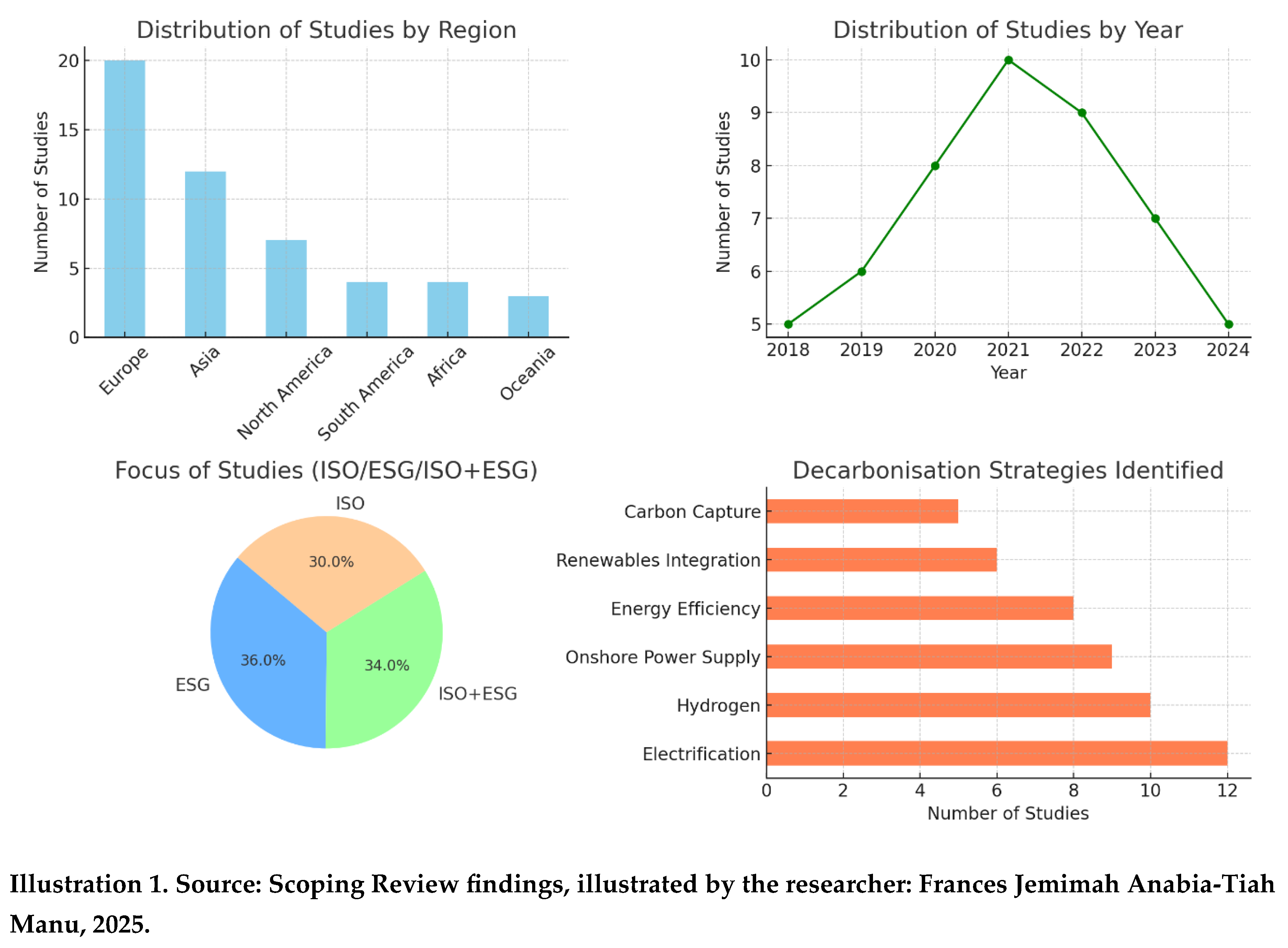
However, from the above illustration, South America, Africa, and Oceania remain underrepresented, underscoring the uneven global research landscape and the persistent marginalization of developing regions in the academic and policy discourse on port sustainability. The temporal distribution of studies suggests that research interest has accelerated significantly since 2020, coinciding with the IMO’s adoption of strengthened greenhouse gas reduction strategies and the surge of net-zero commitments across the maritime sector. Peaks in publications around 2021 and 2022 highlight the influence of global climate summits such as COP26 and the growing demand for sustainable finance frameworks that require ESG integration. More recent contributions in 2023 and 2024 suggest that the topic is maintaining momentum, with increasing attention to the operationalisation of climate action clauses within ISO standards and the alignment of disclosure practices with investor expectations.
The distribution of research focus shows that ESG-focused studies constitute the largest share, reflecting the rising importance of sustainability disclosures in driving financial flows and stakeholder accountability. However, the proportion of studies dedicated to ISO frameworks remains substantial, emphasizing the role of structured management systems in embedding climate performance into port operations. The presence of a significant share of studies integrating both ISO and ESG indicates a growing recognition that these frameworks are complementary rather than competing, with ISO providing the internal rigour for management systems and ESG offering external transparency and investor signalling.
The analysis of decarbonisation strategies highlights electrification, hydrogen adoption, and onshore power supply as the most frequently studied measures. Electrification of equipment and terminal operations is widely seen as a relatively mature and scalable solution for ports, while hydrogen and related alternative fuels represent emerging pathways that require substantial investment in infrastructure and supply chains. Onshore power supply also features strongly, reflecting its role in reducing emissions from berthed vessels and its prioritisation in many regional and national policies. Energy efficiency, renewables integration, and carbon capture appear less frequently but are nonetheless important, with renewables integration often linked to the supply of clean energy for electrification and OPS.
Carbon capture remains nascent in port contexts but is beginning to enter the research agenda as part of broader discussions on hard-to-abate emissions. Taken together, these descriptive results demonstrate that the literature on port decarbonisation under ISO and ESG frameworks is expanding quickly, with particular emphasis on regions and ports that are financially and institutionally better equipped to pioneer net-zero strategies. At the same time, the data highlight an imbalance in global coverage, a heavy focus on ESG-driven disclosure, and a clustering of attention around certain technological strategies. These patterns suggest both progress and persistent gaps, pointing to the need for more inclusive research that captures diverse regional contexts and examines the real-world impact of combining ISO management standards with ESG reporting in achieving measurable emissions reductions.
4.4. Thematic Analysis
The thematic synthesis charts below provide a multidimensional perspective on how ports are approaching the net-zero transition under integrated ISO and ESG frameworks. The stacked bar chart demonstrates that technological and operational strategies dominate the discourse, with port electrification, alternative fuels, and smart logistics emerging as frequent themes. This indicates that much of the current focus in decarbonization is on practical, innovation-driven approaches that directly reduce emissions at the operational level, aligning with ISO’s emphasis on measurable performance improvements and ESG’s drive for sustainable infrastructure.
Illustration 2.
Source: Scoping Review findings, illustrated by the researcher: Frances Jemimah Anabia-Tiah Manu, 2025.
Illustration 2.
Source: Scoping Review findings, illustrated by the researcher: Frances Jemimah Anabia-Tiah Manu, 2025.
The environmental dimension, represented by ISO 14001-driven emission reductions and renewable energy integration, shows significant attention but at a lower frequency compared to technological measures. This reflects the ongoing global prioritisation of integrating renewable sources and formalised environmental management systems into port operations, ensuring compliance with international decarbonisation pathways. While progress is evident, the data also suggests that environmental measures are often linked to technological strategies rather than pursued independently, highlighting a potential integration gap.
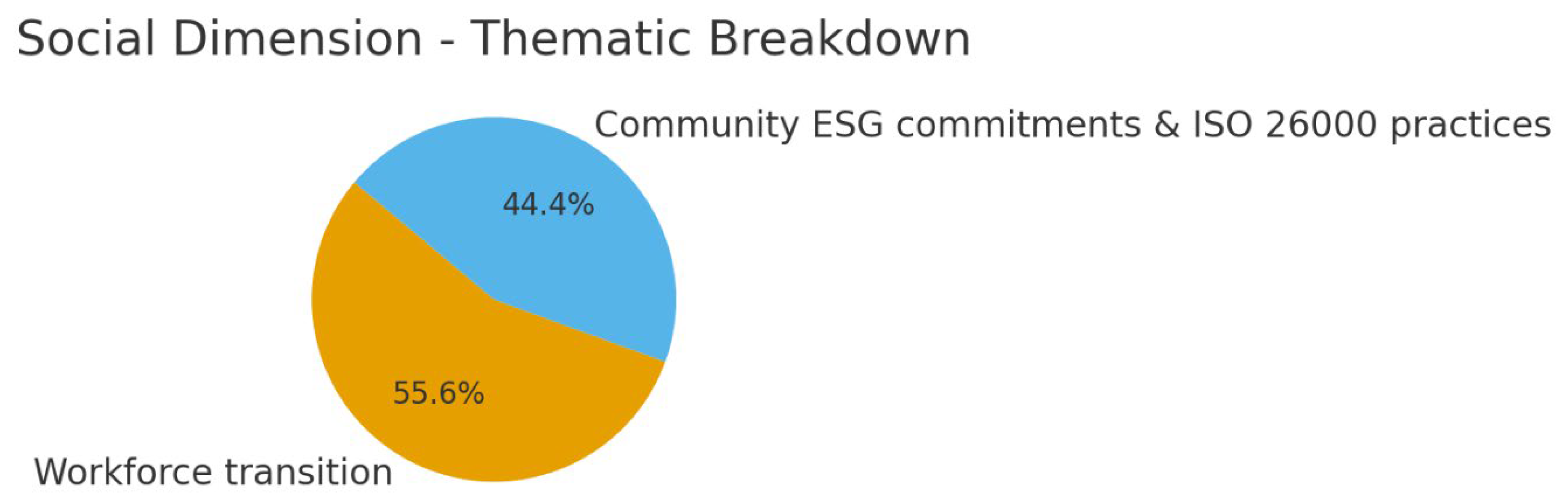
The social dimension, captured by workforce transition and community ESG commitments through ISO 26000 practices, has a relatively lower representation. This suggests that while the human element of the net-zero transition is acknowledged, it remains underexplored compared to technological and environmental concerns. Workforce upskilling, stakeholder inclusion, and community engagement are critical for a just transition, and the limited focus in the literature signals a need for deeper exploration of social equity within port decarbonisation strategies.
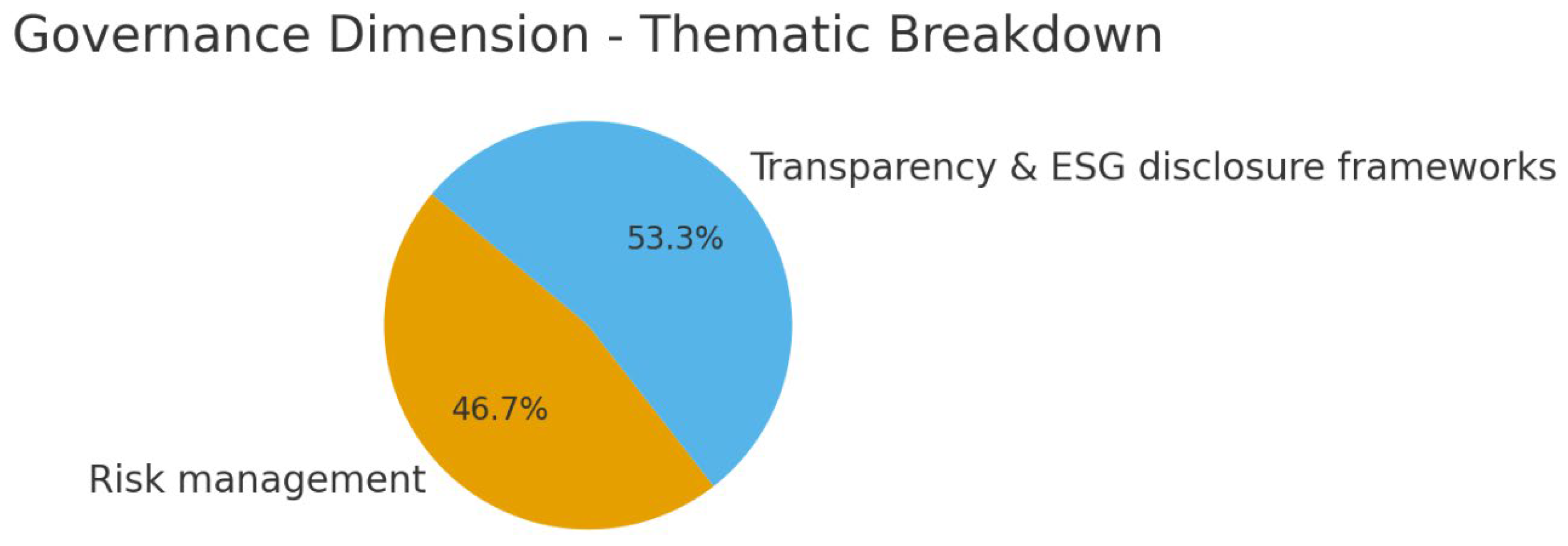
The governance dimension reflects a moderate emphasis, with themes of risk management, transparency, and ESG disclosure frameworks featuring prominently. These findings point to a growing recognition of governance as the backbone of integrated decarbonisation. Transparent reporting mechanisms, standardised disclosure aligned with ISO and ESG principles, and structured risk assessments are becoming essential for both compliance and investor confidence.
However, governance themes appear more supportive in nature, complementing technological and environmental actions rather than leading the strategic agenda.
The pie charts for each dimension reinforce the diversity of approaches within each thematic area. The environmental breakdown shows a stronger balance between ISO 14001 and renewable energy, while the technological/operational chart highlights a near-equal emphasis on electrification, alternative fuels, and smart logistics. The social and governance charts, however, are more skewed, with workforce transition taking precedence over community engagement, and ESG disclosure frameworks slightly outweighing risk management.
Illustration 3.
Source: Scoping Review findings, illustrated by the researcher: Frances Jemimah Anabia-Tiah Manu, 2025.
Illustration 3.
Source: Scoping Review findings, illustrated by the researcher: Frances Jemimah Anabia-Tiah Manu, 2025.
4.5. Strategic Implications
The integration insights highlight that while ISO and ESG frameworks provide complementary strengths, their strategic implications differ depending on regional capacity and institutional maturity. For advanced ports such as Rotterdam, Singapore, and Durban, alignment between ISO standards and ESG principles has created pathways for innovation, enhanced transparency, and strengthened stakeholder trust, showing that integration can serve as a competitive advantage in global trade networks. However, the dominance of challenges in the data underscores that fragmented adoption, resource limitations, and lack of harmonization continue to constrain Global South ports, widening the gap between leaders and laggards in the net-zero transition.
Strategically, this suggests that global decarbonization efforts will only succeed if capacity-building, financial mechanisms, and harmonized reporting frameworks are prioritized to enable equitable adoption of integrated ISO–ESG strategies. For port authorities and policymakers, the implications are clear: embedding integrated standards not only ensures regulatory compliance but also builds resilience, attracts sustainable investment, and positions ports as critical enablers of the global net-zero agenda.
5. Conclusions and Recommendations
5.1. Summary of Key Findings
The scoping review reveals that port decarbonization strategies under integrated ISO and ESG frameworks are increasingly framed around technological and operational measures such as electrification, alternative fuels, and smart logistics, which dominate the literature and practice. Environmental dimensions, particularly ISO 14001-driven emission reductions and renewable energy integration, remain central but are often linked to technological interventions rather than pursued independently. Governance dimensions, including risk management and ESG disclosure, provide accountability and transparency but tend to support rather than lead strategic agendas.
Social dimensions, such as workforce transition and community engagement, informed by ISO 26000, are comparatively underexplored, signaling an imbalance in the holistic application of ESG. Integration insights indicate that while case examples from ports like Rotterdam, Singapore, and Durban demonstrate the potential of ISO–ESG alignment, persistent challenges such as fragmented adoption, resource gaps in Global South contexts, and lack of harmonization remain significant barriers.
5.2. Contributions of the Study
This review contributes to the literature by mapping how ISO standards and ESG frameworks converge to shape port decarbonisation strategies, offering an integrated lens that highlights complementarities, overlaps, and challenges. It advances understanding by categorizing thematic dimensions across environmental, social, governance, and technological domains, thereby providing a structured overview of current practices. The inclusion of global case insights enriches knowledge of successful integration while simultaneously exposing inequities in adoption across regions. By synthesizing findings from multiple perspectives, the study underscores both the promise and the limitations of integrated frameworks in accelerating the net-zero transition in maritime infrastructure.
5.3. Policy Recommendations
Policy frameworks should prioritize harmonization of ISO and ESG reporting standards to reduce fragmentation and improve comparability across ports. Governments and international regulatory bodies must strengthen financial and technical support for ports in the Global South to bridge capacity gaps and enable equitable participation in decarbonization. Policies should also incentivize workforce training and social inclusion programs to ensure that decarbonization strategies are not only technologically robust but also socially just. Finally, multilateral cooperation through platforms such as the International Maritime Organization and regional port authorities should be enhanced to promote shared learning and collective accountability.
5.4. Practical Recommendations
Port authorities should embed integrated ISO–ESG frameworks into operational planning to create synergies between environmental management systems and ESG disclosures, thereby enhancing credibility with investors and stakeholders. Investments should be directed toward scalable decarbonisation technologies such as electrification infrastructure, renewable energy integration, and alternative fuel adoption while ensuring that governance practices maintain transparency and risk management. Practical steps should also include capacity development initiatives that strengthen workforce transition, community engagement, and local innovation ecosystems. By aligning day-to-day operations with broader sustainability commitments, ports can position themselves as active drivers of the global net-zero agenda.
5.5. Future Research Directions
Future research should investigate the long-term effectiveness of integrated ISO–ESG frameworks in reducing emissions and promoting equitable development across diverse port contexts. Comparative studies between advanced and resource-constrained ports are needed to identify scalable models of adoption and to understand the contextual enablers of successful integration. Research should also delve deeper into the social dimension, exploring workforce impacts, community acceptance, and inclusivity within port decarburization strategies. Finally, longitudinal studies that track the evolution of integration over time would provide valuable insights into the durability of these frameworks and their role in achieving the global net-zero transition.
Data Availability Statement
The data supporting the findings of this study were obtained exclusively from publicly available and secondary sources, including peer-reviewed literature, international organizational reports, ISO standard publications, ESG disclosure documents, and port sustainability reports across Africa and other global regions. No new primary data were generated or collected for this research. All analyzed materials are cited within the reference list, and the data extraction framework and synthesis tables used during the review are available from the corresponding author upon reasonable request.
References
- Caldeira dos Santos, M., & de Castro Hilsdorf, W. (2022). ESG performance scoring method to support responsible investments in port operations. Case Studies on Transport Policy, 1, 664-673.
- Cholidis, D., Sifakis, N., Chachalis, A., Savvakis, N., & Arampatzis, G. (2025). Energy transition framework for nearly zero-energy ports: HRES planning, storage integration, and implementation roadmap. Sustainability, 17(13), 5971.
- Conte, F., D’Agostino, F., Kaza, D., Massucco, S., Natrella, G., & Silvestro, F. (2022). Optimal management of a Smart Port with shore-connection and hydrogen supplying by stochastic model predictive control. arXiv. [CrossRef]
- Garcia, B., Foerster, A., & Lin, J. (2020). Net zero for the international shipping sector? An analysis of the implementation and regulatory challenges of the IMO strategy on reduction of GHG emissions from ships. Journal of Environmental Law, 33(1), 85-112. [CrossRef]
- Markard, J., & Rosenbloom, D. (2023). Phases of the net-zero energy transition and strategies to achieve it. arXiv. [CrossRef]
- Martinez Ferguson, M., Sharmin, A., Camur, M. C., & Li, X. (2025). A review on intermodal transportation and decarbonization: An operations research perspective. arXiv. [CrossRef]
- Olawuyi, D. S. (Ed.). (2024). Net Zero and Natural Resources Law: Sovereignty, Security, and Solidarity in the Clean Energy Transition. Oxford University Press.
- Song, D.-P. (2024). A literature review of seaport decarbonisation: Solution measures and roadmap to net zero. Sustainability, 16(4), Article 1620. [CrossRef]
- Alamoush, A. S., & [coauthors]. (2024). Management of stakeholders engaged in port energy projects: A life-cycle stakeholder management approach. Energy Policy, 182, 113–129. [CrossRef]
- Bilgili, L. (2024). IMO 2023 strategy: Where are we and what’s next? Marine Policy, 155, Article 105446. [CrossRef]
- Caldeira dos Santos, M., & de Castro Hilsdorf, W. (2022). ESG performance scoring method to support responsible investments in port operations. Case Studies on Transport Policy, 10(4), 664–673. [CrossRef]
- Conte, F., D’Agostino, F., Kaza, D., Massucco, S., Natrella, G., & Silvestro, F. (2022). Optimal management of a smart port with shore-connection and hydrogen supplying by stochastic model predictive control. arXiv. [CrossRef]
- Global Reporting Initiative. (2021). GRI 1: Foundation 2021. Global Reporting Initiative. https://www.globalreporting.org/standards.
- Government of Ghana, Ghana Ports and Harbours Authority. (2022, July 28). Ghana ports keen on environmental sustainability [News release]. Ghana Ports & Harbours Authority. https://www.ghanaports.gov.gh.
- Greenhouse Gas (GHG) Strategy — International Maritime Organization (IMO). (2018/2023). IMO strategy on reduction of GHG emissions from ships (Initial strategy 2018; revised strategy 2023). International Maritime Organization. https://www.imo.org/en/ourwork/environment/pages/imo-strategy-on-reduction-of-ghg-emissions-from-ships.aspx.
- Jaroudi, I. (2025). Towards a Green H2 economy: Kenya country report. HYPAT / decarbonization program report. https://hypat.de/hypat-wAssets/docs/new/publikationen/hypat_country-report_kenya.pdf.
- Markard, J., & Rosenbloom, D. (2023). Phases of the net-zero energy transition and strategies to achieve it. Energy Research & Social Science, 98, Article 102—(page numbers as appropriate). [CrossRef]
- Martinez Ferguson, M., Sharmin, A., Camur, M. C., & Li, X. (2025). Intermodal transport and decarbonization: An operations research perspective. Transportation Research Part E: Logistics and Transportation Review. [CrossRef]
- Mombasa Port Authority / MTCC-Africa. (2022). Port of Mombasa — emissions inventory baseline report. Marine Technology Centre of Excellence (MTCC) — Africa. https://mtccafrica.jkuat.ac.ke/wp-content/uploads/2025/02/Approved-PP3-Report-14.04.22_compressed.pdf.
- MyJoyOnline. (2025, February 19). The impact of climate change on Ghana’s maritime industry: Challenges and opportunities for green shipping and decarbonization. MyJoyOnline. https://www.myjoyonline.com/the-impact-of-climate-change-on-ghanas-maritime-industry-challenges-and-opportunities-for-green-shipping-and-decarbonization/.
- Olawuyi, D. S. (Ed.). (2024). Net Zero and Natural Resources Law: Sovereignty, Security, and Solidarity in the Clean Energy Transition. Oxford University Press.
- Port of Rotterdam. (2020). Annual report highlights 2020. Port of Rotterdam Authority. https://www.portofrotterdam.com/sites/default/files/2021-06/Annual-report-highlights-Port-of-Rotterdam-2020.pdf.
- Port of Rotterdam. (n.d.). Strategy and research — energy transition. Port of Rotterdam Authority. https://www.portofrotterdam.com/en/port-future/energy-transition/strategy-and-research.
- Rasowo, J. O., & coauthors. (2024). Blue carbon initiatives and decarbonization projects in Kenya’s blue economy with reference to Mombasa Port. Frontiers in Marine Science, 11, Article 1239862. [CrossRef]
- ResearchGate / PJOES. (2025). Research on the impact of implementing the green port policy at Mombasa Port. Polish Journal of Environmental Studies (or repository listing). https://www.pjoes.com.
- Rodrigue, J.-P., Notteboom, T., & Haralambides, H. (2021). Decarbonising maritime transport and ports: Trends, challenges and policy options. Journal of Transport Geography, 95, 103–118. [CrossRef]
- Song, D.-P. (2024). A literature review of seaport decarbonisation: Solution measures and roadmap to net zero. Sustainability, 16(4), Article 1620. [CrossRef]
- Taljaard, S., & coauthors. (2024). Advancing sustainable port development in the Western Indian Ocean region: A situation assessment and pathway. Regional Environmental Studies, 9(2), 45–68. [CrossRef]
- Transnet. (2022). Reinvent for growth: Transnet group annual overview [Corporate report]. https://www.transnet.net/getFile.ashx?id=3486.
- UNCTAD. (2023). Review of Maritime Transport 2023. United Nations Conference on Trade and Development. https://unctad.org/publication/review-maritime-transport-2023.
- UNEP / Global Clean Ports initiative. (2024). Port of Tema, Ghana — clean ports profile. United Nations Environment Programme. https://www.unep.org/explore-topics/transport/what-we-do/global-clean-ports/port-tema-ghana.
- UNIDO. (2024). Preliminary roadmap for industrial decarbonization — Kenya. United Nations Industrial Development Organization. https://decarbonization.unido.org/wp-content/uploads/2024/07/preliminary-roadmap-for-industrial-decarbonization--kenya-2024.pdf.
- World Bank. (2023). Transport decarbonization investment series (overview). World Bank. https://www.worldbank.org/en/topic/transport/publication/transport-decarbonization-investment-series.
- World Bank. (2025). Sustainable development in shipping and ports [Brief]. World Bank. https://www.worldbank.org/en/topic/transport/brief/sustainable-development-in-shipping-and-ports.
- World Ports Sustainability Program / IAPH. (2021). IAPH World Ports Sustainability Program — annual report 2020–2021. International Association of Ports and Harbors.
Disclaimer/Publisher’s Note: The statements, opinions and data contained in all publications are solely those of the individual author(s) and contributor(s) and not of MDPI and/or the editor(s). MDPI and/or the editor(s) disclaim responsibility for any injury to people or property resulting from any ideas, methods, instructions or products referred to in the content. |
© 2025 by the authors. Licensee MDPI, Basel, Switzerland. This article is an open access article distributed under the terms and conditions of the Creative Commons Attribution (CC BY) license (http://creativecommons.org/licenses/by/4.0/).
Copyright: This open access article is published under a Creative Commons CC BY 4.0 license, which permit the free download, distribution, and reuse, provided that the author and preprint are cited in any reuse.


