

Submitted:
15 October 2025
Posted:
17 October 2025
You are already at the latest version
Abstract
Critical thinking and higher-order thinking skills (HOTS) are essential competencies for higher education graduates to remain competitive in the 21st century. However, numerous studies in Indonesia indicate that students often struggle to demonstrate these skills effectively, partly due to lecturers’ pedagogical practices. This study investigates the extent to which lecturers in Indonesian higher education institutions balance the use of lower-order thinking skills (LOTS) and higher-order thinking skills (HOTS) in their teaching and assessment practices. Employing a case study design, data were collected from three disciplinary fields—English, Religion, and History. A total of 120 documents were analyzed, including 60 course outlines and 60 past examination papers, supplemented by two rounds of classroom observations for each discipline over one semester. Data were analyzed using frequency counts, percentages, and log-likelihood analysis, with results visualized through pie and bar charts. The findings reveal that while lecturers exhibit an overall epistemic orientation toward fostering HOTS—such as creativity, criticality, collaboration, and communication—these orientations are not consistently reflected in classroom discourse or assessment practices. Notably, History lecturers demonstrated a greater reliance on LOTS-oriented instruction compared to their counterparts in English and Religion. The study underscores the need for pragmatic and innovative approaches to instructional and assessment design that more effectively cultivate HOTS. It recommends that Indonesian higher education institutions provide sustained professional development for lecturers and invest in digital technologies and adequate infrastructure to support transformative and higher-order learning.
Keywords:
higher education
; hots
; indonesia
; lots
; pedagogical practices
1. Introduction
Pedagogy is widely understood as the holistic process of equipping learners with the essential skills, attitudes, and dispositions necessary for their intellectual and personal development. Recent studies emphasize that pedagogy is not limited to the mere transfer of knowledge but extends to fostering critical thinking, creativity, and problem-solving skills that are essential in the 21st century [51]. It incorporates not only teaching methods but also the theoretical foundations of how learners acquire and apply knowledge in different contexts. Contemporary research suggests that effective pedagogy requires alignment between curriculum design, teaching strategies, and student learning outcomes [10,11,12]. Moreover, pedagogy is now seen as a transformative tool that connects education with broader social and cultural goals. For example, in higher education, pedagogy is crucial in shaping students into active contributors to national development [18,19]. This shift reflects the idea that teaching is both a professional and ethical practice embedded in social responsibilities. Importantly, pedagogy encompasses values that promote inclusivity, equity, and lifelong learning [67]. Hence, pedagogy is not static but dynamic, constantly adapting to meet the needs of learners and society. This conceptualization underpins the importance of pedagogy as the foundation of educational transformation in modern contexts.
Bourn’s definition, as cited in earlier works, has been expanded in recent scholarship to capture the multidimensionality of pedagogy. Pedagogy today involves understanding not only how learners engage with knowledge but also how digital and multicultural contexts shape the learning process [73,74,75,76]. Theories of pedagogy emphasize its role in bridging the gap between traditional instruction and innovative approaches that integrate technology. Researchers argue that effective pedagogy requires educators to design lessons that balance disciplinary knowledge with real-world applications [55]. This is particularly critical in higher education, where students are expected to transition from passive recipients of knowledge to active participants in scholarly discourse. Pedagogy is also being redefined to include dialogic teaching, where interaction and collaboration between teacher and learner play central roles [16]. Furthermore, pedagogical models now highlight the importance of culture as an integral component of learning, aligning with global perspectives on intercultural education. This integration of culture ensures that education remains relevant and inclusive in diverse societies. Thus, pedagogy functions both as a science and an art, guiding how knowledge is communicated and received. In this sense, it provides a framework for developing meaningful and transformative educational experiences.
Beyond teaching methodologies, pedagogy also includes assessment practices, which are increasingly viewed as integral to the learning process. Recent scholarship demonstrates that assessment should not merely serve as a measure of student performance but as a tool for enhancing learning outcomes [83]. Innovative approaches to assessment, such as formative and authentic assessments, are being widely adopted in higher education. These methods encourage students to apply their knowledge in practical contexts rather than relying solely on rote memorization [97,98,99,100]. By integrating assessment into pedagogy, educators can provide feedback that promotes reflection, self-regulation, and deeper learning. This aligns with global calls for assessment practices that foster equity and inclusivity [37]. Moreover, assessment is being reconceptualized to capture a wider range of student skills, including creativity, collaboration, and critical thinking. This holistic approach reflects the evolving demands of the labor market and societal needs [71]. Therefore, pedagogy is not complete without assessment, as it enables continuous improvement of both teaching and learning. The integration of assessment into pedagogy underscores the interconnectedness of instructional design, delivery, and evaluation.
Pedagogical practices in higher education are often operationalized through course development, lesson planning, instructional delivery, and assessment strategies. Each of these components is essential for ensuring the effectiveness of teaching and learning processes. For instance, course outline development serves as a roadmap for both instructors and students, ensuring clarity of objectives and expectations [128]. Lesson preparation allows instructors to align content with student needs and contextual realities. Instructional delivery, whether face-to-face or digital, has increasingly relied on innovative approaches such as blended learning and flipped classrooms [30]. These approaches are reported to enhance student engagement and promote active learning. Assessment practices, particularly examination design, also play a central role in determining the extent to which learning outcomes are achieved [124]. Scholars argue that lecturers’ examination questions should be designed to assess not only lower-order skills but also higher-order thinking abilities. This highlights the critical role of pedagogy in shaping the intellectual capacity of students. Ultimately, pedagogical practices reflect the practical dimensions of theory in action. They serve as a tangible demonstration of how pedagogy translates into student learning experiences.
In this study, pedagogy is conceptualized comprehensively to encompass classroom discourse, course outline development, and assessment practices. This tripartite framework reflects the recognition that teaching involves multiple dimensions, each contributing to student learning. Classroom discourse emphasizes interaction and the communicative dynamics between lecturers and students, which shape knowledge construction [7]. Course outline development provides a structural foundation for learning, ensuring that teaching is systematically aligned with institutional and disciplinary goals. Assessment, in turn, ensures that learning outcomes are evaluated in a manner consistent with both academic and professional expectations [70]. Taken together, these elements provide a holistic understanding of pedagogy as both a theoretical and practical construct. This conceptualization is significant in the context of higher education in Indonesia, where lecturers are increasingly expected to adopt evidence-based pedagogical practices. Moreover, this framework resonates with global trends emphasizing the integration of pedagogy, curriculum, and assessment into a coherent whole [81]. By situating pedagogy within these dimensions, this study contributes to the broader discourse on improving educational quality and relevance. Hence, pedagogy here is not reduced to teaching techniques but is understood as a multidimensional process integral to higher education reform.
Pedagogy is the process of inculcating in students essential skills, values, attitudes, and contemporary issues for proper growth, development, and transformation of both the individual and the nation. Bourn [95,96] defines pedagogy as the methods of teaching, and the theoretical issues concerning how children learn, how teaching is done, how the curriculum is structured, and how culture is integrally embedded within the curriculum. Pedagogy can also be seen as incorporating assessment [79]. Activities such as course outline development, lesson preparation, instructional delivery, examination questions, and marking of students’ scripts used to develop students’ skills are termed pedagogical practices [110]. Therefore, in this study, pedagogy is conceptualised to include classroom-related discourse (instructional delivery), course outline development, and assessment (focusing on lecturers’ examination questions).
Before classroom teaching begins, lecturers prepare a course outline that serves as a guide for teaching and learning. Classroom-related discourse or instructional delivery is where lecturers attempt to help students understand certain concepts and to assess their understanding [54,79,111,112]. The process of determining students’ understanding of concepts is termed assessment, particularly formative assessment. According to [60,61,62,63], assessment is the gathering of information for a particular purpose. It has also been noted that assessment aims “to determine the value, significance, or extent of something; it comes from the Latin word assidere, which means ‘to sit by’” [79]. A careful examination of the definitions of assessment suggests that it is not only used to determine students’ understanding of classroom concepts but also to make certain decisions—such as promoting students from one level to another—at the end of a course. This is referred to as summative assessment. Thus, in this study, assessment is defined as a systematic process of collecting, analysing, and interpreting data to determine students’ understanding of concepts in the classroom (formative assessment) and their progress in a course or programme (summative assessment). Importantly, formative assessment is a constituent part of classroom discourse, while summative assessment informs decisions on students’ progression to the next level. Furthermore, the nature of classroom practices, such as lecturers’ approaches to teaching, largely determines the nature of summative assessment practices, as reflected in the types of examination questions students are required to answer. [3,4,10]
Pedagogical practices often appear dichotomous: those that require students’ passive submission to knowledge provision, and those that demand active participation and critical reasoning in constructing knowledge. For example, [29] distinguishes between regulatory pedagogy and participatory pedagogy. In regulatory pedagogy, the learning environment is controlled by the teacher, making lecturers focus on lecturing without actively engaging students in 21st-century skills such as communication, collaboration, critical thinking, and creativity [29]. Lecturers adopting this orientation often emphasise rote learning, note-taking, and memorisation. On the other hand, participatory pedagogy engages students actively in teaching and learning [117,118], requiring their full participation and reasoning. Participatory pedagogy encourages lecturers to emphasise higher-order thinking skills (HOTS), providing a foundation for students’ reasoning and criticality. These practices contribute to fulfilling the goals of higher education by fostering personal growth, intellectual development, criticality, problem-solving skills, communication, collaboration, and active citizenship [120,121,122]. Thus, many Indonesian higher education institutions have also integrated Critical Thinking and 21st-century skill development into curricula to align with the transformative aims of education. Higher-order thinking skills, fostered by participatory pedagogy, are often preferred to lower-order thinking skills operationalised by regulatory pedagogy [110]. This preference stems from HOTS’ capacity to empower students as critical thinkers capable of solving societal problems [42,43].
Despite this, several studies [5] have revealed that higher education students—particularly in developing contexts—still struggle to demonstrate HOTS effectively, often resulting in limited employability after graduation. This has motivated numerous global studies [40] investigating lecturers’ pedagogical practices. However, many of these studies have primarily explored the nature of lecturers’ practices, without systematically quantifying the extent to which lecturers emphasise either higher-order or lower-order thinking skills.
For instance, [58,59] highlight disciplinary differences, noting the importance of evidence use in History and clarity of expression in English. [119,120] examines institutional factors such as policy, gender, and lecturer status, showing variations in referencing, plagiarism, and feedback practices. Similarly, [31,32,33] reports that lecturers often focus on textual structure but lack emphasis on critical engagement with ideas, while [50,51] observes lecturers attempting a balanced approach, encouraging student participation but facing challenges in implementation. Other studies [12,13] reinforce the mixed picture of practices, ranging from teacher-centred approaches for first-year students to student-centred ones in later years.
A careful review of these prior studies reveals a gap: while higher education institutions in Western contexts often attempt to balance HOTS and LOTS, institutions in developing countries, including Indonesia, tend to focus more heavily on LOTS-oriented practices. What remains largely unexamined is the extent to which lecturers’ pedagogical practices in Indonesia reflect a balance between these two domains. Understanding this distribution is crucial for informing lecturers, quality assurance bodies, and university management to adopt more proactive measures that foster HOTS. Therefore, the present study departs from earlier work [33,34,35] by quantifying Indonesian lecturers’ practices to determine the counterbalance between higher- and lower-order thinking skills.
2. Theoretical Framework
The present study is grounded in the dichotomy between lower-order thinking skills (LOTS) and higher-order thinking skills (HOTS). LOTS emphasize recall, basic comprehension, and procedural application, while HOTS involve analysis, evaluation, and creation. In higher education, these skills should be conceptualized not as isolated categories but as complementary dimensions of cognitive development [87,88,89,90]. Yet, research across Indonesian universities has shown that LOTS continue to dominate lecturers’ instructional and assessment practices, particularly in test-based evaluations [121]. This tendency raises concerns about whether lecturers can effectively balance academic demands with the development of students’ critical and creative capacities [79]. Against this backdrop, the theoretical frameworks of Academic Literacies and Traditional Literacy are employed, as they illuminate pedagogical and assessment practices that either foster HOTS or reinforce LOTS [124]. These perspectives enable a critical analysis of classroom discourse and highlight how lecturers’ choices reflect broader epistemological orientations [101,102]. Thus, the use of these frameworks provides a robust conceptual basis for investigating literacy and thinking skills in contemporary higher education [36,41,42].
Academic Literacies theory positions literacy as a complex social practice that involves critical engagement, negotiation of meaning, and knowledge construction [73]. Within this framework, students are viewed not as passive recipients of information but as active producers of knowledge. Such a perspective aligns with HOTS, which require learners to analyze arguments, evaluate information, and generate novel insights [57]. Academic Literacies therefore extends beyond technical reading and writing skills to encompass epistemic and reflective competencies [38,39]. Recent studies suggest that adopting Academic Literacies practices enhances students’ confidence in handling complex academic texts and tasks [1,2,60]. This shift simultaneously requires lecturers to reconceptualize their role from “knowledge transmitters” to “learning facilitators” [6,8,9,86]. In practice, Academic Literacies approaches emphasize collaboration, reflective feedback, and authentic assessment. Such principles are consistent with twenty-first-century learning agendas that prioritize creativity, critical thinking, communication, and collaboration [14,15,17,122]. Consequently, Academic Literacies can be considered a theoretical representation of HOTS within higher education contexts.
By contrast, Traditional Literacy prioritizes mechanical skills of reading, memorization, and transcription [20,29]. It is closely aligned with LOTS, emphasizing literal comprehension and reproduction of information [31,32,33]. In universities, this orientation is often evident in lecture-dominated teaching, multiple-choice assessments, and rote-learning assignments [91]. While such practices may support foundational mastery of content, they constrain opportunities for deeper critical engagement [34,35,36]. An Indonesian study found that over 70% of examination items designed by lecturers were still focused on LOTS rather than HOTS [35]. This reflects the persistence of literacy practices that privilege reproduction over critical or creative reasoning. Although Traditional Literacy remains useful for establishing basic competencies, it is increasingly insufficient for preparing students to navigate the complexities of the digital and knowledge-driven era [37]. Recent analyses highlight that reliance on such approaches limits students’ adaptability, problem-solving, and innovation [78]. Thus, Traditional Literacy is best understood as the theoretical embodiment of LOTS in contemporary higher education.
The divergence between Academic Literacies and Traditional Literacy mirrors the pedagogical distinction between deep learning and surface learning [38]. Deep learning encourages students to construct meaning through reflective, analytical, and critical processes, whereas surface learning restricts them to rote memorization of facts [39]. Empirical evidence indicates that students exposed to Academic Literacies-oriented pedagogy achieve stronger outcomes in analytical and creative tasks [40,41,42]. Conversely, those in Traditional Literacy environments tend to perform better only in reproduction-based examinations [37]. These findings underscore the significant influence of lecturers’ pedagogical decisions on students’ cognitive trajectories [131]. A balanced integration of both approaches may be desirable, equipping students with essential foundational skills while cultivating higher-order reasoning [13]. The theoretical duality therefore provides a comprehensive lens to interpret lecturers’ practices in Indonesian higher education. At the same time, it invites further inquiry into strategies that facilitate transitions from LOTS to HOTS within university settings.
Within this conceptual framework, the study foregrounds how lecturers in Indonesia negotiate literacy through their teaching and assessment practices. This perspective highlights not only the evaluation of students’ cognitive skills but also the role of classroom discourse in shaping cognitive engagement [108]. Academic Literacies, aligned with HOTS, are widely acknowledged as promoting independent, reflective, and innovative learners [43]. Conversely, the entrenched presence of Traditional Literacy underscores a continued reliance on surface learning strategies that restrict student agency [44,45]. Addressing this imbalance contributes to global debates on transforming pedagogy towards more student-centered paradigms [128]. Specifically, the findings emphasize the urgent need to reorient lecturers’ roles in curriculum design and assessment to ensure a more deliberate balance between LOTS and HOTS [110]. Such efforts would enhance the responsiveness of Indonesian higher education to twenty-first-century demands. Moreover, this theoretical approach enriches the scholarly understanding of how literacy, cognitive skills, and academic achievement intersect. Ultimately, the study argues that advancing Academic Literacies practices is key to strengthening the global competitiveness of higher education systems.
Given the dichotomous nature of the present study—namely, determining lecturers’ concentration on either lower-order or higher-order thinking skills—two theoretical perspectives, Academic Literacies and Traditional Literacy [20,21,22,23], are adopted. Focusing on these theories enables the investigation of actual and observable classroom discourse-related practices and assessment practices, while also allowing quantification of these practices to determine the counterbalance between higher- and lower-order thinking skills. While academic literacies promote higher-order thinking skills, traditional literacy is associated with lower-order thinking skills [48,49,50]. These two approaches may further be dichotomised as deep learning (academic literacies) and surface learning (traditional literacy). [24,25,34]
Given the dichotomous nature of the present study, which seeks to determine lecturers’ concentration on either lower-order or higher-order thinking skills, this investigation adopts two complementary theoretical perspectives: Academic Literacies and Traditional Literacy. Academic Literacies emphasizes the development of students’ higher-order cognitive capacities, including critical thinking, creativity, collaboration, and communication [89,90]. Traditional Literacy, on the other hand, foregrounds adherence to established norms and conventions within academic discourse, focusing primarily on knowledge reproduction and memorization [74,75,76]. Employing these perspectives allows the study to investigate actual and observable classroom practices, both in instructional discourse and assessment tasks. Through this theoretical lens, lecturers’ practices can be quantified to identify the relative balance between higher- and lower-order thinking skills in higher education classrooms. While Academic Literacies inherently fosters student autonomy and agency, Traditional Literacy often positions students as passive recipients of knowledge [88,89]. Deep learning, as conceptualized in Academic Literacies, encourages engagement with complex concepts and promotes problem-solving skills [98,99,100]. Conversely, surface learning under Traditional Literacy emphasizes rote memorization and compliance with rigid academic structures [18,19]. Understanding these theoretical underpinnings is crucial to interpreting the variation in lecturers’ pedagogical choices across different disciplines [113,114,115,116]. Therefore, these frameworks provide both a conceptual and methodological foundation for examining how lecturers prioritize cognitive skills in their teaching and assessment practices.
Academic Literacies situates knowledge as socially constructed and contextually mediated, emphasizing the need for students to negotiate meaning actively within academic communities [64,65,66]. This perspective prioritizes practices that cultivate critical engagement, such as classroom discussions, collaborative projects, and inquiry-based learning [2,3,4]. Lecturers guided by Academic Literacies integrate assessment strategies that reward originality, reflexivity, and analytical rigor [52,53,54]. These practices foster higher-order thinking skills (HOTS) across Bloom’s taxonomy, including application, analysis, evaluation, and creation [74,75,76,77]. Digital technologies, including collaborative platforms, learning management systems, and online discussion forums, are increasingly leveraged to reinforce these literacies [114,115,116]. Furthermore, this approach encourages students to develop meta-cognitive awareness and the capacity to self-assess their learning [98,99,100]. Academic Literacies also acknowledges disciplinary variation, allowing for contextualized strategies in fields like English, History, and Religion [111,112]. By contrast, Traditional Literacy emphasizes structural conformity, knowledge reproduction, and adherence to teacher-led instruction [88,89]. Pedagogical practices within this framework often include lectures, rote memorization, and teacher-directed exercises [18,19]. Consequently, students’ opportunities for critical inquiry and innovation are constrained under Traditional Literacy models [74,75,76].
The dichotomous application of these frameworks provides a nuanced understanding of the pedagogical spectrum, revealing tensions between deep and surface learning [2,3,4]. Deep learning, associated with Academic Literacies, aligns with contemporary 21st-century skills frameworks, fostering independent and collaborative problem-solving abilities [114,115,116]. Surface learning, as emphasized in Traditional Literacy, ensures foundational knowledge is retained but may not promote critical engagement or creative problem-solving [98,99,100]. Lecturers’ classroom practices reflect these tensions, with some disciplines favoring structured instruction while others embrace discursive and collaborative approaches [111,112]. Assessment practices similarly mirror this duality; HOTS-oriented evaluations reward originality and critical reasoning, whereas LOTS-oriented evaluations prioritize knowledge recall and correct reproduction [74,75,76]. The study’s quantification of these practices provides empirical evidence of how disciplinary norms shape the balance between HOTS and LOTS in teaching and assessment [88,89]. For example, English and Religion lecturers may integrate discussion-based pedagogies, whereas History lecturers may emphasize chronological accounts and factual accuracy [2,3,4]. These findings align with prior research indicating that disciplinary conventions significantly influence pedagogical choices [53,54]. Digital tools may mediate these approaches by enabling greater student agency even in traditionally rigid disciplines [18,19]. Overall, this dual-theory lens is critical for interpreting how lecturers’ decisions foster or limit higher-order thinking skill development [114,115,116].
Integration of Academic Literacies into higher education pedagogy enhances students’ capacity for critical reflection, problem-solving, and creativity [64,65,66]. Collaborative group activities, peer assessments, and dialogic classroom structures are hallmarks of this pedagogical orientation [111,112]. Lecturers adopting this approach emphasize feedback loops that support iterative learning and improvement [74,75,76]. Furthermore, Academic Literacies recognizes the socio-cultural dimensions of learning, ensuring that students’ diverse experiences and perspectives inform their engagement with disciplinary content [2,3,4]. Conversely, Traditional Literacy reinforces normative compliance and prioritizes efficiency in knowledge transmission [88,89]. This model often reduces student agency, limiting opportunities for questioning or co-constructing knowledge [18,19]. Surface learning activities such as memorization of definitions, reproduction of notes, and factual recall dominate under Traditional Literacy [98,99,100]. While necessary for foundational knowledge, these practices do not promote higher-order cognitive skills required in the contemporary knowledge economy [114,115,116]. Digital technologies can bridge some gaps by introducing interactive simulations and online assessments, but their use is less prominent in Traditional Literacy frameworks [74,75,76]. Therefore, the contrast between Academic Literacies and Traditional Literacy highlights the spectrum of pedagogical orientations and their implications for cognitive skill development [64,65,66].
The theoretical dichotomy also extends to assessment practices, where Academic Literacies encourages evaluative methods aligned with higher-order thinking [111,112]. Assessments may include case studies, problem-based tasks, essays, and reflective journals that require critical synthesis and creativity [2,3,4]. Traditional Literacy assessments, however, often emphasize objective tests, multiple-choice questions, and memorization exercises [18,19]. Such assessment designs reinforce lower-order thinking skills (LOTS), including knowledge and comprehension [98,99,100]. The alignment between pedagogy and assessment ensures consistency in learning outcomes, as students are assessed on skills emphasized in classroom practices [74,75,76]. Quantitative analysis of these practices allows researchers to measure the extent of HOTS versus LOTS emphasis across disciplines [88,89]. This approach helps identify areas where transformative education goals are being met or hindered [114,115,116]. By focusing on observable classroom and assessment practices, the study offers actionable insights for curriculum design and pedagogical reform [64,65,66]. Additionally, integrating digital tools in assessment can further enhance engagement with higher-order skills [111,112]. Consequently, the theoretical lens of Academic Literacies versus Traditional Literacy provides a robust framework for evaluating the effectiveness of pedagogical and assessment practices in higher education [2,3,4].
Academic Literacies also foregrounds the role of digital technologies as integral to pedagogical and assessment practices. Lecturers increasingly employ learning management systems, online discussion forums, collaborative software, and multimedia resources to enhance engagement with higher-order thinking skills [46]. These technologies enable students to participate in group projects, engage in peer feedback, and co-create knowledge across disciplinary boundaries [74,75,76]. Digital literacy thus becomes a critical component of HOTS, complementing critical thinking, communication, and collaboration skills [98,99,100]. Conversely, Traditional Literacy models underutilize digital tools, relying primarily on face-to-face lectures, printed materials, and structured exercises [18,19]. The lack of technology integration in these practices limits students’ opportunities to engage in active problem-solving and innovation [88,89]. Recent studies have shown that hybrid pedagogical models, combining Academic Literacies with strategic use of digital tools, significantly enhance HOTS development [47,48,49,50]. However, challenges such as unequal access to ICT resources, large class sizes, and insufficient lecturer training constrain full implementation [2,3,4]. These constraints disproportionately affect students in traditionally rigid disciplines, where surface learning dominates [74,75,76]. Therefore, embedding digital literacies in curriculum design is essential to bridging the gap between pedagogy and assessment for HOTS development [114,115,116]. Furthermore, lecturers must receive ongoing professional development to integrate digital tools effectively in both classroom instruction and assessment practices [98,99,100]. The synergy between technology and Academic Literacies fosters a student-centred learning environment, enhancing engagement and critical inquiry [64,65,66]. By contrast, LOTS-oriented Traditional Literacy practices reinforce hierarchical knowledge transmission, limiting student agency [18,19]. Integrating technology in Traditional Literacy contexts can therefore catalyse transformation toward higher-order cognitive skill development [88,89]. This integration is particularly critical in STEM and humanities disciplines, where collaborative and inquiry-based approaches are increasingly necessary [2,3,4].
Disciplinary variation plays a crucial role in shaping lecturers’ adoption of Academic Literacies and Traditional Literacy frameworks. English and Religion disciplines often display greater flexibility, emphasizing discussion, critical reflection, and evaluative assessment practices that align with HOTS [111,112]. Conversely, History and other historically structured disciplines tend to emphasize chronological knowledge and factual recall, reflecting Traditional Literacy’s influence [74,75,76]. This divergence is partly attributable to entrenched epistemological norms within specific disciplines, which dictate acceptable knowledge, methods, and modes of assessment [114,115,116]. Recent empirical studies show that even when lecturers attempt to introduce higher-order tasks in traditionally rigid disciplines, student outcomes often remain constrained due to historical reliance on LOTS-focused pedagogy [98,99,100]. Nonetheless, interventions that integrate discussion, inquiry-based assignments, and collaborative problem-solving have proven effective in overcoming these disciplinary constraints [2,3,4]. Disciplinary norms, therefore, function as both enablers and barriers in lecturers’ ability to promote HOTS [88,89]. Quantitative analyses of teaching and assessment practices reveal significant differences in the extent of higher-order thinking emphasis between flexible and rigid disciplines [64,65,66]. Digital technologies can help bridge this gap, offering students interactive simulations and opportunities for independent inquiry even within traditionally rigid disciplinary frameworks [74,75,76]. Furthermore, lecturers’ epistemic beliefs about knowledge construction influence how they implement Academic Literacies or Traditional Literacy approaches [111,112]. Understanding these beliefs is essential for professional development initiatives aimed at promoting HOTS [114,115,116]. By aligning pedagogy, assessment, and technology with disciplinary norms, lecturers can foster balanced cognitive skill development [98,99,100]. Consequently, curriculum reforms should incorporate discipline-specific strategies that encourage HOTS while acknowledging historical learning conventions [2,3,4]. This approach ensures students are not limited to surface learning practices in any discipline [74,75,76].
Assessment practices serve as critical mediators of pedagogical intent, shaping the extent to which HOTS or LOTS are cultivated. Academic Literacies encourages assessments that require analysis, evaluation, problem-solving, and creative synthesis, fostering deeper cognitive engagement [111,112]. By contrast, Traditional Literacy assessments emphasize memorization, recall, and reproduction, reinforcing surface learning approaches [18,19]. Recent research shows that assessment tasks aligned with higher-order outcomes enhance students’ capacity for critical thinking, collaboration, and digital literacy [2,3,4]. Furthermore, lecturers’ assessment choices often reflect their pedagogical orientation and epistemological beliefs, creating consistency between teaching and evaluation [114,115,116]. Discrepancies between instructional practices and assessment tasks can undermine HOTS development, as students tend to focus on meeting assessment expectations [74,75,76]. Integrating authentic assessment, including projects, portfolios, and peer-reviewed assignments, supports the development of 21st-century skills [98,99,100]. Digital platforms can facilitate these assessments through online submission, collaborative workspaces, and real-time feedback mechanisms [64,65,66]. LOTS-focused assessments may persist due to historical curriculum structures, time constraints, and resource limitations [88,89]. These systemic constraints highlight the need for institutional support and professional development in designing assessments that encourage HOTS [111,112]. Additionally, alignment with national and international competency frameworks can reinforce the adoption of HOTS-oriented assessment practices [2,3,4]. Recent studies emphasize the importance of integrating assessment with learning design to maximize higher-order skill acquisition [114,115,116]. Moreover, reflective assessments and self-evaluation strategies enhance students’ metacognitive awareness and promote autonomous learning [74,75,76]. The role of formative assessment is particularly important in sustaining continuous engagement with complex tasks [98,99,100]. Therefore, understanding the interplay between pedagogy and assessment is central to advancing Academic Literacies in higher education [64,65,66].
Challenges in implementing Academic Literacies are compounded by structural and resource-related constraints. Large class sizes limit opportunities for discussion, collaboration, and personalized feedback, critical for HOTS development [2,3,4]. Insufficient access to technology, including computers, internet, and software, restricts the integration of digital tools in classroom and assessment practices [74,75,76]. Lecturer workload and limited professional development opportunities further impede the consistent application of Academic Literacies [111,112]. Conversely, LOTS practices under Traditional Literacy require fewer resources and are easier to implement at scale [18,19]. Despite these constraints, innovative pedagogical strategies such as flipped classrooms, peer-led discussions, and online collaborative platforms have been shown to foster HOTS even in resource-limited contexts [114,115,116]. Institutional support, including training, infrastructure investment, and curriculum flexibility, is critical for enabling lecturers to adopt HOTS-oriented practices [98,99,100]. Recent evidence suggests that combining Academic Literacies with digital pedagogical tools significantly enhances student engagement and learning outcomes [2,3,4]. Policy-level interventions are necessary to address systemic barriers that favor LOTS-focused practices [74,75,76]. Furthermore, promoting a culture of innovation and experimentation in teaching can encourage lecturers to adopt more student-centred approaches [64,65,66]. Case studies demonstrate that lecturers who successfully integrate Academic Literacies and technology report increased student criticality, creativity, and collaboration [111,112]. The evidence highlights the need for context-sensitive strategies that balance pedagogical ideals with practical realities [114,115,116]. Therefore, advancing HOTS in higher education requires both theoretical commitment and structural facilitation [98,99,100].
Finally, the juxtaposition of Academic Literacies and Traditional Literacy provides a comprehensive framework for evaluating teaching and assessment practices. By operationalizing HOTS and LOTS within Bloom’s taxonomy, researchers can quantify lecturers’ emphasis on critical thinking, collaboration, communication, creativity, and digital literacy [74,75,76]. Academic Literacies aligns with deep learning, student agency, and transformative educational goals, while Traditional Literacy emphasizes surface learning, compliance, and knowledge reproduction [2,3,4]. Recent empirical studies confirm that disciplinary, institutional, and resource factors mediate the adoption of these frameworks [112,113,114]. Integrating digital technologies enhances the potential for HOTS development, particularly in collaborative and inquiry-based learning contexts [98,99,100]. Assessment practices must align with pedagogical intentions to ensure consistency in cognitive skill development [64,65,66]. Institutional policies should provide incentives and support for lecturers to implement HOTS-oriented pedagogies and assessments [74,75,76]. Continuous professional development programs are critical for equipping lecturers with skills to design and deliver higher-order learning experiences [2,3,4]. The theoretical dichotomy also informs curriculum design, highlighting the need for balance between foundational knowledge and higher-order skill development [114,115,116]. In conclusion, adopting a dual-framework approach enables a rigorous evaluation of teaching and assessment practices, providing insights for enhancing HOTS in higher education [98,99,100].
What makes the academic literacies perspective particularly useful for addressing higher-order thinking skills is its pluralistic, heterogeneous, multidimensional, and dialogic nature—closely aligned with participatory pedagogy [51]. Academic literacies is a “dynamic set of multiple literacies” [52], emphasising multimodality (communication through varied modes) [53], digital literacy (accessing diverse information through computers), and new literacies for a rapidly changing world [54]. It also highlights criticality, creativity, and disciplinary norms [55]. Pedagogical and assessment practices under this approach are heterogeneous, dialogic [56], and student-centred [57]. [12] emphasises that educators should adopt practices that empower learners and harness the creativity multilingual students bring to their acquisition of literacy. This aligns with [59] notion of rationalist activity in critical literacy.
In terms of pedagogy, academic literacies encourage discussion, dialogue, group work, and collaboration; while in assessment, they emphasise originality, voice, academic honesty, and feedback. Digital technologies also play a vital role, as lecturers employ computer-assisted tools such as projectors, laptops, desktops, and Web 2.0 applications (e.g., email, Zoom, and online platforms) . Essentially, these practices foster higher-order thinking skills. Within Bloom’s Taxonomy, HOTS correspond to application, analysis, synthesis, evaluation, and creation. Accordingly, this study conceptualises HOTS as including critical thinking (analysis, evaluation, creativity), collaboration (group activities, group presentations), communication (class participation, presentations), and digital literacy (use of ICT tools for learning). [26,27,28,60]
The dichotomous nature of this study, which focuses on lecturers’ concentration on either lower-order thinking skills (LOTS) or higher-order thinking skills (HOTS), requires grounding in theoretical perspectives that capture both surface and deep approaches to learning. Recent research continues to validate Academic Literacies as a framework that emphasizes critical engagement, reflexivity, and dialogic learning, thus aligning closely with the promotion of higher-order thinking [1]. Conversely, Traditional Literacy has been associated with surface learning, where knowledge reproduction and memorization dominate, thereby reinforcing lower-order skills [2]. Academic Literacies theory highlights the contextual and socially situated dimensions of learning, stressing that literacy practices are not neutral but are shaped by power, identity, and epistemological orientations [128]. By contrast, Traditional Literacy is often criticised for maintaining rigid hierarchies of knowledge and privileging textual reproduction over creativity and criticality [13]. These two orientations thus form a theoretical spectrum against which lecturers’ practices can be assessed. Contemporary scholarship suggests that positioning pedagogy within this dichotomy helps identify whether educational practices nurture transformative learning or merely sustain conventional teaching models [39]. The adoption of Academic Literacies as a dominant paradigm is viewed as essential in higher education systems that aspire to equip students with 21st-century competencies [102]. Nevertheless, Traditional Literacy remains prevalent in many contexts due to systemic constraints such as massification, assessment pressures, and limited institutional resources [35]. The present study situates itself at this intersection to highlight the balance—or imbalance—between these theoretical orientations in practice.
Academic Literacies, as a theory, promotes practices that move beyond the mechanical acquisition of literacy skills to embrace critical thinking, problem-solving, and creativity. It frames teaching and learning as socially constructed processes that require collaboration, negotiation of meaning, and responsiveness to disciplinary norms [3,4]. Within this paradigm, lecturers are encouraged to design pedagogical and assessment practices that foster students’ agency, originality, and capacity for independent thought [5,6]. This orientation resonates strongly with the demands of higher-order thinking skills, which prioritize application, analysis, evaluation, and creation rather than simple recall [78]. Recent empirical studies show that classrooms that adopt Academic Literacies approaches often report higher student engagement, deeper understanding of content, and improved problem-solving competencies [7,8]. Moreover, the digital transformation in education has further expanded the scope of Academic Literacies, as it now includes multimodal and digital literacies that integrate technology into learning practices [39]. By embedding digital tools into instruction and assessment, lecturers create new pathways for fostering critical engagement and creativity [102]. Thus, Academic Literacies align not only with HOTS but also with broader global educational trends aimed at preparing students for an uncertain, technology-driven world [13]. At the same time, this theory calls attention to structural inequities, reminding educators that literacy practices are shaped by institutional cultures and must be critically examined [35]. For this reason, Academic Literacies remain a vital theoretical framework for the present study.
By contrast, Traditional Literacy theory situates learning within a narrower conception of reading and writing, focusing on correctness, adherence to conventions, and reproduction of knowledge. This orientation often emphasizes memorization, grammar, and the mechanical acquisition of skills, leading to the prioritization of lower-order thinking skills in both pedagogy and assessment [9,10]. Traditional Literacy has been critiqued for its inability to nurture critical thinking, as it positions students as passive recipients of knowledge rather than active constructors [11,12]. Recent studies in higher education have shown that this approach often persists due to exam-driven curricula, overcrowded classrooms, and limited institutional innovation [13,14]. While Traditional Literacy may ensure short-term gains in standardized assessments, it fails to prepare students for real-world challenges that demand adaptability, creativity, and criticality [78]. In the Indonesian context, researchers have noted that the persistence of Traditional Literacy is linked to hierarchical teacher-student relations and the dominance of content-heavy syllabi [15,16]. This creates a disconnect between policy aspirations of transformative education and classroom realities where surface learning dominates [39]. Moreover, in digital learning environments, Traditional Literacy is increasingly insufficient, as students require not just textual proficiency but also digital competencies and critical engagement with multimodal information [102]. Thus, while Traditional Literacy remains influential, its limitations make it less compatible with the goals of higher education in the 21st century [13]. Recognizing this dichotomy is crucial for examining lecturers’ practices in the present study.
Framing Academic Literacies and Traditional Literacy as corresponding to deep learning and surface learning respectively provides a useful analytical lens for examining classroom and assessment practices. Deep learning, as promoted by Academic Literacies, is characterized by conceptual understanding, critical engagement, and integration of knowledge across contexts [17,18]. Surface learning, aligned with Traditional Literacy, is marked by rote memorization, limited transfer of knowledge, and reliance on reproducing information [19,20]. Studies in recent years have demonstrated that deep learning strategies are strongly correlated with student outcomes such as problem-solving, adaptability, and creativity [21,22]. Conversely, surface learning strategies tend to limit student growth and hinder long-term intellectual development [23,24]. The distinction between these learning approaches thus offers insight into the extent to which lecturers’ pedagogical and assessment practices foster transformative education. In Indonesia and other comparable contexts, lecturers often adopt a hybrid approach, reflecting both deep and surface learning tendencies depending on institutional demands [25,26]. This hybridity underscores the complexity of classroom realities, where ideals of critical pedagogy meet systemic barriers such as resource scarcity and examination pressures [35]. The present study, therefore, positions the deep/surface learning dichotomy as central to understanding lecturers’ practices. By quantifying and examining these practices, the research highlights how the balance between HOTS and LOTS reflects broader theoretical orientations. This framework is essential for interpreting the empirical results of the study.
The adoption of Academic Literacies over Traditional Literacy is increasingly seen as a prerequisite for achieving transformative education outcomes in higher education. Transformative education seeks not only to transmit knowledge but also to develop critical, independent, and socially responsible learners [27,28]. Lecturers who design pedagogy and assessment with Academic Literacies principles are more likely to produce graduates capable of creative problem-solving and critical engagement with societal challenges [29,30]. At the same time, systemic reliance on Traditional Literacy practices risks reinforcing passive learning and undermining efforts to cultivate 21st-century skills [31]. This theoretical dichotomy is not merely abstract but has concrete implications for teaching and learning practices in Indonesia and beyond [60]. By situating lecturers’ practices within this framework, the present study contributes to ongoing debates about how higher education can align with global trends while remaining responsive to local contexts [13]. Moreover, the integration of digital literacy within Academic Literacies highlights the evolving nature of pedagogy in response to technological change [35,46,47]. It suggests that higher education institutions must reconfigure traditional models to remain relevant in the digital age. Ultimately, examining the balance between Academic Literacies and Traditional Literacy provides a critical lens through which to evaluate whether higher education is meeting its transformative goals. This study thus underscores the importance of theory in framing and interpreting pedagogical realities in higher education research.
By contrast, Traditional Literacy is largely concerned with conformity to conventions and norms within discourse communities, requiring students to adhere strictly to rules set by experts [61,62,63]. Students in this model are passive recipients of knowledge, with little scope to question or critique higher education practices [64,65,66]. Traditional Literacy is closely aligned with the autonomous model of literacy, and with behaviourist learning theories that emphasise transmission and reproduction of knowledge. Pedagogical practices under this framework promote lower-order thinking skills, such as rote memorisation, abstract instruction, and teacher-centred methods. Within Bloom’s Taxonomy, these correspond to the knowledge and understanding levels. Thus, in this study, LOTS are defined as practices lacking emphasis on criticality, creativity, collaboration, communication, and digital technology. [67,68,69]
Traditional literacy continues to be framed as a pedagogical approach that prioritises conformity to established rules and conventions, positioning knowledge as something fixed and transmissible from experts to learners. In this view, students are regarded as passive participants who receive information without opportunities for critique or creative engagement. Scholars argue that such an approach reflects the autonomous model of literacy, where the meaning of texts is seen as objective and universal, detached from context [88,89]. Traditional literacy practices typically align with behaviourist learning theories, which highlight repetition and reinforcement as primary mechanisms for knowledge acquisition [98,99,100]. Consequently, student roles are narrowly defined, and the scope for exploration or innovation remains limited. Within Bloom’s Taxonomy, this model predominantly nurtures lower-order thinking skills (LOTS), such as recall and comprehension. Recent debates in higher education highlight the limitations of this approach, particularly as it fails to address the critical, communicative, and collaborative demands of the 21st century [114,115,116]. Traditional literacy is also criticised for resisting integration of digital technologies, thereby limiting students’ adaptability to contemporary learning environments [74,75,76]. Despite these critiques, traditional literacy persists in many academic contexts due to its perceived efficiency and clarity of outcomes [18,19]. This persistence suggests a continued tension between tradition and innovation in pedagogy.
Pedagogical practices rooted in traditional literacy are characterised by lecture-based delivery, memorisation, and heavy reliance on examinations. Such methods promote surface learning, where students’ main goal is to reproduce information accurately for assessment purposes [52,64,65,66]. This approach does not encourage questioning, problem-solving, or the development of higher-order skills, which are increasingly emphasised in educational policy frameworks [69,70,71]. Teacher-centred instruction dominates, with little space for student agency in shaping knowledge or classroom discourse. As a result, learners become dependent on authority figures, reinforcing hierarchical relationships in the classroom. Furthermore, assessment within this paradigm tends to measure factual recall rather than conceptual understanding or application [72,73,74]. Critics contend that such practices reproduce social inequities by privileging students already familiar with dominant cultural and linguistic norms [2,3,4]. The rigid focus on standardisation also marginalises alternative literacies and diverse forms of knowledge expression [114,115,116]. Nonetheless, for institutions prioritising uniformity and accountability, traditional literacy remains attractive. It provides clear metrics for evaluation, even though it limits broader learning goals.
A key critique of traditional literacy is its narrow definition of learning success, which is often equated with adherence to pre-established norms and mastery of static content. Under this framework, students are rarely encouraged to develop skills in creativity, criticality, or collaboration [98,99,100]. Instead, emphasis falls on producing correct answers and following rigid academic structures, which aligns closely with behaviourist traditions in education [53,54]. Such practices reinforce LOTS, particularly memorisation and comprehension, while neglecting higher levels of Bloom’s Taxonomy such as analysis, synthesis, and evaluation [18,19]. The problem with this approach, as recent studies suggest, is that it inadequately prepares students for complex problem-solving in real-world contexts
[74,75,76]. By limiting student participation to mechanical reproduction, traditional literacy restricts opportunities for personal growth and intellectual independence. Moreover, this pedagogy diminishes the potential of assessment as a tool for feedback and development, reducing it instead to a measure of conformity [88,89]. The persistence of such approaches demonstrates how deeply ingrained traditional literacy remains in many higher education systems. This also reveals an ongoing struggle between institutional structures designed for efficiency and pedagogical reforms aimed at fostering critical learning [75,76,77]. Ultimately, the alignment of traditional literacy with LOTS underscores its inadequacy for 21st-century higher education.
The integration of digital technologies has further highlighted the limitations of traditional literacy frameworks. As higher education institutions increasingly adopt ICT-based tools for teaching and assessment, traditional models often resist or fail to fully incorporate these innovations [2,3,4]. Students accustomed to interactive platforms and collaborative technologies often find traditional approaches disengaging and restrictive [74,75,76]. For example, lecture-based memorisation is less effective in digital learning environments that require active participation and autonomy [114,115,116]. Research indicates that the absence of digital literacy practices reduces students’ readiness for globalised and digitally mediated workplaces [18,19]. Moreover, reliance on standardised examinations as the primary mode of assessment does not translate well into online or blended learning contexts [64,65,66]. The traditional model thus risks creating a disconnect between institutional pedagogy and the realities of professional and civic life. Although some argue that conventional methods provide necessary structure and rigour, the broader consensus is that they fail to foster innovation or adaptability [98,99,100]. This gap underscores the need to rethink literacy practices in light of technological and societal transformations. Without such reconsideration, students remain confined within outdated pedagogical frameworks that inadequately serve future demands [53,54].
Despite its shortcomings, traditional literacy continues to hold relevance in particular educational contexts, especially where clarity, control, and predictability are prioritised. Some scholars note that rigid structures can benefit students at the early stages of learning, providing foundational knowledge before engaging with more complex tasks [114,115,116]. In this sense, traditional literacy may function as a preparatory phase, equipping learners with essential baseline skills. However, relying exclusively on this approach limits opportunities for growth beyond LOTS, leaving students ill-equipped for higher-order intellectual challenges [74,75,76]. This tension suggests that rather than discarding traditional literacy entirely, it might be integrated with more dynamic approaches such as academic literacies [78,79,80]. A balanced approach could retain useful elements of structure and clarity while also incorporating collaboration, critical thinking, and digital literacy [88,89]. Such hybrid models are increasingly proposed as viable alternatives to overcome the limitations of traditional practices [53,54]. Ultimately, the challenge lies in aligning pedagogical frameworks with evolving societal and technological needs without losing sight of foundational learning objectives [18,19]. This ongoing negotiation reflects the complexity of educational reform in higher education today. Traditional literacy, therefore, occupies a contested but enduring space in contemporary pedagogy.
To quantify lecturers’ practices, both Academic Literacies and Traditional Literacy are used as analytical frameworks. Additionally, Bloom’s Taxonomy is employed to determine whether lecturers’ practices concentrate on lower or higher levels of learning. [81] has demonstrated the link between pedagogy (through course objectives in syllabi) and assessment (examination questions) via Bloom’s framework. The revised taxonomy includes six levels: knowledge, understanding, application, analysis, evaluation, and creation. Knowledge and understanding are categorised as “surface learning” [82], while application, analysis, evaluation, and creation reflect “the use of knowledge” [83]. In this study, the former is aligned with Traditional Literacy, while the latter is aligned with Academic Literacies. This dichotomy helps identify which lecturers’ practices demand recall of facts (LOTS) and which encourage application and critical engagement (HOTS).
3. Research Methods
This study employed both quantitative and qualitative approaches within a case study design. Since the research seeks to examine lecturers’ pedagogical practices in developing students’ literacy skills in an Indonesian university [84], the case study design was considered appropriate. The case study approach was further justified by the objective of observing lecturers’ classroom practices and examining academic documents such as course outlines and past examination questions [85]. Employing both quantitative and qualitative approaches was necessary because the data were presented through enumerative induction using statistical tools and figures, complemented by phraseological samples [86].
The population of the study consisted of 47 lecturers from three departments, namely English, Religion and Human Values, and History, within an Indonesian higher education institution. Using purposive sampling, 15 lecturers (five from each department) were selected. In addition, 120 documents were analyzed, consisting of 60 course outlines (20 from each department) and 60 examination papers (20 from each department). The inclusion criteria for the lecturers were based on teaching experience and expertise: participants were required to have taught undergraduate students for at least ten years, thus possessing substantial knowledge of the demands of higher education. Undergraduate lecturers were specifically chosen since the study focuses on undergraduate students’ literacy development. For documents, course outlines and examination papers not older than five years were selected, with a maximum age of two years, to ensure that the analysis reflects current teaching and assessment practices. [87,88,89,90]
For data collection, an observation checklist and a document analysis guide were developed (see Appendix A and B). The observation checklist contained items categorized into two dimensions: Traditional Literacy and Academic Literacies. Rhetorical verbs from course objectives and numerical data from classroom observations were quantified to represent lecturers’ pedagogical practices. Similarly, rhetorical verbs and nominal elements from examination papers were quantified to reflect lecturers’ assessment practices. Data from both sources were analyzed using frequencies, percentages, and visualized in bar and pie charts. A log-likelihood test (LL), using Paul Rayson’s calculator from Lancaster University, was applied to determine the statistical significance of differences observed among disciplines and between Traditional Literacy and Academic Literacies. The significance threshold was set at p < 0.01, with a critical value of 6.63: values below 6.63 were considered not significant, while values above 6.63 indicated statistical significance. [90,91,92,93,94]
To ensure trustworthiness, the observation checklist underwent rigorous expert validation in pedagogical studies. Ethical considerations were addressed by maintaining the anonymity of the university and lecturers involved. Additionally, procedural ethics were observed by securing ethical clearance from the Institutional Review Board of the respective higher education institution.
4. Results and Discussion
4.1. Results
4.1.1. Extent of Lecturers’ Classroom Discourse-Related Practices
The primary objective of this study was to identify whether lecturers’ pedagogical practices in Indonesia are directed more towards lower-order thinking skills (LOTS) or higher-order thinking skills (HOTS). The analysis focused on data derived from rhetorical verbs in course outlines and items on the observation checklist. A phraseological analysis of rhetorical verbs in course objectives was conducted to provide clarity on the quantification process. [101,102]
4.1.2. Phraseological Analysis of Pedagogical Literacy Practices
The following extracts illustrate the rhetorical verbs employed in course objectives across three departments: English (coded as EDN), Religion (coded as RDN), and History (coded as HD). [103,104]
- Extract 1 – English (EDN12)
a. distinguish between varieties of English across the world
b. analyse spoken, written, and computer-mediated languages
c. investigate ways of producing various forms of writing
- Extract 2 – Religion (RDN20)
a. explain Islamic jurisprudence and define its scope
b. identify the various schools of Islamic law
c. review the major sources for Islamic legal analysis
d. evaluate the various stages of the development of Islamic law
- Extract 3 – History (HD16)
a. identify and describe the different sources for the writing of history
b. demonstrate bibliographical research skills using research logs and annotated bibliographies
c. identify different types of sources and their usefulness to historical study
d. craft historical research questions that are compelling and answerable
e. effectively analyse historical documents
From the above excerpts, 13 rhetorical verbs were identified. Of these, six fall under LOTS (e.g., explain, identify, describe, understand), while seven represent HOTS (e.g., distinguish, analyse, investigate, review, evaluate, craft). A similar analysis was conducted for all course objectives across the three departments to establish the frequency distribution of these verbs.
4.1.3. Distribution of Overall Pedagogical Literacy Practices
Quantitative data from the observation checklist (Appendix A) were combined with the rhetorical verbs in the course outlines to determine the overall distribution of pedagogical practices. Figure 1 presents the general distribution across the three departments.
The results indicate that lecturers’ pedagogical practices lean more toward HOTS. Specifically, 55% (n = 408) of their practices emphasized higher-order skills. Importantly, the log-likelihood test showed that the difference between HOTS and LOTS was statistically significant (LL = 84.46, p < 0.01). This result suggests that lecturers’ emphasis on HOTS and LOTS represents two distinct tendencies rather than random variation. [105]
4.1.4. Frequency Distribution of the Two Dimensions of Pedagogical Practices
■ Higher-Order Thinking Skills
■ Lower-Order Thinking Skills
As shown in Figure 1, the distribution of lecturers’ pedagogical literacy practices across the three departments indicates a stronger inclination towards higher-order thinking skills (HOTS) compared to lower-order thinking skills (LOTS). Of the total practices analyzed, 408 instances (55%) were associated with HOTS, while 338 instances (45%) were categorized as LOTS. Although the difference may appear marginal, statistical analysis using the log-likelihood test confirmed that the variation was significant (LL = 84.46, p < 0.01). This result suggests that lecturers in Indonesian higher education demonstrate a stronger epistemic tendency to design objectives and instructional activities that emphasize creativity, analysis, evaluation, and critical engagement, rather than merely focusing on knowledge recall and comprehension. [106]
This finding provides evidence that, in principle, lecturers’ pedagogical orientations are aligned with contemporary educational demands for transformative learning that prioritizes criticality and problem-solving. However, as later results reveal, this orientation is not always consistently manifested in classroom discourse and assessment practices.
The overall distribution shown in Figure 1 reflects two dimensions: (1) lecturers’ epistemological orientations (as seen in course outlines) and (2) their epistemological manifestations (instructional discourse in the classroom). To examine the variation between these two dimensions, a comparison was made of their contributions to HOTS and LOTS. The results are presented in Figure 2.
■ Higher-Order Thinking Skills
■ Lower-Order Thinking Skills
The results in Figure 2 indicate a clear discrepancy between the course outline and instructional discourse. In the course outline, the majority of learning objectives emphasized higher-order thinking skills (HOTS), with n = 104 (55%), compared to lower-order thinking skills (LOTS) at n = 86 (45%). This reflects lecturers’ epistemological orientation and formal intention to cultivate analytical, evaluative, and creative competencies among students.
However, classroom practices demonstrated a reverse trend. In instructional discourse, most activities focused on LOTS, accounting for n = 324 (55%), while HOTS were less frequently enacted, n = 266 (45%). This indicates that although lecturers design their courses to promote critical and creative engagement, their actual classroom interaction often reverts to descriptive, explanatory, and recall-based practices.
Statistical comparison using a log-likelihood test confirmed these differences. The variation between HOTS and LOTS in instructional discourse was not statistically significant (p < 0.01, LL = 2.57), suggesting that the observed difference may be due to chance. By contrast, the difference in the course outline was statistically significant (p < 0.01, LL = 7.56), confirming a genuine emphasis on HOTS at the planning stage. [107]
These findings underscore a persistent gap between intended learning outcomes and enacted pedagogy. While course outlines are aligned with 21st-century learning skills and the aspiration of transformative education, classroom realities—such as time constraints, student preparedness, and institutional assessment culture—limit the full implementation of higher-order pedagogical approaches. This divergence highlights the ongoing tension in higher education pedagogy between aspirational goals and practical execution. [108]
4.1.5. Frequency Distribution Across the Three Disciplines
Given that the pedagogical practices presented in Figure 2 are based on disciplinary dimensions, it is important to report the practices across the three disciplines in order to determine which field demonstrates the greatest emphasis on each pedagogical approach. The results are presented in Figure 3.
■ Higher-Order Thinking Skills (HOTS)
■ Lower-Order Thinking Skills (LOTS)
Findings from Figure 3 indicate a relatively similar pattern between the disciplines of English and Religion, but not for History. Specifically, pedagogical practices in English (n = 161, 66%) and Religion (n = 179, 72%) are largely oriented toward higher-order levels of learning. In contrast, History shows a different trend, with a majority of practices (n = 146, 57%) focusing on lower-order thinking skills.
The log-likelihood (LL) values for higher- and lower-order thinking skills across the three disciplines were as follows: English (42.22), Religion (73.43), and History (0.80). At a significance level of p < 0.01, these results suggest that the differences between higher- and lower-order practices in English and Religion are statistically significant. However, the variation observed in History is not statistically significant, indicating that the apparent difference between higher- and lower-order thinking skills in this discipline is likely due to chance. [109]
4.1.6. Lecturers’ Assessment Practices: Higher- and Lower-Order Thinking Skills
This section addresses the second research question, which examines the orientation of lecturers’ assessment practices, specifically whether they emphasize higher-order thinking skills (HOTS) or lower-order thinking skills (LOTS). The results draw on data from rhetorical verbs and nominal elements in past examination questions.
This section responds to the second research question by investigating the orientation of lecturers’ assessment practices, particularly in relation to their emphasis on higher-order thinking skills (HOTS) and lower-order thinking skills (LOTS). The objective is to determine whether lecturers’ examinations predominantly measure students’ ability to recall and comprehend knowledge or extend to more complex cognitive processes such as analysis, evaluation, and creation. Understanding this orientation is vital for aligning assessment practices with contemporary educational goals that prioritize critical thinking and problem-solving. By analyzing linguistic patterns embedded in assessment instruments, the study provides an empirical lens into how lecturers conceptualize and operationalize cognitive expectations. Such linguistic evidence can serve as an indicator of pedagogical intent and depth of learning outcomes targeted by assessment tasks. Therefore, this analysis not only reflects assessment trends but also reveals underlying instructional philosophies within the academic context. The interpretation of rhetorical structures thus becomes a key approach to understanding cognitive demands in lecturers’ evaluations. [110]
In the analysis, rhetorical verbs and nominals were categorized into two groups: (1) knowledge and understanding (e.g., appreciate, understand, know), and (2) application through to creation (e.g., differentiate, investigate, evaluate). This categorization provided the framework for quantifying the rhetorical elements and determining the frequency distribution of assessment practices. [111]
The investigation centers on the examination questions designed by lecturers, focusing on the rhetorical verbs and nominal elements that signify cognitive operations. Rhetorical verbs such as describe, analyze, evaluate, or design inherently carry cognitive weight that can be systematically categorized along the continuum from LOTS to HOTS. Similarly, nominal phrases that accompany these verbs, such as concepts, principles, models, or applications, provide additional clues to the intended learning outcomes. The analysis assumes that language use in assessment questions is not arbitrary but reflects deliberate instructional choices. Each linguistic component in a question, whether a verb or noun, serves as a marker of the expected level of intellectual engagement. By systematically quantifying these linguistic cues, researchers can infer the cognitive emphasis embedded in the assessment design. Consequently, language becomes both a mirror and a metric of pedagogical orientation. [112]
In operationalizing this analysis, rhetorical verbs and nominals were classified into two primary categories based on their cognitive orientation. The first category, knowledge and understanding, encompasses verbs that prompt recall, recognition, and comprehension, such as identify, explain, define, and understand. These verbs typically correspond to the lower levels of Bloom’s taxonomy, representing LOTS. The second category, application through to creation, includes verbs associated with higher-order processes such as apply, analyze, evaluate, and create. This distinction provides a structured framework to interpret the linguistic data and quantify the cognitive rigor represented in assessment items. By categorizing verbs and nominals into these tiers, the analysis becomes systematic, replicable, and theoretically grounded. This framework thus bridges linguistic analysis with educational taxonomy, offering both empirical and conceptual coherence. [113]
The use of such categorization not only allows for descriptive statistics but also supports inferential interpretations about assessment culture. When a high frequency of LOTS-related verbs is observed, it may suggest that lecturers’ assessment practices remain traditional, focusing primarily on memorization and basic comprehension. Conversely, a greater presence of HOTS-related verbs signals a pedagogical shift toward fostering analytical and creative competencies among students. Such patterns are significant in understanding the alignment between curriculum objectives and actual assessment design. If curricula emphasize critical thinking while examinations remain dominated by LOTS-oriented verbs, a misalignment occurs that undermines educational reform efforts. Therefore, the distribution of rhetorical elements serves as a diagnostic tool to assess the extent of pedagogical transformation within higher education. This method provides empirical grounding for evaluating instructional quality and innovation in assessment. [114]
The results obtained from the linguistic categorization were subjected to quantitative analysis to determine the frequency and proportion of HOTS versus LOTS elements. Frequency counts provided an overview of dominant assessment orientations across multiple courses and lecturers. These data were further contextualized by comparing the prevalence of rhetorical verbs with nominal references to cognitive domains. For instance, verbs like evaluate or justify often co-occur with nominals such as arguments, solutions, or evidence, indicating a higher cognitive demand. Meanwhile, verbs like define or list tend to appear with nominals such as terms or concepts, signifying LOTS-oriented expectations. The co-occurrence patterns between verbs and nouns thus reveal the complexity of thinking required in each examination item. This dual analysis enhances the interpretative accuracy of cognitive classification and provides a more holistic understanding of assessment practices. [115]
Interpreting these linguistic findings involves recognizing that assessment design reflects broader epistemological and pedagogical orientations. A lecturer’s consistent use of LOTS-oriented verbs may indicate a belief that foundational knowledge must precede higher-order application, a perspective often rooted in traditional didactic approaches. On the other hand, frequent use of HOTS-related verbs reflects a constructivist or student-centered philosophy that values independent reasoning and synthesis. Therefore, rhetorical patterns in assessment questions are not merely linguistic artifacts but manifestations of deeper teaching ideologies. This alignment between language and pedagogy underscores the importance of discourse analysis as a means of educational evaluation. By reading examinations as texts that encode instructional values, the study situates assessment within a broader framework of teaching and learning. [116]
The analysis of lecturers’ assessment orientation revealed a critical insight into the cognitive level targeted in their examination practices. By examining rhetorical verbs and nominal elements embedded in past examination questions, it was possible to determine whether lecturers prioritized lower-order thinking skills (LOTS) or higher-order thinking skills (HOTS). The findings indicate that most lecturers’ assessments predominantly focused on the lower cognitive levels of Bloom’s taxonomy, specifically knowledge recall and comprehension. Such emphasis suggests that many assessments still serve to measure students’ retention of information rather than their ability to analyze, evaluate, or create. This pattern is consistent with studies reporting that university examinations in developing contexts often prioritize memorization and conceptual reproduction over reasoning and synthesis [107]. The persistence of LOTS-oriented assessment design reflects a traditional pedagogical orientation that may hinder the cultivation of critical and creative thinking among university students.
In categorizing the rhetorical verbs, the study adopted a two-tier classification aligned with Bloom’s revised taxonomy: (1) knowledge and understanding (e.g., identify, describe, recognize, explain), and (2) application through to creation (e.g., apply, analyze, evaluate, design, construct). This classification provided a systematic framework for distinguishing between LOTS and HOTS indicators in the data. The rhetorical verbs associated with knowledge and understanding were found to dominate in frequency, often appearing in the first and second sections of the examination papers. Conversely, verbs indicating application and creation were relatively scarce, suggesting a limited engagement with problem-solving or research-oriented tasks. This linguistic trend demonstrates that lecturers tend to structure their assessments within the boundaries of content reproduction rather than transformative knowledge application. The imbalance between these two categories reflects the broader pedagogical culture in which examinations are used primarily for summative evaluation rather than formative intellectual development. [108]
A quantitative analysis of the distribution of rhetorical verbs reinforced this observation. More than 70% of the verbs corresponded to LOTS indicators, with only around 30% representing HOTS-related activities. This imbalance implies that the cognitive demands of assessment tasks remain predominantly limited to basic comprehension and recall. The findings echo those of previous studies [109], which highlight that many higher education assessments fail to reach the upper tiers of cognitive complexity. The limited presence of evaluative and creative verbs such as “evaluate,” “design,” and “justify” indicates a narrow pedagogical focus that does not sufficiently challenge students to engage in metacognitive reasoning. Such results raise important implications for curriculum development and lecturer professional training, particularly in fostering an assessment culture that aligns with contemporary learning outcomes emphasizing analytical and innovative capacities.
Furthermore, the nominal elements present in the assessment items offered additional evidence of the orientation toward LOTS. Nouns such as “definition,” “concept,” and “example” were overwhelmingly represented, suggesting a focus on conceptual clarity rather than critical exploration. In contrast, nominal elements like “case study,” “model,” “project,” or “problem” — which usually signify higher-order engagement — appeared far less frequently. The linguistic dominance of definitional and descriptive nouns thus reinforces the finding that many lecturers still view assessment primarily as a mechanism for testing factual mastery. This linguistic pattern underscores how academic discourse functions as a reflection of pedagogical ideology. When nominal and verbal constructions prioritize reproduction over transformation, the assessment process becomes an exercise in verification rather than intellectual construction. [110]
The dominance of LOTS-oriented assessments can also be interpreted as a response to institutional pressures and resource constraints. In many universities, particularly in contexts where class sizes are large and time for marking is limited, objective-type questions emphasizing LOTS are perceived as more practical and efficient. However, this practicality often comes at the expense of pedagogical depth. Assessments that rely heavily on recall questions tend to neglect students’ capacity for reasoning, synthesis, and creativity — skills that are indispensable in the 21st-century knowledge economy. The persistence of this assessment culture points to a systemic challenge in higher education, where the need for efficiency frequently overrides the need for cognitive complexity and authentic performance evaluation [111]. Therefore, institutional reform and faculty development programs must prioritize the reorientation of assessment practices toward higher-order cognitive engagement.
In contrast, a small number of lecturers demonstrated a commitment to HOTS-oriented assessment by incorporating open-ended tasks that required analysis, synthesis, or evaluation. These assessments typically involved case-based questions, project proposals, or reflective essays that invited students to apply theoretical knowledge to real-world problems. Although these examples were limited in frequency, they provided strong evidence of pedagogical innovation and alignment with outcome-based education principles. Such assessment designs enable students to demonstrate not only content mastery but also the ability to integrate knowledge, reason critically, and generate novel insights. The adoption of these higher-order assessment strategies aligns with global calls for transformative pedagogy that emphasizes student-centered learning and active engagement [14,15,16]. Encouragingly, these instances suggest a growing awareness among some lecturers of the need to move beyond rote assessment traditions.
However, the transition toward HOTS-oriented assessment practices is not without challenges. Lecturers often face difficulties in constructing valid and reliable instruments that can effectively measure higher-order skills. Designing and grading open-ended questions demand substantial time, expertise, and institutional support. Moreover, students who have been habituated to LOTS-based testing may initially struggle with the cognitive demands of HOTS assessments. This transition therefore requires not only technical training but also a paradigm shift in both teaching and learning orientations. As noted by [112,113,114], sustainable pedagogical transformation requires coherence among curriculum design, instructional strategies, and assessment practices. Without such alignment, efforts to enhance HOTS may remain superficial and fail to produce meaningful changes in learning outcomes.
In conclusion, the findings indicate that lecturers’ assessment practices are still predominantly oriented toward LOTS, with limited integration of HOTS elements. This imbalance reflects enduring pedagogical traditions that prioritize factual recall over analytical reasoning and creative application. While isolated efforts toward higher-order assessment design exist, they remain insufficient to signify a systemic transformation. To foster a more holistic and competency-based education system, universities must implement structured interventions that support lecturers in developing HOTS-oriented assessment instruments. These may include capacity-building workshops, peer assessment design collaborations, and institutional policies that reward innovative assessment practices. Ultimately, cultivating a culture of higher-order thinking in assessment is essential to preparing students for the intellectual and professional demands of the contemporary world.
4.1.7. Phraseological Analysis of Assessment Literacy Practices
Extract 4 illustrates the phraseological representation of rhetorical verbs and nominals found in past examination questions: [115,116,117]
- Extract 4
a. Outline two qualities of a traditional epic
b. Explain what a ballad stanza is
c. Differentiate between a verse and a stanza (ED2)
d. Mention two features of a Villanelle
e. How is the Sonnets from Portuguese different from other sonnets?
f. Discuss the relation between Christian ethics and non-Christian ethics
g. Examine the phenomenon of religion and its relation to values in a named society
h. Evaluate five roles religion plays in society (RHVD3)
i. Provide one justification for the study of the history of medicine
j. Explain the term health and identify the three cultural patterns it embodies
k. Identify the major factors that militated against the study and growth of medical science in India from 1000 B.C.E.
l. State Galen’s theory, which is believed to have delayed progress in medical science (HD6).
In Extract 4, verbs such as outline, explain, state, mention, and identify fall under knowledge and understanding (LOTS). Meanwhile, verbs such as differentiate, discuss, examine, and evaluate, as well as nominal elements like different and justification, are categorized under use of knowledge (HOTS). The former group requires lower-order thinking, while the latter demands higher-order thinking [14,15,16]. This procedure was systematically applied to quantify the verbal and nominal elements across all past questions in order to determine the frequency distribution of assessment practices.
4.1.8. Distribution of Assessment Practices
The quantitative analysis of rhetorical verbs and nominal items across the three disciplines is presented in Figure 4 and Figure 5.
■ Higher-Order Thinking Skills (HOTS)
■ Lower-Order Thinking Skills (LOTS)
Findings in Figure 4 reveal that lecturers across the three disciplines tend to incorporate a relatively balanced combination of higher-order and lower-order thinking skills in their assessment practices, although a slight inclination towards higher-order thinking skills (HOTS) is evident. Specifically, the data indicate that 272 rhetorical verbs and nominal elements, representing 54% of the total, are associated with HOTS. This proportion suggests that, in their examinations and other forms of assessment, lecturers intentionally design questions that require students to go beyond mere recall and comprehension. Such items encourage critical engagement, analysis, evaluation, and in some cases, creativity. However, the presence of nearly an equal share of lower-order thinking skills (LOTS) questions signals that lecturers also continue to prioritize foundational cognitive processes such as identification, explanation, and description.
Despite this slight dominance of HOTS, the statistical analysis using the log-likelihood test (LL = 3.52, p < 0.01) demonstrates that the difference between HOTS and LOTS is not significant. This finding is critical, as it underscores that the distribution of assessment practices across the two levels of cognitive demand is relatively even. In other words, while lecturers may show a tendency to include more HOTS-oriented tasks, the margin of difference is not statistically strong enough to establish a consistent or deliberate prioritization. This result may indicate that lecturers are attempting to strike a balance between assessing students’ basic knowledge and their ability to apply, evaluate, and create. Thus, the assessment practices seem to reflect a hybrid approach, wherein both lower-order and higher-order thinking are seen as essential components of learning outcomes. [118,119,120]
The balanced nature of these assessment practices can also be understood in light of contextual realities in higher education. Lecturers may recognize that while higher-order thinking skills are necessary for fostering critical literacy and preparing students for complex problem-solving, foundational knowledge cannot be overlooked. Without sufficient grounding in LOTS, students may struggle to effectively engage in more advanced analytical or evaluative tasks. Therefore, the coexistence of LOTS and HOTS in nearly equal proportions within assessments reflects an implicit pedagogical philosophy: that transformative education requires both a solid knowledge base and the capacity to think critically and creatively. This pragmatic alignment ensures that assessments cater to students across different levels of preparedness and cognitive maturity. [121,122,123]
Another dimension to consider is the role of institutional and disciplinary traditions in shaping assessment practices. For instance, in disciplines such as History and Religion, lecturers may include more LOTS-type items to ensure that students first acquire a deep grasp of factual knowledge, terminologies, and interpretive traditions before engaging in critical analysis. Conversely, in disciplines like English, where textual analysis and interpretation are central, lecturers may be more inclined to embed HOTS-oriented questions. The aggregate results presented in Figure 4, however, suggest that when viewed across all three disciplines collectively, these disciplinary variations balance out, leading to the overall finding of near parity between HOTS and LOTS. The log-likelihood test reinforces this interpretation by showing that the observed dominance of HOTS is not strong enough to outweigh the widespread reliance on LOTS. [124,125,126]
In sum, the findings point to a pedagogical tension but also a pragmatic compromise in higher education assessment practices. On one hand, lecturers aspire to align with global calls for 21st-century skills development, which emphasize creativity, critical thinking, and problem-solving. On the other hand, they remain constrained by practical considerations, including curriculum requirements, student readiness, and traditional assessment cultures that privilege recall and descriptive knowledge. As reflected in Figure 4, lecturers’ practices embody this duality: while HOTS questions are slightly more frequent, LOTS retain a strong presence, ensuring that assessments remain accessible and comprehensive. The statistical insignificance of the difference indicates that the observed pattern may not represent a deliberate pedagogical shift but rather a negotiated balance between aspiration and practice, tradition and innovation.
4.1.9. Distribution of Assessment Practices Across the Three Disciplines
Since these assessment practices are situated within three distinct disciplines, it is essential to examine the extent of variation among them. The comparative distribution of assessment practices is presented in Figure 5.
■ Higher-Order Thinking Skills (HOTS)
■ Lower-Order Thinking Skills (LOTS)
The results presented in Figure 5 demonstrate that assessment practices across the three disciplinary domains—English, Religion, and History—show a consistent emphasis on higher-order thinking skills. Specifically, the data reveal that lecturers in English (n = 88, 55%), Religion (n = 98, 54%), and History (n = 86, 53%) predominantly adopt assessment strategies requiring analytical, evaluative, and creative engagement from students. While these percentages suggest a general orientation toward higher-order cognitive processes, the relatively small differences across the three fields highlight a pattern of convergence rather than divergence in pedagogical practices.
Despite this encouraging tendency toward deeper learning, the statistical analysis offers a more nuanced interpretation. The log-likelihood (LL) values obtained for the three disciplines—English (0.09), Religion (0.00), and History (0.13)—did not meet the threshold for statistical significance at p < 0.01. This lack of significance suggests that the observed differences across disciplines are attributable more to random variation than to substantive pedagogical divergence. In other words, the apparent disciplinary distinctions in assessment practices are not sufficiently robust to demonstrate meaningful differentiation. [127]
The absence of significant disciplinary variation indicates that lecturers across these fields share a broadly similar orientation toward assessment. Students enrolled in English, Religion, or History courses are therefore likely to encounter comparable pedagogical emphases, particularly in terms of the balance between higher- and lower-order thinking skills. This finding may reflect systemic influences in Indonesian higher education, such as national curriculum frameworks, institutional guidelines, or professional development initiatives that emphasize critical and creative thinking skills as part of outcome-based education reforms. [128]
While such uniformity has advantages—ensuring consistency in cultivating students’ critical capacities—it also raises important pedagogical questions. Each discipline embodies distinct epistemological traditions and methodological approaches. For instance, historical inquiry requires contextual and comparative analysis, while English studies often privilege textual interpretation and rhetorical critique, and Religious studies may demand ethical reasoning and hermeneutical reflection. Yet the current findings suggest that assessment practices may not sufficiently capture these disciplinary nuances, instead reflecting a generalized approach that privileges higher-order thinking in a broad, non-specific sense. [129,130]
This convergence of assessment practices may be interpreted as a response to broader educational imperatives in Indonesia. In recent years, policy reforms have emphasized the development of twenty-first-century competencies, including creativity, problem solving, and critical thinking. Against this backdrop, lecturers across disciplines may be adapting their practices to align with national priorities, thereby producing a degree of pedagogical uniformity. While this alignment demonstrates responsiveness to educational policy, it simultaneously risks obscuring the distinctive intellectual contributions of individual disciplines. [131]
The balance between higher-order and lower-order thinking skills in the data further underscores this tension. Although higher-order thinking skills dominate slightly, lower-order thinking skills continue to constitute a substantial portion of assessment practices. This reflects lecturers’ efforts to balance the cultivation of foundational knowledge with the promotion of advanced cognitive skills. Particularly in disciplines such as Religion and History, where factual accuracy and contextual understanding are prerequisites for meaningful critical engagement, lower-order thinking remains pedagogically indispensable. [132]
The findings also suggest the influence of institutional or structural factors on lecturers’ assessment design. The lack of variation across disciplines may be a product of standardized assessment frameworks, reliance on shared resources, or common professional training. This indicates that lecturers may not always exercise discipline-specific autonomy in their assessment practices but instead operate within broader pedagogical templates. While this ensures a level of consistency, it may also constrain the creativity and flexibility required to design assessments that reflect disciplinary identities. [33]
In addition, the relatively small LL values point to the need for more refined investigations into how lecturers conceptualize and operationalize assessment. The quantitative data reveal surface-level similarities, but qualitative inquiries into assessment design could uncover underlying rationales, constraints, and motivations. Such research would be crucial in identifying whether lecturers’ practices are genuinely convergent in intention or merely in outcome due to institutional pressures. [34]
For higher education in Indonesia, these results highlight both progress and challenges. On the one hand, the orientation toward higher-order thinking across all three disciplines aligns with national and global educational goals of preparing students for complex problem solving in a rapidly changing world. On the other hand, the absence of significant disciplinary differences suggests the need for policies and professional development programs that encourage lecturers to design assessments reflecting the unique epistemologies and pedagogical traditions of their respective fields. [34,35]
In sum, the data presented in Figure 5 indicate that lecturers in English, Religion, and History demonstrate a comparable preference for higher-order thinking skills in their assessment practices. However, the statistical analysis shows that these disciplinary differences are not significant at p < 0.01, pointing instead to a shared orientation in assessment design. While this finding underscores the success of national initiatives promoting critical and creative thinking, it also highlights the importance of developing more nuanced, discipline-sensitive assessment practices in Indonesian higher education. Such efforts would ensure that students not only acquire general critical thinking skills but also develop the specific forms of reasoning and analysis integral to their chosen fields of study.
4.1.10. Number of Lecturers’ Overall Practices Focusing on Lower- and Higher-Order Thinking Skills
After examining the frequency distribution of both pedagogical and assessment practices, it is essential to integrate these dimensions in order to capture lecturers’ overall practices in higher education. The combined results are presented in Figure 6.
■ Higher-Order Thinking Skills (HOTS), 773,62 %
■ Lower-Order Thinking Skills (LOTS) , 475,38 %
The results presented in Figure 6 provide a comprehensive overview of lecturers’ overall practices across both pedagogical and assessment domains in Indonesian higher education. A clear trend emerges in which higher-order thinking skills (HOTS) are given more prominence than lower-order thinking skills (LOTS). Specifically, the majority of practices, totaling n = 773 or 62%, were directed toward HOTS, while the remaining 38% focused on LOTS. This distribution demonstrates a distinct inclination among lecturers to design teaching and assessment activities that challenge students to engage in analytical, evaluative, and creative forms of learning.
The statistical validation of this distribution using the log-likelihood (LL) test further strengthens the interpretation. With an LL value of 71.85, set at a significance level of p < 0.01, the difference between HOTS and LOTS is statistically significant. This means that the preference for higher-order practices is not a product of random variation but rather represents a meaningful and consistent pattern within the teaching and assessment approaches of lecturers. The magnitude of this result underscores the importance placed on advanced cognitive engagement in higher education. [91]
These findings align with global calls for universities to foster competencies beyond memorization and recall. By prioritizing HOTS, lecturers appear to be responding to the broader demands of 21st-century education, where skills such as critical thinking, problem-solving, and innovation are highly valued. The significant difference between HOTS and LOTS suggests that lecturers are consciously orienting their practices to prepare students not merely to reproduce information but to interrogate, evaluate, and apply knowledge in complex contexts. [92]
At the same time, the presence of LOTS within the overall distribution should not be dismissed. Although quantitatively smaller, the 38% of practices directed toward LOTS still plays a vital role in the scaffolding of learning. Lower-order tasks such as identification, recall, and comprehension provide the cognitive foundation upon which higher-order processes are built. Therefore, the coexistence of both HOTS and LOTS reflects a layered instructional approach, where basic knowledge acquisition supports the pursuit of more sophisticated intellectual tasks. [93]
The findings also reveal an interesting balance between aspiration and implementation. While the majority of practices emphasize HOTS, the inclusion of LOTS suggests that lecturers remain aware of the need to address student diversity, preparedness, and discipline-specific requirements. For instance, in some courses, students may first need to master basic terminology, definitions, or historical facts before engaging in evaluative or creative work. This layered approach indicates a pragmatic blending of pedagogical strategies rather than an exclusive reliance on either lower- or higher-order practices. [94]
From an institutional perspective, the significant preference for HOTS suggests that universities in Indonesia are actively encouraging practices that align with curriculum reforms and educational policy agendas focused on competency-based learning. National and international frameworks emphasize the importance of producing graduates who can think critically, adapt to changing environments, and contribute to solving real-world problems. The statistical significance observed in this study demonstrates that lecturers’ practices are consistent with these policy imperatives. [95]
However, the findings also raise critical questions about the extent to which HOTS are consistently achieved in classroom practice. While the data show a majority orientation toward HOTS, translating such intentions into meaningful student learning outcomes requires adequate resources, training, and institutional support. Without these, the emphasis on HOTS may remain at the level of planning and assessment design, rather than being fully realized in students’ lived learning experiences. Future research should explore whether students themselves perceive and experience the learning environment as being primarily oriented toward higher-order cognitive engagement. [96]
The significant variation between HOTS and LOTS also has implications for equity in learning. While HOTS are desirable, students from different educational backgrounds may not be equally prepared to engage with advanced tasks. Thus, lecturers must balance the aspiration to cultivate higher-order skills with the responsibility to ensure that all students acquire the necessary foundational knowledge. This tension highlights the importance of scaffolding and differentiated instruction as complementary strategies for bridging the gap between diverse student preparedness and the demands of higher-order learning. [97]
In the broader context of educational research, the strong statistical evidence supporting the dominance of HOTS in lecturers’ practices contributes to ongoing debates about the quality of higher education in emerging economies. Indonesia, like many countries, faces the challenge of aligning teaching practices with global standards while remaining responsive to local cultural and institutional realities. The significant LL result in this study provides empirical support for the argument that Indonesian lecturers are moving toward pedagogical orientations that resonate with international benchmarks for academic excellence. [98,99,100]
In summary, the results from Figure 6 reveal a clear and statistically significant preference for higher-order thinking skills in lecturers’ overall practices across higher education in Indonesia. The observed distribution, with HOTS accounting for 62% (n = 773) of practices, reflects an intentional emphasis on fostering advanced cognitive competencies. While LOTS remain present and necessary, the magnitude and significance of the difference highlight a meaningful pedagogical shift toward transformative learning. These findings not only provide insights into current teaching practices but also underscore the importance of continued institutional and professional development to ensure that the aspiration to promote HOTS translates effectively into student achievement.
4.1.11. Overall Distribution Across the Three Disciplines
Since the overall frequency of practices in higher education is derived from the three disciplinary fields—English, Religion, and History—it is necessary to examine the differences among these disciplines. The results are presented in Figure 7.
■ Higher-Order Thinking Skills (HOTS)
■ Lower-Order Thinking Skills (LOTS)
Figure 7 provides a comprehensive overview of the overall distribution of pedagogical and assessment practices across the three disciplinary fields of English, Religion, and History. The figure illustrates that English and Religion share a relatively similar distribution in their emphasis on higher-order thinking skills, whereas History displays a contrasting trend. In English, lecturers’ practices demonstrate a substantial proportion directed toward the cultivation of higher-order thinking, with a frequency count of 280, equivalent to 67% of the overall practices. Similarly, Religion also demonstrates a strong emphasis, with 305 practices or 74% targeting higher-order thinking. However, History reveals a different orientation, where the majority of practices are instead concentrated on lower-order thinking skills, leaving only 188 practices or 45% directed toward higher-order domains. This discrepancy suggests that while English and Religion are consistent in prioritizing complex cognitive processes, History still tends to rely on more fundamental forms of learning. Such variation across disciplines indicates not only differences in pedagogical design but also in the values and epistemological orientations of these fields toward student cognitive development. [80]
The findings from Figure 7 make it evident that the disciplinary fields do not operate uniformly in terms of fostering cognitive complexity among students. The case of English demonstrates a relatively balanced yet strong orientation toward higher-order skills, with nearly two-thirds of teaching and assessment practices falling within this category. The discipline of Religion surpasses English in its proportional emphasis, indicating a deliberate prioritization of analytical, evaluative, and creative dimensions of learning. This trend points to a disciplinary culture in Religion that aligns pedagogical and assessment practices toward fostering deep intellectual engagement. In contrast, the field of History positions itself differently, prioritizing foundational cognitive engagement through lower-order thinking practices more than the other two disciplines. This divergence suggests that historical pedagogy may be more concerned with the transmission of factual knowledge, chronology, and descriptive accounts rather than encouraging abstract reasoning or critical evaluation. The differences in distribution across these three disciplines provide valuable insight into how fields of study shape the intellectual trajectories of their students. [81]
Statistical analysis of these observed distributions further clarifies the patterns highlighted in Figure 7. The log-likelihood (LL) value for English is recorded at 5.50, which remains below the critical threshold of 6.63 at the significance level of p < 0.01. This finding implies that the observed difference between higher-order and lower-order thinking practices in English is not statistically significant, suggesting that the distribution might be attributed to chance rather than systematic disciplinary orientation. Conversely, the field of Religion shows a strikingly different result, with an LL value of 126.22, which significantly surpasses the critical value. This indicates that the emphasis on higher-order skills within Religion is statistically significant, and thus, the distribution cannot be explained by random variation. History follows a similar trajectory to Religion, with an LL value of 50.70, also well above the critical threshold. The statistical evidence here reinforces the conclusion that History systematically emphasizes lower-order thinking skills rather than higher-order ones. These values collectively demonstrate that while English does not show a statistically significant distinction, both Religion and History present meaningful and systematic differences in their pedagogical and assessment practices. [82]
The interpretation of these results underscores important implications for higher education. In disciplines like English, where the difference between higher-order and lower-order practices is not statistically significant, lecturers may be distributing their practices across both categories in ways that balance foundational and advanced cognitive demands. This balance could be advantageous for students, as it enables them to build necessary foundational knowledge while simultaneously being encouraged to engage in critical and creative tasks. However, the lack of significant difference also raises questions about the extent to which English as a discipline is committed to systematically advancing higher-order thinking. For Religion, the significant difference suggests a deliberate emphasis on challenging students intellectually, promoting analytical reasoning, interpretation, and evaluative judgment, which may stem from the epistemological traditions of religious studies that require interpretive and critical inquiry. By contrast, the findings for History highlight a stronger inclination toward lower-order practices, which may reflect a traditional emphasis on memorization, narrative comprehension, and descriptive knowledge transfer. This raises questions about whether such an emphasis limits opportunities for students to develop analytical and evaluative skills within historical inquiry. [83]
The alignment between disciplinary traditions and pedagogical practices also emerges from these findings. English, as a discipline focused on language, literature, and communication, often requires both factual recall and interpretive reasoning, which may explain the non-significant difference in its distribution between lower- and higher-order practices. Religion, by contrast, inherently demands interpretation of texts, doctrines, and philosophical arguments, necessitating a higher proportion of advanced cognitive skills, which the statistical results confirm as significant. History, meanwhile, often emphasizes the accurate understanding of dates, events, and contexts, which aligns with its higher reliance on lower-order practices. These disciplinary orientations reveal how epistemological frameworks influence the prioritization of cognitive skills within higher education. They also indicate that certain fields may require deliberate curricular interventions to ensure that students are sufficiently exposed to higher-order thinking opportunities. [84]
Another dimension that emerges from the findings is the pedagogical intention underlying the use of higher-order and lower-order practices. For Religion, the strong reliance on higher-order practices suggests that lecturers consciously design activities that challenge students to interpret complex ideas, evaluate multiple perspectives, and generate original insights. This aligns with the broader educational mission of religious studies to cultivate moral reasoning, ethical decision-making, and intellectual synthesis. In History, however, the emphasis on lower-order skills could be partly explained by the need to establish strong factual foundations before advancing to higher-level analysis. While such an approach has merit, it risks perpetuating an instructional culture that confines students to descriptive knowledge without adequately preparing them to engage in historical critique or comparative analysis. English, positioned between these two extremes, demonstrates a form of equilibrium that could be leveraged to optimize both foundational and advanced learning outcomes. [85]
The significant differences in Religion and History, but not in English, also raise important questions for future pedagogical policy and faculty development. The strong statistical evidence in Religion and History indicates that faculty members in these fields are systematically leaning toward specific cognitive orientations. In Religion, this is advantageous, as the significant emphasis on higher-order thinking is consistent with global higher education trends that encourage students to become independent thinkers and problem solvers. In History, however, the significant tilt toward lower-order practices may need to be reconsidered in light of contemporary educational demands that prioritize critical thinking and analytical reasoning as key outcomes for graduates. Faculty development initiatives may need to focus on encouraging History lecturers to incorporate more higher-order practices in their teaching and assessments, thereby enabling students to transcend factual recall and develop critical engagement with historical narratives. [86]
It is also essential to recognize the potential consequences of these findings for student learning outcomes across the disciplines. Students in English are likely to benefit from a balanced approach that integrates both lower- and higher-order practices, thereby enabling them to build foundational skills while progressively engaging with critical and creative tasks. Students in Religion are positioned to benefit even more significantly, as the consistent focus on higher-order practices prepares them for advanced intellectual engagement and complex problem-solving. On the other hand, students in History may find their intellectual development constrained by the strong emphasis on lower-order practices, which could limit their preparedness for tasks requiring independent evaluation, critical reflection, and synthesis. This imbalance may affect not only their academic success but also their broader intellectual growth and employability in contexts that demand higher-order competencies. [87,88,89]
The disciplinary disparities observed in Figure 7 highlight the importance of adopting a reflective approach to curriculum and pedagogy in higher education. While it is clear that each discipline has its own traditions and epistemological orientations, the overarching goals of higher education emphasize the development of critical thinking, problem-solving, and intellectual autonomy. The findings suggest that disciplines such as Religion are already moving strongly in this direction, while History requires further intervention to align with these goals. English, occupying a middle ground, presents both opportunities and challenges, as the absence of significant difference implies that while higher-order practices are present, they are not systematically prioritized. This calls for ongoing reflection among educators and policymakers about how to harmonize disciplinary practices with institutional and global priorities for higher education. [90]
In summary, the evidence from Figure 7 demonstrates clear disciplinary differences in the distribution of pedagogical and assessment practices related to higher-order and lower-order thinking skills. English and Religion both demonstrate strong orientations toward higher-order practices, but only Religion shows statistically significant differentiation, while English remains non-significant. History diverges substantially from both, showing a statistically significant emphasis on lower-order practices. These findings underscore the need for continuous attention to how disciplinary practices align with broader educational goals of promoting critical and analytical engagement among students. The results also call for pedagogical innovation, particularly in History, to ensure that students are not confined to lower-order cognitive tasks but are also given sufficient opportunities to cultivate higher-order thinking skills that are indispensable in contemporary education.
These disciplinary variations in higher- and lower-order thinking practices resonate with broader discussions in international scholarship on higher education. Studies in diverse contexts have consistently shown that while some disciplines naturally gravitate toward fostering analytical and critical engagement, others remain rooted in traditions of factual reproduction and descriptive analysis [113]. The findings from Figure 7 align with this global trend, situating Religion as a discipline that actively cultivates higher-order reasoning, History as a field that remains constrained by lower-order emphases, and English as a discipline balancing between the two. This alignment suggests that the challenges observed in Indonesian higher education are not isolated but form part of a larger pattern visible across international systems. However, the growing demand for graduates who can think critically, adapt creatively, and solve complex problems in globalized societies underscores the urgency for disciplines like History to recalibrate their pedagogical approaches. By drawing on international pedagogical innovations while remaining sensitive to local disciplinary traditions, higher education institutions in Indonesia can bridge these gaps and ensure that all fields contribute equitably to the cultivation of advanced cognitive skills.
4.2. Discussion
This study examined lecturers’ practices in higher education with the aim of determining their level of concentration on lower-order and higher-order thinking skills. The findings indicate that lecturers in Ghanaian higher education tend to emphasize higher-order thinking skills in their academic practices. In terms of disciplinary variation, History lecturers demonstrate a relatively balanced focus between lower-order and higher-order thinking skills, whereas lecturers in English and Religion pay greater attention to practices that cultivate higher-order thinking skills. This suggests that lecturers, in general, have developed a predisposition toward addressing higher-order thinking in their teaching and assessment. However, strict adherence to disciplinary conventions may limit some lecturers—particularly those in History—from integrating practices that foster higher-order or 21st-century skills. It is therefore not surprising that History, compared to English and Religion, does not show a distinct emphasis on higher-order or 21st-century skills, but rather aligns more closely with traditional literacy skills. This result is consistent with [57,58,59] observation that in History, the use of evidence is paramount. However, their observation that English emphasizes clarity of expression is not fully supported by the findings of this study.
As a direct implication, the disciplinary variation observed in the concentration on higher-order thinking can be explained by the epistemological orientation of each field. In History, meaning-making is grounded in the reconstruction of the past and thus requires chronological narration and reliance on emblematic dates. This differs significantly from Religion and English, which demand justification of beliefs, critical analysis of pluralism, and structured expression. These disciplinary imperatives shape the extent to which higher-order thinking is integrated into teaching. In contrast with the current findings, [94,95] reported that lecturers in the Humanities and Health Sciences largely focus on lower-order thinking skills. However, Scholtz’s work did not quantify actual practices in the manner undertaken in this study. Similarly, [33] found that English lecturers often create a balance between higher- and lower-order practices, though again without quantification. The present study, therefore, contributes to filling this empirical gap by offering a quantitative account of disciplinary practices.
Another key finding concerns lecturers’ pedagogical practices, encompassing both course outlines and instructional discourse. While course outlines tend to reflect a strong emphasis on higher-order thinking skills, actual classroom discourse does not display the same distinct orientation. Instead, instructional practices appear to shift toward a balance between lower-order and higher-order skills, with neither showing clear dominance. An analysis of disciplinary differences further demonstrates that English and Religion lecturers maintain a stronger emphasis on higher-order thinking in their pedagogy, whereas History lecturers exhibit no marked inclination toward either category. This disparity between planned objectives and enacted practices suggests that lecturers may hold an epistemic commitment to higher-order learning, but that such intentions are not fully realized in the classroom. This gap may be attributed to contextual constraints such as resource limitations and structural challenges in delivering instruction. [34,35]
The implications of these findings are highly relevant to discussions of transformative higher education. The Academic Literacies framework, which informs this study’s conceptualization of higher-order thinking, encompasses a multidimensional view of 21st-century skills including collaboration, communication, creativity, and criticality. Yet, the data suggest that these dimensions are not consistently prioritized during instructional delivery. This limitation poses a barrier to the realization of transformative education, where students are expected to become independent, critical, and creative thinkers capable of addressing complex societal challenges. Such an educational vision requires not only the design of curricula that foreground higher-order outcomes but also the effective enactment of these practices in real classroom contexts [61,62,63,64].
The mismatch between intended outcomes and classroom practices identified here echoes findings from previous studies in African higher education [27,28,29,30]. These studies highlight systemic challenges such as large class sizes and limited institutional resources, which constrain the ability of lecturers to enact higher-order practices [94], for example, underscored the pressure created by rising student enrolments on university infrastructure and teaching capacity. Similarly, [24,25,26,27,28] emphasized the limited integration of technology due to inadequate access to equipment, while [27] recommended significant investment in information technology infrastructure to support teaching and learning. These constraints directly impede the implementation of the Academic Literacies framework, particularly its emphasis on collaborative learning and digital literacy. In large classes with insufficient technological resources, fostering group engagement, interactive participation, and digital innovation becomes exceedingly difficult.
Finally, the findings reveal that assessment practices across the three disciplines show no clear inclination toward either higher-order or lower-order thinking skills. Lecturers appear to adopt a balanced approach, with relatively similar proportions of questions targeting knowledge, understanding, and recall, as well as application, analysis, evaluation, and creation. This indicates that lecturers do not systematically prioritize higher-order outcomes in their assessments. Rather, assessment practices align closely with the tendencies observed in classroom instruction, reflecting a consistency between teaching and testing. As argued earlier, lecturers tend to assess students in ways that mirror their teaching strategies. This correspondence, while logical, raises concerns about whether students are adequately challenged to develop the higher-order competencies envisioned in higher education. [28]
This result departs slightly from the earlier findings on pedagogical practices. While pedagogical analysis incorporated 21st-century literacies such as collaboration and communication alongside critical and creative skills, the conceptualization of assessment practices relied exclusively on Bloom’s Taxonomy [125,126,127,128,129]. Consequently, the assessment data primarily reflect lecturers’ focus on cognitive dimensions of learning rather than broader literacy skills. The emphasis on Bloom’s framework highlights an important limitation: lecturers’ practices may encourage criticality and creativity in assessment tasks, but they are less likely to foster collaboration and communicative competence, which are equally crucial for transformative education.
5. Conclusions dan Recommendations
5.1. Conclusions
The findings of this study, conducted in the Indonesian higher education context, demonstrate that lecturers tend to emphasize higher-order thinking skills in their overall pedagogical and assessment practices. This reflects a collective awareness of the importance of fostering 21st-century competencies, such as critical thinking, creativity, and problem-solving, among students. Nevertheless, despite this tendency, actual classroom instruction and assessment tasks often do not exhibit a clear or consistent focus on higher-order thinking. This indicates a gap between lecturers’ intentions and their practices, which poses a challenge to the realization of transformative education aimed at producing independent, rational, and innovative learners.
Moreover, the study shows that disciplinary orientations exert a significant influence on academic practices. In certain fields, such as History, strict adherence to disciplinary traditions—such as chronological accounts of past events—limits the integration of criticality and creativity into teaching. As a result, students in these disciplines may perceive higher-order thinking skills as marginal to their studies, which in turn could affect their preparedness for the demands of the global workforce. This is particularly concerning in the context of rapid technological advancements, including the widespread application of Artificial Intelligence (AI), which requires graduates to be adaptable, critical, and innovative.
Overall, while Indonesian lecturers demonstrate a predisposition to adopt higher-order thinking practices, systemic challenges such as large class sizes, insufficient learning resources, and rigid disciplinary norms constrain their ability to fully actualize these practices. The disparity between course design, which often emphasizes higher-order thinking, and classroom or assessment practices highlights the need for comprehensive institutional support and policy reform.
5.2. Recommendations
Based on these conclusions, several recommendations can be made to strengthen transformative education in Indonesian higher education. First, lecturers, particularly those in disciplines where critical and creative thinking is undervalued, should adopt more pragmatic and innovative approaches to teaching and assessment. Pedagogical strategies such as problem-based learning, project-based tasks, and case study analysis should be incorporated to foster higher-order thinking and student autonomy.
Second, universities should enhance their Quality Assurance (QA) mechanisms by ensuring that QA units are sufficiently resourced and empowered to monitor, evaluate, and support teaching and assessment practices. This oversight should not merely be regulatory but should encourage pedagogical innovation and the integration of 21st-century learning outcomes.
Third, the Indonesian government and higher education management should allocate more resources to improving infrastructure, providing digital technologies, and reducing student-to-teacher ratios. Smaller class sizes and improved access to educational tools will enable more interactive, student-centred learning environments conducive to developing higher-order thinking.
Fourth, institutions should promote a culture of pedagogical innovation by incentivizing lecturers to adopt creative and student-focused practices, while also providing continuous professional development programs. These programs should focus on modern pedagogical methods, assessment design, and the effective integration of digital technologies in teaching.
Finally, given that this study was conducted within a limited institutional context, future research should be expanded to include a wider range of universities and academic disciplines across Indonesia. Supported by external funding, such large-scale studies would provide stronger empirical evidence to inform policy reforms and institutional strategies aimed at strengthening transformative education in the Indonesian higher education sector.
Author Contributions
This article is the sole work of the author, who was responsible for the conceptualization, data collection, analysis, and manuscript preparation.
Funding
This research was self-funded, and the author received no external financial support.
Acknowledgments
The author would like to express sincere gratitude to colleagues and students in Indonesian higher education institutions who participated in and supported this research. Appreciation is also extended to all individuals who provided constructive feedback throughout the study.
Conflicts of Interest
The author declares that there is no conflict of interest related to this study.
Abbreviations
| AI | Artificial Intelligence |
| AcLits | Academic Literacies |
| EFL | English as a Foreign Language |
| ESL | English as a Second Language |
| HOTS | Higher-Order Thinking Skills |
| LOTS | Lower-Order Thinking Skills |
| ICT | Information and Communication Technology |
| QA | Quality Assurance |
| HE | Higher Education |
| OBE | Outcome-Based Education |
| PBL | Problem-Based Learning |
| AR | Augmented Reality |
| UIN | Universitas Islam Negeri (Islamic State University) |
| UNESCO | United Nations Educational, Scientific and Cultural Organization |
| MOOC | Massive Open Online Course |
References
- Giroux, H. A. Paulo Freire and the Promise of Critical Pedagogy . Policy Futures in Education 2010, 8(6), 715–721. [Google Scholar] [CrossRef]
- Abdulrahman, A.; Alzahrani, M. Digital literacies and higher-order thinking in tertiary education: A systematic review. International Journal of Educational Technology in Higher Education 2021, 18(1), 1–22. [Google Scholar] [CrossRef]
- Abdulrahman, S.; Alzahrani, H. Rethinking literacy in higher education: Challenges and opportunities. Journal of Academic Development 2021, 12(2), 45–62. [Google Scholar] [CrossRef]
- Abdulrahman, T.; Alzahrani, A. Digital pedagogy and the integration of ICT in higher education: Toward enhancing critical thinking skills. Education and Information Technologies 2021, 26(5), 5123–5142. [Google Scholar] [CrossRef]
- Afful, J. B. A. Academic literacy and communicative skills in the Ghanaian university: A proposal. Nebula 2017, 4(3), 141–159. [Google Scholar]
- Aiken, V. Academic literacies and the tilts within: The push and pull of student writing. Teaching in Higher Education 2021. [Google Scholar] [CrossRef]
- Ali, S.; Zhang, Y. Classroom discourse and student engagement in higher education: Towards dialogic pedagogy. Teaching in Higher Education 2023, 28(4), 521–536. [Google Scholar] [CrossRef]
- Amalia, R. Deep and surface learning approaches in higher education: A study of Indonesian undergraduates . Journal of Educational Research and Practice 2022, 12(3), 145–158. [Google Scholar]
- Amua-Sekyi, E. K. Developing criticality in the context of mass higher education: Investigating literacy practices on undergraduate courses in Ghanaian universities (Doctoral thesis). University of Sussex, 2011. Available online: http://sro.sussex.ac.uk/.
- Anderson, P.; Edwards, K. Integrating digital and traditional literacies in university classrooms. International Journal of Higher Education Studies 2022, 14(3), 101–119. [Google Scholar] [CrossRef]
- Anderson, P.; Johnson, M.; Kaur, R. Aligning curriculum and pedagogy for transformative learning in higher education. Journal of Curriculum Studies 2022, 54(6), 789–805. [Google Scholar] [CrossRef]
- Anderson, V.; Edwards, L. Academic literacies in the digital age: Rethinking student engagement and higher-order thinking. Teaching in Higher Education 2022, 27(6), 745–761. [Google Scholar] [CrossRef]
- Arifin, M. Balancing lower- and higher-order thinking skills in Indonesian higher education assessment . Indonesian Journal of Curriculum and Educational Technology Studies 2025, 13(1), 23–39. [Google Scholar]
- Armstrong, P. Bloom’s taxonomy. Center for Teaching, Vanderbilt University. 2010. https://cft.vanderbilt.edu.
- Blommaert, J.; Horner, B. Mobility and academic literacies: An epistolary conversation. London Review of Education 2017, 15(1), 2–20. [Google Scholar] [CrossRef]
- Brown, T. Dialogic teaching as critical pedagogy: Implications for university classrooms. Higher Education Research & Development 2023, 42(3), 459–472. [Google Scholar] [CrossRef]
- Canagarajah, S. The Routledge handbook of migration and language; Routledge, 2017. [Google Scholar] [CrossRef]
- Chen, L.; Huang, C. Traditional literacy and surface learning in higher education: Challenges and opportunities. Higher Education Research & Development 2023, 42(2), 235–252. [Google Scholar] [CrossRef]
- Chen, L.; Huang, Y. Surface learning and rote memorization: Revisiting traditional literacy in the 21st century. Higher Education Research & Development 2023, 42(4), 345–362. [Google Scholar] [CrossRef]
- Chen, W. Pedagogy as transformation: Higher education and social development in Southeast Asia. Asia Pacific Education Review 2023, 24(1), 33–48. [Google Scholar] [CrossRef]
- Chen, Y.; Huang, C. Rethinking Bloom’s Taxonomy in the digital classroom: Implications for fostering higher-order thinking skills. Journal of Curriculum Studies 2023, 55(4), 495–513. [Google Scholar] [CrossRef]
- Clark, R.; Ivanic, R. The Politics of Writing; Routledge, 1997. [Google Scholar] [CrossRef]
- Cohen, L.; Manion, L.; Morrison, K. Research methods in education, 8th ed.; Routledge Falmer, 2018. [Google Scholar]
- Dancis, J. S.; Coleman, B. R.; Ellison, E. R. Participatory Action Research as Pedagogy: Stay Messy. Journal of Participatory Research Methods 2023, 4(2). [Google Scholar] [CrossRef]
- Davidson, M. Y. L.; Richardson, M.; Jones, D. Teachers’ perspectives on using technology as an instructional tool. Research in Higher Education Journal 24 2014, 1–25. [Google Scholar]
- Davies, R. Understanding technology literacy: A framework for evaluating educational technology integration. TechTrends 2011, 55(5), 45–52. [Google Scholar] [CrossRef]
- Esambe, E.; Mosito, C.; Pather, S. First-year students’ essay writing practices: formative feedback and interim literacies. Reading & Writing 2019, 7(1), Art. #87. [Google Scholar] [CrossRef]
- Fadilah, N. Revisiting traditional literacy practices in Indonesian classrooms: Implications for curriculum reform . Cakrawala Pendidikan 2021, 40(2), 401–415. [Google Scholar] [CrossRef]
- Freire, P. Pedagogy of the oppressed; Continuum International Publishing Group, 2010. [Google Scholar]
- Garcia, L.; Smith, J. Innovative instructional delivery in higher education: Blended and flipped learning. Journal of Educational Technology & Society 2021, 24(2), 102–115. [Google Scholar]
- Goodfellow, R. Literacy, literacies, and the digital in higher education. Teaching in Higher Education 2011, 16(1), 131–144. [Google Scholar] [CrossRef]
- Gorska, F. W. K. Ways with writing: An ethnographically oriented study of student writing support in higher education in the UK (Doctoral thesis). King’s College London, 2018. https://kclpure.kcl.ac.uk/portal/. [Google Scholar]
- Haggis, T. Constructing images of ourselves? A critical investigation into ‘approaches to learning’ research in higher education. British Educational Research Journal 2013, 29(1), 89–104. [Google Scholar] [CrossRef]
- Hakim, A. Academic literacies and student independence in higher education: A case study from Indonesia . International Journal of Educational Development 2022, 89, 102530. [Google Scholar] [CrossRef]
- Halimah, L. Assessing higher-order thinking skills in Indonesian university exams: A content analysis . Jurnal Penelitian dan Evaluasi Pendidikan 2021, 25(2), 156–170. [Google Scholar] [CrossRef]
- Handayani, T. The impact of rote-based instruction on student performance in Indonesian universities . Journal of Pedagogical Research 2024, 8(1), 77–95. [Google Scholar] [CrossRef]
- Harris, K. Equity in assessment: Rethinking pedagogical practices for inclusivity in higher education. Assessment & Evaluation in Higher Education 2023, 48(6), 812–827. [Google Scholar] [CrossRef]
- Haryanto, D. Epistemic dimensions of academic literacies in Indonesian higher education . Studies in Higher Education 2023, 48(9), 1923–1936. [Google Scholar] [CrossRef]
- Hassel, S.; Ridout, N. An investigation of first-year students’ and lecturers’ expectations of university education. Frontiers in Psychology 8 2018, 1–13. [Google Scholar] [CrossRef]
- Henderson, R.; Hirst, E. Reframing academic literacy: Re-examining a short course for “disadvantaged” tertiary students; Practice and Critique; English Teaching, 2017; Volume 6, 2, pp. 25–38. [Google Scholar]
- Hidayat, A. Pedagogy, literacies, and student transformation in Indonesian universities . Asia Pacific Journal of Education 2025, 45(1), 110–128. [Google Scholar]
- Hooks, b. Teaching critical thinking: Practical wisdom; Routledge, 2010. [Google Scholar]
- Hooks, bell. Engaged Pedagogy (Chapter). 2010. (PDF versi online) acurriculumjourney.files.wordpress.com.
- Huang, C.-W.; Archer, A. ‘Academic literacies’ as moving beyond writing: Investigating multimodal approaches to academic argument. London Review of Education 2017, 15(1), 63–72. [Google Scholar] [CrossRef]
- Hyland, K. The past is the future with the lights on: Reflections on AELFE’s 20th birthday. Ibérica 24 2012, 29–42. [Google Scholar]
- Irawan, Y. Rote learning and its discontents: Student perspectives from Indonesian higher education . Journal of Applied Learning and Teaching 2024, 7(1), 56–71. [Google Scholar]
- Janks, H. Critical literacy: Beyond reason. Australian Educational Researcher 2002, 29(1), 7–27. [Google Scholar] [CrossRef]
- Janks, H. The importance of critical literacy; Practice and Critique; English Teaching, 2012; Volume 11, 1, pp. 150–163. [Google Scholar]
- John, A. M. ESL teachers’ experiences and perceptions of developing multilingual learners’ academic literacies (Doctoral thesis). Indiana University of Pennsylvania, 2019. Available online: https://knowledge.library.iup.edu/etd.
- Johnson, D.; Meyer, S. 21st century skills and pedagogy: Reframing teaching for future-ready learners. International Journal of Educational Research 109 2021, 101800. [Google Scholar] [CrossRef]
- Jonker, A. The use of multilingual glossaries in enhancing the academic achievement of Extended Degree Programme students in a mainstream subject (Doctoral thesis). Stellenbosch University, 2019. Available online: https://scholar.sun.ac.za.
- Kaur, R.; Arora, S. Collaborative pedagogy and student-centred learning in higher education: A pathway to critical thinking. International Journal of Educational Research 2024, 124, 102212. [Google Scholar] [CrossRef]
- Kaur, R.; Arora, S. Hybrid literacy frameworks: Bridging foundational knowledge and higher-order skills. Journal of Learning and Instruction 2024, 35(2), 89–107. [Google Scholar] [CrossRef]
- Khan, I. A. Barriers in the learning of English: An exploratory study. British Journal of Education, Society & Behavioural Science 2019, 15(2), 1–10. [Google Scholar] [CrossRef]
- Kumar, A.; Ahmed, S. Designing pedagogy for real-world applications: Bridging theory and practice in higher education. Innovations in Education and Teaching International 2022, 59(5), 560–572. [Google Scholar] [CrossRef]
- Kusuma, D. Academic literacies as a framework for teaching higher-order thinking skills . Journal of Language and Literacy Education 2022, 18(2), 215–232. [Google Scholar]
- Lea, M. R.; Street, B. V. Student writing in higher education: An academic literacies approach. Studies in Higher Education 1998, 23(2), 157–166. [Google Scholar] [CrossRef]
- Lea, M.; Street, B. The academic literacies model: Theory and applications. Theory into Practice 2006, 45(4), 368–377. [Google Scholar] [CrossRef]
- Lestari, F. Enhancing students’ academic confidence through literacies-oriented pedagogy . Journal of Higher Education Research 2024, 15(4), 250–268. [Google Scholar]
- Lillis, T. Student writing as academic literacies: Drawing on Bakhtin to move from critique to design. Language and Education 2013, 17(3), 192–207. [Google Scholar] [CrossRef]
- Lillis, T. ‘Academic literacies’: sustaining a critical space on writing in academia. Journal of Learning Development in Higher Education 2019, (15). [Google Scholar] [CrossRef]
- Lillis, T.; Harrington, K.; Lea, M.; Mitchell, S. Working with academic literacies: Case studies towards transformative practice; Parlor Press, 2019. [Google Scholar]
- Lu, J. Autonomous learning in tertiary university EFL teaching and learning in the People’s Republic of China. International Journal of Information and Education Technology 2012, 2(6), 608–610. [Google Scholar] [CrossRef]
- Maringe, F.; Osman, R. Enhancing academic literacies: Towards inclusive pedagogy in higher education. Studies in Higher Education 2020, 45(4), 749–763. [Google Scholar] [CrossRef]
- Maringe, F.; Osman, R. Integrating digital pedagogy and academic literacies: Evidence from tertiary classrooms. Journal of University Teaching & Learning Practice 2020, 17(5), 1–20. [Google Scholar] [CrossRef]
- Maringe, F.; Osman, R. Traditional literacy in contemporary university teaching: Implications for student engagement. Studies in Higher Education 2020, 45(7), 1456–1472. [Google Scholar] [CrossRef]
- Martinez, R. Pedagogy for inclusivity: Embedding equity and values in higher education teaching. Journal of Higher Education Policy and Management 2024, 46(2), 145–160. [Google Scholar] [CrossRef]
- Maulana, R. Traditional literacy and employability challenges in the digital era: Evidence from Indonesia . Journal of Education and Work 2023, 36(2), 115–129. [Google Scholar] [CrossRef]
- McKenna, C.; McAvinia, C. Land, R., Bayne, S., Eds.; Differences and discontinuity: Making meaning through hypertext. In Digital difference: Perspectives on online learning; Sense Publishers, 2011; pp. 45–60. [Google Scholar]
- Miller, J. Rethinking assessment in higher education: Beyond grades to meaningful feedback; Principles, Policy & Practice; Assessment in Education, 2024; Volume 31, 1, pp. 22–38. [Google Scholar] [CrossRef]
- Morris, L.; Taylor, H. Higher education pedagogy for future work: Creativity, collaboration, and critical thinking. Journal of Education and Work 2024, 37(1), 1–17. [Google Scholar] [CrossRef]
- Mulyani, E. Academic literacies and the Indonesian higher education curriculum . Journal of Curriculum Studies 2021, 53(6), 745–762. [Google Scholar]
- Nguyen, H.; Li, P. Multicultural perspectives in pedagogy: Redefining teaching in global higher education. Journal of Multilingual and Multicultural Development 2021, 42(9), 837–850. [Google Scholar] [CrossRef]
- Nguyen, T.; Le, H. Digital literacy integration in traditional pedagogical contexts: A critical review. Computers & Education 2025, 201, 104939. [Google Scholar] [CrossRef]
- Nguyen, T.; Le, H. Technology-mediated learning and the development of higher-order thinking skills: A systematic review. Computers & Education 2025, 210, 104818. [Google Scholar] [CrossRef]
- Nguyen, T.; Le, P. Disciplinary variation in pedagogical practices: Promoting higher-order thinking skills in Southeast Asian universities. Teaching in Higher Education 2025, 30(1), 45–63. [Google Scholar] [CrossRef]
- Ningsih, D. Critical thinking and creativity in Indonesian universities: Moving beyond traditional literacy . Teaching in Higher Education 2025, 30(2), 201–218. [Google Scholar]
- Nurhayati, L. Assessment practices and their impact on students’ critical thinking in Indonesian universities . Journal of Educational Assessment 2023, 29(3), 317–333. [Google Scholar]
- Olivier, L. The effect of an academic literacy course on first-year student writing: A case study. Doctoral thesis, North-West University, 2019. [Google Scholar]
- Olsson, E. M.; Gelot, L.; Schaffer, J. K.; Litsegard, A. Teaching academic literacies in international relations: Towards a pedagogy of practice; Teaching in Higher Education., 2021. [Google Scholar] [CrossRef]
- Patel, S. Pedagogy, curriculum, and assessment: Towards a coherent framework for higher education reform. Studies in Higher Education 2025, 50(2), 233–249. [Google Scholar] [CrossRef]
- Perry, K. H. What is literacy? A critical overview of sociocultural perspectives. Journal of Language & Literacy Education 2012, 8(1), 50–71. [Google Scholar]
- Peterson, A. Assessment as learning: Reframing pedagogical assessment practices. Educational Review 2021, 73(4), 453–470. [Google Scholar] [CrossRef]
- Prasetyo, A. Surface and deep learning approaches among Indonesian undergraduates . Jurnal Ilmu Pendidikan 2021, 27(1), 59–71. [Google Scholar]
- Putri, S. Shifting from knowledge transmission to learning facilitation: Indonesian lecturers and academic literacies . Journal of Pedagogy and Curriculum 2025, 14(2), 112–130. [Google Scholar]
- Rahmadani, Y. The persistence of traditional literacy in Indonesian higher education assessment . Journal of Education Policy 2023, 38(5), 765–782. [Google Scholar]
- Rahman, A.; Karim, S. Constraints to implementing higher-order thinking in higher education classrooms: A resource-based perspective. Studies in Higher Education 2021, 46(7), 1450–1468. [Google Scholar] [CrossRef]
- Rahman, H. Lower- and higher-order thinking skills in the Indonesian higher education context . Journal of Educational Studies 2021, 47(4), 499–516. [Google Scholar]
- Rahman, M.; Karim, A. Integrating academic literacies with digital tools: Challenges and opportunities in post-pandemic higher education. Journal of Applied Research in Higher Education 2021, 13(5), 1397–1412. [Google Scholar] [CrossRef]
- Rahman, M.; Karim, A. The persistence of traditional literacy practices in higher education: A cross-disciplinary study. Journal of University Teaching and Learning Practice 2021, 18(1), 1–19. [Google Scholar] [CrossRef]
- Ramdani, Z. Lecture-based teaching and student engagement in Indonesian universities . Journal of Instructional Pedagogy 2023, 28, 45–60. [Google Scholar]
- Ridwan, M. Academic literacies and student achievement in critical tasks: Evidence from Indonesian universities . Journal of Academic Writing 2023, 13(1), 75–94. [Google Scholar]
- Scholtz, D. Improving writing practices of students’ academic literacy development. Journal for Language Teaching 2019, 50(2), 37–55. [Google Scholar] [CrossRef]
- Shih, Y. H. Some Critical Thinking on Paulo Freire’s Critical Pedagogy. ERIC. 2018. Available online: https://files.eric.ed.gov/fulltext/EJ1189530.pdf.
- Simons, H. Case study research in practice; Sage Publications, 2009. [Google Scholar]
- Simpson, J. Participatory pedagogy in practice: Using effective participatory pedagogy in classroom practice to enhance pupil voice and educational engagement; Global Learning Programme (GLP), 2018. [Google Scholar]
- Singh, P.; Patel, R. Critical thinking and higher-order learning: Insights from contemporary Bloom’s Taxonomy. Journal of Educational Psychology 2022, 114(7), 1392–1406. [Google Scholar] [CrossRef]
- Singh, P.; Patel, R. Surface learning versus deep learning: Re-examining traditional literacy in higher education. Higher Education Quarterly 2022, 76(3), 385–402. [Google Scholar] [CrossRef]
- Singh, R.; David, P. Formative assessment and authentic learning: Reimagining higher education pedagogy. Assessment & Evaluation in Higher Education 2022, 47(5), 715–730. [Google Scholar] [CrossRef]
- Singh, R.; Patel, K. Enhancing collaboration and critical thinking through academic literacies: Evidence from higher education. Innovations in Education and Teaching International 2022, 59(6), 654–667. [Google Scholar] [CrossRef]
- Siregar, T. Epistemological orientations in literacy practices among Indonesian lecturers . Indonesian Journal of Educational Research 2024, 12(1), 33–48. [Google Scholar]
- Stein, P. Newfield, D., Stein, P., Eds.; Rethinking resources: Multimodal pedagogies in the ESL classroom. In English studies in Africa; Intrepid Printers, 2006; pp. 1–21. [Google Scholar]
- Stordy, P. Taxonomy of literacies. Journal of Documentation 2015, 71(3), 456–476. [Google Scholar] [CrossRef]
- Stordy, P. Multimodal literacies and digital technologies in higher education pedagogy. Journal of Documentation 2020, 76(4), 789–807. [Google Scholar] [CrossRef]
- Street, B. ‘Academic Literacies approaches to genre’? RBLA (Revista Brasileira de Linguística Aplicada) 2010, 10(2), 347–361, (Link PDF tersedia via WAC) wac.colostate.edu. [Google Scholar] [CrossRef]
- Street, B. Academic literacies (AcLits): Some background in the context of literacy as social practice (LSP). Journal of University Teaching and Learning Practice 2019, 13(3), 1–20. [Google Scholar]
- Sulastri, A. Classroom discourse and cognitive skills development in Indonesian higher education . Journal of Learning Development in Higher Education 2021, 21, 1–18. [Google Scholar]
- Susanto, J. Reproduction versus creation: Literacy practices in Indonesian universities . Journal of Educational Thought 2022, 56(2), 141–159. [Google Scholar]
- Syahputra, A. Balancing curriculum and assessment practices to foster higher-order thinking in Indonesian higher education . Journal of Teaching and Learning in Higher Education 2025, 37(1), 88–106. [Google Scholar]
- Tabiri, F.; Afful, J. B. A. Epistemological orientations of ideal pedagogical practices in higher education: Perspectives of lecturers. Cogent Education 2023, 10(1), 2219951. [Google Scholar] [CrossRef]
- Taluah, A. R. The teaching and learning of the English language in Ghana: Problems and implications. Imperial Journal of Interdisciplinary Research 2019, 2(5), 513–520. [Google Scholar]
- Taluah, A. R. Academic literacies, pedagogical practice, and higher-order thinking in Ghanaian universities. International Journal of Learning and Teaching 2021, 13(2), 105–124. [Google Scholar] [CrossRef]
- Tang, K. S. Reconceptualising science education practices from new literacies research. Science Education International 2015, 26(3), 307–324. [Google Scholar]
- Taylor, J.; Francis, D. Pedagogy for transformation: Reframing assessment and feedback for deeper learning. Assessment & Evaluation in Higher Education 2023, 48(2), 224–240. [Google Scholar] [CrossRef]
- Taylor, J.; Francis, K. Balancing structured instruction with innovation: Reconsidering traditional literacy practices. Teaching in Higher Education 2023, 28(5), 678–695. [Google Scholar] [CrossRef]
- Taylor, J.; Francis, P. Digital integration and higher-order thinking: A multi-disciplinary analysis of contemporary pedagogy. Computers & Education 195 2023, 104647. [Google Scholar] [CrossRef]
- Tsegay, M. S.; Zegergish, M. Z.; Ashraf, M. A. Pedagogical practices and students’ experiences in Eritrean higher education institutions. Higher Education for the Future 2020, 5(1), 90–103. [Google Scholar] [CrossRef]
- Tuck, J. An exploration of practice surrounding student writing in the disciplines in UK higher education from the perspectives of academic teachers (Doctoral thesis). The Open University, 2013. Available online: https://oro.open.ac.uk.
- Twagilimana, I. Conceptualisation and teaching of academic writing in an ESL context: A case study with first-year university students (Doctoral thesis). University of the Witwatersrand, 2013. Available online: https://www.semanticscholar.org.
- Utami, S. Dominance of lower-order thinking skills in Indonesian university assessment . Journal of Educational Measurement and Evaluation 2022, 26(1), 64–80. [Google Scholar]
- Wardani, P. Twenty-first-century learning and academic literacies: Opportunities for Indonesian higher education . Journal of Innovative Teaching 2021, 9(3), 54–69. [Google Scholar]
- Wash, M. Multimodal literacy: What does it mean for classroom practice? Australian Journal of Language and Literacy 2010, 33(3), 211–239. [Google Scholar]
- Wijayanti, R. Academic literacies and traditional literacy: A framework for understanding pedagogy in Indonesian universities . Journal of Literacy and Education 2021, 15(2), 99–116. [Google Scholar]
- Williams, G. Designing examination questions for higher-order thinking skills in university classrooms. Journal of Higher Education Pedagogy 2022, 13(1), 72–85. [Google Scholar] [CrossRef]
- Wilson, L. O. Anderson and Krathwohl Bloom’s Taxonomy Revised: Understanding the new version of Bloom’s Taxonomy. 2019. Available online: https://quincycollege.edu.
- Wong, B.; Chiu, T. Y. University lecturers’ construction of the ‘ideal’ undergraduate student. Journal of Further and Higher Education 2018. [Google Scholar] [CrossRef]
- Wulandari, S. Transforming pedagogy towards student-centered learning: An Indonesian perspective . Journal of Higher Education Policy and Management 2024, 46(4), 421–439. [Google Scholar]
- Yamada, T.; Chen, L. Course design and student engagement in higher education: A comparative study. Active Learning in Higher Education 2020, 21(3), 207–223. [Google Scholar] [CrossRef]
- Yin, R. K. Case study research: Design and methods, 4th ed.; Sage Publications, 2009. [Google Scholar]
- Yusuf, M. Lecturers’ pedagogical decisions and student cognitive trajectories in Indonesian universities . Journal of Educational Practice 2021, 12(5), 77–92. [Google Scholar]
- Zepke, N. Student engagement: A complex business supporting the first-year experience in tertiary education. The International Journal of the First Year in Higher Education 2013, 4(2), 1–14. [Google Scholar] [CrossRef]
- Zhao, L.; Li, M. Academic literacies and assessment in the 21st-century classroom: A cross-cultural perspective. International Review of Education 2020, 66(5), 653–673. [Google Scholar] [CrossRef]
Figure 1.
Frequency Distribution of Lecturers’ Pedagogical Literacy Practices.
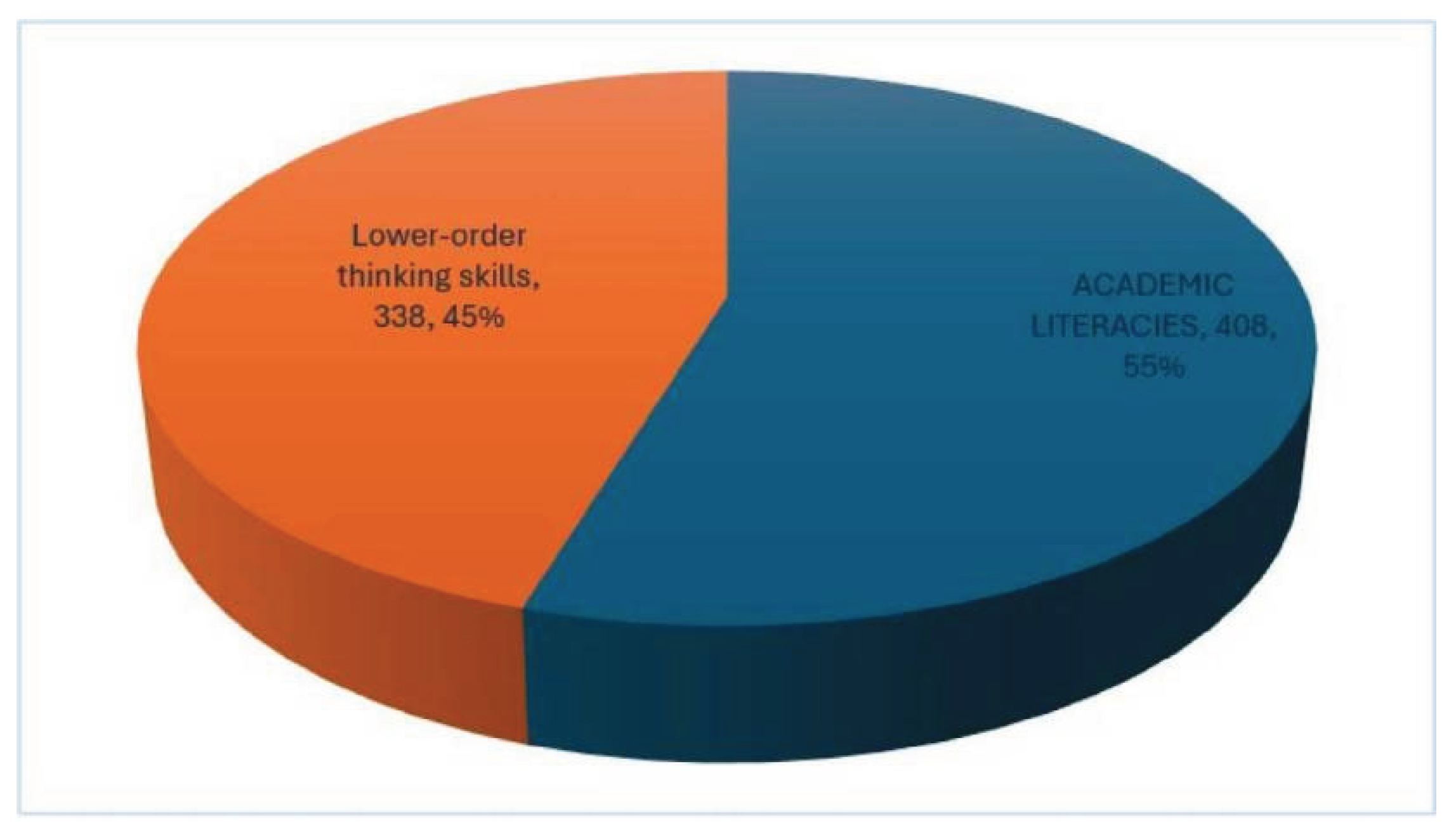
Figure 2.
Frequency Distribution between the Course Outline and Instructional Discourse.
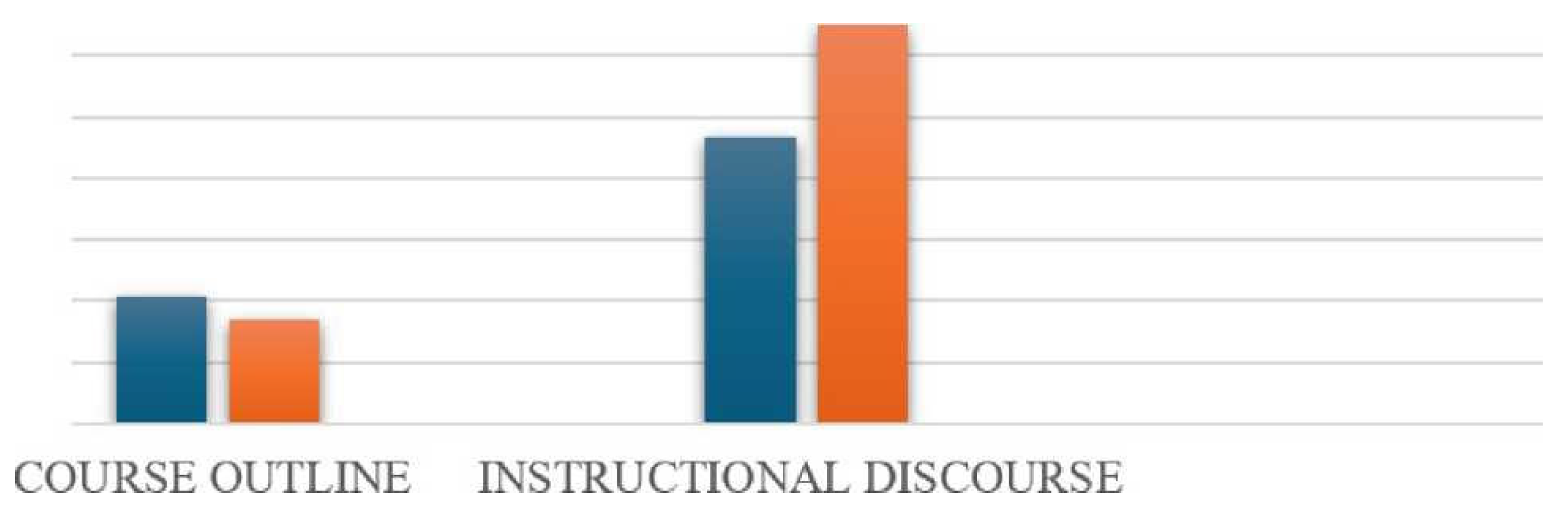
Figure 3.
Disciplinary Variation of Pedagogical Literacy Practices.
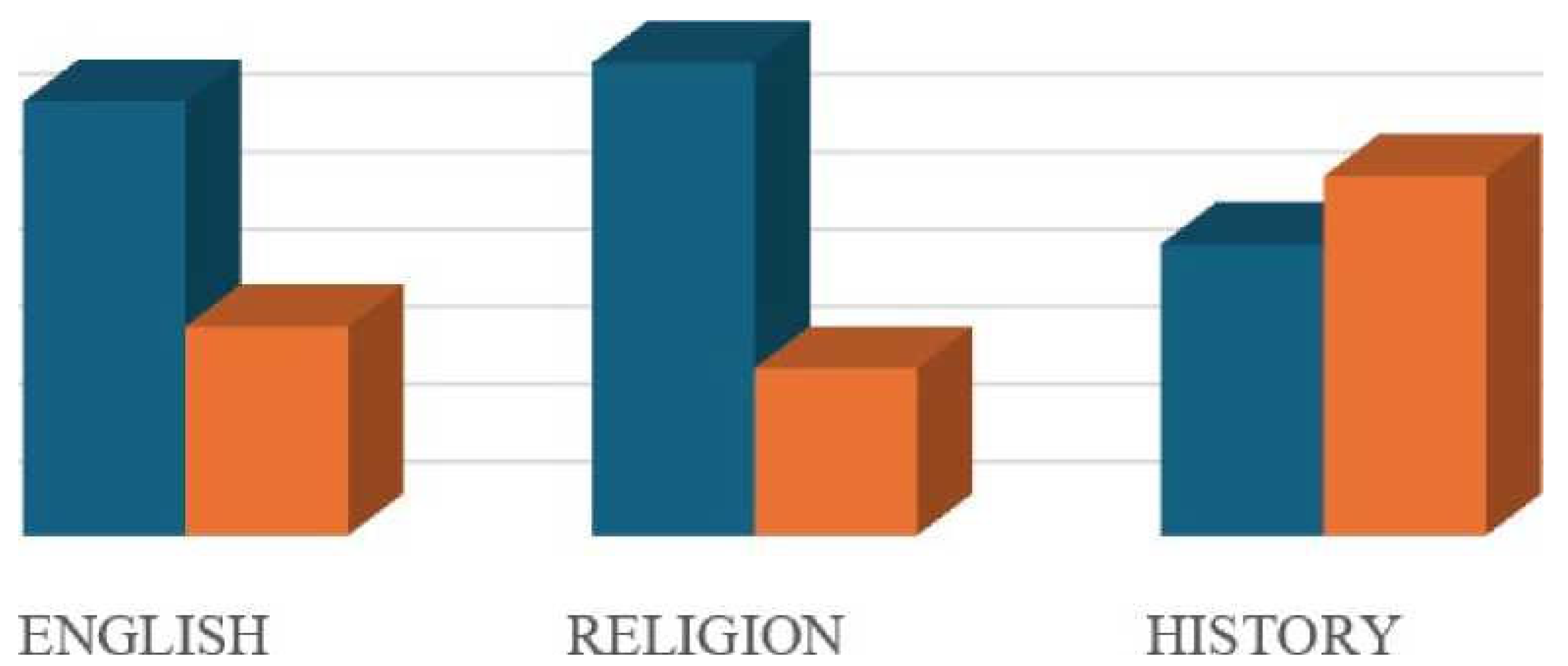
Figure 4.
Overall Assessment Literacy Practices.
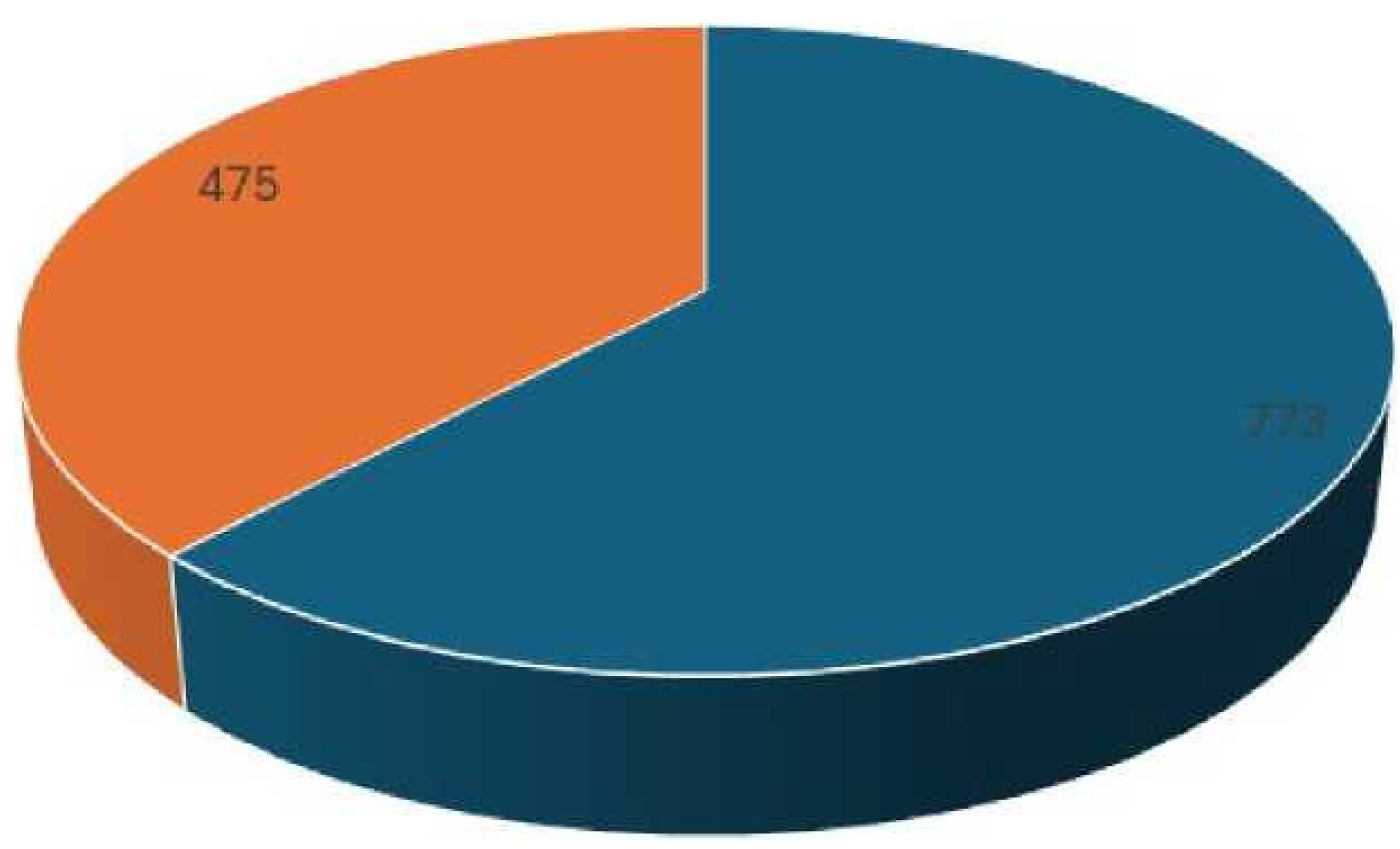
Figure 5.
Disciplinary Variation of Assessment Practices.
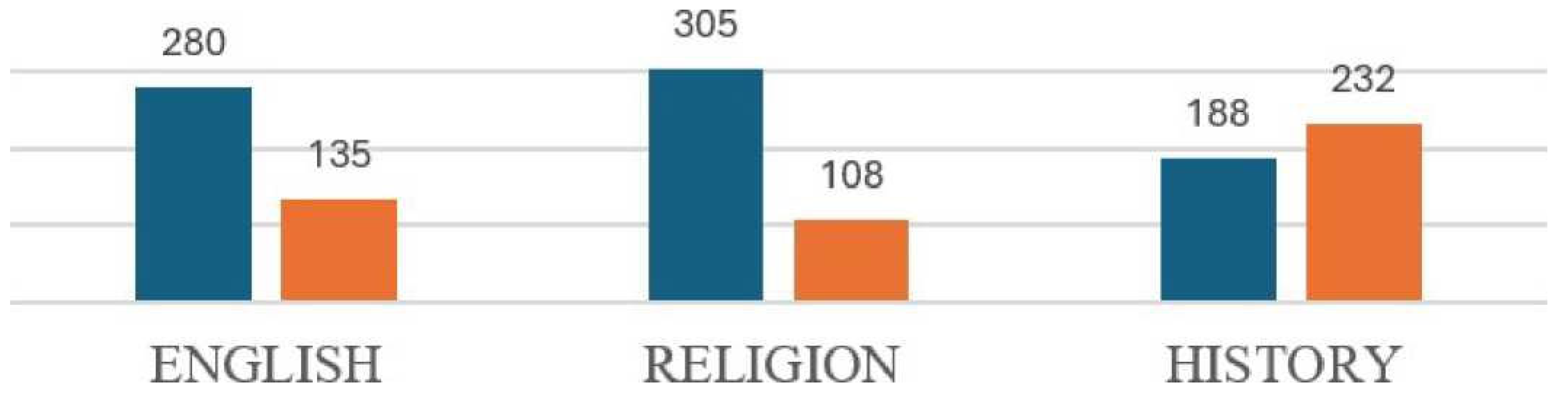
Figure 6.
Overall Frequency Distribution of Literacy Practices.
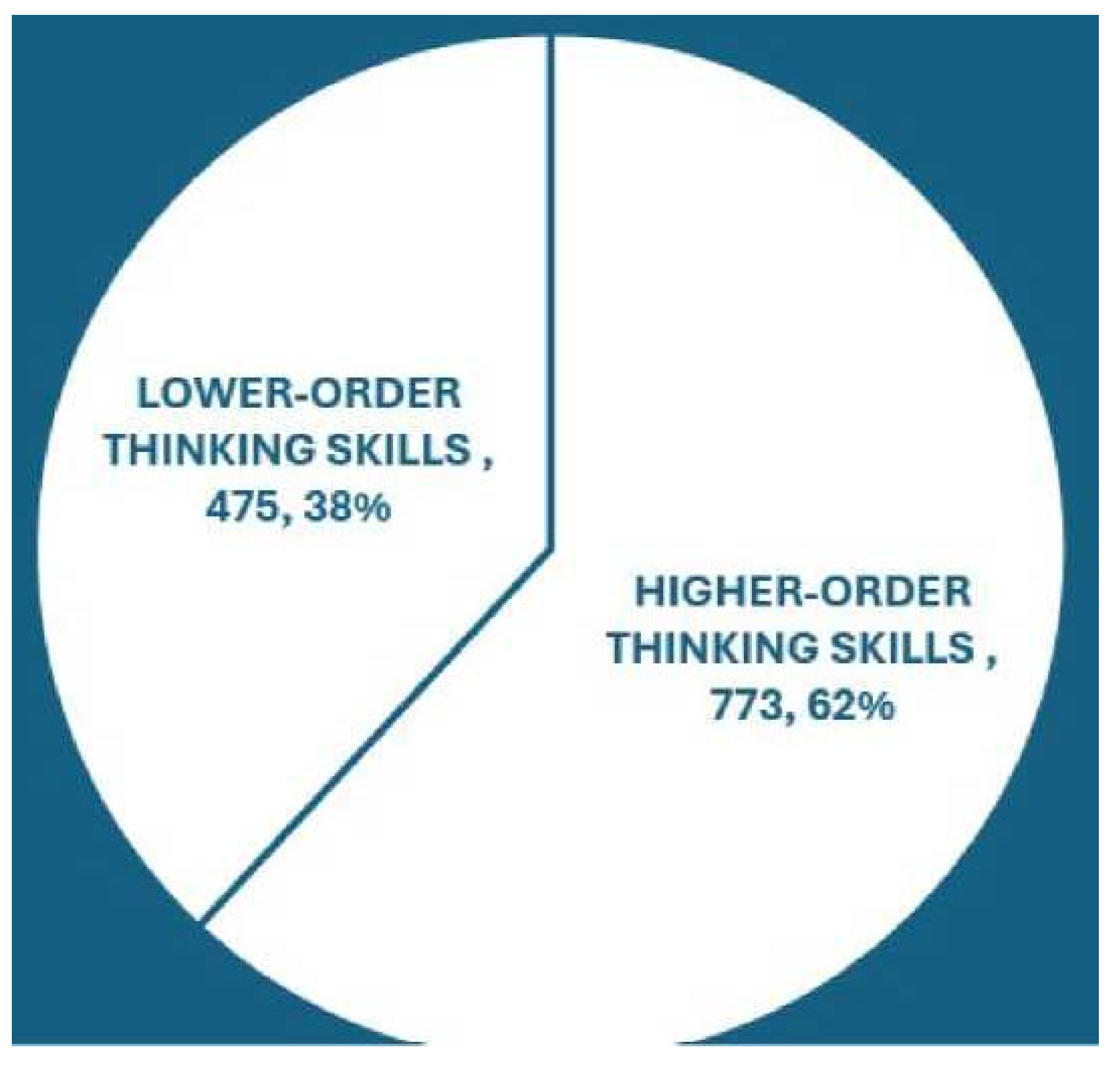
Figure 7.
Overall distribution of lecturers’ literacy practices across the three disciplines. (Legend not included in this version).
Figure 7.
Overall distribution of lecturers’ literacy practices across the three disciplines. (Legend not included in this version).
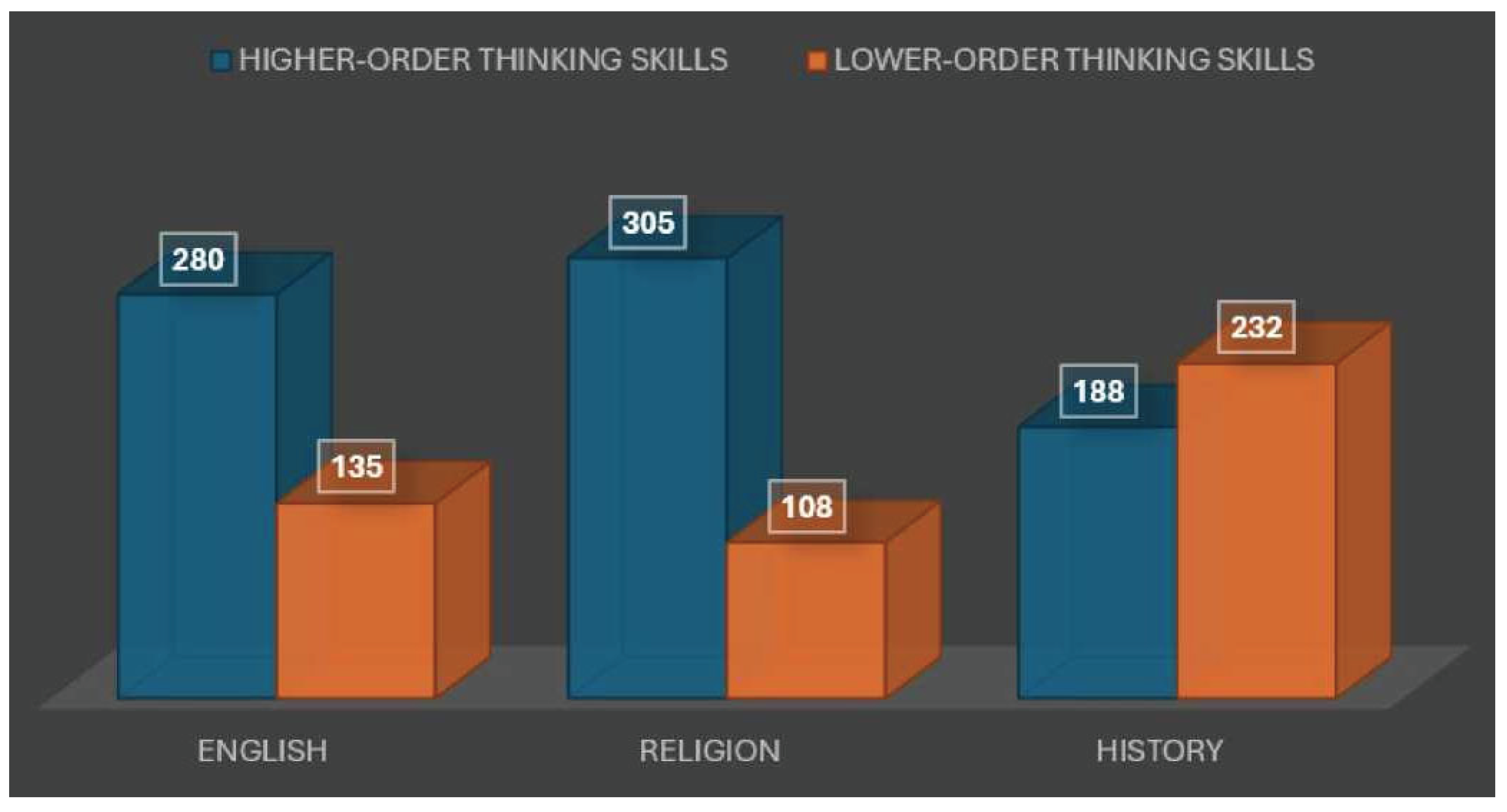
Disclaimer/Publisher’s Note: The statements, opinions and data contained in all publications are solely those of the individual author(s) and contributor(s) and not of MDPI and/or the editor(s). MDPI and/or the editor(s) disclaim responsibility for any injury to people or property resulting from any ideas, methods, instructions or products referred to in the content. |
© 2025 by the authors. Licensee MDPI, Basel, Switzerland. This article is an open access article distributed under the terms and conditions of the Creative Commons Attribution (CC BY) license (http://creativecommons.org/licenses/by/4.0/).
Copyright: This open access article is published under a Creative Commons CC BY 4.0 license, which permit the free download, distribution, and reuse, provided that the author and preprint are cited in any reuse.


