

Submitted:
10 October 2025
Posted:
15 October 2025
You are already at the latest version
Abstract
Herein, a co-adsorption modification based on ZIF-8 was introduced with the contribution of PEG package to enhance the antioxidant potency of the Hedysari Radix disperse particles. In the solution system containing 15% ethanol, the rough surface of the original Hedysari Radix disperse particles (HRE) was improved by the typical co-adsorption modification with ZIF-8 (HRE@ZIF-8 3) and further smoothed by the package of PEG (HRE@ZIF-8@PEG 3). The co-adsorption modifications including ZIF-8 only, PEG only, and ZIF-8 with PEG were all studied in the solution system. In particular, the modification combined both the PEG package and suitable amount of ZIF-8 achieved the most significant enhancement of the CAT activity as well as the T-AOC value. HRE@ZIF-8@PEG 3 alleviated the oxidative stress upon C. elegans and extended the survival time. This work suggested meaningful co-adsorption modification for improving the potency of the medicinal plant resources.
Keywords:
Hedysari Radix particles
; co-adsorption modification
; antioxidant potency
; ZIF-8 co-incubation
; medicinal plant resources
1. Introduction
Medicinal plant resources, which are usually used for preventing and treating diseases, are important medical resources worldwide [1,2]. The quality and potency bottleneck has brought the dilemma of high cost and low efficiency due to the sophisticated factors in natural growth, collection, planting, and processing [3,4]. Therefore, the manufacturing supervision and product modification are significant for the successful utilization of the medicinal plant resources [5]. The former is commonly fixed by setting the corresponding standards, while the latter is more attractive due to the possible promotion upon the given raw materials. Herein, we focused on the co-adsorption modification strategy, which commonly loaded the regular materials onto the traditional Chinese medicine particles, for improving the antioxidant potency. In particular, Hedysari Radix was selected as a representative.
Hedysari Radix is the dried root of Hedysarum polybotrys Hand. -Mazz and named from the ruddy skin [6]. It is moderately nutritious and sweet flavored. The main functions of Hedysari Radix include tonifying the life energy (also called “Qi” in the basic theory of traditional Chinese medicine), stabilizing surface, stopping the perspiration, conducting the detoxification, contributing to diuresis and anti-inflammation [7,8,9]. The previous reports indicated that Hedysari Radix had higher antioxidant potency among the similar sources [10,11]. In clinical trials, Hedysari Radix has been used in the treatment of spontaneous sweating, blood obstruction, swelling, poor food intake, chronic diarrhea, hematochesia, bleeding, edema, and pain [12,13,14]. It also plays important roles in the immune regulation, anti-inflammation, and carcinoma inhibition [15,16,17]. The main components of Hedysari Radix such as polysaccharides, terpenoids and flavonoids (or isoflavones) all indicated considerable antioxidant effect, so as the water decoction and extract [18,19,20,21]. Among them, typical phytochemicals included naringin, naringenin, daidzein, calycosin, betulinic acid, and lupeol. However, the theoretical research of traditional Chinese medicine required the acceptable minimum size is 200 μm [22,23,24]. Since Hedysari Radix is investigated as a complete medicinal herb, the disperse particles in suitable size (~ 200 μm) are more in line with the mentioned theoretical research [22].
To match the appropriate scale of Hedysari Radix disperse particles, the co-adsorption modification should be designed with the concern of size, dispersibility, target delivery, and biocompatibility. In the recent decades, metal organic framework (MOF) has been introduced into the field of medicinal modification due to the specific steric properties [25,26]. It is a porous polymer with a regular topology [27]. Among the reported MOFs, zeolitic imidazolate frameworks (ZIFs) are of high interest due to the practical biocompatibility and high drug loading efficiency [28,29,30]. With both organic and inorganic properties, ZIFs are commonly pH responsive and displaying a nanopore size, which is beneficial for the delivery of both hydrophilic and hydrophobic drugs. For loading medicinal herbal disperse particles, the combination strategy with MOFs is more like a co-adsorption modification rather than the pore loading one [31]. Actually, the size of the traditional Chinese medicine or herbal disperse particles is commonly larger than MOFs, thus the usual strategy is loading MOFs onto the herbal disperse particles to improve the surface attributes such as solubility and affinity towards the targets, which is different from the encapsulation or post-synthetic loading [32,33]. Several MOFs (such as ZIF-8 and Cu-based ones) showed antioxidant potency themselves [34,35,36], while the loading onto biomacromolecules (such as bovine hemoglobin) enhanced the antioxidant properties with the probable mechanism of improving the irregular surfaces [37].PEG package was an available further step to enhance the stability of the acquired particles, which also enhanced the antioxidant activity as referenced [38,39]. The enhancement on the antioxidant potency has been reported in the field of preparing the traditional Chinese medicine or herbal disperse particles [40,41]. Generally speaking, developing rational co-adsorption modification, or similar strategies, may improve the antioxidant activity of Hedysari Radix.
In this work, a co-adsorption modification with ZIF-8, the typical MOF composing of Zn2+ and 2-methylimidazole, was carried out upon the Hedysari Radix disperse particles together with the contribution of PEG package to introduce the potential enhancement on the antioxidant potency (Figure 1). The size of Hedysari Radix disperse particles was 200 μm while the diameter of the ZIF-8 particles chosen was 5 μm from the commercial source. In consideration of the reported antioxidant activity and surface improving capability of both ZIF-8 and PEG package, ZIF-8 particles were loaded onto the surface of Hedysari Radix disperse particles via the co-adsorption, which was expected to enhance the antioxidant potency according to the literature [40,41]. The prepared samples were characterized and tested to suggest the structural modification. The antioxidant potency was also evaluated in the enzymatic level and in Caenorhabditis elegans (C. elegans). Most significantly, this work introduced the co-adsorption modification, which was expected to improve the antioxidant potency with convenience and cooperativity. The strategy here was easy to operate and available for being combined with other approaches. Generally, this work might raise the possible co-adsorption modification and broader strategies for improving the biological activity of medicinal plant resources.
2. Materials and Methods
2.1. General Materials and Instruments
The commercially available chemicals were purchased from Sangon Bioengineering Co., LTD (Shanghai, China) and Sinopharm Group Chemical Reagent Co. LTD (Shanghai, China). The raw Hedysari Radix was at the purity of 99%. ZIF-8 was at the purity of 98% with the diameter of 5 μm. PEG was at the reagent grade with the average molecular weight of ~900000. They were directly used without further purification. The buffer solution was purchased from Sinopharm Group Chemical Reagent Co. LTD (Shanghai, China). The ethanol used for was at the purity of 95% at the reagent grade. The biological assay kits were purchased from Nanjing Jiancheng Biotechnology Co. LTD (Nanjing, China). The kits on the catalase (CAT) activity and total antioxidant capacity (T-AOC, referring to the total antioxidant level composed of various antioxidants and antioxidant enzymes, such as vitamin C, vitamin E, and carotenoids) were used according to the common procedures in previous references [42,43,44]. The Hedysari Radix was crushed into disperse particles with FW177 crusher from Tianjin Stete Instrument Co. LTD (Tianjin, China). The centrifugation in this work was conducted with EBA200 high-speed centrifuge from Sigma Zentrifugen Co. LTD (Germany). The morphology of the prepared samples was characterized by Hitachi S-3400N Scanning Electron Microscope (SEM) system (Japan).
2.2. Preparation of the Hedysari Radix Disperse Particles and the Modified Samples
The raw Hedysari Radix was put into the crusher and the homogenizer (at 10000 rpm) to obtain the fine powder. The powder passed through the 120-mesh sieve. The aperture of the 120-mesh sieve was around 100 μm, while the rod-shaped Hedysari Radix disperse particles could pass through the sieve at the length of 200 μm with the diameter of the passing surface less than 100 μm. Then the powder was dried at 105 °C until constant weight. Then the powder passed through the 120-mesh sieve again for later use. All the steps followed the industrial quality control standards of the traditional Chinese medicine herbs [45,46], which ensured the quality control of the disperse particles in this work.
Following a conventional method in the field of traditional Chinese medicine, the preparation of the Hedysari Radix disperse particles was carried out in the ethanol solution [47]. Thus, a rational water-ethanol proportion should be obtained. The Hedysari Radix powder (0.2 g) was dissolved in 10 mL mixed water-ethanol solvent and kept being stirred at 30 rpm for 15 min. The mixture formed a stable colloidal solution. Then the mixture was filtered, washed by cold ethanol for three times, and lyophilized. The residue was dried at 100 °C until constant weight and then weighed after being cooled to room temperature. By adjusting the percentage of ethanol in the water-ethanol solvent (0-75%, and absolute ethanol), the dissolved amount of the Hedysari Radix powder was tested by removing the residue and then weighing the vapored solution. The tests were in triplicate. Accordingly, the percentage of ethanol was set as 15% in the following experiments.
By setting the amount of the Hedysari Radix powder as 20 mg, the dissolving system was set as 2 mL water-ethanol mixing solvent containing 15% ethanol. Then different amount of ZIF-8 (5, 10, 20, and 40 mg) were mixed in the above system to acquire the ZIF-8-modified groups. The ZIF-8 particles chosen was 5 μm, a most commonly used size, from the commercial source. These groups were further treated with 200 μL polyethylene glycol (PEG) to form the PEG-modified groups. There were 11 samples: Hedysari Radix powder in water (HRW), Hedysari Radix powder in 15% ethanol (HRE), Hedysari Radix powder in 15% ethanol with PEG (HRE@PEG), ZIF-8-modified Hedysari Radix powder in 15% ethanol (HRE@ZIF-8 group: 1~4, from low dosage to high), and Hedysari Radix powder in 15% ethanol with the treatment of both ZIF-8 and PEG (HRE@ZIF-8@PEG group: 1~4, from low dosage to high). All samples were freeze-dried before further tests.
2.3. Enzymatic Activity Assays
Initially, 1 g mashed porcine liver tissue containing microsomal enzyme was treated with 9 mL saline. Then the mixture was centrifuged at 2500 rpm for 10 min to remove the supernatant under the ice bath condition to obtain the 10% tissue homogenate. As referenced, the tissue homogenate was regarded as the enzyme in the following evaluation of the prepared samples on the CAT activity and T-AOC [42,43,44]. The samples were prepared in 15% ethanol. Right before the tests, the prepared samples were mixed with the tissue homogenate under different time (15 and 30 min) and temperature (25 and 37 °C) conditions.
The CAT activity was tested with a kit with ammonium molybdate method [42,43,44]. The absorbance at 405 nm was tested with an optical diameter of 0.5 cm. In consideration of the sample volume, reaction time, and homogenate protein concentration, the CAT activity values were calculated. The tissue homogenate was added before the reaction in the testing groups to reduce the interference due to its own absorbance signal. In the control group, the tissue homogenate was added ad hoc to retain the background signal.
Meanwhile, the T-AOC was measured with a specific kit [42,43,44]. The absorbance at 520 nm was tested with an optical diameter of 1.0 cm. In consideration of the sample volume, total volume of the reaction system, reaction time, and homogenate protein concentration, the T-AOC values were calculated. The tissue homogenate was added before the reaction in the testing groups to reduce the interference due to its own absorbance signal. In the control group, the tissue homogenate was added ad hoc to retain the background signal.
2.4. Testing the Anti-Oxidant Effect in C. elegans
The nematode (here was C. elegans) was purchased from Nanjing NJUBio Co. Ltd. (China) and cultured in Xingzhi College according to the ethics principles for experimental animals from Zhejiang Normal University. The nematode growth medium (NGM) rinsed with M9 buffer, and the C. elegans were collected in a 1.5 mL EP tube and naturally precipitated. The supernatant was discarded, and the precipitate was resuspended in M9 buffer. Then 1 mL lysate was added to the retained precipitate. The lysis time was set as 10 min to ensure the fully lysis. A further centrifugation of 1 min was conducted at 4500 rpm, and the supernatant was discarded. Then the centrifugation was repeated for another two times. Finally, the remaining lysate was washed away with M9 buffer and the eggs were precipitated. The eggs were incubated in NGM with Escherichia coli OP50 at 20 °C for 4 h, and the C. elegans might crawl on the moss.
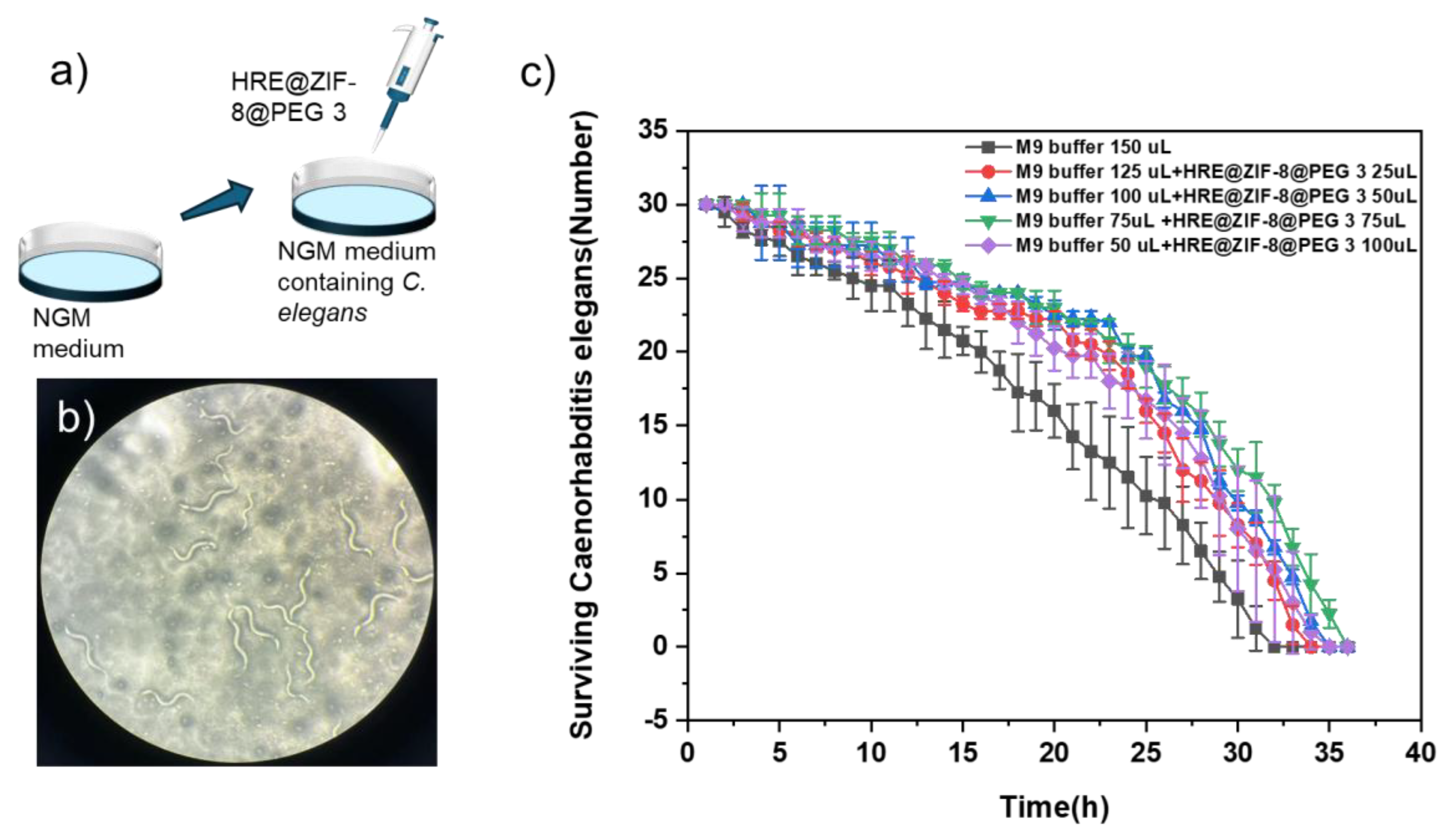
The L2 stage C. elegans obtained by synchronization were randomly divided into six groups. The control group was treated with 150 μL M9 buffer. The other groups were treated with various volume of HRE@ZIF-8@PEG 3 solution (25, 50, 75, and 100 μL) in 15% ethanol. The total volume was set as 150 μL with the supplement of M9 buffer.
Then the antioxidant model was built as referenced [48]. The treated C. elegans were cultured in an incubator at 20 ℃ for 48 h. From each group, thirty C. elegans were picked and placed in the corresponding marked dishes. Then 1% hydrogen peroxide was used to induce the oxidative stress. Each group was supplemented with 100 μL of 1% hydrogen peroxide every 2 h. When the C. elegans did not respond to the platinum wire touch, they were sentenced death. The surviving number of C. elegans in each group was recorded every hour until all the C. elegans died. The experiment was conducted in triplicate.
2.5. Statistical Analysis
The results were expressed as Mean value ± SD (standard deviation). IBM SPSS Statistics 26 software was used for the data processing. The differential analysis of multiple sets of data with the alphabet marking method was conducted here [49]. According to this method, initially, all the data groups were arranged in descending order based on the average values. The group with the largest average value was labeled by “a”. Then the comparison was conducted with the other groups in sequence. The following groups were labeled by “a” if the difference is not significant. When a group with significant difference appeared, it was labeled by “b”. Then the comparison continued and the groups with insignificant difference was labeled by “b”. When a group with significant difference appeared, it was labeled by “c”. Then the comparison continued until the group with the smallest average value was labeled with a letter. The labels “a-g” were added from significant to insignificant on the basis of the values in homogeneous subset by setting the p value of 0.05. In brief, “a-f” meant significant difference (p < 0.05), while “g” meant insignificant difference. The alphabet marking method can visually display the differences between data groups with the rational arrangement.
3. Results and Discussion
3.1. Co-Adsorption Modification on the Hedysari Radix Disperse Particles
The chemical composition of Hedysari Radix was further characterized by the HPLC chromatogram (Figure S1), in which peaks 1-6 were assigned to ferulic acid, isoferulic acid, vanillic acid, ononin, formononetin, and formononetin-7-O-β-D-glucoside, respectively, based on comparison with authentic standards, the detailed composition information is summarized in Table S1. Initially, the solution system was studied to realize the co-adsorption modification. The Hedysari Radix powder (0.2 g) was added to the mixed water-ethanol solvent (10 mL). After the determination of the weight of the dissolved amount of Hedysari Radix, it was found that the percentage of ethanol in the mixed solvent at 15% was an efficient and suitable parameter (Figure S2). The corresponding dissolved amount was 48.35 ± 1.74% of the added powder. In this step, two samples were preliminarily acquired as Hedysari Radix powder in water (HRW) and Hedysari Radix powder in 15% ethanol (HRE). Then, in the following experiments the ethanol percentage was set as 15%.
Subsequently, in the prepared solvent system, different masses of ZIF-8 (5, 10, 20, and 40 mg) were added and mixed to acquire the ZIF-8-modified groups (HRE@ZIF-8 group: 1~4, from low dosage to high). One step further, the ZIF-8-modified groups were wrapped with PEG to form the PEG-modified groups (HRE@ZIF-8@PEG group: 1~4, from low dosage to high). One extra group was prepared as Hedysari Radix powder in 15% ethanol with PEG (HRE@PEG), which contained no ZIF-8. All samples were freeze-dried. The groups with equal material mass ratios (HRE, HRE@ZIF-8 3, and HRE@ZIF-8@PEG 3) were selected as the representatives to check the basic characteristics under the scanning electron microscope (Figure 2). The HRE group exhibited a diameter of appropriate 200 μm and a rough surface with many gaps, which was suitable as disperse particles following the theoretical research in the field of traditional Chinese medicine (Figure 2a). After the co-adsorption modification with ZIF-8, the ZIF-8 particles with an original diameter of 5 μm assembled into the gaps of HRE (Figure 2b). In this pattern, the ZIF-8 particles were loaded on the surface of the original HRE particles. The HRE@ZIF-8 3 group formed in this approach also showed a diameter of appropriate 200 μm, while the surface was not that rough. Further, the modification with PEG via the package onto the outer layer led to a smooth surface, which even blurred the boundaries of particles (Figure 2c). As we mentioned in the introduction, it was reported that the modification of the herbal medicine should keep the diameter over 200 μm. Herein, all the tested samples maintained the theoretical guidance of traditional Chinese medicine and mainly provided the rational modification on the morphology of the surface, which might be more significant through the antioxidant procedures.
3.2. Testing the Antioxidant Activity in the Solution System
Herein, for calibrating the background signals and ensure rational optical density (OD) values in the solution system, the tissue homogenate containing microsomal enzyme was used to check the correlation between the OD values of the system and the homogenate concentration as detailed in the experimental section. As a result, the OD values increased along with the increase of the homogenate concentration in the range of 0-10% (Figure S3). To keep the OD values as 0.2-0.7 (according to the Lambert-Beer law), the homogenate concentration was set as 10% in the following tests.
In mechanism, modifying the Hedysari Radix disperse particles with either MOFs or PEG might improve the surface attributes such as solubility and affinity towards the targets, thus to enhance the antioxidant potency. On the other hand, the selected ZIF-8 itself had some antioxidant activity [37,50]. Distinguished from the previous reports by loading small molecules inside ZIF-8 [51], the co-adsorption modification in this work remained the internal loading capacity for introducing more functions.
Subsequently, the affection of the samples on the activity of CAT, which catalyzes the decomposition of hydrogen peroxide and is present at high concentrations in the liver, was tested on the basis of the above solution system. In consideration of setting the orthogonal conditions, different incubation time (15 and 30 min) and temperature (25 and 37 °C) were selected, while the OD value at 405 nm was set as the testing index. As an exploratory trail, five main groups of the samples including HRW, HRE, HRE@ZIF-8 3, HRE@PEG, and HRE@ZIF-8@PEG 3 were involved in the tests of the orthogonal conditions. After the reaction at 25 °C for 15 min, HRE obviously improved the CAT activity from HRW with the water solvent; while the modification with ZIF-8 only (HRE@ZIF-8 3), PEG only (HRE@PEG), and ZIF-8 with PEG (HRE@ZIF-8@PEG 3) raised the CAT activity more notably (Figure 3a). When the incubation time retained 15 min and the temperature raised to 37 °C, the effect of HRE further enhanced (Figure 3b). In this condition, the individual modification with ZIF-8 (HRE@ZIF-8 3) did not show obvious enhancement on the CAT activity. Modified with PEG only (HRE@PEG) slightly enhanced the antioxidant effect of HRE. In comparison, the modification with both ZIF-8 and PEG (HRE@ZIF-8@PEG 3) indicated an obvious enhancement on the CAT activity. In the conditions of 25 °C for 30 min, based on the fact that HRE showed better effect than HRW, the modification with ZIF-8 (HRE@ZIF-8 3) or PEG (HRE@PEG) separately resulted in the remarkable increase of the CAT activity, while the combination of ZIF-8 and PEG (HRE@ZIF-8@PEG 3) led to the further enhancement of the antioxidant effect (Figure 3c). Then, in the conditions of 37 °C for 30 min, the tendency was similar to that in the conditions of 37 °C for 15 min (Figure 3d). Accordingly, several hints were revealed. The benefit from the solvent system was basically related to the temperature; while the enhancement from the ZIF-8 modification should be maintained by extending the incubation time. Meanwhile, the PEG modification led to positive affection by either increasing the temperature or extending the incubation time. The combination of ZIF-8 and PEG exhibited the most efficient improvement on the CAT activity in all the set conditions. Moreover, since the conditions of 37 °C for 30 min were the most beneficial situation to raise the CAT activity, all the eleven samples were tested in this system (Figure 3e). The labels “a-g” were added from significant to insignificant as described in the experimental section. According to the results, in each pair of comparison, the package of PEG enhanced the CAT activity from the original status. However, the ZIF-8-modification only enhanced the CAT activity at the suitable addition ratio (HRE@ZIF-8 3, and HRE@ZIF-8@PEG 3). Otherwise, the CAT activity was reduced. Thus, among all the tested samples, the modification combined both the PEG package and suitable amount of ZIF-8 resulted in the most significant enhancement of the CAT activity. Free from loading antioxidant agents or using MOFs with strong reducibility [52,53], the notable enhancement in the antioxidant potency here might be attractive by bearing the possibility of further improvement.
Afterwards, the T-AOC value, which is an indicator of the quantity and activity of antioxidants in the body to reflect the body’s ability to combat free radicals and oxidative stress, was measured with the above solution system and orthogonal conditions (15 and 30 min; 25 and 37 °C). The OD value at 520 nm was set as the testing index. Similar to the measurement of CAT activity, the five main groups of the samples including HRW, HRE, HRE@ZIF-8 3, HRE@PEG, and HRE@ZIF-8@PEG 3 were involved in the tests of the orthogonal conditions. In all the tested conditions such as 25 °C for 15 min (Figure 4a), 37 °C for 15 min (Figure 4b), 25 °C for 30 min (Figure 4c), and 37 °C for 30 min (Figure 4d), the observed tendencies were almost the same. On the basis of the fact that HRE showed better effect than HRW, the modification with ZIF-8 (HRE@ZIF-8 3) or PEG (HRE@PEG) separately resulted in the significant enhancement of the T-AOC value to almost the same extent. In particular, the combination of ZIF-8 and PEG (HRE@ZIF-8@PEG 3) led to the dramatic enhancement of the T-AOC value compared with all the other groups. Then the conditions of 37 °C for 30 min were selected to check all the eleven samples (Figure 4e). One similar hint was that in each pair of comparison, the package of PEG increased the T-AOC value from the original status. The ZIF-8-modification, however, caused the T-AOC value to show a dose-dependent enhancement. With low amount of ZIF-8, the T-AOC value was impacted, while with high amount of ZIF-8, the T-AOC value was basically higher than that of HRE. Among all the tested samples, the modification combined both the PEG package and suitable amount of ZIF-8 resulted in the most significant increase of the T-AOC value, which stood for better antioxidant effect. Therefore, HRE@ZIF-8@PEG 3 was selected for the further investigation of the antioxidant effect upon C. elegans.
3.3. Testing the Antioxidant Activity upon C. elegans
In this section, L2 stage C. elegans were divided into six groups and treated with various conditions before being counted (Figure 5a). The control group was incubated with 150 μL M9 buffer, while the other groups were incubated with increasing volume of HRE@ZIF-8@PEG 3 solution (25, 50, 75, and 100 μL) and then supplied to reach a total volume of 150 μL with M9 buffer. In each group, 100 μL of 1% hydrogen peroxide was added every 2 h to induce the oxidative stress, and the survival C. elegans were checked under the microscope with the number counted (Figure 5b). The record of the surviving number was performed every hour until all the C. elegans died. The result was presented in Figure 5c. Basically, 32 h later, none was survival in the control group. The treatment with HRE@ZIF-8@PEG 3 solution extended the survival time of C. elegans under the oxidative stress to 34-36 h. Compared with the previous reports of similar models with marketed drugs such as Metformin and D-mannose [54,55], increasing the lifespan by 2-4 h in this work was notable. The antioxidant effect was mainly improved in a dose-dependent manner in a rational range (0-75 μL). When over dosage (100 μL) was given, the antioxidant effect was not the most potent but slightly weaker. In brief, the rational treatment of HRE@ZIF-8@PEG 3 was a workable strategy to achieve significant antioxidant effect upon C. elegans to alleviate the oxidative stress and extend the survival time.
3.4. Discussion
The co-adsorption modification in this work retained the traditional Chinese medicine theory-accepted size of the raw Hedysari Radix disperse particles. The co-adsorption modification was beneficial for enhancing the antioxidant potency of the medicinal plant. The CAT activity and the T-AOC value were both improved. The oxidative stress of the C. elegans was alleviated and the survival time was extended. One of the most significant advantages of the co-adsorption modification here was the convenience. It was easy to operate with the simple components of ethanol, ZIF-8, and PEG. The previous antioxidant-enhancing strategies for medicinal plants were limited by the complex regulation on the levels of the components. Some of them performed the induction with the natural or chemical agents to promote the growth and increase the content of the antioxidant compounds [56,57,58]; while some others used irradiation to enhance the antioxidant potential [59,60]. The above approaches showed impact on the relative contents of the components. Further strategies on the product formation (such as infusions, essential oil) of the medicinal plants included gastro-duodenal digestion and β-cyclodextrin-based MOF [61,62]. They disrupted the overall integrity of the original medicinal plants, and the agents involved in optimization were relatively sophisticated. These approaches required specific form of the medicinal plants, and was difficult to cooperate with other methods. It was notable that the co-adsorption modification in this work indicated practical cooperativity. The combination with other approaches and the function-introduction onto MOF might bring more sophisticated performance. One obvious limit of this work was that the selection of ZIF-8 and PEG followed the necessity of convenience. Thus, further modification would have many stories to tell. For example, photodynamic therapy [63] and fluorescence labeling [64] might be introduced by adding functional molecules (such as indocyanine green) inside the cavity or onside the surface of MOF. On the other hand, other MOFs such as UiO-66 or MIL-101 might alter ZIF-8 to bring the catalysis and magnetism functions [65], while PEG could be replaced by other layer such as hyaluronic acid to affect the packaging performance [66]. On the basis of the findings here, more versatile functions might be brought to achieve accurate and effective utilization of medicinal plants.
4. Conclusions
To sum up, in this work, to improve the antioxidant potency of the Hedysari Radix disperse particles, a co-adsorption modification based on ZIF-8 was introduced with the contribution of PEG package. The co-adsorption modification was realized in the solution system containing 15% ethanol. The typical co-adsorption modification with ZIF-8 (HRE@ZIF-8 3) improved the rough surface of the original Hedysari Radix disperse particles (HRE), while the further package of PEG (HRE@ZIF-8@PEG 3) resulted in a smooth surface to blur the boundaries of particles. All the tested samples maintained the theoretical guidance of herbal medicine to keep the diameter over 200 μm. After the comparison of the co-adsorption modification including ZIF-8 only, PEG only, and ZIF-8 with PEG, it was found that the modification combined both the PEG package and suitable amount of ZIF-8 achieved the most significant enhancement of the CAT activity s well as the T-AOC value. Furthermore, the typical hit platform HRE@ZIF-8@PEG 3 was tested to check the antioxidant effect upon C. elegans. As a result, by rationally applying HRE@ZIF-8@PEG 3, the oxidative stress was alleviated and the survival time of the C. elegans was extended. In future research, MOFs with functional molecules (such as photodynamic therapy [63], fluorescence labeling [64]) loaded inside might be modified onto herbal disperse particles to realize more sophisticated performance. The information in this work was meaningful for developing the practical further strategies which were compliant with the theory of traditional Chinese medicine.
Supplementary Materials
The following supporting information can be downloaded at the website of this paper posted on Preprints.org.
Author Contributions
Conceptualization, X.H. and C.W.; methodology, X.H.; validation, Q.P., J. F. and J.W.; formal analysis, G.Z.; investigation, X.H.; resources, C.W.; writing—original draft preparation, X.H.; writing—review and editing, C.W.; supervision, G.Z.; project administration, Q.P.; funding acquisition, J.F., G.Z., and J.W. All authors have read and agreed to the published version of the manuscript.
Funding
This work is supported by Natural Science Foundation of Zhejiang Province( LQ24H070005), Jinhua Science and Technology Plan Projects(2023-4-032), Central Zhejiang NewQuality Productive Forces Research Center Project( No.202502).
Data Availability Statement
On request from the authors.
Conflicts of Interest
The authors declare no conflicts of interest.
References
- Que, L.; Chi, X.L.; Zang, C.X.; Zhang, Y.; Chen, M.; Yang, G.; Jin, A.Q. Species diversity of ex-situ cultivated Chinese medicinal plants. Chin J Chin Mater Med 2018, 43, 1071–1076. [Google Scholar]
- Guo, J.X.; Zhang, M.X.; Wang, C.C.; Zhang, R.; Shi, T.T.; Wang, X.Y.; Zhang, X.B.; Li, M.H. Application of remote sensing technology in medicinal plant resources. Chin J Chin Mater Med 2021, 46, 4689–4696. [Google Scholar]
- Zhang, C.C.; Wang, S.; Wang, Y.F.; Wang, H.Y.; Qin, M.; Dai, X.Y.; Yan, B.B.; Guo, X.Z.; Zhou, L.; Lin, H.B.; Guo, L.P. Application of tissue culture technology of medicinal plants in sustainable development of Chinese medicinal resources. Chin J Chin Mater Med 2023, 48, 1186–1193. [Google Scholar]
- Zhang, C.C.; Fang, C.; Qin, M.; Wang, H.Y.; Guo, X.Z.; Wang, Y.F.; Yan, B.B.; Zhang, Z.H.; Wang, S.; Guo, L.P. DUS testing guidelines for new varieties of Chinese medicinal plants. Chin J Chin Mater Med 2023, 48, 2896–2903. [Google Scholar]
- Luo, Y.F.; Liu, K.Y.; Feng, J.H.; Tong, Y.R.; Gao, W. Research progress in synthetic biology of active compounds in Chinese medicinal plants. Chin J Chin Mater Med 2021, 46, 5727–5735. [Google Scholar]
- Mo, X.L.; Guo, D.K.; Jiang, Y.G.; Chen, P.; Huang, L.F. Isolation, structures and bioactivities of the polysaccharides from Radix Hedysari: A review. Int J Biol Macromol 2022, 199, 212–222. [Google Scholar] [CrossRef]
- Zhang, Y.G.; Zhang, S.J.; Niu, J.T.; Si, X.L.; Bian, T.T.; Wu, H.W.; Li, D.H.; Li, Y.F. Comparative study of Astragali Radix Praeparata cum Melle and Hedysari Radix Praeparata cum Melle on spleen Qi deficiency rats. Chin J Chin Mater Med 2021, 46, 5641–5649. [Google Scholar]
- Mao, X.W.; Gu, Z.R.; Guo, Y.; Lyu, X.; Ge, B. Research hotspots and trends of Hedysari Radix: based on CiteSpace knowledge map. Chin J Chin Mater Med 2022, 47, 3095–3104. [Google Scholar]
- Yin, X.B.; Qu, C.H.; Dong, X.X.; Shen, M.R.; Ni, J. Preparation regularity of Chinese patent medicine in Chinese Pharmacopoeia (2020 edition, Vol. Ⅰ). Chin J Chin Mater Med 2022, 47, 4529–4535. [Google Scholar]
- Fu, K.R.; Li, X.R.; Wei, X.C.; He, J.G.; Jia, M.T.; Li, Y.; Yan, Y.T.; Xie, X.M.; Li, C.Y. Research progress on pharmacological action and mechanism of Hedysari Radix flavones. Chin Trad Herb Drugs 2024, 55, 3906–3915. [Google Scholar]
- Zhao, Y.B.; Chen, J.; Xu, J.; Zhang, T.J. Research progress in study on chemical constituents and antitumor effects in Hedysarum polybotrys. Chin Trad Herb Drugs 2015, 46, 3434–3440. [Google Scholar]
- Gao, X.; Ren, C.Z.; Li, L.Y.; Zhao, H.L.; Liu, K.; Zhuang, M.J.; Lv, X.F.; Zhi, X.D.; Jiang, H.G.; Chen, Q.L.; Zhao, X.K.; Li, Y.D. Pharmacological action of Hedysarum polysaccharides: a review. Front Pharmacol 2023, 14, 1119224. [Google Scholar] [CrossRef]
- Yang, T.; Guo, L.; Li, C.; Yang, Y.L.; Feng, S.L. Chemical structural features and anti-complementary activity of polysaccharide HPS1-D from Hedysarum polybotrys. Chin J Chin Mater Med 2014, 39, 89–93. [Google Scholar]
- Liu, Y.; Yang, H.S.; Liu, Y.; Wang, W.; Zhao, Y.Y.; Chen, H.B.; Liang, H.; Zhang, Q.Y. Chemotaxonomy studies on the genus Hedysarum. Biochem Syst Ecol 2019, 86, 103902. [Google Scholar] [CrossRef]
- Du, X.; Zhao, Y.; Ma, Y.; Xing, H.; Li, X. Effect of Radix Hedysari Polysaccharide on Glioma by Cell Cycle Arrest and TNF-α Signaling Pathway Regulation. Int J Polym Sci 2019, 2019, 2725084. [Google Scholar] [CrossRef]
- Zhang, L.F.; Cheng, W.D.; Gui, M.M.; Li, X.Y.; Wei, D.F. Comparative study of Radix Hedyseri as sulstitute for Radix Astragali of yupingfeng oral liquid on cellular immunity in immunosuppressed mice. J Chin Med Mater 2012, 35, 269–273. [Google Scholar]
- Yang, S.P.; Xiu, M.H.; Li, X.; Shi, Y.; Wang, S.W.; Wan, S.F.; Han, S.Z.; Yang, D.; Liu, Y.Q.; He, J.Z. The antioxidant effects of hedysarum polybotrys polysaccharide in extending lifespan and ameliorating aging-related diseases in Drosophila melanogaster. Int J Biol Macromol 2023, 241, 124609. [Google Scholar] [CrossRef] [PubMed]
- Chen, C.; Dong, J.Y.; Liu, K.; Liu, Y.Q.; Wang, Y.L. Antioxidant effect of total flavonoids of Hedysarum polybotry on human umbilical vein endothelial cells injury induced by hydrogen peroxide. J Chin Med Mater 2007, 30, 1099–1102. [Google Scholar]
- Yang, X.Y.; Xue, Z.Y.; Yang, Y.F.; Fang, Y.Y.; Zhou, X.L.; Zhao, L.G.; Feng, S.L. Complex enzyme combined with ultrasound extraction technology, physicochemical properties and antioxidant activity of Hedysarum polysaccharides. Chin J Chin Mater Med 2018, 43, 2261–2268. [Google Scholar]
- Liu, Y.Q.; Wang, Z.W.; Wei, S.C.; Yan, C.L.; Wang, R.Q.; Li, Y.D. The influences of ultrafiltration and alcohol sedimentation on protective effects of Radix Astragali and Radix Hedyseri against rat’s cerebral ischemia. Chin J Appl Phys 2015, 31, 132–135. [Google Scholar]
- Yang, X.J.; Yang, Z.J.; Li, S.; Ji, X.J.; Ning, Y.M.; Wang, Y. Effects of Radix Hedysari, Radix Astragalus and compatibility of Angelica Sinensis on blood deficiency model mice induced by cyclophosphamide. Chin J Appl Phys 2018, 34, 550–554. [Google Scholar]
- Yin, X.; Gu, K.; Shao, Z. Preparation of the Protein/Polyphenylboronic Acid Nanospheres for Drug Loading and Unloading. Acta Chim Sin 2023, 81, 116–123. [Google Scholar] [CrossRef]
- Huang, Y.; Zhao, Y.L.; Liu, F.; Liu, S.Q. Nano Traditional Chinese Medicine: Current Progresses and Future Challenges. Curr Drug Targets 2015, 16, 1548–1562. [Google Scholar] [CrossRef] [PubMed]
- Huang, Z.W.; Guo, M.Q.; Wang, W.H.; He, J.B.; Wu, C.B.; Pan, X.; Zhang, X.J.; Huang, Y.; Hu, P. Crosstalk between nano/micro particulate technologies and Chinese medicine: a bibliometric analysis. Tradit Med Res 2023, 8, 32. [Google Scholar] [CrossRef]
- Gao, S.; Han, Y.; Fan, M.; Li, Z.; Ge, K.; Liang, X.J.; Zhang, J. Metal-organic framework-based nanocatalytic medicine for chemodynamic therapy. Sci China-Mater 2020, 63, 2429–2434. [Google Scholar] [CrossRef]
- Chen, Z.; Chen, J.; Li, Y. Metal-organic-framework-based catalysts for hydrogenation reactions. Chin J Catal 2017, 38, 1108–1126. [Google Scholar] [CrossRef]
- Liu, C.; Sun, Q.; Lin, L.; Wang, J.; Zhang, C.; Xia, C.; Bao, T.; Wan, J.; Huang, R.; Zou, J.; Yu, C. Ternary MOF-on-MOF heterostructures with controllable architectural and compositional complexity via multiple selective assembly. Nat Commun 2020, 11, 4971. [Google Scholar] [CrossRef]
- Ding, M.; Song, L.J.; Luan, S.F. Elimination Ability of Zeolitic Imidazolate Framework-8 Against Biofilms on Medical Polymer Surface. Chin J Anal Chem 2023, 51, 1835–1843. [Google Scholar]
- Sun, B.; Ju, W.; Wang, T.; Sun, X.; Zhao, T.; Lu, X.; Lu, F.; Fan, Q. Preparation of Highly-dispersed Conjugated Polymer-Metal Organic Framework Nanocubes for Antitumor Application. Acta Chim Sin 2023, 81, 757–762. [Google Scholar] [CrossRef]
- Ji, L.; Zhu, Y.; Teng, X.; Wang, T.; Wang, S.; Meyer, T.J.; Chen, Z. Fabrication of complex, 3D, branched hollow carbonaceous structures and their applications for supercapacitors. Sci Bull 2022, 67, 398–407. [Google Scholar] [CrossRef]
- Yu, S.; Wang, S.; Xie, Z.; Yu, S.; Li, L.; Xiao, H.; Song, Y. Hyaluronic acid coating on the surface of curcumin-loaded ZIF-8 nanoparticles for improved breast cancer therapy: An in vitro and in vivo study. Colloid Surface B 2021, 203, 111759. [Google Scholar] [CrossRef]
- Zhao, Q.; Wang, T.; Wang, H.B.; Cao, P.; Jiang, C.Y.; Qiao, H.Z.; Peng, L.H.; Lin, X.D.; Jiang, Y.Y.; Jin, H.L.; Zhang, H.T.; Wang, S.P.; Wang, Y.; Wang, Y.; Chen, X.; Fan, J.B.; Li, B.; Li, G.; Liu, B.F.; Li, Z.Y.; Qi, S.H.; Zhang, M.Z.; Zheng, J.J.; Zhou, J.Y.; Zheng, L.; Zhao, K.W. Consensus statement on research and application of Chinese herbal medicine derived extracellular vesicles-like particles (2023 edition). Chin Herb Med 2024, 16, 3–12. [Google Scholar] [CrossRef]
- Yan, G.J.; Wang, Y.L.; Han, X.X.; Zhang, Q.; Xie, H.; Chen, J.; Ji, D.; Mao, C.Q.; Lu, T.L. A Modern Technology Applied in Traditional Chinese Medicine: Progress and Future of the Nanotechnology in TCM. Dose-Response 2019, 17, 1559325819872854. [Google Scholar] [CrossRef]
- Kiran, M.; Yasin, K.A.; Haq, S. Elmnasri K. Ben Ali M, Boufahja F, Shukurov O, Mahmoudi E, Hedfi A. Synthesis and characterization of manganese-L-arginine framework (MOF) for antibacterial and antioxidant studies. Dig J Nanomater Bios 2024, 19, 1353–1359. [Google Scholar]
- Yu, B.; Sun, W.; Lin, J.T.; Fan, C.Y.; Wang, C.X.Q.; Zhang, Z.S.; Wang, Y.P.; Tang, Y.H.; Lin, Y.H.; Zhou, D.F. Using Cu-Based Metal–Organic Framework as a Comprehensive and Powerful Antioxidant Nanozyme for Efficient Osteoarthritis Treatment. Adv Sci 2024, 11, 2307798. [Google Scholar] [CrossRef]
- Jermy, B.R.; Al-Jindan, R.Y.; Ravinayagam, V.; El-Badry, A.A. Anti-blastocystosis activity of antioxidant coated ZIF-8 combined with mesoporous silicas MCM-41 and KIT-6. Sci Rep 2022, 12, 6403. [Google Scholar] [CrossRef] [PubMed]
- Gu, X.M.; Allyn, M.; Swindle-Reilly, K.; Palmer, A.F. ZIF-8 metal organic framework nanoparticle loaded with tense quaternary state polymerized bovine hemoglobin: potential red blood cell substitute with antioxidant properties. Nanoscale 2023, 15, 8832–8844. [Google Scholar] [CrossRef] [PubMed]
- Zacchigna, M.; Cateni, F.; Procida, G. Improvement of Chemical and Physical Properties and Antioxidant Evaluation of Eugenol - PEG adduct. Nat Prod Commun 2017, 12, 413–416. [Google Scholar] [CrossRef] [PubMed]
- Cai, J.H.; Yang, Y.Q.; Zheng, Y.F. Preparation of curcuminoids-loaded PCL-PEG-PCL microspheres, and study on their drug delivery and antioxidant activity. Modern Chemical Industry 2022, 42, 201–206. [Google Scholar]
- Zhang, Y.Z.; Zhang, J.; Yan, J.W.; Qi, X.R.; Wang, Y.H.; Zheng, Z.T.; Liang, J.Q.; Ling, J.T.; Chen, Y.X.; Tang, X.Y.; Zeng, X.X.; Yu, P.; Zhang, D.J. Application of fermented Chinese herbal medicines in food and medicine field: From an antioxidant perspective. Trends Food Sci Tech 2024, 148, 104410. [Google Scholar] [CrossRef]
- Carter, O.W.L.; Xu, Y.J.; Sadler, P.J. Minerals in biology and medicine. RSC Adv 2021, 11, 1939–1951. [Google Scholar] [CrossRef] [PubMed]
- Ren, S.; Wang, Y.G.; Zhang, Y.Y.; Yan, P.M.; Xiao, D.; Zhao, Y.; Jia, W.W.; Ding, L.; Dong, H.Y.; Wei, C.; Lin, S.; Lin, Y. Paeoniflorin alleviates AngII-induced cardiac hypertrophy in H9c2 cells by regulating oxidative stress and Nrf2 signaling pathway. Biomed Pharmacother 2023, 165, 115253. [Google Scholar] [CrossRef] [PubMed]
- Hao, R.J.; Hu, Y.C.; Wei, Y.Y.; Qin, X.D.; Lu, Y.W. The neuroprotective effects of Rehmanniae Radix Praeparata exerts via regulating SKN-1 mediated antioxidant system in Caenorhabditis elegans and activating Nrf2-ARE pathway in vitro. J Funct Foods 2024, 113, 106040. [Google Scholar] [CrossRef]
- He, Q.H.; Feng, W.R.; Chen, X.; Xu, Y.F.; Zhou, J.; Li, J.L.; Xu, P.; Tang, Y.K. H2O2-Induced Oxidative Stress Responses in Eriocheir sinensis: Antioxidant Defense and Immune Gene Expression Dynamics. Antioxidants 2024, 13, 524. [Google Scholar] [CrossRef] [PubMed]
- Bauer, R.; Franz, G. Modern European Monographs for Quality Control of Chinese Herbs. Planta Med 2010, 76, 2004–2011. [Google Scholar] [CrossRef]
- Li, S.P.; Zhao, J.; Yang, B. Strategies for quality control of Chinese medicines. J Pharmaceut Biomed 2011, 55, 802–809. [Google Scholar] [CrossRef]
- Dang, Z.L.; Feng, D.M.; Liu, X.H.; Yang, T.; Guo, L.; Liang, J.; Liang, J.D.; Hu, F.D.; Cui, F.; Feng, S.L. Structure and antioxidant activity study of sulfated acetamido-polysaccharide from Radix Hedysari. Fitoterapia 2013, 89, 20–32. [Google Scholar] [CrossRef]
- Gruber, J.; Ng, L.F.; Poovathingal, S.K.; Halliwell, B. Deceptively simple but simply deceptive - Caenorhabditis elegans lifespan studies: Considerations for aging and antioxidant effects. FEBS Lett 2009, 583, 3377–3387. [Google Scholar] [CrossRef]
- McCabe, S.D.; Lin, D.Y.; Love, M.I. Consistency and overfitting of multi-omics methods on experimental data. Brief Bioinform 2020, 21, 1277–1284. [Google Scholar] [CrossRef]
- Li, Q.; Feng, R.X.; Chang, Z.H.; Liu, X.J.; Tang, H.; Bai, Q. Hybrid biomimetic assembly enzymes based on ZIF-8 as “intracellular scavenger” mitigating neuronal damage caused by oxidative stress. Front Bioeng Biotech 2022, 10, 991949. [Google Scholar] [CrossRef]
- Li, Y.S.; Shan, P.; Yu, F.Y.; Li, H.; Peng, L.C. Fabrication and characterization of waste fish scale-derived gelatin/sodium alginate/carvacrol loaded ZIF-8 nanoparticles composite films with sustained antibacterial activity for active food packaging. Int J Biol Macromol 2023, 230, 123192. [Google Scholar] [CrossRef] [PubMed]
- Jamshidi, Z.; Roohbakhsh, A.; Karimi, G. An overview on the protective effects of ellagic acid against heavy metals, drugs, and chemicals. Nutr Food Sci 2023, 11, 7469–7484. [Google Scholar] [CrossRef]
- Li, D.X.; Guo, Z.M.; Zhao, R.H.; Yin, N.; Xu, Q.L.; Yao, X. A simple method for the preparation of CeO2 with high antioxidant activity and wide application range. Nanotechnology 2023, 34, 105706. [Google Scholar] [CrossRef]
- Castillo-Quan, J.I.; Blackwell, T.K. Metformin: Restraining Nucleocytoplasmic Shuttling to Fight Cancer and Aging. Cell 2016, 167, 1670–1671. [Google Scholar] [CrossRef] [PubMed]
- Fang, Z.Y.; Chen, Y.T.; Wang, G.; Feng, T.; Shen, M.; Xiao, B.; Gu, J.Y.; Wang, W.M.; Li, J.; Zhang, Y.J. Evaluation of the antioxidant effects of acid hydrolysates from Auricularia auricular polysaccharides using a Caenorhabditis elegans model. Food Funct 2019, 10, 5531–5543. [Google Scholar] [CrossRef]
- Yi, T.G.; Park, Y.; Park, J.E.; Park, N.I. Enhancement of Phenolic Compounds and Antioxidative Activities by the Combination of Culture Medium and Methyl Jasmonate Elicitation in Hairy Root Cultures of Lactuca indica L. Nat Prod Commun 2019, 14, DOI10. [Google Scholar] [CrossRef]
- Iqbal, M.S.; Iqbal, Z.; Ansari, M.I. Enhancement of total antioxidants and flavonoid (quercetin) by methyl jasmonate elicitation in tissue cultures of onion (Allium cepa L.). Acta Agrobot 2019, 72, 1784. [Google Scholar] [CrossRef]
- Chutimanukul, P.; Sukdee, S.; Prajuabjinda, O.; Thepsilvisut, O.; Panthong, S.; Ehara, H.; Chutimanukul, P. Exogenous Application of Coconut Water to Promote Growth and Increase the Yield, Bioactive Compounds, and Antioxidant Activity for Hericium erinaceus Cultivation. Horticulturae 2023, 9, 1131. [Google Scholar] [CrossRef]
- Manivannan, A.; Soundararajan, P.; Halimah, N.; Ko, C.H.; Jeong, B.R. Blue LED Light Enhances Growth, Phytochemical Contents, and Antioxidant Enzyme Activities of Relunannia glutinosa Cultured In Vitro. Hortic Environ Biote 2015, 56, 105–113. [Google Scholar] [CrossRef]
- Tewari, K.; Kumari, S.; Vinutha, T.; Singh, B.; Dahuja, A. Gamma irradiation induces reduction in the off-flavour generation in soybean through enhancement of its antioxidant potential. J Radioanal Nucl Ch 2015, 303, 2041–2051. [Google Scholar] [CrossRef]
- Carabajal, M.P.A.; Isla, M.I.; Borsarelli, C.D.; Zampini, I.C. Influence of in vitro gastro-duodenal digestion on the antioxidant activity of single and mixed three “Jarilla” species infusions. J Herb Med 2020, 19, 100296. [Google Scholar] [CrossRef]
- 62 Wang, Y.; Wang, L.; Tan, J.; Li, R.; Jiang, Z.T.; Tang, SH. Enhancement of the Stabilities and Intracellular Antioxidant Activities of Lavender Essential Oil by Metal-Organic Frameworks Based on β-Cyclodextrin and Potassium Cation. Pol J Food Nutr Sci 2021, 71, 39–50. [Google Scholar] [CrossRef]
- Ren, X.Y.; Han, Y.X.; Xu, Y.Q.; Liu, T.G.; Cui, M.Y.; Xia, L.L.; Li, H.N.; Gu, Y.Q.; Wang, P. Diversified strategies based on nanoscale metal-organic frameworks for cancer therapy: The leap from monofunctional to versatile. Coordin Chem Rev 2021, 431, 213676. [Google Scholar] [CrossRef]
- Miao, Y.M.; Zhao, X.J.; Sun, X.J.; Lv, J.Z. Wide temperature adaptive oxidase-like based on mesoporous manganese based metal-organic framework for detecting total antioxidant capacity. Food Chem 2024, 451, 139378. [Google Scholar] [CrossRef]
- Wang, K.C.; Li, Y.P.; Xie, L.H.; Li, X.Y.; Li, J.R. Construction and application of base-stable MOFs: a critical review. Chem Soc Rev 2022, 51, 6417–6441. [Google Scholar] [CrossRef]
- Le, H.V.; Le Cerf, D. Colloidal Polyelectrolyte Complexes from Hyaluronic Acid: Preparation and Biomedical Applications. Small 2022, 18, 2204283. [Google Scholar] [CrossRef]
Figure 1.
The co-adsorption modification with ZIF-8 and PEG upon the Hedysari Radix disperse particles to enhance the antioxidant potency.
Figure 1.
The co-adsorption modification with ZIF-8 and PEG upon the Hedysari Radix disperse particles to enhance the antioxidant potency.
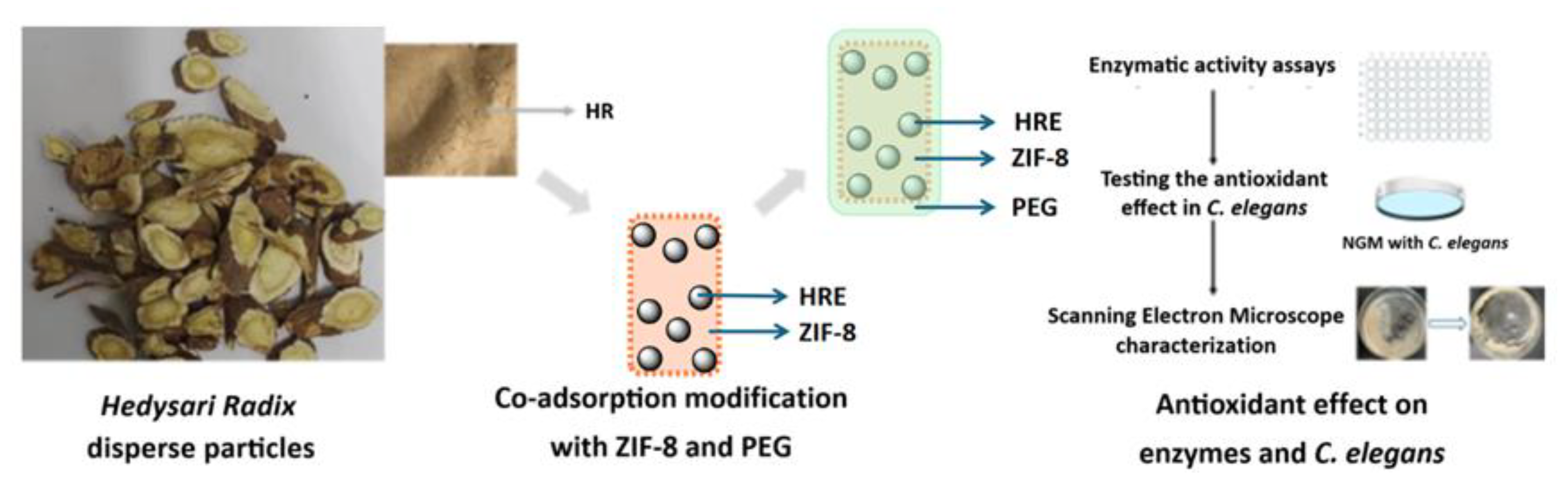
Figure 2.
The images under scanning electron microscope of (a) HRE, (b) HRE@ZIF-8 3, and (c) HRE@ZIF-8@PEG 3. Scale bar: 200 μm.
Figure 2.
The images under scanning electron microscope of (a) HRE, (b) HRE@ZIF-8 3, and (c) HRE@ZIF-8@PEG 3. Scale bar: 200 μm.
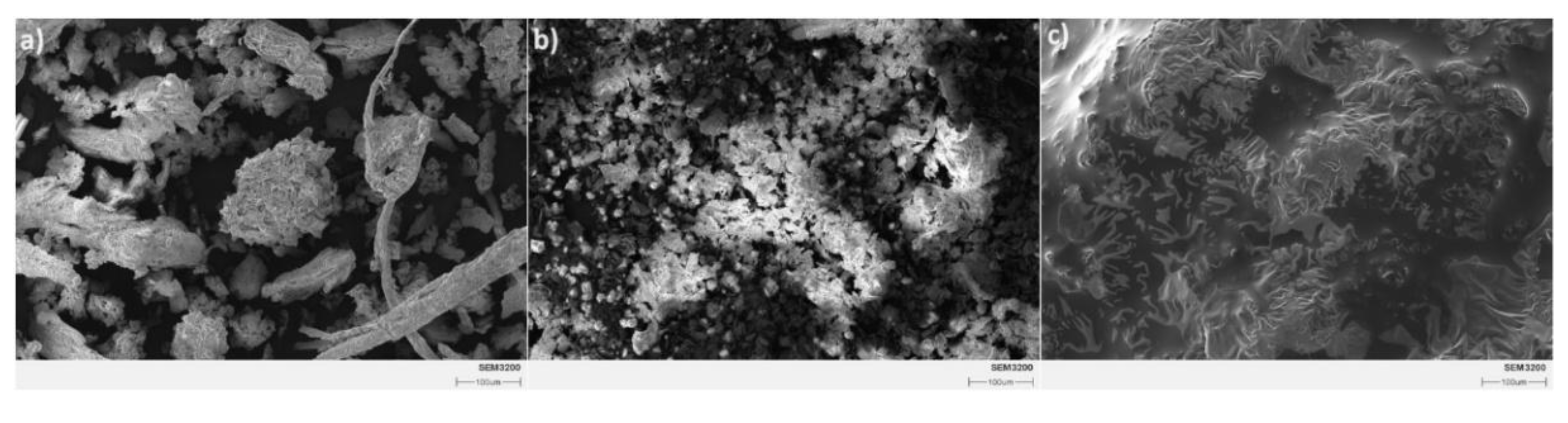
Figure 3.
The CAT activity (U/mg) under different temperature and time conditions of incubation: (a) 15 min, 25 °C; (b) 15 min, 37 °C; (c) 30 min, 25 °C; (d) 30 min, 37 °C; (e) 11 groups of samples, 30 min, 37 °C; 1-11 groups corresponding to: (1) HRW; (2) HRE; (3) HRE@PEG; (4) HRE@ZIF-8 1; (5) HRE@ZIF-8@PEG 1; (6) HRE@ZIF-8 2; (7) HRE@ZIF-8@PEG 2; (8) HRE@ZIF-8 3; (9) HRE@ZIF-8@PEG 3; (10) HRE@ZIF-8 4; (11) HRE@ZIF-8@PEG 4.
Figure 3.
The CAT activity (U/mg) under different temperature and time conditions of incubation: (a) 15 min, 25 °C; (b) 15 min, 37 °C; (c) 30 min, 25 °C; (d) 30 min, 37 °C; (e) 11 groups of samples, 30 min, 37 °C; 1-11 groups corresponding to: (1) HRW; (2) HRE; (3) HRE@PEG; (4) HRE@ZIF-8 1; (5) HRE@ZIF-8@PEG 1; (6) HRE@ZIF-8 2; (7) HRE@ZIF-8@PEG 2; (8) HRE@ZIF-8 3; (9) HRE@ZIF-8@PEG 3; (10) HRE@ZIF-8 4; (11) HRE@ZIF-8@PEG 4.
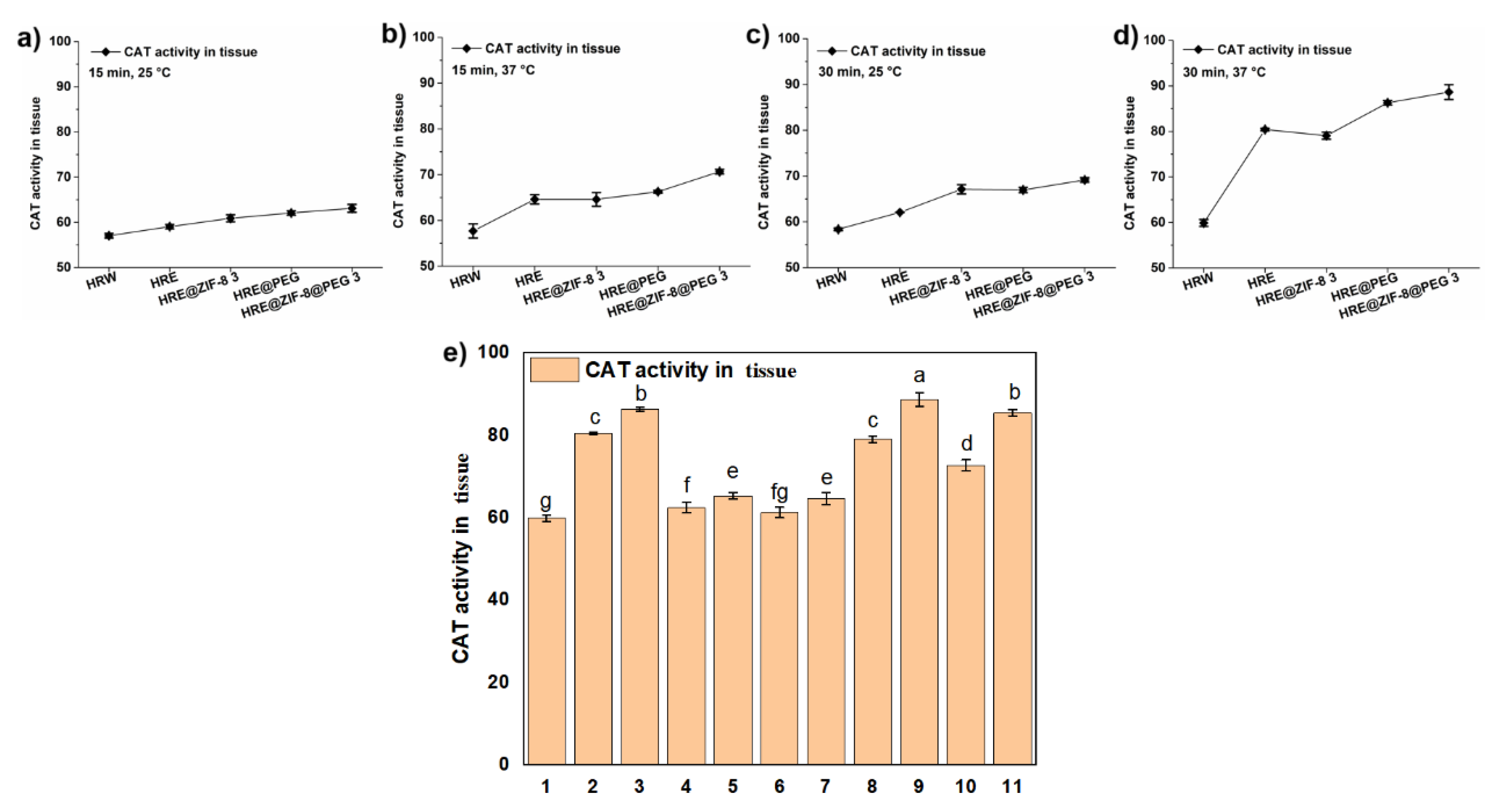
Figure 4.
The T-AOC values (U/mg) under different temperature and time conditions: (a) 15 min, 25 °C; (b) 15 min, 37 °C; (c) 30 min, 25 °C; (d) 30 min, 37 °C; (e) 11 groups of samples, 30 min, 37 °C; 1-11 groups corresponding to: (1) HRW; (2) HRE; (3) HRE@PEG; (4) HRE@ZIF-8 1; (5) HRE@ZIF-8@PEG 1; (6) HRE@ZIF-8 2; (7) HRE@ZIF-8@PEG 2; (8) HRE@ZIF-8 3; (9) HRE@ZIF-8@PEG 3; (10) HRE@ZIF-8 4; (11) HRE@ZIF-8@PEG 4.
Figure 4.
The T-AOC values (U/mg) under different temperature and time conditions: (a) 15 min, 25 °C; (b) 15 min, 37 °C; (c) 30 min, 25 °C; (d) 30 min, 37 °C; (e) 11 groups of samples, 30 min, 37 °C; 1-11 groups corresponding to: (1) HRW; (2) HRE; (3) HRE@PEG; (4) HRE@ZIF-8 1; (5) HRE@ZIF-8@PEG 1; (6) HRE@ZIF-8 2; (7) HRE@ZIF-8@PEG 2; (8) HRE@ZIF-8 3; (9) HRE@ZIF-8@PEG 3; (10) HRE@ZIF-8 4; (11) HRE@ZIF-8@PEG 4.
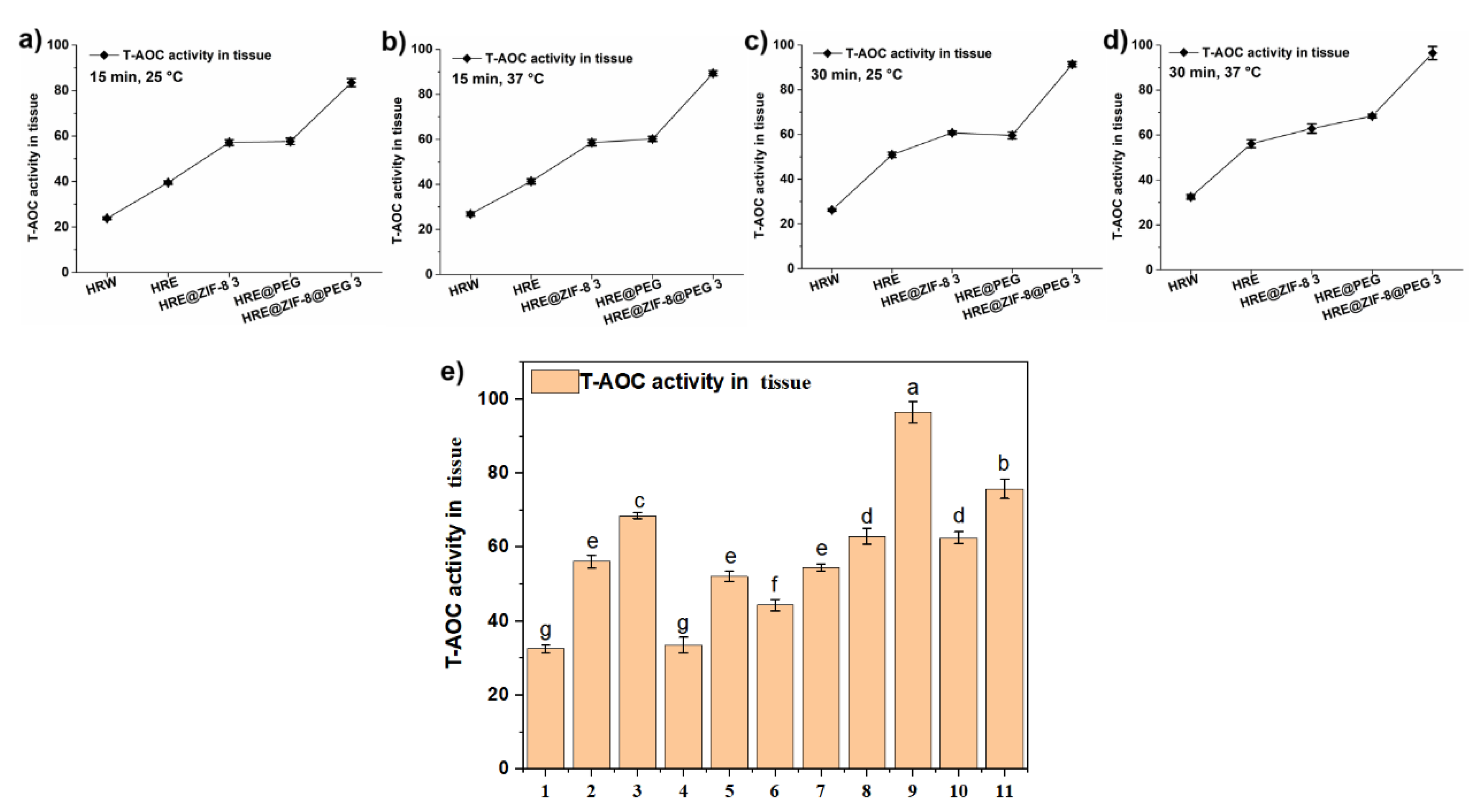
Figure 5.
(a) The illustration of adding HRE@ZIF-8@PEG 3 in the L2 stage C. elegans to test the antioxidant effect; (b) The status of survival C. elegans after the treatment of 1% hydrogen peroxide; (c) The survival time curves of the C. elegans under different incubation conditions with increasing volume of HRE@ZIF-8@PEG 3 solution (0 (black square), 25 (red dot), 50 (blue triangle), 75 (green inverted triangle), and 100 μL (purple diamond)).
Figure 5.
(a) The illustration of adding HRE@ZIF-8@PEG 3 in the L2 stage C. elegans to test the antioxidant effect; (b) The status of survival C. elegans after the treatment of 1% hydrogen peroxide; (c) The survival time curves of the C. elegans under different incubation conditions with increasing volume of HRE@ZIF-8@PEG 3 solution (0 (black square), 25 (red dot), 50 (blue triangle), 75 (green inverted triangle), and 100 μL (purple diamond)).
Disclaimer/Publisher’s Note: The statements, opinions and data contained in all publications are solely those of the individual author(s) and contributor(s) and not of MDPI and/or the editor(s). MDPI and/or the editor(s) disclaim responsibility for any injury to people or property resulting from any ideas, methods, instructions or products referred to in the content. |
© 2025 by the authors. Licensee MDPI, Basel, Switzerland. This article is an open access article distributed under the terms and conditions of the Creative Commons Attribution (CC BY) license (http://creativecommons.org/licenses/by/4.0/).
Copyright: This open access article is published under a Creative Commons CC BY 4.0 license, which permit the free download, distribution, and reuse, provided that the author and preprint are cited in any reuse.


