1. Introduction
Research on real-time video delivery using HTTP/3 over QUIC is progressing [
2,
3,
4,
5], but the influence of server-side buffer design on video quality has not been sufficiently examined. In latency-sensitive environments, buffering can introduce delays and packet loss, degrading quality [
14]. While ABR [
17] is widely adopted to match bitrate to available bandwidth, reducing RTT and ACK delay can also increase usable throughput. This behavior is closely tied to buffer operation at distribution servers, potentially compensating for impacts beyond ABR’s scope. (see
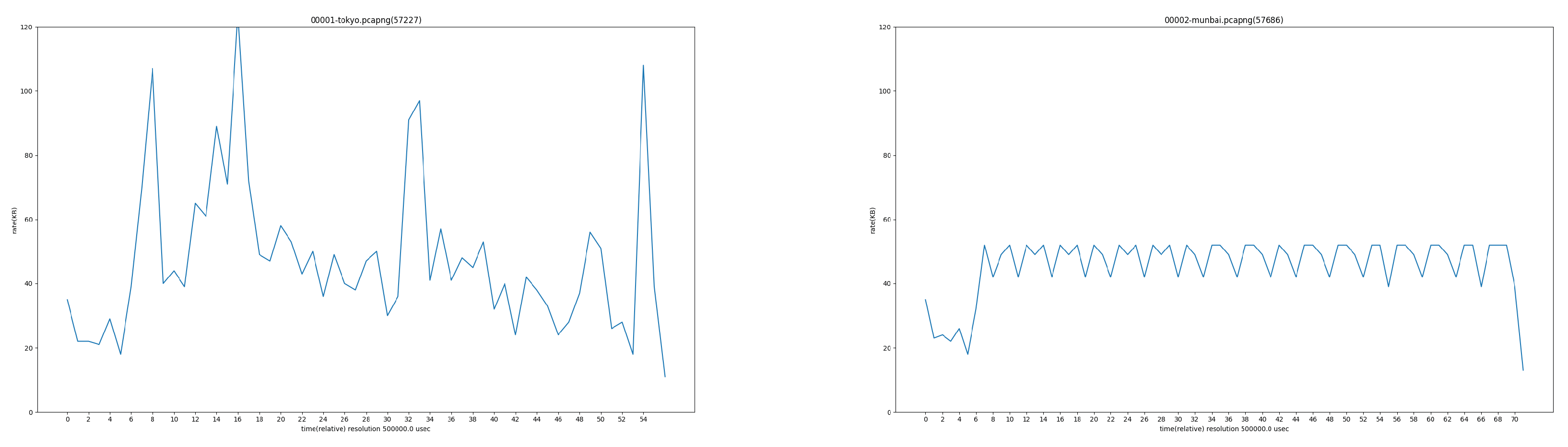
Figure 2 and
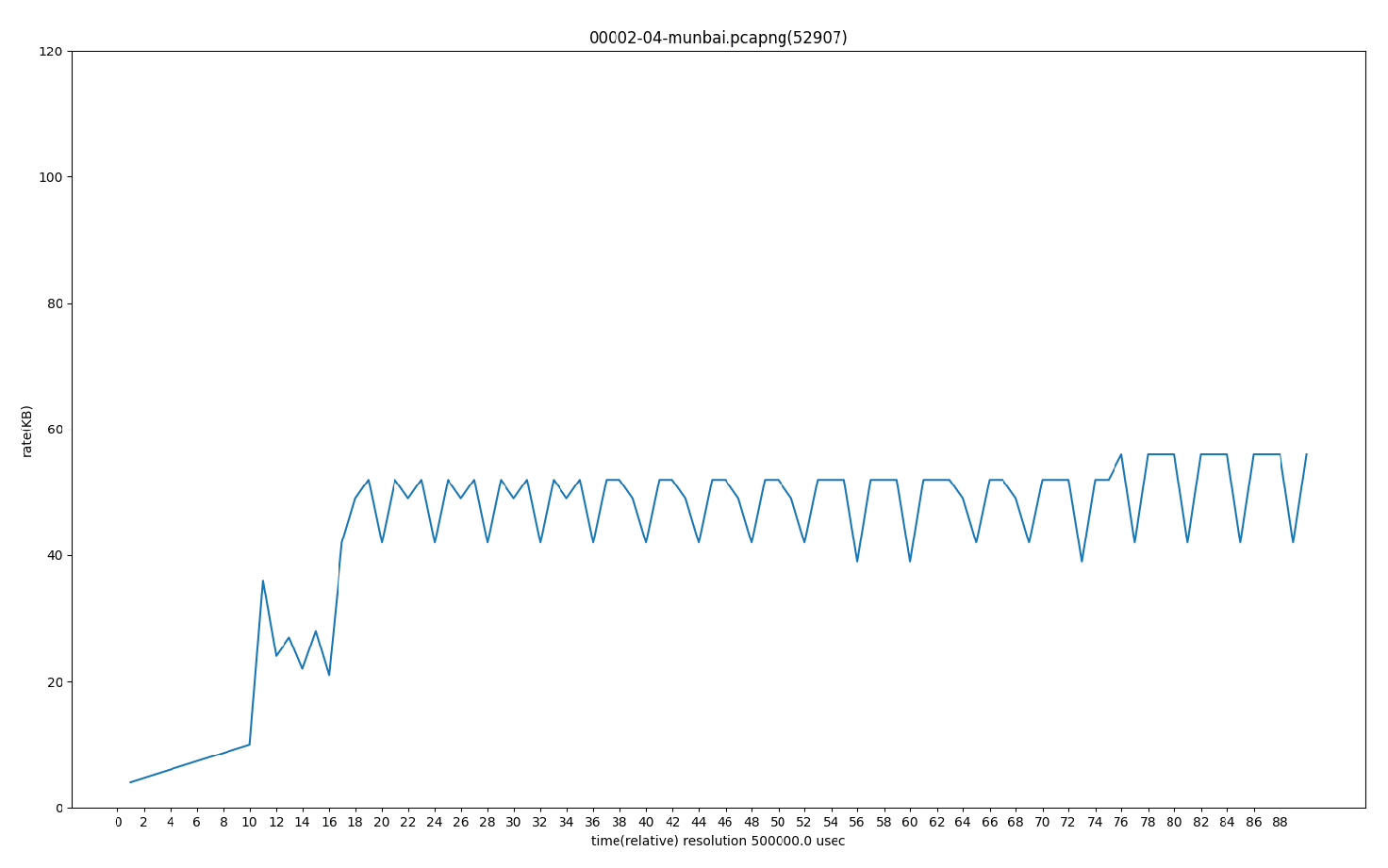
Figure 3).
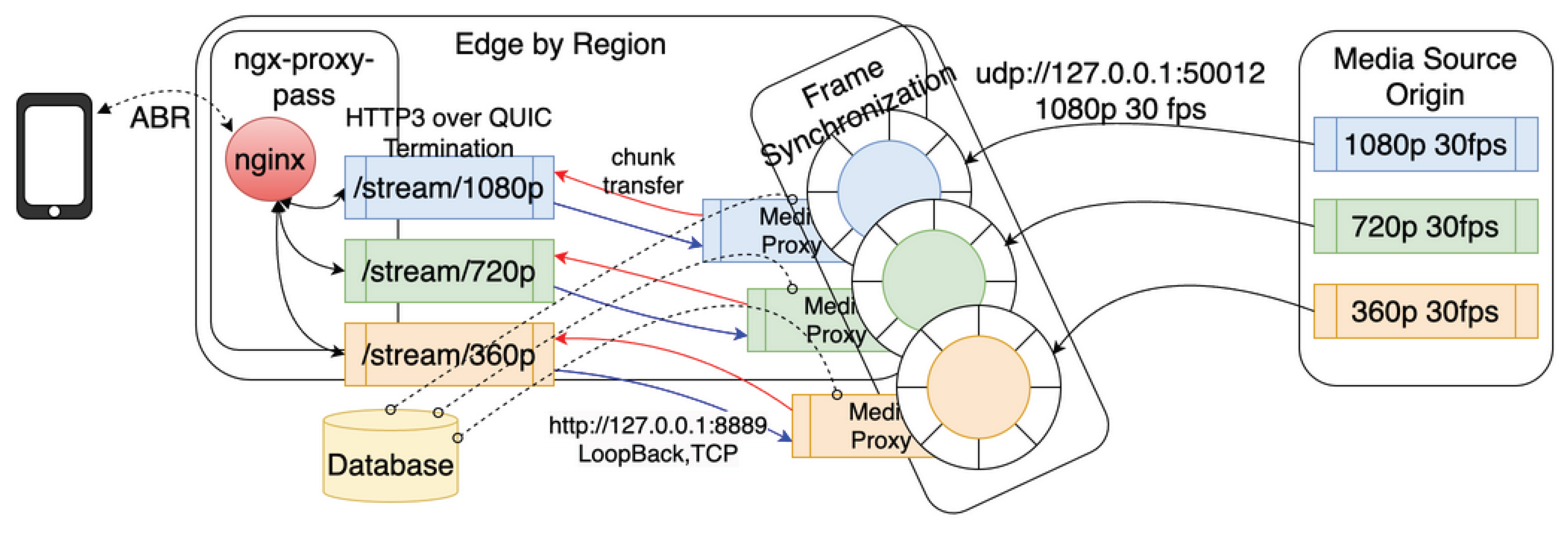
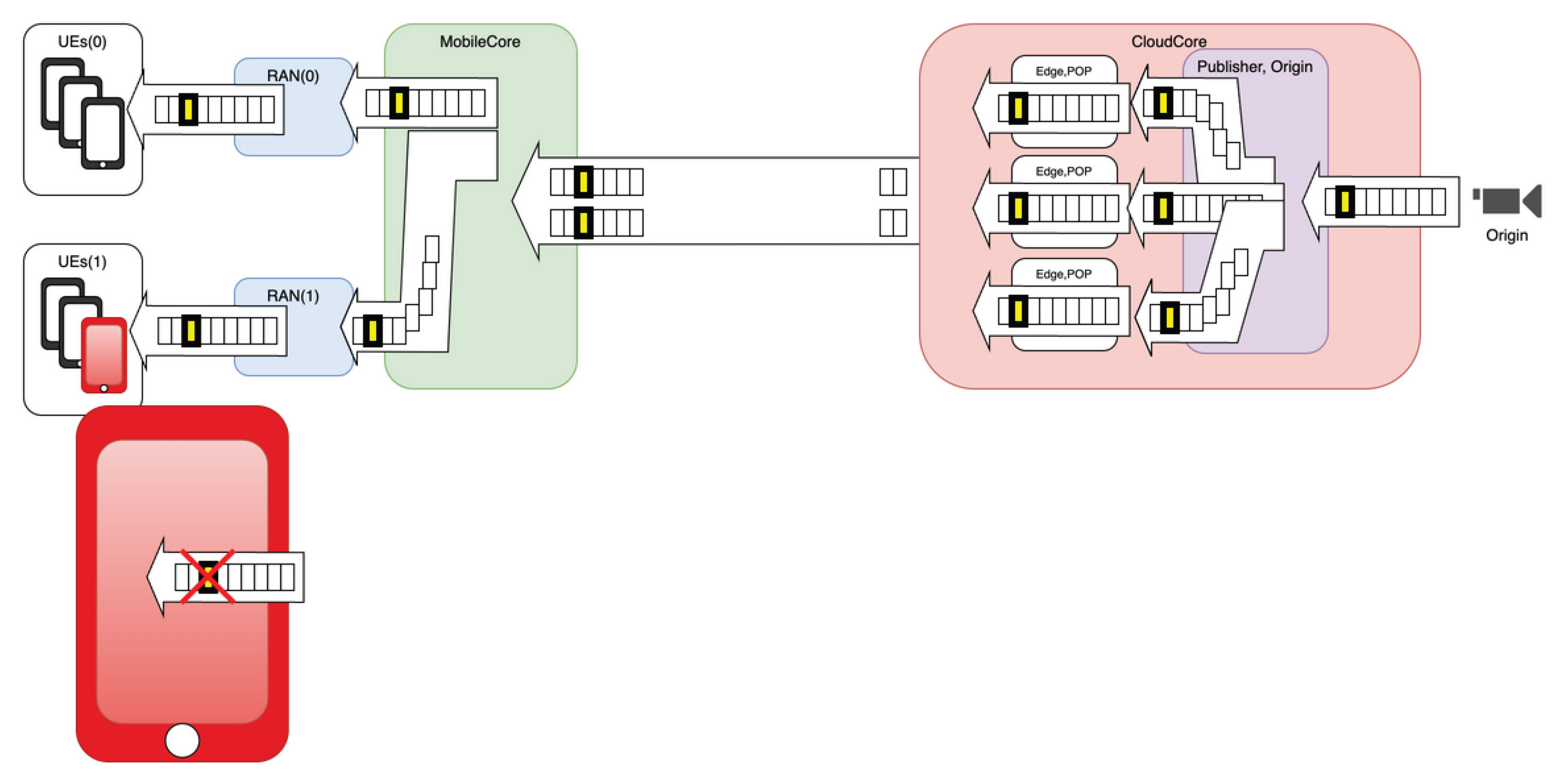
Figure 1.
Video Stream System Architecture.
Figure 1.
Video Stream System Architecture.
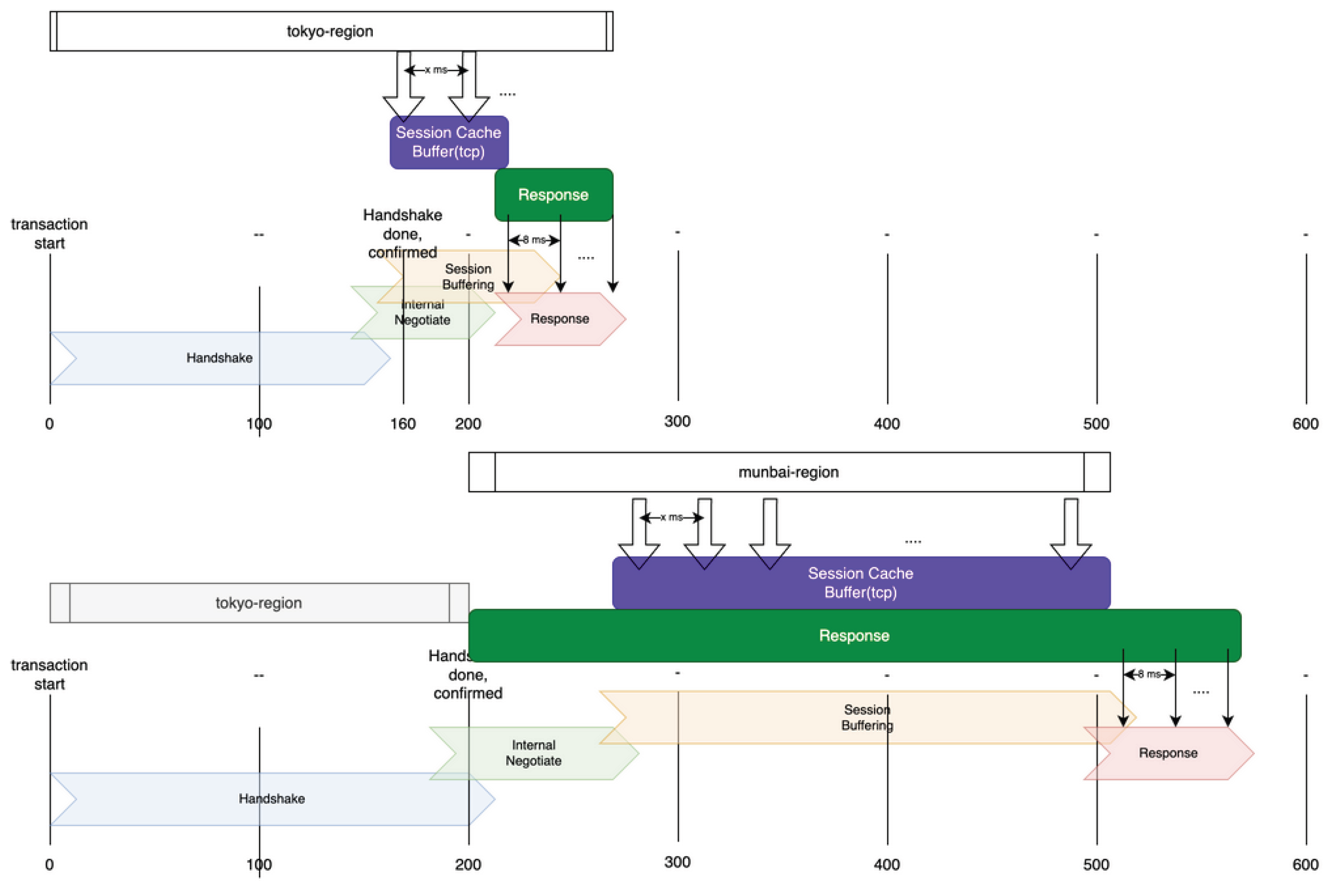
Figure 2.
Packet Analysis Statistics: Neighbor (Tokyo, left), Far (Mumbai, right) CUBIC.
Figure 2.
Packet Analysis Statistics: Neighbor (Tokyo, left), Far (Mumbai, right) CUBIC.
Figure 3.
Packet Analysis Statistics: Far(Mumbai)BBR, proxy_buffering on;
Figure 3.
Packet Analysis Statistics: Far(Mumbai)BBR, proxy_buffering on;
We implemented an AV1 [
6,
7] over MPEG2-TS streaming system [
1] using HTTP/3 over QUIC with ngtcp2 [
8], nghttp3 [
9], libev [
10], and OpenSSL [
11]. Cross-region experiments were conducted to analyze the effects of buffer design on quality.
2. System Architecture
Modules and requirements are summarized in
Table 1 , while application-level requirements are listed in
Table 2
3. Evaluation Experiments
Experiments were performed on AWS CloudFront and Lambda (Tokyo, Mumbai) for API traffic, and EC2 instances (Tokyo, Mumbai) for streaming tests.
3.1. Stream, HTTP/3 Neighbor - Far Comparison
AV1 encapsulation in MPEG TS is not yet standardized, requiring trial-and-error for parser implementation. Implementation differences in HTTP/3 over QUIC (such as ngx_http3_module eBPF implementations) resulted in inconsistent connectivity and stability of HTTP/3 over QUIC termination modules.
| Listing 1: packet capture at Neighbor docker |
| tcpdump -n tcp port 8080 -i docker0 -c 5000 -w /tmp/neighbor-docker-upstream.pcap |
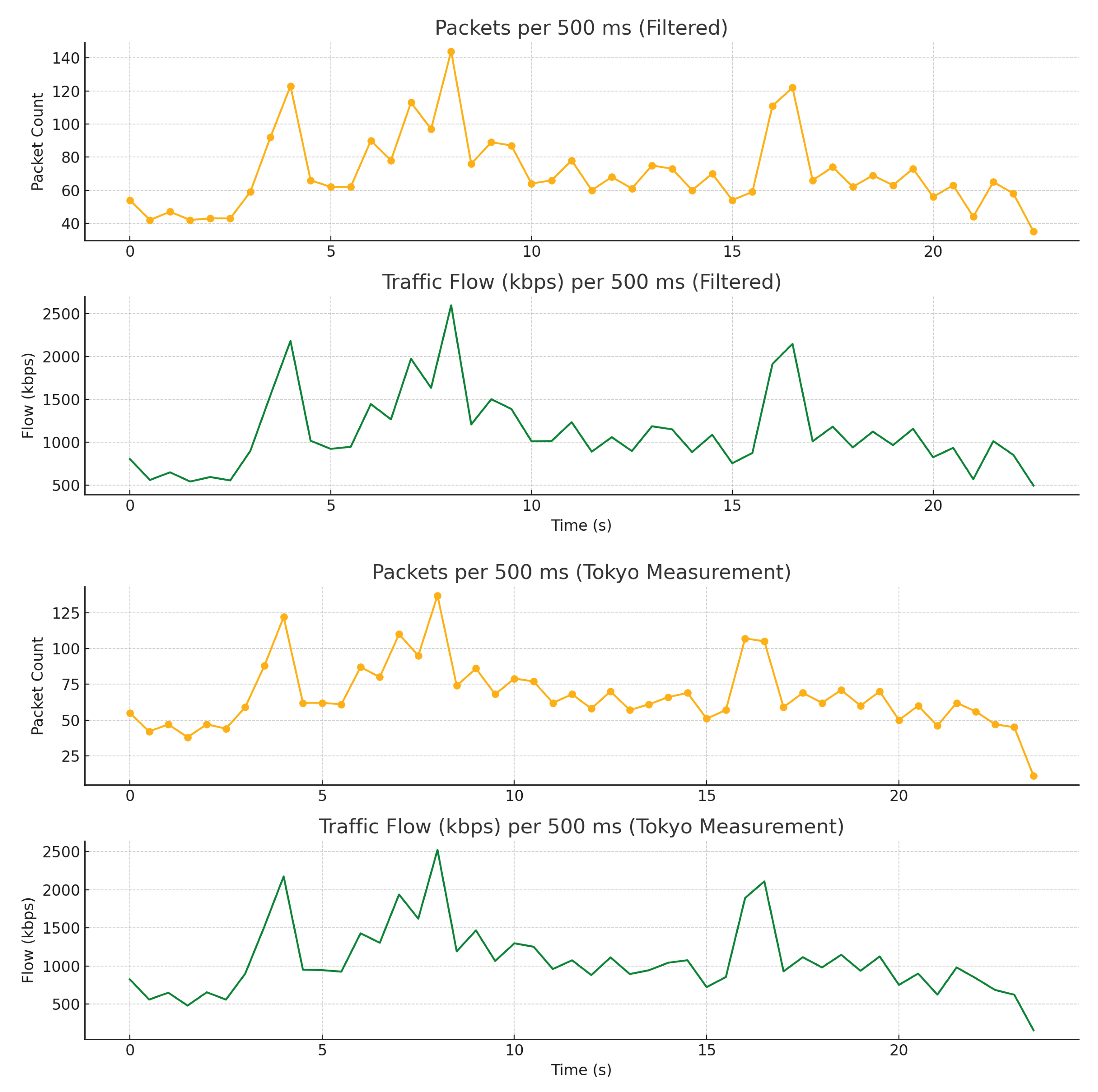
Figure 2 and
Figure 3 visualize and analyze the first 5000 received packets when requesting the same media origin over an HTTP3 over QUIC session.
3.2. Edge-Termination Proximity
Comparisons between neighbor (Tokyo) and distant (Mumbai) terminations revealed significant RTT effects. As shown in
Figure 2,
Figure 3,
Figure 4, Smoothed RTT in Mumbai ( 133 ms) led to degraded quality ( 5 FPS), with nginx internal buffer analysis (
Table 3) indicating ACK delay and silent packet drops as primary causes.
We analyzed the downstream TCP packets (port 8080) destined for nginx-quic within the Docker container (
Figure 4) and confirmed no significant difference. This narrowed the root cause to buffer processing within the HTTP/3 termination module (ngx_http3_module).
Analysis and status of
Figure 2,
Figure 3, and
Figure 4 Based on detailed packet analysis at the TCP layer, we suspect that temporary ACK delays and spike traffic-induced buffer overflows, and the resulting server-side (ngx_http3_module) silent packet drops as the primary causes of degraded video quality(
Table 3)
| Listing 2: Viewer QUIC Settings(CUBIC) |
ngtcp2_settings settings; ngtcp2_settings_default(&settings); settings.cc_algo = NGTCP2_CC_ALGO_CUBIC;
|
We compared the effects of congestion control differences between CUBIC (
Figure 2) and BBRv2 (
Figure 3) [
12]. No significant difference in video quality was observed under the measurement conditions of this study. This is mainly because the edge buffer was frequently saturated, leading to transmission stalls (flow=0 condition). As a result, the potential differences in congestion control behavior at the terminal side were masked by these buffer-induced stalls at higher layers. This finding is consistent with prior reports indicating that buffer occupancy can dominate system behavior, particularly during RTT spikes and retransmissions [
14].
3.3. Stream, Neighbor–Distant Origin Comparison
Even when there is a physical distance between the regional edge and the media origin, we confirmed that traffic between the origin and the edge remains highly stable. This stability is achieved through both explicit and implicit buffering — for example, explicit buffering introduced by QUIC termination close to the edge, and implicit buffering provided by proxy modules and similar mechanisms.
Figure 5.
Neighbor, Distant Origin
Figure 5.
Neighbor, Distant Origin
3.4. Last-One-Mile Mobile Network Effects

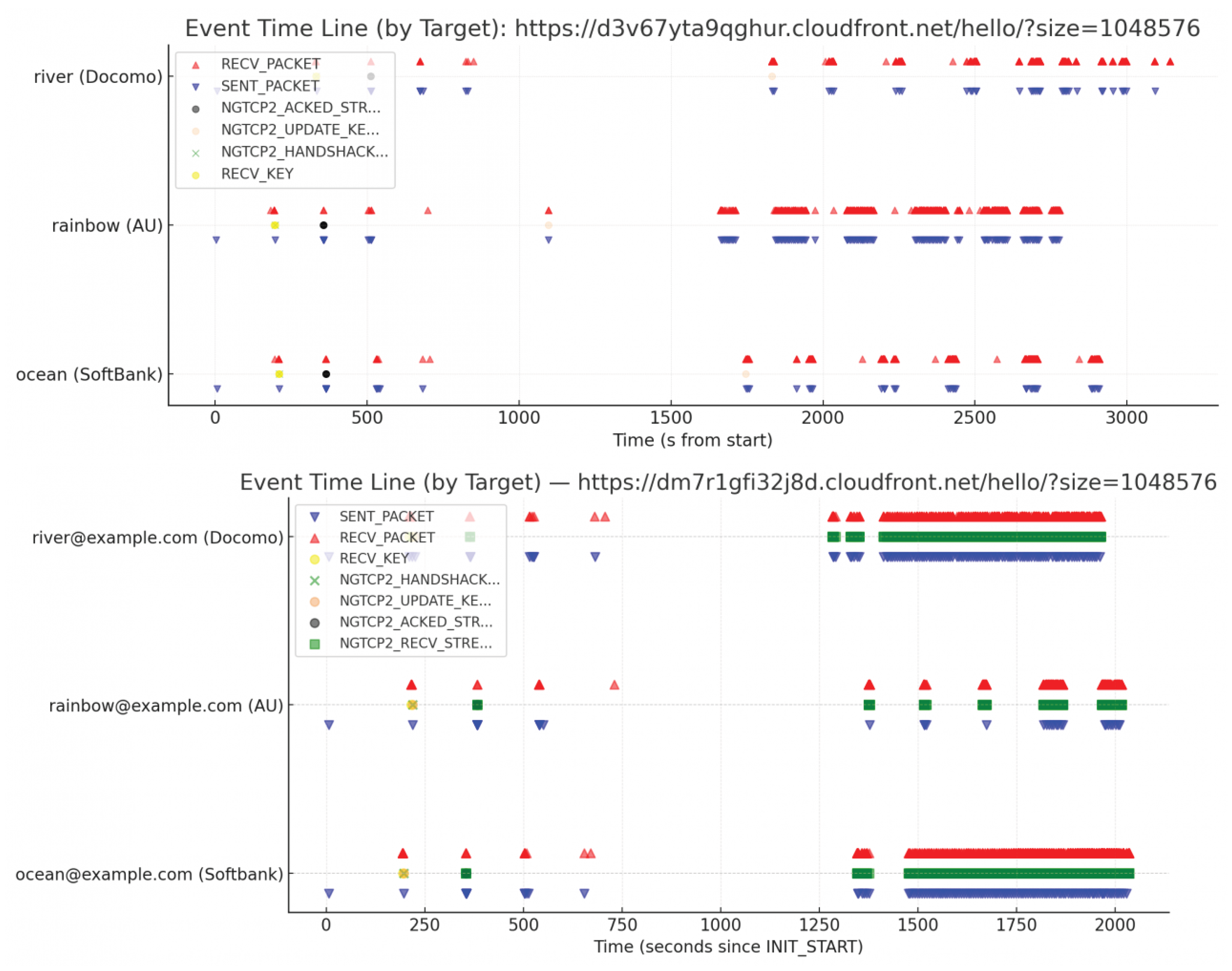
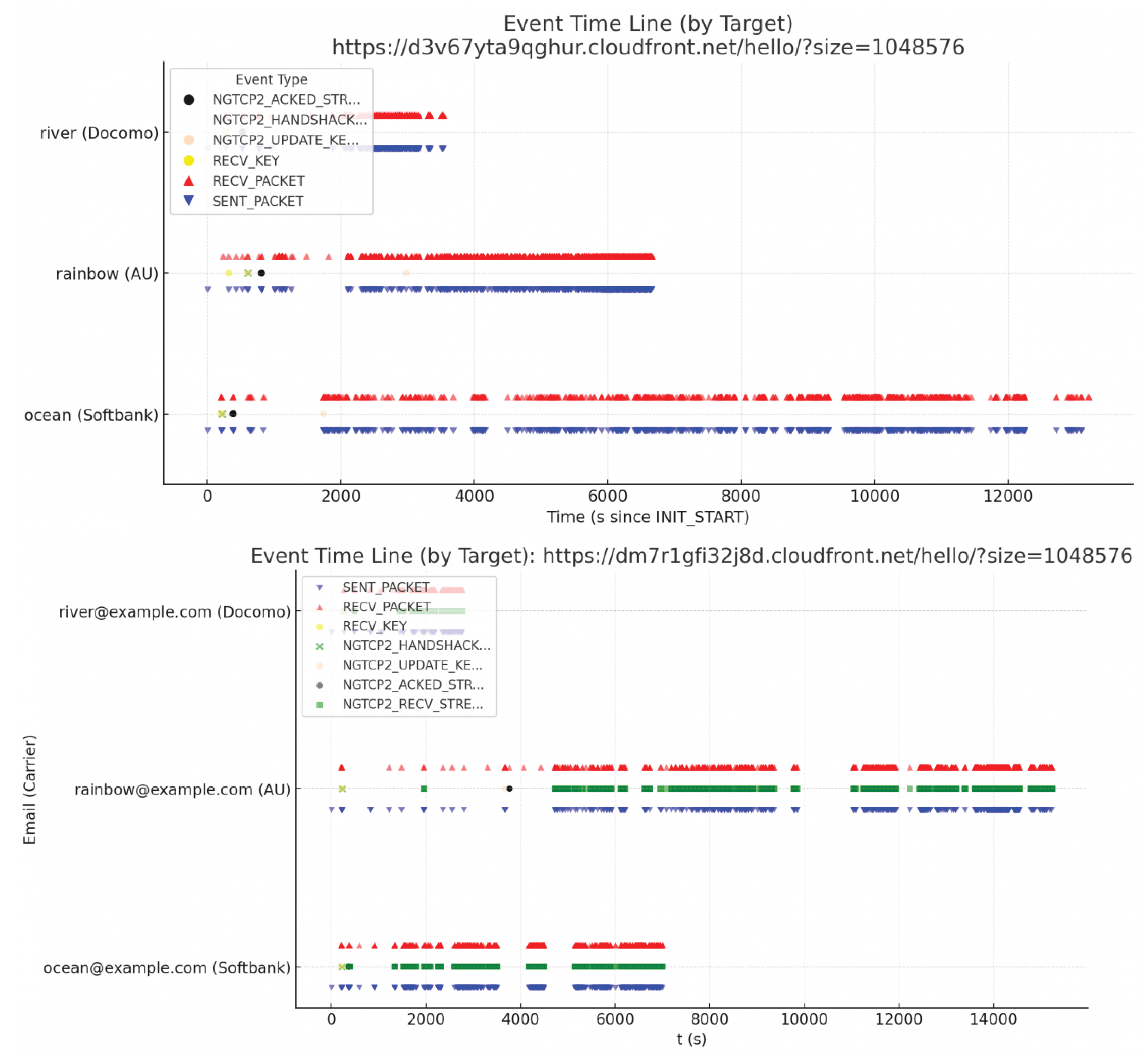
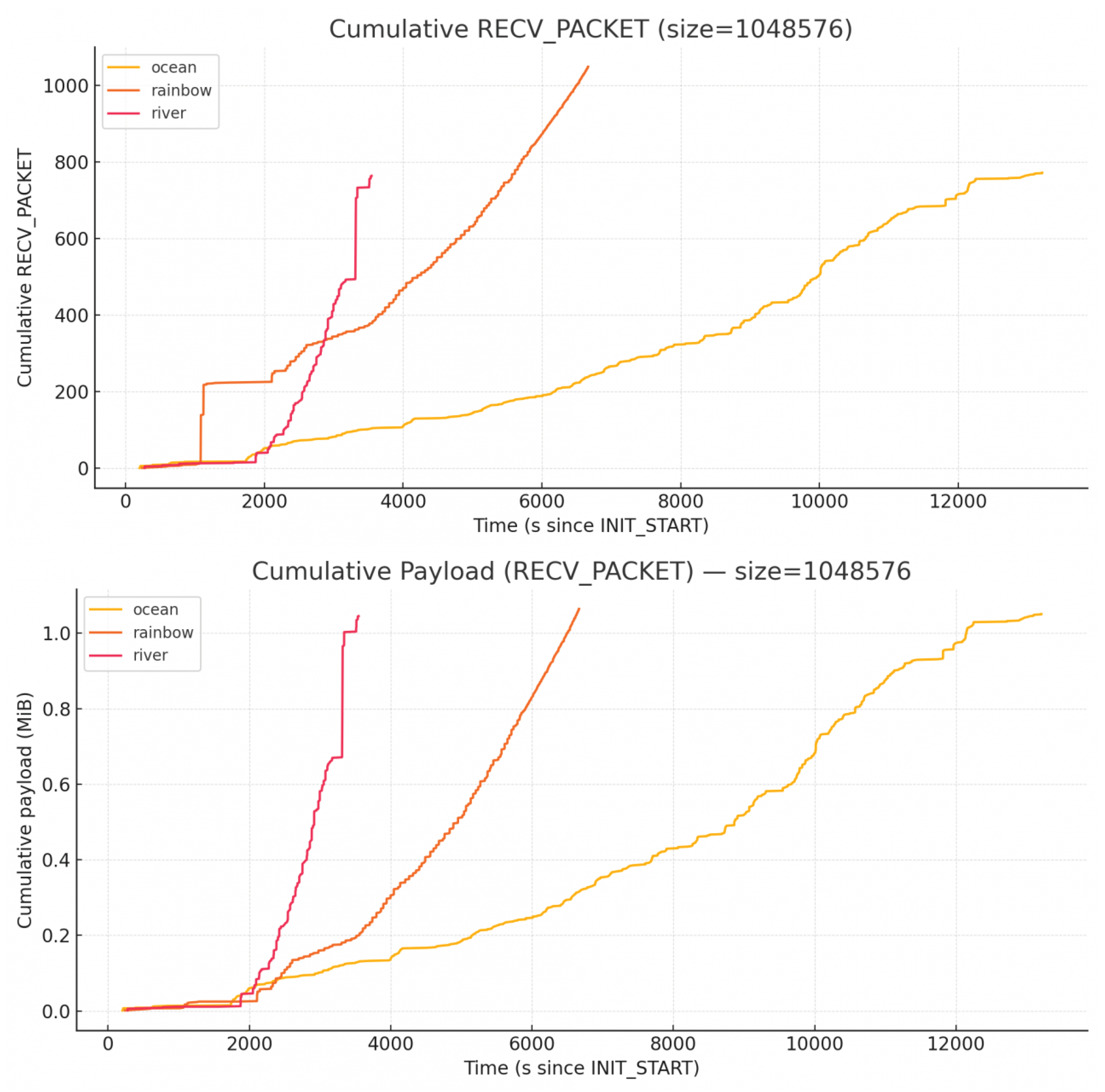
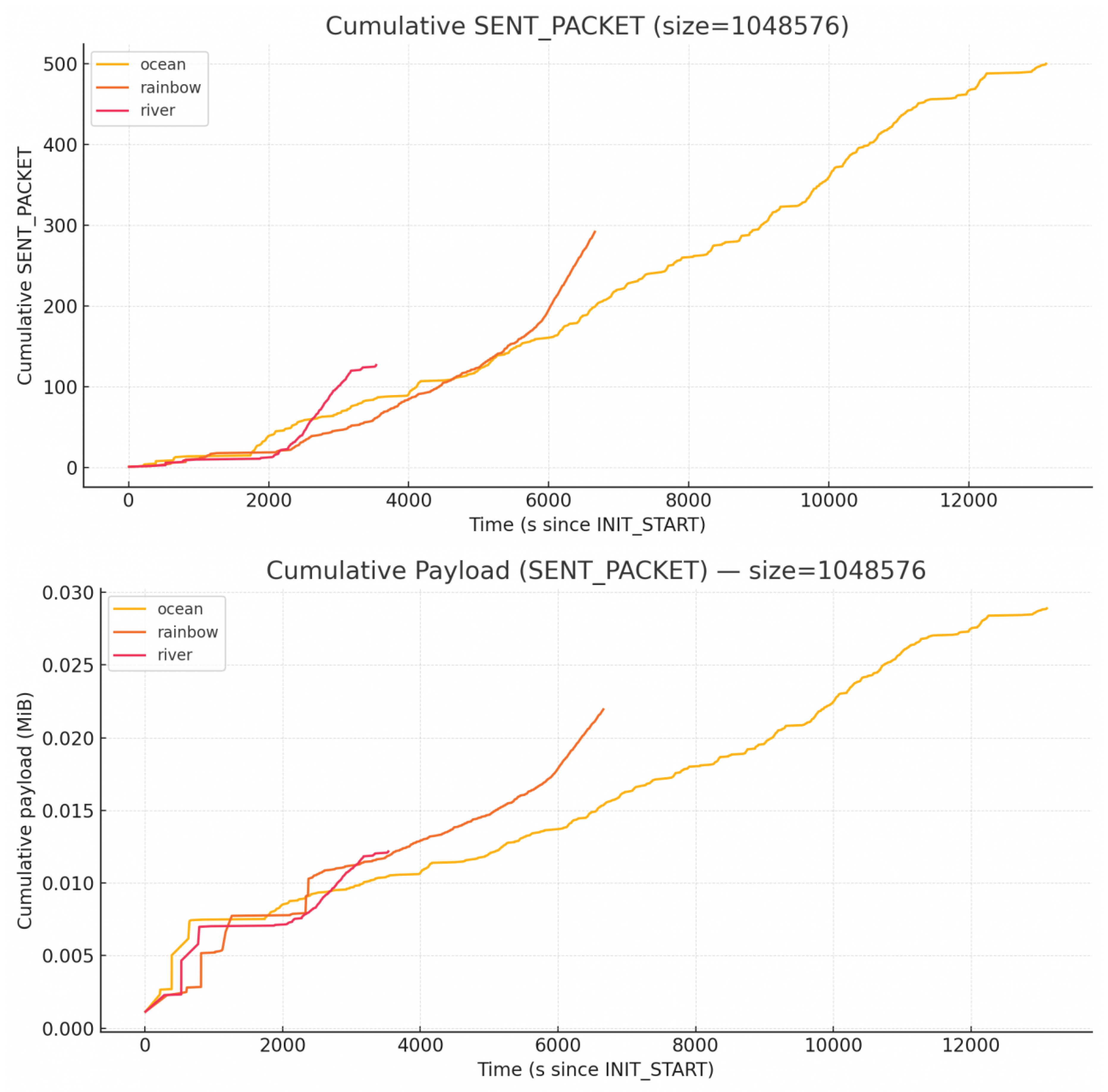
Tests conducted under stressed RAN conditions—specifically at Tokyo-Shibuya Station during the evening rush hour—across three major Japanese carriers revealed variation in packet loss rates and ACK ratios across carriers. However, when the data were analyzed in terms of cumulative packet counts and payload statistics (
Figure 6,
Figure 7,
Figure 8,
Figure 9,
Table 5,
Table 4), the results showed convergence, indicating that aggregate behavior was largely consistent despite carrier-level differences.
Table 4.
Event Details:Far(Mumbai)1MB-DL
Table 4.
Event Details:Far(Mumbai)1MB-DL
| Event |
MNO(A) |
MNO(B) |
MNO(C) |
Far(Mumbai) Public-RAN |
Drops NGTCP2_STREAM _LOSS_COUNT |
0 |
1 |
0 |
ACK Ratio SENT_PACKET/ RECV_PACKET |
127/764 16.6 % |
292/1049 7.8 % |
500/772 64.7 % |
MNO(A) MNO(C) |
Almost uninterrupted continuous transmission and receive (transmission consists only of ACKS) Almost no gaps Streaming-like |
| MNO(B) |
Burst+Intermittent Bulk processing |
Resources RAN |
Total timeCost Same all carriers |
Table 5.
Event Details: Neighbor(Tokyo) 1MB-DL
Table 5.
Event Details: Neighbor(Tokyo) 1MB-DL
| Event |
MNO(A) |
MNO(B) |
MNO(C) |
Neighbor(Tokyo) Public-RAN |
Drops NGTCP2_STREAM _LOSS_COUNT |
0 |
1 |
0 |
ACK Ratio SENT_PACKET/ RECV_PACKET |
71/765 9.3 % |
345/839 41.1 % |
324/769 42.1 % |
Received Packet Interval NGTCP2_RECV _STREAM |
p95 6.5 p99 45.2 |
p95 71.1 p99 277 |
p95 23.3 p99 137 |
| MNO(A) |
No problem |
| MNO(C) |
The unusually high frequency of ACK packets and the large gaps observed in packet reception intervals suggest that retransmissions were triggered by factors other than actual packet loss. |
| MNO(B) |
NGTCP2_STREAM_LOSS_ COUNT==1 Drop retransmission was detected |
In mobile networks, congestion typically arises from fluctuations in available radio capacity and from new users joining the cell, not solely from traffic spikes as in fixed networks.
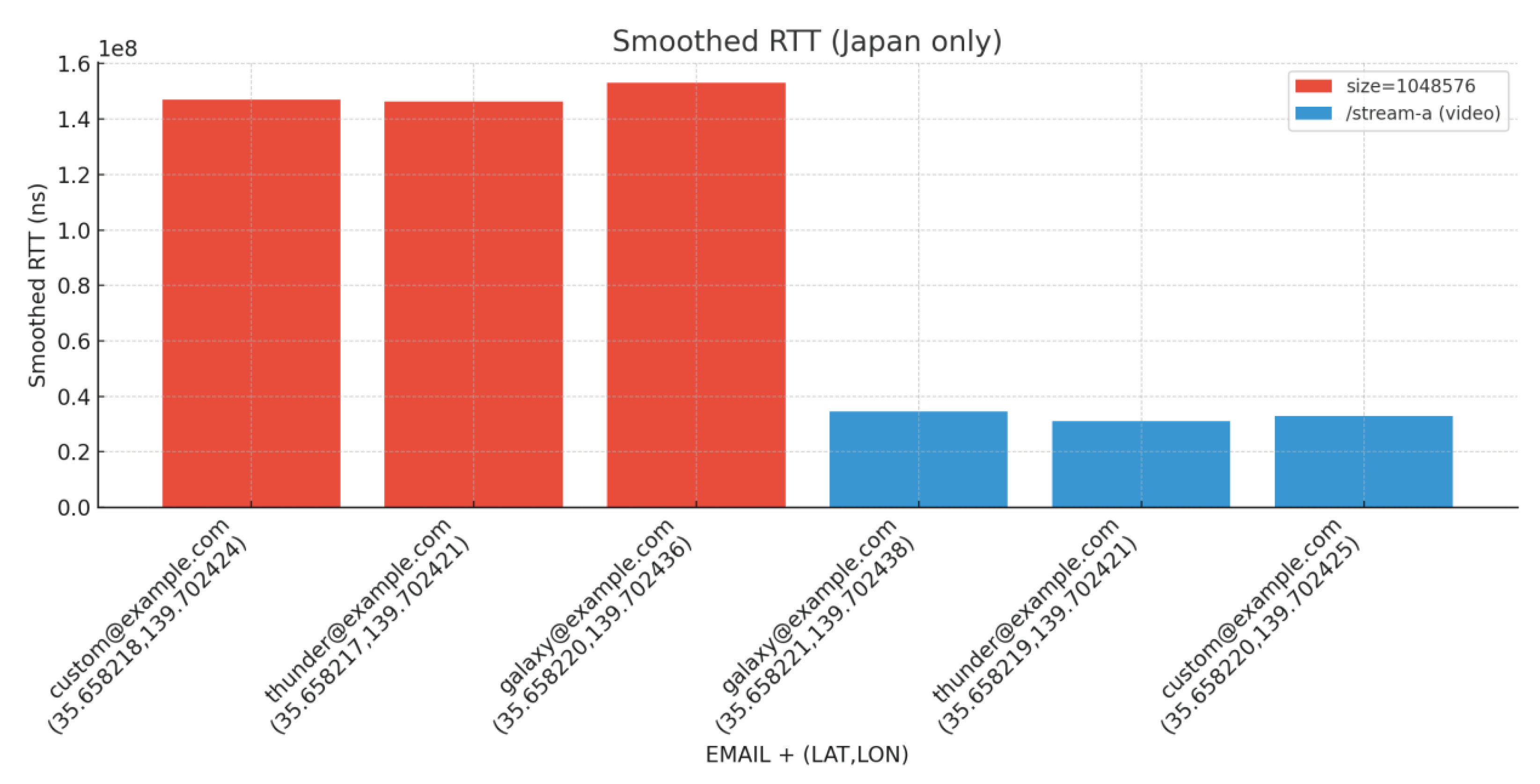
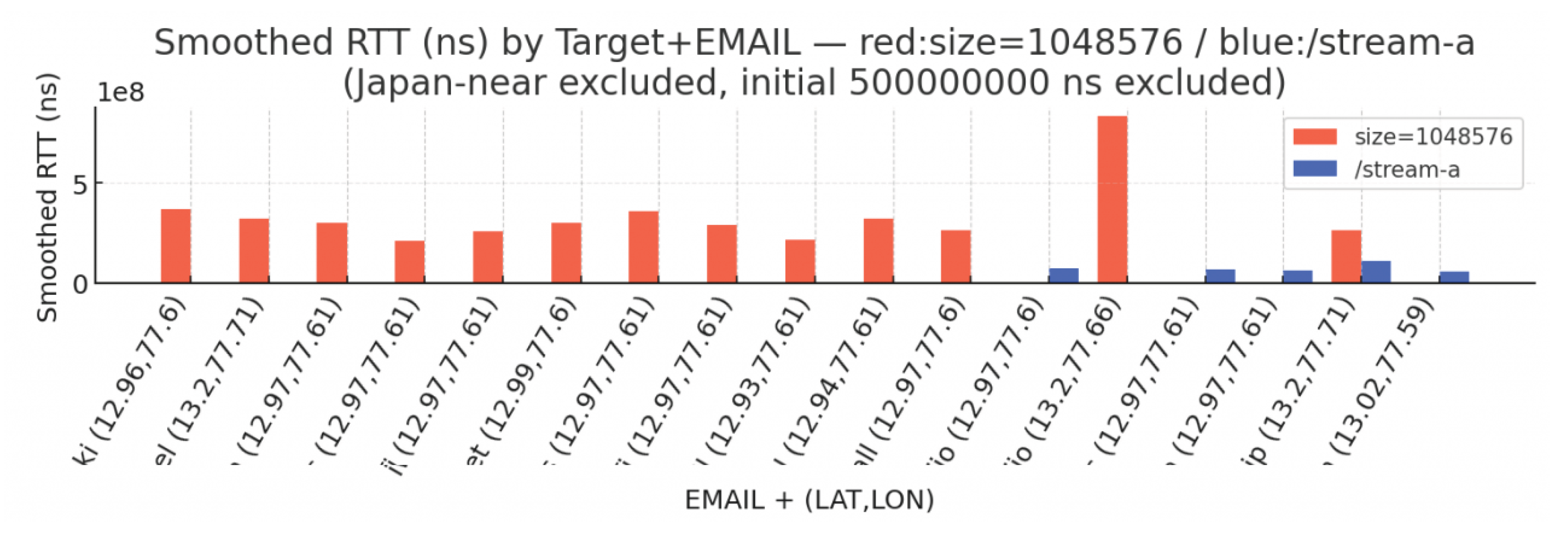
Figure 10.
Smoothed RTT(japan)
Figure 10.
Smoothed RTT(japan)
Figure 11.
Smoothed RTT(Mumbai)
Figure 11.
Smoothed RTT(Mumbai)
stream-a has a CBR of 1Mbps, so queueing delay is unlikely to accumulate. size=1048576 is 8Mbps best effort. On the POP→last-mile path, the buffer (FIFO) temporarily saturates, resulting in a higher RTT: packet round-trip time recognizable at the receiver. near the POP, temporarily saturating the buffer (FIFO). Consequently, the RTT (round-trip time) recognizable at the receiver increases. Assuming this scenario, the optimal CBR value for each target session can be calculated from the following formula based on the SMOOTHED-RTT measurement values. This represents the “true limit” calculable only at the terminal side:
can be communicated to the server per session at minimal cost, enabling real-time ABR.
⠀
Furthermore, in Tokyo and Mumbai, comparisons between 1 Mbps stream-based CBR traffic and 1 MB API downloads confirmed that Smoothed RTT for stream-based reception remained consistently lower. This held true even under differing conditions of mobile core bandwidth, RAN technologies (e.g., TD), and congestion control methods.
These findings indicate that, despite diverse end-to-end influences such as mobile core variations and RAN channel allocation, application-layer priority-based FIFO control and buffering strategies exert a direct and significant impact on QoS. In other words, beyond the inherent complexity of wireless and core networks, control design at the application layer emerges as a decisive factor for effective QoS.
|
Spike coefficient |
|
Current Receive Rate (bps) |
|
NGTCP2_CONN_INFO_MIN_RTT |
| initial value (excluding ) |
|
|
NGTCP2_CONN_INFO_SOOTHED_RTT |
4. Discussion: Non-HLS Architecture Specialized for Real-Time Delivery in This Study’s Context
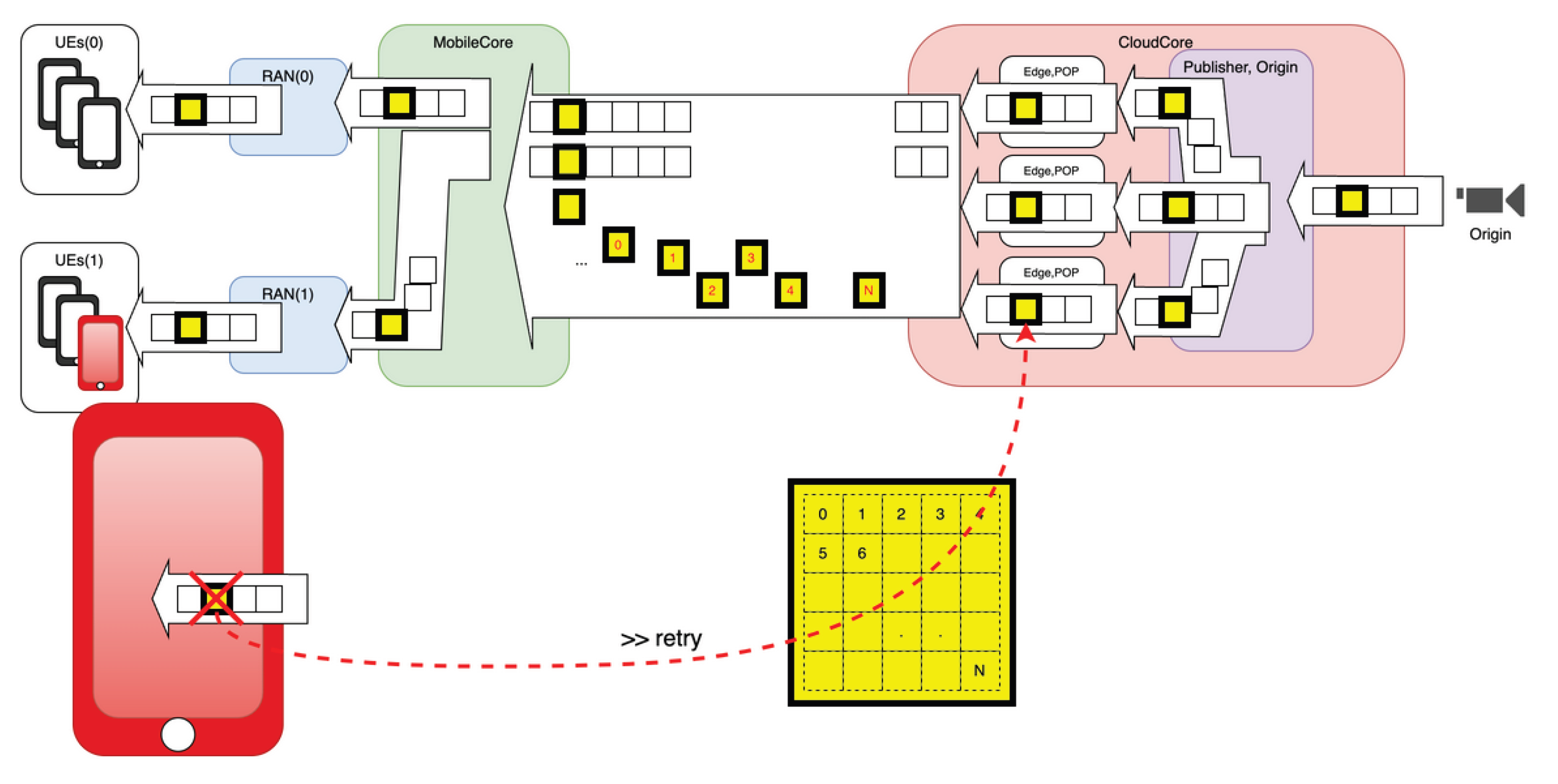
Unlike file-segment caching employed in HLS and related systems, the architecture in this study is specialized for real-time delivery through short-lived caches at the packet granularity. Whereas file caching is storage-oriented and introduces redundant delays from a real-time perspective, packet-level caching maximizes fanout efficiency to viewer terminals by using ring buffers with only a few seconds of capacity.
Figure 12.
System Overview
Figure 12.
System Overview
As illustrated in
Figure 1,
Figure 13, the packet-level caching approach goes beyond merely functioning as relay nodes. It has potential as a foundational technology for achieving inter-terminal synchronization at the video frame level. In particular, by enabling playback synchronization at the unit of packet caches across terminals, it becomes possible to construct a low-latency, highly distributed live streaming system. Such a design is expected to contribute to scalable real-time delivery in edge environments and mobile networks [
18].
Table 6.
POP Edge - Origin Alias Design
Table 6.
POP Edge - Origin Alias Design
| Item |
Overview |
Packet Granularity Cache |
POP Edge maintains MPEG-TS packets in short-lived rings fan-out to concurrent viewwers |
| ACK Delay |
Reduce ACK round trips at edge-near terminations to suppress transmission blocking and session buffer exhaustion at HTTP/3 endpoints |
Origin Bandwidth Aggregation Efficiency |
Maximize Edge Hit Rate (Fanout) to Minimize Origin Egress Bandwidth |
| Not compatible with HLS |
Purpose differs from storage-oriented file caching |
| Listing 3: Conventional File Segment Cache (Supports HLS) |
|
Table 7.
Conventional File Segment Cache
Table 7.
Conventional File Segment Cache
| Item |
Description |
Cache Hit Rate |
70 %...from [15] Hit rate linear approximation is (1−1/C) C=Number of concurrent viewers per 100 (per 1POP) Approximately 70 - 90 % |
Cache Hit Latency |
200 s |
Cache miss Latency |
200 ms |
| Listing 4: This Paper Packet Cache Fanout Ring Buffer |
|
Table 8.
This Paper: Packet Cache Fanout
Table 8.
This Paper: Packet Cache Fanout
| Item |
Summary |
Cache Hit Rate |
95 % (under the evaluated workload) |
Cache Hit EndToEnd Latency |
200 s |
Cache Miss EndToEnd Latency |
500 s |
4.1. Typical Access Cost [16]
| Cache Level |
Latency |
s Equivalent |
| L1 |
4-5 cycles |
0.002 s |
| L2 Hit |
12-15 cycles |
0.005 s |
| L3 Hit |
40-50 cycles |
0.017 s |
| Main Memory,L2 miss |
200-300 cycles |
0.100 s |
Redis, memchached, Main Memory miss Includes kernel Protocol stack |
xxxx cycles |
2-10 ms |
| S |
Number of sessions |
|
Session s(Packets/Request) |
| h |
Cache Hit Rate |
|
Latency for hits/misses |
| L |
Latency per Packet |
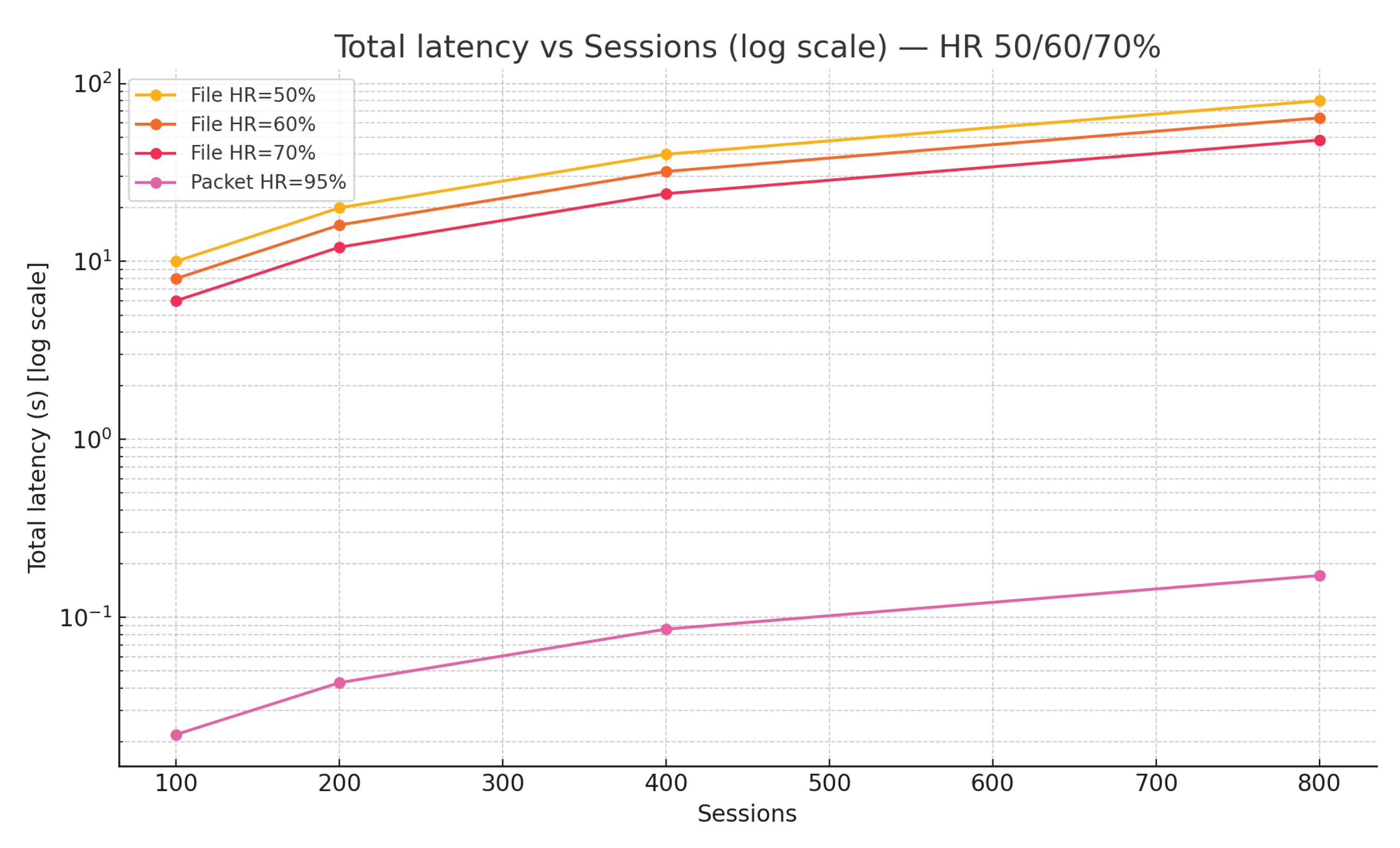
Figure 14.
Total latency(Logical)
Figure 14.
Total latency(Logical)
5. Discussion: Comparison with Media over QUIC Lite under the Premises of This Study
Media over QUIC (MoQ) is an upper-layer protocol built on QUIC. In the case of Media over QUIC Lite [
13], the relay component is specialized for publish–subscribe routing optimization. It is explicitly designed without last-one-mile optimization mechanisms such as cache retention, which are traditionally provided by CDNs. Accordingly, Media over QUIC Lite aims to enable cloud-native, large-scale distributed routing rather than to maximize QoS. Its objectives and scope therefore differ fundamentally from the unidirectional, real-time video streaming applications considered in this study.
6. Discussion: AV1 over MPEG-TS Real-Time Stream Player in the Context of This Study
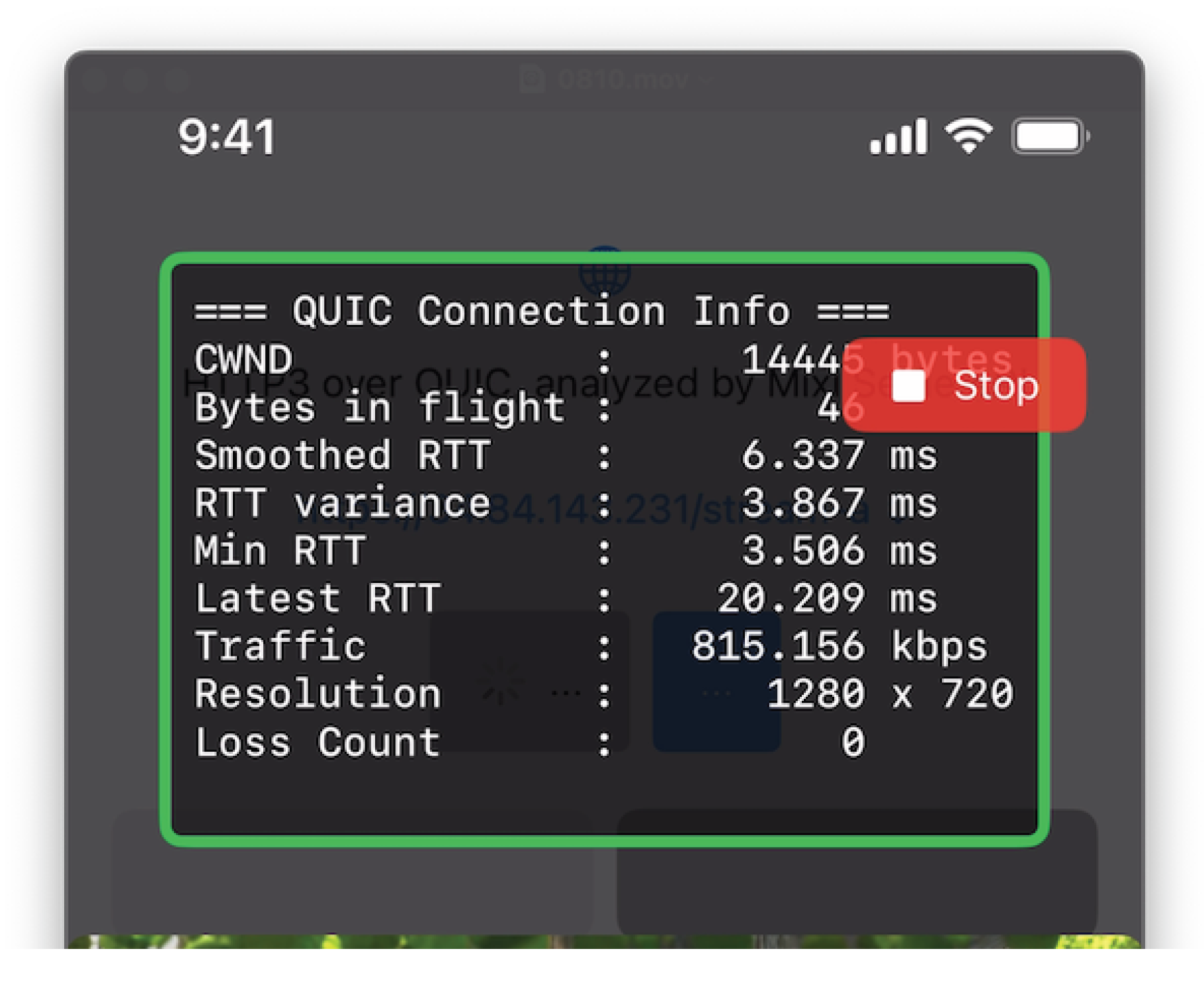
Since neither ffplay nor standard web players (HTML5 video, MediaSource Extensions) support the AV1 + MPEG-TS combination—which is itself uncommon—this study implemented a dedicated AV1 + MPEG-TS viewer with built-in analysis functions, available across macOS, iOS, and Android platforms. Beyond playback, the implementation facilitates detailed QoS monitoring and packet-level trace analysis, making it a practical tool for evaluating real-time performance and diagnosing issues in diverse network conditions.
Figure 15.
AV1 over MPEG-TS Player iOS(PoC)
Figure 15.
AV1 over MPEG-TS Player iOS(PoC)
The HTTP/3 over QUIC combined with AV1 over MPEG-TS configuration demonstrated the potential for cloud-native, scalable video delivery. Looking ahead, commercial-grade players and origin servers may emerge as cloud infrastructure continues to extend toward the edge.
7. Summary
This study empirically evaluated the impact of edge terminal buffer design on video quality during real-time delivery of AV1 over MPEG-TS using HTTP/3 over QUIC.
Through comparative experiments conducted in Tokyo (nearby) and Mumbai (distant), we confirmed that in high-RTT environments, edge terminal buffers can either saturate or deplete, potentially leading to silent packet drops.
We further demonstrated that placing the point of presence (POP) close to the terminal reduces ACK round-trip delay, thereby suppressing both the frequency of transmission stalls and buffer overflows.
In addition, under typical smartphone usage scenarios, we clarified that the design of the edge-end buffer has a greater impact on video quality (QoS) than differences in terminal-side congestion control algorithms such as CUBIC and BBRv2.
These observations are consistent with findings reported in other domains, such as low-Earth-orbit satellite networks, regarding the “Interaction between Intermediate Node Buffers and Delay Spikes” [
14]. This suggests that our research contributes to the design of real-time delivery systems in terrestrial cloud environments as well.
The ability to conduct such detailed measurements in this study was enabled by the methodology used to construct HTTP/3 over QUIC client libraries in mobile environments, as demonstrated in the prior work “Building HTTP/3 over QUIC on iOS and Android: Native Stack and Real-Time Visibility” [
1], together with our proprietary lightweight event aggregation mechanism. This approach allowed RTT estimation and visualization of packet-level behavior at the userland level.
Furthermore, the capacity to perform custom event aggregation for all callback events made it possible to obtain detailed QUIC traces in mobile environments, which had previously been a black box. This capability formed the empirical foundation for the analysis presented in this research.
8. Appendix
Section 8.2, the Appendix Edge Module (UDP-MPEGTS to HTTP/3-Chunk), presents an extremely lightweight implementation, design, and configuration. This module functions as the termination point for TCP-UPSTREAM traffic deployed immediately behind the edge alias, absorbing traffic spikes by leveraging implicit TCP session buffers. In effect, it operates as a relatively intelligent relay node positioned near the edge, providing retransmission, buffering, and enhanced availability.
Appendix 8.1. Edge Module(nginx or FrontEnd)
| Listing 5: nginx.conf |
worker_processes 1;
http {
server {
server_name video.example.com;
listen 443 quic reuseport;
http3 on;
ssl_protocols TLSv1.3;
location = /stream {
add_header Alt-Svc ’h3=":443"; ma=86400’ always;
add_header Content-Type ’application/octet-stream’;
proxy_buffering off;
proxy_pass http://host.docker.internal:8080/stream;
}
}
}
|
Appendix 8.2. Edge Module(UDP-MPEGTS to HTTP3-Chunk)
| Listing 6: Proxy Implementation |
int main(
int argc,
char* argv[]
)
{
/* ... */
std::thread udp_thread(PROXY::_udp_receiver);
struct MHD_Daemon* daemon = MHD_start_daemon(
MHD_USE_THREAD_PER_CONNECTION,
HTTP_PORT,
NULL,
NULL,
PROXY::_handler,
NULL,
MHD_OPTION_END
);
if (!daemon) {
PANIC("Failed to start server");
}
while(!PROXY::quit_) { usleep(10000); }
MHD_stop_daemon(daemon);
udp_thread.join();
return(0);
}
⠀
MHD_Result PROXY::_handler(
void* cls,
struct MHD_Connection* conn,
const char* url,
const char* method,
const char* version,
const char* upload_data,
size_t* upload_data_size,
void** con_cls
)
{
const char* channel = MHD_lookup_connection_value(conn, MHD_GET_ARGUMENT_KIND, "c");
if (std::strcmp(url, "/stream") == 0) {
if (std::strcmp(method, "GET") != 0) {
return(MHD_NO);
}
auto* ctx = new struct PROXY::client_context();
ctx->read_index_ = ring_.current_head();
ctx->channel_ = channel?channel:"50012";
{
std::lock_guard<std::mutex> lock(client_ctx_lock_);
client_ctx_.push_back(ctx);
}
struct MHD_Response* resp = MHD_create_response_from_callback(
MHD_SIZE_UNKNOWN,
PACKET_SIZE,
PROXY::_stream_cb,
ctx,
PROXY::_free_cb
);
MHD_add_response_header(resp, "Content-Type", "video/mp2t");
MHD_add_response_header(resp, "Cache-Control", "no-cache");
auto ret = MHD_queue_response(conn, MHD_HTTP_OK, resp);
MHD_destroy_response(resp);
return(ret);
}
return(MHD_NO);
}
⠀
void PROXY::_udp_receiver(void) {
int sockfd = socket(AF_INET, SOCK_DGRAM, 0);
bind(sockfd, (sockaddr*)(&addr), sizeof(addr));
/* ... */
while (!PROXY::quit_) {
ssize_t len = recv(sockfd, buf, PACKET_SIZE, 0);
if (len > 0 && len <= PACKET_SIZE) {
ring_.push(buf, len);
} else if (len < 0 && errno == EAGAIN) {
std::this_thread::sleep_for(std::chrono::microseconds(50));
}
}
shutdown(sockfd, SHUT_RDWR);
close(sockfd);
}
⠀
ssize_t PROXY::_stream_cb(
void* cls,
uint64_t pos,
char* buf,
size_t max
)
{
auto* ctx = (struct client_context*)(cls);
uint8_t temp[PACKET_SIZE];
ssize_t templen = 0;
if (ring_.pop(ctx->read_index_, temp, &templen)) {
std::memcpy(buf, temp, templen);
return(templen);
}
return(0);
}
⠀
void PROXY::_free_cb(void* cls) {
std::lock_guard<std::mutex> lock(client_ctx_lock_);
client_ctx_.erase(
std::remove_if(client_ctx_.begin(), client_ctx_.end(),
[&](struct PROXY::client_context* ptr) {
if (ptr == cls) { delete ptr; return(true); }
return(false);
}
),
client_ctx_.end()
);
}
|
References
- Building HTTP/3 over QUIC on iOS and Android.https://medium.com/mixi-developers/building-http-3-over-quic-on-ios-and-android-native-stack-and-real-time-visibility-6e59c6aeebd0.
- RFC 9000. QUIC: A UDP-Based Multiplexed and Secure Transport. https://www.rfc-editor.org/rfc/rfc9000.html.
- RFC 9001. Using TLS to Secure QUIC. https://www.rfc-editor.org/rfc/rfc9001.html.
- RFC 9002. QUIC Loss Detection and Congestion Control. https://www.rfc-editor.org/rfc/rfc9002.html.
- RFC 9221. An Unreliable Datagram Extension to QUIC. https://www.rfc-editor.org/rfc/rfc9221.html.
- A Technical Overview of AV1. https://arxiv.org/abs/2008.06091.
- A Comprehensive Review of Software and Hardware Energy Efficiency of Video Decoders. https://arxiv.org/abs/2402.09001.
- ngtcp2 Project. https://github.com/ngtcp2/ngtcp2.git.
- nghttp3 Project. https://github.com/ngtcp2/nghttp3.git.
- OpenSSL Project. https://github.com/openssl/openssl.git.
- libev Project. https://github.com/enki/libev.git.
- BBR Congestion Control(expired). https://datatracker.ietf.org/doc/html/draft-cardwell-iccrg-bbr-congestion-control-02.
- MediaOverQUIC-Lite. https://datatracker.ietf.org/doc/draft-lcurley-moq-lite/.
- The Impact of Buffers in Low-Earth Orbit Satellite Networks on Congestion Control at End Hosts. Ohmori. https://ipsj.ixsq.nii.ac.jp/record/2003106/files/IPSJ-IOT25070003.pdf.
- Exploring the interplay between CDN caching and video streaming performance. https://engineering.purdue.edu/ isl/papers/infocom2020.pdf.
- Approximate access times, required clock cycles, transfer speeds, and capacities for various memory/storage types. https://qiita.com/zacky1972/items/e0faf71aa0469141dede.
- Transition to adaptive bitrate streaming from client-side to server-side. https://www.linode.com/ja/blog/linode/ migrating-from-client-side-to-server-side-adaptive-bitrate-streaming/.
- Public Alert and Hazard Notification System Using Low-Latency Push-Type MPEG-TS Streams over HTTP/3 over QUIC and Its Control Method(Draft) https://medium.com/@dsugisawa/public-alert-and-hazard-notification-system-using-low-latency-push-type-mpeg-ts-streams-over-http-3-314508c25f88.
|
Disclaimer/Publisher’s Note: The statements, opinions and data contained in all publications are solely those of the individual author(s) and contributor(s) and not of MDPI and/or the editor(s). MDPI and/or the editor(s) disclaim responsibility for any injury to people or property resulting from any ideas, methods, instructions or products referred to in the content. |
© 2025 by the authors. Licensee MDPI, Basel, Switzerland. This article is an open access article distributed under the terms and conditions of the Creative Commons Attribution (CC BY) license (http://creativecommons.org/licenses/by/4.0/).