

Submitted:
09 October 2025
Posted:
14 October 2025
You are already at the latest version
Abstract
Adult obesity rates have risen steadily across the United States over the past decade with more than 40% adults affected [1]. There exist persistent geographic and demographic disparities in obesity rates across the nation. While prior research has examined individual or environmental predictors of obesity, limited studies have addressed both physical activity and food environment across the nation using multilevel approaches. This study used a two-level random intercept model to assess the association between county- and state-level predictors and adult obesity prevalence across over 3,000 U.S. counties nested within 51 states. County-level predictors included food insecurity, poverty, unemployment, median household income, limited access to stores, and the density of various food outlets (grocery stores, convenience stores, supercenters, fast-food restaurants, SNAP-authorized retailers, and farmers’ markets), along with access to recreational facilities. State-level predictors included SNAP benefits per capita and the presence of soda and chip taxes. Variables were group-mean or grand-mean centered to distinguish within- and between-state effects. Results showed that food insecurity, poverty, unemployment, limited food access to stores, and the number of fast-food and convenience stores were positively associated with higher adult obesity rates. While higher recreational facility access, supercenter availability, median household income, and SNAP benefits per capita were associated with lower adult obesity prevalence, these associations varied in strength across counties and states. These results emphasize the need for place-based strategies that address both the physical activity and food environment in shaping obesity disparities.
Keywords:
adult obesity
; food environment
; physical activity environment
; multilevel modeling
; U.S. counties
; socioeconomic disparities
; SNAP benefits
; food insecurity
; recreational access
; public health policy
1. Introduction
In the United States, adult obesity continues to be one of the most significant public health problems due to its high prevalence rates, high healthcare costs, and link to chronic conditions including diabetes, heart disease, and some types of cancer. Obesity risk is significantly influenced by the food and physical activity environment, which includes opportunities for physical activity and improved access to nutritious food [2]. This study examines the association between food and physical activity environment and the prevalence of adult obesity at a national level, highlighting key insights and gaps that future studies should address.
While prior studies have established the built food environment as a key contributor to the obesity epidemic [3], few studies have examined how these factors differ across the entire United States. Most recent studies are limited to select counties or states, offering just a partial view and failing to capture the broader geographic and regional differences [4]. Regional differences exist, the Northeast and West regions of the country have a higher density of supermarket and full-service restaurant workers and lower obesity rates, while the South and Midwest regions have more convenience stores and fast-food outlets and higher obesity rates [5,6]. The literature is fragmented and often lacks national-level comparisons using consistent metrics. Most studies analyze food and physical activity environments separately, focusing mainly on descriptive associations and not multilevel models that assess cross-level interactions. The studies use cross sectional designs and do not address food quality or affordability issues.
Obesity disparities are shaped by both sociodemographic factors and local food environment characteristics. Prior research has shown that higher density of fast-food restaurants and convenience store density are positively associated with obesity prevalence while supercenters are associated with lower obesity prevalence. These associations were more significant in low-income, minority neighborhoods where access to healthy foods is often limited [7,8]. Studies on food insecurity too show strong associations to income, race, and rural residence with increasing obesity risk [9]. However, much of this work is limited to specific populations or regional contexts.
This study addresses these limitations through a multilevel analysis at the national level that uses consistent, county- and state-level data across the U.S. It includes race ethnicity income, and food insecurity to see confounding effects. It also includes state-level variables like SNAP benefits per capita and food taxes. The study examines both food and physical activity environments at a national scale, informing targeted interventions and policies to support a healthy environment.
2. Materials and Methods
2.1. Study Design and Data Sources
This is a retrospective ecological study of counties across all fifty U.S. states and the District of Columbia during the period 2014–2024, comprising approximately 3,194 county-level observations. County-level estimates of adult obesity prevalence were obtained from the County Health Rankings, which in turn draws from the CDC’s PLACES project. PLACES uses Behavioral Risk Factor Surveillance System (BRFSS) data combined with model-based small area estimation techniques to generate local estimates. Additional covariates, including food environment measures, were drawn from the USDA Food Environment Atlas and related data sources [10,11]. The study was deemed exempt from review by the Institutional Review Board (IRB) through Student Research at the University of Texas School of Public Health, Houston, as it utilized publicly available, de-identified data.
2.2. Study Hypotheses
The study tested multiple hypotheses spanning food environments, physical activity access, socioeconomic status, and racial/ethnic composition. The study hypothesized that counties with more grocery stores and farmers’ markets and those selling fruits and vegetables would have lower adult obesity prevalence, while those with greater densities of fast-food restaurants, convenience stores, supercenters, or higher proportions of low-access store areas would have higher obesity prevalence. Greater access to recreational facilities was expected to correspond with lower obesity rates. At the state level, higher Supplemental Nutrition Assistance Program (SNAP) benefits per capita and higher food taxes were anticipated to be linked to lower adult obesity prevalence. Additionally, higher proportions of racial/ethnic minority populations were expected to be associated with variation in adult obesity prevalence, and higher median household income was expected to correspond with lower adult obesity rates, whereas higher poverty, food insecurity, and unemployment rates were expected to correspond with higher adult obesity rates.
2.3. Theoretical and Conceptual Framework
This study was based on the Socio-ecological model (SEM), highlighting environmental and policy-level determinants of obesity. The categories derived from this model include: (1) Food environment and physical activity environment, (2) Socio-economic factors, (3) Demographic factors, and (4) State-level policy influences. These categories align directly with the study’s hypotheses. The food and physical activity environment are represented by grocery stores, farmers’ markets, fast-food restaurants, convenience stores, supercenters, areas with limited access to supermarkets or grocery stores, and recreational facilities. The economic environment is captured by indicators of income, poverty, unemployment, and food insecurity. Demographic composition is reflected in racial and ethnic characteristics, while state-level policy influences are measured through SNAP benefits per capita and food taxes. Figure 1 (Ecological Model) and Figure 2 (Conceptual Framework) summarize this structural approach to examining multilevel influences on obesity.
2.4. Variables and Measures
Variables include state- and county-level data on grocery stores, farmers markets, food access, food insecurity, unemployment, SNAP benefits, food taxes, and adult obesity rate. Variables included are as follows:
Outcome: Adult Obesity Rate (County, 2022) — Percent(%): Age-adjusted percentage of adults (20+) with BMI ≥ 30.
Food Environment (all raw counts)
Grocery Stores — Count: Number of grocery stores in the county.
Farmers’ Markets (selling fruits/vegetables) — Count: Number of markets that sell fresh produce.
Supercenters — Count: Number of supercenter retailers.
Convenience Stores — Count: Number of convenience stores.
Fast-Food Restaurants — Count: Number of limited-service/fast-food restaurants.
Access Measures
Low Access among Low-Income Households — Percent (%): Share of low-income residents living >1 mile (urban) or >10 miles (rural) from a supermarket/large grocery.
Recreational & Fitness Facilities — Count: Number of gyms/fitness/recreation facilities in the county.
Socioeconomic variables
Median Household Income — Dollars (USD): Median annual household income (inflation-adjusted if provided).
Poverty Rate — Percent (%): Population below the federal poverty line.
Unemployment Rate — Percent (%): Labor force (16+) unemployed and seeking work.
Food Insecurity — Percent (%): Population lacking reliable access to affordable, nutritious food.
Demographics variables
Race/Ethnicity Composition — Percent (%): Share of county population by group (e.g., AIAN, Asian, Hispanic/Latino, NHPI, non-Hispanic Black, non-Hispanic White).
Policy leveraged variables
SNAP Benefits per Capita — Dollars (USD/person/year).
Food Sales Taxes — Percent (%): Presence/rate of state or local food/soda/snack taxes.
2.5. Centering and Preprocessing
For multilevel analysis, variables were differentiated by level of analysis at state or county level. Variables were centered using group-mean or grand-mean centering for proper interpretation of within and between state effects.
2.6. Statistical Analysis
For this multi-level analysis, we applied a two-level random intercept linear model, with counties as level 1 units nested within their respective states at level 2. This structure accounts for the hierarchical nature of the data; counties in the same state often share policy settings, economic conditions, and other factors that could influence adult obesity prevalence. At the county level, the model included measures such as grocery store and farmers’ market counts, recreational facility access, income, poverty, unemployment, food insecurity, and racial/ethnic composition. At the state level, we added policy variables, including SNAP benefits per capita and food taxes. Allowing the intercepts to vary by state helped capture differences that the measured predictors could not fully explain. In this way, the model examined both local and broader policy influences on obesity, while still accounting for the fact that counties within a state are not entirely independent of one another.
Multilevel Model Specification
Level 1 (County-Level):
Yij = β0j + β1(% Low Access to Store, low income)ij+ β2(Convenience Stores)ij + β3(Grocery Stores)ij + β4(Farmers Markets)ij + β5(Farmers Markets Selling Fruits and Vegetables)ij + β6(Supercentres/Club Stores)ij + β7(SNAP Authorized Stores)ij + β8(Fast-Food Restaurants)ij + β9(Recreation and Fitness Facilities)ij + β10(Population % Race)ij + β11(Median Household Income)ij+ β12(Unemployment)ij+ β13(Food Insecurity)ij + β14(Poverty Rate)ij + εi,
Level 2 (State-Level):
β0j = γ0 + γ1(Median Household Income)j+ γ2(SNAP Benefits)j + γ3(Soda Sales Tax)j + γ4(Chips/Pretzels Sales Tax)j + uj
Combined Model:
Yij = (γ0 + γ1(Median Household Income)j + γ2(SNAP Benefits)j + γ3(Soda Sales Tax)j + γ4(Chips/Pretzels Sales Tax)j + uj) + β0j + β1(Low Access to Store)ij + β2(Convenience Stores)ij + β3(Grocery Stores)ij + β4(Farmers Markets)ij + β5(Farmers Markets Selling Fruits and Vegetables)ij + β6(Supercentres/Club Stores)ij + β7(SNAP Authorized Stores)ij+ β8(Fast-Food Restaurants)ij + β9(Recreation and Fitness Facilities)ij + β10(Population % Race)ij + β11(Median Household Income)ij + β12(Unemployment)ij + β13(Food Insecurity)ij + β14(Poverty Rate)ij +εij
This model enables the estimation of the association of county-level factors on adult obesity prevalence, considering the broader state context and accounting for variations at both the county and state levels. All analyses were conducted using STATA 19.
3. Results
3.1. Model Fit and Justification
The multilevel model was statistically justified with significant state-level variance (11.55, 95% CI: 7.61–17.53, p < 0.001) and county-level residual variance (4.78, 95% CI: 4.55–5.03). The likelihood ratio test confirmed multilevel modeling significantly improved fit over standard linear regression (χ²(1) = 2723.63, p < 0.001).
3.2. State-Level Random Effects
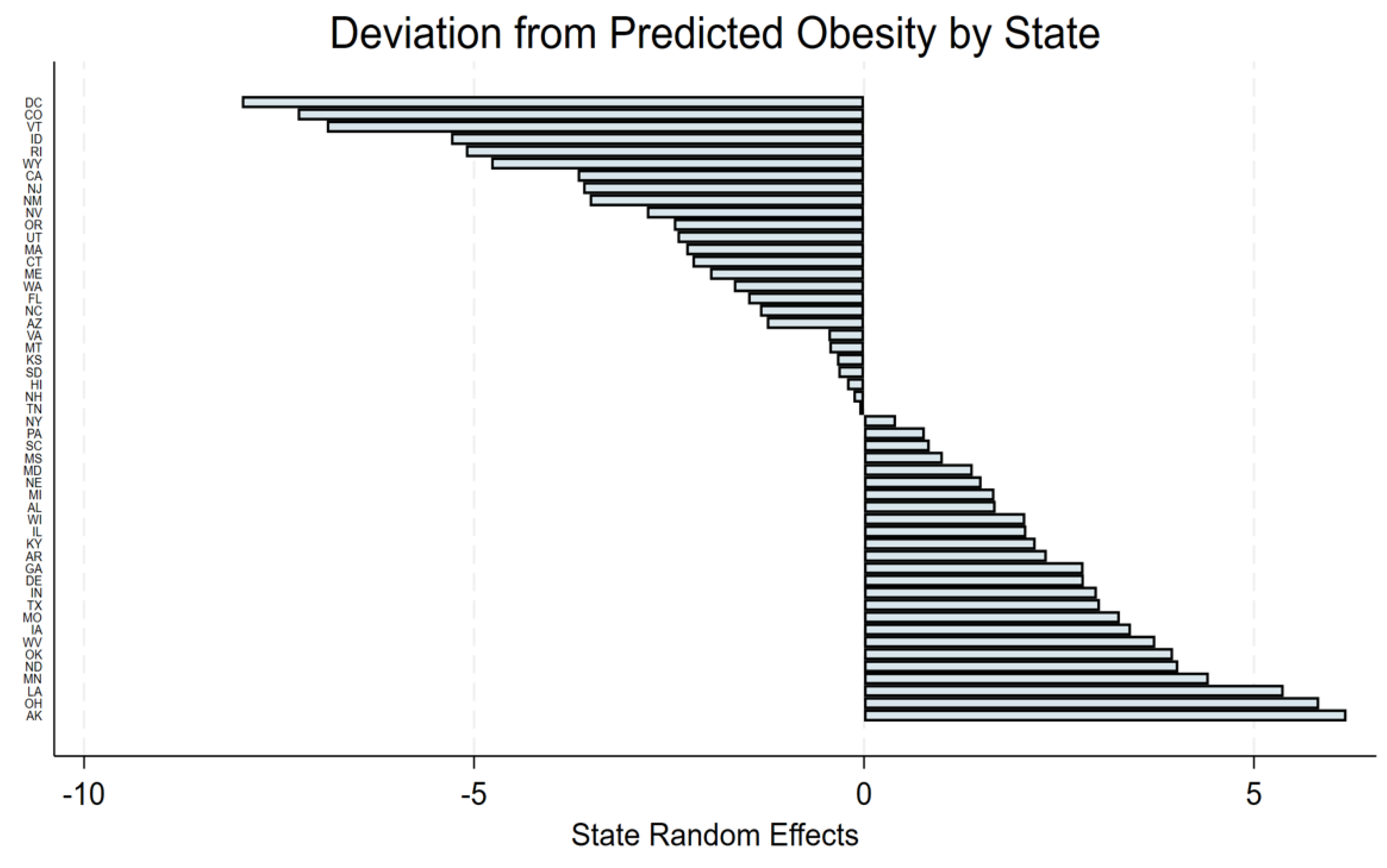
Figure A2(Appendix A) gives the estimated random intercepts (state-level residuals) from the multilevel model. State-level random intercepts revealed substantial geographic variation in adult obesity rates beyond what county-level predictors explained:
The bar graph (Figure 3) represents the estimated state-level random effects (u_state) in the multilevel model of adult obesity. State-level findings pointed to some substantial differences between predicted and actual adult obesity rates. Alaska (AK) led the group, with rates roughly 6.19 percentage points higher than the model’s estimate. West Virginia (WV) (+3.74) and Texas (TX) (+3.02) also posted figures well above what was anticipated. On the other end of the spectrum, several states had much lower rates than anticipated. Vermont (VT) was 6.89 percentage points lower, and Colorado (CO) came in at –7.26. The District of Columbia (DC) showed the most substantial negative deviation, at roughly –9.0 percentage points below expectations.
3.3. Fixed Effects Results
Multilevel Model Results Key Findings: The model included 24 predictors. Results indicated that several food environment and sociodemographic variables were significantly associated with county-level adult obesity rates.
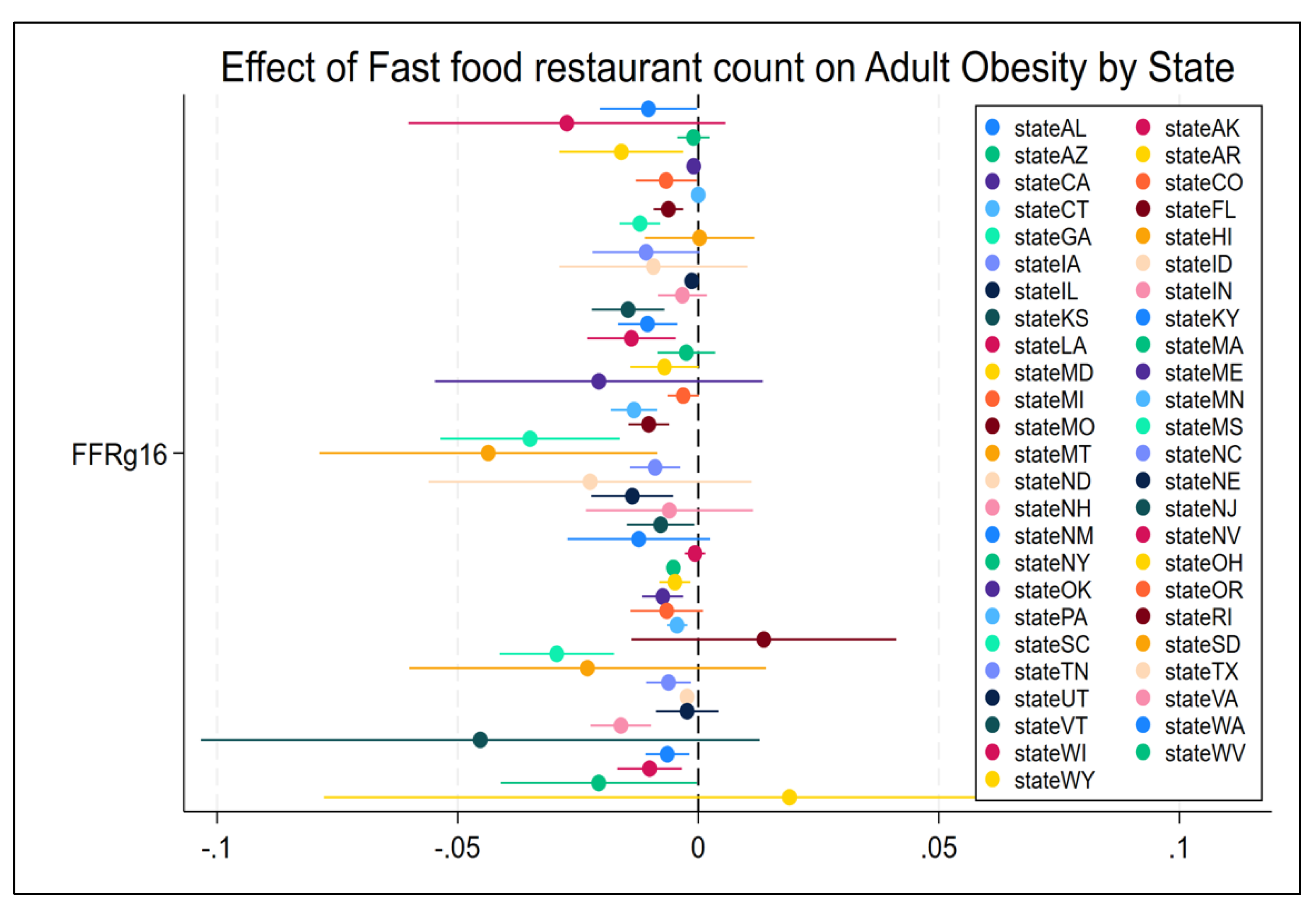
The study analysis examined factors from the food environment, physical activity access, socioeconomic conditions, and racial/ethnic composition. It was hypothesized that counties with a greater number of grocery stores and farmers’ markets, particularly those selling fruits and vegetables, would have lower adult obesity rates. However, these relationships were not statistically significant in the final model. In contrast, greater densities of fast-food restaurants (+0.061), convenience stores (+0.089), and higher proportions of low-access store areas (+0.169) were expected and found to be associated with higher obesity prevalence, while a greater number of supercenters (–0.053) was associated with lower prevalence. Greater access to recreational facilities (–0.028) was expected to correspond with lower obesity rates. At the state level, higher Supplemental Nutrition Assistance Program (SNAP) benefits per capita (–0.058) were anticipated and found to be linked to lower adult obesity prevalence, whereas food taxes were not significant. Additionally, higher proportions of racial/ethnic minority populations were expected to be associated with variation in obesity prevalence, with protective effects for % Asian (–0.158) and % non-Hispanic White (–0.020), and higher rates for % American Indian/Alaska Native (+0.185), % Hispanic (+0.121), and % non-Hispanic Black (+0.025). Higher median household income (–0.0004) was expected to correspond with lower obesity rates, while higher poverty (+0.307), food insecurity (+0.282), and unemployment (+0.196) rates were expected to correspond with higher obesity rates.
3.4. State-Level Heterogeneity in Key Predictors: Coefficient Plot Exploration
To further explore geographic variation, coefficient plots were used to visualize how the effect of selected predictors—such as food insecurity and recreational access—varies across states. These exploratory plots are based on separate OLS models stratified by state.
Figure 4.
Effect of percent food insecure on adult obesity by state.
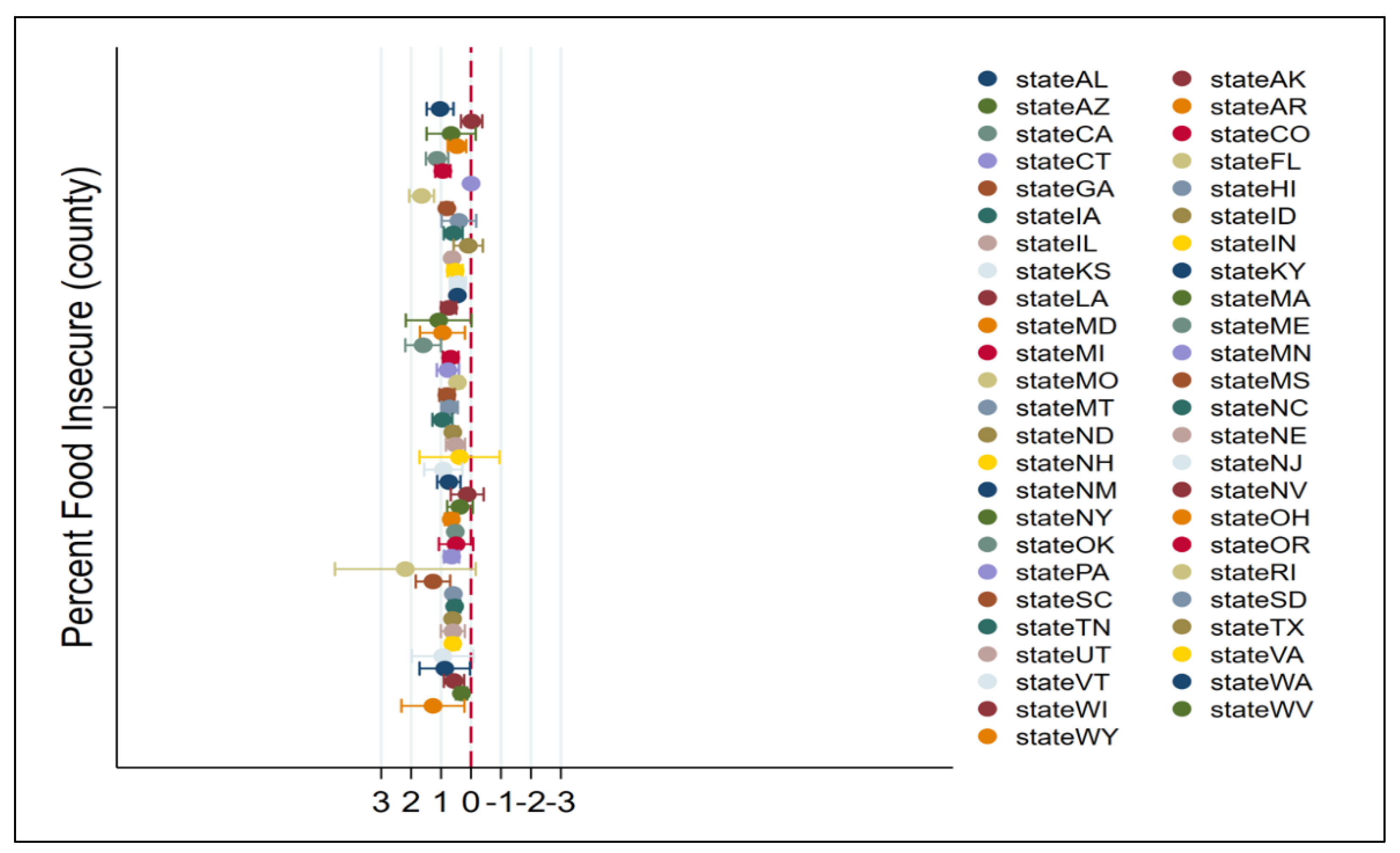
In the coefficient plots, each point corresponds to the estimated effect of county-level food insecurity on adult obesity within an individual state. The horizontal lines display 95% confidence intervals, while the dashed vertical line at zero marks the point of no association.Across most states, the coefficient plot shows a positive association between food insecurity and adult obesity prevalence. Many of the confidence intervals cross zero and also effect sizes differ across state , indicating that not all associations are statistically significant. These differences highlight the need for localized strategies that address both food insecurity and the availability of healthy food options.
Additional coefficient plots for other predictors (e.g., recreational access, racial composition) are available in Appendix B. A summary table synthesizing all state-stratified OLS model results is also provided.
4. Discussion
4.1. Guiding Strategies for Addressing Adult Obesity Through Food and Environmental Policy
Recreational Infrastructure as a PriorityIn this study, communities with fewer recreational and fitness facilities tended to have higher adult obesity rates. Where these facilities were more accessible, obesity rates were lower. This pattern echoes earlier research showing that nearby parks, walking trails, and fitness centers encourage people to be more active and maintain healthier weights [12,13]. Expanding opportunities for physical activity—particularly in areas with limited resources—could be an effective step for local governments and planners [14,15].
Strengthening SNAP and Related SupportsSNAP may help protect against the health impacts of food insecurity. While this analysis did not evaluate specific programs, the findings point to the value of initiatives that build on SNAP’s reach, such as the Gus Schumacher Nutrition Incentive Program, which works to improve access to healthy foods [16,17]. Hence expanding SNAP benefits levels may help more households consistently afford nutritious options.
Address Food Insecurity and Accessibility in Tandem: Food insecurity was a strong predictor of higher adult obesity prevalence. Prior studies highlight that combined strategies like use of mobile produce markets with produce prescription programs, and healthy grocery delivery services could help address the gap between caloric sufficiency and nutritional quality [18,19].
Figure 5.
Infographic: Key Findings and Evidence-Informed Implications :Addressing Adult Obesity.
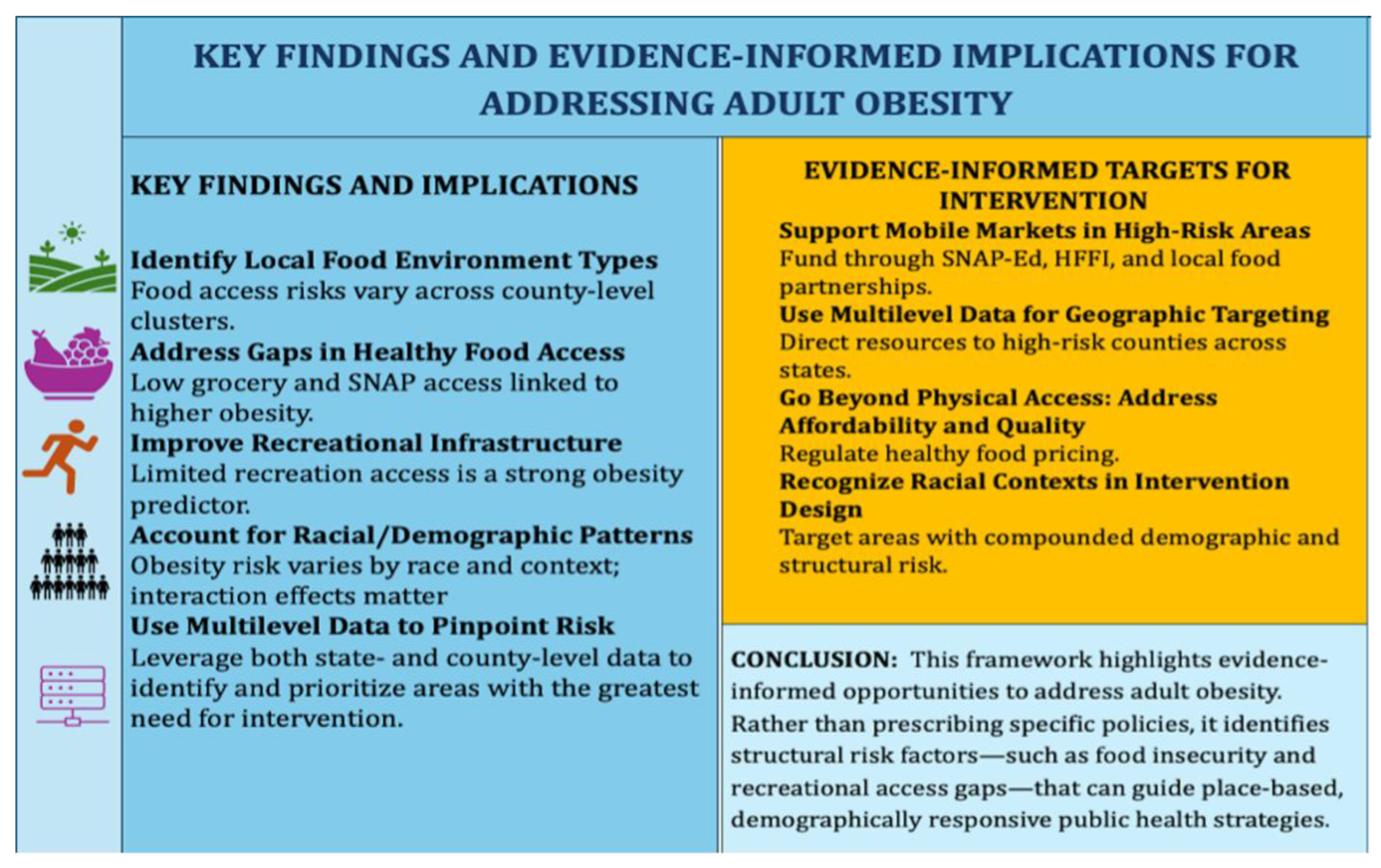
Use Multilevel Data to Guide Geographic Prioritization: Multilevel modeling in this study revealed how social, economic, and environmental conditions jointly shape adult obesity risk at both county and state levels. Results showed clear spatial trends, with some counties facing a combination of entrenched poverty, limited food access, high food insecurity, and few recreational options. Prioritizing resources and initiatives into areas with the most severe and overlapping challenges could increase the chances that interventions produce a more meaningful, long-term beneficial impact [20].
Beyond Presence—Tackle Price, Quality, and Cultural Fit: Results showed that simply the presence of grocery stores or farmers’ markets nearby was not associated with reduced adult obesity rates. This indicates that physical access, alone may not be an effective strategy highlighting the importance of food quality, affordability and cultural preferences of populations. Strategies should therefore combine improvements in access with efforts to make nutritious foods affordable, high in quality, and culturally appropriate—especially in communities facing persistent inequities. [21,22,23,24].
5. Summary and Conclusion
Across the United States, this research looked at how community conditions shape adult obesity, considering both the food landscape and opportunities for physical activity alongside economic and demographic realities. The multilevel approach allowed the study to connect patterns at the county level with broader state-level influences. Areas facing greater food insecurity, lower household incomes, and fewer places for recreation tended to have higher obesity rates. States where SNAP benefits were more substantial tended to have slightly lower obesity rates. Having a grocery store or farmers’ market nearby—or even policies like food taxes—did not consistently show a connection to lower adult obesity rates in this analysis, highlighting the need of healthy food options within financial reach, reflecting local food traditions, and paired with safe, spaces for physical activity. These elements are especially critical in places already experiencing the greatest health and resource gaps.
6. Scope and Limitations
This study has several important limitations. There is a temporal mismatch in the data, as variables were drawn from different years (2014–2024) based on availability. However, because food environment variables typically change slowly over time, this limitation is unlikely to substantially affect the analysis. Measurement limitations exist, wherein there is use of raw counts that don't capture outlet size, quality, or food healthfulness, again the "Low Access to Store" variable doesn't account for public transportation or informal access methods. Ecological design of the study and the cross-sectional nature precludes causal inference and raises potential for reverse causality bias. there are omitted variables like Zoning laws, physical activity initiatives, cultural food preferences, and individual-level factors, that were excluded due to data unavailability. Because County Health Rankings derives obesity prevalence from BRFSS self-reported height and weight data, with model-based estimation for small counties, some residual bias may remain despite these adjustments.
7. Recommendations for Future Research
Future studies should utilize census tract/ZIP code level datasets for better spatial heterogeneity, expand cross-level interactions to isolate race/ethnicity effects, include sociocultural variables addressing acculturation and food practices, employ natural experiments to study policy changes over time, and adopt mixed-methods approaches combining quantitative analysis with qualitative community perspectives to guide more responsive and equitable policy solutions.
Author Contributions
Conceptualization, A.M.A. and S.H.L; data curation, A.M.A.; formal analysis, A.M.A, S.H.L, M.D.S, and, A.E.V.D.B; methodology, A.M.A, S.H.L, M.D.S, and, A.E.V.D.B; writing—original draft, A.M.A, S.H.L, M.D.S, and, A.E.V.D.B; All authors have read and agreed to the published version of the manuscript.
Funding
This research received no external funding.
Institutional Review Board Statement
The study was deemed exempt from review by the Institutional Review Board (IRB) through Student Research at the University of Texas School of Public Health, Houston, as it utilized publicly available, de-identified data.
Informed Consent Statement
Not applicable.
Data Availability Statement
The data that support the findings of this study are available on reasonable request from the corresponding author.
Conflicts of Interest
The authors declare no conflicts of interest.
Abbreviations
The following abbreviations are used in this manuscript:
| CDC | Center of Disease Control and Prevention |
| SNAP USDA | Supplemental Nutrition Assistance Program. United States Department of Agriculture |
| PLACES | Population Level Analysis and Community Estimates. |
| BMI | Body Mass Index |
Appendix A
Appendix A.1

Table A1.
A1: MLM SUMMARY TABLE
| VARIABLE | COEFF. | STD. ERROR | p-value | INTERPRETATION |
| Grocery store (GROCg16) |
-0.01 | 0.014 | 0.46 | Not statistically significant; no clear evidence grocery store density affects obesity rates. |
| Farmers market (FMRKTg18) |
-0.006 | 0.0096 | 0.55 | Not statistically significant; no significant association with obesity. |
| Farmers market selling fruits and vegetables (FMRKT_FRVEGg18) |
-0.0 | 0.009 | 0.13 | Not statistically significant; no significant effect. |
| Fast-food Restaurants. (FFRg16) | 0.0612 | 0.014 | 0.00 | A 1- unit increase in Fast food density (FFRg16) is associated with a 0.0612 percentage point increase in adult obesity rates. Significant positive; more fast-food restaurants linked to higher obesity rates. |
| Supercenter (SUPERCg16) |
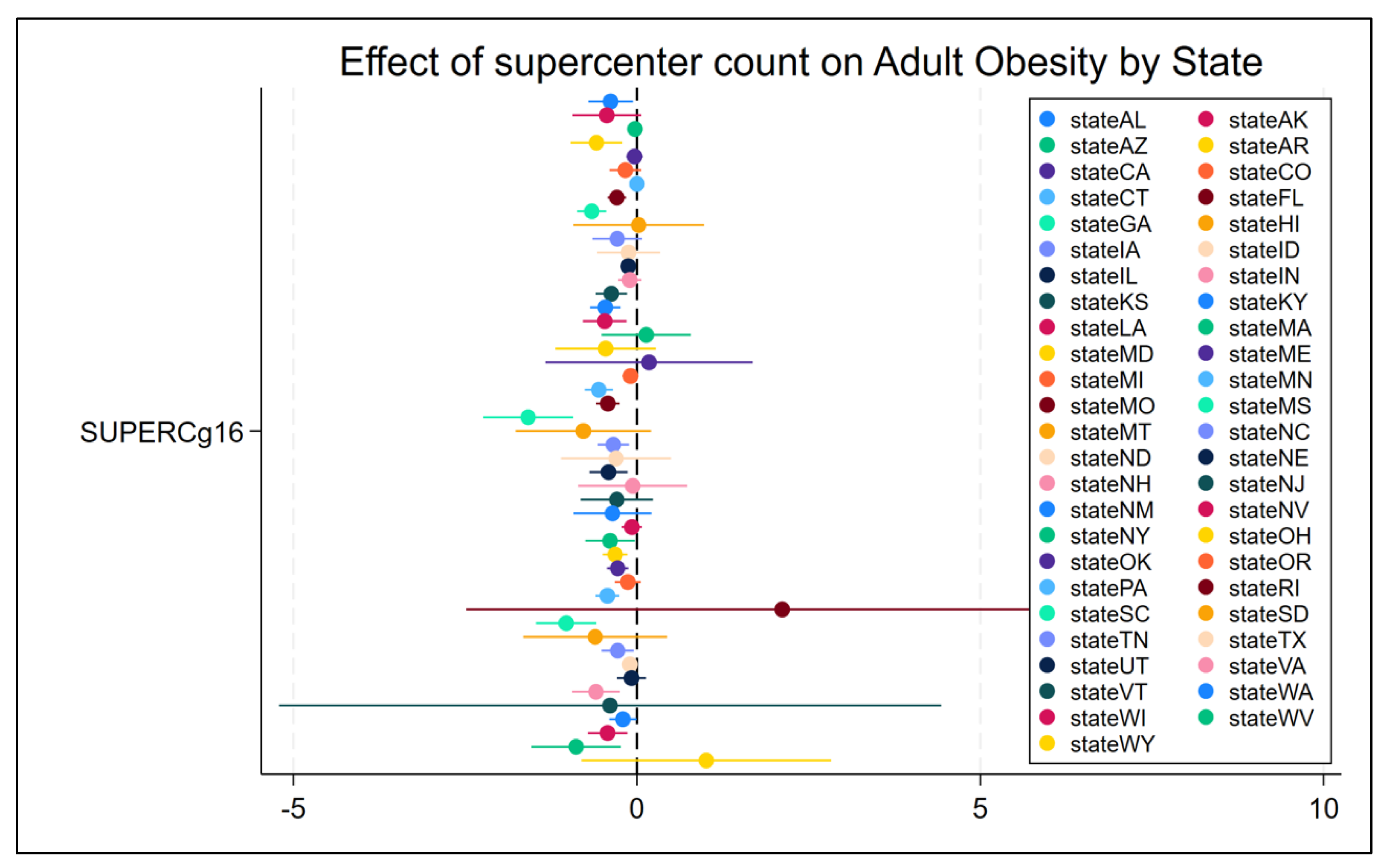
-0.053 | 0.019 | 0.01 | A 1- unit increase in Supercenter density (SUPERCg16) is associated with a 0.053 percentage point decrease in adult obesity rates. Significant negative; more supercenters linked to lower obesity, contrary to hypothesis. |
| Convenience Stores (CONVSg16) |
0.0885 | 0.019 | 0.001 | A 1-unit increase in Convenience store density (CONVSg16) is associated with a 0.0885 percentage point increase in adult obesity rates. Significant positive; more convenience stores associated with higher obesity. |
|
% low access to stores, low income. (PCT_LACCESS_LOWIg15) |
0.169 |
0.034 |
0.001 |
A 1 percentage point increase low-income households with low access to stores (PCT_LACCESS_LOWIg15) is associated with a 0.1686 percentage point increase in adult obesity rates. This significant positive association indicates that limited access to food outlets is linked to higher obesity prevalence. |
| (RECFACg16) Recreational facilities. |
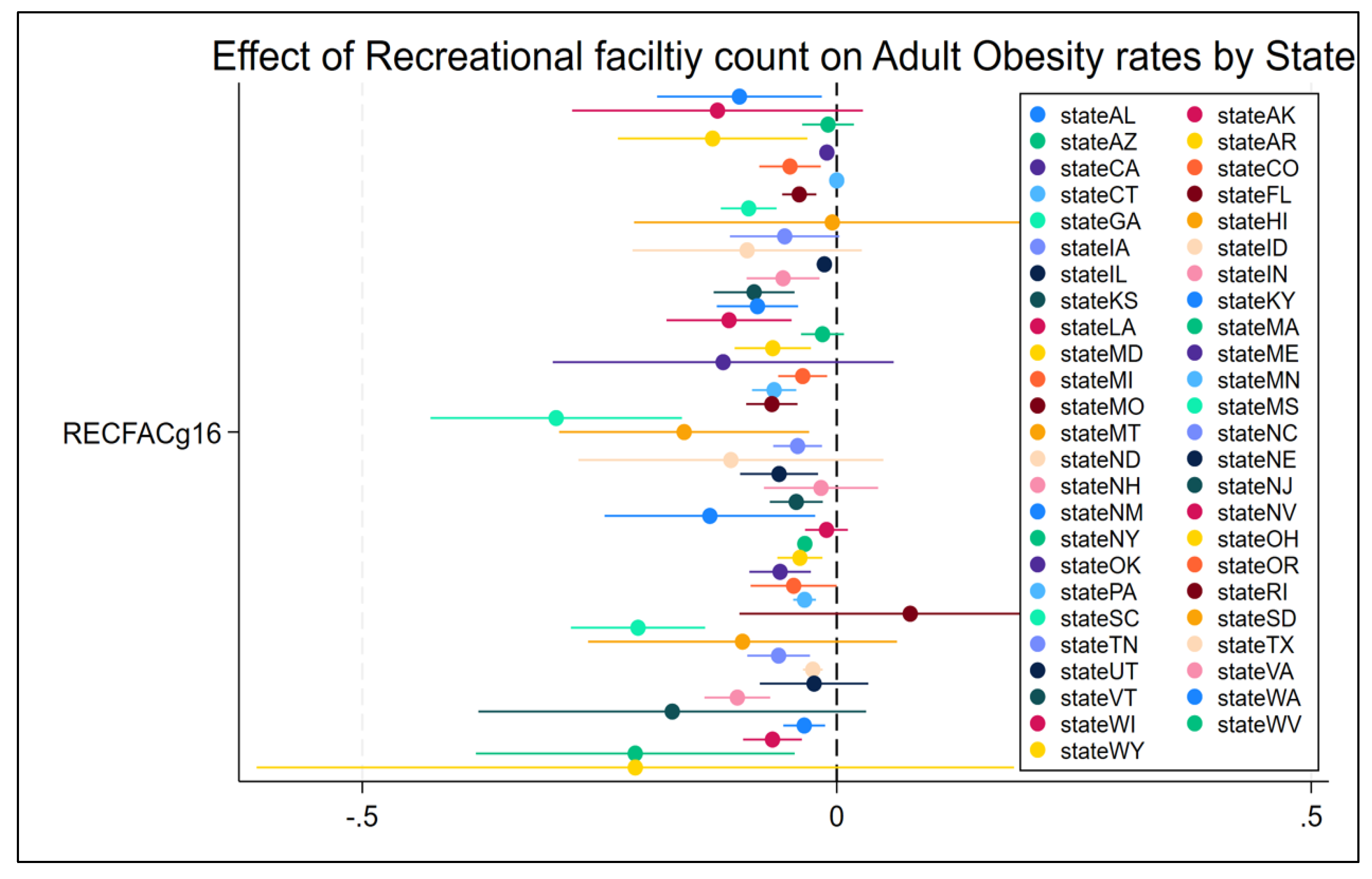
-0.028 | 0.006 | 0.001 | A 1-unit increase in Recreational facilities density (RECFACg16) is associated with a 0.0276 percentage point decrease in adult obesity rates. Significant negative; more recreational facilities linked to lower obesity. |
| SNAP authorised stores (SNAPSg17) |
0.002 | 0.001 | 0.09 | The result is not statistically significant. |
| SNAP benefits per capita (GSNAP_benefits_percapita) |
-0.058 | 0.01 | 0.001 | A 1-unit increase in GSNAP_benefits_percapita is associated with a 0.0575 percentage point change in adult obesity rates. Significant negative; higher SNAP benefits per capita linked to lower obesity. |
| Soda tax stores (GSODATAX_STORES14) |
-0.378 | 0.293 | 0.21 | Not statistically significant. |
| Chips/Pretzel tax stores (GCHIPSTAX_STORES14) |
-0.712 | 0.474 | 0.13 | Not statistically significant. |
| Soda tax vending machine (GSODATAX_VENDM14) |
0.207 | 0.653 | 0.76 | Not statistically significant. |
| Chips/Pretzel tax vending machine (GCHIPSTAX_VENDM14) |
-0.527 | 0.396 | 0.19 | Not statistically significant. |
| % Food insecurity (PCTFoodInsecure21gCounty) |
0.282 | 0.009 | 0.001 | Statistically significant. A 1 percentage point increase in county-level food insecurity is associated with a 0.28 percentage point increase in adult obesity, supporting the hypothesis that greater food insecurity contributes to higher obesity rates. |
| % Unemployed (PCTUnemployed22gcounty) |
0.196 | 0.02 | 0.001 | A 1 percentage point increase in county-level unemployment is associated with a 0.1958 percentage point increase in adult obesity rates. This strong positive association supports the hypothesis that economic insecurity contributes to obesity risk. |
|
Race/Ethnicity Controls |
||||
| % Asian (PCT_ASg23) |
-0.158 | 0.02 | 0.00 | A 1 percentage point increase in Asian (PCT_AIANG21g) is associated with a 0.158 percentage point decrease in adult obesity rates. Significant negative; higher Asian population linked to decreased obesity. |
| % American Indian Alaskan Native (PCT_AIANg23) |
0.185 | 0.022 | 0.001 | A 1 percentage point increase in American Indian Alaskan native (PCT_AIANG21g) is associated with a 0.1848 percentage point increase in adult obesity rates. Significant positive; higher American Indian/Alaskan Native population linked to increased obesity. |
| % Native Hawaiian Pacific Islander (PCT_NHPIg23) |
-0.023 | 0.057 | 0.69 | Not statistically significant. |
| % Hispanic (PCT_H23g) |
0.121 | 0.015 | 0.001 | A 1 percentage point increase in Hispanics (PCT_Hisp21g) is associated with a 0.121 percentage point increase in adult obesity rates. Significant positive; higher Hispanic population linked to increased obesity. |
| % Non-Hispanic Black (PCT_NHBg23) |
0.025 | 0.01 | 0.02 | A 1 percentage point increase in Non-Hispanic Black (PCT_NHBg23) is associated with a 0.025 percentage point increase in adult obesity rates. Significant positive; more Non-Hispanic Black residents linked to higher obesity. |
| % Non-Hispanic White (PCT_NHWg23) |
-0.02 | 0.009 | 0.03 | A 1 percentage point increase in Non- Hispanic Whites (PCT_NHWg23) is associated with a 0.02 percentage point decrease in adult obesity rates. Significant negative; more Non-Hispanic White residents linked to lower obesity. |
| Median household income (MEDHHINCg15) |
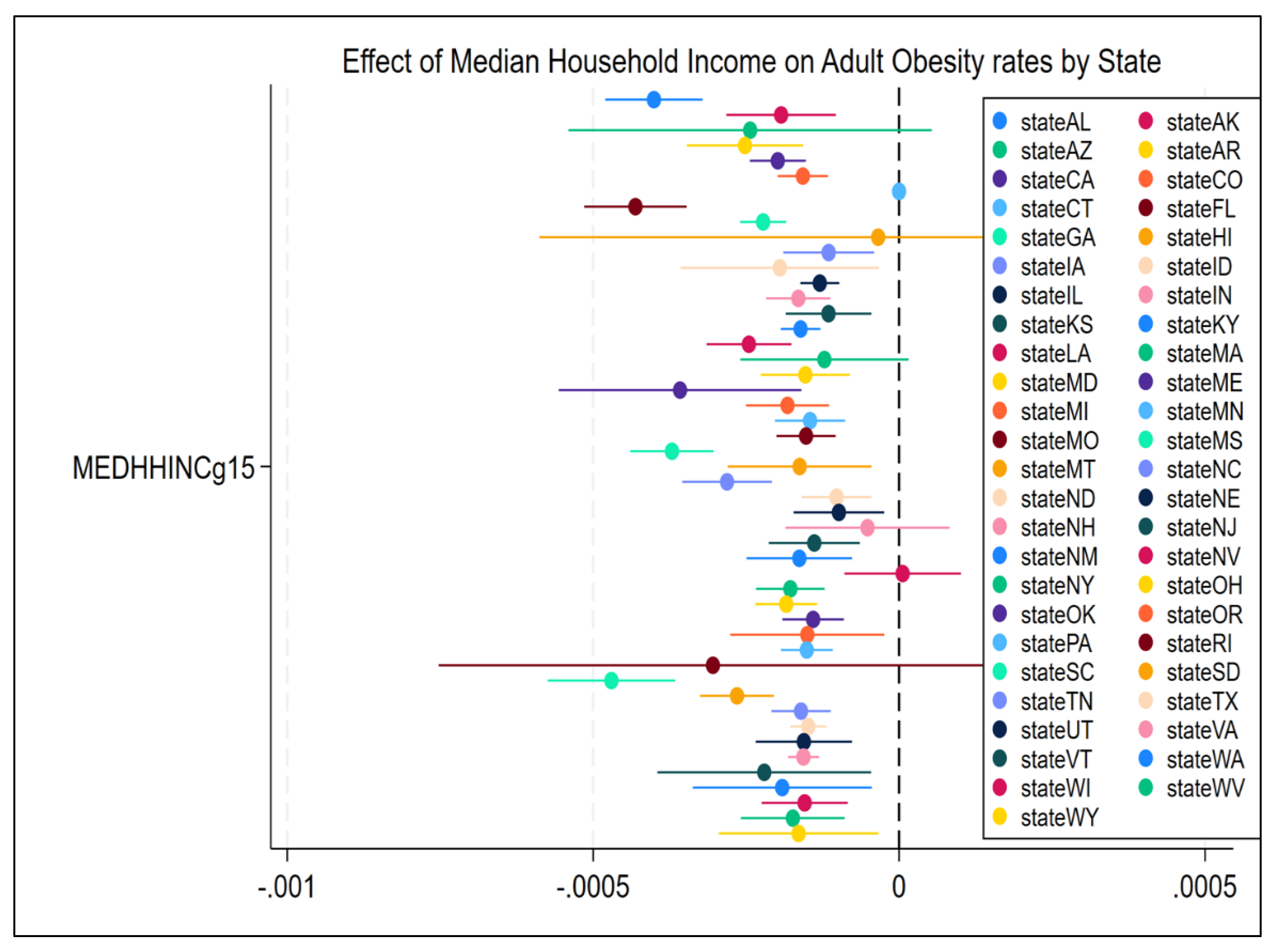
-0.0001 | 0.0001 | 0.001 | A 1-unit increase in Median Household Income (MEDHHINCg15) is associated with a 0.0004 percentage point decrease c in adult obesity rates. Significant negative; higher income linked to lower obesity. |
| Poverty rate (POVRATEg15) |
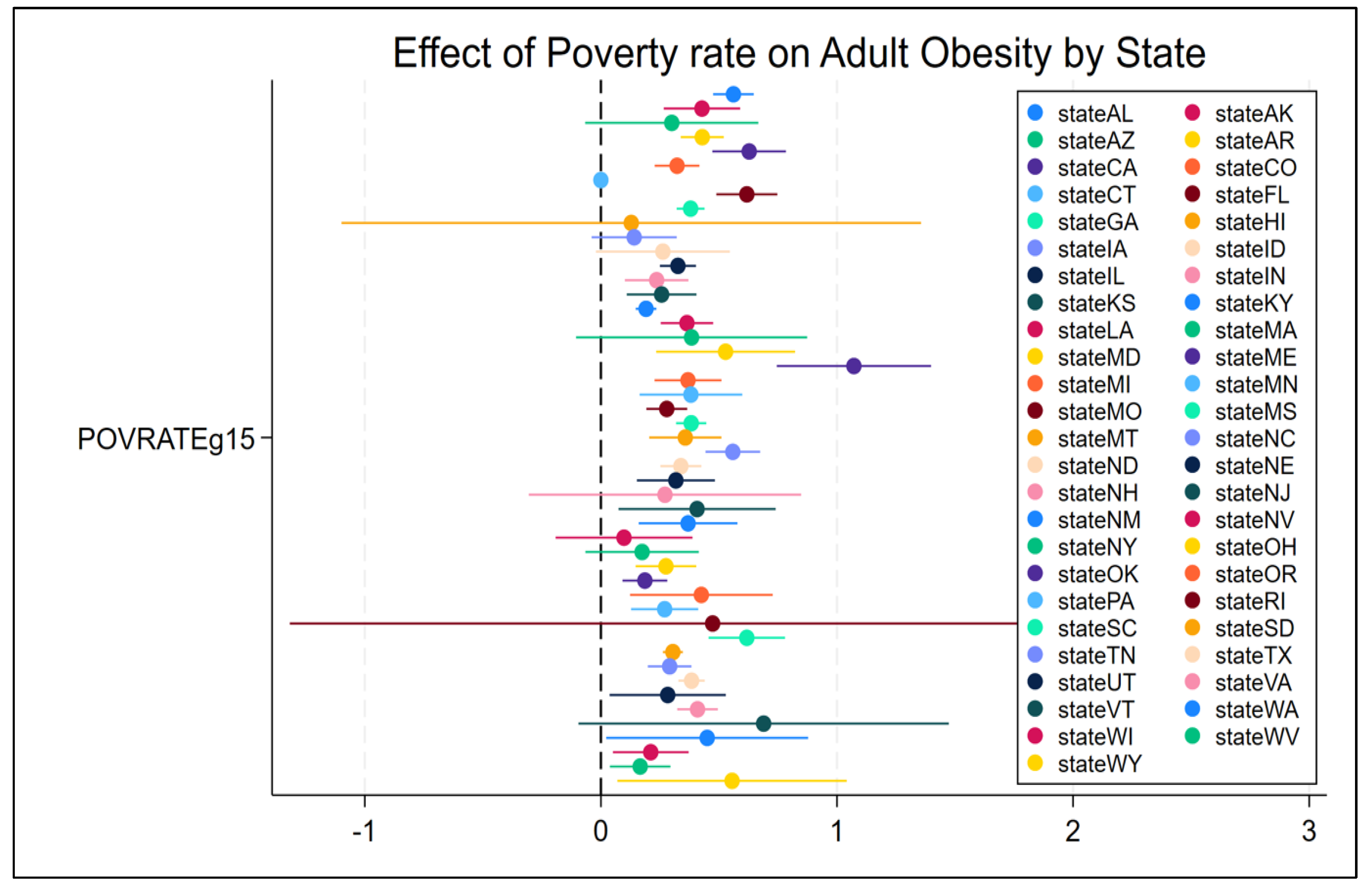
0.307 | 0.047 | 0.00 | A 1 percentage point increase in Poverty rate (POVRATEg15) is associated with a 0.3065 percentage point increase in adult obesity rates. Significant positive; higher poverty associated with higher obesity. |
Appendix B
Key STATA Commands Used
*Centering variables egen PCTFoodInsecure21gCounty = mean(PCTFoodInsecure21), by(state_id) gen z_PCTFoodInsecure21gCounty = PCTFoodInsecure21 - PCTFoodInsecure21gCounty * Multilevel model
mixed obesity_rate z_CONVSg16 z_SUPERCg16 z_RECFACg16 ... ///. || state_id:, variance * Predicted margins margins, predict(xb) * Coefficient plot coefplot, vertical
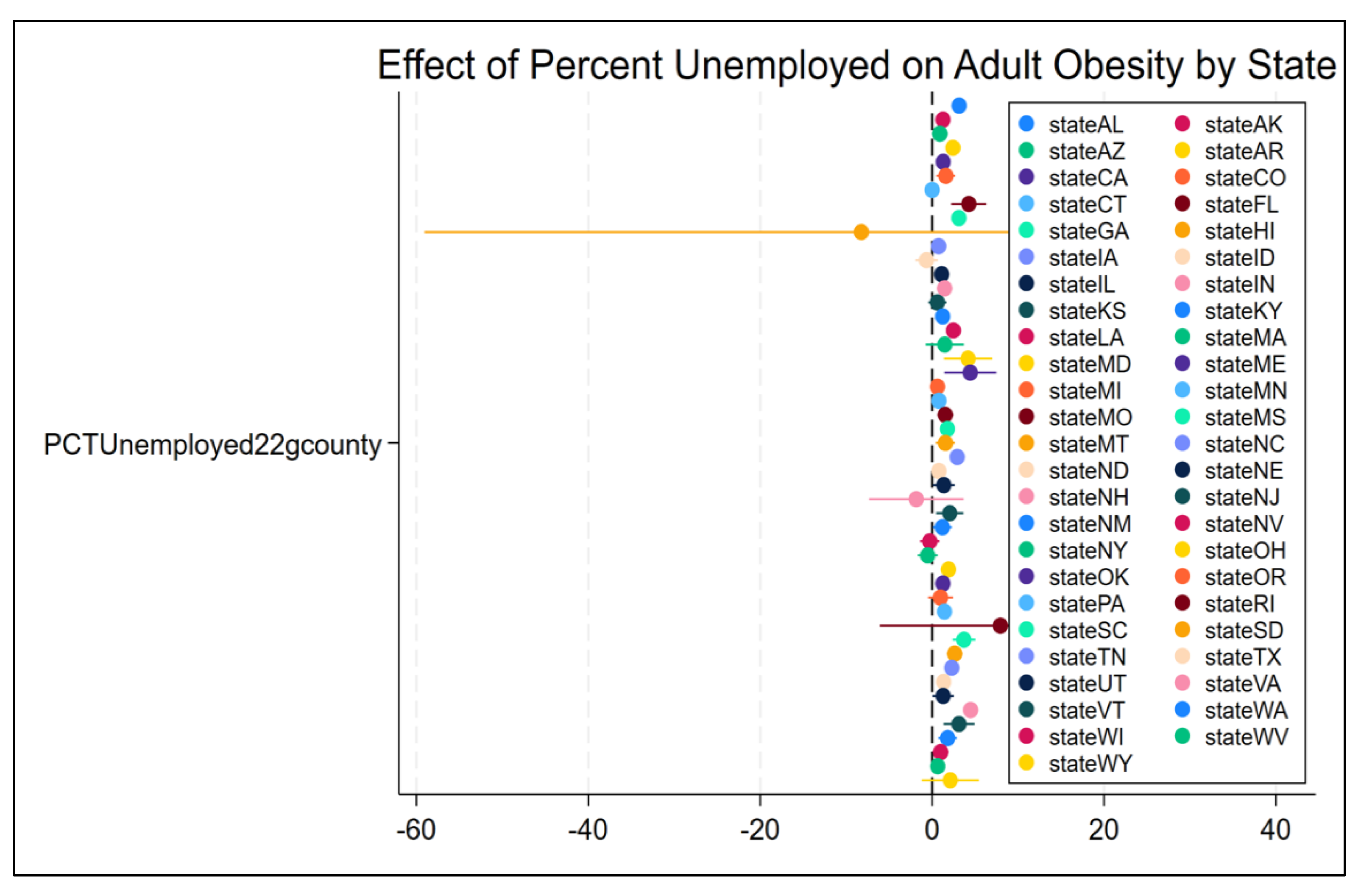
Effect of percent Unemployed on Adult obesity rates by state
Figure A1.
Coefficient plot –effect of county-level unemployment on adult obesity rates by state
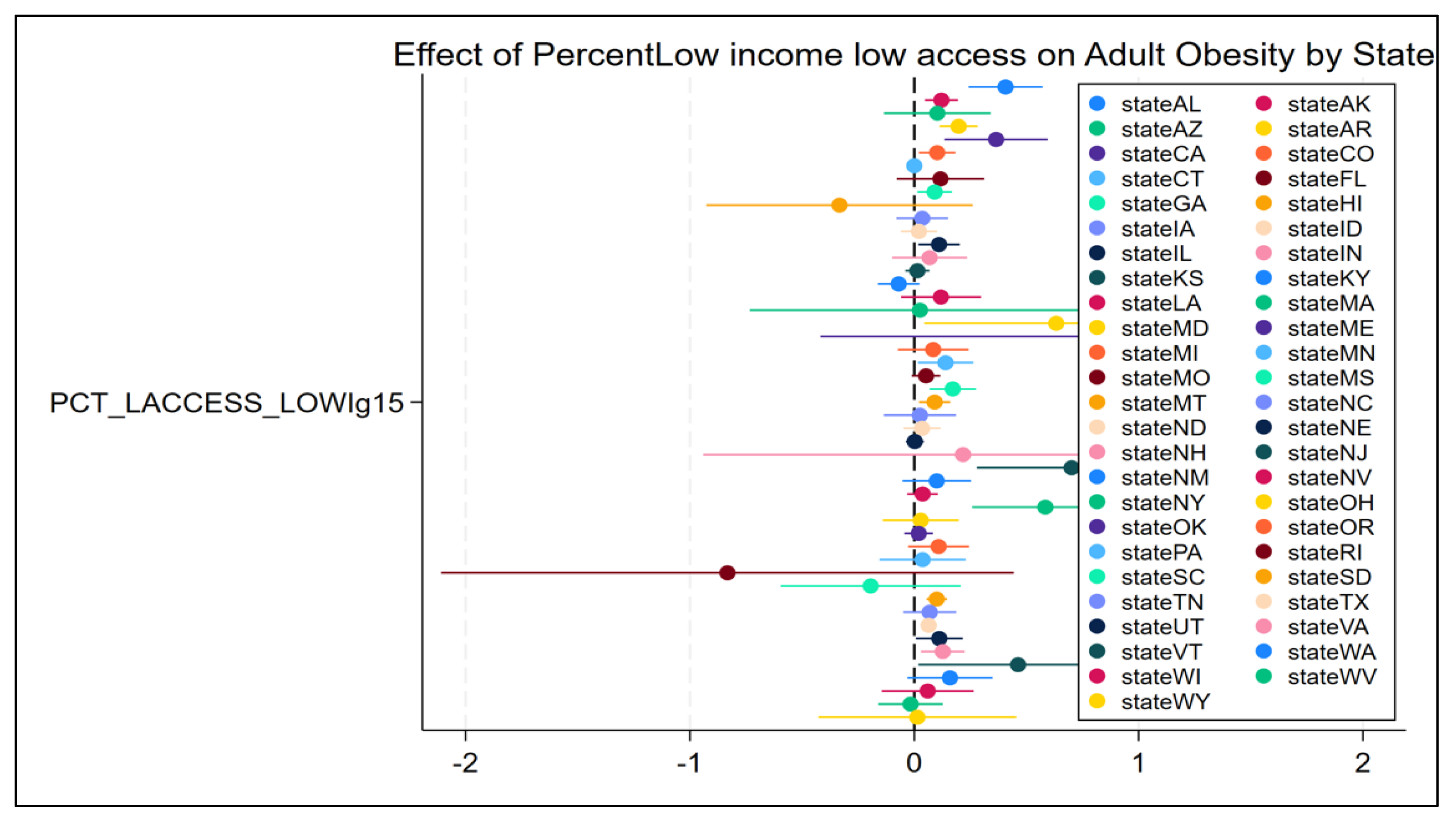
State-level effects - association of low access, low income and adult obesity rates by state.
Figure A2.
Coefficient plot-association of low access, low income and obesity prevalence by state.
Fast food restaurant density(FFR16): Clear policy relevance.
Figure A3.
Effect of fast food count on adult obesity rates by state.
State-level effects – Recreation facilities count and Adult obesity
Figure A4.
Coefficient plot: Association of Recreation facilities (Recfac16) and adult obesity prevalence by state.
Figure A4.
Coefficient plot: Association of Recreation facilities (Recfac16) and adult obesity prevalence by state.
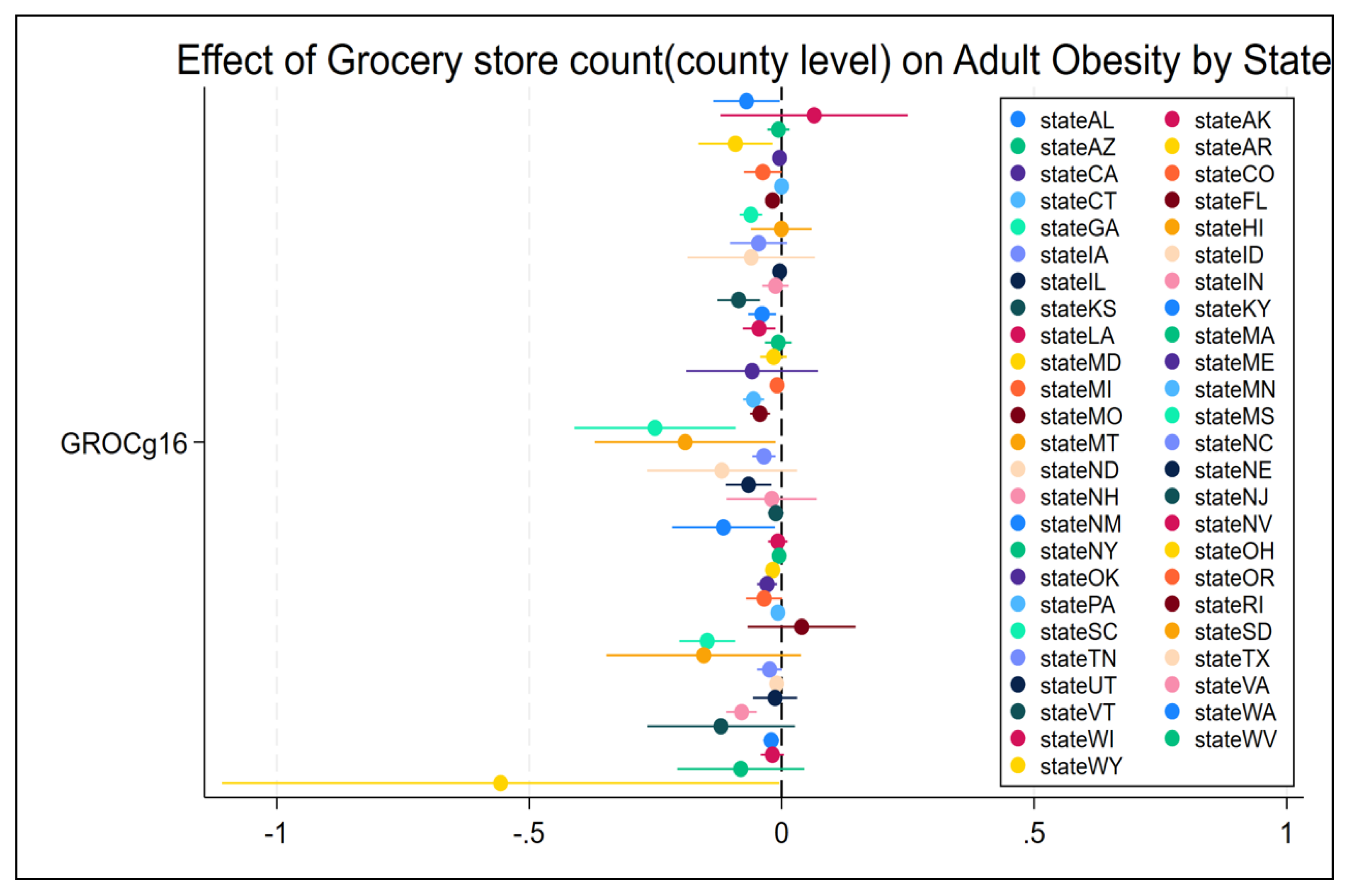
State-level effects – Grocery store count and adult obesity
Figure A5.
Coefficient plot: Association of Grocery stores (Grocg16) and adult obesity prevalence by state.
Figure A5.
Coefficient plot: Association of Grocery stores (Grocg16) and adult obesity prevalence by state.
State-level effects - Supercenter count and Adult obesity
Figure A6.
Coefficient plot – association of Supercenters (Supercg16) and obesity prevalence by state.
Figure A6.
Coefficient plot – association of Supercenters (Supercg16) and obesity prevalence by state.
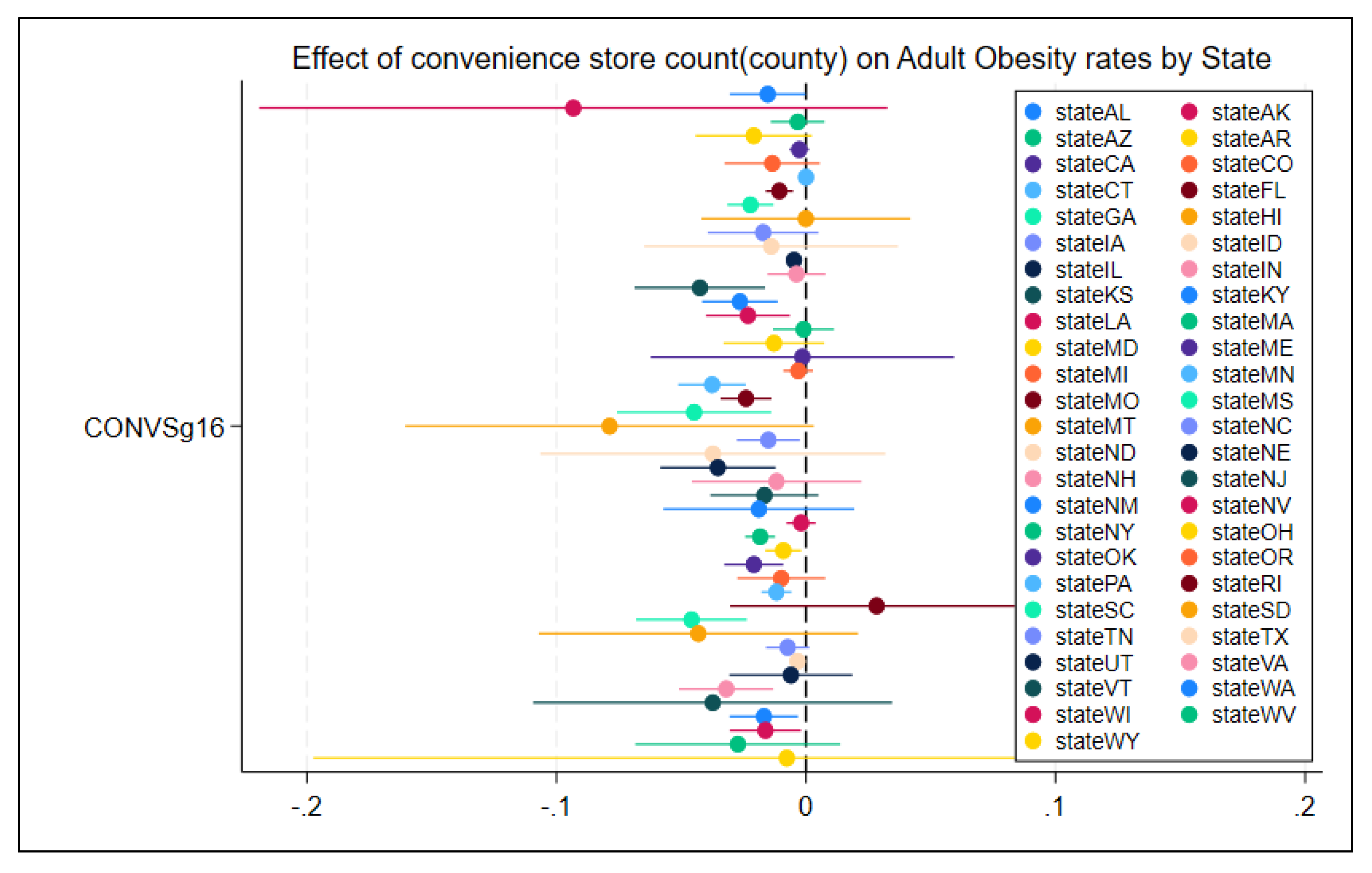
State-level effects - Convenience stores and adult obesity
Figure A7.
Coefficient plot – association between Convenience store count (convsg16) and obesity prevalence by state.
Figure A7.
Coefficient plot – association between Convenience store count (convsg16) and obesity prevalence by state.
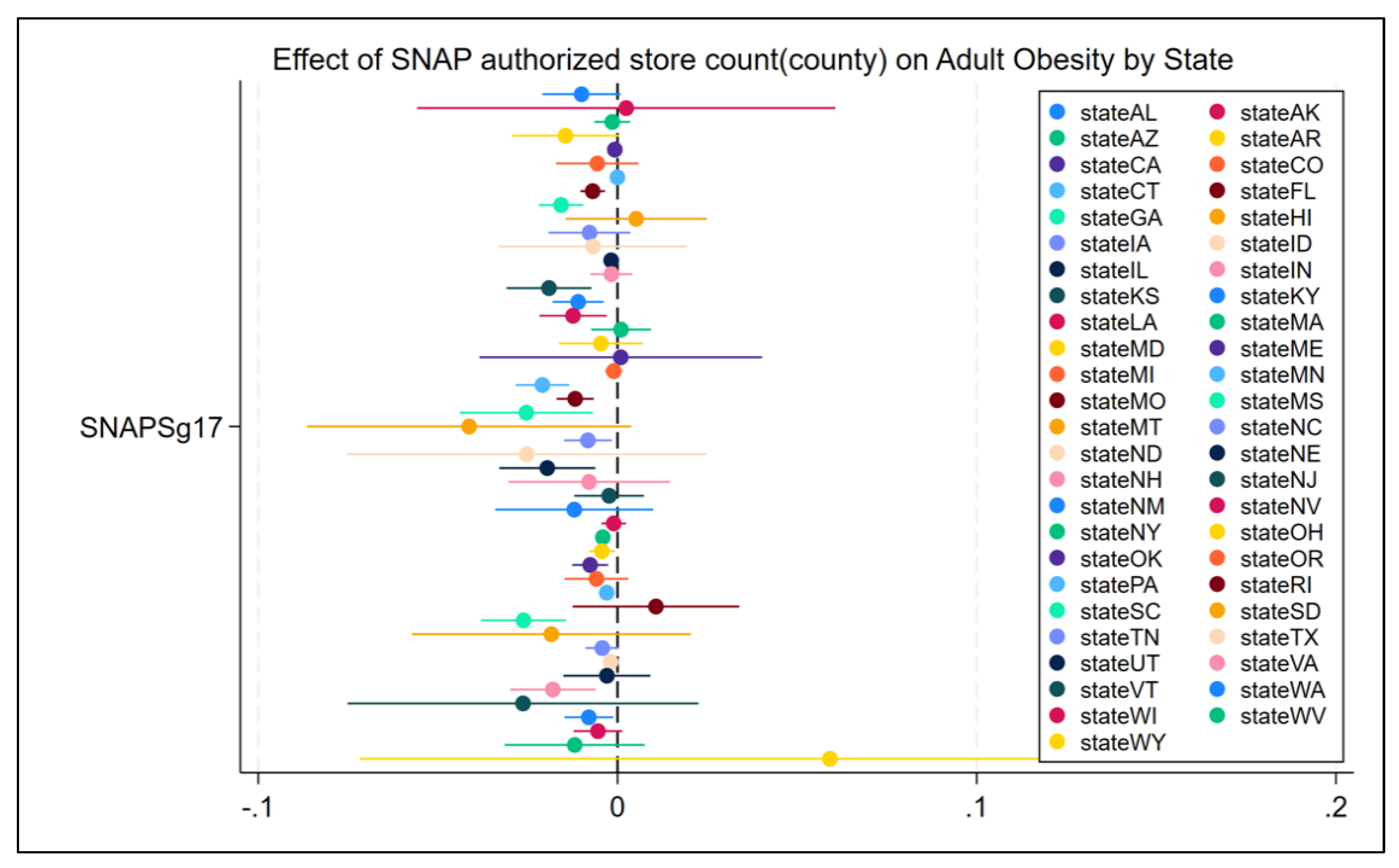
State-level effects - SNAP-authorized stores and adult obesity
Figure A8.
Coefficient plot-association between SNAP-authorized store count and adult obesity prevalence by state.
Figure A8.
Coefficient plot-association between SNAP-authorized store count and adult obesity prevalence by state.
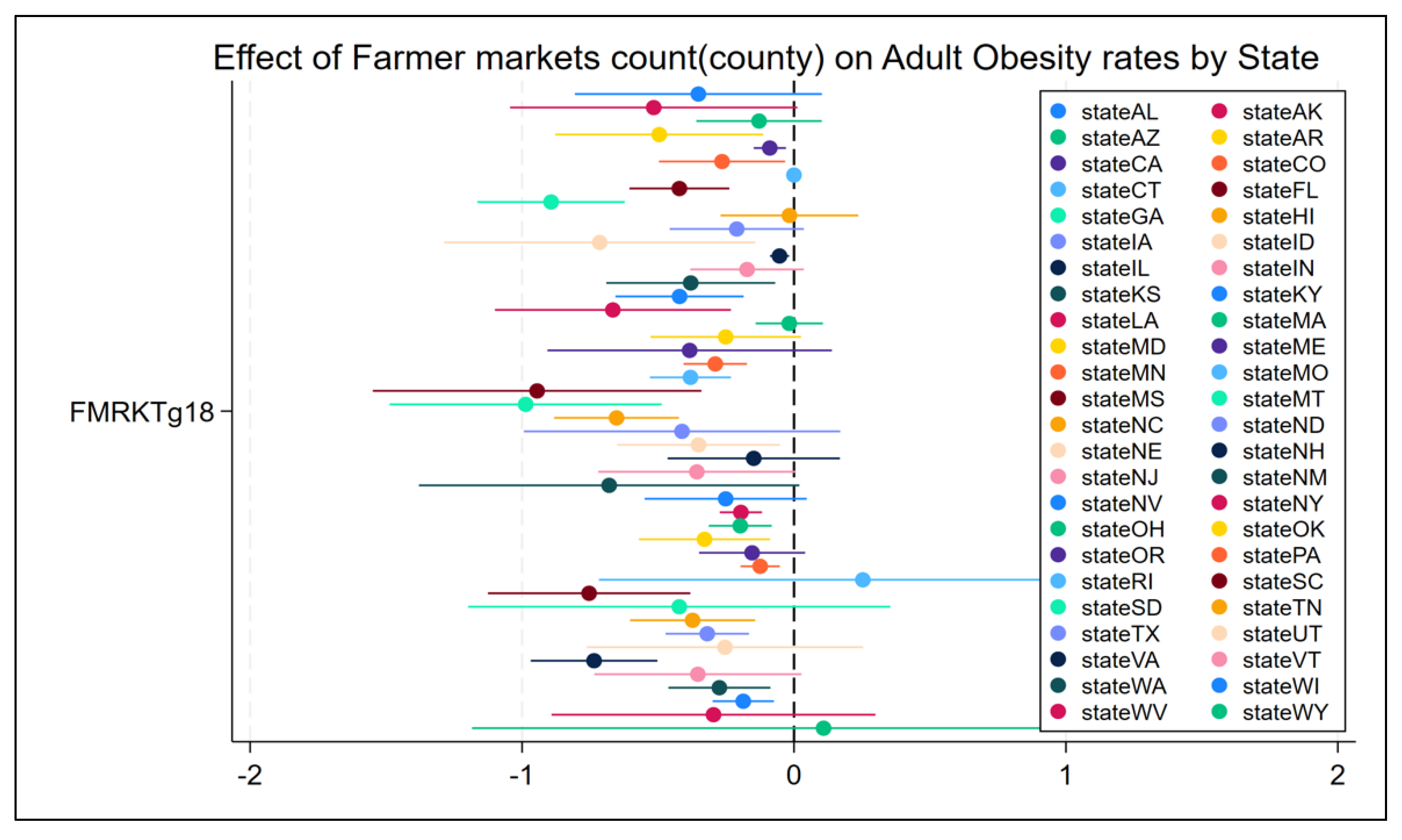
State level effect of farmers markets on Adult obesity by state.
Figure A9.
Coefficient plot-association between of Farmers markets on adult obesity.
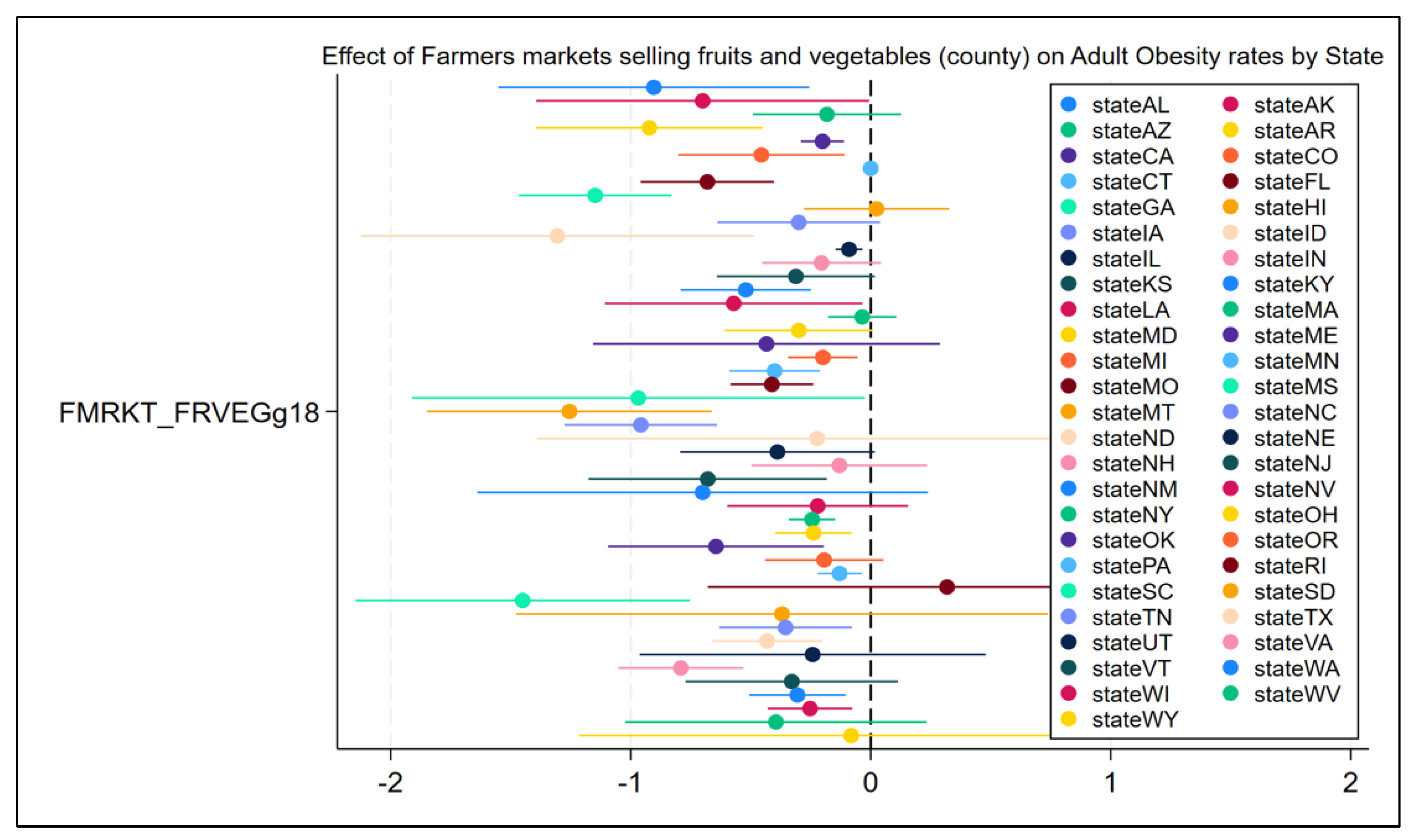
State level effect of farmers markets selling fruits and vegetables on adult obesity
Figure A10.
Coefficient plot-association between Farmers markets selling fruit and vegetable and adult obesity rates.
Figure A10.
Coefficient plot-association between Farmers markets selling fruit and vegetable and adult obesity rates.
Effect of county-level poverty rate on adult obesity by state
Figure A17.
Coefficient plot-association between county-level poverty rate on adult obesity.
Effect of county-level Median Household Income on adult obesity by state
Figure A18.
Coefficient plot-association between county-level Median Household Income rate on adult obesity rates by state.
Figure A18.
Coefficient plot-association between county-level Median Household Income rate on adult obesity rates by state.
Additional Predictor Visualizations and Notes
Figure A19.
SNAP benefits per capita (GSNAP_benefits_percapita): policy-leveraged (grand-mean centered values).
Figure A19.
SNAP benefits per capita (GSNAP_benefits_percapita): policy-leveraged (grand-mean centered values).
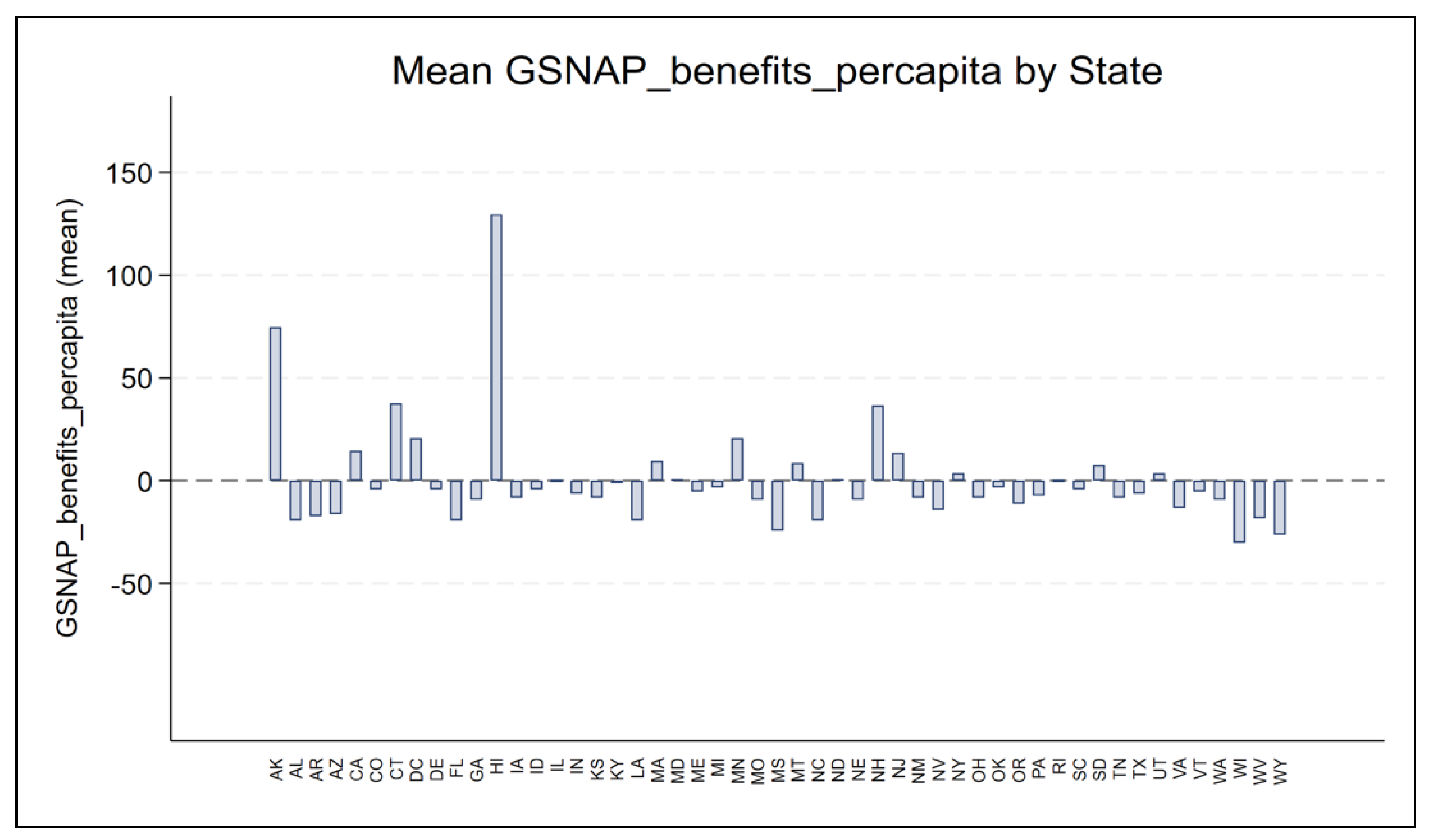
The bar graph displays the mean SNAP benefits per capita (GSNAP_benefits_percapita) across U.S. states. A few states, such as DC and Alaska, provide higher SNAP benefits per capita, while several others fall below the mean. Other states show negative centered values due to grand-mean centering. In multilevel models, this variable demonstrated perfect multicollinearity with the state random intercepts, leading STATA to automatically omit it. Because of this, regression analysis was not feasible, and instead, visualizing the distribution through a bar graph provided a meaningful way to highlight inter-state differences in SNAP support.
Table A1.
Summarizes coefficient plots for all variables.
| Variable | General Trend | Key Finding |
| Fast-Food Restaurant Density (FFRg16) | Combination of negative and positive, some significant | Fast-food density linked to higher obesity in few states but not in others. |
|
Percent Unemployed (PCTUnemployed22gcounty) |
Mixed, several negative | Unemployment negatively associated with obesity in some states |
|
Percent Food Insecure (PCTFoodInsecure21gCounty) |
Mixed, mostly non-significant | No consistent pattern: some states show weak positive link |
| Percent Low Access to stores + Low Income (PCT_LACCESS_LOWIg15) | Mixed, weak effects | Low-income, low access not consistently associated |
|
Grocery Store (GROCg16) |
Mostly negative, some significant | Greater grocery access linked to lower obesity. In many states, more grocery stores are linked to lower obesity rates, supporting access to healthy food. |
|
Supercenter (SUPERCg16) |
Highly variable, wide CI | Unstable estimates; some positive associations: some states show a link to higher obesity |
|
Convenience Store (CONVSg16) |
Mixed, mostly non-significant | Inconclusive; substitution effects possible ( a substitute to grocery stores with varying impact on dietary quality either positively or negatively, adding complexity to the relationship). |
| SNAP-authorized Stores. (SNAPSg17) | Weak, mixed | SNAP store density not a strong predictor |
|
Recreational Facilities (RECFACg16) |
Mostly negative, some significant | Access to recreation linked to lower obesity in many states |
|
Farmers' Markets (FMRKTg18) |
Mixed, wide CI | Mixed influence; variability across states |
|
Farmers’ Markets selling fruits and vegetables (FMRKT_FRVEGg18) |
Mostly negative, some significant | States with more markets selling fruits/vegetables show reduced obesity in some regions. |
|
Percent American Indian/Alaska Native (PCT_AIANg23) |
Wide CI, mostly non-significant | Estimates unstable due to small subgroup size |
|
Percent Asian Population (PCT_ASg23) |
Mostly negative, some significant | A larger Asian population is often linked to lower obesity rates, consistent with national trends |
|
Percent Hispanic Population (PCT_Hg23) |
Mixed, few negative | Some states show lower obesity with higher Hispanic population, though effects vary. |
|
Percent Native Hawaiian/Pacific Islander (PCT_NHPIg23) |
Wide CI, outliers present | High variability due to small populations |
|
Percent Non-Hispanic Black (PCT_NHBg23) |
Mixed, slightly positive | Some positive associations observed: Some states show increased obesity with higher Black population; not uniform. |
|
Percent Non-Hispanic White (PCT_NHWg23) |
Mostly negative. | Generally protective : Higher White population linked to lower obesity |
|
Median Household Income (MEDHHINCg15) |
Strongly negative in most states | Consistently associated with lower obesity prevalence; higher income is a protective factor. |
|
Poverty Rate (POVRATEg15) |
Mixed, some positive | Poverty shows variable influence; some states show higher obesity with higher poverty. |
References
- Centers for Disease Control and Prevention. Obesity Consequences. 2024. Available online: https://www.cdc.gov/obesity/basics/consequences.html (accessed on 16 September 2025).
- Centers for Disease Control and Prevention. Adult Obesity Facts. 2024. Available online: https://www.cdc.gov/obesity/adult-obesity-facts/index.html (accessed on 16 September 2025).
- Centers for Disease Control and Prevention. PLACES: Local Data for Better Health. U.S. Department of Health and Human Services. 2023. Available online: https://www.cdc.gov/places (accessed on 16 September 2025).
- Walker, R.E.; Keane, C.R.; Burke, J.G. Disparities and access to healthy food in the United States: A review of food deserts literature. Health Place 2010, 16, 876–884. [Google Scholar] [CrossRef] [PubMed]
- Michimi, A.; Wimberly, M.C. Natural environments, obesity, and physical activity in nonmetropolitan areas of the United States. J. Rural Health 2012, 28, 398–407. [Google Scholar] [CrossRef] [PubMed]
- Michimi, A.; Wimberly, M.C. The food environment and adult obesity in US metropolitan areas. Geospat. Health 2015, 10, 368. [Google Scholar] [CrossRef] [PubMed]
- Morland, K.B.; Evenson, K.R. Obesity prevalence and the local food environment. Health Place 2009, 15, 491–495. [Google Scholar] [CrossRef] [PubMed]
- Morland, K.; Diez Roux, A.V.; Wing, S. Supermarkets, other food stores, and obesity: The Atherosclerosis Risk in Communities Study. Am. J. Prev. Med. 2006, 30, 333–339. [Google Scholar] [CrossRef] [PubMed]
- Bukenya, J. Determinants of Food Insecurity in Huntsville, Alabama, Metropolitan Area. J. Hunger Environ. Nutr. 2017, 12, 543–558. [Google Scholar]
- University of Wisconsin Population Health Institute. County Health Rankings & Roadmaps: Obesity Rates and Food Environment Indicators. 2024. Available online: https://www.countyhealthrankings.org/health-data.
- USDA Economic Research Service. Food Environment Atlas Overview. 2024. Available online: https://www.ers.usda.gov/data-products/food-environment-atlas/go-to-the-atlas (accessed on 16 September 2025).
- Myers, C.A.; Slack, T.; Martin, C.K.; Broyles, S.T.; Heymsfield, S.B. Change in obesity prevalence across the United States is influenced by recreational and healthcare contexts, food environments, and Hispanic populations. PLoS ONE 2016, 11, e0148394. [Google Scholar] [CrossRef] [PubMed]
- Sallis, J.F.; Cerin, E.; Kerr, J.; Adams, M.A.; Sugiyama, T.; Christiansen, L.B.; Schipperijn, J.; Davey, R.; Salvo, D.; Frank, L.D.; De Bourdeaudhuij, I.; Owen, N. Built environment, physical activity, and obesity: Findings from the International Physical Activity and Environment Network (IPEN) Adult Study. Annu. Rev. Public Health 2020, 41, 119–139. [Google Scholar] [CrossRef] [PubMed]
- Gudzune, K.A.; Doshi, R.S.; Mehta, A.K.; Chaudhry, Z.W.; Jacobs, D.K.; Vakil, R.M.; Lee, C.J.; Bleich, S.N.; Clark, J.M. Effectiveness of policies and programs to combat adult obesity: A systematic review. J. Gen. Intern. Med. 2018, 33, 1990–2001. [Google Scholar] [CrossRef] [PubMed]
- Polyzou, E.A.; Polyzos, S.A. Outdoor environment and obesity: A review of current evidence. Metab. Open 2024, 24, 100331. [Google Scholar] [CrossRef] [PubMed]
- Garasky, S.; Mbwana, K.; Romualdo, A.; Tenaglio, A.; Roy, M. Foods Typically Purchased by SNAP Households. United States Department of Agriculture, Food and Nutrition Service: Alexandria, VA, USA, 2016. Available online: https://www.fns.usda.gov/research-and-analysis.
- Leung, C.W.; Ding, E.L.; Catalano, P.J.; Villamor, E.; Rimm, E.B.; Willett, W.C. Dietary intake and dietary quality of low-income adults in the Supplemental Nutrition Assistance Program. Am. J. Clin. Nutr. 2012, 96, 977–988. [Google Scholar] [CrossRef] [PubMed]
- Gundersen, C.; Ziliak, J.P. Food insecurity and health outcomes. Health Aff. 2015, 34, 1830–1839. [Google Scholar] [CrossRef] [PubMed]
- Zepeda, L.; Reznickova, A. Measuring effects of mobile markets on healthy food choices. J. Hunger Environ. Nutr. 2014, 9, 426–439. [Google Scholar]
- Ahern, M.; Brown, C.; Dukas, S. A national study of the association between food environments and county-level health outcomes. J. Rural Health 2011, 27, 367–379. [Google Scholar] [CrossRef] [PubMed]
- Brownell, K.D.; Farley, T.; Willett, W.C.; Popkin, B.M.; Chaloupka, F.J.; Thompson, J.W.; Ludwig, D.S. The public health and economic benefits of taxing sugar-sweetened beverages. N. Engl. J. Med. 2009, 361, 1599–1605. [Google Scholar] [CrossRef] [PubMed]
- Powell, L.M.; Slater, S.; Mirtcheva, D.; Bao, Y.; Chaloupka, F.J. Food store availability and neighborhood characteristics in the United States. Prev. Med. 2007, 44, 189–195. [Google Scholar] [CrossRef] [PubMed]
- Larsen, K.; Gilliland, J. A spatial analysis of the food environment and obesity in a large urban centre. Public Health Nutr. 2009, 12, 197–203. [Google Scholar]
- Chung, C.; Myers, S.L. Do the poor pay more for food? An analysis of grocery store availability and food price disparities. J. Consum. Aff. 1999, 33, 276–296. [Google Scholar] [CrossRef]
Figure 1.
ECOLOGICAL MODEL.
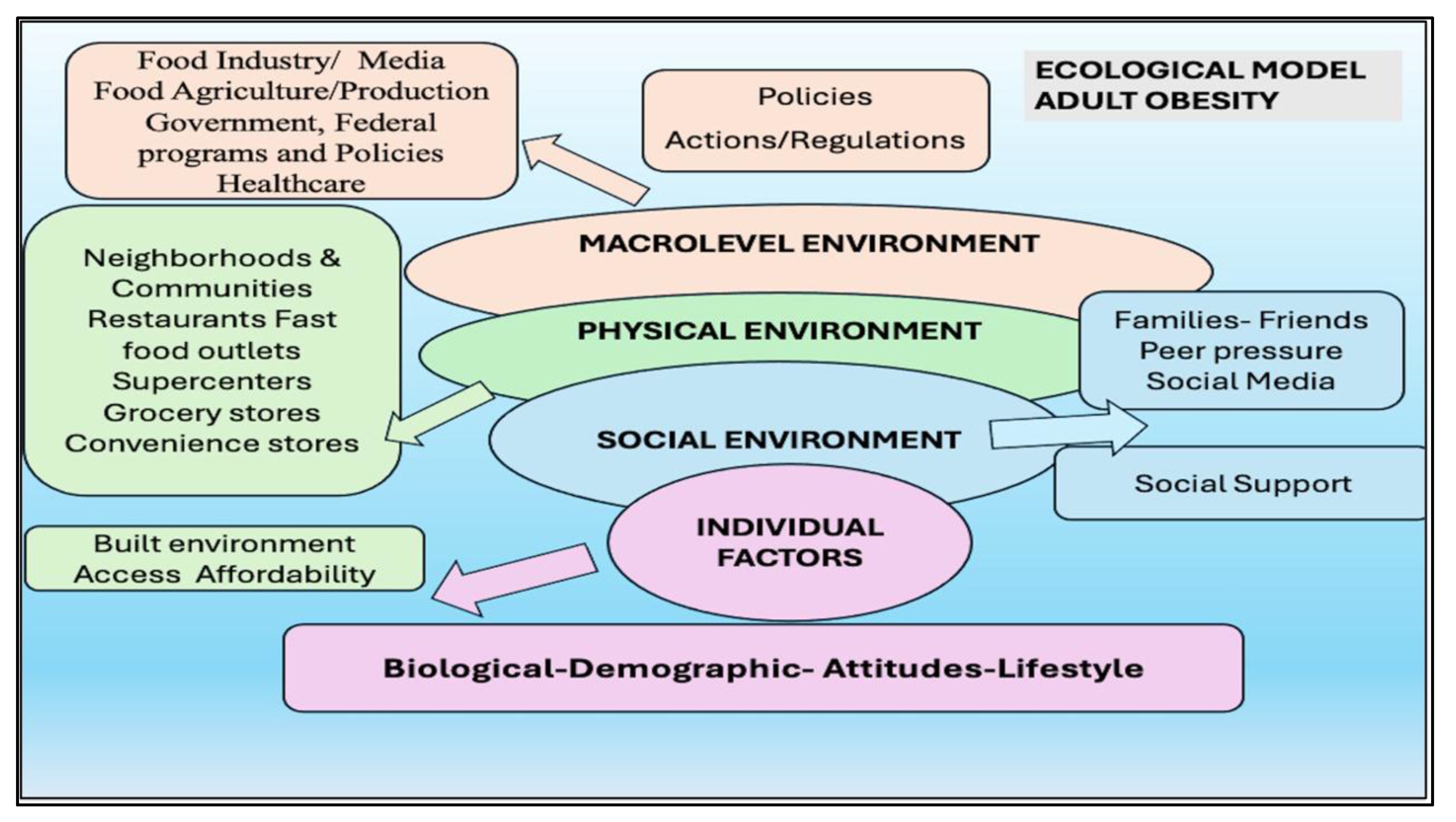
Figure 2.
CONCEPTUAL FRAMEWORK.
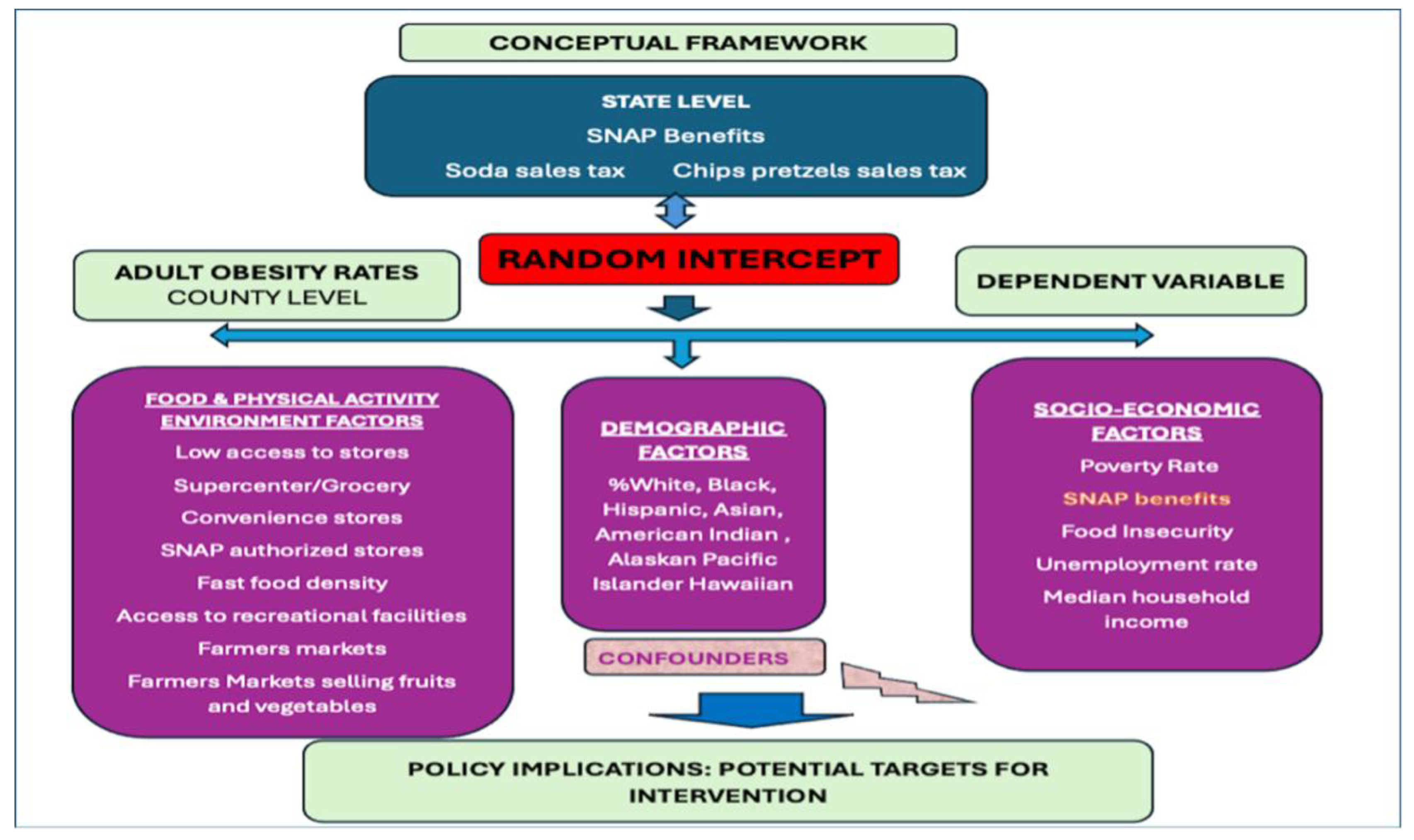
Figure 3.
Deviation from predicted obesity by state (state-level random effects).
Disclaimer/Publisher’s Note: The statements, opinions and data contained in all publications are solely those of the individual author(s) and contributor(s) and not of MDPI and/or the editor(s). MDPI and/or the editor(s) disclaim responsibility for any injury to people or property resulting from any ideas, methods, instructions or products referred to in the content. |
© 2025 by the authors. Licensee MDPI, Basel, Switzerland. This article is an open access article distributed under the terms and conditions of the Creative Commons Attribution (CC BY) license (http://creativecommons.org/licenses/by/4.0/).
Copyright: This open access article is published under a Creative Commons CC BY 4.0 license, which permit the free download, distribution, and reuse, provided that the author and preprint are cited in any reuse.


