

Submitted:
26 October 2025
Posted:
29 October 2025
You are already at the latest version
Abstract
Background: Diagnostic reasoning in medicine often moves forward from symptom recognition to diagnosis confirmation. In chemical pathology and molecular medicine, reverse reasoning involves tracing clinical manifestations back to their molecular origins. This is key and essential but under‑emphasised in teaching.Aim: To present Ghartey’s WWWH DT Integrated Disease Mapping Framework, a structured five‑step model integrating clinical, biochemical, and molecular reasoning to arrive at diagnostic testing.Methods: The framework follows the sequence; What → Where → Why → How → Diagnostic Tests. It is grounded in the principle that deranged biochemistry and/or molecular distortions generate pathophysiology. Applied examples in Type 2 Diabetes Mellitus, malaria, hypertension, and prostate cancer illustrate its use.Results: The WWWH DT framework provides a clear, teachable structure for reverse diagnostic reasoning, linking bedside observations to biochemical and molecular mechanisms.Conclusions: This framework offers a novel, integrative approach to diagnostic reasoning with potential applications in medical education, clinical training, and interdisciplinary teaching.
Keywords:
diagnostic reasoning
; reverse reasoning
; medical education
; molecular pathology
Introduction
Clinical reasoning is a core competency in medical education (1-5, 13). Traditional models such as SOAP or algorithmic decision trees emphasise forward reasoning — progressing from symptom to diagnosis — but rarely train learners to work backwards from presentation to molecular cause (6, 7).
In chemical pathology, oncology, and molecular medicine, reverse reasoning is critical (8–10). Understanding how molecular distortions give rise to biochemical derangements and functional disruption deepens diagnostic accuracy and strengthens teaching (11, 12). Yet, there is no widely adopted, structured tool that explicitly guides learners through this reverse-diagnostic process.
We introduce Ghartey’s WWWH DT Integrated Disease Mapping Framework, grounded in the principle:
Deranged biochemistry and/or molecular distortions generate pathophysiology (8, 9).
This five-step model — What, Where, Why, How, Diagnostic Tests — offers a structured, teachable pathway from symptom to molecular cause (1–3, 14).
Problem Statement
Despite the centrality of diagnostic reasoning in clinical practice, most existing educational models emphasise forward reasoning — progressing from patient symptoms to a working diagnosis — without explicitly training learners to reason in reverse from clinical presentation to underlying molecular mechanisms. This forward-only approach can result in a fragmented understanding of disease, where the connections between bedside observations, biochemical derangements, and molecular or genetic distortions remain implicit or underexplored.
In disciplines such as chemical pathology, oncology, endocrinology, and molecular medicine, the ability to trace a clinical manifestation back through functional disruption and biochemical abnormalities to its molecular origin is essential for accurate diagnosis, effective treatment planning, and the integration of precision medicine into practice.
Currently, no widely adopted, structured framework in medical education systematically supports reverse-diagnostic reasoning from clinical presentation to molecular cause. The absence of such a framework limits opportunities for:
- Integrative learning that bridges clinical, laboratory, and molecular sciences.
- Interdisciplinary communication between clinicians, laboratory scientists, and educators.
- Deeper conceptual understanding of disease mechanisms, which is critical in an era of rapidly advancing molecular diagnostics and personalised medicine.
Addressing this gap requires a novel, adaptable approach that fosters a deeper conceptual understanding of disease mechanisms — a skill that is critical in an era of rapidly advancing molecular diagnostics and personalised medicine. It also calls for a pedagogically sound model that can be applied across specialties to enhance diagnostic accuracy and promote systems-level thinking in health professions education.
Aims
- Introduce a novel, structured reverse-diagnostic reasoning model that integrates clinical, biochemical, and molecular perspectives into a single continuum.
- Bridge the gap between bedside observation and bench-level understanding by explicitly linking symptoms to underlying biochemical derangements and Molecular / Genetic Distortion (molecular or genetic mechanism that accounts for the biochemical derangement)s.
- Enhance diagnostic reasoning skills in medical students, trainees, and clinicians by providing a repeatable, adaptable framework applicable across multiple diseases and specialties.
- Support interdisciplinary teaching by creating a shared language and structure for clinicians, laboratory scientists, and educators.
- Stimulate further research into the educational and clinical impact of reverse-reasoning frameworks in healthcare.
Objectives
By the end of applying or studying this framework, learners and educators should be able to:
- Identify the WHAT — accurately describe the patient’s presenting clinical manifestations.
- Localise the WHERE — determine the organ/system or functional domain affected.
- Explain the WHY — interpret relevant biochemical derangements and link them to the functional disruption.
- Analyse the HOW — trace biochemical changes to their molecular or genetic origins.
- Select appropriate Diagnostic Tests — choose and justify laboratory and molecular investigations to confirm the suspected diagnosis.
- Apply the framework to diverse case scenarios, including infectious, metabolic, endocrine, oncological, and renal diseases.
- Integrate the framework into clinical teaching sessions, case-based learning, and problem-based learning modules.
- Evaluate the framework’s effectiveness in improving diagnostic accuracy and depth of understanding through learner feedback or performance metrics.
Significance
The Ghartey’s WWWH DT Integrated Disease Mapping Framework addresses a critical gap in medical education: the lack of structured tools for reverse diagnostic reasoning that explicitly connect clinical manifestations to their biochemical and molecular origins. While forward-reasoning models dominate current curricula, they often leave learners with a fragmented understanding of how molecular distortions generate pathophysiology.
By integrating clinical, biochemical, and molecular perspectives into a single, repeatable sequence, WWWH DT:
- Bridges the divide between bedside observation and laboratory science.
- Promotes deeper conceptual understanding of disease mechanisms.
- Supports interdisciplinary dialogue between clinicians, laboratory scientists, and educators.
- Enhances retention and transfer of knowledge by providing a consistent scaffold for case analysis across specialties.
- Aligns with contemporary calls in health professions education for models that foster integrative, systems-level thinking.
In an era of precision medicine and rapidly advancing molecular diagnostics, the ability to reason backwards from symptom to molecular cause is not only academically valuable but also clinically essential. WWWH DT offers a practical, adaptable, and pedagogically sound approach to cultivating this skill.
Methods
Framework Development
The WWWH DT framework was developed through synthesis of diagnostic schema literature (1, 2), clinical reasoning pedagogy (4–7), and molecular pathology principles (8–10).
Step Definitions
Table 1 outlines the five stages, descriptors, and teaching focus.
Results
Applied Examples
We initially applied WWWH DT to four conditions:
- Type 2 Diabetes Mellitus — WHAT: polyuria, polydipsia; WHERE: impaired insulin signalling; WHY: elevated glucose; HOW: insulin receptor polymorphisms; TESTS: HbA1c, insulin ELISA (9, 10).
- Malaria — WHAT: fever, chills; WHERE: haemolysis; WHY: elevated LDH; HOW: PfEMP1-mediated cytoadherence; TESTS: RDT, microscopy (8, 9).
- Hypertension — WHAT: headache, blurred vision; WHERE: vascular resistance; WHY: high aldosterone; HOW: ENaC overexpression; TESTS: electrolyte panel (9, 10).
- Prostate Cancer — WHAT: weight loss, bone pain; WHERE: tumour proliferation; WHY: elevated PSA; HOW: p53 mutation; TESTS: PSA assay, biopsy (8, 9).
More Examples
1. Multiple Myeloma
| Step | Mapping Stage | Details |
| WHAT | Clinical Manifestation | Bone pain (often back or ribs), fatigue, recurrent infections, weight loss |
| WHERE | Functional Disruption | Bone marrow infiltration by malignant plasma cells → impaired haematopoiesis; skeletal destruction |
| WHY | Biochemical Derangement | Hypercalcaemia, anaemia (normocytic normochromic), elevated total protein, renal impairment (↑ creatinine, urea), monoclonal protein (M-protein) in serum/urine |
| HOW | Molecular / Genetic Distortion (molecular or genetic mechanism that accounts for the biochemical derangement) | Chromosomal translocations involving Ig heavy chain locus (e.g., t(4;14), t(14;16)), del(17p) affecting TP53, RAS pathway mutations; clonal plasma cell proliferation producing monoclonal immunoglobulin |
| DIAGNOSTIC TESTS | Confirmation | Serum protein electrophoresis (SPEP), urine protein electrophoresis (UPEP), serum free light chain assay, bone marrow biopsy with immunophenotyping, cytogenetic/FISH analysis, skeletal survey or MRI |
2. Thyroid Disease
A. Hyperthyroidism (e.g., Graves’ disease)
| Step | Mapping Stage | Details |
| WHAT | Clinical Manifestation | Weight loss despite increased appetite, heat intolerance, palpitations, tremor, anxiety, goitre |
| WHERE | Functional Disruption | Excess thyroid hormone production and release → systemic hypermetabolism |
| WHY | Biochemical Derangement | Suppressed TSH, elevated free T4 (± elevated free T3), possible hypercalcaemia, mild hyperglycaemia |
| HOW | Molecular / Genetic Distortion (molecular or genetic mechanism that accounts for the biochemical derangement) | Autoantibodies to TSH receptor (TRAb) stimulating thyroid hormone synthesis; HLA-DR3 association |
| DIAGNOSTIC TESTS | Confirmation | Serum TSH, free T4, free T3, TRAb assay, thyroid scintigraphy (diffuse uptake), ultrasound with Doppler |
B. Hypothyroidism (e.g., Hashimoto’s thyroiditis)
| Step | Mapping Stage | Details |
| WHAT | Clinical Manifestation | Fatigue, weight gain, cold intolerance, constipation, bradycardia, dry skin |
| WHERE | Functional Disruption | Reduced thyroid hormone synthesis/secretion |
| WHY | Biochemical Derangement | Elevated TSH, low free T4, possible hyponatraemia, hyperlipidaemia |
| HOW | Molecular / Genetic Distortion (molecular or genetic mechanism that accounts for the biochemical derangement) | Autoimmune destruction of thyroid tissue via anti-TPO and anti-thyroglobulin antibodies; lymphocytic infiltration |
| DIAGNOSTIC TESTS | Confirmation | Serum TSH, free T4, anti-TPO antibodies, anti-thyroglobulin antibodies, thyroid ultrasound |
3. Renal Failure (Chronic Kidney Disease)
| Step | Mapping Stage | Details |
| WHAT | Clinical Manifestation | Fatigue, oedema, pruritus, anorexia, nausea, nocturia, hypertension |
| WHERE | Functional Disruption | Progressive loss of nephron function → impaired filtration, endocrine and metabolic derangements |
| WHY | Biochemical Derangement | Elevated serum creatinine and urea, reduced eGFR (<60 mL/min/1.73 m² for >3 months), hyperkalaemia, metabolic acidosis, anaemia (↓ EPO), hypocalcaemia, hyperphosphataemia |
| HOW | Molecular / Genetic Distortion (molecular or genetic mechanism that accounts for the biochemical derangement) | Glomerulosclerosis, tubulointerstitial fibrosis, podocyte injury; in diabetic nephropathy — advanced glycation end-product (AGE)–mediated damage; in polycystic kidney disease — PKD1/PKD2 mutations |
| DIAGNOSTIC TESTS | Confirmation | Serum creatinine, eGFR, cystatin C, urine albumin–creatinine ratio, renal ultrasound, kidney biopsy (if indicated) |
Let us take Pulmonary Embolism (PE) — a notoriously difficult condition to diagnose because it can mimic many other illnesses and often presents with vague or atypical symptoms.It’s a perfect candidate for Ghartey’s WWWH DT Integrated Disease Mapping Framework because it forces learners to connect subtle clinical clues to biochemical and molecular underpinnings.
Pulmonary Embolism (PE) — WWWH DT Mapping
| Step | Mapping Stage | Details |
| WHAT | Clinical Manifestation | Sudden onset dyspnoea, pleuritic chest pain, tachycardia, cough ± haemoptysis, syncope; sometimes only mild breathlessness or unexplained anxiety |
| WHERE | Functional Disruption | Obstruction of pulmonary arterial blood flow → impaired gas exchange and increased pulmonary vascular resistance |
| WHY | Biochemical Derangement | Hypoxaemia (↓ PaO₂), respiratory alkalosis (↓ PaCO₂ from hyperventilation), elevated D-dimer (fibrin degradation product), possible ↑ troponin if right heart strain |
| HOW | Molecular / Genetic Distortion (molecular or genetic mechanism that accounts for the biochemical derangement) | Thrombus formation due to Virchow’s triad: endothelial injury, stasis, hypercoagulability; genetic thrombophilias (e.g., Factor V Leiden mutation, prothrombin G20210A mutation) or acquired risks (e.g., antiphospholipid syndrome) |
| DIAGNOSTIC TESTS | Confirmation | CT pulmonary angiography (gold standard), ventilation–perfusion (V/Q) scan if CTPA contraindicated, lower limb Doppler ultrasound for DVT, ECG (S1Q3T3 pattern), arterial blood gas, D-dimer assay |
Why PE is a diagnostic challenge
- Non-specific presentation: Can mimic myocardial infarction, pneumonia, asthma, or panic attack.
- Variable severity: Ranges from asymptomatic small emboli to massive, life-threatening obstruction.
- Overlap with post-operative or chronic illness symptoms: Especially in hospitalised patients.
- Need for rapid decision-making: Delays can be fatal, but over-testing can cause harm.
- Educational Value of Applying WWWH DT
- Forces learners to link subtle symptoms (WHAT) to pathophysiology (WHERE) and lab markers (WHY).
- Highlights molecular risk factors (HOW) that may not be obvious in acute care.
- Reinforces evidence-based test selection (DT) rather than shotgun investigations.
- Why this works well
- By applying WWWH DT, you can:
- Teach students to connect symptoms to molecular pathology.
- Highlight the biochemical “bridge” between clinical and genetic levels.
- Standardise case discussions across very different diseases.
Discussion
This framework asks the right questions to generate a specific diagnostic testing if answered properly; for targeted solutions to resolving symptomatology. It could be deployed in clinical meetings. It offers a standardized approach by providing a structured framework for discussing complex cases. It can improve communication. It discourages just content-driven learning and enhances learning through and for problem-solving. It could facilitate clear and effective communication among healthcare professionals. It is designed to enhance interdisciplinary collaboration and teamwork.
Potential Applications
The framework can be used to guide case presentation and discussions. During ward rounds and meetings it can be integrated to standardize case analysis. It offers itself for identification of areas for quality improvement and development of targeted solutions. Furthermore, it could help to get to the root of clinical problems for deeper and longer lasting solutions for health problems. The likelihood of recurrence may be reduced. WWWH DT integrates clinical, biochemical, and molecular reasoning into a single continuum (1–3, 8–10). It is adaptable across specialties, supports interdisciplinary teaching, and encourages learners to connect bedside observations with bench-level mechanisms (13, 15). WWWH DT is not just a framework—it’s a pedagogical spine. It can structure curricula, anchor assessments, satisfy accreditation standards, and empower trainees with reproducible reasoning. It structures what is taught (curriculum), how it is measured (assessment), and how quality is assured (accreditation).
For students: WWWH DT is a thinking skeleton that matures into nuanced reasoning.
For educators: It is a modular teaching tool that can be embedded in slides, case discussions, and simulation.
For committees: It is a transparent, reproducible framework that demonstrates curriculum integration and assessment rigor.
This framework itself represents the learning objectives for problem based learning and teaching. It can be adapted for different areas of specialisation in the curriculum. Where the WHY and HOW can be redefined.
The WWWHDT framework is a versatile tool that can be adapted to various areas of specialization in the curriculum, allowing students to develop a deeper understanding of complex problems. By redefining the "Why" and "How" components, educators can tailor the framework to specific learning objectives and disciplines.
Adaptability
1. Redefining "Why": Depending on the discipline, "Why" can focus on underlying biochemical, physiological, or psychological mechanisms, or explore social, cultural, or economic factors.
2. Redefining "How": "How" can examine molecular, genetic, or environmental factors, or investigate therapeutic interventions, management strategies, or policy implications.
Applications
1. Basic Sciences: WWWHDT can be used to explore biochemical pathways, molecular mechanisms, or physiological processes.
2. Clinical Sciences: The framework can be applied to diagnose and manage diseases, understand pharmacological interventions, or investigate surgical procedures.
3. Social Sciences: WWWHDT can be used to analyze social determinants of health, explore cultural influences on behavior, or examine policy implications.
Benefits
1. Critical thinking: WWWHDT encourages students to think critically and analytically about complex problems.
2. Problem-solving: The framework helps students develop problem-solving skills, applying knowledge to real-world scenarios.
3. Interdisciplinary learning: WWWHDT can be adapted to various disciplines, promoting interdisciplinary learning and understanding.
By adapting the WWWHDT framework to different areas of specialization, educators can create engaging and effective learning experiences that foster deep understanding and critical thinking (8–10, 13, 15).
In an internal medicine rotation, Ghartey’s WWWH DT framework becomes a diagnostic backbone—ideal for managing complex, multisystem cases and teaching nuanced reasoning. Preliminary deployment of the WWWH DT framework during undergraduate internal medicine rotations and case-based teaching sessions yielded positive feedback from students. Learners reported improved clarity in linking clinical symptoms to biochemical and molecular mechanisms, and supervisors noted enhanced reasoning depth in case presentations. While formal validation is pending, these early observations support the framework’s pedagogical utility and adaptability across specialties.
When Applied Across Key Domains:
Internal Medicine Rotation: WWWH DT in Action
1. Daily Ward Rounds
Use WWWH DT to structure case presentations and deepen reasoning:
| Step | Example: Chronic Kidney Disease (CKD) |
| WHAT | Fatigue, oedema, nocturia |
| WHERE | Nephron loss → impaired filtration |
| WHY | ↑ Creatinine, ↓ eGFR, metabolic acidosis |
| HOW | Glomerulosclerosis, AGE-mediated damage, PKD1 mutation |
| DT | Serum creatinine, eGFR, UACR, renal ultrasound, biopsy |
Outcome: Promotes clarity, avoids fragmented reasoning, and guides appropriate testing.
2. Multisystem Case Integration
Apply WWWH DT to unravel overlapping pathologies:
| Step | Example: Multiple Myeloma |
| WHAT | Bone pain, fatigue, infections |
| WHERE | Bone marrow infiltration |
| WHY | ↑ Calcium, ↑ total protein, anaemia |
| HOW | IgH translocations, TP53 deletion |
| DT | SPEP, UPEP, FLC assay, marrow biopsy, FISH |
Outcome: Connects clinical signs to molecular pathology, guiding targeted therapy.
3. Endocrine & Metabolic Disorders
Use WWWH DT to teach hormonal and biochemical logic:
| Step | Example: Hyperthyroidism (Graves’) |
| WHAT | Weight loss, tremor, palpitations |
| WHERE | Thyroid hormone excess |
| WHY | ↓ TSH, ↑ free T4/T3 |
| HOW | TRAb stimulation, HLA-DR3 association |
| DT | TSH, free T4/T3, TRAb, thyroid scan |
Outcome: Reinforces biochemical thresholds and autoimmune mechanisms.
4. Acute Presentations & Diagnostic Challenges
Apply WWWH DT to conditions with subtle or atypical signs:
| Step | Example: Pulmonary Embolism |
| WHAT | Dyspnoea, chest pain, tachycardia |
| WHERE | Pulmonary arterial obstruction |
| WHY | ↓ PaO₂, ↑ D-dimer, respiratory alkalosis |
| HOW | Factor V Leiden, antiphospholipid syndrome |
| DT | CTPA, D-dimer, Doppler US, ABG, ECG |
Outcome: Supports rapid, evidence-based decisions and avoids over-testing.
5. Teaching & Assessment
Embed WWWH DT into bedside teaching, case write-ups, and OSCEs:
- Trainees articulate each step before proposing management.
- Supervisors assess reasoning depth and biochemical linkage.
Outcome: Transparent, reproducible assessment aligned with CBME and WFME standards.
Alignment of WWWH DT with the Three Pillars
| Pillar | How WWWH DT Fits | Practical Example |
| Curriculum | - Provides a structured scaffold for integrating basic sciences (biochemistry, molecular biology) with clinical reasoning. - Encourages reverse reasoning (symptom → molecular cause), complementing forward reasoning models - Adaptable across organ-system modules (endocrine, oncology, infectious disease). | In an endocrine block, students map: WHAT (fatigue, weight gain) → WHERE (thyroid dysfunction) → WHY (↑ TSH, ↓ T4) → HOW (anti-TPO antibodies) → TESTS (TSH, free T4, antibody panel). |
| Assessment | - Functions as a rubric-ready sequence for OSCEs, OSPEs, and case write-ups.- Allows examiners to grade reasoning stepwise: symptom recognition, localization, biochemical interpretation, molecular linkage, and test justification.- Supports competency-based assessment by making reasoning transparent and reproducible. | In an OSCE station on chest pain, students must articulate each WWWH DT step before ordering tests—scored modularly. |
| Accreditation & Quality Assurance | - Demonstrates integration of clinical, laboratory, and molecular sciences, a key WFME/CBME requirement.- Provides evidence of structured reasoning training, showing curricula are not fragmented.- Offers a standardized language for committees to evaluate diagnostic reasoning depth across specialties.- Enhances interdisciplinary communication (clinicians, lab scientists, educators). | During accreditation review, WWWH DT can be shown as a framework embedded in teaching, assessment rubrics, and case discussions—evidence of systematic reasoning training. |
Strengths: Clarity, adaptability, integration of multiple reasoning domains. For medical students and clinical teaching staff it strengthens; structured learning, deep understanding, critical thinking and problem-solving skills. Limitations: Requires biochemical/molecular knowledge; it is not yet validated in large-scale studies (7, 15).
Future Directions: Empirical testing in curricula (3, 14), digital learning tools, and integration into decision support systems are recommended (11, 12).
In the investigation of disease and symptoms, the investigator can adapt it to suit his/her expertise. Let us illustrate how different investigators can adapt the WWWH DT framework to the same clinical scenario. This shows its flexibility and why it is such a powerful teaching tool.
Scenario: Patient with jaundice, pruritus, dark urine, pale stools
| Framework Step | Hepatologist’s Focus | Rheumatologist’s Focus | Chemical Pathologist’s Focus |
| WHAT (Clinical Manifestation) | Jaundice, pruritus, RUQ pain | Joint pain, systemic features (if autoimmune overlap suspected) | Observable signs: jaundice, dark urine, pale stools |
| WHERE (Functional Disruption) | Hepatobiliary system (biliary vs parenchymal) | Possible autoimmune overlap (e.g., Primary Sclerosing Cholangitis with Arthritis) | Localize to hepatobiliary system via enzyme patterns |
| WHY (Biochemical Derangement) | ALT/AST vs ALP/GGT patterns, bilirubin fractions | Inflammatory markers (CRP, ESR), autoantibodies | ALP, GGT, bilirubin, ALT/AST, R-value calculation |
| HOW (Molecular/Genetic Distortion) | Cholangiocyte injury vs hepatocyte necrosis | Autoimmune-mediated inflammation, cytokine dysregulation | Enzyme release from specific cell compartments; gene induction (ALP/GGT) |
| DT (Diagnostic Tests) | Imaging (US, MRCP), AMA, IgG4, biopsy | Autoantibody panels, cytokine assays, synovial fluid analysis | ALP isoenzymes, 5′-NT, bile acids, INR, albumin, confirmatory serology |
Teaching Takeaway
- The structure is constant (WHAT → WHERE → WHY → HOW → DT).
- The content flexes depending on the investigator’s expertise.
- This adaptability makes WWWH DT a universal scaffold: hepatologists, rheumatologists, and chemical pathologists all use the same reasoning ladder, but populate it with their own domain-specific knowledge.
Comorbidity Investigation via WWWH DT
| Step | Comorbidity A (e.g., Jaundice) | Comorbidity B (e.g., Arthritis) | Comorbidity C (e.g., Weight Loss) |
| WHAT (Clinical Manifestation) | Jaundice, pruritus, dark urine | Joint pain, swelling, stiffness | Unintentional weight loss, fatigue |
| WHERE (Functional Disruption) | Hepatobiliary system | Musculoskeletal/immune system | Endocrine/metabolic system |
| WHY (Biochemical Derangement) related to symptoms and location | ALP/GGT ↑, conjugated bilirubin ↑ | CRP/ESR ↑, autoantibodies | HbA1c ↑, thyroid hormones abnormal |
| HOW (Molecular/Genetic Distortion) accounting for the biochemical derangement | Cholangiocyte injury, bile flow obstruction | Cytokine dysregulation, autoimmune synovitis | Insulin resistance, thyroid dysfunction |
| DT (Diagnostic Tests) | ALP isoenzymes, AMA, IgG4, MRCP | ANA, RF, anti-CCP, synovial fluid analysis | HbA1c, TSH, free T4, cortisol |
Teaching Value
- Parallel reasoning: Each comorbidity is investigated with the same scaffold, preventing diagnostic overshadowing.
- Integration point: At the DT step, results can be cross-referenced to see if comorbidities are distinct or part of a systemic syndrome.
- Reusable template: Works for any patient with multiple conditions — learners can fill in each column as a PBL exercise.
There is real power in combining the WWWH DT framework with Artificial Intelligence (AI) in a problem-based learning (PBL) environment. The framework doesn’t just structure answers; it structures the questions students must ask. When AI is introduced as a resource, the WWWH DT framework acts like a discipline filter that prevents shallow use of AI and channels it into deeper reasoning.
How WWWH DT Shapes Artificial Intelligence (AI) Use in Problem Based Learning (PBL)
WWWH DT provides the goalposts; AI provides the content to interrogate.
1. Forces Question Discipline
- Without a scaffold, students tend to ask AI broad, unfocused prompts (“What’s the diagnosis?”).
-
With WWWH DT, they must break the problem down into targeted queries:
- o
- What: “What are the key abnormalities in this case?”
- o
- Where: “Where in the body is the derangement localized?”
- o
- Why: “Why does this abnormality occur biochemically is the focus but may be modified to address, physiological, anatomical, immunological and pathological reasons?”
- o
- How: “How does the mechanism sustain itself pathophysiologically?”
- o
- Diagnostic Tests: “Which tests confirm/refute this, and why?”
- This transforms AI from a “diagnosis machine” into a thinking partner.
2. Promotes Self-Regulated Learning
- Research on AI in PBL shows that when students are guided by structured frameworks, they develop goal-setting, monitoring, and evaluation skills rather than passive consumption.
- Students learn to evaluate AI’s reasoning against the scaffold, spotting gaps or errors.
3. Encourages Reverse and Forward Reasoning
- Students can use AI to profile symptoms forward (symptom → mechanism → test) or reverse (test → mechanism → symptom).
- WWWH DT ensures both directions are explicit, preventing AI from skipping steps or hallucinating.
4. Ethical AI Literacy
-
By embedding AI into the WWWHDT framework, students learn:
- o
- AI is a resource, not an authority.
- o
- They remain accountable for reasoning.
- o
- Transparency and justification matter more than polished answers.
- This mirrors professional ethics: clinicians must justify decisions, not just state them.
Example in Practice (PBL Session)
- Case: Patient with fatigue, weight loss, and heat intolerance.
- Student Task: Use AI to answer each WWWH DT step.
-
Outcome:
- o
- AI may correctly identify “What” (symptoms) and “Where” (thyroid),
- o
- but stumble on “Why” (autoantibodies stimulating TSH receptor) or “How” (sustained hypermetabolism).
- Student Role: Critique and correct AI’s gaps, reinforcing their own reasoning.
In short: WWWH DT turns AI into a Socratic tutor. Instead of giving answers, AI becomes the raw material students must question, refine, and justify. That is exactly what PBL is meant to cultivate, asking the right questions, not just finding the right answers.
Contrasting “Understanding Everything” vs. “Remembering Everything” Medical Students
1. Core Characteristics
| Aspect | Understanding-Oriented Student | Memorization-Oriented Student |
| Learning Goal | Grasp underlying principles and mechanisms | Retain facts, lists, and high-yield details |
| Study Methods | Concept mapping; problem-based learning | Flashcards; spaced-repetition systems |
| Knowledge Depth | Broad, flexible application | Deep recall of discrete data |
| Exam Performance | Strong on application/essay questions | Strong on multiple-choice recall |
| Clinical Reasoning | Rapid integration of new cases | Reliant on memorized algorithms |
2. Pros and Cons
- Understanding-Oriented
• Pros: Adaptable in novel clinical scenarios; excels in explaining “why” and teaching others.
• Cons: Slower initial uptake of large fact sets; may struggle with rapid recall under time pressure.
- Memorization-Oriented
• Pros: Quick recall of key values, drug doses, and lists; high accuracy on fact-based exams.
• Cons: Difficulty adapting when patterns deviate; risk of shallow learning without conceptual anchor.
3. Learning Strategies
-
For the Understander
- Anchor new facts in causal pathways (e.g., link electrolyte shifts to ECG changes).
- Use case vignettes to test application.
- Teach peers to solidify conceptual frameworks.
-
For the Memorizer
- Create flashcards with conceptual hints rather than isolated facts.
- Interleave topics (e.g., alternate cardiology and nephrology decks).
- Regularly self-quiz under timed conditions to build rapid retrieval.
4. Balancing Both Approaches
- Integrate spaced-repetition for high-yield details into concept maps.
- Use WWWH DT (What, Where, Why, How, DT) to structure both factual and mechanistic learning.
- Alternate focused “deep-dive” sessions (understanding) with rapid-fire review blocks (memorization).
Sample Weekly Study Schedule
| Day | Deep “Understanding” Session (2 h) | Rapid “Memorization” Block (1 h) |
| Monday | Cardiovascular anatomy & physiology: chamber structure, flow | Coronary artery territories; heart valve positions |
| Tuesday | Hemodynamics & pressure–volume loops | Heart sound characteristics (S1/S2 splits, murmurs) |
| Wednesday | Case-based: acute chest pain work-up | High-yield drug classes: ACE inhibitors, beta-blockers |
| Thursday | Electrical conduction: SA/AV nodes, bundle branches | ECG intervals and axis deviations |
| Friday | Pathophysiology of atherosclerosis and ischemia | Traditional risk factors and lipid targets |
| Saturday | Clinical exam simulation: inspection, palpation, auscultation | Stepwise cardiovascular exam checklist |
| Sunday | Integrated review: link physiology, pathophysiology, exam | Spaced-repetition flashcards covering week’s facts |
Mini WWWH DT Module: Cardiovascular System
W – What is it?
- Concept Mastery: Structure and function of the heart and vessels, cardiac cycle phases.
- Fact Recall: Cardiac output formula ((CO = HR x SV)); normal values (CO ≈ 5 L/min).
W – Where does it occur?
- Concept Mastery: Anatomical sites—atria, ventricles, valves; systemic vs. pulmonary circuits.
- Fact Recall: Major coronary branches (LAD, LCx, RCA) and their myocardial territories.
W – Why does it matter?
- Concept Mastery: Role in oxygen delivery, blood pressure regulation, tissue perfusion.
- Fact Recall: Normal mean arterial pressure range (MAP ≈ 70–100 mm Hg); Pulse pressure formula.
H – How does it manifest?
- Concept Mastery: Pathophysiology of common disorders—MI, heart failure, arrhythmias.
- Fact Recall: ECG changes in STEMI (ST-elevation leads) and key biomarkers (troponin rise timeline).
D – Differential Diagnosis
| Presentation | Primary Cardiac | Secondary/Systemic |
| Chest pain | MI, pericarditis | GERD, pulmonary embolism |
| Dyspnea | Heart failure, valvular | COPD, anemia |
DT – Diagnostic Tests
- Concept Mastery: Principles of ECG, echocardiography, stress testing, and biomarkers.
- Fact Recall:
• ECG: Normal PR interval 120–200 ms; QTc upper limit 440 ms.
• Echo: Ejection fraction ≥ 55% normal cutoff.
• Troponin I: diagnostic threshold > 0.04 ng/mL.
Conclusions
Ghartey’s WWWH DT Integrated Disease Mapping Framework bridges bedside and bench by linking symptoms to molecular causes. Its adoption in medical education could enhance diagnostic accuracy and interdisciplinary understanding. Its integration into medical curricula and clinical practice promises deeper conceptual understanding, streamlined case analysis, and more precise patient care.
An integrated weekly schedule and a mini WWWH DT module provide a balanced learning framework, combining in-depth conceptual exploration with targeted fact memorization. Alternating deep “understanding” sessions with rapid “memorization” blocks develops both adaptable clinical reasoning skills and reliable recall of high-yield details.
Applying this approach to other systems or topics ensures consistent progress across the curriculum. The structured WWWH DT mini-module further reinforces key concepts while embedding essential metrics and diagnostic criteria. Implementing this strategy enhances examination performance, streamlines on-call decision-making, and solidifies mastery of molecular medicine.
Acknowledgments
I am grateful to the current (2025-2026 academic year) level 400 clinical students of the School of Medical Sciences, University of Cape Coast, Ghana, for their enthusiastic participation in the pilot sessions and for providing thoughtful feedback on the WWWH DT framework. Their engagement and insights were instrumental in refining the practical examples and enhancing the clarity of my teaching materials. I also thank the current level 300 preclinical students of the Accra College of Medicine, Accra, Ghana, for their willingness to test the framework during their coursework and for sharing valuable perspectives on its usability. Their contributions helped ensure the framework’s relevance and adaptability across diverse learning environments.
Conflicts of Interest
The author declares no conflicts of interest.
Abbreviations
| Abbreviation | Full Term |
| ACE | Angiotensin-Converting Enzyme |
| AGE | Advanced Glycation End Product |
| anti-TPO | Anti-Thyroid Peroxidase Antibody |
| CKD | Chronic Kidney Disease |
| COPD | Chronic Obstructive Pulmonary Disease |
| CO | Cardiac Output |
| CTPA | Computed Tomography Pulmonary Angiography |
| DT | Diagnostic Tests |
| DVT | Deep Vein Thrombosis |
| ECG | Electrocardiogram |
| EF | Ejection Fraction |
| eGFR | Estimated Glomerular Filtration Rate |
| ELISA | Enzyme-Linked Immunosorbent Assay |
| ENaC | Epithelial Sodium Channel |
| EPO | Erythropoietin |
| FISH | Fluorescence In Situ Hybridisation |
| GERD | Gastroesophageal Reflux Disease |
| HbA1c | Haemoglobin A1c |
| HLA-DR3 | Human Leukocyte Antigen – DR3 |
| HR | Heart Rate |
| Ig | Immunoglobulin |
| IgH | Immunoglobulin Heavy Chain |
| LAD | Left Anterior Descending Coronary Artery |
| LCx | Left Circumflex Coronary Artery |
| LDH | Lactate Dehydrogenase |
| MAP | Mean Arterial Pressure |
| MI | Myocardial Infarction |
| MM | Multiple Myeloma |
| ms | Milliseconds |
| MRI | Magnetic Resonance Imaging |
| M-protein | Monoclonal Protein |
| PaCO₂ | Partial Pressure of Carbon Dioxide in Arterial Blood |
| PaO₂ | Partial Pressure of Oxygen in Arterial Blood |
| PfEMP1 | Plasmodium falciparum Erythrocyte Membrane Protein 1 |
| PKD1 / PKD2 | Polycystic Kidney Disease 1 / 2 Genes |
| PSA | Prostate-Specific Antigen |
| QTc | Corrected QT interval |
| RAS | Rat Sarcoma (oncogene family) |
| RCA | Right Coronary Artery |
| RDT | Rapid Diagnostic Test |
| SOAP | Subjective Objective Assessment Plan |
| SPEP | Serum Protein Electrophoresis |
| STEMI | ST-Elevation Myocardial Infarction |
| SV | Stroke Volume |
| TP53 | Tumour Protein p53 (gene) |
| TRAb | Thyroid-Stimulating Hormone Receptor Antibody |
| TSH | Thyroid-Stimulating Hormone |
| T4 | Thyroxine |
| T3 | Triiodothyronine |
| UACR | Urine Albumin–Creatinine Ratio |
| UPEP | Urine Protein Electrophoresis |
| V/Q scan | Ventilation–Perfusion Scan |
| WWWH DT | What, Where, Why, How, Diagnostic Tests |
| Abbreviation | Full Term |
| AGE | Advanced Glycation End Product |
| anti-TPO | Anti-Thyroid Peroxidase Antibody |
| CKD | Chronic Kidney Disease |
| CTPA | Computed Tomography Pulmonary Angiography |
| DT | Diagnostic Tests |
| DVT | Deep Vein Thrombosis |
| ECG | Electrocardiogram |
| eGFR | Estimated Glomerular Filtration Rate |
| ELISA | Enzyme-Linked Immunosorbent Assay |
| ENaC | Epithelial Sodium Channel |
| EPO | Erythropoietin |
| FISH | Fluorescence In Situ Hybridisation |
| HbA1c | Haemoglobin A1c |
| HLA-DR3 | Human Leukocyte Antigen – DR3 |
| Ig | Immunoglobulin |
| IgH | Immunoglobulin Heavy Chain |
| LDH | Lactate Dehydrogenase |
| MM | Multiple Myeloma |
| MRI | Magnetic Resonance Imaging |
| M-protein | Monoclonal Protein |
| PaCO₂ | Partial Pressure of Carbon Dioxide in Arterial Blood |
| PaO₂ | Partial Pressure of Oxygen in Arterial Blood |
| PfEMP1 | Plasmodium falciparum Erythrocyte Membrane Protein 1 |
| PKD1 / PKD2 | Polycystic Kidney Disease 1 / 2 Genes |
| PSA | Prostate-Specific Antigen |
| RAS | Rat Sarcoma (oncogene family) |
| RDT | Rapid Diagnostic Test |
| SOAP | Subjective Objective Assessment Plan |
| SPEP | Serum Protein Electrophoresis |
| TP53 | Tumour Protein p53 (gene) |
| TRAb | Thyroid-Stimulating Hormone Receptor Antibody |
| TSH | Thyroid-Stimulating Hormone |
| T4 | Thyroxine |
| T3 | Triiodothyronine |
| UACR | Urine Albumin–Creatinine Ratio |
| UPEP | Urine Protein Electrophoresis |
| V/Q scan | Ventilation–Perfusion Scan |
| WWWH DT | What, Where, Why, How, Diagnostic Tests |
Appendix A
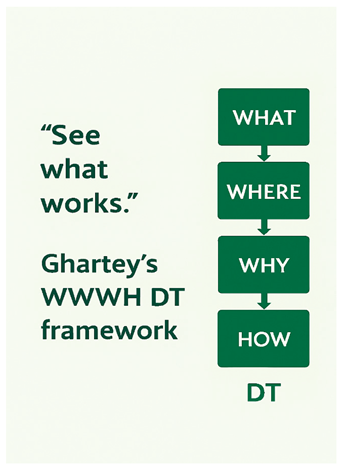
“Teaching clinical reasoning is not about memorizing the atlas of biomedicine — it is about showing learners what works.”
“See what works.”
Today’s (Thursday, October 9, 2025) Level 400 lecture, on the chemical pathology component of Med 401 module (11.30am to 12.30pm) at University of Cape Coast, School of Medical Sciences wasn’t about memorizing the atlas of biomedicine; it was about thinking biomedicine.
With Ghartey’s WWWH DT framework, students engaged with traced problems from signs → systems → labs → mechanisms → confirmation. The energy in the room was electric — they left not just with notes, but with a diagnostic compass they can carry into clinics and exams.
Takeaway:
When learners leave a lecture not just with notes, but with a thinking tool they can apply across cases, specialties, and even comorbidities, that’s when teaching becomes transformative.
Closing line:
I am excited to keep refining and sharing this framework — and to see how the next generation of clinicians will use it to think more clearly, investigate more efficiently, and solve problems more confidently.
WWWH DT — is a reliable model for problem-based learning and problem solving.
Ghartey’s WWWH DT Framework (Chemical Pathology–Centric, General)
WHAT (Identify & Assess the Problem)
Define the clinical question and describe observable signs and symptoms, then refine through focused history and physical exam.
- Describe “Patient presents with…” using precise clinical language.
- Probe onset, duration, aggravating/relieving factors.
- Check for systemic features (fever, rash, neurologic signs).
- Review relevant exposures (medications, toxins, diet).
WHERE (Functional Disruption)
Localize the dysfunction to the implicated organ or system to guide laboratory focus.
- Hepatobiliary tree vs parenchyma
- Musculoskeletal/immune apparatus
- Renal/endocrine/metabolic pathways
WHY (Core Biochemical Anchor + Correlates → Expandable Layers)
Ask: “Why do these WHAT signs occur HERE?” Start with biochemical derangements, then expand if no clear lab signal emerges.
- Biochemical WHY & Correlates
• Identify lab derangements in blood/urine
• ALP/GGT ↑ → cholestasis
• Bilirubin ↑ → conjugation defect
• CRP/ESR ↑ → inflammation
• Creatinine ↑ → renal dysfunction
- Physiological WHY
• Altered organ function (e.g., impaired bile flow → pruritus; reduced GFR → oliguria)
- Anatomical WHY
• Structural lesions (e.g., bile duct strictures; joint space narrowing)
- Immunological WHY
• Immune dysregulation (e.g., autoantibody-mediated injury; T-cell synovitis)
- Pathological WHY
• Histological changes (e.g., periductal “onion-skin” fibrosis; synovial infiltration)
HOW (Mechanistic Pathophysiology)
Explain the molecular, genetic, cellular, and physiologic pathways that link WHY to the observed WHAT/WHERE.
- Trace injury to its cellular source (e.g., cholangiocyte damage → ALP induction → cholestasis).
- Map necrosis or apoptosis to enzyme release (e.g., hepatocyte death → ALT/AST elevation).
- Connect cytokine storms or signaling cascades to tissue inflammation (e.g., TNF-α surge → synovitis).
DT (Diagnostic Tests: Confirm & Validate)
Select targeted assays and calculations that verify your integrated hypothesis.
- Core labs: ALT, AST, ALP, GGT, fractionated bilirubin, creatinine, urea, electrolytes, ammonia
- Confirmatory tests: ALP isoenzymes; serum bile acids; ANA/RF/anti-CCP; HLA-B27; synovial fluid analysis; urine osmolality; endocrine panels
- Severity markers: R-value; MELD score; GFR
Guiding Principles
- Factual: Anchor every step in objective, lab-based data
- Logical: Ensure each rung clearly follows from the last
- Commonsensical: Mirror everyday clinical reasoning
- Verifiable: Keep all claims testable and reproducible
Ghartey’s WWWH DT Framework in clinical meetings
In meetings—ward rounds, morbidity & mortality (M&M) reviews, quality-improvement huddles—WWWH DT provides a clear, reproducible scaffold for presenting and discussing cases. It focuses the team on the critical questions (“What? Where? Why? How? Tests?”), streamlines communication, and drives targeted problem-solving.
Key Benefits
- Structured Case Presentation
• Each patient’s story unfolds in five logical steps, avoiding disjointed narratives.
• Participants know exactly which question to address next.
- Standardization Across Teams
• Clinicians, lab scientists, nurses, and administrators share a common language.
• Ensures every stakeholder’s insight fits into the same framework.
- Focus on Root Causes and Solutions
• Moves discussion from “Here’s another abnormal result” to “Why does this happen biochemically?” and “How can we confirm it?”
• Drives concrete recommendations for testing, treatment, or systems changes.
- Efficiency Under Time Pressure
• Limits meetings to high-yield information—no tangential debates.
• Keeps discussions tight and decision-focused.
- Quality Improvement and Accountability
• Identifies gaps (e.g., missing tests, inconsistent reasoning) in real time.
• Provides a checklist for follow-up actions and audit.
Practical Applications
- Ward Rounds
• Present each new admission through the WWWH DT lens before ordering labs.
• Flag early biochemical “WHY” steps to prioritize urgent tests.
- M&M Conferences
• Map adverse events onto the framework to pinpoint missed or delayed steps.
• Develop targeted solutions (e.g., a decision rule for earlier “WHY” analysis).
- Clinical Governance & QA Committees
• Use aggregate WWWH DT data to spot patterns—overused tests, recurring cognitive errors.
• Propose protocol updates or educational interventions.
- Specialty Case Reviews
• In oncology or endocrinology meetings, focus “HOW” on molecular markers or genetic panels.
• Customize the five steps to each specialty’s needs while retaining the core scaffold.
Implementation Tips
- Distribute a WWWH DT template in advance.
- Ask each presenter to fill in the five steps before the meeting.
- Use AI tools to auto-populate initial drafts—then critique and refine as a group.
- Record unresolved “WHY” or “HOW” points as action items.
- Track follow-up on recommended tests and outcomes to close the loop.
By embedding WWWH DT into every clinical meeting, you cultivate disciplined reasoning, unify multidisciplinary teams, and translate discussions into measurable improvements in patient care.
References
- Mamede S, Schmidt HG, Rikers RMJP. Reflection as a strategy to foster clinical reasoning: a review of recent insights. Med Educ. 2014;48(7):705–713. [CrossRef]
- Lubarsky S, Charlin B, Larochelle J, van der Vleuten CPM. Validation of the script concordance test in radiation oncology: an example of the influence of clinical reasoning formats in assessment. Perspect Med Educ. 2013;2(6):347–354.
- Branch WT Jr, Paranjape A. Feedback and reflection: teaching methods for clinical reasoning. Med Teach. 2002;24(1):23–29.
- Bowen, JL. Educ strategies to promote clinical diagnostic reasoning. NEJM. 2006;355(21):2217–25. [CrossRef]
- Norman, G. Research in clinical reasoning: past history and current trends. Med Educ. 2005;39(4):418–27. [CrossRef]
- Kassirer, JP. Teaching clinical reasoning: case-based and coached. Acad Med. 2010;85(7):1118–24. [CrossRef]
- Schmidt HG, Mamede S. How to improve the teaching of clinical reasoning. Med Educ. 2015;49(10):961–73. [CrossRef]
- Leonard DGB. Molecular Pathology in Clinical Practice. 2nd ed. Springer; 2016. ISBN:978-1-4939-3405-2.
- Rifai N, Horvath AR, Wittwer CT, eds. Tietz Textbook of Clinical Chemistry and Molecular Diagnostics. 6th ed. Elsevier; 2018. ISBN:978-0-323-43352-5.
- Burtis CA, Bruns DE, eds. Tietz Fundamentals of Clinical Chemistry and Molecular Diagnostics. 8th ed. Elsevier; 2022. ISBN:978-0-323-85220-8.
- Rifai N, et al. Biomarkers and their role in clinical chemistry and molecular diagnostics. Clin Chem. 2020;66(1):12–22.
- Simel DL, Rennie D. The Rational Clinical Examination: Evidence-Based Clinical Diagnosis. 3rd ed. McGraw-Hill Education; 2015. ISBN:978-1-259-58907-5.
- Eva, KW. What every teacher needs to know about clinical reasoning. Med Educ. 2005;39(1):98–106. [CrossRef]
- Beyer, D. Using reverse case studies for clinical learning in nursing education. J Nurs Educ. 2011;50(10):587–90. [PubMed]
- Gruppen LD, et al. Clinical reasoning: defining it, teaching it, assessing it, studying it. West J Emerg Med. 2019;20(1):1–9. [CrossRef]

Table 1.
Ghartey’s WWWH DT Integrated Disease Mapping Framework.
| Step | Stage | Descriptor | Focus |
| WHAT | Clinical Manifestation | Observable signs & symptoms | Define the patient’s presenting problem |
| WHERE | Functional Disruption | Organ/system dysfunction | Localise the affected system or organ |
| WHY | Biochemical Derangement(s) generating/associated with the clinical manifestation | Lab abnormalities | Identify measurable biochemical changes |
| HOW | Molecular / Genetic Distortion (molecular or genetic mechanism that accounts for the biochemical derangement) | Cellular & genetic pathology | Explain the underlying molecular cause |
| DIAGNOSTIC TESTS | Diagnostic Confirmation | Lab tests & molecular assays | Confirm diagnosis and guide management |
Disclaimer/Publisher’s Note: The statements, opinions and data contained in all publications are solely those of the individual author(s) and contributor(s) and not of MDPI and/or the editor(s). MDPI and/or the editor(s) disclaim responsibility for any injury to people or property resulting from any ideas, methods, instructions or products referred to in the content. |
© 2025 by the authors. Licensee MDPI, Basel, Switzerland. This article is an open access article distributed under the terms and conditions of the Creative Commons Attribution (CC BY) license (http://creativecommons.org/licenses/by/4.0/).
Copyright: This open access article is published under a Creative Commons CC BY 4.0 license, which permit the free download, distribution, and reuse, provided that the author and preprint are cited in any reuse.


