

Submitted:
05 October 2025
Posted:
06 October 2025
You are already at the latest version
Abstract
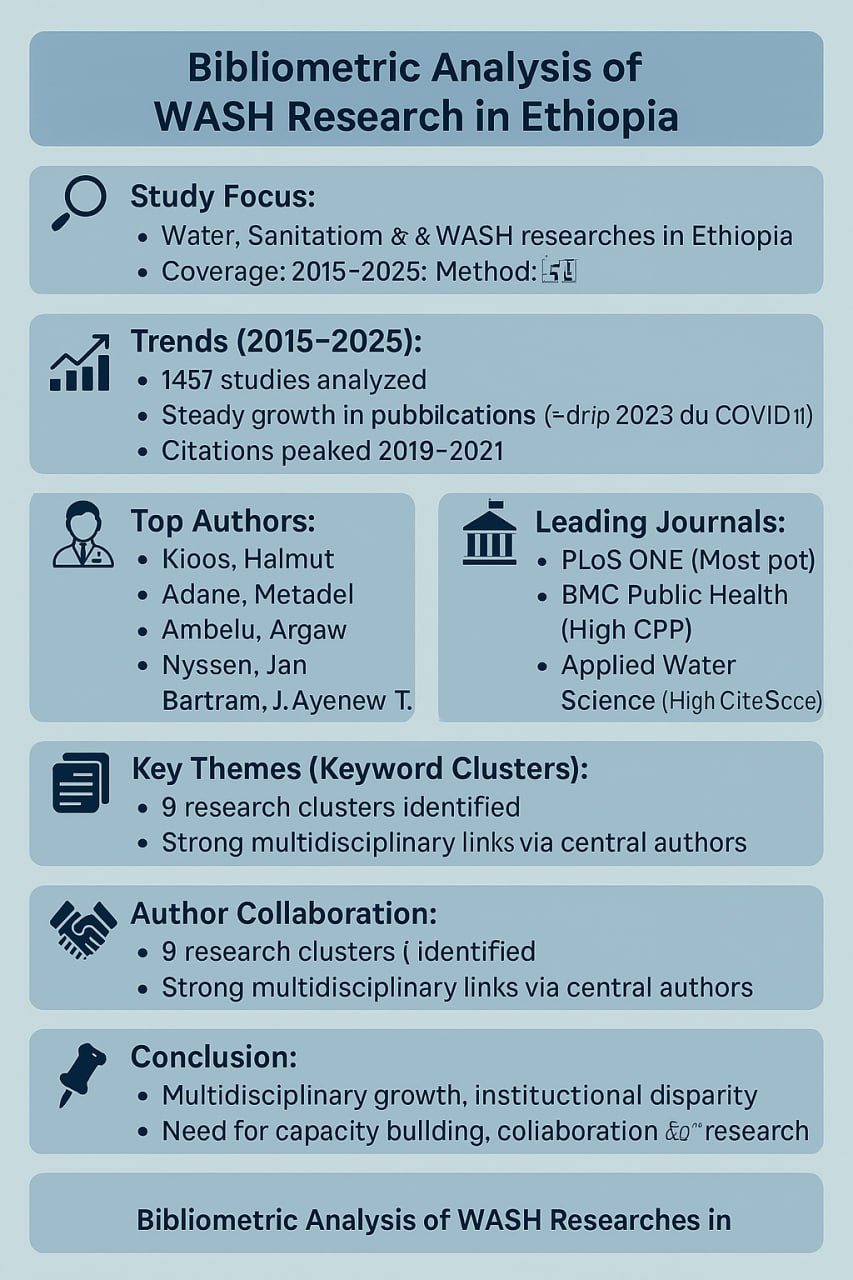
Abstract Background: Global public health concerns, including water, sanitation, and hygiene, are crucial for achieving Sustainable Development Goals 6.1 and 6.2, with research playing a significant role in Ethiopia's progress. This study aims to explore Ethiopia's historical and current water, sanitation, and hygiene research, identify gaps in existing literature, and identify future research opportunities.Method: The systematic review approach was used to examine Water, Sanitation, and Hygiene research trends in Ethiopia. This study used quantitative bibliometric analysis of 1457 journal papers from the Scopus database to analyze and visualize knowledge structure, hot topics, research trends, and gaps in water, sanitation, and hygiene in Ethiopia. All published articles and reviews that were conducted on Water, Sanitation, and Hygiene in Ethiopia, especially SDGs 6.1 (water) and 6.2 (sanitation and hygiene), written in English, access for the full paper, and the year of publication from 2015 to the start of 2025 were included in this study. MS-Excel and VOSViewer were used to analyse and visualize the existing networks.Result: Water, Sanitation, and Hygiene research in Ethiopia is advancing, with key authors like "Kloos, Halmut", "Adane, Metadel", "Ambelu, Argaw", and "Gari, Sirak Robele" contributing significantly. Addis Ababa University leads in publishing WASH research, with PLOS ONE having the largest number of publications. Key concepts explored include health, environmental science, and microbiology, demonstrating a multidisciplinary approach to issues like sanitation, water quality, and infectious diseases. Authors “Nyseen J.”, “Bartram J.”, and “Ayenew T.” are prominent in their Water, Sanitation, and Hygiene discipline, while authors “Adane, Metadal”, “Ambelu, Argaw”, and “Kloos, Helmut” are centrally located and productive collaborators.Conclusion: Ethiopia's Water, Sanitation, and Hygiene research from 2015 to 2025 has shown significant progress, with journals like BMC Public Health and PLOS ONE being influential. The field is characterized by multidisciplinary collaboration between environmental science, health, resource management, and microbiology. Key authors include Kloos, Halmut, Nyseen J., Bartram J., Ayenew T., and others. Addis Ababa University is the leading institution in Water, Sanitation, and Hygiene research publication.
Keywords:
water
; sanitation
; hygiene
; WASH
; bibliometric analysis
; Ethiopia
1. Introduction
Access to water, sanitation, and hygiene remains a global public health concern, as stated in the Sustainable Development Goals 6.1 and 6.2, including healthcare facilities and schools (1–4). Despite significant increases in access to water, sanitation, and hygiene (WASH) services over the last three decades, an estimated two billion people worldwide still do not have access to safe drinking water, 3.6 billion do not have safe sanitation, and 2.3 billion lack basic hygiene services (1,5). 2.2 billion people still do not have access to clean drinking water worldwide. Safe sanitation is inaccessible to over half of the world's population. Three billion people lack access to facilities for washing their hands with soap. Nevertheless, 673 million people still defecate in the open (1).
Poor WASH services can undermine health systems, jeopardize health security, and strain the economy. As a result, appropriate WASH services increase people's quality of life while also fulfilling human rights. WASH contributes not just to health, but also to livelihoods, school attendance, and dignity, as well as to the development of resilient communities in healthy surroundings (6–8).
The effects of improper water, sanitation, and hygiene (WASH) for children can be fatal. Every day, more than 700 children under the age of five die from diarrheal infections as a result of a lack of adequate WASH services. In conflict zones, children are roughly 20 times more likely to die from diarrhea than from the conflict itself (1).
Access to clean water, sanitation, and hygiene remains a major worldwide concern, with more than 2 billion people needing safe drinking water at home, 1.5 billion lacking basic sanitation facilities, and 2 billion lacking basic hygiene services (9). Since the global sanitation decade (1980-1990), the subject is the global development agenda and has gained huge emphasis on national and international policy, programs, and research (10).
WASH-related research has an important role in Ethiopia's progress toward meeting SDGs 6.1 and 6.2. The synthesis and mapping of current knowledge is critical for developing evidence-based policies and determining the causes of WASH-related events.
In light of this, the purpose of this study is to give a scientometric mapping analysis of academic research on water, sanitation, and hygiene in Ethiopia. The ultimate goal is to get high-level insights into how this crucial area of WASH science has evolved, who and what has contributed to it, and what structural and temporal trends may be detected. The specific research questions are: (i) what the overall publication trends are regarding publication outputs? (ii) Who are the overall leading or contributing authors in the area of WASH? (iii) Which institutions contributed the most to the knowledge base of distributed and which institution is the leading in the area of WASH? (iv) which journal is the leading by publishing WASH research and published the most cited WASH research? (v) What is the intellectual structure of knowledge base on WASH? (vi) What is the nature of collaboration in the publications of WASH among authors? (vii) What scientific domains are strongly represented, and what journals contribute to the development of this research domain?
As a result, understanding previous and current trends in Ethiopian WASH research is critical. This can serve as a guide for future WASH research in Ethiopia. For example, knowing the geographical inequalities of WASH research in the country allows one to plan to perform WASH research in a location with few or no studies or information about the WASH situation. WASH researchers can also identify knowledge gaps in specific subjects that should be investigated, such as whether additional study is needed on financial or social aspects of hygiene concerns. To the best of our knowledge, no study has conducted a thorough evaluation of the past and current trends in Ethiopian WASH research. This study seeks to bridge that gap. The systematic review approach was used to examine WASH research trends in Ethiopia.
2. Methodology
The systematic review approach was used to examine WASH research trends in Ethiopia. This section explains the quantitative (scientometric analysis) of WASH research in Ethiopia: a scientometric analysis, a subset of bibliometric analysis through the Scopus database, and other sources of databases. Scientometrics uses a network visualization known as knowledge mapping or science mapping to analyse bibliometric data (11). The purpose of the scientometric analysis is to assess the scientific field by extracting the research topics, leading researchers, journals, and institutions (12).
The bibliometric data was collected from the Scopus database on January 17, 2025, by using keywords, and data extraction was carried out following the Preferred Reporting Items for Systematic Reviews and Meta-analysis (PRISMA) guidelines (13). The literature review search strategy was to find all studies related to WASH in Ethiopia published until the start of January 2025. The search keywords used were “water” OR “sanitation” OR “toilet” OR “latrine” OR “hand washing” OR “hand hygiene” OR “menstrual hygiene” OR “CLTSH” OR “excreta management” OR “waste water” OR “fecal sludge” OR “open defecation” OR “WASH” OR ”CR-WASH” AND “Ethiopia”.
2.1. Eligibility Criteria and Exclusion Criteria
All published articles and reviews that were conducted on WASH in Ethiopia, especially SDGs 6.1 (water) and 6.2 (sanitation and hygiene), WASH research topics, either water, sanitation, hygiene, or a combination. The combination here means that the article discusses more than one WASH topic, e.g., water and sanitation topics in one article, written in English, access for the full paper to perform an eligibility assessment, and the year of publication from 2015 to 2025 was included in this study. Whereas population case studies, surveillance information, abstracts from conferences, journals with partial access, and unreported outcomes of interest were excluded from the bibliometric analysis. Articles and review papers were selected and evaluated for inclusion by two different reviewers using title, abstract, and keywords. A consensus among the reviewers was reached to settle any disputes that arose throughout the selection process. Then, considering prior eligibility, the abstract and full text of the chosen articles were examined.
2.2. Source Data
For this study, the Scopus database was selected for its ability to search multiple scholarly journals and use filters for more accurate searches. Among the searches conducted were water, sanitation, toilet, latrine, hand washing, hand hygiene, menstrual hygiene, CLTS, excreta management, wastewater, fecal sludge, open defecation, WASH, CR-WASH, and Ethiopia. We searched for articles published in the middle of January 2025. Even though the aim was to reference current studies, 2025 was ultimately selected. “Water access,” “water quality,” “water supply,” “potable water,” “water availability,” personal hygiene, “environmental sanitation,” “human,” “humans,” “water treatment,” and “fecal” were included as synonyms of the original keywords during further research for improved or additional outcomes. Papers were selected for relevance through author recommendations and reference lists (14,15). The databases and queries, including the updated ones, are shown in Table 1. Each row represents the refinement of the search phrase database source, ultimately leading to using the final question of finding relevant articles.
The search across the Scopus database yielded about 3830 studies. The total of 3830 is just an estimate because of unrelated or irrelevant articles either with water, sanitation, or hygiene, or combined keywords and research and reviews conducted out of Ethiopia in search results. The search results used specific filters, including limiting the search to journal articles and review papers from 20215 to mid-January 2025, written in English, and subjected to peer- review. We found 3830 records from the Scopus database and quickly eliminated 2373 unrelated documents. After removing irrelevant documents with our topic, there were 1457 remaining articles. Finally, 1457 selected studies were imported for bibliographic analysis using MS-Excel and VOSViewer. The research identification, screening, and inclusion on water, sanitation, and hygiene are shown in Figure 1 to be included in the deep study addressing the research questions.
2.3. Search and Selection Strategy
A search strategy was developed and reviewed by one member not involved in its development; no restrictions were applied to the years searched, but the papers included were limited to English and Ethiopian publications only. Information about WASH scientific output was extracted from the SCOPUS database [https://www.SCOPUS.com] by using the search string. For the online database, search by using keywords. The search phrases were joined by using the Boolean operators "OR" and "AND". The primary method of searching is systematic keyword search using the following Ethiopia and English keywords: “water” OR “sanitation” OR “toilet” OR “latrine” OR “defecation” OR “hygiene” OR “hand washing” OR “hand hygiene” OR “soap” OR “menstrual hygiene,” CLTS, food hygiene” OR “human faces” OR “excreta management” OR “feco-oral” OR “cross-contamination” OR “point of use” OR “open defecation” OR “WASH” CR-WASH” AND “Ethiopia.”. The query from the Scopus database search history is as follows below:
( TITLE-ABS-KEY ( "water" OR "sanitation" OR "toilet" OR "latrine" OR "hand washing" OR "hand hygiene" OR "menstrual hygiene" OR "CLTS" OR "Excreta management" OR "Waste water" OR "fecal sludge" OR "open defecation" OR "WASH" OR "CR-WASH" ) AND TITLE-ABS-KEY ( "Ethiopia" ) ) AND PUBYEAR > 2014 AND PUBYEAR < 2026 AND PUBYEAR > 2014 AND PUBYEAR < 2026 AND ( LIMIT-TO ( AFFILCOUNTRY , "Ethiopia" ) ) AND ( LIMIT-TO ( EXACTKEYWORD , "Ethiopia" ) OR LIMIT-TO ( EXACTKEYWORD , "Water Supply" ) OR LIMIT-TO ( EXACTKEYWORD , "Sanitation" ) OR LIMIT-TO ( EXACTKEYWORD , "Drinking Water" ) OR LIMIT-TO ( EXACTKEYWORD , "Water Quality" ) OR LIMIT-TO ( EXACTKEYWORD , "Hand Washing" ) OR LIMIT-TO ( EXACTKEYWORD , "Hygiene" ) OR LIMIT-TO ( EXACTKEYWORD , "Potable Water" ) OR LIMIT-TO ( EXACTKEYWORD , "Water Availability" ) OR LIMIT-TO ( EXACTKEYWORD , "COVID-19" ) OR LIMIT-TO ( EXACTKEYWORD , "Personal Hygiene" ) OR LIMIT-TO ( EXACTKEYWORD , "Environmental Sanitation" ) OR LIMIT-TO ( EXACTKEYWORD , "Human" ) OR LIMIT-TO ( EXACTKEYWORD , "Humans" ) ) AND ( LIMIT-TO ( DOCTYPE , "ar" ) OR LIMIT-TO ( DOCTYPE , "re" ) ) AND ( LIMIT-TO ( LANGUAGE , "English" ) )
The selected papers from the Scopus database were then inserted into Excel to exclude duplicate and unrelated or irrelevant publications. Furthermore, the titles of articles were checked manually, and we excluded irrelevant topics. Articles included in the screening title are related to WASH keywords, e.g., drinking water, sanitary inspection, hand washing, latrine, water access, water quality, water supply, potable water, water availability, personal hygiene, environmental sanitation, human, humans, water treatment, and fecal. We assumed that all articles that were related to WASH were covered by those keywords. Hereupon, the abstract screening was carried out to identify articles that were included in SDGs 6.1 and 6.2. Afterward, articles that met the inclusion criteria were included in the full bibliometric analysis stage.
2.4. Sample Size and Data Extraction
The following information was extracted from the included studies and recorded in Microsoft Excel: (1) WASH research topics, either water, sanitation, hygiene, or a combination. The combination here means that the article discusses more than one WASH topic, e.g., water and sanitation topics in one article; (2) year of publication; (3) keywords; and (4) study location, i.e., province. Finally, based on the mentioned eligibility criteria of the 3830 data set, 1457 data points were eligible for bibliometric analysis.
2.5. Data Analysis
The MS-Excel and VOSViewer software were used to construct, analyse, and visualize the scientometric analysis of the data. It is a simple tool that provides the basic function of visualizing bibliometric networks (11). By using Microsoft Excel and VOSViewer software result, descriptive analysis was carried out to specify information based on topic, themes, and trends of WASH research; leading authors in the area of WASH; leading institutions in the contribution knowledge base on WASH; collaboration between authors; highly cited authors; the leading journals in publishing WASH research articles; influential articles; and subject areas in which WASH research was conducted. In addition, network visualization was also created to identify collaborations, subject areas, and highly cited authors by using VOSViewer.
2.6. Assessment of Risk of Bias and Quality Assessment
The quality of the articles was evaluated before final selection by authors (A.T., T.H., A.T., A.A., S.A., T.S., E.M., and H.B.). The retrieved data was exported to MS-Excel in CSV format containing the citations and bibliometric information. Several publication-quality indicators were employed to help identify publications and citation trends, such as citations per paper (CPP), publications in the top 10 journals, and collaboration among authors. The average citation per publication represents the average number of citations received by a paper over a specific period. The study also seeks to analyse the publication growth rate, the leading 15 institutions, the top 10 leading authors, and the top 10 journals publishing research on the subject.
3. Result
This result section presents the bibliographic analysis report on Ethiopia's water, sanitation, and hygiene research, using data collected from the Scopus database published from 2015 to 2025. The report was prepared by extracting data using inclusion and exclusion criteria from 3830 data sets. Of these, 1457 data were extracted and analyzed using Excel and VOSViewer 1.6.20 version software.
3.1. Volume or Trend Analysis of Water, Sanitation, and Hygiene Publications in Ethiopia from 2015-2025
Figure 2 shows the volume of publications for the past decades and trends of WASH research across Ethiopia.
Figure 2 indicates the publication trends on WASH from 2015 to the start of 2025. The trend of WASH research in Ethiopia at this period shows great progress and contributes knowledge to the fields. But Figure 2 shows a decline in 2023 and again shows an increment in 2024. The decline in the number of publications during the period between 2022 and 2024 might be due to the COVID-19 pandemic. In addition, the graph shows the declining phase from the year 2024 to 2025. This is because the data was collected at the start of 2025 (January 17). The publication trend implies that there is a growing publication in the area of WASH in Ethiopia. This makes a greater knowledge and evidence contribution in the fields or areas of WASH. In another case, the publication trends do not tell us the area in which the WASH research was conducted, but they only indicate the publication trends.
3.2. The Volume and Document Citation by the Time of Distributed WASH Research from 2015 to 2025
Figure 3 below demonstrates the volume of publications for the past decades and the citation of WASH research articles across Ethiopia.
Figure 3 indicates both the citation of the published document on WASH (orange color) and the number of publications (blue color). The number of publications (blue color) shows consistent growth of publications in the area of WASH over the years. The citation of the published document (orange color) shows a sharp increase from 2015, and it reached a peak from 2019 to 2021. From 2021 to 2024, the citation curve shows a vertical decline. In addition, from 2024 to 2025, the citation curve overlaps with the number of publications (blue color). This is due to the data collection period being at the start of 2025. Overall trends of the total citations indicate a sharp increase but a decline. However, the number of publications consistently increasing is not correlated with the increment or decline of the total citation. The peak of the total citations from 2019 to 2021 implies a period in which specific publications gained substantial attention; this might be the relevance of the research work. In addition, the decline in the total citations implies a shift in the research area, a weakening interest in the topic of WASH, or the latest publications replaced the former ones based on the relevance of the research work. Furthermore, the consistent increment of the number of publications only indicates the ongoing publications in the field of WASH but is not directly related or translated to the trends of the total citation. In general, the chart suggests the publication and citation impact. It raises doubt about the relevance, quality, or changing progress of the research being published. This can be described as understanding the cause for the decline in citations might be the WASH research area saturation or another factor that could be important for future research activities.
3.3. The Leading Authors in the Area of WASH in Ethiopia Across Different Institutions from 2015 to 2025
The Figure 4 below depicts the number of publications for the past decades and the leading authors of WASH research, what it seems across Ethiopia.
Figure 4 depicts the top 11 (eleven) leading authors in the topic of WASH in Ethiopia, from highest to lowest. The author “Kloos, Halmut” had the highest number of research conducted in the area of WASH, and almost 27 in number. “Adane, Metadel,” “Ambelu, Argaw,” and “Gari, Sirak Robele” were significant contributors to publications on the WASH areas, which are almost above 20 in number. The other authors, such as “Alamere, Tena”; “Geremew, Aberham”; “Gizaw, Zemichael”; “Nyssen, Jan”; “Sahiledengel, Biniyam”; “Ayenew, Tenalem”; and “Kebede, Seifu," were also significant contributors to the publication in the area of WASH, and they had around 10 to 15 publications. The graph indicates that most authors had closely similar numbers of publications, and this might imply that there is a similar level of productiveness among them. Overall, the graph shows the trend of the leading authors in WASH publications, with most authors continually contributing publications in WASH areas.
3.4. The Institutions That Contributed the Most to the Knowledge Base of Distributed WASH from 2015 to 2025
The Figure 5 below depicts the volume of publication for the past decades and the leading institutions of WASH research across Ethiopia.
Figure 5 depicts the leading institutions in research publications on WASH areas. In this case, Addis Ababa University is the leading institution in publishing research that was conducted on WASH areas, and its publications have exceeded 100 for the past ten years. Then the University of Gondar follows Addis Ababa University by contributing a significant number of publications on WASH for the past decades. Furthermore, Wollo University, Haramaya University, and the Ethiopian Public Health Institute had an outstanding number of publications next to the preceding institutions. However, Arba Minch University has contributed a moderate level of publications in the area of WASH for the past decades. The remaining institution could be categorized as having contributed a lower level of publications or having fewer publications in the area of WASH.
Based on the Figure 5 Addis Ababa University was the most influential and the leading institution. This indicates the institutions had well research and academic capacity. This might be the institution that had plenty of access to funding and collaborations. Although the University of Gondar had significantly contributed to the publications of WASH research, this might indicate the institution had a well-established culture of research in the WASH area. Figure 5 demonstrates the institutions' disparities. This means there is a gap between Addis Ababa University and the University of Gondar. In addition to the remaining institutions, the graph shows uneven research productivity in the area of WASH for the past decades.
In general, the disparities of research publications on WASH areas across institutions imply that there is a need for capacity building in lower-performing institutions on conducting and publishing WASH research and encouraging collaboration among different institutions.
3.5. The Leading Journals by Source by Publishing WASH Research in Ethiopia from 2015-2025
The Figure 6 below depicts the volume of publications for the past decades and the leading journal in publishing research conducted in the area of water, sanitation, and hygiene in Ethiopia.
Figure 6 depicts the top 10 journals in publishing WASH research articles. From this observation, PLOS ONE had the largest number of publications, and this can be described in numbers; it is almost above 100. However, Environmental Health Insights, BMC Public Health, and Water (Switzerland) had an average number of publications. This indicates consistent publications to the research community. The remaining journals, such as Applied Water Science, Journal of Environmental and Public Health, Heliyon, and Journal of Water Sanitation and Hygiene for Development, had a smaller number of publications in the area of WASH, which is between 20 and 30. This might be due to the journals published on specific areas or topics of WASH.
Figure 6 demonstrates that the leading journal in publishing WASH research was PLOS ONE. This indicates PLOS ONE is the favoured journal for publishing research in the WASH area. This might be due to its multidisciplinary journal and having wide viewers. Overall, Figure 6 depicts the publishing trends of the top 10 journals, which can help by directing researchers in selecting appropriate journals for their research work topics related to WASH.
3.6. The Top Journals That Have Published the 100 Most Cited WASH Articles Between 2015 to 2025
Table 2 below demonstrates the top journals that published the most cited article that was conducted in the area of WASH in Ethiopia for the past decades.
Table 2 shows key bibliometric indicators for the top 10 leading journals in publishing WASH research from 2015 to 2025. Based on productivity, PLOS ONE is the leading journal with the publication number of 101. Making it the greatest productive journal. However, BMC Public Health (36), Environmental Health Insights (36), Sustainable Water Resources Management (48), and Water (Switzerland) (34) had a substantial amount of WASH research publication outputs. On the other side, PLOS ONE had received the highest total citation (TP) compared to the others; this might indicate its wider span and impact. Based on citations per publication (CPP), BMC Public Health (24.67), Water (Switzerland) (15.44), and Applied Water Science (14.88) had the highest citation per publication (CPP). This implies that their publications seem to be cited more often and might be indicating the quality of research. However, Environmental Health Insights (6.06) and Frontiers in Public Health (4.52) journals might have less impact per publication.
Based on CiteScore, the Applied Water Science Journal had the highest CiteScore compared to the remaining journals, which were 9.9. This might imply the publication output of the journal is more likely to be highly cited. Although PLOS ONE (6.02) and BMC Public Health (6.5) also had high CiteScores compared to the rest of the journals, which might be recognized by research communities.
Based on SNIP and SJR, Applied Water Science had the greatest SNIP (1.737), which might indicate that the journal is performing well in its field compared to the number of citations in that domain. Although BMC Public Health and PLOS ONE had strong SNIP and SJR points, which implies the journals had high journal reputations. The remaining journals, such as Sustainable Water Resources Management, Journal of Water Sanitation and Hygiene for Development, and Environmental Health Insights, had lower SNIP and SJR points and were located in Q2 (Quartile 2).
PLOS ONE, BMC Public Health, Water (Switzerland), Applied Water Science, Heliyon, and Frontiers in Public Health were highly ranked journals in their corresponding fields, and this implies the papers published in these journals had a greater academic impact. However, Sustainable Water Resources Management, Journal of Water Sanitation and Hygiene for Development, and Environmental Health Insights were placed under Q2 (Quartile 2) and were less reputable but still contributed significantly.
In general, PLOS ONE is the most productive journal with the highest total citation (TP) and shows its broader interdisciplinary work acceptability. Furthermore, BMC Public Health had the highest Citation Per Paper (CPP), which implies its strong impact per paper regardless of having smaller publications on WASH focus areas. On the other side, Applied Water Science Journal might be focused on specialized research, and this made it lower Total Publication (TP), but the journals had higher influence per article, which is described under CPP and CiteScore. Journals with the highest CPP, such as BMC Public Health and Applied Water Science, and those with steady publications and citations, such as PLOS ONE, are strong candidates for impactful WASH research publication. On the other side, journals with lower journal metrics can still come up with significant publications on WASH areas in specific topics or their sub-disciplines.
3.7. The Intellectual Structure of Knowledge Bases on WASH from 2015-2025 in Ethiopia
Figure 7 below depicts the intellectual structure of the knowledge base on WASH for the past decades and the most cited authors on which they researched the area of water, sanitation, and hygiene in Ethiopia.
Figure 7 shows a co-citation network visualization generated by VOSViewer and contains 5 clusters (i.e., green, blue, yellow, red, and purple), which represent distinct clusters of authors. Each cluster shows a group of authors frequently cited together, which is likely due to their work on related or similar research areas. The nodes indicate the authors, and the larger the node, the more cited the author and prominent in the network. The thickness of the edge indicates the relationship of an author, which means how often two authors are cited together. In this case, the green, blue, yellow, and purple clusters have a good relationship or collaboration. In other fields or sub-disciplines where co-citation patterns are concentrated. However, the red cluster more likely indicates a group of authors in a specific field with strong co-citation ties.
The network visualization (Figure 7) tells us distinct research authors based on citation patterns. And each cluster corresponds to a thematic group. Authors with larger nodes i.e., Nyseen J., Bartram J., and Ayenew T. are central figures within their fields, and they are widely cited by other authors. The connection across clusters shows there is interdisciplinary research that has been conducted by authors within their sub-disciplines.
The visualization (Figure 7) can help to identify the leading authors and collaborations in WASH topics. In addition, this network can visualize clusters with minimal connections and interdisciplinary areas with strong connections. Institutions and scholars can use this finding for collaborations and to explore influential works. In addition, it helps to understand the scientific discourse and the most impactful authors.
3.8. The Key Concepts That Have Been Explored on the Topic of WASH and How They Are Related from 2015 to 2025
Figure 8 below depicts the key concepts that have been explored on the topic of WASH and how they have been related for the past decades in Ethiopia.
Figure 8 demonstrates that the central keyword of this network visualization is “Ethiopia,” which is likely indicating the geographical focus area of the published research on WASH. The other keywords include “sanitation,” “male,” “water quality,” “human,” “groundwater,” “adolescent,” and “water management,” suggesting research topics associated with water resources, public health, and environmental health studies. Based on the cluster or thematic classification, the red color thematic area indicates the research area on water resources, water management, water quality, water governance, groundwater, water pollution, and physicochemical quality analysis of water. The green color thematic area indicates the research area emphasizing the association of the human aspects, households, sanitation, and socio-demographic characteristics. The blue thematic area indicates the research dealt with antibiotic resistance, microbiology, and non-human-related factors. The purple thematic area indicates studies focused on parasitology, intestinal infection, and soil-transmitted helminthies. The yellow thematic area indicated research areas on sanitation, family and child health, including stunting, perinatal care, and growth disorder. The interdisciplinary connection of clusters or thematic areas suggests how water quality (the red theme) is linked to human health (the green thematic area) or how microbiology (the blue thematic area) ties into infection control and sanitation.
The network visualization (Figure 8) highlights a strong emphasis on Ethiopia, which suggests the data set of this study was region-specific. The key topics, including environmental science, water resources management, public health, and microbiology, show the significance of the fields in addressing WASH challenges at the local and global levels. The co-occurrence of keywords from different themes indicates that the studies combine health, environmental science, and microbiology, showing a multidisciplinary approach to dealing with issues like sanitation, water quality, and infectious disease. The co-occurrence network visualization (Figure 8) provides a comprehensive understanding of the interaction between environmental science, health, resource management, and microbiology in Ethiopian research. It reinforces the need for holistic approaches to tackle challenges in WASH and health.
3.9. The Nature of Collaboration That Is Evident in the Publications of WASH Among Authors from 2015–2025
Figure 9 below depicts the nature of collaboration that is evident in the publications of WASH among authors for the past decades in Ethiopia.
Figure 9 shows the network visualization, and it indicates 9 (nine) clusters in which authors are grouped into different clusters based on their collaboration, and each color shows the cluster of authors who work closely together. The blue cluster might indicate one research team, while the green might represent the other. The purple and the red clusters appear to be interconnected, which might suggest a higher level of collaboration between authors in those clusters. Some nodes or authors, such as “Adane, Metadal”, Ambelu, Argaw”, “Kloos, Helmut” are centrally located and connected to multiple clusters, which might indicate they serve as a link between groups and can be considered productive collaborators.
The network visualization (Figure 9) shows different clusters, which might indicate distinct thematic areas or disciplines with the wider research authors. In other views, authors who are connected with different clusters indicate they might be involved in multidisciplinary research work. In addition, the network visualizes the importance of collaboration in enhancing and advancing WASH research. Moreover, the density of connections within the clusters might indicate strong collaboration.
4. Discussion
This bibliometric review highlights notable trends in WASH research in Ethiopia from 2015 to early 2025, showing steady growth in scholarly output with temporary declines linked to the COVID-19 pandemic, a pattern also observed in other sub-Saharan African countries. Although publication numbers increased, citation patterns peaked between 2019 and 2021 before tapering off; indicating that expansion in quantity has not consistently translated into impact. Leading authors and institutions particularly Addis Ababa University have driven much of the productivity, while collaboration networks remain fragmented, limiting broader knowledge exchange. The spread of publications across both multidisciplinary and specialized journals demonstrates diverse outlets for dissemination, yet variations in influence highlight the importance of prioritizing quality alongside volume. Together, these findings suggest progress in building the WASH evidence base in Ethiopia, while underscoring the need for stronger institutional capacity, high-impact research, and deeper international collaboration to sustain future contributions.
Figure 2 illustrates the publication trends of WASH research in Ethiopia from 2015 to early 2025. The overall increase in scholarly output reflects growing interest and knowledge contribution in this field. A notable decline occurred between 2022 and 2023, followed by a rise in 2024; this dip may be attributed to disruptions caused by the COVID-19 pandemic, which affected research activities and funding worldwide (16,17). The apparent decline in early 2025 is likely due to partial data collection at the start of the year. Compared to similar studies in other sub-Saharan African countries, such as Kenya and Uganda, which also experienced temporary reductions in publication output during the pandemic, the Ethiopian trend aligns with regional patterns of research disruption and recovery (18). While the upward trend demonstrates increased scholarly engagement and the production of evidence on WASH, it does not provide insights into the specific research areas or topics addressed. Overall, the trend underscores both the resilience and challenges in sustaining consistent WASH research productivity in Ethiopia, emphasizing the need for strategic support to maintain and expand research output in future periods(16).
Figure 3 illustrates the temporal distribution of WASH research publications and their citations from 2015 to 2025. The number of publications (blue curve) shows a consistent upward trend, reflecting sustained scholarly output in the field. In contrast, citations (orange curve) rose sharply from 2015, peaking between 2019 and 2021, followed by a decline through 2024 and partial overlap with publication counts in early 2025, likely due to incomplete citation accrual for recent articles. The peak in citations suggests that certain studies during 2019–2021 garnered substantial attention, potentially due to their high relevance or methodological rigor, whereas the subsequent decline may reflect shifts in research focus, saturation of topics, or replacement by more recent studies. The persistent growth in publications without a corresponding increase in citations indicates that quantity does not directly translate to impact, emphasizing the need for high-quality, relevant research to maintain scholarly influence. These trends underscore the importance of monitoring both output and citation dynamics to inform strategic planning, identify research gaps, and guide future directions in WASH studies.
Figure 4 identifies the top eleven leading authors in WASH research in Ethiopia from 2015 to 2025. Kloos Halmut emerged as the most prolific contributor, with 27 publications, followed by Adane Metadel, Ambelu Argaw, and Gari Sirak Robele, each with over 20 publications. Other notable contributors include Alamere Tena, Geremew Aberham, Gizaw Zemichael, Nyssen Jan, Sahiledengel Biniyam, Ayenew Tenalem, and Kebede Seifu, who each authored between 10 and 15 publications. This distribution indicates a relatively balanced level of productivity among senior Ethiopian scholars in the WASH field. The consistent outputs of these leading authors suggest the presence of a core group driving WASH scholarship in Ethiopia, with sustained contributions across institutions and collaborations. Such author-level productivity patterns mirror trends observed in other low- and middle-income countries, where a few highly active researchers play a pivotal role in shaping the knowledge base while mentoring younger scholars. Strengthening collaboration networks around these leading authors could further enhance research quality and dissemination of evidence to address persistent WASH challenges in Ethiopia (19)
Figure 5 reveals that Addis Ababa University stands out as the foremost institution in Ethiopia for WASH research output between 2015 and 2025, surpassing 100 publications, followed by the University of Gondar, Wollo University, Haramaya University, and the Ethiopian Public Health Institute; Arba Minch University produced a moderate number of papers, while other institutions remained low in productivity. This aligns with broader bibliometric mapping of Ethiopian research over the past two decades, which identifies Addis Ababa and Gondar among the highest-output universities in the country(20). The markedly higher output of Addis Ababa University likely reflects its strong research infrastructure, greater funding access, and established academic culture geared toward scholarship, whereas the disparity underscores uneven institutional capacity. Such findings mirror trends in other low- and middle-income countries, where flagship universities drive research while others lag behind. This scenario highlights the need for targeted capacity-building, equitable resource distribution, and strategic collaboration to bolster WASH research across institutions and ensure more balanced contributions to national, evidence-based WASH solutions.
Figure 6 illustrates the leading journals publishing WASH research in Ethiopia from 2015 to 2025, with PLOS ONE emerging as the dominant source, contributing over 100 publications, reflecting its multidisciplinary scope and wide readership that make it a preferred outlet for WASH-related studies. Other journals, including BMC Public Health, Environmental Health Insights, and Water (Switzerland), showed steady contributions with moderate publication counts, highlighting their role in consistently disseminating public health–focused WASH research. Specialized journals such as Applied Water Science, Heliyon, and the Journal of Water, Sanitation and Hygiene for Development contributed fewer articles (20–30), likely due to their narrower disciplinary scope and targeted focus areas. This publication pattern aligns with global bibliometric analyses, which indicate that interdisciplinary journals attract broader WASH research submissions, while specialized journals provide depth in specific subfields (21). Overall, these findings suggest that while PLOS ONE is the most favored platform for WASH research dissemination in Ethiopia, topic-specific journals remain essential for advancing specialized knowledge, thereby providing researchers with diverse publication avenues.
Table 2 highlights the bibliometric performance of the top 10 journals publishing WASH research between 2015 and 2025, showing that PLOS ONE was the most productive outlet (101 publications) and received the highest total citations, reflecting its broad interdisciplinary scope and visibility. While BMC Public Health (CPP = 24.67) and Applied Water Science (CPP = 14.88; CiteScore = 9.9) produced fewer articles, their higher citation-per-publication and CiteScore values suggest strong influence and quality impact per paper. Similarly, Water (Switzerland) (CPP = 15.44) emerged as an important journal for WASH-focused studies. In contrast, Environmental Health Insights (CPP = 6.06) and Frontiers in Public Health (CPP = 4.52) had lower impact per publication, indicating more limited citation reach despite contributing relevant research. Journals with higher SNIP and SJR values, particularly Applied Water Science (SNIP = 1.737), PLOS ONE, and BMC Public Health, demonstrate strong reputations within their respective fields, whereas Sustainable Water Resources Management and Journal of Water Sanitation and Hygiene for Development (Q2) maintain modest but meaningful contributions. Overall, PLOS ONE stands out for productivity and reach, while BMC Public Health and Applied Water Science achieve greater per-paper impact, underscoring the complementary roles of high-volume and high-impact journals in shaping the WASH research landscape.
Figure 7 presents a co-citation network analysis of WASH research in Ethiopia from 2015 to 2025, revealing five distinct author clusters (green, blue, yellow, red, and purple), each representing thematic groups frequently cited together. Prominent authors such as Nyseen J., Bartram J., and Ayenew T. appear as central figures, with larger nodes indicating higher citation counts and influence. The thickness of edges reflects co-citation frequency, highlighting strong collaborations among the green, blue, yellow, and purple clusters, while the red cluster likely represents a specialized, more isolated research field. These patterns indicate interdisciplinary linkages across water quality, sanitation, public health, and microbiology, consistent with global WASH co-citation structures (21). The prominence of Ethiopian researchers emphasizes the regional focus of the dataset, reflecting local expertise addressing context-specific challenges such as water scarcity and sanitation infrastructure gaps. Overall, the co-citation network elucidates the intellectual structure of WASH research in Ethiopia, identifies leading authors and thematic clusters, and highlights collaboration patterns, providing a foundation for guiding future research and fostering targeted interdisciplinary partnerships.
Figure 8 presents a co-occurrence network analysis of Water, Sanitation, and Hygiene (WASH) research in Ethiopia from 2015 to 2025, highlighting “Ethiopia” as the central keyword and revealing thematic clusters encompassing water resources, human health, microbiology, parasitology, and sanitation. This network demonstrates the interdisciplinary nature of WASH research, showing how water quality (red cluster) is linked to human health (green cluster) and how microbiology (blue cluster) intersects with infection control and sanitation, while parasitology and child health (purple and yellow clusters) reflect region-specific challenges such as soil-transmitted helminths and stunting. These findings are consistent with global WASH studies, which identify water quality, sanitation, and hygiene as key determinants of health outcomes(22), and with regional studies in Ethiopia, such as the Andilaye trial in Amhara, which emphasize the integration of behavioural, environmental, and health perspectives (23). The prominence of Ethiopia in the network reflects the dataset’s regional focus rather than a global trend, and the emphasis on microbiology and parasitology corresponds to the country’s high burden of infectious diseases. Overall, the co-occurrence network underscores the complex interactions among environmental, socio-demographic, and biological factors in Ethiopian WASH research, emphasizing the need for holistic, multidisciplinary approaches to improve water quality, sanitation, and public health outcomes.
The co-authorship network visualization in Fig. 9 reveals nine distinct clusters among WASH researchers in Ethiopia, indicating multiple collaborative groups with varying degrees of interconnection. This pattern aligns with well-documented structures in co-authorship networks, which tend to form "small-world" networks exhibiting high clustering and characteristic hubs (24). In Ethiopia, authors like Adane Metadel, Ambelu Argaw, and Helmut Kloos appear centrally located and linked across multiple clusters, suggesting they serve as bridges or knowledge brokers a phenomenon similarly observed in cross-country public health research, where a few influential authors connect disparate research groups (25). However, the nine clusters identified here exceed the typical number reported in comparable studies. For example, a bibliometric analysis of infectious disease research across Africa visualized via VOSviewer revealed eight institution clusters and five author co-citation clusters (e.g., involving authors like Lindsay, Hay, WHO entities) (26). Similarly, African dental research formed around 106 clusters of 403 authors in one study, but dominant clusters included 22–27 authors mostly outside Africa (27). The higher number of clusters in Ethiopian WASH research may reflect its broad, multidisciplinary character, bridging environmental health, microbiology, resource management, and public health amplifying both thematic diversity and the number of collaboration clusters. The relative insularity of Ethiopian clusters may point toward limited international collaboration, unlike scenarios documented in broader bibliometric reviews. However, the multiplicity of clusters combined with limited cross-border engagement highlights an opportunity to strengthen cross-disciplinary and international linkages, which could amplify research impact and support progress toward SDG 6.1 and 6.2.
5. Conclusions
This study revealed the trends of water, sanitation, and hygiene research and bibliometric analysis reports in Ethiopia. Based on the study findings, the trend of WASH research in Ethiopia from the 2015-2025 periods shows great progress and contributes knowledge to the fields. Journals with the highest CPP, such as BMC Public Health and Applied Water Science, and those with steady publications and citations, such as PLOS ONE, are strong candidates for impactful WASH research publication. On the other side, journals with lower journal metrics can still come up with significant publications on WASH areas in specific topics or their sub-disciplines. The co-occurrence network visualization provides a comprehensive understanding of the interaction between environmental science, health, resource management, and microbiology in Ethiopian research. This indicates there is an indication of multidisciplinary collaboration in WASH research across the country to some extent, but still, it needs further collaboration in integrating sub-disciplines that can be determined by the WASH sub-discipline for ensuring better public health and environment. Although it reinforces the need for holistic approaches to tackle challenges in WASH and health. The author “Kloos, Halmut” had the highest number of research studies conducted in the area of WASH. “Adane, Metadel,” “Ambelu, Argaw,” and “Gari, Sirak Robele” were significant contributors to publications on the WASH areas. Authors Nyseen J., Bartram J., and Ayenew T. are central figures within the WASH field, and they are widely cited by other authors. Authors, such as “Adane, Metadal”, Ambelu, Argaw,” and “Kloos, Helmut” are centrally located and connected to multiple thematic areas. Furthermore, Addis Ababa University was the most influential and the leading institution in WASH research publication. However, in general, the disparities of research publications on WASH areas across institutions imply that there is a need for capacity building in lower-performing institutions on conducting and publishing WASH research and encouraging collaboration among different institutions.
Limitation of the Study
Limitations of this study were that the study used only the Scopus database, and due to the nature of citation-driven analysis, authors with fewer citations might be underrepresented even if their contributions are significant, and it does not account for the quality of the research. In addition, the network visualization is based on co-occurrence, so it does not reflect the causal relationships between topics.
Author Contributions
L.D., A.T., T.H., A.T., A.A., S.A., T.S., E.M., and H.B. evaluated the quality of the articles, wrote the paper, conceptualized the study, analysed and interpreted the data, and drafted the manuscript. All the authors contributed to the data analysis, drafted or revised the article, gave final approval of the version to be published, and agreed to be accountable for all aspects of the work.
Funding
The authors did not receive support from any organization for the submitted work. No funding was received to assist with the preparation of this manuscript. No funding was received for conducting this study. No funds, grants, or other support was received.
Data availability statement
All data used in this study are available on the Scopus database.
Acknowledgments
We want to thank Arba Minch University, the study participants, and supervisors also deserve our acknowledgment.
Conflicts of Interest
The authors declare that the review was conducted in the absence of any commercial or financial relationships that could be construed as a potential conflict of interest.
Declaration
We certify that this paper consists of original, unpublished work that is not under consideration for publication elsewhere.
Ethical consideration
Ethical considerations did not apply to this study. Because, this study does not include human volunteers. We did not perform a clinical trial, distribute questionnaires, or collect tissues, data, or samples for this investigation.
Acronyms and Abbreviation
WASH; water, sanitation, and hygiene, SDGs: Sustainable Development Goals, CLTS; Community-Led Total Sanitation, COVID-19; Coronavirus disease 2019, CR-WASH; Climate Resilient Water, Sanitation and Hygiene, CPP; Citation Per Paper, MS-Excel; Microsoft Excel, SNIP; Source Normalized Impact Per Paper, SJR; Scimago Journal Ranking, PRISMA; Preferred Reporting Items for Systematic Reviews and Meta-analysis, TP; Total Publication, TC; Total Citation
References
- Unicef. Universal Access to Water , Sanitation and Hygiene 2021: An investment opportunity for the priorities and public sectors. 2021;1–10. Available online: https://www.unicef.org/media/97591/file/Universal Access to Water, Sanitation and Hygiene.pdf.
- Wit S de, Luseka E, Bradley D, Brown J, Bhagwan J, Evans B, et al. Water, sanitation and hygiene (WASH): the evolution of a global health and development sector. BMJ Glob Heal [Internet]. 2024 Oct 4;9(10):e015367. Available online: https://ghsite-bmj.vercel.app/content/9/10/e015367.
- WHO and Unicef. WASH IN HEALTH CARE FACILITIES 2023 DATA UPDATE Special focus on primary health care [Internet]. 2023. Available online: https://cdn.who.int/media/docs/default-source/wash-documents/wash-coverage/jmp/jmp-2024-wash-hcf-launch-r1.pdf?sfvrsn=bd6ebf1_1&download=true.
- WHO and Unicef. PROGRESS ON DRINKING WATER , SANITATION AND HYGIENE IN SCHOOLS 2015-2023 Special focus on menstrual health [Internet]. 2023. Available online: https://cdn.who.int/media/docs/default-source/wash-documents/jmp-wash-in-schools240525.pdf?sfvrsn=1568505b_3&download=true.
- Wolf J, Johnston RB, Ambelu A, Arnold BF, Bain R, Brauer M, et al. Burden of disease attributable to unsafe drinking water, sanitation, and hygiene in domestic settings: a global analysis for selected adverse health outcomes. Lancet [Internet]. 2023 Jun 17;401(10393):2060–71. [CrossRef]
- WHO. Water, sanitation, hygiene and health [Internet]. 2019. p. 1–40. Available online: https://iris.who.int/bitstream/handle/10665/330100/WHO-CED-PHE-WSH-19.149-eng.pdf?sequence=5.
- Okesanya OJ, Eshun G, Ukoaka BM, Manirambona E, Olabode ON, Adesola RO, et al. Water, sanitation, and hygiene (WASH) practices in Africa: exploring the effects on public health and sustainable development plans. Trop Med Health [Internet]. 2024;52(1):68. [CrossRef]
- Heller L. WASH services and health: syntheses and contexts. Lancet [Internet]. 2022 Jul 2;400(10345):5–7. [CrossRef]
- CDC. Global Water, Sanitation and Hygiene (WASH). 2024. Available online: https://www.cdc.gov/global-water-sanitation-hygiene/about/index.html#print.
- Mondiale O, Sante DELA. EVALUATION OF THE INTERNATIONAL DRINKING WATER SUPPLY AND SANITATION DECADE , 1981-1990 Report by the Director-General. 1992;1–18.
- van Eck NJ, Waltman L. Visualizing Bibliometric Networks. In 2014. Available online: https://api.semanticscholar.org/CorpusID:46174142.
- Bernatovic I, Slavec Gomezel A, Černe M. Mapping the knowledge-hiding field and its future prospects: a bibliometric co-citation, co-word, and coupling analysis. Knowl Manag Res Pract. 2021 Jun 30;20:394–409. [CrossRef]
- Moher D, Shamseer L, Clarke M, Ghersi D, Liberati A, Petticrew M, et al. Preferred reporting items for systematic review and meta-analysis protocols (PRISMA-P) 2015 statement. Syst Rev. 2015 Jan;4(1):1. [CrossRef]
- Levy Y, Ellis TJ. A Systems Approach to Conduct an Effective Literature Review in Support of Information Systems Research. Informing Sci J [Internet]. 2009;9. Available online: https://www.informingscience.org/Publications/479.
- Webster J, Watson RT. Analyzing the Past to Prepare for the Future: Writing a Literature Review. MIS Q [Internet]. 2002;26. Available online: https://api.semanticscholar.org/CorpusID:10686726.
- Desye B. COVID-19 Pandemic and Water, Sanitation, and Hygiene: Impacts, Challenges, and Mitigation Strategies. Environ Health Insights [Internet]. 2021;15:11786302211029448. [CrossRef]
- Alemayehu B, Mekonen S. Implications of COVID- prevention on the occurrence of childhood diarrhea in the Semen Bench district , Bench Sheko zone , southwestern Ethiopia. Front Public Heal. 2024. [CrossRef]
- Chippaux J-P. Impact of COVID-19 on public health in sub-Saharan Africa. Bull Acad Natl Med. 2023 Feb;207(2):150–64. [CrossRef]
- Tessema RA, Alemu BM. Adequacy of Improved Sources of Drinking Water, Sanitation, and Hygiene Practice for the Reduction of Diarrheal Disease Among People Living with HIV/AIDS, Harar Region, Ethiopia. HIV AIDS (Auckl). 2021;13:1–11. [CrossRef]
- Yallew A, Dereb A. Ethiopian-affiliated research in Scopus and Web of Science: A bibliometric mapping. 2022.
- Zhang B, Ma L, Liu Z. Literature Trend Identification of Sustainable Technology Innovation: A Bibliometric Study Based on Co-Citation and Main Path Analysis. Sustainability [Internet]. 2020;12(20). Available online: https://www.mdpi.com/2071-1050/12/20/8664.
- Delea MG, Snyder JS, Belew M, Caruso BA, Garn J V, Sclar GD, et al. Design of a parallel cluster-randomized trial assessing the impact of a demand-side sanitation and hygiene intervention on sustained behavior change and mental well-being in rural and peri-urban Amhara, Ethiopia: Andilaye study protocol. BMC Public Health [Internet]. 2019;19(1):801. [CrossRef]
- Sahiledengle B, Petrucka P, Kumie A, Mwanri L, Beressa G, Atlaw D, et al. Association between water, sanitation and hygiene (WASH) and child undernutrition in Ethiopia: a hierarchical approach. BMC Public Health. 2022 Oct;22(1):1943. [CrossRef]
- Newman ME. The structure of scientific collaboration networks. Proc Natl Acad Sci U S A. 2001 Jan;98(2):404–9. [CrossRef]
- Maleka EN, Currie P, Schneider H. Research collaboration on community health worker programmes in low-income countries: an analysis of authorship teams and networks. Glob Health Action. 2019;12(1):1606570. [CrossRef]
- Phoobane P, Masinde M, Mabhaudhi T. Predicting Infectious Diseases: A Bibliometric Review on Africa. Int J Environ Res Public Health [Internet]. 2022;19(3). Available online: https://www.mdpi.com/1660-4601/19/3/1893.
- El Tantawi M, Bhayat A, Foláyan MO. A bibliometric analysis of African dental research and the sustainable development goals, 2016–2023. Front Oral Heal [Internet]. 2024;Volume 5-. Available online: https://www.frontiersin.org/journals/oral-health/articles/10.3389/froh.2024.1498827.
Figure 1.
PRISMA reporting items flow diagram of study selection.
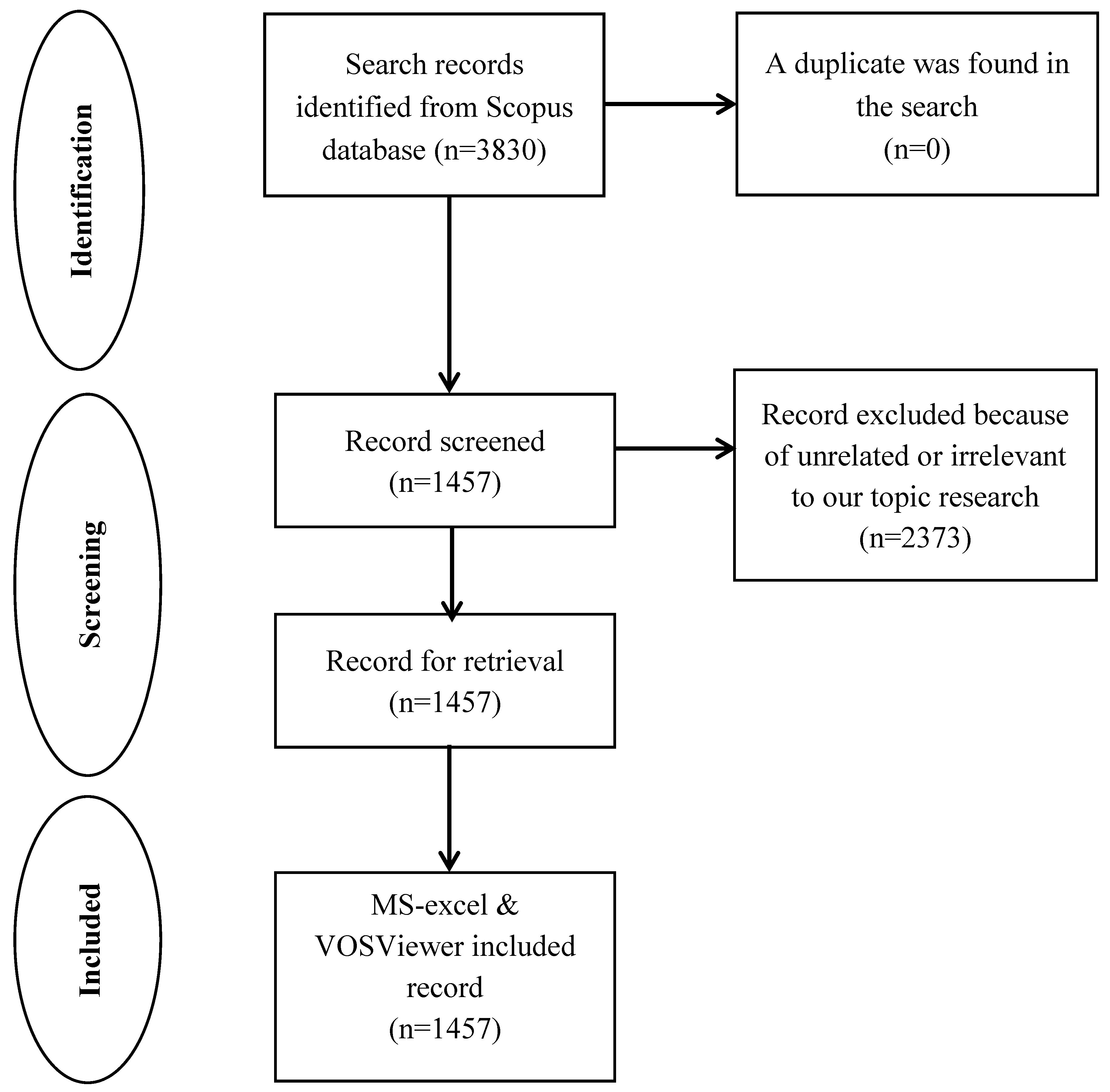
Figure 2.
Volume or trend analysis of Water, Sanitation and Hygiene publications in Ethiopia from 2015-2025.
Figure 2.
Volume or trend analysis of Water, Sanitation and Hygiene publications in Ethiopia from 2015-2025.
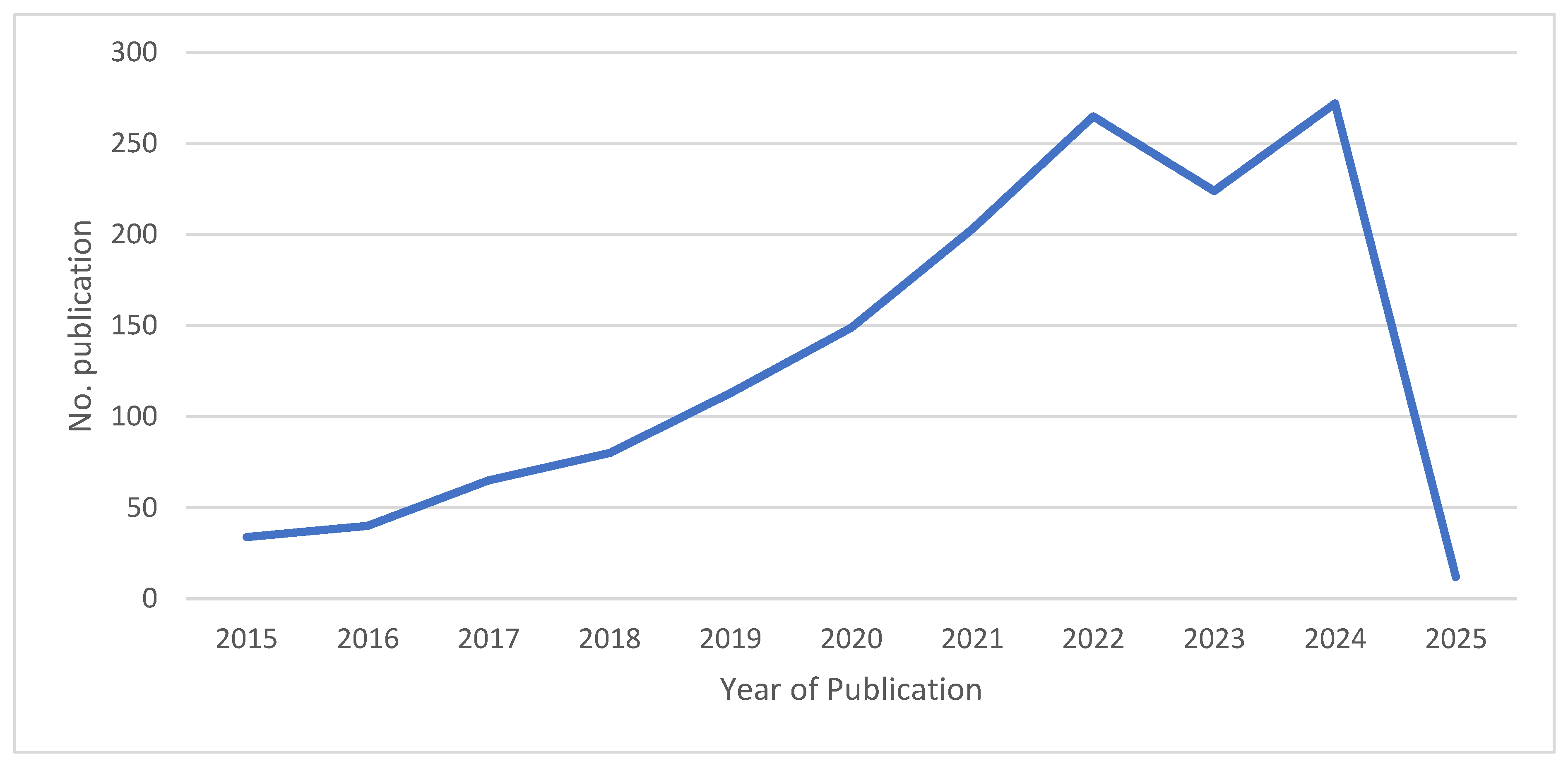
Figure 3.
the volume and document citation by the time of distributed WASH research from 2015 – 2025.
Figure 3.
the volume and document citation by the time of distributed WASH research from 2015 – 2025.
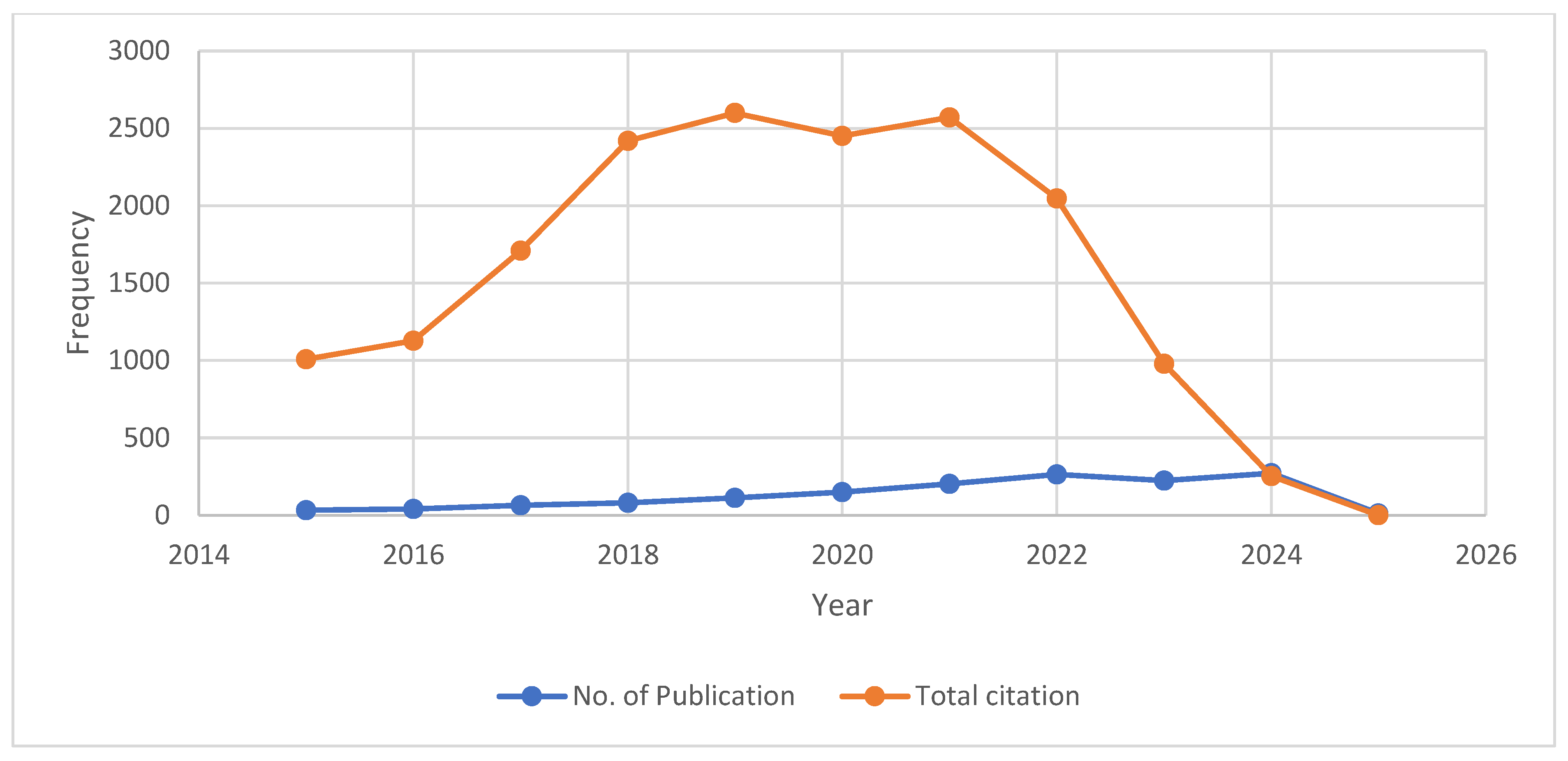
Figure 4.
the leading authors in the area of WASH in Ethiopia across different institutions from 2015 to 2025.
Figure 4.
the leading authors in the area of WASH in Ethiopia across different institutions from 2015 to 2025.
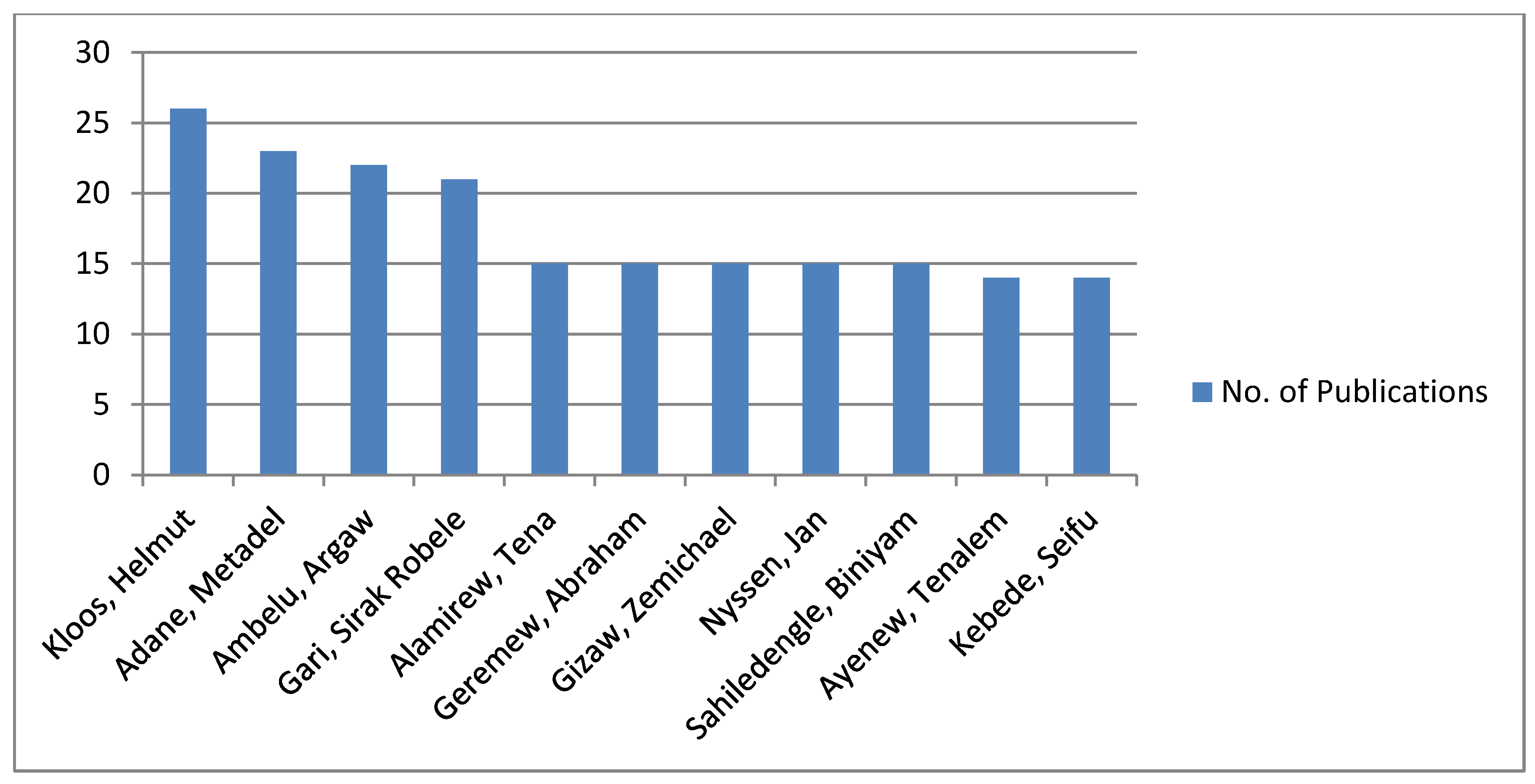
Figure 5.
the leading institutions conducting research on the area of WASH in Ethiopia from 2015-2025.
Figure 5.
the leading institutions conducting research on the area of WASH in Ethiopia from 2015-2025.
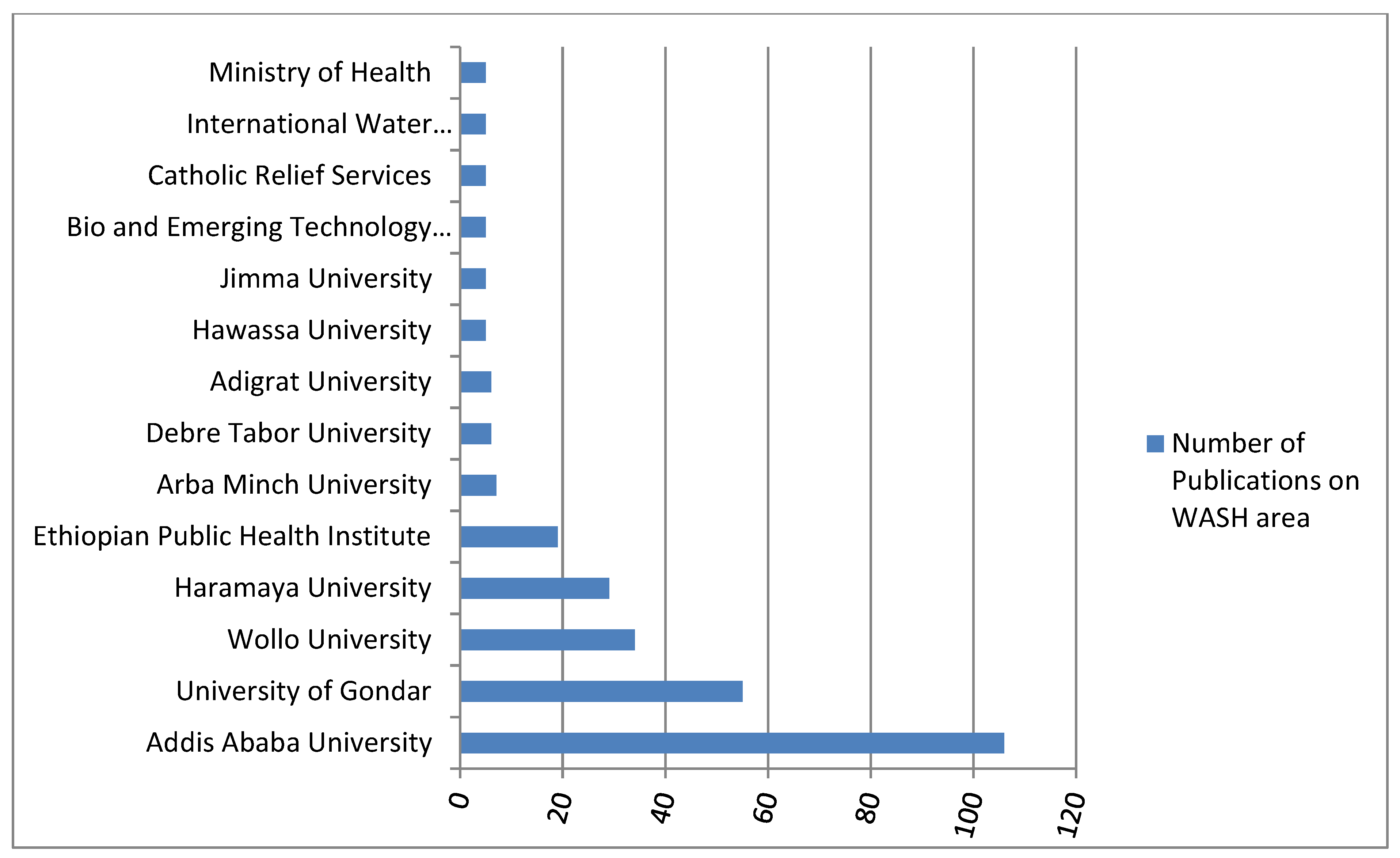
Figure 6.
the leading Journals by source publishing WASH research in Ethiopia from 2015-2025.
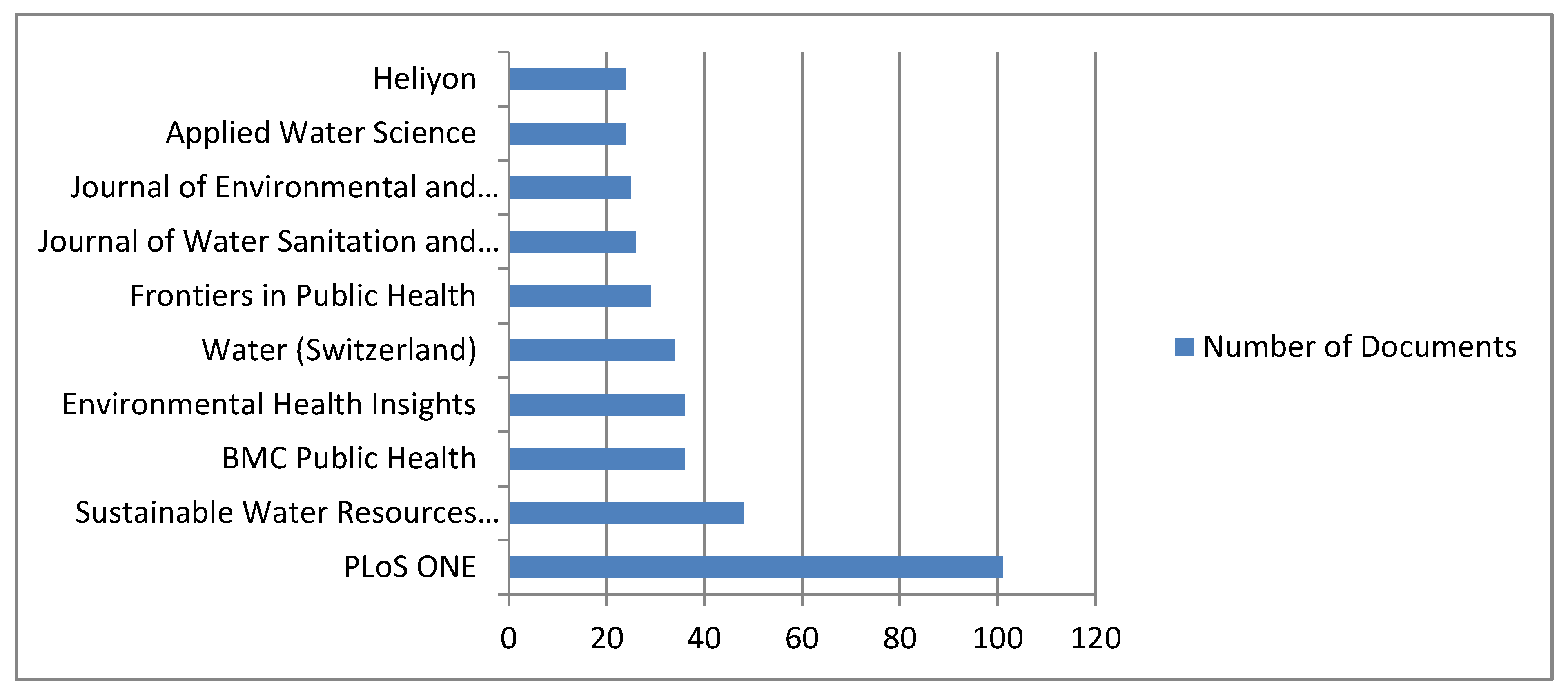
Figure 7.
the intellectual structure of knowledge base on WASH from 2015-2025 in Ethiopia based on Co-citation vs Cited authors.
Figure 7.
the intellectual structure of knowledge base on WASH from 2015-2025 in Ethiopia based on Co-citation vs Cited authors.
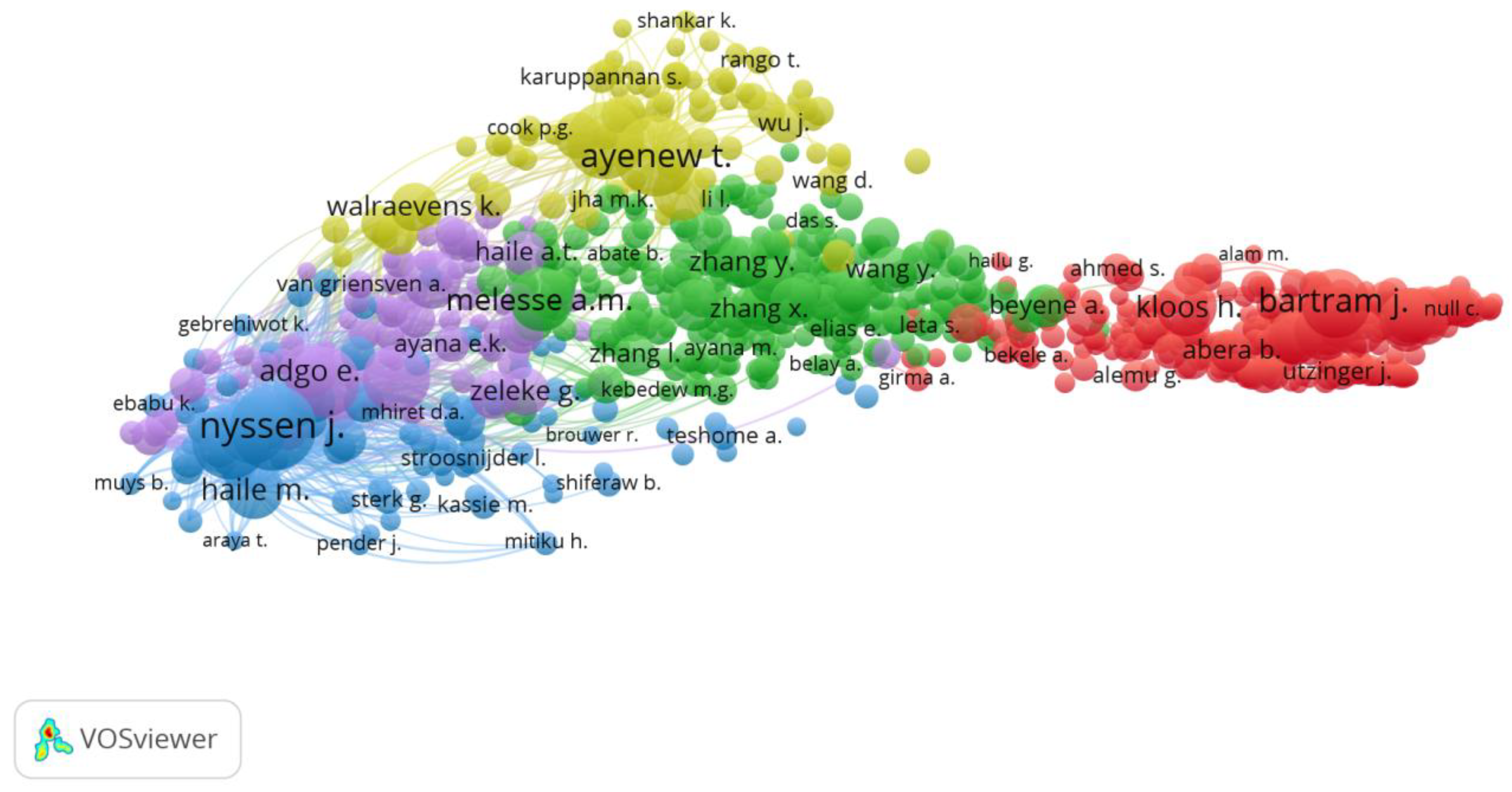
Figure 8.
the key concepts that have been explored on the topic of WASH and how they are related from 2015 to 2025 based on Co-occurrence Vs All Key Words.
Figure 8.
the key concepts that have been explored on the topic of WASH and how they are related from 2015 to 2025 based on Co-occurrence Vs All Key Words.
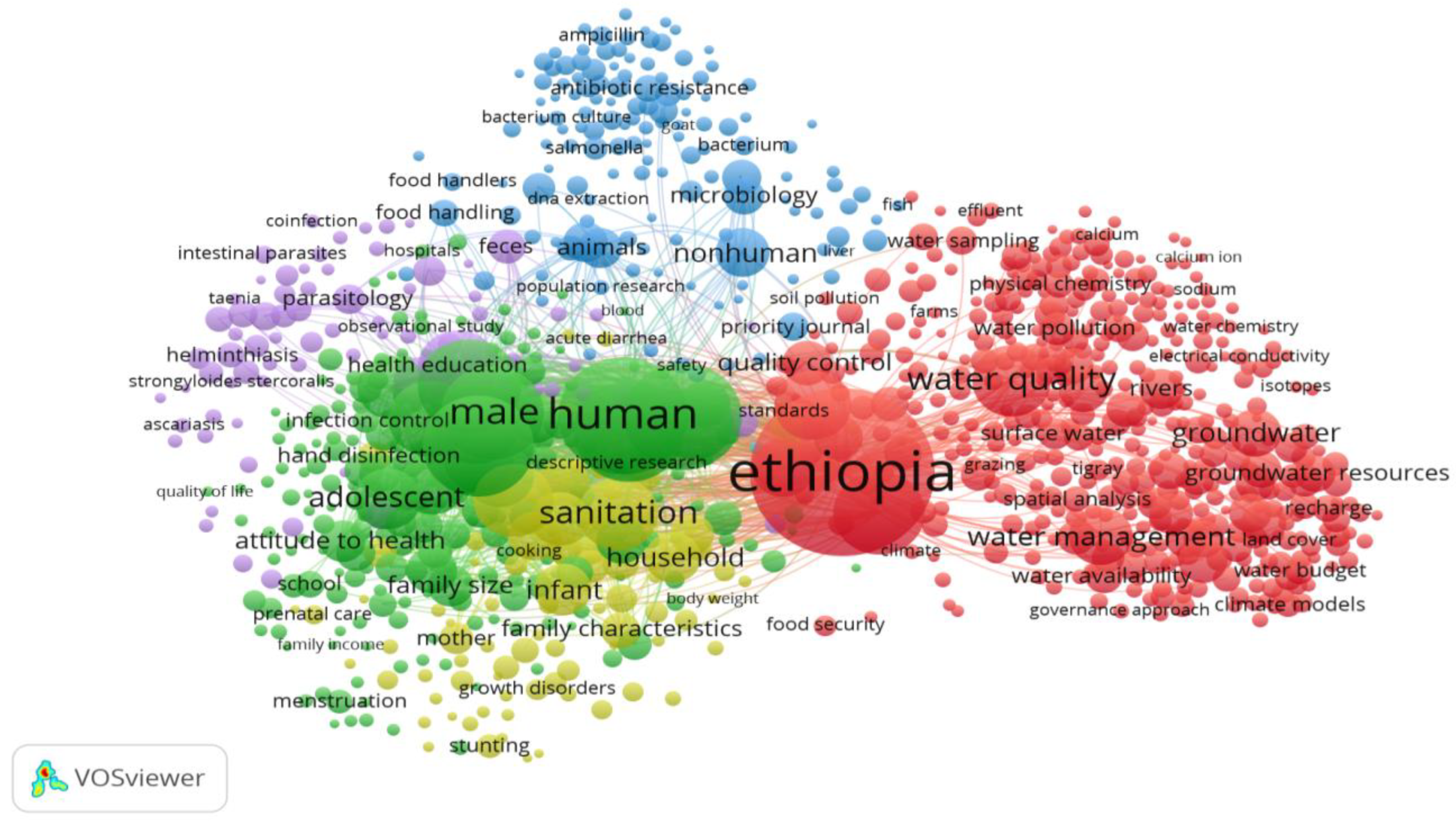
Figure 9.
the nature of collaboration that is evident in the publications of WASH among authors from 2015 to 2025 based on co-authorship vs Authors.
Figure 9.
the nature of collaboration that is evident in the publications of WASH among authors from 2015 to 2025 based on co-authorship vs Authors.
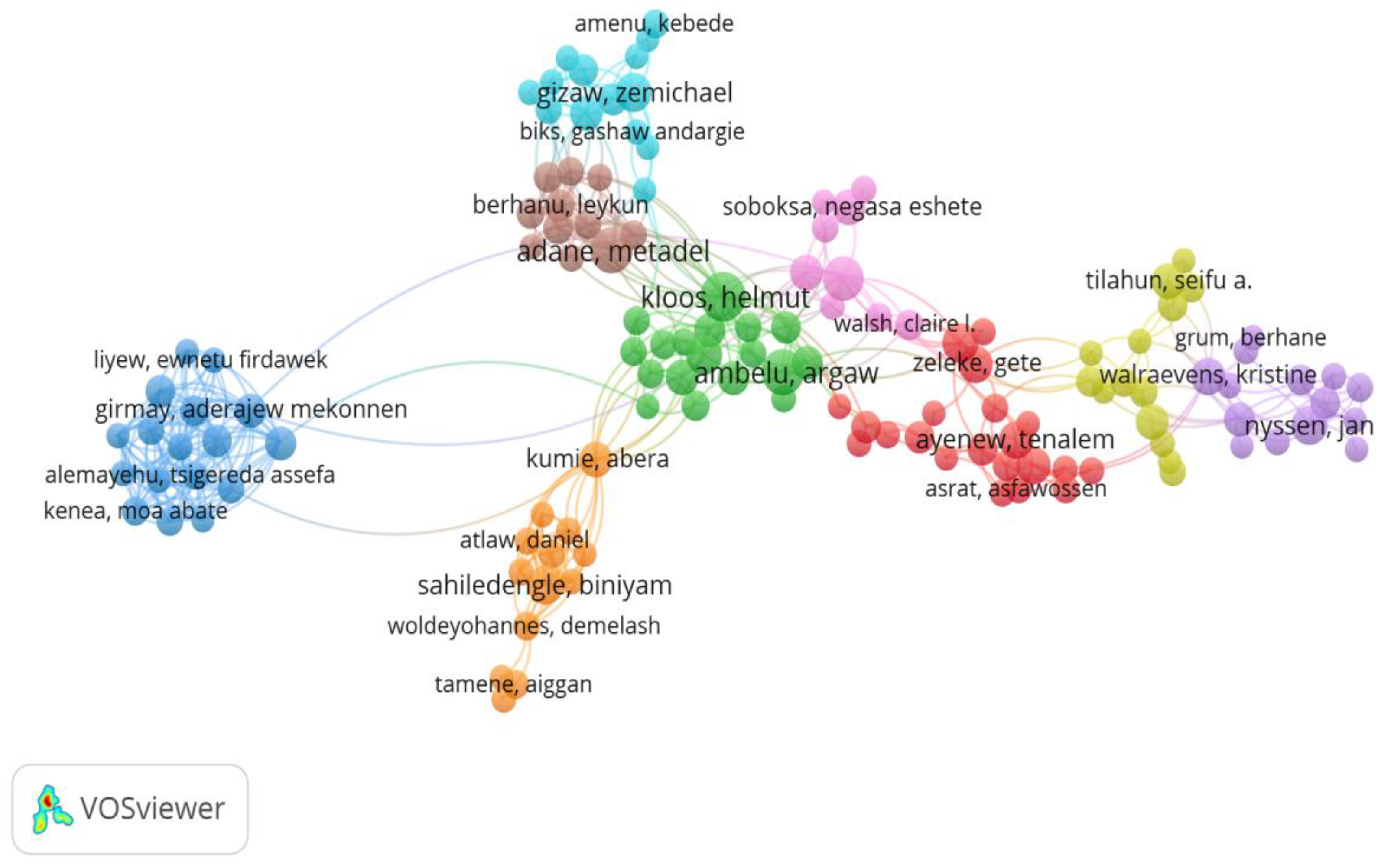

Table 1.
the database and keyword search on WASH in Ethiopia from 2015 to 2025.
| Database source | Query | Result |
|---|---|---|
| Scopus | “water” OR “sanitation” OR “toilet” OR “latrine” OR “hand washing” OR “hand hygiene” OR “menstrual hygiene” OR “CLTS” OR “Excreta management” OR “Waste water” OR “fecal sludge” OR “open defecation” OR “WASH” OR ”CR-WASH” AND “Ethiopia”. | 3830 |
| Articles were removed because they were not related to our topic either water, sanitation, Hygiene, or combined keywords, and research and reviews conducted out of Ethipia were removed. | 2373 | |
| The articles included in the bibliometric analysis | 1457 | |
Table 2.
the top journals that have published the 100 most cited WASH articles between 2015 to 2025.
Table 2.
the top journals that have published the 100 most cited WASH articles between 2015 to 2025.
| Journal name | TP | TC | CPP | Cite score | SNIP | SJR |
|---|---|---|---|---|---|---|
| PLOS ONE | 101 | 1433 | 14.18 | 6.2 | 1.084 | 0.839,Q1 |
| BMC Public Health | 36 | 888 | 24. 67 | 6.5 | 1.386 | 1.253, Q1 |
| Water (Switzerland) | 34 | 525 | 15.44 | 5.8 | 0.999 | 0.724,Q1 |
| Sustainable Water Resources Management | 48 | 394 | 8.21 | 3.2 | 0.668 | 0.458,Q2 |
| Journal of Environmental And Public Health | 25 | 371 | 14.84 | N/A | 0.688 | N/A, Not yet assigned Quartile |
| Applied Water Science | 24 | 357 | 14.88 | 9.9 | 1.737 | 1.027, Q1 |
| Journal of Water Sanitation And Hygiene for Development | 26 | 223 | 8.58 | 3.1 | 0.692 | 0.454,Q2 |
| Environmental Health Insights | 36 | 218 | 6.06 | 3.2 | 0.828 | 0.513,Q2 |
| Heliyon | 24 | 182 | 7.58 | 4.5 | 1.257 | 0.617, Q1 |
| Frontiers in Public Health | 29 | 131 | 4.52 | 4.8 | 0.938 | 0.895, Q1 |
Note: Total Publication (TP), Total Citation (TC), CPP= Citation Per Paper, SNIP= Source Normalized Impact Per Paper, SJR= Scimago Journal Ranking.
Disclaimer/Publisher’s Note: The statements, opinions and data contained in all publications are solely those of the individual author(s) and contributor(s) and not of MDPI and/or the editor(s). MDPI and/or the editor(s) disclaim responsibility for any injury to people or property resulting from any ideas, methods, instructions or products referred to in the content. |
© 2025 by the authors. Licensee MDPI, Basel, Switzerland. This article is an open access article distributed under the terms and conditions of the Creative Commons Attribution (CC BY) license (http://creativecommons.org/licenses/by/4.0/).
Copyright: This open access article is published under a Creative Commons CC BY 4.0 license, which permit the free download, distribution, and reuse, provided that the author and preprint are cited in any reuse.