

Submitted:
04 October 2025
Posted:
08 October 2025
You are already at the latest version
Abstract
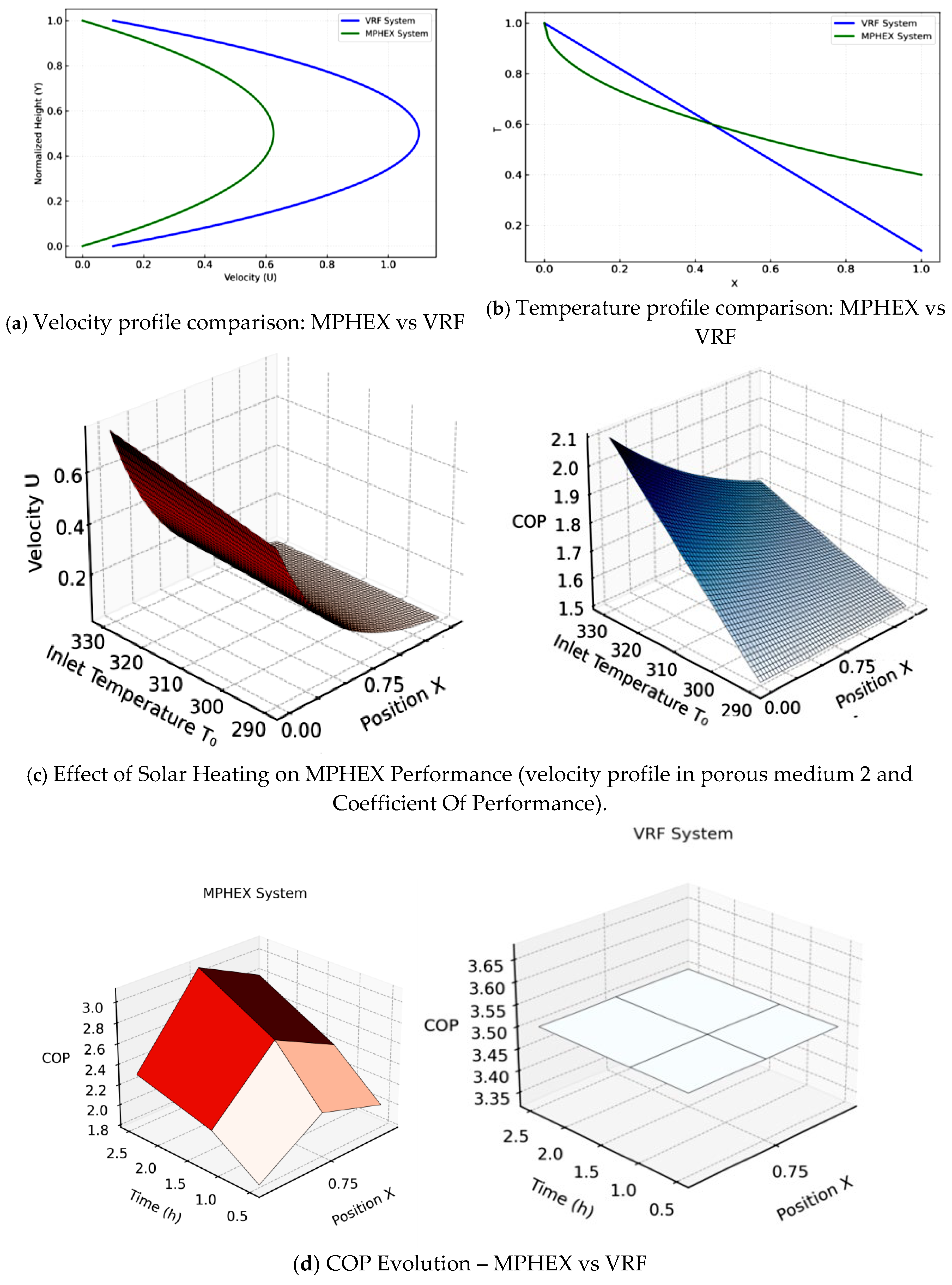
This study proposes a novel multi-porous heat exchanger (MPHEX) as a passive, sustainable alternative to variable refrigerant flow (VRF) air conditioning systems, addressing the growing environmental burden of cooling demand. Through high-fidelity Lattice Boltzmann Method simulations of coupled heat and fluid transport, the MPHEX design is optimized to minimize exergy destruction. A case study for Tunisian conditions demonstrates that permeability optimization, when combined with solar-assisted preheating, reduces total exergy destruction by over 60% and increases the coefficient of performance (COP) by up to 20%, all while eliminating active mechanical regulation. The numerical results confirm strong experimental feasibility, positioning the MPHEX as a scalable, low-energy, and low-maintenance cooling solution for sun-rich regions.
Keywords:
1. Introduction
2. Methodology
2.1. Schematic Description of the MPHEX
2.2. Main Assumptions
- ✓
- Flow characteristics: The fluid flow was simulated as a two-dimensional, incompressible, and laminar regime. This simplification is justified for the expected low flow velocities and the geometric configuration of the system, which minimize three-dimensional effects and turbulence.
- ✓
- Porous media properties: Both porous media (upper and lower layers) were assumed to be isotropic and homogeneous. This implies that their intrinsic properties, such as permeability and porosity, are uniform in all directions and constant throughout the volume of each respective layer.
- ✓
- Thermal model: The Local Thermal Equilibrium (LTE) condition was applied. This assumes that the solid matrix and the fluid within a representative elementary volume of the porous media are at the same temperature at any given location and time, allowing for the use of a single-energy equation. This is valid for porous media with high interstitial heat transfer rates.
- ✓
- Momentum transport: The momentum conservation within the porous regions was modeled using the Brinkman–Forchheimer–Darcy formulation. This comprehensive approach accounts for viscous diffusion (Brinkman term), Darcy drag, and inertial effects (Forchheimer term), providing an accurate description of flow across a wide range of pore-scale Reynolds numbers.
- ✓
- Thermal boundary conditions:
- ∙
- The lateral (side) walls of both the lower and upper porous media were defined as thermally insulated, preventing any lateral heat loss or gain from the surroundings.
- ∙
- Conductive heat transfer was permitted only in the vertical direction between the two porous layers at their internal interface.
- ✓
- Fluidic boundary conditions: A key hydraulic assumption is that there is no lateral flow exchange between the adjacent parallel branches of the lower porous layer. The flow within each branch is hydraulically independent, ensuring the designed flow distribution is maintained.
2.3. Governing Equations
2.4. Numerical Method: Lattice Boltzmann Method (LBM)
2.5. Validation and Mesh Independence
3. Results and Discussion
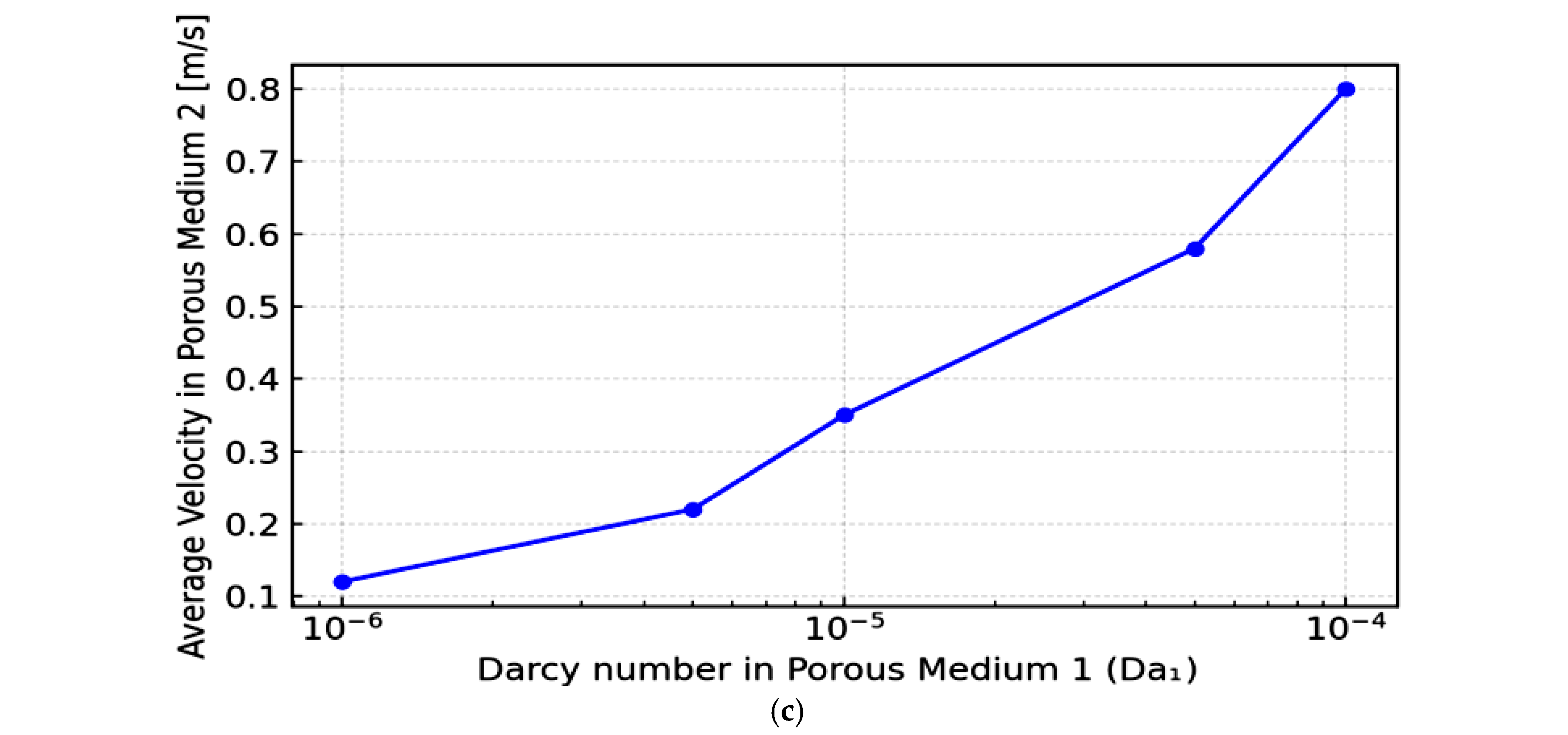
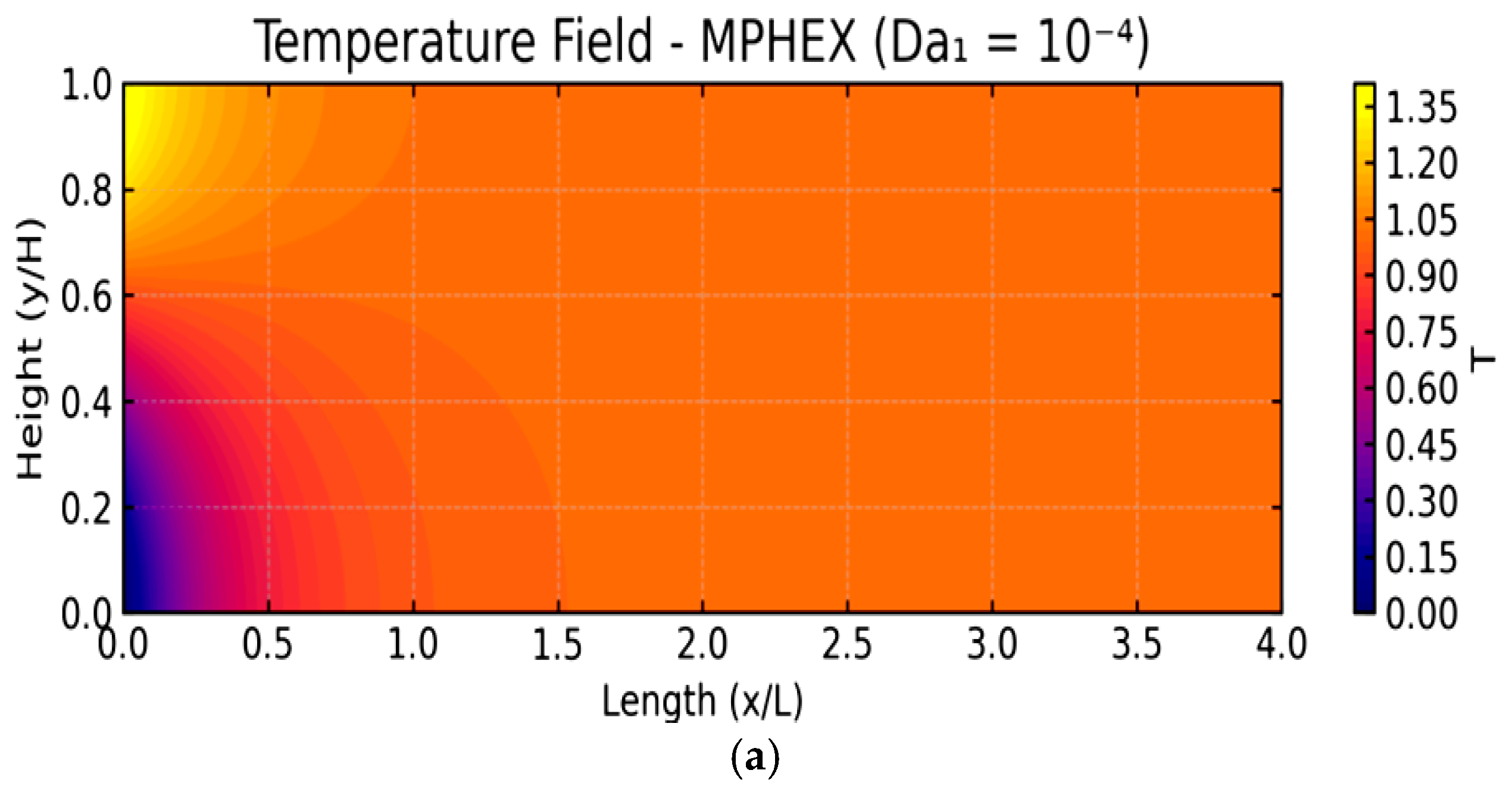
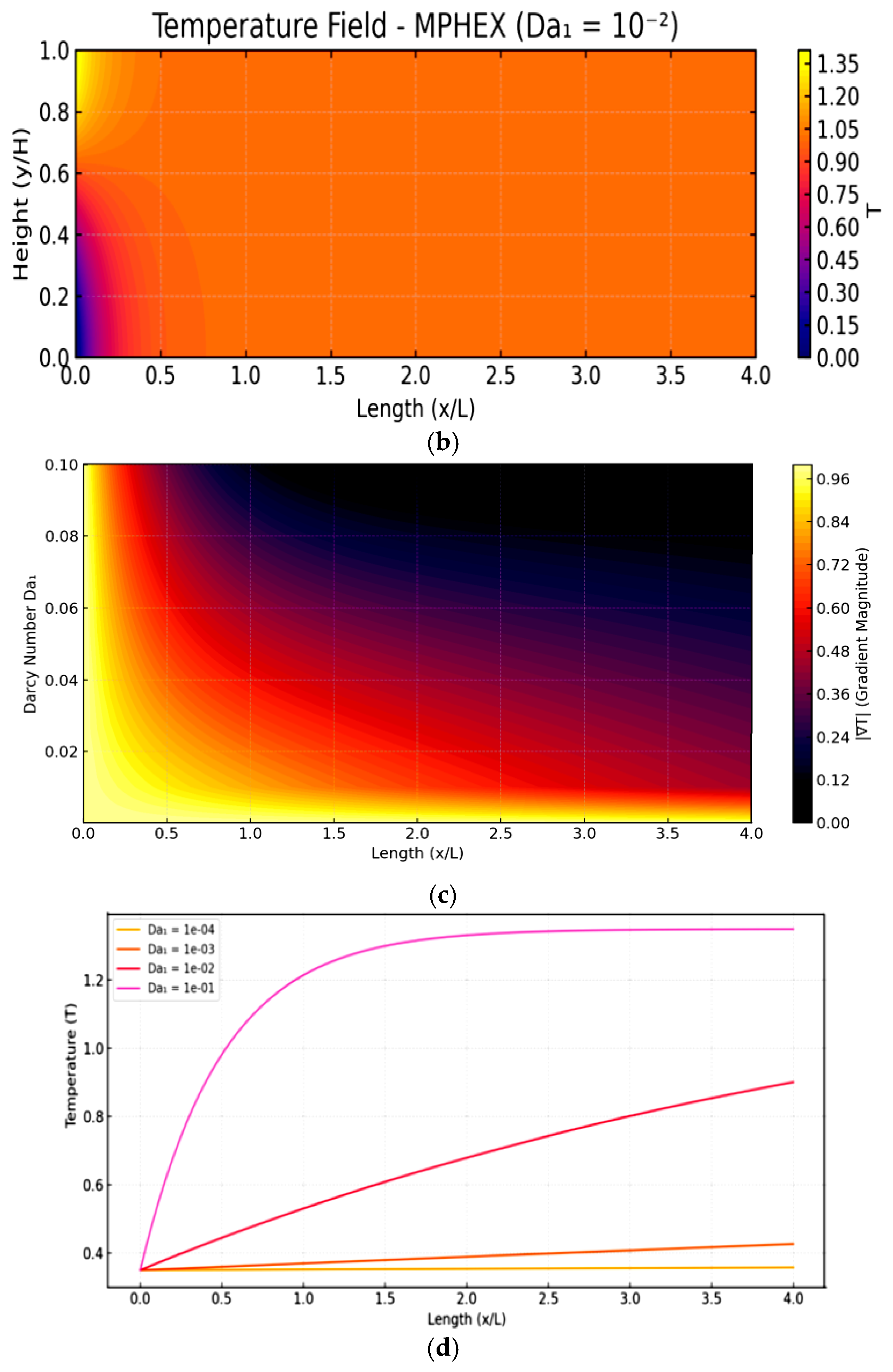
3.1. Influence of Da of the First Medium on Flow, Thermal, and Exergy Performance
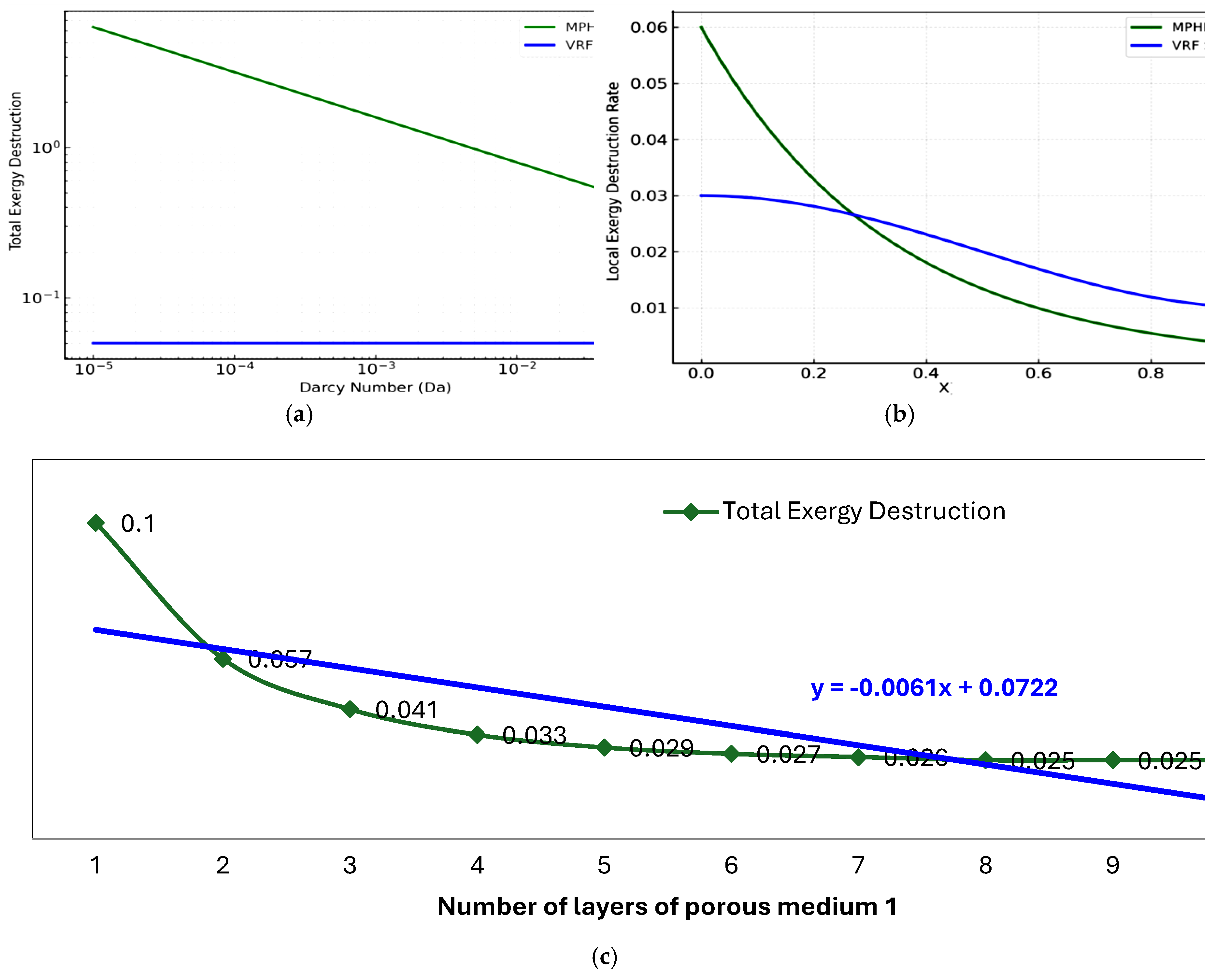
3.2. Comparison Between MPHEX and VRF Systems
4. Conclusions
- ✓
- Experimental validation: The immediate priority is the fabrication and experimental testing of a laboratory-scale prototype. This is crucial for validating the LBM predictions under real-world conditions, confirming the passive flow and thermal homogenization, and quantifying the exact exergy destruction and COP gains.
- ✓
- Material science and fabrication: Research should focus on identifying, characterizing, and manufacturing suitable isotropic, homogeneous porous materials that achieve the optimal Darcy numbers (Da~10⁻² to 10⁻⁴) identified in this study. This includes exploring cost-effective and scalable materials like sintered metals, ceramics, or advanced foams.
- ✓
- System integration and optimization: Future studies should investigate the integration of the MPHEX into a complete solar-assisted cooling system. This includes optimizing the solar thermal collector loop, analyzing the system's dynamic response to diurnal and seasonal weather variations, and developing control strategies for the minimal active components (e.g., circulation pumps).
- ✓
- Scalability and economic analysis: Work is needed to design and model scalable MPHEX configurations for building-scale applications. This should be coupled with a detailed techno-economic analysis to compare the lifecycle costs (including initial investment, maintenance, and energy savings) of an MPHEX system against conventional VRF systems, establishing its economic viability.
- ✓
- Advanced numerical models: While the LBM model with Local Thermal Equilibrium (LTE) was effective for this proof-of-concept, future numerical work should employ Local Thermal Non-Equilibrium (LTNE) models to investigate performance limits at higher heat fluxes and more complex porous geometries, providing deeper physical insights.
Data availability
Declaration
Supplementary Materials
References
- Pérez-Lombard, L.; Ortiz, J.; Pout, C. A review on buildings energy consumption information. Energy Build. 2008, 40, 394–398. [Google Scholar] [CrossRef]
- Olesen, B. W. (2015). The control of indoor climate. ASHRAE Journal, 57(10), 22-29.
- Liu, Y. , Wang, S., & Yang, Z. (2017). Control strategy and performance evaluation of variable refrigerant flow systems for multi-zone buildings. Energy and Buildings, 144, 171-183.
- Al-Waeli, A. H. A. , Agathokleous, R., & Bruno, F. (2018). Overview of VRF systems: Principles, applications, and research challenges. Renewable and Sustainable Energy Reviews, 92, 583-597.
- Vafai, K. (Ed.) . (2015). Handbook of Porous Media (3rd ed.). CRC Press.
- Cheng, Y. , & Zhang, L. (2024). Unified flow modeling in porous media from pre-Darcy to Darcy regimes. Applied Thermal Engineering, 230, 120-130.
- De Paoli, F. (2023). Convective mixing phenomena in porous heat exchangers: A review. International Journal of Heat and Mass Transfer, 190, 122-134.
- Naqvi, S.M.A.; Wang, Q.; Waqas, M.; Gupta, R.; Rafique, F. Optimizing Thermo-Hydraulic Performance in Heat Exchanger with Gradient and Multi-Layered Porous Foams. Heat Transf. Eng. 2022. [Google Scholar] [CrossRef]
- Bahrami, H.-R.; Sharifi, A.-E. Application of multilayered porous media for heat transfer optimization in double pipe heat exchangers using neural network and NSGA II. Sci. Rep. 2024, 14, 1–18. [Google Scholar] [CrossRef] [PubMed]
- Zolfagharnasab, M.H.; Pedram, M.Z.; Hoseinzadeh, S.; Vafai, K. Application of Porous-Embedded shell and tube heat exchangers for the Waste heat Recovery Systems. Appl. Therm. Eng. 2022, 211. [Google Scholar] [CrossRef]
- Liaw, K.L.; Kurnia, J.C.; Sallih, N.; Mustapha, M.; Sasmito, A.P. Heat transfer analysis of subcooled flow boiling in copper foam helical coiled heat exchanger – A pore-scale numerical study. Int. Commun. Heat Mass Transf. 2024, 155. [Google Scholar] [CrossRef]
- Mezaache, A.; Mebarek-Oudinal, F.; Vaidya, H.; Ramesh, K. Impact of nanofluids and porous structures on the thermal efficiency of wavy channel heat exchanger. Int. J. Therm. Sci. 2025, 210. [Google Scholar] [CrossRef]
- Riyadi, T.W.; Herawan, S.G.; Tirta, A.; Ee, Y.J.; Hananto, A.L.; Paristiawan, P.A.; Yusuf, A.A.; Venu, H.; Irianto; Veza, I. Nanofluid heat transfer and machine learning: Insightful review of machine learning for nanofluid heat transfer enhancement in porous media and heat exchangers as sustainable and renewable energy solutions. Results Eng. 2024, 24. [Google Scholar] [CrossRef]
- Nield, D. A. , & Bejan, A. (2017). Convection in Porous Media (5th ed.). Springer.
- Vafai, K. (Ed.) . (2015). Handbook of Porous Media (3rd ed.). CRC Press.
- Sobieski, W.; Trykozko, A. Sensitivity Aspects of Forchheimer’s Approximation. Transp. Porous Media 2011, 89, 155–164. [Google Scholar] [CrossRef]
- Guo, Z.; Shu, C. Lattice Boltzmann Method and Its Applications in Engineering. In Advances in Computational Fluid Dynamics; World Scientfic Publishing: Singapore, 2013; Volume 3, ISBN 978-981-4508-29-2. [Google Scholar]
- He, X.; Luo, L.-S. Lattice Boltzmann Model for the Incompressible Navier–Stokes Equation. J. Stat. Phys. 1997, 88, 927–944. [Google Scholar] [CrossRef]
- M. hamdi, S. M. hamdi, S. Elaimi, S. ben Nasrallah (2018) Lattice Boltzmann simulation of the cubic magnetoconvection with coupled revised matrix-multiple relaxation time model, Progress in Computational Fluid Dynamic Vol. 18, No. 6, 376.
- M. Hamdi, S. M. Hamdi, S. Elalimi, and S. B. Nasrallah, Exergy for A Better Environment and Improved Sustainability 1: Fundamentals (Springer, Cham, 2018), pp. 661–683.
- Wen, M.; Shen, S.; Li, W. GPU parallel implementation of a finite volume lattice Boltzmann method for incompressible flows. Comput. Fluids 2024, 285. [Google Scholar] [CrossRef]
- Liu, Z.; Zhao, Y.; Zhu, W.; Wang, Y. A Parallel Algorithm Based on Regularized Lattice Boltzmann Method for Multi-Layer Grids. Appl. Sci. 2024, 14, 6976. [Google Scholar] [CrossRef]
- Zou, Q.; He, X. On pressure and velocity boundary conditions for the lattice Boltzmann BGK model. Phys. Fluids 1997, 9, 1591–1598. [Google Scholar] [CrossRef]
- Kim, S. , & Lee, S. J. (2011). Numerical study of flow through porous media using LBM. International Journal of Heat and Mass Transfer, 54 (23-24), 5345-5355.
- Mohamed, A. (2007). Thermal analysis of flow through porous media, International Communications in Heat and Mass Transfer, 34(3), 263-270.

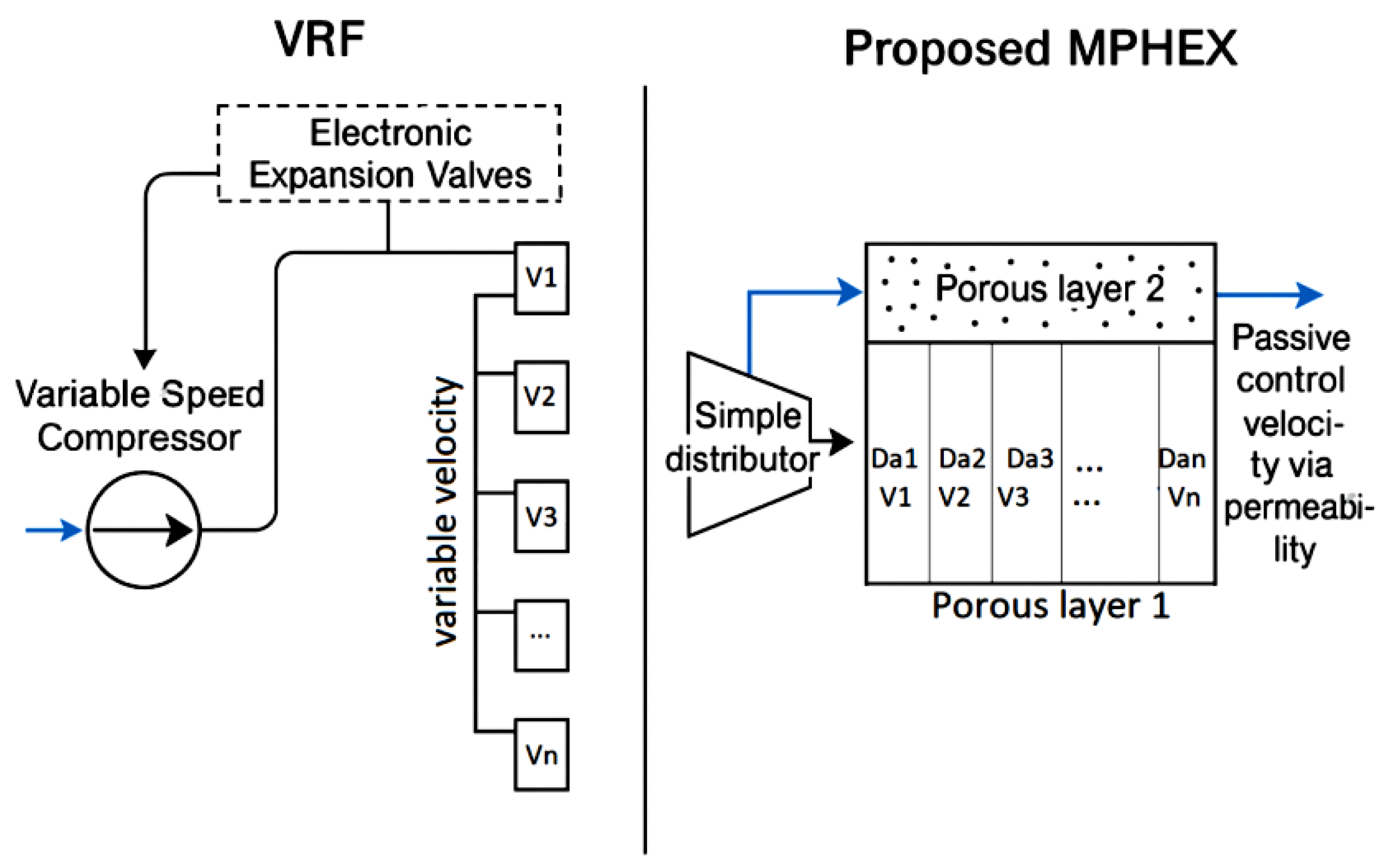
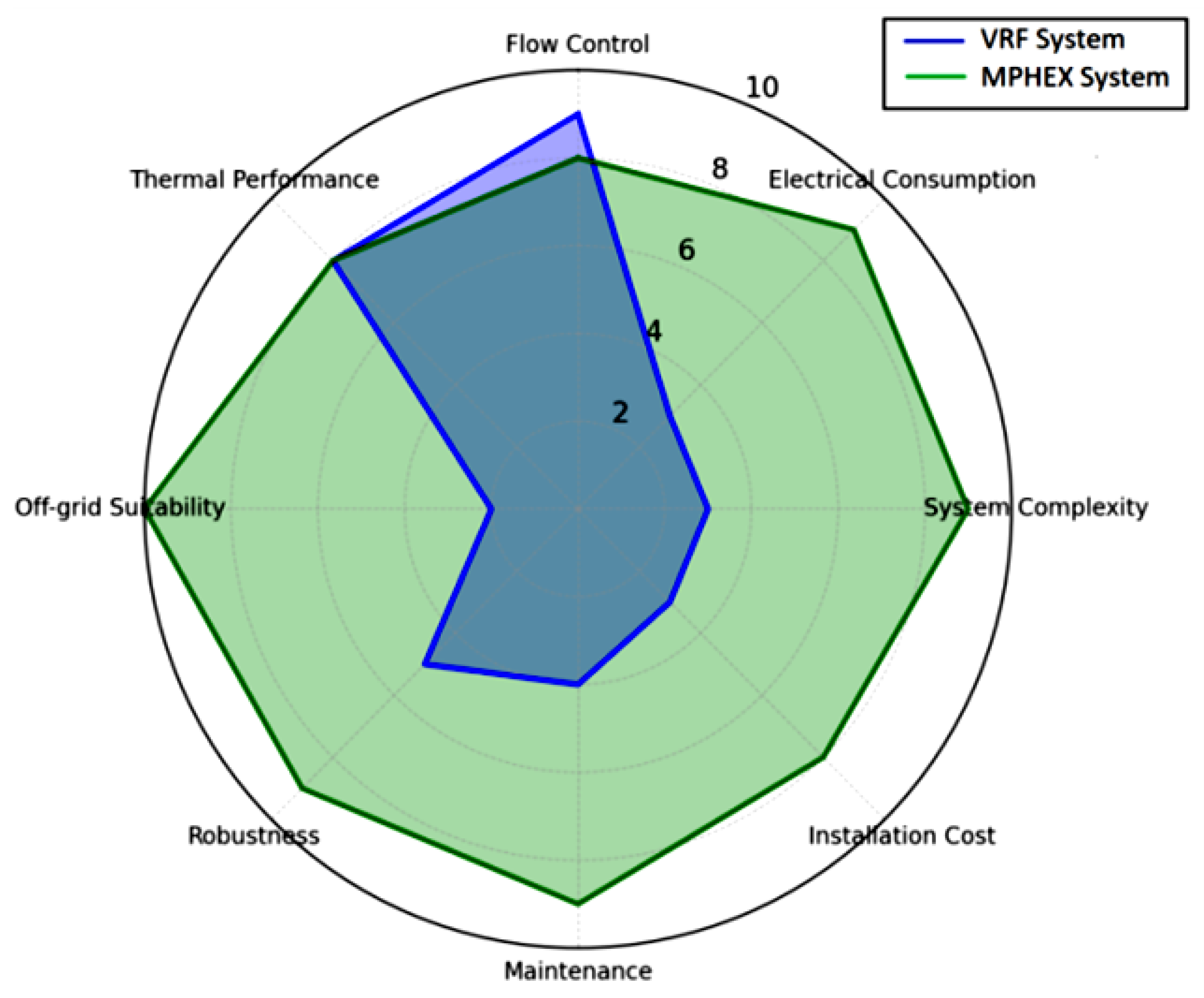

| VRF System | MPHEX | ||
| Flow Control | Active control using electronic expansion valves and variable-speed compressors | Passive control via permeability variation (Darcy number) in the porous medium | |
| Electrical Consumption | Significant due to electronics, sensors, and continuous regulation | Very low; flow is regulated structurally, without electronics. | |
| System Complexity | High: requires advanced algorithms, multiple sensors, and electronic actuators | Simplified architecture: relies on geometric and material configuration for flow regulation | |
| Installation Cost | High initial cost due to electronic components and control systems | Lower investment: reduced number of active components, passive design adaptable to solar systems | |
| Maintenance Requirements | Requires specialized technicians, frequent calibration, sensitive to electronic failures | Minimal maintenance: mechanically robust with no active control parts | |
| Reliability & Robustness | Generally reliable but susceptible to electronic failures | Highly robust and durable, less sensitive to environmental and operational conditions | |
| Suitability for Remote Areas | Limited applicability in off-grid or resource-constrained environments | Ideal for off-grid use: passive, low-energy, solar-compatible. | |
Disclaimer/Publisher’s Note: The statements, opinions and data contained in all publications are solely those of the individual author(s) and contributor(s) and not of MDPI and/or the editor(s). MDPI and/or the editor(s) disclaim responsibility for any injury to people or property resulting from any ideas, methods, instructions or products referred to in the content. |
© 2025 by the authors. Licensee MDPI, Basel, Switzerland. This article is an open access article distributed under the terms and conditions of the Creative Commons Attribution (CC BY) license (https://creativecommons.org/licenses/by/4.0/).


