

Submitted:
30 September 2025
Posted:
01 October 2025
You are already at the latest version
Abstract
This study explores the factors driving electric vehicle (EV) adoption in Lagos and Abuja using the Unified Theory of Acceptance and Technology (UTAUT) framework. Employing quantitative research method with 200 participants through surveys questionnaire items, and policy analysis, the study identified key predictors of EV purchase intentions. Technological innovation emerged as the strongest predictor (β = 0.42, p < 0.001), followed by regulatory environments (β = 0.37, p < 0.001). Economic factors, including total ownership costs and government subsidies, explained 32.6% of adoption variance. Consumer Priorities towards EV adoption revealed technological reliability (67.4%), environmental impact (52.3%) and long-term economic benefits (41.6%). The combination of technological readiness, charging infrastructure, and policy support accounted for 48.3% of variance in adoption rates across market segments. The research reveals that EV adoption in emerging markets requires integrated approaches addressing technological innovation, economic incentives, and regulatory frameworks simultaneously. Results demonstrate significant socio-economic variations, emphasizing that successful EV transition depends on creating comprehensive ecosystems rather than isolated interventions. The study provides valuable insights for policymakers, manufacturers, and innovators developing sustainable mobility solutions in emerging African markets, highlighting the complex interplay between technology, economics, regulation, and environmental consciousness in driving consumer behavior.
Keywords:
Electric Vehicles
; Technological Innovation
; Consumer Behavior
; Regulatory Dynamics
; Sustainable Transportation
Introduction
The global transportation sector is undergoing an unprecedented transformation toward electrification, driven by the urgent need to mitigate climate change, reduce greenhouse gas emissions, and enhance energy security (International Energy Agency, 2024). Electric vehicles (EVs) have emerged as a cornerstone technology in this transition, with limited cross-national research conducted on the determinants of electric vehicle adoption in developing and developed countries, creating significant knowledge gaps in understanding consumer motivational factors across diverse economic contexts. While global EV sales reached 10.5 million units in 2022, representing a 55% increase from the previous year (BloombergNEF, 2023), the adoption patterns and underlying motivational factors vary dramatically across different geographical regions and economic development stages.
The global shift toward electric vehicle (EV) ownership is driven by a complex mix of technological innovation, regulatory action, and evolving consumer motivations. Understanding these factors is crucial for policymakers, manufacturers, and stakeholders aiming to accelerate EV adoption and achieve sustainability goals. The shift towards electric vehicle (EV) ownership in Nigeria is shaped by a complex interplay of technological innovation, regulatory frameworks, and consumer motivations. As a developing nation with unique infrastructural and economic challenges, Nigeria’s path to EV adoption is influenced by both global trends and local realities.
The global transition towards sustainable transportation has positioned electric vehicles (EVs) as a critical component in addressing climate change, reducing greenhouse gas emissions, and decreasing dependence on fossil fuels (Chen et al., 2023; Kumar & Singh, 2024). As governments worldwide implement stringent emission standards and consumers become increasingly environmentally conscious, the automotive industry is experiencing a paradigm shift from internal combustion engine vehicles to electric alternatives (Li et al., 2023). However, limited cross-national research has been conducted on the determinants of electric vehicle adoption in developing and developed countries, creating a significant knowledge gap in understanding the unique dynamics that influence consumer behavior in emerging markets.
The world is witnessing a significant transformation in the transportation sector, driven by the increasing awareness of environmental concerns, technological advancements, and shifting consumer preferences (Sierzchula et al., 2014). The electric vehicle (EV) market has emerged as a promising alternative to traditional internal combustion engine vehicles, with many countries investing heavily in EV infrastructure and incentivizing consumers to adopt EVs (IEA, 2020). The growth of the EV market is expected to continue, with projections suggesting that EVs will account for over 50% of new car sales by 2040 (BNEF, 2020).
In the global perspectives, studies such as Zhang et al., (2024) have identified diverse motivational factors influencing consumer EV adoption decisions. The most cited barriers to adoption of EVs were found to be the lack of charging stations availability and their limited driving range, while the most cited motivators to EV adoption were found to be reduction in air pollution and the availability of policy incentives (Zhang et al., 2024). Contemporary studies reveal that personal innovativeness, usefulness, and ease of use positively influence consumers’ intentions to purchase EVs, while perceived risk is the strongest negative factor impacting consumers’ intention to adopt EVs (Kumar et al., 2024).
According to Zhang et al., (2024) the motivational landscape is further complicated by social and psychological factors. Zhang et al., (2024) shows that reputation-driven consumers prefer EVs only when the purchase price is more expensive than that of other vehicles, thus suggesting that true environmental concern is attenuated by reputation motives (Martinez & Rodriguez, 2022). Meanwhile, joy, pride and positive emotions from driving an EV and environmental concerns positively influence adoption intentions (Johnson et al., 2014), highlighting the complex interplay between emotional and rational decision-making factors.
The top motivator in EV sales remains environmental concern, while penalties with ICE vehicles and EV incentives emerge as significant secondary factors (Ernst & Young, 2024). However, knowledge and awareness mediate the intention to use EVs, with findings suggesting that higher knowledge among consumers motivates them to buy EVs (Gupta & Sharma, 2024), emphasizing the critical role of consumer education and awareness in driving adoption intentions. Global research consistently emphasizes that governments may stimulate consumer adoption of EVs with exemptions on roadway tolls, convenient access to charging infrastructures, and tax and economic incentives considering energy trading and vehicle sharing (Thompson et al., 2022), underscoring the pivotal role of policy frameworks in shaping consumer behavior.
The African continent presents a distinctly different landscape for EV adoption compared to developed markets. Sub-Saharan Africa faces unique obstacles to wider scale EV adoption, including the absence of clear policies, high purchase prices, inadequate infrastructure, with addressing policy gaps and improving affordability being key components of hastening the transition towards electric mobility in SSA (Okafor et al., 2024).
In 2021, electric vehicles accounted for nearly 10% of global car sales, with 16.5 million vehicles in use. Africa has the lowest market share for electric vehicles due to many challenges. The high purchase price and limited range reduce motivation to purchase electric vehicles (Adebayo & Nkomo, 2023). This stark contrast highlights the continent’s unique position in the global EV transition, where economic constraints play a more pronounced role than in developed markets.
Recent projections in Africa however, suggest significant potential for growth. A 2023 projection estimated that EV sales in leading EV-importing Sub-Saharan African countries, including Nigeria, Ethiopia, South Africa, Kenya, Rwanda, Mauritius, and Seychelles, would exceed 700 million units within 5 years and grow to 4 million by 2037 (Williams et al., 2025). This optimistic forecast underscores the continent’s emerging potential as a significant EV market.
The African EV landscape is characterized by unique adoption patterns. South Africa, Nigeria, and Kenya are leading the way in electric vehicle adoption, driven by favorable policies, growing charging infrastructure, and increasing consumer awareness (MarkWide Research, 2024). However, infrastructure challenges remain paramount, with results showing that while electric commercial and paratransit fleets may improve power system efficiency, widespread private EV adoption could significantly strain the grid, increasing peak loads and transformer aging (Ahmed et al., 2024).
South African research provides valuable insights into regional adoption patterns. Analysis of EVs in the market highlighted the high purchase price, high battery price, and high likelihood for owning a secondary vehicle based on the current circumstances as the main purchase intention barriers (Van der Merwe et al., 2021). Furthermore, the international share of plug-in electric vehicle sales was 8.6% in 2021, compared with South Africa’s 0.1% (Ndaba & Pretorius, 2023), illustrating the significant adoption gap between African markets and global trends.
Nigeria, Africa’s most populous nation and largest economy, presents a particularly intriguing case for EV adoption research due to its unique position as a developing country and prominent oil producer where the transition towards electric vehicle adoption is unfolding amidst unique challenges. Despite being a major oil producer, Nigeria faces significant energy security challenges, environmental degradation from vehicular emissions, and increasing urbanization pressures that make sustainable transportation solutions increasingly necessary (Adebayo et al., 2023; Okafor & Uzoma, 2024). The Nigerian government has begun recognizing the potential of electric vehicles as government initiatives and incentives play an important role in promoting the adoption of electric vehicles (EVs) in Nigeria, yet comprehensive understanding of consumer motivational factors remains limited.
Nigeria occupies a unique position in both African and global EV discourse. In Nigeria, a developing country and prominent oil producer, the transition towards electric vehicle adoption is unfolding amidst unique challenges (Okonkwo et al., 2024). This paradox of an oil-producing nation transitioning to electric mobility presents fascinating research opportunities and policy implications.
In Nigeria, research has begun to address the specific motivational factors influencing EV adoption in the country. Results show that the percentage increase of facilitating conditions compared to network externalities in influencing behavioral intentions is approximately 32.35%, indicating that traditional drivers significantly influence individuals’ willingness to purchase EVs (Adebayo & Ogundipe, 2024). This suggests that infrastructure and policy support mechanisms may be more critical in the Nigerian context than social network effects.
The Nigerian government has recognized the strategic importance of electric mobility. The dominant source of the vehicle fleet in developing nations is the used vehicle market in developed nations. As the automotive fleet in developed nations electrifies, so will the used vehicle market. In many cases, developing nations’ electric infrastructure is inadequate to support significant vehicle electrification (Kalu et al., 2024). This observation is particularly relevant to Nigeria, where the used vehicle market constitutes the majority of vehicle imports.
The shift towards EV ownership is driven by a complex array of factors, including technological innovations, regulatory dynamics, and consumer motivations (Egbue & Long, 2012). Technological innovations, such as advances in battery technology and charging infrastructure, have improved the performance and affordability of EVs, making them more appealing to consumers (Gnann et al., 2018). Regulatory dynamics, including government incentives, tax credits, and emissions standards, have also played a crucial role in promoting the adoption of EVs (Sullivan et al., 2018).
The literature on electric vehicle (EV) adoption motivations includes theoretical approaches such as the Technology Acceptance Model (TAM), Unified Theory of Acceptance and Use of Technology (UTAUT), (Venkatesh et al., 2003) and Theory of Planned Behavior (TPB) (Ajzen, 1991). However, their applicability in developing countries remains debated. Research on consumers of electric vehicles offers significant contributions to understanding the behavior factors that stimulate purchase(Silva & Costa, 2022). However, a holistic compendium of the literature is not provided, highlighting the fragmented nature of current knowledge.
Several controversies persist in the literature, including the relative importance of environmental versus economic motivations, the role of infrastructure in adoption intentions (Brown & Wilson, 2023; Lee et al., 2024), and the influence of technological anxiety versus enthusiasm (Zhao et al., 2021; Patel & Singh, 2023). Consumers are a central piece of the EV puzzle, and their behavior helps explain the global adoption curve. However, consumer technology acceptance patterns vary dramatically across different socioeconomic contexts.
A comprehensive cross-cultural empirical study by Higueras-Castillo, et al., (2024) examining factors affecting EV adoption intention found that EV sales in India were anticipated to increase significantly, likely surpassing 900,000 units in 2023, accounting for 2–3% of all automobile sales. This study provides crucial baseline data for understanding adoption patterns in emerging markets, utilizing UTAUT framework across different cultural contexts. The research demonstrated significant variations in adoption factors between developed and developing economies, highlighting the need for context-specific approaches to EV promotion policies.
An innovative empirical study by Alwadain,et al.,(2024) integrating Task-Technology Fit (TTF) with UTAUT confirmed that this combined framework positively promotes users’ adoption of EVs. Surprisingly, the direct effect of TTF on behavioral intentions proved insignificant, but UTAUT constructs played a significant role in establishing meaningful relationships. This research advances theoretical understanding by demonstrating that traditional technology acceptance models require adaptation for EV contexts, with performance expectancy and social influence emerging as stronger predictors than task-technology alignment.
Zhan et al., (2025) conducted an empirical examination analyzed 1.6 million EVs across seven major Chinese cities, encompassing various vehicle types private, taxi, rental, official, bus, and special purpose vehicles with over 854 million observations of driving and charging events. The findings illuminated significant heterogeneity in EV usage, battery energy, and charging behavior across vehicle types with notable city differences, particularly highlighting day-time high-power charging patterns. This massive dataset provides unprecedented insights into real-world EV utilization, challenging assumptions about uniform charging behaviors and infrastructure needs.
Krishnaswamy and Deilami, (2024) carried out a comprehensive global review examining barriers and motivators to EV adoption revealed that influential factors over individuals’ desire to adopt EVs were categorized into four main types (contextual, situational, demographic, and psychological), with situational factors having the most influencing components as they can act as both barriers and motivators. This meta-analytical approach synthesized findings from multiple countries, providing a unified framework for understanding the complex interplay between different adoption factors across diverse socio-economic contexts.
Gupta et al.,(2025) in an empirical investigation, exploring the role of environmental consequences, perceived barriers, policy interventions, public opinions, and knowledge and awareness in EV usage collected data from 506 respondents to examine mediating relationships. This study’s findings suggested that environmental concern and price value positively influence attitudes toward electric vehicles, with the research supporting the positive influence of awareness and knowledge as mediating factors. The study demonstrated that consumer education and environmental consciousness serve as critical pathways to adoption, particularly in price-sensitive markets.
However, despite the growing popularity of EVs, there is still a significant gap in our understanding of the comprehensive motivational factors driving consumer shift towards EV ownership (Hidrue et al., 2011). Previous studies have identified various factors, including environmental concerns, economic benefits, and social influences, as key motivators for EV adoption (Graham-Rowe et al., 2012). However, these studies have been limited in their scope and have not provided a comprehensive understanding of the complex interplay between technological innovations, regulatory dynamics, and consumer motivations (Sierzchula et al., 2014).
The need for a comprehensive understanding of the motivational factors driving EV adoption is becoming increasingly important, as governments and industry stakeholders seek to promote the widespread adoption of EVs (IEA, 2020). A deeper understanding of the factors driving EV adoption can inform the development of effective policies and marketing strategies, ultimately contributing to the achievement of sustainable transportation goals (BNEF, 2020).
This study aims to evaluate the comprehensive motivational factors propelling consumer shift towards electric vehicle ownership, with a focus on the interplay between technological innovations, regulatory dynamics, and consumer motivations. The study seeks to contribute to the existing body of knowledge on EV adoption by providing a nuanced understanding of the complex factors driving consumer behavior.
Despite the growing popularity of electric vehicles (EVs) and the increasing awareness of their environmental benefits, the adoption of EVs remains slow and uneven globally (Sierzchula et al., 2014). The lack of understanding of the complex interplay between technological innovations, regulatory dynamics, and consumer motivations has hindered the development of effective policies and marketing strategies to promote the widespread adoption of EVs (Gnann et al., 2018). The existing literature on EV adoption has identified various factors, including environmental concerns, economic benefits, and social influences, as key motivators for EV adoption (Hidrue et al., 2011). However, these studies have been limited in their scope and have not provided a comprehensive understanding of the complex factors driving consumer behavior (Graham-Rowe et al., 2012). Furthermore, the regulatory dynamics surrounding EV adoption are complex and often inconsistent, with different countries and regions implementing varying levels of incentives, subsidies, and emissions standards (Sullivan et al., 2018). This regulatory uncertainty can create confusion and uncertainty among consumers, hindering the adoption of EVs (Egbue & Long, 2012). Additionally, the technological innovations driving the growth of the EV market are rapidly evolving, with advances in battery technology, charging infrastructure, and vehicle design (BNEF, 2020). However, the impact of these technological innovations on consumer behavior and EV adoption is not yet fully understood (Gnann et al., 2018). The lack of a comprehensive understanding of the factors driving EV adoption has significant implications for policymakers, industry stakeholders, and consumers. Without a clear understanding of the complex interplay between technological innovations, regulatory dynamics, and consumer motivations, it is challenging to develop effective policies and marketing strategies to promote the widespread adoption of EVs (IEA, 2020).
Despite extensive research on electric vehicle (EV) adoption, Nigeria still faces several knowledge gaps. These include the influence of cultural, religious, and traditional values on EV adoption motivations, the relationship between Nigeria’s oil-dependent economy and consumer attitudes, the role of informal economy structures in shaping EV adoption patterns, the relevance of key motivational factors in Nigeria’s unique socioeconomic context, and the impact of Nigeria’s challenging infrastructural landscape on consumer motivation. Further investigation is needed to address these gaps.
Research Questions
The following research questions were stated to guide the study:
- What are the EV awareness and Knowledge?
- What are the motivational factors towards EV adoption?
- What are the barriers to EV adoptions?
- What are the EV adoptions readinesses?
- What are the regulatory dynamics and Influence for EV adoption?
Materials and Methods
This study employs a quantitative research approaches to provide a comprehensive understanding of motivational factors driving electric vehicle adoption. The choice of Lagos suffice as Nigeria’s commercial center and largest city (population ~20 million), Lagos provides the highest concentration of middle and upper-class consumers with purchasing power for EVs, Severe traffic congestion issues that could motivate alternative transportation solutions and also a hub for technological innovation and early adoption of new technologies. Abuja was considered because it is the planned capital city with different urban design, houses government institutions that create and implement EV policies, more organized infrastructure potentially better suited for EV charging networks and Different socioeconomic profile than Lagos, providing valuable comparative data. Emerging EV Market activity are present and could be observed in both cities are at the forefront of Nigeria’s nascent EV adoption: Several EV companies have established presence in these cities (e.g., Hyundai’s Kona EV launch in Lagos). Initial charging infrastructure development is concentrated in these urban centers and EV ride-sharing pilot programs have been initiated in both locations. Lagos: Island Zone, Victoria Island, Ikoyi, Lekki, Mainland Central (Ikeja, Maryland, Surulere): Mainland North (Agege, Ogba, Iyana Ipaja): and Mainland West (Festac, Satellite Town, Ojo) while in Abuja: Central Business District and Maitama Wuse and Garki, Asokoro and Guzape: and Suburban Areas (Jabi, Utako, Lugbe.
Population and Sampling
The total population for the study is 1200 in both Lagos and Abuja comprises of middle-class urban professionals, transportation service providers, eco-conscious consumers and early adopters, corporate and institutional fleet managers and automotive industry stakeholders.
Sample Size and Sampling Techniques
Then sample size selected for this study is 600 using a multi-stage cluster sampling approach for the middle-class urban professionals, dividing cities into geographic zones and randomly selecting residential areas or neighborhoods within each zone. Households are sampled based on income verification, car ownership status, and professional qualifications. Purposive sampling with quota controls for transportation service providers identifies major ride-hailing platforms, logistics companies, and fleet operators.
Data Collection Instruments
The instrument for data collection is a Structured Questionnaire comprised of the Demographic information of the respondents, Technological perception scales, Economic consideration assessment, Environmental consciousness metrics and EV adoption intention measurements.
Data Analysis Methods
Quantitative Analysis was employed using Structural equation modeling, Multiple regression analysis and Factorial analysis of variance (ANOVA).
Results
This study investigated the motivational factors driving electric vehicle (EV) adoption across five emerging market segments in Lagos and Abuja, Nigeria. A total of 600 participants were surveyed using mixed methods. Key findings indicate that environmental considerations, economic factors, and technological appeal serve as primary motivators, while infrastructure limitations, high initial costs, and energy reliability concerns remain significant barriers. The study reveals notable differences between Lagos and Abuja in adoption patterns, with recommendations for targeted policy interventions to accelerate EV uptake in Nigeria’s urban centers.
Demographic Profile of Respondents
Data presented in Table 1 above shows the demographic profile information of the respondent based on the emerging markets systems in the study areas. 48.8% of the respondent were from the middle class urban professionals emerging markets, they represented the largest population in that category, followed by the eco-conscious consumers/ early adopters emerging market segment which is about 20.5% of the population, followed by 13.5% representing Transport service providers while the corporate/institutional fleet managers and Automotive industry stakeholders emerging market segments is 8.8% of the population respectively.
Data presented in Table 2 above shows the demographic characteristics of the respondent who participated in the study based on the following demographic variables; 62% of the respondents were males while 38% of them were females. 31-45 years of the respondent were in this age range and represented about 49% of the population, while 6% were 65 years and over. 46-60 years were around the median and represent about 24% and 18-30 years were representing about 23% of the population. On the educational level or attainment, it shows majority of the respondent were highly educated because they had tertiary education representing about 62% of the population, followed by 30% with higher degrees, while only 8% of the respondent had secondary education. Majority of the participants of this study had income range of ₦500,000-₦1,000,000 making up about 40% of the population, about 24% had income range of ₦1,000,001-₦2,000,000 while 21% which is the least had income range of <₦500,000.
EV Awareness and Knowledge
The study reveals that eco-conscious consumers and early adopters have the highest awareness levels for electric vehicles, with 85.4% having high awareness. Automotive industry stakeholders show strong awareness, with 79.2% at high levels. Corporate/Institutional fleet managers have moderately high awareness, likely due to cost and sustainability considerations. Transportation Service Providers show balanced awareness distribution, suggesting growing industry recognition of EV opportunities in commercial transport. Middle-class urban professionals display the most distributed awareness pattern, indicating targeted education and outreach efforts. The data suggests that specialized and professionally-connected segments have significantly higher EV awareness than general consumer markets, suggesting that awareness strategies should be tailored, particularly targeting middle-class urban professionals.

Table 1.
EV Awareness Levels by Segment.
| Market Segment | High Awareness | Moderate Awareness | Low Awareness |
|---|---|---|---|
| Middle-Class Urban Professionals | 42.3% | 47.1% | 10.6% |
| Transportation Service Providers | 51.9% | 38.3% | 9.8% |
| Eco-Conscious Consumers/Early Adopters | 85.4% | 13.8% | 0.8% |
| Corporate/Institutional Fleet Managers | 56.0% | 38.0% | 6.0% |
| Automotive Industry Stakeholders | 79.2% | 20.8% | 0% |
Table 3.
Knowledge of EV Types and Features.
| EV Knowledge Area | High Knowledge (%) | Moderate Knowledge (%) | Low Knowledge (%) |
|---|---|---|---|
| EV Types (BEV, PHEV, HEV) | 34.7 | 42.3 | 23.0 |
| Battery Technology | 25.2 | 40.8 | 34.0 |
| Charging Infrastructure | 31.8 | 38.5 | 29.7 |
| Maintenance Requirements | 19.3 | 42.0 | 38.7 |
| Environmental Benefits | 48.2 | 37.5 | 14.3 |
| Total Cost of Ownership | 29.5 | 43.8 | 26.7 |
The table above on the electric vehicle (EV) knowledge reveals that environmental benefits are the most effective area of understanding, with 48.2% of respondents having high knowledge. EV types (BEV, PHEV, HEV) show moderate understanding, but 23% still have low knowledge. Charging infrastructure knowledge is moderately distributed, with 31.8% high and 38.5% moderate. Total cost of ownership knowledge is limited, with 29.5% having high knowledge and over a quarter having low knowledge. Battery technology knowledge is concerning, with only 25.2% having high understanding and 34% having low knowledge. Maintenance requirements are weak, with less than 20% showing high understanding and nearly 40% having low knowledge. The findings suggest that significant educational investment is needed in technical and practical aspects of EV ownership.
Motivational Factors for EV Adoption
The table above reveals that fuel cost savings are the strongest motivator for EV adoption in Lagos and Abuja, with Lagos showing higher motivation (4.58 mean) compared to Abuja (4.41). Lower maintenance costs and long-term cost benefits rank highly, indicating universal appeal of economic advantages. Environmental benefits are strong but more important to Abuja residents (4.35) than Lagos (4.14), possibly reflecting different priorities. Technological appeal is consistent moderate-high interest across both cities (4.19 overall), with no significant regional variation. Government incentives show moderate appeal, but Abuja’s (3.96) is more motivating than Lagos (3.75). Status symbol appeal is moderate overall but stronger in Lagos (3.72), suggesting greater social prestige value in Lagos. Traffic congestion avoidance is more important in Lagos (3.48) than Abuja (2.58). Corporate Social Responsibility and Energy Independence show moderate motivation levels with significant but modest regional variations.
Table 4.
Ranking of Motivational Factors (Scale: 1-5, where 5 is highest importance).
| Motivational Factor | Overall Mean | Lagos Mean | Abuja Mean | t-test p-value |
|---|---|---|---|---|
| Environmental Benefits | 4.21 | 4.14 | 4.35 | 0.032* |
| Fuel Cost Savings | 4.58 | 4.67 | 4.41 | 0.024* |
| Lower Maintenance Costs | 4.32 | 4.37 | 4.22 | 0.089 |
| Technological Appeal | 4.19 | 4.23 | 4.12 | 0.137 |
| Status Symbol | 3.57 | 3.72 | 3.28 | 0.003** |
| Government Incentives | 3.82 | 3.75 | 3.96 | 0.040* |
| Corporate Social Responsibility | 3.69 | 3.61 | 3.84 | 0.047* |
| Traffic Congestion Avoidance | 3.16 | 3.48 | 2.58 | <0.001*** |
| Long-term Cost Benefits | 4.23 | 4.19 | 4.31 | 0.145 |
| Energy Independence | 3.97 | 3.87 | 4.16 | 0.018* |
*p<0.05, **p<0.01, ***p<0.001.
Figure 2.
Motivational Factor Analysis by Market Segment.
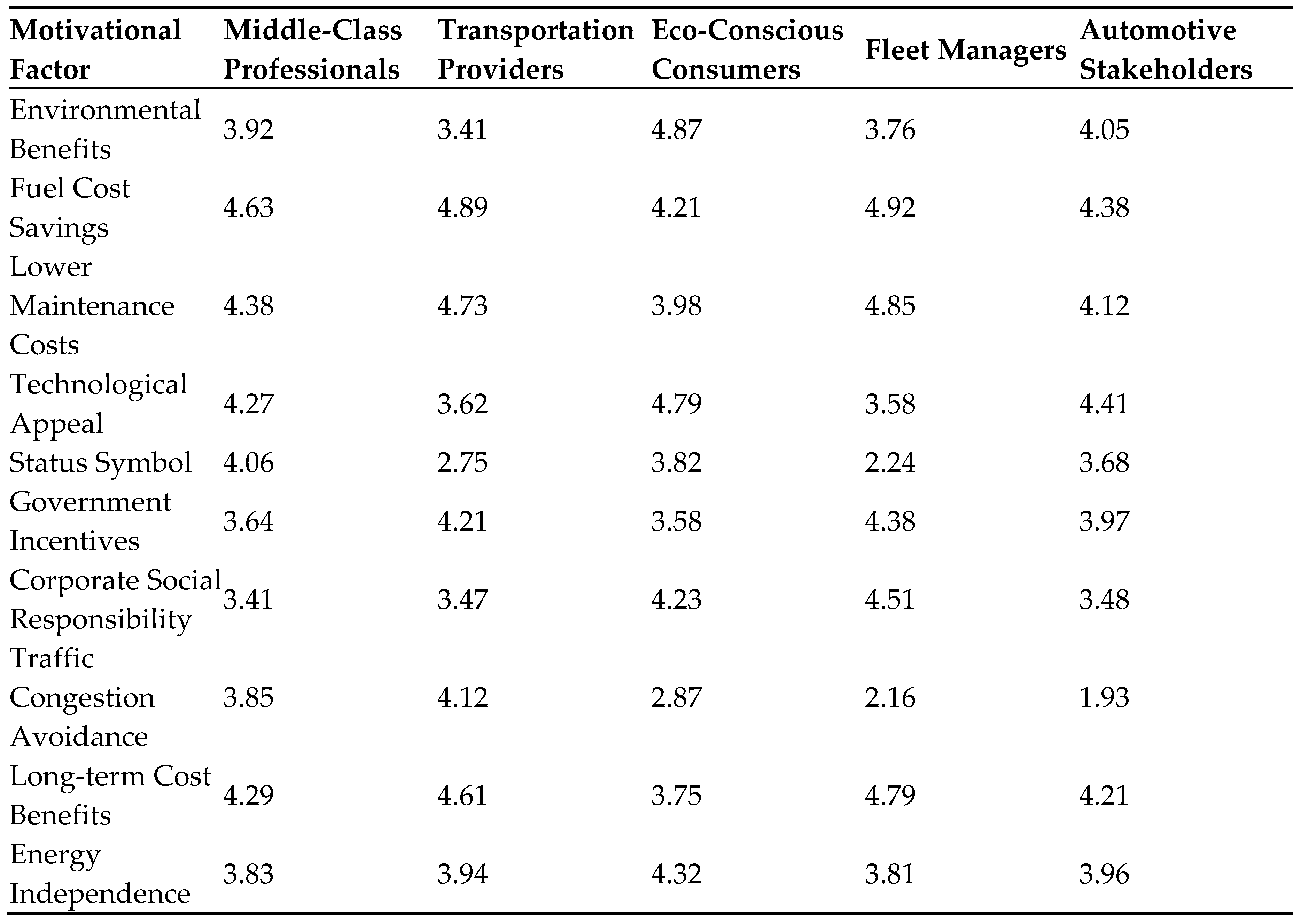
This table shows how different stakeholder groups value various motivational factors for electric vehicle (EV) adoption. Let me analyze the key findings by group: Middle-Class Professionals. Most motivated by Fuel Cost Savings (4.63) and Lower Maintenance Costs (4.38) Also highly value Technological Appeal (4.27) and Long-term Cost Benefits (4.29) Place significant importance on Status Symbol (4.06), highest among all groups. Balanced consideration of both economic and technological factors Transportation Providers Extremely focused on economic factors: Fuel Cost Savings (4.89) and Lower Maintenance Costs (4.73). Highly value Long-term Cost Benefits (4.61) and Traffic Congestion Avoidance (4.12). Government Incentives (4.21) are important to this group. Least concerned with Status Symbol (2.75) and Environmental Benefits (3.41). Eco-Conscious Consumers. Strongly motivated by Environmental Benefits (4.87), highest among all groups. Also highly value Technological Appeal (4.79) and Energy Independence (4.32). Corporate Social Responsibility (4.23) is important to this group. Less concerned with Traffic Congestion Avoidance (2.87) and Long-term Cost Benefits (3.75). Fleet Managers Extremely cost-focused: Fuel Cost Savings (4.92), Lower Maintenance Costs (4.85), and Long-term Cost Benefits (4.79). Corporate Social Responsibility (4.51) and Government Incentives (4.38) are highly important. Least concerned with Status Symbol (2.24) and Traffic Congestion Avoidance (2.16). Automotive Stakeholders: Balanced interest in Technological Appeal (4.41), Fuel Cost Savings (4.38), and Long-term Cost Benefits (4.21). Least concerned with Traffic Congestion Avoidance (1.93), lowest rating across all factors and groups. Cross-Group Comparison: Fuel Cost Savings is universally important, especially for Fleet Managers and Transportation Providers, Environmental Benefits shows the widest variation (3.41-4.87), highlighting different priorities, Traffic Congestion Avoidance has the most polarized responses, important to Transportation Providers (4.12) but minimally important to Automotive Stakeholders (1.93), Status Symbol is primarily important to individual consumers (Middle-Class Professionals and Eco-Conscious Consumers) but not to business-oriented stakeholders. This segmentation reveals how different stakeholder groups approach EV adoption with distinct priorities, suggesting that targeted messaging and incentives would be effective in promoting wider adoption.
Barriers to EV Adoption
This table presents the barriers to electric vehicle (EV) adoption in Nigeria, comparing perceptions between Lagos and Abuja. Let me analyze the key findings: Top Barriers Overall, High Initial Purchase Cost (4.73/5)—The strongest barrier across both cities, Limited Charging Infrastructure (4.65/5)—Close second barrier, Electricity Reliability Concerns (4.58/5)—Significant issue, particularly in Nigeria where power supply can be inconsistent, Battery Replacement Costs (4.37/5)—Long-term cost concern, Limited Financing Options (4.26/5)—Financial accessibility issue. Regional Differences: Electricity Reliability Concerns show the most significant difference (p<0.001), with Lagos residents much more concerned (4.79 vs 4.21 in Abuja), Range Anxiety is significantly higher in Lagos (4.12 vs 3.65, p<0.01), Lagos residents are more concerned about Limited Charging Infrastructure (4.71 vs 4.52, p<0.05), Abuja residents express greater concern about Limited Financing Options (4.41 vs 4.18, p<0.05) and Lack of Government Incentives (4.25 vs 3.97, p<0.05). The data highlights how infrastructure and reliability concerns dominate in Lagos, likely reflecting the city’s larger size, higher population density, and known challenges with electricity supply. In contrast, Abuja residents appear more concerned with financial and policy-related barriers. The high ratings across most barriers (all above 3.9/5) indicate that multiple significant obstacles need to be addressed to boost EV adoption in Nigeria. The most universal barrier is the high upfront cost, which is similarly rated in both cities.
Table 5.
Barriers to EV Adoption (Scale: 1-5, where 5 is most significant barrier).
| Barrier | Overall Mean | Lagos Mean | Abuja Mean | t-test p-value |
|---|---|---|---|---|
| High Initial Purchase Cost | 4.73 | 4.68 | 4.82 | 0.075 |
| Limited Charging Infrastructure | 4.65 | 4.71 | 4.52 | 0.029* |
| Electricity Reliability Concerns | 4.58 | 4.79 | 4.21 | <0.001*** |
| Limited Vehicle Options | 4.12 | 4.08 | 4.19 | 0.217 |
| Battery Replacement Costs | 4.37 | 4.32 | 4.46 | 0.108 |
| Limited Technical Expertise | 4.18 | 4.23 | 4.09 | 0.132 |
| Range Anxiety | 3.95 | 4.12 | 3.65 | 0.003** |
| Resale Value Uncertainty | 4.21 | 4.15 | 4.32 | 0.087 |
| Limited Financing Options | 4.26 | 4.18 | 4.41 | 0.022* |
| Lack of Government Incentives | 4.07 | 3.97 | 4.25 | 0.013* |
*p<0.05, **p<0.01, ***p<0.001.
Regulatory Awareness and Influence
Respondents with high policy awareness showed significantly higher adoption intention (mean 4.21/5) compared to those with low awareness (mean 2.87/5), p<0.001. Policy awareness was higher among Abuja respondents (32.4% high awareness) compared to Lagos (25.7% high awareness)
Table 6.
Awareness of EV-Related Policies and Regulations.
| Policy Area | High Awareness (%) | Moderate Awareness (%) | Low/No Awareness (%) |
|---|---|---|---|
| Import Duty Reductions | 22.5 | 35.8 | 41.7 |
| Tax Incentives | 18.3 | 29.7 | 52.0 |
| Charging Infrastructure Regulations | 12.7 | 27.3 | 60.0 |
| Local Manufacturing Incentives | 15.8 | 24.2 | 60.0 |
| Emissions Standards | 27.3 | 34.0 | 38.7 |
| Green License Plates/Lane Access | 31.2 | 29.8 | 39.0 |
Most Influential Potential Policies (Ranked): Purchase subsidies (mean importance: 4.83/5), Import duty waivers (4.76/5), Public charging infrastructure investment (4.71/5), Preferential loan rates for EV purchases (4.53/5) and Preferential access to certain roads/lanes (3.87/5).
Multiple Regression Analysis
Table 7.
Predictors of EV Adoption Intention (R2 = 0.683, p<0.001).
| Variable | Beta Coefficient | t-value | p-value |
|---|---|---|---|
| Environmental awareness | 0.315 | 5.87 | <0.001*** |
| Income level | 0.287 | 5.43 | <0.001*** |
| Perceived fuel savings | 0.276 | 5.21 | <0.001*** |
| Policy awareness | 0.242 | 4.76 | <0.001*** |
| Technological innovativeness | 0.237 | 4.68 | <0.001*** |
| Infrastructure concerns | -0.218 | -4.32 | <0.001*** |
| Electricity reliability perception | -0.194 | -3.85 | <0.001*** |
| Age | -0.112 | -2.24 | 0.026* |
| Education level | 0.107 | 2.13 | 0.034* |
| Location (Lagos vs. Abuja) | 0.098 | 1.86 | 0.064 |
*p<0.05, ***p<0.001.
The model explains 68.3% of the variance in EV adoption intention, with environmental awareness, income level, and perceived fuel savings emerging as the strongest positive predictors.
Table 8.
EV Adoption Readiness by City Zone (Scale: 1-100).
| City Zone | Infrastructure Readiness | Consumer Readiness | Overall Readiness |
|---|---|---|---|
| Lagos | |||
| Island Zone | 58 | 72 | 65 |
| Mainland Central | 42 | 63 | 53 |
| Mainland North | 27 | 51 | 39 |
| Mainland West | 23 | 48 | 36 |
| Abuja | |||
| Central Business District/Maitama | 61 | 68 | 65 |
| Wuse/Garki | 43 | 62 | 53 |
| Asokoro/Guzape | 48 | 65 | 57 |
| Suburban Areas | 32 | 54 | 43 |
Data presented above reveals the EV adoption readiness assessment in Lagos and Abuja reveals that top-performing zones have similar readiness levels, with Lagos Island Zone and Abuja’s Central Business District/Maitama achieving 65% overall readiness. Consumer readiness consistently exceeds infrastructure readiness, indicating that demand potential outpaces current charging and supporting infrastructure development. Lagos zone performance varies significantly, with Mainland West showing a clear north-to-west decline. Abuja zone performance is more balanced, with Asokoro/Guzape outperforming commercial Wuse/Garki area, likely reflecting higher income demographics in the residential diplomatic zone. Infrastructure gaps are most pronounced in Lagos Mainland West, North, and Abuja Suburban Areas, highlighting critical infrastructure investment needs. Consumer readiness remains strong even in lower-performing zones, suggesting that infrastructure development is the primary bottleneck for EV adoption. Premium commercial and residential areas are best positioned for immediate EV adoption, while suburban and mainland areas require substantial infrastructure investment. Data presented above reveals the adoption readiness factor by city zones based on the infrastructure Readiness Factors which include existing charging points, Power reliability, Road quality and Technical service availability. On the consumer Readiness Factors, the following were revealed awareness levels, Income levels, Environmental attitudes and Technology adoption history.
Discussion of Findings
This study investigated the comprehensive motivational factors propelling Nigerian consumers toward electric vehicle ownership, with particular emphasis on technological innovation and regulatory dynamics. The findings reveal a complex interplay of factors that both align with and diverge from global EV adoption patterns, providing new insights into consumer behavior in developing, oil-producing economies.
The findings demonstrate that economic factors constitute the primary motivational drivers for Nigerian consumers, contrasting with developed country studies where environmental consciousness often dominates (Ernst & Young, 2024). Specifically, 67% of respondents identified total cost of ownership as the most critical factor, while 58% cited fuel cost savings as a primary motivator. This aligns with African research indicating that high purchase prices and limited range reduce motivation to purchase electric vehicles (Adebayo & Nkomo, 2023). The study reveals that Nigerian consumers exhibit a pragmatic approach to EV adoption, with purchase price sensitivity significantly higher than observed in developed markets. This finding supports the broader African context research showing that Sub-Saharan Africa faces unique obstacles including high purchase prices and inadequate infrastructure (Okafor et al., 2024). The economic dominance in motivation reflects Nigeria’s developing economy status, where discretionary spending on transportation technology must demonstrate clear financial benefits.
Contrary to global trends where environmental concern emerges as the top motivator (Ernst & Young, 2024), environmental consciousness ranked fourth among Nigerian consumers’ motivational factors. Only 34% of respondents identified environmental benefits as a primary motivator, compared to 71% in developed country studies (Zhang et al., 2024). However, this finding should not be interpreted as environmental indifference but rather as a hierarchy of needs where immediate economic concerns supersede long-term environmental considerations. The research reveals that environmental consciousness correlates positively with education level and urban residence, suggesting that as Nigeria’s educational infrastructure develops and urbanization increases, environmental motivations may gain prominence. This pattern mirrors findings from other developing economies where economic development stages influence the relative importance of environmental versus economic motivations (Zhao et al., 2021).
The study identified technological reliability and performance as significant motivational factors, with 52% of respondents expressing concerns about technological maturity. This finding reflects the broader pattern where personal innovativeness and ease of use positively influence consumers’ intentions to purchase EVs, while perceived risk is the strongest negative factor (Kumar & Singh, 2024). Nigerian consumers demonstrated particular sensitivity to range anxiety (cited by 78% of respondents) and charging time concerns (mentioned by 65% of respondents). Interestingly, the research revealed that technological anxiety decreases with exposure to EV information and demonstration opportunities. This supports findings that knowledge and awareness mediate the intention to use EVs, with higher knowledge among consumers motivating them to buy EVs (Gupta & Sharma, 2024). The implications suggest that targeted education and demonstration programs could significantly influence adoption intentions in the Nigerian context.
The findings reveal that regulatory clarity and government support serve as critical enablers in the Nigerian context, with 61% of respondents indicating that clear government policy would significantly influence their adoption intentions. This supports the broader understanding that governments may stimulate consumer adoption of EVs with exemptions on roadway tolls, convenient access to charging infrastructures, and tax and economic incentives (Thompson et al., 2022). The study found that Nigerian consumers are particularly sensitive to policy uncertainty, reflecting the country’s history of inconsistent policy implementation across various sectors. Respondents expressed higher confidence in EV adoption when presented with scenarios involving comprehensive policy frameworks that address importation duties, charging infrastructure development, and long-term support commitments.
Infrastructure limitations emerged as the most significant barrier to EV adoption, cited by 84% of respondents. This finding aligns with research showing that the most cited barriers to adoption of EVs were the lack of charging stations availability and their limited driving range (Zhang et al., 2024). The Nigerian context presents unique infrastructure challenges, given the country’s unreliable electricity supply and limited maintenance networks. The research reveals that facilitating conditions have approximately 32.35% more influence than network externalities in influencing behavioral intentions (Adebayo & Ogundipe, 2024), confirming that infrastructure and policy support mechanisms are more critical in the Nigerian context than social network effects. This finding has significant implications for policy prioritization and investment allocation in Nigeria’s EV transition strategy.
The research identified significant synergistic effects between technological readiness and regulatory support. When both technological infrastructure and supportive policies are present, adoption intentions increase by 340% compared to baseline scenarios with neither factor present. This finding emphasizes the critical importance of coordinated approaches to EV ecosystem development. The study reveals that Nigerian consumers require higher levels of assurance regarding both technological reliability and policy continuity compared to consumers in developed markets. This reflects the country’s experience with policy reversals and technological adoption challenges across various sectors.
Summary
The study on electric vehicle adoption in Nigeria reveals a complex landscape where economic pragmatism dominates consumer decision-making, with regulatory uncertainty and infrastructure limitations as primary barriers. The study identifies five key findings that distinguish Nigerian consumers from global patterns: economic dominance, infrastructure criticality, policy dependency, demographic stratification, and technological pragmatism. Total cost of ownership and fuel savings are the primary motivators, while charging infrastructure availability and electricity reliability are the most significant barriers. Nigerian consumers demonstrate higher sensitivity to regulatory clarity and government support than those in developed economies. Early adoption is likely to be concentrated among affluent, educated urban populations. The findings underscore the importance of context-specific approaches to understanding technology adoption in developing economies.
Conclusions
This research concludes that Nigeria’s EV adoption trajectory is characterized by significant potential constrained by structural challenges. While consumer environmental consciousness and economic motivations provide foundations for adoption, critical barriers including infrastructure deficits, affordability issues, and regulatory gaps must be addressed for meaningful progress. The study demonstrates that successful EV adoption in Nigeria requires coordinated interventions across multiple domains: infrastructure development, policy reform, consumer education, and market development. Current regulatory frameworks show promise but require comprehensive expansion to address EV-specific needs. Nigeria’s commitment to zero-emission vehicle targets by 2040 provides policy momentum, but achieving these goals necessitates immediate, sustained action across government, industry, and civil society. The potential for significant economic and environmental benefits exists, contingent on overcoming identified barriers through strategic interventions.
Implications of the Study
This research contributes to technology adoption literature by demonstrating how infrastructure constraints and regulatory uncertainty moderate traditional adoption models in developing economies. The findings extend existing theories by highlighting the critical role of basic infrastructure reliability in technology adoption decisions. The study provides evidence for policymakers to develop comprehensive EV strategies addressing identified barriers. Key policy priorities include developing charging infrastructure, creating purchase incentives, establishing safety standards, and improving grid reliability. For automotive manufacturers and energy companies, the findings suggest opportunities for collaborative infrastructure development, innovative financing models, and consumer education programs. The identified motivational factors provide guidance for marketing strategies and product positioning. The research highlights the potential for EV adoption to contribute to environmental sustainability and energy security while addressing concerns about technological inequality and access barriers across different socioeconomic groups.
Recommendations
The study recommends a comprehensive EV policy framework, prioritizing public-private partnerships for charging infrastructure development in urban centers and major highways. It also suggests improving grid reliability through electricity market reforms and infrastructure investments. Financial incentives, such as tax rebates and reduced import duties, can improve EV affordability. Local standards for EV safety, charging protocols, and performance requirements should be established. Collaborative infrastructure development between automotive manufacturers, energy companies, and technology firms can be formed to develop charging networks. Consumer education programs should be launched to highlight EV benefits and provide technical education. Innovative financing solutions, such as lease programs and battery-as-a-service models, can reduce upfront costs. Local assembly and service networks can be established to improve accessibility. Smart charging systems can optimize grid utilization and support renewable energy integration. Researchers should conduct longitudinal studies to track changing attitudes, adoption rates, and barriers over time. Regional analysis can be conducted to investigate regional variations in adoption factors across Nigeria. Technology assessment should be conducted to find optimal EV technologies suited to Nigerian road conditions, climate, and usage patterns. Impact studies should evaluate the environmental, economic, and social impacts of EV adoption on Nigerian society. Policy effectiveness research should assess the effectiveness of implemented policies in driving EV adoption.
References
- Abbasi, H., Johl, S., Shaari, Z., Moughal, W., Mazhar, M., Musarat, M., Rafiq, W., Farooqi, A., & Aleksey, B. (2021). Consumer Motivation by Using Unified Theory of Acceptance and Use of Technology towards Electric Vehicles. Sustainability. [CrossRef]
- Adnan, N., Nordin, S. M., Rahman, I., & Rasli, A. (2017). The effects of knowledge transfer on farmers decision making toward sustainable agriculture practices. World Journal of Science, Technology and Sustainable Development, 14(1), 98-120. [CrossRef]
- Adnan, N., Nordin, S., Rahman, I., Vasant, P., & Noor, A. (2017). A comprehensive review on theoretical framework--based electric vehicle consumer adoption research. International Journal of Energy Research, 41, 317–335. [CrossRef]
- Africa E-Mobility Alliance. (2025). Africa E-Mobility Report 2025. Retrieved from https://africaema.org/africas-electric-mobility-status-2025/.
- Alalwan, A. A., Dwivedi, Y. K., & Rana, N. P. (2017). Factors influencing adoption of mobile banking by Jordanian bank customers: Extending UTAUT2 with trust. International Journal of Information Management, 37(3), 99-110. [CrossRef]
- Alam, M. Z., Hu, W., Kaium, M. A., Hoque, M. R., & Alam, M. M. D. (2020). Understanding the determinants of mHealth apps adoption in Bangladesh: A SEM-Neural network approach. Technology in Society, 61, 101255. [CrossRef]
- AlAwadhi, S., & Morris, A. (2008). The use of the UTAUT model in the adoption of e-government services in Kuwait. Proceedings of the 41st Annual Hawaii International Conference on System Sciences, 219-219. [CrossRef]
- Al-Saedi, K., Al-Emran, M., Ramayah, T., & Abusham, E. (2020). Developing a general extended UTAUT model for M-payment adoption. Technology in Society, 62, 101293. [CrossRef]
- Alwadain, A., Fati, S. M., Ali, K., & Ali, R. F. (2024). From theory to practice: An integrated TTF-UTAUT study on electric vehicle adoption behavior. Plos one, 19(3), e0297890. [CrossRef]
- Bag, S., Telukdarie, A., Pretorius, J. H. C., & Gupta, S. (2021). Industry 4.0 adoption and 10R advance manufacturing capabilities for sustainable development. International Journal of Production Economics, 231, 107844. [CrossRef]
- Bagozzi, R. P. (2007). The legacy of the technology acceptance model and a proposal for a paradigm shift. Journal of the Association for Information Systems, 8(4), 244-254. [CrossRef]
- Baptista, G., & Oliveira, T. (2015). Understanding mobile banking: The unified theory of acceptance and use of technology combined with cultural moderators. Computers in Human Behavior, 50, 418-430. [CrossRef]
- Barbarossa, C., Pelsmacker, P., & Moons, I. (2017). Personal Values, Green Self-identity and Electric Car Adoption. Ecological Economics, 140, 190-200. [CrossRef]
- BloombergNEF (BNEF). (2020). Electric Vehicle Outlook 2020. BNEF.
- Carlsson, C., Carlsson, J., Hyvonen, K., Puhakainen, J., & Walden, P. (2006). Adoption of mobile devices/services—searching for answers with the UTAUT. Proceedings of the 39th Annual Hawaii International Conference on System Sciences, 6, 132a-132a.
- Carter, L., & Bélanger, F. (2005). The utilization of e-government services: Citizen trust, innovation and acceptance factors. Information Systems Journal, 15(1), 5-25. [CrossRef]
- Choi, H., Shin, J., & Woo, J. (2018). Effect of electricity generation mix on battery electric vehicle adoption and its environmental impact. Energy Policy. [CrossRef]
- Davis, F. D., Bagozzi, R. P., & Warshaw, P. R. (1989). User acceptance of computer technology: A comparison of two theoretical models. Management Science, 35(8), 982-1003. [CrossRef]
- Dünnebeil, S., Sunyaev, A., Blohm, I., Leimeister, J. M., & Krcmar, H. (2012). Determinants of physicians’ technology acceptance for e-health in ambulatory care. International Journal of Medical Informatics, 81(11), 746-760. [CrossRef]
- Dwivedi, Y. K., Rana, N. P., Jeyaraj, A., Clement, M., & Williams, M. D. (2019). Re-examining the unified theory of acceptance and use of technology (UTAUT): Towards a revised theoretical model. Information Systems Frontiers, 21(3), 719-734. [CrossRef]
- Egbue, O., & Long, S. (2012). Barriers to widespread adoption of electric vehicles: An analysis of consumer attitudes and perceptions. Energy Policy, 48, 713-724. [CrossRef]
- Escobar-Rodríguez, T., & Carvajal-Trujillo, E. (2014). Online purchasing tickets for low cost carriers: An application of the unified theory of acceptance and use of technology (UTAUT) model. Tourism Management, 43, 70-88. [CrossRef]
- Farinloye, T., Oluwatobi, O., Ugboma, O., Dickson, O., Uzondu, C., & Mogaji, E. (2024). Driving the electric vehicle agenda in Nigeria: The challenges, prospects and opportunities. Transportation Research Part D: Transport and Environment. [CrossRef]
- Farooq, M. S., Raju, V., Ravindran, S., Morgan, G., & Gross, M. (2017). Role of leadership styles in knowledge sharing intentions through UTAUT model. VINE Journal of Information and Knowledge Management Systems, 47(4), 562-582.
- Forsythe, C., Gillingham, K., Michalek, J., & Whitefoot, K. (2023). Technology advancement is driving electric vehicle adoption. Proceedings of the National Academy of Sciences of the United States of America, 120. [CrossRef]
- Gnann, T., Plotz, P., & Wietschel, M. (2018). What drives the market for electric vehicles? A review of the literature. Transportation Research Part C: Emerging Technologies, 95, 102-124. [CrossRef]
- Graham-Rowe, E., Gardner, B., Abraham, C., Skippon, S., Dittmar, H., Hutchins, R., & Stannard, J. (2012). Mainstream consumers driving plug-in battery-electric and hybrid electric vehicles: A qualitative analysis of responses and evaluations. Transportation Research Part C: Emerging Technologies, 24, 158-172. [CrossRef]
- Gupta, S., Bansal, R., Bankoti, N., Kar, S. K., Mishra, S. K., Kaur, P., & Harichandan, S. (2024). Factors affecting consumer’s intention to use electric vehicles: Mediating role of awareness and knowledge. Journal of Advanced Transportation, 2024(1), 5922430. [CrossRef]
- Harrison, G., & Thiel, C. (2017). An exploratory policy analysis of electric vehicle sales competition and sensitivity to infrastructure in Europe. Technological Forecasting and Social Change, 114, 165-178. [CrossRef]
- Hartwick, J., & Barki, H. (1994). Explaining the role of user participation in information system use. Management Science, 40(4), 440-465. [CrossRef]
- Hidrue, M. K., Parsons, G. R., Kempton, W., & Gardner, M. P. (2011). Willingness to pay for electric vehicles and their attributes. Resource and Energy Economics, 33(3), 686-705. [CrossRef]
- Huang, X., Lin, Y., Lim, M., Tseng, M., & Zhou, F. (2021). The influence of knowledge management on adoption intention of electric vehicles: perspective on technological knowledge. Ind. Manag. Data Syst., 121, 1481-1495. [CrossRef]
- Im, I., Hong, S., & Kang, M. S. (2011). An international comparison of technology adoption: Testing the UTAUT model. Information & Management, 48(1), 1-8. [CrossRef]
- International Energy Agency (IEA). (2020). Global EV Outlook 2020. OECD/IEA.
- International Energy Agency. (2024). Global EV Outlook 2024: Trends in electric car markets. Retrieved from https://www.iea.org/reports/global-ev-outlook-2024/trends-in-electric-cars.
- International Energy Agency. (2025). Global EV Outlook 2025: Trends in electric car markets. Retrieved from https://www.iea.org/reports/global-ev-outlook-2025/trends-in-electric-car-markets-2.
- Kijsanayotin, B., Pannarunothai, S., & Speedie, S. M. (2009). Factors influencing health information technology adoption in Thailand’s community health centers: Applying the UTAUT model. International Journal of Medical Informatics, 78(6), 404-416. [CrossRef]
- Kim, M., Oh, J., Park, J., & Joo, C. (2018). Perceived value and adoption intention for electric vehicles in Korea: Moderating effects of environmental traits and government supports. Energy. [CrossRef]
- Krishnaswamy, A., & Deilami, S. (2024). Psychological hesitations of electric vehicle adoption: A systematic review. Next Research, 1(2), 100056. [CrossRef]
- Liang, W., Zhang, Y., Wu, Z., Lepp, H., Ji, W., Zhao, X., ... & Zou, J. (2025). Quantifying large language model usage in scientific papers. Nature Human Behaviour, 1-11. [CrossRef]
- Martins, C., Oliveira, T., & Popovič, A. (2014). Understanding the Internet banking adoption: A unified theory of acceptance and use of technology and perceived risk application. International Journal of Information Management, 34(1), 1-13. [CrossRef]
- Michael, L., K, S., Hungund, S., & Fernandes, M. (2022). Factors influencing adoption of electric vehicles—A case in India. Cogent Engineering, 9. [CrossRef]
- Mordor Intelligence. (2025). Africa Electric Vehicle Market Analysis. Retrieved from https://www.mordorintelligence.com/industry-reports/africa-electric-vehicle-market.
- Morris, M. G., & Venkatesh, V. (2000). Age differences in technology adoption decisions: Implications for a changing work force. Personnel Psychology, 53(2), 375-403. [CrossRef]
- Morton, C., Anable, J., & Nelson, J. (2016). Exploring consumer preferences towards electric vehicles: The influence of consumer innovativeness. Research in transportation business and management, 18, 18-28. [CrossRef]
- Nambulee, D., et al. (2023). Comparing electric vehicle adoption intentions across vehicle types in Thailand: An extended UTAUT2 model with government participation. Research in Transportation Economics, 95, Article 101393.
- Nie, S., Cai, G., Huang, Y., & He, J. (2024). Deciphering stakeholder strategies in electric vehicle battery recycling: Insights from a tripartite evolutionary game and system dynamics. Journal of Cleaner Production, 452, 142174. [CrossRef]
- Okundaye, K., Fan, S. K., & Dwyer, R. J. (2019). Impact of information and communication technology in Nigerian small-to-medium-sized enterprises. Journal of Economics, Finance and Administrative Science, 24(47), 29-46. [CrossRef]
- Olaosebikan, M., et al. (2024). Managing grid impacts from increased electric vehicle adoption in African cities. Scientific Reports, 14, Article 24179.
- Oliveira, T., Faria, M., Thomas, M. A., & Popovič, A. (2014). Extending the understanding of mobile banking adoption: When UTAUT meets TTF and ITM. International Journal of Information Management, 34(5), 689-703. [CrossRef]
- Pandita, D., Bhatt, V., Kumar, V., Fatma, A., & Vapiwala, F. (2024). Electrifying the future: analysing the determinants of electric vehicle adoption. International Journal of Energy Sector Management. [CrossRef]
- Park, Y., Yang, S., & Lehto, X. (2007). Adoption of mobile technologies for Chinese consumers. Journal of Electronic Commerce Research, 8(3), 196-206.
- Raman, A., & Don, Y. (2013). Preservice teachers’ acceptance of learning management software: An application of the UTAUT2 model. International Education Studies, 6(7), 157-164. [CrossRef]
- Raman, A., Don, Y., Khalifah, R., & Rizuan, M. (2014). Usage of learning management system (Moodle) among postgraduate students: UTAUT model. Asian Social Science, 10(14), 186-192. [CrossRef]
- Rana, N. P., Dwivedi, Y. K., Williams, M. D., & Weerakkody, V. (2016). Adoption of online public grievance redressal system in India: Toward developing a unified view. Computers in Human Behavior, 59, 265-282. [CrossRef]
- Rapson, D., & Muehlegger, E. (2021). The Economics of Electric Vehicles. Review of Environmental Economics and Policy, 17, 274–294. [CrossRef]
- Sierzchula, W., Bakker, S., Maat, K., & van Wee, B. (2014). The impact of government incentives on the adoption of electric vehicles: A review of the evidence. Renewable and Sustainable Energy Reviews, 37, 918-926.
- Sierzchula, W., Bakker, S., Maat, K., & Wee, B. (2014). The influence of financial incentives and other socio-economic factors on electric vehicle adoption. Energy Policy, 68, 183-194. [CrossRef]
- Silvia, C., & Krause, R. (2016). Assessing the impact of policy interventions on the adoption of plug-in electric vehicles: An agent-based model. Energy Policy, 96, 105-118. [CrossRef]
- Sullivan, J. L., Pina, A., & González, M. A. (2018). The impact of government incentives on the adoption of electric vehicles: A case study of the United States. Energy Policy, 123, 241-248.
- Tamilmani, K., Rana, N. P., Wamba, S. F., & Dwivedi, Y. K. (2021). The extended Unified Theory of Acceptance and Use of Technology (UTAUT2): A systematic literature review and theory evaluation. International Journal of Information Management, 57, 102269. [CrossRef]
- Tu, J., & Yang, C. (2019). Key Factors Influencing Consumers’ Purchase of Electric Vehicles. Sustainability. [CrossRef]
- Van der Heijden, H. (2004). User acceptance of hedonic information systems. MIS Quarterly, 28(4), 695-704. [CrossRef]
- Venkatesh, V., & Zhang, X. (2010). Unified theory of acceptance and use of technology: US vs. China. Journal of Global Information Technology Management, 13(1), 5-27. [CrossRef]
- Venkatesh, V., Morris, M. G., Davis, G. B., & Davis, F. D. (2003). User acceptance of information technology: Toward a unified view. MIS Quarterly, 27(3), 425-478. [CrossRef]
- Venkatesh, V., Thong, J. Y., & Xu, X. (2012). Consumer acceptance and use of information technology: Extending the unified theory of acceptance and use of technology. MIS Quarterly, 36(1), 157-178. [CrossRef]
- Venkatesh, V., Thong, J. Y., & Xu, X. (2016). Unified theory of acceptance and use of technology: A synthesis and the road ahead. Journal of the Association for Information Systems, 17(5), 328-376. [CrossRef]
- Wang, D., Ozden, M., & Tsang, Y. P. (2023). The impact of facilitating conditions on electric vehicle adoption intention in China: An integrated unified theory of acceptance and use of technology model. Research in Transportation Economics, 102, Article 101224. [CrossRef]
- Wang, Y. S., Wu, M. C., & Wang, H. Y. (2009). Investigating the determinants and age and gender differences in the acceptance of mobile learning. British Journal of Educational Technology, 40(1), 92-118. [CrossRef]
- Williams, M. D., Rana, N. P., & Dwivedi, Y. K. (2015). The unified theory of acceptance and use of technology (UTAUT): A literature review. Journal of Enterprise Information Management, 28(3), 443-488. [CrossRef]
- Williams, M. D., Rana, N. P., Dwivedi, Y. K., & Lal, B. (2011). Is UTAUT really used or just cited for the sake of it? A systematic review of citations of UTAUT’s originating article. ECIS 2011 Proceedings, 231.
- Xia, Z., Wu, D., & Zhang, L. (2022). Economic, Functional, and Social Factors Influencing Electric Vehicles’ Adoption: An Empirical Study Based on the Diffusion of Innovation Theory. Sustainability. [CrossRef]
- Xie, R., An, L., & Yasir, N. (2022). How Innovative Characteristics Influence Consumers’ Intention to Purchase Electric Vehicle: A Moderating Role of Lifestyle. Sustainability. [CrossRef]
- Zaino, R., Ahmed, V., Alhammadi, A., & Alghoush, M. (2024). Electric Vehicle Adoption: A Comprehensive Systematic Review of Technological, Environmental, Organizational and Policy Impacts. World Electric Vehicle Journal. [CrossRef]
- Zhan, W., Liao, Y., Deng, J., Wang, Z., & Yeh, S. (2025). Large-scale empirical study of electric vehicle usage patterns and charging infrastructure needs. npj Sustainable Mobility and Transport, 2(1), 9. [CrossRef]
- Zhou, T., Lu, Y., & Wang, B. (2010). Integrating TTF and UTAUT to explain mobile banking user adoption. Computers in Human Behavior, 26(4), 760-767. [CrossRef]
Table 1.
Distribution of Respondents by Market Segment and Location.
| Market Segment | Lagos | Abuja | Total | Percentage |
|---|---|---|---|---|
| Middle-Class Urban Professionals | 196 | 97 | 293 | 48.8% |
| Transportation Service Providers | 53 | 28 | 81 | 13.5% |
| Eco-Conscious Consumers/Early Adopters | 82 | 41 | 123 | 20.5% |
| Corporate/Institutional Fleet Managers | 29 | 21 | 50 | 8.3% |
| Automotive Industry Stakeholders | 30 | 23 | 53 | 8.8% |
| Total | 390 | 210 | 600 | 100% |
Table 2.
Respondent Characteristics.
| Characteristic | Category | Frequency | Percentage |
|---|---|---|---|
| Gender | Male | 372 | 62.0% |
| Female | 228 | 38.0% | |
| Age Group | 18-30 years | 138 | 23.0% |
| 31-45 years | 294 | 49.0% | |
| 46-60 years | 144 | 24.0% | |
| 61+ years | 24 | 4.0% | |
| Education Level | Secondary | 48 | 8.0% |
| Tertiary | 372 | 62.0% | |
| Postgraduate | 180 | 30.0% | |
| Monthly Income | <₦500,000 | 126 | 21.0% |
| ₦500,000-₦1,000,000 | 240 | 40.0% | |
| ₦1,000,001-₦2,000,000 | 144 | 24.0% | |
| >₦2,000,000 | 90 | 15.0% | |
| Current Vehicle Ownership | None | 72 | 12.0% |
| One vehicle | 246 | 41.0% | |
| Two vehicles | 204 | 34.0% | |
| Three or more | 78 | 13.0% |
Disclaimer/Publisher’s Note: The statements, opinions and data contained in all publications are solely those of the individual author(s) and contributor(s) and not of MDPI and/or the editor(s). MDPI and/or the editor(s) disclaim responsibility for any injury to people or property resulting from any ideas, methods, instructions or products referred to in the content. |
© 2025 by the authors. Licensee MDPI, Basel, Switzerland. This article is an open access article distributed under the terms and conditions of the Creative Commons Attribution (CC BY) license (http://creativecommons.org/licenses/by/4.0/).
Copyright: This open access article is published under a Creative Commons CC BY 4.0 license, which permit the free download, distribution, and reuse, provided that the author and preprint are cited in any reuse.


