
Submitted:
19 September 2025
Posted:
02 October 2025
You are already at the latest version
Preprints on COVID-19 and SARS-CoV-2
Abstract
A lack of effective strategies to improve work-life balance for remote millennial
employees is a concern for healthcare leaders. Without such strategies, organizations may
struggle to remain competitive and ensure sustainability. Grounded in Homans’s social
exchange theory, this qualitative pragmatic inquiry identified and explored the effective
strategies healthcare leaders use to improve work-life balance for remote millennial
employees to increase productivity. Participants were six leaders of healthcare
organizations located in the southeastern United States with at least 2 years of leadership
experience managing remote employees. Data were collected through semistructured
interviews and analyzed using Braun and Clarke’s six-step thematic analysis. Four key
themes were revealed: (a) empowering flexibility through remote and hybrid work
models, (b) building a culture of psychological safety and support, (c) investing in
employee wellness and digital health tools, and (d) measuring strategy effectiveness
through feedback and performance metrics. Key recommendations include adopting
hybrid work policies with structured expectations, embedding psychological safety
training into leadership development, expanding access to digital wellness resources, and
implementing transparent feedback loops to monitor strategy effectiveness. The
implications for positive social change include the potential for healthcare leaders to
create healthier remote work environments, promote well-being, and enhance the quality
of services delivered to the community through a more productive workforce.
Keywords:
remote
; hybrid
; work life balance
; covid
Section 1: Foundation of the Project
Background of the Problem
The shift to remote work, accelerated by the COVID-19 pandemic, has fundamentally transformed business operations. Although remote work has introduced benefits such as increased flexibility, greater autonomy, and reduced commuting time, the long-term effects on employees, particularly millennials, remain uncertain. Millennials, born between 1981 and 1996, represent the largest generational group in the workforce as of 2025 Twenge et al. (2010). Following the COVID-19 pandemic, the millennial cohort became even more central to the workforce as organizations adopted digital and hybrid work models.
Within these models, millennial employees frequently assume leadership in areas such as technology fluency, innovation, and adaptability. Meitiasari et al. (2024) emphasized that the rise of this generational cohort has introduced specific challenges for business leaders, particularly in healthcare, who face the task of effectively managing and engaging millennial employees in remote or hybrid settings. Millennial employees prioritize work-life balance (Twenge et al., 2010), a value often misaligned with traditional workplace structures, including some remote and hybrid work arrangements (Twenge et al., 2010). The general business problem was that some healthcare leaders do not know how to improve work-life balance among remote millennials to increase employee productivity.
Business Problem Focused and Project Purpose
The specific business problem was that some healthcare business leaders lack effective strategies to improve work-life balance among remote millennial employees to increase employee productivity. Therefore, the purpose of my qualitative pragmatic inquiry project was to identify and explore effective strategies to improve work-life balance among remote millennial employees to increase employee productivity. The target population for my research project included six business leaders in the healthcare industry, located in the southeastern United States, who have successfully used effective strategies to improve work-life balance to increase employee productivity among remote millennial employees. Eligibility criteria for participation in my research project included at least 2 years of leadership experience managing remote millennial employees. Each participant needed to be willing to share professional experiences and insights. I used purposive sampling to recruit participants through professional networks and social media platforms. For my qualitative pragmatic research project, I collected data through semistructured interviews. I used social exchange theory (Homans, 1958) as a framework for my research project.
Research Question
What effective strategies do healthcare leaders use to improve work-life balance among remote millennial employees to increase employee productivity?
Assumptions and Limitations
Assumptions
In research, assumptions are statements accepted as true without verification (Creswell & Poth, 2018). In my research project, I made three key assumptions. The first assumption was that effective employee well-being strategies had the potential to increase productivity among remote millennial employees. This assumption was based on the understanding that blurred boundaries between work and personal life, common in hybrid and remote settings, may negatively impact employee well-being. The second assumption was that each selected healthcare business leader participating in the interviews would provide honest and accurate responses when describing perspectives on employee well-being, and productivity in remote work environments. The third assumption was that every participant possessed relevant knowledge and experience related to improving work-life balance for remote millennial employees to increase productivity.
Limitations
Limitations refer to potential weaknesses or constraints that may affect the outcomes of a research project (Creswell & Poth, 2018). In my research project, I anticipated several limitations. First, in my research project, I focused on a small sample of business leaders specializing in human resources and organizational development within medium to large-sized healthcare organizations located in the southeastern United States. This limited sample size may not have captured the full range of experiences or strategies used across different industries, geographic areas, or work arrangements, which may have reduced the transferability of the findings to other contexts or settings. The results of my research project may be most applicable to organizations with comparable work structures or challenges related to managing millennial employees. Second, because I relied on qualitative interviews, a limitation existed regarding the potential subjectivity of participant responses. Business leaders may have expressed views influenced by personal experience or individual bias, which may have not aligned with the lived experiences of millennial employees. To mitigate this limitation, I designed the interview protocol to reduce the potential for bias and would incorporate triangulation to capture a range of perspectives across participants. Third, the remote work environment continues to evolve, and new organizational policies or strategic approaches may emerge after the completion of my research project. In my research project, I identified and explored strategies implemented during a specific time frame; therefore, changes in industry practices or internal organizational approaches following data collection may impact the long-term relevance or applicability of my findings.
Transition
In Section 1, I explored the challenges and strategies related to improving remote millennial employees’ work-life balance to increase employee productivity. In Section 1, I provided the background for the problem, outlined the specific business problem and project purpose, and discussed the assumptions and limitations of my research project. In Section 2, I review professional and academic literature to provide a theoretical foundation for my research project, including exploring the healthcare industry, millennial employees, work-life balance, and employee productivity. In Section 3, I focus on project ethics, the nature of the project, data collection and analysis procedures, and measures to ensure reliability and validity. In Section 4, I present my research findings, discuss their implications for business practice and social change, and identify areas for future research.
Section 2: The Literature Review
A Review of the Professional and Academic Literature
The COVID-19 pandemic altered workplace norms, accelerating the transition to remote and hybrid work arrangements across industries. While remote and hybrid work arrangements offer increased autonomy and flexibility, these work arrangements have also introduced a host of new challenges for employees, particularly among millennial employees. As a generation known for valuing work-life integration, continuous learning, and purposeful work, millennials have experienced both the benefits and drawbacks of remote work in unique ways (Twenge et al., 2010). The shift has prompted a reevaluation of how leadership, organizational support, and workplace culture contribute to employee well-being and productivity in a remote work setting.
In this literature synthesis, I examine the key themes emerging from scholarly research related to millennial experiences in remote work, including work-life balance, mental health and well-being, mentorship and networking opportunities, professional development, and employee productivity. I searched for relevant literature using the Walden Library. To ensure credibility and relevance, I narrowed the search to publications from 2020-2025, focusing on peer-reviewed journals, industry reports, and titles related to my research topic. The literature reviewed included 34 sources, with approximately 29 published in the last 6 years. Of these, 27 articles were peer-reviewed, accounting for about 79% of the total sources. This selection ensured that the findings provided a conceptual foundation for understanding the lived experiences explored in my research project and highlighted the effective strategies most critical to improving worklife balance for remote millennial employees to increase productivity.
My review of the literature was thorough and systematic. First, I addressed the conceptual framework, including a critical analysis of supporting theories. Second, I critically analyzed and synthesized scholarship about potential themes and phenomena relating to my project’s purpose: to identify and explore effective strategies to improve work-life balance for remote millennial employees to increase productivity. Finally, I compared and contrasted different perspectives and evaluated the relationship of my proposed project to previous research and findings. I aimed to provide a robust, substantiated review of the professional and academic literature related to my research project on effective strategies to improve work-life balance for remote millennial employees to increase employee productivity.
Conceptual Framework: Social Exchange Theory
To guide this literature review and support the interpretation of findings, the conceptual framework for my research project was grounded in social exchange theory (SET). Homans (1958) initially developed SET to explain social behavior through the lens of behaviorist psychology, emphasizing how individuals engage in exchanges based on cost-benefit calculations. Blau (1964) later expanded the theory to encompass more complex social and organizational relationships, introducing constructs such as social structures, trust, loyalty, and respect as critical intangible outcomes of social interactions.
The key concepts central to SET included reciprocity, mutual obligation, perceived benefits and costs, and social rewards (Cropanzano & Mitchell, 2005). A primary proposition of SET is that individuals are more likely to reciprocate positive behaviors when they perceive their social exchanges as fair and beneficial. In organizational contexts, SET suggests that when employees believe they are supported through resources such as flexibility, recognition, or emotional consideration, they are more inclined to respond with greater loyalty, engagement, and performance
(Cropanzano & Mitchell, 2005). SET aligns with the purpose of my research, to identify and explore effective strategies to improve work-life balance for remote millennial employees to increase productivity.
SET has evolved through integration with modern organizational constructs such as perceived organizational support (POS) and leader-member exchange (LMX) theory, both of which build upon the idea of reciprocal relationships in the workplace. For instance, Maulana et al. (2024) and Pattnaik and Jena (2021) applied SET to investigate how organizational support during the COVID-19 pandemic influenced remote employee engagement. Leadership traits and decision-making styles significantly influence how employees respond to organizational policies, especially among younger generations (Le et al., 2023).
SET was pertinent to my research project because millennial employees, defined as those born between 1981 and 1996, place a high value on autonomy, flexibility, and meaningful work-life integration (Twenge et al., 2010). In remote and hybrid environments, when leaders demonstrate a commitment to supporting work-life balance, employees are more likely to respond positively with increased engagement, retention, and discretionary effort (Agarwal et al., 2024; Wang et al., 2020). Conversely, when this exchange is perceived as one-sided or insufficient, outcomes such as disengagement, dissatisfaction, and turnover may occur (Cropanzano & Mitchell, 2005). Therefore, SET provides a robust conceptual foundation for exploring the reciprocal dynamics between leadership practices and millennial work-life outcomes.
Challenges in Maintaining Work-Life Balance
Maintaining work-life balance has become increasingly challenging for millennials in the post-COVID remote work environment. The absence of clear distinctions between professional and personal responsibilities often results in extended work hours, reducing time available for rest and family engagement Bellmann and Hübler (2020). Millennials appear to be particularly susceptible to this issue due to their frequent use of digital technologies and their expectations for flexible work arrangements. Pattnaik and Jena (2021) observed that many millennials experience difficulty disengaging from work-related thoughts and activities outside of scheduled hours, leading to persistent connectivity and elevated stress levels. These conditions directly conflict with one of the intended benefits of remote work, supporting greater balance and individual autonomy in managing daily responsibilities.
Organizational Support of Employee Mental Health and Well-Being
Mental health has emerged as a concern for remote workers, especially millennials who face mounting pressures from both professional responsibilities and personal obligations. The shift to remote work initially offered relief from commuting and rigid schedules, but over time, isolation and increased digital fatigue has begun to weigh heavily on mental health outcomes. Agarwal et al. (2024) reported that the mental well-being of remote employees is closely tied to the support structures provided by their organizations. While some employees benefit from increased autonomy, others experience stress and burnout due to a lack of social interaction and unclear boundaries between work and home life.
Social connectivity plays a protective role in psychological well-being, yet remote work often undermines spontaneous interactions that foster connection. Messenger (2019) noted that employees working remotely during the pandemic missed the informal socialization that helped manage stress. Millennials, who often rely on social reinforcement and collaborative learning, are susceptible to the adverse effects of this loss. Creating virtual social spaces can mitigate some of these impacts by fostering a sense of community and shared experience. However, virtual spaces should be actively maintained and culturally normalized to effectively replace the informal support that traditionally occurred in physical workplaces.
Organizational interventions should go beyond surface-level wellness initiatives to support mental health in meaningful and sustainable ways. Meitiasari et al. (2024) advocated for adaptive leadership that normalizes vulnerability and prioritizes mental health in decision-making processes. This includes open conversations about burnout, equitable workload distribution, and access to mental health resources. Leaders should model these values in their own behavior to shift organizational norms and foster psychological safety, particularly in virtual environments where employees may feel disconnected or unseen. The demonstration of empathy and responsiveness by leadership can reinforce trust and signal that employee well-being is not just an individual responsibility but a shared organizational priority.
The prolonged nature of remote work and its evolving demands may require organizations to implement comprehensive, long-term mental health strategies. Pattnaik and Jena (2021) found that remote workers who are simultaneously managing caregiving and professional duties during the pandemic often experience heightened and compounded stress. Traditional workplace policies may not address these challenges, which may not have been designed to support the complexity of modern caregiving in a remote work context. Moving forward, a more integrated and inclusive approach is essential—one that considers the intersections of work, identity, and mental well-being within digitally mediated environments. Flexible policies, mental health days, and scalable support systems should become integral components of organizational culture.
Increasing Productivity with a Millennial Workforce
Millennials’ desire for autonomy and purpose in the workplace often contrasts with the isolation and unstructured demands of remote work. Twenge et al. (2010) noted that millennials place a high value on psychological well-being and work-life balance, making them both ideal candidates for remote work and highly vulnerable when organizational support is lacking. The expectation of flexibility can backfire if not accompanied by clear boundaries, managerial support, and inclusive mental health policies. For millennial workers who simultaneously serve in caregiving roles or leadership capacities, the emotional and cognitive load can become overwhelming.
Digital exhaustion and over-engagement can be barriers to productivity. Messenger (2019) found that while hybrid and remote models offer flexibility, these models also tend to increase expectations around constant availability and digital responsiveness. Millennials, known for their digital fluency and dedication, often feel pressured to demonstrate productivity through online visibility, leading to extended work hours and inadequate recovery time. The persistent nature of digital engagement blurs the lines between work and rest, increasing the risk of burnout and emotional fatigue. These risks are heightened when performance metrics continue to reward visibility rather than outcomes, reinforcing unhealthy behaviors.
To address digital exhaustion and over-engagement and increase productivity, organizations should invest in the development of robust mental health infrastructures. Agarwal et al. (2024) emphasized the importance of access to mental health resources, such as counseling services, employee assistance programs, and well-being check-ins. However, providing these tools is only part of the solution. Employees should also feel safe accessing them without stigma. Leaders play a critical role in modeling vulnerability and encouraging resource utilization. When senior personnel speak openly about mental health or share their own use of support services, it creates a culture where such behaviors are normalized and respected.
The differences among generations further reinforce the need for tailored interventions to increase productivity. Millennials prefer interactive, tech-enabled wellness tools that are accessible, personalized, and often asynchronous. Pattnaik and Jena (2021) reported that millennials are more likely to engage with digital well-being platforms that align with their communication preferences and provide actionable, realtime insights. Digital well-being platforms offer greater flexibility and autonomy, two values that align closely with millennial work attitudes. Integrating these platforms into overall wellness strategies allows organizations to better meet the evolving expectations of their workforce while also increasing the reach and impact of support services.
POS also influences mental well-being and may contribute to a more productive workforce. Maulana et al. (2024) and Pattnaik and Jena (2021) found that employees were more engaged and resilient when they believe their organization was responsive to their needs during times of crisis. This is especially important for millennials, who are likely to disengage from organizations that fail to demonstrate empathy and adaptability.
Sustained engagement in remote work environments requires ongoing, transparent dialogue between leadership and employees. Feedback loops, regular pulse surveys, and shared decision-making around well-being policies can help build trust and encourage a sense of psychological ownership among employees.
Positioning Mental Health as a Strategic Imperative
Business leaders should consider prioritizing employees’ mental health to positively impact employee productivity. Aksay and Şendoğdu (2022) emphasized the role of organizational resilience in navigating the challenges brought on by the COVID19 pandemic. Aksay and Şendoğdu observed that business leaders who actively support mental health through flexible policies and strategic adaptation are better equipped to retain talent and maintain performance. This underscores the notion that mental health is not merely a personal matter but a strategic priority. Organizations that embed well-being into their long-term planning and culture are more likely to retain their millennial workforce and promote sustainable productivity.
As organizations strive to maintain sustainable productivity and well-being in remote and hybrid work environments, a deeper examination of the specific mechanisms that support millennial workers becomes essential. This includes targeted strategies to combat digital exhaustion, foster mental health, create psychologically safe workplaces, and adapt leadership and technology to meet evolving generational needs. The following discussion expands on these critical areas, offering evidence-based insights into how organizations can more effectively support their millennial workforce.
Expanding on digital exhaustion and boundary management, millennials often
face the detrimental effects of being continuously accessible, which permeates remote work. Constant connectivity, fueled by expectations of immediate responses and digital visibility, has been linked to increased stress levels, cognitive fatigue, and sleep disturbances Ekpanyaskul and Padungtod (2021). This pressure undermines recovery time, critical for sustaining productivity and mental health. Organizations that implement policies such as not meeting on Fridays, defining core collaboration hours, and clear communication norms around expected response times see reductions in technostress and improved employee well-being (Wang et al., 2020). Such interventions encourage employees to disconnect and recharge, thus protecting their mental bandwidth. Additionally, employees benefit from individual strategies like creating dedicated workspaces and setting firm end-of-day digital boundaries, using technology (e.g., app blockers or do not disturb modes) to signal workday completion (Wang et al., 2020). Leadership modeling of these behaviors, such as refraining from sending emails after hours, further legitimizes boundary setting and reduces the stigma around disconnecting, fostering a healthier remote work environment.
Strengthening Mental Health Infrastructure and Psychological Safety
Enhancing mental health infrastructure and psychological safety is essential to supporting millennials in remote work environments, particularly because many hesitate to seek help due to stigma or concerns about career consequences. Virtual counseling services, mindfulness programs, and peer support networks have proven to be more effective than traditional employee assistance programs tailored to millennial preferences for asynchronous, tech-enabled communication. These tools not only increase access to mental health support but also align with the communication styles and engagement patterns most common among millennials.
Leaders play a crucial role in establishing psychological safety by fostering open communication, encouraging vulnerability, and holding regular check-ins that invite honest dialogue without fear of retribution. Managerial practices that include empathetic listening and early recognition of mental distress contribute to a supportive climate where employees feel comfortable voicing concerns. When senior leaders model these behaviors and share their own experiences with mental health challenges, they help dismantle the stigma associated with seeking support. In doing so, they not only normalize the use of available resources but also build a culture of trust and inclusion that encourages broader participation in mental health initiatives.
Tailored interventions leveraging autonomy, flexibility, and purpose have shown promising results in promoting millennial productivity and well-being. Grounded in selfdetermination theory, granting millennials greater control over task selection, scheduling, and methods boosts intrinsic motivation and satisfaction (Grant, 2022). Outcome-based performance metrics that prioritize deliverables over hours worked further support this autonomy and mitigate overwork. Moreover, connecting remote workers’ tasks to the organization’s broader mission fosters a sense of purpose and belonging, which were crucial motivators for millennials (Grant, 2022). Hybrid work arrangements offering flexible hours and occasional in-person collaboration have demonstrated effectiveness in balancing autonomy with social connection, reducing feelings of isolation Maulana et al. (2024). These strategies collectively empower millennials to actively shape their work experience in ways that enhance engagement and drive productivity. Therefore, organizations that implement such tailored approaches can better meet the evolving expectations of their millennial workforce while sustaining long-term performance.
Leadership Competencies for Remote Millennial Engagement
Leadership competencies tailored to remote environments are essential for sustaining millennial productivity. Transformational and servant leadership styles, which emphasize inspiring vision, individualized support, and a commitment to employee development, have been shown to enhance well-being and retention in virtual contexts. Pattnaik and Jena (2021) identified these leadership approaches as particularly effective in meeting the expectations of millennial employees, who value purpose-driven work and meaningful relationships with their leaders. Similarly, Martimianaki and Polyviou (2023) highlighted the importance of transparent and empathetic communication, noting that the use of diverse digital tools helps leaders maintain consistent connection and information flow in dispersed teams.
These findings underscore the importance of trust-building behaviors in remote leadership. Pattnaik and Jena (2021) emphasized that vulnerability, regular feedback, and recognition of employee contributions create psychologically safe environments, which are essential for millennial motivation. Shifting from traditional performance models to outcome-oriented developmental conversations, as suggested by Castelo and Gomes (2023), can further reduce stress and increase engagement by focusing on growth and contribution rather than physical presence. When leaders adopt these adaptive competencies, they not only support individual well-being but also cultivate a culture of trust and sustained performance in virtual teams.
Finally, leveraging advanced technology beyond basic tools offers new frontiers for supporting millennial well-being and productivity. Emerging immersive collaboration technologies, such as virtual reality, foster social presence and informal interactions, addressing isolation in remote work. Data-driven well-being initiatives enable organizations to track collective stress and adapt policies proactively, provided privacy was safeguarded (Mishra & Upamanyu, 2025). Gamification of wellness programs, incorporating elements like progress tracking and rewards, enhances engagement by appealing to millennials’ interactive preferences, encouraging sustained healthy habits (Mishra & Upamanyu, 2025). By integrating these technologies strategically, organizations can create a holistic remote work experience that supports mental health and optimizes productivity.
In conclusion, supporting mental health and well-being in the post-pandemic remote workplace requires a comprehensive, culturally embedded approach. It is not enough to provide wellness tools or offer occasional support; organizations should intentionally shape their policies, leadership practices, and workplace norms to align with the needs of a digitally connected, purpose-driven workforce. For millennials, this means creating systems that support autonomy while protecting boundaries, offering flexibility without overextension, and normalizing mental health support as a core element of organizational life. In doing so, organizational leaders would not only promote the wellbeing of their employees but also strengthen long-term engagement, trust, performance, and productivity.
Potential Themes and Phenomena
Creating Virtual Mentorship and Networking Opportunities
Virtual mentorship and networking were essential in maintaining career development for millennials working remotely. The shift to remote work reduces access to informal mentorship, making intentional programming necessary. Graen and Uhl-Bien
(1995) emphasized the value of LMX in facilitating career growth and interpersonal trust. In virtual contexts, high-quality LMX relationships can be sustained through regular check-ins, video meetings, and collaborative goal-setting.
Millennials particularly benefit from mentorship relationships that offer guidance and recognition. According to , millennials place a high value on reciprocal relationships where both mentor and mentee derive benefit. Remote settings require structured mentoring programs that are proactive and tailored to individual aspirations. Without such initiatives, millennials may feel disconnected from professional advancement opportunities, potentially affecting retention and engagement.
Technology offers new modalities for mentorship and networking. Martimianaki and Polyviou (2023) explored how digital platforms in Greece supported perceived proximity among remote workers. Tools like Slack, Zoom, and Microsoft Teams can facilitate mentorship if used intentionally, with clear objectives and accountability measures. However, simply providing the technology is not enough; organizations should create a culture that prioritizes relationship-building across virtual spaces.
Peer support networks also serve as valuable supplements to formal mentorship.
Pattnaik and Jena (2021) highlighted the role of peer interactions in millennial satisfaction and engagement. By encouraging peer-led learning groups, virtual coffee chats, and community forums, organizations can replicate the social dynamics that traditionally occurred in office settings. These structures not only support professional growth but also help combat the isolation associated with remote work.
Supporting Mental Health
Supporting mental health in remote work requires comprehensive organizational strategies tailored to the unique challenges of digital environments. Agarwal et al. (2024) emphasized that remote work support must address both practical and emotional needs, particularly for millennials who prioritize psychological safety. Organizational initiatives such as mental health days, access to virtual counseling, and open dialogues about stress can create a culture where well-being was normalized.
The visibility of mental health support was crucial in remote settings. According to Messenger (2019), many employees are unaware of available resources or feel stigmatized when accessing them. This issue is exacerbated in remote work, where informal conversations that might surface mental health concerns are rare. Proactive outreach and education about available services help bridge this gap and demonstrate genuine organizational care.
Managerial behavior can have a significant influence on how mental health is prioritized. Meitiasari et al. (2024) advocated for adaptive leadership, where empathy, flexibility, and transparency guide decision-making. Leaders should model mental health practices themselves, such as taking breaks and setting boundaries, to signal their importance. When employees see leadership engaging in these practices, it reinforces the legitimacy of doing the same.
Sustainable mental health support also includes workload management and recognition of personal circumstances. Ipsen et al. (2021) found that remote workers often face unique stressors, such as caregiving, which require personalized accommodations. Organizations should move beyond generic wellness initiatives to address the diverse needs of their workforce. This may include flexible deadlines, workload redistribution, or peer support initiatives that foster resilience.
Providing Development and Career Growth Opportunities
Professional development is a key factor in millennial job satisfaction, and its importance has only increased in remote work environments. According to Twenge et al. (2010), millennials are motivated by opportunities for growth and learning. The lack of in-person networking and visibility in remote settings can hinder access to development opportunities unless organizations act intentionally. Structured learning programs, virtual conferences, and personalized development plans help maintain career momentum.
Remote work requires reimagining traditional career development structures. Messenger (2019) observed that hybrid models necessitate greater clarity in career progression pathways. Without regular face-to-face interaction, millennials may struggle to navigate organizational hierarchies or access sponsorship. Transparent criteria for promotion and frequent developmental feedback can mitigate these challenges and ensure equitable access to advancement.
Mentorship and peer learning are also integral to career development. Graen and Uhl-Bien (1995) highlighted the role of high-quality relationships in skill acquisition and role clarity. Virtual mentoring programs and peer coaching circles allow millennials to engage in reflective practice and receive guidance from experienced colleagues. These interactions not only enhance competency but also increase organizational commitment.
Technology can facilitate, but not replace, meaningful career conversations. Martimianaki and Polyviou (2023) emphasized the importance of perceived proximity in fostering connection. Human resources systems should include digital career dashboards, regular check-ins, and individualized growth plans. By investing in these tools and fostering a culture of development, organizations can ensure that remote millennial workers remain engaged and empowered in their career trajectories.
Summary
In this literature review, I examined the challenges and opportunities associated with remote work for millennials, focusing on work-life balance and employee productivity. The specific business problem, that some healthcare business leaders lack effective strategies to improve work-life balance among remote millennial employees to increase employee productivity, has been substantiated by research. The research highlights persistent challenges in maintaining work-life balance, sustaining employee engagement, and supporting productivity in remote work settings, particularly among millennial employees. Some researchers found that the lack of clear boundaries between professional and personal life can lead to burnout, stress, and reduced well-being, especially for millennials who value autonomy and flexibility (Pattnaik & Jena, 2021; Maulana et al., 2024). Other researchers emphasized that organizational support, through flexible policies, empathetic leadership, and adaptive work structures, plays a critical role in mitigating these negative outcomes and fostering resilience (Hosoi et al., 2021; Maulana et al., 2024; Pattnaik & Jena, 2021). These findings underscore the need for healthcare leaders to move beyond traditional management approaches and implement proactive, evidence-based strategies that prioritize millennial employees’ well-being as a foundation for sustained productivity.
Additionally, scholars have underscored the importance of social connection and mental health infrastructure. Messenger (2019) and Meitiasari et al. (2024) pointed to the decline in informal interactions and the need for adaptive leadership to address psychological strain. Furthermore, creating opportunities for virtual mentorship and professional development has been shown to improve satisfaction and retention (Graen & Uhl-Bien, 1995). Collectively, researchers suggest that evidence-based strategies, such as fostering work-life integration, enabling career growth, promoting mental health, and supporting reciprocal leader-employee relationships, are essential for building a more engaged, productive, and satisfied remote millennial workforce.
As remote and hybrid work continues to evolve, further research is needed to identify and explore effective strategies that healthcare leaders may use to improve worklife balance among remote millennial employees to increase employee productivity. Organizational leaders should take a proactive approach to create an inclusive and supportive remote work culture that fosters both employee well-being and organizational success.
Transition
In Section 2, I reviewed and synthesized relevant academic and professional literature, connecting key insights and providing a foundation for addressing the business problem. In Section 3, I will detail the project’s ethical considerations, the research framework, and the data collection and analysis methods, focusing on ensuring reliability and validity. In Section 4, I discuss the project’s findings, its impact on business
practices, social change, and opportunities for further research.
Section 3: Research Project Methodology
In Section 3, I outline the methodology used to identify and explore effective strategies to improve work-life balance for remote millennial employees to increase productivity. I also detail the research design and rationale, justifying the selected qualitative approach and phenomenological method. Section 3 includes a description of my role as the researcher, the criteria and procedures for participant selection, and the specific data collection and analysis strategies I used to ensure rigor and credibility. Additionally, in this section, I address the ethical considerations that guided my research project, including compliance with The Belmont Report principles (Anabo et al., 2018), the informed consent process, and procedures for maintaining participant confidentiality and data security. I also describe how I managed issues of trustworthiness, credibility, transferability, dependability, and confirmability.
Project Ethics
In this qualitative study, I served as the primary researcher and as responsible for overseeing all aspects of the data collection process, including participant recruitment, conducting semistructured interviews, and managing data securely and ethically. Although I have a professional background in human resources and a scholarly interest in millennial well-being in remote work, I held no prior relationship with participants or their organizations, supporting objectivity throughout the research process. In accordance with The Belmont Report’s ethical principles—respect for persons, beneficence, and justice (Anabo et al., 2018), I ensured that each participant provided informed consent before I interviewed them. The consent form outlines participants’ right to withdraw at any time without consequence. I did not offer any incentives to participants to avoid any perception of coercion or undue influence. I ensured confidentiality of participants’ identities and organizational affiliations by using pseudonyms and masking of any potentially identifying information (e.g., Participant 1, Participant 2, etc.). I stored data securely, used password protection for electronic files and locking storage for physical materials, and I will maintain this data for 5 years before I dispose of it securely. I received approval to complete this research project through Walden University’s
Institutional Review Board (Approval No. 06-24-25-1234292).
Nature of the Project
I aimed to identify and explore effective strategies implemented by healthcare industry leaders to improve work-life balance among remote millennial employees to increase productivity. A qualitative methodology was appropriate for my research project, as it allowed me to capture the nuanced, lived experiences and perceptions of participants (Bloom et al., 2009). A pragmatic inquiry design aligned well with my research project’s purpose statement, as it focused on practical solutions and insights derived from real-world contexts, emphasizing what works in specific situations (Creswell & Poth, 2018). A pragmatic inquiry design supported a flexible and outcomeoriented exploration of leadership practices in response to evolving workplace dynamics.
Population, Sampling, and Participants
The target population for this research project consisted of business leaders in the healthcare industry who had successfully implemented strategies to improve work-life balance and increase productivity among remote millennial employees. Eligible participants held a formal leadership or managerial position, such as department head, team leader, supervisor, or senior manager, and had direct oversight of remote millennial employees in the healthcare sector. These participant characteristics aligned with the overarching purpose of the research project, which was to identify and explore effective strategies to improve work-life balance for remote millennial employees to increase productivity.
I used purposeful sampling, a qualitative method in which participants were deliberately selected based on their ability to provide rich, experience-based insights aligned with the study’s objectives (Palinkas et al., 2015). Purposeful sampling was appropriate for identifying knowledgeable individuals who had applied relevant strategies in real-world organizational contexts. I recruited participants and interviewed them until I reached data saturation, which I achieved after six interviews. In qualitative research, data saturation is reached when no new themes emerge during analysis (Guest et al., 2006). To gain access to potential participants, I used professional social media platforms such as LinkedIn to identify and contact healthcare leaders from diverse organizational settings, including hospitals, outpatient centers, and clinics. I sent direct messages and posts within relevant professional groups, outlining the purpose of my research project and eligibility requirements. To establish a working relationship, I approached each participant with professionalism and transparency, provided an overview of my research project’s goals, expectations, and confidentiality measures. I also offered the informed consent form and remained available to answer questions before the interview to build trust and rapport. By documenting key demographic characteristics, including the participant’s role, years of experience, organization type and size, and the proportion of millennials under their supervision, I ensured contextual depth during data analysis.
Data Collection Activities
As the primary data collection instrument in this qualitative pragmatic inquiry project, I gathered data through semistructured interviews with healthcare business leaders who had successfully used effective strategies to improve work-life balance and increase productivity among remote millennial employees. The use of semistructured interviews allowed for a balance between consistent questioning and the flexibility to explore participants’ unique experiences and insights, making this method well-suited for capturing the complexity of leadership practices (Merriam & Tisdell, 2016; Yin, 2018). This interview method supported the goal of my research project: uncovering practical, experience-based strategies through in-depth dialogue.
I used an interview protocol (see Appendix) to ensure consistency across interviews while allowing for open-ended responses and follow-up questions tailored to participant experiences. The protocol included questions designed to explore leadership strategies, the challenges of supporting millennial employees in remote environments, and observed outcomes related to work-life balance and productivity. I began each interview by reviewing informed consent, reiterating confidentiality, and confirming participants’ willingness to be audio-recorded. With consent, I recorded all interviews and transcribed them verbatim to preserve the accuracy and capture the participant’s voice. I conducted this data collection process virtually using my iPhone, allowing participation from diverse geographic locations.
For data collection, I followed a clear, repeatable process: (a) recruitment and scheduling of participants, (b) informed consent and rapport building, (c) implementation of the interview protocol with audio recording, (d) verbatim transcription, and (e) verification through member checking. I gave each participant a copy of their transcript to review and confirm for accuracy, helping to enhance the reliability and validity of the data. Member checking allows participants to clarify their statements and strengthens the trustworthiness of the study (Birt et al., 2016). Additionally, I maintained a reflexive journal throughout the data collection phase to document observations, emerging themes, and potential biases. These instruments supported my research project’s credibility and contributed to a comprehensive and trustworthy exploration of the research problem.
Interview Questions
- How would you describe your role in creating effective strategies to improve remote millennial employees’ work-life balance to increase employee productivity?
- What effective strategies have you implemented to improve remote millennial employees’ work-life balance to increase employee productivity?
- What challenges did you face in implementing the strategies?
- What do you do to mitigate the impact of the challenges?
- How did you measure the effectiveness of the strategies you implemented?
- What additional information regarding strategies you used to improve remote millennial employees’ work-life balance to increase employee productivity would you like to share that we have not already discussed?
Data Organization and Analysis Techniques
Once I collected the data, I organized and managed the interview transcripts using a traditional pen and paper. To ensure a structured and transparent analytic process, I maintained a research log to track procedural decisions and a reflective journal to document personal observations, analytic memos, and interpretive insights throughout the coding process. For my qualitative pragmatic inquiry, I employed thematic analysis as outlined by Braun and Clarke (2006), which involved six phases: (a) familiarization with the data, (b) generation of initial codes, (c) theme identification, (d) theme review, (e) theme definition and naming, and (f) production of the final report. This flexible yet systematic method was appropriate for exploring complex lived experiences and leadership practices. I applied both inductive and deductive coding, allowing emergent patterns to surface from participant narratives while also aligning themes with my guiding research question and my research project’s conceptual framework, SET.
To ensure consistency in the analytic process, I developed and refined a codebook, which was a systematic compilation of codes, definitions, and usage guidelines used to categorize and interpret qualitative data. A codebook improves coding reliability, fosters transparency, and supports the credibility of the findings (DeCuirGunby & Miller, 2011). Once I finalized key themes, I correlated them with existing and newly published literature, as well as with SET, to ensure theoretical alignment and highlight the project’s contributions to both academic and practical discourse. To enhance the trustworthiness of findings, I employed member checking, inviting participants to review and verify their interview transcripts and preliminary interpretations. I will store all raw data, including digital audio recordings, transcripts, and my notes, on a passwordprotected external hard drive and encrypted cloud storage. I will retain this data for 5 years, in accordance with Walden University’s ethical guidelines.
Reliability and Validity
Reliability
Reliability in qualitative research involves establishing consistency and trustworthiness in data collection, analysis, and interpretation, which is the process of making sense of and assigning meaning to the raw data collected (Saldana, 2016). A central element in achieving reliability was the use of a structured interview protocol designed to guide each interview while allowing flexibility for follow-up questions that encourage rich, detailed responses. This protocol included open-ended questions aligned with the research purpose, prompts to explore deeper insights, and standardized procedures for conducting and recording interviews. Such consistency ensured that data were collected systematically across all participants.
To further enhance credibility and dependability, I incorporated two key strategies: data saturation and member checking. Data saturation occurs when additional interviews no longer yield new themes or insights, indicating that the data collected sufficiently represents the breadth and depth of participants’ experiences (Guest et al., 2006). Achieving saturation ensures a comprehensive understanding of the phenomenon under study. Additionally, I employed member checking by sharing preliminary interpretations with participants to verify the accuracy and authenticity of my understanding of their responses. This process, defined as returning data or findings to participants to confirm that the researcher’s interpretations align with their intended meanings (Lincoln & Guba, 1985), strengthened the trustworthiness of my research project. Through these approaches, I addressed dependability by ensuring that interpretations of the data were validated and accurately reflected participants’ perspectives.
Validity
To further strengthen the validity of my qualitative pragmatic inquiry, I engaged in reflexivity by maintaining a reflective journal. A reflective journal is a personal record where researchers document their thoughts, feelings, decisions, and potential biases throughout the research process to increase self-awareness and mitigate undue influence on data interpretation (Ortlipp, 2008). This practice allowed me to critically examine how my own perspectives may shape my research project and enhance the trustworthiness of the findings. I also employed triangulation, which involves cross-verifying data through multiple sources or perspectives to ensure that the findings were not limited to a single viewpoint or context (Patton, 1999). In my research project, I operationalized triangulation by comparing themes across participants from diverse industries and roles, thereby reducing bias and enhancing the credibility of the results.
Additionally, I conducted peer debriefing sessions with experienced colleagues who provided critical feedback on my data interpretation, helping to uncover any blind spots or assumptions. I developed a detailed codebook to guide consistent data coding, with portions of the data double-coded to assess inter-coder reliability and confirm dependability. I maintained secure data management practices to protect data integrity throughout my research project. Together with existing strategies, such as member checking, which involves sharing preliminary findings with participants to verify the accuracy of interpretations (Lincoln & Guba, 1985); data saturation, which was achieved when no new themes or insights emerge from continued data collection (Guest et al., 2006); and an audit trail, which is a transparent record of all research decisions and activities, these measures bolstered the credibility, dependability, confirmability, and transferability of my research findings.
I addressed transferability, or the extent to which findings can be applied in other contexts, by providing rich, thick descriptions of participants’ experiences and settings, enabling readers and future researchers to assess the applicability of the results to their own contexts (Creswell & Poth, 2018). Collectively, these rigorous strategies, supported by scholarly guidance, ensure the trustworthiness and quality of my research project.
Transition and Summary
In Section 3, I focused on the research methodology of my project. I described the problem and purpose statements, outlined the nature of the qualitative pragmatic inquiry, and addressed ethical considerations. Additionally, I detailed the interview questions, data collection procedures, and methods for organizing and analyzing the data. I specified participant eligibility and population, as well as the strategies I used to ensure the reliability and validity of my research project, including reflexivity, triangulation, member checking, and data saturation. In Section 4, I present my findings, discuss practical implications, the potential impact on social change, and recommend strategies and actions for leaders to implement. Finally, in Section 4, I outline suggested areas for further research, provide reflections and summaries, and conclude with the overall findings of the study. This progression ensures a comprehensive presentation of both the
methodological rigor and the practical significance of the research.
Section 4: Findings and Conclusions
Presentation of the Findings
The purpose of this qualitative study was to identify and explore effective strategies healthcare industry leaders use to improve remote millennial employees’ worklife balance to increase employee productivity. The overarching research question was: What effective strategies do healthcare leaders use to improve work-life balance among remote millennial employees to increase employee productivity?
My research project was grounded in SET, as conceptualized by Blau (1964) and expanded by Cropanzano and Mitchell (2005), which posits that workplace behaviors are influenced by reciprocal exchanges perceived as fair and beneficial. I collected data through semistructured interviews with six healthcare leaders. I used Braun and Clarke’s (2006) six-phase thematic analysis to analyze the data.
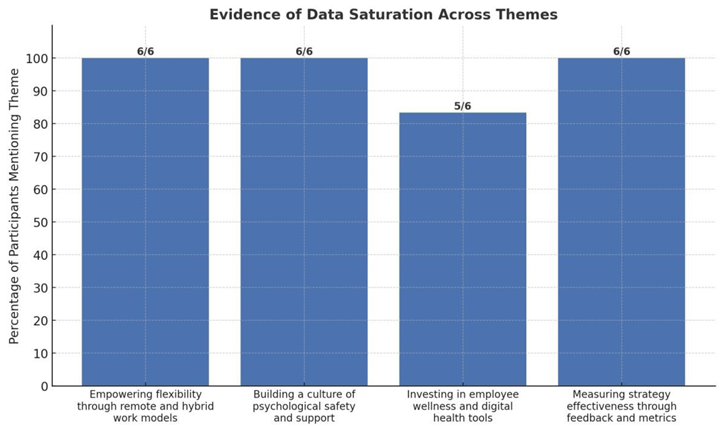
In my data analysis, I uncovered four themes: (a) empowering flexibility through remote and hybrid work models, (b) building a culture of psychological safety and support, (c) investing in employee wellness and digital health tools, and (d) measuring strategy effectiveness through feedback and performance Metrics. I present each theme below with supporting evidence from participant interviews, followed by an interpretation aligned with the conceptual framework and supporting or extending findings from existing literature. Figure 1 illustrates the percentage of participants who mentioned each identified theme.
Figure 1
Evidence of Data Saturation Across Themes
Theme 1: Empowering Flexibility Through Remote and Hybrid Work Models
All six participants identified flexible work structures as a critical strategy to improve remote millennial employees’ work-life balance to increase employee productivity. Participants described transitioning to hybrid or remote models as a strategic response to evolving workforce expectations, particularly in the wake of the COVID-19 pandemic. Participant 1 stated, “Millennials want flexibility. They don’t want to be micromanaged—they want to be trusted to get the work done on their own terms.” Similarly, Participant 3 described improved engagement and accountability after implementing a hybrid schedule: “We saw fewer unplanned absences, and more projects were completed ahead of time when we allowed for some flexibility.”
These insights directly align with key tenets of SET. When employees perceive their work environment as equitable and supportive, particularly when leaders grant autonomy and demonstrate trust, they are more likely to reciprocate with higher levels of commitment, discretionary effort, and sustained productivity. The mutual benefit derived from such exchanges illustrates how fairness and trust serve as catalysts for deeper organizational loyalty and engagement. In practice, this means that leaders who consistently reinforce equitable treatment and provide opportunities for self-directed work are not only meeting immediate performance goals but also investing in the longterm stability of their teams. Over time, this reciprocal relationship strengthens the organizational culture, reduces turnover, and creates a workforce that is both more resilient and more adaptable to change. The findings from Theme 1 confirm and extend the work of Messenger (2019), who demonstrated that hybrid work models improve employee satisfaction, particularly among younger generations. Similarly, Maulana et al. (2024) found that flexibility contributes to higher retention and engagement among millennial employees. Through the findings from my research project, I build on this literature by highlighting the successful adaptation of these models within the healthcare industry, a sector traditionally characterized by rigid scheduling and in-person expectations.
Theme 2: Building a Culture of Psychological Safety and Support
Participants consistently emphasized that creating a culture of psychological safety is essential to fostering employee engagement, retention, and productivity. This culture is built when employees feel secure discussing personal challenges, mental health concerns, and workload stressors without fear of judgment or reprisal. Participant 6 described team check-ins as a key strategy for emotional well-being: “We do regular check-ins that aren’t about deadlines—they’re about how people are feeling. That’s important for millennials.” Similarly, Participant 2 stated, “We make sure employees feel heard; we encourage open communication and normalize conversations about stress and burnout.” Participant 1 linked psychological safety to trust and autonomy, noting that cultivating a culture where employees are trusted to manage their own time builds loyalty and supports long-term engagement. Participant 4 reinforced this by describing informal, non-work-related check-ins that encouraged belonging and camaraderie among team members, which in turn strengthened commitment to organizational goals. Participant 5 framed wellness and emotional safety as cultural priorities rather than optional benefits, stressing that perceived fairness and trust result in stronger organizational relationships. Participant 3 added that culture-building begins even before hiring, explaining that asking employees about their interests during interviews and continuing those conversations throughout employment reinforces a supportive environment.
These practices highlight that psychological safety is not a one-time initiative but an ongoing, embedded aspect of leadership behavior. Leaders in this study operationalized psychological safety through open communication channels, leadership accessibility, and proactive wellness initiatives that normalize mental health conversations. Such approaches align with the SET principle that trust and respect act as intangible but highly valuable rewards in the employee–employer relationship. When employees perceive that leadership values them as individuals rather than merely as sources of output, they are more likely to reciprocate with loyalty, engagement, and discretionary effort.
The findings from my research project align with Pattnaik and Jena, (2021) assertion that psychological safety is foundational to employee engagement and organizational learning. Pattnaik and Jena (2021) and Maulana et al. (2024) further emphasized that creating safe environments for emotional expression in remote and hybrid teams improves mental health outcomes and strengthens team cohesion. This study extends the literature by illustrating how healthcare leaders apply these principles in practice, through regular emotional check-ins, trust-building, informal connections, and wellness-centered culture shifts, addressing the emotional labor often carried by their millennial workforce. By embedding these strategies into organizational culture, leaders created a sustainable framework for both employee well-being and organizational performance
Theme 3: Investing in Employee Wellness and Digital Health Tools
Participants consistently described targeted investments in mental health and wellness resources as critical to engaging employees and improving millennial employees’ work-life balance, ultimately enhancing productivity. Leaders implemented a variety of offerings, such as therapy stipends, meditation apps, digital counseling services, virtual wellness programs, and employee engagement calendars that blended inperson and remote activities. Participant 5 explained, “We offer counseling stipends, virtual therapy, and even meditation app subscriptions. Millennials use them, and we’ve seen increased productivity and fewer unplanned absences.” Similarly, Participant 4 emphasized that “digital wellness tools helped us reach employees we might not see every day, especially those working remotely.” Participant 1 highlighted the integration of mental health counseling and general wellness programs into hybrid work models, ensuring that these resources were accessible regardless of location. Participant 6 described normalizing mental health discussions in team meetings as part of a broader cultural shift toward emotional openness, while Participant 3 incorporated engagement calendars to keep employees connected through both wellness-focused and social events.
These strategies illustrate that leaders viewed wellness investments not merely as perks but as strategic initiatives that addressed both the operational and emotional needs of their workforce. This approach aligns with the SET concept of perceived organizational support (Eisenberger et al., 1986), wherein employees respond positively, through loyalty, engagement, and productivity, when they believe their employer is genuinely invested in their well-being. The use of digital tools was especially effective in bridging the gap between remote and on-site workers, ensuring equitable access to resources. As Participant 4 noted, providing such tools fostered a sense of inclusion and connection, while Participant 6’s integration of psychological safety frameworks reinforced that well-being was a core organizational priority.
The findings from my research project align with Agarwal et al.’s (2024) identification of remote work support as a key driver of engagement and well-being, and with Ekpanyaskul and Padungtod (2021), who found that virtual mental health services are particularly impactful among millennials seeking accessible, digital-first wellness options. This study extends the literature by showing how healthcare leaders have operationalized these tools to meet both sector-specific demands and generational expectations. By embedding wellness offerings into everyday practices, leaders in this research demonstrated that investments in well-being yield tangible organizational benefits such as reduced burnout, fewer unplanned absences, and improved retention. In doing so, they not only enhanced employee performance but also reinforced a culture of trust and mutual commitment—core tenets of strong social exchange relationships.
Theme 4: Measuring Strategy Effectiveness Through Feedback and Performance Metrics
Participants consistently emphasized the importance of ongoing evaluation to determine the effectiveness of their employee engagement strategies. Across interviews, leaders described using a combination of qualitative and quantitative measures to assess outcomes. These included formal employee engagement surveys, pulse checks, performance dashboards, retention rates, absenteeism data, and direct feedback during one-on-one conversations. Participant 1 explained, “We monitor employee feedback through quarterly surveys, but we also look at KPIs like retention, project deadlines, and sick time.” Similarly, Participant 2 reported using “weekly or monthly productivity reports” to track improvements, while Participant 3 identified turnover rates and tenure as key indicators of whether engagement initiatives were working. Participant 4 described monitoring the “usage of wellness tools and whether that correlates with lower burnout or improved performance,” and Participant 5 combined absenteeism and performance data with quarterly engagement surveys and mental health check-ins. Participant 6 further reinforced this approach by comparing engagement and turnover rates before and after implementing wellness programs, noting that “teams practicing emotional openness had higher productivity and lower attrition.”
These findings demonstrate that leaders did not rely on a single measure but rather triangulated multiple data sources to capture a comprehensive view of organizational health. This aligns with the SET principle of cost–benefit evaluation, as leaders assessed whether their investments in wellness programs, flexibility, and psychological safety translated into tangible organizational benefits. Importantly, participants linked these measurement practices to relationship-building, noting that transparency in sharing results fostered trust and reinforced employees’ perceptions that leadership valued their input. As Participant 5 emphasized, feedback loops were essential not only for validating existing strategies but also for adapting them to evolving workforce needs.
The emphasis on continuous measurement in my research project is consistent with the literature. Castelo and Gomes (2023) stressed the need for customized performance metrics in remote and hybrid work environments, where traditional productivity measures may be insufficient. Maulana et al. (2024) and Pattnaik and Jena (2021) similarly highlighted that feedback-informed engagement strategies enhance employees’ perceptions of organizational fairness and support. In the healthcare context of this study, leaders operationalized these feedback loops not merely as evaluative tools but as relational mechanisms, demonstrating care, responsiveness, and a willingness to evolve. This ongoing responsiveness is a hallmark of strong social exchange relationships and positions measurement as a strategic driver of both performance and employee loyalty.
Business Contributions and Recommendations for Professional Practice
The findings of my research project contribute to a deeper understanding of effective leadership practices that align with millennial values. Business leaders across industries continue to face challenges related to work-life balance and employee productivity, particularly in the post-pandemic era, where remote and hybrid work arrangements have become more normalized. The insights drawn from my research project confirm that leadership strategies emphasizing relational support, flexibility, and well-being have the potential to foster meaningful reciprocal exchanges that improve employee and organizational outcomes. In healthcare, an industry characterized by high burnout rates, operational rigidity, and increasing demand, the findings from my research project demonstrate that adaptive and empathetic leadership approaches can be implemented without sacrificing productivity. These practices are relevant to any business context in which leadership effectiveness is evaluated not only by operational results but also by the ability to foster trust, reduce turnover, and sustain high levels of engagement among generationally diverse employees. For team environments, leaders should consider promoting open communication, normalizing mental health discussions, and emphasizing emotional intelligence in management practices. This includes providing formal training on psychological safety and inclusive leadership. Leaders may also want to consider expanding their wellness offerings to include digital health platforms, virtual counseling, meditation subscriptions, and paid mental health days.
Importantly, these resources should be accompanied by leadership communication that determines their use. Organizational leaders should use pulse surveys, performance dashboards, and engagement metrics to evaluate the success of work-life balance strategies and make data-informed adjustments. Transparent use of these data fosters employee trust and reinforces a shared responsibility for organizational success.
Moreover, the findings from my research project challenge the long-standing managerial assumption that remote or flexible work leads to reduced accountability. Instead, the results from my research project align with emerging literature showing that strategic flexibility, when paired with structured performance expectations, contributes to improved morale, output, and loyalty (Maulana et al., 2024; Wang et al., 2020). This insight has broad implications for redefining productivity metrics and expectations in the future of work. Business leaders should consider allowing employees to work remotely or in hybrid arrangements, prioritizing the development of clear, structured policies while maintaining performance expectations. Flexibility in these work arrangements should not be arbitrary; rather, it should be designed intentionally with defined goals, roles, and performance.
Beyond flexibility, my research underscores the critical role of psychological safety and support in enhancing engagement and retention. Leaders who intentionally create a culture of trust, belonging, and openness foster environments where employees feel comfortable sharing challenges without fear of judgment. This includes non-workrelated check-ins, open-door leadership policies, and emotional intelligence training for managers. Such strategies not only strengthen team cohesion but also contribute to higher morale and productivity by addressing emotional well-being alongside operational goals.
The findings from my research project also highlight the importance of investing in employee wellness and digital tools as a core leadership responsibility. Leaders in the study implemented programs such as counseling stipends, virtual therapy sessions, meditation app subscriptions, and digital wellness platforms. These resources provide accessible and flexible support for employees in both on-site and remote settings, and when paired with intentional cultural messaging, they help normalize the use of mental health resources. Leaders should ensure these programs are integrated into organizational life rather than treated as optional perks, as their consistent use correlates with reduced burnout and improved engagement.
Finally, the findings emphasize the need for data-driven evaluation of leadership strategies. Effective leaders in this research regularly tracked engagement survey results, retention statistics, absenteeism rates, and productivity metrics to inform ongoing adjustments. This practice ensures that well-being and flexibility initiatives remain aligned with both employee needs and organizational goals. Importantly, transparent sharing of these results with employees helps build trust and reinforces a sense of shared responsibility for organizational outcomes.
Implications for Social Change
The findings of my research project carry significant implications for promoting positive social change by advancing equitable, human-centered leadership practices that support the holistic well-being of individuals and communities. By identifying strategies that effectively improve millennial employees’ work-life balance and productivity, my research project contributes to a growing body of knowledge that redefines the role of leadership in enhancing not only organizational outcomes but also individual quality of life and social dignity.
At the individual level, my research underscores the importance of autonomy, psychological safety, and mental health support in fostering personal development and emotional well-being. Millennials, who, as of 2022, represented the largest segment of the workforce (Hurtienne et al., 2022), are navigating a complex landscape of economic uncertainty, evolving social expectations, and shifting work paradigms. The participants I interviewed for my research employ practices that responded to these challenges with empathy, flexibility, and inclusivity. By doing so, they promoted the dignity and selfworth of employees, enabling them to thrive both professionally and personally.
These leadership practices contribute to positive social change by normalizing mental health conversations in professional settings, reducing workplace stigma, and creating cultures of inclusion and respect. In doing so, organizations move beyond traditional, transactional models of management and toward transformational models grounded in mutual respect, fairness, and care, values that promote social cohesion and individual flourishing.
At the organizational level, the findings encourage institutions to reevaluate policies, workplace norms, and metrics of success. By incorporating flexible work models, wellness programs, and feedback-driven strategies, organizations can foster more just and humane workplaces. These changes support the development of ethical and sustainable business practices that value people as much as profit. In healthcare, where employee burnout directly impacts patient care and public health outcomes, the implementation of such practices can lead to systemic improvements in service delivery and community well-being.
At a broader societal level, the findings challenge outdated paradigms that equate productivity with presenteeism and that undervalue mental health. In advocating for leadership models that prioritize relational trust, emotional intelligence, and well-being, the study contributes to a cultural shift in how work is understood and valued. This shift promotes a more inclusive and equitable vision of the workplace, one in which generational diversity, mental health, and human dignity are embraced as core components of organizational success.
Furthermore, the implications of my research extend to educational institutions and leadership development programs, which can integrate these findings into curricula to prepare future leaders who are not only technically proficient but also socially responsible and emotionally attuned. In doing so, my research supports the cultivation of leaders who are capable of driving ethical innovation and systemic transformation.
In sum, my research project contributes to positive social change by highlighting the interdependence of individual well-being, organizational effectiveness, and societal progress. It calls upon business leaders, policymakers, educators, and scholars to reimagine leadership not simply as the pursuit of efficiency, but as a means of uplifting people, advancing equity, and creating workplaces and, by extension, communities that affirm human worth and promote flourishing for all.
Recommendations for Further Research
My research project provided meaningful insights into the effective strategies healthcare leaders use to improve remote millennial employees’ work-life balance and increase productivity. There are several opportunities for future scholarly inquiry. Future researchers should aim to expand the scope, depth, and generalizability of these findings. Each proposed area addresses an existing limitation or extends theoretical and practical contributions to the field of business leadership and organizational development.
My research was limited to participants within the healthcare sector. Although healthcare offers a compelling context due to its high demands and complex workforce dynamics, the strategies identified may not fully reflect the experiences or leadership practices in other industries. Future researchers should investigate whether similar strategies are effective across diverse organizational settings, including finance, technology, education, and government sectors. Additionally, researchers should consider comparative studies that examine generational differences, including Generation Z, Generation X, and baby boomers. Doing so may uncover unique motivational factors or work-life expectations across generational lines, thereby enhancing the applicability of leadership strategies across a multigenerational workforce.
In my research project, I employed a qualitative, pragmatic inquiry design to explore the lived experiences of healthcare leaders. While this approach facilitated a rich understanding of subjective insights, it did not produce quantifiable measures of the relationship between leadership strategies and organizational outcomes. Future researchers should employ quantitative or mixed-methods methodologies to examine statistically significant relationships among variables such as leadership practices, employee engagement, well-being, and employee productivity. Longitudinal or crosssectional designs could be particularly useful in capturing changes over time and establishing causal inferences.
I recruited participants from healthcare organizations within a confined geographic region in the United States. As a result, the findings may reflect regionally specific leadership practices or organizational cultures that do not generalize to other geographic or cultural contexts. Future researchers should broaden the participant pool to include leaders from multiple regions, including rural, urban, and international locations. Cultural context plays a pivotal role in shaping leadership behavior, employee expectations, and organizational norms. A more diverse sample would allow for greater cross-cultural analysis and improve the global relevance of findings.
My research project focused exclusively on the perspectives of leaders responsible for implementing strategies to improve millennial work-life balance and productivity. Although leadership insights are vital, they represent only one dimension of the organizational exchange. Future researchers should incorporate the voices of millennial employees themselves to evaluate whether leadership strategies are perceived as effective, equitable, and meaningful. Comparative or dyadic designs, where both leaders and employees are interviewed or surveyed, may uncover alignment or disconnects between leader intention and employee experience.
My research offers a snapshot of leadership strategies during a specific time frame, but does not capture the long-term organizational impact of those practices. Future researchers should utilize longitudinal designs to evaluate the sustained effects of worklife balance initiatives on key outcomes such as employee retention, organizational culture, innovation, and financial performance. Such studies would help determine whether well-being-centered leadership offers enduring strategic value or if results taper over time.
Conclusions
The purpose of this qualitative pragmatic inquiry project was to identify and explore effective strategies to improve remote millennial employees’ work-life balance to increase employee productivity. Guided by SET and analyzed through the six-phase thematic analysis approach developed by Braun and Clarke (2006), I identified four themes: (a) empowering flexibility through remote and hybrid work models, (b) fostering psychological safety and relational trust, (c) investing in employee wellness and digital mental health tools, and (d) using feedback and performance metrics to evaluate strategy effectiveness.
The lived experiences of six healthcare leaders revealed a deep understanding of the interconnection between employee well-being and employee productivity. Participants consistently emphasized the need for intentional, reciprocal leadership strategies that respect the autonomy, mental health, and developmental needs of millennial employees. Their perspectives reflected the principles of SET, as leaders reported that when employees felt supported and valued, they reciprocated with increased engagement, loyalty, and productivity.
The applicability of these findings to professional business practice is substantial. The results offer tangible, evidence-based strategies that organizations can implement to create more supportive, flexible, and data-informed work environments. The findings of my research project also contribute to ongoing scholarly discussions surrounding generational shifts in the workplace, leadership development, and organizational behavior in the post-pandemic era.
In addressing the limitations of my research project, specifically its small, healthcare-specific sample and qualitative design, I offer several recommendations for future research. These include expanding the scope across industries and generational cohorts, incorporating quantitative and mixed-methods research designs, including the perspectives of millennial employees, increasing cultural and geographic diversity, exploring the integration of artificial intelligence and digital wellness platforms, and evaluating the long-term impacts of well-being-centered leadership practices. Addressing these areas will enhance the generalizability, depth, and scope of future research in organizational leadership and employee engagement.
The implications for positive social change are equally compelling. The data from my research project promotes leadership practices that prioritize dignity, equity, and well-being, contributing to more humane and sustainable organizational cultures. By advocating for mental health support, psychological safety, and flexibility, my research contributes to the improvement of individual lives, healthier organizational systems, and more inclusive workplace norms. These shifts not only advance ethical business practice but also enhance the broader social fabric by fostering workplaces that honor the worth and potential of all employees.
In conclusion, my research project advances both academic understanding and practical leadership application by offering a framework through which organizations can support millennial employees more effectively. It reinforces the value of relational leadership grounded in social exchange, supports the transition to modern work structures, and provides actionable strategies for fostering well-being and performance in the evolving world of work.
References
- Agarwal, A.K.; Southwick, L.; Gonzales, R.E.; Bellini, L.M.; Asch, D.A.; Shea, J.A.; Mitra, N.; Yang, L.; Josephs, M.; Kopinksy, M.; Kishton, R.; Balachandran, M.; Wolk, C.B.; Becker-Haimes, E.; Merchant, R.M. Digital engagement strategy and health care worker mental health: A randomized clinical trial. JAMA Network Open 2024, 7, e2410994. [Google Scholar] [CrossRef] [PubMed]
- Aksay, S.A.; Şendoğdu, A.A. Organizational resilience in a volatile and uncertain world: The role of psychological safety and communication. Journal of Organizational Change Management 2022, 35, 678–695. [Google Scholar] [CrossRef]
- Anabo, I.F.; Elexpuru-Albizuri, I.; Villardón-Gallego, L. Revisiting the Belmont Report’s ethical principles in internet-mediated research: Perspectives from disciplinary associations in the social sciences. Ethics and Information Technology 2018, 21, 137–149. [Google Scholar] [CrossRef]
- Bellmann, L.; Hübler, O. Working from home, job satisfaction and work–life balance – Robust or heterogeneous links? International Journal of Manpower 2020, 42, 424–441. [Google Scholar] [CrossRef]
- Birt, L.; Dionne-Odom, J.; Dykema, S. Member checking: A practical guide for qualitative researchers. Journal of Mixed Methods Research 2016, 10, 195–207. [Google Scholar]
- Blau, P.M. (1964). Exchange and power in social life. Wiley.
- Bloom, N.; Liang, J.; Roberts, J.; Ying, Z.J. The value of flexible work arrangements for modern employees. Quarterly Journal of Economics 2009, 124, 1183–1225. [Google Scholar]
- Braun, V.; Clarke, V. Using thematic analysis in psychology. Qualitative Research in Psychology 2006, 3, 77–101. [Google Scholar] [CrossRef]
- Castelo, J.; Gomes, S. (2023). The role of trust and clear objectives in increasing productivity in remote work settings. Journal of Organizational Change.
- Management, 36, 221–235. [CrossRef]
- Creswell, J.W.; Poth, C.N. (2018). Qualitative inquiry and research design: Choosing among five approaches (4th ed.). Sage Publications.
- Cropanzano, R.; Mitchell, M.S. Social exchange theory: An interdisciplinary review. Journal of Management 2005, 31, 874–899. [Google Scholar] [CrossRef]
- DeCuir-Gunby, J.; Miller, H.R. The codebook as a tool for ensuring reliability in qualitative research. International Journal of Qualitative Methods 2011, 10, 12–29. [Google Scholar] [CrossRef]
- Eisenberger, R.; Huntington, R.; Hutchison, S.; Sowa, D. Perceived organizational support. Journal of Applied Psychology 1986, 71, 500. [Google Scholar] [CrossRef]
- Ekpanyaskul, C.; Padungtod, C. Occupational health problems and lifestyle changes among novice working-from-home workers amid the COVID-19 pandemic. Safety and Health at Work 2021, 12, 387–393. [Google Scholar] [CrossRef]
- Graen, G.B.; Uhl-Bien, M. The LMX model of leadership: A framework for an alternative theory of leadership. Leadership Quarterly 1995, 6, 219–247. [Google Scholar] [CrossRef]
- Grant, A.M. The connection between purpose and productivity. Harvard Business Review 2022, 100, 60–68. [Google Scholar]
- Guest, G.; Bunce, A.; Johnson, L. How many interviews are enough? An experiment with data saturation and variability. Field Methods 2006, 18, 59–82. [Google Scholar] [CrossRef]
- Homans, G.C. Social behavior as exchange. American Journal of Sociology 1958, 63, 597–606. [Google Scholar] [CrossRef]
- Hosoi, H.; Kato, T.; Yamamoto, J. The new frontier of leadership: Supporting remote employees. Journal of Organizational Behavior 2021, 42, 321–335. [Google Scholar] [CrossRef]
- Hurtienne, M.W.; Hurtienne, L.E.; Kempen, M. Employee engagement: Emerging insight of the millennial manufacturing workforce. Human Resource Development Quarterly 2022, 33, 137–156. [Google Scholar] [CrossRef]
- Ipsen, C.; Van Veldhoven, M.; Kirchner, K.; Hansen, J.P. Six key advantages and disadvantages of working from home in Europe during COVID-19. International Journal of Environmental Research and Public Health 2021, 18, 1826. [Google Scholar] [CrossRef] [PubMed]
- Le, H.; Kibria, I.; Jiang, K. Is chief executive officer optimistic belief bad for workers? Evidence from corporate employment decisions. Human Resource Management Journal 2023, 33, 748–762. [Google Scholar] [CrossRef]
- Lincoln, Y.S.; Guba, E.G. (1985). Naturalistic inquiry. Sage Publications.
- Martimianaki, E.; Polyviou, A. (2023). Tools facilitating remote work in the Greek business reality and their contribution to the perceived proximity of the remote workers. In E. C. A. Al-Masaud (Ed.), European, Mediterranean, and Middle Eastern Conference on Information Systems (pp. 266–279). Springer Nature Switzerland. [CrossRef]
- Maulana, M.I.; Saren, H.; Garcia, R.M.; Reyes, A.B. (2024). Promoting flexible work arrangements: The case of selected medium-size BPO company in Metro.
- Manila. Journal of Economics, Finance and Management Studies, 8, 1079–1088. Available online: https://www.ijefm.co.in/v8i2/30.php.
- Meitiasari, A.; Saputra, I.Y.; Ramadhani, S. Adaptive leadership: Navigating the challenges of post-pandemic working arrangement. Syntax Idea 2024, 6, 6424–6440. [Google Scholar] [CrossRef]
- Merriam, S.B.; Tisdell, E.J. (2016). Qualitative research: A guide to design and implementation (4th ed.). Jossey-Bass.
- Messenger, J. (2019). Telework in the 21st century: An evolutionary perspective. Edward.
- Elgar Publishing. [CrossRef]
- Mishra, R.; Upamanyu, S. Workplace well-being in the post-pandemic era: Examining perceived stress and procrastination among public and private sector employees. Journal of Lifestyle and SDGs Review 2025, 5, e06176–e06176. [Google Scholar] [CrossRef]
- Ortlipp, M. Reflexivity in research. The Qualitative Report 2008, 13, 224–237. [Google Scholar]
- Palinkas, L.A.; Horwitz, S.M.; Green, C.A.; Wisdom, J.P.; Duan, N.; Hoagwood, K. Purposeful sampling for qualitative data collection and analysis in mixed method implementation research. Administration and Policy in Mental Health and Mental Health Services Research 2015, 42, 551–562. [Google Scholar] [CrossRef]
- Patton, M.Q. (1999). Enhancing the quality and credibility of qualitative research.
- Health Services Research, 34, 1189–1208. Available online: https://www.ncbi.nlm.nih.gov/pmc/articles/PMC1089059/.
- Pattnaik, L.; Jena, L.K. Mindfulness, remote engagement and employee morale: Conceptual analysis to address the “new normal. ” International Journal of Organizational Analysis 2021, 29, 873–890. [Google Scholar] [CrossRef]
- Saldana, J. (2016). The coding manual for qualitative researchers (3rd ed.). Sage Publications.
- Twenge, J.M.; Campbell, S.M.; Hoffman, B.J.; Lance, C.E. Generational differences in work values: Leisure and extrinsic values increasing, social and intrinsic values decreasing. Journal of Management 2010, 36, 1117–1142. [Google Scholar] [CrossRef]
- Wang, H.; Zhang, J.; Li, F. The role of communication technology in work-life integration. Information Technology & People 2020, 33, 341–356. [Google Scholar] [CrossRef]
- Yin, R.K. (2018). Case study research and applications: Design and methods (6th ed.). Sage Publications.
Disclaimer/Publisher’s Note: The statements, opinions and data contained in all publications are solely those of the individual author(s) and contributor(s) and not of MDPI and/or the editor(s). MDPI and/or the editor(s) disclaim responsibility for any injury to people or property resulting from any ideas, methods, instructions or products referred to in the content. |
© 2025 by the authors. Licensee MDPI, Basel, Switzerland. This article is an open access article distributed under the terms and conditions of the Creative Commons Attribution (CC BY) license (http://creativecommons.org/licenses/by/4.0/).
Copyright: This open access article is published under a Creative Commons CC BY 4.0 license, which permit the free download, distribution, and reuse, provided that the author and preprint are cited in any reuse.


