

Submitted:
25 September 2025
Posted:
28 September 2025
You are already at the latest version
Abstract
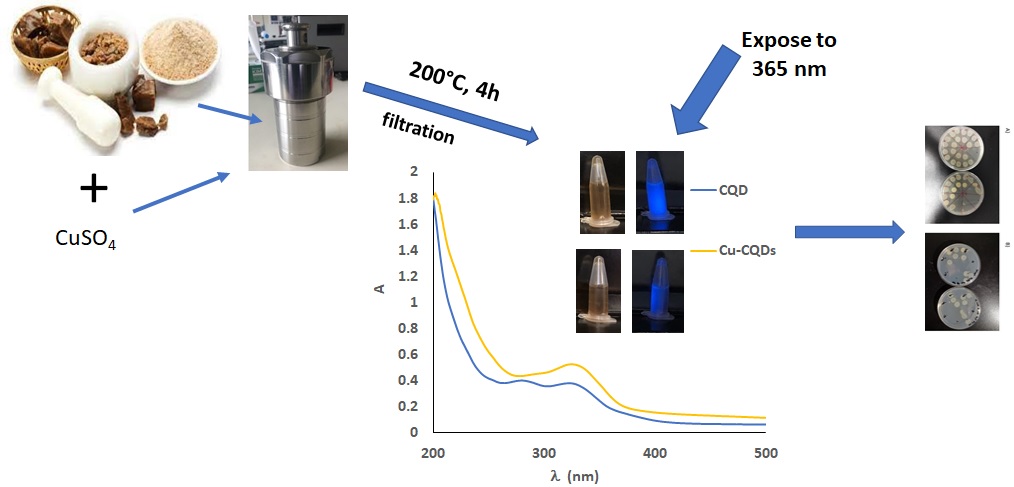
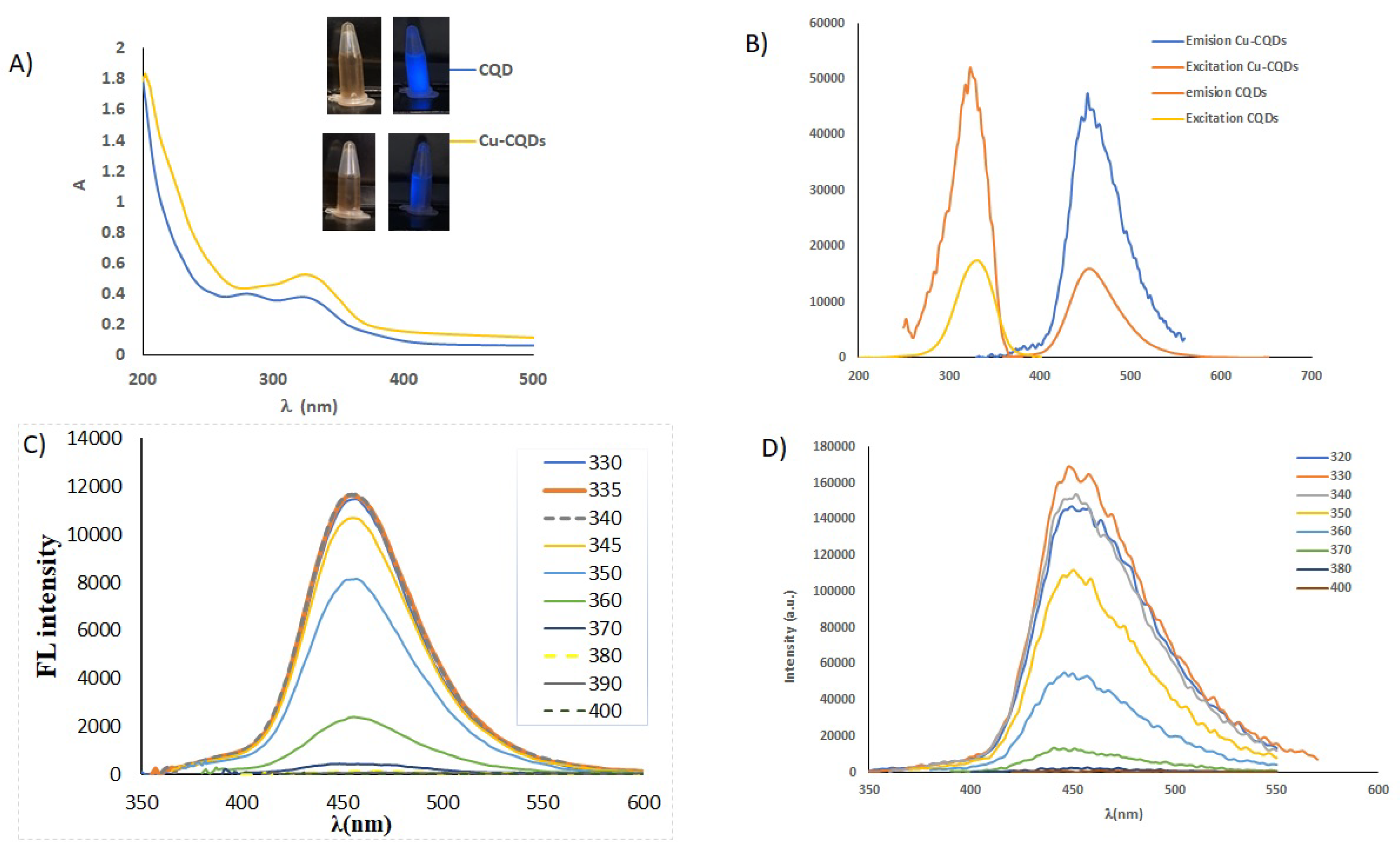
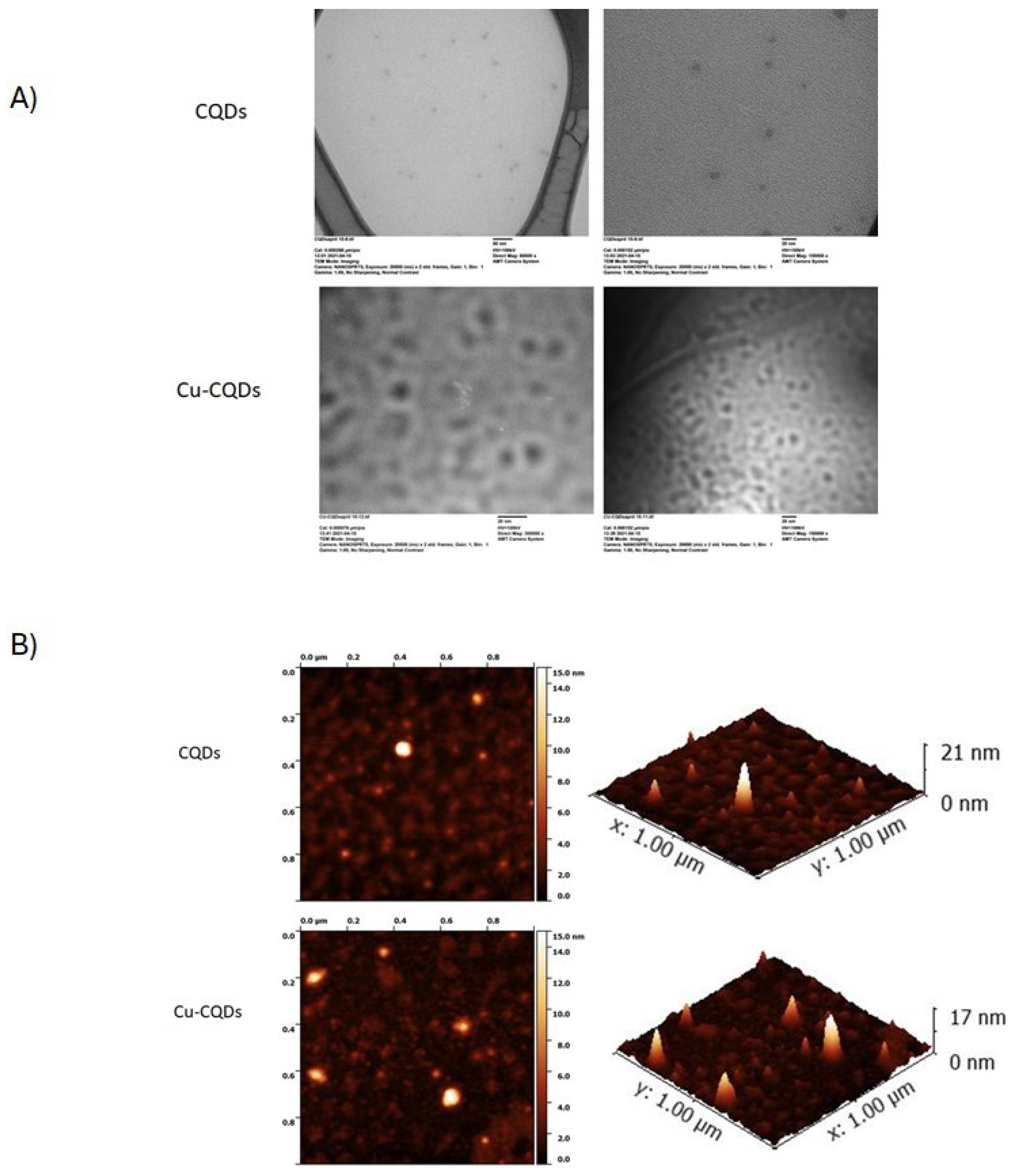
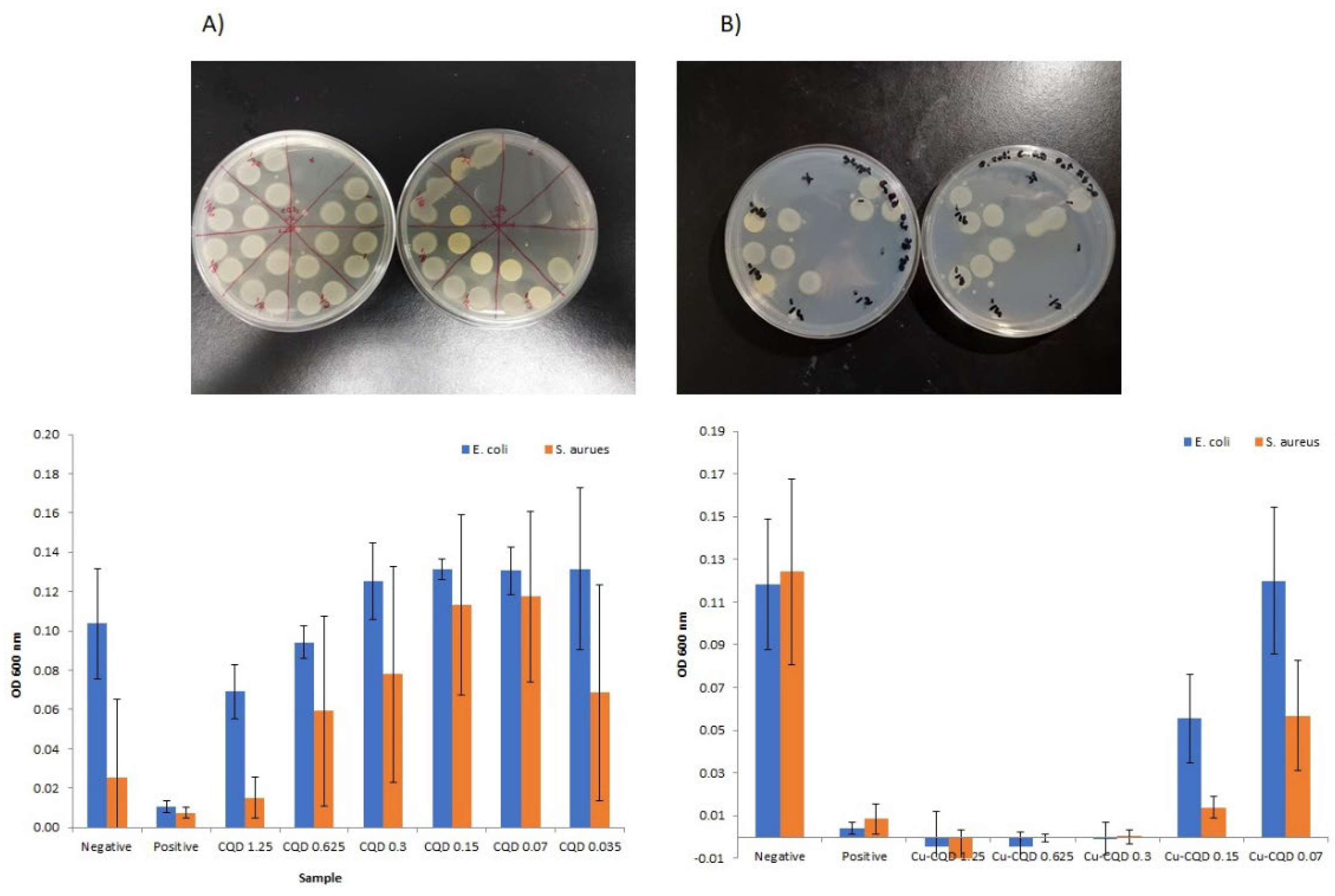
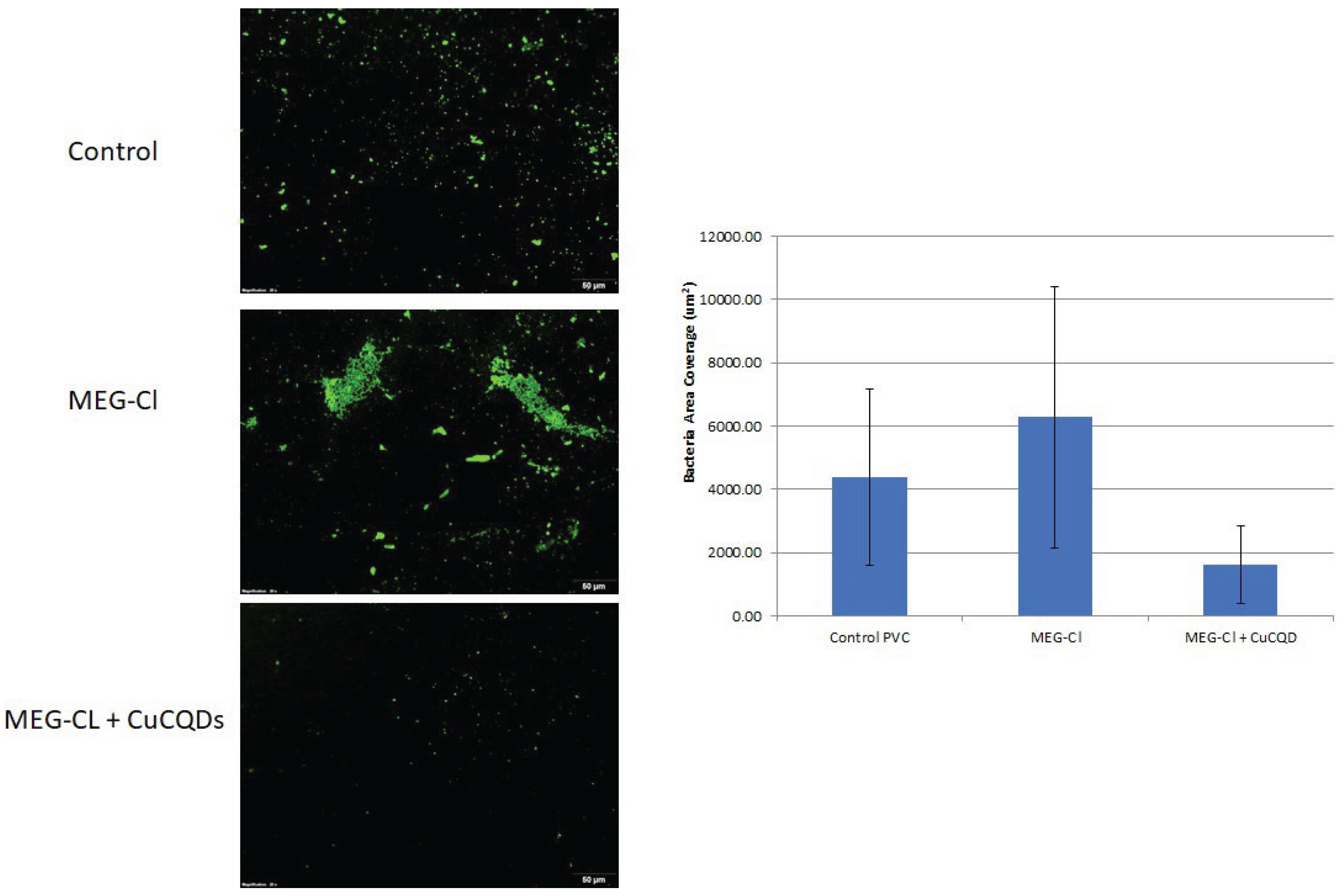
Highly Luminescent carbon quantum dots (CQDs) and copper-doped CQDs (Cu-CQDs) were synthesized from Asafoetida powder using a one-pot hydrothermal method. The structural, morphological, and optical properties of the synthesized CQDs were characterized via microscopic and spectroscopic techniques. Photoluminescence studies revealed that CQDs exhibited maximum emission at 450 nm under 335 nm excitation with a quantum yield of 37%, while Cu-CQDs showed a red-shifted emission at 455 nm under 330 nm excitation and a significantly enhanced quantum yield of 73.4%. As proof of concept for potential biomedical and surface-coating applications, the antimicrobial activity of both CQDs was evaluated against Escherichia coli (E. coli) and Staphylococcus aureus (S. Aureus). Cu-CQDs exhibited superior antibacterial efficacy, with a minimum inhibitory concentration of 0.3 mg/mL. Furthermore, Cu-CQDs were immobilized on polyvinyl chloride (PVC) surfaces, and fluorescence microscopy confirmed their antibacterial effectiveness, demonstrating their potential for functionalized antimicrobial coatings.
Keywords:
1. Introduction
2. Materials and Methods
2.1. Materials
2.2. Instruments
2.3. CQDs and Cu-CQDs Synthesis
2.4. Antibacterial Evaluation
2.5. Modification of Plastic
3. Results and Discussion
3.1. Spectroscopic Evaluation of CQDs
3.2. Microscopic Evaluations of CQDs
3.3. Antibacterial Activities of as-Prepared CQDs
4. Conclusions
Supplementary Materials
Author Contributions
Funding
Acknowledgments
Conflicts of Interest
Abbreviations
| AFM | Atomic Force Microscope |
| TEM | Transmision Electron Microscope |
| CQDs | Carbon quantum dots |
| Cu-CQDs | Copper-dopped carbon quantum dots |
| CAUTIs | catheter-associated urinary tract infections |
| PVC | Poly vinyl chloride |
| MEG-Cl | |
| ROS | Reactive oxygen species |
| LPS | Lipopolysaccharides |
| MIC | minimum inhibitory concentration |
| XPS | X-ray photoelectron spectroscopy |
| GFP | Green fluorescence protein |
References
- Ventola CL (2015) The antibiotic resistance crisis: part 1: causes and threats. P & T : a peer-reviewed journal for formulary management 40 (4):277-283.
- Kadam P, Puri S, Kosurkar P (2022) ANTIMICROBIAL EFFECTS OF SILVER NANOPARTICLES SYNTHESIZED USING A TRADITIONAL PHYTOPRODUCT, ASAFOETIDA GUM AGAINST PERIODONTAL OPPORTUNISTIC PATHOGENS. Ann For Res 65 (1):5134-5141.
- Dong X, Liang W, Meziani MJ, Sun YP, Yang L (2020) Carbon Dots as Potent Antimicrobial Agents. Theranostics 10 (2):671-686. [CrossRef]
- Devanesan S, Ponmurugan K, AlSalhi MS, Al-Dhabi NA (2020) Cytotoxic and Antimicrobial Efficacy of Silver Nanoparticles Synthesized Using a Traditional Phytoproduct, Asafoetida Gum. Int J Nanomedicine 15:4351-4362. [CrossRef]
- Ramezani Z, Thompson M (2023) Quantum Dots in Viral and Bacterial Detection. In: Thompson M, Ramezani Z (eds) Quantum Dots in Bioanalytical Chemistry and Medicine, vol 22. Royal Society of Chemistry, p 0. [CrossRef]
- Thompson M, Ramezani Z (2023) Quantum Dots in Bioanalytical Chemistry and Medicine. RSC,.
- Shahrajabian MH, Sun W, Soleymani A, Khoshkaram M, Cheng Q (2021) Asafoetida, god's food, a natural medicine. Pharmacognosy Communications 11 (1):36-39.
- Shahrajabian MH, Sun W, Cheng Q (2021) Asafoetida, natural medicine for future. Current Nutrition & Food Science 17 (9):922-926.
- Niazmand R, Razavizadeh BM (2021) Ferula asafoetida: chemical composition, thermal behavior, antioxidant and antimicrobial activities of leaf and gum hydroalcoholic extracts. J Food Sci Technol 58 (6):2148-2159. [CrossRef]
- KAMATH KA, NASIM I (2020) Antimicrobial Effect of Ferula Asafoetida against Escherichia Coli when Incorporated in Commercially Available Intracanal Medicament-Calcium Hydroxide: An In Vitro Study. International Journal of Pharmaceutical Research (09752366).
- Boghrati Z, Iranshahi M (2019) Ferula species: A rich source of antimicrobial compounds. Journal of herbal medicine 16:100244.
- Charu Singh, Parmar RS (2018) Antimicrobial Activity of Resin of Asafoetida (Hing) against Certain Human Pathogenic Bacteria. Advance in Bioresearch 19 (1):161-164. [CrossRef]
- Akhlaghi M, Abbasi M, Safari Y, Amiri R, Yoosefpour N (2018) Data set on the antibacterial effects of the hydro-alcoholic extract of Ferula assafoetida plant on Listeria monocytogenes. Data in brief 20:667-671.
- Bashyal S, Rai S, Abdul O (2017) Invitro analysis of phytochemicals and investigation of antimicrobial activity using crude extracts of Ferula assa-foetida stems. METHODS 4 (12).
- Amalraj A, Gopi S (2017) Biological activities and medicinal properties of Asafoetida: A review. J Tradit Complement Med 7 (3):347-359. [CrossRef]
- De La Franier B, Jankowski A, Thompson M (2017) Functionalizable self-assembled trichlorosilyl-based monolayer for application in biosensor technology. Applied Surface Science 414:435-441. [CrossRef]
- Kumarasamy S, Subramaniam S, Ranganathan M, Rathinavel T, Alagarsamy P (2022) Characterization of Asafoetida Resin Silver Nanoparticles and Efficacy of Antioxidant, Antimicrobial Inhibition. International Journal of Pharmaceutical Sciences and Nanotechnology(IJPSN) 15 (3). [CrossRef]
- S. D. Patil, S. Shinde, P. Kandpile, Jain AS (2015) EVALUATION OF ANTIMICROBIAL ACTIVITY OF ASAFOETIDA. International Journal of Pharmaceutical Sciences and Research 6 (2). [CrossRef]
- Kang C-G, Hah D-S, Kim C-H, Kim Y-H, Kim E, Kim J-S (2011) Evaluation of Antimicrobial Activity of the Methanol Extracts from 8 Traditional Medicinal Plants. Toxicological Research 27 (1):31-36. [CrossRef]
- Zhu S, Song Y, Zhao X, Shao J, Zhang J, Yang B (2015) The photoluminescence mechanism in carbon dots (graphene quantum dots, carbon nanodots, and polymer dots): current state and future perspective. Nano Research 8 (2):355-381. [CrossRef]
- Ramezani Z, Qorbanpour M, Rahbar N (2018) Green synthesis of carbon quantum dots using quince fruit (Cydonia oblonga) powder as carbon precursor: Application in cell imaging and As3+ determination. Colloids and Surfaces A: Physicochemical and Engineering Aspects 549:58-66. [CrossRef]
- Etefa HF, Tessema AA, Dejene FB (2024) Carbon Dots for Future Prospects: Synthesis, Characterizations and Recent Applications: A Review (2019–2023). C 10 (3):60.
- Ramezani Z, Thompson M (2023) How Functionalization Affects the Detection Ability of Quantum Dots. In: Thompson M, Ramezani Z (eds) Quantum Dots in Bioanalytical Chemistry and Medicine, vol 22. Royal Society of Chemistry, p 0. [CrossRef]
- Mursyalaat V, Variani VI, Arsyad WOS, Firihu MZ (2023) The development of program for calculating the band gap energy of semiconductor material based on UV-Vis spectrum using delphi 7.0. Journal of Physics: Conference Series 2498 (1). [CrossRef]
- Khalil Z, Farrukh MA (2021) An efficient nanofiltration system containing mixture of rice husk ash and Fe/CeO2–SiO2 nanocomposite for the removal of azo dye and pesticide. Pure and Applied Chemistry 93 (5):607-621. doi:doi:10.1515/pac-2020-1003.
- Trautner BW, Darouiche RO (2004) Role of biofilm in catheter-associated urinary tract infection. American journal of infection control 32 (3):177-183. [CrossRef]
- Patra D, Ghosh S, Mukherjee S, Acharya Y, Mukherjee R, Haldar J (2024) Antimicrobial nanocomposite coatings for rapid intervention against catheter-associated urinary tract infections. Nanoscale 16 (23):11109-11125. [CrossRef]
- Won D-S, Lee H, Park Y, Chae M, Kim Y-C, Lim B, Kang M-H, Ok M-R, Jung H-D, Park J-H (2024) Dual-Layer Nanoengineered Urinary Catheters for Enhanced Antimicrobial Efficacy and Reduced Cytotoxicity. Advanced Healthcare Materials 13 (31):2401700. [CrossRef]
- Tailly T, MacPhee RA, Cadieux P, Burton JP, Dalsin J, Wattengel C, Koepsel J, Razvi H (2021) Evaluation of Polyethylene Glycol-Based Antimicrobial Coatings on Urinary Catheters in the Prevention of Escherichia coli Infections in a Rabbit Model. Journal of endourology 35 (1):116-121. [CrossRef]
- Shaalan M, Vykydalová A, Švajdlenková H, Kroneková Z, Marković ZM, Kováčová M, Špitálský Z (2024) Antibacterial activity of 3D printed thermoplastic elastomers doped with carbon quantum dots for biomedical applications. Polymer Bulletin 81 (14):13009-13025. [CrossRef]
Disclaimer/Publisher’s Note: The statements, opinions and data contained in all publications are solely those of the individual author(s) and contributor(s) and not of MDPI and/or the editor(s). MDPI and/or the editor(s) disclaim responsibility for any injury to people or property resulting from any ideas, methods, instructions or products referred to in the content. |
© 2025 by the authors. Licensee MDPI, Basel, Switzerland. This article is an open access article distributed under the terms and conditions of the Creative Commons Attribution (CC BY) license (http://creativecommons.org/licenses/by/4.0/).