

Submitted:
24 September 2025
Posted:
25 September 2025
You are already at the latest version
Abstract
The effect of consuming freshly prepared gazpacho (a Mediterranean vegetable soup) or gazpacho processed by low-temperature pasteurisation (LP), high-pressure processing (HPP) or pulsed electric field (PEF) on the serum ly-copene and β-carotene concentrations of 12 healthy subjects aged 20–32 years enrolled in a crossover study was assessed. Participants were instructed to consume 500 ml of gazpacho per day for 14-day periods. Carotenoid concen-trations in fasted serum samples on days 7 and 14 of the study, as well as in the gazpacho, were analysed by HPLC.
The degree of change in the serum responses varied according to the pro-cessing method applied to the gazpacho consumed. After adjusting for the ly-copene and β-carotene concentrations in the gazpacho-FP intake, a significant increase in serum lycopene was observed only with freshly prepared and consumed sample, FP (p=0.043, CI: 0.96, 44.3). As there was no interaction with time, the serum responses were assessed using combined data from three time points for each gazpacho group. Serum lycopene concentrations were signifi-cantly highest with FP and HPP, followed by PEF and LP. Gazpacho-LP intake induced the lowest lycopene response, with significant differences observed compared to PEF (p=0.002, CI: -17.5, -3.5), HPP (p=0.000, CI: -24.1, -14.0) and FP (p=0.000, CI -31.3 – 10.9). Similar serum β-carotene concentration responses (µg/dL) were observed for FP [36.40 ± 16.45 (23.45, 49.35)] and HPP [30.55 ± 3.81 (22.82, 38.28)], both of which were higher than the responses for LP (p=0.019, p=0.007, respectively). It appears that the processing technologies used for pasteurising gazpacho affect serum carotenoid concentrations differ-ently, with commercial LP having the least impact. Due to the high variability observed in serum carotenoid concentrations, the effect of different technologies on these concentrations should be verified in a large number of subjects.
Keywords:
Gazpacho
; LP
; low-temperature pasteurisation
; HPP
; high-pressure processing
; PEF
; pulsed electric field
; FP
; freshly prepared
1. Introduction
Gazpacho is a traditional Mediterranean dish from southern Spain. It is a cold vegetable soup traditionally made with tomatoes, cucumbers, peppers, onions, garlic, vinegar and olive oil. Due to regional and /or personal preferences, this soup has many variations and is part of the Mediterranean diet. Recognised as an intangible cultural heritage of humanity by UNESCO [1], it is mainly associated with the prevention of cardiovascular disease, type 2 diabetes, breast cancer, and antitumour activity [2,3,4,5]. The main component of the gazpacho is tomato, and consuming a diet rich in tomatoes diet is associated with a range of health benefits [6]. The health benefits of gazpacho are likely to be due to the synergistic effects of its constituents, including nutrients such as vitamins C and A, folate, and minerals including sodium, potassium, magnesium, iron, copper, zinc, and manganese) [7,8], as well as bioactive compounds including carotenoids and phenolic compounds. Lycopene is the carotenoid present in the highest concentration in gazpacho, followed by β-carotene, phytoene, phytofluene, lutein and zeaxanthin [9]. The intake and serum concentration of lycopene has been studied in relation to reducing the risk of several diseases [e.g. 10]. Of these carotenoids, only β-carotene exhibits provitamin A activity.
The consumption of gazpacho is strongly seasonal, with peak demand in spring and summer. Compared to the homemade production of fresh gazpacho, the demand for packaged or prepared gazpacho has increased progressively over the last decade [11]. Fresh tomatoes and processed tomato products, such as tomato sauces and gazpacho, account for the 86.3% of the lycopene in the Spanish diet [12], and they are also a major contributor to the provitamin A carotenoids intake [13]. However, there is no data on the bioavailability of carotenoids from gazpacho. Meanwhile, evidence suggests that the daily consumption of 500 ml of commercial gazpacho soup significantly modifies the bioavailability of certain bioactive compounds, increasing plasma vitamin C concentrations in healthy humans [14,15].
The bioavailability of carotenoids depends on their bioaccessibility. Various factors can affect carotenoid bioaccessibility, including the food matrix, concentration, deposition and distribution within chromoplasts, chemical structure, and linkage to other food constituents (e.g. dietary fibre, carbohydrates and proteins). Previous studies have shown that weakening or disrupting the cell wall and the chromoplasts is essential to increase carotenoid bioaccessibility [16]. Therefore, food processing has become a valuable means of improving the bioaccessibility of carotenoids [17].
Commercially available gazpachos are typically processed using traditional thermal technologies (e.g. pasteurisation and sterilisation) to deactivate microorganisms and naturally present enzymes, thereby preserving and extending their shelf life. However, there is much evidence that thermal treatments negatively affect the nutritional and bioactive content, as well as the sensorial characteristics (colour, flavour and texture) of fruit- and vegetable-derived products. Nevertheless, numerous studies show that thermal treatments promote the release of carotenoid compounds from the matrix containing them, thereby improving their bioaccessibility and bioavailability [18,19].
To reduce the negative effects of conventional thermal treatments, respond to consumer requirements, and implement the global circular economy and sustainability in food processing, the fruit and vegetable processing industry is committed to low-temperature treatments and non-thermal technologies (e.g. pulsed electric fields and high-pressure processing) that enhance food safety and shelf life without compromising the sensory qualities or health benefits of fresh fruit and vegetable [20,21,22]. These non-thermal technologies also enable sustainable food production by reducing processing costs, energy consumption and waste, while improving resource utilization [23].
High-pressure processing (HPP) and pulsed electric field (PEF) treatments are the most studied non-thermal technologies for controlling microbial growth and enzymes related to food quality, while preserving the nutritional, functional, and sensory food properties [24,25,26]. Furthermore, certain HPP and PEF treatments can result in the permeability or breakage of cellular structures, enabling the release of bioactive compounds into the extracellular medium. This can enhance their extraction, absorption, bioaccessibility, and bioavailability [18,27,28,29,30].
As bioaccessibility and, consequently bioavailability can be affected by food processing and the bioavailability of carotenoids in gazpacho has not yet been studied, this study aimed to evaluate the impact of consuming various types of gazpacho (a commercially low-pasteurized gazpacho [LP], freshly prepared gazpacho [FP], high-pressure processed gazpacho [HPP] and pulsed electric field treated gazpacho [PEF]) on the serum lycopene and β-carotene levels of individuals in good health.
2. Materials and Methods
2.1. Gazpacho
The following recipe was used to prepare one litre of gazpacho (FP): tomatoes (var. Daniela, very ripe) 500 g, cucumber (short cucumber from Spain) 150 g, green pepper (Italian variety) 100 g, onion (var. Barbosa from Valencia, Spain) 30 g, garlic (white garlic from Alicante, Spain) 7.5 g, oil (olive oil, Carbonell®, 0.4º) 20 ml, salt (8 g), vinegar (Ibarra®) 20 mL, sugar 0.5 g, water 164 mL. The gazpacho was obtained using a domestic squeezer (Lomi model 4, Madrid, Spain).
2.1.1. High-Pressure Processing (HPP)
Two bags of gazpacho-FP were introduced into a pressure unit containing water as the pressure-transmitting medium. The unit was then treated at 400 MPa at 40 °C for 1 min. The hydrostatic pressure unit (Gec Alsthom ACB 900 HPP, type ACIP 665, Nantes, France) was located at the ICTAN-CSIC pilot plant in Madrid, Spain, and consisted of a 2350 mL vessel. The compression and decompression rates were both 2.5 MPa/s. Due to adiabatic compression, the maximum temperature inside the vessel was 40 °C at 400 MPa. Pressure, time and temperature were controlled by a computer program and constantly monitored and recorded during the process.
2.1.2. Pulsed Electric Field Treatment (PEF)
The gazpacho-FP was treated with PEF technology in a continuous-flow bench-scale system (OSU-4F, Ohio State University, Columbus, OH), which was located in the University of Lleida’s (Lleida, Spain) plant pilot. PEF processing conditions involved an electrical field of 35 kV/cm, applied in square-wave pulses with a width of 4 µs, in a bipolar mode at a pulse frequency of 800 Hz, with a total treatment time of 750-µs. The temperature never exceeded 50 °C. The PEF-treated gazpacho was packaged under aseptic conditions in low-permeability plastic bags (Doypack), light vacuum-sealed, and transported under refrigerated conditions (4 °C) to Hospital Universitario de Puerta de Hierro in Madrid, Spain, within two days of processing.
The gazpacho (HPP and PEF) was stored at 4 °C for a maximum of two days until they were delivered to the volunteers.
2.1.3. Low-Temperature Pasteurised Gazpacho (LP)
The gazpacho low-temperature pasteurised (LP) was a refrigerated pasteurised commercial gazpacho (Don Simón, Murcia, Spain) packaged in a one-liter tetra brick. This soup was purchased halfway through its six-month shelf life.
2.1.4. Freshly-Prepared Gazpacho (FP)
The participants in the crossover study prepared gazpacho-FP at home using the same recipe (FP) employed for HPP and PEF treatments.
2.2. Participants and Study Design
Twelve apparently healthy free-living volunteers (six males and six females) aged 18 – 31 years were selected from a total of 23 subjects who were contacted. Eighteen of them agreed to be informed and interviewed in person, and finally, 12 met the following inclusion criteria: age (20–32 years), body mass index (BMI) within the healthy range, and serum cholesterol and triglyceride concentrations within the normal range. Subjects were excluded if they took vitamin/mineral supplements, took regular medication, were pregnant or lactating, had a chronic disease or smoked tobacco products. Subjects were excluded if they had biochemical parameters outside the normal range, were taking medication that could alter absorption capacity (e.g. antibiotics), or were unable to participate in the study due to work commitments.
The participants received oral and written information about the study and provided written consent. The study was conducted in the Vitamins Unit at the Hospital Universitario Puerta de Hierro (HUPH) in Madrid, and was approved by the HUPU Clinical Research Ethics Committee (Madrid, Spain).
The volunteers were instructed to consume 500 mL of gazpacho per day for three consecutive 14-day periods, with one- to one-and-a-half-month washouts between each period. Four types of gazpacho were assayed: freshly-prepared (FP), commercially available low-temperature pasteurised (LP), high-pressure processed (HPP) and pulsed electric field treated (PEF). Twelve volunteers participated in the study involving LP and HPP gazpachos. However, due to limited production at the pilot plant, the gazpacho-PEF study was carried out with six subjects, while the gazpacho-FP study involved the remaining six.
On the first day of the study, after blood was collected, the subjects drank 500 mL of gazpacho in one go and were asked to drink 250 mL of gazpacho twice a day (morning and afternoon) for two consecutive weeks. Blood samples were taken after a 10-hour fast at the beginning of the study and on days 7 and 14 to analyse lycopene and β-carotene levels in the serum. The serum samples were stored at – 80 °C and analysed within six months of collection. The subjects were carefully instructed not to change their diet or lifestyle during the experimental period. Diet was not controlled during the intervention study, with the only a restriction being not to eat tomatoes, other fruit (bananas were not permitted, but pears and apples could be eaten, provided they were peeled) or juices and vegetables the previous day to the blood extraction (days 0, 7 and 14).
On the day of the blood draw, they were given the ingredients needed to make 500 mL of gazpacho per day for the following six days. To prepare 500 mL of gazpacho according to the recipe (FP), they received the following ingredients: tomatoes (two), cucumber (half), green pepper (1 big o ½ if small), onion (1/8), garlic (1/4 clove), olive oil (15 mL), water (80 mL), sugar, salt and a pinch of vinegar to taste. The gazpacho should be prepared at night, with 250 mL consumed freshly made and the remaining 250 mL kept in the refrigerator for consumption the following morning.
2.3. Carotenoid Analysis in Gazpacho and Serum
The lycopene and β-carotene content was analysed in both gazpacho and blood samples using a high-performance liquid chromatography (HPLC) system consisting of an ALC/GPC chromatograph (Model 201, Waters Associates, Milford, MA, USA) an M45 pump, a manual injector (Rheodyne), and a data acquisition system (Millenium Station, Waters Assoc., Milford, MA, USA). The system was equipped with a Spheri-5-ODS column (Brownlee Applied Biosystems, San José, CA, USA) and an RP-18 guard column. The column was used with a mobile phase in gradient elution at a flow rate of 1.8 mL/min: acetonitrile:methanol (85:15, v/v) for the first 5 min, followed by acetonitrile:dichloromethane:methanol (70:20:10, v/v/v) for the remaining 20 min. Ammonium acetate (0.2 g) was added to the methanol. Analytes were detected using a photodiode array detector (PDA 996, Waters Assoc., Milford, MA, USA) set to 425 nm for carotenoids. The carotenoids were identified by comparing their retention times and online ultraviolet (UV) spectra with those of authentic standards, and were quantified against standard calibration curves [31].
The accuracy and precision of the carotenoid analytical method in serum were periodically verified by participating in the Quality Assurance Programme conducted by the National Institute of Standards and Technology. The carotenoids were extracted from the serum using the method described previously [31]. In brief, 800 μL of serum and 800 μL of an ethanol solution containing retinyl acetate (0.4 mg/L), and tocopheryl acetate (0.1 g/L) were added as internal standards. After vortexing for 45 seconds, the serum was extracted twice with hexane (2 mL, stabilised with 0.1 g/L butylated hydroxytoluene) by vortexing the extracts twice for three and two minutes, respectively. The organic phases were then removed and pooled before being evaporated under a nitrogen atmosphere. The resulting solution was reconstituted with 300 μL of a tetrahydrofurane:ethanol solution (1:1) before being injected (7.5 μL) into the HPLC system. Serum samples from each participant were analysed in duplicate.
Carotenoid extraction from the gazpacho was performed in triplicate using a method previously described [31]. In brief, the carotenoids were extracted using a mixture of tetrahydrofuran (THF):methanol (50:50), which was then mixed at 12,000 rpm for three minutes before being partitioned into a mixture of water and petroleum ether. This mixture was then evaporated until dry. Samples were analyzed in duplicate.
2.4. Statistical Analysis
The results are expressed as the mean ± standard deviation (SD). The normal distribution of the data was assessed using the Kolmogorov-Smirnov test. Not all carotenoid concentrations in the serum and gazpachos met the criteria for normal distribution, primarily due to outliers in the serum samples. Differences in serum carotenoids in gazpacho at the start of the study were examined using Student’s t-test. There were no statistically significant differences (p > 0.05) in mean serum concentrations at the start of each study period.
As the carotenoid content of the four types of gazpacho in the study differed, the gazpacho-FP concentration was used as the reference point for the LP-, HPP- and PEF-gazpachos. The effect of consuming the different types of gazpacho were compared to gazpacho-FP concentrations and calculated as follows (e.g., lycopene):
Serum lycopene in each group × lycopene intake supplied by FP gazpacho / lycopene intake in each group.
As carotenoid intake at baseline was not assessed in these participants mean carotenoid intake for the adult Spanish population was used instead: 1,458 µg/day of β-carotene and 3,056 µg/day of lycopene [12,13]. The dietary intake at 7 and 14 days was calculated as the sum of the baseline intake and the concentrations supplied by each type of gazpacho.
A mixed model of repeated measures (gazpacho * time) was used alongside a two-way model (gazpacho, time, gazpacho * time). As there was no time effect, the mean of the data from the three times points was obtained, and a one-way model (gazpacho) and a Bonferroni posthoc test were used to assess the statistical differences between the types of gazpacho. A Kruskall-Wallis test (gazpacho) and a Mann-Whitney non-parametric posthoc test were used for each time point. As no time effect was observed, the mean of the three time points for each on the gazpacho intervention was used. All statistical analyses were performed using IBM SPSS Statistics for Windows, version 29.0.
3. Results
This study was carried out using four types of gazpacho: a commercially produced, low-temperature pasteurised gazpacho (LP), a freshly prepared gazpacho (FP); and two types of gazpacho treated using high-pressure processing (HPP) and pulsed electric field (PEF), obtained by processing the gazpacho-FP using the corresponding technology. Table 1 shows the lycopene and β-carotene concentrations of in each types of gazpacho used, as well as the daily ingestion of these carotenoids by the participants during the study. The commercial gazpacho (LP) purchased from a local supermarket for this study had much higher total lycopene (between 2.6 and 1.3 times) and total ß-carotene (between 1.9 and 1.7 times) content than the FP, HPP and PEF gazpachos prepared at the pilot plant with the same ingredients (see Table 1). Conversely, gazpacho-FP exhibited the lowest content of lycopene and ß-carotene. The increase in the cis-isomers of lycopene and β-carotene in the three treated gazpachos compared to the FP is also noteworthy.
Table 2 and Figure 1 show the serum concentrations of lycopene and β-carotene at the start and after 7 and 14 days of consuming each of the four types of gazpacho (LP, FP, HPP and PEF), as well as the concentrations in the total group. There were no significant differences in serum lycopene and β-carotene concentrations at the start of each intervention period for the four types of gazpacho. However, there was a significant increase in lycopene and β-carotene serum concentrations (p= 0.046 and p= 0.051, respectively) in the whole group. Within each gazpacho group, lycopene increased only after the intake of commercial gazpacho-LP and gazpacho-FP from day 7 onwards (p=0.034, p=0.046, respectively).
The degree of change in the serum responses to the carotenoid concentrations varied according to the type of gazpacho consumed, which provided different daily amounts of carotenoids (Table 1). Serum lycopene differed between the LP (commercial) and HPP groups (p=0.000) and between LP and FP (p=0.000) at 7 and 14 days (Table 2). These differences persisted when serum lycopene concentrations were adjusted for lycopene intake with FP (at 7 days, p=0.008 between groups; at 14 days, p=0.012 between groups) (Table 3). However, there were no significant differences in serum β-carotene throughout the study in any of the four groups.
The serum responses to lycopene and ß-carotene in the four types of gazpacho were adjusted for lycopene and β-carotene intake from gazpacho-FP, which was considered the reference (Table 3, Figure 2). The highest variability in serum lycopene response was observed for gazpacho-FP (7 and 14 days). This variability was not observed for β-carotene. After adjusting for gazpacho-FP, analysing the serum response to gazpacho intake over the study period revealed that only gazpacho-FP increased lycopene levels (p=0.043, CI: 0.96, 0.44). In contrast, gazpacho-PEF did not significantly alter serum lycopene levels and gazpacho-LP and gazpacho-HPP, when adjusted for FP, exhibited decreased serum lycopene levels (p= 0.039 and 0.046, respectively). Analysis of repeated serum responses measurements to gazpacho intake over the study period showed no interaction with time. Therefore, the data from the three time points were are combined to assess the response of lycopene and β-carotene in the blood (Table 4).
Mix model analysis revealed that serum lycopene levels (at 0, 7 and 14 days) but not β-carotene, after consumption of gazpacho-LP shows significant differences with gazpacho-HPP (p=0.000, CI: -24.1, -14.0), with gazpacho-FP (p=0.000, CI -31.3 – 10.9) and gazpacho-PEF (p=0.002, CI -17.5, -3.5). Furthermore, there were differences between gazpacho-HPP and gazpacho-PEF (p=0.024, CI: 0.82, 16.20). Serum lycopene concentrations after intake of the various types of gazpacho were higher after the intake of FP ≈ HPP > PEF > LP.
Using the Kruskall-Wallis test (with subsequent correction by Bonferroni), the combined response of β-carotene at the three points shows differences after intake of gazpacho-LP and HPP (p= 0.019) and LP and FP (p= 0.007). These differences begin 7 days after the intake of gazpacho.
4. Discussion
Due to its main component, tomatoes, gazpacho is a good source of lycopene. Other carotenoids found in gazpacho include β-carotene and lutein / zeaxanthin (found in tomatoes, cucumbers, green peppers, onions and olive oil), as well as phytoene and phytofluene (provided by tomatoes) [9]. The presence of these carotenoids may interact in the lycopene and β-carotene absorption in response to the gazpacho intake, as the influence of potential interactions between supplied carotenoids cannot be ruled out [32,33].
The lycopene concentration in fresh tomatoes varies widely depending on factors such as the tomato variety [9,34]. A typical range of 2,500 to 23,300 µg/100 g has been reported [35]. This study used the Daniela tomato variety in gazpacho-LP, PEF and HPP. This variety has a much lower lycopene concentration than the red pear tomato variety [36]. The red pear tomato variety is generally used in the food industry to produce commercial gazpacho-LP, which has a lycopene concentration more than twenty-five times higher than other tomato varieties [36]. Futhermore, thermal treatments promote the release of carotenoid compounds from the food matrix, thereby improving their extractability and bioaccessibility [19,37]. This could explain why the gazpacho-LP used in the present study had a lycopene concentration that was 2.6 times higher than that of the gazpacho-FP (Table 1).
However, the β-carotene concentration is quite similar among tomato varieties and much lower than the lycopene concentration [9]. Moreover, the season of the year is another source of variability in tomato carotenoid content, and this was considered as far as possible, given that the gazpacho preparation and the intervention study were carried out over a short period (February to April) (Table 1).
Various previous studies support the effect of HPP and PEF treatments on carotenoids in tomato-derived products, which is consistent with the data obtained in Table 1. Certain PEF conditions (35 kV/cm for 1500 µs using 4 µs bipolar pulses at 100 Hz and <40 °C) applied to tomato juice can increase lycopene concentration by 8 – 10% compared to untreated juice, due to disruption of the cell membrane and the protein-carotenoid complex caused by the treatment [38,39] . A greater lycopene increase of 46% has been reported in tomato juice when PEF treatment is carried out at a higher pulse width and frequency; for example, at 35 kV/cm for 1000 µs with bipolar pulses of 7 µs at 250 Hz [37]. Additionally, the total carotenoid content in gazpacho increased by around 62% when treated with 4-µs bipolar pulses at 35 kV/ cm for 750 µs at 800 Hz [40].
The effect of HPP on carotenoids in tomato-derived products has been described in various publications and reviews [37]. Generally, the effect of HPP on carotenoids depends on the treatment conditions and the food matrix (e.g. tomato variety, ripening stage and ingredients). Various studies have generally found an increase of 21- 60% in total lycopene content in tomato purée and juice after HPP at 500 MPa for 2–12 minutes at 20–25 °C. In some cases, there also been a slight 13-cis isomerisation of about 4 % [37]. It has also been described that adding ingredients such as sodium chloride and citric acid to the tomato juice or purée can modify the extractability of carotenoids promoted by HPP [27]. Thus, HPP at 50- 400 MPa in combination with sodium chloride (0- 2% w/w) and citric acid (0-0.8% w/w) in tomato purée showed that the addition of these ingredients decreased the extraction of lycopene and ß-carotene compared to untreated purée. However, HPP at 400 MPa for 15 min at 25 °C without ingredients showed an increase of up to 20% for ß-carotene, 14 % for lycopene and 31.7% of total carotenoids in tomato puree in comparison to the untreated product [27]). When HPP (350 MPa/15 min/60 ºC) was applied to gazpacho (tomato and other ingredients), there were no significant differences in total carotenoid or lycopene content compared to the untreated product. However, the lutein and β-carotene content increased by 32% and 17%, respectively, compared to untreated gazpacho [41] .
There is very limited information available concerning the effect of PEF processing on the bioaccessibility of carotenoids in tomato products. Zhong et al., [42] found that bioaccessibility of lycopene was 2.5 times higher in digested PEF-treated (35 kV/cm, 6860 MJ/m3) tomato juice than in digested raw tomato juice. This was hypothesised to occur because PEF facilitates the release of carotenoids from the food matrix by disrupting cell walls. However, the same study also found that PEF decreased the bioaccessibility of β-carotene by around 50% compared to the raw product. It was suggested that this decrease in β-carotene bioaccessibility was due to incomplete inactivation of lipoxygenase after PEF treatment. The bioaccessibility of lutein in tomato juice was not altered by PEF processing. González-Casado et al. [43] investigated the bioaccessibility of carotenoids from low-fat tomato purées (5% olive oil) obtained from PEF-treated tomatoes (0.4–2 kV/cm; 0.02–2.31 kJ/kg). The maximum increase in total carotenoid bioaccessibility (1.37-fold) was attained in the derived product obtained from tomatoes treated with 2 kV/cm (0.38 kJ/kg). These treatment conditions also led to maximal increases in the bioaccessibility of δ-carotene (2%), β-carotene (53%), lutein (125%) and γ-carotene (527%). The bioaccessibility of lycopene in the derived product increased by 137% when whole tomatoes were treated at 1.2 kV/cm (0.14 kJ/kg). The authors attributed these results to the release of carotenoid compounds from the tomato matrix, which was facilitated by PEF and thus increased their bioaccessibility. Jayathunge et al. [44] demonstrated the benefits of PEF technology as a pre-processing treatment to enhance the bioaccessibility of lycopene in whole tomato, as well as the subsequent enhancement of lycopene bioaccessibility through further processing. The lowest PEF duration treatment (4 ms) showed the highest total lycopene bioaccessibility (9.6%) after a 24-hour holding period. The results revealed that cis-lycopene was approximately five times more bioaccessible than trans-lycopene and that the highest levels of cis-lycopene bioaccessibility (68.67%) and trans-lycopene bioaccessibility (8.23%) were obtained in the PEF-treated juice.
A half-litre serving of gazpacho per day provides a higher amount of lycopene (4,127 – 10,883 µg/day) than the average lycopene intake of the Spanish population (3,056 μg/day) [12]. Gazpacho-FP provided the least (135.1% of the average intake), while gazpacho-LP provided the most (356.1%). Gazpacho-HPP and gazpacho-PEF provided 206.7% and 273.5%, respectively. Conversely, these types of gazpacho contributed less to the daily β-carotene intake (930 – 1,802 µg/day) than the average Spanish population intake (1,458 ug/day) [13] with gazpacho-LP, HPP, FP and PEF contributing 24.7%, 14.2%, 14.4% and 12.8%, respectively. Although an increase in the serum lycopene concentration has been observed even with a low concentration of bioavailable lycopene sources [45], carotene bioavailabilities is influenced by a number of factors, including dietary factors such as vegetable variety, culinary treatment and dose ingested, as well as subject-related factors such as age, food component interactions and lipid profile.
Overall, gazpacho consumption led to an increase in serum lycopene and β-carotene concentrations of 27.4% and 20.3%, respectively, after a lycopene intake ranged from 4.1 to 10.9 mg/day and β-carotene intake ranged from 0.9 to 1.8 mg/day. In comparison with the first European lycopene supplementation study to be published, in which 15 mg of lycopene per day (13.3 mg of trans-lycopene, equivalent to that provided by 600 g of raw tomato) and 15 mg of β-carotene per day resulted in a twofold and fivefold increase in serum lycopene and β-carotene respectively after eight weeks [46], the present concentration responses were lower. This different response is partially due to the lycopene source (food vs food extract supplied as a supplement).
Only volunteers who consumed gazpacho-LP and gazpacho-FP showed an increase in lycopene when the different gazpachos were compared. Industrially prepared gazpacho-LP provided the highest amounts of lycopene and β-carotene (3.6 and 1.2 times the mean population intake, respectively). In contrast, the gazpacho-FP contained the lowest amount of lycopene and β-carotene (1.4 and 0.7 times the average population intake, respectively). After adjusting for serum lycopene concentrations, only gazpacho-FP provoked a significant increase. However, greater lycopene bioavailability could have been expected with gazpacho-LP than with gazpacho-FP, due to better blenders being used to achieve more consistent textures than in domestic products, as well as thermal processing.
A high degree of variability was observed in the serum responses to the different gazpacho preparations (Figure 3), particularly among those who consumed the gazpacho-FP. This may be due to differences in how each participant prepared the gazpacho at home, such as the crushing level and the time between preparation and consumption, which would lead to different bioavailabilities. In contrast, there was much less variability in serum lycopene responses among those who consumed the commercial gazpacho LP (Figure 3).
Table 4 showed very similar lycopene and β-carotene serum concentrations in gazpacho-HPP and gazpacho-FP perhaps because these two groups consumed a gazpacho prepared with vegetables purchased at the same time in Madrid. However, although the gazpacho-PEF was prepared using the same recipe and varieties of vegetables, these were purchased in a different location (Lleida).
The lycopene and β-carotene in gazpacho-FP were predominantly in the form of trans-isomers, as is typical of raw foods [47]. The percentage of trans-isomers was higher in gazpacho-FP than in other types of gazpacho that underwent thermal and non-thermal treatment (LP, HPP and PEF), in which an increase in the cis-isomers occurred (Table 1) [48,49]. However, since cis-isomers appear to be preferentially absorbed [50,51] and carotenoids ingested from heated/processed foods are more readily absorbed than those in their raw form [47,52], the higher response in serum carotene concentrations observed with gazpacho-LP intake is difficult to explain. This could be because the other carotenoids present in the gazpacho may interact with the absorption of lycopene and β-carotene, as has been described in other studies in men. For example, a combined intake of β-carotene and lycopene has been shown to improve lycopene absorption [53], and the absorption of β-carotene has been shown to be affected by lutein when they are given simultaneously [54,55]. Furthermore, a reduction in serum lutein and zeaxanthin concentrations has been observed following β-carotene supplementation in men [33,56]. Therefore, the influence of potential interactions between the carotenoids and lycopene present in the gazpacho cannot be ruled out [33]. Also, the result could be due to the fact that gazpacho-FP was prepared by each participant at home following domestics procedures (e.g. different blenders, time between gazpacho preparation and consumption, blending vegetables before or after adding the olive oil), resulting in gazpachos with different physical properties (e.g. particle size, viscosity, etc.) that could positively modify the bioaccessibility of lycopene and ß-carotene.
In contrast, the four gazpachos were compared using the mean of three measurements taken at different times. Serum lycopene levels were measured following the consumption of the different types of gazpacho, but β-carotene levels were not. The following sequence was observed: FP ≈ HPP > PEF > LP. Therefore, it is evident that gazpacho-FP (the product with the lowest lycopene content) results in the most significant increase in serum lycopene. Conversely, gazpacho-LP (the product with the highest lycopene content) resulted in the least increase. The lack of a linear, dose-dependent response in serum lycopene concentrations observed in this study is consistent aligns with the findings of intervention studies involving lycopene at various doses, which also reported no such response [45,50].
5. Conclusions
Overall, the daily consumption of 500 mL of gazpacho for 14 days led to an increase in serum lycopene and β -carotene concentrations in healthy adults. However, the extent of these changes varied according to the type of gazpacho consumed. Different processing technologies had different effects on serum carotenoid concentrations.
Gazpacho-FP, the product with the lowest lycopene content, leads to the greatest increase in serum carotene concentrations, while gazpacho-LP, the product with the highest lycopene content, led to the least increase. While this is difficult to explain, potential reasons discussed, including the exact gazpacho’s composition of gazpacho-LP, different preparation methods at home (for gazpacho-FP) and the percentages of cis/trans isomers in the gazpachos.
While HPP and PEF processing significantly increased the extraction of β-carotene and lycopene from the gazpacho, continuous intake of the corresponding gazpacho over a period of 14 days did not affect the serum concentration of these carotenoids. Due to the high variability observed in serum carotenoid concentrations, the impact of different processing technologies on these concentrations must be verified using data from a large number of subjects.
Author Contributions
: Conceptualization, B.O.-A., MP.C., B.dA.,C.S.-M., O.M-V.; methodology, B.O.A, MP.C., B.dA.,C.S.-M., O.M-V.; formal analysis, B.dA.,C.S.-M., O.M-V., P.E.-M., L.P., F.G.-L., I.B.-N., C.H.-B.; investigation, B.O.A, MP.C., B.dA.,C.S.-M., O.M-V., P.E.-M.; resources, B.O.-A., MP.C., O.M.-V.; data curation, B.O.-A., I.B.-N.; F.G.-L.; writing—original draft preparation, B.O.-A.; writing—review and editing, B.O.-A., B.dA., C.S.-M., O.M.-V., P.E.-M., MP.C., supervision, B.O.-A., MP.C., B.dA.,C.S.-M., O.M-V.; project administration, B.O.-A., MP.C., O.M-V.; funding acquisition, B.O.-A., MP.C., O.M-V.;. All authors have read and agreed to the published version of the manuscript.
Funding
This work was granted by the Consejería de Educación, Comunidad Autónoma de Madrid, Spain (grants: CAM 07G/0040/2000 and 07G/0041/2000) and by the Instituto de Salud Carlos III, Spain (grant RCMN C03/08).
Institutional Review Board Statement
The study was conducted in the Vitamins Unit at the Hospital Universitario Puerta de Hierro (HUPH) in Madrid, and was approved by the HUPU Clinical Research Ethics Committee (Madrid, Spain).
Informed Consent Statement
Written informed consent was obtained from all subjects involved in the study.
Data Availability Statement
The data presented in this study are available on request from the corresponding author.
Acknowledgments
The authors wish to thank Pilar Martínez and Teresa Motilla for blood collection and Laura Barrios from the Subdirección General de Apoyo a la Investigación of the CSIC, for statistical analysis support. B. Olmedilla-Alonso is a member of the Spanish Carotenoid Network (CaRed), grant RED2022-134577-T, funded by MCIN/AEI/10.13039/501100011033.
Conflicts of Interest
The authors declare no conflicts of interest.
Abbreviations
The following abbreviations are used in this manuscript:
| HPP | High pressure processing |
| PEF | Pulsed electric field |
| LP | Low-pasteurised |
| FP | Freshly prepared |
References
- UNESCO. Gazpacho. Available online: https://mediterraneandietunesco.org/gazpacho/ Accessed on 1 September 2025.
- Medina-Remón, A.; Vallverdú-Queralt, A.; Arranz, S.; Ros, E.; Martínez-González, M.A.; Sacanella, E.; Covas, M.I.; Corella, D.; Salas-Salvado, J.; Gómez-Gracia, E.; et al. Gazpacho consumption is associated with lower blood pressure and reduced hypertension in a high cardiovascular risk cohort. Cross-sectional study of the PREDIMED trial. Nutr Metab Cardiovas Dis 2013, 23, 944e952. [Google Scholar] [CrossRef]
- Tosti, V.; Bertozzi, B.; Fontana, L. Health Benefits of the Mediterranean Diet: Metabolic and Molecular Mechanisms. J Gerontol A Biol Sci Med Sci 2018, 2, 318–326. [Google Scholar] [CrossRef]
- Campra, P.; Aznar-Garcia, M.J.; Ramos-Bueno, R.P.; Gonzalez-Fernandez, M.J.; Khaldi, H.; Garrido-Cardenas, J.A. A whole-food approach to the in vitro assessment of the antitumor activity of gazpacho. Food Res Internat 2019, 121, 441–452. [Google Scholar] [CrossRef]
- Rosato, V.; Temple, N.J.; La Vecchia, C.; Castellan, G.; Tavani, A.; Guercio, V. Mediterranean Diet and Cardiovascular Disease: A Systematic Review and Meta-Analysis of Observational Studies. Eur J Nutr 2019, 58, 173–191. [Google Scholar] [CrossRef] [PubMed]
- Collins, E.J.; Bowyer, C.; Tsouza, A.; Chopra, M. Tomatoes: An Extensive Review of the Associated Health Impacts of Tomatoes and Factors That Can Affect Their Cultivation. Biology (Basel) 2022, 11, 239. [Google Scholar] [CrossRef]
- Verde Méndez, C.M.; Rodríguez Rodríguez, E.M.; Díaz Romero, C.; Matallana González, M.C.; Torija Isasa, M.E. Comparison of the mineral and trace element concentrations between ‘gazpacho’ and the vegetables used in its elaboration. Internat J Food Sci Nutr 2008, 59, 660–670. [Google Scholar] [CrossRef]
- Verde Méndez, C.M.; Rodríguez Rodríguez, E.M.; Díaz Romero, C.; Sánchez Mata, M.C.; Matallana González, M.C.; Torija Isasa, M.E. Vitamin C and organic acid contents in Spanish “Gazpacho” soup related to the vegetables used for its elaboration process. CyTA - Journal of Food 2011, 91, 71–76. [Google Scholar] [CrossRef]
- Dias, M.G.; Olmedilla-Alonso, B.; Hornero-Méndez, D.; Mercadante, A.Z.; Osorio, C.; Vargas-Murga, L.; Meléndez-Martínez, A.J. Comprehensive database of carotenoid contents in ibero-american foods. A valuable tool in the context of functional foods and the establishment of recommended intakes of bioactives. J Agric Food Chem 2018, 66, 5055–5107. [Google Scholar] [CrossRef]
- Viña, I.; Robles, A.; Viña, J.R. Association Between Lycopene and Metabolic Disease Risk and Mortality: Systematic Review and Meta-Analysis. Life 2025, 15, 944. [Google Scholar] [CrossRef]
- MAPA – Ministerio de Agricultura, Pesca y Alimentación. Consumo de gazpacho según los datos del panel de consumo alimentario. News 10 August Available on-line at https://www.mapa.gob.es/es/prensa/ultimas-noticias/detalle_noticias/el-consumo-de-gazpacho-y-salmorejo-preparados-aumenta-un-10-1--en-2023--con-una-facturacion-de-178-96-millones-de-euros/bc2b1537-1c5a-4f1a-8662-996e0a0bdfa4 Accessed 29 August 2025.
- Estévez-Santiago, R.; Beltrán-de-Miguel, B.; Olmedilla-Alonso, B. Assessment of dietary lutein, zeaxanthin and lycopene intakes and sources in the Spanish survey of dietary intake (2009–2010). Inter J Food Sci Nutr 2016, 67, 3,305–313. [Google Scholar] [CrossRef]
- Beltrán-de-Miguel, B.; Estévez-Santiago, R.; Olmedilla-Alonso, B. Assessment of dietary vitamin A intake (retinol, a-carotene, b-carotene, b-cryptoxanthin) and its sources in the National Survey of Dietary Intake in Spain (2009–2010). Int J Food Sci Nutr 2015, 66, 706–712. [Google Scholar] [CrossRef]
- Sánchez-Moreno, C.; Martín, A.; Olmedilla, B.; Granado, F.; Plaza, L.; De Ancos, B.; Cano, P. Effect of vegetable soup gazpacho consumption on vitamin C bioavailability, antioxidant status and inflammatory markers in healthy humans. FASEB J 2004, 18. Dietary Bioactive Components, A907 (Abs 598.9). [Google Scholar]
- Sánchez-Moreno, C.; Cano, M.P.; De Ancos, B.; Plaza, L.; Olmedilla, B.; Granado, F.; Martín, A. Mediterranean vegetable soup consumption increases plasma vitamin C, and decreases F2-isoprostanes, prostaglandin E2, and monocyte chemotactic protein-1 in healthy humans. J Nutr Biochem 2006, 17, 183–189. [Google Scholar] [CrossRef]
- Palmero, P.; Lemmens, L.; Ribas-Agustí, A.; Sosa, C.; Met, K.; De Dieu Umutoni, J.; Hendrickx, M.; Van Loey, A. Novel targeted approach to better understand how natural structural barriers govern carotenoid in vitro bioaccessibility in vegetable-based systems. Food Chem 2013, 141, 2036–2043. [Google Scholar] [CrossRef]
- Cilla, A.; Bosch, L.; Barberá, R.; Alegría, A. Effect of processing on the bioaccessibility of bioactive compounds—A review focusing on carotenoids, minerals, ascorbic acid, tocopherols and polyphenols. J Food Compos Anal 2018, 68, 3–15. [Google Scholar] [CrossRef]
- López-Gámez, G.; Elez-Martínez, P.; Martín-Belloso, O.; Soliva-Fortuny, R. Recent Advances toward the Application of Non-Thermal Technologies in Food Processing: An Insight on the Bioaccessibility of Health-Related Constituents in Plant-Based Products. Foods 2021, 10, 1538. [Google Scholar] [CrossRef]
- Narra, F.; Piragine, E.; Benedetti, G.; Ceccanti, C.; Florio, M.; Spezzini, J.; Troisi, F.; Giovannoni, R.; Martelli, A.; Guidi, L. Impact of thermal processing on polyphenols, carotenoids, glucosinolates, and ascorbic acid in fruit and vegetables and their cardiovascular benefits. Compr Rev Food Sci Food Saf 2024, 23, 1–47. [Google Scholar] [CrossRef]
- Fernández-Jalao, I.; Sánchez-Moreno, C.; De Ancos, B. Effect of high-pressure processing on flavonoids, hydroxycinnamic acids, dihydrochalcones and antioxidant activity of apple ‘Golden Delicious’ from different geographical origin. Inn Food Sci and Emer Technol 2019, 51, 20–31. [Google Scholar] [CrossRef]
- Cilla, A.; Rodrigo, M.J.; De Ancos, B.; Sánchez-Moreno, C.; Cano, M.P.; Zacarías, L.; Alegría, A.; Barberá, R. Impact of high-pressure processing on the stability and bioaccessibility of bioactive compounds of Clementine mandarin juice and its cytoprotective effect in Caco-2 cells. Food Funct 2020, 11, 8951–8962. [Google Scholar] [CrossRef]
- De Ancos, B.; Rodrigo, M.J.; Sánchez-Moreno, C.; Cano, M.P.; Zacarías, L. Effect of high-pressure processing applied as pretreatment on carotenoids, flavonoids and vitamin C in juice of the sweet oranges ‘Navel’ and the red-fleshed ‘Cara Cara’. Food Res Internat 2020, 109105. [Google Scholar] [CrossRef]
- Arshad, R. N.; Abdul-Malek, Z.; Roobab, U.; Munir, M. A.; Naderipour, A.; Qureshi, M. I.; El-Din Bekhit, A.; Liu, Z. W.; Aadil, R. M. Pulsed electric field: A potential alternative towards a sustainable food processing. Trends Food Sci Technol 2021, 11, 43–54. [Google Scholar] [CrossRef]
- Houška, M.; Silva, F.V.M.; Evelyn; Buckow, R. ; Terefe, N.S.; Tonello, C. High pressure processing applications in plant foods. Foods 2022, 11, 223. [Google Scholar] [CrossRef] [PubMed]
- Song, Q.; Li, R.; Song, X.; Clausen, M.P.; Orlien, V.; Giacalone, D. The effect of high-pressure processing on sensory quality and consumer acceptability of fruit juices and smoothies: A review. Food Res Intern 2022, 157, 111250. [Google Scholar] [CrossRef]
- Morales-de la Peña, M.; Rábago-Panduro, L.M.; Soliva-Fortuny, R.; Martín-Belloso, O.; Welti-Chanes, J. Pulsed Electric Fields Technology for Healthy Food Products. Food Engin Rev 2021, 13, 509–523. [Google Scholar] [CrossRef]
- Sánchez-Moreno, C.; Plaza, L.; de Ancos, B.; Cano, P. Effect of combined treatments of high-pressure and natural additives on carotenoid extractability and antioxidant capacity of tomato puree (Lycopersicum esculentum Mill.). Eur Food Res Technol 2004, 219, 151–160. [Google Scholar] [CrossRef]
- Barba, F.J.; Mariutii, L.R.B.; Bragagnolo, N.; Mercadante, A.Z.; Barbosa-Canovas, G.V.; Orlien, V. Bioaccessibility of bioactive compounds from fruits and vegetables after thermal and nonthermal processing. Trends Food Sci. Tech 2017, 67. [Google Scholar] [CrossRef]
- Ribas-Agustí, A.; Martín-Belloso, O.; Soliva-Fortuny, R.; Elez-Martínez, P. Food processing strategies to enhance phenolic compounds bioaccessibility and bioavailability in plant-based foods. Crit Rev Food Sci Nutr 2017, 58, 2531–2548. [Google Scholar] [CrossRef]
- López-Gámez, G.; Elez-Martínez, P.; Martín-Belloso, O.; Soliva-Fortuny, R. Pulsed electric field treatment strategies to increase bioaccessibility of phenolic and carotenoid compounds in oil-added carrot purées. Food Chemistry 2021, 364, 130377. [Google Scholar] [CrossRef]
- Olmedilla, B.; Granado, F.; Gil-Martìnez, E.; Blanco, I.; Rojas-Hidalgo, E. Reference values for retinol, alpha-tocopherol and main carotenoids in serum of control and insulin-dependent diabetic Spanish subjects. Clin Chem 1997, 43, 1066–1071. [Google Scholar] [CrossRef]
- van den Berg, H. Carotenoid interactions. Nutr Re. 1999, 57, 1–10. [Google Scholar]
- Wang, Y.; Illingworth, D.R.; Connor, S.L.; Duell, P.B.; Connor, W.E. Competitive inhibition of carotenoid transport and tissue concentrations by high dose supplements of lutein, zeaxanthin and beta-carotene. Eur J Nutr 2010, 49, 327–336. [Google Scholar] [CrossRef] [PubMed]
- Dias, M.G.; Borge, G.I.A.; Kljak, K.; Mandić, A.I.; Mapelli-Brahm, P.; Olmedilla-Alonso, B.; Pintea, A.M.; Ravasco, F.; Šaponjac, V.T.; Sereikaitė, J.; et al. European database of carotenoid levels in foods. Factors affecting carotenoid content. Foods 2021, 10, 912. [Google Scholar] [CrossRef] [PubMed]
- Meléndez-Martínez, A.J.; Mandić, A.I.; Bantis, F.; Böhm, V.; Borge, G.I.A.; Brnčić, M.; Bysted, A.; Cano, M.P.; Dias, M.G.; Elgersma, A.; et al. A comprehensive review on carotenoids in foods and feeds: status quo, applications, patents, and research needs. Crit Rev Food Sci Nutr 2022, 8, 1999–2049. [Google Scholar] [CrossRef]
- Granado, F.; Olmedilla, B.; Blanco, I.; Rojas-Hidalgo, E. Carotenoid composition in raw and cooked spanish vegetables. J Agric Food Chem 1992, 40, 2135–2140. [Google Scholar] [CrossRef]
- Martínez-Hernández, G. B.; Boluda-Aguilar, M.; Taboada-Rodríguez, A.; Soto-Jover, S.; Marín-Iniesta, F.; López-Gómez, A. Processing, packaging, and storage of tomato products: Influence on the lycopene content. Food Engineering Reviews 2015, 8, 52–75. [Google Scholar] [CrossRef]
- Odriozola-Serrano, I.; Soliva-Fortuny, R.; Martín-Belloso, O. Changes of health-related compounds throughout cold storage of tomato juice stabilized by thermal or high intensity pulsed electric field treatments. Innovative Food Sci Emerging Technol 2008, 9, 272–279. [Google Scholar] [CrossRef]
- Odriozola-Serrano, I.; Soliva-Fortuny, R.; Hernández-Jover, T.; Martín-Belloso, O. Carotenoid and phenolic profile of tomato juices processed by high intensity pulsed electric fields compared with conventional thermal treatments. Food Chem 2009, 112, 258–266. [Google Scholar] [CrossRef]
- Sánchez-Moreno, P.; Cano, M. P.; De Ancos, B.; Plaza, L.; Olmedilla, B.; Granado, F.; Elez-Martínez, P.; Martín-Belloso, O.; Martín, A. Intake of Mediterranean soup treated by pulsed electric fields affects plasma vitamin C and antioxidant biomarkers in humans. Int J Food Sci Nut. 2005, 56, 115–124. [Google Scholar] [CrossRef]
- Plaza, L.; Sánchez-Moreno, C.; De Ancos, B.; Cano, P. Carotenoid content and antioxidant capacity of Mediterranean vegetable soup (gazpacho) treated by high-pressure/temperature during refrigerated storage. Eur Food Res Technol 2006, 223, 210–215. [Google Scholar] [CrossRef]
- Zhong, S.; Vendrell-Pacheco, M.; Heskitt, B.; Chitchumroonchokchai, C.; Failla, M.; Sastry, S.K.; Francis, D.M.; Martin-Belloso, O.; Elez-Martínez, P.; Kopec, R.E. Novel Processing Technologies as Compared to Thermal Treatment on the Bioaccessibility and Caco-2 Cell Uptake of Carotenoids from Tomato and Kale-Based Juices. J Agric Food Chem 2019, 67, 10185–10194. [Google Scholar] [CrossRef]
- González-Casado, S.; Martín-Belloso, O.; Elez-Martínez, P.; Soliva-Fortuny, R. Application of pulsed electric fields to tomato fruit for enhancing the bioaccessibility of carotenoids in derived products. Food Funct 2018, 9, 2282–2289. [Google Scholar] [CrossRef] [PubMed]
- Jayathunge, K.G.L.R.; Stratakos, A.C.; Cregenzán-Albertia, O.; Grant, I.R.; Lyng, J.; Koidis, A. Enhancing the lycopene in vitro bioaccessibility of tomato juice synergistically applying thermal and non-thermal processing technologies. Food Chem 2017, 221, 698–705. [Google Scholar] [CrossRef] [PubMed]
- Böhm, V.; Lietz, G.; Olmedilla-Alonso, B.; Phelan, D.; Reboul, E.; Bánati, D.; Borel, P.; Corte-Real, J.; de Lera, A.R.; Desmarchelier, C.; et al. From carotenoid intake to carotenoid blood and tissue concentrations—Implications for dietary intake recommendations. Nutr Rev 2021, 79, 544–573. [Google Scholar] [CrossRef]
- Olmedilla, B.; Granado, F.; Southon, S.; Wright, A.J.A.; Blanco, I Gil-Martínez, E. ; Van Den Berg, H.; Thurnham, D.; Corridan, B.; Chopra, M.; Hininger, I. A European multicentre, placebo-controlled supplementation study with a-tocopherol, carotene-rich palm oil, lutein or lycopene: analysis of serum responses. Clin Sci 2002, 102, 447–456. [Google Scholar] [CrossRef]
- Reboul, E. Absorption of vitamin A and carotenoids by the enterocyte: focus on transport proteins. Nutrients 2013, 5, 3563–3581. [Google Scholar] [CrossRef]
- Boileau, T.W.; Boileau, A.C.; Erdman, J.W.Jr. Bioavailability of all-trans and cis-isomers of lycopene. Exp Biol Med (Maywood) 2002, 227, 914–9. [Google Scholar] [CrossRef]
- Rodríguez-Concepción, M.; Ávalos, F.; Bonet, M.L.; Boronat, A.; Gómez-Gómez, L.; Hornero-Méndez, D.; Limón, C.; Meléndez-Martínez, A.J.; Olmedilla-Alonso, B.; Palou, A.; et al. A global perspective on carotenoids: metabolism, biotechnology, and benefits for nutrition and health. Prog Lipid Res 2018, 70, 62–93. [Google Scholar] [CrossRef]
- Stahl, W.; Sies, H. Uptake of lycopene and its geometrical isomers is greater from heat-processed than from unprocessed tomato juice in humans. J Nutr 1992, 122, 2161–2166. [Google Scholar] [CrossRef]
- Cooperstone, J.L.; Ralston, R.A.; Riedl, K.M.; Haufe, T.C.; Schweiggert, R.M.; King, S.A.; Timmers, C.D.; Francis, D.M.; Lesinski, G.B.; Clinton, S.K.; Schwartz, S.J. Enhanced bioavailability of lycopene when consumed as cis-isomers from tangerine compared to red tomato juice, a randomized, cross-over clinical trial. Mol Nutr Food Res. 2015, 59, 658–69. [Google Scholar] [CrossRef]
- Livny, O.; Reifen, R.; Levy, I.; Madar, Z.; Faulks, R.; Southon, S.; Schwartz, B. Beta-carotene bioavailability from differently processed carrot meals in human ileostomy volunteers. Eur J Nutr 2003, 42, 338–45. [Google Scholar] [CrossRef]
- Johnson, E.J.; Qin, J.; Krinsky, N.I.; Russell, R.M. Nutrient Requirements and Interactions Ingestion by Men of a Combined Dose of b-Carotene and Lycopene Does Not Affect the Absorption of b-Carotene but Improves That of Lycopene. J Nutr 1997, 127, 1833–1837. [Google Scholar] [CrossRef]
- Kostic, D.; White, W.S.; Olson, J.A. Intestinal absorption, serum clearance, and interactions between lutin and beta-carotene when administered to human adults in separate or combined oral doses. Am J Clin Nutr 1995, 62, 604–610. [Google Scholar] [CrossRef]
- Van den Berg, H. ; van Vliet,T. Effect of simultaneous, single oral doses of beta-carotne with lutein or lycopene on the beta-carotene and retinyl ester responses in the triacylglycerol-rich lipoprotein fraction of men. Am J Clin Nutr 1998, 68, 82–89. [Google Scholar] [CrossRef]
- Micozzi, M.S.; Brown, E.D.; Edwards, B.K.; Bieri, J.G.; Taylor, P.R.; Khachik, F.; Beecher, G.R.; Smith, J.C.Jr. . Plasma carotenoid response to chronic intake of selected foods and beta-carotene supplements in men. Am J Clin Nutr, 1992; 55, 1120–1125. [Google Scholar]
Figure 1.
Serum concentrations of lycopene and ß-carotene at day 0, 7 and 14 of intake of each of the four gazpachos (LP, FP, HPP and PEF).
Figure 1.
Serum concentrations of lycopene and ß-carotene at day 0, 7 and 14 of intake of each of the four gazpachos (LP, FP, HPP and PEF).
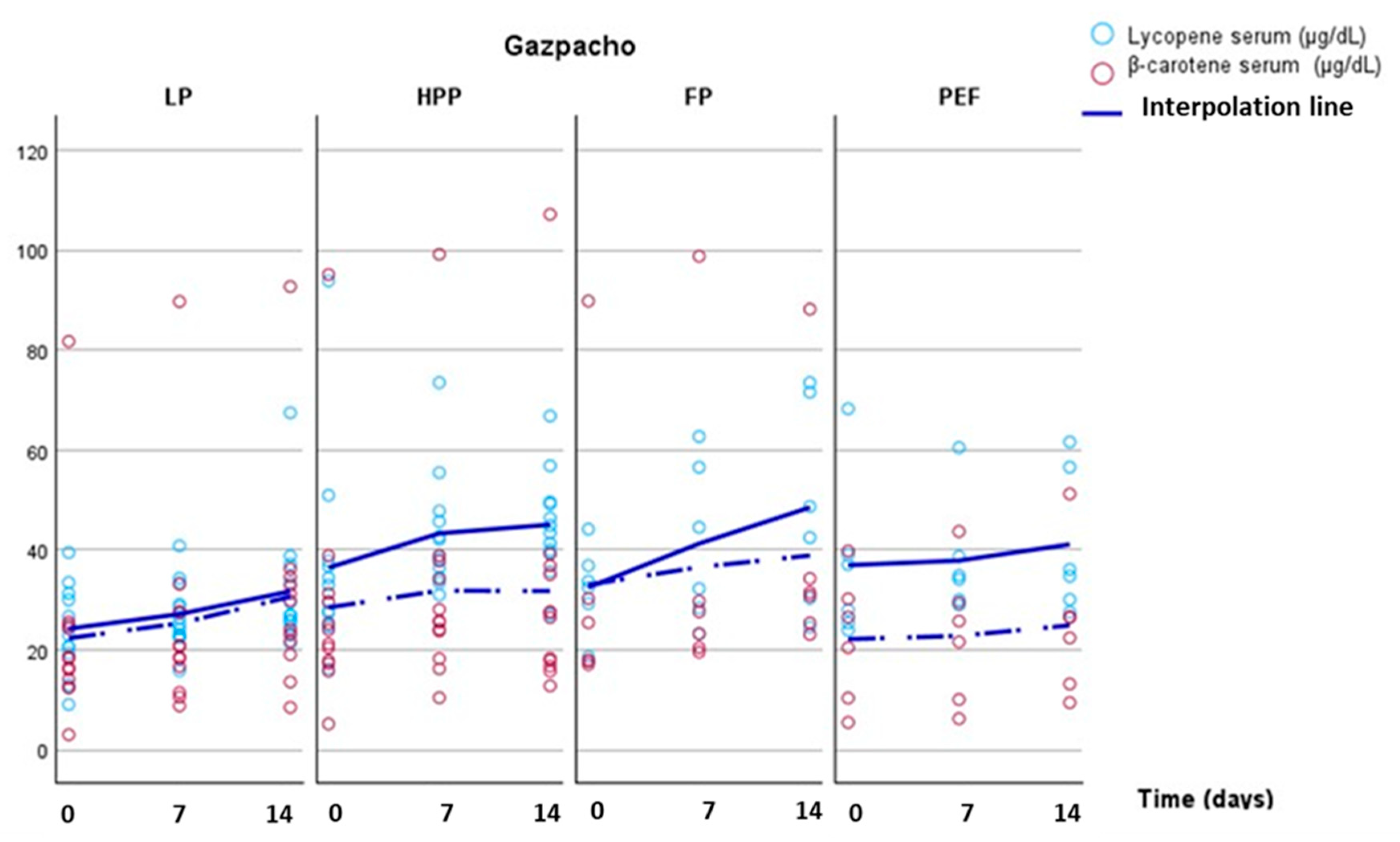
Figure 2.
Serum lycopene concentrations adjusted for gazpacho-FP derived lycopene intake: a) in the whole group, b) in each of the four types of gazpacho subgroups.
Figure 2.
Serum lycopene concentrations adjusted for gazpacho-FP derived lycopene intake: a) in the whole group, b) in each of the four types of gazpacho subgroups.
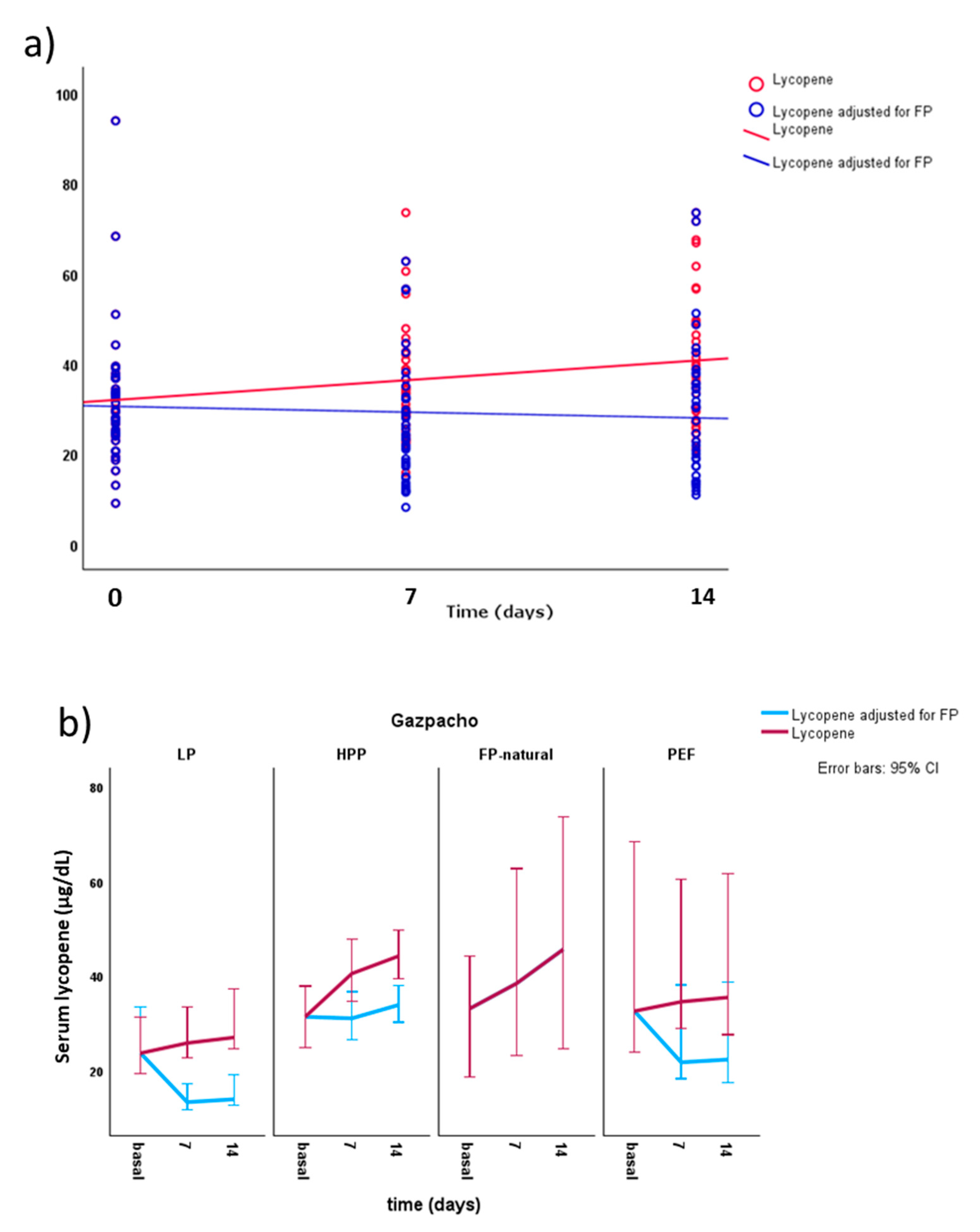
Figure 3.
Serum lycopene concentrations adjusted for gazpacho-FP derived lycopene intake across the four different types of gazpacho evaluated during the study period.
Figure 3.
Serum lycopene concentrations adjusted for gazpacho-FP derived lycopene intake across the four different types of gazpacho evaluated during the study period.
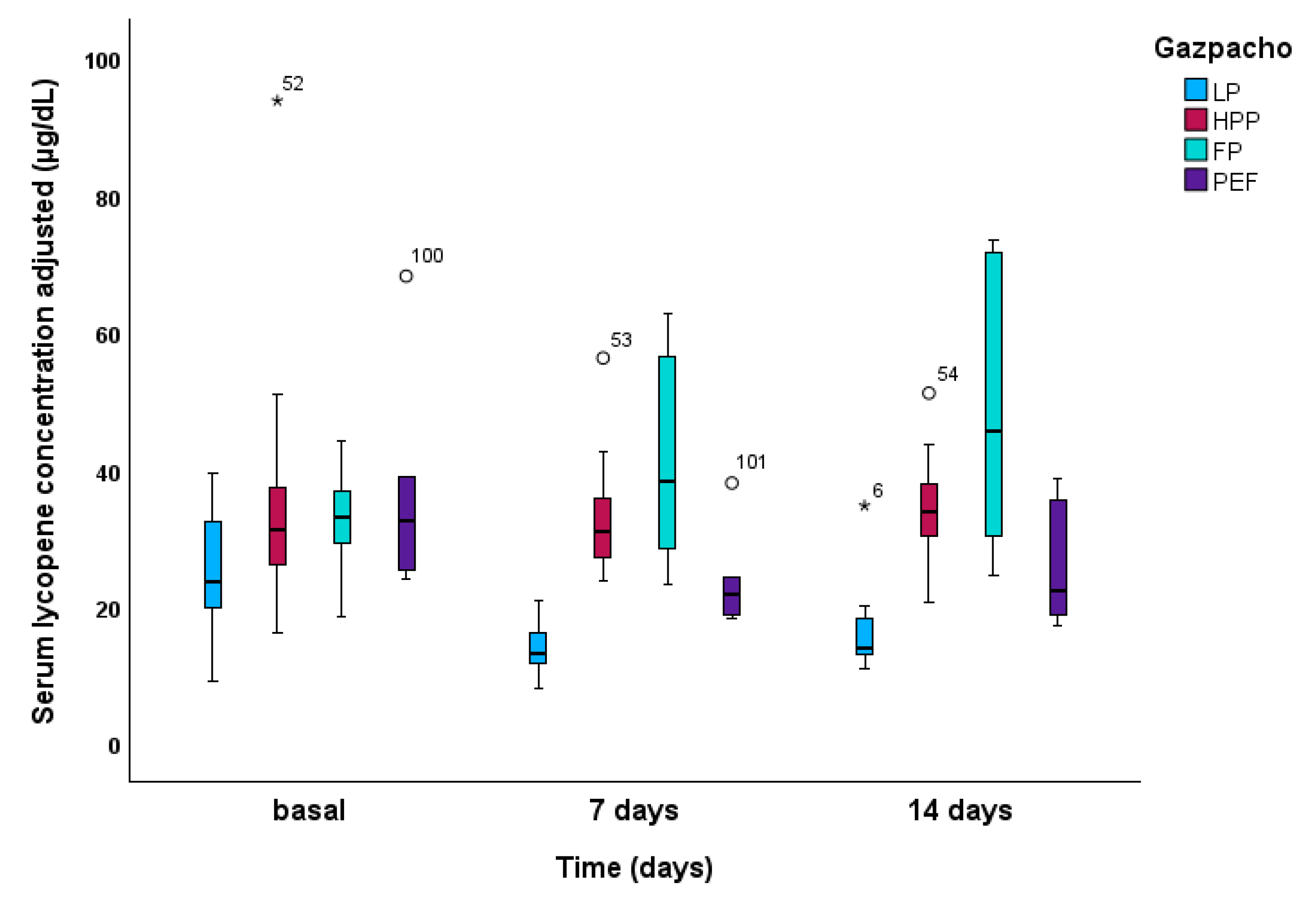

Table 1.
The lycopene and β-carotene content of each of the four types of gazpacho (LP, FP, HPP, FP) and the concentrations supplied to the dairy during the study.
Table 1.
The lycopene and β-carotene content of each of the four types of gazpacho (LP, FP, HPP, FP) and the concentrations supplied to the dairy during the study.
| Type of gazpacho* | Concentrations in gazpacho (µg/100 dL) | Concentrations supplied (µg/day) | |||||||
|---|---|---|---|---|---|---|---|---|---|
| Lycopene (total) | Trans-lycopene | Cis-isomer lycopene (1 and 2 peaks) | β-carotene (total) | Cis-β-carotene | Lycopene | β-carotene | % trans-lycopene | % trans-β-carotene | |
| Gazpacho-LP | 2176.6 | 1678.6 | 183.4 / 302.6 | 360.3 | 108.1 | 10883 | 1802 | 77.12 | 70.05 |
| Gazpacho-FP | 825.4 | 687.7 | 70.0 /66.8 | 209.9 | 17.4 | 4127 | 1050 | 83.32 | 91.7 |
| Gazpacho-HPP | 1263.2 | 991.4 | 141.9 /130.0 | 206.9 | 32.6 | 6316 | 1035 | 78.48 | 84.24 |
| Gazpacho-PEF | 1671.7 | 1306.7 | 128.2 / 236.8 | 186.0 | 32.9 | 8359 | 930 | 78.17 | 82.31 |
The values represent the mean of three determinations of each sample. *LP, low pasteurisation (commercial); HPP, high-pressure processing; PEF, pulsed electric fields.
Table 2.
Serum lycopene and β-carotene concentrations (µg/dL) mean ± SE, [median] at baseline, 7 and 14 days (n=36; 12 participants in LP and HPP groups, 6 in FP and PEF groups).
Table 2.
Serum lycopene and β-carotene concentrations (µg/dL) mean ± SE, [median] at baseline, 7 and 14 days (n=36; 12 participants in LP and HPP groups, 6 in FP and PEF groups).
| Gazpacho-LP (n=12) | Gazpacho-FP (n=6) | Gazpacho-HPP (n=12) |
Gazpacho-PEF (n=6) |
Gazpacho (LP, HPP, FP, PEF) (n=36) | |
|---|---|---|---|---|---|
| Lycopene - basal | 24.2 ± 2.5 A [23.6] | 32.5 ± 3.5 A [33.1] |
36.4 ± 5.8 [31.3] |
36.9 ± 6.8 [32.5] | 31.8 ± 2.5 A [29.5] |
| Lycopene – 7 d | 27.1 ± 1.9 a B [26.8] | 41.3 ± 6.5 b B [38.4] | 43.3 ± 3.4 b [40.5] |
37.9 ± 4.8 [34.5] | 36.7 ± 2.1 B [34.2] |
| Lycopene – 14 d | 31.7 ± 3.6 a C[26.9] | 48.5 ± 8.4 b B [45.6] | 45.0 ± 2.9 b [44.2] |
41.1 ± 5.9 [35.4] |
40.5 ± 2.5 B[38.0] |
| ß-carotene - basal | 22.3 ± 5.7 [17.4] |
33.0 ± 11.6 [21.7] |
28.5 ± 6.5 [22.6] |
22.1 ± 5.2 [23.5] |
26.1 ± 3.5 X[20.4] |
| ß-carotene – 7 d | 25.3 ± 6.2 [19.6] |
36.5 ± 12.6 [25.4] |
31.8 ± 6.6 [25.7] |
22.8 ± 5.6 [23.7] |
28.9 ± 3.7 [23.9] |
| ß-carotene – 14 d | 30.6 ± 6.2 [26.9] |
38.9 ± 10.0 [31.2] |
31.8 ± 7.3 [27.0 ] |
24.9 ± 6.0 [24.4] |
31.4 ± 3.6 Y[26.5] |
In each column, superscript capital letters and, in each raw, superscript letters indicate statistically significant variations in the concentration (p< 0.05).
Table 3.
Serum lycopene and β-carotene concentrations (µg/dL) adjusted for the carotenoid concentration supplied by gazpacho-FP (mean ± SD [median]).
Table 3.
Serum lycopene and β-carotene concentrations (µg/dL) adjusted for the carotenoid concentration supplied by gazpacho-FP (mean ± SD [median]).
| Gazpacho-LP (n=12) |
Gazpacho-FP (n=6) | Gazpacho-HPP (n=12) | Gazpacho-PEF (n=6) |
Gazpacho (LP, HPP, FP, PEF) (n=36) | |
|---|---|---|---|---|---|
| Lycopene - basal | 24.5 ± 8.9 [23.6] A | 32.5 ± 8.5 [33.1] | 36.4 ± 20.0 [31.3] | 37.0 ± 16.5 A [32.5] | 31.9 ± 15.2 [29.5] |
| Lycopene – 7 d | 14.0 ± 3.4 Aa [13.3] |
41.3 ± 16.0 Ab [38.4] | 33.2 ± 9.0 b[31.0] | 23.8 ± 7. 3 B [21.7] | 26.6 ± 13.4 [24.1] |
| Lycopene – 14 d | 16.3 ± 6.4 Ba [13.9] |
48.5 ± 20.5 Bb [45.6] | 34.5 ± 7.8 b[33.8] | 25.8 ± 9.0 [22.3] | 29.3 ± 15.4 [28.8] |
| ß-carotene - basal | 22.3 ± 19.8 [17.4] | 33.0 ± 28.3 [21.7] | 28.5 ± 22.7 [22.6] | 22.1 ± 12.8 [23.5] | 26.1 ± 21.0 [20.4] |
| ß-carotene – 7 d | 19.4 ± 16.5 [15.1] | 36.5 ± 30.7 [25.4] | 31.7 ±22.8 [25.6] | 23.9 ± 14.3 [24.8] | 27.1 ± 21.4 [23.0] |
| ß-carotene – 14 d | 23.5 ± 16,4 [20.7] | 38.9 ±24.5 [31.2] | 31.7 ± 25.3 [26.9] | 26.0 ± 15.4 [25.6] | 29.2 ± 10.1 [25.3] |
In each column, superscript capital letters and in each row, superscript lowercase letters, indicate statistically significant variations in concentration (p< 0.05).
Table 4.
Serum concentrations of lycopene and β-carotene (µg/dL, mean and SE, IC, data for days 0, 7, 14 combined) adjusted for the carotenoid concentration supplied by gazpacho-FP.
Table 4.
Serum concentrations of lycopene and β-carotene (µg/dL, mean and SE, IC, data for days 0, 7, 14 combined) adjusted for the carotenoid concentration supplied by gazpacho-FP.
| Lycopene | β-carotene | |
|---|---|---|
| Gazpacho-LP | 15.11 ± 0.87 (13.28 , 16.94) A | 21.69 ± 2.83 (15.95 , 27.44) |
| Gazpacho-HPP | 34.13 ± 1.59 (30.86 , 37.40) B | 30.55 ± 3.81 (22.82 , 38.28) |
| Gazpacho-FP | 36. 19 ± 3.04 (29.33 , 43.04) B | 36.40 ± 16.45 (23.45 , 49.35) |
| Gazpacho-PEF | 25.62 ± 2.16 (20.91 , 30.33) C | 23.77 ± 3.13 (17.16 , 30.39) |
Capital letters in superscripts indicate statistically significant variations in concentration (p< 0.05) for lycopene.
Disclaimer/Publisher’s Note: The statements, opinions and data contained in all publications are solely those of the individual author(s) and contributor(s) and not of MDPI and/or the editor(s). MDPI and/or the editor(s) disclaim responsibility for any injury to people or property resulting from any ideas, methods, instructions or products referred to in the content. |
© 2025 by the authors. Licensee MDPI, Basel, Switzerland. This article is an open access article distributed under the terms and conditions of the Creative Commons Attribution (CC BY) license (http://creativecommons.org/licenses/by/4.0/).
Copyright: This open access article is published under a Creative Commons CC BY 4.0 license, which permit the free download, distribution, and reuse, provided that the author and preprint are cited in any reuse.