

Submitted:
20 September 2025
Posted:
24 September 2025
You are already at the latest version
Abstract
An earthquake is a sudden shift of the earth’s surface. An earthquake occurs when two parts of the earth’s surface suddenly move about one another along a fault line due to tectonic forces. Quakes, also known as tremors or earthquakes, are caused by an abrupt release of energy in the earth’s crust. Earthquakes are recorded with seismographs, also often called seismographs. Traditionally, the moment magnitude of an earthquake is measured, or its associated, but now mostly outdated Richter magnitude; earthquakes with a magnitude of three or less are essentially undetectable, while those with a magnitude of seven can cause catastrophic damage over huge areas. The intensity of the ground tremble is measured using the modified Marcella scale. Seismic events are unpredictable and can cause damage to both people and property. We cannot stop it when it strikes unexpectedly, but we can be warned. Several technologies are available now to detect minor tremors and knocks so that we can take action before more significant earth vibrations occur. This study uses an accelerometer to find vibrations before an earthquake. The three axes, as well as shakes and vibrations, are extremely sensitive to the accelerometer. Reduced destructive losses are a benefit of utilizing an accelerometer to develop an earthquake detector based on Arduino.
Keywords:
earthquake
; embedded system
; sensors
; disaster
; management
; internet of thing
; aurdino
; accelerometer
Introduction
The Earth’s surface vibrates due to a rapid release of energy called an earthquake, which originates in the lithosphere [1]. Two pieces of ground suddenly slid past one other, causing an earthquake [2]. Their sliding region is called the fault or fault plane. The location directly above the hypocenter, or the depth at which an earthquake starts under the surface, is known as the epicentre [3]. An earthquake’s magnitude-a measure of energy released from the Earth’s crust-determines the damage it causes [4]. When an earthquake is smaller than five, its magnitude is measured using the Richter local scale. The amplitude of a seismogram determines an earthquake’s magnitude [5,6].
Recently, a standard magnitude scale has been employed to more accurately depict the energy released during earthquakes, especially those of considerable magnitude [7]. Devices including a seismometer, geophone, and accelerometer are used in this method [8]. The seismic sensor should produce signals unaffected by the sensor’s inherent properties and, as closely as possible, reflect the genuine soil response to the seismic source wave moving through it [9]. Hence, we need to know this before choosing any seismic sensor [10,11].
The receiver’s output should be consistent for all input frequencies regarding frequency response. Moreover, the phase of the input frequency must remain unchanged to avoid modifications to the wave’s structure. A seismic sensor should generally have a short settling time and a rapid reaction time [12].
Although geophones have more extended peak and settling durations than accelerometers regarding seismic sensor selection, the accelerometer is chosen for seismic activities because of its low noise, quick response times, and higher bandwidths than geophones. Virtual Reality is the construction of realistic, computer-generated settings that persuade [13] users to react as they would in real life.
It seeks to suppress external sensory input and employ audio and visual clues to enhance the realism of virtual worlds. Though theoretically straightforward, creating a virtual reality system in practice has been challenging lately [14,15]. With the advancement of technology, this project allows us to use an Arduino to digitally get an alarm for Earthquake by Earthquake Measurement and Monitoring System with Alerting System. The board’s microcontroller is programmed using the Arduino programming language [16].
They make new applications possible that are challenging to implement on other hardware. An earthquake alert system was developed to detect and classify moderate-sized earth-quak destructive impacts are felt. The solution suggested in this paper is based on an Arduino Uno board with an Atmega328p microcontroller that processes the signal from the sensors [17].
All of the sensors are linked to smartphones and the internet. Intelligent cities employ a network of sensors and actuators to observe physical reality, gather data, and then influence residents [18].
Materials and Methods
Motivation
In this research we demonstrated an Arduino-based security system. The fundamental tenet of this work is that all bodies emit infrared heat energy, which cannot be seen by human sight. Yet an electronic motion sensor can pick it up [19].
Since domestic animals like cats, mice, and dogs are likely present at home, we must use a seismic sensor to detect only people. This seismic sensor will pick up on the vibration frequency of a person’s footfall, which ranges from 4Hz to 8Hz and above depending on the floor, but will miss the footfall of animals like cats, mice, and dogs because it is less than 0.5Hz [20].
The system primarily uses sensors to monitor water levels and earth tremors. An alert signal is generated when any of these variables crosses a threshold. SMS alerts will be transmitted to the relevant authorities via the GSM network. Also, it has a siren to broadcast messages to the adjacent riverside community. The system may also indicate the water level’s status with the LCD display [21].
This work built a system as a qualitative concept proof; it did not undergo extensive testing during earthquakes [22]. The prototype successfully located simulated quake-like shocks with a magnitude of 4.0 [23]. This system may get several up- grades. A 3-axis accelerometer can replace the FSR, enabling detection in all planes at any frequency. Gas leaks at several places may be tracked using 2D multi-gas mapping techniques using a cascade module system via a wireless sensor network. 3 This system may use pattern recognition algorithms based on positive decision logic [24,25].
The authors suggested an inexpensive system for earthquake alerts. A NodeM- cuEsp8266 with GY-61 board is positioned at the earthquake’s epicenter. The recipients can receive the warning system before the earthquake hits their communities. The primary purpose of this effort was to monitor the MEMS accelerometer-based wireless earthquake alarm system [26].
The most vital tool for gaining a scientific understanding of the issue above is vital motion observation, which may be utilized to lessen earthquake disasters brought on by the design of buildings [27]. This study’s investigation into earthquake alarms was based on the strong motion observation theory and utilized wireless transmission and MEMS accelerometer technology, making it a more sophisticated and helpful gadget [28].
The writers used the ATmega328 microcontroller to develop their system. Sensors, a GSM module, and a wifi module are the significant components employed in this system. Several real-time circumstances are tested in the proposed study [29]. The scientists’ research on earthquakes utilizing the plotted graphs and future conditions may benefit from this study. They presented a paper titled Earthquake Detection Using Machine Learning [30]. Data can be recorded digitally by replacing the shortcomings of analogue systems with digital technologies [31]. The different values of the various sensors are provided to the ADC to convert the values into digital format [32,33].
The BUZZER will sound if anything changes or something is out of the ordinary. MEMS and VIBRATION sensors are used to track the state of the Earth [34]. The task is creating an earthquake alert-detecting circuit using just electrical components. An earthquake sensor, in this case a shaft with a load simulating a steel or building structure that vibrates when the corresponding surface wave reaches the ground, will detect a S wave and this circuit will help identify high-frequency vibrations that will cause an impulse to be sent [35].
The circuit is turned on by an Arduino microcontroller, which also reads the shaft output vibration data for further analysis and locks the output at high for ten seconds [36]. The Arduino prototype platform is composed on open-source hard- ware and software. Arduino boards have the ability to receive inputs, like light from a sensor or a user’s finger on a tweet, and translate them into outputs, such as powering up a motor, turning on an LED, or publishing anything to the internet. We can program your board to do specific tasks by communicating with its microcontroller through commands [37].
We use the Arduino programming language and Processing- based software [38,39]. The framework aims to develop an earthquake monitoring and warning system to identify tremors and notify people about the need for safe action. An affordable automated microcontroller- based system that uses an accelerometer and a gas sensor to detect earthquakes and gas leaks has been constructed utilizing inexpensive, locally made electronic components. The developed system will work to save lives, but it will also save the data for later use by experts in this domain.
Backgroud History
There are a few studies for identifying leading earthquake waves based on the literature search. A device developed by Bo¨brek, Kırbas¸, and Gu¨ngo¨r employs a microprocessor and piezo seismic sensor to detect nondestructive leading earthquake waves. Labview software is used to graphically evaluate the sensor data once it is read over the USB port in this setup. Hima et al. [19].used an accelerometer and an Arduino to construct a simple earthquake warning system . This device detects small, medium, and large-scale vibrations and displays the results locally on an LCD screen. Novianta et al. developed a system that detects anomalous seismic and geomagnetic ULF waves prior to an earthquake using accelerometer and magnetometer sensors.
A few more works in various domains were also made with Arduino in addition to these. Pineo and their threshold values were recognized. The buzzer and wifi module were then connected after that. Its programming was finished, and tests were conducted to ensure the necessary functionalities were implemented. When the vibration sensor and IMU data hits the threshold value, the Thing Speak IoT analysis platform receives it and uses the wifi module to deliver it there. The start and finish of the earthquake are mentioned in a tweet published using this site. Additionally, the buzzer sounds off when an earthquake occurs.
Related Works
Crisnapati, Padma Nyoman and Wulaning, Putu Desiana and Hendrawan, I Nyoman Rudy and Bandanagara, Anak Agung Ketut Bagus et. al explain in their research [13] the measurement of earth-quake damage is done via on-site inspection. Nonetheless, Earthquake’s vibration level could cause varying degrees of harm. As a result, a damage intensity scale system is crucial for assessing the severity of an earthquake’s damage. The goal is to track earthquake damage level and intensity data, disseminate accurate information, and issue a severe damage early warning.
Beltran Jr, Angelo and Dizon, Keith Joseph and Nones, Kristina and Salanguit, Reina Louise and Santos, Jay Bhie and Santos, Josemaria Rei et al. explain their research of [28] Arduino-based disaster management system that the primary goal of this framework was to create a safety net system with a Near Real-time Monitoring and Warning System for Earth-quakes capable of detecting earthquakes and any geological seismic signals.
Ghofir, Abdul and Phramoedya, Enda et al. explains their research of [28] Machinery Health Monitoring System with Arduino. The framework seeks to produce a hardware and software foundation. While the hardware is the prototype case, the software designs the block diagram and graphic user interface (GUI).
Mardiyono, M and Sari, RE and Dini, ON et al. explain their research of [40] Wind speed monitoring and alert system using sensor and weather forecast. The date and time stamp are placed on a webpage along with the measured environmental data. They can be seen from any location using a computer or smartphone with internet access [41].
Hoque, Rahinul and Hassan, Shoaib and Sadaf, MD Akter and Galib, Asadullahil and Karim, Tahia Fahrin et al. explains their research of Earthquake monitoring and warning system A LED serves as an indicator in this prototype as well. Especially in earthquake-prone areas, this technology may greatly benefit the community.
Comparison with Other System
A comparison table I can be made to discuss our system and existing systems by studying several reports related to our proposed system [42]. Thus, learning about the differences between the existing system and our designed system will be easier. Table I briefly explains the basic comparisons between the existing and our systems. Several changes made to our system are shown in the following table. Our system is low cost, auto configurable, energy saving, and controls devices remotely.
Problem Statement
And wipes off valuable human lives as well as civilization. It is an unexpected phenomenon whose occurrence cannot be prevented, but at least we can take steps to lessen the unfavourable effects of its results [43]. Modern technology is essential in this process. Here, a similar circuit that serves as an earthquake indicator and stops further damage is presented [13]. We use an extremely sensitive ADXL335 accelerometer and Arduino to achieve our objectives. Regarding locating. Table 1 presents a comparison of different smart earthquake measurement and monitoring systems with alerting capabilities.
Framework Scope
A significant earthquake threatens Bangladesh, and Dhaka is most at risk. The capital’s high-rise construction density has been dubbed “a thorn in the neck” by experts, who have called on the government to uphold building clearance standards to safeguard the city adequately [44].
76% of Dhaka city’s highways, according to sources at the Fire Service and Civil Defence, are narrow, making it challenging to conduct rescue operations in the event of an earthquake. Furthermore, 60%of the buildings were built following modifications to the original design, raising concerns that these improvised structures could instantly collapse during a powerful earthquake. Gas, power, and water line explosions would worsen the situation.
- About 95-100% of people are at risk of earthquakes.
- It helps them take proper actions to alert people of earthquakes.
- Detect Earthquake a few times ago.
- Alarming when detecting unwanted disasters like earth- quakes.
- Unwanted Earthquake detection and inform the people.
- Smart Earthquake Measurement and Monitoring System. Table 2 outlines the scope of various earthquake measurement and monitoring systems with alerting mechanisms.

Table 2.
Scope of earthquake measurement and monitoring system with alerting system.
| Sl. No | Place of Report | Market details |
| 1 | 2022 Market size | USD 5.95 Billion |
| 2 | 2030 Market size | USD 18.9 Billion |
| 3 | Rate of Growth from 2022 to 2030 | CAGR of 15.59% |
| 4 | Largest Market | North America |
| 5 | Fastest growing Market | Asia Pacific |
Objectives
The main objective of our paper is to develop a remote heart beat rate and temperature monitoring system using IoT, and the data can be stored in the cloud.
- To help to detect earthquakes at first quack.
- To monitor earthquake conditions very easily.
- To measure earthquake parameters by Accelerator.
- To alert the earthquake by Buzzer.
- To show the result of the earthquake through LCD Display.
- To show the graphics view of the earthquake estimation through a Seismograph.
Methodology
Background Tools and Technology
Different tools and instruments have to be used to make each device. The effective use of tools makes a system more accessible, and the compatible use of technology develops a comfortable area for using the system [45]. We have also used hardware and software tools to acquire the best result.
A. Software Tools
To develop a system, software requirements are essential to building an effective environment. Improved planning, better collaboration, remote working, and effective task delegation must be acquired using the latest software technology. In the system, we use various software tools as follows [46]:
1) Fritzing: The Fritzing is a virtual illustration of circuit Figure 1 in the real world. Many electrical circuits can be designed by using the Fritzing simulator [47]. It helps the designers to learn, draw, and create electrical projects and use them frequently. Designers and artists may create more reliable circuits from prototypes using novice or enthusiast CAD software named Fritzing. Arduino microcontroller-based devices can efficiently be designed and implemented using Fritzing [37].
2) Arduino Simulation: Arduino Simulation: The Arduino simulator is a virtual illustration of the circuit Figure 2 in the real world. Many framewoks can be established by using the Arduino simulator [48]. It helps the designers to learn, program, and create frameworks and use them frequently [48].
3) Processing-IDE: Processing-IDE: For Linux, Windows, and macOS, Processing 3 is accessible as an open-source program. Additionally, processing frameworks are cross-platform and may be utilized on a variety of Linux-based systems, including macOS, [40] Windows, Android, Arduino, Raspberry Pi, and more. Figure 3 illustrates the use of the Processing IDE for interfacing with a seismograph.
B. Hardware Tools
Many hardware tools are used in this Earthquake Measure- ment and Monitoring System Based on the Arduino framework. Before giving the methodology, It is important to explain all the Hardware Tools, which are described below:
1) Arduino UNO: Figure 4’s Arduino UNO 4 [49] is an example of an open-source, free approach to developing
Hardware and software based on micro-controllers, inexpensive system- on-a-chips [50]. Systems by Espressif created and manufac- tured the micro at a low cost, incorporating essential computer parts like CPU, RAM, networking (wifi), and even a modern operating system and SDK. It is, hence, a good fit for a range of Internet of Things (IoT) frameworks [51].
2) Accelerometer: An ADXL335 Figure 5 [25] is a straight- forward breakout device called the EVAL- ADXL335Z that enables speedy assessment of the ADXL335 accelerometer’s performance [52]. A 3-axis analog-output accelerometer with a detection range of about 3 g is called the ADXL335 [53]. The breakout board’s small dimension (1” x 1”) makes it simple to mount the accelerometer to an existing system without the need for extra hardware and with little impact on the system’s and accelerometer’s performance [54].
It has some important features, such as:
1) Robotics, RC, and FPV devices
2) GPS-based navigational aids
3) Impact identification and recording
4) interface gadgets for virtual reality and gaming
5) Motion-triggered features
6) intelligent power management for portable electronics
7) Monitoring and recompense for vibrations
8) 6D position recognition and free-fall detection
3) Vibration Motor: This vibration engine Figure 6 [14] can be used with a wide range of goods and is very effective and user-friendly [55]. Pagers, GPS units, cell phones, and even games fall under this category. Tiny vibration engine with a 6mm circumference and a 12mm length. A coreless motor with a standard voltage of 3V [56].
These motors-90 mm long red and black pre-wired wires-are frequently utilized for silent alert features in cell phones and applications inside tools, robotics, control sticks, and different alert functions in portable devices [57].
4) Buzzer: For instance, the design of a beeper or buzzer Figure 7 may be mechanical, piezoelectric, or electro- mechanical. Its main purpose is to transform the audio signal to sound. It is frequently run on DC voltage and found in computers, printers, alarm clocks, timers, and other electronic devices [58]. Depending on the many designs, it may make a number of sounds, such as an alarm, music, bell, and siren.
An Arduino buzzer is comparable to a beeper. The Arduino buzzer makes noise when electricity is applied to it. The Arduino buzzer may be directly linked to the Arduino and can produce a variety of tones by delivering different frequency electric pulses.
5) LCD Display: You’ll need a monitor if you want to give your Arduino creations some sort of visible output. The Standard LCD 16x2 Figure 8
[20] show is an excellent option if you only need to show a small amount of information. This 16x2 Standard LCD offers a quick and affordable way to incorporate a 16x2 Black on RGB Liquid Crystal Display. Into your frameworks. A very distinct and high-contrast black/white text on a yellow/blue background/backlight is displayed on a 16-character by 2-line monitor. This fantastic yellow/blue backlit LCD is available. It is excellent for tasks built on Arduino. Connecting this Standard LCD 16x2 with Yellow/Blue Backlight to an Arduino or other microcontroller is very simple.
Activity Diagram Of Arduino-Based Earthquake Measurement And Monitoring System With Alerting System
The following Activity diagrams Figure 9 control the sys- thematic control passed between multiple classes. It explains the system's dynamic features. It is adequate to model how a use case coordinates the workflow. It can identify conditions before and after the use cases.
Activity during the processing of an object as shown in Figure 9 shows how the user can connect with the automated blind monitoring interface using the system. Figure 9 describes how the system works. It is a step- by-step procedure that users can easily access and get the connection between object detection and acquisition.
Schema Design
Figure 10 illustrates our proposed system architecture. We use several electrical components connected to the system. The Blind Monitoring System uses an ultrasonic sensor based on Arduino to detect objects and obstacles and give output.
PCB Design
PCB design is the breadboard view of the IoT framework shown in Figure 11. It describes the dynamic aspects of the system. It is adequate to model how a use case coordinates the workflow. It can identify conditions before and after the use cases.
At present, the whole world is facing various earthquake problems. To solve that problem, this system will work very efficiently.
PCB Design is the processing of patient data collection as shown in Figure 11. It shows how the user can connect with the automated blind monitoring interface using the system.
Figure 11 describes how the system works. It is a step-by-step procedure that users can easily access and get the connection between object detection and acquisition.
Implementation
Figure 12 shows the Circuit Diagram of Arduino-Based Earthquake Measurement and Monitoring System.
Here, the Arduino UNO is connected to the ADXL335. X, Y, and Z pins of ADXL335 are connected to the Arduino UNO Digital Pin D4, D5, and D6 pins. Pin configuration has already been discussed before. The electrical equipment will be connected to the LCD Display and Buzzer. The circuit is designed using the circuit with ADXL335.
Results and Discussion
After adequately evaluating the system, it is time to discuss the acquired result. We implemented the system a few weeks Figure 12. Circuit Diagram of Arduino-Based Earthquake Measurement and Monitoring System On February 6, an earthquake of a magnitude of 7.8 occurred in southern Turkey, not far from Syria’s northern border. Nine hours after this one, an earthquake of magnitude 7.5 was felt, around 59 miles (95 kilometers) to the southwest. The first earthquake, which struck Turkey, which is prone to earthquakes, was the most destructive to occur there in almost 20 years and was as large as the worst earthquake ever recorded in 1939. It was located near Gaziantep in south- central Turkey, a region that is also the home of thousands of
Syrian refugees and several humanitarian aid organizations.
International rescue teams and humanitarian offerings from governments worldwide promptly responded to the calls for help. The home country of Turkey is referred to in English by the UN as Tu¨rkiye. (UN).
Thus, the system is made up of remembering everything it desperately requires to make it simple to monitor earthquakes rapidly.
ago. We tested our system and observed its response.
A. Final Output of the System
Figure 13 has been arranged after designing the whole system. The ADXL335 is attached to the Arduino UNO and buzzer, and the LCD has a vibration motor. Here is the Final Output view of the project, which is known as the IoT Device Design of the System Figure. The user sees the complete project PCB view of the project.
Testing and Evaluation
Testing and system evaluation are the most crucial aspects of system design. A system may be evaluated via iterative testing, which is what we do. Testing is done to formally confirm that a system, service, or software operates as intended in predetermined circumstances. Figure 14 may be used to identify errors or responses to system failures and the risk involved in system design, production, operation, and maintenance.
The phrase “project testing phase” describes activities meant to look into and evaluate a particular project’s state to inform stakeholders about the project’s actual performance and quality. An unbiased opinion on the project is being sought to assist stakeholders in evaluating and understanding the risks of project failure or mismatch.
Before delivery, the testing phase’s goal is to assess and test the project’s declared requirements, features, and expectations to ensure they align with those detailed in the specification papers.
A. Performance Analysis of Earthquake Measurement and Monitoring
System with Alerting System The Earthquake Measurement and Monitoring System with Alerting System Table 3 experimental prototype was used to research potential interactions with objects’ near- to-eye displays. Underneath the display, the eye-observing sensor was employed to track the object’s position in relation to the coordinating scheme of the display.
Conclusions
We successfully watched both areas and downloaded the vibration values to the Ubidots IoT platform. We could keep an eye on both areas in real-time. Moreover, we got the emails for both regions. The received vibration measurements are inaccurate because we didn’t specify a range or compare them to genuine earthquake data. More research is required for this project to calibrate the sensor and provide the actual values as a result of the earthquake.
But for our research, it was more than sufficient, and we were able to show that our theory could be put to practical use. Since the price is so low. The earthquake detection system is all that is described above. The gyroscopes can be added to this project, allowing us to track the sensor’s values along the x, y, and z axes.
References
- Abayon RC, Apilado JR, Pacis DB, et al.: A Weather Prediction and Earthquake Monitoring System. 2018-12. [CrossRef]
- Barua, B, & Kaiser, M S: Design and Evaluation of a Microservices Cloud Framework for Online Travel Platforms. 2024. [CrossRef]
- ABDUL: HALIM, M.H.: Near real-time monitoring and alert system for earthquake and seismic signals. IRC.
- Barua, B, & Kaiser, M S: Real-Time Performance Optimization of Travel Reservation Systems Using AI and Microservices.. 2024. [CrossRef]
- Aditya VMVS, Tanishq CT, Sai VCB, et al.: IoT based water level monitoring system for dams. 2021-07. [CrossRef]
- Barua, B, & Kaiser, M S: AI-Driven Resource Allocation Framework for Microservices in Hybrid Cloud Platforms. . 2024. [CrossRef]
- Babu, V, & Rajan, V: Flood and earthquake detection and rescue using IoT technology. 2019-07. [CrossRef]
- Badhon, M R K, Barai, A R, & Zhora, F: Remote Real Time Monitoring and Safety System for Earthquake and Fire Detection Based on Internet of Things. 2019-12. [CrossRef]
- Barua B, Whaiduzzaman M, Sarker MM, et al.: Designing and Implementing a Distributed Database for Microservices Cloud-Based Online Travel Portal. Springer Nature Singapore, Singapore; 2023. 295-314. [CrossRef]
- Beltran Jr A, Dizon KJ, Nones K, et al.: Arduino-based disaster management system. Journal of Robotics and Control (JRC). 2:24-28. [CrossRef]
- Barua, B, & Kaiser, M S: Optimizing Airline Reservation Systems with Edge-Enabled Microservices: A Framework for Real-Time Data Processing and Enhanced User Responsiveness. . 2024. [CrossRef]
- Chavez-Rivera, Y, Espinoza-Garcia, B, & Yanyachi, P R: Low Cost Embedded IoT System to Record Meteorological, and Inertial Data in Remote Places. 2021-11. [CrossRef]
- Crisnapati PN, Wulaning PD, Hendrawan INR, et al.: Earthquake damage intensity scaling system based on raspberry Pi and Arduino Uno. 2018-08. [CrossRef]
- Barua, B. and Kaiser, M.S. (2025), A Next-Generation Approach to Airline Reservations: Integrating Cloud Microservices With AI and Blockchain for Enhanced Operational Performance. IET Blockchain, 5:e70020. [CrossRef]
- Ghofir, A,: Phramoedya, E.: Machinery healt monitoring system with arduino. IT for Society 5.
- Barua, B, & Kaiser, M S: Leveraging Microservices Architecture for Dynamic Pricing in the Travel Industry: Algorithms, Scalability, and Impact on Revenue and Customer Satisfaction.. 2024. [CrossRef]
- Hoque R, Hassan S, Sadaf MA, et al.: Earthquake monitoring and warning system. 2015-12. [CrossRef]
- Barua, B, & Kaiser, M S: Enhancing Resilience and Scalability in Travel Booking Systems: A Microservices Approach to Fault Tolerance, Load Balancing, and Service Discovery.. 2024. [CrossRef]
- Jesalva, D T: WiNDAS: wireless natural disaster alert system. 2021-08. [CrossRef]
- Barua, B, & Kaiser, M S: Microservices-Based Framework for Predictive Analytics and Real-time Performance Enhancement in Travel Reservation Systems. . 2024. [CrossRef]
- Juhariansyah, J, Ritzkal, R, Hendrawan,: A.H.: Design of an automatic bell warning system for prayer times in a net centric computing lab. Journal of Robotics and Control (JRC). 1:92-95. [CrossRef]
- Barua, B, & Kaiser, M S: Optimizing Travel Itineraries with AI Algorithms in a Microservices Architecture: Balancing Cost, Time, Preferences, and Sustainability. 2024. [CrossRef]
- Kafadar, O: A geophone-based and low-cost data acquisition and analysis system designed for microtremor measurements. Geoscientific Instrumentation, Methods and Data Systems. 9:365-373. [CrossRef]
- Mouri, Ishrat Jahan, Biman Barua, M Mesbahuddin Sarker, Alistair Barros, and Md Whaiduzzaman: Predicting Online Job Recruitment Fraudulent Using Machine Learning. Springer Nature Singapore, Singapore; 2023. 719-733. [CrossRef]
- Klapez M, Grazia CA, Zennaro S, et al.: First experiences with earthcloud, a low- cost, cloud-based iot seismic alert system. 2018-10. [CrossRef]
- Barua B, Mozumder MJU, Kaiser MS, et al.: February). Building Scalable Airlines Reservation Systems: A Microservices Approach Using AI and Deep Learning for Enhanced User Experience. 2025. [CrossRef]
- Labanan, R M, Fabito, B S, & Raga, R C: Development of an on-Site Earthquake Early Warning System for one Private Higher Educational Institution (HEI) and Its Nearby Community in Manila, Philippines. 2022-07. [CrossRef]
- Mardiyono, M, Sari, R, Dini,: O.: Wind speed monitoring and alert system using sensor and weather forecast. IOP Publishing, 1108:012029. [CrossRef]
- Mishra, A, Srivastava, A, Tiwari,: A.: A review of coal mine safety monitoring and alerting system. i-Manager’s Journal on Instrumentation & Control Engineering. [CrossRef]
- Barua, B, & Obaidullah, M: Development of the Student Management System (SMS) for Universities in Bangladesh. BUFT Journal,. 2014, 2:57-66.
- Nikhila, J: Web based Environmental Monitoring System using Raspberry Pi. 2017-09. [CrossRef]
- Barua B, Kaiser M: Novel Architecture for Distributed Travel Data Integration and Service Provision Using Microservices. Cureus J Comput Sci. 2025-06-27, 2:44389-025-04835-3. [CrossRef]
- Peralta LR, Hernández EI, Moreno SC, et al.: Guarneros, A.M.: Towards to a platform of monitoring based in wsn to estimate the structural health of buildings. 2ECEES:24-29.
- Barua, Biman, and Md Whaiduzzaman: A methodological framework on development the garment payroll system (GPS) as SaaS. IEEE, 2019. [CrossRef]
- Singh V, Veena M, Vidya V, et al.: Design of Robotic Vehicle for Detection of Human Based On Internet of Things. SJC INSTITUTE OF TECHNOLOGY,. 2021, 70.
- Sakib SN, Ane T, Matin N, et al.: An intelligent flood monitoring system for Bangladesh using wireless sensor network. 2016-05. [CrossRef]
- Chaki, Prosanta Kumar, Md Mozammel Hossain Sazal, Biman Barua, Md Shahadat Hossain, and Khaled Sohel Mohammad: An approach of teachers' quality improvement by analyzing teaching evaluations data. IEEE, 2019. 1-5. [CrossRef]
- Sathishkumar N, Manoj A, Muniraj K, et al.: Praveen,C.: Safety monitoring system in coal mine using iot. In: Journal of Physics: Conference Series,. IOP Publishing, 1916:012196. [CrossRef]
- Sindhanaiselvi, D, Shanmuganantham,: T.: Implementation of building stability analyzer with earthquake detection using simple mems pressure sensor. Springer, 367-377. [CrossRef]
- Barua, B: M-commerce in Bangladesh-status, potential and constraints. International Journal of Information Engineering and Electronic Business,. 2016, 8:22. [CrossRef]
- Soler-Llorens JL, Galiana-Merino JJ, Nassim-Benabdeloued BY, et al.: Design and implementation of an arduino-based plug-and-play acquisition system for seismic noise measurements. Electronics. 8:1035.
- Tomaneng, SDG, Docdoc, JAP, Hierl, SA,: Cerna, P.D.: Towards the development a cost-effective earthquake monitoring system and vibration detector with sms notification using iot. [CrossRef]
- Barua, B, & Kaiser, M S: A Methodical Framework for Integrating Serverless Cloud Computing into Microservice Architectures. 2024. [CrossRef]
- Utulo, AG, Fabro,: B.C.: Development of a disaster management alert system through the use of field programmable gate arrays. The opinions expressed in the articles are those of the author or authors; they are not necessarily the views of Eulogio—Amang||. 125.
- Wisaksono, A,: Novian, M.N.: Earthquake monitoring system based on wemos d1 mini with notification via whatsapp. IOP Publishing, 1104:012029. [CrossRef]
- Kubra KT, Barua B, Sarker MM, et al.: An IoT-based Framework for Mitigating Car Accidents and Enhancing Road Safety by Controlling Vehicle Speed. 2023- 10, -. [CrossRef]
- Barua, B, & Kaiser, M S: Cloud-Enabled Microservices Architecture for Next-Generation Online Airlines Reservation Systems. 2024. [CrossRef]
- Chaki PK, Barua B, Sazal MMH, et al.: May). PMM: A model for Bangla parts- of-speech tagging using sentence map. Springer Singapore, Singapore; 2020. 181-194. [CrossRef]
- Barua, B, & Kaiser, M S: A Methodological Framework of Containerized Microservices Orchestration and Provisioning in the Cloud: A Case Study of Online Travel Platforms. Challenges and Opportunities for Innovation in India,. 2025, 183. [CrossRef]
- Howlader SMN, Hossain MM, Khanom S, et al.: An Intelligent Car Locating System Based on Arduino for a Massive Parking Place. Springer Nature Singapore, Singapore; 2024-01. 19-33. [CrossRef]
- Barua, B, & Kaiser, M S: Leveraging Machine Learning for Real-Time Personalization and Recommendation in Airline Industry. 2024. [CrossRef]
- Barua B, Kaiser M: Novel Architecture for Distributed Travel Data Integration and Service Provision Using Microservices. Cureus J Comput Sci. 2025-06-27, 2:44389-025-04835-3. [CrossRef]
- Howlader SN, Barua B, Sarker MM, et al.: Automatic Yard Monitoring and Humidity Controlling System Based on IoT. 2023-12. [CrossRef]
- Barua B, Barua I, Kaiser MS, et al.: February). Trends and Challenges in AI- Driven Microservices for Cloud- Based Airline Reservation Systems: A Review. 2025. [CrossRef]
- Kumar, P, Kumar,: P.: Arduino based wireless intrusion detection using ir sensor and gsm. International Journal of Computer Science and Mobile Computing. 2:417-424.
- Barua, B, & Kaiser, M S: Blockchain-Based Trust and Transparency in Airline Reservation Systems using Microservices Architecture. 2024. [CrossRef]
- Priyadharsini K, Kumar JD, Babu CG, et al.: An experimental investigation on communication interference and mitigation during disaster using Lifi technology. 2020-09. [CrossRef]
- Nandanwar, H, & Chauhan, A: Iot based smart environment monitoring systems: a key to smart and clean urban living spaces. 2021-08. [CrossRef]
Figure 1.
Fritzing Simulation.
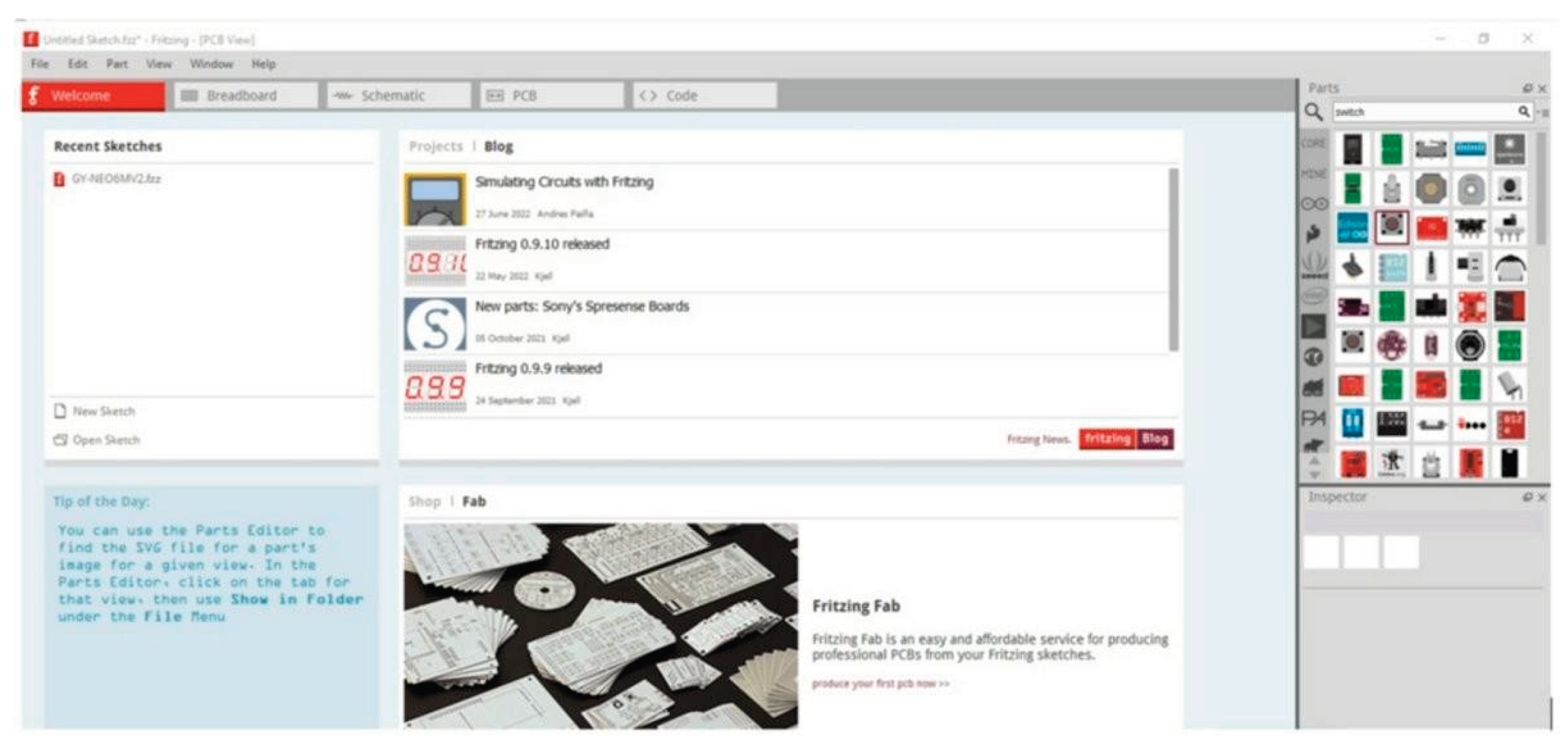
Figure 2.
Arduino Simulation.

Figure 3.
Processing-IDE for seismograph.
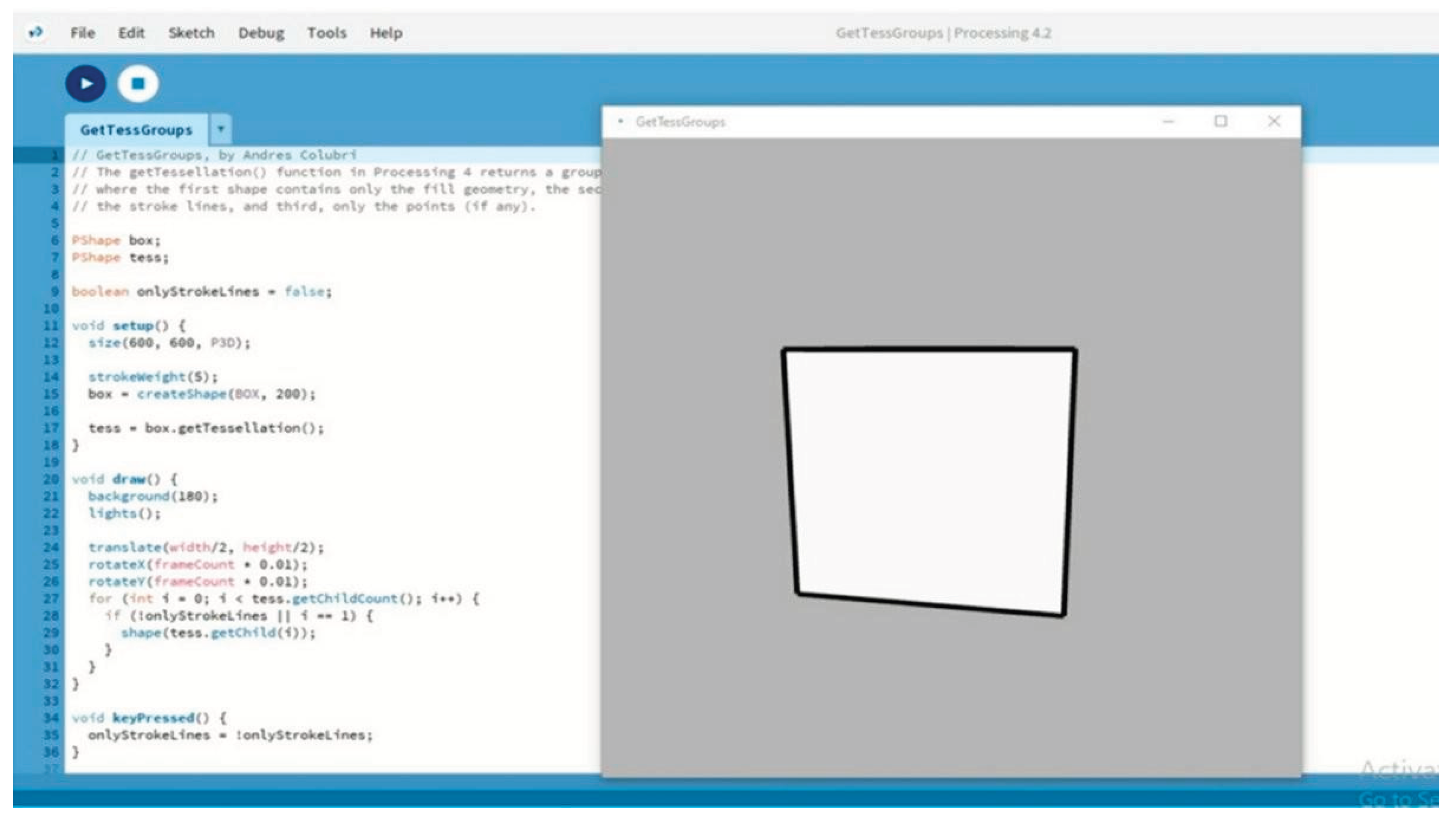
Figure 4.
Arduino UNO.
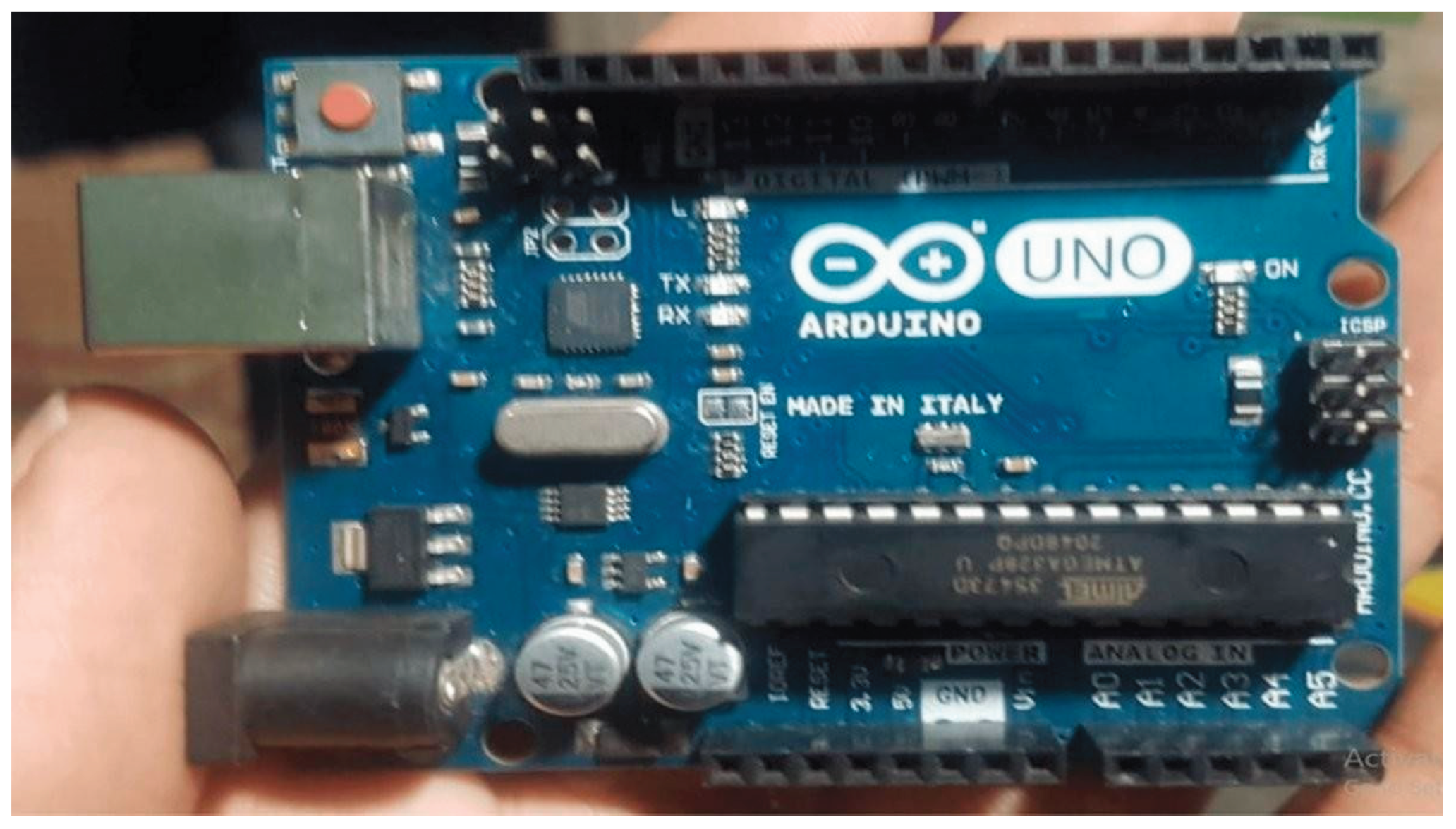
Figure 5.
ADXL335 Accelerometer.
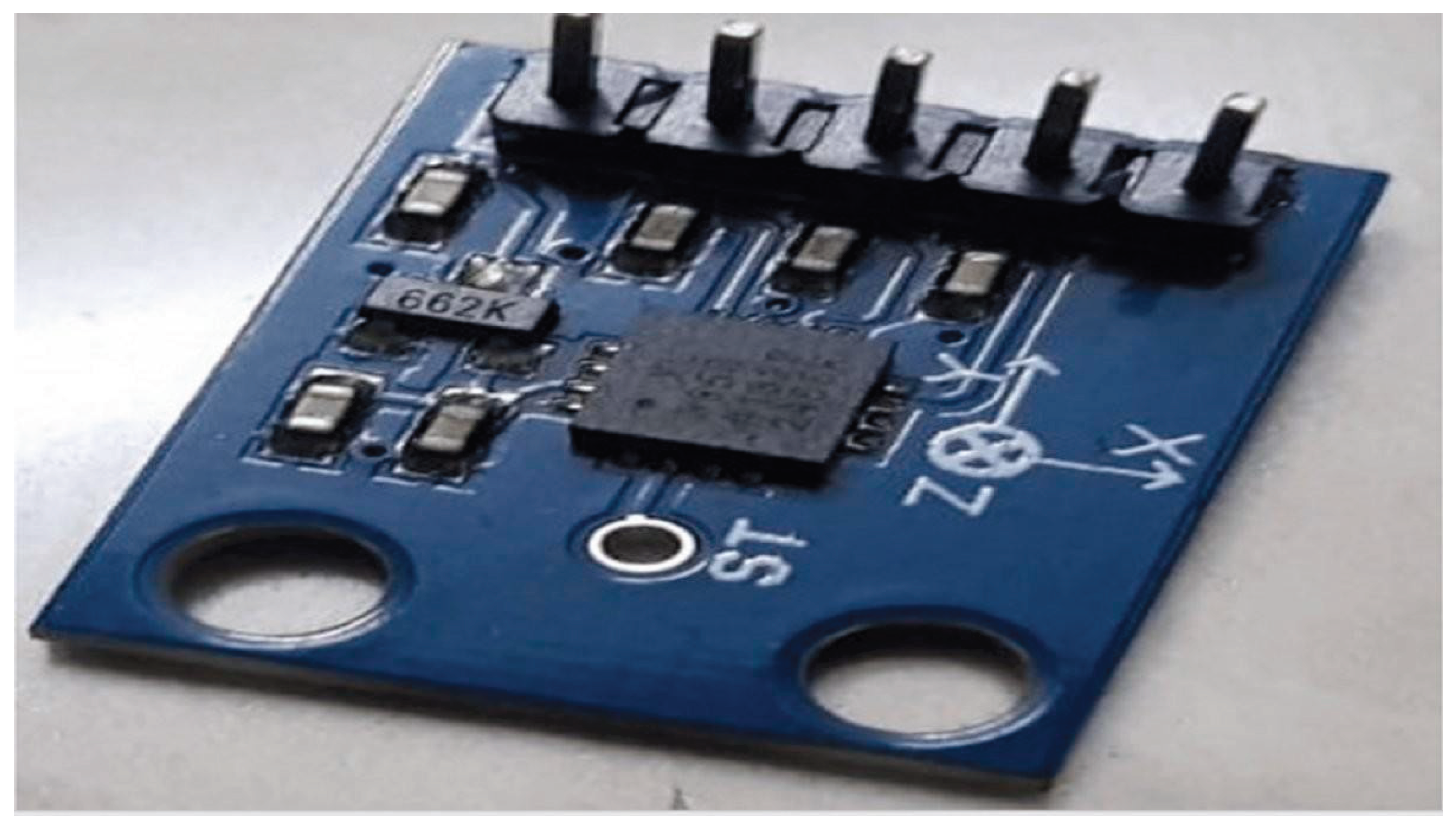
Figure 6.
Vibration Module.
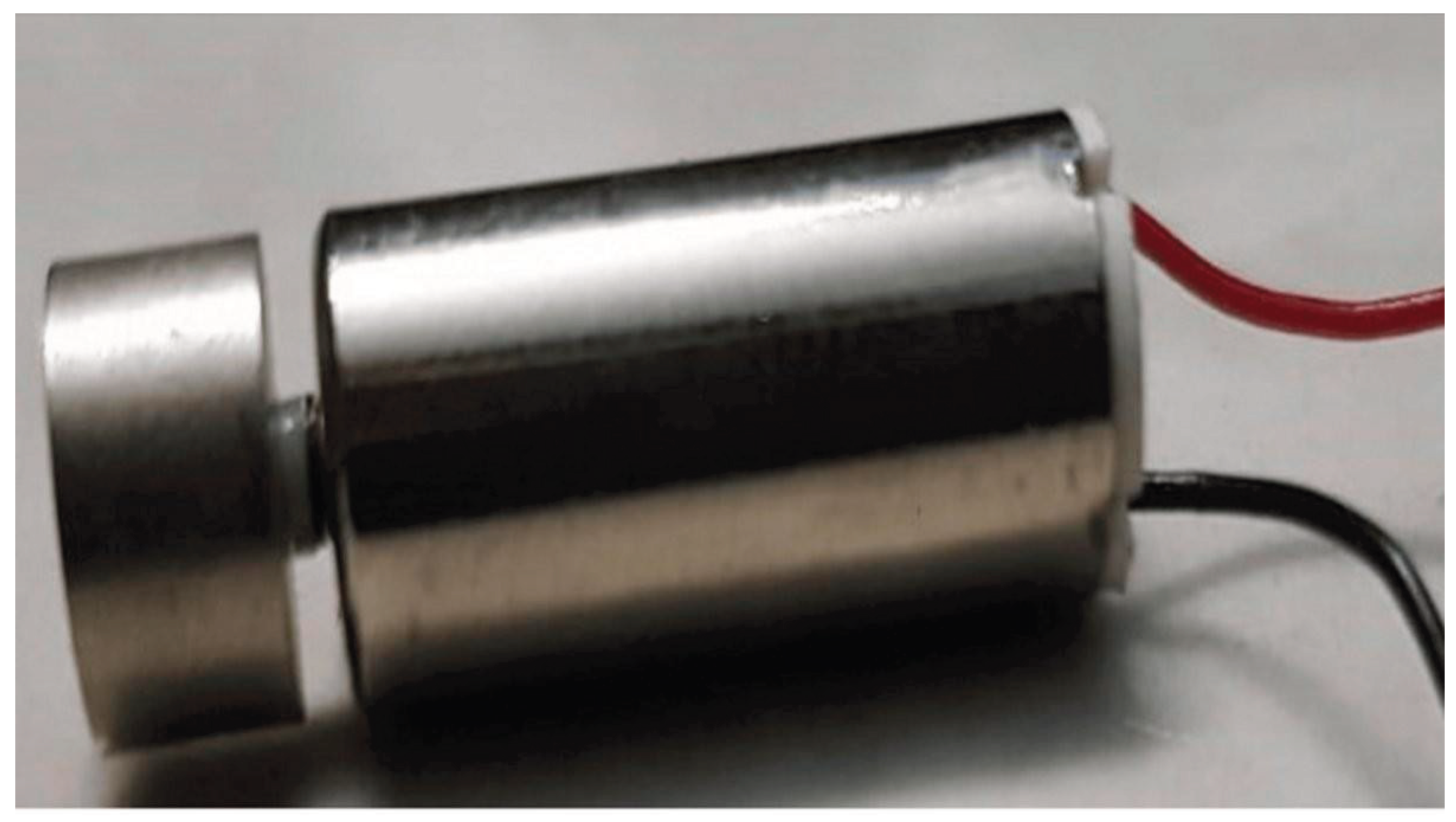
Figure 7.
Buzzer.

Figure 8.
LCD Display.
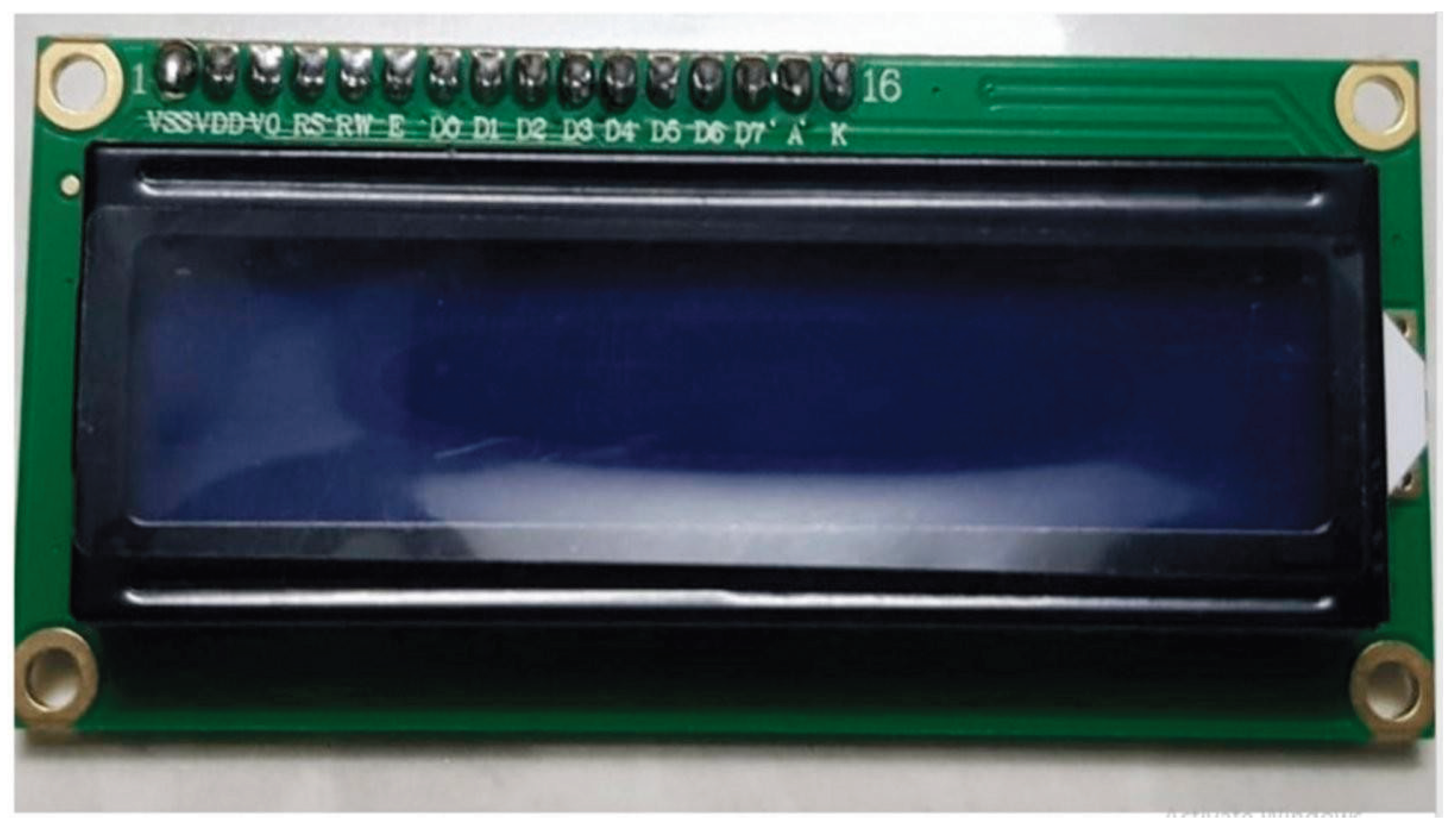
Figure 9.
Activity Diagram of Arduino-Based Earthquake Measurement and Monitoring System with Alerting System.
Figure 9.
Activity Diagram of Arduino-Based Earthquake Measurement and Monitoring System with Alerting System.
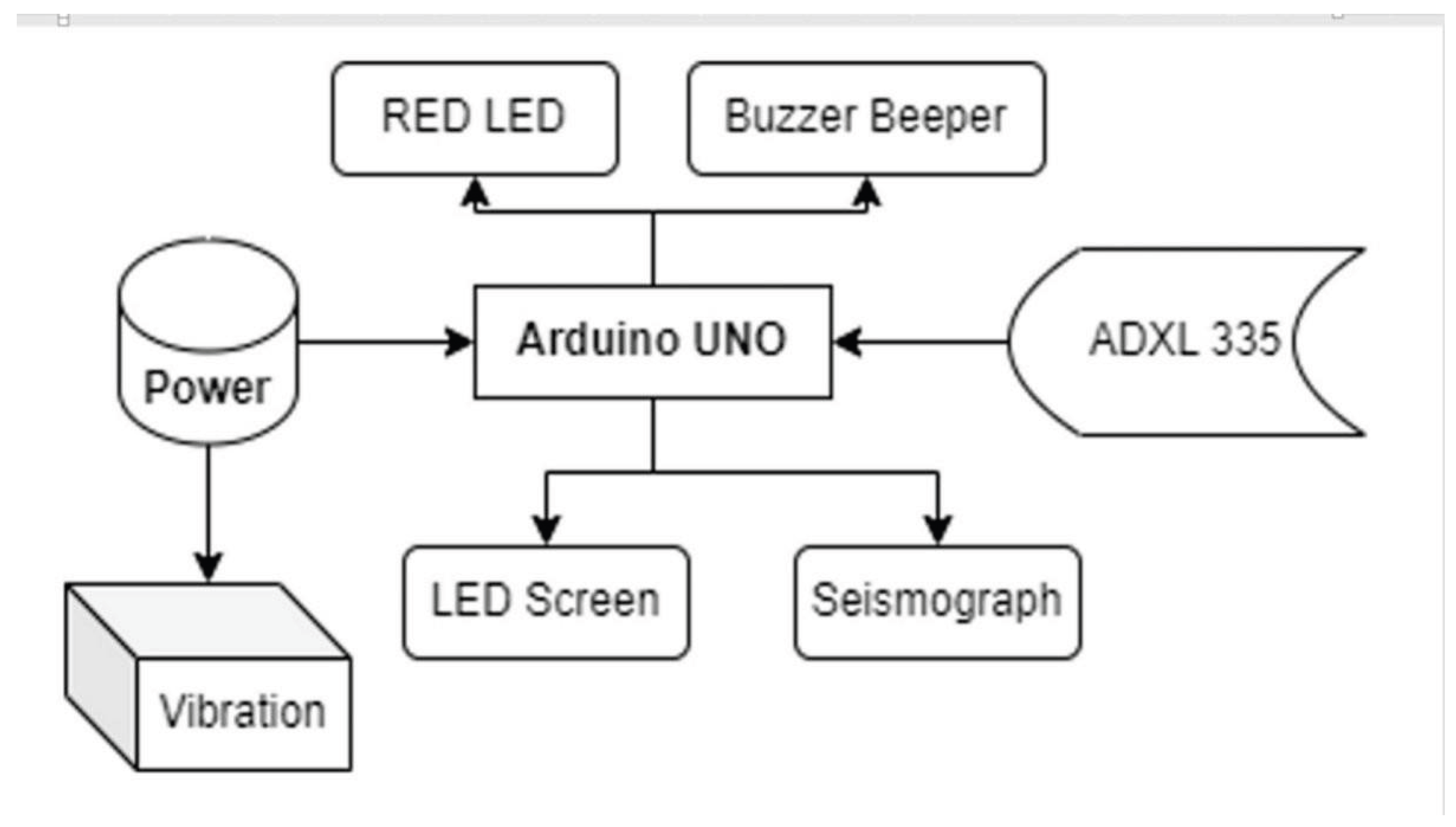
Figure 10.
Schema Design of Arduino-Based Earthquake Measurement and Monitoring System with Alerting System.
Figure 10.
Schema Design of Arduino-Based Earthquake Measurement and Monitoring System with Alerting System.
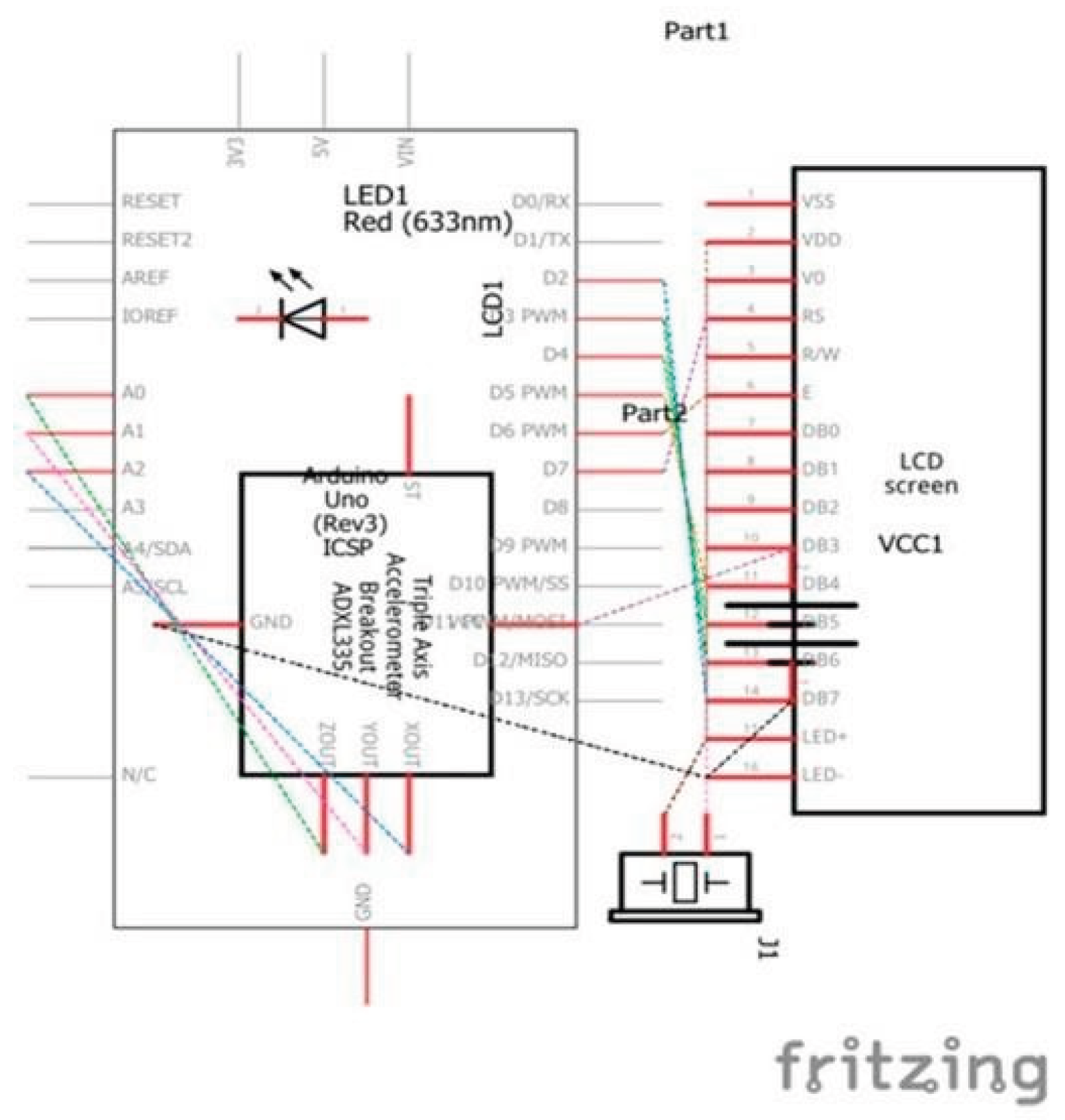
Figure 11.
PCB Design of Temperature and Heartbeat Rate Monitoring System.
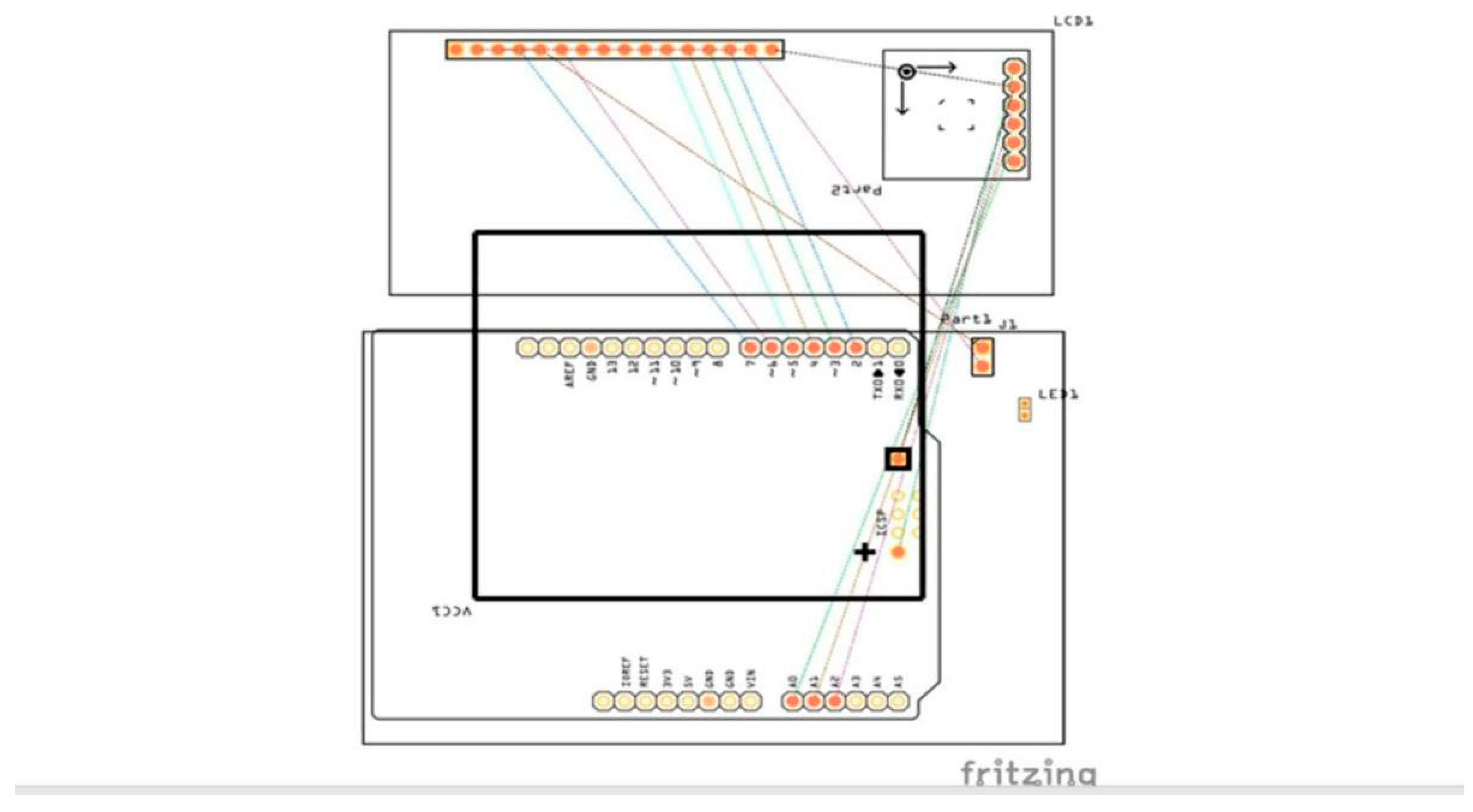
Figure 12.
Circuit Diagram of Arduino-Based Earthquake Measurement and Monitoring System On February 6.
Figure 12.
Circuit Diagram of Arduino-Based Earthquake Measurement and Monitoring System On February 6.
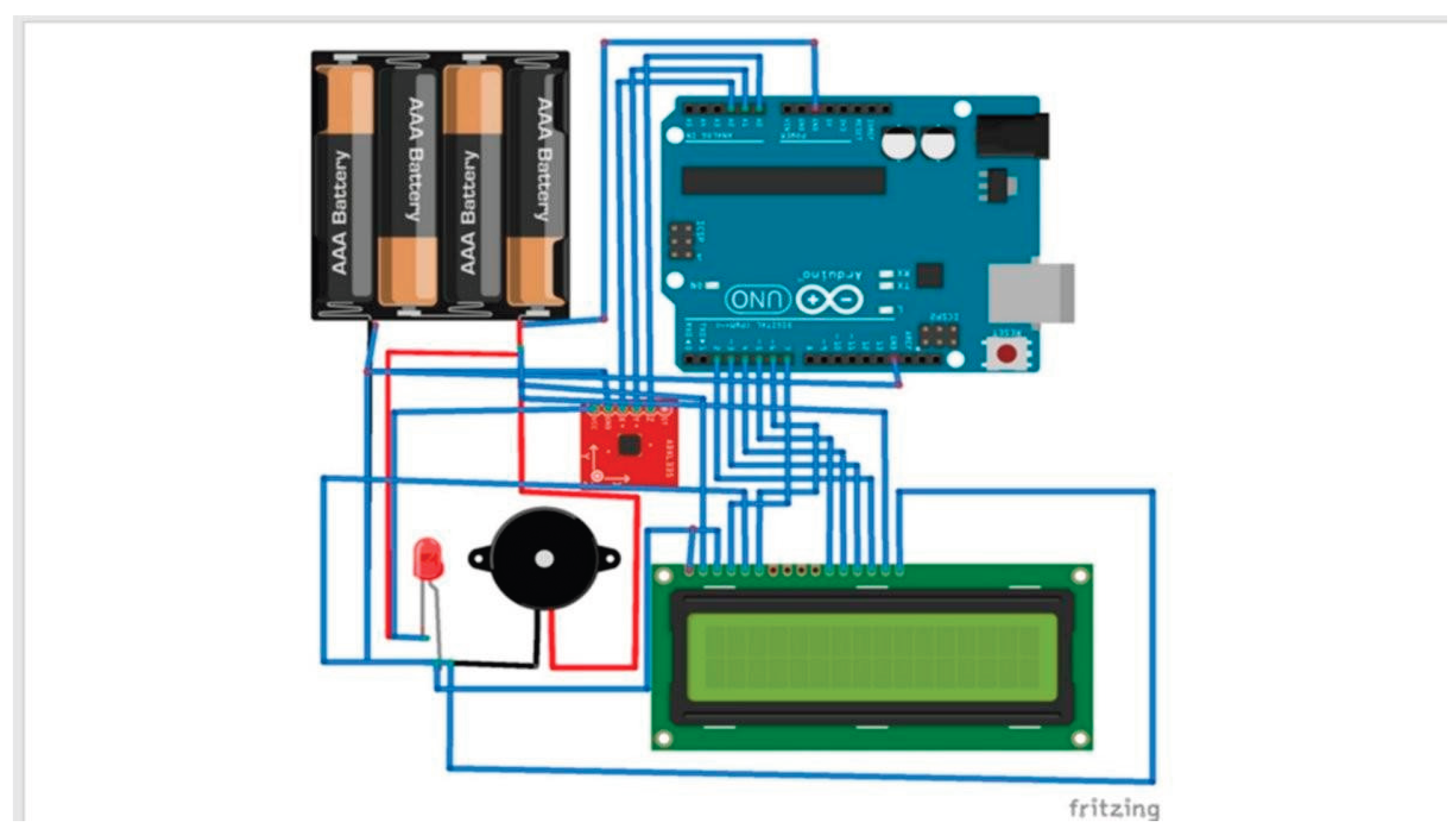
Figure 13.
IoT Device Design of the System.
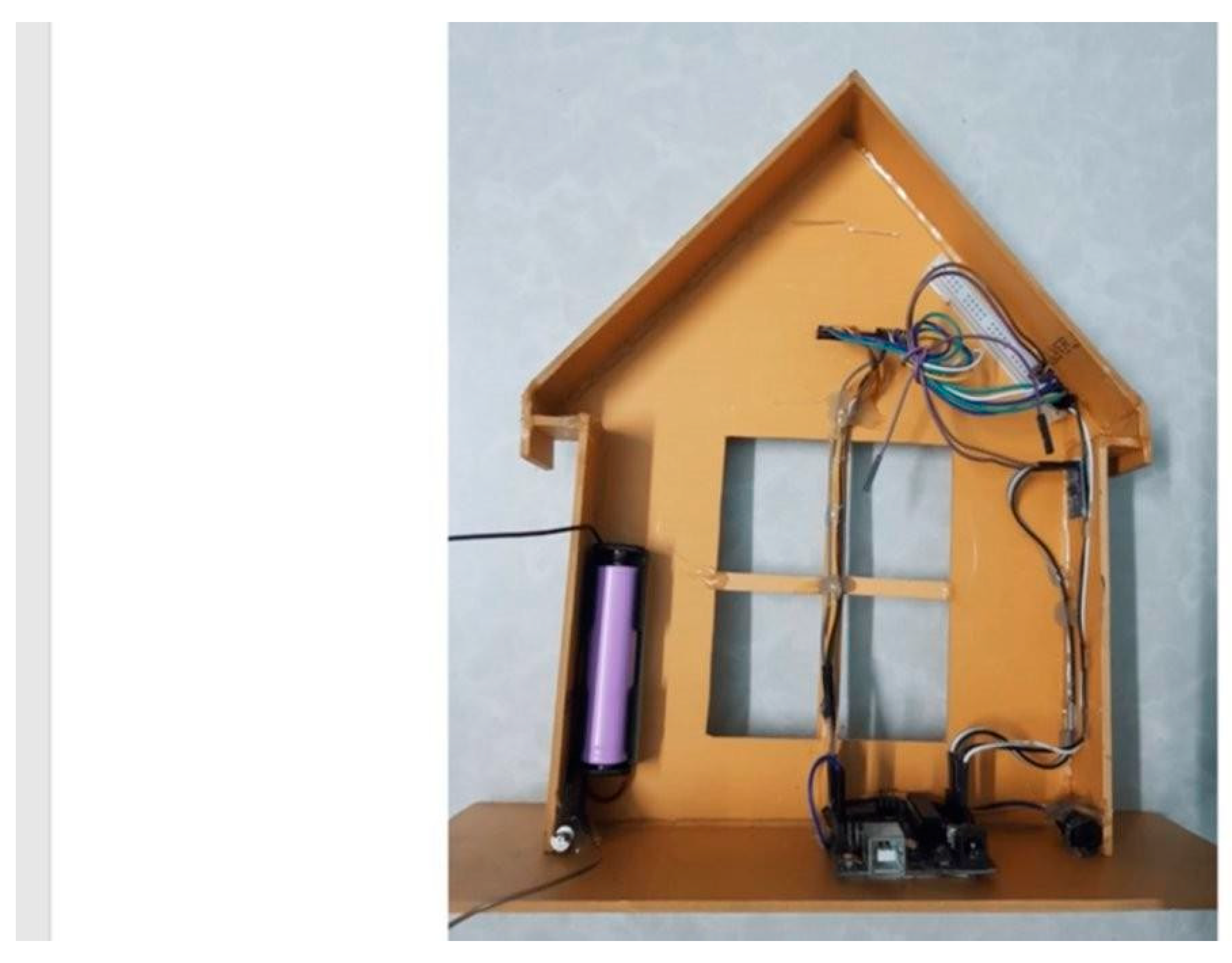
Figure 14.
Earthquake measurement value with LCD Display.
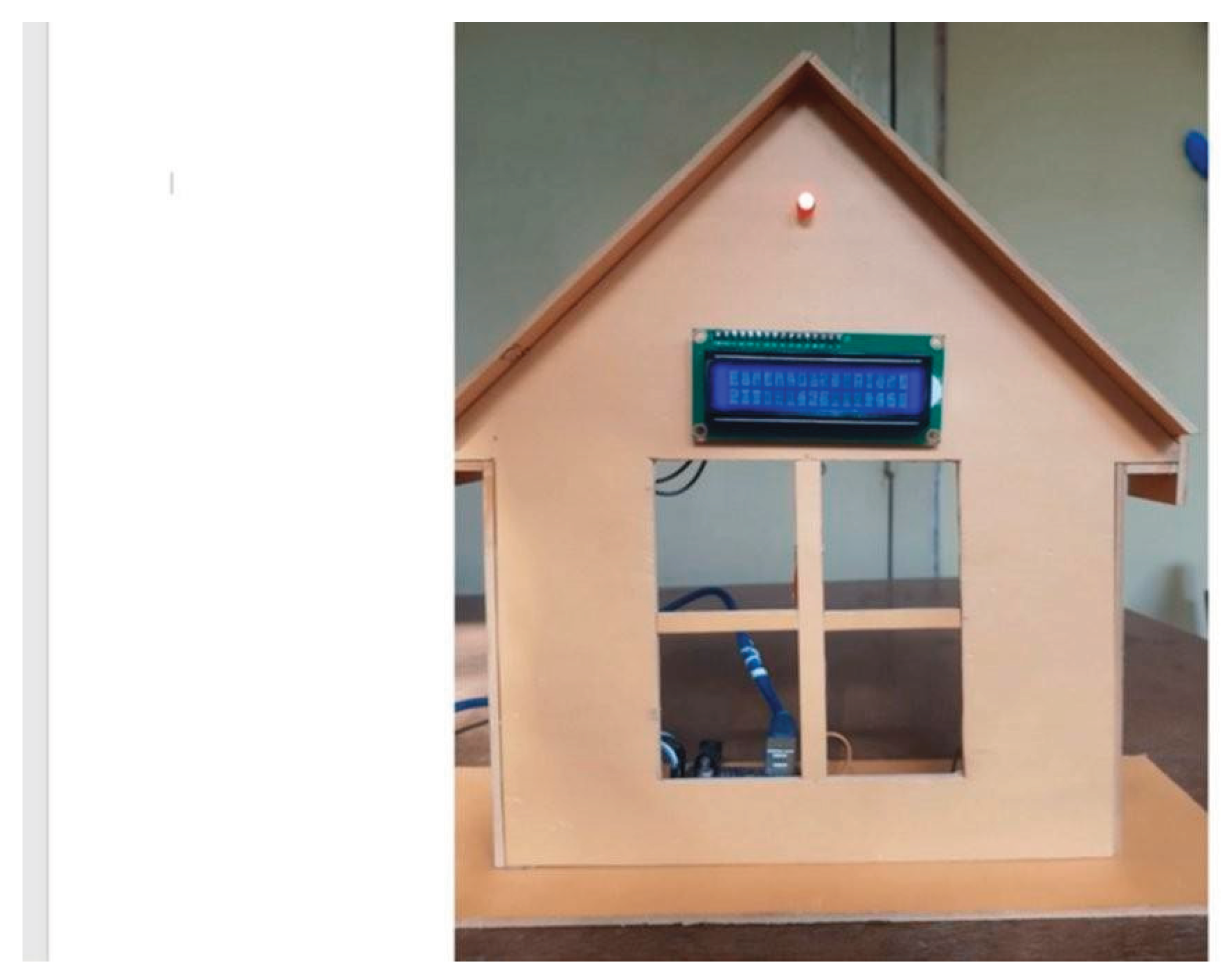
Table 1.
Comparison of Different smart earth-quake measurement and monitoring system with alerting system.
Table 1.
Comparison of Different smart earth-quake measurement and monitoring system with alerting system.
| Sl. No | System Name | Communication Interface | Controller | User Interface | Benefits |
| 1 | Earthquake Measurement and Monitoring System | Wi-Fi Network | Arduino | Mobile Applica- tion | |
| Limited portable | |||||
| 2 | Multi-sensor- driven real-time crane monitoring system Earthquake Measurement and Monitoring System with Alerting System: Lessons learned from a case study [20] |
Wired Connection | Arduino | stick with Buzzer | limited Portable |
| 3 | A CMOS/LCOS image transceiver chip for innova- tive google appli- cations [24] | wifi Network | Node MCU and Things- peak |
PC or Android Phone |
|
| limited Portable | |||||
| 4 | security solution for people Earthquake Measurement and Monitoring System with Alerting System | wifi Network | NodeMCU and Things- peak | PC or Android Phone | |
| Portable |
Vibrations and forecasting earthquakes, ADXL335 functions as a crucial sensor.
Table 3.
Testing of the smart earthquake measurement and monitoring system with alerting system.
| Sl. No | Time | LED Light | Buzzer | LED Display | Seismo- graph | Remarks |
| 1 | 1 s | ON | Beeping | Show Value | Show graph | Working Successfully |
| 2 | 1.3 s | ON | Beeping | Show Value | Show graph | Working Successfully |
| 3 | 1 s | ON | Beeping | Show Value | Show graph | Working Successfully |
| 4 | 1.2 s | ON | Beeping | Show Value | Show graph | Working Successfully |
Disclaimer/Publisher’s Note: The statements, opinions and data contained in all publications are solely those of the individual author(s) and contributor(s) and not of MDPI and/or the editor(s). MDPI and/or the editor(s) disclaim responsibility for any injury to people or property resulting from any ideas, methods, instructions or products referred to in the content. |
© 2025 by the authors. Licensee MDPI, Basel, Switzerland. This article is an open access article distributed under the terms and conditions of the Creative Commons Attribution (CC BY) license (http://creativecommons.org/licenses/by/4.0/).
Copyright: This open access article is published under a Creative Commons CC BY 4.0 license, which permit the free download, distribution, and reuse, provided that the author and preprint are cited in any reuse.