

Submitted:
23 September 2025
Posted:
24 September 2025
You are already at the latest version
Abstract
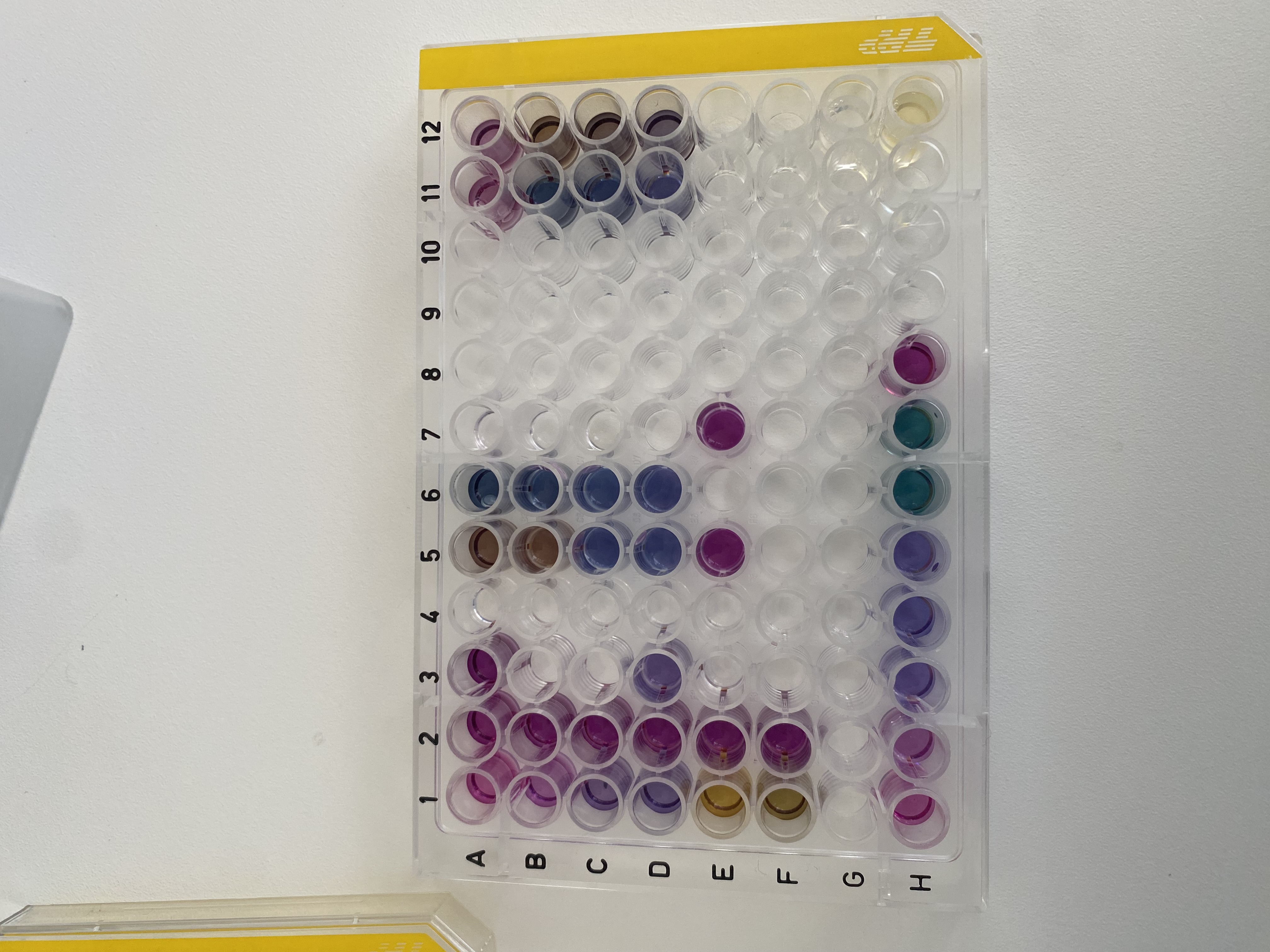
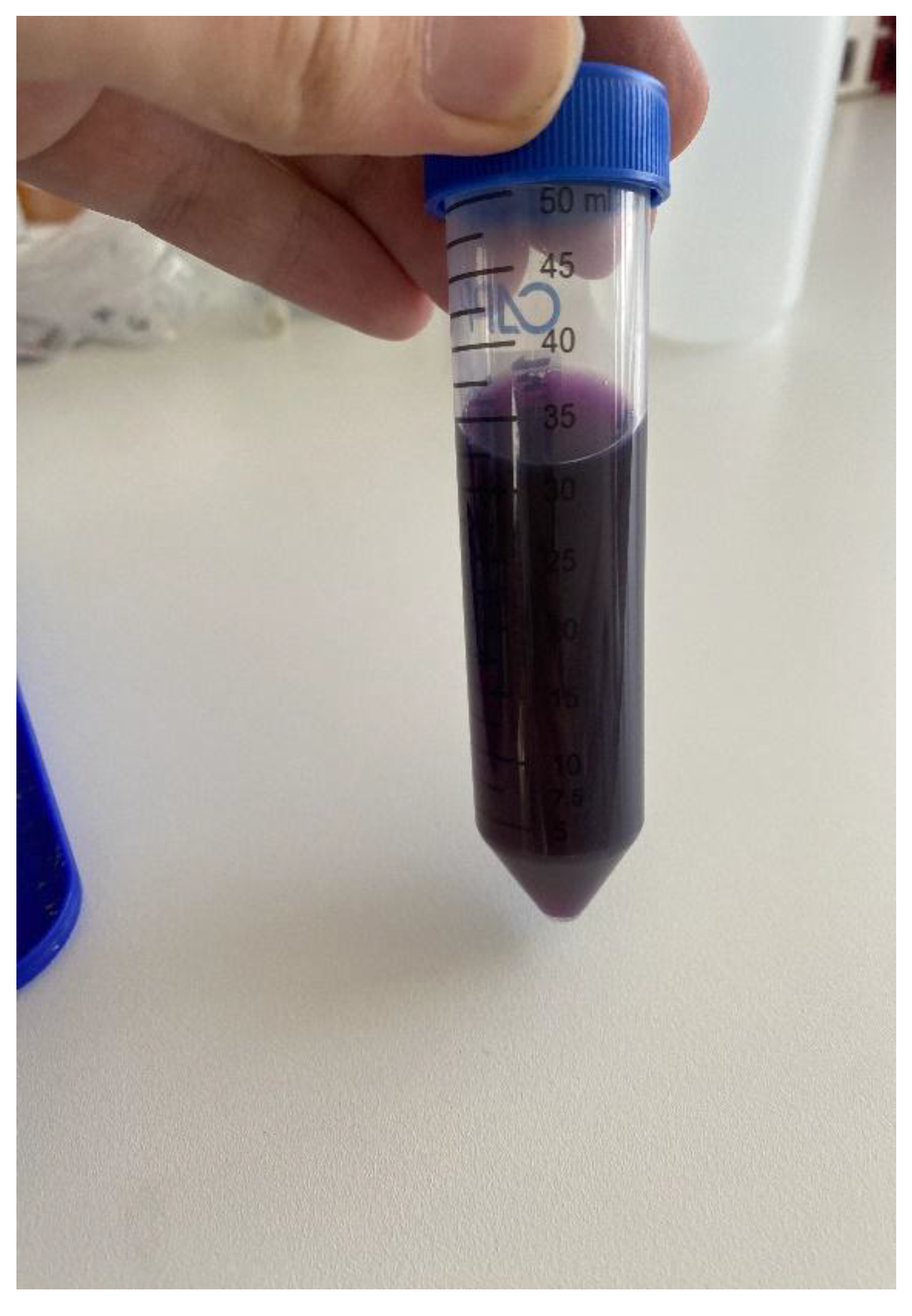
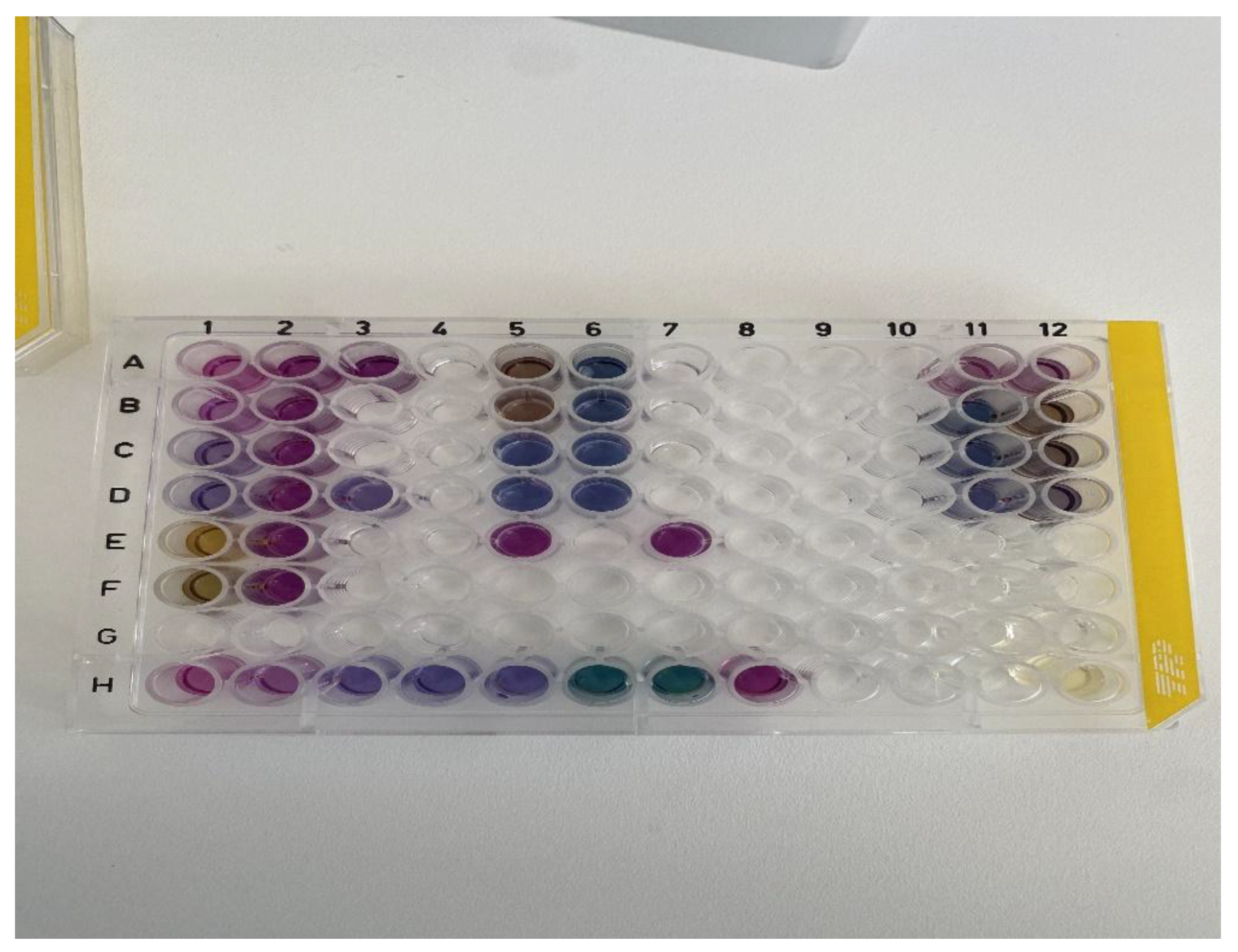
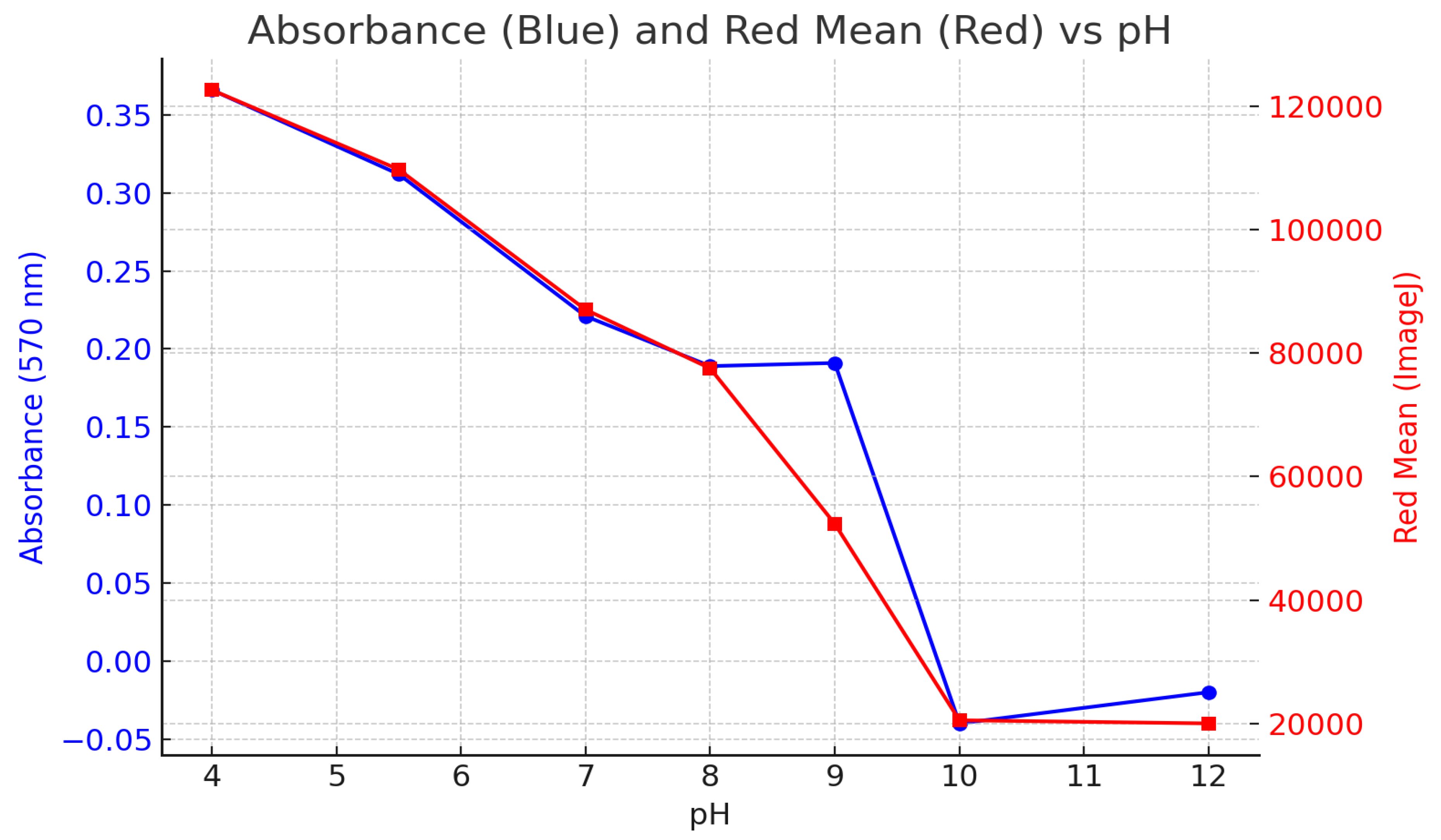
Anthocyanins are natural pigments known for their pronounced pH-dependent color changes, making them promising candidates for rapid, visual detection systems. In this study, anthocyanin extract from red cabbage (Brassica oleracea var. capitata f. rubra) was prepared using a 1:2 (w/v) ratio in 25% ethanol, followed by vacuum evaporation and application to two experimental systems: (i) a pH series ranging from 4.0 to 12.0, and (ii) Dulbecco’s Modified Eagle Medium (DMEM) under different sterility conditions (sterile, contaminated, and cell-containing). Color changes were quantified using spectrophotometry (570–630 nm) and image analysis with ImageJ. Results indicated a strong correlation between pH increase and changes in RGB mean values, with a marked shift in hue under alkaline conditions. In DMEM samples, contamination resulted in noticeable reductions in red, green, and blue intensities compared to sterile media, indicating potential for detecting contamination. This work demonstrates that anthocyanin-based sensors can visually and quantitatively detect pH variations and contamination in cell culture media, offering a rapid, low-cost, and sustainable approach for routine laboratory monitoring.
Keywords:
Introductıon
Materıals and Methods
Materials
Anthocynanin Extraction
Preparation of pH Test Solutions
Colorimetric Measurements
DMEM and Bacterial Contamination Tests
Image Analysis
Results

| pH | Red(Mean) | Blue(Mean) | Green(Mean) | (R+B+G)/3(Mean) |
| 4.0 |
122,627 |
83,01 |
36,329 |
80,508 |
| 5.5 |
109,745 |
91,276 |
46,685 |
82,706 |
| 7.0 |
78,289 |
96,887 |
57,624 |
96,887 |
| 8.0 |
68,83 |
97,719 |
60,143 |
75,641 |
| 9.0 |
70,921 |
96,823 |
58,822 |
75,843 |
| 10.0 |
32,575 |
78,816 |
71,602 |
60,99 |
| 12.0 |
20,512 |
62,058 |
68,078 |
50,43 |
| pH | Absorbance |
| 4.0 | 0,366 |
| 5.5 | 0,312 |
| 7.0 | 0,221 |
| 8.0 | 0,189 |
| 9.0 | 0,191 |
| 10.0 | -0,04 |
| 12.0 | -0,02 |
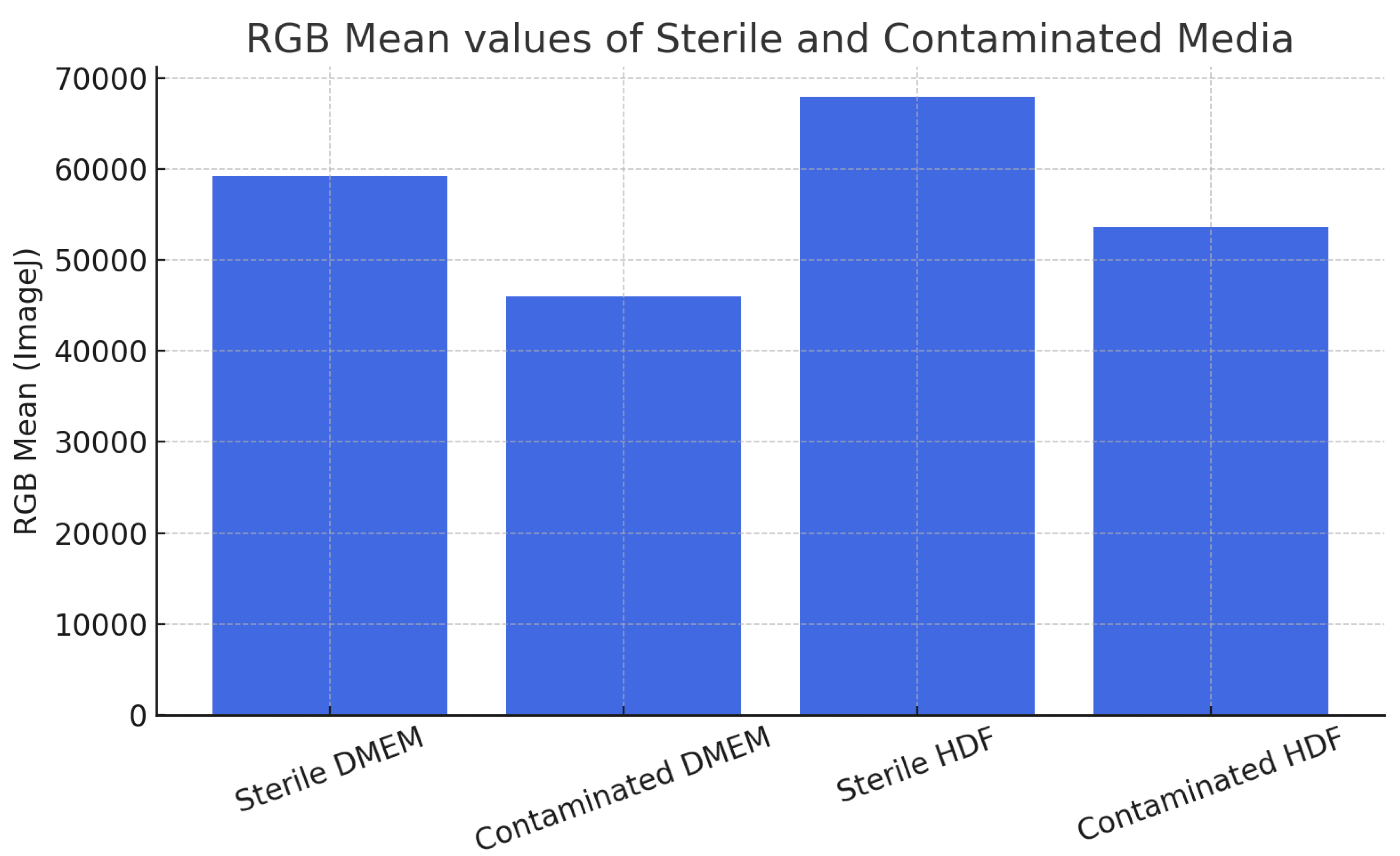
| Red(Mean) | Blue(Mean) | Green(Mean) | (R+B+G)/3(Mean) | |
| DMEM (sterile) |
52,556 |
80,704 |
43,9 |
59,161 |
|
DMEM (contaminated) |
34,612 |
69,767 |
33,457 |
45,991 |
|
HDF (sterile) |
64,279 |
87,035 |
52,336 |
67,876 |
|
HDF (contaminated) |
41,545 | 77,818 | 41,289 |
53,641 |
| Blank | 77,295 | 1,926 | 66,891 | 48,604 |
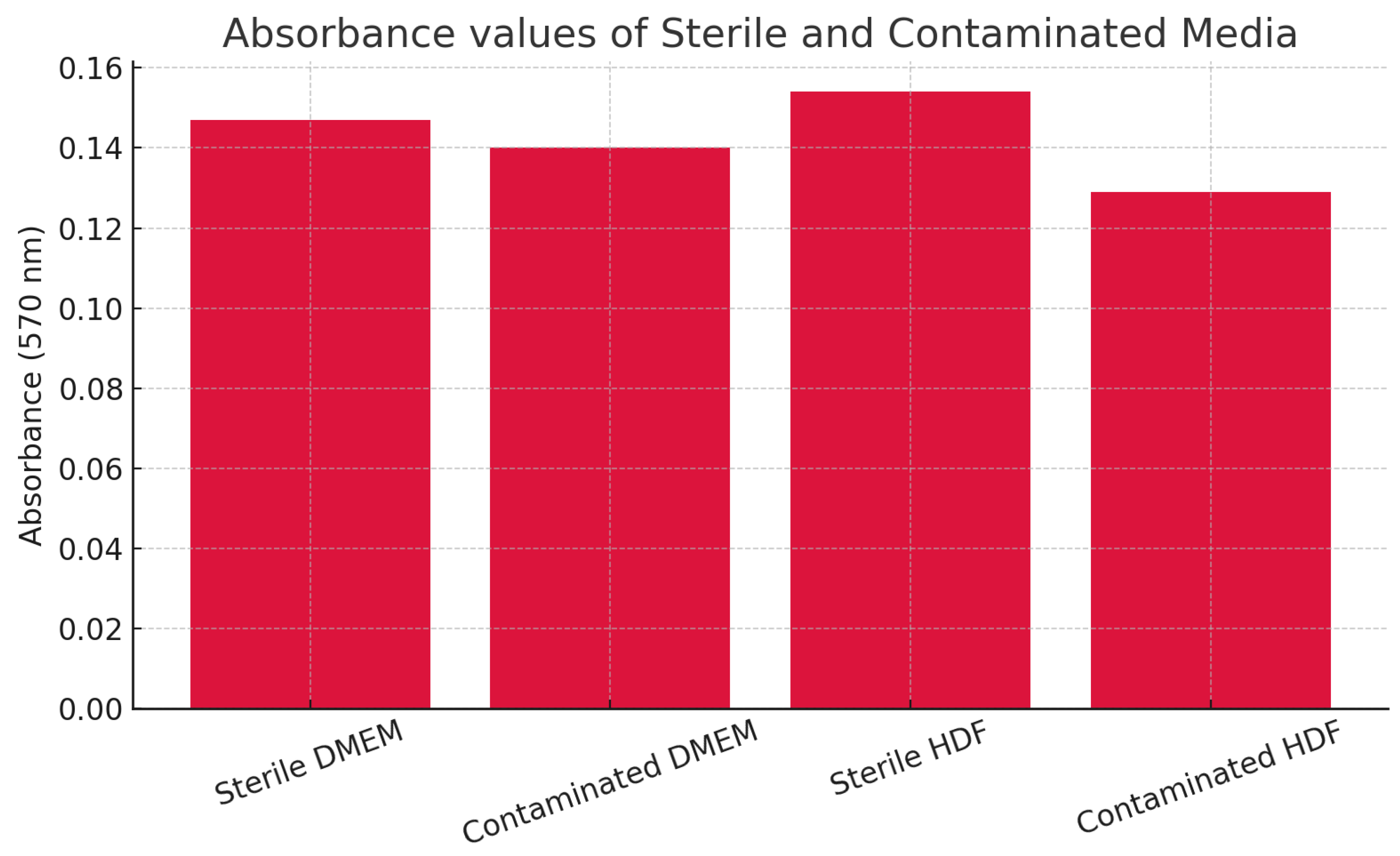
| Absorbance | |
| DMEM(sterile) | 0,147 |
| DMEM(contaminated) | 0,14 |
| HDF(sterile) | 0,154 |
| HDF(contaminated) | 0,129 |
| Blank | 0,645 |
Future Work
References
- Castañeda-Ovando, A. , de Lourdes Pacheco-Hernández, M., Páez-Hernández, M. E., Rodríguez, J. A., & Galán-Vidal, C. A. Chemical studies of anthocyanins: A review. Food Chemistry 2009, 113, 859–871. [Google Scholar] [CrossRef]
- Fotos, P. G. , Diaz-Arnold, A. M., & Williams, V. D. Effect of microbial contamination and pH changes in storage solutions during in vitro assays of bonding agents. Dental Materials 1990, 6, 154–157. [Google Scholar] [CrossRef] [PubMed]
- Araújo, A. C. de, Gomes, J. P., Silva, F. B. da, Nunes, J. S., Santos, F. S. dos, Silva, W. P. da, Ferreira, J. P. de L., Queiroz, A. J. de M., Figueirêdo, R. M. F. de, Lima, G. S. de, Soares, L. A. dos A., Rocha, A. P. T., & Lima, A. G. B. de. Optimization of extraction method of anthocyanins from red cabbage. Molecules 2023, 28, 3549. [Google Scholar] [CrossRef]
- Chandrasekhar, J. , Madhusudhan, M. C., & Raghavarao, K. S. M. S. Extraction of anthocyanins from red cabbage and purification using adsorption. Food and Bioproducts Processing 2012, 90, 615–623. [Google Scholar] [CrossRef]
Disclaimer/Publisher’s Note: The statements, opinions and data contained in all publications are solely those of the individual author(s) and contributor(s) and not of MDPI and/or the editor(s). MDPI and/or the editor(s) disclaim responsibility for any injury to people or property resulting from any ideas, methods, instructions or products referred to in the content. |
© 2025 by the authors. Licensee MDPI, Basel, Switzerland. This article is an open access article distributed under the terms and conditions of the Creative Commons Attribution (CC BY) license (http://creativecommons.org/licenses/by/4.0/).