

Submitted:
23 September 2025
Posted:
24 September 2025
You are already at the latest version
Abstract
The article analyses the impact of the façade structure of modern buildings in Poland at the turn of the 21st century on the perception of the natural and urban landscape. The aim of the study is to determine how the choice of materials, texture and form of façades shape the relationship between the building and its surroundings, and to identify design strategies that promote harmony with the landscape. Based on theoretical literature in the field of architectural phenomenology, critical re-gionalism and sustainable aesthetics, as well as empirical analysis of selected public buildings, landscape architecture and residential buildings, it was indicated that natural materials (wood, stone, brick, shingles) and simple, rhythmic façade forms promote the integration of the building with its surroundings. Perceptual studies and case studies prove that such solutions minimise visual discomfort, enhance the sense of ‘genius loci’ and support a positive perception of space. The analysis also points to research gaps – the lack of long-term studies combining the aesthetics of façades, their ecological functions and social perception in the context of natural areas. The conclusions emphasise the importance of conscious façade design as a tool for integrating architecture with the landscape, both natural and urban, while pre-serving aesthetic, cultural and ecological values.
Keywords:
façade
; natural landscape
; sustainable architecture
; perception of space
; critical regionalism
; natural materials
1. Introduction
Contemporary architecture, especially projects completed at the turn of the 20th and 21st centuries, is increasingly involved in the issue of the relationship between the structure of the façade and the natural and cultural landscape. The façade, which is both a boundary and a medium of communication between the interior and the surroundings, has not only an aesthetic and symbolic function, but also an environmental and social one. The literature on the subject points to the multidimensional significance of the façade: from the phenomenological experience of place [1,2] through critical regionalism and the relationship with cultural identity [3] to the aesthetics of sustainable architecture [4,5].
Contemporary empirical research shows that the structure and material of the façade have a significant impact on the visual perception of users and observers, as well as on the microclimate and integration of the building into the landscape [5,6,7]. The introduction of green façades, viewshed analysis, and immersive VR and computer vision tools opens up new possibilities for assessing the impact of architecture on its surroundings, but this research is mainly conducted in the context of the urban landscape, and less frequently in relation to the natural landscape.
The aim of this article is to examine how the structure and texture of the facades of modern buildings in Poland at the turn of the 21st century shape the perception and reception of the natural landscape. Particular attention has been paid to the role of local materials, texture, colour schemes and ecological solutions (including green façades), as well as their ability to harmonise or contrast with their surroundings.
The research question is:
How do the structure and material of the facades of modern buildings in Poland influence the perception of the natural landscape, and can they act as a mediator between architecture and the environment?
The article combines a theoretical perspective (phenomenology, sustainable aesthetics, critical regionalism) with empirical analysis (field research, photographic documentation, perceptual and comparative analyses), which allows for a multifaceted approach to the issue and contributes to the international discussion on the relationship between architecture and landscape.
2. Research Methodology
Research on the impact of façade structure on the natural and cultural landscape was conducted using a variety of methods combining literature analysis, design documentation and field research. The aim was to capture both the theoretical and aesthetic aspects as well as the empirical perception of architecture in the context of the landscape.
• Stage I. Analysis of sources and theoretical foundations
A source search was conducted in international literature (including the Journal of Environmental Psychology, Landscape and Urban Planning, Building and Environment), covering issues of architectural phenomenology [1,2], critical regionalism [3] and sustainable aesthetics [4,5]. Contemporary research on green facades and microclimate [6,7,9] and on the visual perception of architecture in the landscape [10,11] was also analysed.
• Stage II. Selection and analysis of objects
The study selected buildings from the turn of the 21st century, representing various typologies:
• Public buildings: Silesian Museum in Katowice, Szczecin Philharmonic Hall, Małopolska Garden of Arts in Krakow.
• Landscape and tourist architecture: TPN Nature Education Centre, holiday homes in Bory Tucholskie.
• Residential buildings: Rudy's house in Rudy, a shingle house in Bielsko-Biała, ‘Stodoła’ in Beskid Żywiecki, a stone house in Borówek.
The selection criteria were:
• distinctions in the architectural community (awards, publications in international periodicals),
• degree of integration with the natural and cultural landscape (material, texture, colour scheme),
• use of local and ecological materials,
• environmental functions of the façade (VGS, natural ventilation, climate adaptation).
• Stage III. Empirical research and documentation
Research methods used:
• Comparative analysis of architectural objects (case studies, benchmarking against European and Japanese projects published in the Journal of Urban Design, Architectural Science Review).
• Field vision with original photographic documentation, assessing the real landscape context.
• Perceptual analyses – using research results from the literature (Journal of Environmental Psychology, Environment and Planning B) relating to the harmony of materials with the landscape.
• Landscape simulations (GIS/viewshed analysis) [12,13] to determine the visibility and exposure of the façade in its natural context.
• Stage IV. Synthesising the results
The collected data was compiled in relation to two scales of analysis:
• natural landscape (Tatra National Park, Bory Tucholskie, Beskidy),
• urban landscape (Katowice, Kraków, Szczecin).
The comparisons revealed differences in the assessment of façades: in natural spaces, material integration and minimisation of interference are key, while in urban spaces, stronger formal and symbolic contrast is acceptable.
3. State of Research
Research into the impact of façade structure on both natural and urban landscapes developed rapidly at the turn of the 20th and 21st centuries, covering theoretical, aesthetic, ecological and technological perspectives. Nowadays, architectural reflection is increasingly combined with empirical tools for assessing the perception and visual impact of buildings on their surroundings.
Many contemporary analyses continue to be inspired by phenomenological trends [1,2] (Norberg-Schulz 1980; Pallasmaa 1996), which emphasise the importance of the sensory perception of architecture in the landscape. The parallel development of the concept of critical regionalism [3] (Frampton 1983) emphasises the need to embed modern buildings in the local cultural and natural context. In recent years, sustainable aesthetics [4,5] (Lee 2011; Williamson, Radford, Bennetts 2003) has been playing an increasingly important role, which has also been taken up by international periodicals such as the Journal of Architectural Education and Architectural Theory Review.
Perceptual studies [10,11,15] (Nasar 1998; Stamps 2000; Bishop 2003) indicate that the materials and textures of facades are crucial in the perception of landscape harmony or dissonance. Results published in the Journal of Environmental Psychology and Environment and Planning B confirm that natural materials are considered more consistent with the natural landscape. The latest experiments using VR and computer analysis [8,14] (Jarrín 2025; Valentine et al. 2025) published in Architectural Science Review and Buildings (MDPI), among others, show that the structure and colour scheme of surfaces significantly influence the assessment of the visual attractiveness of buildings.
A significant body of research concerns ecological facades, in particular green wall systems (VGS), energy-active facades and microclimatic solutions [6,7,9] (Ottelé et al. 2010; Perini & Rosasco 2013; Wong et al. 2010). These results are widely published in the journals Building and Environment, Energy and Buildings, and Landscape and Urban Planning. The latest interdisciplinary research [16,17,18] (Manouchehri 2024; Chojnacka et al. 2024; de Oliveira Santos et al. 2024) appear, among others, in Sustainability and the Journal of Green Building, developing the perspective of combining ecology with aesthetics.
The literature shows the development of empirical methods – from traditional surveys [10,15] (Nasar 1998; Stamps 2000) to modern immersive tools. VR simulations and image analysis techniques (computer vision) presented in Automation in Construction and Computers, Environment and Urban Systems, among others, allow for the assessment of aesthetic perception in various landscape scenarios [13,14] (Jarrín 2025; Wang et al. 2024). In turn, GIS methods, especially viewshed analysis (Llobera 2003), are widely discussed in the International Journal of Geographical Information Science and Landscape Research.
Case studies in Poland [19,20,21,22] (Basista 2015; Bogusławski & Kicińska 2014; Malinowski 2001; Czerwiński 2019) indicate a varied reception of facades depending on the material and form. In international comparisons (Austria, Norway, Japan), published in the Journal of Urban Design and Cities, among others, there is a clearer trend towards integrating aesthetics and ecology in façades. Polish architectural practice is more often limited to the visual aspect, marginalising the environmental function.
Previous studies provide valuable insights, but they also reveal significant gaps. Firstly, there are few long-term analyses that examine the durability of the aesthetic perception of façades over time. Secondly, most studies focus on the urban environment, and the role of facades in the context of the natural landscape remains insufficiently recognised. Thirdly, there is a lack of coherent research combining three perspectives: aesthetic, ecological and social – as discussed, for example, in Urban Forestry & Urban Greening and Landscape and Urban Planning.
4. Results
4.1. Public Buildings
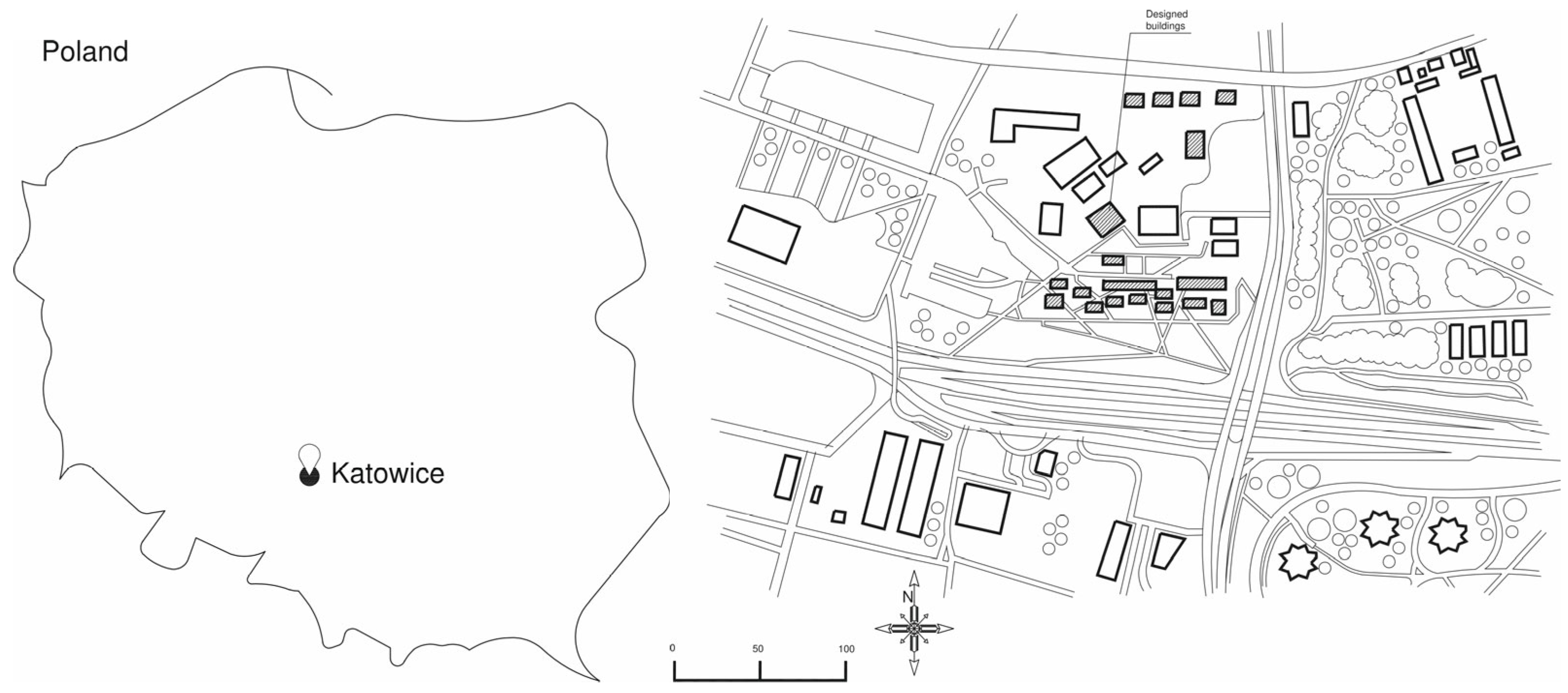
The Silesian Museum in Katowice (Riegler Riewe Architekten, 2015) is an example of contemporary public architecture in which the integration of the building with the urban landscape and cultural heritage plays a key role. The building is partially underground, which significantly minimises its impact on the existing urban space and allows for the preservation of open public space above the structure. This solution is in line with the trend referred to in literature as ‘non-invasive architecture’ [23], in which the form of the building is subordinated to harmonisation with its surroundings rather than dominating them.
The glazing and simple, modular volumes of the building allow for transparency and visual lightness, creating a subtle dialogue between the architecture and the topography of the former military square. At the same time, the design interprets and transforms the post-industrial heritage of Silesia – both in terms of materials and composition – which has been emphasised in the literature on contemporary regional architecture [20,21].
From the point of view of landscape perception, this solution minimises the observer's sense of overwhelm and supports a positive perception of public space. The building is also an example of the practical application of the principles of critical regionalism [3] and the phenomenological approach to architecture as ‘rooted in place’ [1], combining the museum function with a sense of coherence with the local urban landscape.
Photo. 1, 2.
Author Justyna Juroszek.
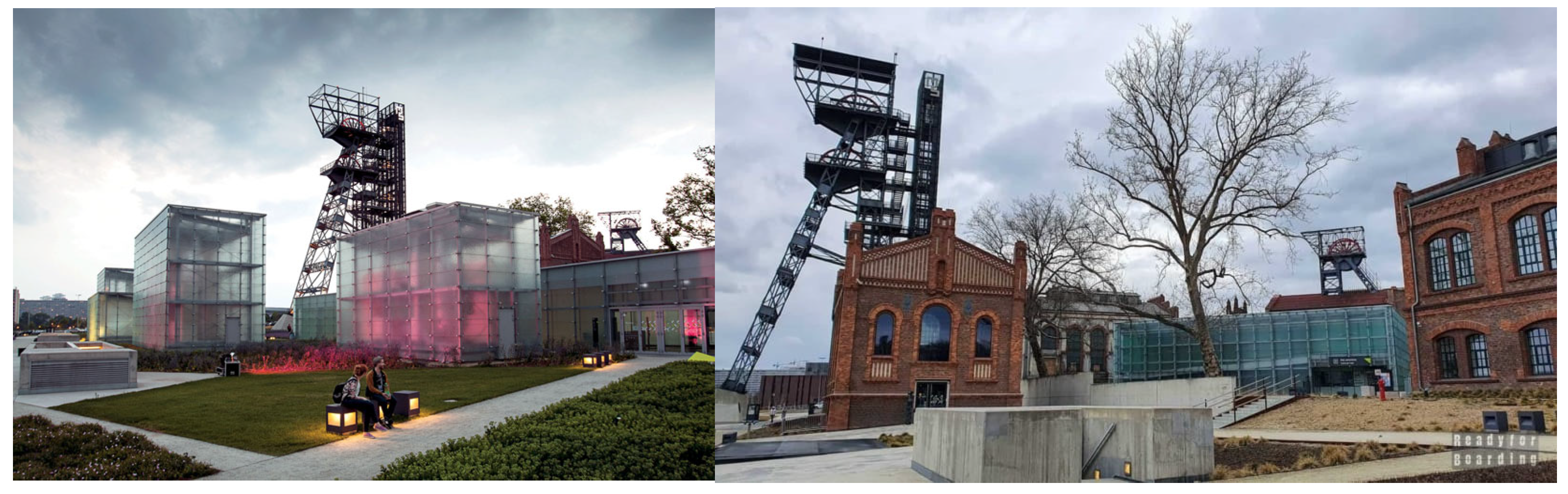
Figure 1, 2.
Author Justyna Juroszek.
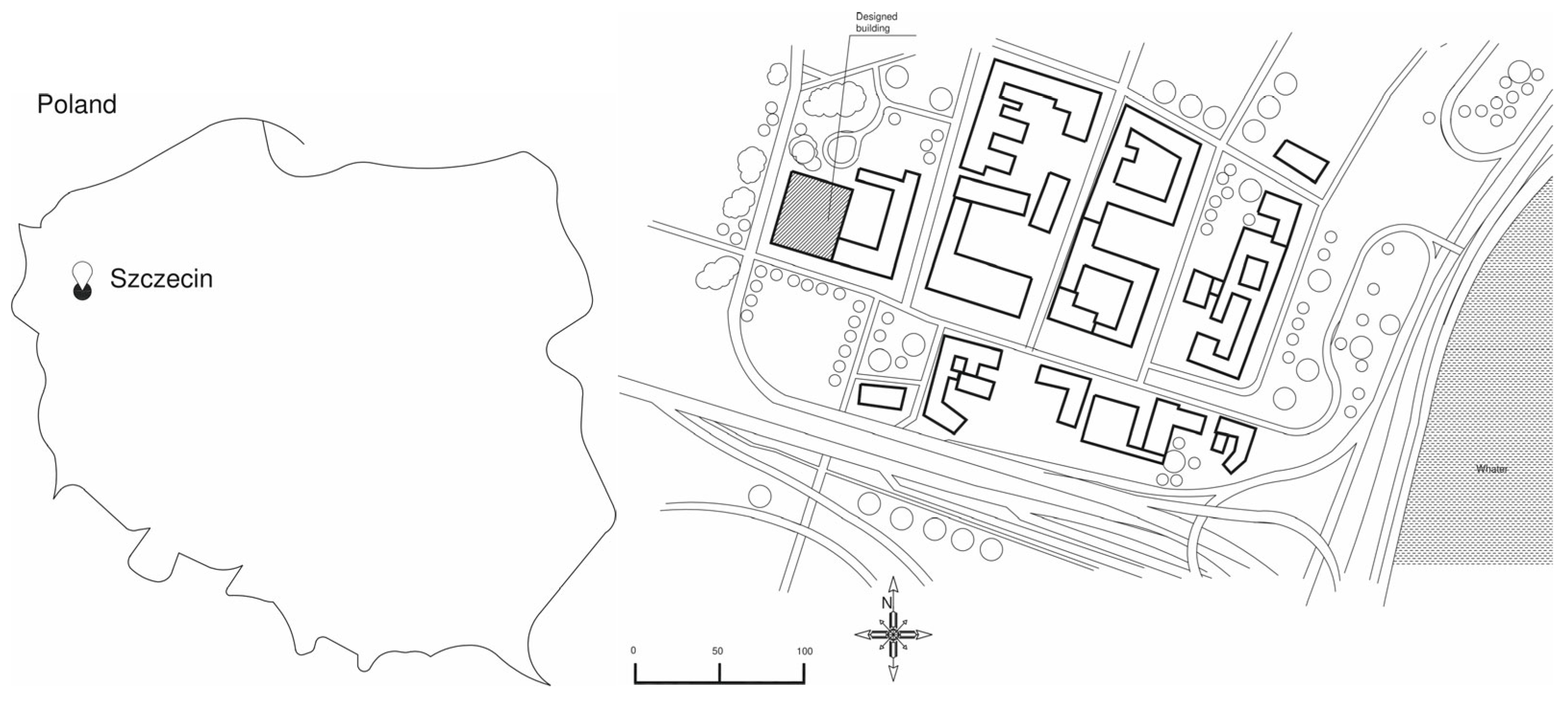
The Szczecin Philharmonic Hall (Barozzi Veiga, 2014) is an example of contemporary public architecture in which the façade plays a key role in shaping the perception of urban space. The building, which won the prestigious Mies van der Rohe Award, is characterised by an expressive façade based on rhythmic vertical divisions and the play of light and shadow. This solution gives the structure a sense of monumentality and dynamism, while creating a strong contrast with the historical context of Szczecin's city centre.
The literature emphasises that the building provokes discussion about the shaping of a ‘new city landscape’ and the role of contemporary architecture in dialogue with its historical surroundings [5,22]. Perceptual studies indicate that the rhythm of the vertical divisions of the façade influences the perception of the building's proportions and mass, shaping the impression of monumentality and presence in the urban space [10].
The Szczecin Philharmonic Hall is also an example of a conscious interplay between formal contrast and socio-spatial perception, showing that a façade can serve both an aesthetic and symbolic function, influencing the identity of the urban landscape. From the point of view of critical regionalism theory [3] and architectural phenomenology [1], the building is an example of a contemporary dialogue between the local context and modern form, in which material, rhythm and light create a coherent architectural narrative.
Photo 3,4.
Author Justyna Juroszek.
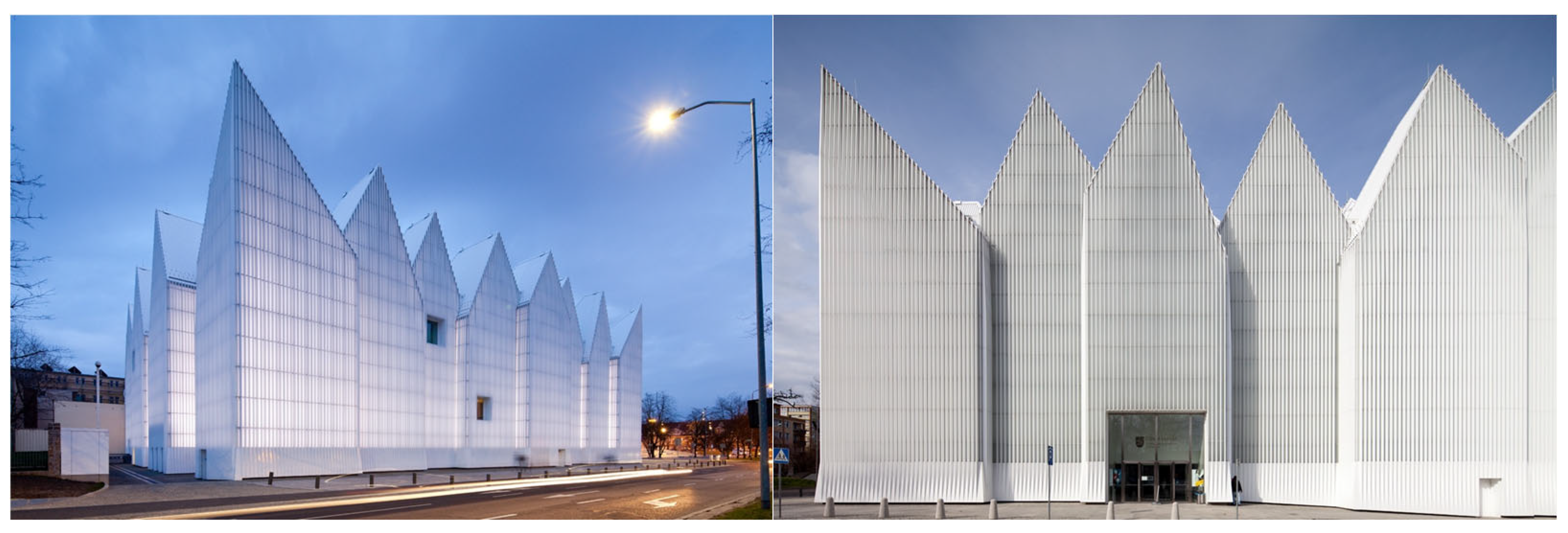
Figure 3, 4.
Author Justyna Juroszek.
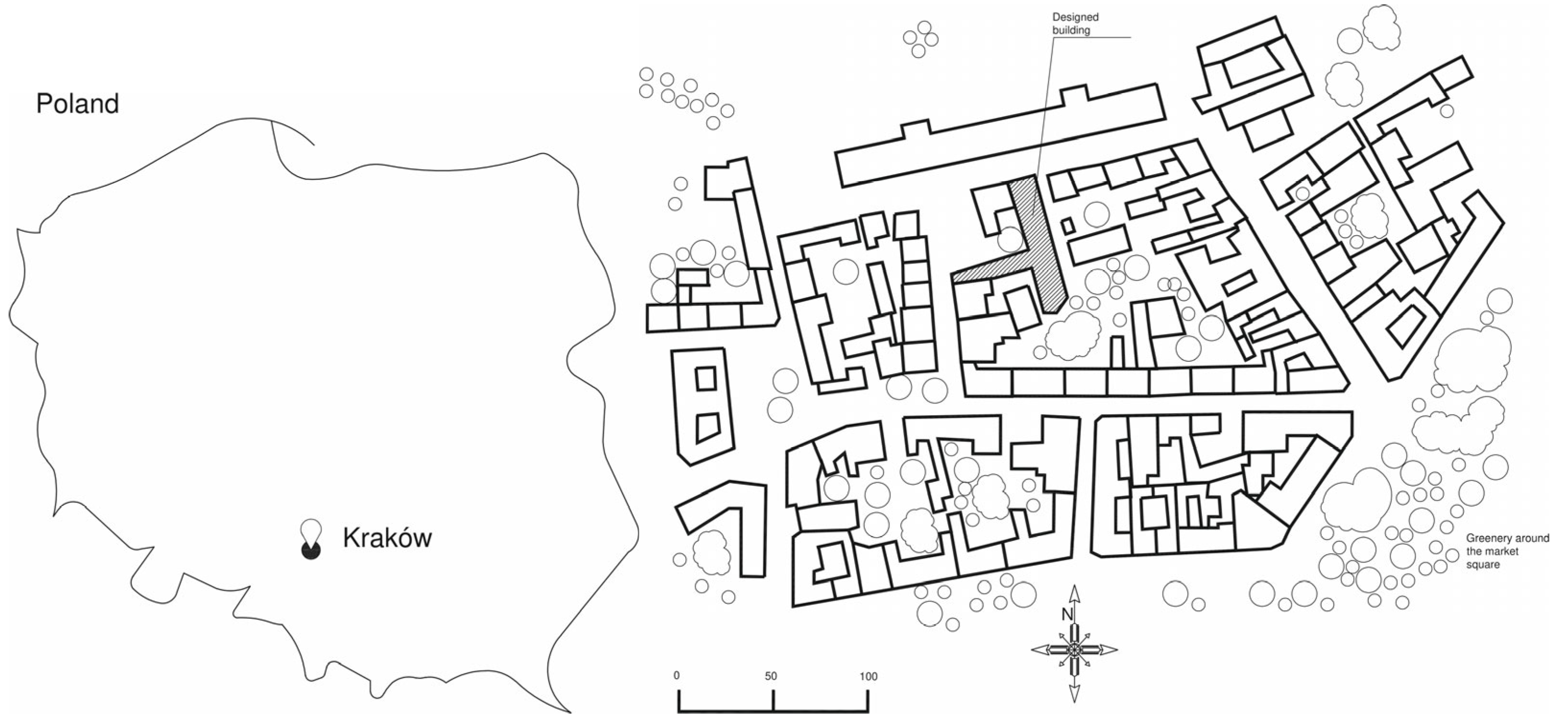
The Małopolska Garden of Arts in Krakow (Ingarden & Ewý Architekci, 2012) is an example of contemporary public architecture in which the façade plays a key role in the dialogue with the urban context and surrounding greenery. The façade of the building combines ceramic and glass elements, which is a modern reference to the local brick tradition, a characteristic motif of Krakow's architecture. This combination of materials allows the contemporary form of the building to be emphasised while maintaining consistency with the historical and natural surroundings.
The project is analysed in the literature as an example of critical regionalism [3], in which the modern architectural form resonates with the local urban and natural context. The texture and material of the façade play a special role in this process, which, according to the phenomenological approach [2], shape the perception of space and the sense of place. Polish research on the built environment emphasises that such use of materials and façade structures allows for the harmonious integration of the building with its surroundings and influences the perception of space by users and residents [24].
The construction of a façade based on local materials and textures creates both aesthetic and cultural links with the context of the city, while allowing for the modernist expression of the building. In the context of research on the perception of the urban and cultural landscape, the Małopolska Garden of Arts is an example of the conscious combination of historical, aesthetic and functional values in the façade of a contemporary public building.
Photo. 5, 6.
Author Justyna Juroszek.
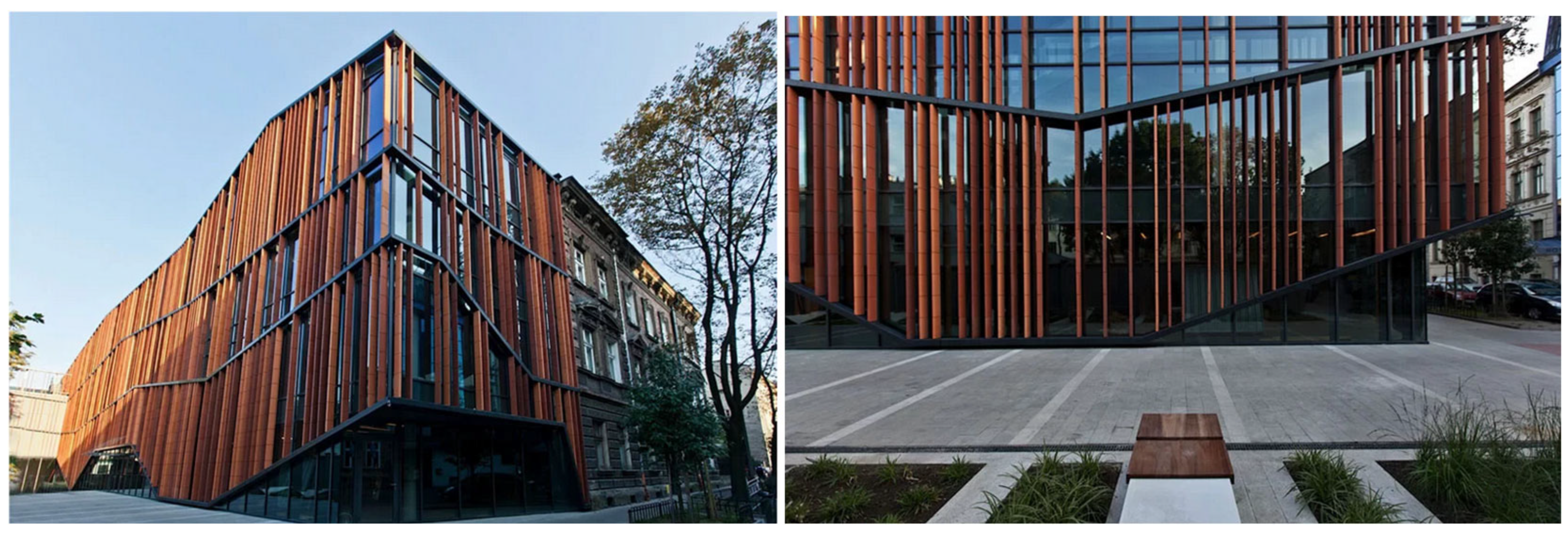
Figure 5, 6.
Author Justyna Juroszek.
4.2. Landscape and Tourist ArchitecturE
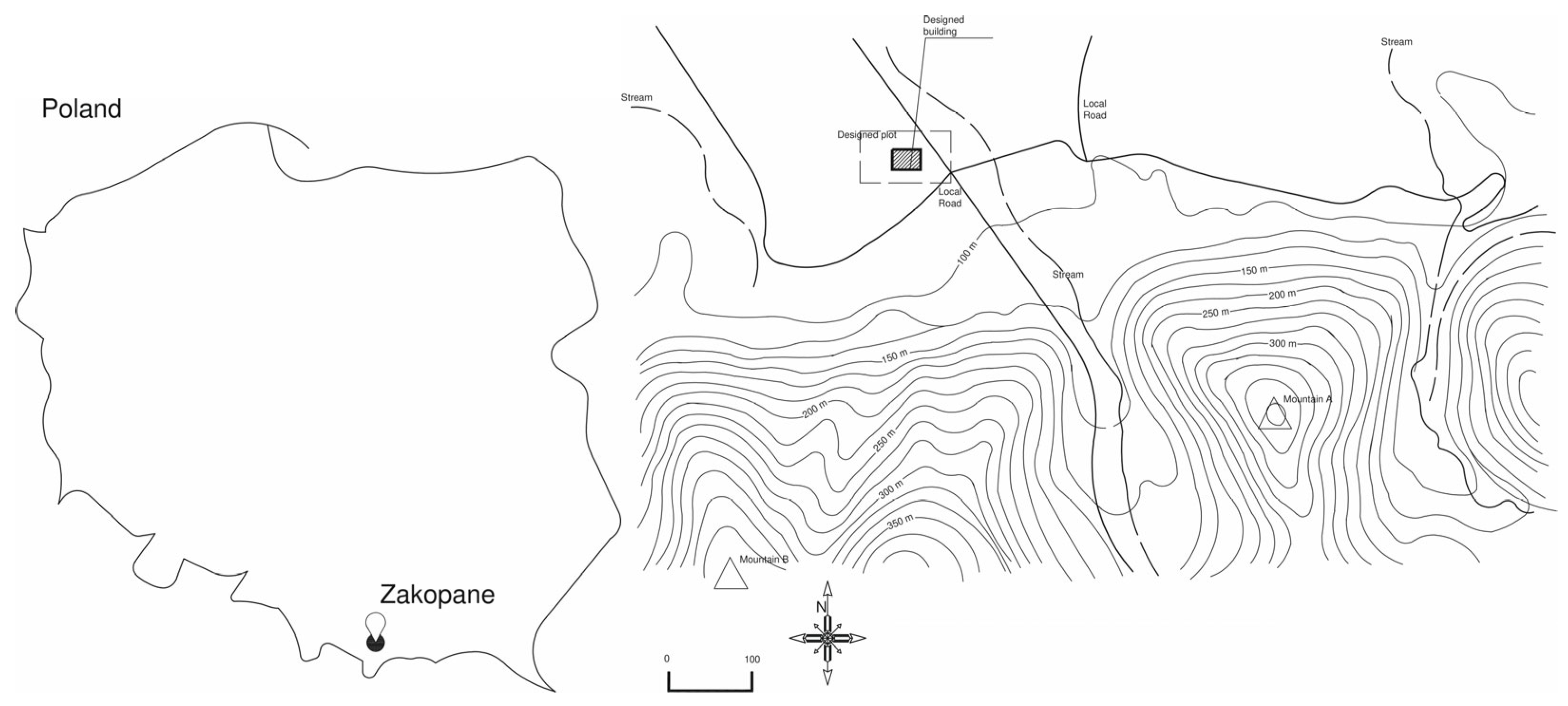
The Nature Education Centre of the Tatra National Park in Zakopane (Karpiel Steindel Architektura, 2015) is an example of contemporary landscape architecture, in which the integration of the building with its natural mountain surroundings plays a key role. The use of wood and stone – traditional materials for the region – allows the building to blend harmoniously into the Tatra landscape, both visually and ecologically.
From the perspective of phenomenological literature [1,2], this project is an example of the so-called ‘genius loci’, i.e. the deep roots of the building in a place that takes into account both local cultural and topographical conditions. The materiality and texture of the façade influence the perception of space and the sense of harmony with the natural environment.
In the context of sustainable architecture, the design is analysed as an example of minimising interference with nature, where the choice of local and natural materials reduces the carbon footprint and supports environmental protection strategies [7]. The façade of the building, through the use of traditional materials and proportions in harmony with the landscape, promotes both aesthetic perception and the experience of the place in a manner consistent with its natural character.
Photo. 7, 8, 9.
Author Justyna Juroszek
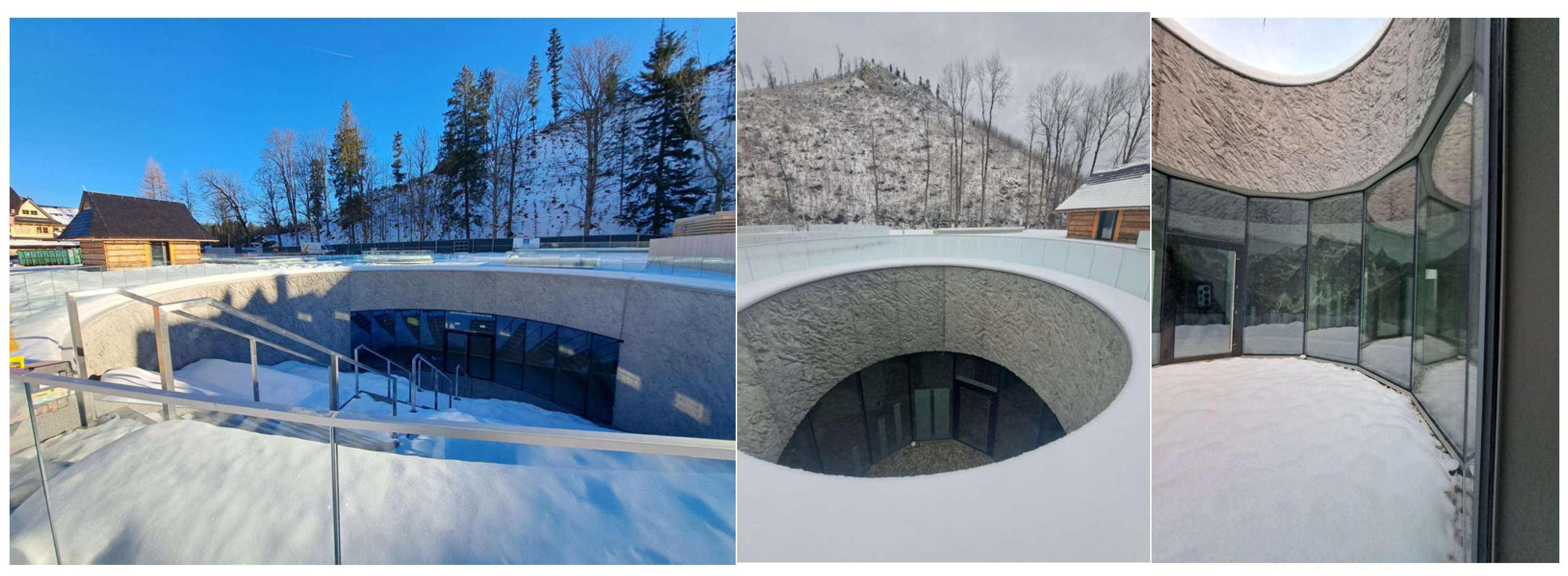
Figure 7, 8.
Author Justyna Juroszek.
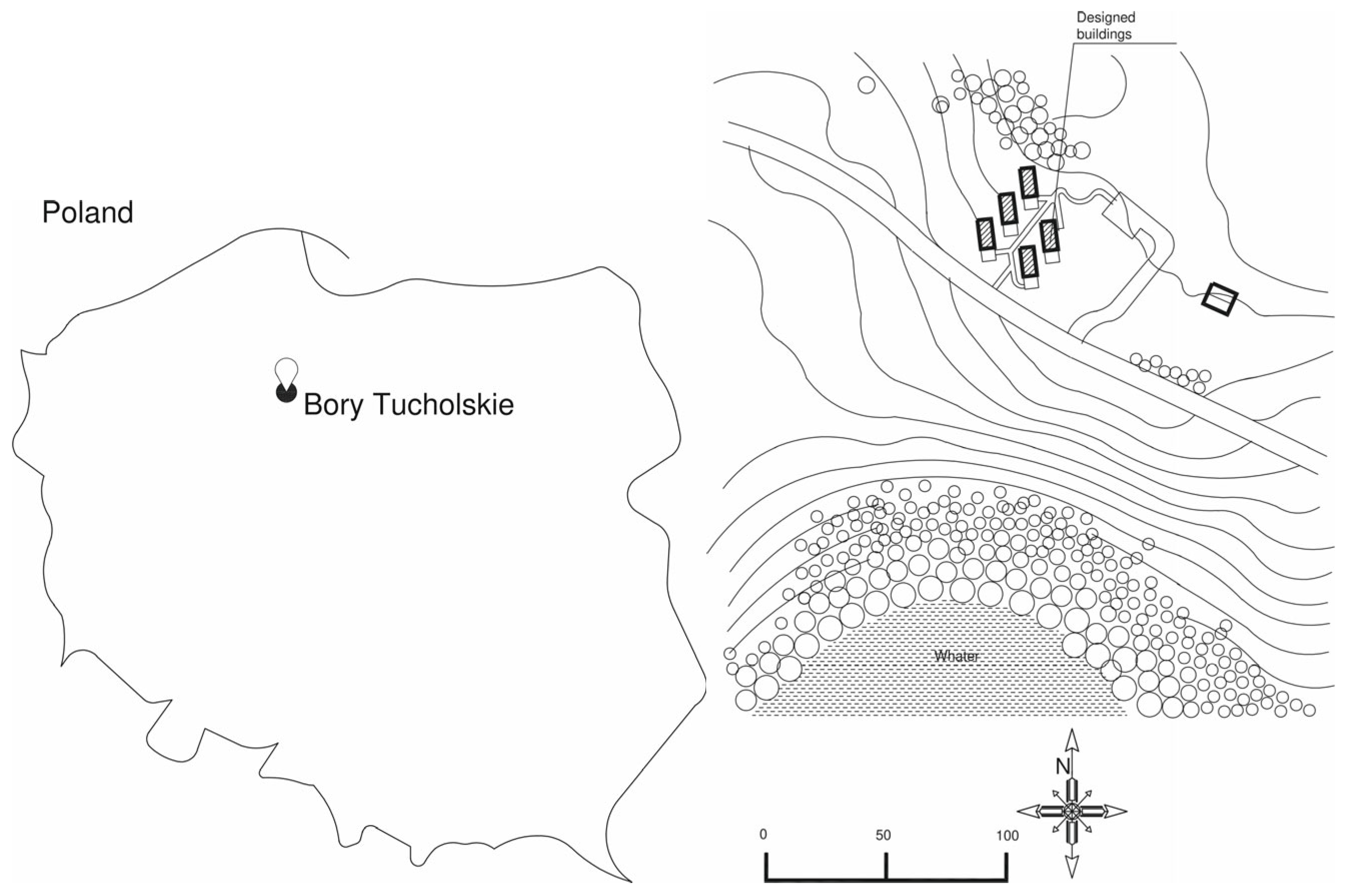
The holiday homes in Bory Tucholskie (AKKT, 2018) are an example of contemporary landscape architecture, in which simplicity of form and choice of materials play a key role in integrating the buildings with their natural surroundings. The buildings are characterised by simple shapes and wooden façades, which allows them to blend harmoniously into the forest landscape and minimises their visual impact on the natural environment.
The literature on the subject emphasises the importance of using local materials and simple architectural forms as an effective strategy for integration with the landscape, while maintaining the functionality and aesthetics of the building [19,25].
Perceptual analyses indicate that such solutions promote a positive perception of space by users and observers, reinforcing the sense of cohesion between the buildings and their natural surroundings and minimising visual discomfort [11]. The holiday homes in Bory Tucholskie are therefore an example of architecture consciously embedded in a natural context, where simplicity of form and natural materials create a harmonious dialogue with the landscape.
Photo. 10,11.
Author Justyna Juroszek
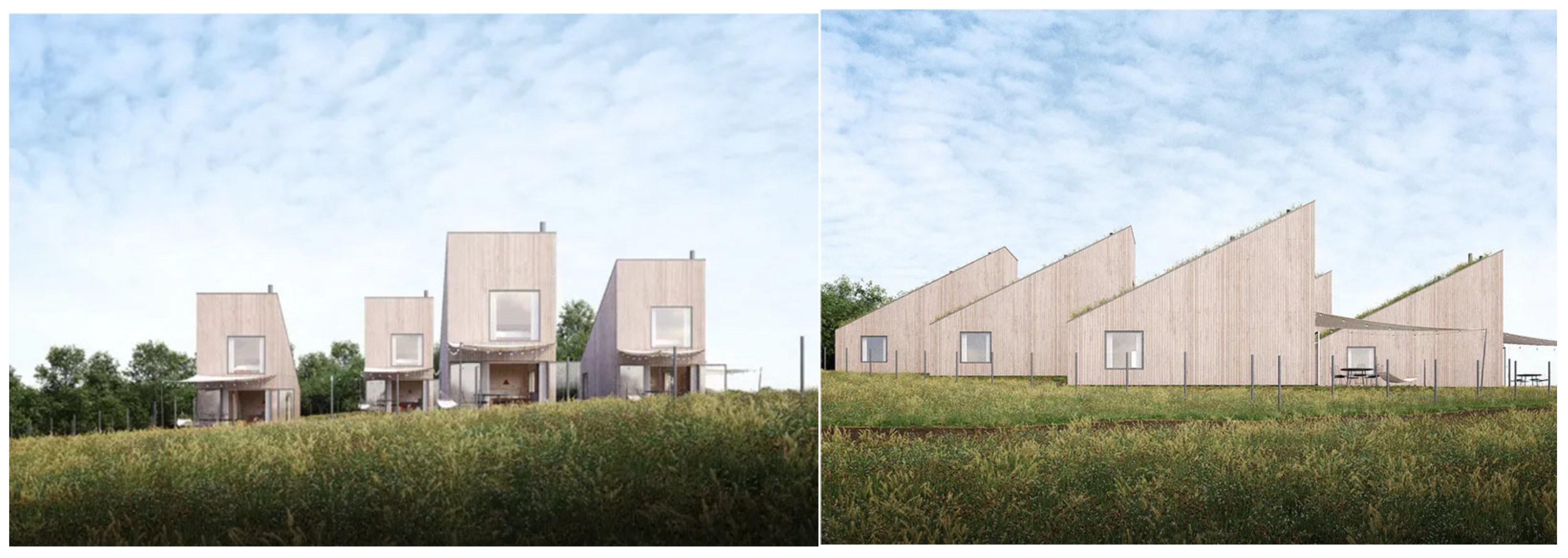
Figure 9, 10.
Author Justyna Juroszek.
4.3. Residential Buildings
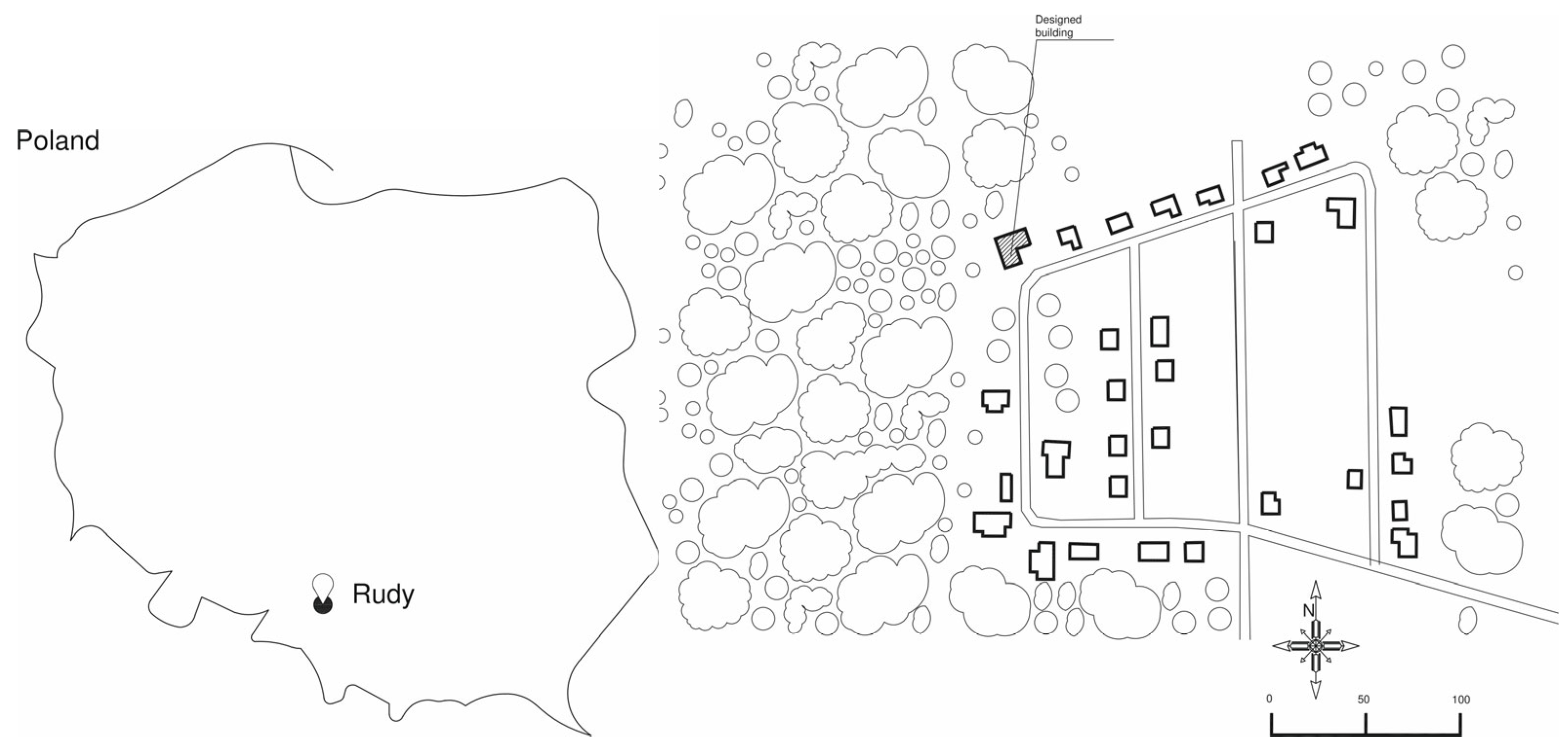
The Rudy House in Rudy (Toprojekt, 2017) is an example of contemporary residential architecture, in which the façade plays an important role in shaping the perception of the surroundings and referring to the local cultural context. The brick and concrete façade refers to the traditional industrial and rural forms of the region, while creating a modern, legible building structure. This combination of materials allows for harmonious integration with the surroundings, while emphasising the contemporary character of the project.
The design is in line with the trend of critical regionalism [3], in which modern architectural form consciously refers to the local material heritage and spatial context. Literature on the phenomenology of architecture emphasises that the texture and material of the façade, such as brick and concrete, have a significant impact on the ‘sense of place’ and the rooting of the building in the landscape [1,17].
From the point of view of visual perception, the use of raw, traditional materials in a modern form promotes the perception of the building as consistent with its surroundings, while clearly defining its contemporary identity. The ‘Rudy’ house is therefore an example of the conscious integration of aesthetics, regional context and functionality of the façade in residential architecture.
Photo. 12,13.
Author Justyna Juroszek
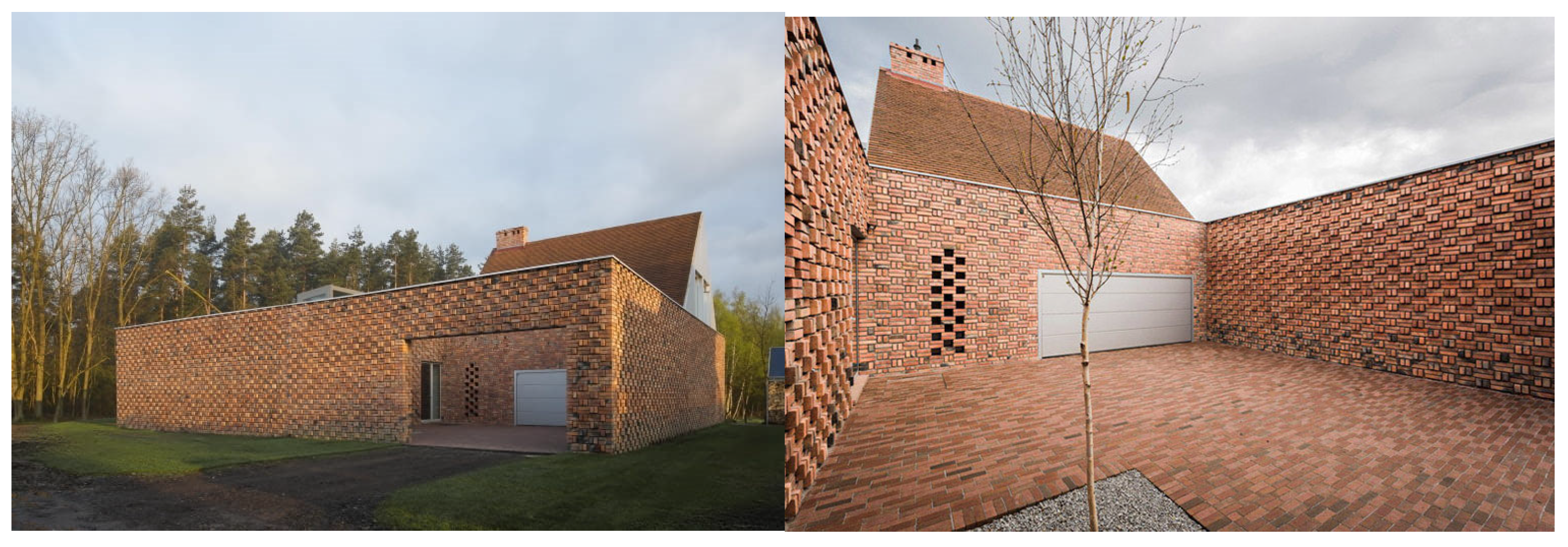
Figure 11, 12.
Author Justyna Juroszek.
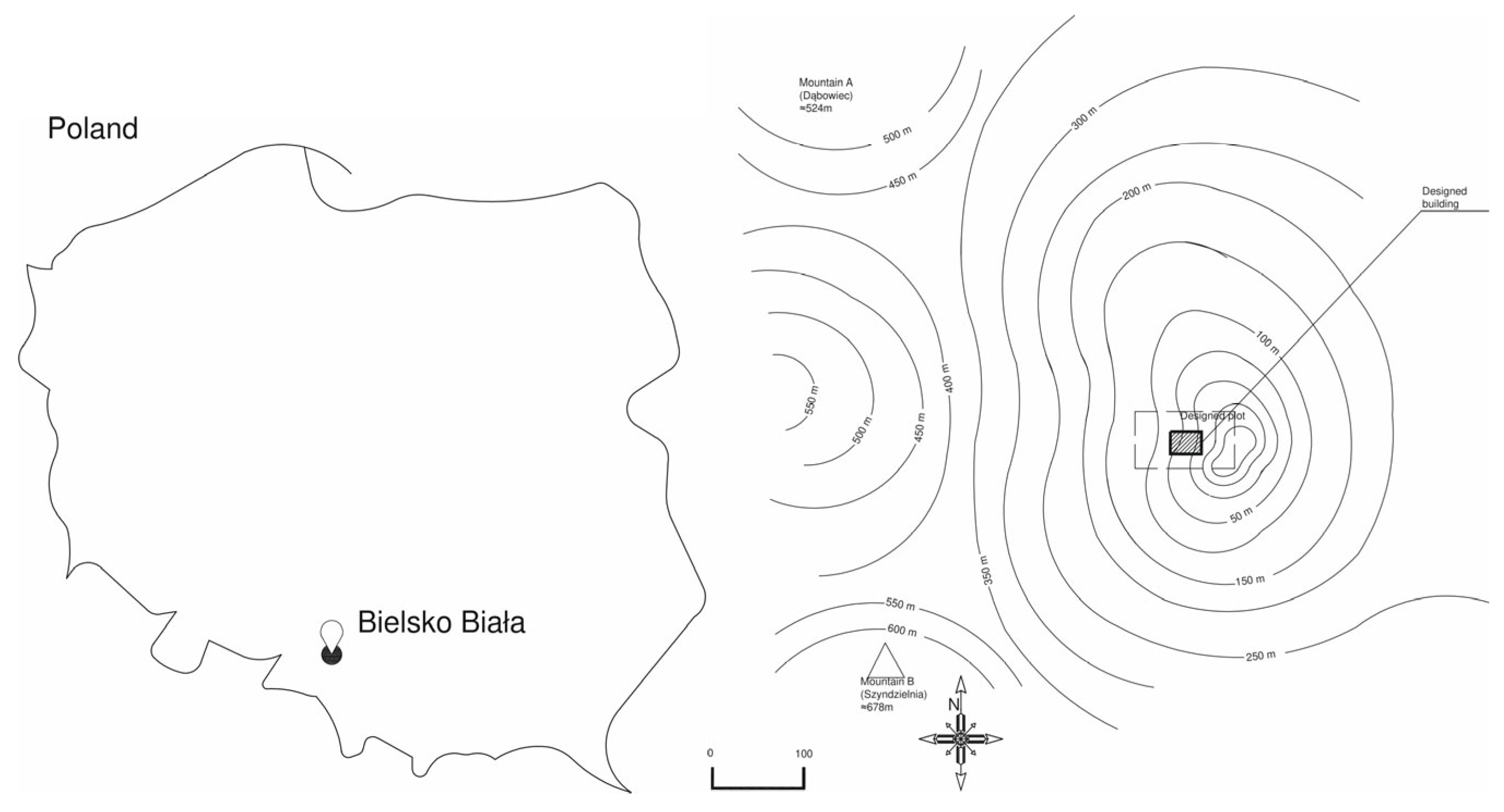
The shingle house in Bielsko-Biała (Iterurban, 2013) is an example of contemporary residential architecture, in which the material and structure of the façade play a key role in shaping the relationship between the building and the natural landscape. The entire façade is covered with wooden shingles, which creates an organic connection with the Beskid surroundings and allows for the harmonious integration of the building with the terrain.
International literature highlights the importance of wood as a material that promotes the perception of harmony and naturalness, as well as emphasising the ecological and aesthetic aspects of the façade [5,9]. Thanks to the use of traditional materials in a modern form, the design fits into the trend of architecture that combines local heritage with current formal and functional solutions.
From the point of view of the perception of the natural landscape, the shingle façade contributes to the feeling of cohesion between the building and its surroundings, reduces visual contrast and allows residents and observers to perceive the building as an integral part of the Beskid landscape. The design is an example of the conscious use of traditional materials in the context of modern residential architecture, where aesthetics, culture and the natural environment create a coherent spatial narrative.
Photo. 14,15,16.
Author Justyna Juroszek.
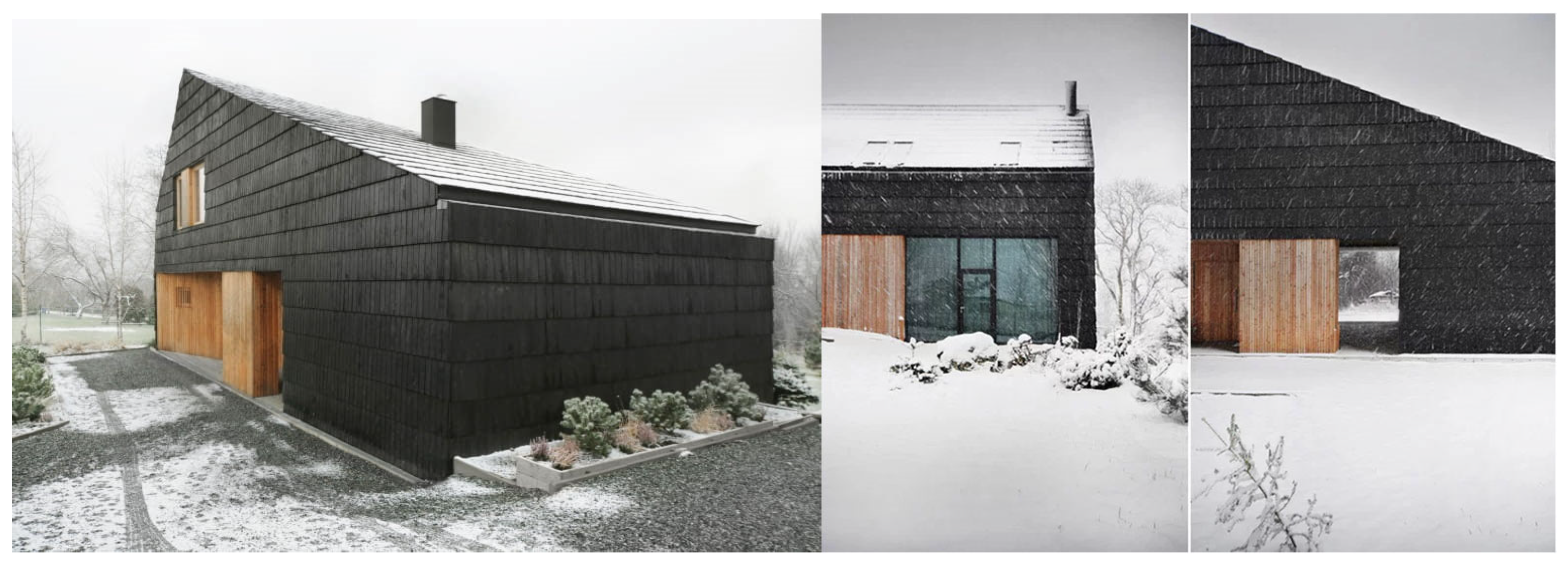
Figure 13, 14.
Author Justyna Juroszek.
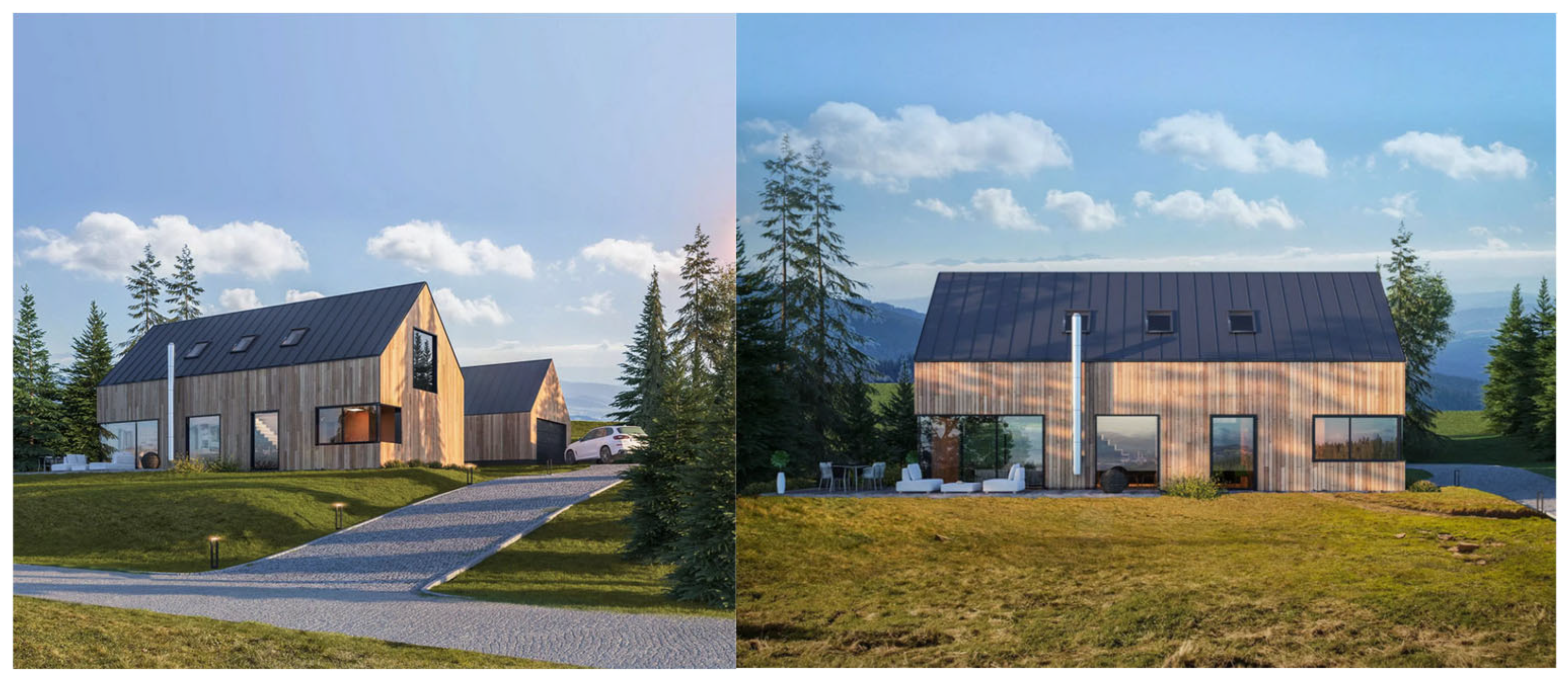
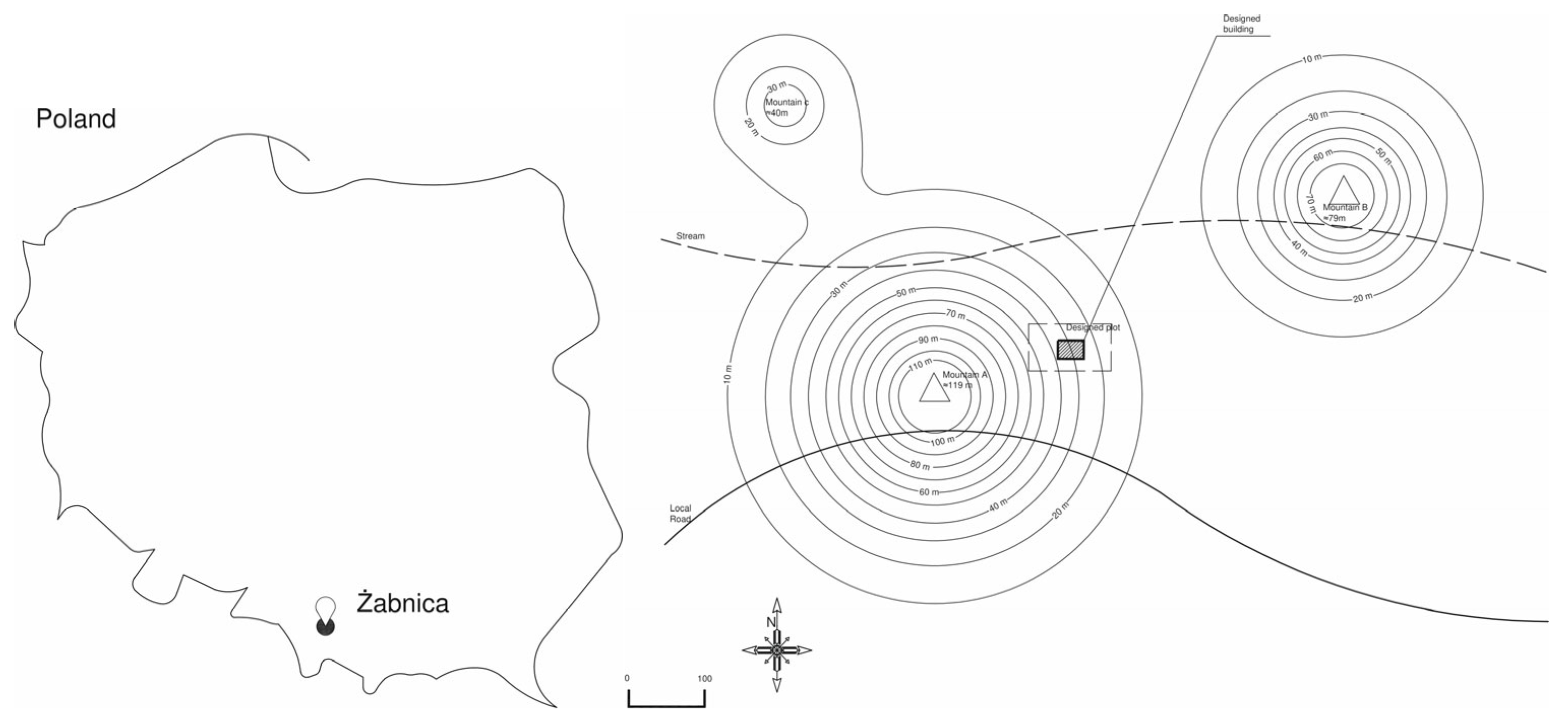
The ‘Barn’ in the Żywiec Beskids (Architect Kozieł, 2020) is an example of contemporary residential architecture inspired by the local archetype of rural construction. The building is characterised by a simple form, wooden façade and large glazed areas, which allow it to blend in with the surrounding mountain landscape and provide adequate lighting for the interior.
The design is part of the discussion on a return to regional archetypes, constituting a contemporary reinterpretation of traditional forms [3,19]. The literature emphasises that this approach helps to root architecture in its cultural and landscape context, creating a coherent dialogue between modernity and tradition.
Perceptual studies indicate that the use of simple, familiar architectural forms together with natural materials such as wood minimises the feeling of visual discomfort in the natural landscape, promoting a positive perception of the building by users and observers [8,10]. The wooden façade and glazing create a subtle contrast with the surroundings, while allowing the building to maintain the integrity of its form and aesthetics in harmony with the topography of the area.
Figure 15, 16.
Author Justyna Juroszek.
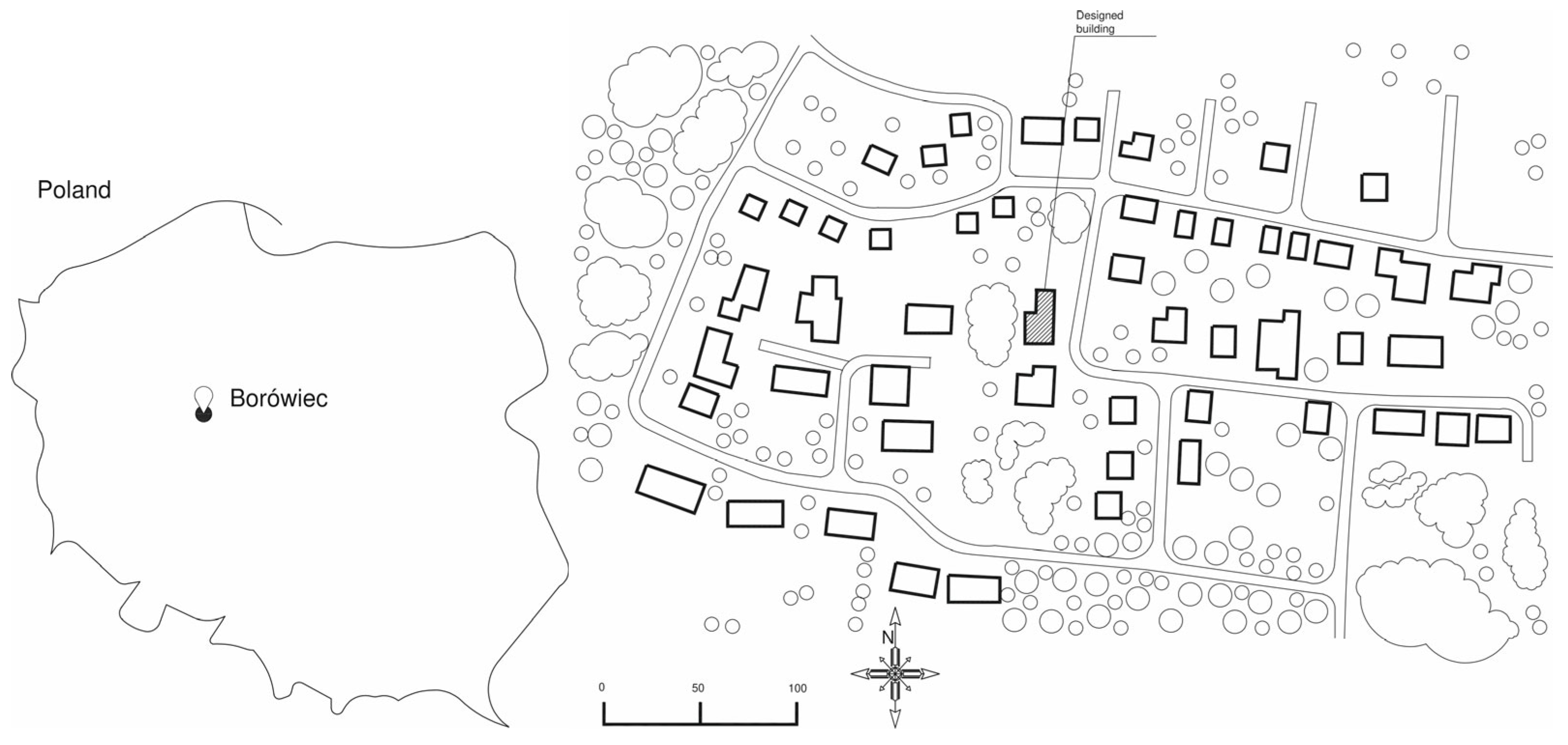
The stone house in Borówek (Milwicz Architekci, 2021) is an example of contemporary residential architecture in which the façade plays a key role in integrating the building with the natural and geological landscape of the region. The use of natural stone allows the building to blend harmoniously into its surroundings, creating a sense of stability and rootedness in the terrain.
From the perspective of phenomenological literature, it is emphasised that the texture, weight and structure of the material influence the perception of space and the experience of place, allowing the building to “blend in” with the landscape context while remaining clearly present in its surroundings [2].
In the context of sustainable development and ecology, natural materials such as stone reduce the carbon footprint of a building, supporting design strategies aimed at minimising environmental impact [16]. Thanks to its massiveness and texture, the stone façade shapes the aesthetics of the building and reinforces the sense of durability and consistency with the local natural landscape.
Photo. 19, 20.
Author Justyna Juroszek.
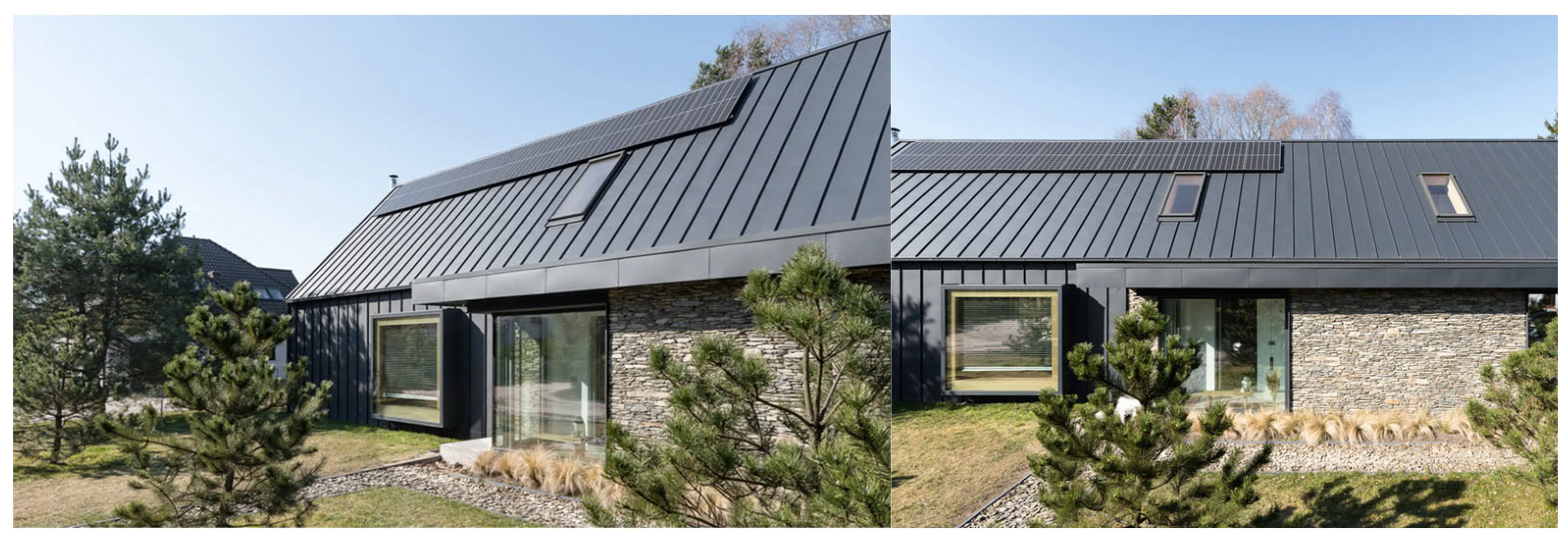
Figure 17, 18.
Author Justyna Juroszek.
5. Comparative Conclusions

Table 1.
Comparative table.
| Type of building | Building | Location | Facade material | Landscape integration strategy | Scale of analysis | Reference in literature |
| Public buildings | Silesian Museum | Katowice | Concrete, glass | Minimising interference, partially submerged in the ground | Urban | Malinowski 2016; Bogusławski & Kicińska 2014; Serra 2021 |
| Public buildings | Szczecin Philharmonic | Szczecin | Concrete, glass | Formal and chiaroscuro contrast, vertical rhythm | Urban | Lee 2011; Czerwiński 2015; Stamps 2000 |
| Public buildings | Małopolska Garden of Arts | Krakow | Ceramics, glass | Reinterpretation of local tradition, harmonisation with the urban fabric and greenery | Urban | Frampton 1983; Pallasmaa 1996; Niezabitowska 2014 |
| Landscape architecture | TPN Nature Education Centre | Zakopane | Wood, stone | Integration with the mountain landscape, use of local materials | Natural | Norberg-Schulz 1980; Pallasmaa 1996; Perini & Rosasco 2013 |
| Landscape architecture | Holiday homes in Bory Tucholskie | Bory Tucholskie | Wood | Minimalist form, harmonisation with the forest, local materials | Natural | Williamson et al. 2003; Basista 2010; Bishop 2003 |
| Residential buildings | The ‘Rudy’ house | Rudy | Brick, concrete | Critical regionalism, reference to local tradition | Natural/urban | Frampton 1983; Norberg-Schulz 1980; Chojnacka et al. 2024 |
| Residential buildings | Shingle house | Bielsko-Biała | Wood (shingles) | Organic integration with the Beskid landscape | Natural | Lee 2011; Wong et al. 2010 |
| Residential buildings | ‘Barn’ | Beskid Żywiecki | Wood | Reinterpretation of the barn archetype, minimal visual impact | Natural | Frampton 1983; Basista 2010; Valentine et al. 2025 |
| Residential buildings | Stone house | Borówiec koło Poznania | Natural stone | Rooted in the landscape, minimised carbon footprint | Natural | Pallasmaa 1996; Manouchehri 2024 |
Analysis of the studied buildings shows that the material and texture of the façade play a key role in the perception of the building and its integration with the surroundings. Wood, stone, brick or shingles allow the building to blend harmoniously into the natural or urban landscape, supporting a sense of rootedness and cohesion with the place [1,2,17].
All the analysed projects refer to the local cultural and topographical heritage, in accordance with the principles of critical regionalism [3] and the reinterpretation of local archetypes [19]. This approach allows for the creation of modern buildings that are consciously connected to the landscape context.
Research shows that buildings partially hidden in the terrain (Silesian Museum) or the use of simple shapes and natural materials (holiday homes in Bory Tucholskie, stone house in Borówek) minimise interference with the landscape and reduce visual discomfort [8,10]. On the other hand, public buildings with expressive façades (Szczecin Philharmonic Hall) can shape a ‘new city landscape’, generating discussion about the balance between contrast and harmony in an urban context [5,22].
Buildings that use local, natural materials and strategies that limit interference with the environment (the TPN Nature Education Centre, the Stone House in Borówek) support the minimisation of the carbon footprint and operate in accordance with the principles of sustainable architecture [7,16].
Perceptual studies indicate that simplicity of form, rhythm of facades and the use of natural materials contribute to a positive perception of buildings in both natural and urban landscapes, enhancing a sense of cohesion and visual comfort [8,10,11].
An analysis of the literature and architectural examples indicates a lack of long-term studies that combine the aesthetic aspects of façades, their ecological function and public perception in the context of natural areas. Most of the research to date has focused on the urban environment or on individual parameters (material, form, green façades) rather than on a holistic perception of the building in the landscape.
6. Summary
An analysis of modern buildings in Poland at the turn of the 21st century has shown thatthe structure and material of the façade have a significant impact on the perception of the natural and urban landscape. The projects studied – including public buildings, landscape architecture and residential buildings – show that the conscious selection of materials (wood, stone, brick, shingles) and simple or rhythmic façade forms promote harmonious integration with the surroundings and minimise visual discomfort.
Phenomenological literature and critical regionalism theory emphasise the importance of a building's roots in the local context and references to regional archetypes and traditions, which strengthen the sense of spatial cohesion and ‘genius loci’ [1,2,3]. In turn, research on sustainable architecture and green façades indicates that the appropriate selection of materials and design strategies promotes carbon footprint reduction and integration with the ecosystem [7,16].
Conclusions from the analysis of literature and case studies also point to the need for further long-term research combining aesthetics, the ecological function of façades and social perception, especially in the context of natural areas. The inclusion of such research could contribute to the development of architectural design methodologies that are simultaneously aesthetic, functional and landscape-friendly.
In summary, conscious façade design – taking into account material, texture, rhythm and landscape context – is a key tool for harmonising architecture with its natural and urban surroundings and promoting a positive perception of space by users and residents.
References
- Norberg-Schulz, C. (1980). Genius Loci: Towards a Phenomenology of Architecture. London: Academy Editions.
- Pallasmaa, J. (1996). The Eyes of the Skin: Architecture and the Senses. Chichester: Wiley-Academy.
- Frampton, K. Towards a critical regionalism: Six points for an architecture of resistance. Oppositions 1983, 25, 28–38. [Google Scholar]
- Williamson, T.; Radford, A.; Bennetts, H. (2003). Understanding Sustainable Architecture. London: Routledge. [CrossRef]
- Lee, S. (2011). Aesthetics of Sustainable Architecture. New York: Routledge.
- Ottelé, M.; van Bohemen, H.; Fraaij, A. Quantifying the Deposition of Particulate Matter on Climbers for Green Façades. Ecological Engineering 2010, 36. [Google Scholar]
- Perini, K.; Rosasco, P. The role of green façades in sustainable architecture. Building and Environment 2013, 68, 182–193. [Google Scholar]
- Valentine, C.; Wilkins, A. J.; Mitcheltree, H. Visual discomfort in the built environment: Leveraging generative AI and computational analysis to evaluate predicted visual stress in architectural façades. Buildings 2025, 15, 88. [Google Scholar] [CrossRef]
- Wong, A.; Lee, S.; Frampton, K. Wood as a medium for integrating architecture and landscape. Journal of Architectural Education 2010, 64, 22–33. [Google Scholar]
- Stamps, A.E. (2000). Psychology and the aesthetics of the built environment. New York: Springer. [CrossRef]
- Bishop, I. Perceptual aspects of landscape and urban design. Landscape Research 2003, 28, 351–366. [Google Scholar]
- Llobera, J.R. (2003). An invitation to anthropology: The structure, evolution and cultural identity of human societies. New York, NY: Berghahn Books. [CrossRef]
- Wang, F.; et al. (2024). Assessing Effects of Facade Characteristics and Visual Perception. Energy and Buildings.
- Jarrín, F. (2025). VR and Computer Vision-Based Facade Complexity Analysis. Architectural Science Review. [CrossRef]
- Nasar, J.L. (1998). The Evaluative Image of the City. SAGE. [CrossRef]
- Manouchehri, M. Sustainable design of vertical greenery systems. Sustainability, 2024, 16, 1124. [Google Scholar] [CrossRef]
- Chojnacka, K.; Nowak, P.; et al. (2024). Interdisciplinary insights on green façades design: Architecture, engineering, and environment. Springer.
- de Oliveira Santos, T.D.; et al. (2024). Systematic Analysis on Efficiency and Sustainability of Green Roofs and Façades. Building and Environment. [CrossRef]
- Basista, A. (2010). Nowoczesna architektura w Polsce. Warszawa: Arkady.
- Bogusławski, J.; Kicińska, A. (2014). Architektura i urbanistyka w Polsce 1989–2014. Warszawa: Wydawnictwo Naukowe PWN.
- Malinowski, J. (2016). Architektura polska XX wieku. Warszawa: Arkady.
- Czerwiński, T. M. (2015). Architektura współczesna w Polsce. Warszawa: Arkady.
- Juan Serra, Susana Iñarra, Ana Torres, Jorge Llopis — “Analysis of facade solutions as an alternative to demolition for architectures with visual impact in historical urban scenes”. Journal of Cultural Heritage, 11.2021. [CrossRef]
- Niezabitowska, E. (2014). Badania jakościowe środowiska zbudowanego. Warszawa: Wydawnictwo Naukowe PWN.
- Williamson, T.; Radford, A.; Bennetts, H. (2003). Understanding Sustainable Architecture. London: Routledge. [CrossRef]
Disclaimer/Publisher’s Note: The statements, opinions and data contained in all publications are solely those of the individual author(s) and contributor(s) and not of MDPI and/or the editor(s). MDPI and/or the editor(s) disclaim responsibility for any injury to people or property resulting from any ideas, methods, instructions or products referred to in the content. |
© 2025 by the authors. Licensee MDPI, Basel, Switzerland. This article is an open access article distributed under the terms and conditions of the Creative Commons Attribution (CC BY) license (http://creativecommons.org/licenses/by/4.0/).
Copyright: This open access article is published under a Creative Commons CC BY 4.0 license, which permit the free download, distribution, and reuse, provided that the author and preprint are cited in any reuse.


