

Submitted:
04 September 2025
Posted:
19 September 2025
You are already at the latest version
Abstract
This study critically examines the economic, reputational, and structural dimensions of chargeable journals within the open access (OA) publishing model, with a particular focus on Article Processing Charges (APCs). While open access increases visibility and accessibility of research, it shifts substantial financial and intellectual burdens onto authors, raising concerns about fairness and exploitation. Using a conceptual and thematic analysis of peer-reviewed literature from 2015 to 2025, the study highlights how commercial publishers capture disproportionate economic benefits, leverage prestige, and maintain structural control over scholarly communication. Findings reveal systemic inequities, including financial barriers for researchers from underfunded institutions and low- and middle-income countries, the rise of predatory publishing, and market-driven APC pricing structures. Despite these challenges, alternatives such as Diamond Open Access, institutional support, and policy reforms offer more equitable pathways. The study contributes to debates on scholarly equity and provides recommendations for more transparent, ethical, and inclusive publishing models.
Keywords:
academic publishing economics
; open access journals
; Article Processing Charges (APCs)
; predatory publishing
; diamond open access
1. Introduction
Academic publishing serves as the foundation for knowledge dissemination, enabling researchers to share findings with the global scholarly community. Over the past two decades, the growth of open access journals has transformed the publishing landscape by allowing unrestricted reader access to research outputs. This shift, however, has introduced an author-financed publishing model in which Article Processing Charges (APCs) are paid by authors to secure publication. While open access promotes greater accessibility for readers, the financial obligations placed on authors have sparked debates about fairness, equity, and the potential commodification of scholarly work (Larivière et al., 2015).
A small number of major publishers including Elsevier, Springer Nature, Wiley, and Taylor & Francis dominate the academic publishing market. These companies maintain profit margins exceeding 30%, substantially higher than most global industries, while relying heavily on the unpaid labor of researchers for peer review, writing, and data generation (Larivière et al., 2015). Although APCs are often justified as covering operational costs such as peer review management, copyediting, typesetting, and long-term archiving, critics contend that these charges disproportionately benefit publishers, leaving authors to bear many financial and intellectual burdens (Pinfield et al., 2017; Suber, 2012).
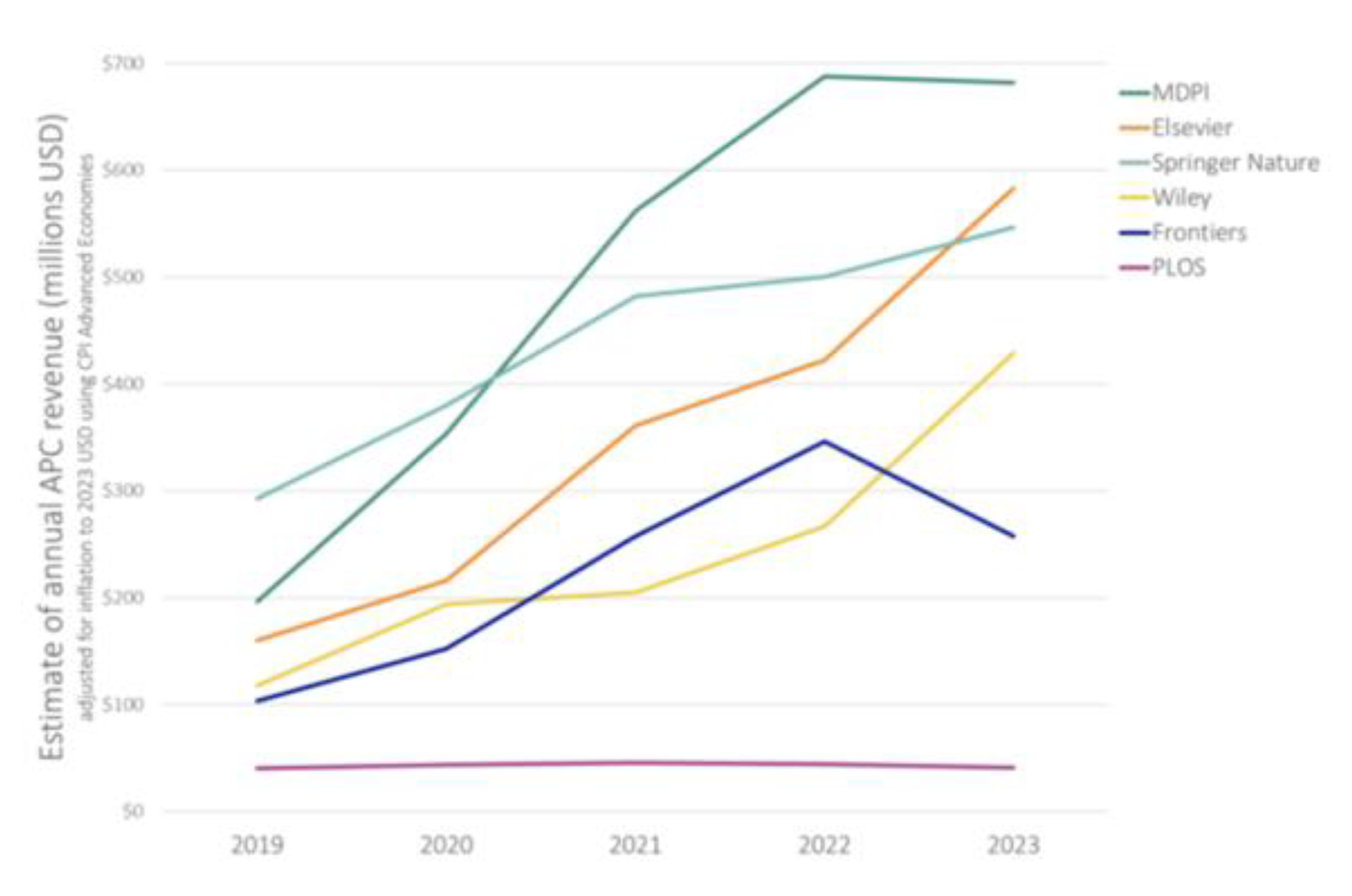
Figure 1.
Annual APC revenue by publisher (million USD, 2023 CPI-adjusted).
Chargeable journals, particularly within the open access (OA) publishing model, present a complex economic landscape with both benefits and potential drawbacks for authors. The core issue revolves around article processing charges (APCs), which shift the financial burden from readers to authors (Segado-Boj et al., 2022). This model aims to democratize knowledge dissemination, but concerns arise about whether it exploits authors, especially those from less-funded institutions (Morgan & Smaldino, 2025; Ravi et al., 2024). The open access movement has gained momentum, challenging traditional subscription-based models (Morgan et al., 2012; Siler, 2017). Open access intends to make research freely available, increasing its visibility and impact (Ganna & Mariia, 2024; Zimmermann, 2009). However, the transition to OA has led to the widespread adoption of APCs, which can vary significantly between publishers (García et al., 2019; Siler & Frenken, 2020).
Despite growing discussion around open access economics, less attention has been given to the imbalance of benefits between publishers and authors. While authors contribute expertise, labor, and often substantial funds, publishers retain financial profit, brand prestige, and structural control over knowledge dissemination. This gap in understanding signals a need for critical examination of how chargeable journals may leverage authors’ contributions for disproportionate gain. To guide this inquiry, the study addresses three research questions:
- i.
- To what extent do APC-based journals impose inequitable financial, reputational, and structural burdens on authors?
- ii.
- How do publishers leverage market power and prestige in shaping APC pricing and access?
- iii.
- What alternative publishing models, such as Diamond OA, offer more equitable solutions?
The aim of this study is to assess the extent to which chargeable journals benefit more than authors, examining financial, reputational, and structural dimensions. This inquiry is significant for informing debates on scholarly equity, the ethics of knowledge sharing, and potential reforms aimed at making academic publishing more transparent, fair, and inclusive.
2. Method
This study adopted a conceptual and thematic analysis design to investigate the imbalance of benefits between authors and publishers in chargeable academic journals. No primary data were collected; rather, the analysis drew exclusively on secondary sources, including peer-reviewed journal articles, scholarly books, and authoritative reports addressing the economics of academic publishing, open access models, Article Processing Charges (APCs), and structural inequities in scholarly communication. Core references included both foundational and contemporary contributions such as Larivière et al. (2015), Pinfield et al.(2017), Suber (2012), and Siler and Frenke (2020).
The review considered publications in English produced between 2015 and 2025, with earlier seminal works retained when they were essential to the conceptual foundation of the study. The selected literature addressed APC structures, the economics of open access, publisher profit margins, and the lived experiences of authors within the publishing system. Only peer-reviewed or otherwise authoritative works recognized in the fields of information science, scholarly communication, and publishing studies were included.
Thematic analysis followed Braun and Clarke’s (2006) six-phase framework, beginning with familiarization with the literature and progressing through coding, theme identification, theme refinement, and final synthesis. The process was iterative, ensuring conceptual coherence across the financial, reputational, and structural dimensions identified in the literature. AI tools were used in a supportive role to assist with idea generation, synthesis of large volumes of literature, and refinement of thematic structures; however, all interpretation, evaluation, and conclusions remain the independent work of the author. As this study relied entirely on existing published material, no human or animal subjects were involved, and no ethical clearance was required.

Table 1.
Theoretical Analysis Framework.
| Thematic Pillar | Analytical Focus |
|---|---|
| Financial Dynamics | Global APC spend nearly tripled (2019–2023); MDPI, Elsevier, Springer Nature dominate earnings; regional disparities exist. |
| Reputational and Market Power Dynamics | Prestige and publisher market power influence APC pricing; mega-journals dominate citations; Diamond OA offers high citation efficiency despite lower volume. |
| Structural Inequity | High APCs limit access for underfunded authors; fees vary greatly by journal tier; Diamond OA offers equitable alternatives but remains peripheral. |
3. Result and Discussion
This analysis examines whether chargeable journals exploit authors by critically assessing the economic, reputational, and structural dimensions of the current open access publishing model. The findings suggest that while APC-based journals increase accessibility for readers, they simultaneously shift substantial financial and intellectual burdens onto authors. Commercial publishers capture disproportionate economic benefits, leverage brand prestige, and maintain structural control over scholarly outputs, raising important questions about fairness, equity, and the ethical implications of knowledge dissemination. By contextualizing these dynamics within recent empirical data, the discussion highlights how current practices may privilege publishers at the expense of the very researchers who generate the content.
3.1. Thematical Finding
The thematic analysis revealed a pronounced imbalance between the benefits accrued by publishers and the burdens placed on authors in the current Article Processing Charge (APC)–driven open access (OA) publishing model. Across the three dimensions financial, reputational, and structural evidence consistently pointed to systemic inequities that disproportionately advantage commercial publishers.
A. Financial Dynamics
Recent large-scale analysis by Butler et al. (2024) underscores the scale and rapid growth of APC-related revenues. Using combined data from APC list prices across six major publishers Elsevier, Frontiers, MDPI, PLOS, Springer Nature, and Wiley together with publication counts from OpenAlex, they estimated that the global academic community spent nearly US $8.35 billion on APCs between 2019 and 2023 (equivalent to US $8.97 billion in 2023-adjusted values). Annual APC expenditure rose sharply over this period, from approximately US $910 million in 2019 to more than US $2.54 billion in 2023. In that year alone, MDPI, Elsevier, and Springer Nature recorded APC revenues of US $681.6 million, US $582.8 million, and US $546.6 million, respectively. Hybrid open access fees were found to exceed those of fully gold open access journals, and median payments often surpassed official list prices suggesting more complex and less transparent pricing structures than typically perceived. The scale and pace of this growth outstripped inflation and global R&D expenditure increases, indicating that APC pricing is driven more by market consolidation and publisher leverage than by real cost inflation (Pinfield et al., 2017).
According to Jung et al. (2025), between 2019 and 2023, global spending on article processing charges (APCs) experienced significant growth, with marked regional differences. Italy demonstrated the highest compound annual growth rate in APC expenditures at 34.17%, followed by moderate to high growth in Korea, Germany, and the United Kingdom. In Italy and Korea, a substantial share of APC spending was directed to MDPI, accounting for 37.53% and 38.71% of total APCs, respectively, which raises questions about publisher concentration and potential implications for research quality. In contrast, Germany and the United Kingdom implemented national-level agreements to regulate and control APC costs, reflecting policy interventions aimed at mitigating financial pressure on authors and promoting more equitable access to open access publishing (Jung et al., 2025).
Table 2.
Global APC Expenditure (2019–2023, CPI-Adjusted).
| Year | Global APC Spending (USD, billions) | Major Publisher Revenue Leaders |
| 2019 | 0.91 | Elsevier, Springer Nature |
| 2020 | 1.34 | Elsevier, MDPI |
| 2021 | 1.89 | Springer Nature, MDPI |
| 2022 | 2.20 | MDPI, Wiley |
| 2023 | 2.54 | MDPI (681.6M), Elsevier (582.8M), Springer Nature (546.6M) |
Source: Butler et al. (2024), CPI-adjusted values.
B. Reputational and Market Power Dynamics
The data demonstrate that prestige and publisher brand identity remain strong determinants of APC pricing. High-impact journals often charge huge amount, justified by visibility and citation benefits rather than proportional increases in production cost. Mega-journals dominate the citation landscape in high-output disciplines, yet Diamond OA journals often achieve comparable or higher citation efficiency without charging APCs (Pilatti et al., 2024). For example, the dominance of “mega-journals” is notable. For example, in engineering, APC-based journals particularly high-output mega-journals led in absolute citation counts, though Diamond Open Access journals boasted a higher proportion of articles cited (88.8% vs. 83.4%) within the top decile. This suggests that high APCs are not necessarily correlated with greater scholarly influence, but rather with publisher brand positioning. Also, APC pricing appears more influenced by publisher market power and prestige-based infrastructure than by actual editorial quality or production cost.
Table 3.
Citation Performance: Mega-Journals vs. Diamond OA.
| Journal Type |
APC Requirement | % Articles in Top 10% by Citations | Citation Efficiency |
| Mega-Journals (APC-based) | Yes (US $1,500–5,000) | 83.4% | High output, broad reach |
| Diamond OA Journals | No | 88.8% | Higher efficiency, smaller volume |
Source: Pilatti et al. (2024).
This suggests that citation influence does not necessarily depend on high APCs but is often tied to publisher reputation and market dominance.
C. Structural Inequities
The findings indicate a persistent exclusionary effect on authors from low- and middle-income countries (LMICs) and underfunded institutions. Heavy reliance on APCs creates significant barriers for these groups, with average global APCs estimated at approximately US $1,626, though individual fees range widely from under US $1,000 to more than US $12,000 for flagship journals such as Nature (LeMaster et al., 2024; Guest Author, 2024). Furthermore, hybrid open access (OA) options often carry higher APCs than fully gold OA formats, adding cost uncertainty and exacerbating inequality (Clark et al., 2024).
By contrast, some reputable journals operate under no-fee publishing models, sustained through institutional support, volunteer labor, and streamlined operational expenses. However, these represent only a small proportion of global publications, particularly in disciplines dominated by commercial publishers. LeMaster et al. (2024) note that some journals provide partial or full APC waivers for authors in developing countries, often based on criteria from the World Bank, Human Development Index, Healthy Life Index, or United Nations classifications. In addition, many journals extend partial APC discounts to members of affiliated societies; in the study of 63 journals, 13 offered discounts of 20%–50%, yet none granted full APC waivers for society members. These patterns reinforce the argument that, while the APC model is often justified as supporting open access, it continues to reproduce and amplify existing inequities in global knowledge production and dissemination, limiting the diversity of voices in scholarly discourse.
3.2. Potential Exploitation
The analysis identifies several ways in which the current APC-driven publishing system can exploit authors, particularly those from under-resourced contexts.
- i.
- Financial barriers: APCs can create financial barriers for researchers, particularly those from developing countries or less affluent institutions (Burak, 2025). The cost to publish can range from 0-2,307 depending on the model (Green, Bronze, or Hybrid Open Access) (Chen et al., 2024).
- ii.
- Predatory Publishing: The pressure to publish and the availability of author-pays models have led to the rise of predatory journals, which exploit researchers by prioritizing profits over quality (Ravi et al., 2024; Shrestha, 2021; Zhao, 2014). These journals often have deceptive practices, inadequate peer review, and hidden fees (Ravi et al., 2024; Vo et al., 2025).
- iii.
- Author Ignorance: Some publishers may exploit authors’ lack of awareness regarding publication fees, making the fee structure complex to increase profits(García et al., 2019b).
- iv.
- Incentivizing Low-Quality Research: Author-paid publication fees can incentivize the publication of low-quality research, as journals may be more likely to accept articles if the authors are paying (Morgan & Smaldino, 2025b).
- v.
- Unequal Access to Publishing: The financial burden of APCs amplifies inequities between well-funded and less-funded institutions. Researchers with sufficient resources can access high-impact journals, while those with limited funding face barriers that reduce their visibility and influence, constraining diversity and inclusivity in global scholarship (Morgan & Smaldino, 2025).
3.3. Counterarguments and Nuances
While the potential exploitation of authors under the APC system is evident, there are notable counterarguments and mitigating factors that complicate this narrative. Open access publishing, for instance, can significantly enhance the visibility and impact of research. Studies indicate that OA articles often receive higher citation rates and reach broader audiences compared to subscription-based publications, offering authors benefits in terms of recognition and scholarly influence (Kharlamova & Naumova, 2024; Singh et al., 2021). This demonstrates that while costs may be high, there is a measurable return on investment in terms of academic visibility.
Institutional support plays a critical role in alleviating publication costs. Some universities and research centers provide funding to enable authors to publish in open access journals, thereby increasing inclusivity and reducing financial barriers (Nariani & Fernandez, 2012). Furthermore, authors retain agency in the publishing process, as they can choose between traditional subscription-based journals and various OA options (Chen et al., 2024). This choice allows researchers to weigh cost against potential benefits, though it requires awareness and strategic decision-making.
Ethical considerations further shape the publishing landscape. Transparency in APC fees is essential for preventing exploitation and fostering trust between authors and publishers (Vo et al., 2025). Rigorous peer review and adequate editorial oversight must be maintained regardless of the financial model to ensure the quality and credibility of scholarly work (Schroter & Tite, 2006). Additionally, OA journals are expected to uphold the same ethical standards as subscription-based journals, ensuring equitable treatment of authors and the integrity of research dissemination.
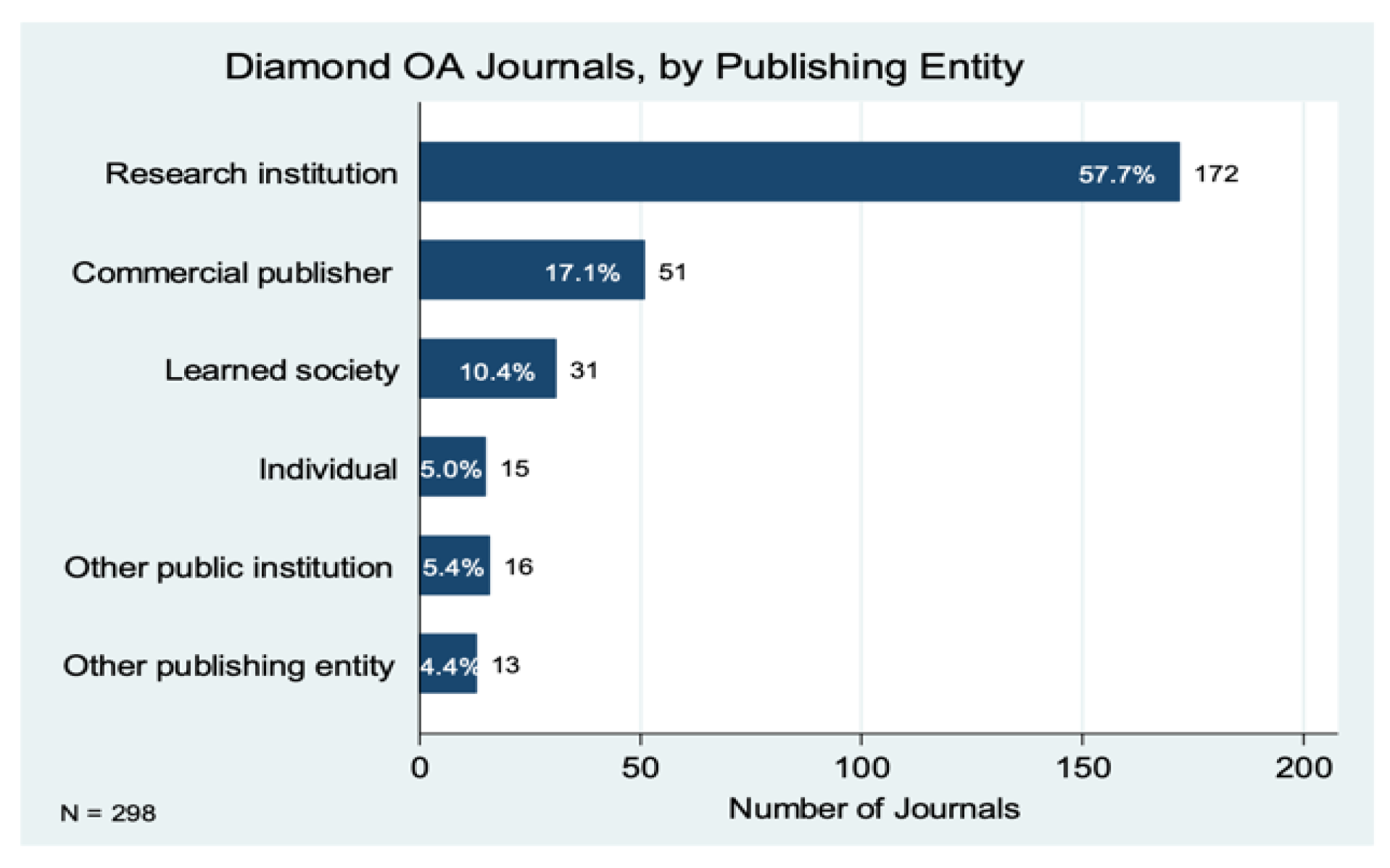
Alternative funding models also provide pathways to reduce inequities. Diamond Open Access journals, which do not charge either readers or authors, operate largely on institutional funding, voluntary labor, and minimal operational costs. Data show that research institutions are responsible for publishing many of these journals, accounting for 57.7% of global Diamond OA output, whereas commercial publishers contribute only 17.1% (Taubert et al., 2024). This model illustrates that open access can function without imposing financial burdens on authors, though its scale remains limited, particularly in commercially dominated fields.
Figure 2.
Diamond OA Journals, by Publishing Entity. Source: Taubert et al. (2024).
Taken together, these counterarguments illustrate that while APC-driven publishing presents clear risks, mechanisms such as Diamond OA models, institutional support, and ethical publishing practices provide potential solutions. Recognizing these nuances is critical for developing policies that balance author interests with the broader goals of open access and knowledge dissemination.
3.4. Ethical Considerations
Ethical practices are fundamental to the integrity of scholarly publishing, particularly in open access journals where the financial model can create potential conflicts of interest. Transparency in publication fees is crucial (Vo et al., 2025), as it allows authors to make informed decisions about where to submit their work and prevents exploitation or unexpected financial burdens. Clear communication about APCs also helps maintain trust between authors and publishers, reinforcing the legitimacy of the journal in the scholarly community.
Maintaining rigorous peer review processes is another essential component of ethical publishing. Regardless of whether a journal operates under a subscription or open access model, peer review must remain thorough, unbiased, and standardized to ensure the quality and credibility of published research (Schroter & Tite, 2006). Weak or superficial review processes not only compromise the value of the publication but also risk spreading low-quality or erroneous research, which can undermine the entire scientific discourse. Editorial oversight plays a complementary role in safeguarding research integrity. Journals must provide sufficient guidance and monitoring of submissions, editorial decisions, and review practices to ensure that published articles meet established standards of scholarly rigor (Schroter & Tite, 2006). This includes holding editors accountable for maintaining fairness, ethical conduct, and impartiality in evaluating manuscripts.
Finally, ethical standards in open access publishing should align with those of subscription-based journals. This includes adherence to policies regarding conflicts of interest, plagiarism, data integrity, and responsible authorship (Schroter & Tite, 2006). By upholding these standards, open access journals can demonstrate that they value not only accessibility but also the credibility, fairness, and integrity of the research they disseminate. Collectively, these ethical considerations form the foundation for responsible scholarly communication, ensuring that authors are treated fairly while maintaining the trust of the broader academic community.
4. Conclusions and Recommendation
4.1. Conclusions
Building on the findings presented in Chapter 4, this study highlights the multifaceted implications of open access publishing, particularly within the author-pays model. While open access has undeniably expanded the reach and visibility of scholarly work, it has also introduced structural inequities that disproportionately affect researchers in low- and middle-income countries and underfunded institutions. The data from 2019 to 2023 reveal notable regional disparities in article processing charge (APC) spending, with Italy exhibiting the highest annual growth rate and countries such as Korea and Italy allocating large proportions of APC expenditures to a single dominant publisher. This raises concerns regarding market concentration and potential impacts on research quality.
Predatory publishing remains a pressing challenge, as the financial incentives associated with APCs can encourage low-quality publication practices. These practices are often characterized by insufficient peer review, lack of editorial oversight, and opaque fee structures, undermining the credibility of scholarly communication. However, counterarguments suggest that open access when implemented ethically can increase citation rates, broaden readership, and accelerate knowledge dissemination.
The overarching conclusion is that the benefits of open access can be fully realized only when coupled with ethical safeguards, transparent processes, and equitable financial models. Institutional policies, researcher education, and alternative publishing models such as Diamond Open Access are critical to reducing the risks of exploitation and ensuring the sustainability of scholarly publishing.
4.2. Recommendations
- i.
- Promote Researcher Awareness: Institutions and scholarly communities should implement training programs to help researchers identify predatory publishers and navigate legitimate open access options (Christopher & Young, 2015; McCann & Polacsek, 2017).
- ii.
- Develop Clear Guidelines: Academic associations and funding agencies should issue clear, evidence-based guidelines on evaluating journals, APC structures, and peer review practices (McCann & Polacsek, 2017).
- iii.
- Encourage Alternative Publishing Models: Greater support should be given to Diamond Open Access and institutional repositories, which eliminate APCs and reduce financial pressure on authors (Taubert et al., 2024).
- i.v
- Implement Policy Reforms: Research policies should address the unequal burden of APCs on underfunded researchers, potentially through fee waivers, subsidies, or national agreements (Singh et al., 2021).
- v.
- Enhance Fee and Process Transparency: Journals should commit to clear disclosure of publication fees and uphold rigorous peer review and editorial standards across all models (Vo et al., 2025).
Future research should focus on comparative studies of funding models to evaluate the long-term sustainability and equity implications of subscription-based, hybrid, and Diamond Open Access approaches. Such studies can help determine which models best balance accessibility, financial feasibility, and research quality. Additionally, the impact of institutional and national APC agreements warrants further investigation, as understanding their effectiveness in controlling publication costs and maintaining scholarly standards could guide better policy formulation.
Another important avenue is monitoring predatory publishing trends, including the evolving tactics used by questionable journals and their influence on the credibility of academic research. In parallel, research should examine equity in research visibility, particularly assessing whether APC waivers and subsidies genuinely enhance publication opportunities for underrepresented or resource-limited scholars. Finally, disciplinary variations in how APC models affect publication practices should be explored, with a special focus on fields that traditionally receive less funding and may face greater barriers in the open access landscape.
Funding
No external funding was received for this research.
Ethical Approval and Declaration
This study did not involve human participants, personal data, or experimental procedures requiring ethical approval. Therefore, no formal ethical clearance was necessary.
Conflict of Interest
The author declares no conflict of interest.
References
- Braun, V.; Clarke, V. Using thematic analysis in psychology. Qual. Res. Psychol. 2006, 3, 77–101. [Google Scholar] [CrossRef]
- Butler, L.-A.; Hare, M.; Schönfelder, N.; Schares, E.; Alperin, J.P.; Haustein, S. (2024). Open dataset of annual Article Processing Charges (APCs) of gold and hybrid journals published by Elsevier, Frontiers, MDPI, PLOS, Springer-Nature and Wiley 2019–2023. [CrossRef]
- Chen, B.K.; Custis, T.; Monteggia, L.M.; George, T.P. Effects of open access publishing on article metrics in neuropsychopharmacology. Neuropsychopharmacology 2024, 49, 757–763. [Google Scholar] [CrossRef] [PubMed]
- Christopher, M.M.; Young, K.M. Awareness of “Predatory” open-access journals among prospective veterinary and medical authors attending scientific writing workshops. Frontiers in Veterinary Science 2015, 2. [Google Scholar] [CrossRef]
- Clark, A.D.; Myers, T.C.; Steury, T.D.; Krzton, A.; Yanes, J.; Barber, A.; … Stevison, L.S. Does it pay to pay? A comparison of the benefits of open-access publishing across various sub-fields in biology. PeerJ 2024, 12, e16824. [Google Scholar] [CrossRef] [PubMed]
- Ganna, K.; Mariia, L. Citation advantage of open access articles: A meta-analysis. Scientometrics 2024, 129, 2567–2583. [Google Scholar] [CrossRef]
- García, J.A.; Rodríguez-Sánchez, R.; Fdez-Valdivia, J. Exploitation in open-access publishing: Misuse of publication fees. J. Informetr. 2019, 13, 34–48. [Google Scholar] [CrossRef]
- García, J.A.; Rodriguez-Sánchez, R.; Fdez-Valdivia, J.; Chamorro-Padial, J. The author’s ignorance on the publication fees is a source of power for publishers. Scientometrics 2019, 121, 1435–1445. [Google Scholar] [CrossRef]
- Guest Author. (2024, October 23). Open access publishing without article processing charges. University of Alberta Library News.https://news.library.ualberta.ca/blog/2024/10/23/open-access-publishing-without-article-processing-charges/.
- Jung, Y.; Lee, J.Y.; Lee, J.; An, B.-G.; Kim, W.J.; Park, J. Article processing charge costs of open access articles indexed in the Web of Science Core Collection from 2019 to 2023 by publisher and country: a secondary publication. Sci. Ed. 2025, 12, 114–123. [Google Scholar] [CrossRef]
- Kharlamova, G.; Naumova, M. International funding models for publications in open access scientific journals: Lessons for harmonizing Ukrainian editorial practices. Educ. Anal. Ukr. 2024, 5, 76–90. [Google Scholar] [CrossRef]
- Larivière, V.; Haustein, S.; Mongeon, P. The oligopoly of academic publishers in the digital era. PLOS ONE 2015, 10, e0127502. [Google Scholar] [CrossRef]
- LeMaster, N.; Huntt, M.; Neumann, C. Weighing the cost: Open access article processing charges, waivers, and society membership. Sci. Ed. 2024, 47, 14–16. [Google Scholar] [CrossRef]
- McCann, T.V.; Polacsek, M. False gold: Safely navigating open access publishing to avoid predatory publishers and journals. J. Adv. Nurs. 2017, 74, 809–817. [Google Scholar] [CrossRef]
- Morgan, A.C.; Smaldino, P.E. The perverse incentives of the academic publishing market. Res. Policy 2025, 54, 104–121. [Google Scholar] [CrossRef]
- Morgan, L.M.; Llewellyn, R.; Neill, L. The evolution of open access in scholarly communication. J. Inf. Sci. 2012, 38, 345–352. [Google Scholar] [CrossRef]
- Morgan, T.J. H.; Smaldino, P.E. Author-paid publication fees corrupt science and should be abandoned. Sci. Public Policy 2025. [Google Scholar] [CrossRef]
- Nariani, R.; Fernandez, L. Open access publishing: What authors want. Coll. Res. Libr. 2012, 73, 182–195. [Google Scholar] [CrossRef]
- Pilatti, L.E.; Pilatti, L.A.; Carvalho, G.D.G.d.; Resende, L.M.M.d. From fees to free: Comparing APC-based and diamond open access journals in engineering. Publications 2025, 13, 16. [Google Scholar] [CrossRef]
- Pinfield, S.; Salter, J.; Bath, P.A. A “gold-centric” implementation of open access: Hybrid journals, the “total cost of publication,” and policy development in the UK and beyond. J. Assoc. Inf. Sci. Technol. 2017, 68, 2248–2263. [Google Scholar] [CrossRef]
- Ravi, S.; Kumar, V.; Singh, A. Predatory publishing and its implications for scholarly communication. Learn. Publ. 2024, 37, 305–314. [Google Scholar] [CrossRef]
- Schroter, S.; Tite, L. Open access publishing and author-pays business models: A survey of authors’ knowledge and perceptions. J. R. Soc. Med. 2006, 99, 141–148. [Google Scholar] [CrossRef]
- Segado-Boj, F.; Prieto-Gutiérrez, J.-J.; Martín-Quevedo, J. Attitudes, willingness, and resources to cover article publishing charges: The influence of age, position, income-level country, discipline and open access habits. Learn. Publ. 2022, 35, 489–498. [Google Scholar] [CrossRef]
- Shrestha, J. Predatory journals as threats to the academic publishing: A review. J. Agric. Nat. Resour. 2021, 4, 1–10. [Google Scholar] [CrossRef]
- Siler, K. Future challenges and opportunities in academic publishing. Can. J. Sociol. 2017, 42, 101–109. [Google Scholar] [CrossRef]
- Siler, K.; Frenken, K. The pricing of open access journals: Diverse niches and sources of value in academic publishing. Quant. Sci. Stud. 2020, 1, 28–59. [Google Scholar] [CrossRef]
- Singh, M.; Prasad, C.; Shankar, A. Publication charges associated with quality open access (OA) publishing and its impact on low middle income countries (LMICs), time to reframe research policies. Asian Pac. J. Cancer Prev. 2021, 22, 2743–2747. [Google Scholar] [CrossRef]
- Suber, P. (2012). Open access, MIT Press. [CrossRef]
- Taubert, N.; Sterzik, L.; Bruns, A. Mapping the German diamond open access journal landscape. Minerva 2024, 62, 193–227. [Google Scholar] [CrossRef]
- Vo, L.T.; Armany, D.; Bariol, S.V.; Sriskanthan Baskaranathan, Hossack, T.; Ende, D.; Woo, H.H. Financial barriers in urology publishing: An analysis of legitimate and predatory journals. ANZ J. Surg. 2025, 95, 744–748. [CrossRef]
- Zhao, L. Riding the wave of open access: Providing library research support for scholarly publishing literacy. Aust. Acad. Res. Libr. 2014, 45, 3–18. [Google Scholar] [CrossRef]
- Zimmermann, J. Open access and the social contract of science. J. Sci. Commun. 2009, 8, A03. [Google Scholar] [CrossRef]
Disclaimer/Publisher’s Note: The statements, opinions and data contained in all publications are solely those of the individual author(s) and contributor(s) and not of MDPI and/or the editor(s). MDPI and/or the editor(s) disclaim responsibility for any injury to people or property resulting from any ideas, methods, instructions or products referred to in the content. |
© 2025 by the authors. Licensee MDPI, Basel, Switzerland. This article is an open access article distributed under the terms and conditions of the Creative Commons Attribution (CC BY) license (https://creativecommons.org/licenses/by/4.0/).
Copyright: This open access article is published under a Creative Commons CC BY 4.0 license, which permit the free download, distribution, and reuse, provided that the author and preprint are cited in any reuse.


