Preprint
Article

This version is not peer-reviewed.

Carbon Nanocomposite for Purification of Man-Made Polluted Waters

A peer-reviewed article of this preprint also exists.

Submitted:

15 September 2025

Posted:

16 September 2025

You are already at the latest version

Abstract

Among the main man-made water pollutants that pose a danger to the environment are oil products, heavy metals and radionuclides, as well as micro- and nanoplastics formed as a result of the destruction of polymeric materials. A characteristic feature of contaminated waters nowadays is their multicomponent and multiphase nature. To purify such waters, it is necessary to use a combination of several advanced methods, with sorption being one of them. The aim of this work is to develop a nanocomposite sorbent comprising magnetically responsive thermally expanded graphite (TEG) and the natural clay bentonite and assess its ability to purify man-made contaminated waters. In the course of the research, the methods of scanning electron microscopy, optical microscopy, dynamic light scattering, and atomic absorption spectrophotometry were used. To obtain the nanocomposite, magnetoresponsive TEG containing micro- and nanoparticles of metallic iron and its oxides as a magnetic component, and bentonite with a montmorillonite content of at least 70% and the particle size of less than 100 μm were used. Given the complex chemical nature of the surface of montmorillonite and magnetoresponsive TEG particles, the interaction of the hydrophobic centers of bentonite with the surface of TEG particles during mechanical activation leads to the formation of loose aggregates capable of sorbing particles of micro- and nanoplastics and non-polar hydrocarbons. The sorption properties of the nanocomposite are dependent on the hydrophobic centers mainly located on the surface of oxidized graphene layers in thermally expanded graphite. The hydrophilic properties of the nanocomposite are due to the presence of aluminol and silanol groups, as well as the charge on the surface of montmorillonite nanocrystals and the Brønsted centers on the surface of TEG particles. The use of the nanocomposite for purification of a nuclear power plant (NPP) radioactively contaminated water simulant containing stable isotopes of cesium, strontium, cobalt, manganese in the presence of hydrophilic and hydrophobic organic substances reduced the content of organic substances by 10-15 times, and the degree of extraction of heavy metals from water was for cesium - 81.4%, strontium – 89.9%, cobalt – 92.4%, and manganese – 98.8%. The use of a carbon nanocomposite for purification of real radioactively contaminated water obtained from the object “Shelter” (“Ukryttya” in Ukrainian), in the Chernobyl Exclusion Zone, Ukraine) with an activity of 137Cs – 3.3∙107 Bq/dm3, 90Sr – 4.9∙106 Bq/dm3, containing, in addition to radionuclides, organic substances, including micro- and nanoplastics, reduced the radioactivity by three orders of magnitude. The filtrate obtained after purification was free from suspended particles, including colloidal ones. The use of cesium-selective sorbents for additional purification of the filtrate allowed further decontamination of radioactively contaminated water with an efficiency of 99.99%.
Keywords: 
;  ;  ;  ;  ;  ;  

1. Introduction

The man-made or anthropogenic pollution including water pollution caused by various human activities has a profound impact on the environment. The priority pollutants of water bodies in Ukraine are oil products, heavy metals and radionuclides, as well as, due to the widespread use of polymeric materials, micro- and nanoplastics [1,2,3].
The main source of radioactive pollution in this country originates from the Chornobyl Nuclear Power Plant (NPP) catastrophe which occurred in 1986 but due to its large scale remains a threat to the environment and human health today [2,4]. In general, anthropogenic radioactive contamination of water cold be caused by the use of nuclear energy in NPPs, mining, medical diagnostics and radiotherapy, and nuclear accidents such as those occurred in Chornobyl and Fukushima-Daiichi NPPs [5]. Decontamination and disposal of nuclear waste is a huge problem. The Chornobyl accident generate high volumes of liquid radioactive waste (LRW), which is stored in specially built storage facilities. Their purpose is a temporary subsurface disposal of low- and intermediate-level radioactive wastes. LRW could come from different sources [6] and depending on the source and pre-treatment have a complex composition. It could include surfactants, large and small organic molecules, chelating agents such as EDTA, and colloid paricles. Microplastics are not usually expected to be present in nuclear wastewater but in fact, polymer gels and foams are used to clean surfaces from radioactive contamination [7] and polymer emulsions are sprayed over contaminated surfces to create a film that suppresses radioative dust formation [8].
Highly dispersed microplastics, represented by micro- and nano-sized particles, are formed in the process of destruction of polymeric materials abundantly present as contaminants in water under the influence of sunlight and other environmental factors. Micro- and nanoplastics can adsorb and accumulate foreign toxic substances, in particular persistent organic pollutants such as polycyclic aromatic hydrocarbons, organochlorine pesticides, etc. [9,10]. Due to their small size, large surface area and hydrophobic properties, microplastics are able to actively adsorb radionuclides and other heavy metals [11]. Moreover, microplastics can contribute to wide spreading of radioactive contamination released into the environment due to their ability to adsorb and retain radionuclides [12].
The mechanisms of binding radionuclides by microplastics are determined by their surface properties, particle size, and environmental factors [10]. The adsorption capacity of microplastics for various radionuclides differ. In natural waters, microplastic pollution is often accompanied by oil pollution as the former are essentially the product of oil processing [13]. The common feature of microplastics and oil products such as solvents and extraction agents, is their hydrophobicity. In addition, oil products and spills, due to their low solubility, often form a stable dispersion/emulsion in water particularly in the presence of surfactants.
To clean systems that contain microplastics, membrane technologies such as ultrafiltration and reverse osmosis are used, the disadvantages of which are considered to be their low permeability, reduced filtration rate, fouling and membrane contamination [14]. Membrane technologies could also be used to separate oil from water [15]. To increase the efficiency of separation, nanofibrous composite membranes based on polymer nanofibers of polyvinylidene fluoride modified by treatment with alkalis, biosurfactants, TiO2 and CuO particles were designed. As a result, amphiphilic biosurfactants, in combination with metal oxides, were capable of reducing surface energy and, accordingly, enhancing the adsorption of micro- and nanoplastics and preventing membrane fouling, increasing the efficiency of filtration and separation of oil and water [16].
High hydrophobicity of both oil and nanoplastics leads to the formation of conglomerates, for the removal of which it is advisable to use the sorption method using sorbents that include nanostructured elements. Such sorbents are characterized by a high specific surface, the possibility of modification and regeneration, ease of processing and disposal. The most promising among them are carbon nanostructured sorbents, in particular sorbents based on thermally expanded graphite (TEG).
To obtain TEG, intercalated/oxidized graphite is used. Compounds that form gaseous substances as a result of thermal shock and thus break the bonds between the graphene layers of graphite, are used as intercalants. In the presence of oxidizers, simultaneously with expansion, oxidation of the graphite/graphene surface occurs, which leads to a significant improvement in their sorption properties. Thus, fragments of oxidized graphene are always present in the structure of the TRG. In fact, graphite thermal exfoliation/expansion of graphite is often used as the starting point for the synthesis of graphene oxide. The most well-known protocols of synthesis are Brodie’s and Hummers’ methods and their modifications, in which KClO3 and fuming HNO3 (original Brodie method) or NaNO3, KMnO4 and concentrated H2SO4 (original Hummers’ method) are used [17]. Various other oxidising reagents and pretreatment procedures are used in modified Hummers’ method [18].
Thermally expanded graphite effectively retains absorbed oil due to its well developed porous structure and hydrophobicity, which depend on the degree of its expansion [19]. The sorption capacity of TEG is affected by the size of the capillary gaps in the expanded part of the material [20]. The mechanism of hydrocarbon absorption by TEG includes the pore filling effect, π-π conjugation and electrostatic interaction [21].
In addition to high sorption capacity for oil products, TEG-based sorbents are characterized by a moderate affinity for heavy metals. There are two main reasons for this affinity. Firstly, the degree of stratification leading to a porous structure affects the sorption capacity and affinity of some metals to interact with Van der Waals forces in crystalline structures, since metal ions may be “captured” by smaller cavities. Secondly, the oxidation of graphene layers in the graphite structure causes its chemical functionalization creating a range of oxygen containing groups, which could form surface complex compounds with metal ions [20]. Like any other oxidized carbon material, GO and EG also possess cation exchange properties mainly due to the presence of acidic functional groups such as -COOH and –OH and -SO3H, the latter due to the use of sulfuric acid in their preparation [22].
The mechanism of formation of graphene oxide (GO) and the chemical bond between oxidized graphene and metal cations has not been fully elucidated. In general, the efficiency of binding metal cations to GO increases with increasing ionic charge and depends on their ability to form coordination-covalent bonds with the oxygen groups of GO. Graphene oxide contains two different types of binding sites. It was found that trivalent cations (Gd3+, Lu3+, Ga3+) were adsorbed stronger than divalent cations (Mn2+, Sr2+, Ca2+), and monovalent alkali metal cations were weakly adsorbed and could not replace higher charged cations from GO. The ions of the same charge with larger radii capable of forming covalent coordination compounds were more efficiently adsorbed (Gd3+ > Ga3+, Mn2+ > Sr2+ > Ca2+, Cs+ > Na+). The vast majority of existing carboxyl groups in GO are located in tiny defects with several carbon atoms and vacancies on the main planes. The density of these defects with vacancies was estimated as one per every 200 carbon atoms. Thus, oxidized graphene effectively chelates metal cations, reliably protecting them from hydrolysis [23].
The affinity of a metal cation to the surface of a carbon matrix is determined not only by the properties of the carbon matrix, but also by the physicochemical properties of the sorbate. In [20], it was shown that transition metals (manganese, molybdenum, copper, etc.) capable of forming coordination bonds with a graphene matrix, as well as alkaline earth metals (calcium and strontium), were sorbed almost completely. The adsorption of alkali metal cations was much weaker. The relatively low affinity of alkali metals to a graphene matrix is probably due to the fact that the main mechanism of their sorption is ion exchange and their ability to form surface complexes is low.
Natural ion exchangers, highly dispersed layered aluminosilicates of the structural type (2:1) such as smectite clay minerals, have a significantly higher affinity for metal cations and much higher ion exchange capacity than carbon materials [24]. In practice, bentonite is used to purify man-made contaminated water, including radioactive wastewater [25]. The ability of bentonite to sorb radionuclides and heavy metal ions from low-concentration solutions or natural waters is due to the nature of the active centers on the outer surface of montmorillonite (the main constituent of bentonite) nanocrystals, which are represented by aluminol (>Al-OH) and silanol (≡Si-OH) groups and/or their Na forms [26]. In addition, active centers are located on the surface of montmorillonite nanocrystals, caused by the negative charge associated with isomorphic substitutions of silicon (Si4+) in the tetrahedral layer for Al3+ or Fe3+ ions and/or substitution of Al3+ in the octahedral silicon layer for Mg2+. In addition to the hydrophilic centers, an insignificant number of hydrophobic centers are localized on the basal surfaces of microcrystals, providing the affinity of such crystals to non-polar hydrocarbons. It should be noted that the hydrophilicity of clay minerals, in particular montmorillonite, significantly exceeds its hydrophobicity, which determines the preferential use of clay minerals for the sorption of cations and hydrophilic organic substances. The surface charge (zeta potential), which depends on the concentration of electrolytes in the dispersion medium, is important for sorption processes [27,28,29].
The properties of montmorillonite can be changed by mechanical activation. In the process of tribochemical treatment, two main stages can be distinguished. The first is the destruction of particles by an external force, usually acting on their totality. The second is the aggregation of particles, both spontaneous and caused by external forces. Both processes – destruction and aggregation – significantly depend on the nature of the external environment and the conditions of its interaction with the particles. At the first stage, partial fragmentation of the crystal into separate fragments occurs, which can retain the original structure or transform into an amorphous state. Many fragments participate in the process simultaneously. Crushing into fragments occurs randomly and the number of fragments is also random [30].
Together with fragmentation and aggregation, a change in the crystal structure and energy state of the surface layers of particles occurs during the treatment. In the thermodynamic approach, the surface layer is considered as a surface. According to thermodynamic theory, the surface charges of the contacting systems are located on this plane. This representation is idealized, since the charges are separated by a certain distance equal to the thickness of the surface layer (the so-called double electric layer). The structure and physical properties of the surface layer existing at the boundary between two media are different from those in these media [31]. The state of the surface layer has a significant effect on the interaction of particles with each other and with the medium. For nanoparticles, due to the relatively developed phase boundary, the influence of the medium is especially significant. Under intense mechanical action, new active centers of different nature are formed on the surface of crystals, which is of decisive importance for self-organization and sorption processes. In cases where chemical adsorption is accompanied by dissociation of the active center into ions and atoms, a certain activation energy is required for its implementation, which is determined not only by the mechanism of the elementary act of destruction, but also by the nature of the adsorption centers [30]. Mechanochemical activation of bentonite allows improving the quality of their composites 32].
It has been established that mechanical activation of graphite materials, which causes a change in the double electric layer, leads to the formation of a large number of active acid centers on their surface. The composition and concentration of functional groups determine such surface properties as hydrophilicity and potential, which actively affect the sorption properties. After mechanical activation of graphite materials, an increase in the number of functional groups is observed. Brønsted acid centers appear due to the oxidation of both existing groups and the side faces of ground graphite crystals [33].
As a result of mechanical activation of bentonite in combination with activated carbon, a bentonite-carbon composite was obtained. Improvement of the sorption properties of the composite relative to tetracycline hydrochloride and triphenylmethane dye brilliant green was noted, which was due to the formation of additional centers. At the same time, partial destruction of silanol bonds and, accordingly, a decrease in ion-exchange properties occurred, as evidenced by a decrease in the intensity of the 1630 cm-1 band in the IR spectrum of this composite [34,35].
Considering that the composition of thermally expanded graphite contains layers of oxidized graphene and nanostructured elements, replacing activated carbon with TEG could improve the sorption properties of bentonite-based composites. The introduction of a magnetic component (magnetite, metallic iron, etc.) into the TEG composition would significantly simplify the sorbent recovery using magnetic separation.
The aim of this work was to develop a nanocomposite based on magnetically responsive TEG and bentonite and study its application for the purification of multiphase and multicomponent man-made contaminated waters.

2. Materials and Methods

2.1. Materials

High purity natural graphite with low ash content obtained from Zavalyvskiy Graphite Ltd. (Gajvoron district of Kirovograd region, Ukraine), was intercalated with concentrated (95%) sulfuric acid according to the method described in [36]: graphite was treated with concentrated sulfuric acid at 20±5°C for 1 hour in the presence of an oxidizer, ammonium persulfate (NH4)2S2O8, at the mass ratio: C : H2SO4 : (NH4)2S2O8 = 1.0 : 2.0 : 0.7. The intercalated graphite was washed with distilled water to pH 6 and dried at a temperature of 40±5°C for 6 hours.
A magnetoresponsive sorbent was prepared by combining intercalated graphite with micro- and nanoparticles (size from 0.1 to 100 μm) of the magnetoresponsive component comprising metallic iron and iron oxides; the latter were obtained by the plasma-chemical method described in [19]. A sample of graphite intercalated with sulfuric acid as described above, was mixed with micro- and nanoparticles at the mass ratios from (1:1) to (1:3) using a UOSLab SH 3 laboratory shaker (Ukrorgsyntez Ltd., Kyiv, Ukraine). After thorough mixing for 20 min, at 400 rev/min, the mixture was exposed to microwave radiation (microwave oven MS23K3614AW/BW-SAMSUNG, Kuala Lumpur, Malaysia, power 800 W) for 30 s.
Bentonite clay, grade P4T2K (Dash-Bent JSC, Cherkasy region, Ukraine), containing at least 70% montmorillonite, with a particle size of no more than 100 μm was used as received.
Oil samples were supplied by the Nadvirna Oil Refinery (Naftokhimik Prykarpattia JSC, Nadvirna, Ukraine) from an oil field in the Western Ukrainian region. Its parameters were as follows: low density (848.1 kg/m3), sulphur content (0.53%), water (0.11%) and mechanical impurities (0.008%), boiling starting point – 50°C, pour point +9°C, and viscosity above 70°C is 4.22 St [37].

2.2. Obtaining Magnetoresponsive TEG-Bentonite Nanocomposite

The magnetically responsive TEG prepared as described above was mixed with highly dispersed bentonite in a weight ratio of (1:5) to (1:50), followed by gentle mechanical activation of the mixture for 30 min using a UOSLab SH 3 laboratory shaker.

2.3. Research Methods

The particle size distribution was determined by dynamic light scattering method using a Mastersizer 2000 laser sedimentograph with a HydroS liquid dispersion module (Malvern Instruments Ltd., UK), the operating principle of which is based on laser diffraction of light.
The topographic features of the nanocomposite components were studied by scanning electron microscopy (SEM) using a field emission scanning electron microscope JSM-6700F (JEOL, Japan). Optical microscopy was also used (Bresser LCD MICRO 5 mp, Bresser, Germany).
The content of organic substances in solutions was estimated by measuring the chemical oxygen demand (COD) using a dichromate oxidizability method [38].
The content of cesium, strontium, cobalt and manganese ions in solutions was determined by the atomic absorption spectroscopy (AAS) method using an atomic absorption spectrophotometer AA-8500 (Nippon Jarrell-Ash (Co, Japan).
The activity of gamma-emitting radionuclides was determined using a CANBERRA gamma spectrometric complex (Canberra Industries, Inc., USA). The activity of 90Sr was determined by β-radiometric measurements after radiochemical extraction using a UMF-1500 (Research Center for Multilevel Measurements, Russian Federation) low-background beta radiometer and a RUB-01P radiometer (measurements were carried out at the Institute for Safety Problems of Nuclear Power Plants of NASU, Kyiv).

2.4. Study of the Sorption Activity of the TEG-Bentonite Nanocomposite

To study the sorption properties of the obtained nanocomposite, a model solution simulating the composition of the radioactive wastewater from Ukrainian NPPs was used.
Samples of real radioactively contaminated wastewater were obtained from the Shelter storage facility, Chornobyl exclusion zone, Ukraine.

2.4.1. Model Solution – Simulant of Radioactively Contaminated Water of Nuclear Power Plants

The model (nonradioactive) aqueous solution contained:
  • stable isotopes of radionuclides – cesium (10.2 mg/dm3), strontium (10.9 mg/dm3), cobalt (4.2 mg/dm3) and manganese (2.4 mg/dm3); they were used as nitrates (KhimLaborReaktiv, Brovary, Kyiv region, Ukraine).
  • organic substances: oxalic acid (65 mg/dm3), citric acid (10 mg/dm3), the decontamination surfactant “SHCHIT K” (Shield in Ukrainian, 180 mg/dm3, “Energokhim”, Kyiv, Ukraine), which are used for decontamination of workwear, equipment and premises at nuclear power plants of Ukraine, sodium salt of ethylenediaminetetraacetic acid (KhimLaborReaktiv, 100 mg/dm3), shampoo/soap (150 mg/dm3), universal washing powder «Lotus» (10 mg/dm3), and oil (200 mg/dm3);
  • inorganic substances – boric acid (1,200 mg/dm3), sodium hydroxide (1,040 mg/dm3), potassium hydroxide (90 mg/dm3) and nitric acid (400 mg/dm3), KhimLaborReaktiv, Brovary, Kyiv region, Ukraine.
pH of the model solution was ≈9.1, total salt content 3.4 g/dm3, and COD 1500 mgO2/dm3.
The composition and concentration of ingredients mimics the real radioactive wastewater obtained from different sources in the radioactivity decontamination at NPPs. All chemical reagents used were of analytical grade.

2.4.2. Radioactively Contaminated Water

A sample of radioactively contaminated water (RCW) was collected at the object “Ukryttya” (Chornobyl Exclusion Zone, Ukraine). The radionuclide composition of the RCW was: 137Cs – 3.3∙107, 90Sr – 4.9∙106, 154Eu – 2.4∙103, 241Am – 2.2∙104 Bq/dm3. In addition to radionuclides, the waters of the “Ukryttya” facility contained hydrophobic polymeric compounds used as a component of dust suppression solutions (siloxane acrylates), and the non-ionic surfactant OP-7 (a reaction product of a mixture of mono- and dialkylphenols with ethylene oxide, used as an emulsifier), glycerol, oxalic acid, oleic and oxyethylene diphosphonic acids and ethyl alcohol [39]. The radioactively contaminated water of the object “Ukryttya” also included micro- and nanoplastics, which were formed as a result of the aging and destruction of paint coatings, on the surface of which so-called “condensation radiocesium” was sorbed as a result of the Chornobyl NPP accident. Radionuclides in a dissolved state are partially sorbed on particles of micro- and nanoplastics, significantly increasing the activity of the solid phase. The combination of surfactants, micro- and nanoplastics, siloxane acrylate latexes, and oil contaminants in the presence of stabilizers leads to the formation of kinetically stable colloids or pseudocolloids – for which the Tyndall effect is observed, a phenomenon of light scattering by colloidal particles, manifested as a visible luminous cone on a dark background, when a beam of light passes through an optically inhomogeneous medium.

2.4.3. Study of Sorption Properties of TEG Nanocomposite

To a liquid sample (100 mL) requiring purification placed in a 250-mL beaker, 2 g of the nanocomposite were added, and the mixture was stirred for 30-40 min at a temperature of 18 ± 5 °C, then left for 1 h, after which the phases were separated by filtration through a filter for finely dispersed sediments.
After purification of the model solution, the COD index and the content of cesium, strontium, cobalt, and manganese were measured. After purification of the RCW, radiometric measurements of the liquid phase were carried out.

2.4.4. Further Purification of Filtrate

To the filtrate (100 mL) from the experiments described in section 2.4.3, placed in a 250 mL beaker, 0.5 g of a sorbent based on iron (III) hydroxide/oxide nanoparticles modified with nickel-potassium ferrocyanide was added, stirred for 1 h at a temperature of 18±5 °C, then left for 1 h, after which the phases were separated by filtration through a filter for finely dispersed sediments. The synthesis of this sorbent is described in [40] and references within. Ferrocyanides of different metals have a unique feature of possessing high affinity with cesium ions [41].

3. Results and Discussion

3.1. Characterisation of the Nanocomposite Based on Bentonite and Magnetically Responsive TEG

One of the components of the nanocomposite is magnetically responsive thermally expanded graphite. Its characteristics and production method were previously described in [19]. Figure 1 shows SEM micrographs of magnetically responsive TEG.
As can be seen from the figure, aggregates of spherical micro- and nanoparticles of iron/iron oxide are firmly fixed on the surface of the carbon matrix lamellae. This bond was established by the penetration of iron-containing particles between the graphite nanolayer flakes and the formation of iron carbides at high temperature under microwave treatment conditions [42]. The magnetoresponsive TEG nanosorbent retained high sorption capacity of the TEG matrix due to the presence of the active centers of oxidized graphene formed on graphite surface under conditions of the thermal oxidation shock [43].
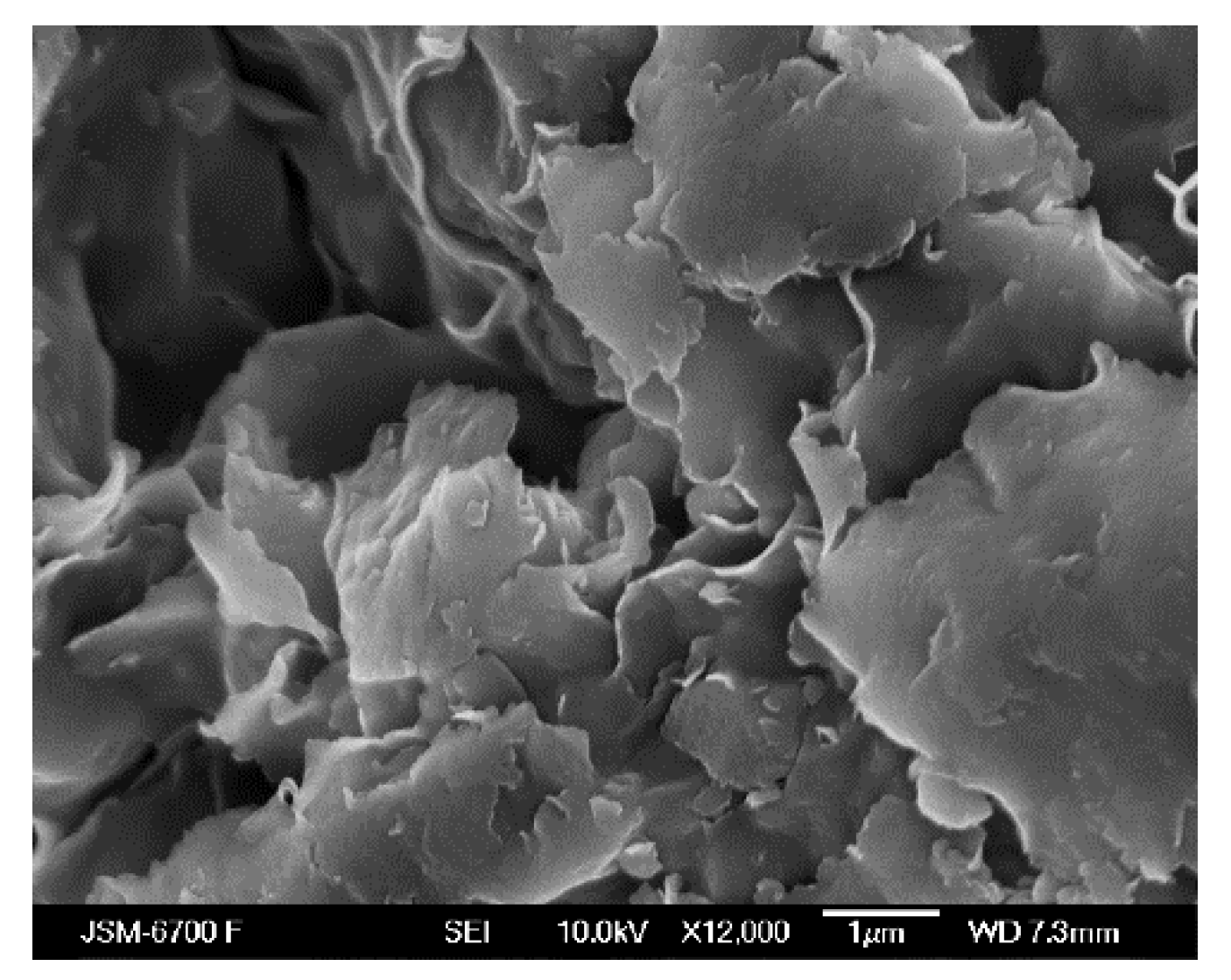
The second component of the nanocomposite is the bentonite clay (Figure 2).
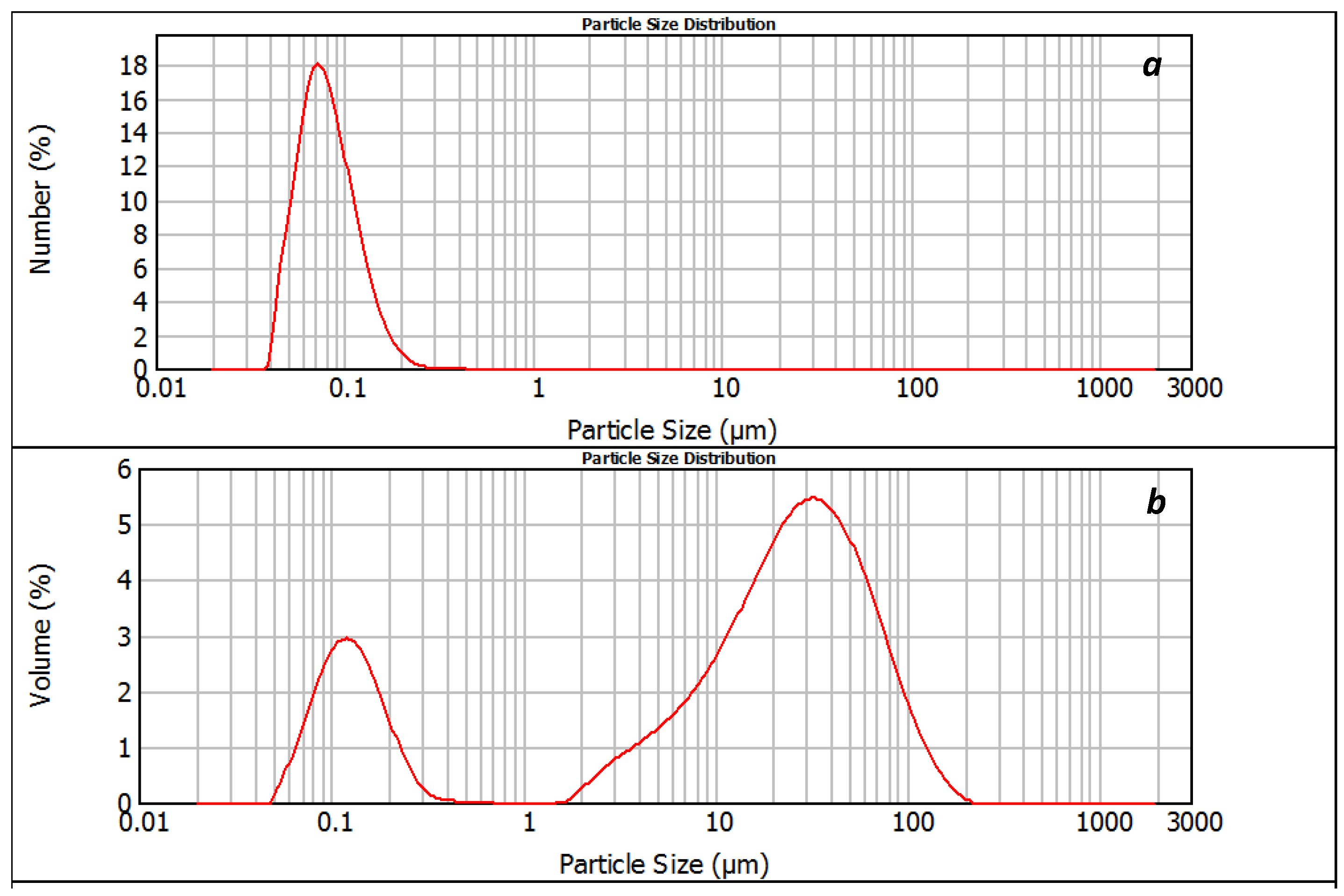
The use of bentonite in the nanocomposite promotes the sorption of polar organic substances due to its high hydrophilicity. Its main constituent montmorillonite has active sorption centers represented by aluminol and silanol groups, as well as the surface charge due to isomorphic substitutions in the crystal structure. These centers increase the sorption capacity of the clay component towards metal ions. The sorption activity of bentonite is significantly affected by the size of its particles and their aggregates. Table 1 shows the granulometric composition, and Figure 3 shows the differential distribution curves of bentonite particles.
The dominant particle size of the sample (over 60%) is ≤100 μm (Figure 3).
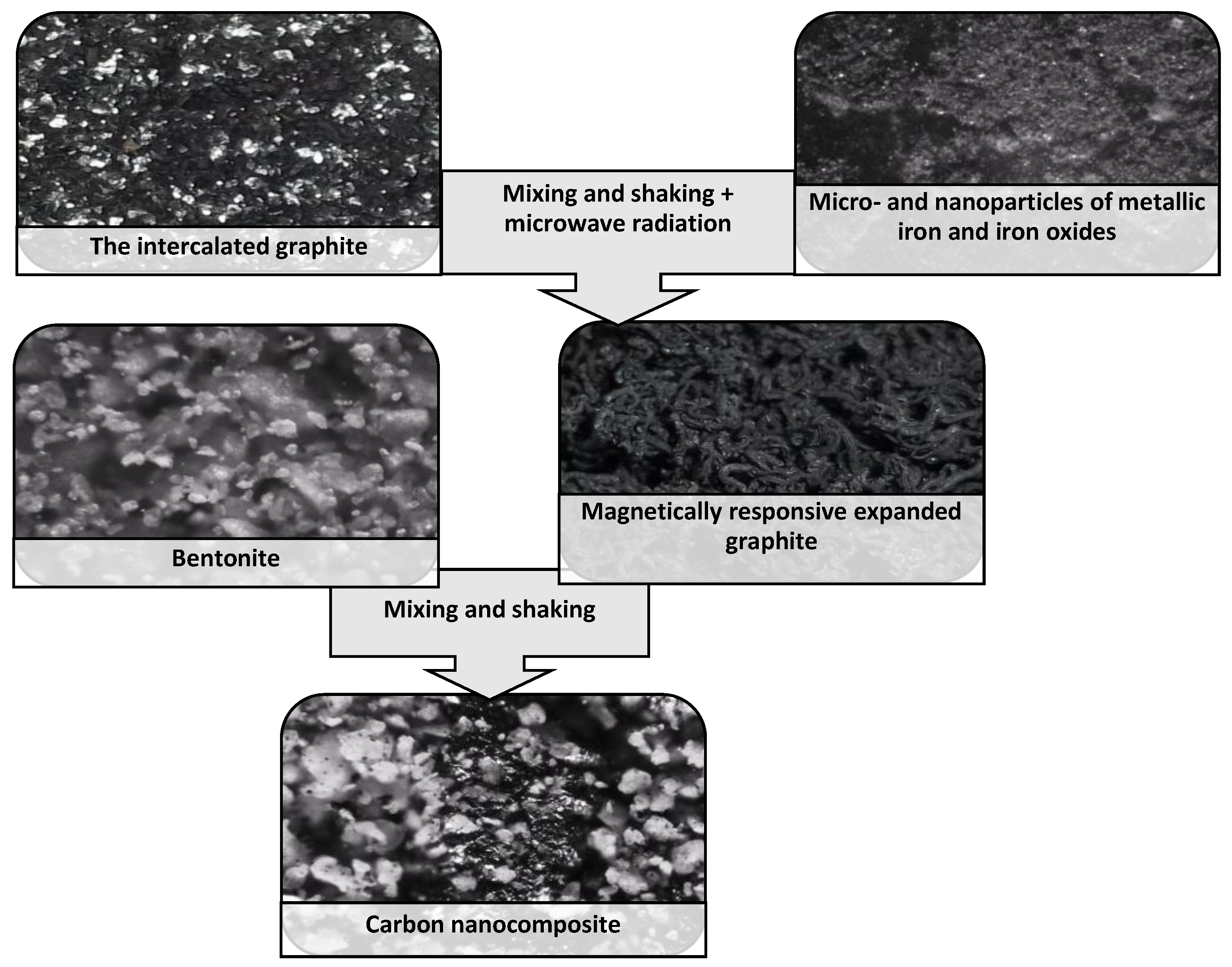
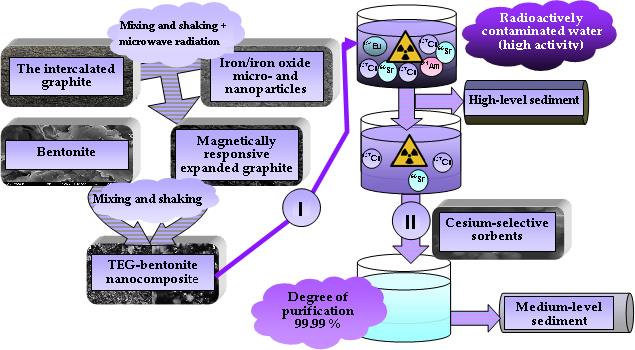
To obtain a magnetically responsive TEG-bentonite nanocomposite, the bentonite clay was mixed with the magnetically responsive thermally expanded graphite in a ceramic container and soft mechanical activation was carried out for 30 min in a laboratory shaker. The mechanical activation parameters were selected in such a way as to avoid the formation of the amorphous phase on the surface of montmorillonite nanocrystals, which leads to deterioration of the sorption properties of the nanocomposite. The schematic for obtaining the magnetically responsive TEG-bentonite nanocomposite is summarised in Figure 4.
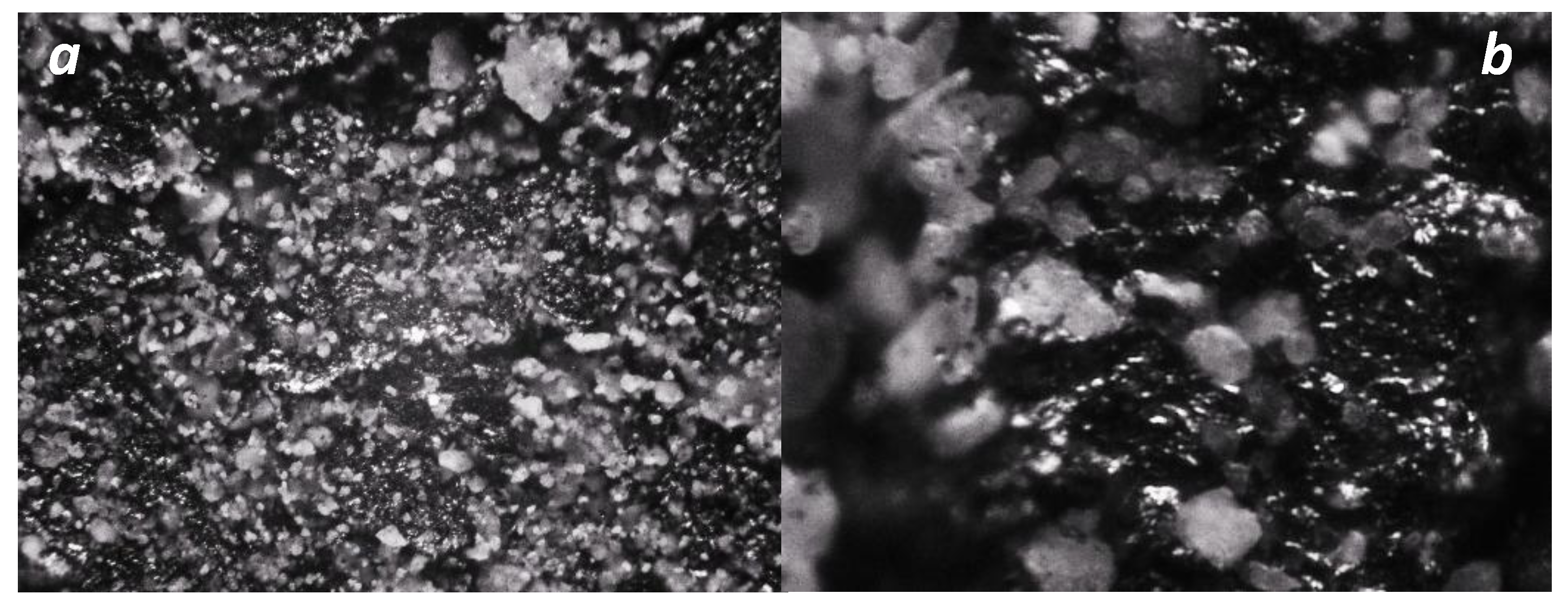
The optical image of the nanocomposite in reflected light is shown in Figure 5.
Hydrophilic centres are located on the surface edges and lateral parts of the peripheral areas of nanocrystals. They are provided mainly by silanol and aluminol centers, as well as negative charges. In addition, the bentonite montmorillonite particles (Figure 2) have hydrophobic sites. In the course of mechanical mixing and activation, the hydrophobic smectite centers interact with the surface of TEG particles which leads to the formation of loose aggregates that are capable of sorbing particles of micro- and nanoplastics, nonpolar hydrocarbons such as oil and surfactants with hydrophobil tails. The high affinity of bentonite particles with iron oxides i facilitates the formation of a more homogeneous nanocomposite. In this composite, the montmorillonite particles interact with other components via van der Waals forces between the most hydrophobic surface areas. In the process of coagulation, the hydrophilic centers play the most important role as they are present in smectites in significantly larger numbers than hydrophobic sites [44].
Mechanical activation can lead to the formation of surface defects. Micro- and macro-defects of the surface can create interference for the adsorption of molecules and introduce significant changes in the distribution of electrostatic and dispersion potential. In pores and cracks, there is a sharp increase in the dispersion potential. Dislocations emerging on the surface lead to the same effects, but their role, given the low concentrations, is small, and the transformations of the adsorption potential introduced by dislocations should be taken into account only at the early stages of filling the surface.

3.2. Study of Sorption Properties of the Obtained Nanocomposite

3.2.1. Purification of NPP Radioactive Wastewater Simulant

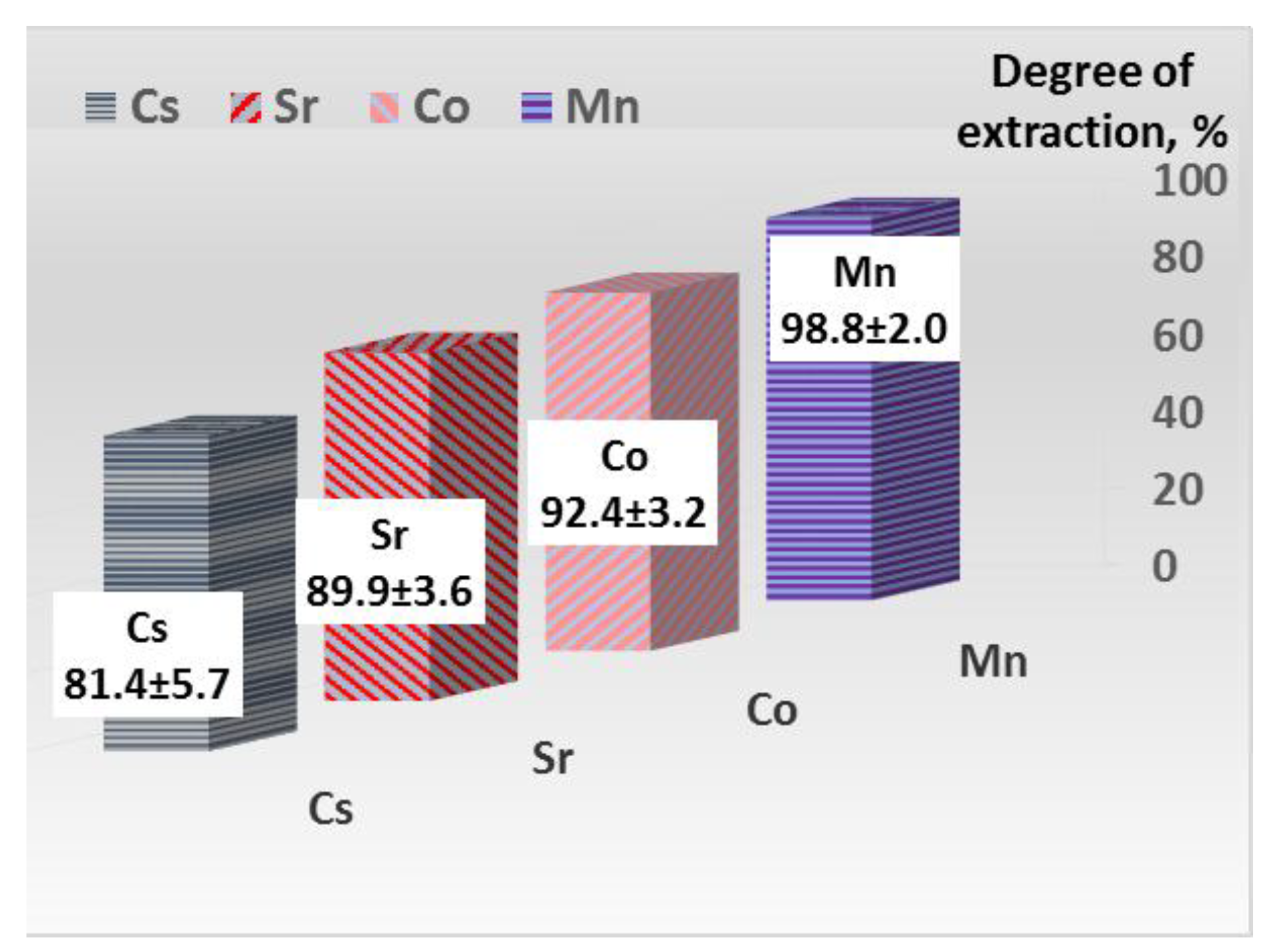
The sorption properties of the nanocomposite towards nonpolar hydrocarbons were assessed based on the results of determining the COD index of the simulant solution of NPP radioactive wastewaters before and after treatment. The studies showed that the COD index, as a result of sorption treatment, decreased from 1500 to 135 mgO2/dm3. Cations of cesium, strontium, cobalt and manganese were also removed from the solution (Figure 6).
The degree of extraction of cesium and strontium (81.4% and 89.9%, respectively) cannot be considered entirely satisfactory, in contrast to the degree of extraction of manganese (about 99%), which is explained by the competition of cations in the sorption process, as well as the formation of organomineral complex compounds that interfere with the sorption of cesium ions.

3.2.2. Purification of a Sample of Radioactively Contaminated Water (RCW)

To achieve higher degree of purification of radioactively contaminated water containing Cs-137 and Sr-90, its treatment was carried out in two stages. At the first stage, as a result of sorption-coagulation decontamination by the TEG-bentonite composite and subsequent phase separation, a transparent filtrate was formed that did not contain colloidal particles (as evidenced by the absence of the Tyndall effect) and a solid precipitate. Micro- and nanoparticles of organic substances and dissolved organics, including polymers and hydrocarbons formed magnetically responsive aggregates with the nanocomposite and were transferred into the solid phase from the purified liquid. Along with them, radionuclides adsorbed on the surface of micro-/nanoparticles also pass into the solid phase. Sorption of non-polar hydrocarbons and nanoplastics was due to the presence of sorption centers localized mainly on the surface of the carbon component of the nanocomposite, while hydrophilic organic substances, as well as radionuclides, were sorbed mainly on the lateral faces of the montmorillonite microcrystals. At this stage, cesium and strontium were partically removed (Table 2). The multivalent radionuclides of Am-241 and Eu-154 were removed completely as they could not be detected in the filtrate. This is not surprising considering that, firstly, multivalent cations are usually better adsorbed than mono- and divalent cations and, secondly, the initial chemical concentration of Am-241 and Eu-154 in the radioactive water sample was negligible (Table 3). At the second stage, for additional purification of the filtrate already free from colloid and suspended particles and containing water-soluble forms of radionuclides, a selective sorbent based on micro- and nanoparticles of iron hydroxide modified with nickel-potassium ferrocyanide by precipitation was used, which made it possible to decontaminate radioactively contaminated water (RCW) with an overall efficiency of 99.99%. The results of measuring the gamma and beta activity of the filtrates showed that the activity of cesium-137 and strontium-90 in the filtrate after the first stage of purification decreased by approximately 3 orders of magnitude, that is, the main fraction of the radionuclides was concentrated in the sediment, and at the second stage, the radionuclides that remained in the solution in the ionic form were sorbed (Table 2).
The adsorption capacity of the sorbents used at stages 1 and 2 and in the treatment of the stimulant solution was rather different. For example, TEG-bentonite composite adsorbed 0.415 mg Cs/g in the simulant solution and only 0.5 μg/g from radioactive wastewater. However, such a comparison is not valid because the initial concentration of Cs the former was 10.2 mg/dm3 and 10 μg/dm3 in the latter. The ratio between the initial concentrations, which is 1,020:1, is not dissimilar to the ratio between the sorption capacities, which is 830:1. It might suggest the linear relationship between the sorption capacity and the concentration of the adsorbate at very low concentrations. The capacity of the ferrocyanide sorbent used at stage 2 for Cs was 4.6x10⁻⁴ μg/g. Assuming the linear relationship between the sorption capacity and initial concentration, for the TEG-bentonite composite, extrapolation of its sorption capacity for the stage 2 concentration of 2.4×10⁻³ μg/dm3 would give approximately 1.2 x10⁻⁴ μg/g thus indicating higher selectivity of the ferrocyanide sorbent for Cs as expected. The ultimate choice of the best sorbent-based method of decontamination of liquid radioactive waste would depend on many variables and as it has been shown here is likely to require several separation stages using different sorbents to reach the optimal result.

4. Conclusions

1. A nanocomposite has been developed for the purification of multiphase and multicomponent man-made contaminated waters simultaneously containing oil products, micro- and nanoplastics, as well as radionuclides and/or heavy metals. The nanocomposite is a mechanically activated mixture of bentonite and magnetically responsive thermally expanded graphite containing micro- and nanoparticles of iron and its oxides.
2. The sorption properties of the nanocomposite are due to active centers, mainly located on the surface of the oxidized graphene layers in thermally expanded graphite. The hydrophilic properties of the nanocomposite are due to the presence of aluminol and silanol groups, as well as the negative charge on the surface of montmorillonite nanocrystals and Brønsted centers on the surface of the TEG lamellae.
3. The use of a nanocomposite for the purification of a simulated wastewater from a nuclear power plant, containing stable isotopes of cesium, strontium, cobalt, manganese in the presence of hydrophilic and hydrophobic organic substances, allowed reducing the content of organic substances by 10-15 times, and the degree of extraction of cesium, strontium, cobalt and manganese was from 81.4% to 99%.
4. It has been experimentally confirmed that the proposed nanocomposite is capable of effectively purifying a real sample of radioactively contaminated water of high activity, collected at the object “Ukryttya” (Chernobyl Exclusion Zone, Ukraine), which contains, in addition to radionuclides, micro- and nanoplastics and a significant amount of organic substances. The use of the nanocomposite allows reducing the activity of liquid radioactive waste by three orders of magnitude and obtaining a filtrate as a result of purification that does not contain solid particles, including colloidal ones. The use of cesium-selective sorbents for additional purification of the filtrate allows decontaminating radioactively contaminated water with an efficiency of 99.99%.
5. Considering that the filtrate obtained after the first stage of purification does not contain solid phase particles, for its additional purification it is advisable to use filtration through a column filled with a granulated sorbent based on palygorskite, iron oxides/hydroxides and transition metal ferrocyanides [46].

Author Contributions

Conceptualization, Y.L.Z. and V.M.K.; methodology, V.M.K. and T.I.M.; formal analysis, T.I.N., I.V.M. and O.M.A.; data analysis, Y.L.Z., S.V.M. and V.M.K.; resources, Y.L.Z.; data curation, L.A.O.; writing—original draft preparation, V.M.K. and T.I.M.; writing—review and editing, V.M.K., T.I.M., S.V.M. and O.M.A.; supervision, Y.L.Z.; project administration, Y.L.Z. All authors have read and agreed to the published version of the manuscript.

Funding

The project was funded by the State Institution “The Institute of Environmental Geochemistry of National Academy of Sciences of Ukraine” and the contribution of the European Union, project CLEANWATER, grant agreement 101131382 is also acknowledged. S.V.M. was supported by the UKRI (UK Research and Innovation) project-EP/Y037154/1.

Institutional Review Board Statement

Not applicable.

Data Availability Statement

The original contributions presented in this study are included in the article/supplementary material. Further inquiries can be directed to the corresponding author(s).

Acknowledgments

The authors express their sincere gratitude for help in radioactivity measurements and participation in the discussion of the results to Dr V.Y.-E. Khan, Head of the Radiation Monitoring Department, and Dr O.O. Odintsov, Head of the Sector of Physicochemical Methods of Analysis of the Institute for Safety Problems of Nuclear Power Plants, National Academy of Sciences of Ukraine.

Conflicts of Interest

The authors declare no conflict of interest.

References

  1. Strokal, V.; Kuiper, E.J.; Bak, M.P.; Vriend, P.; Wang, M.; van Wijnen, J.; Strokal, M. Future microplastics in the black Sea: River exports and reduction options for zero pollution. Mar Pollut Bull. 2022, 178, 113633. [Google Scholar] [CrossRef]
  2. Kivva, S. , Zheleznyak, M., Bezhenar, R., Pylypenko, O., Sorokin, M., Demydenko, A., Kanivets, V.; Laptev, G., Votsekhovich, O., Boyko, V., Eds.; HYPERLINK "https: //ui.adsabs.harvard.edu/search/q=author:%22Gudkov%2C+Dmitri%22&sort=date%20desc,%20bibcode%20desc"Gudkov, D. Modeling of major environmental risks for the Kyiv city, Ukraine from the Dnieper river waters - inundation of coastal areas and contamination by the radionuclides deposited in bottom sediments after the Chornobyl accident, EGU General Assembly 2021, online, 19–30 Apr 2021, EGU21-13038. [Google Scholar] [CrossRef]
  3. Shumilova, O.; Sukhodolov, A.; Osadcha, N.; Oreshchenko, A.; Constantinescu, G.; Afanasyev, S.; Afanasyev, S. , Koken, M.; Osadchyi, V.; Rhoads, B.; et al. Environmental effects of the Kakhovka Dam destruction by warfare in Ukraine. Science 2025, 387, 6739–1181. [Google Scholar] [CrossRef]
  4. Zub, L.; Prokopuk, M.; Netsvetov, M.; Gudkov, D. Does long-term radiation exposure in Chornobyl impact the reproductive structures of Nuphar lutea (Linn’e) Smith? Environmental Pollution 2024, 363, 125067. [Google Scholar] [CrossRef]
  5. Rajkhowa, S.; Sarma, J.; Rani Das, A. Chapter 15. Radiological contaminants in water: pollution, health risk, and treatment. In: Contamination of Water. 2021, pp. 217–236. Elsevier. [CrossRef]
  6. Abdel Rahman, R.O.; Ibrahium, H.A.; Hung, Y-T. Liquid radioactive wastes treatment: A review. Water 2011, 3, 551–565. [Google Scholar] [CrossRef]
  7. Gossard, A.; Lilin, A.; Faure, S. Gels, coatings and foams for radioactive surface decontamination: State of the art and challenges for the nuclear industry. Progress in Nuclear Energy 2022, 149, 104255. [Google Scholar] [CrossRef]
  8. Rudenko, L.I.; Khan, V.E.; Kashkovskyi, V.I.; Dzhuzha, O.V. Purification of drain water and distillation residue from organic compounds, transuranic elements, and uranium at the Chornobyl NPP. Science and Innovation 2014, 10, 16–25. [Google Scholar] [CrossRef]
  9. Smith, M.; Love, D.C.; Rochman, C.M.; Neff, R.A. Microplastics in seafood and the implications for human health. Current Environmental Health Reports 2018, 5, 375–386. [Google Scholar] [CrossRef] [PubMed]
  10. Khan, A.; Jia, Z. Recent insights into uptake, toxicity, and molecular targets of microplastics and nanoplastics relevant to human health impacts. IScience 2023, 26, 106061. [Google Scholar] [CrossRef]
  11. Li, C.; Zhou, Z.; Meng, X.; Li, J.; Chen, H.; Yu, T.; Xu, M. A preliminary study on the “hitchhiking” of radionuclides on microplastics: A new threat to the marine environment from compound pollution. Toxics 2025, 13, 429. [Google Scholar] [CrossRef]
  12. Li, C.; Zhou, Z.; Li, J.; Huang, F.; Zhu, X.; Gao, F.; Yu, T.; Hu, M. Marine microplastics fuel long-range transport of radioactive nuclides: A review. Marine Pollution Bulletin 2025, 221, 118540. [Google Scholar] [CrossRef]
  13. Yang, M.; Zhang, B.; Xin, X.; Lee, K.; Chen, B. Microplastic and oil pollution in oceans: Interactions and environmental impacts. Science of the Total Environment 2022, 838, 156142. [Google Scholar] [CrossRef]
  14. Lin, Z.; Hu, X.; Lin, H.; Yu, G.; Shen, L.; Yu, W. , Li, B.; Leihong, Z.; Ying, M. Membrane technology for microplastic removal: Microplastic occurrence, challenges, and innovations of process and materials. Chemical Engineering Journal 2025, 520, 166183. [Google Scholar] [CrossRef]
  15. Topuz, F.; Abdulhamid, M.A. Tailored nanofibrous polyimide-based membranes for highly effective oil spill cleanup in marine ecosystems. Chemosphere 2024, 368, 143730. [Google Scholar] [CrossRef]
  16. de Rosset, A.; Torres-Mendieta, R.; Pasternak, G.; Yalcinkaya, F. Synergistic effects of natural biosurfactant and metal oxides modification on PVDF nanofiber filters for efficient microplastic and oil removal. Process Safety and Environmental Protection 2020, 194, 997–1009. [Google Scholar] [CrossRef]
  17. Hummers, W.S.; Offeman, R.E. Preparation of graphitic oxide. J. Am. Chem. Soc. 1958, 80, 1339. [Google Scholar] [CrossRef]
  18. Feicht, P.; Biskupek, J.; Gorelik, T.E.; Renner, J.; Halbig, C.E.; Maranska, M.; et al. Brodie’s or Hummers’ method: oxidation conditions determine the structure of graphene oxide. Chem. Eur. J. 2019, 25, 8955–8959. [Google Scholar] [CrossRef]
  19. Kadoshnikov, V.M.; Melnychenko, T.I.; Arkhipenko, O.M.; Tutskyi, D.H.; Komarov, V.O.; Bulavin, L.A.; Zabulonov, Y.L. A composite magnetosensitive sorbent based on the expanded graphite for the clean-up of oil spills: Synthesis and structural properties. C 2023, 9, 39. [Google Scholar] [CrossRef]
  20. Coetzee, D.; Rojviroon, T.; Niamlang, S.; Militký, J.; Wiener, J; Večerník, J.; Melicheríková, J.; Müllerová, J. Effects of expanded graphite’s structural and elemental characteristics on its oil and heavy metal sorption properties. Scientifc Reports 2024, 14, 13716. [Google Scholar] [CrossRef] [PubMed]
  21. Zhang, Q.; Bi, T.; Chen, H.; Hu, Y.; Tian, F.; Lin, Q. Petroleum residue-based ultrathin-wall graphitized mesoporous carbon and its high-efficiency adsorption mechanism. Diamond and Related Materials 2024, 148, 111497. [Google Scholar] [CrossRef]
  22. Eigler, S,; Dotzer, C. ; Hof, F.; Bauer, W.; Hirsch, A. Sulfur species in graphene oxide. Chem. Eur. J. 2013, 19, 9490–9496. [Google Scholar] [CrossRef]
  23. Amirov, R.R.; Shayimova, J.; Nasirova, Z.; Solodov, A.; Dimiev, A.M. Analysis of competitive binding of several metal cations by graphene oxide reveals the quantity and spatial distribution of carboxyl groups on its surface. Physical Chemistry Chemical Physics 2018, 20, 2320–2329. [Google Scholar] [CrossRef]
  24. Schiffman, P.; Southard, R.J. Cation exchange capacity of layer silicates and palagonitized glass in mafic volcanic rocks: a comparative study of bulk extraction and in situ techniques. Clays Clay Min. 1996, 44, 624–634. [Google Scholar] [CrossRef]
  25. Liu, H.; Fu, T.; Sarwar, M.T.; Huaming Yang, H. Recent progress in radionuclides adsorption by bentonite-based materials as ideal adsorbents and buffer/backfill materials. Applied Clay Science 2023, 232, 106796. [Google Scholar] [CrossRef]
  26. Uddin, F. Ch 1: Montmorillonite: An introduction to properties and utilization. In: Current Topics in the Utilization of Clay in Industrial and Medical Applications, Zoveidavianpoor, M. (Ed.), IntechOpen, 2018, pp. 3–23. ISBN978-1-78923-729-0. [CrossRef]
  27. İnan, S. Inorganic ion exchangers for strontium removal from radioactive waste: a review. J Radioanal Nucl Chem 2022, 331, 1137–1154. [Google Scholar] [CrossRef]
  28. Saleh, A.S.; Afolabi, O.O. Enhancement and modelling of caesium and strontium adsorption behaviour on natural and activated bentonite. Environmental Technology & Innovation 2025, 37, 103937. [Google Scholar] [CrossRef]
  29. Muslim, W.A.; Al-Nasri, S.K.; Albayati, T.M.; Salih, I.K. Investigation of bentonite clay minerals as a natural adsorbents for Cs-137 real radioactive wastewater treatment. Desalination and Water Treatment 2024, 317, 100121. [Google Scholar] [CrossRef]
  30. Khodakov, G.S. Fizika izmel’cheniya (Physics of Comminution in Russian), Nauka Publ.: Moscow, Russia, 1972. UDK 532. ,.
  31. Zabashta, Yu.F.; Kovalchuk, V.I.; Svechnikova, O.S.; Bulavin, L.A. Electrocapillary properties of hydrogels. Ukrainian Journal of Physics 2022, 67, 658–662. [Google Scholar] [CrossRef]
  32. Esmaeili, E.; Rounaghi, S.A.; Eckert, J. Mechanochemical synthesis of rosin-modified montmorillonite: A breakthrough approach to the next generation of OMMT/rubber nanocomposites. Nanomaterials 2021, 11, 1974. [Google Scholar] [CrossRef]
  33. Yudina, T.F.; Ershova, T.V.; Beylina, N.Yu.; Smirnov, N.N.; Bratkov, I.V.; Shchennikov, D.V. Mechanochemical activation of graphite materials. News of higher educational institutions. Chemistry and chemical technology 2012, 55, 29–33. [Google Scholar]
  34. Smirnova, D. N.; Grishin, I. S.; Smirnov, N. N. Synthesis, structure and properties of bentonite - activated carbon composite. ChemChemTech [Izv. Vyssh. Uchebn. Zaved. Khim. Khim. Tekhnol. in Russian] 2024, 67, 59–66. [Google Scholar] [CrossRef]
  35. Yashkova, D.; Grishin, I.; Smirnov, N. Mechanism of tetracycline sorption on carbon-bentonite. From Chemistry Towards Technology Step-By-Step, 2024; 5. [Google Scholar] [CrossRef]
  36. Nasiedkin, D.B.; Grebenyuk, A.G.; Babich, I.V.; Plyuto, Y.V.; Kartel, M.T. Experimental and theoretical study on expanded graphite oxidation. Surface (Poverkhnya, in Ukrainian) 2015, 7, 126–136. [Google Scholar]
  37. Boichenko, S.; Lejda, K.; Mateichyk, V.; Topilnytskyi, P. Problems of Chemmotology. Theory and Practice of Rational Use of Traditional and Alternative Fuels & Lubricants: Monograph; Center of Educational Literature: Kyiv, Ukraine, 2017; pp. 136–141. ISBN 978-617-673-632-5. [Google Scholar]
  38. ISO 15705: 2002; Water Quality: Determination of the Chemical Oxygen Demand Index (ST-COD)-Small-Scale Sealed-Tube Method. International Standardisation Organisation: Geneva, Switzerland, 2002.
  39. Rudenko, L. I.; Gumenna, O.A.; Dzhuzha, O.V. Membrane methods of treatment of water, which contains polymeric substances and compounds of uranium, strontium, and sodium. Reports of the National Academy of Sciences of Ukraine 2010, 6, 134–138. [Google Scholar]
  40. Zabulonov, Y.; Melnychenko, T.; Kadoshnikov, V.; Kuzenko, S.; Guzii, S.; Peer, I. New sorbents and their application for deactivation of liquid radioactive waste. In: Zabulonov, Y., Peer, I., Zheleznyak, M. (eds) Liquid Radioactive Waste Treatment: Ukrainian Context. LWRT 2022. Lecture Notes in Civil Engineering, vol 469. Springer, Cham. 2024, pp. 126–136. [CrossRef]
  41. Toropov, A.S.; Satayeva, A.R.; Mikhalovsky, S.; Cundy, A.B. The use of composite ferrocyanide materials for treatment of high salinity liquid radioactive wastes rich in cesium isotopes. Radiochimica Acta 2014, 102, 911–917. [Google Scholar] [CrossRef]
  42. Sun, M.M.; Zhang, J.L.; Li, K.J.; Ren, S.; Wang, Z.M.; Jiang, C.H.; Li, H.T. Dissolution behaviors of various carbonaceous materials in liquid iron: Interaction between graphite and iron. JOM 2019, 12, 4305–4310. [Google Scholar] [CrossRef]
  43. Dimiev, A. M.; Shukhina, K.; Khannanov, A. Mechanism of the graphene oxide formation: The role of water,”reversibility” of the oxidation, and mobility of the C–O bonds. Carbon 2020, 166, 1–14. [Google Scholar] [CrossRef]
  44. Zabulonov, Y.L.; Melnychenko, T.I.; Kadoshnikov, V.M.; Odukalets, L.A.; Kuzenko, S.V. A method for producing a magnetically sensitive nanocomposite for the purification of technologically contaminated and radioactive waters containing micro- and nanoplastics and oil products. UA156277U (in Ukrainian), 1: URL: https://sis.nipo.gov.ua/uk/search/detail/1801151/ (accessed on; (accessed on day month year)1801. [Google Scholar]
  45. Determining the mass related activity of radionuclides. ÄQUIVAL/MASSAKT-01. Procedures Manual for monitoring of radioactive substances in the environment and of external radiation. 2022. ISSN 1865-8725 https://www.bmuv.de/fileadmin/Daten_BMU/Download_PDF/Strahlenschutz/Messanleitungen_2022/aequival_massakt_v2022-03_en_bf.pdf (Accessed 20/08/2025).
  46. Zabulonov, Y.; Melnychenko, T.; Kadoshnikov, V.; Fedorenko, Y.; Arkhipenko, O.; Molochko, V.; Peer, I.; Bulavin, L. Complex sorbents based on aluminosilicate nanotubes and their application for cleaning radioactively contaminated waters. In: Zabulonov, Y., Peer, I., Zheleznyak, M. (eds) Liquid Radioactive Waste Treatment: Ukrainian Context. LWRT 2023. Lecture Notes in Civil Engineering, vol 712. Springer, Cham. 2025, pp. 1–13. [CrossRef]
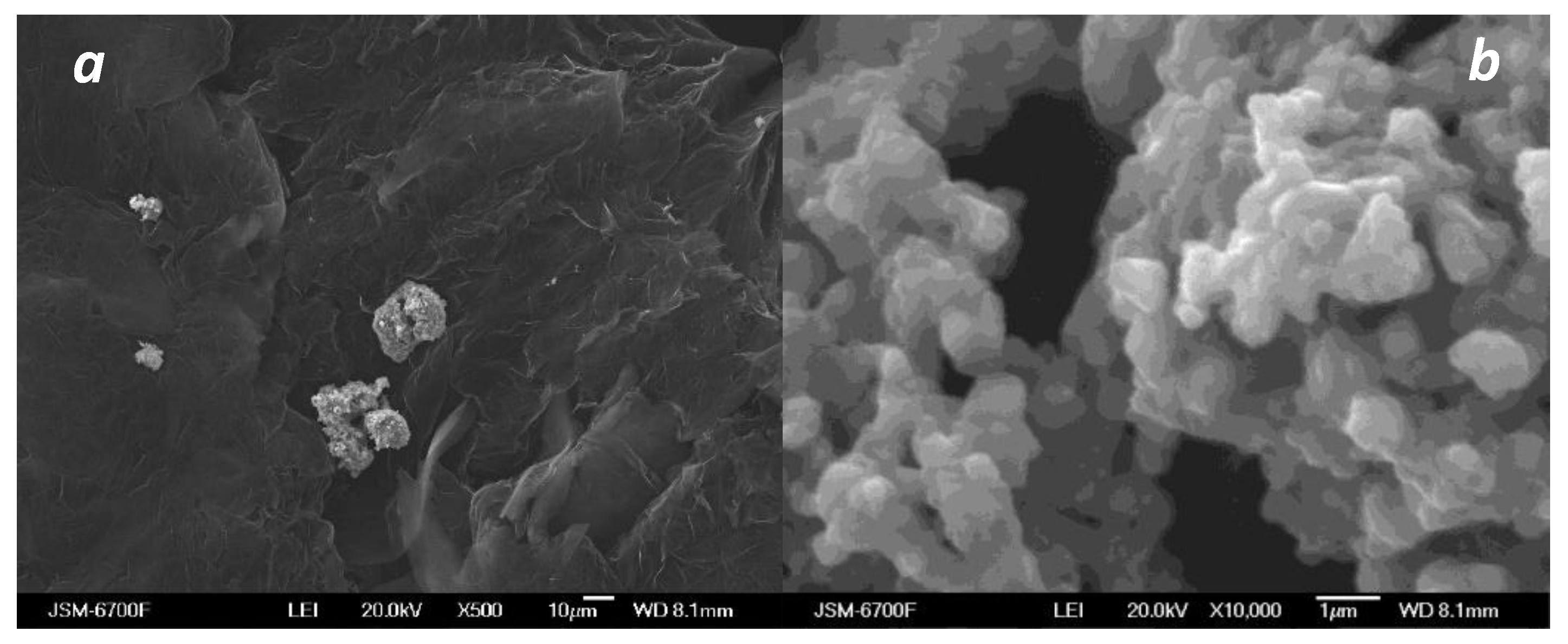
Figure 1. SEM micrographs of magnetically responsive thermally expanded graphite: (a) magnification ×500; (b) magnification ×10000.
Preprints 176817 g001
Figure 2. SEM micrograph of bentonite: magnification ×12000.
Preprints 176817 g002
Figure 3. Differential distribution curves: by the number (a) and volume (b) of bentonite particles.
Preprints 176817 g003
Figure 4. Schematic for obtaining magnetically responsive TEG-bentonite nanocomposite.
Preprints 176817 g004
Figure 5. Photo of carbon nanocomposite: (a) magnification ×50; (b) magnification ×380.
Preprints 176817 g005
Figure 6. The degree of extraction of nonradioactive metal ions from the simulant solution of NPP radioactive wastewater by the TEG-bentonite nanocomposite.
Preprints 176817 g006
Table 1. Granulometric composition (%) of bentonite from the Cherkasy deposit.
Fraction, μm < 1 1 – 10 10 – 100 > 100
Sample, % 20.26 13.46 62.70 3.58
Table 2. Radioactivity of RCW. Sample volume 20 mL.
Processing stage Sorbent used Radionuclide Activity, Bq/dm3
Before (initial) none 137Cs 3.3∙107
90Sr 4.9∙106
After stage 1 TEG-bentonite nanocomposite 137Cs (7.50±0.31) ×103
90Sr (1.83±0.28) ×103
After stage 2 Iron hydroxide with nickel-potassium ferrocyanide 137Cs (2.24±0.48) ×102
90Sr (2.11±0.52) ×102
Table 3. Chemical concentration of radionuclides in the radioactive wastewater sample before and after treatment.
Radionuclide Initial activity, Bq/dm3 Specific activity, Bq/g** Initial concentration, μg/dm3 Concentration in RCW, μg/dm3
after first treatment after second treatment
137Cs 3.3∙107 3.2×10¹² 10 2.4×10⁻³ 0.7×10⁻⁴
90Sr 4.9∙106 5.1 ×10¹² 0.96 0.36×10⁻³ 0.4×10⁻⁴
154Eu 2.4∙103 1.0 ×10¹²** 2.4×10⁻³ not detected not detected
241Am 2.2∙104 1.27 x 10¹¹ 0.17 not detected not detected
*From [45]. **Calculated from the half-life of 154Eu = 8.6 y, as per [45].
Disclaimer/Publisher’s Note: The statements, opinions and data contained in all publications are solely those of the individual author(s) and contributor(s) and not of MDPI and/or the editor(s). MDPI and/or the editor(s) disclaim responsibility for any injury to people or property resulting from any ideas, methods, instructions or products referred to in the content.
Copyright: This open access article is published under a Creative Commons CC BY 4.0 license, which permit the free download, distribution, and reuse, provided that the author and preprint are cited in any reuse.
Prerpints.org logo

Preprints.org is a free preprint server supported by MDPI in Basel, Switzerland.

Subscribe

Disclaimer

Terms of Use

Privacy Policy

Privacy Settings

© 2025 MDPI (Basel, Switzerland) unless otherwise stated