

Submitted:
14 September 2025
Posted:
15 September 2025
You are already at the latest version
Abstract
Owning dogs can improve owners’ mental and physical health, but inappropriate handling may have negative consequences for both owners and society. Canine aggression toward owners can impact their well-being. This study evaluated the effectiveness of using a feeding toy, fluoxetine, or a combination to treat owner-directed aggression. Sixty dogs with moderate to severe aggression, whose owners had been unable to modify the behaviour, were recruited. Aggression scores were assessed via owner questionnaires and confirmed through veterinary interviews. Dogs were assigned to three treatment groups: feeding toy (TOY), fluoxetine (DRUG), or both (DRUG + TOY). Aggression scores were recorded before and after treatment. Before intervention, scores were similar across groups (P ≥ 0.05). After treatment, all groups showed significant reductions in aggression (P < 0.05), with DRUG and DRUG + TOY being more effective than TOY alone; no significant difference was observed between DRUG and DRUG + TOY (P ≥ 0.05). Fluoxetine side effects, mainly drowsiness and mild anorexia, were limited to the first week, and the side effects tended to reduce when combined with a toy. The study concludes that fluoxetine (0.5–1 mg/kg) combined with a feeding toy effectively treats moderate to severe owner-directed aggression, while feeding toys alone may help reduce mild aggression.
Keywords:
Dogs
; Owner-direct aggression
; feeding toy
; fluoxetine
; treatment
Introduction
Owning pets, particularly dogs and cats, can provide substantial mental and physical health benefits for their owners. However, without proper management, pet ownership may also pose risks to human health and contribute to environmental challenges (Kretzler et al., 2022; Mubanga et al., 2017; Wuthisuthimethave et al., 2024; McGrath et al., 2024; Boonhoh et al., 2025a). A major concern is abnormal behaviour, such as biting incidents towards owners, which threatens human safety through trauma and infection while also undermining the human–animal bond (Reese et al., 2020; Sungkatavat et al., 2025; Tuckel & Milczarski, 2020). Such situations may result in pet relinquishment or abandonment, ultimately increasing stray dog populations and giving rise to wider public health and animal welfare issues (Patronek et al., 2022; Mota-Rojas et al., 2021).
Canine aggression is a complex issue shaped by multiple factors, including the dog itself, the owner, and the surrounding environment. In some cases, dogs with certain physical illnesses may exhibit aggressive behaviour due to infection, hormonal imbalances, pain, or inflammatory processes (Boonhoh et al., 2025b; Camps et al., 2012). Certain breeds may also show a higher predisposition to aggression (Boonhoh et al., 2023c; Kogan et al., 2019; Overall & Love, 2001). Furthermore, inappropriate training methods and improper handling practices can contribute to the development of aggressive behaviour (Boonhoh et al., 2023c; Baslington-Davies et al., 2023; Reisner et al., 2005).
Aggression directed toward owners is a serious behavioural problem that can result in biting injuries, particularly to the head and hands (Barrios et al., 2021). Children are especially vulnerable to dog attacks, as they often struggle to interpret canine signals and are more likely to make unpredictable movements. Younger children, in particular, are at greater risk of facial bites due to their height. Their behaviours—such as excessive petting (e.g., hugging and kissing), startling the dog, or disturbing it while resting or sleeping—can further provoke discomfort and aggression in dogs (Selvi et al., 2022; Chen et al., 2013; Reisner et al., 2011). In addition to causing physical trauma, dog bites can transmit serious diseases, including rabies virus and various bacterial infections (Selvi et al., 2022; Kasempimolporn et al., 2003). They may also lead to psychological consequences such as post-traumatic stress disorder (PTSD), cynophobia (fear of dogs), and long-term emotional distress associated with scarring (Westgarth et al., 2024).
Intervening in cases of canine aggression is essential to prevent escalation, promote positive outcomes, and safeguard the wellbeing of both dogs and their human families. Treatment generally combines behaviour modification techniques, environmental management, and, in some cases, pharmacological support (Dinwoodie et al., 2021). Owner-directed aggression in dogs can be managed with medications such as selective serotonin reuptake inhibitors (SSRIs), most commonly fluoxetine (Perry, 2024; Dinwoodie et al., 2021; Odore et al., 2020). However, the potential side effects of this drug raise concern for owners, particularly its association with anorexia and depression (Irimajiri et al., 2009; Bleuer-Elsner et al., 2021). Inappropriate use of SSRIs may also result in adverse effects such as ataxia, vomiting, tachycardia, and tachypnoea (Thomas et al., 2012). The objective of this study is to evaluate the effectiveness of toys and medication (fluoxetine) in treating owner-directed aggression in dogs.
Material and Methods
Ethics
This project was approved by the Walailak University Institutional Animal Care and Use Committee (WU-ACUC) (ID: 67082) and the Human Research Ethics Committee (WUEC) (ID: 24-382-01).
Recruitment
Dogs and their owners were recruited through advertisements posted on Facebook. Only one dog per household was eligible for the study. Owner-directed aggression was initially screened using an online questionnaire (Google Form). Dogs qualified for the study if their average aggression score (detailed in supplementary Table S1), calculated from the questionnaire related to events that trigger canine aggression toward the owner (Table S2), exceeded the threshold for moderate aggression (average score ≥ 1.4). After screening, owners were interviewed by a veterinary behaviourist, and the dogs’ behaviours were recorded by the owners and submitted to the researchers to confirm the presence of aggressive behaviour.
Inclusion criteria were: owner aged over 20 years, dog aged over 6 months, dogs displaying moderate to severe owner-directed aggression. Additionally, eligible dogs must have previously undergone non-medication approaches without success and had never been used a feeding toy or any psychological drugs. Exclusion criteria were: dogs that became ill during treatment, owners unable to follow the study guidelines, or owners who failed to report the behaviour change or attend scheduled meetings.
Questionnaires
The questionnaires contained 2 parts demographics (Table S3) and aggression behaviours (Table S2). Demographic questionnaire collected information on the owners (gender, age, and experience with dog care), the dogs (breed, age, sex, neuter status, body condition score, and physical health), and the environment (house type, living area, number of dogs and humans, and the presence of children or other animals). The body condition score (BCS) was assessed using criteria translated and adapted from the World Small Animal Veterinary Association (WSAVA) Global Nutrition Committee guidelines (WSAVA, 2013)
Another section of the questionnaire addressed incidents that could trigger human-direct aggression including owner-directed aggression (8 specific events) as well as stranger-direct aggression (3 specific events), as detailed in Table S2. These questions were adapted from a previous study (Boonhoh et al., 2023a). For each event, owners rated the scale of aggressive behaviour on a scale from 0 (none) to 4 (very aggressive e.g., biting) (Table S4). The formula for average human-direct aggression score of each dog (Table S1) was sum of aggressive behaviour response (Table S4) in all events divided by number of events (Table S2 and S3). The formula for average human-direct aggression score for each event (Table 7 and 8) was sum of aggressive behaviour scale (Table 4) in each dog divided by number of dogs.
Experimental design
Aggressive dogs were divided into three treatment groups. The first group received a feeding toy (TOY) made by para rubber (Figure 1) and manufactured by Walailak University (Boonhoh et al., 2024), dogs were allowed to play with a feeding toy twice a day at least 30 min each time. The second group was treated with fluoxetine (GPO, Bangkok, Thailand) at a dose of 0.5–1 mg/kg once daily (DRUG). The third group received a combination of both the feeding toy and fluoxetine (DRUG+TOY). Treatments were administered for at least one month, and behavioural assessments, including the questionnaire and interview, were conducted both before treatment and after four weeks of intervention. Notably, during the interviews and discussions with the owners, the veterinarian also provided advice on dog behaviour.
Statistics
Statistical analyses were performed using Jamovi software (version 2.6.26). The Wilcoxon signed-rank test was used to compare differences before and after treatment for non-parametric data. The Kruskal-Wallis test followed by Dwass-Steel-Critchlow-Fligner pairwise comparisons were applied to compare differences among treatment groups. Spearman’s rank correlation test was used to identify the correlation between type of aggression. Fisher’s exact test was used to assess differences in side effects.
Results
Demographics
The general information of the owners is presented in Table 1. The majority of participants were women (81.67%, n = 49). The most common age range was 41–50 years, followed by 31–40 and 51–60 years. Most owners had more than five years of experience caring for dogs.
The general information of the aggressive dogs is shown in Table 2. Most participants were purebred dogs, with Chihuahuas being the predominant breed. The majority of dogs were male, and neutered.
Information on the living environment of the dogs and their owners is presented in Table 3. Slightly more dogs lived in semi-detached houses compared to detached houses or condominiums. Most dogs lived with 2–4 humans in the household, and most households did not include children. The majority of households had only one dog, though 45.00% (n = 27) also kept other animal species.
Most dogs were provided with environmental enrichment (Table 4), including bones or chewing toys (65.00%), music (51.67%), and television (53.33%).
For owner-dog interactions (Table 5), most owner often train their dogs to follow the command (60.00%), walk a dog everyday (60.00%), not sleeping with owner (56.67%), company when the dog eating (88.36%), use both positive reinforcement (96.67%) and punishment (73.33%), head petting (90.00%), abdomen petting (90.00%), hugging (83.33%), and kissing (80.00%).
For dog’s health and management (Table 6), most owner provided commercial food (68.33%), twice a day (66.67%), regular vaccination (83.33%), and regular deworming (55.00%). Most dogs had an optimal body condition score (58.33%) and were apparently physically healthy (68.33%).
Situation that triggered owner-direct aggression
The aggressive behaviours exhibited during each event are presented in Table 7. Dogs showed the highest average aggression behaviours (3.22 ± 0.73) when a toy was taken by the owner or when the owner directly approaches the dog while it is playing with a toy (toy guarding), followed by grooming (3.03 ± 1.05) and food guarding (2.93 ± 0.95). The most frequent biting incident occurred during grooming (40%), followed by events in which a toy (38.33%) or food (36.67%) was taken away or when the owner directly approaches the dog during playing or eating.
Stranger-direct aggression
In this study, the majority of dogs (95%; n = 57/60) exhibited moderate to severe stranger-directed aggression. Two dogs had never encountered strangers as they were exclusively kept indoors, while one dog showed only mild aggression. Severe aggressive behaviours (biting) were most frequently observed (68.42%) with the highest average behaviour scale (3.59 ± 0.64) of all dogs when strangers entered the household premises, followed by encounters occurring outside the home (61.40%, 3.36 ± 0.94), and when strangers attempted to touch the dog (57.89%, 3.16 ± 1.24). Detailed information on the specific events that triggered stranger-directed aggression is presented in Table 8.
Correlation among type of owner-direct aggression
Dogs tend to display aggression toward their owners in a variety of situations. In this study, aggression was categorised into seven types, and the correlations between these types are presented in Table 9.
Punishment-induced aggression was significantly correlated (P ≤ 0.02) with toy guarding and grooming-induced aggression. Toy guarding was significantly correlated (P ≤ 0.02) with grooming, staring-induced, and punishment-induced aggression. Food guarding was significantly correlated (P ≤ 0.04) with staring- and petting-induced aggression. Grooming-induced aggression was significantly correlated (P ≤ 0.02) with touch-sensitive, punishment-induced, and toy guarding aggression. Moreover, staring-induced aggression was significantly correlated (P ≤ 0.006) with territorial, food guarding, and toy guarding aggression. Territorial aggression was significantly correlated (P ≤ 0.005) with touch-sensitive, petting, and staring-induced aggression. Touch-sensitive aggression was significantly correlated (P ≤ 0.01) with petting, grooming, and territorial aggression.
Effect of the treatments on owner-direct aggression
Of the 60 recruited dogs, some were excluded for failing to follow the study guidelines over the 4-week period. The remaining dogs were assigned as follows: 14 in the TOY group, 17 in the DRUG group, and 15 in the DRUG+TOY group. Comparisons of owner-direct aggression before and after treatment, as well as among the experimental groups, are detailed in Table 10.
Before treatment, dogs in each group displayed high average aggression scores toward their owners, ranging from 2.71 to 2.88 (Table 10). No significant difference was observed among the groups at baseline (prior to treatment) (X2 = 0.63, df =2, P = 0.72). However, treatment outcomes differed significantly across groups (X2 = 15.56, df =2, P = 0.0004).
Comparing scores before and after treatment (Table 10), dogs in the TOY group showed a significant reduction in aggression (P = 0.002), with approximately 1.3-fold decrease. Dogs treated with fluoxetine (DRUG) demonstrated a significant reduction (P = 0.0003), with approximately 3.07-fold decrease. Similarly, the combination treatment (DRUG+TOY) resulted in a significant reduction (P < 0.0001), with approximately 3.14-fold decrease.
In comparing treatment outcomes (Table 10), both DRUG and DRUG+TOY groups showed significantly greater reductions in aggression compared to the TOY group (P = 0.002), while no significant difference was observed between DRUG and DRUG+TOY groups (P = 0.81). Notably, all owners in the combination group reported an obvious improvement in overall aggressive behaviour within the first two weeks. In contrast, in the drug-only group, 60.00% (n = 9/15) of cases required more than two weeks to show clear improvement.
Effect of the treatment on Aggression toward strangers
Some dogs also displayed aggression toward strangers. The remaining dogs in each group were 14 for TOY, 15 for DRUG, and 14 for DRUG + TOY.
Before treatment, dogs in all groups exhibited high mean aggression scores (3.19 to 3.56) (Table 11), with no significant differences observed between groups (X2 = 1.58, df =2, P = 0.45). Following treatment, however, significant differences emerged among the groups (X2 = 9.10, df =2, P = 0.01).
Comparing before and after-treatment scores (Table 11), dogs in the TOY group exhibited a significant reduction in average aggression scores (P = 0.008), with approximately 1.24-fold decrease. Dogs treated with medicine (DRUG) showed a significant reduction as well (P = 0.001), with approximately 1.74-fold decrease. Dogs receiving the combination treatment (DRUG+TOY) demonstrated a significant reduction of approximately 1.70-fold (P = 0.002).
When comparing treatment groups (Table 11), dogs treated with DRUG or DRUG+TOY showed significantly greater reductions in aggression than those treated with TOY alone (P < 0.05), whereas no significant difference was observed between the DRUG and DRUG+TOY groups (P = 0.77). Notably, owner-reported overall aggressive behaviour toward strangers showed a clear tendency to decrease by the fourth week.
Side effect of treatment
No side effects were observed in dogs treated with toys alone. The most common side effects of fluoxetine treatment during the first week were sleepiness (90%, n = 18/20) and mild anorexia (60%, n = 12/20). In dogs receiving the combination of fluoxetine and a toy, side effects appeared slightly lower, with sleepiness reported in 75% of dogs (n = 15/20) and mild anorexia in 50% (n = 10/20). However, there was no statistically significant difference in side effects between these two groups (P ≥ 0.05). The side effects were found only the first week of the treatment.
Discussion
Feeding toy Vs Fluoxetine
In this study, we found that feeding toys can reduce owner-directed aggression, although their effectiveness was lower than that of fluoxetine. The reduction in aggression associated with feeding toys may result from increased physical activity and decreased anxiety due to boredom (Boonhoh et al., 2023b; 2024). Dogs that engage in higher levels of activity and human interaction tend to have lower risks of anxiety and aggression (Boonhoh et al., 2023b; Howell et al., 2025; Nogueira et al., 2021). Although feeding toys are not widely used in Thailand, this study demonstrated their potential to reduce aggression, making them a useful intervention for mild cases before considering medication. The combination of toys and medication produced slightly better results, although the difference was not statistically significant. Using toys with preferred scents or bright colours may further enhance their effectiveness (Boonhoh et al., 2024; Howard et al., 2024).
Fluoxetine, a selective serotonin reuptake inhibitor (SSRI), is a commonly used drug for treating aggression and has demonstrated efficacy in previous studies, which administered 1–2 mg/kg to manage owner-directed aggression with significant reductions in aggression scores (Dodman et al., 1996; Odore et al., 2020; Richter & Martin, 2024). In this study, we used a lower dose of 0.5–1 mg/kg to minimise side effects, particularly anorexia, which is often unacceptable to owners. Our results indicate that low-dose fluoxetine can effectively reduce moderate to severe owner-directed aggression while limiting adverse effects. Additionally, fluoxetine can be combined with mirtazapine to further reduce side effects such as anorexia (Richter & Martin, 2024). Several human psychotropic drugs have been applied to treat abnormal behaviours, including aggression (Raekallio et al., 2024; Richter & Martin, 2024), although some of these drugs lack sufficient evidence for their efficacy in this context (Raekallio et al., 2024).
Common characteristics of owners and dogs
In the present study, most dog guardians were women. This does not imply that women own more aggressive dogs than men, but rather reflects the fact that the majority of dog owners in Thailand are women (Boonhoh et al., 2023a). Pomeranians were the most frequently represented breed in this study, which may indicate an association between this breed and aggression, as Pomeranians are not among the most common breeds in Thailand (Boonhoh et al., 2023a). Furthermore, a previous national survey study in Thailand also suggested that smaller dogs such as Pomeranian are more likely to display aggressive behaviours than larger dogs (Boonhoh et al., 2023c). In other studies, breed differences have been associated with aggressive behaviours across various regions. For example, Chihuahuas, Dachshunds, and Chow Chows were most frequently linked with aggression in studies from the United States (Duffy et al., 2008; Kogan et al., 2019). In Australia, Bull Terriers and German Shepherds were commonly reported (Blackshaw, 1991). In China, working dogs, pastoral breeds, terriers, and mixed-breed dogs were more likely to be identified as aggressive (Yang et al., 2021).
Common events that trigger owner-direct aggression
In this study, grooming-induced and possessive aggression (toward toys and food) were the main triggers of severe aggression or biting injuries. Grooming can provoke aggression due to fear, anxiety, or pain, particularly in dogs with prior negative experiences during grooming (Ferreira et al., 2022; Stellato et al., 2021). Fear-related aggression arises when a dog encounters an uncomfortable or threatening situation and attempts to protect itself. Studies have shown that fearful dogs are more likely to display aggressive behaviours, whereas more social dogs tend to be less aggressive (Eken et al., 2015). Providing dogs with valued food or toys can elicit positive emotions and help alleviate fear (Riemer et al., 2021).
Possessive aggression is a form of resource-guarding behaviour (Jacobs et al., 2018). In this study, many dogs displayed aggressive behaviours to defend their toys and food. Food access, whether scheduled or free, does not appear to systematically affect food-related aggression in sheltered dogs (Lyle et al., 2017). Food and toy guarding may occur when owners take these items during activities, potentially reflecting the effects of negative punishment strategies (Herron et al., 2009). Treatment of possessive aggression typically involves a combination of management and behaviour modification techniques, such as desensitization and counterconditioning (Haug, 2008). Previous research indicates that approximately 15% of biting cases are related to food-guarding behaviour (Guy et al., 2001).
Punishment-induced aggression was observed in approximately 20% of cases in this study. Such aggression is often fear-related, arising when dogs respond defensively to aversive stimuli. Punishment-based training methods, including confrontational techniques previously applied by owners before behaviour consultation, were associated with aggressive responses in many cases (Herron et al., 2009).
Limitation
This study employed an uncontrolled clinical design (before-and-after study), which has certain limitations. Specifically, the absence of a non-treatment or placebo control group makes it more difficult to rule out the effects of natural behavioural changes, owner bias, placebo effects, or changes in owner behaviour following consultation with the veterinarian. While this study demonstrates improvement, it cannot definitively prove that the treatment itself caused the change, particularly when the effect size is not substantial. As all participating dogs exhibited moderate to severe aggression, their owners understandably expected some improvement from either medication or new enrichment. Moreover, conducting a non-treatment control group was not acceptable to the owners and was not approved by the WU-ACUC
Conclusion
This study proposes that the use of a feeding toy and/or low-dose fluoxetine can be effective in treating owner-directed aggression in dogs. Notably, fluoxetine demonstrated superior efficacy compared to the feeding toy alone, while the combination of fluoxetine with a feeding toy may accelerate behavioural improvement and help reduce side effects. We aslos suggest that feeding toys are a practical approach to mitigate mild aggression and prevent escalation into more severe aggressive behaviours.
Funding
This project was financially supported by Fundamental fund (WU-FF68-26) of Thailand Science Research and Innovation and Walailak University to Tuempong Wongtawan.
Author contributions
JS: Formal analysis, Investigation, Writing-original draft, Writing-review and editing. WB: Resource, Investigation, Validation, Writing-review and editing. PS: Resource, Writing-review and editing. WA: Resource, Writing-review and editing. NW: Supervision, Writing-review and editing. TW: Conceptualization, Methodology, Validation, Formal analysis, Investigation, Resource, Writing-original draft, Writing-review and editing, Funding acquisition, Project administration
Acknowledgement
We would like to thank Assoc. Prof. Chaithep Poolkhet for statistic consultation.
Conflict of interest
The authors declare that they have no conflicts of interest regarding this study.
Declaration of generative AI and AI-assisted technologies in the writing process
During the preparation of this work the author(s) used ChatGPT and QuillBot in order to language proofread. After using this tool/service, the author(s) reviewed and edited the content as needed and take(s) full responsibility for the content of the publication.
References
- Barrios, C. L., Aguirre-Olea, V., Bustos-López, C., Pérez-Vergara, S., & Claros-Alegría, S. (2021). Characterization of the variables related to reports of death due to canine bites in scientific articles during the years 2013–2017: A systematic review. Animals, 11(9), 2654. [CrossRef]
- Baslington-Davies, A., Howell, H., Hogue, T. E., & Mills, D. S. (2023). An assessment of scientific evidence relating to the effect of early experience on the risk of human-directed aggression by adult dogs. Animals, 13(14), 2329. [CrossRef]
- Blackshaw, J. K. (1991). An overview of types of aggressive behaviour in dogs and methods of treatment. Applied Animal Behaviour Science, 30(3–4), 351–361. [CrossRef]
- Bleuer-Elsner, S., Muller, G., Beata, C., Zamansky, A., & Marlois, N. (2021). Effect of fluoxetine at a dosage of 2-4 mg/kg daily in dogs exhibiting hypersensitivity-hyperactivity syndrome, a retrospective study. Journal of Veterinary Behavior, 44. [CrossRef]
- Boonhoh, W., Wongtawan, T., Sriphavatsarakom, P., Waran, N., & Boonkaewwan, C. (2023a). The validation of Thai version of canine behavioral assessment and research questionnaire (C-BARQ) and the exploration of dog ownership in Thailand. Journal of Veterinary Behavior, 68, 7–14. [CrossRef]
- Boonhoh, W., Wongtawan, T., Sriphavatsarakom, P., Waran, N., Chiawwit, P., Tanthanathipchai, N., & Suttidate, N. (2023b). Effect of feeding toy and the presence of a dog owner during the feeding time on dog welfare. Veterinary World, 16(8), 1721–1726. [CrossRef]
- Boonhoh, W., Wongtawan, T., Sriphavatsarakom, P., Waran, N., & Boonkaewwan, C. (2023c). Factors associated with pet dog behavior in Thailand. Veterinary World, 16(5), 957–964. [CrossRef]
- Boonhoh, W., Saramolee, P., Sriphavatsarakom, P., Amaek, W., Waran, N., & Wongtawan, T. (2024). Preference of dogs towards feeding toys made of natural rubber, and their potential to improve canine behaviour: A study based on owners’ observations. Applied Animal Behaviour Science, 270, 106142. [CrossRef]
- Boonhoh, W., Poolkhet, C., Sriphavatsarakom, P., Waran, N., & Wongtawan, T. (2025a). Cat ownership and cat–owner interaction in Thailand. Anthrozoös, 1–22. [CrossRef]
- Boonhoh, W., Poolkhet, C., Waran, N., & Wongtawan, T. (2025b). Systematic review and meta-analysis of the occurrence and association of physical diseases and behavioural problems in dogs and cats. Applied Animal Behaviour Science, 291, 106717. [CrossRef]
- Camps, T., Amat, M., Mariotti, V. M., le Brech, S., & Manteca, X. (2012). Pain-related aggression in dogs: 12 clinical cases. Journal of Veterinary Behavior, 7(2), 99–102. [CrossRef]
- Chen, H. H., Neumeier, A. T., Davies, B. W., & Durairaj, V. D. (2013). Analysis of pediatric facial dog bites. Craniomaxillofacial trauma & reconstruction, 6(4), 225–231. [CrossRef]
- Dinwoodie, I. R., Zottola, V., & Dodman, N. H. (2021). An investigation into the effectiveness of various professionals and behavior modification programs, with or without medication, for the treatment of canine aggression. Journal of Veterinary Behavior, 43, 46–53. [CrossRef]
- Dodman, N. H., Donnelly, R., Shuster, L., Mertens, P., Rand, W., & Miczek, K. (1996). Use of fluoxetine to treat dominance aggression in dogs. Journal of the American Veterinary Medical Association, 209(9), 1585–1587. [CrossRef]
- Duffy, D. L., Hsu, Y., & Serpell, J. A. (2008). Breed differences in canine aggression. Applied Animal Behaviour Science, 114(3–4), 441–460. [CrossRef]
- Eken Asp, H., Fikse, W. F., Nilsson, K., & Strandberg, E. (2015). Breed differences in everyday behaviour of dogs. Applied Animal Behaviour Science, 169, 69–77. [CrossRef]
- Ferreira, M., Rodriguez, M. A. P., Oliveira, L. L. dos S., Maranhão, C. M. de A., Oliveira, N. J. F. de, Carvalho, C. da C. S., Afonso, M. V. R., & Madureira, M. R. (2022). Stress in dogs during grooming in a pet shop. Revista Brasileira de Zootecnia, 51. [CrossRef]
- Guy, N. C., Luescher, U. A., Dohoo, S. E., Spangler, E., Miller, J. B., Dohoo, I. R., & Bate, L. A. (2001). A case series of biting dogs: characteristics of the dogs, their behaviour, and their victims. Applied Animal Behaviour Science, 74(1), 43–57. [CrossRef]
- Haug, L. I. (2008). Canine aggression toward unfamiliar people and dogs. Veterinary Clinics of North America: Small animal practice, 38(5), 1023–1041. [CrossRef]
- Herron, M. E., Shofer, F. S., & Reisner, I. R. (2009). Survey of the use and outcome of confrontational and non-confrontational training methods in client-owned dogs showing undesired behaviors. Applied Animal Behaviour Science, 117(1–2), 47–54. [CrossRef]
- Howard, S., Gunter, L. M., & Feuerbacher, E. N. (2024). Are smelly toys more fun? Shelter dogs’ preferences for toys, scents, and scented toys. Applied Animal Behaviour Science, 278, 106383. [CrossRef]
- Howell, H., Baslington-Davies, A., Mills, D. S., & Hogue, T. E. (2025). Risk factors for human-directed aggression by dogs: The human side of the problem. A two-part systematic review and narrative synthesis. Applied Animal Behaviour Science, 284, 106552. [CrossRef]
- Irimajiri, M., Luescher, A. U., Douglass, G., Robertson-Plouch, C., Zimmermann, A., & Hozak, R. (2009). Randomized, controlled clinical trial of the efficacy of fluoxetine for treatment of compulsive disorders in dogs. Journal of the American Veterinary Medical Association, 235(6), 705–709. [CrossRef]
- Jacobs, J. A., Coe, J. B., Widowski, T. M., Pearl, D. L., & Niel, L. (2018). Defining and clarifying the terms canine possessive aggression and resource guarding: A study of expert opinion. Frontiers in Veterinary Science, 5(JUN). [CrossRef]
- Kasempimolporn, S., Saengseesom, W., Benjavongkulchai, M., & Sitprija, V. (2003). Oral bacterial flora of dogs with and without rabies: A preliminary study in Thailand. Journal of the Medical Association of Thailand, 86(12).
- Kogan, L. R., Schoenfeld-Tacher, R. M., Hellyer, P. W., Oxley, J. A., & Rishniw, M. (2019). Small animal veterinarians’ perceptions, experiences, and views of common dog breeds, dog aggression, and breed-specific laws in the United States. International Journal of Environmental Research and Public Health, 16(21), 4081. [CrossRef]
- Kretzler, B., König, H. H., & Hajek, A. (2022). Pet ownership, loneliness, and social isolation: a systematic review. In Social Psychiatry and Psychiatric Epidemiology (Vol. 57, Issue 10). [CrossRef]
- Lyle, J., Kapla, S., da Silva, S. P., & Maxwell, M. E. (2017). Persistence of food guarding across conditions of free and scheduled feeding in shelter dogs. Applied Animal Behaviour Science, 191, 49–58. [CrossRef]
- McGrath, J. J., Lim, C. C. W., & Saha, S. (2024). Cat ownership and schizophrenia-related disorders andpsychotic-like experiences: A systematic review and meta-analysis. Schizophrenia Bulletin, 50(3), 489–495. [CrossRef]
- Mota-Rojas, D., Calderón-Maldonado, N., Lezama-García, K., Sepiurka, L., & Garcia, R. de C. M. (2021). Abandonment of dogs in Latin America: Strategies and ideas. Veterinary World, 14(9), 2371–2379. [CrossRef]
- Mubanga, M., Byberg, L., Nowak, C., Egenvall, A., Magnusson, P. K., Ingelsson, E., & Fall, T. (2017). Dog ownership and the risk of cardiovascular disease and death – a nationwide cohort study. Scientific Reports, 7(1), 15821. [CrossRef]
- Nogueira, L. B., Palme, R., & Mendonça-Furtado, O. (2021). Give them a toy or increase time out of kennel at lawn areas: What is the influence of these interventions on police dogs’ welfare? Animals, 11(8), 2264. [CrossRef]
- Odore, R., Rendini, D., Badino, P., Gardini, G., Cagnotti, G., Meucci, V., Intorre, L., Bellino, C., & D’Angelo, A. (2020). Behavioral therapy and fluoxetine treatment in aggressive dogs: A case study. Animals, 10(5), 832. [CrossRef]
- Overall, K. L., & Love, M. (2001). Dog bites to humans—demography, epidemiology, injury, and risk. Journal of the American Veterinary Medical Association, 218(12), 1923–1934. [CrossRef]
- Patronek, G. J., Bradley, J., & Arps, E. (2022). Saving normal: A new look at behavioral incompatibilities and dog relinquishment to shelters. Journal of Veterinary Behavior, 49, 36–45. [CrossRef]
- Perry, P. J. (2024). Cognitive dysfunction and owner-directed aggression in a 10-year-old neutered golden retriever: A case report. Journal of Veterinary Behavior, 75, 20–26. [CrossRef]
- Raekallio, M., Törmänen, T., Kujala, M., & Vainio, O. (2024). Pharmacological treatment of canine and feline undesirable behaviors by Finnish veterinarians. Journal of Veterinary Behavior, 73, 16–22. [CrossRef]
- Reese, L. A., & Vertalka, J. J. (2020). Preventing dog bites: It is not only about the dog. Animals, 10(4), 666. [CrossRef]
- Reisner, I. R., Houpt, K. A., & Shofer, F. S. (2005). National survey of owner-directed aggression in English Springer Spaniels. Journal of the American Veterinary Medical Association, 227(10), 1594–1603. [CrossRef]
- Reisner, I. R., Nance, M. L., Zeller, J. S., Houseknecht, E. M., Kassam-Adams, N., & Wiebe, D. J. (2011). Behavioural characteristics associated with dog bites to children presenting to an urban trauma centre. Injury Prevention, 17(5), 348–353. [CrossRef]
- Richter, C., & Martin, K. M. (2024). The use of mirtazapine as an adjunct agent to fluoxetine and paroxetine in the treatment of canine fear-, anxiety-, and aggression-based disorders: A retrospective study of 71 cases. Journal of Veterinary Behavior, 71, 9–17. [CrossRef]
- Selvi, F., Stanbouly, D., Stanbouly, R., Baron, M., Francois, K., Halsey, J., Marx, R. E., & Chuang, S.-K. (2022). Early childhood (0 to 5 years) presents the greatest risk for facial dog bites. Journal of Oral and Maxillofacial Surgery, 80(10), 1633–1640. [CrossRef]
- Stellato, A. C., Flint, H. E., Dewey, C. E., Widowski, T. M., & Niel, L. (2021). Risk-factors associated with veterinary-related fear and aggression in owned domestic dogs. Applied Animal Behaviour Science, 241, 105374. [CrossRef]
- Sungkatavat, P., Boonhoh, W., Waran, N., & Wongtawan, T. (2025). Prevalence of canine separation-related behaviors and associated factors in Thailand. Journal of Veterinary Behavior. [CrossRef]
- Thomas, D. E., Lee, J. A., & Hovda, L. R. (2012). Retrospective evaluation of toxicosis from selective serotonin reuptake inhibitor antidepressants: 313 dogs (2005–2010). Journal of Veterinary Emergency and Critical Care, 22(6), 674–681. [CrossRef]
- Tuckel, P. S., & Milczarski, W. (2020). The changing epidemiology of dog bite injuries in the United States, 2005–2018. Injury Epidemiology, 7(1), 57. [CrossRef]
- 47. Westgarth C, Provazza S, Nicholas J, Gray V. Review of psychological effects of dog bites in children. BMJ Paediatr Open. 2024 Jun 6;8(1):e000922. [CrossRef] [PubMed] [PubMed Central]
- WSAVA. 2013. Global nutrition committee: Body condition score. https://wsava.org/wp-content/uploads/2020/01/Body-Condition-Score-Dog.pdf. (Last access 04/09/2025).
- Wuthisuthimethavee, S., Prempramote, J., Boonhoh, W., Promwee, A., Hayakijkosol, O., & Wongtawan, T. (2024). Do not throw pet faeces away: Composted manures obtained from dog and cat faeces contain high nutrients and effectively Cultivate plants. Recycling, 9(6), 123. [CrossRef]
- Yang, J., Langford, F., & Kiddie, J. (2021). Risk factors for aggressive behaviour in domestic dogs (Canis familiaris), as reported by owners in mainland China. Applied Animal Behaviour Science, 234, 105211. [CrossRef]
Figure 1.
Feeding toy made by para-rubber.
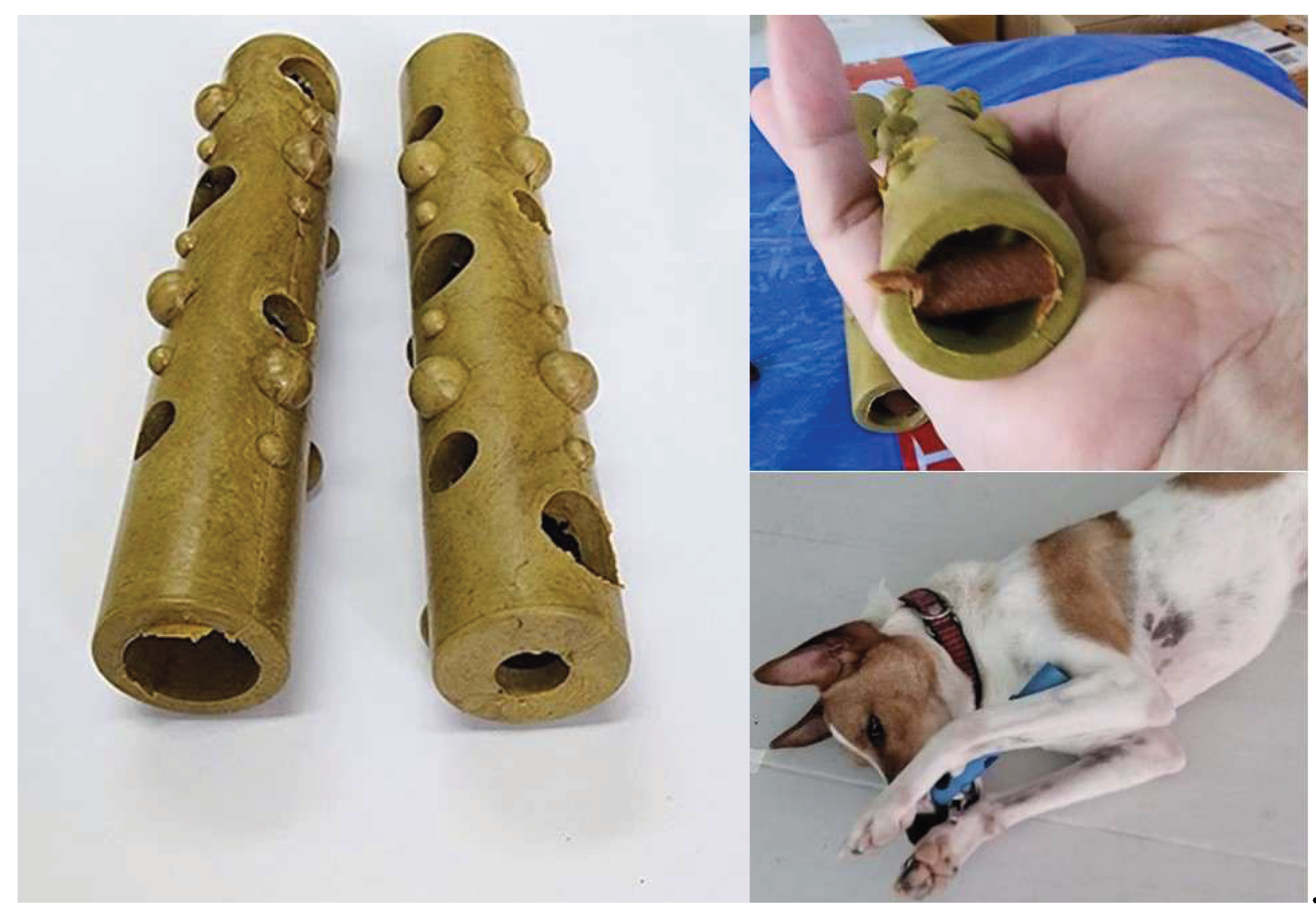

Table 1.
Owner characteristics.
| Owner | Number of owners (n = 60) |
Percentage |
|---|---|---|
| Gender | ||
| Man | 11 | 18.33 |
| Woman | 49 | 81.67 |
| Age (year) | ||
| 18-30 | 5 | 8.33 |
| 31-40 | 15 | 25.00 |
| 41-50 | 20 | 33.33 |
| 51-60 | 13 | 21.67 |
| > 60 | 7 | 11.67 |
| Experienced dog owner (year) | ||
| < 1 | 10 | 16.67 |
| 1-5 | 12 | 20.00 |
| > 5 | 38 | 63.33 |
Table 2.
Dog characteristics.
| Dog | Number of dogs (n = 60) |
Percentage |
|---|---|---|
| Sex | ||
| Male | 42 | 70.00 |
| Female | 18 | 30.00 |
| Breed | ||
| Mix | 22 | 36.67 |
| Pure | 38 | 63.33 |
| Chi-Hua Hua | 16 | 26.67 |
| Age (year) | ||
| 0.5-1 | 16 | 26.67 |
| 1-4 | 26 | 43.33 |
| 4-8 | 12 | 20.00 |
| >8 | 6 | 10.00 |
| Reproductive status | ||
| Neuter | 38 | 63.33 |
| Intact | 22 | 36.67 |
Table 3.
Environmental characteristics.
| Environment | Number of dogs (n = 60) |
Percentage |
|---|---|---|
| House | ||
| Undetached house | 34 | 56.67 |
| Detached house/condo | 26 | 43.33 |
| Living space | ||
| Cage (can be inside or outside the house) | 7 | 11.67 |
| Indoor (no cage) | 42 | 70.00 |
| Semi-indoor (dogs can go outdoor around the house area) | 11 | 18.33 |
| Number of humans in the household | ||
| 1 | 4 | 6.67 |
| 2-4 | 38 | 63.33 |
| >4 | 18 | 30.00 |
| The presence of kids in the household (age < 18 years old) | ||
| Yes | 15 | 25.00 |
| No | 45 | 75.00 |
| Number of dogs in the household | ||
| 1 | 31 | 51.67 |
| 2 | 14 | 23.33 |
| >2 | 15 | 25.00 |
Table 4.
Dog’s enrichments.
| Enrichments | Number of dogs (n = 60) |
% |
|---|---|---|
| Bone or chewing toy | ||
| Yes | 59 | 65.00 |
| No | 21 | 35.00 |
| Scent (Essential oil or Pheromone) | ||
| Yes | 10 | 16.67 |
| No | 50 | 83.33 |
| Music | ||
| Yes | 31 | 51.67 |
| No | 29 | 48.33 |
| Television | ||
| Yes | 32 | 53.33 |
| No | 28 | 46.67 |
Table 5.
Owner-dog interactions.
| Interactions | Number of dogs (n = 60) |
% |
|---|---|---|
| Training to follow the command | ||
| No or Rare | 24 | 40.00 |
| Often (every day) | 36 | 60.00 |
| Walk a dog | ||
| Never or rarely | 18 | 40.00 |
| Often (every day) | 42 | 60.00 |
| Duration for walking a dog | ||
| Never or less than 15 min | 30 | 50.00 |
| More than 15 min | 30 | 50.00 |
| Sleeping with an owner | ||
| Yes | 26 | 43.33 |
| No | 34 | 56.67 |
| Company when dog eating | ||
| No or Rare | 7 | 11.66 |
| Often | 53 | 88.36 |
| Positive reinforcement | ||
| Never or rarely | 2 | 3.33 |
| Often | 58 | 96.67 |
| Positive punishment | ||
| Never or rarely | 16 | 26.67 |
| Often | 44 | 73.33 |
| Head petting | ||
| Never or rarely | 6 | 10.00 |
| Often | 44 | 90.00 |
| Hugging | ||
| Never or rarely | 10 | 16.67 |
| Often | 50 | 83.33 |
| Abdomen petting | ||
| Never or rarely | 6 | 10.00 |
| Often | 44 | 90.00 |
| Kissing | ||
| Never or rarely | 12 | 20.00 |
| Often | 48 | 80.00 |
Table 6.
Management of dog health.
| Management | Number | % |
|---|---|---|
| Food | ||
| Commercial | 41 | 68.33 |
| Homemade | 19 | 31.67 |
| Number of meals | ||
| 1 | 6 | 10.00 |
| 2 | 40 | 66.67 |
| ≥ 3 or ad libitum | 14 | 23.33 |
| Vaccination | ||
| Never or irregular | 10 | 16.67 |
| Regularly (annually) | 50 | 83.33 |
| Deworming | ||
| Never or irregular | 27 | 45.00% |
| Regularly (Every 1-6 months) | 33 | 55.00% |
| Body condition score | ||
| 1-3 (underweight) | 6 | 10.00 |
| 4-6 (Optimal) | 35 | 58.33 |
| 7-9 (Overweight) | 19 | 31.67 |
| Physical sickness | ||
| Yes | 19 | 31.67 |
| No | 41 | 68.33 |
Table 7.
Aggressive behaviour toward an owner displayed during each event (number of dogs = 60).
| Questionnaire, event that triggers dog aggressive behaviour | Dogs displayed severe aggression (biting; score = 4) |
Aggressive behaviour (scale 0-4) |
||||
|---|---|---|---|---|---|---|
| Type of aggression | Number of dogs | Percentage | Average | SD | Median | |
| 1. When the dog is scolded or verbally punished (e.g., reprimanded, shouted at) by the owner, or when the owner appears as if they are going to hit the dog | Punishment induced | 14 | 23.33% | 2.87 | 0.88 | 3 |
| 2. When a toy is taken away from the dog by the owner or when the owner directly approaches the dog while it is playing with a toy | Toy guarding | 23 | 38.33% | 3.22 | 0.73 | 3 |
| 3. When the dog is bathed, has its nails trimmed, or is brushed by the owner | Grooming induced | 24 | 40.00% | 3.03 | 1.05 | 3 |
| 4. When the dog’s food is taken away by an owner or when the owner directly approaches the dog while it is eating | Food guarding | 22 | 36.67% | 2.93 | 0.95 | 3 |
| 5. When a dog is directly stared at by its owner | Staring induced | 13 | 21.67% | 2.57 | 1.05 | 3 |
| 6. When a dog is stepped over or walked past closely by its owner while resting | Territorial | 11 | 18.33% | 2.15 | 1.25 | 2 |
| 7. When a dog is touched in certain areas of its body by its owner | Touch sensitive | 1 | 1.67% | 1.92 | 0.97 | 2 |
| 8. When a dog is hugged, held, sniffed, or kissed by its owner | Petting induced | 1 | 1.67% | 1.58 | 1.26 | 2 |
Table 8.
Aggressive behaviour toward strangers displayed during each event (number of dogs = 58).
| Questionnaire, event that triggers dog aggressive behaviour | Dogs displayed very aggressive behaviours (biting; score = 4) |
Aggressive behaviour (scale 0-4) |
|||
|---|---|---|---|---|---|
| Number of dogs | Percentage | Average | SD | Median | |
| 1. When encountering a stranger entering the house area or nearby, such as a delivery person | 39 | 68.42 | 3.59 | 0.64 | 4 |
| 2. When encountering a stranger who tries to touch or pet them, including a veterinarian or a groomer | 33 | 57.89 | 3.16 | 1.24 | 4 |
| 3. When seeing or encountering strangers outside the home | 35 | 61.40 | 3.36 | 0.94 | 4 |
Table 9.
Correlation between type of aggression in owner-direct aggression dogs.
| Punishment- induced | Toy guarding | Grooming- induced | Food guarding | Staring- induced | Territorial induce |
Touch sensitive | ||
|---|---|---|---|---|---|---|---|---|
| Toy guarding | ρ | 0.39** | — | |||||
| df | 58 | — | ||||||
| P | 0.002 | — | ||||||
| Grooming induced | ρ | 0.30* | 0.31* | — | ||||
| df | 56 | 56 | — | |||||
| P | 0.02 | 0.01 | — | |||||
| Food guarding | ρ | 0.11 | 0.24 | -0.10 | — | |||
| df | 58 | 58 | 56 | — | ||||
| P | 0.36 | 0.06 | 0.43 | — | ||||
| Staring induced | ρ | -0.008 | 0.35** | 0.0009 | 0.40** | — | ||
| df | 58 | 58 | 56 | 58 | — | |||
| P | 0.94 | 0.004 | 0.99 | 0.001 | — | |||
|
Territorial induce |
ρ | 0.05 | -0.08 | -0.03 | 0.23 | 0.34** | — | |
| df | 58 | 58 | 56 | 58 | 58 | — | ||
| P | 0.69 | 0.53 | 0.80 | 0.06 | 0.006 | — | ||
| Touch sensitive | ρ | 0.19 | 0.18 | 0.31* | 0.001 | 0.05 | 0.35** | — |
| df | 58 | 58 | 56 | 58 | 58 | 58 | — | |
| P | 0.13 | 0.16 | 0.01 | 0.99 | 0.67 | 0.005 | — | |
| Petting induced | ρ | 0.08 | 0.05 | 0.09 | 0.25* | 0.17 | 0.42*** | 0.70*** |
| df | 58 | 58 | 56 | 58 | 58 | 58 | 58 | |
| P | 0.50 | 0.69 | 0.45 | 0.04 | 0.17 | 0.0006 | <.0001 |
Note. * P value < .05, ** P < 0.01, *** P < 0.001, ρ = Spearman’s rho
Table 10.
Owner-direct aggression was compared before and after treatment.
| Groups | N | Median of Aggression score (IQR) | Statistic | Mean difference | P value | |
|---|---|---|---|---|---|---|
| Before | After | |||||
| TOY | 14 | 2.61 (1.02) | 2.09 (0.83)a | 102.50 | 0.67 | 0.002* |
| DRUGg | 17 | 2.78 (0.78) | 0.78 (0.72)b | 153.00 | 1.86 | 0.0003* |
| DRUG + TOY | 15 | 2.80 (1.17) | 1 (0.48)b | 120.00 | 1.91 | < 0.0001* |
*Represents statistically significant difference (P < 0.05) between before and after treatment (row). a-bRepresents significant differences among treatments (column) (P < 0.005).
Table 11.
Stranger-direct aggression by was compared before and after treatment.
| Groups | N | Median of Aggression score (IQR) | Statistic | Mean difference | P value | |
|---|---|---|---|---|---|---|
| Before | After | |||||
| TOY | 14 | 3.83 (0.91) | 2.83 (0.66)a | 73.00 | 0.59 | 0.008* |
| DRUGg | 15 | 3.33 (1.33) | 1.66 (1.83)b | 105.00 | 1.35 | 0.001* |
| DRUG + TOY | 14 | 4.00 (0.91) | 2.00 (1.61)b | 91.00 | 1.41 | 0.002* |
*Represents statistically significant difference (P < 0.05) between before and after treatment (row). a-bRepresents significant differences among treatments (column) (P < 0.005).
Disclaimer/Publisher’s Note: The statements, opinions and data contained in all publications are solely those of the individual author(s) and contributor(s) and not of MDPI and/or the editor(s). MDPI and/or the editor(s) disclaim responsibility for any injury to people or property resulting from any ideas, methods, instructions or products referred to in the content. |
© 2025 by the authors. Licensee MDPI, Basel, Switzerland. This article is an open access article distributed under the terms and conditions of the Creative Commons Attribution (CC BY) license (http://creativecommons.org/licenses/by/4.0/).
Copyright: This open access article is published under a Creative Commons CC BY 4.0 license, which permit the free download, distribution, and reuse, provided that the author and preprint are cited in any reuse.


