
Submitted:
14 September 2025
Posted:
16 September 2025
You are already at the latest version
Abstract
The research provides a comprehensive overview of Green Computing, highlighting its importance and real-world application within Saudi Arabia. The IT sector is expanding rapidly in complexity and size. Along with this growth, there is an increase in environmental impacts, including energy consumption and electronic waste. The study explains the meaning of green computing and its applications in various areas such as cloud-based infrastructures, sustainable software development, and data centers. It also discusses the integration of green computing in education, smart cities, and mobile technologies. Special emphasis is placed on implementing green computing within Saudi Arabia and the key points from Vision 2030 related to this topic. Vision 2030’s sustainability agenda includes government initiatives, regulatory frameworks, and local case studies. The research aims to assist stakeholders in adopting green computing practices that align with global sustainability goals, fostering innovation and economic growth within the Kingdom.
Keywords:
green computing
; Saudi Arabia
; IT
; policies and regulations
1. Introduction
The term green usually signifies something related to maintaining the environment in optimal condition. When combined with computing, green refers to environmentally sustainable computing, which is a significant global concern. This term may involve designing eco-friendly electronic products to reduce energy use, minimize harmful waste, and improve efficiency throughout the product’s lifecycle.
The continuous growth of industrial development has two major effects on the environment. The first is the rapid consumption of natural energy resources. To slow the current rate of depletion, efficient operations and alternative energy sources are adopted. The second effect is the increasing rate of carbon emissions. Known as Greenhouse Gases (GHG), these emissions lead to global warming, higher disease rates, and other environmental issues. In addition to supporting many enterprises, information technology (IT) is a rapidly growing global sector. The IT industry, or computing in general, significantly contributes to high energy consumption and carbon emissions. Therefore, IT technologies and algorithms must be redefined to be energy-efficient. Additionally, existing IT practices have a responsibility to limit energy consumption and the carbon footprint of other industries and institutions, while promoting green environmental practices in their daily operations.
Saudi Arabia is one of the leading countries in adopting the latest technological and industrial advancements. The kingdom has implemented several effective initiatives to promote green policies across various systems, including transportation, cooling systems, water usage, and landscaping. The Information and Communication Technology (ICT) sector in the kingdom is highly energy-intensive. As ICT usage increases in KSA, especially in educational institutions, there is a growing need for high-performance, energy-efficient computing systems. These systems must meet green computing standards to reduce carbon footprints and gas emissions.
Environmental problems caused by technological advances cannot be ignored. As a result, the number of studies on solutions to these problems has increased significantly. The growth of the world population, industrialization, urbanization, and rising consumption rates have increased the use of natural resources. Simultaneously, irreversible environmental pollution has become a major concern. Among the environmental issues, the negative effects of electronic waste (e-waste)—such as televisions, radios, fax machines, scanners, copy-making machines, telephones, and personal computers—are highlighted. This sector is one of the most energy-consuming and generates substantial electronic waste. Therefore, personal computers are a primary focus. In our research, we provide a comprehensive overview of green computing initiatives, practices, policies, obstacles, and potential applications in Saudi Arabia.
1.1. Definition and Principles
The significant rise in global industrial activity has led to high use of natural energy resources and increased global warming. As computing and IT services become more popular, their energy consumption has also grown rapidly. Currently, the IT industry accounts for nearly 3% of worldwide energy use and carbon emissions, comparable to the aviation industry. The environmental impact of IT technologies is expected to grow further due to ongoing urbanization and the “Internet of Things” (IoT) vision of interconnected devices. However, IT technologies can also positively affect the environment by monitoring and managing emissions from other industries.
Therefore, there is an urgent need for greener IT solutions that minimize environmental harm. Green and sustainable computing practices aim to evaluate and reduce the environmental footprint of the computing industry, encouraging the adoption of efficient technologies and practices. The computing sector is a major contributor to high energy use and carbon emissions. The “Green Computing” or “Sustainable Computing” paradigm promotes the energy-efficient and proportional use of resources across all emerging technologies. This review discusses various green computing techniques within the context of advancing IT innovations.
1.2. Importance and Benefits
Computing has transformed the lifestyle of modern humans, shifting from a luxury utility to a widely adopted necessity. The growing popularity of computing devices and IT services has driven an exponential increase in energy consumption. With concerns about the energy crisis and global warming, there is an urgent need to adopt computing practices and technologies that can help reduce the environmental impact of the industry. Green and sustainable computing and pedagogy practices examine the environmental effects of computing and IT services to promote the adoption of efficient practices and technologies. The environmental impact of computing industries has been studied, and practices have been suggested to help mitigate this impact. Additionally, computing technologies and methods have been proposed for use in other industries to monitor or reduce their environmental footprints. Emerging technologies have defined development cycles; once deployed, they require long-term commitment and investment. Instead of providing detailed procedures, the paper offers guidance, key components, and case studies that focus on greening emerging technologies during the design phase. It is hoped that these proposed techniques and practices will motivate researchers and industry professionals to rethink the design of IT technologies and embrace green practices.
2. Technologies and Practices
Today, various technologies and practices are involved in green computing initiatives. Innovative methods to reduce energy consumption, including the use of virtual infrastructures, cloud computing, energy-efficient hardware, and best practices, are actively addressed with the goal of minimizing environmental harm. For modern hardware and software development, several practices are considered particularly useful and sustainable. Implementation strategies and challenges are examined in light of these practices. Readers can gain insight into how technology can positively contribute to these goals, highlighting the need for ongoing development to ensure continuous improvement in technological advancements aligned with green computing objectives. In future work, more advanced explorations of green computing practices from hardware, software, and cultural perspectives—particularly addressing resistance to green initiatives—are expected to provide comprehensive insights.s.
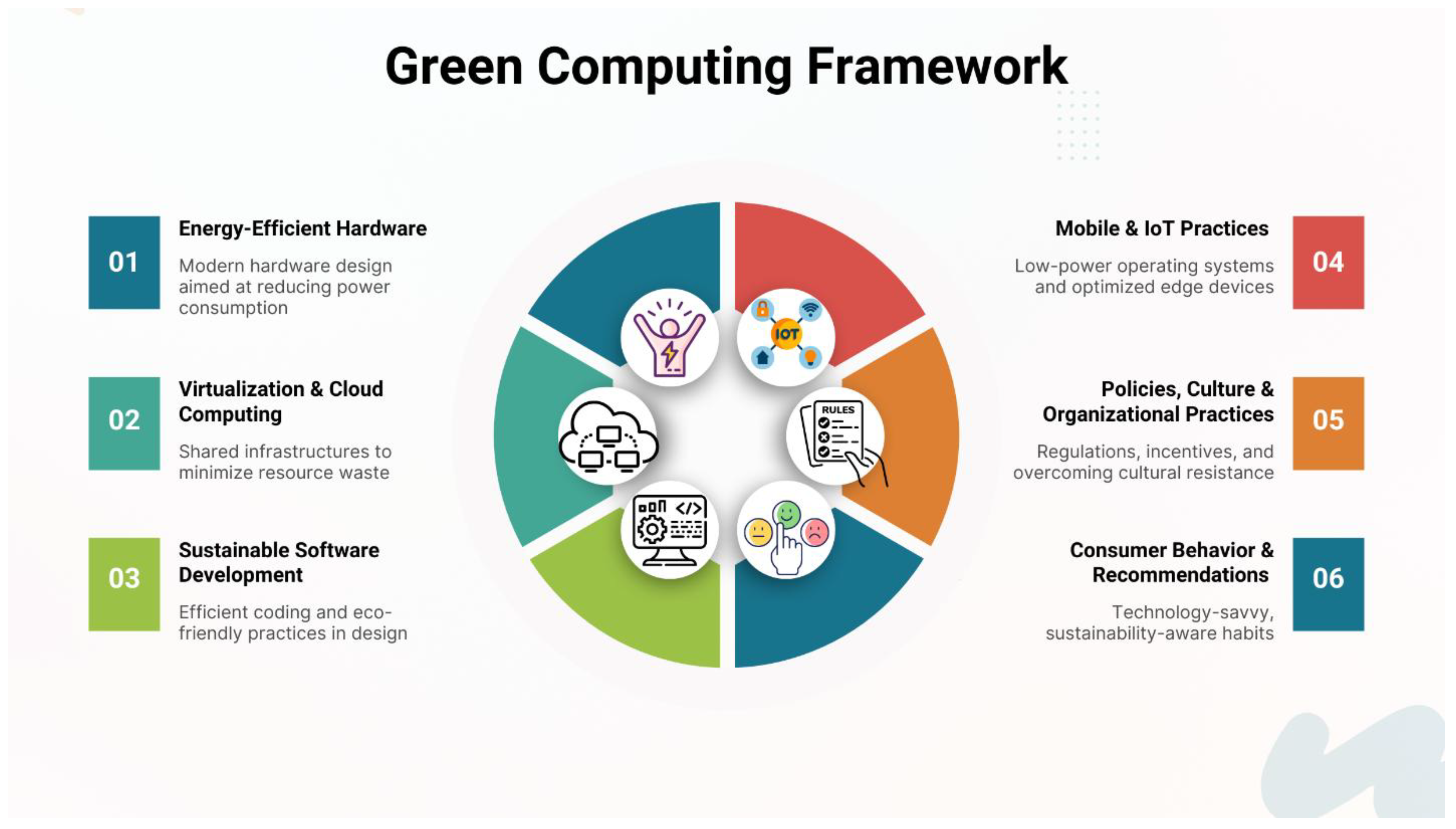
Due to significant advancements in computing technology, reduced resource consumption and worsening environmental impacts are expected, while also opening up unforeseen possibilities. The main goal of green computing initiatives is to address these issues by encouraging environmentally conscious consumer behavior. Postmortem attention is simply paid to economic incentives. Similarly, ex-ante decision makers on technological investments are advised to consider green computing benefits. Green computing recommendations generally fall into two categories: practices and behaviors that consumers can adopt (or avoid). These recommendations aim to guide the development of technologies to enhance products and services within the limits of consumer computing practices..
Due to significant advances in computing technology, a reduction in resource consumption and environmental impacts is being expected, while also uncovering new possibilities. The main goal of green computing initiatives is to prevent these issues by encouraging environmentally conscious behavior among tech-savvy consumers. Postmortem focus is mostly on economic benefits. Likewise, it is important for ex-ante decision makers regarding technology investments to consider the benefits of green computing. Green computing recommendations generally fall into two categories: practices and behaviors that consumers can adopt or avoid, and guidelines to steer technology development. These recommendations aim to develop products and services within the bounds of consumer computing habits.
Figure 1.
Green Computing Framework.
2.1. Energy-Efficient Hardware Design
As a large-scale, critical infrastructure, the ICT (information and communication technologies) sector in Saudi Arabia faces resource shortages. Trends such as cloud computing, smart grids, automation, and the internet of things (IoT) require further national deployment of new IT and communication infrastructures, which in turn raise additional concerns about sustainability. Greening IT infrastructure and collaborating on eco-friendly designs for emerging IT technology in non-ICT sectors are recognized as measures to address this issue. This review of emerging IT technology adoption in various non-ICT sectors in Saudi Arabia presents recent government initiatives, technology providers and trends, existing challenges—such as solutions for IT and infrastructure—and eco-friendly designs for developers of emerging IT tech abroad. From an industry perspective, collaborations between these sectors are relatively new and involve local firms or sectors such as vendors, national IT developers, construction, energy, or service providers in Saudi Arabia. The sectors explored include e-government, water conservation and smart energy management, agriculture, smart sensor networks, autonomous systems, and generally automation, cloud computing, IT platforms, and IoT technology. These sectors hold potential for economic development through deployment. However, cautious approaches emphasizing sustainable strategies, vital regulations, and scenario planning are strongly promoted. Filling this knowledge gap is crucial for establishing a successful position for national consortia or providers when entering this nearly undeveloped field, which is favorable for participation in assessments. At the government level, there is interest in the potential welfare benefits of adopting various ICT technologies, improving broadband access, mega-project awards, and smart city initiatives. Similarly, there is an interest in enhancing public-private sector collaboration by encouraging IT service competitiveness and creating new opportunities. Additionally, studies can contribute to shaping the national strategy for adopting emerging technologies across related sectors.[5].
3. Green Computing in Data Centers
Data center power consumption had increased by 56% from 2005 to 2010 with an energy usage overall of “1.3 percent of total electricity” demand around 2010 in the US. This resulted in an increase in the emission of “53 million tons of CO2” [5]. Similar concerns were raised in Saudi Arabia, with an energy utilization of 12% by the IT sector and annual growth of 10%. By the end of 2016, the KSA government and IBM had announced a joint effort to green four public sector data centers. The Saudi Green IT Trends 2018 Report confirmed the increasing popularity of green computing policy and strategies in KSA companies and governmental institutions.
The green computing concept involves both energy efficiency and recycling issues in IT practices and concerns. A data center is a facility that consolidates logical and physical IT resources, including “servers, storage, applications, and networks.” It can provide various benefits to companies, such as improved operational efficiency. However, these physical IT resources also result in low power usage efficiency (PUE) per equipment, leading to a low return on investment. Additionally, they raise concerns about large-scale consumption of “electrical power, cramped carbon emission, and limited green practices.” Here, several studies and implementations on how to make data centers more environmentally friendly through appropriate green computing policies and strategies will be discussed, mainly focusing on technical aspects but also considering the business perspective, with the aim of providing a practical view..
A summarized comparison of data centers in the United States and Saudi Arabia is presented below:

Table 1.
US vs Saudi Arabia Data Center Comparison.
| Feature | United States | Saudi Arabia |
|---|---|---|
| Number of Data Centers | ~2,600+ (largest global share) | ~45 (rapidly growing) |
| Energy Source | Mix of fossil fuels & renewables | Predominantly fossil fuels, Vision 2030 shifting to solar & wind |
| Efficiency Standards | Strong emphasis on PUE<1.4, green building | Emerging standards, investments in sustainable cooling |
| Investment Scale | Mature, trillion-dollar digital economy | Expanding, driven by Vision 2030 digital hubs |
References: U.S. Environmental Protection Agency (EPA) reports on data center energy usage. Saudi Green IT Trends 2018 Report (details on green computing initiatives).
3.1. Virtualization and Cloud Computing
Green Computing is significantly impacting the life of Saudis—driving new ways of processing systems, hardware, and software consumption patterns to make more intelligent, informed insights. Energy-aware distributed computing in Saudi Arabia became an important key issue. The culture of IT enterprises throughout the Kingdom is changing from handling computer resources economically, but preferably to minimize energy costs and prevent abuse. Economic issues also reduce the necessary electricity costs for cooling a growing quantity of hardware that results in vast cumulative power cost savings and hence the reduction in carbon emissions. Various Green Computing technologies, such as virtualization and cloud computing, have not only substantially lessened the energy consumption but also helped to optimize costs by increasing the efficiency of resource handling. These technologies are especially important today, as IT-infrastructure is not used efficiently and a lot of hardware finally processes not more than 15% of its total capacity [6]. Green Computing is neither only cost savings nor power savings but also a conception of processing solutions in a sustainable manner.
Virtualization plays a crucial role in the successful transition to Green Computing. It offers a unique way to consolidate hardware resources and enhance the processing capabilities of Green Computing. Hardware virtualization allows multiple applications to run on the same computer or server network without disrupting the operating system environment. This approach has become particularly popular because using dedicated servers for each application results in unnecessary infrastructure and increased waste, which can negatively affect the organization’s eco-friendly image.
It is formalized as creating a virtual version of a resource (e.g., a server, an OS, a network, storage devices, a file, etc.) that divides the resources into execution settings or sets. Green Computing can be significantly enhanced by utilizing different types of virtualization, such as server virtualization, storage virtualization, and network virtualization, which improve the efficiency of resource utilization, leading to a substantial reduction in the carbon footprints of organizations. Furthermore, thanks to virtualization, unused computing resources remain in the data center, and maximizing their utilization can consensually reduce energy consumption. At the same time, after all, the machines in any cluster have sufficiently different workloads on the central processing unit (CPU)..
4. Green Computing in Software Development
As environmental discourse gains more importance in the industrial sector, green computing best practices are becoming more common to promote a greener approach in software development. The increasing consumption of computer resources such as energy, materials, and electronic waste has occurred alongside the more intensive use of various software applications. The purpose of this article is to highlight actionable green computing strategies that can improve resource efficiency in line with software development metrics, aiming to encourage green practices among software developers. In light of this goal, practical development steps are explored to enhance the material and energy sustainability of software, along with 10 useful guidelines that can be integrated into coding routines to improve the resource efficiency of future software projects.s.
The community has already committed to the efficient use of material and energy resources consumed by applications during the design and product development stages in other areas. In this context, attention should be regularly given to forming a connection between design trends and the environmental impacts of the designs used. To obtain that barcode, actions should be taken in standardized software development areas where high resource consumption occurs. Techniques such as algorithm optimization and careful consideration of design trends can be used to maintain the material and energy viability of developing products. Continuous analysis and improvement should also be pursued in the design trends, guided by the ongoing ‘Design, Measure, Analyze’ cycle used in industrial development. This approach makes it possible to track the environmental effects of software applications and take corrective measures to conserve material and energy resources through the promotion of sustainability-focused design trends.
4.1. Efficient Coding Practices
With hardware developing rapidly, performance becomes an increasingly important criterion for evaluation. I would like to share five essential techniques to help improve performance: clear coding patterns in scripts and optimized libraries, efficient application building, managed resource consumption, automation of repetitive tasks, publication of standards and techniques for performance coding, and testing and monitoring application workloads [7]. When delivering a feature, developers or product managers measure the time it takes to complete a task. Since execution times can be unpredictable, network and disk I/O should not be overlooked, as they can slow down an application [8]. Training codes often consume a lot of memory and frequently cause errors because tasks cannot run on three harmless data sets. It is recommended to use the smallest data types necessary and to “clean” your memory at the end of validations within loops when automatic cleanup is not performed. If arrays or data frames are manageable with iterators, avoid iterating over lists in Python for memory efficiency. If the file format permits, it is also highly recommended to store data in efficient formats such as files or disks rather than pickles. Additionally, design the operation patterns of scripts and functions by minimizing or avoiding redundant or unnecessary operations. It is advisable to reuse previous scripts when creating new functions or scripts and to maintain a consistent approach throughout each iteration of building larger functions.
On a daily basis, being a programmer involves following coding standards that make software maintenance easier, such as avoiding rewriting code by directly improving reliability and efficiency. Among other practices, there’s a tendency to duplicate functionalities that do the same thing, keep code minimalistic or only return specific data, enforce keyword arguments, support data slices, and exclude certain conditions. All of these recommendations can help produce consistent code that aligns with good writing habits, but they represent only a subset of all available “good practices.” As expertise grows with a library or work, efforts will often aim to address these issues, and for some libraries, the code may also be stored on GitHub. Many routine tasks related to development, deployment, monitoring, and operation can be automated, saving time and reducing errors. Additionally, limited patience and frustration can motivate developers to adopt these practices, promoting the sustainability of these mechanical habits. The document emphasizes the importance of code reviews and continuous integration practices for producing efficient code, as these are the most accessible strategies that developers can incorporate into their daily work..
5. Green Computing in Mobile and IoT Devices
Energy awareness has become increasingly important in IT management due to its rise in networking and data centers, the need to develop energy-efficient computing resources and technologies, and increased funding for research. Existing studies on green computing cover data centers and cloud computing, energy-efficient architectures, optimization algorithms, power management, and the impact of software and applications on energy consumption for stationary computing and large systems. In this chapter, the growth of green computing and its applications for small systems, IoT devices, laptops, PCs, and mobile devices are discussed.
Currently, Internet users focus more on mobile usage, and after fixed-line phones, mobiles are the second most common connection. The importance of smart mobile devices provides consumers with the ability to shop, chat, email, and use social network applications, and it also holds the potential for other advanced uses. Furthermore, this situation is similar for Saudi Arabians. E-business related to mobile or using smart devices for social activities can leverage this information. n.
It is important to improve battery performance using low-energy consumption methods at a basic level. However, achieving this is difficult because, in a mobile system, maintaining the balance between available battery capacity and consumption is challenging. Research focuses on enhancing overall reach and performance concerning power efficiency. The results show that several phones can be successful; applications help save energy and boost battery life simultaneously without excessive costs that could affect laptop performance and energy use. Additionally, Mobi is designed to manage the system and demonstrate how it should be used to improve battery performance. Mobi is integrated into the mobile operating system and configured as a device, providing strong protection for the system. To better understand user behavior in mobile systems, a survey was conducted. The total energy consumption of three different mobile phones using various applications was examined.
5.1. Low-Power Operating Systems
Billions of devices are used daily worldwide. The tremendous use of such devices leads to a great demand on their energy. Sometimes their battery life is only a few hours. The solution to this problem is designing low-power operating systems. This is a kind of operating system that uses energy in a highly optimized way, and the most energy is saved. It lets devices work for longer times.
These operating systems are designed to use the minimum resources for each task. Despite this, they still offer full functionality and good usability. They include highly effective power management techniques such as dynamic scaling and various sleep modes. Developers can further utilize these sleep modes for different components to maximize efficiency.[1].
Operating systems like Android and iOS are designed for everyday use, but many are specifically built to reduce power consumption. Users can replace the current operating system with these specialized versions. Here are some key features of such operating systems:
- Operating system is free
- Open source
- Developed by the developer community
- Best power management
- Performs better and reliably
- Wide device support
6. Green Computing in Smart Cities
Cities are the future of humanity, and urbanization plays a vital role in creating a developed and modern society. The world has progressed from modernization, through globalization, to urbanization, where cities will become the homes of humanity and the future Earth. Therefore, providing quality of life in cities is a key concern for modern societies in the 21st century. Based on this, developing smart cities and green cities has become the main focus of urban planning for sustainable city development. Green computing involves designing the architecture and construction of eco-friendly computers, servers, and data centers. Given the importance of smart cities and green computing in Saudi communities, it is an honor to review this scientific achievement broadly. The innovative use of smart technologies, combined with existing urban infrastructure—hardware and software—can create smart cities that support the vision of smart buildings, energy systems, transportation, homes, and residents. As this field develops, integrating information and communication technology (ICT) with urban planning is essential to developing a smart city. The continued growth and expansion of cities make resource utilization crucial, requiring careful planning and management. Essentially, smart infrastructure aims to optimize resource use, with key technologies encompassing smart infrastructure, safety, energy efficiency, health management, resource management, and comfort control. To realize a smart city and promote sustainability, the concept of urban computing can be applied. Smart transportation can reduce travel times and energy consumption; waste management can optimize waste collection routes and bin placement; energy consumption can focus on renewable energy production and energy-efficient building management; comfort control can refine air conditioning and ventilation settings; safety involves designing safe evacuation routes and effective law enforcement strategies. This framework can help city planners and policymakers understand the challenges and risks involved in transforming traditional cities into smart cities.[12].
Figure 2.
Smart City Architecture Integrating Green Computing and ICT.

7. Green Computing in Education and Research
Green computing has become a key priority for educational and research institutions worldwide, including in Saudi Arabia. Governments and international organizations are also investing in green technologies because of awareness about limited global resources. Saudi Arabia aims to use green computing as an effective way to reduce carbon emissions and protect the local environment. However, most investments and studies in Saudi Arabia focus on the private and industrial sectors rather than educational and research institutions. This section highlights projects in education and research aimed at reducing carbon emissions, along with suggestions for further research to encourage government investments in green computing. These projects serve as examples for other educational institutions in Saudi Arabia to start investing in green computing for a healthier local environment.
Most educational institutions use significantly more resources than other companies because of their large student populations and organizational sizes. However, these institutions can also gain the most from investing in green computing. This sector has the greatest potential to promote the benefits of green computing to the next generation of workers. Based on this understanding, it has been decided to begin investments in this sector and collaborate with other local universities to expand green computing initiatives. Traditional education methods rely heavily on large campuses, printed materials, and physical classrooms, which consume many resources daily. Some institutions are working to transform these methods into modern approaches using digital tools. E-learning platforms are being developed for this purpose; however, these platforms also consume considerable resources.
Therefore, it has been decided to develop an e-learning platform that considers resource consumption and minimizes it as much as possible, especially in comparison with other e-learning platforms. This project is now one of the largest examples of green computing investments in educational institutions.
Further projects are ongoing and planned for the coming years. For example, courses and programs that teach how to create green and sustainable environments have proven to be more effective for promoting sustainability. Consequently, there are plans to integrate green computing, green IT, big data, and IoT technologies into educational programs widely. This initiative is also considered important as it can help establish an ecosystem that fosters a better local environment. Additionally, other educational institutions are encouraged to incorporate green computing into their curricula.m.
7.1. E-Learning Platforms
E-learning platforms are still developing in Saudi Arabia. As the kingdom recognizes the benefits of cost savings, scalability, information retention, and energy conservation, there is significant potential for growth in this form of online education. Today, online learning is expanding in Saudi Arabia through virtual education and e-learning using handheld devices such as laptops, tablets, and smartphones. Investment in e-learning platforms, regulations, research, and infrastructure is advancing. Green computing is a new technology in countries like Saudi Arabia, offering an environmentally friendly way to save resources and energy in e-learning platforms. Cloud Computing Green is a new computing paradigm that establishes such standards. The global e-learning market is expected to grow substantially from 2021 to 2030, driven by increasing demand for flexible educational options and technological advancements. The graph below illustrates the change in the global e-learning market from those years in billions. n.
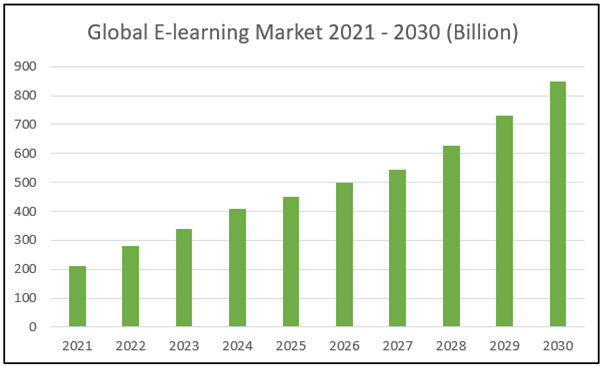
Source: Global E-Learning Market Size Reach USD 848.1 Billion 2030.
Today, Saudi Arabian-based e-learning centers rely on Infrastructure as a Service (IaaS) providers in other countries, leading to financial losses and data security concerns. Therefore, a model addressing technical and environmental challenges and objectives involving the government, universities, and professional organizations has been developed. Nadu Federated is a model for providing a Cloud Computation Green Platform Infrastructure as a Service (IaaS) with locations across different provinces to reduce costs and energy use for e-learning organizations like universities. The model can be used by policymakers to create local jobs in Saudi Arabia and promote Cloud Computing Green by encouraging university enrollment.
8. Green Computing Policies and Regulations in Saudi Arabia
The introduction of Green Computing in Saudi Arabia can be considered a leading example. All policies, guidelines, and regulations created by various countries regarding Green Computing are critically reviewed alongside the current implementations in Saudi Arabia. The technological advances driven by Green Computing, along with policies and guidelines suitable for a developing country like Saudi Arabia, are analyzed. The Saudi Arabian Green Computing Policies are assessed to address these concerns, fill in necessary gaps, and evaluate the extent of these implementations. The term Green Computing does not refer to any specific technology like a laptop or desktop; rather, it originates from IT (Information & Technology), which involves designing policies for computer technology that use less power. The use of virtualization, distributed computing, and similar approaches is increasing today to reduce power consumption [13].
Environmentally friendly computing involves policies and technology implementations focused on energy efficiency, and only a few people rely on this aspect. According to predictions, over the next decade, Green Computing will increasingly emphasize standard implementations like Power Star, which will concern gadgets and some new standards for equipment. Progress in Green Computing is happening in Saudi Arabia. In Saudi Arabia, the situation is a bit different, with policies leaning towards Green Computing. Since Green Computing has not been adopted widely in many countries, it remains in the early stages there, with efforts centered on implementing power-saving standards and policy decisions. [14]
8.1. Government Initiatives and Incentives
This subsection analyzes recent and emerging government initiatives and incentives that promote the development and implementation of Green Computing in Saudi Arabia. As a key stakeholder in deploying green initiatives, the government, in collaboration with local organizations, is working to adopt various incentive programs to encourage business owners and communities to engage in sustainability and green activities. Significant interest and attention have been directed toward initiatives involving the deployment of green technologies. At the same time, the government provides supportive mechanisms and offers financial assistance to facilitate the adoption of green technologies. These programs, along with support and incentives from other nations and international organizations, will be examined, and several successful case studies at both national and international levels will be highlighted. Finally, it emphasizes the need for continuous improvement of public policies and provisions for capacity building through education and dissemination, so that emerging challenges can be addressed, effective incentives can be implemented, and wider engagement can be achieved. Overall, this discussion affirms that the government, along with various local organizations, demonstrates its commitment to establishing a cleaner, healthier, and more sustainable future. .
The government of Saudi Arabia has sponsored numerous programs focused on sustainability and green initiatives. The Saudi Green Building Forum is an annual event that brings together top green building and environmental experts and stakeholders, including government officials, construction and real estate developers, architects, engineers, consultants, contractors, manufacturers, bankers, investors, and suppliers from KSA, UAE, the Gulf Region, and internationally. The symposium and expo offer an opportunity for senior professionals, investors, and policymakers to collaborate and discuss the latest methods and strategies for promoting sustainability in green buildings. The topics suggested for this year’s event align with Saudi Green Vision programs, the 12th development plan, and are based on Prerequisites Modification and New Credit Requests. Prior to the event, the ‘Saudi Energy Exhibition’ was held to showcase the latest technologies in the generation, management, and storage of resources such as energy and fuel. Additionally, the ‘Saudi Energy Efficiency Forum’ is a notable event that highlights global energy efficiency advancements within KSA.
9. Case Studies of Green Computing Implementation in Saudi Arabia
Green information and communication technology (ICT) refers to innovative technologies and practices that have positive environmental impacts, such as improved energy efficiency, cleaner production processes, increased output from fewer resources, and smart behavior changes through interactive online media [16]. This relatively new sector of ICT mainly originates from the web industry, working with advertisers and developers of related products. In practical terms, ‘green’ means products with longer lifespans and minimal energy consumption, material extraction, and waste during operation. Industries responsible for over 70% of customs citations in developed countries include electronics, as well as computer, telephone, and telecommunications product engineering and development. Greater consumer participation in this ICT sector is linked to potential environmental risks, as energy-efficient products often come at a higher price and may promote reluctance among companies to adopt them.
Device penetration has also been a challenge for marketing environmentally conscious equipment, as buyers are often satisfied with older, simpler designs. The potential impact of eco-security and environmental awareness on consumer perceptions is limited by immature e-commerce. Due to the increasing empowerment of hardware customers and rising power demands, many new data center facilities are emerging. As a result, this sector is projected to account for approximately 11% of global electrical capacity by 2025. Since cyber services are among the fastest-growing industries today, reliable server and network support and implementation are essential for managing incoming data and customer requests.[7].
9.1. Success Stories and Challenges
The implementation of green computing in Saudi Arabia has seen some success stories. These include IT companies that started recycling their electronic waste as part of their corporate social responsibility, using IT to monitor and control energy consumption in cities, and designing energy-efficient IT components. Some companies are rebuilding and reusing old IT components. Some telecommunication companies connected offices with indoor biodiversity. However, some challenges have emerged in the implementation of green computing strategies: the transition to a paperless office culture was too expensive, investing in green data centers was costly, paper waste became a significant issue due to inaccurate office culture, and recycling industrial electronic waste was also expensive.ve.
Worse, there was neither a law nor a government subsidy for recycling at that time. Some modern IT components are difficult to recycle because they contain dangerous parts, and it is hard to find industrial recyclers willing to reuse the parts. Additionally, some companies chose not to recycle old IT components, which negatively impacts companies that use environmental reputation as a selling point. It was found that certain IT components, such as server racks, are too large to recycle and can take hundreds of years to decompose. Settings are removed, and employees no longer use the concern button for paper usage, leading to tons of paper waste every month. Although the papers are either returned or destroyed as confidential documents, recycling companies often struggle to process them because they are pressed into brick shapes.
10. Vision 2030 and Push for Sustainability
In 2021, Crown Prince and Prime Minister His Royal Highness Prince Mohammed bin Salman bin Abdulaziz launched the ambitious Saudi Green Initiative (SGI), a comprehensive effort that unites all sustainability initiatives in the country to quickly enhance the Kingdom’s climate actions. The SGI aims to fight climate change, improve quality of life, and protect the environment for future generations.8].
Saudi Arabia’s Vision 2030 is a strategic framework aimed at reducing the country’s dependency on oil, diversifying its economic sources, and promoting sustainable development. Keeping environmental sustainability as a core element of Vision 2030 aligns with global efforts to combat climate change. For the growing number of managers and executive leaders, implementing transformational tools for sustainability outcomes will be a natural next step. The adoption of innovative business practices in Saudi Arabia, guided by Saudi Arabia’s Vision 2030 and KAPSARC’s circular carbon economy model, can be achieved through the collective efforts of all involved parties. For Saudi businesses to realize sustainable results, the social aspect of sustainability is just as important as the economic and environmental aspects. According to current research, stakeholders’ social sustainability initiatives have not been significantly impacted by the recent adoption of the circular carbon economy framework beyond declarations and long-term commitments.ts [21].
Vision 2030 emphasizes the development of renewable energy sources, targeting 58.7 GW in net renewable energy production by 2030. This can transform the use of green technology, reducing carbon footprints and maximizing energy efficiency. Another part of the strategy involves protecting natural resources and promoting sustainable urban growth. Green Computing supports this by encouraging energy-efficient data centers and reducing electronic waste. The vision also promotes educational initiatives focused on sustainability and technology. To create lasting solutions, it involves collaboration with academic institutions and technology companies. As part of Vision 2030, smart cities are being developed using green computing to increase energy efficiency, lower emissions, and improve urban living quality through smart infrastructure. .
11. Green Computing Applications in Saudi Arabia
Many studies discussed using green computing in Saudi Arabia and how it had various applications to get the benefits from technology and yet preserve the environment and promote sustainable developments. In [23], Alboqomi et al. demonstrated many applications for green computing as follows: Saudi Arabia is targeting various domains of applications for the green computer such as for health [24,26,27,35], Cybersecurity, [25,28,29,30,31], Cloud computing [32,33], and digital governance [34].
-
Efficiency of Energy
- Using computer devices with lower power consumption through the use of energy-efficient hardware and software.
- Utilizing virtualization to reduce the number of physical devices required, which will lower emissions and energy consumption.
-
Management of E-Waste
- Efforts to properly dispose of and recycle electronic waste, which contains hazardous materials.
- Local governments’ encouragement to create regulations that support the finest e-waste management techniques.
-
Cloud computing
- Cloud computing’s rise in Saudi Arabia is regarded as a crucial element of the country’s digital transformation.
- To increase productivity and lower the carbon impact of traditional IT infrastructure, cloud services are being incorporated into government operations.
-
Sustainable Practices in Education
- Saudi Arabian universities are raising student awareness and integrating green computing into their curricula.
- E-learning platforms are among the initiatives that lessen the need for energy and tangible resources.
-
Government Initiatives
- The Saudi government is encouraging the adoption of green technologies in a number of industries and funding renewable energy initiatives.
- The construction of public cloud data centers to promote entrepreneurship and assist with government functions.
12. Artificial Intelligence and Green Computing
Artificial Intelligence (AI) plays an important role in changing green computing methods to support sustainability across various sectors. This copes with Saudi Arabia’s Vision 2030 that ensures innovation, smart infrastructure and environmental supervision. AI-driven green computing solutions can have a pivotal role in reducing carbon emissions, increasing energy efficiency, and offering resource management optimization.
12.1. Energy Optimization Through AI
AI algorithms, which include machine learning and deep learning models, enable predictive wide analytics. This provides real-time decision-making that can reduce energy consumption in computing systems and infrastructure significantly. These methods can:
- Manage data center energy usage dynamically by adjusting workload distributions and power supply based on demand.
- Predict peak energy loads and move non-critical tasks to off-peak hours.
- Enhance hardware efficiency by automating thermal control and voltage scaling.
The climate in Saudi Arabia requires substantial energy usage for cooling and water desalination. AI-driven energy optimization can lessen operational costs and, most importantly, reduce resource pressure.
12.2. AI Applications in Smart Cities and Sustainable Industries
AI is vital for the development of smart cities which is considered a main point of focus of Vision 2030. Through AI systems, cities are more structured and sustainable. Some main applications include:
Smart Grids: AI assists in making balance between demand and supply to integrate renewable sources such as solar and wind to detect anomalies.
Waste Management: there is a huge trend into a smart waste management system to optimize collection routes and resources.
Transportation: AI helps in reducing emissions and congestions.
Industry: In various sectors such as oil industry and logistics, AI helps detecting leaks and minimize environmental harm.
Saudi Arabia is trying to adopt the concept of smart cities such as in NEOM to promote eco-friendly infrastructure. Adapting smart cities is an example of showing how AI supports sustainability and innovation.
13. Blockchain for Sustainable Green Computing
As clarified before, green computing focuses on reducing the environmental footprint on IT systems and improving lifecycle management. On the other hand, blockchain supports the same goals by presenting decentralized data management and ensuring that sustainability data is accurate.
Blockchain is an emerging technology and a powerful method to support green computing objectives. Blockchain supports efficient energy consumption methods by ensuring data authenticity, peer-to-peer transactions and automating compliance operations. In Vision 2030, blockchain goes with the national goals of digital transformation and renewable energy adoption.
13.1. Blockchain for Energy and Resource Management
Green computing places a high premium on energy optimization, which blockchain technology may improve by securely monitoring and managing energy flows in real time. It promotes local energy independence by enabling localized energy markets where businesses and households can directly exchange excess renewable energy. Energy production, consumption, and storage data can be permanently stored by merging blockchain technology with Internet of Things-enabled smart grids. This enables automated changes that reduce waste. By guaranteeing that certifications are verifiable and impervious to fraud, blockchain also enhances the legitimacy of Renewable Energy certifications (RECs), fostering confidence in renewable markets. Additionally, demand-response algorithms that modify energy consumption in response to grid demand and renewable availability can be implemented using smart contracts, which lessens reliance on fossil fuels.
13.2. Blockchain for E-Waste Tracking and Transparency
Electronic Waste, or “E-Waste,” refers to electronic devices and their components that are no longer in use or no longer needed. These devices can be either broken or obsolete due to being outdated. Some examples of E-Waste data are:
- Old cell phones, laptops, TVs, printers, and game consoles are examples of consumer electronics.
- Servers, networking equipment, photocopiers, and production control systems are examples of office and industrial equipment.
- Appliances for the home: microwaves (if they have electronic parts), washing machines, and refrigerators.
- Batteries, chargers, circuit boards, cables, and computer parts are examples of components and accessories.
Managing E-waste is becoming increasingly important for maintaining sustainability as technology advances at a rapid pace. From production to recycling, blockchain can present transparent platform for tracking e-waste throughout its lifecycle. Blockchain keeps a record of product lifecycle with data about manufacture or origin, repairs or upgrades and maintenance in a log assigned to each electronic device. This presents more effective reuse or renewal or responsible disposal. The records or logs can’t be tampered or changes as blockchain data is immutable. This creates a trustworthy end-to-end product history.
When e-waste is in the recycling process, anyone can doubt whether it’s disposed of properly or illegally. Blockchain ensures that every transfer from the user to the recycler is kept into the e-waste’s record. The chain includes certified recyclers to lessen the risk of illegal disposal of the waste in unsafe sites. By adapting the usage of blockchain, governments and auditors can trace exactly where each item goes through.
Saudi Arabia is expanding its digital infrastructure by adopting blockchain-based e-waste tracking in smart cities. This ensures that devices used in large smart cities like NEOM are recycled safely. It aligns with Vision 2030 goals of sustainability in digital transfer. In summary, every electrical device can be tracked throughout its entire lifecycle thanks to blockchain technology. To reduce the environmental impact of the growing e-waste, it provides incentives (why to recycle it), accountability (who recycles it), and transparency (who owns it).
14. Challenges and Future Directions
Several challenges hinder the effectiveness and adoption of green computing, even though it provides strong support for sustainable development in various countries, including Saudi Arabia. One of the main challenges is the high initial investment required for establishing reliable IT infrastructure. Transitioning to advanced data centers, renewable cloud systems, and hardware often demands significant upfront costs.
One of the most pressing challenges is the high initial investment cost of building energy-efficient IT infrastructure. Transferring to advanced data centers, eco-friendly hardware will need substantial capital, which in turn make it hard for small and medium organizations to adopt green practices despite long-term cost savings.
Another major barrier to green computing adoption is the lack of comprehensive recycling infrastructure for industrial e-waste. As digital transformation progresses rapidly, the turnover of electrical devices creates a significantly large volume of unwanted hardware. Only with efficient collection systems, certified recycling, and clear frameworks can the risks of improper e-waste disposal be minimized.
There is also cultural and organizational resistance for various industries or organizations to use sustainable IT practices. Some organizations may think of green computing as disruptive, high cost or unnecessary, especially when it comes to short-term financial performance. This resistance often comes from the issue of a limited skilled workforce trained in green computing technologies and sustainable IT environment.
As systems become more interconnected through AI, IoT, and blockchain, cybersecurity and data privacy issues emerge. It’s essential to keep sustainable platforms secure, as breaches can undermine both public trust and the operational stability of green infrastructure.
Looking forward, addressing these challenges requires a multi-dimensional strategy. Governments and policymakers must design incentive structures—such as subsidies, tax relief, or green financing mechanisms—that lower the burden of high initial costs for organizations transitioning to sustainable IT systems. Expanding national recycling infrastructure and introducing stricter regulations for producer responsibility can improve e-waste management. Awareness campaigns and organizational strategies should be promoted to change attitudes toward green computing as part of enhancing the cultural side. Meanwhile, it’s important to investigate in education and capacity buildings to improve the workforce to be skilled in green computing practices, cybersecurity and sustainable IT governance.
International collaboration is needed to be fostered as big part of future changes because various green computing challenges require cross-border solutions. Moreover, more research is needed to balance the sustainability uses of AI and blockchain with their energy demands. By taking actions proactively to these barriers, Saudi Arabia can strengthen its position as a global leader in digital transformation to ensure that Vision 2030 goals are fulfilled through resilient and responsible methodologies. The table below provides a concise summary between challenges and future directions.
Table 2.
Challenges vs Future Directions.
| Challenges | Future Directions |
|---|---|
| High initial investment costs for green IT infrastructure | Government incentives, green financing, and subsidies to reduce the upfront burden |
| Lack of comprehensive recycling infrastructure for industrial e-waste | Expansion of national recycling facilities, blockchain-based tracking, and producer responsibility laws |
| Cultural and organizational resistance to adopting green practices | Awareness campaigns, policy enforcement, and corporate sustainability incentives |
| Limited skilled workforce in green IT and sustainable management | Specialized training programs, academic-industry partnerships, and upskilling |
| Cybersecurity and data privacy risks in interconnected systems | Stronger regulatory frameworks, investment in cyber resilience, and secure architectures |
| High energy consumption of AI and blockchain technologies | Research on energy-efficient algorithms, renewable-powered data centers |
15. Conclusion
The study examines the concept, principles, and applications of green computing, focusing on its use in IT sectors such as data centers, software development, mobile devices, and Internet of Things devices. With the help of public awareness campaigns, government regulations, and initiatives, Saudi Arabia has become a regional leader in promoting sustainable digital practices. Through Vision 2030, the Kingdom has launched ambitious programs to incorporate renewable energy, encourage innovation, and develop greener ICT infrastructures.
At the same time, opportunities are matched by ongoing gaps. Even though green computing promises lower emissions, less energy use, and long-term cost benefits, there are still issues, including high upfront costs, a lackluster infrastructure for recycling e-waste, a lack of worker experience, and cultural aversion to change. In addition to technological fixes, closing these gaps calls for institutional dedication and ongoing funding.
Cross-sector cooperation—bringing together government agencies, the private sector, academia, and civil society—will be crucial for the future of green computing in Saudi Arabia. Expanding the use of renewable energy, ensuring safe and sustainable IT infrastructure, and developing the skills needed for the next generation of digital workers all rely on this type of collaboration. Importantly, Saudi Arabia’s Vision 2030 can serve as a national model for emerging economies aiming to balance environmental responsibility with rapid digital growth. It provides a pathway toward both local sustainability and global leadership in green computing.
References
- J. Shuja et al., “Greening emerging IT technologies: techniques and practices,” Journal of Internet Services and Applications, vol. 8, no. 1, Dec. 2017. [CrossRef]
- J. Shuja, A. Gani, S. Shamshirband, R. W. Ahmad, and K. Bilal, “Sustainable Cloud Data Centers: A survey of enabling techniques and technologies,” Sep. 01, 2016, Elsevier Ltd. [CrossRef]
- P. Deshmukh, P. Satyavan, and M. Kunjir, “Review on Green computing to save environment and power management,” 2018.
- M. A. Albreem, A. M. Sheikh, M. H. Alsharif, M. Jusoh, and M. N. Mohd Yasin, “Green Internet of Things (GIoT): Applications, Practices, Awareness, and Challenges,” IEEE Access, vol. 9, pp. 38833–38858, 2021. [CrossRef]
- K. Khajehei, “Green Cloud and Reduction of Energy Consumption,” Computer Engineering and Applications, vol. 4, no. 1, 2015.
- S. Anwar, M. Ghaffar, F. Razzaq, and B. Bibi, “E-waste Reduction via Virtualization in Green Computing,” American Scientific Research Journal for Engineering, [Online]. Available: http://asrjetsjournal.org/.
- R. Mehra, V. S. Sharma, V. Kaulgud, S. Podder, and A. P. Burden, “Towards a green quotient for software projects,” Association for Computing Machinery (ACM), May 2022, pp. 295–296. [CrossRef]
- T. Vartziotis et al., “Learn to Code Sustainably: An Empirical Study on LLM-based Green Code Generation,” Mar. 2024, [Online]. Available: http://arxiv.org/abs/2403.03344.
- M. A. Akbar, K. Smolander, S. Mahmood, and A. Alsanad, “Toward successful DevSecOps in software development organizations: A decision-making framework,” Inf Softw Technol, vol. 147, Jul. 2022. [CrossRef]
- B. Pradhan, S. Bhattacharyya, and K. Pal, “IoT-Based Applications in Healthcare Devices,” 2021, Hindawi Limited. [CrossRef]
- C.-X. Wang et al., “On the Road to 6G: Visions, Requirements, Key Technologies and Testbeds,” Feb. 2023, [Online]. Available: http://arxiv.org/abs/2302.14536.
- Aljaber, “E-learning policy in Saudi Arabia: Challenges and successes.”.
- N. Al Mudawi, N. Beloff, and M. White, “Cloud computing in government organizations-towards a new comprehensive model,” in Proceedings - 2019 IEEE SmartWorld, Ubiquitous Intelligence and Computing, Advanced and Trusted Computing, Scalable Computing and Communications, Internet of People and Smart City Innovation, SmartWorld/UIC/ATC/SCALCOM/IOP/SCI 2019, Institute of Electrical and Electronics Engineers Inc., Aug. 2019, pp. 1473–1479. [CrossRef]
- J. Sarabdeen and M. M. Mohamed Ishak, “Intellectual property law protection for energy-efficient innovation in Saudi Arabia,” Heliyon, vol. 10, no. 9, May 2024. [CrossRef]
- W. Alwakid, S. Aparicio, and D. Urbano, “The influence of green entrepreneurship on sustainable development in Saudi Arabia: The role of formal institutions,” Int J Environ Res Public Health, vol. 18, no. 10, May 2021. [CrossRef]
- N. Chaaben, Z. Elleuch, B. Hamdi, and B. Kahouli, “Green economy performance and sustainable development achievement: empirical evidence from Saudi Arabia,” Environ Dev Sustain, vol. 26, no. 1, pp. 549–564, Jan. 2024. [CrossRef]
- H. M. Alshuwaikhat, Y. A. Aina, and L. Binsaedan, “Analysis of the implementation of urban computing in smart cities: A framework for the transformation of Saudi cities,” Oct. 01, 2022, Elsevier Ltd. [CrossRef]
- Vision 2030, “Saudi Green Initiative,” https://www.vision2030.gov.sa/en/explore/projects/saudi-green-initiative.
- N. Yusuf and M. D. Lytras, “Competitive Sustainability of Saudi Companies through Digitalization and the Circular Carbon Economy Model: A Bold Contribution to the Vision 2030 Agenda in Saudi Arabia,” Sustainability (Switzerland), vol. 15, no. 3, Feb. 2023. [CrossRef]
- M. Luomi, F. Yilmaz, and T. Alshehri, “The Circular Carbon Economy Index 2022 – Results,” Riyadh, Saudi Arabia, Nov. 2022. [CrossRef]
- L. M. Alsarhan et al., “sustainability Circular Carbon Economy (CCE): A Way to Invest CO 2 and Protect the Environment, a Review,” 2021. [CrossRef]
- H. M. Alshuwaikhat and I. Mohammed, “Sustainability matters in national development visions-Evidence from Saudi Arabia’s vision for 2030,” Sustainability (Switzerland), vol. 9, no. 3, 2017. [CrossRef]
- I. Alboqomi and N. Khan, “Awareness Of Green Computing In KSA: A Pandemic Perspective,” INTERNATIONAL JOURNAL OF SCIENTIFIC & TECHNOLOGY RESEARCH, vol. 10, p. 1, 2021, [Online]. Available: www.ijstr.org.
- Humayun, M., Khalil, M. I., Almuayqil, S. N., & Jhanjhi, N. Z. (2023). Framework for detecting breast cancer risk presence using deep learning. Electronics, 12(2), 403.
- Shah, I. A., Jhanjhi, N. Z., & Laraib, A. (2023). Cybersecurity and blockchain usage in contemporary business. In Handbook of Research on Cybersecurity Issues and Challenges for Business and FinTech Applications (pp. 49-64). IGI Global.
- Jabeen, T., Jabeen, I., Ashraf, H., Jhanjhi, N. Z., Yassine, A., & Hossain, M. S. (2023). An intelligent healthcare system using IoT in wireless sensor network. Sensors, 23(11), 5055.
- Brohi, S. N., Jhanjhi, N. Z., Brohi, N. N., & Brohi, M. N. (2023). Key applications of state-of-the-art technologies to mitigate and eliminate COVID-19. Authorea Preprints.
- Muzammal, S. M., Murugesan, R. K., Jhanjhi, N. Z., & Jung, L. T. (2020, October). SMTrust: Proposing trust-based secure routing protocol for RPL attacks for IoT applications. In 2020 International Conference on Computational Intelligence (ICCI) (pp. 305-310). IEEE.
- Hanif, M., Ashraf, H., Jalil, Z., Jhanjhi, N. Z., Humayun, M., Saeed, S., & Almuhaideb, A. M. (2022). AI-based wormhole attack detection techniques in wireless sensor networks. Electronics, 11(15), 2324.
- Khan, N. A., Jhanjhi, N. Z., Brohi, S. N., Almazroi, A. A., & Almazroi, A. A. (2022). A secure communication protocol for unmanned aerial vehicles. CMC-Computers Materials & Continua, 70(1), 601-618.
- Lee, S., Abdullah, A., & Jhanjhi, N. Z. (2020). A review on honeypot-based botnet detection models for smart factory. International Journal of Advanced Computer Science and Applications, 11(6).
- Azeem, M., Ullah, A., Ashraf, H., Jhanjhi, N. Z., Humayun, M., Aljahdali, S., & Tabbakh, T. A. (2021). Fog-oriented secure and lightweight data aggregation in iomt. IEEE Access, 9, 111072-111082.
- Gill, S. H., Razzaq, M. A., Ahmad, M., Almansour, F. M., Haq, I. U., Jhanjhi, N. Z., ... & Masud, M. (2022). Security and privacy aspects of cloud computing: a smart campus case study. Intelligent Automation & Soft Computing, 31(1), 117-128.
- Muzafar, S., & Jhanjhi, N. Z. (2020). Success stories of ICT implementation in Saudi Arabia. In Employing Recent Technologies for Improved Digital Governance (pp. 151-163). IGI Global Scientific Publishing.
- Ahmed, Q. W., Garg, S., Rai, A., Ramachandran, M., Jhanjhi, N. Z., Masud, M., & Baz, M. (2022). Ai-based resource allocation techniques in wireless sensor internet of things networks in energy efficiency with data optimization. Electronics, 11(13), 2071.
Disclaimer/Publisher’s Note: The statements, opinions and data contained in all publications are solely those of the individual author(s) and contributor(s) and not of MDPI and/or the editor(s). MDPI and/or the editor(s) disclaim responsibility for any injury to people or property resulting from any ideas, methods, instructions or products referred to in the content. |
© 2025 by the authors. Licensee MDPI, Basel, Switzerland. This article is an open access article distributed under the terms and conditions of the Creative Commons Attribution (CC BY) license (http://creativecommons.org/licenses/by/4.0/).
Copyright: This open access article is published under a Creative Commons CC BY 4.0 license, which permit the free download, distribution, and reuse, provided that the author and preprint are cited in any reuse.


