

Submitted:
10 September 2025
Posted:
11 September 2025
You are already at the latest version
Abstract
Agent-based modeling (ABM) is a versatile and important tool for exploring the complexity of agricultural ecosystems. By representing heterogeneous agents such as pests, pollinators, plants, and farmers and their localized interactions, ABMs provide insights into emergent patterns that shape crop productivity and ecosystem services. This concise review highlights major applications of ABMs in agricultural ecosystems, including pest and disease spread, pollination dynamics, vegetation succession, nutrient cycling, and farmer decision-making. Together, these cases demonstrate how ABMs can link micro-level behaviors with system-level outcomes, offering both theoretical understanding and practical management guidance for agroecosystems.
Keywords:
agent-based modeling
; agricultural ecosystems
; pest and disease spread
; pollination
1. Introduction
Agricultural ecosystems are coupled socio-ecological systems in which biological processes and human decisions interact across spatial and temporal scales [21]. Agent-based modeling (ABM) has emerged as a powerful approach for representing heterogeneous actors such as pests, pollinators, plants, and farmers and their interactions [1], thereby linking micro-level behaviors to emergent, system-level dynamics [2].
Relative to statistical or machine-learning approaches, ABM offers mechanistic interpretability and natural support for “what-if” experimental exploration [22]. In recent years, agricultural ABMs have matured from conceptual prototypes into decision-support tools, increasingly reported under standard protocols (e.g., ODD) to enhance transparency and reproducibility [23].
Building on this progress, the present concise review synthesizes key ABM applications in agriculture, with emphasis on i) pest and disease spread, ii) pollination dynamics, iii) vegetation succession, iv) nutrient cycling, and v) farmer decision making. Across these domains, common modeling patterns include spatially explicit landscapes, multi-component sub-models, and scenario analysis that connects process understanding with management insights.
2. Pest and Disease Spread Modeling
ABM is well-suited to capture the complexity of pest and disease dynamics in agroecosystems, which often involve both biological processes and human management. Compared to statistical learning and machine learning methods, ABM offers better interpretability and visualization capabilities.
In 2011, Rebaudo et al. developed an ABM to simulate the spread of an invasive potato pest in Ecuador by combining an ecological sub-model of pest population growth with a social sub-model of farmer behavior [3]. This integrated model allowed examination of how farmers’ movements and pest control knowledge influence the regional invasion speed, as shown in Figure 1. The results showed that farmers’ long-distance transport of infested plant material significantly affects pest spread, underscoring the importance of human behavior in epidemiology.
In 2012, Atallah et al. developed a spatially explicit ABM of grapevine leafroll disease that integrates a cellular automaton to represent within-row and across-row transmission [13]. By modeling heterogeneous vines with age-dependent latency and infection stages, the study tested alternative roguing-and-replanting rules, as shown in Figure 2. This work illustrates how ABMs can link epidemiological dynamics with economic outcomes to identify cost-effective disease control strategies.
In 2015, Rebaudo et al. developed an agent-based model to investigate how climatic and economic variability shape farmers’ adaptive management in pest control [15]. Using field data from the Ecuadorian Andes, they simulated heterogeneous farmers managing the invasive potato tuber moth under scenarios of fluctuating temperature and crop prices. The model incorporated a landscape, pest, economic, and human submodel, with farmer behaviors parameterized by observed typologies ranging from risk-averse to experimenters.
In 2020, Bernoff et al. developed a dual framework combining an ABM with partial differential equations to explain the characteristic “dense front with exponentially decaying tail” observed in hopper bands of the Australian plague locust [14]. Their models assume that individual transitions between moving and stationary states depend on local vegetation resources, with stationary locusts feeding and thereby depleting resources, as shown in Figure 3.
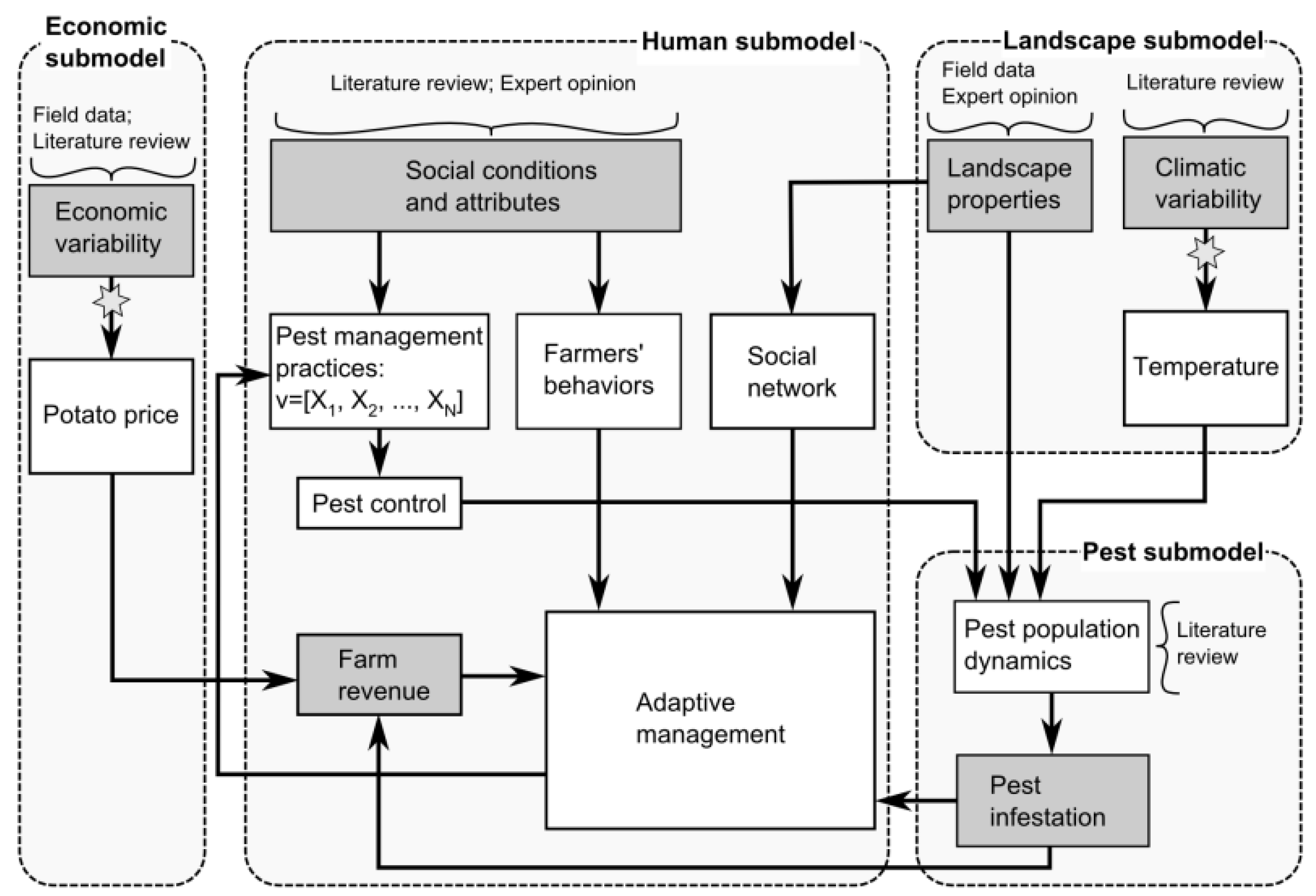
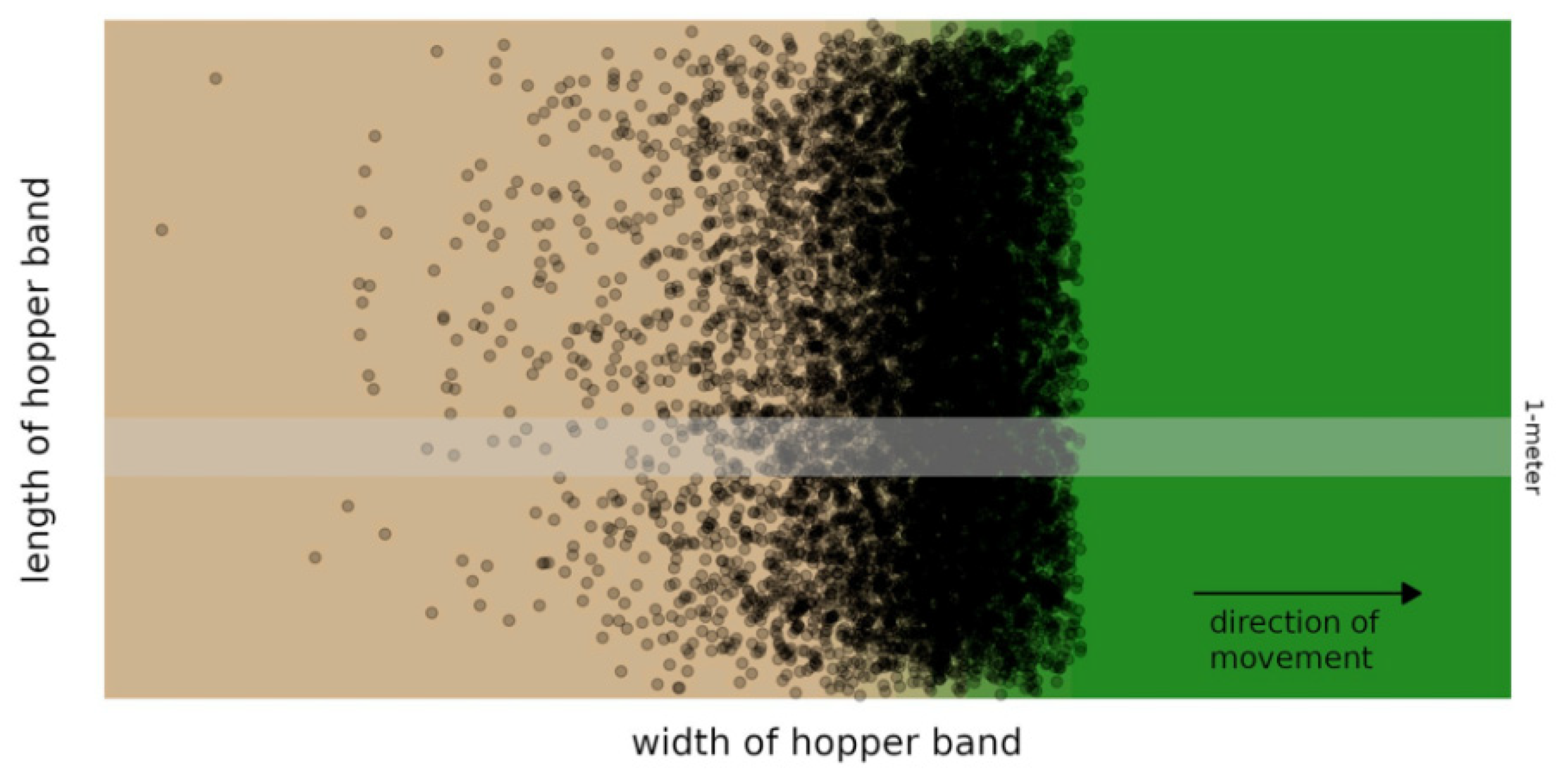
Figure 2.
The underlying model is composed of a network of interacting farmers who are capable of learning and adapting to circumstances.
Figure 2.
The underlying model is composed of a network of interacting farmers who are capable of learning and adapting to circumstances.
Figure 3.
Schematic of a traveling pulse of locusts.
3. Pollination Dynamics Modeling
Pollination services in agriculture involve complex interactions between plants, pollinators, and the environment, making them well suited for agent-based modeling. ABMs have been used to explore various facets of pollination [4], including pollinator foraging behavior, plant-pollinator spatial arrangement, and environmental effects on pollination success.
In 2018, Everaars et al. [12] developed SOLBEE, an individual-based, spatially explicit model of solitary bees operating on a 1-km2 grid landscape, as shown in Figure 4. The model links body size allometrically to foraging traits and simulates a five-stage foraging cycle (forage, move, explore, return, unload). Across 12,000 simulations, results showed that traits dominated: body size largely determined flower-visit rates, while nesting preference governed landscape coverage and foraging distance. Importantly, a simple proxy—the ratio of nest to foraging habitat—outperformed fragmentation in predicting fitness and pollination outcomes, with visitation saturating near 0.2.
In 2018, Qu et al. developed an ABM [4] for wild blueberry fields composed of genetically distinct clones pollinated by diverse insects. The model included honeybees, bumble bees, and solitary bees with species-specific foraging traits to assess how pollinator composition and behavior influence fruit set, as shown in Figure 5. Because blueberries are largely self-sterile, the simulation emphasized cross-clone visits across a heterogeneous landscape. By varying clone patch size, pollinator densities, and weather, the authors showed how ABM can reveal optimal species mixes and field arrangements to maximize yield—insights difficult to obtain from field trials alone.
In 2023, Cao et al. developed a spatially explicit Strawberry Pollination Simulation Model (SPSM) on the GAMA platform, representing honeybees as foraging agents and each strawberry flower as a receptive entity in a bounded greenhouse layout. This paper [5] used SPSM to test bee density and hive distribution, tracking every bee, flower, pollen grain, and fruit, as shown in Figure 6. Results showed a saturation beyond ~1 bee per plant, and that more even hive placement improves fruit quality and overall pollination efficiency. Continuous bee activity also mitigates stigma receptivity constraints, helping explain why bee pollination outperforms manual pollination.
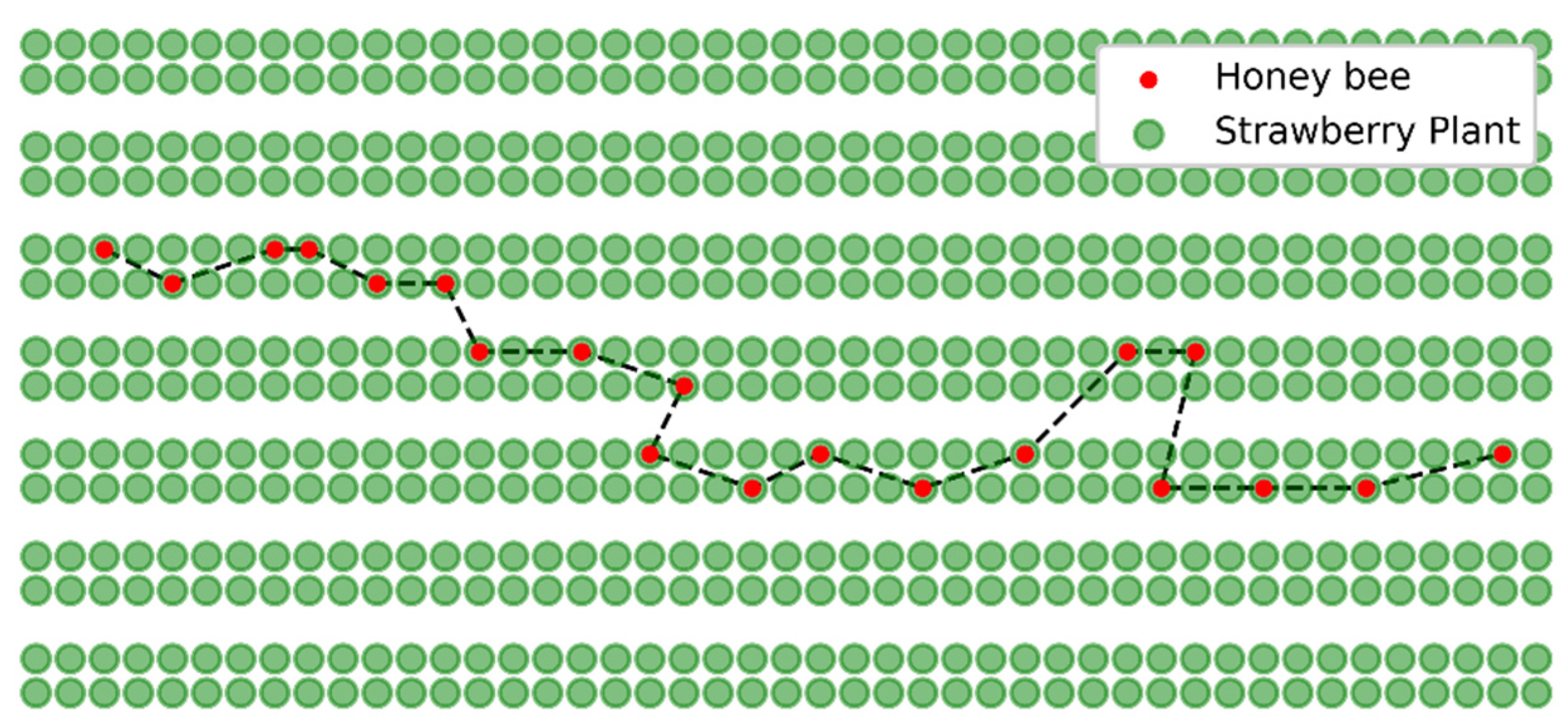
Building on the same SPSM framework, Cao et al. [6,7] extended the model with a state machine representation of bee flight and multiple cultivars, to evaluate field design (i.e.,interplanting) and staggered planting strategies in 2024, as shown in Figure 7. Simulations favored alternating rows of different cultivars within the same bed to enhance cross-pollination, and suggested staggering planting by ~5 days to reduce peak bloom competition for bee visits and increase average berry weight.
4. Vegetation Succession Modeling
Beyond specific interactions like pest outbreaks or pollination, ABMs have been applied to longer-term vegetation dynamics and succession in agricultural landscapes. By integrating plant growth processes into agent rules, these models can simulate how plant communities change over time under various scenarios, thereby providing a basis for decision-making for growers or government.
In 2017, Spies et al. developed an agent-based landscape model [8] based on Envision for a fire-prone region in Oregon that incorporated an existing forest succession model alongside agents representing landowners. In this coupled human-natural system model, the vegetative agents grew and transitioned through successional stages while landowner agents made decisions about fuel treatments and timber harvest. The ABM was used to compare alternative management scenarios over a 50-year period, revealing how different policies influence forest structure, wildfire outcomes, and ecosystem service metrics.
In 2023, Von Essen et al. [16] introduced ABSOLUG, an abstract agent-based model of tropical commodity frontiers that integrates governments, NGOs, smallholders, and largeholders to assess multi-stakeholder governance. The model simulates land-use, business, and political processes—linking profits, reputational risks, and lobbying–campaigning dynamics—to evaluate scenarios ranging from hands-off policies to proactive conservation. Results reproduced three common forest trajectories: near-total deforestation, low-level stagnation, and forest transition, with sensitivity analyses highlighting largeholder action cadence and production costs as key drivers.
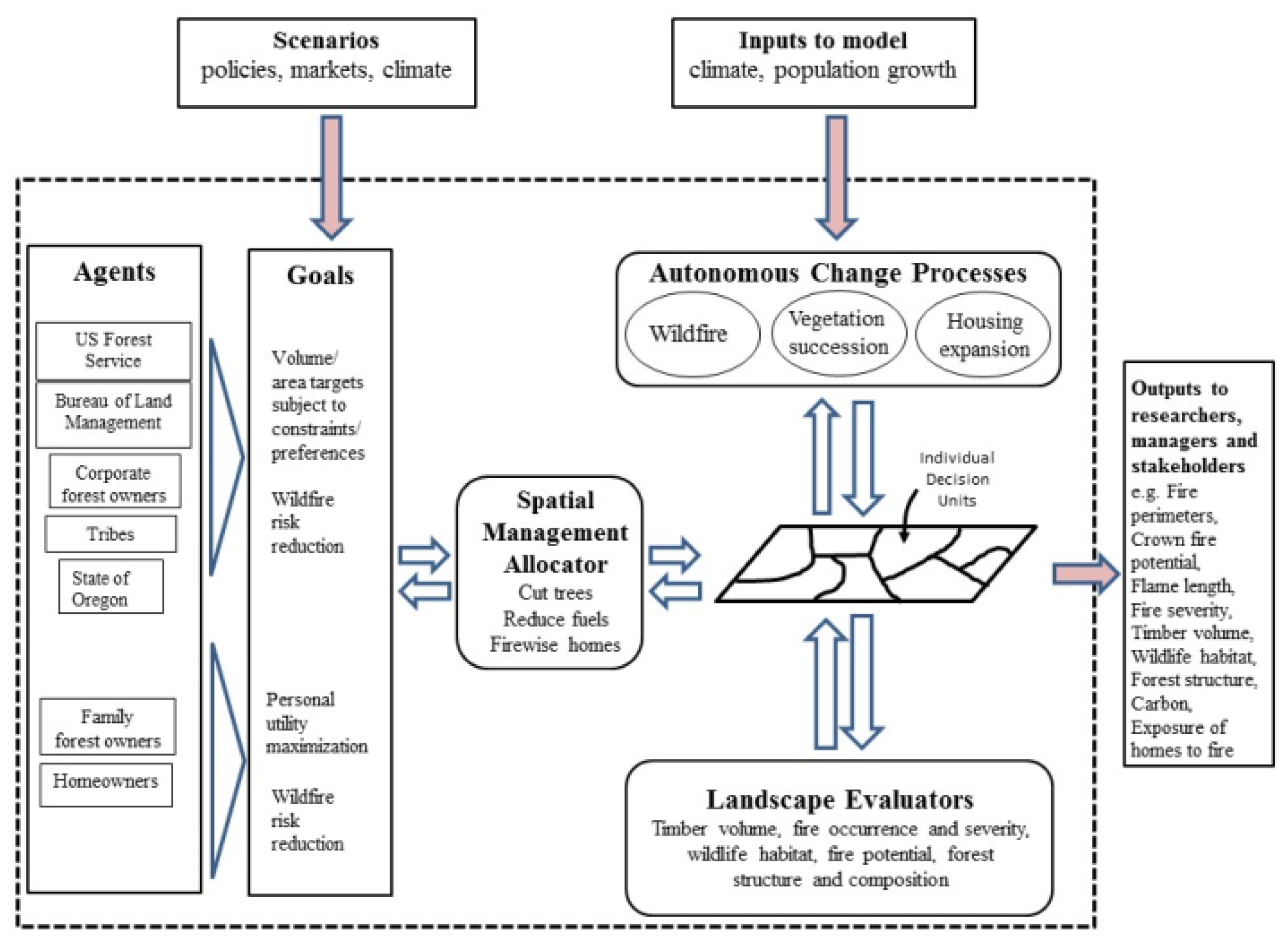
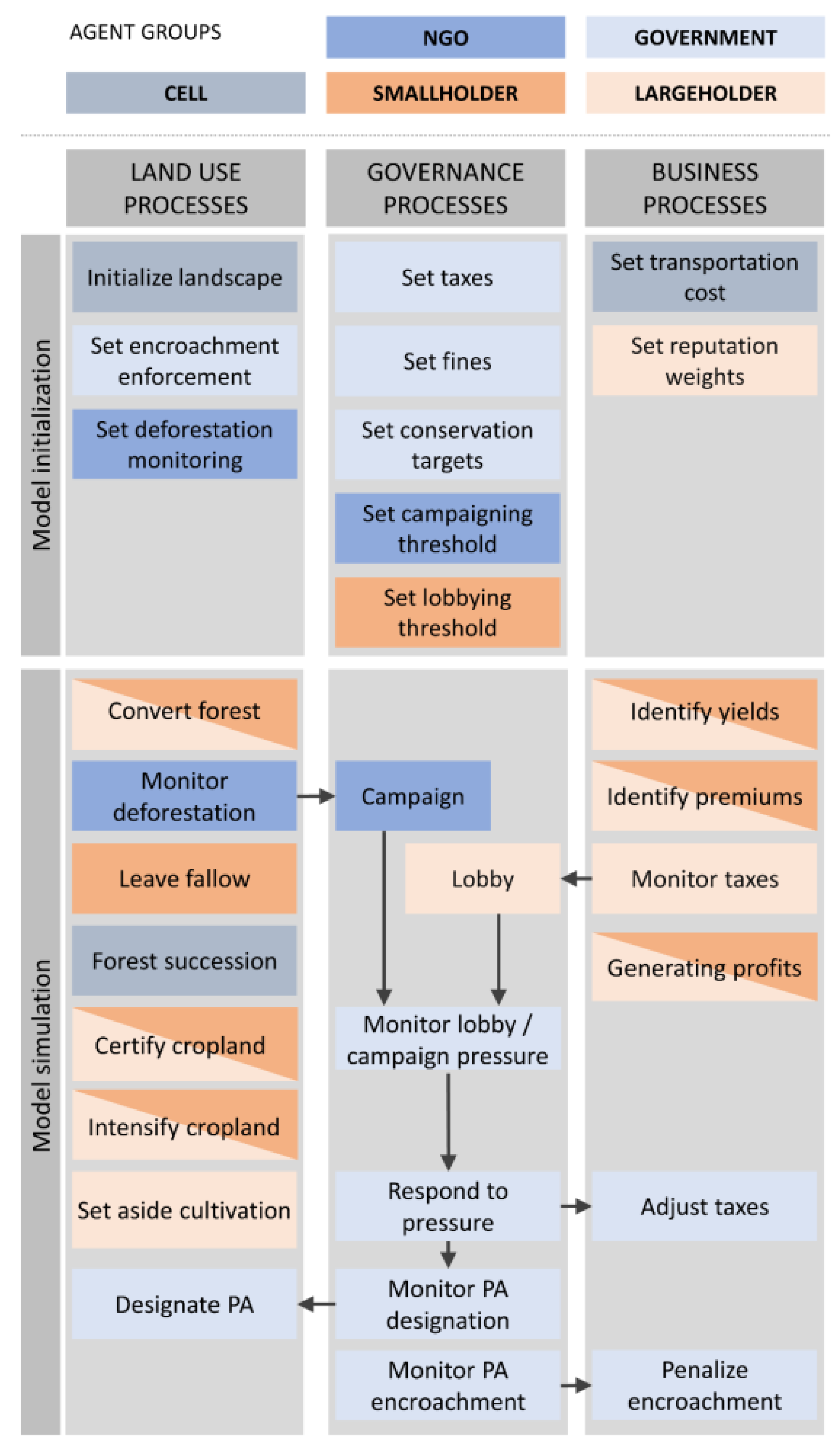
Figure 6.
Conceptual model of components and interactions of the Envision model.
Figure 6.
Five agent groups engage in processes across three process columns.
Arnejo et al. [17] developed a spatially explicit ABM of a lowland dipterocarp forest in the Philippines to evaluate selective logging (SL) with and without assisted natural regeneration (ANR). Simulations over 500 years showed that SL alone caused steady forest decline, while coupling SL with ANR maintained ~80% forest cover and produced more stable profits in later centuries. This case highlights how ABMs can link ecological regeneration processes with economic outcomes, offering a virtual laboratory for policy testing in resource management.
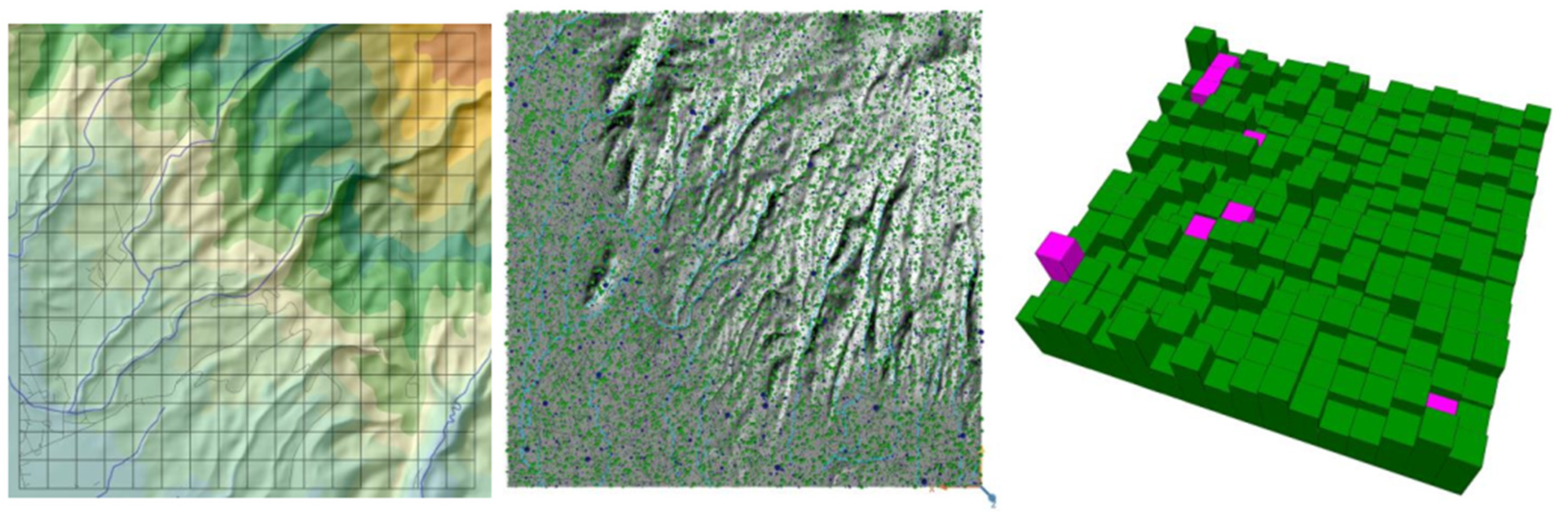
Figure 6.
Simualtion forest results in this ABM.
In summary, ABMs allow researchers to conduct “what-if” experiments on vegetation succession, a capability absent in traditional statistical learning and machine learning methods. By explicitly simulating the gradual, spatially regrowth of plant communities in tandem with management actions.
5. Nutrient Cycling Modeling
ABMs have also been used to investigate nutrient cycling and other ecosystem services in agricultural systems. Nutrient flows such as nitrogen involve interactions among soil organisms, crops, livestock, and farmers, which ABM can capture at multiple organizational levels.
In 2018, Grillot et al. provided TERROIR model, which analyzed nutrient cycling in West African agro-silvo-pastoral systems during historical agrarian transitions [9]. In TERROIR, agents were defined at three levels: plot, household, and landscape, to represent how farmers manage fields and livestock, and how those decisions scale up to affect nutrient redistribution. The ABM can simulate several decades of agricultural intensification and tracked consequences for nitrogen cycling, soil fertility, and resource use efficiency. This model shows how ABMs can serve as “virtual laboratories” to examine ecosystem functions: by adjusting agents’ behaviors or external drivers, one can explore scenarios of nutrient management, closure of nutrient loops, or the impact of interventions like fertilizer subsidies on system-wide nutrient balances.
In 2020, Fernandez-Mena et al. developed the Flows in Agro-food Networks (FAN) model [19], an agent-based framework designed to simulate exchanges of fertilizers, feed, food, and wastes among farms and their partners in local agricultural systems. Using the Ribéracois district in France as a case study, FAN explored how distance, willingness to exchange, and material preferences influence nutrient recycling, bioenergy production, and greenhouse gas emissions. By integrating multiple agent types and diverse biomass flows, the model highlights opportunities for circular economy strategies and offers a comprehensive tool to evaluate trade-offs between food production and environmental sustainability.
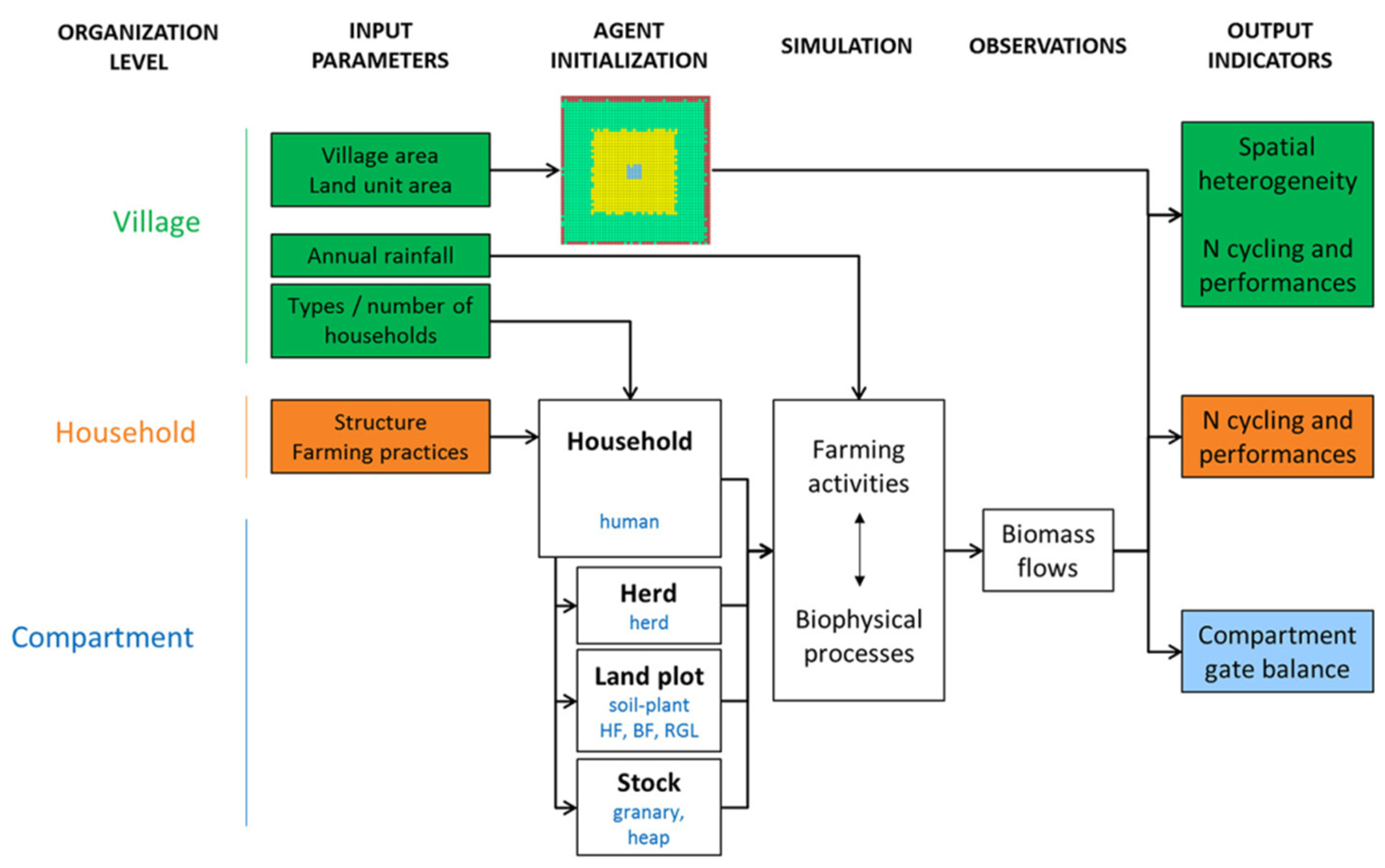
Figure 7.
Model structure: from input parameters to output indicators at the three levels of organization.
Figure 7.
Model structure: from input parameters to output indicators at the three levels of organization.
In 2025, Bradley et al. [20] developed a spatially explicit ABM that integrates Ecological Stoichiometry Theory, Dynamic Energy Budget theory, and Nutritional Geometry to examine how stoichiometric imbalances scale from individuals to ecosystems. Using snowshoe hares in nitrogen-limited boreal forests as a case study, the model tracks dual carbon- and nitrogen-rich reserves, feeding strategies, and nutrient recycling. Results showed that selective feeding nearly doubled adult abundance relative to random feeding and reshaped nutrient cycling by amplifying or redistributing spatial heterogeneity, demonstrating how individual nutritional mismatches can drive emergent population and ecosystem dynamics.
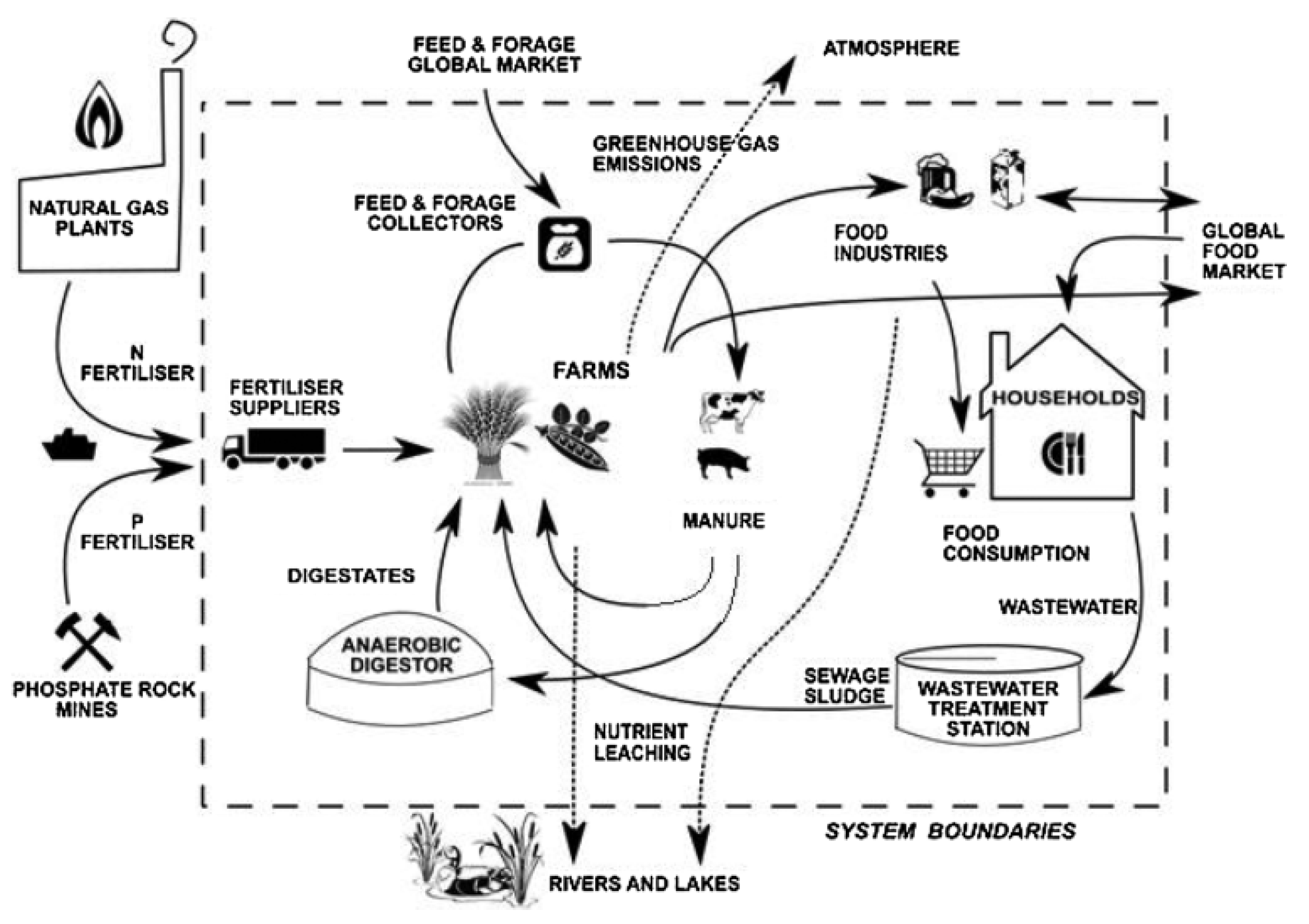
Figure 7.
Conceptual framework of the nutrient and biomass flows involved in FAN’s agro-food network.
Figure 7.
Conceptual framework of the nutrient and biomass flows involved in FAN’s agro-food network.
This application of ABMs contributes to understanding ecosystem services in agriculture. By representing the distributed decisions and feedbacks underlying services like nutrient cycling, these models help identify key points for more sustainable agroecosystem management.
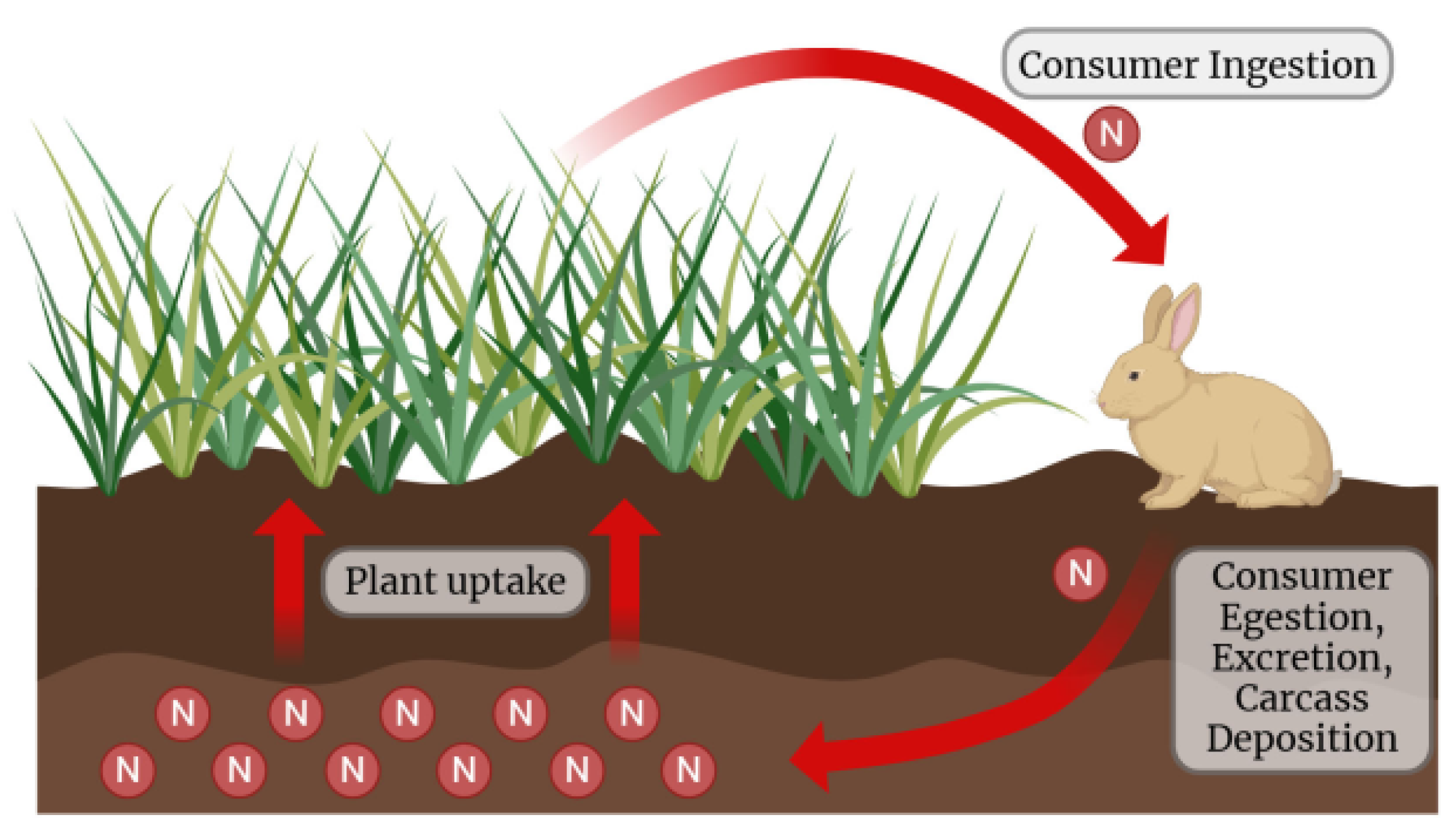
Figure 7.
A nitrogen cycle involving plant and consumer interactions.
6. Farmer Decision-Making Modeling
One of the greatest strengths of ABMs in agriculture is its ability to represent individual farmer decision-making and its aggregate effects. Farming communities are often heterogeneous, with each farmer having unique resources, preferences, and strategies [10]. ABM enables the modeling of each farmer as an autonomous decision-making agent, which is crucial for studying policy impact in agricultural systems.
In 2018, Hailegiorgis et al. developed OMOLAND-CA [18], an agent-based model of rural households in Ethiopia, to explore adaptation under climate variability. The model uniquely incorporates socio-cognitive decision processes, allowing households to combine farming and herding strategies while responding to rainfall onset and amount. Simulation experiments across baseline, rare droughts, consecutive droughts, and erratic climate scenarios showed that mixed livelihood strategies enhance resilience, but successive extreme events severely erode assets and drive migration.
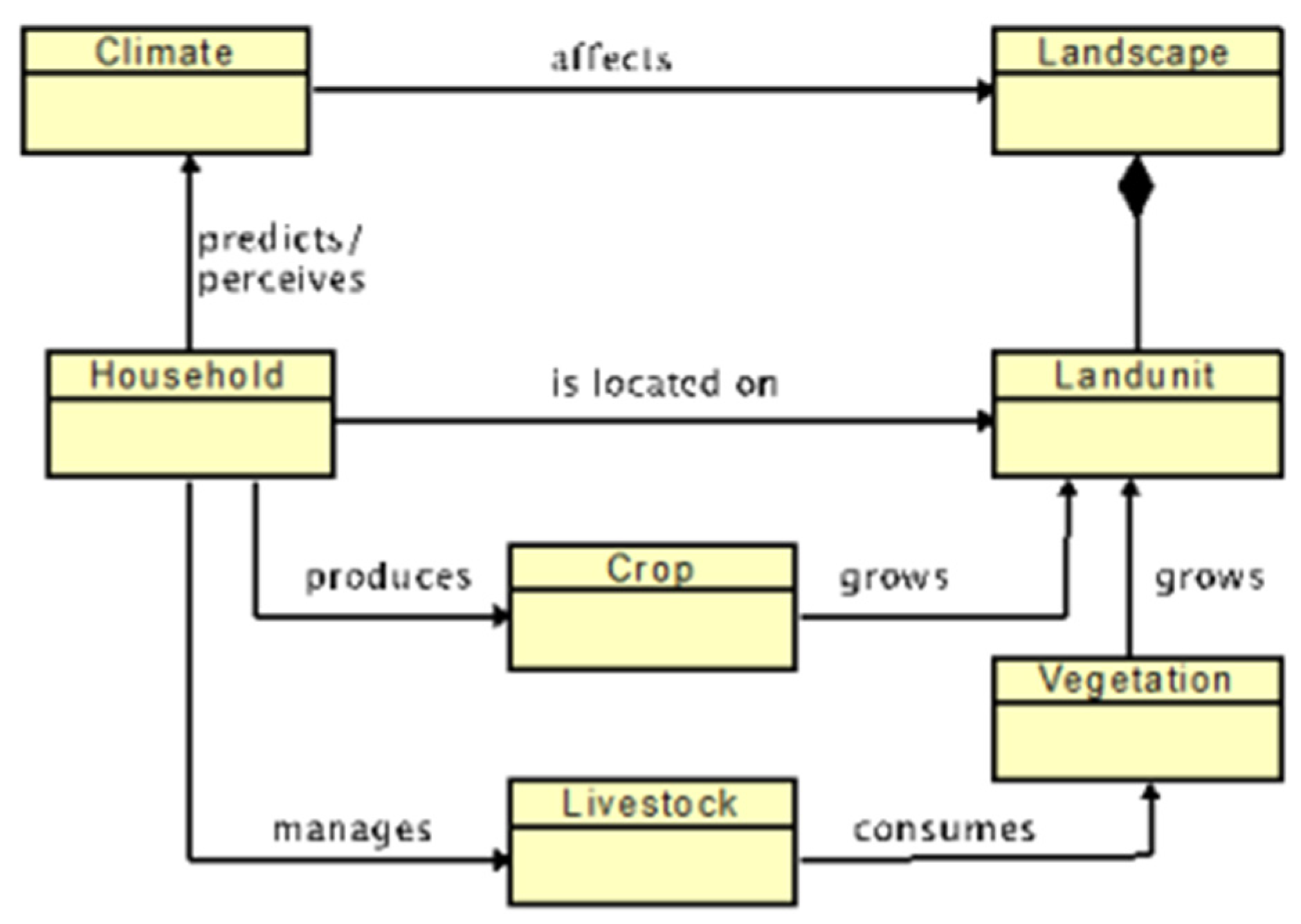
Figure 8.
High-level architecture of the OMOLAND-CA model.
In 2022, Musayev et al. coupled an ABM of smallholder farmers in Ethiopia with a crop productivity model to assess the impact of adopting seasonal weather forecasts on maize yields [11]. In their model, each farmer agent made planting and management decisions based on whether they received and trusted climate forecast information, with social interactions influencing the spread of forecast usage. The outputs showed that when a majority of farmers used weather forecasts to time their planting, community-wide maize yields increased by 17–30% under drought or excess-rainfall conditions, as compared to scenarios with no forecast adoption.
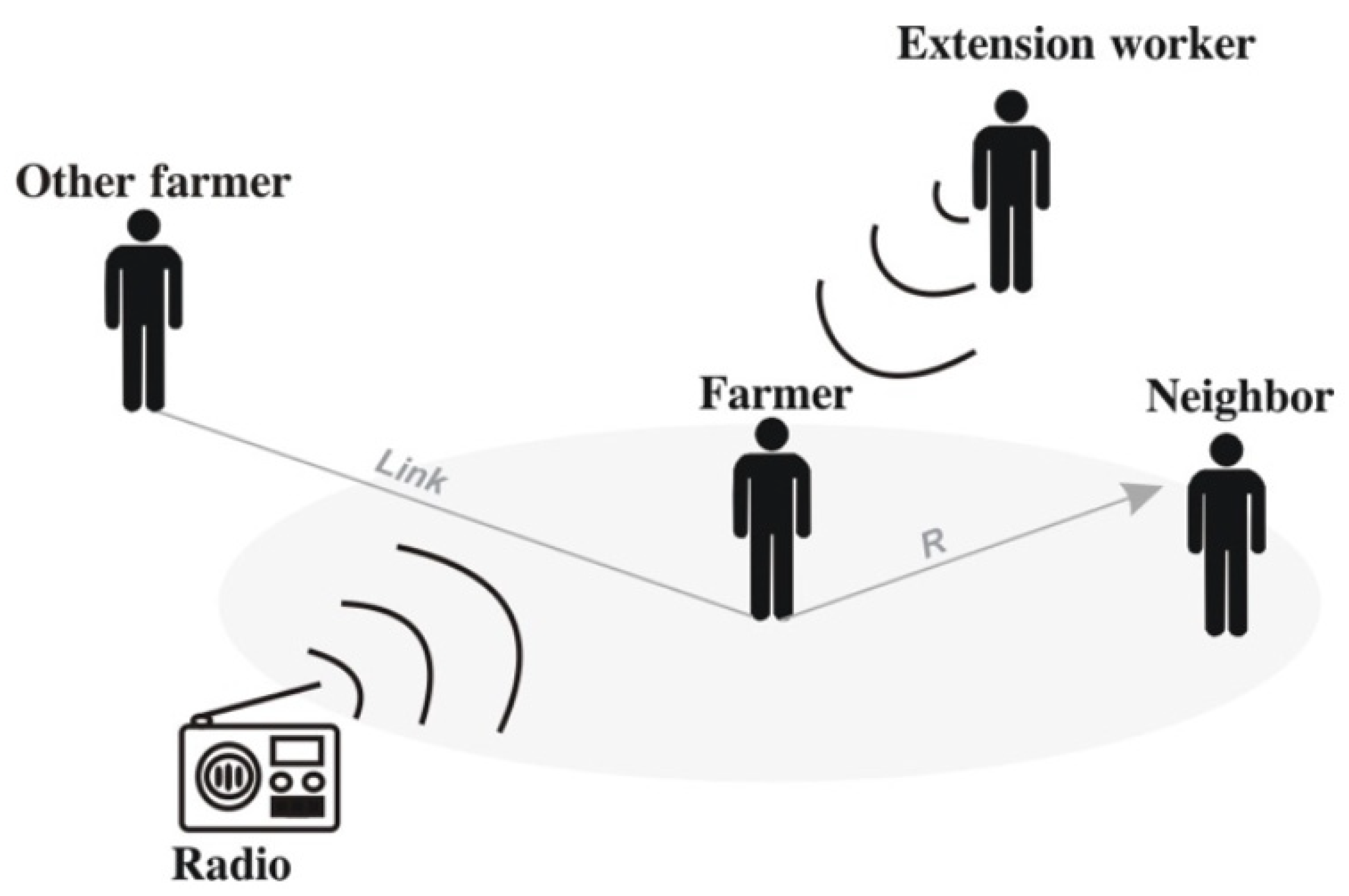
Figure 8.
Description of agents’ communication about weather forecast information in the community.
7. Future Outlook
Looking ahead, ABM in agricultural systems is poised to become more data-rich, computationally efficient, and decision-oriented. Building on the applications reviewed in this paper, we highlight three research directions with high potential impact in the future.
1) Hybrid ABM–AI model. By combining agent-based models with AI, it becomes possible to make simulations smarter. Machine learning can help discover rules of behavior directly from data. In addition, reinforcement learning can be used to test how agents adapt under different management strategies [24]. These hybrid approaches can speed up large simulation runs while still keeping the underlying ABM structure interpretable.
2) Digital twins. Coupling ABMs with real-time data streams from IoT devices can yield operational digital twins for farms, greenhouses [25,27], and regions. These systems would continuously update model states, provide short-term forecasts, and quantify uncertainty, thereby supporting time-critical decisions such as pest control, irrigation scheduling.
3) Multi model coupling. Integrating ABMs with ordinary process based crop, hydrological, and epidemiological models etc. can bridge organismal behavior with biophysical fluxes and constraints [26]. Morevoer, consistent coupling across spatial and temporal scales enables richer scenario analyses, reduces structural bias through cross model validation, and facilitates evaluation of management portfolios.
8. Conclusions
In conclusion, ABMs provide a unifying analysis framework for agriculture, linking heterogeneous agents and local interactions to emergent outcomes that matter for productivity, sustainability, and livelihoods. The paper demonstrates that ABM can illuminate mechanisms of pest and disease spread, explain pollination and vegetation dynamics, trace nutrient flows, and quantify the aggregate implications of diverse farmer decisions. By enabling transparent “what-if” experiments, ABM complements field trials and aggregate models, often revealing nonlinear responses and unintended consequences.
As data volumes, computing capabilities, and methodological standards continue to advance, agricultural ABMs are likely to evolve into calibrated, interoperable, and scalable platforms that support real-time decision-making and policy design. However, realizing this potential will require rigorous validation and sustained collaboration across ecological, agronomic, computational expertise to ensure that ABMs remain both credible and practical.
References
- Schreinemachers, Pepijn, and Thomas Berger. “An agent-based simulation model of human–environment interactions in agricultural systems.” Environmental Modelling & Software 26.7 (2011): 845-859. [CrossRef]
- Helbing, Dirk. “Agent-based modeling.” Social self-organization: Agent-based simulations and experiments to study emergent social behavior. Berlin, Heidelberg: Springer Berlin Heidelberg, 2012. 25-70.
- Rebaudo, François, et al. “Agent-based modeling of human-induced spread of invasive species in agricultural landscapes: insights from the potato moth in Ecuador.” Journal of Artificial Societies and Social Simulation 14.3 (2011): 7. [CrossRef]
- Qu, Hongchun, and Frank Drummond. “Simulation-based modeling of wild blueberry pollination.” Computers and electronics in agriculture 144 (2018): 94-101. [CrossRef]
- Cao, Zhihao, et al. “Effects of bee density and hive distribution on pollination efficiency for greenhouse strawberries: A simulation study.” Agronomy 13.3 (2023): 731. [CrossRef]
- Cao, Zhihao, Shuo Jiang, and Hongchun Qu. “Strategies to enhance greenhouse strawberry yield through honeybee pollination behavior: a simulation study.” Frontiers in Plant Science 15 (2024): 1514372. [CrossRef]
- Cao, Zhihao, et al. “Why does strawberry fruit weight distribution show positive skewness? A simulation model reveals the underlying processes of fruit production.” Frontiers in Plant Science 14 (2023): 1255724. [CrossRef]
- Spies, Thomas A., et al. “Using an agent-based model to examine forest management outcomes in a fire-prone landscape in Oregon, USA.” Ecology and Society 22.1 (2017). [CrossRef]
- Grillot, Myriam, Jonathan Vayssières, and Dominique Masse. “Agent-based modelling as a time machine to assess nutrient cycling reorganization during past agrarian transitions in West Africa.” Agricultural Systems 164 (2018): 133-151. [CrossRef]
- Will, Meike, et al. “From primary data to formalized decision-making: open challenges and ways forward to inform representations of farmers’ behavior in agent-based models.” Ecology and Society 29.4 (2024). [CrossRef]
- Musayev, Sardorbek, et al. “Application of Agent-Based Modeling in Agricultural Productivity in Rural Area of Bahir Dar, Ethiopia.” Forecasting 4.1 (2022): 349-370. [CrossRef]
- Everaars, Jeroen, Josef Settele, and Carsten F. Dormann. “Fragmentation of nest and foraging habitat affects time budgets of solitary bees, their fitness and pollination services, depending on traits: results from an individual-based model.” PloS one 13.2 (2018): e0188269. [CrossRef]
- Atallah, Shady S., et al. “An agent-based model of plant disease diffusion and control: Grapevine leafroll disease.” (2012).
- Bernoff, Andrew J., et al. “Agent-based and continuous models of hopper bands for the Australian plague locust: How resource consumption mediates pulse formation and geometry.” PLoS computational biology 16.5 (2020): e1007820. [CrossRef]
- Rebaudo F, Dangles O. Adaptive management in crop pest control in the face of climate variability: an agent-based modeling approach[J]. Ecology and Society, 2015, 20(2). [CrossRef]
- Von Essen M, Lambin E F. Agent-Based Simulation of Land Use Governance (ABSOLUG) in Tropical Commodity Frontiers[J]. Journal of Artificial Societies and Social Simulation, 2023, 26(1). [CrossRef]
- Arnejo Z, Barua L, Ramirez P J, et al. An Agent-Based Model of a Sustainable Forest Operation in a Theoretical Lowland Dipterocarp Forest Modeled after Mount Makiling Forest Reserve, Philippines[J]. Forests, 2023, 14(2): 428. [CrossRef]
- Hailegiorgis A, Crooks A, Cioffi-Revilla C. An agent-based model of rural households’ adaptation to climate change[J]. Journal of Artificial Societies and Social Simulation, 2018, 21(4). [CrossRef]
- Fernandez-Mena H, Gaudou B, Pellerin S, et al. Flows in Agro-food Networks (FAN): An agent-based model to simulate local agricultural material flows[J]. Agricultural Systems, 2020, 180: 102718. [CrossRef]
- Bradley L M, Duvall E S, Akinnifesi O J, et al. Exploring the multi-scale ecological consequences of stoichiometric imbalance using an agent-based modeling approach[J]. Frontiers in Ecology and Evolution, 2025, 13: 1505145. [CrossRef]
- DeClerck, Fabrice AJ, et al. “Agricultural ecosystems and their services: the vanguard of sustainability?.” Current opinion in environmental sustainability 23 (2016): 92-99. [CrossRef]
- Railsback, Steven F., and Volker Grimm. Agent-based and individual-based modeling: a practical introduction. Princeton university press, 2019.
- Grimm, Volker, et al. “The ODD protocol: a review and first update.” Ecological modelling 221.23 (2010): 2760-2768. [CrossRef]
- Osoba, Osonde A., et al. “Modeling agent behaviors for policy analysis via reinforcement learning.” 2020 19th IEEE International Conference on Machine Learning and Applications (ICMLA). IEEE, 2020.
- Alamri, Sultan, Imran Usman, and Saad Alvi. “Agent based modelling in digital twins for household water consumption forecasting.” Przegląd Elektrotechniczny 100 (2024). [CrossRef]
- Scheffer, Verónica Rojas. “Application of hydrogeological models coupled with agent-based models to address sustainable groundwater management in Latin America.” Hydrogeology Journal 32.4 (2024): 935-949. [CrossRef]
- Purcell, Warren, and Thomas Neubauer. “Digital Twins in Agriculture: A State-of-the-art review.” Smart Agricultural Technology 3 (2023): 100094. [CrossRef]
Figure 1.
Schematic representation of the model structure.
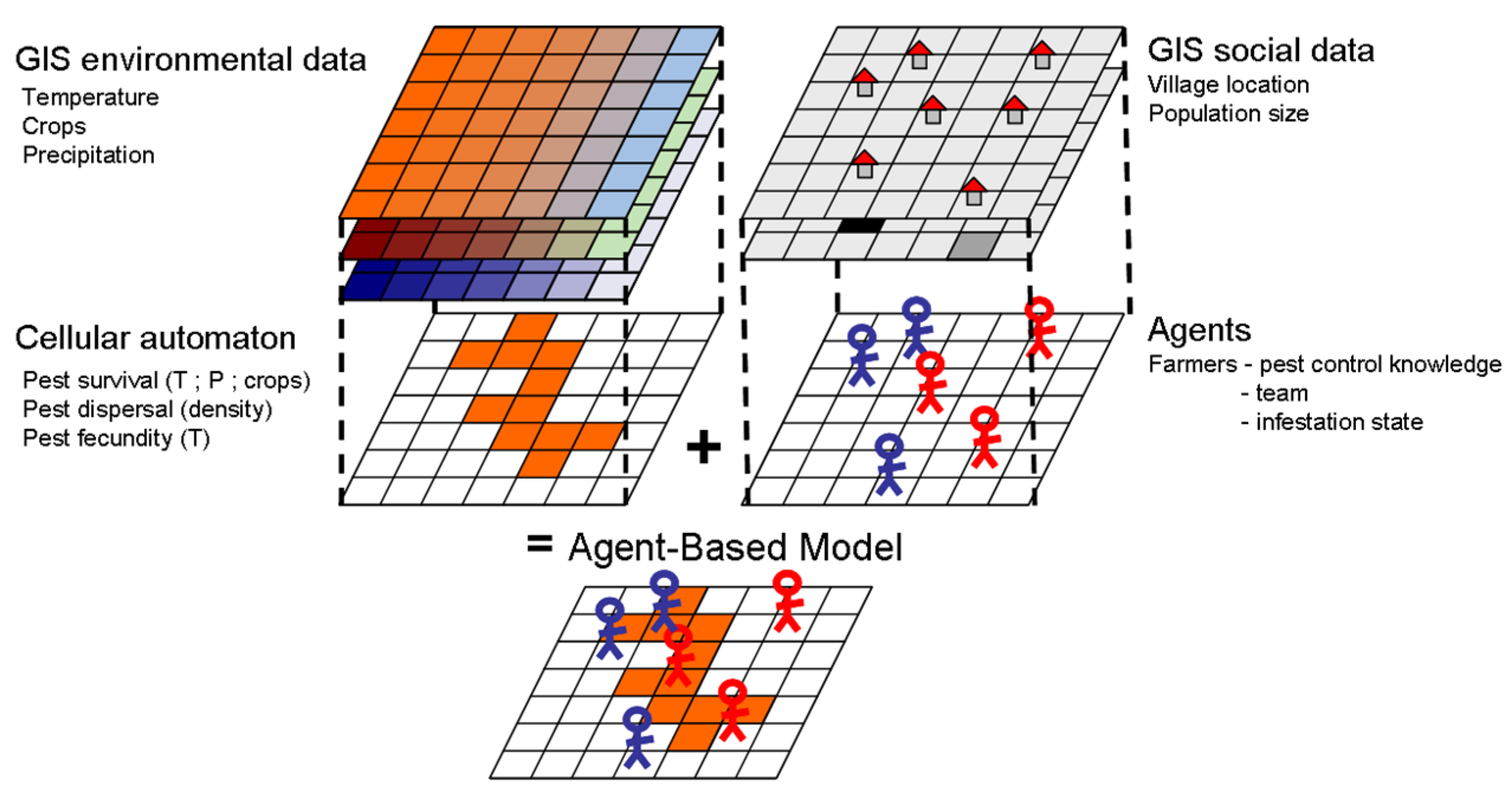
Figure 2.
Realizations of the spatial disease diffusion.
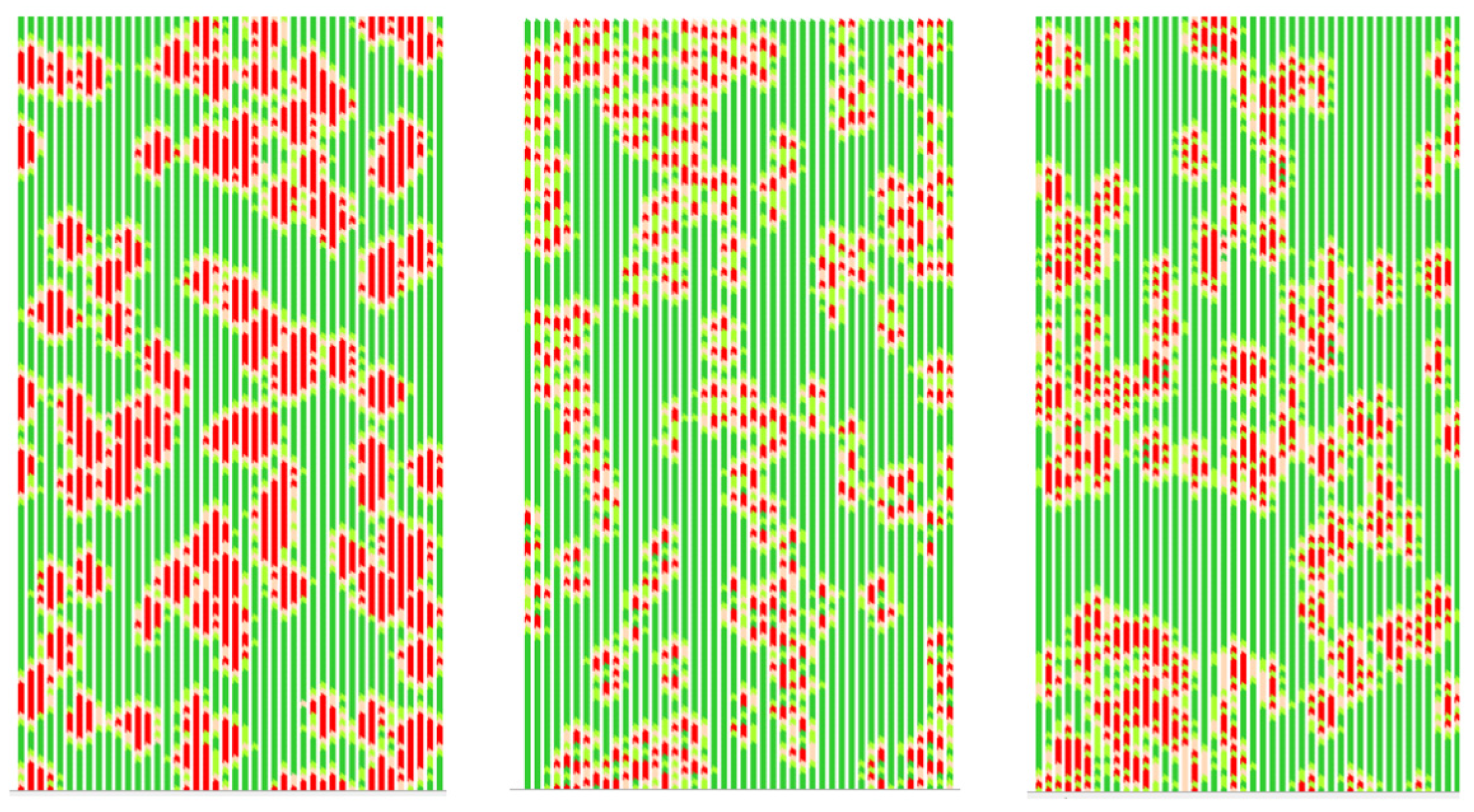
Figure 4.
Conceptual diagram, illustrating how landscape grid cells with flowers are used.
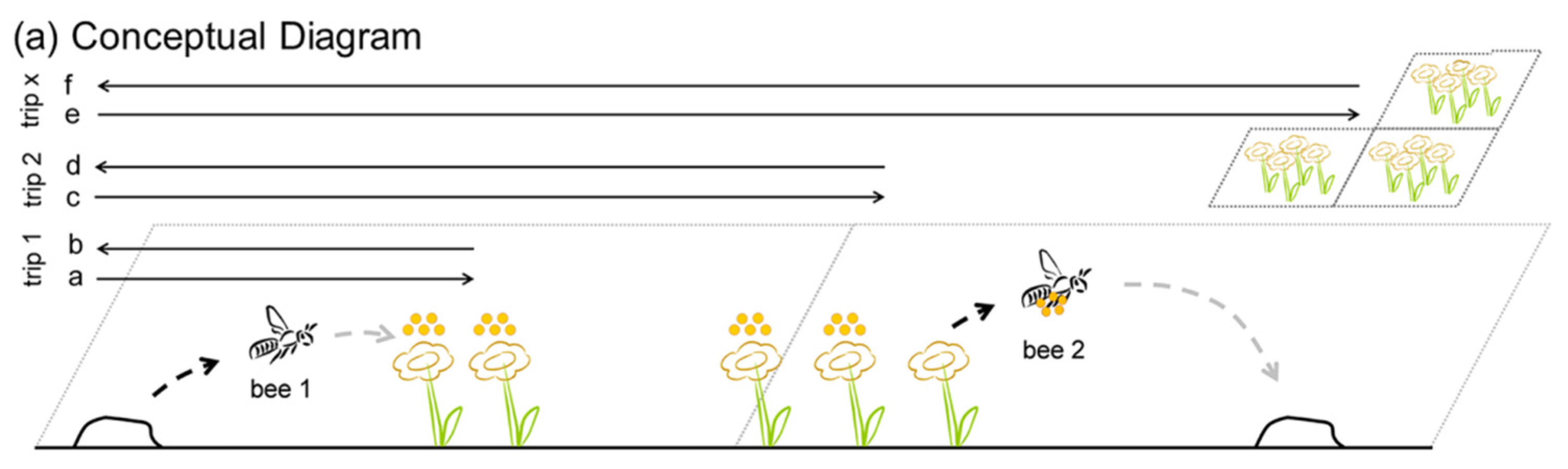
Figure 5.
Conceptual model of wild blueberry cross-pollination composed of key ecological processes.
Figure 5.
Conceptual model of wild blueberry cross-pollination composed of key ecological processes.
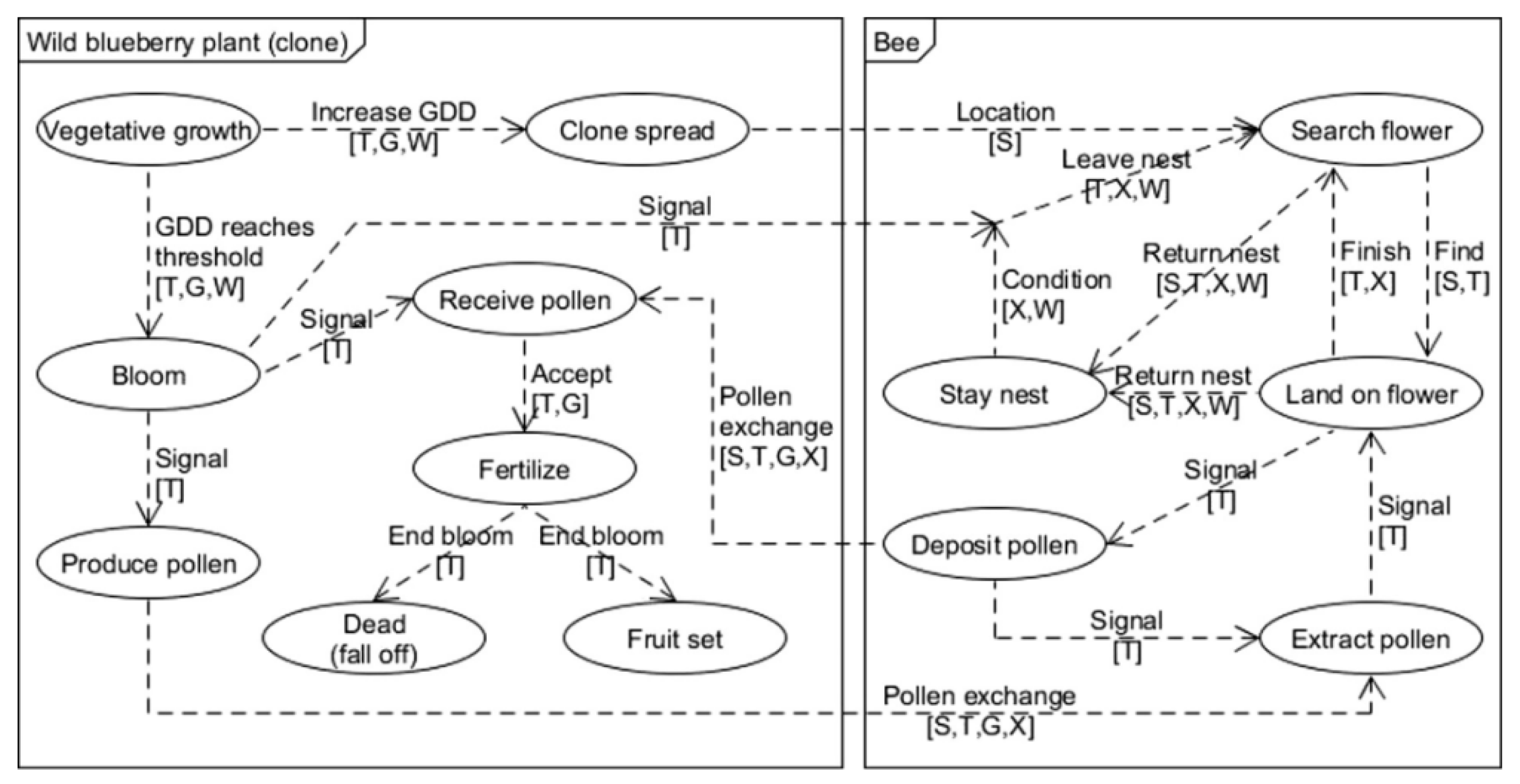
Figure 6.
Entities and their interactions for strawberry pollination.
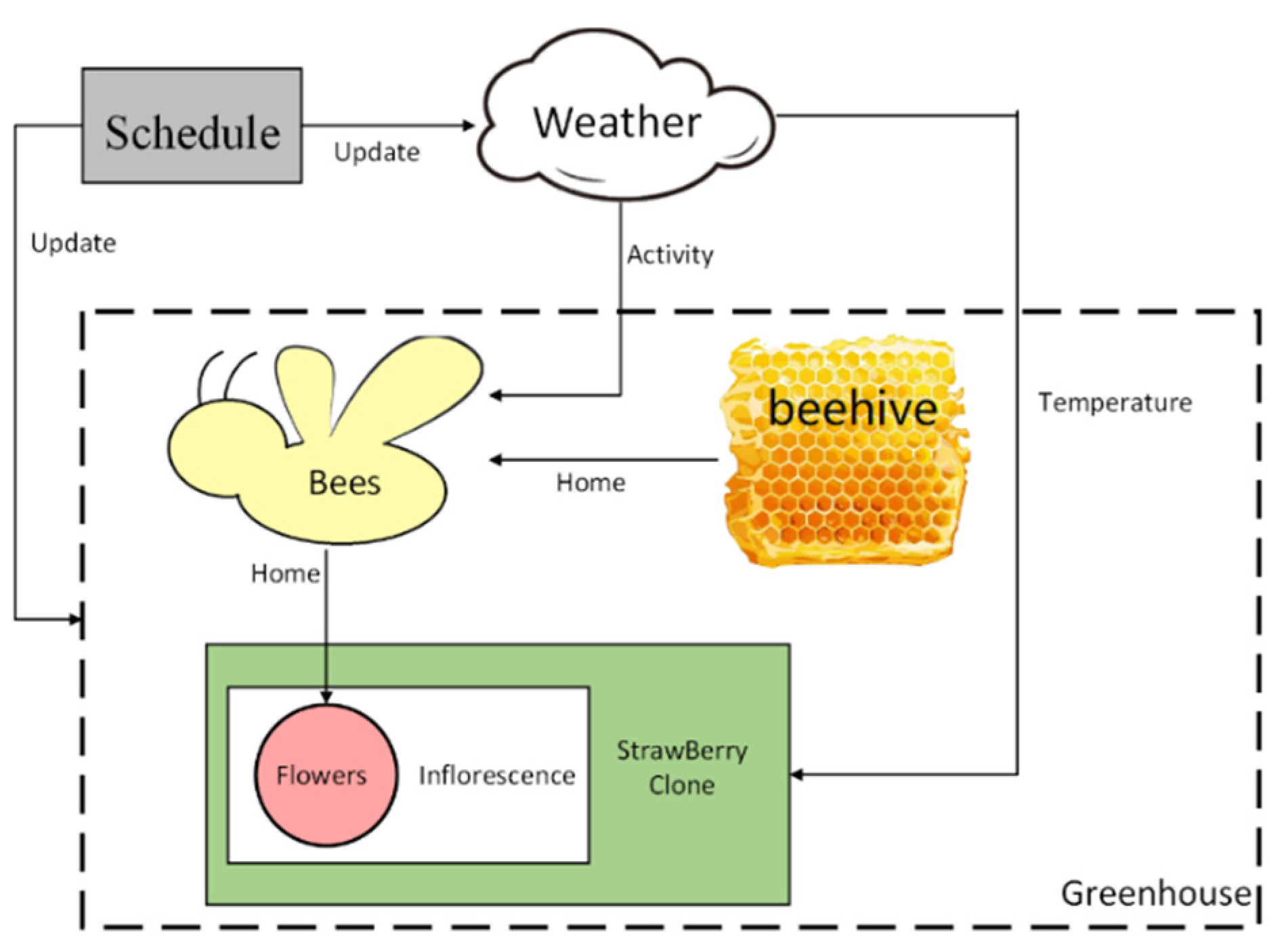
Figure 7.
A typical honeybee flight trajectory in the simulation.
Disclaimer/Publisher’s Note: The statements, opinions and data contained in all publications are solely those of the individual author(s) and contributor(s) and not of MDPI and/or the editor(s). MDPI and/or the editor(s) disclaim responsibility for any injury to people or property resulting from any ideas, methods, instructions or products referred to in the content. |
© 2025 by the authors. Licensee MDPI, Basel, Switzerland. This article is an open access article distributed under the terms and conditions of the Creative Commons Attribution (CC BY) license (http://creativecommons.org/licenses/by/4.0/).
Copyright: This open access article is published under a Creative Commons CC BY 4.0 license, which permit the free download, distribution, and reuse, provided that the author and preprint are cited in any reuse.


