

Submitted:
27 August 2025
Posted:
29 August 2025
You are already at the latest version
Abstract
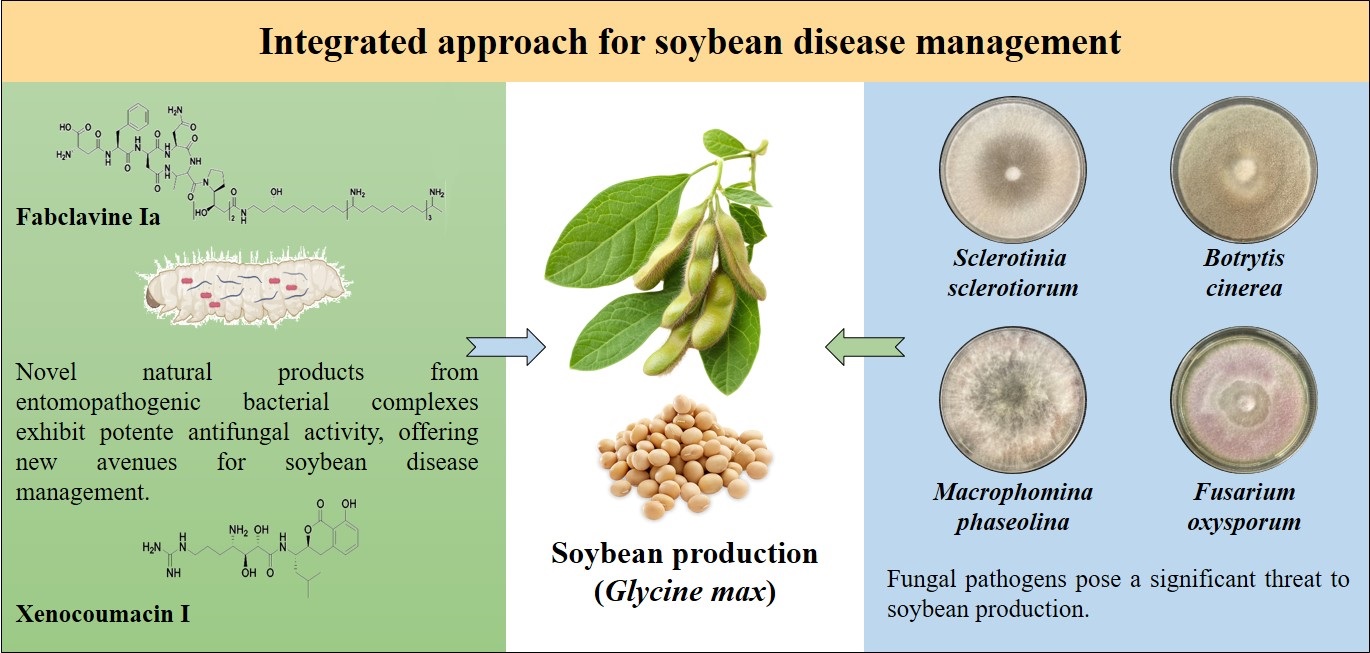
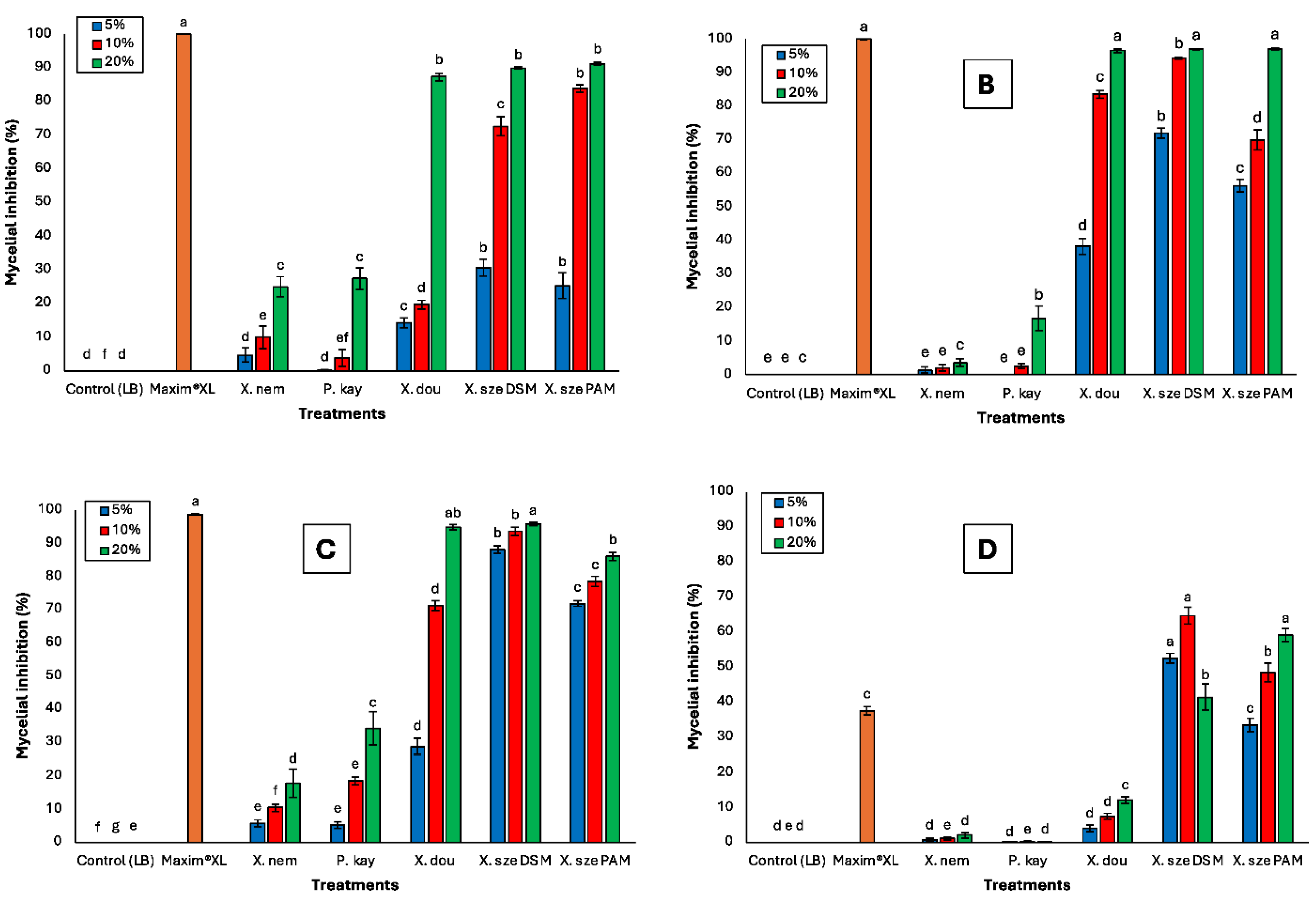
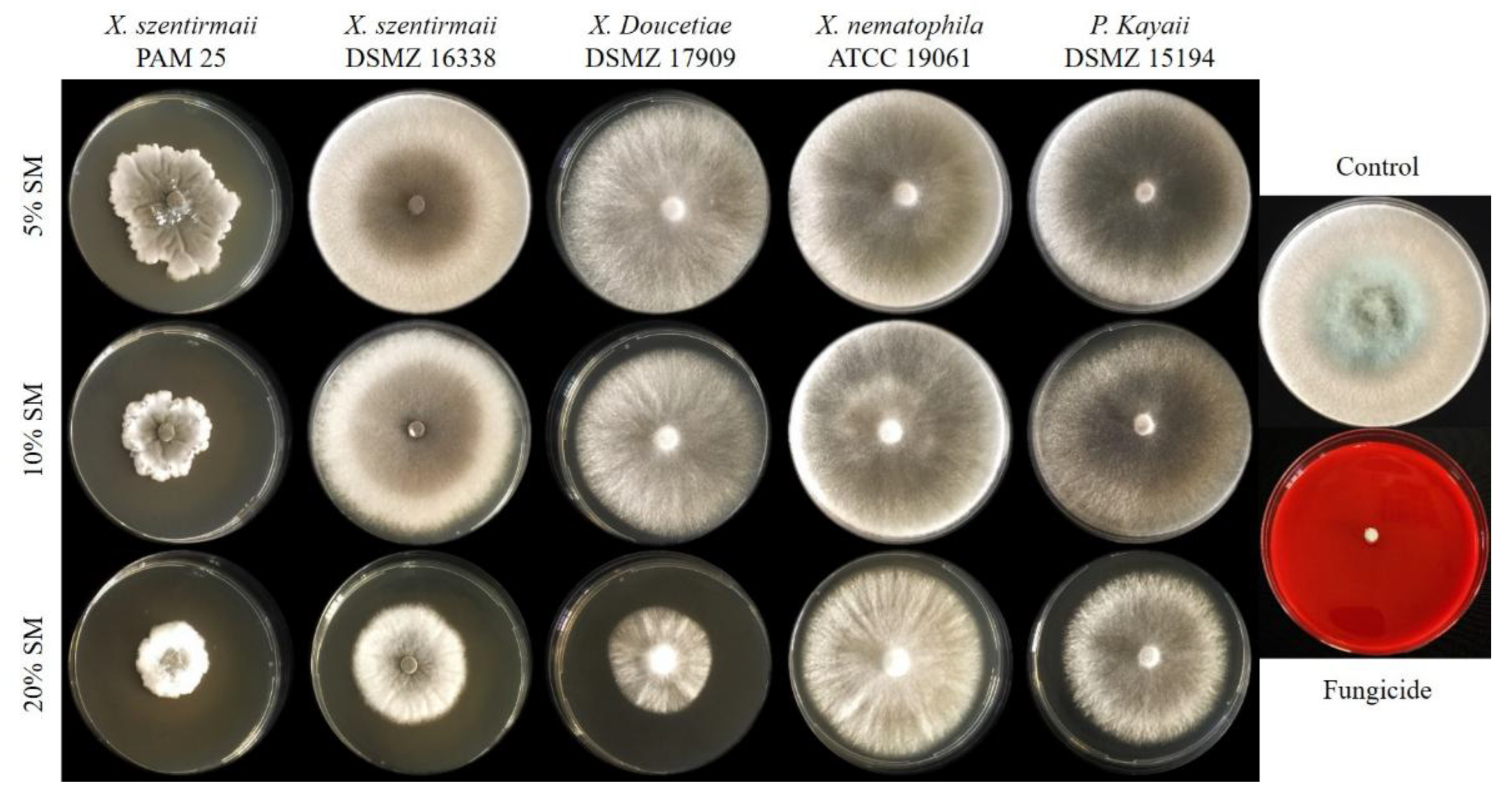
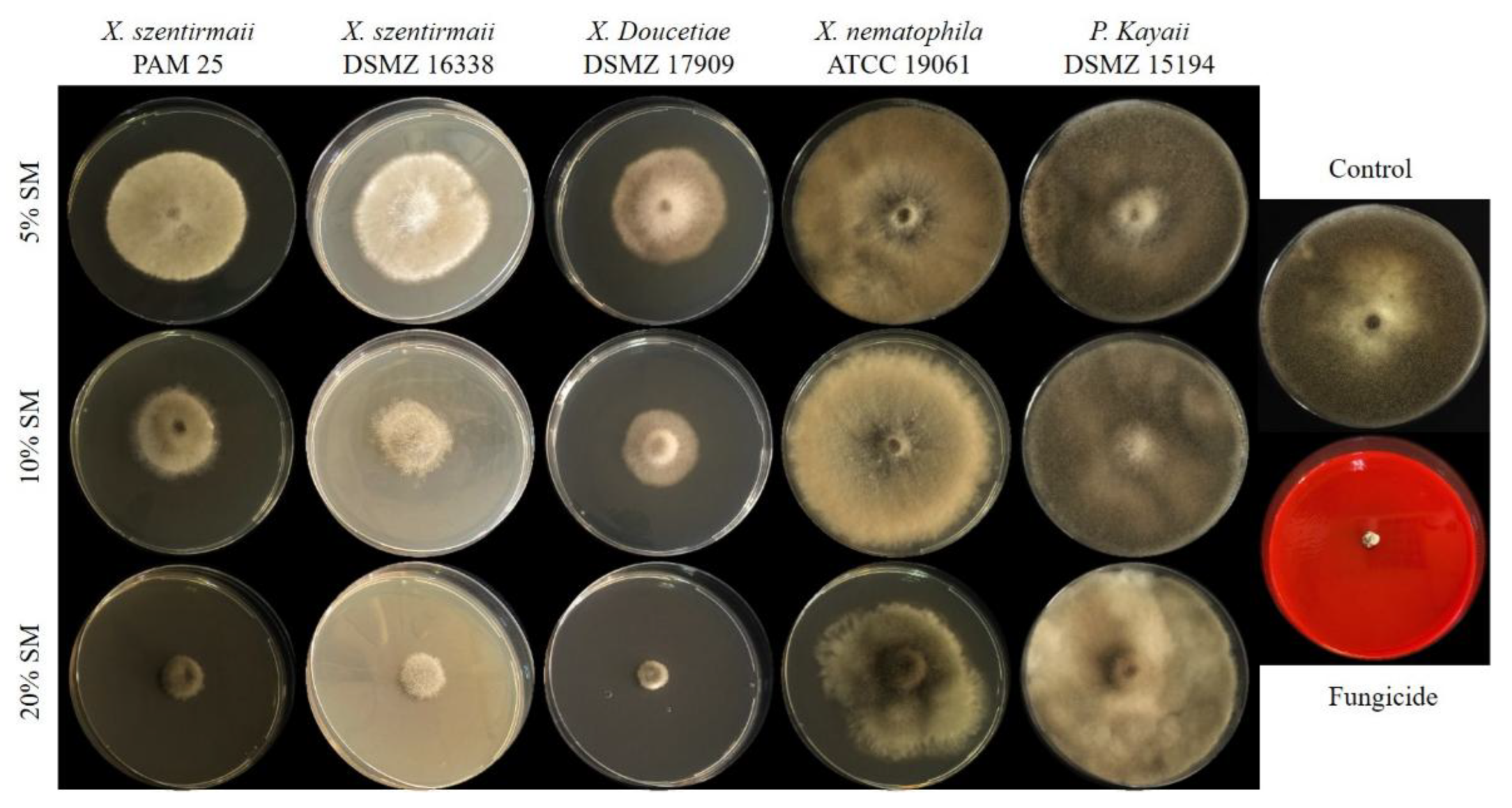
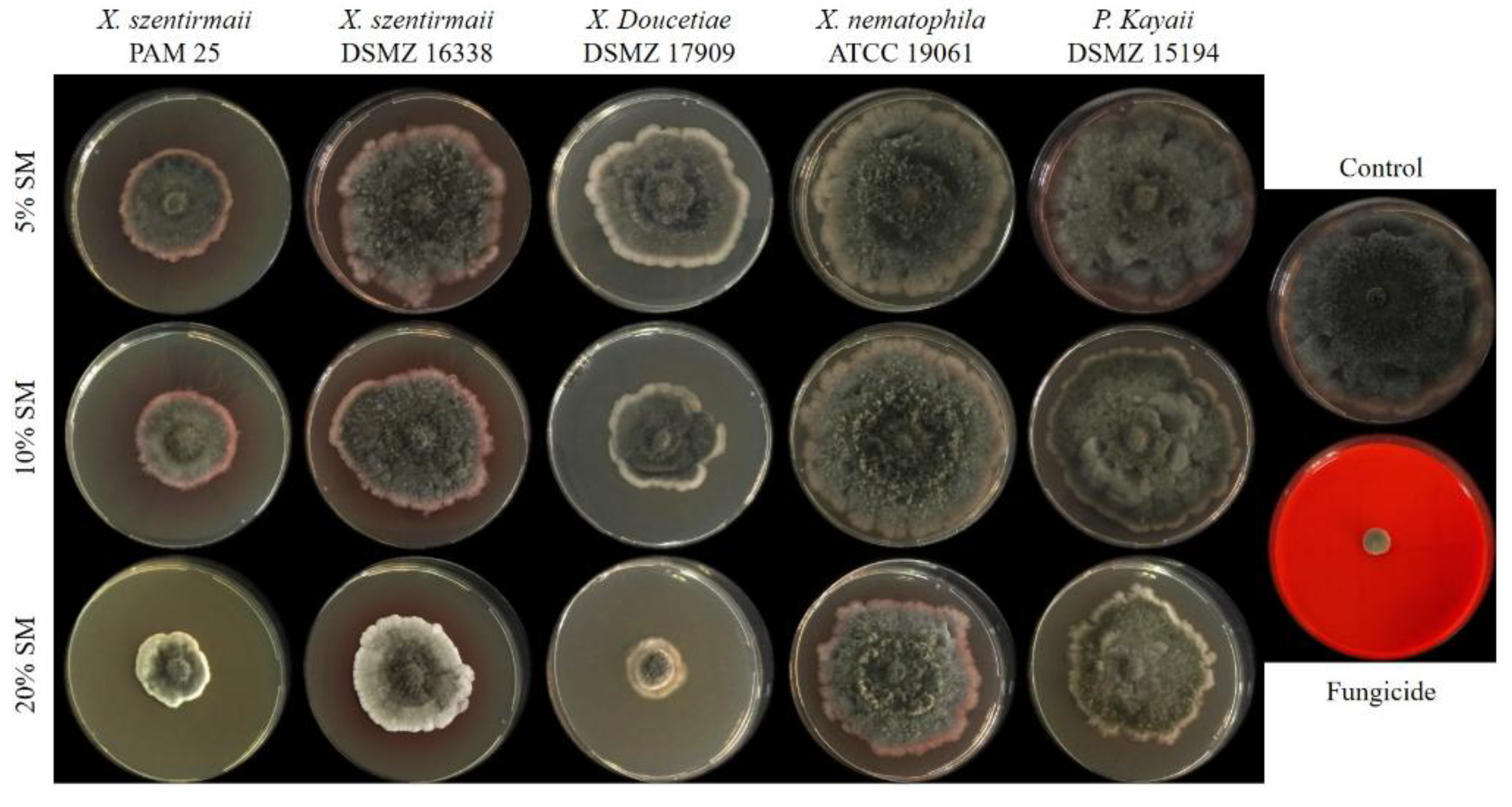
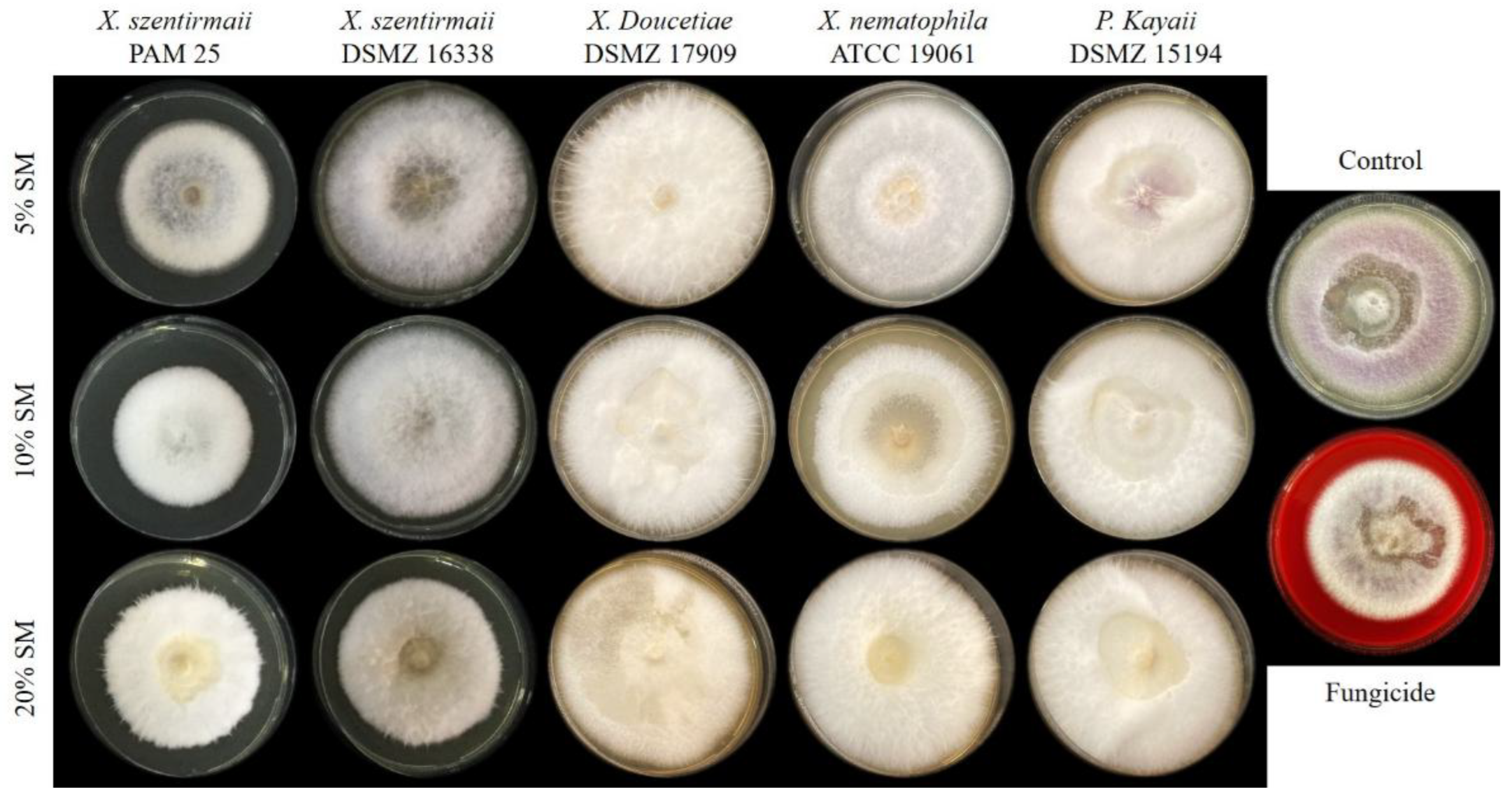
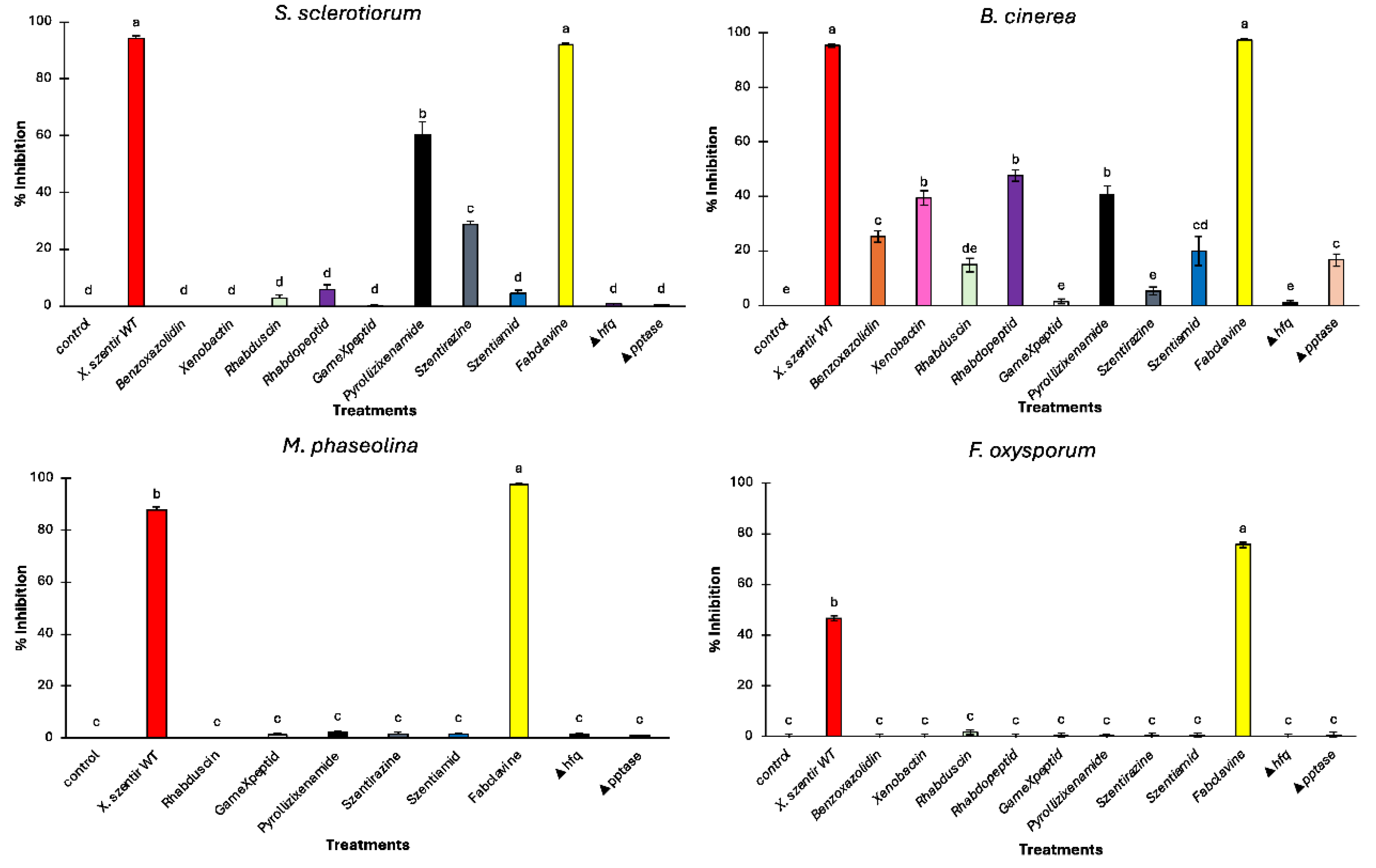
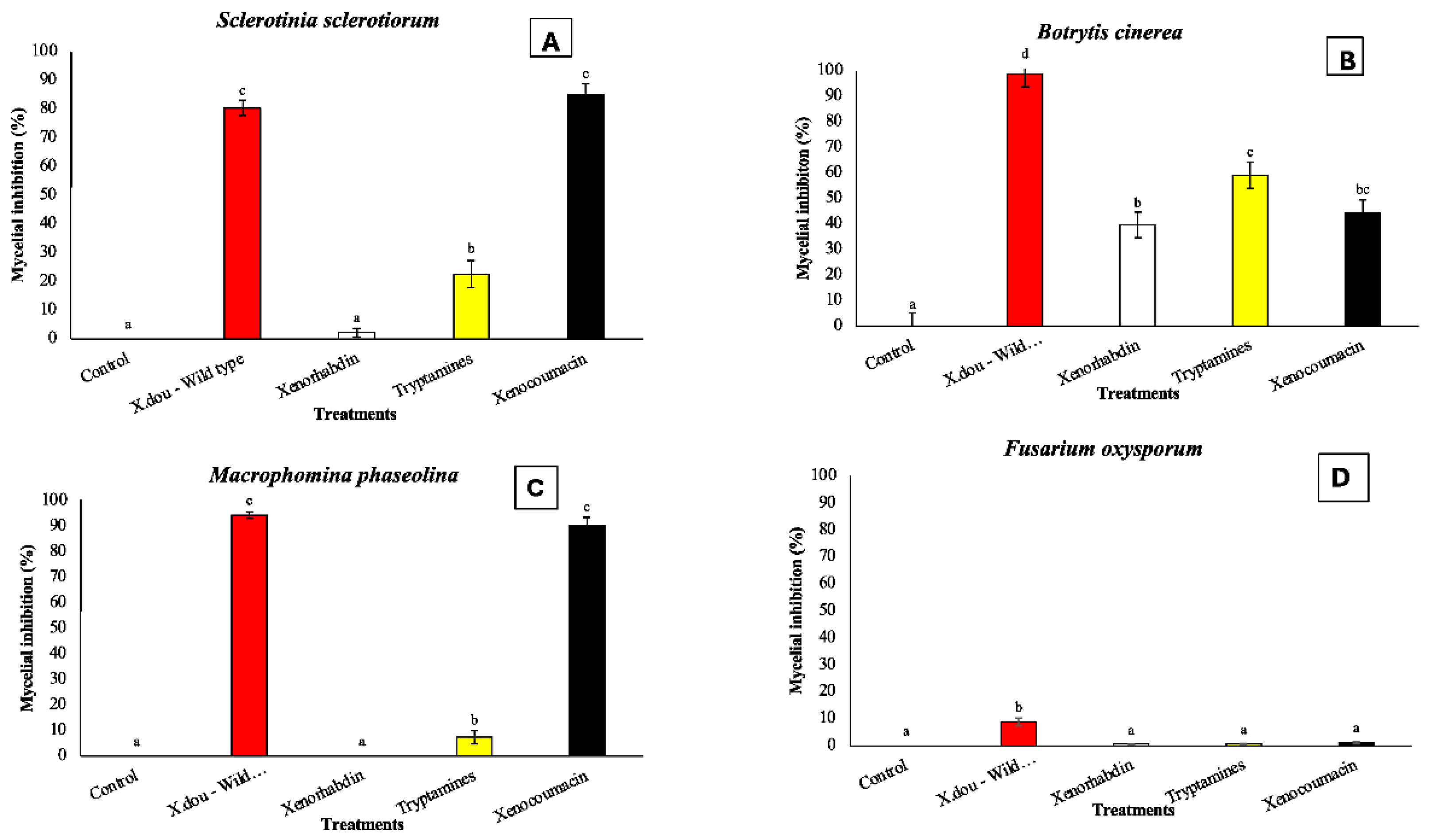
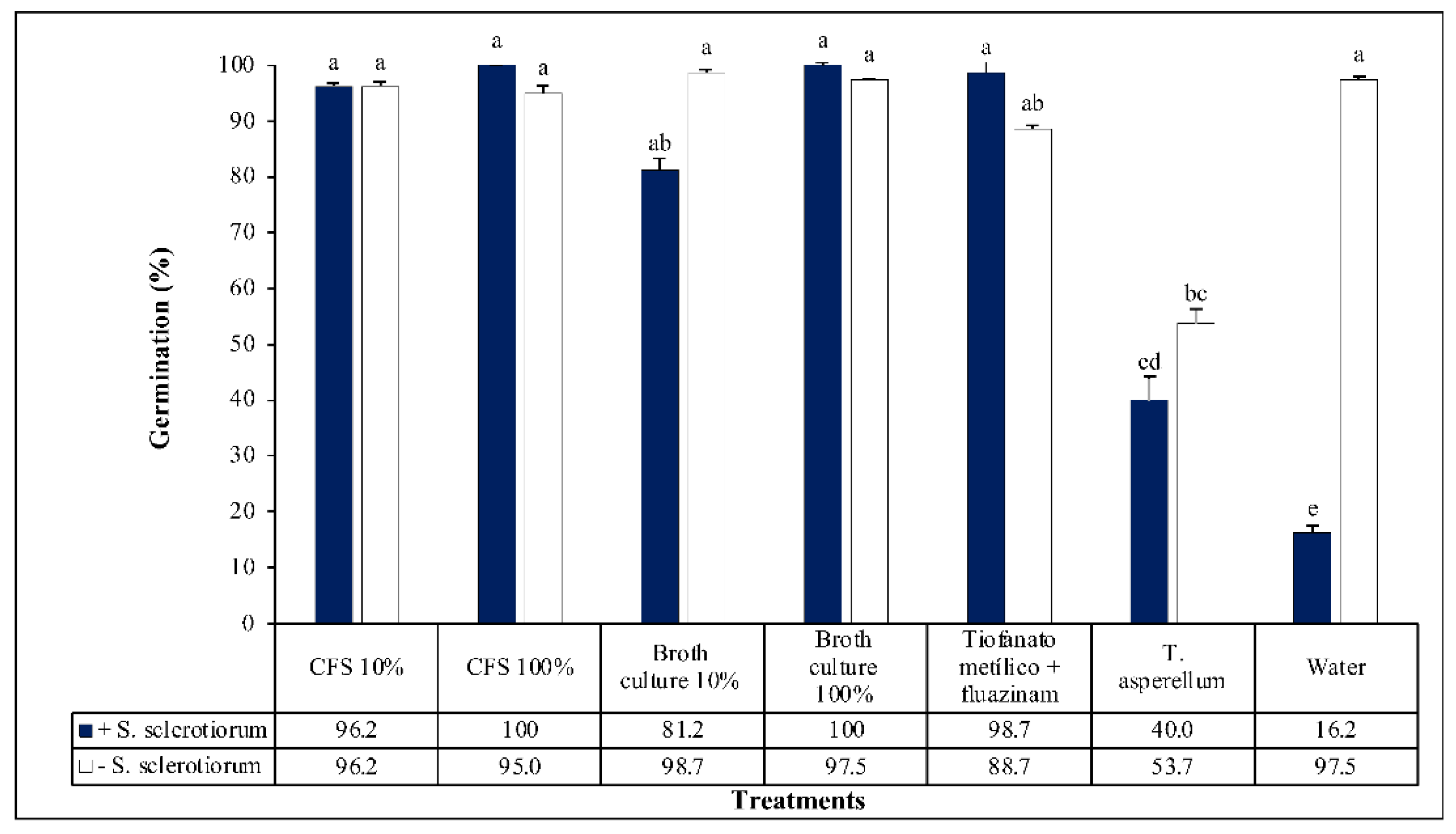
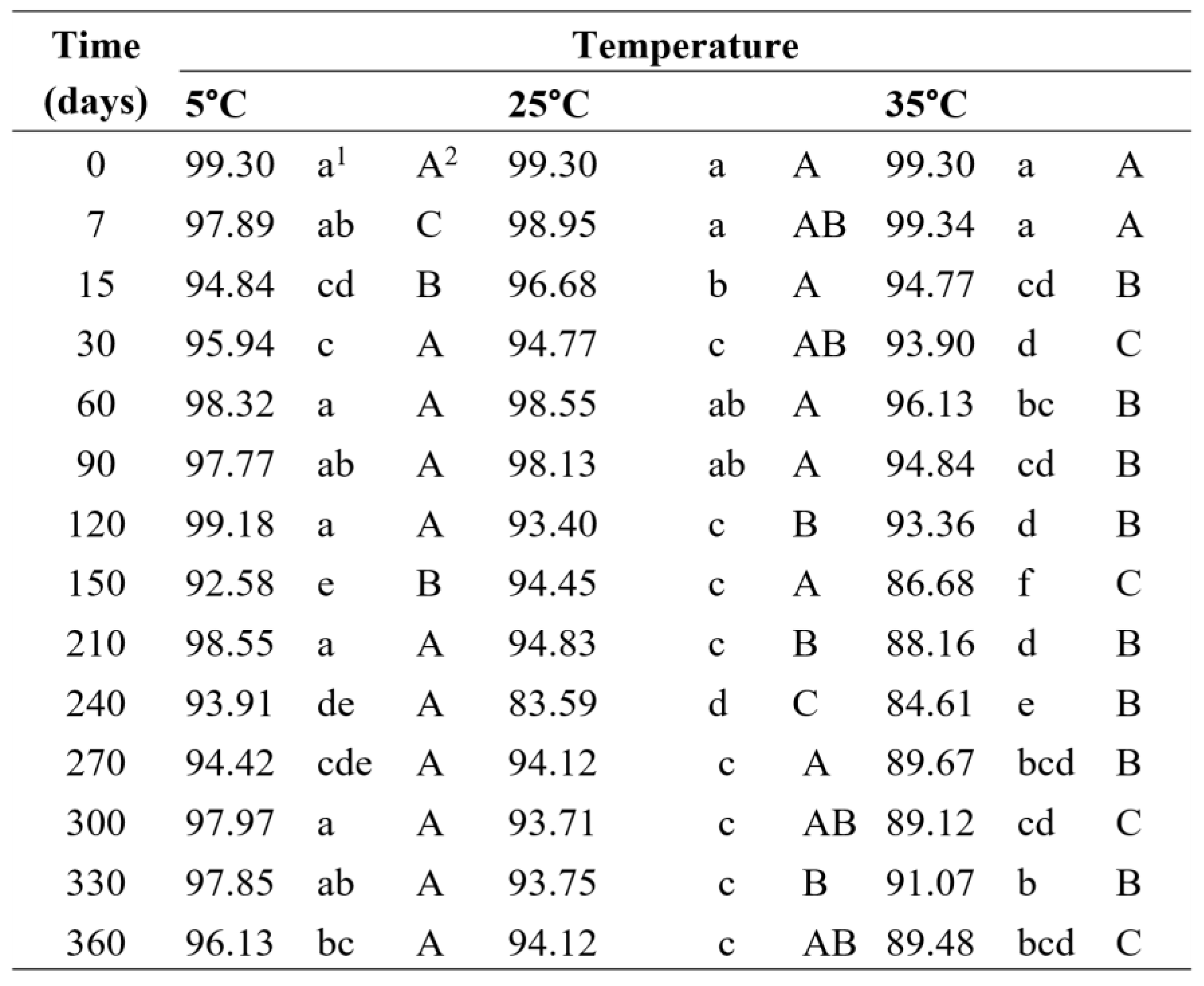
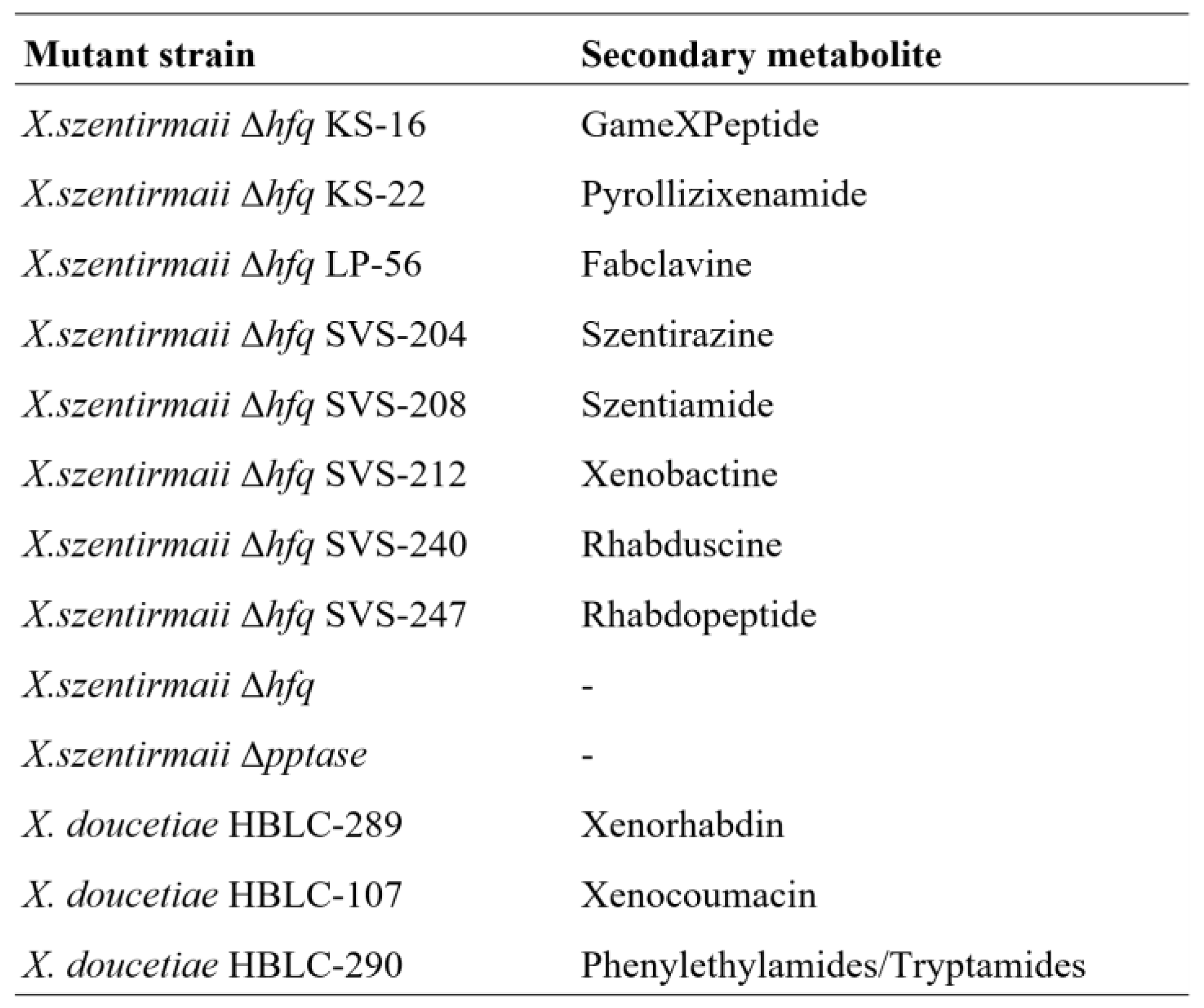
Photorhabdus and Xenorhabdus bacteria, members of the Morganellaceae family, are sources of novel natural products for the biocontrol of fungal pathogens in soybean production. This study demonstrated the inhibitory effects of metabolites from four Photorhabdus and Xenorhabdus strains (including a local isolate, X. szentirmaii PAM 25), against four key phytopathogenic fungi. Bacterial metabolite efficacy and fungal susceptibility varied. Xenorhabdus szentirmaii DSM 16338, X. szentirmaii PAM 25, and X. doucetiae demonstrated significant inhibition (>90%) against Sclerotinia sclerotiorum, Botrytis cinerea, and Macrophomina phaseolina, exhibiting superior efficacy compared to X. nematophila and Photorhabdus kayaii. Fusarium oxysporum demonstrated greater resistance to the bacterial supernatants. We identified fabclavine, pyrollizixenamide and szentirazine from X. szentirmaii and xenocoumacins from X. doucetiae as the antifungal bioactive compounds in the respective easyPACid mutants. Furthermore, we assessed the efficacy of X. szentirmaii PAM 25 and its metabolites in protecting soybean seeds from S. sclerotiorum and investigated the shelf stability the bacterial metabolites as the fungus suppressors. Cell-free supernatant maintained > 80% inhibition of S. sclerotiorum after one year at 5-35 °C. Importantly, the cell-free supernatant as well as the bacterial culture effectively inhibited S. sclerotiorum in seed treatments, ensuring ≥80% seed germination, comparable to thiophanate-methyl + fluazinam fungicide. This study demonstrates that the direct seed application of Xenorhabdus and Photorhabdus bacteria offers a practical and innovative biological control method against soil-borne fungal pathogens.
Keywords:
1. Introduction
2. Results
2.1. Antifungal activity of cell-free supernatants of wildtype Xenorhabdus spp. and Photorhabdus spp.
2.2. Antifungal Compounds Produced by Xenorhabdus szentirmaii and X. doucetiae
2.3. Shelf stability of Xenorhabdus szentirmaii secondary metabolites
2.4. Efficacy of Xenorhabdus szentirmaii broth culture and its cell-free supernatant for soybean seed protection
3. Discussion
4. Materials and Methods
4.1. Maintenance of Phytopathogenic Fungal Cultures
4.2. Xenorhabdus spp. and Photorhabdus spp. sources
4.3. Preparation of bacterial supernatants
4.4. Antifungal activity of cell-free supernatants of wildtype Xenorhabdus spp. and Photorhabdus spp.
4.5. Determination of Antifungal Bioactive Compounds Produced by X. szentirmaii and X. doucetiae
4.6. Determination of bioactive compounds using easyPACId strains
4.7. Shelf stability of X. szentirmaii secondary metabolites
4.8. Efficacy of X. szentirmaii broth culture and its cell-free supernatant in soybean seed protection
4.9. Data analysis
Supplementary Materials
Author Contributions
Funding
Institutional Review Board Statement
Informed Consent Statement
Data Availability Statement
Acknowledgments
References
- Doehlemann, G.; Ökmen, B.; Zhu, W.; Sharon, A. Plant Pathogenic Fungi. Microbiol. Spectr. 2017, 5, 1–23. [Google Scholar] [CrossRef]
- Termorshuizen, A.J. Ecology of Fungal Plant Pathogens. Microbiol. Spect. 2016, 4, 1–11. [Google Scholar] [CrossRef] [PubMed]
- Fisher, M.C.; Gurr, S.J.; Cuomo, C.A.; Blehert, D.S.; Jin, H.; Stukenbrock, E.H.; Stajich, J.E.; Kahmann, R.; Boone, C.; Denning, D.W.; Gow, N.A.R.; Klein, B.S.; Kronstad, J.W.; Sheppard, D.C.; Taylor, J.W.; Wright, G.D.; Heitman, J.; Casadevall, A.; Cowen, L.E. Threats Posed by the Fungal Kingdom to Humans, Wildlife, and Agriculture. mBio 2020, 11, e00449–20. [Google Scholar] [CrossRef]
- Fisher, M.C.; Hawkins, N.J.; Sanglard, D.; Gurr, S.J. Worldwide emergence of resistance to antifungal drugs challenges human health and food security. Science 2018, 360, 739–742. [Google Scholar] [CrossRef]
- Hartman, G.L. Rupe, J.C.; Sikora, E.J.; Domier, L.L.; Davis, J.A.; Steffey, K.L. Compendium of soybean diseases and pests. Fifth edition. Disease compendium series., 5th ed.; The American Phytopathological Society: APS Press, St. Paul, Minnesota (U.S.A.), 2015; p. 201. [Google Scholar]
- Hosseini, B.; Voegele, R.T.; Link, T.I. Diagnosis of Soybean Diseases Caused by Fungal and Oomycete Pathogens: Existing Methods and New Developments. J. of Fungi 2023, 9, 587. [Google Scholar] [CrossRef]
- Yang, X.B.; Feng, F. Ranges and Diversity of Soybean Fungal Diseases in North America. Phytopathol. 2001, 91, 769–775. [Google Scholar] [CrossRef]
- Martins, P.M.M.; Merfa, M.V.; Takita, M.A.; De Souza, A.A. Persistence in Phytopathogenic Bacteria: Do We Know Enough? Front. Microbiol. 2018, 9, 1–14. [Google Scholar] [CrossRef] [PubMed]
- Sharma, I. Chapter 7 - Phytopathogenic fungi and their biocontrol applications. In Fungi Bio-Prospects in Sustainable Agriculture, Environment and Nano-Technology; Sharma, V.K., Shah, M.P., Parmar, S., Kumar, A., Eds.; Elsevier - Academic Press: Amsterdam, 2021; Volume 1, pp. 155–188. [Google Scholar] [CrossRef]
- Davies, C.R.; Wohlgemuth, F.; Young, T.; Violet, J.; Dickinson, M.; Sanders, J.W.; Vallieres, C.; Avery, S.V. Evolving challenges and strategies for fungal control in the food supply chain. Fungal Biol. Rev. 2021, 36, 15–26. [Google Scholar] [CrossRef]
- Cheam, D.; Nishiguchi, M.K. Organisms. In Encyclopedia of Biodiversity, 3rd ed.; Scheiner, S.M., Ed.; Elsevier: Oxford, 2024; Volume 6, pp. 242–252. [Google Scholar] [CrossRef]
- Wall, D.H.; Moore, J.C. Interactions Underground: Soil biodiversity, mutualism, and ecosystem processes. BioScience 1999, 49, 109–117. [Google Scholar] [CrossRef]
- Hutchings, M.I.; Palmer, T.; Harrington, D.J.; Sutcliffe, I.C. Lipoprotein biogenesis in Gram-positive bacteria: knowing when to hold ‘em, knowing when to fold ‘em. Trends Microbiol. 2009, 17, 13–21. [Google Scholar] [CrossRef]
- Hutchings, M.I.; Wilkinson, B. Insects and their antibiotic-producing bacteria. Microb. and Host. 2023, 1, e230008. [Google Scholar] [CrossRef]
- Stock, S.P.; Hazir, S. The bacterial symbionts of Entomopathogenic nematodes and their role in symbiosis and pathogenesis. J. of Invert. Pathol. 2025, 211, 108295. [Google Scholar] [CrossRef] [PubMed]
- Sajnaga, E.; Kazimierczak, W.; Karaś, M.A.; Jach, M.E. Exploring Xenorhabdus and Photorhabdus nematode symbionts in search of novel therapeutics. Molecules 2024, 29, 5151. [Google Scholar] [CrossRef] [PubMed]
- Forst, S.; Dowds, B.; Boemare, N.; Stackebrandt, E. Xenorhabdus and Photorhabdus spp.: bugs that kill bugs. Annu. Rev. Microbiol. 1997, 51, 47–72. [Google Scholar] [CrossRef] [PubMed]
- Koppenhöfer, A.M.; Shapiro-Ilan, D.I.; Hiltpold, I. Entomopathogenic Nematodes in Sustainable Food Production. Frontiers in Sust. F. Systems 2020, 4, 1–14. [Google Scholar] [CrossRef]
- Kaya, H.K. Natural enemies and other antagonists. In Entomopathogenic Nematology; Gaugler, R., Ed.; CAB International: Wallingford, UK, 2002; pp. 189–203. [Google Scholar] [CrossRef]
- Půža, V.; Machado, R.A.R. Systematics and phylogeny of the entomopathogenic nematobacterial complexes Steinernema–Xenorhabdus and Heterorhabditis–Photorhabdus. Zool. Letters 2024, 10, 13. [Google Scholar] [CrossRef]
- Bock, C.H.; Shapiro-Ilan, D.I.; Wedge, D.E.; Cantrell, C.L. Identification of the antifungal compound, trans-cinnamic acid, produced by Photorhabdus luminescens, a potential biopesticide against pecan scab. J. Pest. Sci. 2014, 87, 155–162. [Google Scholar] [CrossRef]
- Chacón-Orozco, J.G.; Bueno, C.J.; Shapiro-Ilan, D.I.; Hazir, S.; Leite, L.G.; Harakava, R. Antifungal activity of Xenorhabdus spp. and Photorhabdus spp. against the soybean pathogenic Sclerotinia sclerotiorum. Sci. Rep. 2020, 10, 20649. [Google Scholar] [CrossRef]
- Kgosiemang, J.L.; Ramakuwela, T.; Figlan, S.; Cochrane, N. Antifungal effect of metabolites from bacterial symbionts of entomopathogenic nematodes on Fusarium head blight of wheat. J. Fungi 2024, 10, 148. [Google Scholar] [CrossRef]
- Tu PW, Chiu JS, Lin C, Chien CC, Hsieh FC, Shih MC, Yang YL. Evaluation of the antifungal activities of Photorhabdus akhurstii and its secondary metabolites against phytopathogenic Colletotrichum gloeosporioides. J Fungi. 2022, 2022 8, 403. [Google Scholar] [CrossRef]
- Fang, X.; Zhang, M.; Tang, Q.; Wang, Y.; Zhang, X. Inhibitory effect of Xenorhabdus nematophila TB on plant pathogens Phytophthora capsici and Botrytis cinerea in vitro and in planta. Sci. Rep. 2014, 4, 4300. [Google Scholar] [CrossRef]
- Fang, X.L.; Li, Z.Z.; Wang, Y.H.; Zhang, X. In vitro and in vivo antimicrobial activity of Xenorhabdus bovienii YL002 against Phytophthora capsici and Botrytis cinerea. J. of Applied Microbiol. 2011, 111, 145–154. [Google Scholar] [CrossRef]
- Gülcü, B.; Altın, N. Control potency of Trans-cinnamic acid and antifungal metabolites of Xenorhabdus szentirmaii against Alternaria brassicicola. Dubited 2024, 12, 365–374. [Google Scholar] [CrossRef]
- Hazir, S.; Shapiro-Ilan, D.; Bock, C.; Leite, L. Thermo-stability, dose effects and shelf-life of antifungal metabolite-containing supernatants produced by Xenorhabdus szentirmaii. Eur J. of Plant Pathol. 2017, 150. [Google Scholar] [CrossRef]
- San-Blas, E.; Carrillo, Z.; Parra, Y. Effect of Xenorhabdus and Photorhabdus bacteria and their exudates on Moniliophthora roreri. Arch. of Phytopathol. and Plant Prot. 2012, 45, 1950–1967. [Google Scholar] [CrossRef]
- San-Blas, E.; Parra, Yennis. ; and Carrillo, Z. Effect of Xenorhabdus and Photorhabdus bacteria (Enterobacteriales: Enterobacteriaceae) and their exudates on the apical rotten fruit disease caused by Dothiorella sp. in guava (Psidium guajava). Arch. of Phytopathol. and Plant Prot. 2013, 46, 2294–2303. [Google Scholar] [CrossRef]
- Wang, Y.; Zhang, F.; Wang, C.; Guo, P.; Han, Y.; Zhang, Y.; Sun, B.; Shan, S.; Ruan, W.; Pan, J. Antifungal substances produced by Xenorhabdus bovienii and its Inhibition mechanism against Fusarium solani. Int. J. Mol. Sci. 2022, 23, 9040. [Google Scholar] [CrossRef] [PubMed]
- Shi, D.; An, R.; Zhang, W.; Zhang, G.; Yu, Z. Stilbene Derivatives from Photorhabdus temperata SN259 and their antifungal activities against phytopathogenic fungi. J. Agric. Food Chem. 2017, 65, 60–65. [Google Scholar] [CrossRef] [PubMed]
- Joyce, S.A.; Lango, L.; Clarke, D.J. The Regulation of Secondary Metabolism and Mutualism in the Insect Pathogenic Bacterium Photorhabdus luminescens. In: Laskin, A.I.; Sariaslani, S.; Gadd, G.M. editors. Adv. in Applied Microbiol. Acad. [CrossRef]
- Shi, Y.-M.; Hirschmann, M.; Shi, Y.-N.; Ahmed, S.; Abebew, D.; Tobias, N.J.; Grün, P.; Crames, J.J.; P¨oschel, L.; Kuttenlochner, W.; Richter, C.; Herrmann, J.; Müller, R.; Thanwisai, A.; Pidot, S.J.; Stinear, T.P.; Groll, M.; Kim, Y.; Bode, H.B. Global analysis of biosynthetic gene clusters reveals conserved and unique natural products in entomopathogenic nematode-symbiotic bacteria. Nat. Chem. 2022, 14, 701–712. [Google Scholar] [CrossRef]
- Houard, J.; Aumelas, A.; Noël, T.; Pages, S.; Givaudan, A.; Fitton-Ouhabi, V.; Villain-Guillot, P.; Gualtieri, M. Cabanillasin, a new antifungal metabolite, produced by entomopathogenic Xenorhabdus cabanillasii JM26. J Antibiot. 2013, 66, 617–620. [Google Scholar] [CrossRef]
- Parihar, R.D.; Dhiman, U.; Bhushan, A.; Gupta, P.K.; Gupta, P. Heterorhabditis and Photorhabdus symbiosis: A natural mine of bioactive compounds. Front. Microbiol. 2022, 13, 790339. [Google Scholar] [CrossRef]
- Ullah, I.; Khan, A.L.; Ali, L.; Khan, A.R.; Waqas, M.; Hussain, J.; Lee, I.-J.; Shin, J.-H. Benzaldehyde as an insecticidal, antimicrobial, and antioxidant compound produced by Photorhabdus temperata M1021. J. Microbiol. 2015, 53, 127–133. [Google Scholar] [CrossRef]
- Fischer-Le Saux, M.; Viallard, V.; Brunel, B.; Normand, P.; Boemare, N. E. Polyphasic classification of the genus Photorhabdus and proposal of new taxa: P. luminescens subsp. luminescens subsp. nov., P. luminescens subsp. akhurstii subsp. nov., P. luminescens subsp. laumondii supsp. nov., P. temperata sp. nov., P. temperata subsp. temperata subsp. nov., and P. asymbiotica sp. nov. Int. J. Syst. Bacteriol. 1999, 49, 1645–1656. [Google Scholar]
- Gulsen, S.H.; Tileklioglu, E.; Bode, E.; Cimen, H.; Ertabaklar, H.; Ulug, D.; Ertug, S.; Wenski, S.L.; Touray, M.; Hazir, C.; Bilecenoglu, D.K.; Yildiz, I.; Bode, H.B.; Hazir, S. Antiprotozoal activity of different Xenorhabdus and Photorhabdus bacterial secondary metabolites and identification of bioactive compounds using the easyPACId approach. Sci. Rep. 2022, 12, 10779. [Google Scholar] [CrossRef]
- Yuan, B. , Li, B., Shen, H., Duan, J., Jia, F., Maimaiti, Y., Li, Y., Li, G. Identification of fabclavine derivatives, Fcl-7 and Fcl-8, from Xenorhabdus budapestensis as major antifungal natural products against Rhizoctonia solani. J. Appl. Microbiol. 2023, 134, lxad190. [Google Scholar] [CrossRef]
- Li, B. , Yuan, B., Duan, J., Qin, Y., Shen, H., Ren, J., Francis, F., Chen, M., Li, G. Identification of Fcl-29 as an effective antifungal natural product against Fusarium graminearum and combinatorial engineering strategy for improving its yield. J. Agric. Food Chem. 2023, 71, 5554–5564. [Google Scholar] [CrossRef]
- Priya, S.S.; Deeikshana, T.; Haran, R; Shandeep, G. ; Pradeep, S; Sumathi, E. Biocontrol potential and characterization of cell-free supernatants from Xenorhabdus nematophila: A novel approach to control Tetranychus urticae. Crop Prot. 2025, 193, 107185. [Google Scholar] [CrossRef]
- Kamou, N. , Papafoti, A., Chatzaki, V., Kapranas, A. Exploring the effects of entomopathogenic nematode symbiotic bacteria and their cell free filtrates on the tomato leafminer Tuta absoluta and its predator Nesidiocoris tenuis. J. Invertebr. Pathol. 2024, 206, 108181. [Google Scholar] [CrossRef] [PubMed]
- Bode, E.; Heinrich, A.K.; Hirschmann, M.; Abebew, D.; Shi, Y.-N.; Vo, T.D.; Wesche, F.; Shi, Y.-M.; Grün, P.; Simonyi, S.; Keller, N.; Engel, Y.; Wenski, S.; Bennet, R.; Beyer, S.; Bischoff, I.; Buaya, A.; Brandt, S.; Cakmak, I.; Çimen, H.; Eckstein, S.; Frank, D.; Fürst, R.; Gand, M.; Geisslinger, G.; Hazir, S.; Henke, M.; Heermann, R.; Lecaudey, V.; Schäfer, W.; Schiffmann, S.; Schüffler, A.; Schwenk, R.; Skaljac, M.; Thines, E.; Thines, M.; Ulshöfer, T.; Vilcinskas, A.; Wichelhaus, T.A.; Bode, H.B. Promoter Activation in Δhfq Mutants as an Efficient Tool for Specialized Metabolite Production Enabling Direct Bioactivity Testing. Angew Chem. Int. Ed. Engl. 2019, 58, 18957–18963. [Google Scholar] [CrossRef] [PubMed]
- Vicente-Díez, I.; Moreira, X.; Pastor, V.; Vilanova, M.; Pou, A.; Campos-Herrera, R. Control of post-harvest gray mold (Botrytis cinerea) on grape (Vitis vinifera) and tomato (Solanum lycopersicum) using volatile organic compounds produced by Xenorhabdus nematophila and Photorhabdus laumondii subsp. laumondii. BioControl 2023, 68, 549–563. [Google Scholar] [CrossRef]
- Chen, G.; Dunphy, G.B.; Webster, J.M. Antifungal Activity of Two Xenorhabdus Species and Photorhabdus luminescens, Bacteria Associated with the Nematodes Steinernema Species and Heterorhabditis megidis. Biol. Control 1994, 4, 157–162. [Google Scholar] [CrossRef]
- Vanitha, L.; Kumari, M.; Jayappa, J.; Chandrashekar, S.C. Symbiotic bactéria, Xenorhabdus spp. of entomopathogenic nematodes: source of antifungal compounds against four plant pathogens. Asian J. of Bio Sc. 2020, 5, 174–177. [Google Scholar]
- Lalramchuani, M.; Lalramnghaki, H.C.; Vanlalsangi, R.; Lalhmingliani, E.; Vanramliana, Lalramliana. Characterization and screening of antifungal activity of bacteria associated with entomopathogenic nematodes from Mizoram, North-Eastern India. J. of Environ. Biol. 2020, 41, 942–950. [Google Scholar] [CrossRef]
- Sharma, K.; Walia, S.; Ganguli, S.; Kundu, A. Analytical Characterization of Secondary Metabolites from Indian Xenorhabdus Species the Symbiotic Bacteria of Entomopatathogenic Nematode (Steinernema spp.) as Antifungal Agent. Natl. Acad. Sci. Lett. 2016, 39, 175–180. [Google Scholar] [CrossRef]
- Reimer, D.; Nollmann, F.I.; Schultz, K.; Kaiser, M.; Bode, H.B. Xenortide Biosynthesis by Entomopathogenic Xenorhabdus nematophila. J. Nat. Prod. 2014, 77, 1976–1980. [Google Scholar] [CrossRef] [PubMed]
- Wenski, S.L.; Cimen, H.; Berghaus, N.; Fuchs, S.W.; Hazir, S.; Bode, H.B. Fabclavine diversity in Xenorhabdus bacteria. Beilstein J. Org. Chem. 2020, 16, 956–965. [Google Scholar] [CrossRef] [PubMed]
- Donmez Ozkan, H.; Cimen, H.; Ulug, D.; Wenski, S.; Yigit Ozer, S.; Telli, M.; Aydin, N.; Bode, H.B.; Hazir, S. Nematode-Associated Bacteria: Production of Antimicrobial Agent as a Presumptive Nominee for Curing Endodontic Infections Caused by Enterococcus faecalis. Front. Microbiol. 2019, 10, 2672. [Google Scholar] [CrossRef]
- Zhang, S.; Han, Y.; Wang, L.; Han, J.; Yan, Z.; Wang, Y.; Wang, Y. Antifungal Activity and Mechanism of Xenocoumacin 1, a Natural Product from Xenorhabdus nematophila against Sclerotinia sclerotiorum. J. of Fungi 2024, 10, 175. [Google Scholar] [CrossRef] [PubMed]
- Zumbrunn, C.; Krüsi, D.; Stamm, C.; Caspers, P.; Ritz, D.; Rueedi, G. Synthesis and Structure-Activity Relationship of Xenocoumacin 1 and Analogues as Inhibitors of Ribosomal Protein Synthesis. ChemMedChem 2021, 16, 891–897. [Google Scholar] [CrossRef]
- Yang, X.; Qiu, D.; Yang, H.; Liu, Z.; Zeng, H.; Yuan, J. Antifungal activity of xenocoumacin 1 from Xenorhabdus nematophilus var. pekingensis against Phytophthora infestans. World J. Microb. Biotech. 2011, 27, 523–528. [Google Scholar] [CrossRef]
- Vicente-Díez, I.; Duenas-Hernani, J; Campos-Herrera, R. Antifungal activity of Xenorhabdus and Photorhabdus against aerial and soilborne grapevine pathogens: varying efficiencies and non-target effects. Biol. Control 2025, 205, 105759. [Google Scholar] [CrossRef]
- Deeikshana, T. , Poorniammal, R., Shandeep, S.G., Vijay, S., Prabhu, S. Exploring nematicidal biomolecules from Xenorhabdus nematophila as a novel source for Meloidogyne incognita management. Toxicon 2024, 250, 108101. [Google Scholar] [CrossRef]
- Kim, J.H.; Lee, B.M.; Lee, H.C.; Choi, I.S.; Koo, K.B.; Son, K.H. Antagonistic efficacy of symbiotic bacterium Xenorhabdus sp. SCG against Meloidogyne spp. J. Microbiol. Biotechnol. 2024, 34, 1627–1635. [Google Scholar] [CrossRef]
- Nermuť, J.; Hristov, Y.; Podrábská, V.; Kraml, A.; Skoková Habuštová, O.; Konopická, J.; Doležal, P.; Půža, V. Potential of cell-free supernatants of Xenorhabdus and Photorhabdus bacteria for the control of virus-transmitting aphids (Myzus persicae). J. Appl. Microbiol. 2025, 136, lxaf150. [Google Scholar] [CrossRef]
- Furgani, G.; Boszormenyi, E.; Fodor, A.; Fodor, A.M.; Forst, S.; Hogan, J.; Katona, Z.; Klein, M.G.; Stackebrandt, E.; Szentirmai, A.; Sztaricskai, F.; Wolf, S. Xenorhabdus antibiotics: a comparative analysis and potential utility for controlling mastitis caused by bacteria. J. Appl. Microbiol. 2008, 104, 745–758. [Google Scholar] [CrossRef] [PubMed]

Disclaimer/Publisher’s Note: The statements, opinions and data contained in all publications are solely those of the individual author(s) and contributor(s) and not of MDPI and/or the editor(s). MDPI and/or the editor(s) disclaim responsibility for any injury to people or property resulting from any ideas, methods, instructions or products referred to in the content. |
© 2025 by the authors. Licensee MDPI, Basel, Switzerland. This article is an open access article distributed under the terms and conditions of the Creative Commons Attribution (CC BY) license (http://creativecommons.org/licenses/by/4.0/).