

Submitted:
26 August 2025
Posted:
28 August 2025
You are already at the latest version
Abstract
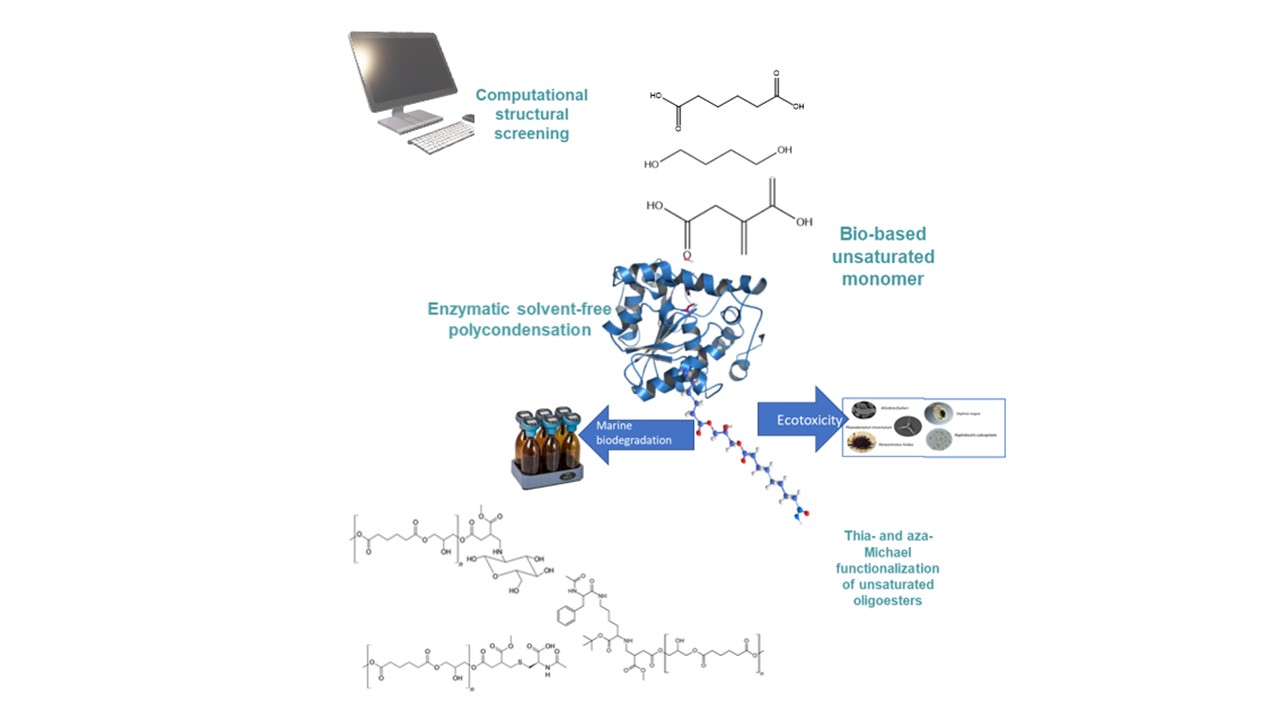
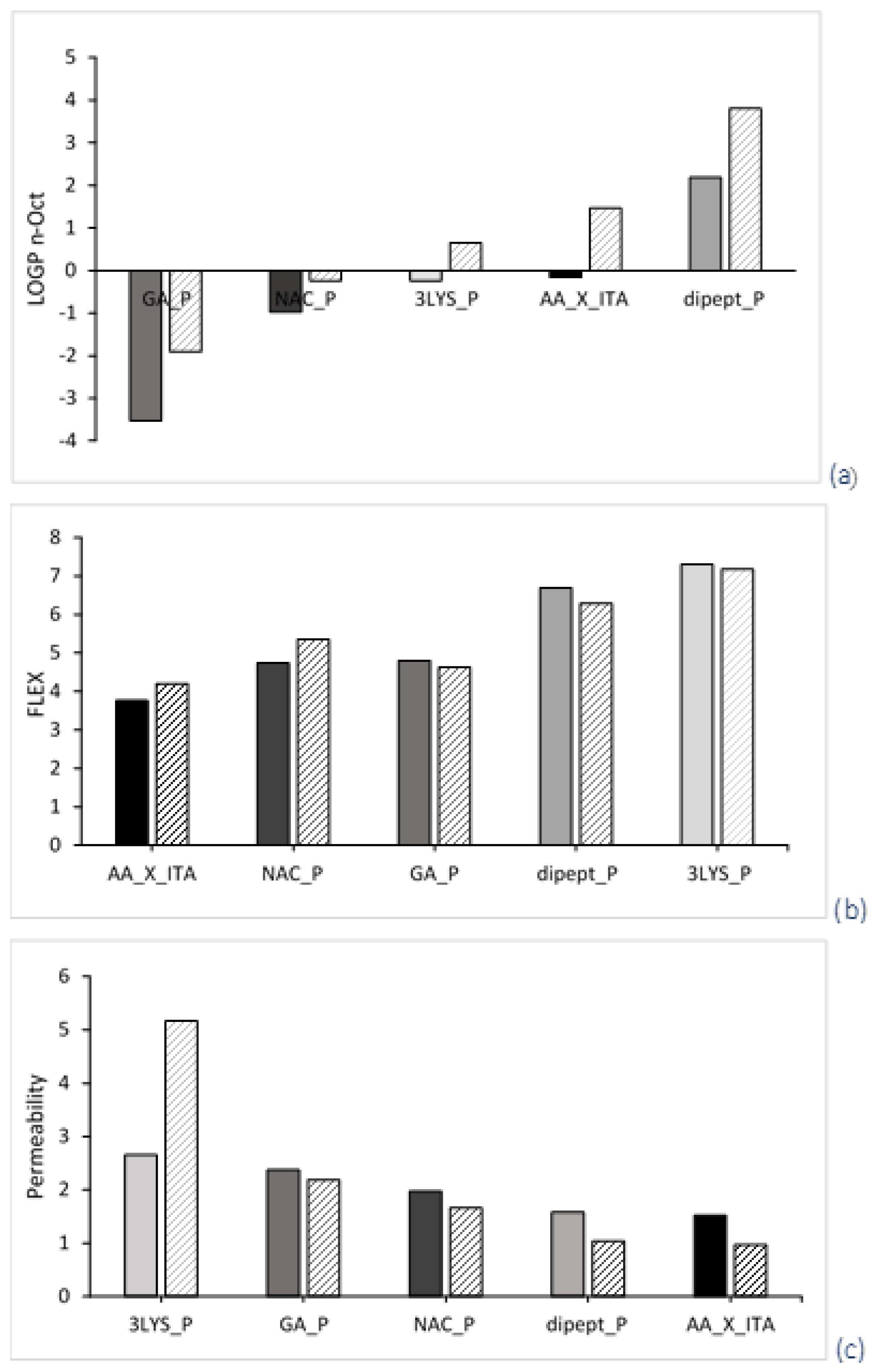
A chemical platform for post-polymerisation methods was developed, starting from the ecodesign and enzymatic synthesis of safe and sustainable bio-based polyesters containing discrete units of itaconic acid. This unsaturated bio-based monomer enables the covalent linkage of molecules that can impart desired properties such as hydrophilicity, flexibility, permeability or affinity for biological targets. Molecular descriptor-based computational methods, which are generally used for modelling the pharmacokinetic properties of drugs (ADME), were employed to predict in silico the hydrophobicity (LogP), permeability and flexibility of virtual terpolymers composed of different polyols (1,4-butanediol, glycerol, 1,3-propanediol and 1,2-ethanediol) with adipic acid and itaconic acid. Itaconic acid, with its reactive vinyl group, acts as a chemical platform for various post-polymerisation functionalisations. Poly(glycerol adipate itaconate) was selected because of its higher hydrophilicity and synthetized via solvent-free enzymatic polycondensation at 50°C to prevent the isomerization or crosslinking of itaconic acid. The ecotoxicity and marine biodegradability of the resulting oligoester were assessed experimentally in order to verify its compliance with safety and sustainability criteria. Finally, the viability of the covalent linkage of biomolecules via Michael addition to the vinyl pendant of the oligoesters was verified using four molecules bearing thiol and amine nucleophilic groups: N-acetylcysteine, N-Ac-Phe-ε-Lys-OtBu, Lys-Lys-Lys and glucosamine.
Keywords:
1. Introduction
2. Materials and Methods
Materials
Lipase Immobilization and Assessment of Hydrolytic Activity
Enzymatic Synthesis of Terpolymers
Functionalization of PGAI oligoester via aza/thia-Michael Addition
Biodegradation Studies
Ecotoxicity Studies on Freshwater Organisms
Ecotoxicity Studies on Seawater Organisms
ESI-MS Analysis
NMR Analysis
Computational Analysis
3. Results and discussion
3.1. Computational Analysis of Substrate Properties by 3D Molecular Interaction Fields
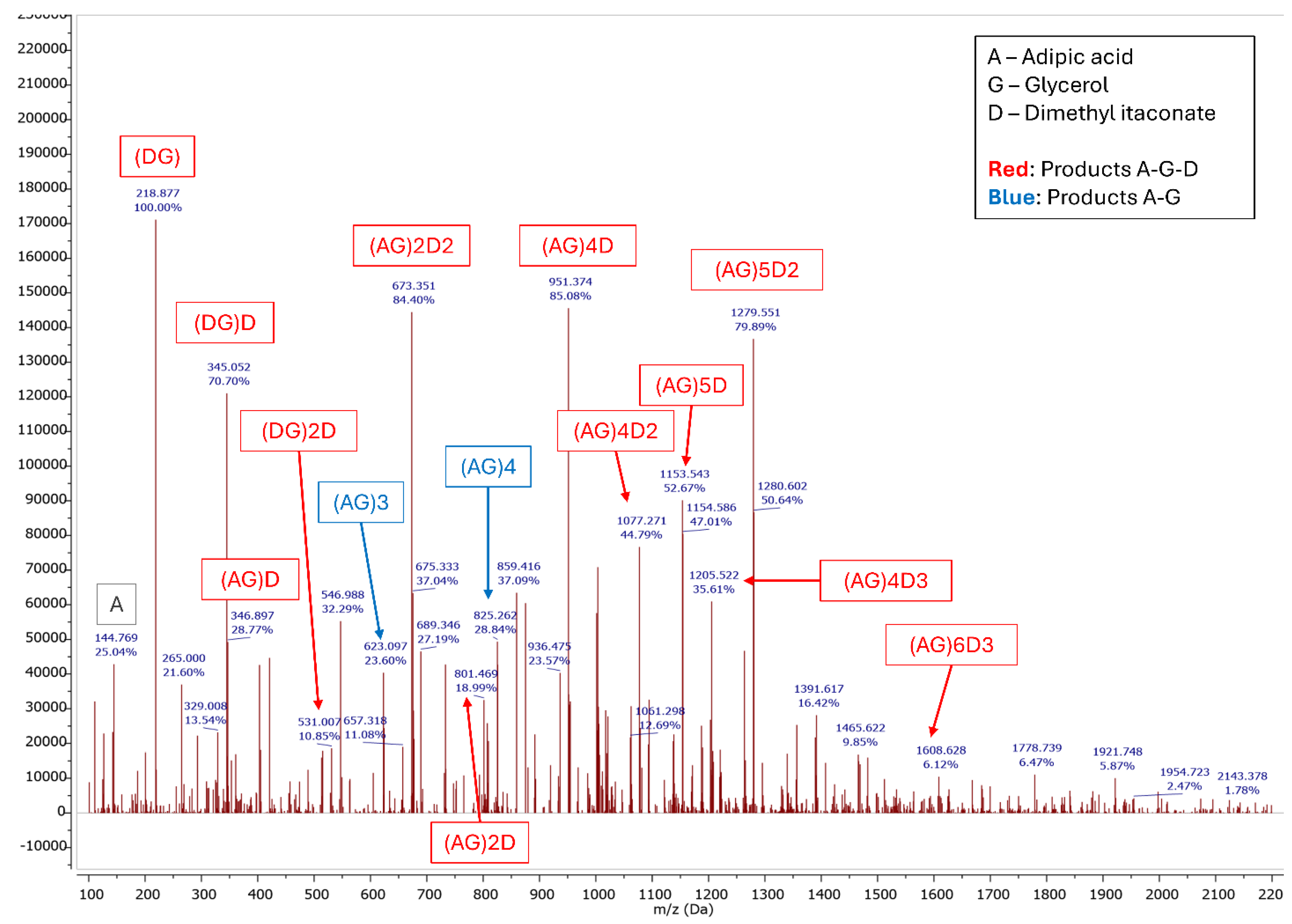
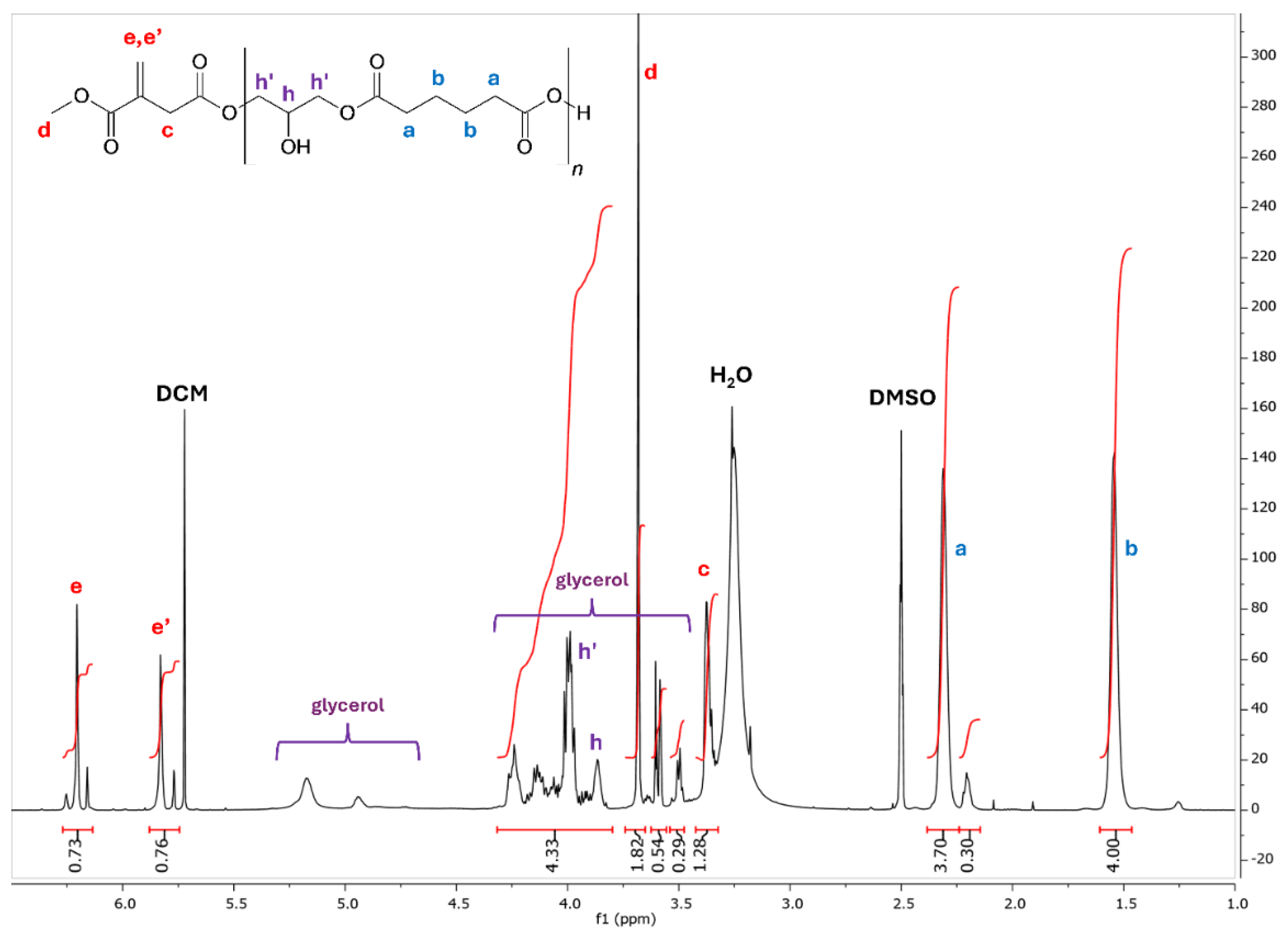
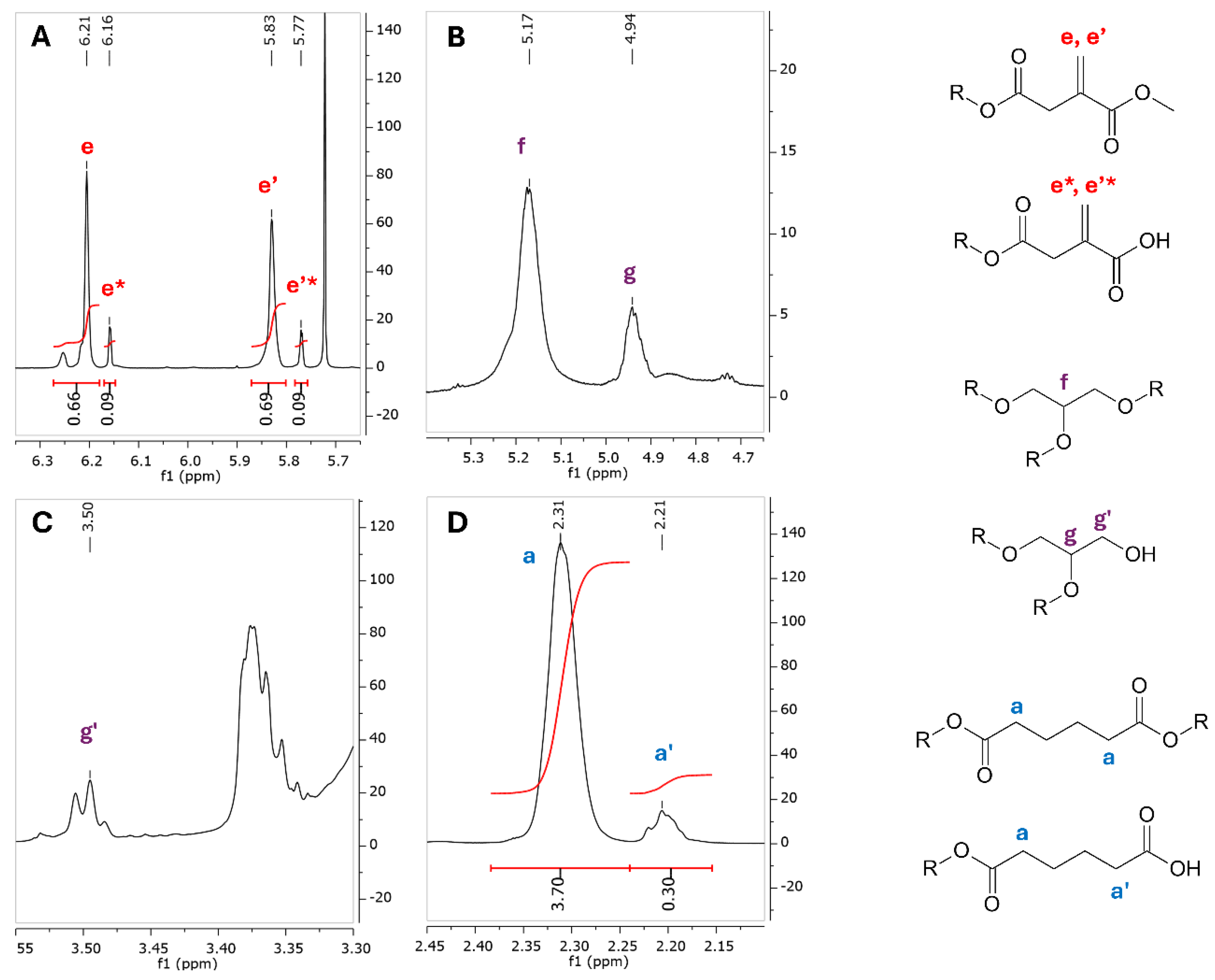
3.2. Enzymatic Synthesis of Poly(Glycerol Adipate Itaconate) (PGAI)
3.3. Marine Biodegradability Studies on PGAI
3.4. Assessment of the Ecotoxicity of Poly(Glycerol Adipate Itaconate) (PGAI)

| Assay / Organism | Test medium | Conc. range (mg L⁻¹) | Key endpoint / metric | Most sensitive effect | Preliminary Toxicity classification* |
|---|---|---|---|---|---|
| OECD 306 (Seawater BOD) | Seawater | — (400 mg fixed) | %ThOD (BOD vs. ThOD) | > 99 % ThOD @28 d | Readily biodegradable; no tox. |
| Saccharomyces cerevisiae (24 h) | Freshwater | 100 | Growth Δ (%) | −18 % (hormesis) | No toxicity |
| Pseudokirchneriella subcapitata (72 h) | Freshwater | 0.3–60 | Growth Δ (%) | −10 % (hormesis) | No toxicity |
| Daphnia magna (48 h) | Freshwater | 0.3–60 | Immobilisation (%) | 10 % @60 mg L⁻¹ | No toxicity |
| Aliivibrio fischeri (30 min) | Seawater | 0.028–28 | Luminescence inhibition (%) | 12 % @28 mg L⁻¹ | No toxicity |
| Phaeodactylum tricornutum (72 h) | Seawater | 0.031–31 | Growth inhibition (%) | 12 % @31 mg L⁻¹ | Low toxicity |
| Paracentrotus lividus (72 h) | Seawater | 0.031–31 | Abnormal larvae (%) | 74 % @31 mg L⁻¹ | Moderate toxicity |
| *Classifications follow OECD/REACH interpretation thresholds | |||||
3.5. Post polymerization functionalization of PGAI via Michael addition
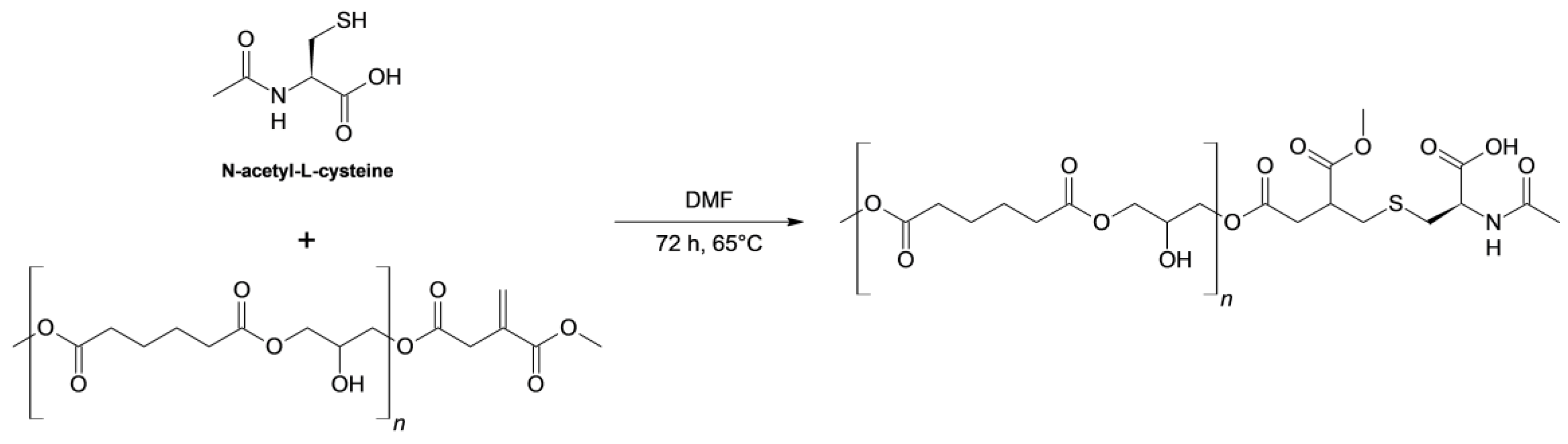
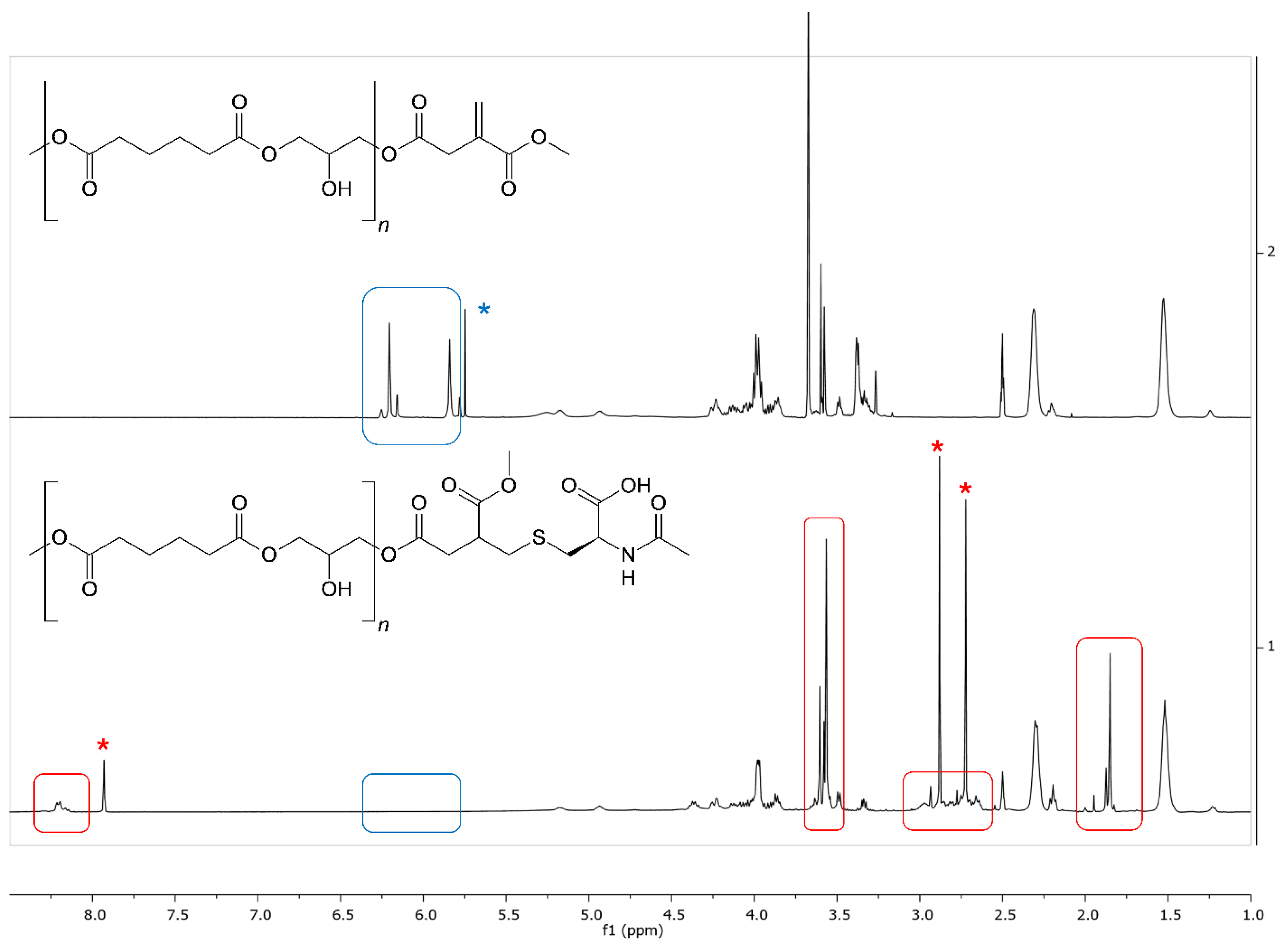
3.5.1. Thia-Michael addition of N-acetylcysteine
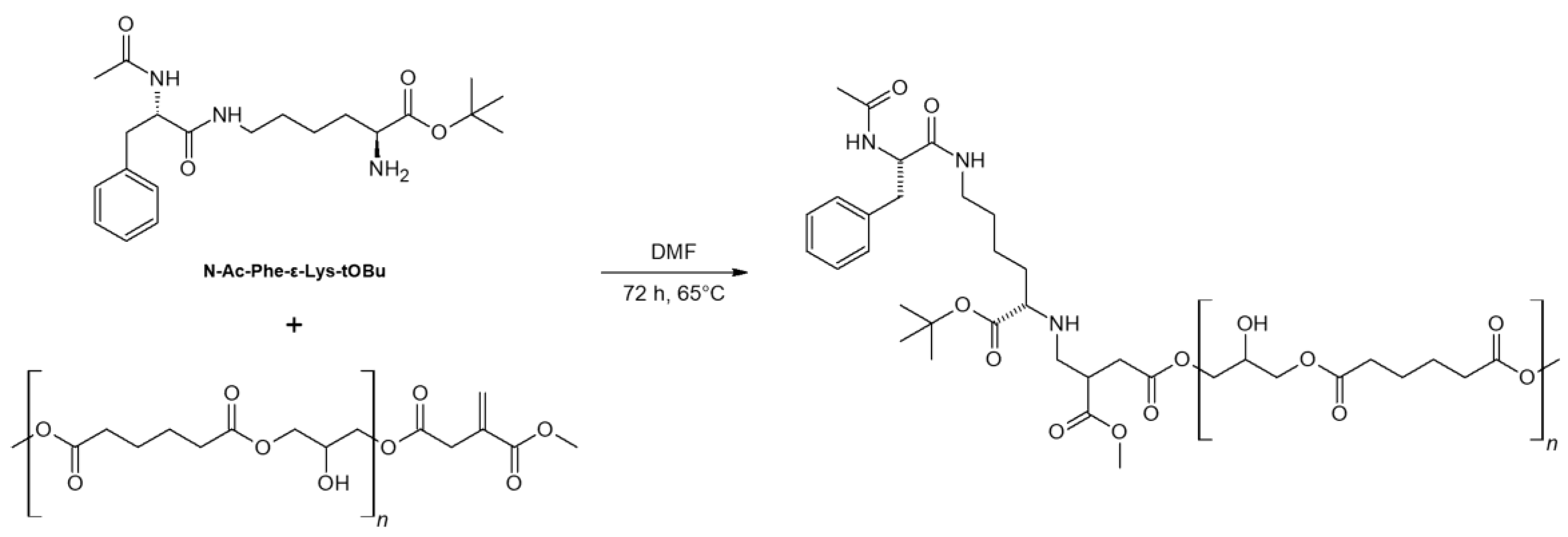
3.5.2. Aza-Michael Addition of di- and tri-Peptides
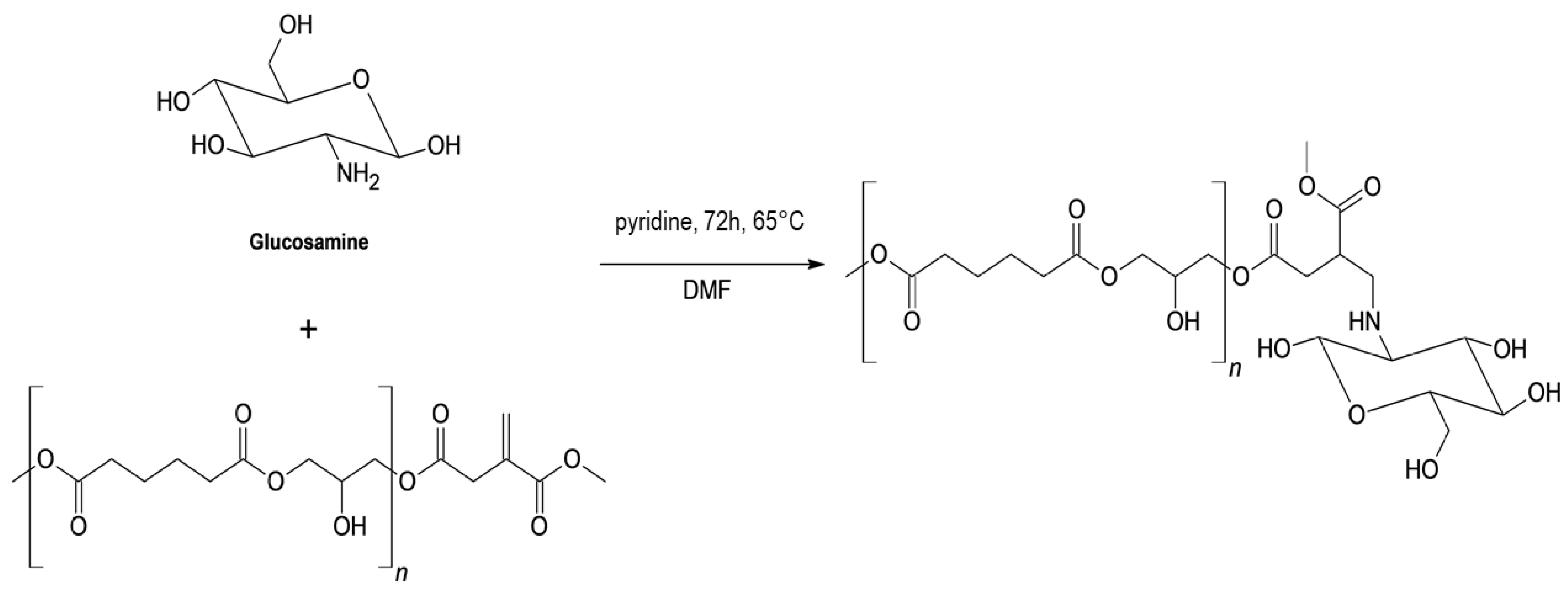
3.5.4. Aza-Michael Addition of Glucosamine
4. Conclusions
Supplementary Materials
Author Contributions
Funding
Institutional Review Board Statement
Data Availability Statement
Acknowledgments
Conflicts of Interest
Abbreviations
| ADME | Absorption, distribution, metabolism, and excretion |
| PGAI | Poly(glycerol adipate itaconate) |
| IA | Itaconic acid |
| DMI | Dimethyl itaconate |
| AA | Adipic acid |
| BDO | 1,4-butanediol |
| GLY | Glycerol |
| MEG | Monoethylene glycol |
| PDO | 1,3-propanediol |
| GA | Glucosamine |
| NAC | N-acetyl cysteine |
| CaLB | Lipase B from C. antarctica |
References
- Safe and sustainable by design chemicals and materials. Framework for the definition of criteria and evaluation procedure for chemicals and materials, 2022; EUR 31100 EN, Publications Office of the European Union, Luxembourg, 2022, ISBN 978-92-76-53280-4, JRC128591. [CrossRef]
- Todea, A.; Bitcan, I.; Giannetto, M.; Rădoi, I.I.; Bruschi, R.; Renzi, M.; Anselmi, S.; Provenza, F.; Bentivoglio, T.; Asaro, F.; et al.Enzymatic Synthesis and Structural Modeling of Bio-Based Oligoesters as an Approach for the Fast Screening of Marine Biodegradation and Ecotoxicity. Int. J. Mol. Sci. 2024, 25, 5433. [CrossRef]
- Pellis, A.; Malinconico, M.; Guarneri, A.; Gardossi, L. Renewable Polymers and Plastics: Performance beyond the Green. N. Biotechnol. 2021, 60, 146–158. https://doi.org/10.1016/j.nbt.2020.10.003.Kharissova, O. V.; Kharisov, B. I.; Oliva González, C. M.; Méndez, Y. P.; López, I. Greener Synthesis of Chemical Compounds and Materials. R. Soc. Open Sci. 2019, 6 (11), 191378. [CrossRef]
- Habeych, D. I.; Juhl, P. B.; Pleiss, J.; Vanegas, D.; Eggink, G.; Boeriu, C. G. Biocatalytic Synthesis of Polyesters from Sugar-Based Building Blocks Using Immobilized Candida Antarctica Lipase B. J. Mol. Catal. B Enzym. 2011, 71 (1–2), 1–9. [CrossRef]
- Lee, S. Y.; Hong, S. H.; Lee, S. H.; Park, S. J. Fermentative Production of Chemicals That Can Be Used for Polymer Synthesis. Macromol. Biosci. 2004, 4 (3), 157–164. [CrossRef]
- Kharissova, O. V.; Kharisov, B. I.; Oliva González, C. M.; Méndez, Y. P.; López, I. Greener Synthesis of Chemical Compounds and Materials. R. Soc. Open Sci. 2019, 6 (11), 191378. [CrossRef]
- Binns, F.; Harffey, P.; Roberts, S. M.; Taylor, A. Studies Leading to the Large Scale Synthesis of Polyesters Using Enzymes. J. Chem. Soc. Perkin Trans. 1 1999, No. 19, 2671–2676. [CrossRef]
- Guo, B.; Chen, Y.; Lei, Y.; Zhang, L.; Zhou, W. Y.; Rabie, A. B. M.; Zhao, J. Biobased Poly(Propylene Sebacate) as Shape Memory Polymer with Tunable Switching Temperature for Potential Biomedical Applications. Biomacromolecules 2011, 12 (4), 1312–1321. [CrossRef]
- Todea, A.; Fortuna, S.; Ebert, C.; Asaro, F.; Tomada, S.; Cespugli, M.; Hollan, F.; Gardossi, L. Rational Guidelines for the Two-Step Scalability of Enzymatic Polycondensation: Experimental and Computational Optimization of the Enzymatic Synthesis of Poly(Glycerolazelate). ChemSusChem 2022, 15 (9). [CrossRef]
- Barrett, D. G.; Merkel, T. J.; Luft, J. C.; Yousaf, M. N. One-Step Syntheses of Photocurable Polyesters Based on a Renewable Resource. Macromolecules 2010, 43 (23), 9660–9667. [CrossRef]
- Pellis, A.; Corici, L.; Sinigoi, L.; D’Amelio, N.; Fattor, D.; Ferrario, V.; Ebert, C.; Gardossi, L. Towards Feasible and Scalable Solvent-Free Enzymatic Polycondensations: Integrating Robust Biocatalysts with Thin Film Reactions. Green Chem. 2015, 17 (3), 1756–1766. [CrossRef]
- Cerea, G.; Gardossi, L.; Sinigoi, L.; Fattor, D. Process for the Production of Polyesters through Synthesis Catalyzed by Enzyme. WO2013110446A1, 2013.
- Dreavă, D. M.; Benea, I. C.; Bîtcan, I.; Todea, A.; Șișu, E.; Puiu, M.; Peter, F. Biocatalytic Approach for Novel Functional Oligoesters of ε-Caprolactone and Malic Acid. Processes 2021, 9 (2), 232. [CrossRef]
- Farmer, T. J.; Comerford, J. W.; Pellis, A.; Robert, T. Post-polymerization Modification of Bio-based Polymers: Maximizing the High Functionality of Polymers Derived from Biomass. Polym. Int. 2018, 67 (7), 775–789. [CrossRef]
- Corici, L.; Pellis, A.; Ferrario, V.; Ebert, C.; Cantone, S.; Gardossi, L. Understanding Potentials and Restrictions of Solvent-Free Enzymatic Polycondensation of Itaconic Acid: An Experimental and Computational Analysis. Adv. Synth. Catal. 2015, 357 (8), 1763–1774. [CrossRef]
- Guarneri, A.; Cutifani, V.; Cespugli, M.; Pellis, A.; Vassallo, R.; Asaro, F.; Ebert, C.; Gardossi, L. Functionalization of Enzymatically Synthesized Rigid Poly(Itaconate)s via Post-Polymerization Aza-Michael Addition of Primary Amines. Adv. Synth. Catal. 2019, 361 (11), 2559–2573. [CrossRef]
- Goodford, P.J. A Computational Procedure for Determining Energetically Favorable Binding Sites on Biologically Important Macromolecules. J. Med. Chem. 1985, 28, 849–857. [CrossRef]
- Cruciani, G.; Crivori, P.; Carrupt, P.A.; Testa, B. Molecular Fields in Quantitative Structure-Permeation Relationships: The VolSurf Approach. J. Mol. Struct. THEOCHEM 2000, 503, 17–30. [CrossRef]
- Cespugli, M.; Lotteria, S.; Navarini, L.; Lonzarich, V.; Del Terra, L.; Vita, F.; Zweyer, M.; Baldini, G.; Ferrario, V.; Ebert, C.; et al. Rice Husk as an Inexpensive Renewable Immobilization Carrier for Biocatalysts Employed in the Food, Cosmetic and Polymer Sectors. Catalysts 2018, 8 (10), 471. [CrossRef]
- Spennato, M.; Todea, A.; Corici, L.; Asaro, F.; Cefarin, N.; Savonitto, G.; Deganutti, C.; Gardossi, L. Turning Biomass into Functional Composite Materials: Rice Husk for Fully Renewable Immobilized Biocatalysts. EFB Bioeconomy J. 2021, 1 (May), 100008. [CrossRef]
- Zappaterra, F.; Costa, S.; Summa, D.; Semeraro, B.; Cristofori, V.; Trapella, C.; Tamburini, E. Glyceric Prodrug of Ursodeoxycholic Acid (UDCA): Novozym 435-Catalyzed Synthesis of UDCA-Monoglyceride. Molecules 2021, 26 (19), 5966. [CrossRef]
- Li, G.; Yao, D.; Zong, M. Lipase-Catalyzed Synthesis of Biodegradable Copolymer Containing Malic Acid Units in Solvent-Free System. Eur. Polym. J. 2008, 44 (4), 1123–1129. [CrossRef]
- Huang, S.; Chen, L.; Mei, H.; Zhang, D.; Shi, T.; Kuang, Z.; Heng, Y.; Xu, L.; Pan, X. In Silico Prediction of the Dissociation Rate Constants of Small Chemical Ligands by 3D-Grid-Based VolSurf Method. Int. J. Mol. Sci. 2020, 21 (7), 2456. [CrossRef]
- Li, G.; Yao, D.; Zong, M. Lipase-Catalyzed Synthesis of Biodegradable Copolymer Containing Malic Acid Units in Solvent-Free System. Eur. Polym. J. 2008, 44 (4), 1123–1129. [CrossRef]
- Pellis, A.; Herrero Acero, E.; Gardossi, L.; Ferrario, V.; Guebitz, G. M. Renewable Building Blocks for Sustainable Polyesters: New Biotechnological Routes for Greener Plastics. Polym. Int. 2016, 65 (8), 861–871. [CrossRef]
- Teleky, B.-E.; Vodnar, D. Biomass-Derived Production of Itaconic Acid as a Building Block in Specialty Polymers. Polymers (Basel). 2019, 11 (6), 1035. [CrossRef]
- Spasojevic, P.; Zrilic, M.; Panic, V.; Stamenkovic, D.; Seslija, S.; Velickovic, S. The Mechanical Properties of a Poly(Methyl Methacrylate) Denture Base Material Modified with Dimethyl Itaconate and Di- n -Butyl Itaconate. Int. J. Polym. Sci. 2015, 2015, 1–9. [CrossRef]
- Satoh, K.; Lee, D.; Nagai, K.; Kamigaito, M. Precision Synthesis of Bio-Based Acrylic Thermoplastic Elastomer by RAFT Polymerization of Itaconic Acid Derivatives. Macromol. Rapid Commun. 2014, 35 (2), 161–167. [CrossRef]
- Hevilla, V.; Sonseca, A.; Echeverría, C.; Muñoz-Bonilla, A.; Fernández-García, M. Enzymatic Synthesis of Polyesters and Their Bioapplications: Recent Advances and Perspectives. Macromol. Biosci. 2021, 21 (10). [CrossRef]
- Schoon, I.; Kluge, M.; Eschig, S.; Robert, T. Catalyst Influence on Undesired Side Reactions in the Polycondensation of Fully Bio-Based Polyester Itaconates. Polymers (Basel). 2017, 9 (12), 693. [CrossRef]
- Farmer, T.; Castle, R.; Clark, J.; Macquarrie, D. Synthesis of Unsaturated Polyester Resins from Various Bio-Derived Platform Molecules. Int. J. Mol. Sci. 2015, 16 (7), 14912–14932. [CrossRef]
- Sakai, M. Studies of the Isomerization of Unsaturated Carboxylic Acids. II. The Thermal Rearrangement of Citraconic Acid to Itaconic Acid in Aqueous Solutions. Bull. Chem. Soc. Jpn. 1976, 49 (1), 219–223. [CrossRef]
- Jiang, Y.; Woortman, A. J. J.; Alberda van Ekenstein, G. O. R.; Petrović, D. M.; Loos, K. Enzymatic Synthesis of Biobased Polyesters Using 2,5-Bis(Hydroxymethyl)Furan as the Building Block. Biomacromolecules 2014, 15 (7), 2482–2493. [CrossRef]
- Pellis, A.; Ferrario, V.; Cespugli, M.; Corici, L.; Guarneri, A.; Zartl, B.; Herrero Acero, E.; Ebert, C.; Guebitz, G. M.; Gardossi, L. Fully Renewable Polyesters via Polycondensation Catalyzed by Thermobifida Cellulosilytica Cutinase 1: An Integrated Approach. Green Chem. 2017, 19 (2), 490–502. [CrossRef]
- Perin, G. B. and Felisberti M. I, Enzymatic Synthesis of Poly(glycerol sebacate): Kinetics, Chain Growth, and Branching Behavior. : Macromolecules 2020, 53, 7925−7935. https://dx.doi.org/10.1021/acs.macromol.0c01709?ref=pdf.
- https://echa.europa.eu/it/registration-dossier/-/registered-dossier/14392/7/7/1 accessed on August 10, 2025.
- Albertsson, A.-C.; Varma, I. K. Recent Developments in Ring Opening Polymerization of Lactones for Biomedical Applications. Biomacromolecules 2003, 4 (6), 1466–1486. [CrossRef]
- Lang, K.; Sánchez-Leija, R. J.; Gross, R. A.; Linhardt, R. J. Review on the Impact of Polyols on the Properties of Bio-Based Polyesters. Polymers (Basel). 2020, 12 (12), 2969. [CrossRef]
- Cazzola, M.; Calzetta, L.; Page, C.; Jardim, J.; Chuchalin, A. G.; Rogliani, P.; Gabriella Matera, M. Influence of N -Acetylcysteine on Chronic Bronchitis or COPD Exacerbations: A Meta-Analysis. Eur. Respir. Rev. 2015, 24 (137), 451–461. [CrossRef]
- Elbini Dhouib, I.; Jallouli, M.; Annabi, A.; Gharbi, N.; Elfazaa, S.; Lasram, M. M. A Minireview on N -Acetylcysteine: An Old Drug with New Approaches. Life Sci. 2016, 151, 359–363. [CrossRef]
- Giacobazzi, G.; Gioia, C.; Colonna, M.; Celli, A. Thia-Michael reaction for a thermostable itaconic-based monomer and the synthesis of functionalized bio-polyesters. ACS Sustainable Chem. Eng. 2019, 7, 5553−5559. [CrossRef]
- Chanda, S.; Ramakrishnan, S. Poly(Alkylene Itaconate)s – an Interesting Class of Polyesters with Periodically Located Exo-Chain Double Bonds Susceptible to Michael Addition. Polym. Chem. 2015, 6 (11), 2108–2114. [CrossRef]
- Moore, O. B.; Hanson, P.-A.; Comerford, J. W.; Pellis, A.; Farmer, T. J. Improving the Post-Polymerization Modification of Bio-Based Itaconate Unsaturated Polyesters: Catalyzing Aza-Michael Additions With Reusable Iodine on Acidic Alumina. Front. Chem. 2019, 7. [CrossRef]
- Pellis, A.; Hanson, P. A.; Comerford, J. W.; Clark, J. H.; Farmer, T. J. Enzymatic Synthesis of Unsaturated Polyesters: Functionalization and Reversibility of the Aza-Michael Addition of Pendants. Polym. Chem. 2019, 10 (7), 843–851. [CrossRef]
- Farmer, T. J.; Macquarrie, D. J.; Comerford, J. W.; Pellis, A.; Clark, J. H. Insights into Post-polymerisation Modification of Bio-based Unsaturated Itaconate and Fumarate Polyesters via Aza-michael Addition: Understanding the Effects of CC Isomerisation. J. Polym. Sci. Part A Polym. Chem. 2018, 56 (17), 1935–1945. [CrossRef]
- Hoffmann, C.; Stuparu, M. C.; Daugaard, A.; Khan, A. Aza-Michael Addition Reaction: Post-polymerization Modification and Preparation of PEI/PEG-based Polyester Hydrogels from Enzymatically Synthesized Reactive Polymers. J. Polym. Sci. Part A Polym. Chem. 2015, 53 (6), 745–749. [CrossRef]
- Noordzij, G. J.; van den Boomen, Y. J. G.; Gilbert, C.; van Elk, D. J. P.; Roy, M.; Wilsens, C. H. R. M.; Rastogi, S. The Aza-Michael Reaction: Towards Semi-Crystalline Polymers from Renewable Itaconic Acid and Diamines. Polym. Chem. 2019, 10 (29), 4049–4058. [CrossRef]
- Chirita, R.-I.; Chaimbault, P.; Archambault, J.-C.; Robert, I.; Elfakir, C. Development of a LC–MS/MS Method to Monitor Palmitoyl Peptides Content in Anti-Wrinkle Cosmetics. Anal. Chim. Acta 2009, 641 (1–2), 95–100. [CrossRef]
- Antalek, B. Using pulsed gradient spin echo NMR for chemical mixture analysis: How to obtain optimum results. Concepts Magn. Reson., Part A 2002, 14, 225–258. [CrossRef]
- Pelta M.D.; Barjat H.; Morris G.A.; Davis A.L.; Hammond S.J., Pulse sequences for high-resolution diffusion-ordered spectroscopy (HR-DOSY). Magn. Reson. Chem., 1998, 36, 706-714. [CrossRef]
- 51Jerschow A.; Müller N. Suppression of Convection Artifacts in Stimulated-Echo Diffusion Experiments. Double-Stimulated-Echo Experiments. J. Magn. Reson. 1997, 125, 372-375. [CrossRef]
- Royce Hynes, S.; McGregor, L. M.; Ford Rauch, M.; Lavik, E. B. Photopolymerized Poly(Ethylene Glycol)/Poly(L-Lysine) Hydrogels for the Delivery of Neural Progenitor Cells. J. Biomater. Sci. Polym. Ed. 2007, 18 (8), 1017–1030. [CrossRef]
- Hainarosie, R.; Zainea, V.; Ene, B.; Hainarosie, M.; Ceachir, O.; Ionita, I.; Pietrosanu, C. Use of Polyethylene Glycol Ester and Trilysine Amine Solution in the Closure of Anterior Skull Base Defects. Mater. Plast. 2015, 52 (2), 190–192.
- Saxena, A. K. Synthetic Biodegradable Hydrogel (PleuraSeal) Sealant for Sealing of Lung Tissue after Thoracoscopic Resection. J. Thorac. Cardiovasc. Surg. 2010, 139 (2), 496–497. [CrossRef]
- Karmali, P. P.; Kumar, V. V; Chaudhuri, A. Design, Syntheses and In Vitro Gene Delivery Efficacies of Novel Mono-, Di- and Trilysinated Cationic Lipids: A Structure−Activity Investigation. J. Med. Chem. 2004, 47 (8), 2123–2132. [CrossRef]
- Nishida, Y.; Aono, R.; Dohi, H.; Ding, W.; Uzawa, H. 1H-NMR Karplus Analysis of Molecular Conformations of Glycerol under Different Solvent Conditions: A Consistent Rotational Isomerism in the Backbone Governed by Glycerol/Water Interactions. Int. J. Mol. Sci. 2023, 24, 2766. [CrossRef]
- Bertuzzi, D. L.; Becher, T. B.; Capreti, N. M. R.; Amorim, J.; Jurberg, I. D.; Megiatto, J. D.; Ornelas, C. General Protocol to Obtain D-Glucosamine from Biomass Residues: Shrimp Shells, Cicada Sloughs and Cockroaches. Glob. Challenges 2018, 2 (11). [CrossRef]
- Kashige, N.; Yamaguchi, T.; Mishiro, N.; Hanazono, H.; Miake, F.; Watanabe, K. Possible Involvement of Dihydrofructosazine in the DNA Breaking Activity of D-Glucosamine. Biol. Pharm. Bull. 1995, 18 (5), 653–658. [CrossRef]
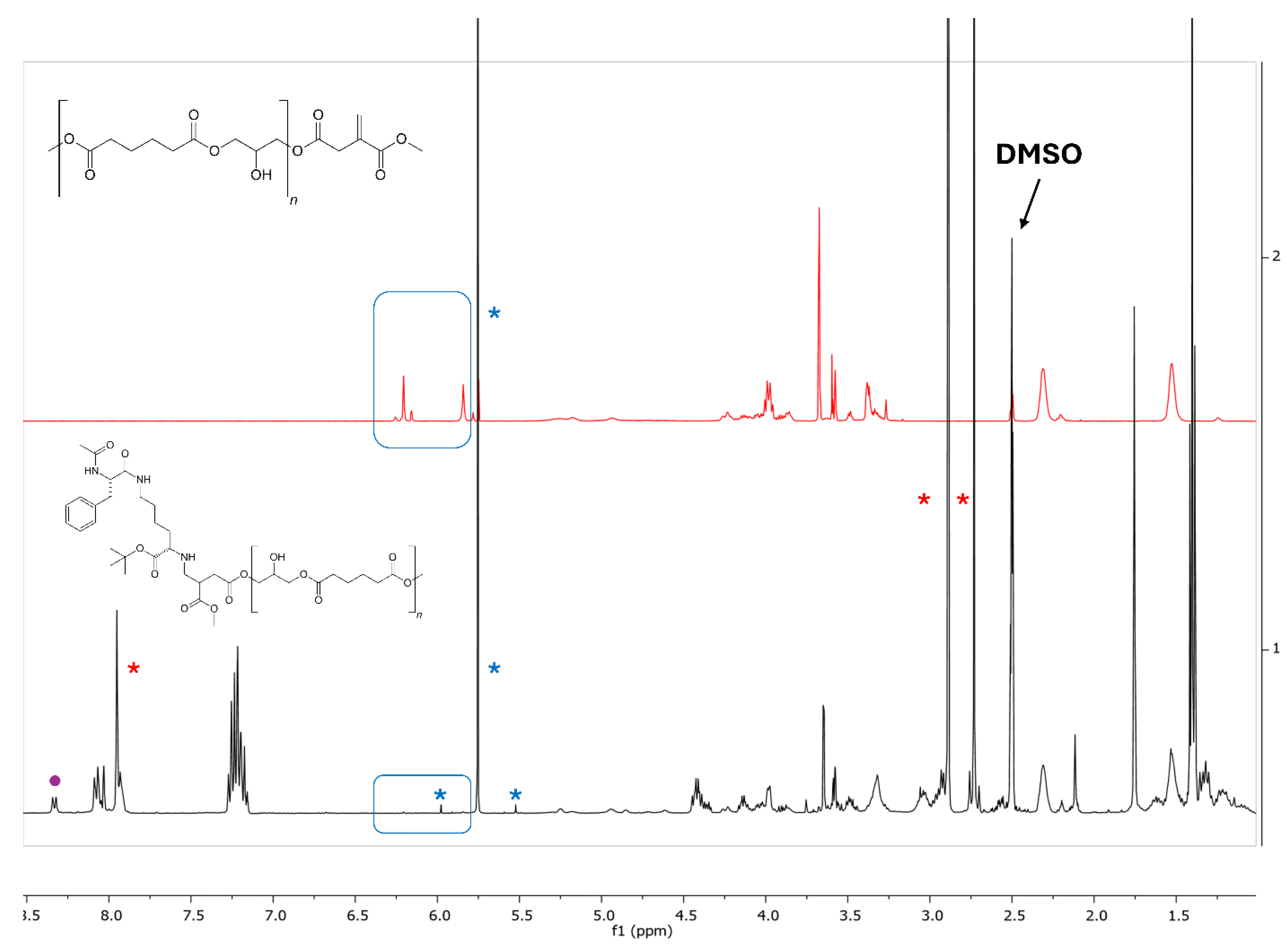
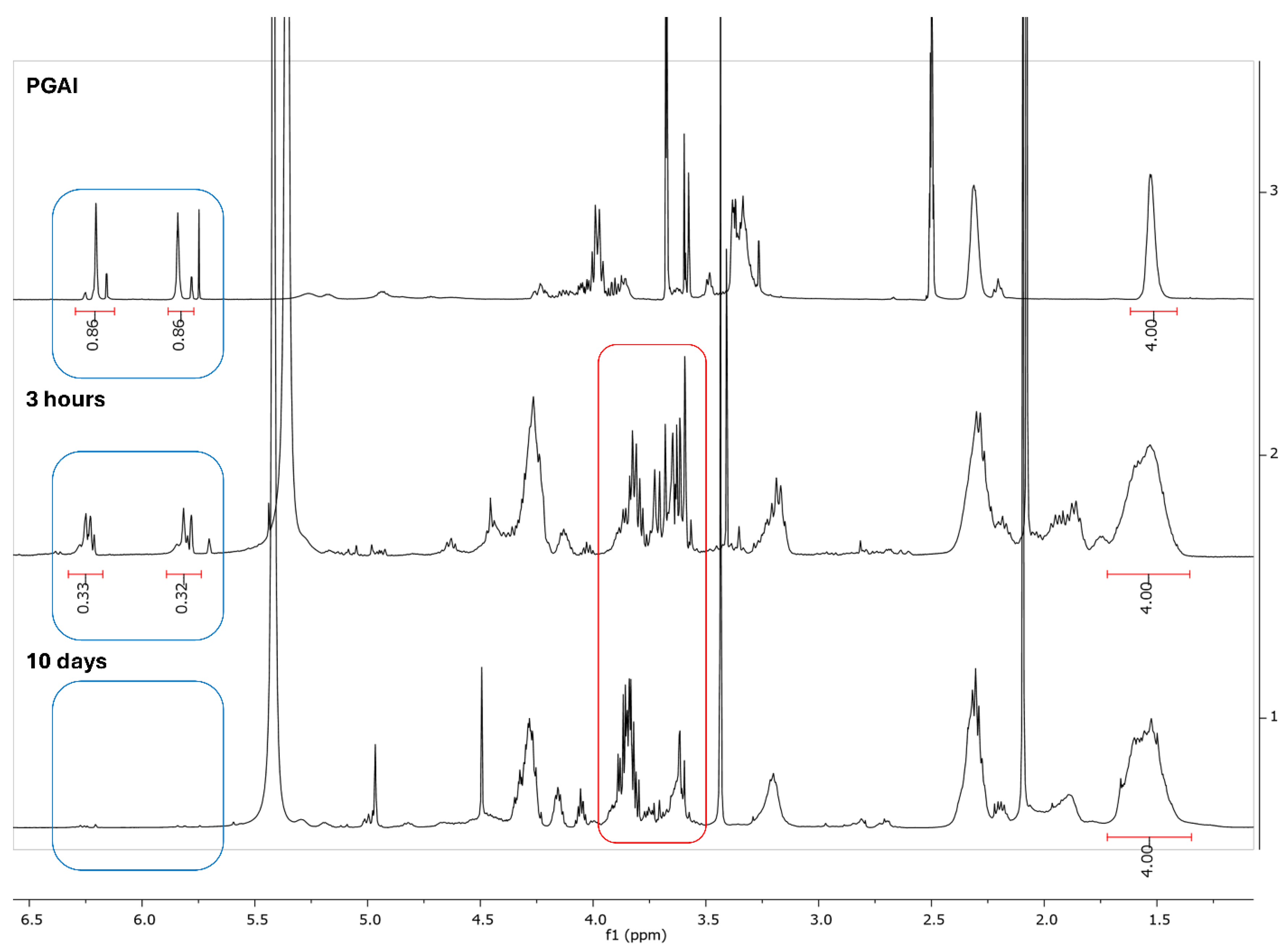
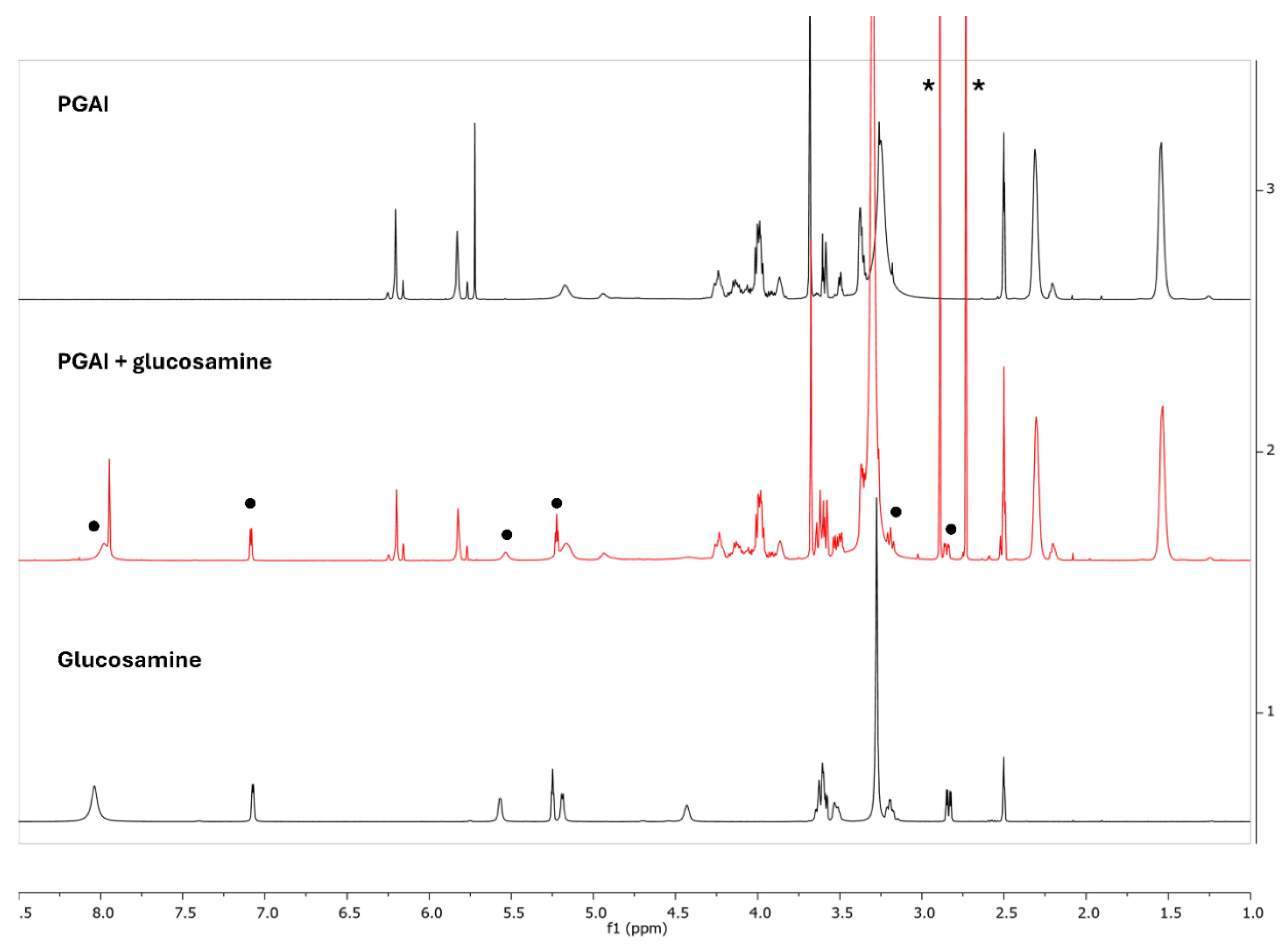
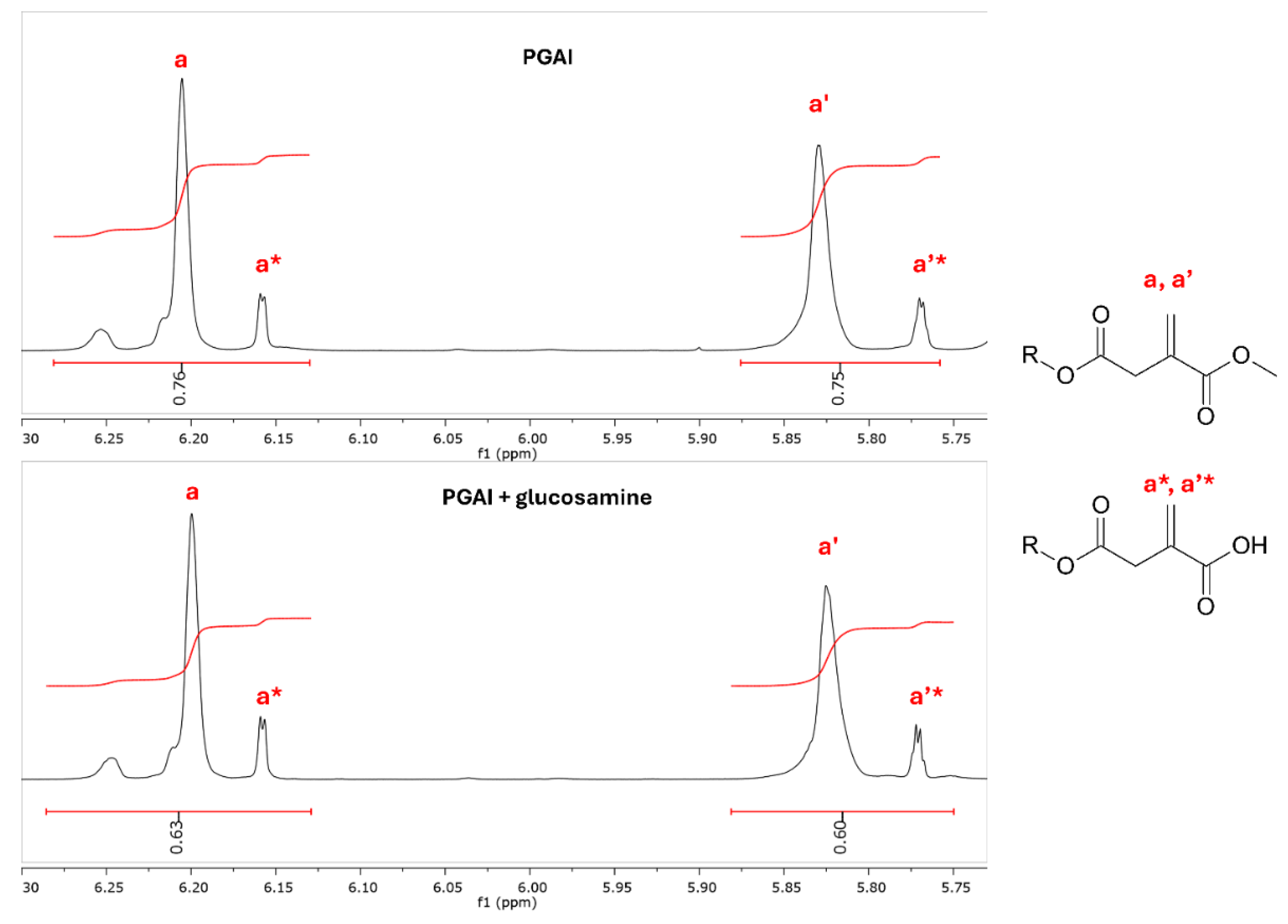
| Exp. | PGAI (mg) | GA (mg) | Base | Solvent | T (°C) | Time (h) |
|---|---|---|---|---|---|---|
| 1 | 400 | 155 | Pyridine (40 mg) | — | 50 | 72 |
| 2 | 400 | 110 | Pyridine (40 mg) | DMF (1 mL) | 50 | 72 |
| 3 | 400 | 110 | Pyridine (40 mg) | — | 50 | 72 |
| 4 | 400 | 110 | Pyridine (40 mg) | DMF (1 mL) | 65 | 72 |
| 5 | 100 | 50 | Triethylamine (40 mg) | — | 50 | 168 |
Disclaimer/Publisher’s Note: The statements, opinions and data contained in all publications are solely those of the individual author(s) and contributor(s) and not of MDPI and/or the editor(s). MDPI and/or the editor(s) disclaim responsibility for any injury to people or property resulting from any ideas, methods, instructions or products referred to in the content. |
© 2025 by the authors. Licensee MDPI, Basel, Switzerland. This article is an open access article distributed under the terms and conditions of the Creative Commons Attribution (CC BY) license (http://creativecommons.org/licenses/by/4.0/).