

Submitted:
27 August 2025
Posted:
27 August 2025
You are already at the latest version
Abstract
Although spontaneous or complexation-induced reductions of CuII to CuI have occasionally been observed, controlling these processes remains a challenge. Herein, we report the synthesis of CuI complexes via the complexation-induced reduction of CuII complexes with pyridine-containing N4 Schiff-base ligand L incorporating a biphenyl unit (L = N,N'-([1,1'-biphenyl]-2,2'-diyl)bis(1-(6-methylpyridin-2-yl)methanimine)). Such a reduction has not yet been observed in previously reported CuII complexes with pyridine-containing N4 Schiff-base ligands, strongly suggesting that the torsional distortion of the ligand framework induced by the biphenyl moiety effectively promotes the complexation-induced reduction of CuII to CuI. The CuI complexes were thoroughly characterized by 1H NMR spectroscopy, UV–vis–NIR spectroscopy, and single-crystal X-ray diffraction analyses. The [CuI(L)]+ complex undergoes a reversible redox process with its oxidized species, which was identified as a CuII complex based on spectroelectrochemical measurements and theoretical calculations.
Keywords:
copper
; metal complex
; reduction
; ligand
; electronic structure
1. Introduction
The redox reaction of copper (Cu) complexes plays a key role in many biological systems [1,2,3,4]. Notably, blue Cu proteins such as plastocyanin and azurin function as biological electron carriers by virtue of the redox reactions between CuI and CuII at their active sites [1,2]. To achieve a rapid and reversible redox process between CuI and CuII, the coordination geometry must remain nearly unchanged throughout the redox event. However, the preferred coordination geometry of CuI and CuII complexes differs considerably owing to their distinct electronic configuration. Specifically, CuI adopts a tetrahedral coordination geometry due to its closed-shell d10 configuration, whereas the d9 configuration and characteristic Jahn–Teller distortion of CuII result in square-planar or distorted square-pyramidal complexes. Therefore, an appropriate ligand design is essential in order to control the redox properties and oxidation states of Cu complexes.
Cu complexes exhibit a rich redox chemistry, which can sometimes complicate the control of their oxidation states. For instance, several studies have reported the formation of CuI complexes from CuII precursors even in the absence of reducing agents [5,6,7,8,9,10]. Such a reduction, which is commonly termed spontaneous or complexation-induced reduction [6,7,8,9,10], can be triggered by an intramolecular electron transfer from the ligand [8,10] or by the participation of solvents such as alcohols [5]. The spontaneous or complexation-induced reduction of CuII complexes often occurs unintentionally, and limited efforts have so far been devoted to deliberately controlling this process [5,6,7,8,9,10]. Nevertheless, understanding and controlling the geometric preferences of both CuI and CuII may enable the deliberate induction of complexation-induced reduction.
Pyridine-based nitrogen ligands are widely used in Cu complexes due to their strong coordination ability with both CuI and CuII oxidation states [11,12,13,14,15,16,17,18,19,20]. We envisioned that incorporating a biphenyl moiety into the pyridine-based ligand framework of CuII complexes could promote their complexation-induced reduction. The biphenyl unit consists of two aromatic rings with a dihedral angle of ~42° between them, which introduces a remarkable torsional distortion [6]. Such a torsional distortion could facilitate the complexation-induced reduction of CuII by favoring the formation of the tetrahedral geometry, which is energetically preferred in CuI complexes. To test our hypothesis, we designed biphenyl-bridged pyridine-containing N4 Schiff-base ligand L (Figure 1).
Herein, we report the design of ligand L and its reaction with a CuII precursor to yield a CuI complex via complexation-induced reduction. In addition, we discuss the effect of the biphenyl unit on the complexation-induced reduction of CuII on the basis of a comparison with other Cu complexes bearing pyridine-containing N4 Schiff-base ligands.
2. Results and Discussion
Tetradentate ligand L was synthesized via the condensation reaction between 6-methyl-2-pyridinecarboxaldehyde and 2,2’-diaminobiphenyl in ethanol. Interestingly, the reaction of L with CuII(CF3SO3)2 immediately furnished a black-green suspension and induced the spontaneous reduction of the CuII center to CuI. Recrystallization of the CuI complex using DMF and diethyl ether afforded deep-green crystals, which were subjected to a single-crystal X-ray diffraction (XRD) analysis. The resulting molecular structure is shown in Figure 2(a). The presence of two Cu centers and two CF3SO3‒ counter anions in the asymmetric unit indicates that the oxidation state of Cu is +I. The resulting molecular structure shows that the molecular formula of the obtained CuI complex is [CuI2(L)2](CF3SO3)2. The bond distances between Cu and the pyridine N (Npy) are 2.097‒2.114 Å, i.e., slightly shorter than those between Cu and the imine N (Nim) (2.055‒2.074 Å). The Nim‒Cu‒Npy bond angles (80.9°‒81.7°) are considerably smaller than the Npy‒Cu‒Npy (97.2°‒97.7°) and Nim‒Cu‒Nim (144.2°‒144.6°) bond angles. The dihedral angles between the N(1)–Cu(1)–N(2) and N(5)–Cu(1)–N(6) planes as well as between the N(3)–Cu(2)–N(4) and N(7)–Cu(2)–N(8) planes are 78.81° and 77.66°, respectively. Considering that the ideal square-planar and tetrahedral geometries are characterized by dihedral angles of 0° and 90°, respectively, the obtained values suggest that the coordination geometries of the Cu(1) and Cu(2) centers are slightly distorted from the ideal tetrahedral coordination geometry.
The reaction of L with CuII(ClO4)2∙6H2O also immediately furnished a dark-green suspension. The resulting solid was dissolved in acetonitrile, subjected to counter-anion exchange via the reaction with 10 equivalents of NaBPh4, and recrystallized into black crystals. The corresponding single-crystal XRD analysis provided the molecular structure shown in Figure 2(b). In contrast to [CuI2(L)2](CF3SO3)2, the asymmetric unit contains only one Cu center and one BPh4‒ anion, revealing that the molecular formula of the obtained Cu complex is [Cu(L)]BPh4. Considering the charge balance of [Cu(L)]BPh4, the oxidation state of Cu can also be assigned as +I. Therefore, the reaction between L and a CuII source produced CuI complexes regardless of the counter anion. However, mononuclear or dinuclear CuI complexes were obtained depending on the counter anion.
The Cu‒Npy bond lengths in [CuI(L)]BPh4 are 1.985 and 2.027 Å, which are by 0.06‒0.13 Å shorter than those of [CuI2(L)2](CF3SO3)2 (2.097‒2.114 Å). In contrast, the length of the Cu‒Nim bonds in [CuI(L)]BPh4 (2.053 and 2.100 Å) are comparable to those in [CuI2(L)2](CF3SO3)2 (2.055‒2.074 Å). The Npy(1)‒Cu‒Npy(4) bond angle (135.27°) is significantly larger than the Npy‒Cu‒Nim (81.26° and 81.38°) and Nim‒Cu‒Nim (88.93°) bond angles. The dihedral angle between the N(1)–Cu(1)–N(2) and N(3)–Cu(1)–N(4) planes (63.30°) is slightly smaller than the corresponding angles in [CuI2(L)2](CF3SO3)2. These results indicate that [CuI(L)]BPh4 possesses a distorted tetrahedral coordination geometry.
The [CuI2(L)2](CF3SO3)2 and [CuI(L)]BPh4 complexes are EPR silent (Figure 3(a)), indicating that they are diamagnetic species with a Cu oxidation state of +I. The 1H NMR spectra of [CuI2(L)2](CF3SO3)2 and [CuI(L)]BPh4 in acetonitrile-d3 are quite similar to each other (Figures S1-2). All 1H NMR signals originating from the pyridine moieties in [CuI(L)]BPh4 are very slightly high-field shifted (~0.01 ppm) compared to the corresponding signals of [CuI2(L)2](CF3SO3)2 (Figure S2). Overall, the EPR and 1H NMR spectroscopy results show no clear difference between mononuclear and dinuclear complexes. In contrast, the UV–vis–NIR spectrum of [CuI2(L)2](CF3SO3)2 in acetonitrile clearly differs from that of [CuI(L)]BPh4. As shown in Figure 3(b), the UV–vis–NIR spectrum of [CuI2(L)2](CF3SO3)2 shows a shoulder band at 450 nm (ε = 3000 M−1∙cm−1) and a low-intensity band at 590 nm (ε = 700 M−1∙cm−1), while the corresponding spectrum of [CuI(L)]BPh4 exhibits an intense band at 450 nm (ε = 5000 M−1∙cm−1) and a low-intensity band at 585 nm (ε = 1500 M−1∙cm−1).
Considering that various CuII complexes have been synthesized by mixing a CuII source and organic Schiff-base ligands [4,21,22,23,24,25], the formation of the CuI complexes [CuI2(L)2](CF3SO3)2 and [CuI(L)]BPh4 via the reaction between a CuII source and L in the absence of additional reductants is unusual. Although the complexation-induced reduction of CuII has been previously reported, the reductant has not been unequivocally characterized in most cases [6,7,9].
To clarify why the CuI complex is formed by simply mixing CuII ions and L, we investigated the redox behavior of [Cu(L)]BPh4. The cyclic voltammogram of [CuI(L)]BPh4 shows one reversible redox couple and one irreversible oxidation peak (Figure 4). The irreversible oxidation peak at 0.42 V vs. Fc+/0 is also observed in the cyclic voltammogram of NaBPh4 in acetonitrile, but not in that of [CuI2(L)2](CF3SO3)2 (Figure S3). Therefore, it can be attributed to the oxidation of BPh4‒. The E°’ value of the reversible redox event was estimated to be 0.05 V vs. Fc+/0. To determine the electron stoichiometry (n) of the reversible redox processes observed for [CuI(L)]BPh4, spectroelectrochemical measurements were conducted by recording the UV–vis–NIR spectra of [CuI(L)]BPh4 in acetonitrile at varying applied potentials between −0.13 and 0.11 V vs. Fc+/0 (Figure 5(a)).
As a general trend, the intensity of the absorption bands at ~453 and 530–720 nm decreases with decreasing applied potentials, while new absorption bands appear at ~350 and ~800 nm. The presence of isosbestic points was clearly observed at ~402 and ~730 nm, indicating that a redox equilibrium of [CuI(L)]BPh4 solely occurred in this potential range. The spectral change of [CuI(L)]BPh4 converged at 0.11 V vs. Fc+/0, implying that the oxidation of [CuI(L)]BPh4 was complete at this potential. The ratio between the concentrations of the oxidant (CO) and the [CuI(L)]BPh4 reductant ([CuI(L)]BPh4, CR) at each potential was calculated using the absorbance change. Figure 5(b) shows the relationship between ln(CO/CR) and the applied potential (E vs. Fc+/0), which should theoretically follow the Nernst equation (eq 1):
where R, T, and F are the gas constant (8.314 J·mol−1·K−1), the absolute temperature (295 K), and the Faraday constant (96485 C·mol−1), respectively. The n and E°’ values for the redox reaction of [CuI(L)]BPh4 were determined to be 0.98(4) and 0.00(1) V vs. Fc+/0, respectively, by least-squares fitting eq 1 to the plot of E as a function of ln(CO/CR) (Figure 5(b)). This result suggests that the redox reactions of [CuI(L)]BPh4 are single-electron processes. In addition, the E°’ value is consistent within an acceptable margin of error with the redox potential determined via CV.
E = E°’ + (RT/nF)ln(CO/CR),
To elucidate the electronic structure of the electrochemically generated one-electron oxidized complex [Cu(L)]2+, we measured its EPR spectrum at 77 K. Axial signals typical for mononuclear CuII systems (g1 = 2.25 and g2 = 2.10) were observed (Figure 6), suggesting that the one-electron oxidation of [CuI(L)]+ could provide a CuII complex. However, the EPR spectral features of [Cu(L)]2+ are more similar to those observed for distorted square-planar CuII complexes [23] than to those of tetrahedral CuII complexes [26,27]. These results suggest that the oxidation from [CuI(L)]+ to [Cu(L)]2+ is accompanied by a structural change toward a more planar coordination geometry.
Next, to test the validity of our hypothesis, we performed density-functional-theory (DFT) and time-dependent DFT (TD-DFT) calculations on [CuI(L)]+ and [Cu(L)]2+. The corresponding DFT-optimized structures are shown in Figure S4, and selected structural parameters are summarized in Table S1.
The bond lengths between the Cu center and the imino N in [Cu(L)]2+, i.e., Cu(1)–N(2) and Cu(1)–N(3) (1.994 Å), are ~0.13 Å shorter than those of [CuI(L)]+ (Cu(1)–N(2) = 2.116 Å; Cu(1)–N(3) = 2.122 Å). This suggests that the increase in the positive charge of Cu through the oxidation from [CuI(L)]+ to [Cu(L)]2+ strengthens these coordination bonds. To discuss the structural change upon oxidation from [CuI(L)]+ to [Cu(L)]2+, we focused on the dihedral angles between the N(1)–Cu(1)–N(2) and N(3)–Cu(1)–N(4) planes in both complexes. The dihedral angle of DFT-optimized [CuI(L)]+ (64.36°) (Figure S5) is in good agreement with the XRD value (63.30°). In contrast, the dihedral angle of DFT-optimized [Cu(L)]2+ exhibits a considerably smaller value (56.04°). These results indicate that oxidation is accompanied by a structural change toward a more planar coordination geometry. The spin-density plot of [Cu(L)]2+ clearly shows that the unpaired electron is mainly distributed on the Cu center and the coordinated N atoms (Figure 7). In addition, the total spin-density value of Cu and N (0.98) indicates that Cu has a 3d9 electron configuration, i.e., the most common state of CuII complexes.
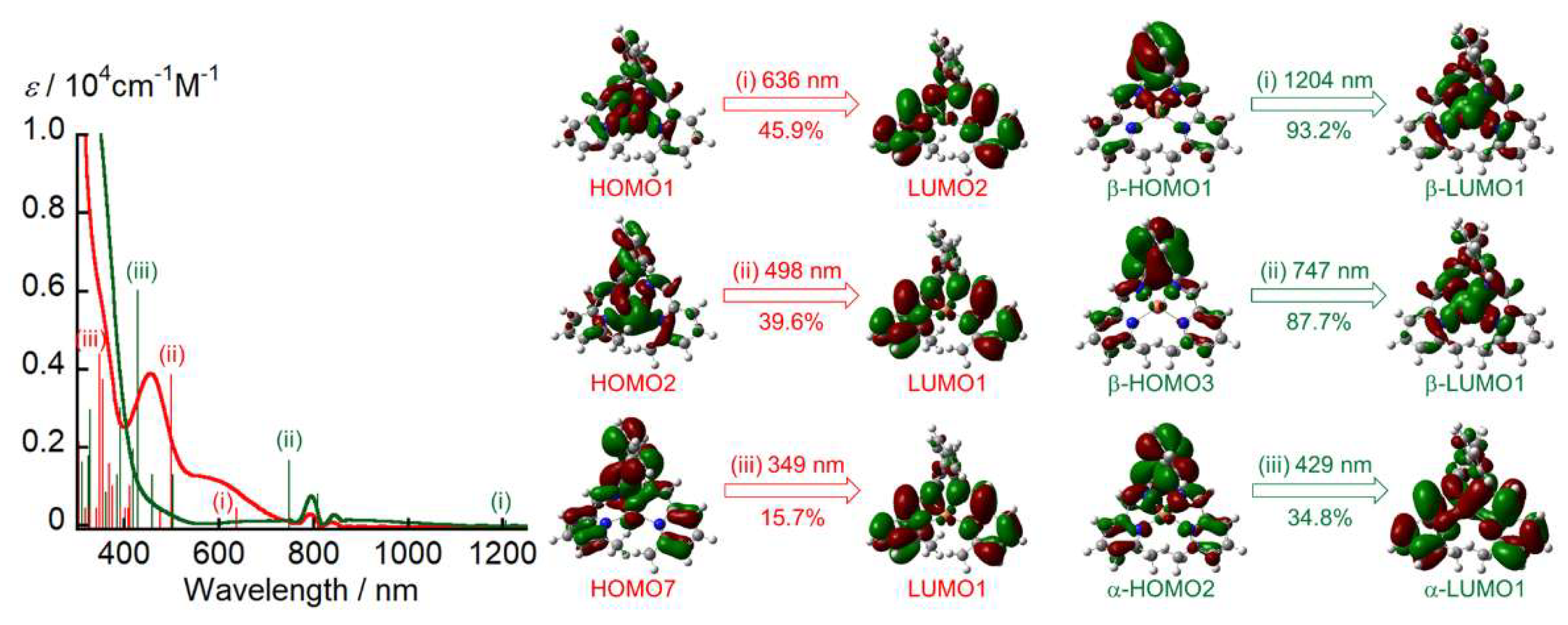
Using the DFT-optimized structure, we estimated the electronic absorption spectra of [CuI(L)]+ and [Cu(L)]2+ by TD-DFT calculations (Figure 8). The TD-DFT calculations reproduced the experimental spectral features well but underestimated the transition energies. Several intense bands of [CuI(L)]+ between 415 and 770 nm are attributable to the charge transfer from Cu to the ligand (MLCT). These MLCT bands significantly decreased upon the one-electron oxidation of [CuI(L)]+, while a new absorption band attributed to the charge transfer from L to Cu (LMCT) appeared at ~830 cm−1. Consequently, [Cu(L)]2+ can be categorized as a CuII complex ([CuII(L)]2+).
Isolating the oxidized complex [CuII(L)]2+ would provide valuable information to clarify the complexation-induced reduction of CuII to CuI. However, the electrochemically generated [CuII(L)]2+ gradually decomposed once the electrolysis was stopped. Unfortunately, attempts to synthesize and isolate [CuII(L)]2+ via chemical oxidation of [CuI(L)]+ proved unsuccessful.
Regardless, we were also interested in identifying the reducing agent responsible for the reduction of CuII. In some of the previous studies on the complexation-induced reduction of CuII to CuI [5,6,7,8,9,10], ethanol, which was used as the reaction solvent, was identified as the reducing agent [5,8,10]. Initially, we hypothesized that this could be also the case in the present study. However, [CuI(L)]BPh4 was successfully synthesized in the absence of ethanol (for details, see the Supporting Information) both under ambient conditions and a N2 atmosphere. These results suggest that neither the solvent nor the atmosphere gas is involved in the reduction of CuII.
The [CuI(L)]BPh4 complex was synthesized in a yield of approximately 45%, which was consistently reproduced across multiple experiments. Given that the yield remained relatively low despite the reproducibility, we hypothesized that ligand L or its precursors (6-methyl-2-pyridinecarboxaldehyde and 2,2’-diaminobiphenyl) might be involved in the complexation-induced reduction of CuII during complex formation. To examine this hypothesis, the complex was synthesized using a slight excess of either 6-methyl-2-pyridinecarboxaldehyde or 2,2’-diaminobiphenyl relative to the stoichiometric ratio. However, the yield of the complex remained in the range of 45%–48% (for details, see the Supporting Information) without significant improvement. In contrast, when two equivalents of L were reacted with the CuII source, the yield of [CuI(L)]BPh4 increased to 70% (for details, see the Supporting Information). This result suggests that uncoordinated L may participate in the reduction of CuII to CuI. To gain a better understanding of this reduction process, we made extensive efforts to identify the byproducts. However, the formation of multiple decomposition products hindered their identification.
Previously, Fabbrizzi and co-workers have synthesized various CuII complexes with pyridine-containing N4 Schiff-base ligands (Figure S6) by mixing a CuII source with the corresponding ligands [21]. Specifically, they employed Schiff-base ligands derived from two 6-methyl-2-carboxypyridine moieties bridged by ethylenediamine or 1,2-cyclohexanediamine [21]. These ligand frameworks possess relatively high planarity. In fact, the dihedral angles between the N(1)–Cu(1)–N(2) and N(3)–Cu(1)–N(4) planes in the CuII complex (~22°) [21] is significantly smaller than that of [CuII(L)]2+ (56.04°). At present, we hypothesize that such a difference in dihedral angle may play a key role in the reduction of CuII to CuI. The torsion of L induced by the biphenyl moiety may favor the formation of the tetrahedral geometry preferred by CuI complexes over the coordination to CuII. Therefore, approaching a four-coordinated tetrahedral coordination geometry around the Cu center would facilitate the reduction of CuII to CuI during complexation. According to Shimazaki and co-workers, modification of the coordination geometry in Cu–phenolate complexes from a trigonal-bipyramidal to a tetrahedral four-coordinate structure induces a change in the electronic structure from a CuII–(phenolate) species to a CuI–(phenoxyl radical) species [4,28]. This distortion of the coordination geometry around the Cu center facilitates the intramolecular electron transfer from the coordinating phenolate to the CuII ion, resulting in the formation of the CuI–(phenoxyl radical) species. The fate of the oxidation state of the metal center in a Cu complex is sometimes governed by its coordination structure.
3. Materials and Methods
Materials
All chemicals used in this work were of reagent grade and used as received, unless otherwise specified.
Caution! Although there were no incidents in our laboratory, transition-metal perchlorates may explode violently. They should be prepared only in small quantities and handled with the utmost care.
Synthesis of CuI Complexes
[Cu2(L)2](CF3SO3)2. A solution of 6-methyl-2-pyridinecarboxaldehyde (52.6 mg, 0.434 mmol) and 2,2’-diaminobiphenyl (40.0 mg, 0.217 mmol) in ethanol (0.5 mL) was slowly treated with CuII(CF3SO3)2 (80.0 mg, 0.221 mmol) in ethanol (0.5 mL), and the resulting mixture was stirred for 1 h. The green precipitate formed was collected by filtration, dissolved in a mixture of DMF (200 µL) and ethanol (800 µL), and recrystallized into deep-green crystals via vapor diffusion with diethyl ether. Yield: 35 mg (13%). 1H NMR (399.78 MHz, acetonitrile-d3, δ / ppm vs. TMS): 2.61 (s, 12H, –CH3), 7.17 (d, 4H, aryl, JH–H = 7.6 Hz), 7.32–7.46 (m, 12H, aryl) 7.72 (dd, 8H, py, JH–H = 18.6 Hz, JH–H = 7.6 Hz), 8.02 (t, 4H, py, JH–H = 8.0 Hz), 8.56 (s, 4H, –CH=N–).
[Cu(L)]BPh4. A solution of 6-methyl-2-pyridinecarboxaldehyde (26.0 mg, 0.215 mmol) and 2,2’-diaminobiphenyl (20.0 mg, 0.109 mmol) in ethanol (1 mL) was slowly treated with CuII(ClO4)2∙6H2O (40.6 mg, 0.110 mmol) in ethanol (1 mL), and the mixture was stirred for 1 h. The resulting precipitate was collected by filtration and dissolved in acetonitrile. NaBPh4 (0.35 g, 1.02 mmol) was added to this solution, and the mixture was stirred for several minutes. The mixture was then concentrated under reduced pressure, and ethanol (1 mL) was added to the residue to yield a black solid, which was collected by filtration, dissolved in a mixture of DMF (200 µL) and ethanol (800 µL), and recrystallized into black crystals via vapor diffusion with diethyl ether. Yield: 31 mg (37%). 1H NMR (399.78 MHz, acetonitrile-d3, δ / ppm vs. TMS): 2.60 (s, 6H, –CH3), 6.84 (t, 4H, –B–Ph4, JH–H = 7.2 Hz), 6.99 (t, 8H, –B–Ph4, JH–H = 7.2 Hz), 7.17 (d, 2H, aryl, JH–H = 8.0 Hz), 7.27 (m, 8H, –B–Ph4), 7.31–7.46 (m, 6H, aryl), 7.71 (dd, 4H, py, JH–H = 18.0 Hz, JH–H = 8.0 Hz), 8.02 (t, 2H, py, JH–H = 7.6 Hz), 8.55 (s, 2H, –CH=N–).
Physical Measurements
The 1H NMR spectra were recorded on a JEOL ECX-400 NMR spectrometer (1H: 399.78 MHz). Chemical shifts are referenced to TMS (δ = 0 ppm). CV measurements were performed on the CuI complexes (1.00 mM) dissolved in acetonitrile containing 0.1 M tetra-n-butylammonium hexafluorophosphate perchlorate (TBAPF6) at 295 K under a dry Ar atmosphere using an Autolab NOVA 2 electrochemical analyzer. A three-electrode system consisting of a GC disk working electrode, a Pt wire counter electrode, and a Ag0/+ reference electrode (0.1 M TBAP + 1 mM AgNO3/CH3CN) was employed. The ferrocene/ferrocenium ion redox couple (Fc0/+) was used as the external standard redox system. All samples were prepared under an inert Ar atmosphere. Dissolved O2 in the sample solutions was removed by purging with Ar gas for at least 10 min prior to starting the experiments.
UV–vis–NIR spectroelectrochemical measurements of CuI complexes in acetonitrile were performed with a HITACHI UH4150 spectrophotometer equipped with an optically transparent thin layer electrode (OTTLE) cell at 295 K [29,30]. The optical path length was calibrated spectrophotometrically (1.0 × 10⁻² cm) [29,30]. The three-electrode system was the same as that in the aforementioned electrochemical experiments except that the working electrode was a Pt gauze (80 mesh). The potential applied on OTTLE was controlled using Autolab NOVA 2. The absorption spectrum at each potential step was recorded after equilibration of the electrochemical reaction at the applied potential on the working electrode, which was completed within 3 min. The sample solution in the OTTLE cell was prepared in a similar manner to that for the electrochemical measurements.
Crystallographic Analysis
XRD data for [Cu2(L)2](CF3SO3)2 and [Cu(L)]BPh4 were collected on a Rigaku XtaLab Synergy-R-DW-TT diffractometer equipped with a hybrid pixel array detector and graphite-monochromated Cu Kα (λ = 1.54184 Å) radiation at 100 K. The sample was mounted on a MiTeGen Dual Thickness MicroMount and placed in a temperature-controlled N2 gas flow. Intensity data were collected by taking oscillation photographs. Reflection data were corrected for both Lorentz and polarization effects. The structures were solved using direct methods and refined anisotropically using the SHELX program suite [31] for non-hydrogen atoms via full-matrix least-squares calculations. Each refinement was continued until all shifts were smaller than one-third of the standard deviation of the parameters involved. Hydrogen atoms were placed at calculated positions. All calculations were performed using the crystallographic software package Olex2 [32].
Crystallographic data for [Cu2(L)2](CF3SO3)2: Fw = 1206.17, 0.08 × 0.05 × 0.03 mm3, monoclinic, Pc, a = 11.8459(3) Å, b = 19.8379(4) Å, c = 11.8919(3) Å, β = 117.494(3)°, V = 2478.95(12) Å3, Z = 2, T = 100 K, Dcalcd = 1.616 g cm−3, μ(Cu Kα) = 2.578 mm−1, GOF = 1.032, R1(I > 2σ) = 0.0452, wR2(all) = 0.1157.
Crystallographic data for [Cu(L)]BPh4: Fw = 773.22, 0.11 × 0.05 × 0.02 mm3, triclinic, P‒1, a = 11.4008(3) Å, b = 11.5395(4) Å, c = 15.8744(6) Å, α = 92.725(3)°, β = 108.344(3)°, γ = 99.419(3)°, V = 1944.61(12) Å3, Z = 2, T = 100 K, Dcalcd = 1.321 g cm−3, μ(Cu Kα) = 1.103 mm−1, GOF = 1.022, R1(I > 2σ) = 0.0508, wR2(all) = 0.1424.
Theoretical Calculations
DFT calculations on the molecular and electronic structures of [CuI(L)]+ and [Cu(L)]2+ were performed using the Gaussian 16 program suite (Revision C.02) [33]. Atomic coordinates for geometry optimization of [CuI(L)]+ were taken from those determined by the single-crystal XRD analysis. Geometry optimization of [Cu(L)]2+ was performed using the XRD determined structure of [CuI(L)]+ as the initial geometry, while the net electric charge of +2 and spin multiplicity of doublet spin state were considered. B3LYP [34] was employed as the functional and a conductor-like polarized continuum model (dielectric constant: 35.688) was included in all calculations because this method is known to give reasonable accuracy [35]. The 6-311++G(d,p) basis sets were used. Vibrational-frequency calculations were performed at the same level of theory to confirm that no imaginary frequency was present. Single-point calculations for energetic analysis were performed on the optimized geometry using the same condition. The spin-density plots and molecular orbitals were visualized using GaussView 6.1 [36]. TD-DFT calculations were performed on the optimized geometry using the same conditions. Theoretical electronic transition spectra were recorded for low-lying excited states using 50 roots to generate absorption spectra for >300 nm.
4. Conclusions
We have demonstrated that the addition of L to a solution of CuII induces the reduction of CuII to CuI, with concomitant formation of [CuI2(L)2](CF3SO3)2 and [CuI(L)]BPh4 depending on the CuII source. In acetonitrile, [CuI(L)]BPh4 exhibits a reversible redox couple at 0.00 V vs. Fc+/0. By combining spectroelectrochemical and EPR measurements with DFT and TD-DFT calculations, the redox equilibrium observed in [CuI(L)]BPh4 was assigned to the [CuI/II(L)]+/2+ couple. A comparison between the molecular structure of [CuII(L)]2+ and those of previously reported pyridine-containing N4 Schiff-base CuII complexes clearly suggested that the observed reduction from CuII to CuI is likely driven by biphenyl-induced torsional strain in L. This study demonstrates that an appropriate design of the ligand structure enables the control of the complexation-induced reduction of CuII, providing valuable information for designing and controlling the valence isomerization of Cu complexes.
Supplementary Materials
The following supporting information can be downloaded at the website of this paper posted on Preprints.org, Figures S1–S6; Table S1; detailed description of screening of reaction conditions for the preparation of [Cu(L)]BPh4.
Author Contributions
Dr. T.T. devised the main conceptual ideas, supervised the project, carried out all experiments and theoretical calculations, and wrote the manuscript in consultation with all co-authors. D.S., Prof. Dr. S. I., and Prof. Dr. T.O. carried out formal analyses and discussed experimental results with Dr. T.T. Dr. N.H carried out DFT calculations and discussed all experimental results with Dr. T.T. All authors have given approval to the final version of the manuscript.
Funding
This work was supported in part by Grants-in-Aid for Scientific Research (No. 23K19272 to T.T.) and the Sasakawa Scientific Research Grant from The Japan Science Society. The computational calculations were performed at the Research Center for Computational Science, Okazaki, Japan (Project: 23-IMS-C987, 24-IMS-C264, 25-IMS-C311).
Data Availability Statement
The data are contained in this article. Further reasonable inquiries can be directed to the corresponding author.
Acknowledgments
We thank Mr. Yoji Morifuku at the Center for Instrumental Analysis, Yamaguchi University for the single-crystal XRD measurements.
Conflicts of Interest
The authors declare no conflicts of interest. The funders had no role in the design of the study, in the collection, analyses, or interpretation of data, in the writing of the manuscript, or in the decision to publish the results.
References
- Solomon, E.I.; Heppner, D.E.; Johnston, E.M.; Ginsbach, J.W.; Cirera, J.; Qayyum, M.; Kieber-Emmons, M.T.; Kjaergaard, C.H.; Hadt, R.G.; Tian, L. Copper active sites in biology. Chem. Rev. 2014, 114, 3659–3853. [Google Scholar] [CrossRef]
- Solomon, E.I.; Szilagyi, R.K.; George, S.D.; Basumallick, L. Electronic structures of metal sites in proteins and models: Contributions to function in blue copper proteins. Chem. Rev. 2004, 104, 419–458. [Google Scholar] [CrossRef]
- Whittaker, W.J. Free radical catalysis by galactose oxidase. Chem. Rev. 2003, 103, 2347–2363. [Google Scholar] [CrossRef]
- Takeyama, T.; Shimazaki, Y. Diversity of oxidation state in copper complexes with phenolate ligands. Dalton Trans. 2024, 53, 3911–3929. [Google Scholar] [CrossRef]
- Kitagawa, S.; Munakata, M.; Higashi, A. Autoreduction of copper(II) complexes of 6,6′-diakyl-2,2′-bipyridine and characterization of their copper(I) complexes. Inorg. Chim. Acta 1984, 84, 79–84. [Google Scholar] [CrossRef]
- Malachowski, M.R.; Adams, M.; Elia, N.; Rheingold, A.L.; Kelly, R.S. Enforcing geometrical constraints on metal complexes using biphenyl-based ligands: Spontaneous reduction of copper(II) by sulfur-containing ligands. J. Chem. Soc. Dalton Trans. 1999, 2177–2182. [Google Scholar] [CrossRef]
- Su, C.Y.; Liao, S.; Wanner, M.; Fiedler, J.; Zhang, C.; Kang, B.S.; Kaim, W. The copper(I)/copper(II) transition in complexes with 8-alkylthioquinoline based multidentate ligands. Dalton Trans. 2003, 189–202. [Google Scholar] [CrossRef]
- Noda, K.; Sasaki, T.; Iwatsuki, S.; Kashiwabara, K.; Suzuki, T.; Takagi, H.D. Syntheses and first structural analyses of Cu(I)–PS complexes with bidentate 1,1-diphenyl-1-phospha-4-thiapentane (mtdpp) and quadridentate 5,9-diphenyl-5,9-diphospha-2,12-dithiatridecane (2,3,2-SPPS): Successful synthetic route for monomeric [Cu(mtdpp)2]BF4 and dimeric [Cu2(2,3,2-SPPS)2](BF4)2. Inorg. Chim. Acta. 2004, 357, 526–532. [Google Scholar] [CrossRef]
- Kumari, S.; Muthuramalingam, S.; Dhara, A.K.; Singh, U.P.; Mayilmurugan, R.; Ghosh, K. Cu(I) complexes obtained via spontaneous reduction of Cu(II) complexes supported by designed bidentate ligands: Bioinspired Cu(I) based catalysts for aromatic hydroxylation. Dalton Trans. 2020, 49, 13829–13839. [Google Scholar] [CrossRef]
- Fedorova, O.A.; Shepel, N.E.; Tokarev, S.D.; Lukovskaya, E.V.; Sotnikova, Y.A.; Moiseeva, A.A.; Aleo, A.D.; Fages, F.; Maurel, F.; Fedorov, Y.V. New J. Chem. 2019, 43, 2817–2827. [CrossRef]
- Morimoto, Y.; Inoue, K.; Itoh, S. Reactivity of copper(I) complexes supported by tripodal nitrogen-containing tetradentate ligands toward gaseous diatomic molecules, NO, CO and O2. Dalton Trans. 2025, 54, 5327–5333. [Google Scholar] [CrossRef]
- Mikata, Y.; Akedo, M.; Hamamoto, E.; Yoshida, S.; Shoji, S.; Ohsedo, Y.; Matsuo, T.; Storr, T.; Funahashi, Y. Structural and electrochemical properties of mononuclear copper(II) complexes with pentadentate ethylenediamine-based ligands with pyridine/quinoline/isoquinoline/quinoxaline binding sites. Dalton Trans. 2024, 53, 16716–16732. [Google Scholar] [CrossRef]
- Mekhail, M.A.; Smith, K.J.; Freire, D.M.; Pota, K.; Nguyen, N.; Burnett, M.E.; Green, K.N. Increased efficiency of a functional SOD mimic achieved with pyridine modification on a pyclen-based copper(II) complex. Inorg. Chem. 2023, 62, 5415–5425. [Google Scholar] [CrossRef] [PubMed]
- Gagne, R.R.; Kreh, R.P.; Dodge, J.A.; Marsh, R.E.; McCool, M. Synthesis and structure of (N,N,N’,N’-tetrakis(2-pyridylmethyl)ethylenediamine)dicopper(I) and its dicarbonyl adduct. Inorg. Chem. 1982, 21, 254–261. [Google Scholar] [CrossRef]
- Siebe, L.; Butenuth, C.; Stammler, A.; Bögge, H.; Walleck, S.; Glaser, T. Generation and reactivity of μ-1,2-peroxo CuIICuII and bis-μ-oxo CuIIICuIII species and catalytic hydroxylation of benzene to phenol with hydrogen peroxide. Inorg. Chem. 2024, 63, 2627–2639. [Google Scholar] [CrossRef] [PubMed]
- Zhang, C.X.; Kaderli, S.; Costas, M.; Kim, E.; Neuhold, Y.-M.; Karlin, K.D.; Zuberbühler, A.D. Copper(I)–dioxygen reactivity of [(L)CuI]+ (L = tris(2-pyridylmethyl)amine): Kinetic/thermodynamic and spectroscopic studies concerning the formation of Cu–O2 and Cu2–O2 adducts as a function of solvent medium and 4-pyridyl ligand substituent variations. Inorg. Chem. 2003, 42, 1807–1824. [Google Scholar] [CrossRef]
- Tapia, M.; Pahari, S.K.; Das, S.; Khan, F.S.T.; Hematian, S. Dimerization in TMPA-based copper(i) complexes: Implications for redox kinetics and thermodynamics. Inorg. Chem. 2025, 64, 12416–12422. [Google Scholar] [CrossRef]
- Debnath, S.; Laxmi, S.; McCubbin Stepanic, O.; Quek, S.Y.; van Gastel, M.; DeBeer, S.; Krämer, T.; England, J. A four-coordinate end-on superoxocopper(ii) complex: Probing the link between coordination number and reactivity. J. Am. Chem. Soc. 2024, 146, 23704–23716. [Google Scholar] [CrossRef]
- Langerman, M.; Hetterscheid, D.G.H. Fast oxygen reduction catalyzed by a copper(ii) tris(2-pyridylmethyl)amine complex through a stepwise mechanism. Angew. Chem., Int. Ed. 2019, 58, 12974–12978. [Google Scholar] [CrossRef]
- Wijeratne, G.B.; Hematian, S.; Siegler, M.A.; Karlin, K.D. Copper(I)/NO(g) reductive coupling producing a trans-hyponitrite bridged dicopper(II) complex: Redox reversal giving copper(I)/NO(g) disproportionation. J. Am. Chem. Soc. 2017, 139, 13276–13279. [Google Scholar] [CrossRef]
- Amendola, V.; Fabbrizzi, L.; Gianelli, L.; Maggi, C.; Mangano, C.; Pallavicini, P.; Zema, M. Electrochemical assembling/disassembling of helicates with hysteresis. Inorg. Chem. 2001, 40, 3579–3587. [Google Scholar] [CrossRef]
- Takeyama, T.; Suzuki, T.; Kikuchi, M.; Kobayashi, M.; Oshita, H.; Kawashima, K.; Mori, S.; Abe, H.; Hoshino, N.; Iwatsuki, S.; Shimazaki, Y. Solid state characterization of one- and two-electron oxidized CuII-salen complexes with para-substituents: Geometric structure-magnetic property relationship. Eur. J. Inorg. Chem. 2021, 2021, 4133. [Google Scholar] [CrossRef]
- Kunert, R.; Philouze, C.; Berthiol, F.; Jarjayes, O.; Storr, T.; Thomas, F. ; Distorted copper(II) radicals with sterically hindered salens: Electronic structure and aerobic oxidation of alcohols. Dalton Trans. 2020, 49, 12990–13002. [Google Scholar] [CrossRef] [PubMed]
- Wang, Y.; DuBois, J.L.; Hedman, B.; Hodgson, K.O.; Stack, T.D.P. Catalytic galactose oxidase models: Biomimetic Cu(II)-phenoxyl-radical reactivity. Science 1998, 279, 537–540. [Google Scholar] [CrossRef] [PubMed]
- Adams, H.; Bailey, N.A.; Dwyer, M.J.S.; Fenton, D.E.; Hellier, P.C.; Hempstead, P.D.; Latour, J.M. Synthesis and crystal structure of a first-generation model for the trinuclear copper site in ascorbate oxidase and of a dinuclear silver precursor. J. Chem. Soc., Dalton Trans. 1993, 1207–1216. [Google Scholar] [CrossRef]
- Kitajima, N.; Fujisawa, K.; Morooka, Y. Tetrahedral copper(II) complexes supported by a hindered pyrazolylborate formation of the thiolato complex, which closely mimics the spectroscopic characteristics of blue copper proteins. J. Am. Chem. Soc. 1990, 112, 3210–3212. [Google Scholar] [CrossRef]
- Shimizu, I.; Morimoto, Y.; Faltermeier, D.; Kerscher, M.; Paria, S.; Abe, T.; Sugimoto, H.; Fujieda, N.; Asano, K.; Suzuki, T.; Comba, P.; Itoh, S. Tetrahedral copper(II) complexes with a labile coordination site supported by a tris-tetramethylguanidinato ligand. Inorg. Chem. 2017, 56, 9634–9645. [Google Scholar] [CrossRef]
- Shima, Y.; Suzuki, T.; Abe, H.; Yajima, T.; Mori, S.; Shimazaki, Y. Non-innocent redox behavior of CuII–p-dimethylaminophenolate complexes: Formation and characterization of the CuI–phenoxyl radical species. Chem. Commun. 2022, 58, 6401–6404. [Google Scholar] [CrossRef]
- Takeyama, T.; Tsushima, S.; Takao, K. Effects of substituents on the molecular structure and redox behavior of uranyl(V/VI) complexes with N3O2-donating Schiff base ligands. Inorg. Chem. 2021, 60, 11435–11449. [Google Scholar] [CrossRef]
- Takeyama, T.; Tsushima, S.; Takao, K. Utility of redox-active ligands for reversible multi-electron transfer in uranyl(VI) complexes. Inorg. Chem. Front. 2023, 10, 4028–4044. [Google Scholar] [CrossRef]
- Sheldrick, G.M. Crystal structure refinement with SHELXL. Acta Crystallogr. Sect. C Struct. Chem. 2015, 71, 3–8. [Google Scholar] [CrossRef]
- Dolomanov, O.V.; Bourhis, L.J.; Gildea, R.J.; Howard, J.A.K.; Puschmann, H. OLEX2: A complete structure solution, refinement and analysis program. J. Appl. Crystallogr. 2009, 42, 339–341. [Google Scholar] [CrossRef]
- Gaussian 16, Revision C.02, Frisch, M.J.; Trucks, G.W.; Schlegel, H.B.; Scuseria, G.E.; Robb, M.A.; Cheeseman, J.R.; Scalmani, G.; Barone, V.; Petersson, G.A.; Nakatsuji, H.; Li, X.; Caricato, M.; Marenich, A.V.; Bloino, J.; Janesko, B.G.; Gomperts, R.; Mennucci, B.; Hratchian, H.P.; Ortiz, J.V.; Izmaylov, A.F.; Sonnenberg, J.L.; Williams-Young, D.; Ding, F.; Lipparini, F.; Egidi, F.; Goings, J.; Peng, B.; Petrone, A.; Henderson, T.; Ranasinghe, D.; Zakrzewski, V.G.; Gao, J.; Rega, N.; Zheng, G.; Liang, W.; Hada, M.; Ehara, M.; Toyota, K.; Fukuda, R.; Hasegawa, J.; Ishida, M.; Nakajima, T.; Honda, Y.; Kitao, O.; Nakai, H.; Vreven, T.; Throssell, K.; Montgomery, J.A., Jr.; Peralta, J.E.; Ogliaro, F.; Bearpark, M.J.; Heyd, J.J.; Brothers, E.N.; Kudin, K.N.; Staroverov, V.N.; Keith, T.A.; Kobayashi, R.; Normand, J.; Raghavachari, K.; Rendell, A.P.; Burant, J.C.; Iyengar, S.S.; Tomasi, J.; Cossi, M.; Millam, J.M.; Klene, M.; Adamo, C.; Cammi, R.; Ochterski, J.W.; Martin, R.L.; Morokuma, K.; Farkas, O.; Foresman, J.B.; Fox, D.J.; Gaussian, Inc., Wallingford CT, 2019.
- Lee, C.; Yang, W.; Parr, R.G. Development of the Colle-Salvetti correlation-energy formula into a functional of the electron density. Phys. Rev. B 1988, 37, 785–789. [Google Scholar] [CrossRef]
- Marenich, A.V.; Cramer, C.J.; Truhlar, D.G. Universal solvation model based on solute electron density and on a continuum model of the solvent defined by the bulk dielectric constant and atomic surface tensions. J. Phys. Chem. B 2009, 113, 6378–6396. [Google Scholar] [CrossRef]
- Dennington, R.; Keith, T.A.; Millam, J.M. GaussView, Version 6; Semichem Inc: Shawnee Mission, KS, 2016.
Figure 1.
Structure of ligand L prepared in this study.
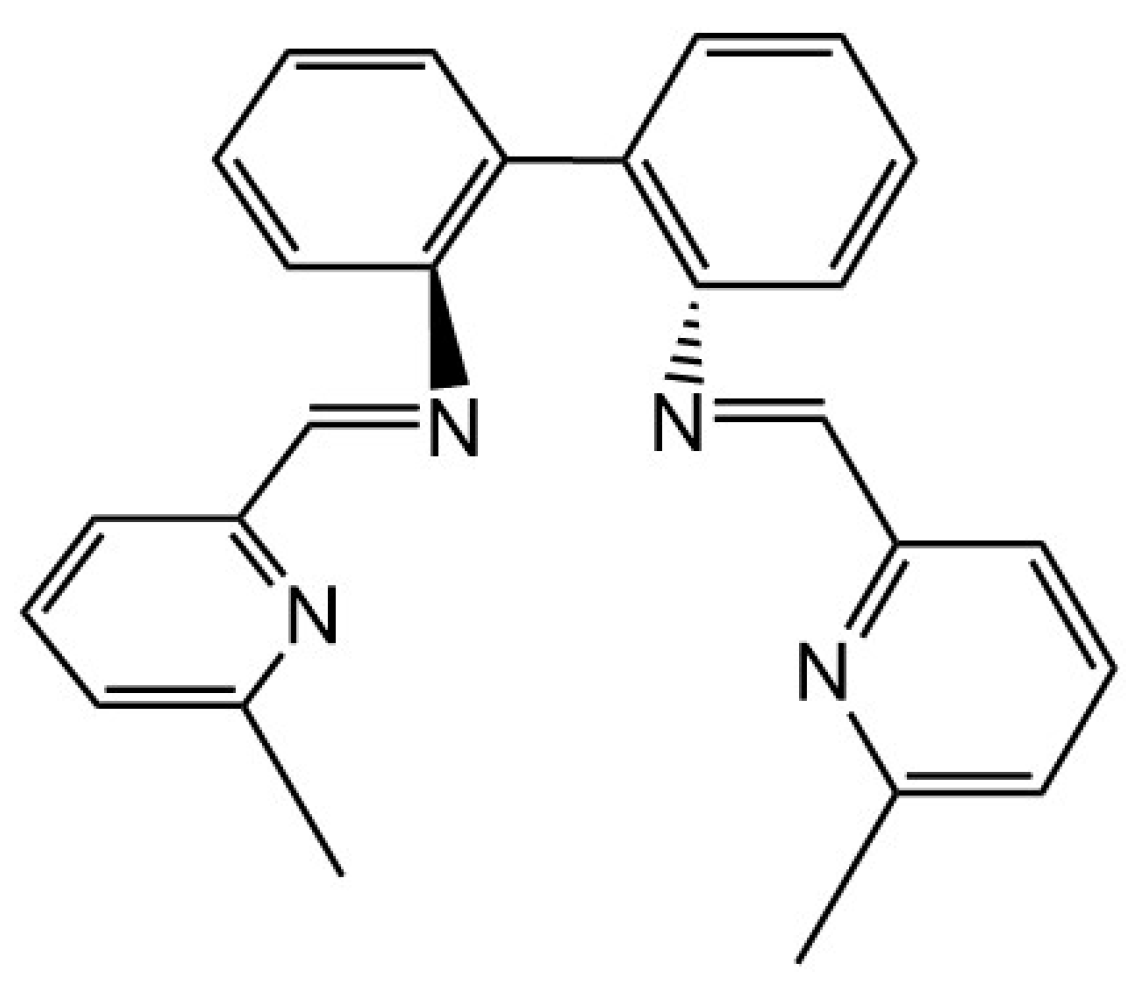
Figure 2.
Molecular structures of (a) [CuI2(L)2](CF3SO3)2 and (b) [CuI(L)]BPh4 in the crystalline state with thermal ellipsoids at 50% probability; all hydrogen atoms are omitted for clarity.
Figure 2.
Molecular structures of (a) [CuI2(L)2](CF3SO3)2 and (b) [CuI(L)]BPh4 in the crystalline state with thermal ellipsoids at 50% probability; all hydrogen atoms are omitted for clarity.
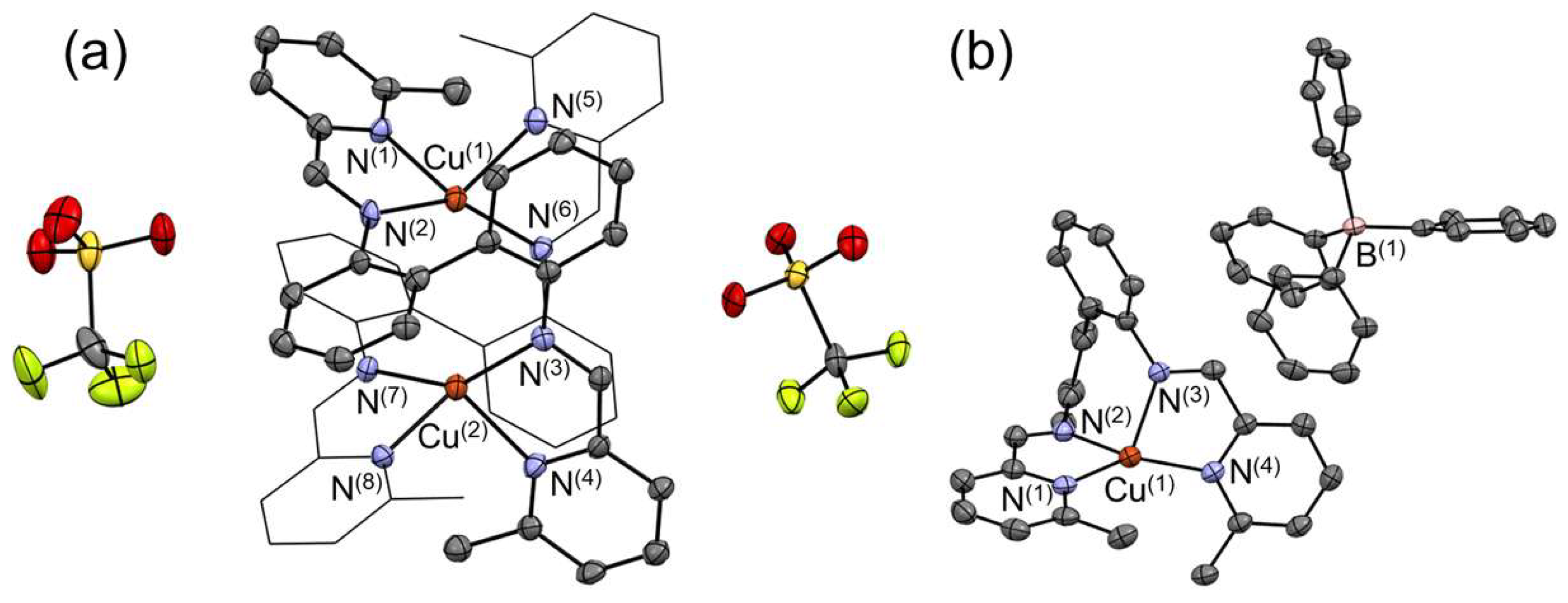
Figure 3.
(a) Solid-state EPR spectra and (b) UV–vis–NIR spectra of [CuI2(L)2](CF3SO3)2 (blue) and [CuI(L)]BPh4 (red) in acetonitrile.
Figure 3.
(a) Solid-state EPR spectra and (b) UV–vis–NIR spectra of [CuI2(L)2](CF3SO3)2 (blue) and [CuI(L)]BPh4 (red) in acetonitrile.
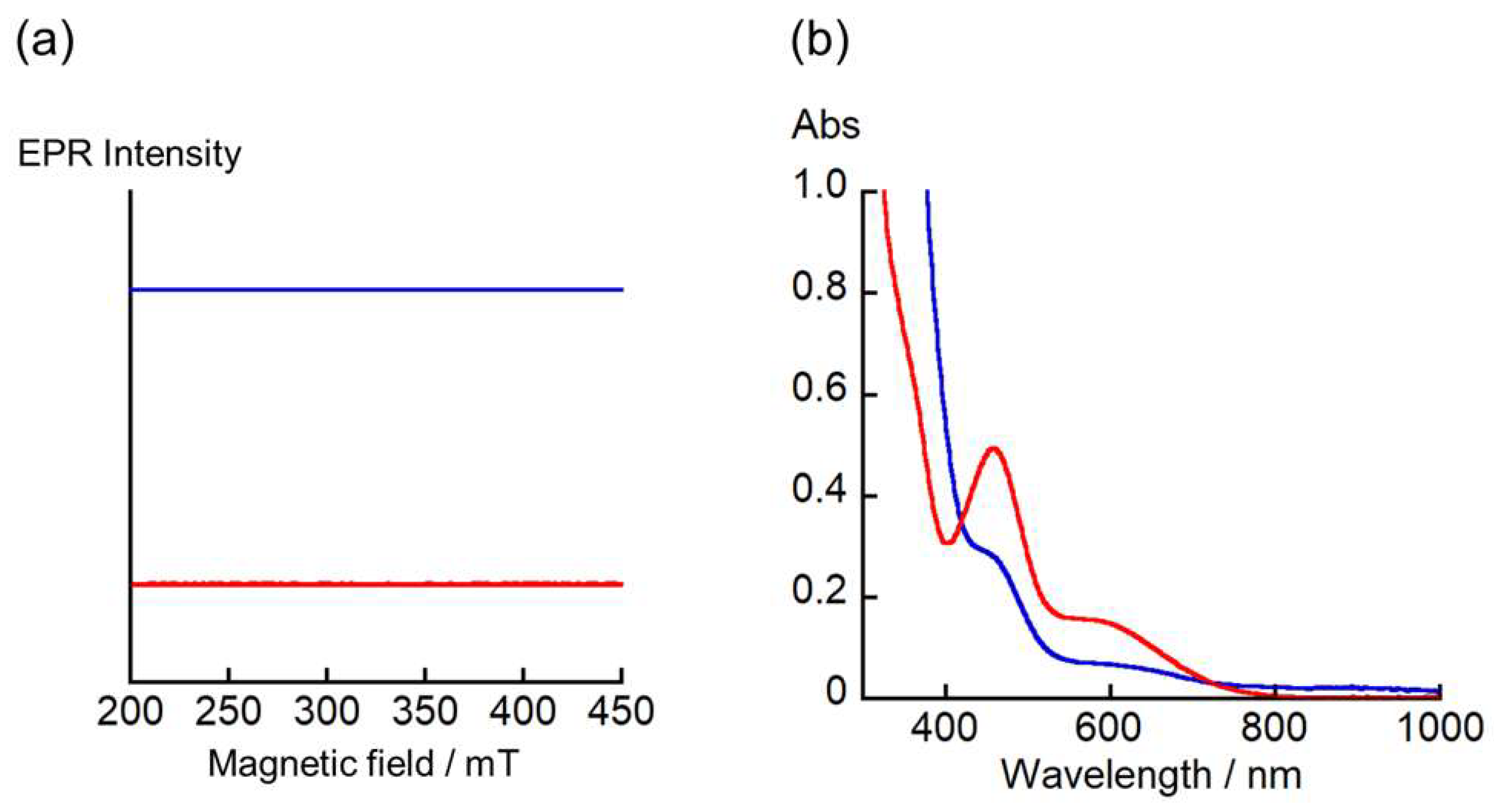
Figure 4.
Cyclic voltammogram of [CuI(L)]BPh4 in acetonitrile (supporting electrolyte: 0.1 M TBAPF6; scan rate (v): 100 mV∙s−1).
Figure 4.
Cyclic voltammogram of [CuI(L)]BPh4 in acetonitrile (supporting electrolyte: 0.1 M TBAPF6; scan rate (v): 100 mV∙s−1).
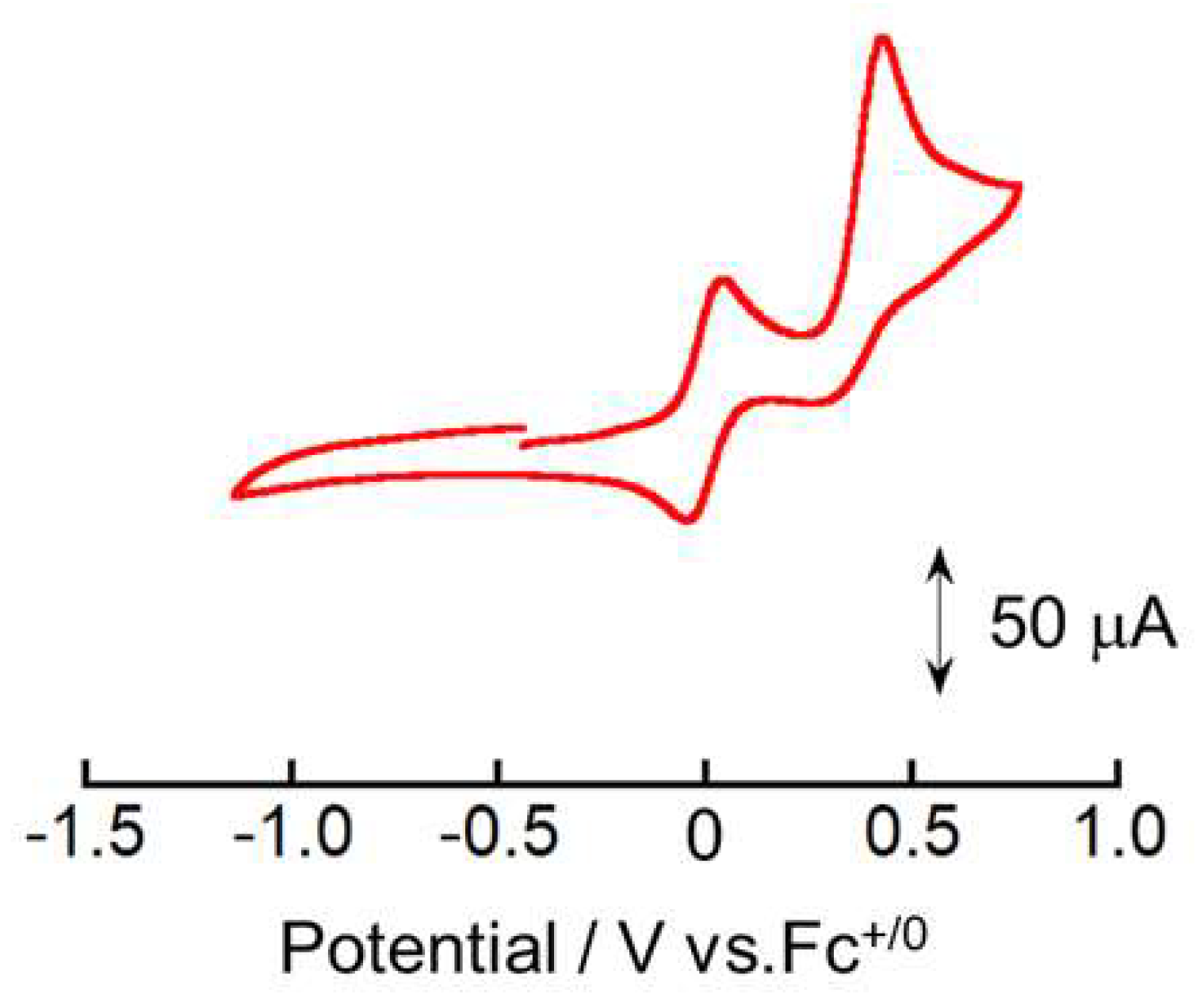
Figure 5.
(a) UV–vis–NIR spectral change during the electrochemical oxidation of [CuI(L)]BPh4 recorded at varying applied potentials from −0.13 to 0.11 V vs. Fc+/0 (potential increments: 0.03 V) in acetonitrile (supporting electrolyte: 0.1 M TBAPF6; T = 295 K). The red and green bold curves are the absorption spectra of [CuI(L)]BPh4 and [Cu(L)]2+, respectively. (b) Nernstian plot calculated from the absorbance at 460 nm.
Figure 5.
(a) UV–vis–NIR spectral change during the electrochemical oxidation of [CuI(L)]BPh4 recorded at varying applied potentials from −0.13 to 0.11 V vs. Fc+/0 (potential increments: 0.03 V) in acetonitrile (supporting electrolyte: 0.1 M TBAPF6; T = 295 K). The red and green bold curves are the absorption spectra of [CuI(L)]BPh4 and [Cu(L)]2+, respectively. (b) Nernstian plot calculated from the absorbance at 460 nm.
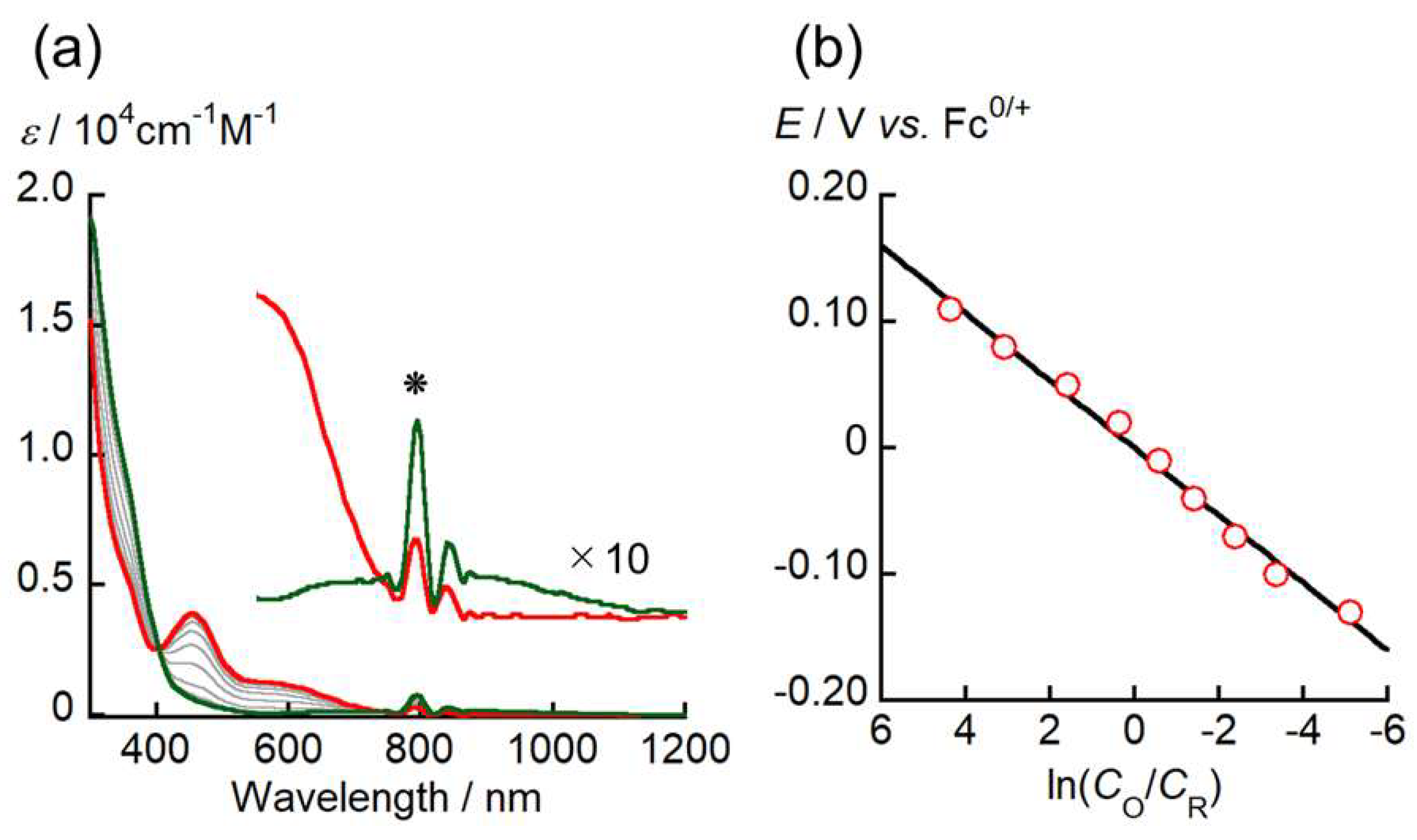
Figure 6.
EPR spectrum of electrochemically generated [Cu(L)]2+ in acetonitrile (supporting electrolyte: 0.1 M TBAPF6; T = 77 K). Experimental conditions: [complex] = 10 mM; frequency: 9.4354 GHz; microwave power: 7 mW; modulation amplitude: 0.05 mT.
Figure 6.
EPR spectrum of electrochemically generated [Cu(L)]2+ in acetonitrile (supporting electrolyte: 0.1 M TBAPF6; T = 77 K). Experimental conditions: [complex] = 10 mM; frequency: 9.4354 GHz; microwave power: 7 mW; modulation amplitude: 0.05 mT.
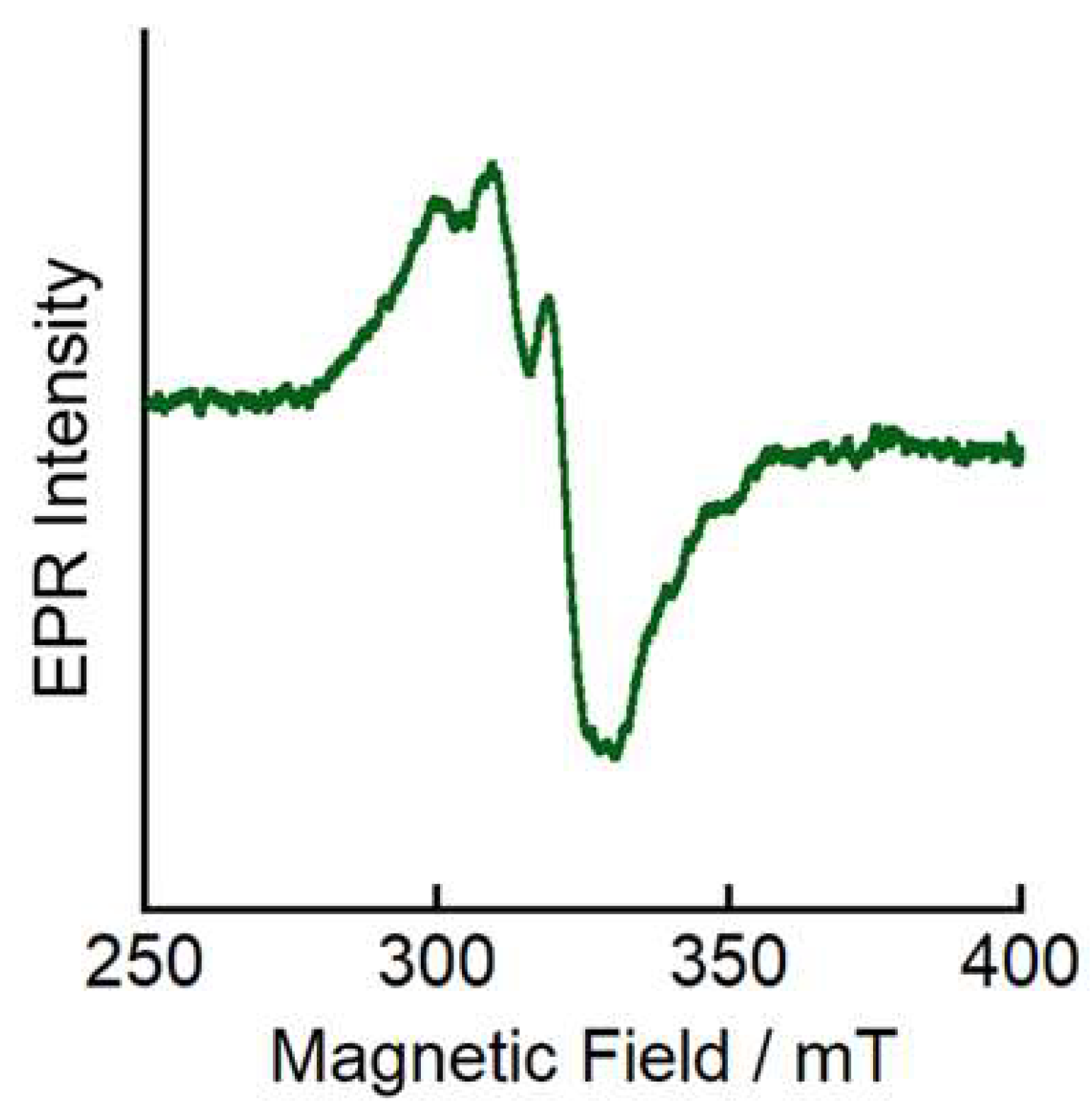
Figure 7.
Spin-density plot of [Cu(L)]2+; the blue and green for the positive and negative spin densities, respectively. Spin-density values: Cu(1) = 0.58, N(1) = 0.13, N(2) = 0.07, N(3) = 0.07, and N(4) = 0.13.
Figure 7.
Spin-density plot of [Cu(L)]2+; the blue and green for the positive and negative spin densities, respectively. Spin-density values: Cu(1) = 0.58, N(1) = 0.13, N(2) = 0.07, N(3) = 0.07, and N(4) = 0.13.
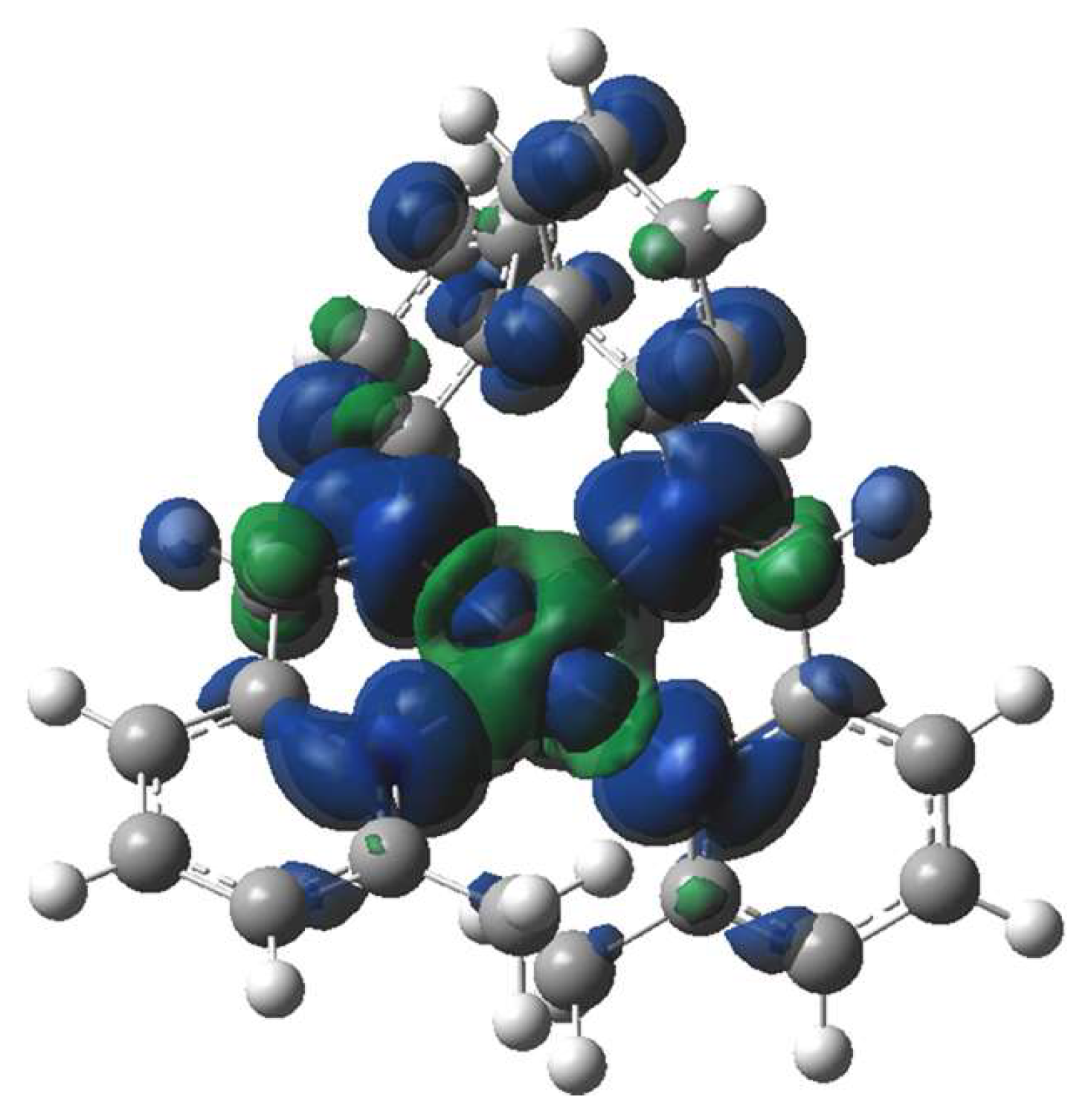
Figure 8.
UV–vis–NIR spectra of [CuI(L)]+ (red line) and [Cu(L)]2+ (green line) in pyridine and band positions and intensities predicted by TD-DFT calculations. The vertical red and green lines indicate the calculated transitions for [CuI(L)]+ and [Cu(L)]2+, respectively. The main contributing charge transfers for each absorption including the involved orbitals, are depicted as well.
Figure 8.
UV–vis–NIR spectra of [CuI(L)]+ (red line) and [Cu(L)]2+ (green line) in pyridine and band positions and intensities predicted by TD-DFT calculations. The vertical red and green lines indicate the calculated transitions for [CuI(L)]+ and [Cu(L)]2+, respectively. The main contributing charge transfers for each absorption including the involved orbitals, are depicted as well.
Disclaimer/Publisher’s Note: The statements, opinions and data contained in all publications are solely those of the individual author(s) and contributor(s) and not of MDPI and/or the editor(s). MDPI and/or the editor(s) disclaim responsibility for any injury to people or property resulting from any ideas, methods, instructions or products referred to in the content. |
© 2025 by the authors. Licensee MDPI, Basel, Switzerland. This article is an open access article distributed under the terms and conditions of the Creative Commons Attribution (CC BY) license (http://creativecommons.org/licenses/by/4.0/).
Copyright: This open access article is published under a Creative Commons CC BY 4.0 license, which permit the free download, distribution, and reuse, provided that the author and preprint are cited in any reuse.