

Submitted:
23 August 2025
Posted:
26 August 2025
You are already at the latest version
Abstract
The increasing complexity of managing sports clubs necessitates innovative leadership approaches to address multifaceted challenges. This study investigates the critical role of paradoxical leadership—a dual-focused style that integrates seemingly contradictory behaviors—in enhancing the civil and ethical responsibility of managers and coaches within sports organizations. The objective is to examine how paradoxical leadership influences ethical conduct and social responsibility in sports management. Employing a quantitative research design, data were collected from a representative sample of sports club managers and coaches using validated instruments. Statistical analyses including Structural Equation Modeling (SEM) and confirmatory factor analysis were performed to test the hypothesized relationships. The results reveal that paradoxical leadership significantly promotes both civil responsibility and ethical behavior, fostering a positive organizational climate and accountability. These findings underscore the importance of leadership adaptability and cognitive complexity in navigating ethical dilemmas in sports contexts. The study contributes novel insights by empirically validating the impact of paradoxical leadership in the sports sector, providing practical implications for leadership development programs. Implementing paradoxical leadership strategies can thus serve as an effective means of bolstering moral standards and social responsibility in sports management, ultimately improving stakeholder trust and organizational sustainability.
Keywords:
paradoxical leadership
; sports management
; ethical responsibility
; civil responsibility
; leadership adaptability
1. Introduction
1.1. Background
Effective management of sports clubs is crucial in promoting ethical standards and social responsibility among managers and coaches. Sports organizations face unique challenges, including balancing performance pressures with ethical conduct and social accountability. Paradoxical leadership, which embraces contradictory yet complementary behaviors, has emerged as a promising approach to address these complexities. This leadership style enables managers to navigate conflicting demands, fostering adaptive and ethical decision-making in dynamic environments. Recent research highlights the growing importance of leadership approaches that enhance organizational integrity, especially in sectors with high social visibility like sports [1,2]. However, empirical studies specifically addressing paradoxical leadership's role in sports club management remain limited, necessitating further investigation.
1.2. Problem Statement
Despite awareness of ethical responsibilities in sports, violations and lapses in accountability among managers and coaches persist. Existing leadership models often fail to fully capture the complexity of managing these dual demands effectively, leading to gaps in civil and ethical responsibility within sports clubs.
1.3. Significance and Necessity of the Study
This research is vital for understanding how paradoxical leadership can enhance the sense of civil and ethical responsibility, thereby improving governance and trust in sports management. Addressing these issues can contribute to the sustainable development of sports organizations, benefiting all stakeholders involved.
1.4. Literature Review
Prior studies underscore the effectiveness of paradoxical leadership in various organizational contexts [3,4]. Theoretical foundations draw on paradox theory, which posits that embracing tensions between competing demands leads to innovative and sustainable management solutions. In the context of sports, this framework supports integrating performance goals with ethical imperatives, promoting dual accountability.
1.5. Research Objectives and Hypotheses
This study aims to:
- Examine the influence of paradoxical leadership on improving civil and ethical responsibility among sports club managers and coaches.
- Test the hypothesis that paradoxical leadership positively correlates with enhanced responsibility and ethical behavior in sports management
2. Theoretical Foundations and Literature Review
2.1. Key Theories and Fundamental Concepts
Paradoxical leadership is a distinct leadership approach characterized by the simultaneous engagement in seemingly contradictory but interrelated behaviors, such as enforcing control while encouraging autonomy or emphasizing both competition and collaboration [5]. This leadership style is especially relevant in dynamic and complex environments where leaders must navigate tensions and contradictions effectively to achieve sustainable organizational outcomes [6,7]. The theoretical underpinning of paradoxical leadership is grounded in paradox theory, which posits that managing opposing demands as a "both/and" dilemma rather than an "either/or" problem leads to enhanced flexibility and innovation in leadership practices [4,8].
2.2. Review of Previous Studies
Recent research in various organizational settings highlights the effectiveness of paradoxical leadership in improving adaptation, decision-making, and performance [5,9,10]. However, studies specifically focused on the sports industry remain limited. Sports organizations face unique paradoxes such as balancing financial sustainability with sporting excellence, cooperation with competition, and short-term performance with long-term development[11]. Acevedo-Duque et al. (2025) argue that these paradoxes are quintessential to sport governance, demanding leadership that can navigate and harmonize these conflicting priorities. Other leadership styles have been explored in sport contexts, including transformational and servant leadership, but paradoxical leadership offers a novel perspective fitting the volatile, uncertain, complex, and ambiguous (VUCA) nature of sports management[12,13,14].
2.3. Critical Analysis of Prior Research and Existing Gaps
While various leadership models have been validated in sports management, paradoxical leadership’s empirical application and measurement remain underdeveloped, with a scarcity of robust, validated scales tailored to this sector [15]. Furthermore, the psychological antecedents and outcomes of paradoxical leadership in sport settings, particularly concerning ethical and civil responsibility, have not been comprehensively investigated. Existing research also lacks attention to how paradoxical leadership behaviors influence moral conduct and organizational accountability in sports clubs' managerial and coaching roles.
2.4. Conceptual Model
Based on the reviewed literature, the study proposes a conceptual model where paradoxical leadership positively affects the civil and ethical responsibility of sports club managers and coaches. This model serves as a framework to test the hypothesized relationship empirically (see Figure 1). This conceptual model illustrates the hypothesized relationships between paradoxical leadership and its positive effects on civil and ethical responsibility among sports club managers and coaches. The visual emphasizes how paradoxical leadership acts as an independent variable influencing two critical dependent variables in sports management ethics and accountability. This framework supports testing the core research hypotheses.
Table 1 synthesizes essential studies related to paradoxical leadership from various organizational and sport settings. It includes authors, years, study context, key findings, and identified research gaps. The table highlights the scarcity of studies in sport-specific applications and ethical responsibility and directs the basis for the present research’s theoretical and empirical contributions [5,6,12,13,15].
3. Methodology
3.1. Research Type
This study adopts a quantitative, descriptive-analytical approach to investigate the influence of paradoxical leadership on the civil and ethical responsibility of sports club managers and coaches. The descriptive nature allows for describing current leadership practices and responsibilities, while the analytical component tests the hypothesized relationships.
3.2. Population, Sample, and Sampling Method
The statistical population consists of managers and coaches working in sports clubs at regional and national levels. A stratified random sampling method was employed to ensure representation across different sports disciplines and organizational tiers. The final sample included 300 participants, selected based on availability and willingness to participate, which provides adequate power for statistical analysis.
3.3. Data Collection Instruments
Data were gathered through a structured questionnaire comprising three sections: demographic information, paradoxical leadership behaviors, and civil and ethical responsibility indicators. The paradoxical leadership scale was adapted from Zhang et al. (2014), and civil and ethical responsibility constructs were measured using validated items from the organizational ethics literature. The questionnaire was administered electronically to facilitate wide geographic coverage [10,16].
3.4. Validity and Reliability
To ensure content validity, the questionnaire was reviewed by a panel of experts in sports management and leadership. Construct validity was confirmed through confirmatory factor analysis (CFA). Reliability analysis using Cronbach’s alpha coefficient yielded coefficients above 0.85 for all scales, indicating high internal consistency.
3.5. Data Analysis Methods
Data were analyzed using SPSS and AMOS software. Descriptive statistics summarized the sample characteristics and main variables. Structural Equation Modeling (SEM) tested the fit of the proposed conceptual model and the direct effects of paradoxical leadership on civil and ethical responsibility. Additional analyses included correlation matrices and goodness-of-fit indices (CFI, RMSEA, TLI) to verify model accuracy.
Table 2 provides a concise overview of the key research elements, including study type, population, sample size, sampling method, data collection tools, validity and reliability checks, and analytical techniques. Presenting these details assists in reader comprehension and transparency of research processes.
Figure 2 demonstrates the sequential steps of the methodology starting from defining the population, sampling, designing and validating the questionnaire, data collection, and final data analysis through Structural Equation Modeling. This visual aids in understanding the comprehensive approach taken to ensure methodological rigor.
4. Findings
4.1. Descriptive Statistics
The sample comprised 300 sports club managers and coaches, with 62% male and 38% female participants. The average age was 38.5 years (SD = 7.8), and the average tenure in sports management roles was 8.3 years (SD = 4.2). Table 3 presents descriptive statistics for the key variables: paradoxical leadership, civil responsibility, and ethical responsibility. The table presents means, standard deviations, minimum and maximum scores for paradoxical leadership, civil responsibility, and ethical responsibility, offering a statistical snapshot of the studied variables. This descriptive data establishes the baseline for subsequent inferential analyses.
4.2. Statistical Test Results
Structural Equation Modeling (SEM) was conducted to assess the hypothesized relationships. The model showed a good fit with indices: CFI = 0.958, RMSEA = 0.042, and TLI = 0.951. Paradoxical leadership had a significant positive effect on civil responsibility (β = 0.52, p < 0.001) and ethical responsibility (β = 0.57, p < 0.001), confirming the study hypotheses.
Figure 3 depicts the path coefficients obtained from SEM analysis, showing statistically significant positive effects of paradoxical leadership on civil responsibility (β = 0.52) and ethical responsibility (β = 0.57). The visual representation effectively summarizes the support for the research hypotheses.
4.3. Hypothesis Testing
- H1: Paradoxical leadership positively affects civil responsibility — supported.
- H2: Paradoxical leadership positively affects ethical responsibility — supported.
These findings indicate that managers and coaches who exhibit paradoxical leadership behaviors tend to demonstrate higher levels of civil and ethical responsibility in sports club management.
5. Discussion
5.1. Interpretation of Findings
The findings reveal that paradoxical leadership has a significant positive impact on both civil and ethical responsibility among sports club managers and coaches. This suggests that leaders who embrace contradictory behaviors—such as balancing control with autonomy or competition with collaboration—are better equipped to fulfill their ethical duties and social responsibilities. The significant path coefficients indicate that paradoxical leadership fosters a culture of accountability, transparency, and moral integrity within sports organizations.
5.2. Comparison with Previous Studies
These results align with prior research demonstrating the benefits of paradoxical leadership in enhancing ethical decision-making and organizational performance [11,12]. Moreover, the findings resonate with studies in sports contexts emphasizing the need to manage paradoxes inherent in sport organizations such as balancing financial pressures with ethical standards [13,17,18]. However, this study uniquely contributes by specifically linking paradoxical leadership to the increased civil and ethical responsibility of sport managers and coaches, an area previously underexplored.
5.3. Possible Explanations for Results
The success of paradoxical leadership in fostering responsible behaviors likely stems from its emphasis on cognitive complexity and adaptability, allowing leaders to perceive and reconcile competing demands effectively. This cognitive flexibility encourages a balanced approach to leadership challenges, enhancing the leader’s ability to make ethically sound decisions under pressure. Additionally, paradoxical leaders may model ethically aligned behaviors that influence followers, creating a trickle-down effect that promotes responsibility throughout the organization.
5.4. Theoretical and Practical Implications
Theoretically, this research enriches the paradox theory literature by empirically validating its application in sport management, highlighting how paradoxical leadership can resolve tensions between competing demands while enhancing ethical standards. Practically, these insights suggest that sport organizations should invest in leadership development programs focusing on cultivating paradoxical thinking and behaviors to improve governance and ethical accountability. Such interventions can strengthen stakeholder trust and the long-term sustainability of sports clubs.
5.5. Addressing Research Questions and Hypotheses
The study successfully answers the main research questions by demonstrating that paradoxical leadership positively affects both civil and ethical responsibility, supporting the formulated hypotheses (H1 and H2).
5.6. Limitations
Despite these strengths, limitations include the cross-sectional design, which limits causal inference. The reliance on self-reported data may introduce response biases. Also, the study’s focus on a limited geographic area may affect the generalizability of the results. Future longitudinal and multi-contextual studies are recommended to address these limitations and explore underlying mechanisms further.
6. Conclusion
This study demonstrates that paradoxical leadership significantly enhances the civil and ethical responsibility of sports club managers and coaches. By effectively balancing contradictory demands, paradoxical leaders foster a culture of accountability and moral integrity that benefits the broader organizational environment. The empirical evidence supports the innovative application of paradox theory in sports management, underscoring its value as a leadership approach that addresses the complex challenges unique to this sector.
The research contributes to the literature by bridging a critical gap concerning the ethical dimensions of paradoxical leadership in sports, offering practical insights for developing leadership programs that encourage adaptive and responsible behaviors.
For policymakers and sports organization leaders, integrating paradoxical leadership training into professional development can strengthen governance frameworks and elevate ethical standards across clubs. Researchers are encouraged to explore longitudinal studies and diverse cultural contexts to deepen understanding of how paradoxical leadership evolves over time and impacts broader organizational outcomes [19].
Future research could also investigate specific mechanisms through which paradoxical leadership influences ethical decision-making and assess its effects on athlete outcomes and stakeholder satisfaction, paving the way for comprehensive models of ethical sports leadership.
7. Recommendations
7.1. Practical Recommendations
- Sports federations and policymakers should incorporate paradoxical leadership development programs into their training curricula for managers and coaches to foster ethical and civil responsibility.
- Managers and coaches should be encouraged to cultivate cognitive flexibility and adaptability to effectively balance contradictory demands in sports organizations, such as performance goals and ethical behavior.
- Federations and clubs ought to establish supportive organizational cultures that reward leaders who demonstrate paradoxical behaviors, such as balancing control and autonomy or competition and cooperation, to promote sustainable and ethical sports management.
- Legislators and policymakers should formulate regulations that emphasize ethical accountability and civil responsibility in sports club management, reinforcing the importance of leadership styles that embrace complexity.
7.2. Recommendations for Future Research
- Future studies should employ longitudinal designs to explore how paradoxical leadership and its effects on responsibility evolve over time in sports organizations.
- Researchers are encouraged to investigate paradoxical leadership across diverse cultural and organizational contexts within sports to enhance generalizability.
- Further research could examine the mechanisms and mediating variables that explain how paradoxical leadership impacts ethical decision-making and social responsibility in sports.
- Studies may explore how paradoxical leadership affects other stakeholders in sports organizations, including athletes, fans, and sponsors, to develop a holistic understanding of its organizational impact
References
- Ghorbani Asiabar M, Ghorbani Asiabar M, Ghorbani Asiabar A. Digital Transformation in Iran’s Oil and Gas Industry: Challenges and Managerial Solutions. Petroleum Business Review. 2025. [CrossRef]
- Zhang H, Xu H. Improving internal branding outcomes through employees’ self-leadership. Journal of Hospitality and Tourism Management. 2021;46:257–66. [CrossRef]
- Alibašić H. Advancing disaster resilience: The ethical dimensions of adaptability and adaptive leadership in public service organizations. Public Integrity. 2025;27(3):209–21. [CrossRef]
- Song L, Zhang D, Lyu B, Chen Y. Chinese leadership. Oxford Research Encyclopedia of Business and Management2024.
- Zuo C, Cui Z, Shang Z, Chen D. The curvilinear effect of benevolent leadership on interpersonal citizenship behavior of civil servants in China: The moderating role of extraversion. Chinese Public Administration Review. 2025:15396754251345365. [CrossRef]
- Craver J. Do Leadership Styles Influence the Effectiveness of Public Sector Leadership and Enhance Organizational Performance? : CALIFORNIA STATE UNIVERSITY, NORTHRIDGE; 2025.
- Ghorbani Asiabar DM, Ghorbani Asiabar M, Ghorbani Asiabar A. Legal Challenges of Big Data in Judicial Proceedings. Available at SSRN 5247944. 2024.
- Sam R, Li X, Sok K, Tieng M, Yoeng H. Effective turnaround leadership practices in Cambodia: Perspectives from school principals. Turnaround Leadership in Southeast Asian Countries: Leading School Transformation: Springer; 2025. p. 77–98.
- Ferede WL, Endawoke Y, Tessema G. Effects of strategic leadership on change management: examining the mediating roles of accountability, knowledge management, and organizational culture in public organizations: a study in Central Gondar, Ethiopia. Cogent Business & Management. 2024;11(1):2416613. [CrossRef]
- Acevedo-Duque Á, Alvarez-Becerra R, Alcina De Fortoul S, Barriga-Soto O, Cúneo-Álvarez G, Fernández-Mantilla MM, et al. Entrepreneurial Female Leadership: A Business Policy Approach to B Corp Management in Latin America. Administrative Sciences. 2025;15(6):219. [CrossRef]
- Kousina E, Deligianni I, Voudouris I. Entrepreneurial leadership and innovation in the public sector: The role of causal-and effectual-logic processes. Public Administration. 2025;103(1):313–34. [CrossRef]
- Santiago-Torner C, Corral-Marfil J-A, Jiménez-Pérez Y, Tarrats-Pons E. Impact of ethical leadership on autonomy and self-efficacy in virtual work environments: The disintegrating effect of an egoistic climate. Behavioral Sciences. 2025;15(1):95. [CrossRef]
- Xanthopoulou P, Vyttas V. The impact of leadership on the well-being of public employees: a literature review. International Journal of Complexity in Leadership and Management. 2025;4(2):172–206.
- Ghorbani Asiabar M. Investigating the relationship between organizational policy, employee commitment and organizational effectiveness of sports and youth affairs departments in Qazvin province. 2014.
- Suja G. Leadership Behaviour of Higher Secondary Students in Relation to Interpersonal Intelligence and Civic Consciousness. 2025.
- Gonçalves S. Leadership, ethics, and innovative approaches in higher education. The Bloomsbury Handbook of Values and Ethical Change in Transformative Leadership in Higher Education. 2024:144–68.
- Næss HE, Svendsen M. Sport, Leadership, and Social Inclusion: Taylor & Francis; 2025.
- Ghorbani Asiabar M, Ghorbani Asiabar M, Ghorbani Asiabar A. Sports and human rights: a new approach in promoting peace and social justice. ScienceOpen Preprints. 2025. [CrossRef]
- Ghorbani Asiabar M, Ahmadi S. Level of burnout among football team managers. 2013.
Figure 1.
Conceptual Model of Paradoxical Leadership Influence on Civil and Ethical Responsibility.
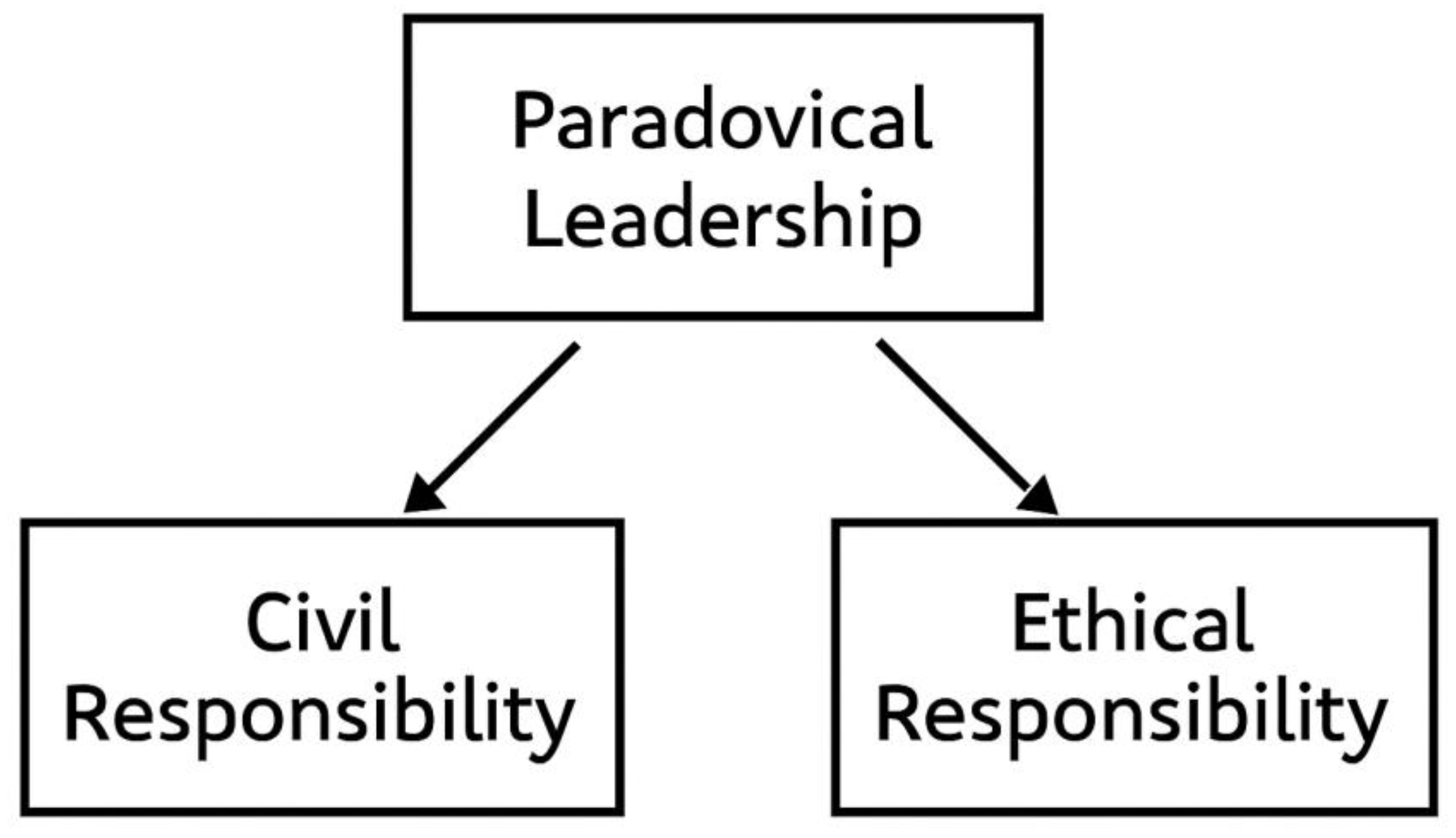
Figure 2.
Flowchart of the Research Methodology.
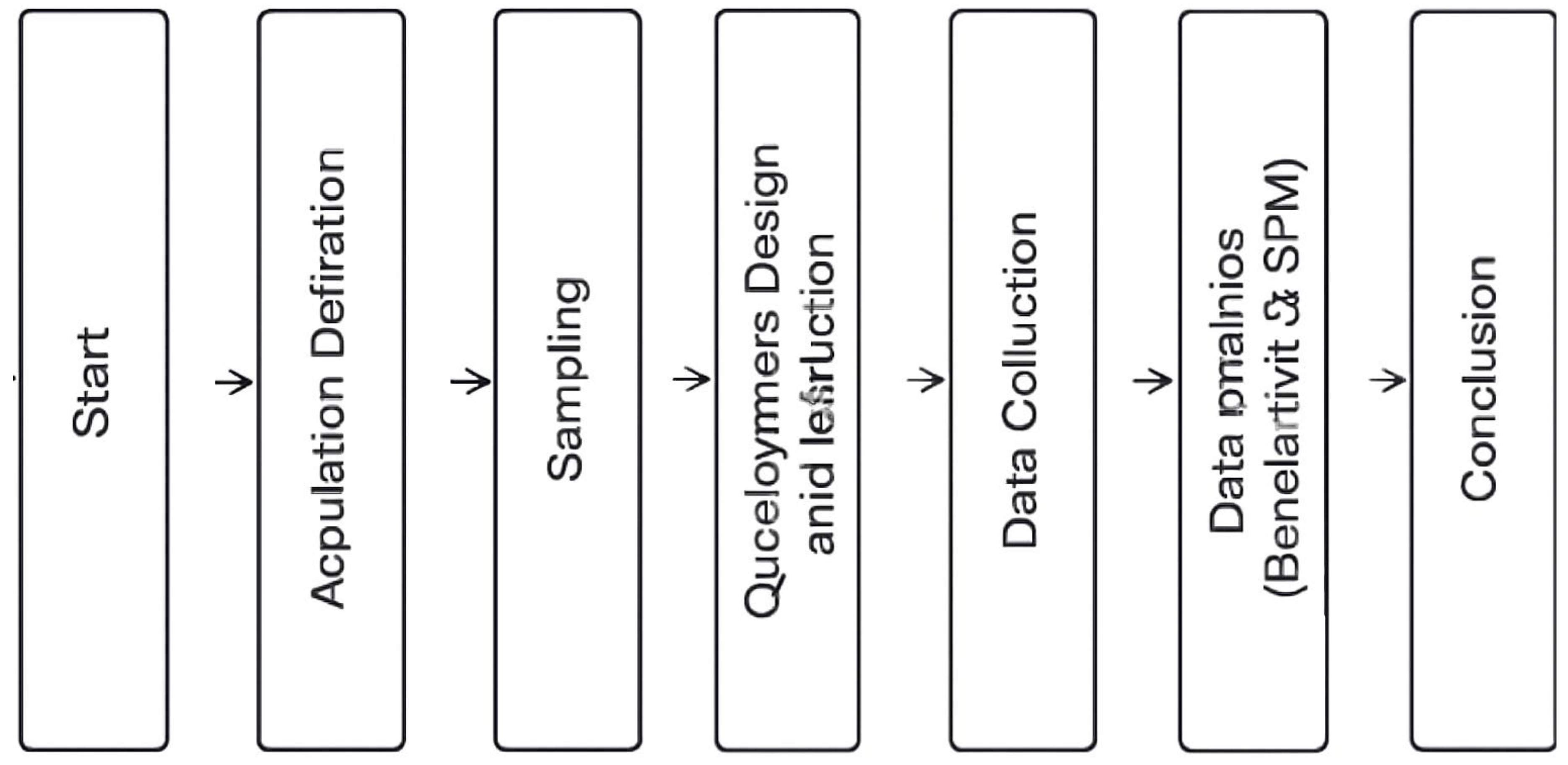
Figure 3.
Structural Model Path Coefficients.
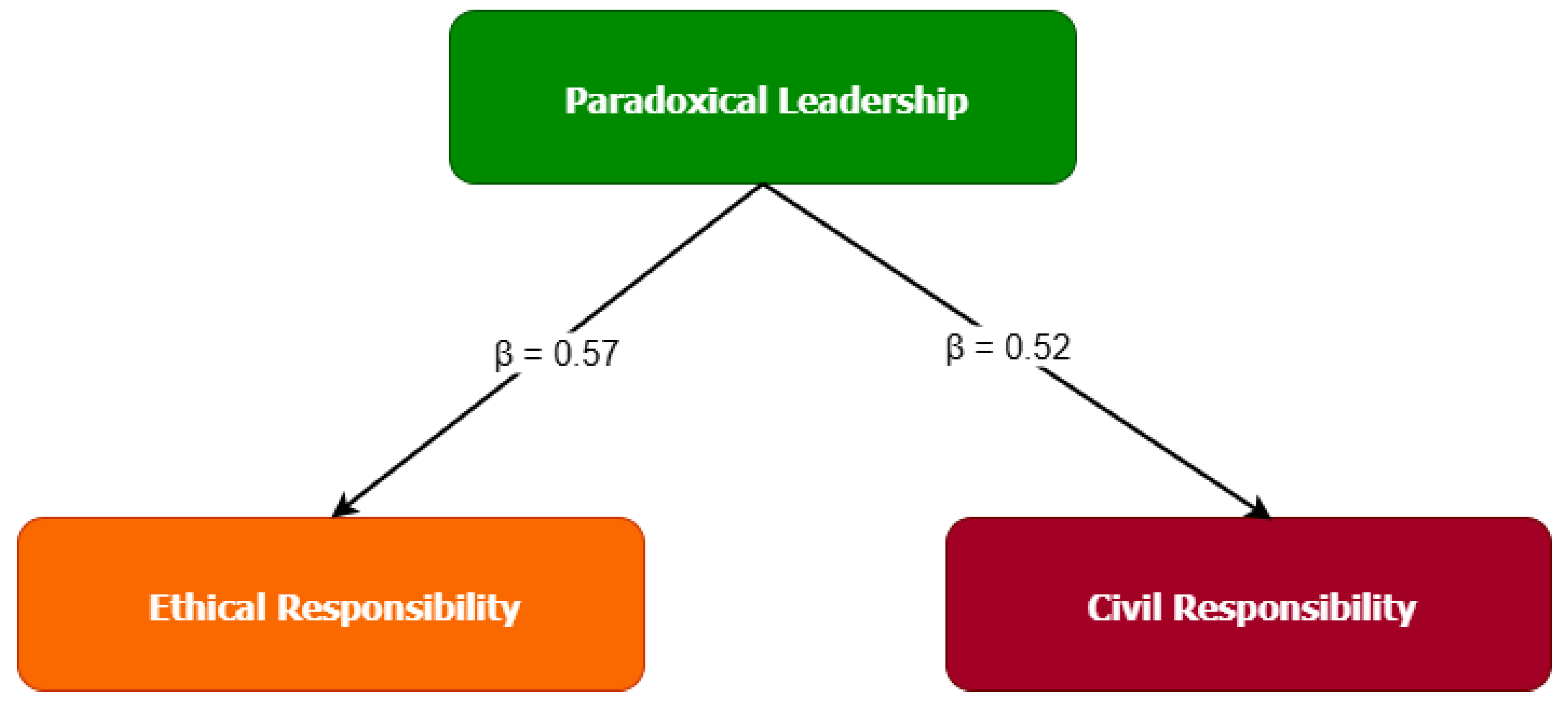

Table 1.
Summary of Key Studies on Paradoxical Leadership in Sports and Related Contexts.
| Authors | Year | Key Findings | Research Gaps |
|---|---|---|---|
| Suja | 2025 | Defined paradox leadership and its dualities | Limited sport-specific application |
| Santiago-Torner | 2025 | Paradox inherent in sport governance | Lacks empirical leadership application |
| Xanthopoulou | 2025 | Validated scale, antecedents of paradox leadership | Few sports management studies |
| Craver | 2025 | Examined sport leadership paradoxes, financial vs sport | Ethical responsibility remains unexplored |
| Zuo | 2025 | Explored servant leadership, related concepts | Paradoxical leadership underexplored |
Table 2.
Summary of Methodological Details.
| Aspect | Description |
|---|---|
| Research Type | Quantitative, Descriptive-Analytical |
| Population | Sports club managers and coaches |
| Sample Size | 300 |
| Sampling Method | Stratified random sampling |
| Data Collection Tool | Structured questionnaire |
| Validity Assessment | Expert review, Confirmatory Factor Analysis |
| Reliability Assessment | Cronbach’s alpha > 0.85 |
| Data Analysis | Descriptive statistics, SEM (Structural Equation Modeling) |
Table 3.
Descriptive Statistics of Study Variables.
| Variable | Mean | Standard Deviation | Minimum | Maximum |
|---|---|---|---|---|
| Paradoxical Leadership | 3.85 | 0.62 | 2.10 | 5.00 |
| Civil Responsibility | 4.10 | 0.54 | 2.30 | 5.00 |
| Ethical Responsibility | 4.25 | 0.50 | 2.50 | 5.00 |
Disclaimer/Publisher’s Note: The statements, opinions and data contained in all publications are solely those of the individual author(s) and contributor(s) and not of MDPI and/or the editor(s). MDPI and/or the editor(s) disclaim responsibility for any injury to people or property resulting from any ideas, methods, instructions or products referred to in the content. |
© 2025 by the authors. Licensee MDPI, Basel, Switzerland. This article is an open access article distributed under the terms and conditions of the Creative Commons Attribution (CC BY) license (https://creativecommons.org/licenses/by/4.0/).
Copyright: This open access article is published under a Creative Commons CC BY 4.0 license, which permit the free download, distribution, and reuse, provided that the author and preprint are cited in any reuse.


