
Submitted:
21 August 2025
Posted:
22 August 2025
You are already at the latest version
Abstract
This study investigates sustainability-oriented design and production practices in Slovenia, focusing on brand-led approaches grounded in local innovation, cultural heritage, and community engagement. Through mapping of Slovenian fashion enterprises, the research identifies and analyzes core sustainability strategies including zero- and low-waste design, recycling, upcycling, and the development of adaptable, long lasting garments. Further attention is given to participatory design methods involving consumers, the strategic social media use for community building, and service-based circular economy models such as lifetime garment repair. Technological and production innovations, localized supply chains and small-scale production models are assessed for their role in reducing environmental impact and advancing sustainable supply chain management. The study also analyzes initiatives to shorten the fashion loop, including dematerialization and production minimization, as pathways to reduce resource consumption. Methodologically, it combines empirical fieldwork, participant observation, and literature review, to deliver a comprehensive analysis of Slovenia's sustainable fashion sector. Findings contribute to the global discourse on regional and place-based sustainability in fashion, demonstrating how design-driven, small- and medium-sized enterprises can integrate circular economy principles, cultural continuity, and collaborative innovation to foster environmentally responsible and socially embedded fashion.
Keywords:
Slovenian fashion
; local production
; cultural heritage
; community engagement
1. Introduction
Sustainable fashion design extends beyond the technical parameters of a garment’s lifecycle—production, use, and end-of-life—to encompass socio-cultural dimensions, such as consumer behavior, participatory engagement, and place-based environmental stewardship [1]. Aligned with the United Nations Sustainable Development Goals [2], it requires balancing social responsibility, economic viability, and the ecological and cultural integrity. Fashion thus operates not only as a commodity, but also as a medium of cultural expression, where ownership, care and maintenance practices foster an emotional attachment and extend the clothing lifespan [3].
Globally, the fashion industry faces pressure to transform due to its severe environment footprint and complex social impacts. In response, strategies such as circular production, zero-waste design, and digital traceability tools are increasingly being developed and adopted. However, these approaches are often shaped by the priorities of large-scale industrial players, while their transition into smaller cultural and geographic context remains underexplored.
In post-socialist transitional countries such as Slovenia, sustainbility trajectories differ markedly from those in established fashion economies. With limited institutional support, sustainability has frequently developed through grassroots initiatives, community engagement, or necessity-driven innovation, rather than through coordinated industrial or policy frameworks. This pathway has generated distinctive practices characterized by cultural heritage, socio-economic transformation, and adoptive small-scale design systems.
This study addresses these gaps by shifting the analytic focus toward brand-led, design-centered sustainability in Slovenia. Through a historical mapping, enterprise evaluation, and strategy analysis, it explores how fashion operates as a generator of place-based innovation rooted in cultural heritage, social engagement, and environmental responsibility.
Therefore, the primary research objective is to investigate how Slovenian fashion brands integrate sustainability principles into design and production processes, comparing approaches between the socialist and post-socialist periods. The specific research objectives are: to analyze the implementation of the circular economy principles of the contemporary Slovenian fashion brands in their design and production processes; to examine the role of the cultural heritage in shaping sustainable fashion practices in Slovenia and to evaluate the contribution of the participatory design approaches to sustainability outcomes in small-scale fashion enterprises.
The study evaluates:
- Design innovations (zero-/low-waste techniques, modularity, upcycling),
- Production sustainability (energy and water efficiency, local/regional sourcing),
- Dematerialization approaches (leasing, repair, co-creation models),
- Digital engagement (transparency, traceability, advocacy),
- Cultural engagement (revival of traditional craftsmanship, DIY culture).
By applying Fletcher & Grose’s [4] sustainability framework – products, fashion systems, and design practices - the study develops a model linking environmental integrity, heritage preservation, and market viability in small-scale fashion systems. Positioning Slovenian fashion as a ‘living laboratory’ [5], it demonstrates how locally embedded innovations can be strategically amplified to strengthen the global resilience in the fashion industry. The contribution lies in advancing contextualized models of sustainability within post-socialist economies while offering practical insights for small-scale fashion enterprises navigating transitional environments.
2. Research Design
This research received no external funding. A qualitative, exploratory approach was adopted to examine how Slovenian fashion enterprises embed sustainability into their practices. Slovenia was selected as a case context due to its micro-scale apparel market, strong traditions in clothing craftsmanship, and ongoing challenges of textile import dependence. Unlike larger fashion economies, Slovenia offers a distinctive setting where small, locally oriented enterprises operate as laboratories of sustainability, experimenting with circular design, craft preservation, and community-driven business models.
A total of 52 Slovenian fashion brands and initiatives were mapped using purposive sampling. The inclusion criteria required that the entities:
- Explicitly reference or demonstrate sustainability in design, production, communication, or community engagement; and
- Present collections at fashion events consistently over a number of years to ensure sustained activity rather than short-term initiatives.
This strategy balanced between representativeness and relevance, although it may have excluded emerging actors not yet visible in formal fashion events.
The data was collected between 2020 and 2024 through a multi-method approach:
- Participant observation at 15 industry events (fashion shows, exhibitions, and stakeholder meetings and talks, and sustainability workshops), which allowed for first-hand documentation of sustainability practices and discourses.
- Semi-structured interviews with 24 participants (18 designers and brand representatives, 1 producer, and 5 media actors). Interviews were recorded where permitted (n=20), and otherwise documented through detailed notes and immediate post-conversation write ups (n=24).
The mapping of the 52 brands drew on publicly available information (websites, social media, press coverage), supplemented by data from the Center for Creativity study [6], industry reports, and previous academic literature.
Analysis proceeded in two stages:
-
Qualitative thematic analysis:
- Interview transcripts, observation notes, and archival materials were coded following Braun & Clarke’s [7] reflexive thematic analysis approach.
- Codes were inductively developed, and then refined into categories such as waste reduction, localization of supply chain, design innovation, cultural engagement, and digital transparency.
- The intersection of three approaches – interviews, observation, and media sources – ensures validity and reduces reliance on self-reporting.
-
Quantitative description mapping:
- Practices were recorded for each of the 52 brands.
- The results showed that 69% employed some form of upcycling, 87% offered repair or alteration services, 41% integrated zero- or less- waste tailoring, and 40% actively revived traditional craft techniques.
- These statistics provided a baseline for assessing the prevalence and diversity of sustainability strategies in Slovenia’s fashion sector.
3. Sustainability Concepts of Slovenian Fashion Brands in the Socialist and Post-Socialist Periods
The research is structured into two sections, each addressing one of two historically and contextually different periods, which are characterized by considerable differences in their temporal, economic, political, and production frameworks. Despite these differences, the two periods are linked by the concept of sustainability, which in the socialist period was already clearly expressed in the field of fashion and fashion brands, even if it was not recognized in other economic sectors and was not seen in the same way as it is today.
3.1. Historical Sustainability-Oriented Foundations of Slovenian Fashion: A Legacy for Contemporary Practices
Historically, Slovenian clothing industry companies demonstrated a form of social responsibility akin to contemporary understanding, emphasizing care for both their employees and the surrounding environment. Between 1945 and the period of significant political, economic and social transformations, the clothing industry in Slovenia was destinctive not only as a site of production but also as a potential social space [8]. Employees maintained strong connections to their workplace, with professional and private lives closely intertwined.
The sector actively supported a wide range of community initiatives. Companies sponsored sports clubs, managed holiday homes, financed the construction and operation of cultural institutions, and supported local fire brigades. For example, Industrija usnja Vrhnika not only amassed a significant collection of Slovenian art over its years of operation, but also invested in the community’s infrastructure, including a gym, a swimming pool, a boules court, and a ski slope. The company also supported the local library, initially by providing premises in 1958 and later by funding the construction of new facilities in 1976 [9].
Similary, the Pletenina factory in Ljubljana participated in 1979 charity campaigne, raising 11,650 dinars (at the end of 1979, the exchange rate between the dinar and the US dollar was 1:19.16; [10]) for the purchase of incubators [11]. Tekstil – a production and trading conglomerate formed in 1971 – mobilized an impressive 15 million dinars for the same cause [12].
Workplace well-being was also a priority. Modni salon Velenje, for instance, introduced recreational breaks to reduce workplace injuries and abolishied productivity quotas for female workers over 40 to prioritize quality of work over speed [13]. Many companies operated in-house medical clinics that provided care not only to employees and retirees but also to their families; Pletenina established such a clinic with a general practitioner in 1964 [14] (p. 63). Until the completion of the ownership transformations in 1997, the clothing industry combined its economic success with active contributions to the social welfare of the community in which it operated.
The economic policy frameworks of the period further influenced the sector’s development. The medium-term economic development plan, adopted for the period leading up to 1980, played a pivotal role in shaping the textile industry’ trajectory. One of its strategic objectives was to enhance self-sufficiency in raw materials and reduce dependence on imports. The country relied extensively on imports from international markets and other former Yugoslav republics. The strategic plans at the time aimed to achieve 34% domestic textile production by 1980, with the remaining 66% to be imported, reflecting an early recognition of the strategic importance of textile autonomy [15].
Trade patterns changed significantly during this period. In 1965, Slovenia’s textile exports covered 76% of its imports, by 1970, this figure had dropped to 53%, and by 1974, it fell further to just 34% [15]. To secure the sector’s sustainabilty and competitiveness, the 1970s policy priorities emphisized two key areas: improving the quality of textile industry products and steering production toward what was described as a ‘high culture of clothing’.
Based on the authors’ original research across Slovenia’s fashion sector, this study uncovers how the contemporary sustainability framework is deeply rooted in historical social and economic practices, that manifest themselves through three interrelated dimensions. First, social responsibility, evident in Slovenia’s longstanding tradition of collaborative, participatory socio-economic models in which workers actively engage in decision-making processes and equitable resource allocation, particulary during periods of economic constraint [16]. Second, resource efficiency, achieved through adaptive production strategies that maximized value under limited material conditions, a legacy that continues to inform sustainable supply chain practices today. Third, cultural preservation, supported by community-centered craft ecosystems, such as the Rokodelski center (Artisanal Center) in Škofja Loka, which sustain integible heritage, hand-on skill transmission, and place-based design practices. These research-based findings underscore how socio-economic adaptations have organically fostered the resilience within Slovenia’s fashion industry. The findings provide a critical insight into the historical underpinnings of current sustainable fashion strategies, ilustrating how local heritage, collaborative practicess, and efficient resource use converge to support the circular economy [17], and inform future pathways for environmentally reponsible and culturally embedded fashion development.
3.2. Current Practices: Analysis of Contemporary Sustainabilty-Oriented Slovenian Fashion
According to Statista [18], Slovenia’s apparel market is modest in scale, with an estimated revenue of €1,19 billion and an annual growth rate of 2,7%. Compared to Italy, Slovenia’s apparel market is roughly 50 times smaller, comparatively more import-oriented, and has a substantially smaller domestic manufactoring footprint. In 2025 the market is expected to generate approximately €564 per capita, with average clothing consumption estimated at just under 51 items per person [18], implying an average expenditure of €11 per item. Although consumer demand for sustainable and locally produced clothing is rising – driven by environmental and cultural awareness and support for local fashion businesses - Slovenian brands face significant challenges: limited product diversity, dependence on textile imports, weaker financial capacity, and constrained manufactaring infrastructure. Addressing this challenges requires coordinated strategies to strengthen local supply chains, enhancing productive capacities, and supporting differentiation through verified sustainability credentials.
According to a study by the Center for Creativity [19], Slovenian fashion brands exhibit considerable diversity in their legal forms: the majority operate as self-employed in the culture cultural sector (40%), followed by independent entrepreneurs (23%), business enterprises (20%), employees of public institutions such as educational or museum organizations (10%), and private non-profit institutions (7%). These brands are geographically dispersed across Slovenia, reflecting the decentralized nature of the country’s creative industries. In terms of their field of activity, Slovenian fashion designers integrate their expertise only partially in alignment with the principles of sustainable fashion – an approach where designers are expected to operate across multiple economic domains, including the public sector, the non-profit sector and research [20] (p.156).
The mapped business entities were analyzed through the lens of waste reduction, both in production processes and in post-consumer practices. The analysis focused on a set of sustainability-oriented activities (Figure 1), including:
- Zero-waste or reduced-waste tailoring, emphasizing pattern efficiency and material optimization;
- Recycling and upcycling, with a particular focus on how existing garments are reintroduced into circulation;
- Design for adaptability and longevity, involving modularity, repairability, and continuous product improvement;
- Consumer participation in the design process, highlighting co-creation as a means of extending product value;
- Digital engagement through social media, used both as an educational tool for sustainable fashion and as a platform for sharing brand narratives;
- Community-building practices, where brands initiate and foster fashion communities around sustainability values;
- Repair services, offered as lifelong product support to slow down fashion consumption and counteract the prevailing “clothing metabolism” [20] (p. 89).
The review also accounted for local recycling and reuse traditions. In Slovenia, recycling practices appeared early on, typically involving the repurpose of already designed garments with minor alternations and repairs by individual brands. Reuse was also observed in the presence of thrift shops and vintage clothing stores, selling Slovenian fashion brands, with varying degrees of creativity and commercial success.
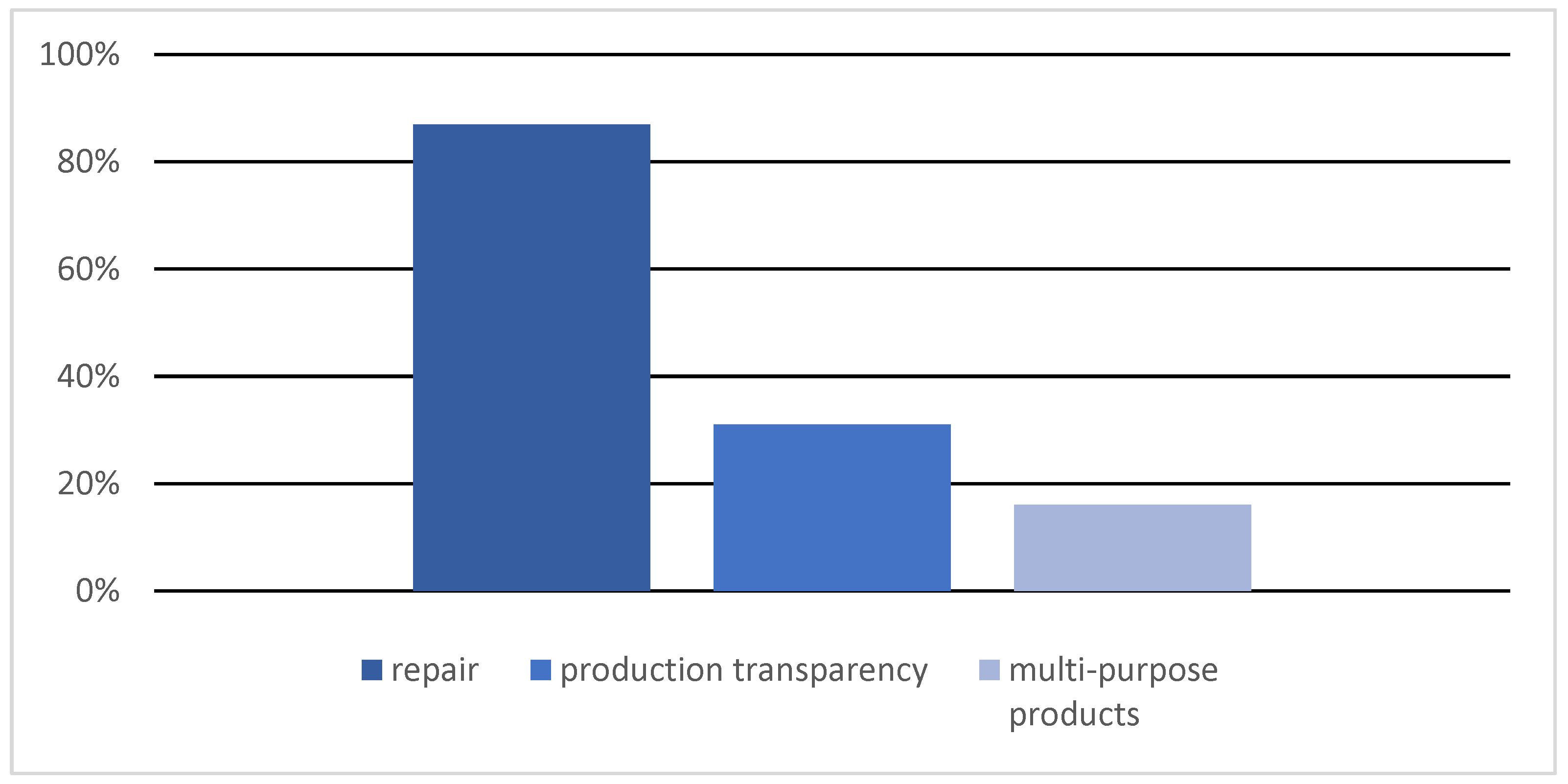
Given the micro-scale nature of most Slovenian fashion brands, the original research shows that a significant proportion of them provide lifelong repair services – offering repaires throughout a product’s life cycle to extend usability and reduce waste (87%) - and encourage consumer participation in the design process by involving customers in the co-creation or customization of clothing (80%). This small-scale structure represents a potential competitive advantage, as such practices can be promoted as core elements of sustainable fashion and brand management.
However, the original research indicates that fewer brands have adopted the zero-waste or reduced-waste design approaches – i.e. tailoring and cutting techniques that minimize or eliminate fabric waste (47%). Recycling practices are present in various brands that utilize pre- or post-consumer textiles (42%). The findings from participant observation and interviews indicate that some designers – such as Pletilni studio Draž (Knitting studio Draž) - adopt design strategies that emphasize longevity and adaptability, producing garments intended to be repaired, modified, or enhanced over time.
The analysis of fashion brands focused on technological and production innovations aimed at reducing energy and water consumption. These innovations include garments engineered for minimal cleaning, the application of technical coatings to decrease washing frequency, and the adoption of innovative, informative labeling systems that increase consumer awareness.
An assessment based on original research of local and regional supply and production chains in Slovenia reveals that less than 6% of fashion brands use locally produced textiles, while clothing manufacturing remains largely domestic, accounting for 96% of total production (Figure 2). This disparity underscores the persistent challenges in achieving full supply chain localization, both for textiles and apparel. The historical context from the 1970s continues to hold relevance for contemporary efforts toward sustainable development, emphasizing the vital importance of resilient, localized production systems, particularly in advancing textile self-sufficiency.
Beyond supply chain consideration, a further analysis examined the development of advanced materials, wearable technologies as well as smart manufacturing and materials recovery. In terms of material innovation, Slovenian fashion remains underdeveloped, with relatively few brands pursuing cutting-edge technological approaches. In an era where rapid technological changes enable the creation of novel materials through advanced manufacturing techniques, clothing is evolving into a data medium - one that interacts with and responds to the wearer rather than altering their physical form. Current wearable technology encompasses diverse forms of smart clothing, including swimwear equipped with ultraviolet sensors to signal sunscreen reapplication, clothing with integrated wearable electronic devices, printed electronics, luminous or luminescent textiles, and seamless clothing produced by living microorganisms through the biological fermentation of wine [21].
Despite these international advancements, Slovenian fashion continues to lag in the integration of such technologies. One notable exception is the work of designer Petra Jerič for the sustainable brand Vivre, which has developed biodegradable clothing made from plant-based materials. These materials, derived from natural polysaccharides and other bio-based additives, exemplify how innovation in material science can align environmental sustainability and high-quality fashion design [22].
The issue of self-sufficiency in textile production has been acknowledged since the 1970s, a period when Slovenia was heavily dependent on textile imports from foreign markets and other former Yugoslav republics. The strategic planning at the time sought to achieve 34% domestic textile production by 1980, with the remaining 66% to be sourced through imports, highlighting the recognized strategic importance of textile self-reliance [23].
To address the need for reducing the fashion loop size, this study examined the presence of concepts that contribute to lower production volumes and dematerialization (Figure 3). These strategies include service-based models - such as leasing, sharing, and repair services - that extend the life cycle of existing products. They also promote the creation of multi-purpose items, such as modular clothing, which serve various functions and thereby reduce resource demand.
Within this framework, the establishment of transparent supply and production chain is critical, supported by the development of local, regional, or online communities that actively participate in and sustain these systems. Equally important is the strategic use of digital communication tools, that enable traceability and transparency across the entire design and production process for all stakeholders. In the context of sustainable fashion, these tools are vital not only for operational accountability but also for fostering the democratization of information within the industry. Furthermore, they provide a platform for strenghtening brand-cosumer relationship while disseminating activist-oriented messages about the importance of sustainability.
In Slovenia, the adoption of service-based concepts is uneven. Leasing and sharing models remain underdeveloped, with the notable exception of platform shirting, a collaborative initiative led by Elena Fajt and supported by Lucija Jankovec, Dejan Krajnik and Neja Kaligaro. The project aims to establish a new ’clothing metabolism’ by promoting the sharing and collective creation of wardrobe. At its core is single garment – a shirt - designed by both domestic and international designers and passed on from one user to another. This concept addresses principles of responsible and slow consumerism, fosters networking among participants, and uses fashion as a medium for communicating socially responsible values. The first shirt was unveilled at the Slovenian Designers’ Association exhibition in 2014. As an ongoing international project, platform shirting exemplifies a conceptual approaches in Slovenian fashion, that raises questions about the relevance of well-known and established business models in fashion that challanges conventional business models while strenghtening connections between designers and consumers [24].
In contrast, the data gathered through original research shows that repair services are more widespread, forming a core activity by nearly three-quarters of the surveyed brands. However, despite the relatively broad use of digital communication channels, production transparency remains low: only 31% of brands provide publicly verifiable data on their supply and production chains. While most of them maintain an active presence on social media platforms such as Instagram and Facebook and operate their own websites, these channels rarely provide access to detailed information regarding production processes or supply chain practices.
Sustainable fashion design requires a conscientious engagement with the cultural and historical particularities embeded within distinct geographical contexts. The phenomenon of fashion colonialism systematically suppresses local fashion identities by promoting a ‘universal’ fashion paradigm that enforces a global homogenization of diverse communities and individuals. Decolonizing fashion, therefore, involves not only the geographical dismantling of dominant fashion centers and their hegemonic authority but also a fundamental shift in the way indigenous fashion practices are recognized and validated within their communities of origin [25]. This process extends beyond addressing the exploitation of natural resources and labor; it also entails the establishment of a democratic and assertive fashion identity, one firmly rooted in the unique cultural and geographical origins of fashion rather than mere replication of universal trends dictated by established fashion capitals.
In advancing a more sustainable fashion industry, the integration of traditional handicraft techniques is essential. These artisanal practices are revitalized through the incorporation of contemporary technological innovations by designers, thereby merging design and craftsmanship into an inseparable creative process. While handicrafts hold a significant place in Slovenian fashion, their presence remains limited. Notably, analysing the work of Almira Sadar reveals how the brand consistently integrates traditional hand techniques into each collection. The valorization of handicrafts represents a crucial step toward the preserving both collective and individual cultural identities, while simultaneously fostering localized production and contributing to waste reduction. The European Commission has launched in 2022 initiatives to strengthen artisanal skills, including weaving – as part of a broader effort to promote durable, repairable and recyclable textiles, and move away from dependence on textile imports [26].
DIY culture, closely linked to crafts or handicrafts, has a longstanding tradition in Slovenian clothing culture, dating back to the 1950s. At that time, industrial clothing production in Slovenia was underdeveloped, and the majority of garments were made by tailors and seamstresses, or by individuals themselves. Non-industrial production accounted for approximately 70% of the total clothing output [27], positioning consumers as creative agents capable of independently shaping their appearance with a personalized, authorial approach – in contrast to the uniformity inherent in industrially produced clothing [28].
Historically, Slovenian fashion print media regularly featured DIY-related content, often authored by prominent local fashion designers. Moreover, industrial manufacturers such as the Almira knitting factory [29] and the Tekstilindus textile factory [30], actively promoted DIY culture through public competitions and prize initiatives.
Today, the DIY tradition persists and evolves through brands such as Almira Sadar, Anselma [31], Paul Maline, and Sewest’s Appetite, which continue to embody and innovate within this culturally embedded practice. Beyond its creative dimension, DIY culture plays a vital role in fostering local craftsmanship, supporting artisanal skills, and preserving traditional textile techniques. These practices contribute to sustainability by encouraging circularity, reducing dependence on mass production, and extending the lifespan of garments through repair, customization, and slow fashion principles.
By nurturing DIY culture, Slovenian brands not only uphold cultural heritage, but also promote resilient, community-centred production models that align with social responsibility and, in some cases, ecological integrity.
A sustainable fashion approach in Slovenia also fosters diverse business models and platforms. Reflecting the ongoing evolution of the Slovenian fashion landscape, several innovative initiatives have emerged that promote long-term sustainability and social responsibility.
The multifaceted project shirting challenges conventional fashion business models by emphasizing collaboration between designers and users. As such, it stands as a pioneering Slovenian initiative, contributing to the formation of fashion communities and questioning traditional consumption paradigms.
Similarly, the brand Things I Miss, led by designer Tina Princ, integrates interdisciplinary sustainable fashion practices with architecture, sound, movement, and installation art. Additionally, her work explores the use of non-standard materials, such as gauze produced by a local company, for clothing purposes and strives for technical innovations [32]. Actively engaged in global platforms such as Fashion Revolution, Fashion Changers, and the Ethical Fashion Platform, Princ’s work embodies zero-waste principles through conceptual, interdisciplinary collaborations with other creators.
Vili Van Style, a pilot project by Julia Kaja Horvat, operated as a boutique pop-up mobile store from 2021 to 2023 [33]. It aimed to cultivate decentralized retail, connect emerging designers, and foster fashion communities.
Hishka, an interdisciplinary brand led by Nataša Peršuh [34], is founded on three pillars: Re_Made, Re_Touch, and Re_Vived, emphasizing digital tools and circular fashion practices.
Sewist’s Appetite, by Nastja Sagadin Grmek [35], encourages user involvement in garment creation by sharing expertise on complex cuts and finishing techniques. This approach fosters individual creativity and promotes a do-it-together ethos.
Collectively, these platforms and projects demonstrate how sustainable fashion in Slovenia is shaped by innovative business models that emphasize community, collaboration, and creative reuse—core strategies for long-term ecological and social resilience. They exemplify how localized, design-driven initiatives can challenge dominant linear consumption patterns and contribute to the emergence of more circular, inclusive, and contextually embeded fashion systems aligned with global sustainabilty goals [36].
4. Contemporary Sustainability-Oriented Fashion Identity in Slovenia
The research examines Slovenia’s emerging sustainable fashion identity through the lens of local production systems, traditional craftsmanship integration, and cultural heritage preservation. By analyzing the sustainable practices of Slovenian fashion brands, a paradoxical landscape is revealed in which local garment production achieves very high adoption rates, yet the localization of the textile supply chain remains critically underdeveloped. The research highlights strategic opportunities for strengthening regional supply chains and leverage Slovenia’s rich craft heritage, which is currently underutilized. It contributes to sustainability science by providing empirical evidence on how small-scale fashion enterprises can manage the transition to sustainability while preserving cultural authenticity and competitive advantage in global markets.
4.1. Sustainable Fashion Practices in Slovenia
Contemporary Slovenian fashion demonstrates strong potential to cultivate a distinctive sustainable fashion identity grounded in creativity, sophisticated design, and cultural specificity. These qualities provide the necessary foundations for long-term, future-oriented solutions in the national fashion landscape. A defining strength lies in the predominance of short production chains, in which most garments are produced locally or regionally. The designers often know the garment makers personally and maintain close involvement in production processes, fostering transparency, accountability, and high-quality craftsmanship.
However, this system faces structural challenges. Many fashion enterprises operate on a micro-scale – frequently as sole-proprietor ventures [37] – leading to extensive outsourcing of manufacturing. Strengthening local and regional supply chains is therefore essential. In such a context, collaborative strategies, such as the creation of shared production hubs with pooled investment in specialized machinery, would improve production conditions, expand access to international markets, and enhance recognition in domestic and global fashion discourse.
The data on Slovenian brands reveal a naunced picture of sustainable practices adoptation:
Figure 4.
Comparative adoptation of sustainable practices in Slovenian fashion; practices ranked by adoption rate; highlights reapair as a core strenght, zero-waste design and production transparency as growth priorites).
Figure 4.
Comparative adoptation of sustainable practices in Slovenian fashion; practices ranked by adoption rate; highlights reapair as a core strenght, zero-waste design and production transparency as growth priorites).
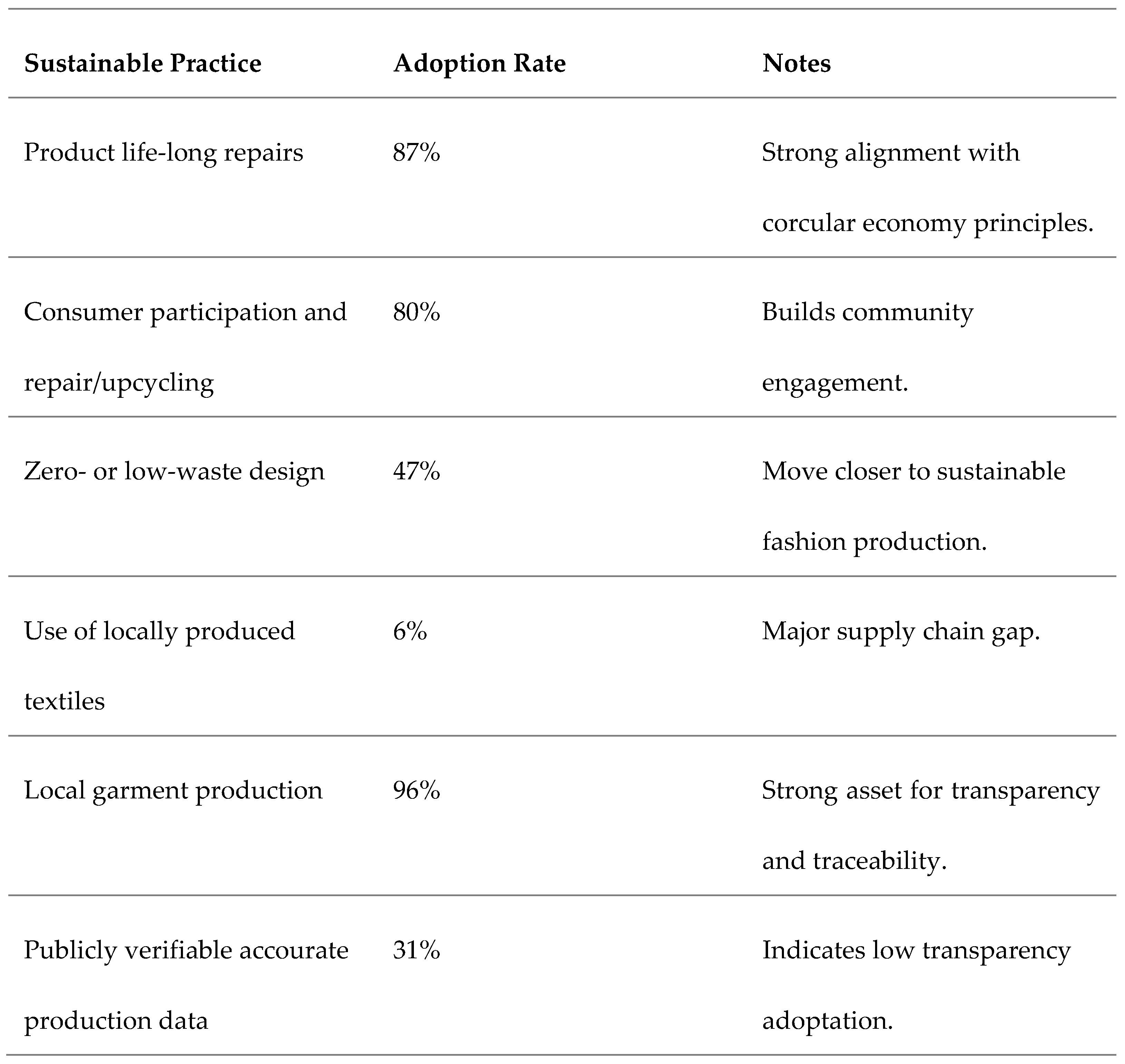
The macro-scale size of Slovenian fashion businesses facilitates highly persionalized services - such as repair and customization – that can be laveraged as a brend differentation. However, the low adoptation of locally produced textiles (6%) and limited transparency (31%) represent a strategic weakness.
The recommendation is to promote garment repair and active consumer participation as an integral aspect of brand identity across domestic and international markets; increase in next years the integration of zero- and less- waste design processes from the current 47%; strenghtening local textile manufacturing capacity to reduce dependence on imports, improve material traceability, and support even more regional supply chain resilience.
4.2. Startegic Opportunities for Local Production
Further analysis of the selected fashion brands revealed data on technological and production innovations designed to minimize energy and water consumption – such as garment requiring minimal cleaning, technical coatings that reduce the washing frequency, and innovative, informative clothing labelling. Data was also collected on localization practices and the use of natural energy systems, alongside a review of local and/or regional supply and production chains.
In Slovenia, most fashion brands rely on textiles that are not produced locally – only 6% use locally sourced textiles. In contrast, clothing production itself is overwhelmingly local, with 96% of brands producing garments domestically. The need for greater self-sufficiency in textiles production has been recognized for decades: as early as the 1970s, Slovenia relied almost entirely on imported textiles, either from abroad or from the republics of the former Yugoslavia. The strategic plans at the time targeted covering national textile needs by 1980 with 34% from domestic production and 66% from imports, reflecting awarness of textiles’ strategic importance.
Figure 5.
Supply chain locality in Slovenian fashion.
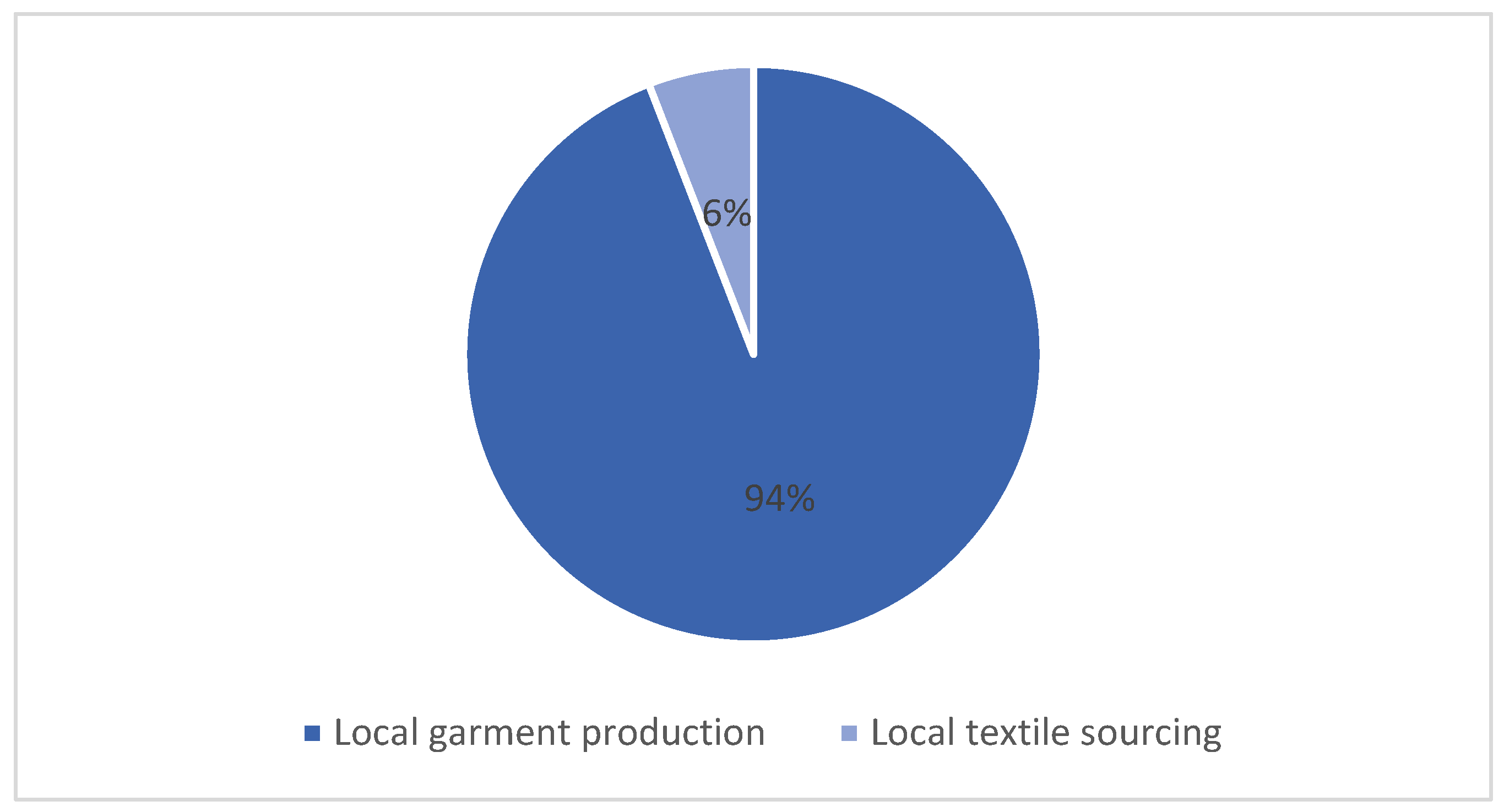
Today, technological and production innovations that directly reduce consumption remain underrepresented. Only about one-third of Slovenian fashion brands incorporate such innovations, and even then, they are rarely aimed at reducing energy footprint associated with garment maintenance. This underlines the underdeveloped state of Slovenia’s textile production and positions it as a priority for research and technological progress.
A promising direction lies in developing boutique, made-to-order manufactoring, which could divesify supply, strengthen the artisanal economy, and support high-value customization for the challenging global fashion economics. Slovenian fashion brands – due to their small scale, flexibility, and close-knit supply chains – are well-positioned to embed transparent communication about production and sourcing into their brand strategies. This openness can engage consumers, build trust, and foster community-oriented models of fashion consumption.
To maximize the advantages of Slovenia’s short supply chains, close designer-maker relationships, and authentic heritage foundations, the creation of collaborative production hubs is recommended. Shared investment in specialized machinery could boost competitiveness, improve manufactoring conditions, and enhance Slovenia’s visibility and reputation in the global fashion market.
4.3. The Role of Craftsmanship and Cultural Heritage
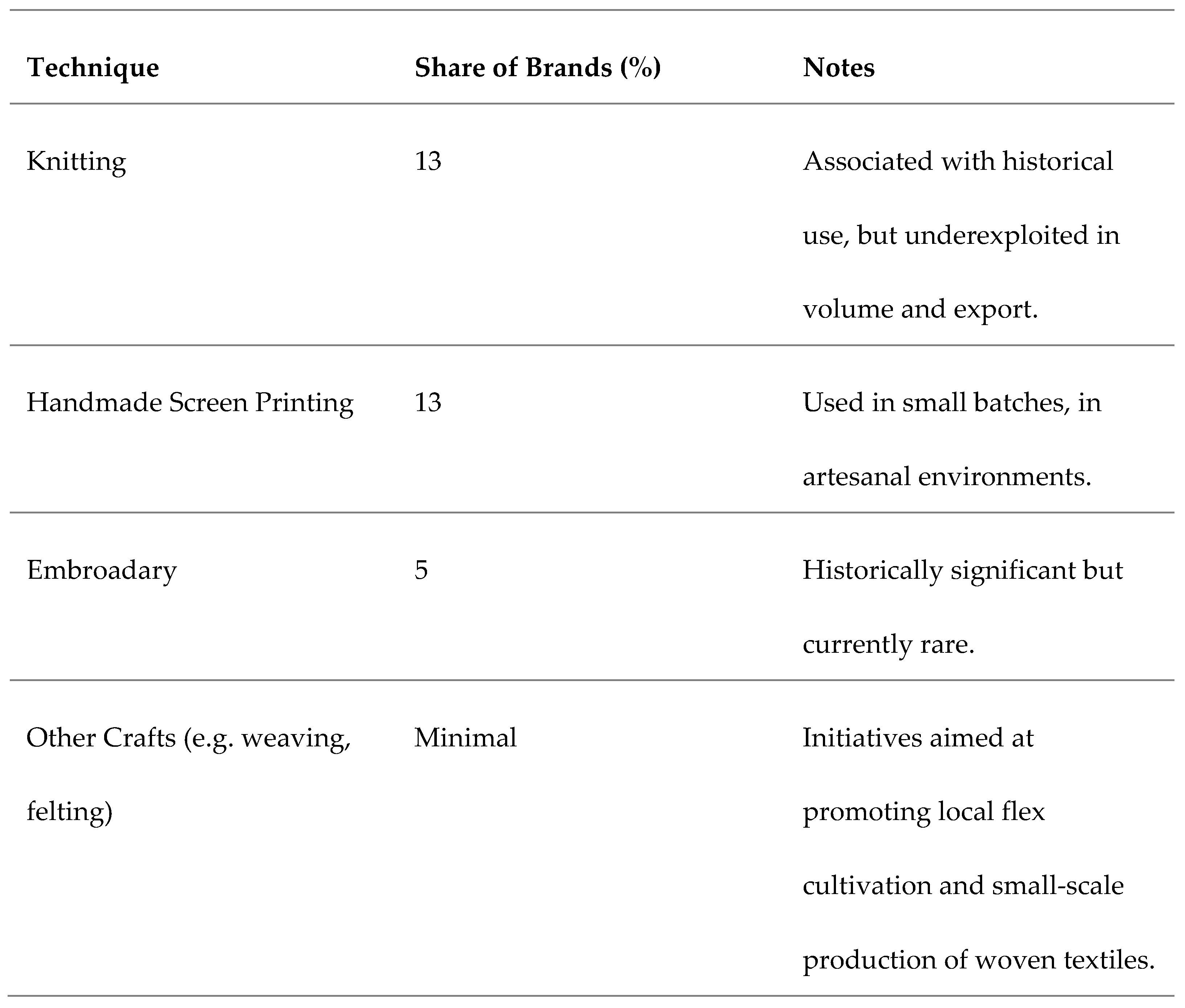
One of the key findings within researh regarding the role of handicrafts is that the integration of heritage craft techniques is low. Only up to 26% of Slovenian fashion brands integrate handicrafts into their collections. Primary technoques are knitting (13%), handmade screen printing (up to 13%), and embroidery (up to 5%). This puts cultural capital at risk, considering that many brands avoid highlighting their Slovenian origins in international markets, indicating a missed opportunity to leverage Made in Slovenia as a cultural and sustainable value proposition.
The integration of traditional techniques is limited to roughly one in four brands, and even within this segment, activity is concentrated in a narrow set of methods (knitting and screen printing). More complex or historically rich techniques – such as embroidery, weaving, or lace-making – remain marginal. Furthermore, craft integration is rarely linked to measurable sustainability innovations, such as zero-waste pattering, natural dyeing processess or locally sourced raw materials. This represents a significant heritage-sustainability disconnect in the current Slovenian fashion landscape.
Embedding cultural heritage into contemporary design could preserve the intangible cultural heritage and support cultural diversity within the Slovenian fashion sector, differentiate Slovenian brands globally, and mitigate the risk of fashion colonialism, that erases local identities in favor of s standardized global aesthetics.
The recommendation is to merge traditional techniques with modern sustainable technologies to create high-value, export-based products. Furthermore, it is essential to adopt collaborative, craft-based production models aligned to the realities of Slovenia’s small-scale industry by formig innovative business forms. Digital transparency has to be streghtening in terms of use digital media tools to make design and production processes traceable and transparent. It is necessary to adapt narrative-based marketing with the strategic integration of craft heritage narratives into the brand storytelling to strenghtening cultural concessioness, differentiate market postioning, and reinforce sustainability creditians through an authentic, place-based identity.
Figure 6.
Comparable overview of adoption of craft techniques in Slovenian fashion.
5. Discussion
Fashion occupies an inetrmediate position between culture and economy, making it critical site for integrating sustainability, heritage preservation, and economic innovation. The Slovenian fashion sector possesses unique strenghts, including local craftsmanship, short production chains, high creative autonomy, and close-knit designer-producer networks. However, the sector also faces challenges: micro-scale business models, reliance on outsourcing manufacturing, and an underdeveloped domestic textile industry.
This study contributes scientific novelty by empirically demonstrating how traditional craft techniques can be leveraged to simultaneously preserve cultural identity, enhance sustainability, and differentiate Slovenian brands in global markets. By bridging circular economy theory, post-socialist economic transition studies, and cultural heritage preservation, it provides a framework for understanding how small-scale fashion systems can achieve sustainable competitiveness.
5.1. Strategic Vision for Slovenian Sustainability Fashion
To realize its sustainable potential, the Slovenian fashion sector reqiures a long-term, structured vision with clearly defined objectives. Key elements include:
- Institutional leadership: Establishment of a professional chamber, or governing body to serve as custodian of the sector’s vision in fulfiling sustainability strategies. This organization should foster cross-sectoral collaboration, across policy makers, educational institutions, designers, and enterpreneurs.
- Digital Platforms: Development of a comprehensive platform of Slovenian fashion brands with clear sustainability strategies, intended for presentations, promotion, and education.
- Promotion and Market Positioning: Stregthening both domestic and international promotion of Slovenian sustainability-oriented fashion brands. Emphasis should be placed on niche, sustainably focused production to increase market differentiation. The ’Made in Slovenia’ label could include a segment dedicated to sustainable fashion, thereby reinforcing cultural authenticity and sustainable value.
- Sustainability and Heritage Integration: Preservation and innovation within traditional handicrafts, linking heritage techniques with sustainable practices such as zero-waste design, natural dyeing, and the use of locally sourced materials. A hybrid integration of craft and modern technology can create high-value, export-oriented products.
This study comprises a research of Slovenian fashion based on an analysis of the use of sustainable strategies by brands in the period between 2020 and 2024. The collected data offers directions for further discussion:
Theoretical implications:
- Circular Economy Theory: Craft-based micro-production supports circularity with local sources, minimal waste and short supply chains.
- Post-socialist Transition Insights: Fashion, whose economic, political and social changes have influenced its development, struggles with small-scale production, restrictions on the global market and structural obstacles in transition economies.
- Cultural Heritage Preservation Theory: It emphasizes the importance of incorporating and developing handicraft skills in the preservation of intangible cultural assets, while also linking heritage preservation with economic and environmental sustainability outcomes.
Practical implications:
- Policy Recommendations: Support cooperative production hubs, grants for sustainable craft innovations, and certification schemes that emphasize cultural sustainability authenticity.
- Industry Guidelines: Promote hybrid integration of craft and technology, collaborative production models, and transparency through the use of digital tools to increase efficiency and competitiveness in the market.
- Educational Implications: Develop curricula that combine traditional craft skills with sustainable design principles to educate future fashion designers.
5.2. Limitations and Future Reserach
This study is limited by the size of the sample, which, due to the specific business dynamics of Slovenian fashion, does not cover all fashion brands, particulary not the emerging or informal ones or the designers who only occasionally design collections. Data availability was uneven, with inconsistent documentation of sustainability metrics. The cross-sectional design constrains the ability to capture temporal changes in sustainability adoption.
Methodologically, the reliance on qualitative and self-reported data introduced potential bias, and the absence of comprehensive metrics (e.g. life-cycle analysis, cicularity indicators) limits the accuracy of environmental impact assessments.
Future research should:
- Conduct studies to monitor changes in the implementation of sustainable practices or strategies over time.
- Undertake cross-national comparisons with other post-socialist transitional and small-scale fashion systems.
- Explore digital platforms to preserve artisanal heritage, increase transparency, and develop a sustainable fashion identity.
6. Conclusions
Slovenia’s fashion sector demostrates how small-scale, tightly networked production systems – characterized by a high degree of creative autonomy and strong cultural references – can serve as a model for sustainable, heritage-drive fashion development. While micro-scale structures foster experimentation, authenticity, and close designer-producer collaboration, they also encounter scalability contraints. In contrast, large-scale systems offer efficiency but often dilute local identity. Slovenian fashion navigates this tension through a hybrid approach, combining traditional craft techniques with more modern sustainable technologies to generate distinctive market value while safeguarding cultural heritage.
Preserving and innovating within traditional handicrafts is not merely a matter of cultural pride: it is a strategic pathway to maintaining design divesity and achieving competitive differentiation in the global market. Embedding heritage into contemporary design - supported by sustainable production practices such as zero-waste pattern cutting, natural dyeing processess, and locally sourced materials - reinforces both environmental and social responsability.
By institutionalizing these strategies through sector-wide coordination, targeted policy support, digital infrastructure, and cross-sectoral collaboration, Slovenian fashion can consolidate its position as a leader in small-scale, sustainability-oriented fashion systems. The ’Made in Slovenia’ label, underpinned by authenticity, quality, and responsibility, holds the potential to become an internationally recognized mark of excellence, demostrating that sustainability, cultural heritage, and market competitiveness are mutually reinforcing rather than mutually exclusive.
Strategically integrating institutional leadership, digital tools, heritage preservation, and, sustainability practices will enable the Slovenian fashion sector to achieve environmental, social, and economic sustainability while establishing the ’Made in Slovenia’ designation for fashion products as a global benchmark. This framework offers a transferable structural model for other small-scale, post-socialist transitional fashion systems seeking to preserve their national identity while thriving in a globalized industry.
References
- Fletcher, K. Sustainable Fashion and Textiles: Design Journeys, 1st ed.; Earthscan: London, England, 2008. [Google Scholar]
- United Nations. Available online: https://sdgs.un.org/2030agenda (accessed on 04. 08. 2025).
- McCracken, G. Culture and Consumption: A Theoretical Account of Structure and Movement of the Cultural Meaning of Consumer Goods. Journal of Consumer Research 1986, 13, 71–84. [Google Scholar] [CrossRef]
- Fletcher, K.; Grose, L. Fashion & Sustainability: fashion for change; Laurence King Publishing: London, England, 2012. [Google Scholar]
- Manzini, E. Design, when everybody designs: An introduction to design for social innovation. MIT Press: Cambridge, USA, 2015.
- Sektor mode v Sloveniji. Center za kreativnost: Ljubljana, Slovenia, 2025.
- Braun, V.; Clark, V. Using Thematic Analysis in Psycology. Qualitative Research in Psychology 2006, 3, 77–101. [Google Scholar] [CrossRef]
- Bole, P. Muzealizacija Almire. In Preteklost oblikuje sedanjost: Zbornik ob razstavi Alpska modna industrija Almira-Preteklost oblikuje sedanjost; Devetak, T.; Muzeji radovljiške občine: Radovljica, Slovenia, 2020; pp. 21–31. [Google Scholar]
- Oblak Japelj, N. Knjižnica Industrije usnja Vrhnika:pridobitev domoznanske zbirke Cankarjeve knjižnice Vrhnike. In Usnjarstvo na Slovenskem: zbornik referatov; Hudales, J.; Muzej Velenje, Muzej usnjarstva na Slovenskem: Šoštanj, Slovenia, 2013; pp. 151–161. [Google Scholar]
- Banka Slovenije. Available online: https://www.bsi.si/sl/statistika/devizni-tecaji/zgodovina-deviznih-tecajev-1945-1998 (accessed on 04. 08. 2025).
- Podbevšek, A. Pletenina se je izkazala. Jana 1979, 37, 11. [Google Scholar]
- M. K. Tekstil kupi inkubator. Jana 1979, 20, 6. [Google Scholar]
- Podbevšek, A. Nihče nam ne gleda pod prste. Jana 1983, 23, 11. [Google Scholar]
- Kobe Arzenšek, K. Pletenina: tovarna trikotažnega perila: zgodovinski zapis ob trojnem jubileju; Pletenina, tovarna trikotažnega perila Ljubljana: Ljubljana, Slovenia, 1971. [Google Scholar]
- Ladika, N. Problematika tekstilne industrije. Vezilo 1975, 11, 2. [Google Scholar]
- Babič, K.; Dabič Perica, S. Aplikativna analiza stanja na področju socialne ekonomije v Republiki Sloveniji. 2018. Available online: http://brazde.org/wp-content/uploads/2022/05/Analiza-stanja-na-podro%C4%8Dju-socialne-ekonomije-v-Sloveniji.pdf (accessed on 28. 07. 2025).
- Coscieme, L.; Manshoven, S.; Gillabel, J.; Grossi, F.; Mortensen, L. F. A Framework of circular business models for fashion and textiles: The role of business-model, technical, and social innovation. Sustainability: Science, Practice and Policy 2022, 18, 451–462. [Google Scholar] [CrossRef]
- Statista. Available online: https://www.statista.com/outlook/cmo/apparel/slovenia (accessed on 20. 05. 2025).
- Sektor mode v Sloveniji. Center za kreativnost: Ljubljana, Slovenia, 2025.
- Fletcher, K.; Grose, L. Fashion & Sustainability: fashion for change; Laurence King Publishing: London, England, 2012. [Google Scholar]
- Celcar, D. Trajnost in tehnologija v modni industriji. In Preteklost oblikuje sedanjost: Zbornik ob razstavi Alpska modna industrija Almira-Preteklost oblikuje sedanjost; Devetak, T.; Muzeji radovljiške občine: Radovljica, Slovenia, 2020; pp. 41–48. [Google Scholar]
- Jerič, P. Trajnostno biorazgradljiva oblačila za modno znamko Vivre (magistrsko delo). Univerza v Ljubljani, Naravoslovnitehniška fakulteta, Ljubljana, Slovenia, 2022.
- Ladika, N. Problematika tekstilne industrije. Vezilo 1975, 11, 2. [Google Scholar]
- Eržen, S. Shirting. Mladina 2016, 32, 37. [Google Scholar]
- Jansen, A. Decolonizing Fashion: Defying the ‘White Man’s Gaze’. Available online: http://vestoj.com/decolonialising-fashion/ (accessed on 12. 11. 2020).
- Cater, L. Brussels turns to ’artisanal skills’ to mend the textile industry. Politico. Available online: https://www.politico.eu/article/brussels-artisanal-skills-mend-textiles-industry-europe-fast-fashion/?utm_source=chatgpt.com (accessed on 12. 5. 2025).
- Stupica, M. Naša tekstilna industrija. Maneken 1957, 1. [Google Scholar]
- Fajt, E. Alternativne prakse v modi. In Moda in kultura oblačenja; Pušnik, M. in Fajt, E.; Aristej: Maribor, Slovenia, 2014; pp. 147–163. [Google Scholar]
- Rakovec, B. Dobrodošli v Grimščah. Jana 1985, 24, 6–7. [Google Scholar]
- N.N. Blejski pušeljc v Tekstilindusovih oblekah. Jana 1979, 21, 7. [Google Scholar]
- Anselma. Available online: https://anselma.si/about (accessed on 20. 7. 2025.
- Britovšek S. Mariborska ustvarjalka Tina Princ: Česar ne najde, kar pogreš, tisto ustvari. Večer 2021. Available online: https://vecer.com/v-nedeljo/mariborska-ustvarjalka-tina-princ-cesar-ne-najde-kar-pogresa-tisto-ustvari-10236259 (accessed on 5. 5. 2025).
- Center za kreativnost. Available on: https://czk.si/priloznosti/vili-van-style-odprti-poziv-za-vse-mlade-blagovne-znamke/ (accessed on 4. 8. 2025).
- Hishka. Available on: https://hishka.com/about/ (accessed on 30. 9. 2024).
- Big See. Available online: https://bigsee.eu/sewists-appetite/ (accessed on 5. 12. 2024).
- D’Itria, E.; Aus, R. Circular fashion: Evolving practices in a changing industry. Science, Practice and Policy 2023, 19. [Google Scholar] [CrossRef]
- Sektor mode v Sloveniji. Center za kreativnost: Ljubljana, Slovenia, 2025.
Figure 1.
Vertical bar chart with five categories of waste reduction strategies and their approximate values in percentages from 0% to 100%.
Figure 1.
Vertical bar chart with five categories of waste reduction strategies and their approximate values in percentages from 0% to 100%.
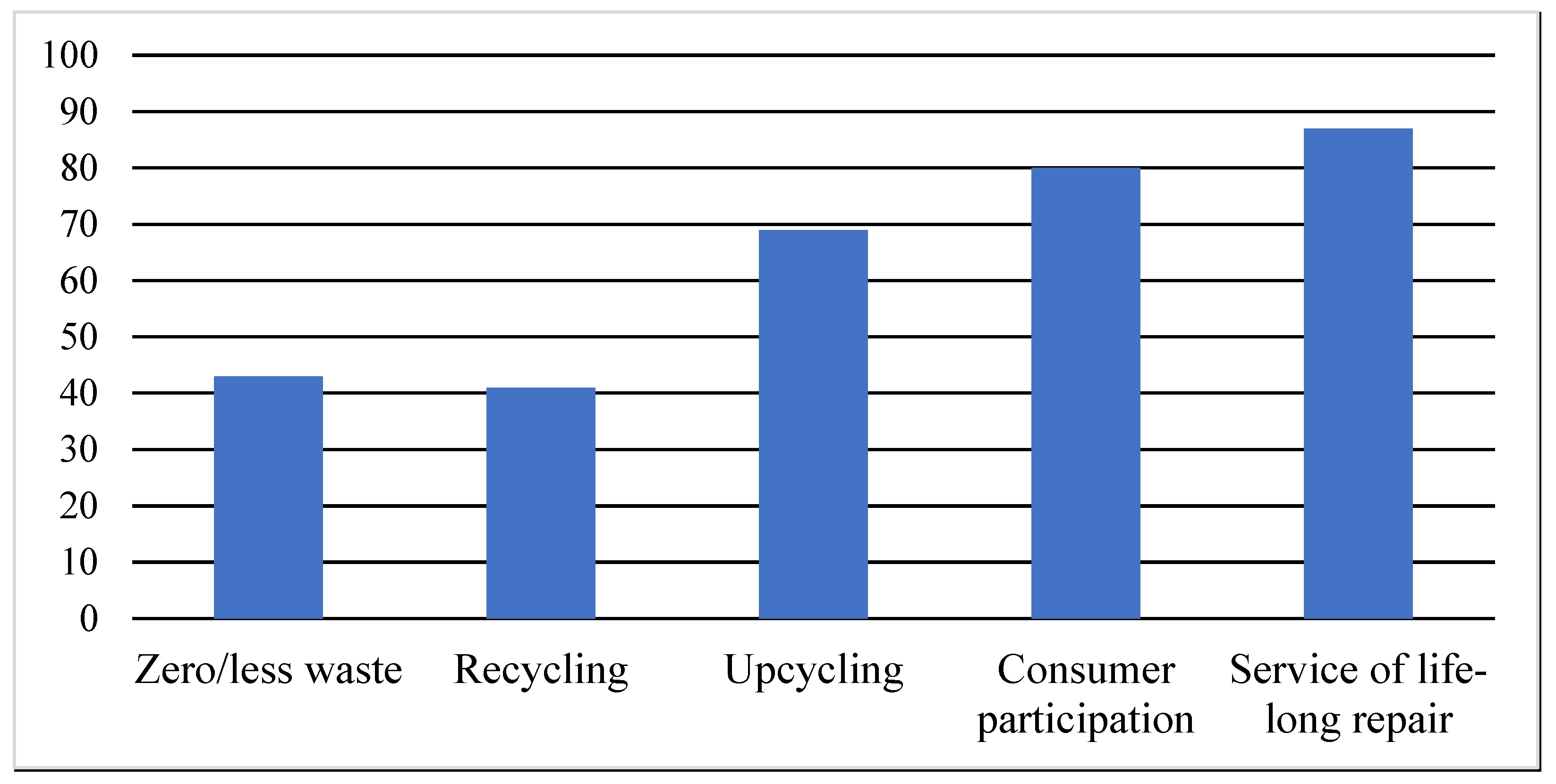
Figure 2.
Three categories of production sustainability (local clothing production, local textile supply chain and technical innovations) and their approximate values in percentages from 0% to 100%.
Figure 2.
Three categories of production sustainability (local clothing production, local textile supply chain and technical innovations) and their approximate values in percentages from 0% to 100%.
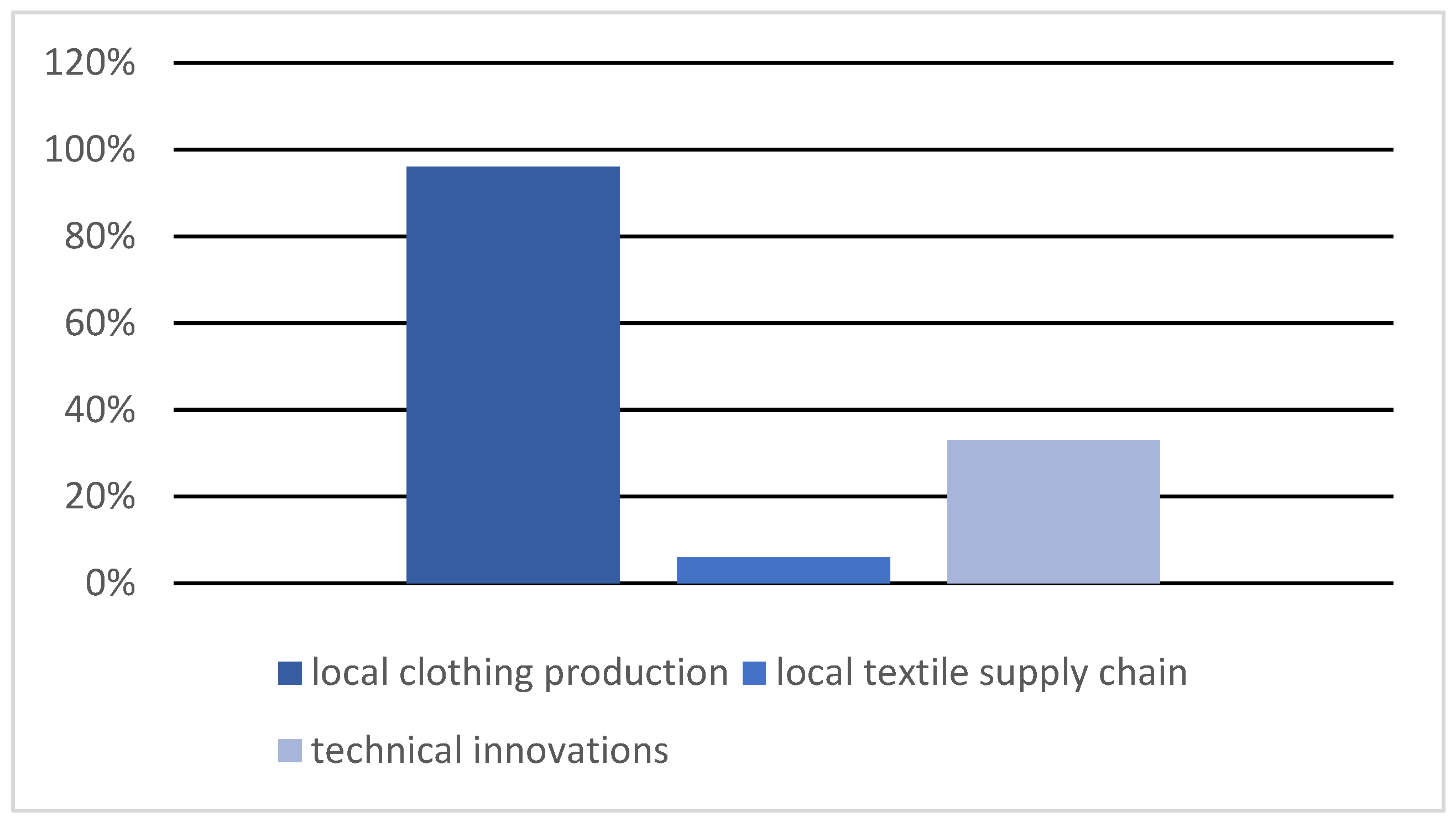
Figure 3.
Three categories of design for dematerialization and development of systems and services (repair, production transparency and multi-purpose products) with corresponding percentage values.
Figure 3.
Three categories of design for dematerialization and development of systems and services (repair, production transparency and multi-purpose products) with corresponding percentage values.
Disclaimer/Publisher’s Note: The statements, opinions and data contained in all publications are solely those of the individual author(s) and contributor(s) and not of MDPI and/or the editor(s). MDPI and/or the editor(s) disclaim responsibility for any injury to people or property resulting from any ideas, methods, instructions or products referred to in the content. |
© 2025 by the authors. Licensee MDPI, Basel, Switzerland. This article is an open access article distributed under the terms and conditions of the Creative Commons Attribution (CC BY) license (http://creativecommons.org/licenses/by/4.0/).
Copyright: This open access article is published under a Creative Commons CC BY 4.0 license, which permit the free download, distribution, and reuse, provided that the author and preprint are cited in any reuse.


