

Submitted:
20 August 2025
Posted:
21 August 2025
You are already at the latest version
Abstract
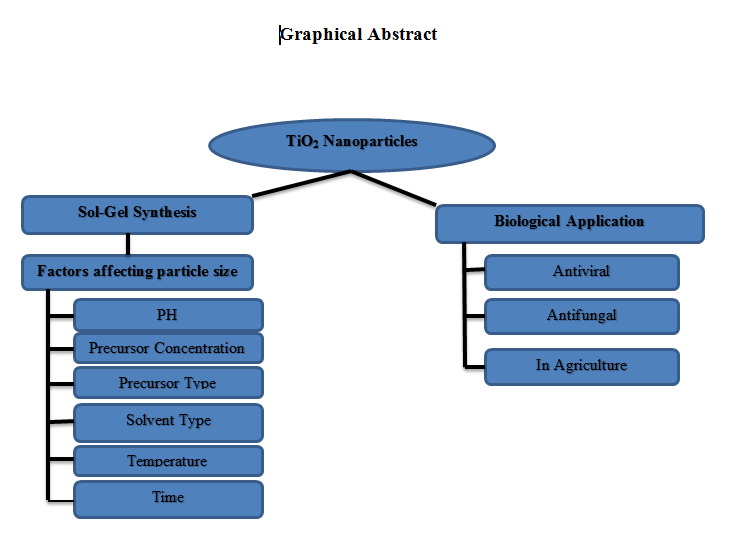
Almost every aspect of life is impacted by nanotechnology. We covered the TiO2 NPs sol-gel synthesis process in this paper, along with the variables that affect the particles, including water, temperature, time, and PH as well as the type and concentration of the precursor and the solvent. Based on alcohol and water, sol-gel is a wet chemical reaction. Because of their fascinating properties, titanium dioxide (TiO2) nanoparticles (NPs) have a wide range of applications in Nanobiotechnology. TiO2 NPs have been studied for their antiviral and antifungal properties against plant pathogenic species, particularly Ustilago tritici, which causes wheat rust. TiO2 NPs in agriculture have been shown to enhance plant growth and germination.
Keywords:
TiO2
; nanoparticles
; sol-gel synthesis
; factors affecting particle size
; Solvent Type
; biological application
Introduction
As per the reports, titanium, the ninth most frequent element in the crust of the earth, is a white, sturdy, silvery, and corrosion-resistant metal that is stronger than steel but less dense than steel. It is found naturally in several oxide forms, the most common of which is titanium dioxide (TiO2) [1,2]. TiO2, also known as Titania, is the result of the chemical interaction of titanium atoms with oxygen atoms from groups VI-B and IV-B of the periodic table. Because of its interesting properties, such as stability, non-toxicity, biocompatibility, and optical and electrical qualities, titanium dioxide (TiO2) is a well-known and widely studied photocatalyst. Three well-known crystalline forms of TiO2 are anatase, rutile, and brookite, and Figure 1 [3] depicts the structures of each. Although the third form of TiO2, brookite, has occasionally been described [4,5,6], the active crystalline forms of TiO2 are anatase and rutile [7,8]. TiO2 NPs are remarkable and versatile oxides with a bigger output because of their strong oxidation capabilities, high refractive index, low cost, and impressive and adaptable oxidation qualities [9]. TiO2 nanoparticles have been applied as food additives, photocatalysts, and antimicrobials to degrade pollutants from water waste [10,11,12,13]. TiO2 NPs can help destroy cancer cells, viruses, bacteria, and fungi [14]. These NPs have been used as sensors and in electronic devices because of their special electrical and ionic properties [15]. Anticancer drugs such as temozolomide, cisplatin, doxorubicin, and daunorubicin have all used TiO2 nanostructure as a drug delivery mechanism [16,17,18]. TiO2 NPs have been used in dental applications because of their ability to enhance the mechanical properties of biomaterials without compromising their biocompatibility [19,20,21]. Furthermore, TiO2 has been widely used as a coating that cleans and sterilizes a range of therapeutic instruments, such as sanitary napkins, dinnerware, cooking utensils, and hospital supplies.[22]. The American Food and Drug Administration (AFDA) has approved TiO2 NPs for use in human food, pharmaceuticals, cosmetics, and chemicals in food contact items such as cutting boards and other surfaces in contact with unprotected food. One anticipated application for this new material technology is the regulation of food processing plants' hygienic design in the future [23]. In this review, we have outlined the factors affecting the particle size of sol-gel-produced TiO2 nanoparticles and their biological applications.
Sol-Gel Method for TiO2 Synthesis
In 1960, innovative materials such as thin films, dense powders, porous structures, and thin fibers were first created using the sol-gel technique. The sol-gel process involves the transformation of a liquid solution (sol) into a solid phase (gel). [24,25]. In material science and ceramic engineering, the sol-gel wet chemical process is the most often used method. An inorganic solid is created by employing water to start the polymerization processes that convert a precursor solution. The fundamental ingredients used in the production of sol are inorganic metal salts and metal alkoxide. a sol form following a series of polymerization and hydrolysis procedures. After that, the sol is treated to produce ceramic materials in different forms. Pouring the soul into a mold will result in a wet gel. Sol undergoes further drying and heat treatment to become solid ceramic materials. An aerogel that is extremely porous and low in density is produced when liquid from wet gel is removed under supercritical circumstances. [26]. After adjusting a sol's viscosity to come within the necessary range, ceramic fibers can be removed from it.[27]. The detailed procedure of sol-gel is depicted in Figure 2. TiO2 nanostructure was produced through hydrolysis of titanium precursor using the sol-gel method. This method usually involves hydrolyzing titanium (IV) alkoxide condensational while an acid is present [28,29,30,31,32,33,34,35,36,37,38,39,40,41]. This technique consists of four steps. The first four steps are hydrolysis, polycondensation, drying, and heat deterioration. Equations (1) hydrolysis and (2) condensation indicate [28] that gels are produced by the condensation polymerization reaction, which is triggered by the hydrolysis of metal alkoxides with water in the sol-gel process.
Where R stands for isopropyl, ethyl, etc. Solvent loss occurs during the entire polymerization process, which transforms the liquid sol into a solid gel phase. The soil particle size is significantly influenced by temperature, pH, and solution chemistry [29]. TiO2 NPs can be synthesized by using different precursors such as titanium trichloride (TiCl3) [30], titanium tetra isopropoxide Ti[OCH(CH3)2]4 [31], titanium tetrachloride (TiCl4) [32] and titanium tetra butoxide Ti(OBu)4 [33].
| Ti(OR)4 + 4H2O → Ti (OH)4 + (ROH)4 | 1. Hydrolysis |
| Ti(OH)4 → TiO2 + 2H2O | 2. Condensation |
The initial stage in the alcohol-based Sol-gel synthesis of TiO2 begins with metal alkoxide, whereas the initial step in the aqueous-based Sol-gel synthesis is inorganic metal salt.
Alcohol-Based Process: Three important metal alkoxide components of TiO2 are Ti(OC2H5), Ti(OC3H7)4, and Ti(OC4H9)4. These alkoxides have a metal-oxygen bond, and because Ti and O have very different electro-negativity levels, the bond becomes highly polar and extremely reactive. As a result, the process continues by adding water while simultaneously causing condensation and hydrolysis, which ultimately leads to the creation of a gel [35].
Aqueous Based Process: TiOSO4 and TiCl4 are significant aqueous-based process precursors [36,37]. The hydrolysis and condensation process can also be used for aqueous-based sol-gel synthesis [38]. The water-based phases of the sol-gel process are precipitation and peptization. The inorganic metal salt must be hydrolyzed to undergo precipitation; once this is done, the salt rapidly becomes a gelatinous precipitate with the addition of base. Next, the extra electrolyte is removed by washing. Peptization is the process of re-dispersing a colloid to stop coagulation [35]. The process of directly separating material into colloid-sized particles by adding a peptizing chemical is known as peptization [39]. Peptizing a colloid that has reached a main potential minimum is especially difficult.
Factors Affecting Particle Properties of TiO2 NPs
PH: With an increase in the pH of the sol [40], the TiO2 NPs typically grow larger. When making TiO2 NPs using the sol-gel technique, pH is crucial for determining the final particle size and shape [41]. High concentrations of hydrogen ions interfere with the reaction and slow down nucleation, which causes the particles to expand quickly to form big grains. It will take the new nucleus some time to develop into sizable TiO2 particles [42]. Both the size of nanoparticles and the stability of sol are dependent on the pH level, which also controls acidity [43]. By aging a highly acidic solution of TiCl4 at high temperatures for 6-47 hours, Matijevic et al. [44] reported the production of TiO2 spherical particles of a narrow size.
Precursor Concentration: The number of TiO2 nuclei formed at high titanium (IV) isopropoxide (TTIP) precursor concentrations causes’ enhanced coagulation and sintering, which causes the size of the particles to increase as the precursor concentration rises [45]. Moreover, higher precursor concentration enhances the anatase phase's crystallinity and increases the probability that it will change into the rutile phase [46].
Precursor Types: In their investigation of the impact of different alkoxides on TiO2 NP size, Vorkapic and Matsoukas discovered that at 25 oC, the final size reduces as the alkoxy group's length increases. [43]. Their findings demonstrated that the order of decreasing particle size was ethoxide, isopropoxide, isopropoxide, and butoxide, which corresponded to the order of lowering the alkoxides reactivity and, thus, the hydrolysis rate.
Solvent Types and Concentration: Generally, molecular addition causes the particles to grow in size after nucleation; however, the kind of solvent used affects this growth since different solvents have different potentials for particle interaction. Researchers found that the size of the particles increased and the size without alcohol dropped when the amount and molecular weight of alcohol decreased [43]. This is because an increase in molecular weight and concentration results in a decrease in the solvent's dielectric constant, which in turn leads to an increase in the rate of re-aggregation, a decrease in stability, and larger particle sizes. Park et al. [47] examined the creation of TiO2 NPs through the thermal hydrolysis of titanium tetrachloride (TiCl4) in mixtures of water and n-propanol. The results of the study show that when the powders were dissolved in various solvents, the degree of aggregation increased in the order of methanol, ethanol, and propanol, suggesting that colloidal destabilization was the primary mechanism by which these alcohols changed particle size. In another investigation by Xu et al. [48], the photo-catalytic activity of unsupported TiO2 steadily rose with the rise in the chain of the solvent used in manufacture due to an increase in anatase content and a decrease in particle size. They discovered this after changing the solvent from methanol to 2-propanol. At a particle size reduction of 11.6 nm to 10.5 nm, the anatase content increases to 91%. A significant amount of amorphous TiO2 can be discovered in the final sol, and the rate of hydrolysis can slow down as the concentration of alcohol in the sol-gel reaction mixture increases.
Temperature: Temperature has a significant role in regulating the characteristics and particle size of TiO2 NPs during sol-gel production. Vorkapic and Matsoukas investigated how the temperature of the hydrolysis process affected the particle size [43] They examined temperature effects between 0 and 50 oC and discovered that lower hydrolysis temperatures promoted the production of bigger particles. The size reduces with increasing temperature, reaching its minimum between 25 and 50 oC. High temperatures reduce the solvent's viscosity and dielectric constant, increasing the thermal energy of colloids and lowering the electrostatic barrier to aggregation, which leads to bigger particle sizes [49].
Water: The hydrolysis reaction is significantly influenced by the water (H2O) content. According to Xiaobo [50], the formation of Ti-O-Ti chains through alkoxylation is encouraged when the reaction mixture has an abundance of titanium alkoxide and has a low water content and low hydrolysis rates. Water concentration shouldn't be too low otherwise the alkoxide will only partially hydrolyze with the water, which will cause condensation between the (OH)X Ti(OR)4-X monomers [51]. According to some researchers, the equation R= [H2O]/[TEOT] larger than 2.5 indicates that the water-to-alkoxide ratio needed for particle production should be greater than 2.5 [52]. Particles having an average size of 300 nm were obtained from the greatest R-value known, 7, which was. A greater nucleophilic interaction between water and alkoxide molecules happens as the amount of water is increased, leading to more alkoxyl groups being replaced by the OH group of water. The resulting monomers then engage in intermolecular interactions to create a three-dimensional network structure. The hydrolysis is more complete and more alkoxide converts to the corresponding metal hydroxide M(OH)Z when the R-value is over a critical value, whereupon the two react to create polymer-like particles [51]. High hydrolysis rates brought on by a lot of water favor Ti (OH)4 production.
The molar ratio of H2O/alkoxides (RW) utilized in the sol-gel method, as shown in Figure 5(a), has a significant impact on the properties of the resulting oxides, according to a study by Yu and Wang [51]. They proposed that the RW utilized would affect the reaction mechanism for sol-gel conversion, and they proposed three distinct ways, as illustrated in Figure 5(b). All mechanisms might operate simultaneously, but one would predominate [51]. Case I: Condensation reaction between the monomers happens when RW is less than four (RW 4). This is because the hydrolysis between the alkoxide and water is incomplete. Case II: A greater nucleophilic reaction between water and alkoxide molecules and the three-dimensional network occurs when RW is raised between two and four (2 RW 4). Case III: The hydrolysis will be complete when RW is used over the crucial value. The matching metal hydrate will be formed from the alkoxide. The monomers will react with one another to create polymer-like particles. The effects of various parameters on the characteristics of TiO2 NPs are shown in Table 1.
Uses of TiO2 NPs in Biology
Titanium dioxide (TiO2) NPs have a wide range of uses in Nanobiotechnology as a result of their intriguing features [59]. The effects of several metallic NPs on various bacterial strains have been investigated. Due to their strong oxidizing potential, titanium dioxide (TiO2) NPs exhibit eco-friendly biocidal capabilities. Numerous bacterial strains, endospores, fungi, algae, protozoa, viruses, microbial toxins, and prions are just a few of the infectious microbes that titanium dioxide (TiO2) NPs are used to treat [60]. In the next subsections, a few of these common uses for titanium dioxide (TiO2) NPs will be briefly explored.
Antiviral Activity of TiO2 NP: Nanotechnology advancements have proven to be successful therapeutic solutions for treating a variety of ailments, including viral infections. Nano conjugates including silver, TiO2, and carbon have been demonstrated to directly interact with the target viruses in various ways. The capsid protein coat and genetic material (DNA or RNA) make up the virus. Among infectious diseases like influenza, hepatitis B and C, HIV, herpes, and the present catastrophic coronavirus, viruses pose the greatest threat to humankind. One of the key strategies for combating viruses is the physical destruction or photo-catalytic oxidation of the viral protein sheath by nanomaterials. Viral particles are broken up by TiO2 NPs by an unidentified interaction with the viral envelope. In another study, it was demonstrated that TiO2 interacts with the capsid proteins, which is followed by their oxidative destruction and deactivation. Examples of this kind of devastation have been described in MS2 bacteriophage viruses and influenza viruses [61,62,63].
In another work, TiO2 Nano conjugates were found to have direct interaction-mediated antiviral activity against the H3N2 influenza virus [64]. Additionally, TiO2 NPs have shown antiviral efficacy against the H9N2 avian influenza virus. Utilizing DNA-tagged TiO2 NPs prevented H5N1 and H1N1 viral proliferation in addition to the influenza virus [65]. At a minimum concentration of 6.25 g/ml, TiO2 Nano colloids also exhibit antiviral action against NDV, which may be caused by the lipid breakdown of the viral coat [66]. To ascertain the antiviral activity of TiO2 nanostructures on BBSV, which damages the fava bean plant, a study was conducted [67]. The broad bean stain virus (BBSV) was combated in faba bean plants using TiO2 nanostructures. The faba bean with TiO2 nanostructure treatment compared to untreated plants, showed a greater decline in the illness in the two weeks after infection with the broad bean stain virus (BBSV) [68]. The study demonstrated that the PR1 gene, or the defensive regulatory gene in the salicylic acid signaling pathway, was strongly expressed following the application of TiO2 nanostructures, reducing the severity of the disease. Due to their small size and high zeta potential, TiO2 NPs most likely interacted with virus particles to accomplish this. Shortly, titanium NPs would make an excellent platform for the treatment of New Castle disease virus infections as well as an excellent option for the evaluation of novel antiviral medications [66].
Antifungal Activity of TiO2 NPs: Wheat crops were treated with NPs to test the antifungal activity of TiO2 NPs against the plant pathogenic species Ustilago tritici that causes wheat rust. TiO2 NPs were tested against the U. triciti fungus at three different concentrations (24, 50, and 75 µL) in comparison to a control. The third concentration (75 µL) demonstrated the strongest and most significant effects, which resulted in a 62% growth reduction against U. tritici, even though all three concentrations had outstanding antifungal activity [69].
Use of TiO2 NPs in Agriculture: According to Chao and Choi's findings, TiO2 NPs boost plants' ability to photosynthesize and their resistance, which results in a 30% rise in crop yield [70]. Onion spinach showed an increase in photosynthetic rate [71]. According to a different study, using TiO2 nanostructures increased plant growth and germination [72]. The proposed process includes an increased stimulation of the creation of carbohydrates and increased photosynthesis since it has light-absorbing characteristics [73]. TiO2 can also control nitrogen-metabolizing enzymes such as glutamate dehydrogenase, nitrate reductase, glutamine synthase, and glutamic-pyruvic transaminase by absorbing nitrates. These enzymes can change inorganic nitrogen into proteins and chlorophyll [69,74,75].
It was discovered that Zea mays sprayed with Nano TiO2 during the crop's productive stages had greater pigmentation [76], which is what increases crop output [74]. TiO2 NPs may be sprayed onto leaves or added to the soil. Different crops' photosynthetic rates can be accelerated with TiO2 NPs, which can also increase agricultural productivity. When applied to tomato plants, TiO2 NPs in aerosol form were found to be more effective at boosting photosynthesis and lycopene content [77,78] than TiO2 NPs applied as a soil additive. Strong irradiance TiO2 NP exposure caused numerous phenotypic and physiological responses in tomato plants, including an increase in fruit and flower output, augmentation of anthocyanin and carotenoids, and an increase in enzyme activity. High fruit output was the most notable finding with Nano TiO2, which was presumably caused by a stress-induced reaction that accelerated propagation [79]. Among the many other known NPs, TiO2 NPs have been proven to be effective and can be widely employed in agriculture, especially for the remediation of soil contaminated with heavy metals.
According to earlier research [80,81], NPs have both antagonistic and synergistic effects on heavy metal accumulation and plant growth under varied environmental conditions. In a different study, the impact of TiO2 NPs on the morphological alterations of wheat plants was explored. White plants were treated with TiO2 NPs in increasing doses, however, they did not exhibit any visual signs like chlorosis or necrosis. White plants' roots and shoots' dry weight (DW) were not significantly impacted by the TiO2 NP treatment. Plant growth was unaffected by an increase in TiO2 NP dosage [82]. White seed germination or root elongation was not statistically altered as a result of TiO2 NP treatment [83].
Conclusion
Due to its intriguing features, including stability, non-toxicity, biocompatibility, and optical, and electrical qualities, titanium dioxide (TiO2) is a well-known and extensively explored photocatalyst. The American Food and Drug Administration (AFDA) has approved that TiO2 NPs are used in human food, medications, cosmetics, and compounds in food contact materials such as cutting boards and other surfaces in contact with unprotected food. The sol-gel process was originally used to synthesize TiO2 NPs considering different parameters for controlled particle size. TiO2 NPs were used for antiviral and antifungal activities showing the best result of inhibition for both virus and fungus. TiO2 NPs are also used in agriculture, Plant growth was unaffected by an increase in TiO2 NP dosage. According to a different study, using TiO2 nanostructures increased plant growth and germination. In this review, we discussed the factors affecting particle size and their uses in biology.
References
- Chen, X. and S.S. Mao, Titanium dioxide nanomaterials: synthesis, properties, modifications, and applications. Chemical reviews, 2007. 107(7): p. 2891-2959. [CrossRef]
- Akinnawo, S., Synthesis, modification, applications, and challenges of titanium dioxide nanoparticles. Research Journal of Nanoscience and Engineering, 2019. 3(4): p. 10-22. [CrossRef]
- Malekshahi Byranvand, M., et al., A review on synthesis of nano-TiO2 via different methods. Journal of nanostructures, 2013. 3(1): p. 1-9.
- Zhao, B., et al., Brookite TiO2 nanoflowers. Chemical communications, 2009(34): p. 5115-5117. [CrossRef] [PubMed]
- Lin, H., et al., Synthesis of high-quality brookite TiO2 single-crystalline nanosheets with specific facets exposed: tuning catalysts from inert to highly reactive. Journal of the American Chemical Society, 2012. 134(20): p. 8328-8331. [CrossRef] [PubMed]
- Ohno, Y., et al., Pseudo-cube shaped brookite (TiO2) nanocrystals synthesized by an oleate-modified hydrothermal growth method. Crystal growth & design, 2011. 11(11): p. 4831-4836.
- Raj, K. and B. Viswanathan, Effect of surface area, pore volume and particle size of P25 titania on the phase transformation of anatase to rutile. 2009.
- Liu, G., et al., The role of crystal phase in determining the photocatalytic activity of nitrogen-doped TiO2. Journal of Colloid and Interface Science, 2009. 329(2): p. 331-338. [CrossRef]
- Aslam, M., A.Z. Abdullah, and M. Rafatullah, Recent development in the green synthesis of titanium dioxide nanoparticles using plant-based biomolecules for environmental and antimicrobial applications. Journal of Industrial and Engineering Chemistry, 2021. 98: p. 1-16. [CrossRef]
- Lazar, M.A., S. Varghese, and S.S. Nair, Photocatalytic water treatment by titanium dioxide: recent updates. Catalysts, 2012. 2(4): p. 572-601. [CrossRef]
- Zhang, W., et al., Effect of water composition on TiO2 photocatalytic removal of endocrine disrupting compounds (EDCs) and estrogenic activity from secondary effluent. Journal of Hazardous Materials, 2012. 215: p. 252-258. [CrossRef] [PubMed]
- Dastjerdi, R. and M. Montazer, A review on the application of inorganic nano-structured materials in the modification of textiles: focus on anti-microbial properties. Colloids and surfaces B: Biointerfaces, 2010. 79(1): p. 5-18. [CrossRef] [PubMed]
- Kubacka, A., et al., Understanding the antimicrobial mechanism of TiO2-based nanocomposite films in a pathogenic bacterium. Scientific Reports, 2014. 4(1): p. 4134. [CrossRef]
- Venkatasubbu, G.D., et al., Folate targeted PEGylated titanium dioxide nanoparticles as a nanocarrier for targeted paclitaxel drug delivery. Advanced Powder Technology, 2013. 24(6): p. 947-954. [CrossRef]
- Fernández-Garcia, M. and J. Rodgriguez, Metal oxide nanoparticles. 2007, Brookhaven National Lab. (BNL), Upton, NY (United States).
- Xu, P., et al., A new strategy for TiO 2 whiskers mediated multi-mode cancer treatment. Nanoscale research letters, 2015. 10: p. 1-11. [CrossRef]
- Comune, M., et al., Antimicrobial and pro-angiogenic properties of soluble and nanoparticle-immobilized LL37 peptides. Biomaterials Science, 2021. 9(24): p. 8153-8159. [CrossRef]
- Liu, E., et al., Cisplatin loaded hyaluronic acid modified TiO 2 nanoparticles for neoadjuvant chemotherapy of ovarian cancer. Journal of Nanomaterials, 2015. 16(1): p. 275-275.
- Abushowmi, T.H., et al., Comparative effect of glass fiber and nano-filler addition on denture repair strength. Journal of Prosthodontics, 2020. 29(3): p. 261-268. [CrossRef]
- Xia, Y., et al., Nanoparticle-reinforced resin-based dental composites. Journal of Dentistry, 2008. 36(6): p. 450-455. [CrossRef] [PubMed]
- Ohkubo, C., S. Hanatani, and T. Hosoi, Present status of titanium removable dentures–a review of the literature. Journal of Oral Rehabilitation, 2008. 35(9): p. 706-714. [CrossRef] [PubMed]
- Fujishima, F., TiO_2 photocatalysis fundamentals and applications. A Revolution in cleaning technology, 1999: p. 14-21.
- Maneerat, C. and Y. Hayata, Antifungal activity of TiO2 photocatalysis against Penicillium expansum in vitro and fruit tests. International journal of food microbiology, 2006. 107(2): p. 99-103. [CrossRef] [PubMed]
- Jawad, A.A., et al., Synthesis Methods and Applications of TiO2 based Nanomaterials. Al-Nahrain Journal of Science, 2022. 25(4): p. 1-10. [CrossRef]
- Kretzschmar, A.L. and M. Manefield, The role of lipids in activated sludge floc formation. AIMS Environmental Science, 2015. 2(2): p. 122-133. [CrossRef]
- Hong, I., VOCs degradation performance of TiO2 aerogel photocatalyst prepared in SCF drying. Journal of Industrial and Engineering Chemistry, 2006. 12(6): p. 918-925.
- Zhang, Y., et al., Mullite fibers prepared by sol–gel method using polyvinyl butyral. Journal of the European Ceramic Society, 2009. 29(6): p. 1101-1107. [CrossRef]
- Kim, C.-S., et al., Synthesis of nanocrystalline TiO2 in toluene by a solvothermal route. Journal of Crystal Growth, 2003. 254(3-4): p. 405-410. [CrossRef]
- Burda, C., et al., Chemistry and properties of nanocrystals of different shapes. Chemical reviews, 2005. 105(4): p. 1025-1102. [CrossRef]
- Kumar, S.G. and K.K. Rao, Polymorphic phase transition among the titania crystal structures using a solution-based approach: from precursor chemistry to nucleation process. Nanoscale, 2014. 6(20): p. 11574-11632. [CrossRef]
- Liu, A., et al., Low-temperature preparation of nanocrystalline TiO2 photocatalyst with a very large specific surface area. Materials Chemistry and Physics, 2006. 99(1): p. 131-134. [CrossRef]
- Fang, C.-S. and Y.-W. Chen, Preparation of titania particles by thermal hydrolysis of TiCl4 in n-propanol solution. Materials Chemistry and Physics, 2003. 78(3): p. 739-745. [CrossRef]
- Vickers, N.J., Animal communication: when I’m calling you, will you answer too? Current Biology, 2017. 27(14): p. R713-R715. [CrossRef]
- Ullattil, S.G. and P. Periyat, Sol-gel synthesis of titanium dioxide. Sol-Gel Materials for Energy, Environment and Electronic Applications, 2017: p. 271-283.
- Schubert, U., Chemical modification of titanium alkoxides for sol–gel processing. Journal of Materials Chemistry, 2005. 15(35-36): p. 3701-3715. [CrossRef]
- Periyat, P., et al., Aqueous colloidal sol–gel route to synthesize nanosized ceria-doped titania having high surface area and increased anatase phase stability. Journal of sol-gel science and technology, 2007. 43: p. 299-304. [CrossRef]
- Baiju, K., et al., Enhanced photoactivity of neodymium-doped mesoporous titania synthesized through aqueous sol–gel method. Journal of sol-gel science and technology, 2007. 43: p. 283-290. [CrossRef]
- Periyat, P., P. Saeed, and S. Ullattil, Anatase titania nanorods by pseudo-inorganic templating. Materials Science in Semiconductor Processing, 2015. 31: p. 658-665. [CrossRef]
- Varma, H.K., et al., Characteristics of alumina powders prepared by spray-drying of Boehmite Sol. Journal of the American Ceramic Society, 1994. 77(6): p. 1597-1600. [CrossRef]
- Jahromi, H.S., et al., Effects of pH and polyethylene glycol on surface morphology of TiO2 thin film. Surface and Coatings Technology, 2009. 203(14): p. 1991-1996. [CrossRef]
- Sugimoto, T., K. Okada, and H. Itoh, Synthetic of uniform spindle-type titania particles by the gel–sol method. 1997, Elsevier. p. 140-143.
- Chai, L.-y., et al., Effect of surfactants on preparation of nanometer TiO2 by pyrohydrolysis. Transactions of Nonferrous Metals Society of China, 2007. 17(1): p. 176-180. [CrossRef]
- Vorkapic, D. and T. Matsoukas, Effect of temperature and alcohols in the preparation of titania nanoparticles from alkoxides. Journal of the American Ceramic Society, 1998. 81(11): p. 2815-2820. [CrossRef]
- Matijević, E., M. Budnik, and L. Meites, Preparation, and mechanism of formation of titanium dioxide hydrosols of narrow size distribution. Journal of Colloid and Interface Science, 1977. 61(2): p. 302-311. [CrossRef]
- Jang, H.D. and J. Jeong, The effects of temperature on particle size in the gas-phase production of TiO2. Aerosol Science and Technology, 1995. 23(4): p. 553-560. [CrossRef]
- Kim, C.S., et al., A new observation on the phase transformation of TiO2 nanoparticles produced by a CVD method. Aerosol science and technology, 2005. 39(2): p. 104-112. [CrossRef]
- Schmuki, P., et al. TiO2 Nanotube Diameter Directs Cell Fate. in ECS Meeting Abstracts. 2007. IOP Publishing.
- Xu, Y., W. Zheng, and W. Liu, Enhanced photocatalytic activity of supported TiO2: dispersing effect of SiO2. Journal of Photochemistry and Photobiology A: Chemistry, 1999. 122(1): p. 57-60. [CrossRef]
- Nyamukamba, P., et al., Synthetic methods for titanium dioxide nanoparticles: a review. Titanium dioxide-material for a sustainable environment, 2018. 8: p. 151-175.
- Nyamukamba, P., C. Greyling, and L. Tichagwa, Preparation of photocatalytic TiO2 nanoparticles immobilized on carbon nanofibres for water purification. 2011, University of Fort Hare.
- Yu, H.-F. and S.-M. Wang, Effects of water content and pH on gel-derived TiO2–SiO2. Journal of non-crystalline solids, 2000. 261(1-3): p. 260-267. [CrossRef]
- Barringer, E.A. and H.K. Bowen, Formation, packing, and sintering of monodisperse TiO2 powders. Journal of the American Ceramic Society, 1982. 65(12): p. C-199-C-201. [CrossRef]
- Priyanka, K.P., et al., Microbicidal activity of TiO2 nanoparticles synthesized by sol–gel method. IET nanobiotechnology, 2016. 10(2): p. 81-86. [CrossRef]
- Sugapriya, S., R. Sriram, and S. Lakshmi, Effect of annealing on TiO2 nanoparticles. Optik, 2013. 124(21): p. 4971-4975. [CrossRef]
- Sadiq, S., et al. Investigation of the role of pH on structural and morphological properties of titanium dioxide nanoparticles. in IOP Conference Series: Materials Science and Engineering. 2020. IOP Publishing.
- Santhi, K., et al., Synthesis and characterization of TiO2 nanorods by hydrothermal method with different pH conditions and their photocatalytic activity. Applied Surface Science, 2020. 500: p. 144058. [CrossRef]
- Hidalgo, M., et al., Hydrothermal preparation of highly photoactive TiO2 nanoparticles. Catalysis Today, 2007. 129(1-2): p. 50-58. [CrossRef]
- Hayle, S.T. and G.G. Gonfa, Synthesis and characterization of titanium oxide nanomaterials using sol-gel method. American Journal of Nanoscience and Nanotechnology, 2014. 2(1): p. 1. [CrossRef]
- Maness, P.-C., et al., Bactericidal activity of photocatalytic TiO2 reaction: toward an understanding of its killing mechanism. Applied and environmental microbiology, 1999. 65(9): p. 4094-4098. [CrossRef]
- Shah, M., et al., Green synthesis of metallic nanoparticles via biological entities. Materials, 2015. 8(11): p. 7278-7308. [CrossRef]
- Nakano, R., et al., Photocatalytic inactivation of influenza virus by titanium dioxide thin film. Photochemical & Photobiological Sciences, 2012. 11: p. 1293-1298. [CrossRef]
- Syngouna, V.I. and C.V. Chrysikopoulos, Inactivation of MS2 bacteriophage by titanium dioxide nanoparticles in the presence of quartz sand with and without ambient light. Journal of colloid and interface science, 2017. 497: p. 117-125. [CrossRef] [PubMed]
- Li, W., et al., MicroRNA response and toxicity of potential pathways in human colon cancer cells exposed to titanium dioxide nanoparticles. Cancers, 2020. 12(5): p. 1236. [CrossRef]
- Mazurkova, N., et al., Interaction of titanium dioxide nanoparticles with influenza virus. Nanotechnologies in Russia, 2010. 5: p. 417-420. [CrossRef]
- Ibrahim Fouad, G., A proposed insight into the anti-viral potential of metallic nanoparticles against novel coronavirus disease-19 (COVID-19). Bulletin of the National Research Centre, 2021. 45: p. 1-22. [CrossRef]
- Akhtar, S., et al., Antibacterial and antiviral potential of colloidal Titanium dioxide (TiO2) nanoparticles suitable for biological applications. Materials Research Express, 2019. 6(10): p. 105409. [CrossRef]
- Elsharkawy, M.M. and A. Derbalah, Antiviral activity of titanium dioxide nanostructures as a control strategy for broad bean strain virus in faba bean. Pest management science, 2019. 75(3): p. 828-834. [CrossRef]
- Vargas-Hernandez, M., et al., Nanoparticles as potential antivirals in agriculture. Agriculture, 2020. 10(10): p. 444. [CrossRef]
- Irshad, M.A., et al., Synthesis and characterization of titanium dioxide nanoparticles by chemical and green methods and their antifungal activities against wheat rust. Chemosphere, 2020. 258: p. 127352. [CrossRef] [PubMed]
- Chao, S., and H. Choi, Method for providing enhanced photosynthesis. Korea Research Institute of Chemical Technology, Jeju, South Korea, 2005.
- Lei, Z., et al., Effects of nanoanatase TiO 2 on photosynthesis of spinach chloroplasts under different light illumination. Biological trace element research, 2007. 119: p. 68-76. [CrossRef]
- Mahmoodzadeh, H. and R. Aghili, Effect on germination and early growth characteristics in wheat plants (Triticumaestivum L.) seeds exposed to TiO2 nanoparticles. 2014.
- Owolade, O., and D. Ogunleti, Effects of titanium dioxide on the diseases, development and yield of edible cowpea. Journal of plant protection research, 2008. [CrossRef]
- Yang, F., et al., Influence of nano-anatase TiO 2 on the nitrogen metabolism of growing spinach. Biological trace element research, 2006. 110: p. 179-190. [CrossRef]
- Jaberzadeh, A., et al., Influence of bulk and nanoparticles titanium foliar application on some agronomic traits, seed gluten, and starch contents of wheat subjected to water deficit stress. Notulae botanicae horti agrobotanici cluj-napoca, 2013. 41(1): p. 201-207. [CrossRef]
- Morteza, E., et al., Study of photosynthetic pigments changes of maize (Zea mays L.) under nano TiO 2 spraying at various growth stages. SpringerPlus, 2013. 2: p. 1-5. [CrossRef]
- Raliya, R., P. Biswas, and J. Tarafdar, TiO2 nanoparticle biosynthesis and its physiological effect on mung bean (Vigna radiata L.). Biotechnology Reports, 2015. 5: p. 22-26. [CrossRef] [PubMed]
- Raliya, R., et al., Mechanistic evaluation of translocation and physiological impact of titanium dioxide and zinc oxide nanoparticles on the tomato (Solanum lycopersicum L.) plant. Metallomics, 2015. 7(12): p. 1584-1594. [CrossRef]
- Dekkers, S., et al., Role of chemical composition and redox modification of poorly soluble nanomaterials on their ability to enhance allergic airway sensitization in mice. Particle and Fibre Toxicology, 2019. 16(1): p. 1-18. [CrossRef]
- da Silva, E.B., et al., Anaerobic digestion to reduce biomass and remove arsenic from As-hyperaccumulator Pteris vittata. Environmental pollution, 2019. 250: p. 23-28. [CrossRef] [PubMed]
- Lian, W., et al., Utilization of biochar produced from invasive plant species to efficiently adsorb Cd (II) and Pb (II). Bioresource Technology, 2020. 317: p. 124011. [CrossRef] [PubMed]
- Dağhan, H., et al., Impact of titanium dioxide nanoparticles (TiO2-NPs) on growth and mineral nutrient uptake of wheat (Triticum vulgare L.). Biotech Studies, 2020. 29(2): p. 69-76. [CrossRef]
- Larue, C., et al. Investigation of titanium dioxide nanoparticles toxicity and uptake by plants. in Journal of Physics: Conference Series. 2011. IOP Publishing.
Figure 1.
Different crystalline form Titanium Dioxide NPs [3].
Figure 1.
Different crystalline form Titanium Dioxide NPs [3].
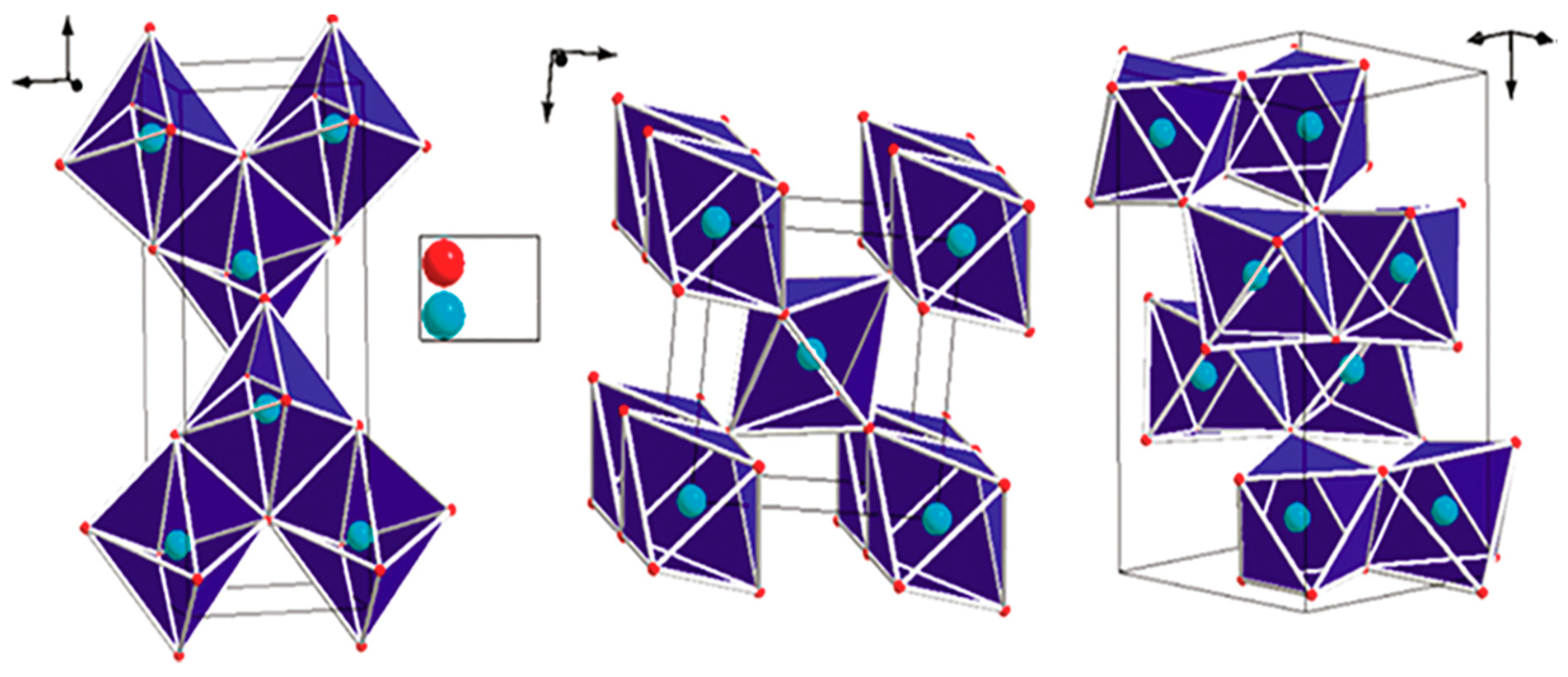
Figure 2.
Schematic representation of sol-gel process [34].
Figure 2.
Schematic representation of sol-gel process [34].
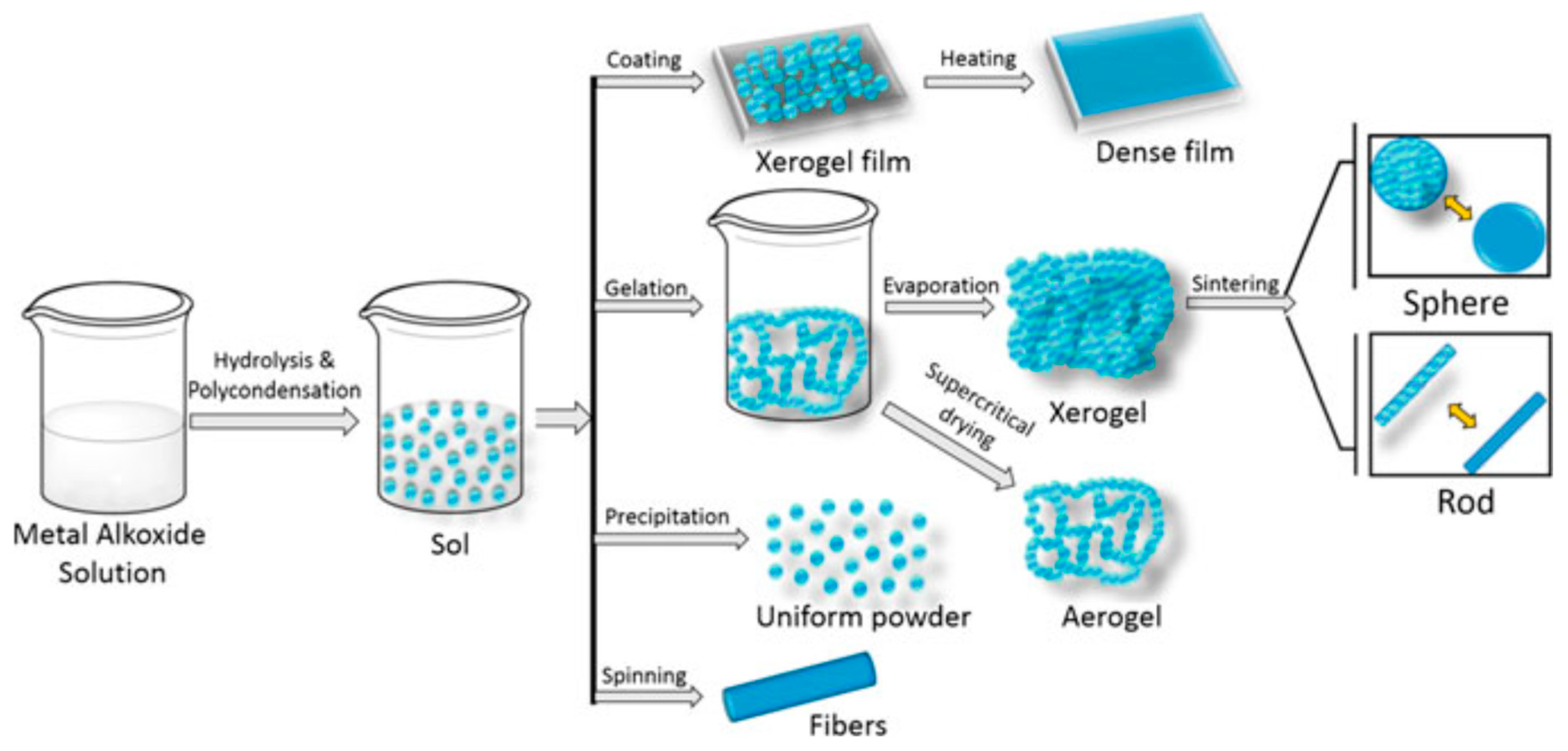
Figure 5.
(a) (b) Sol-gel process with different water content [51].
Figure 5.
(a) (b) Sol-gel process with different water content [51].
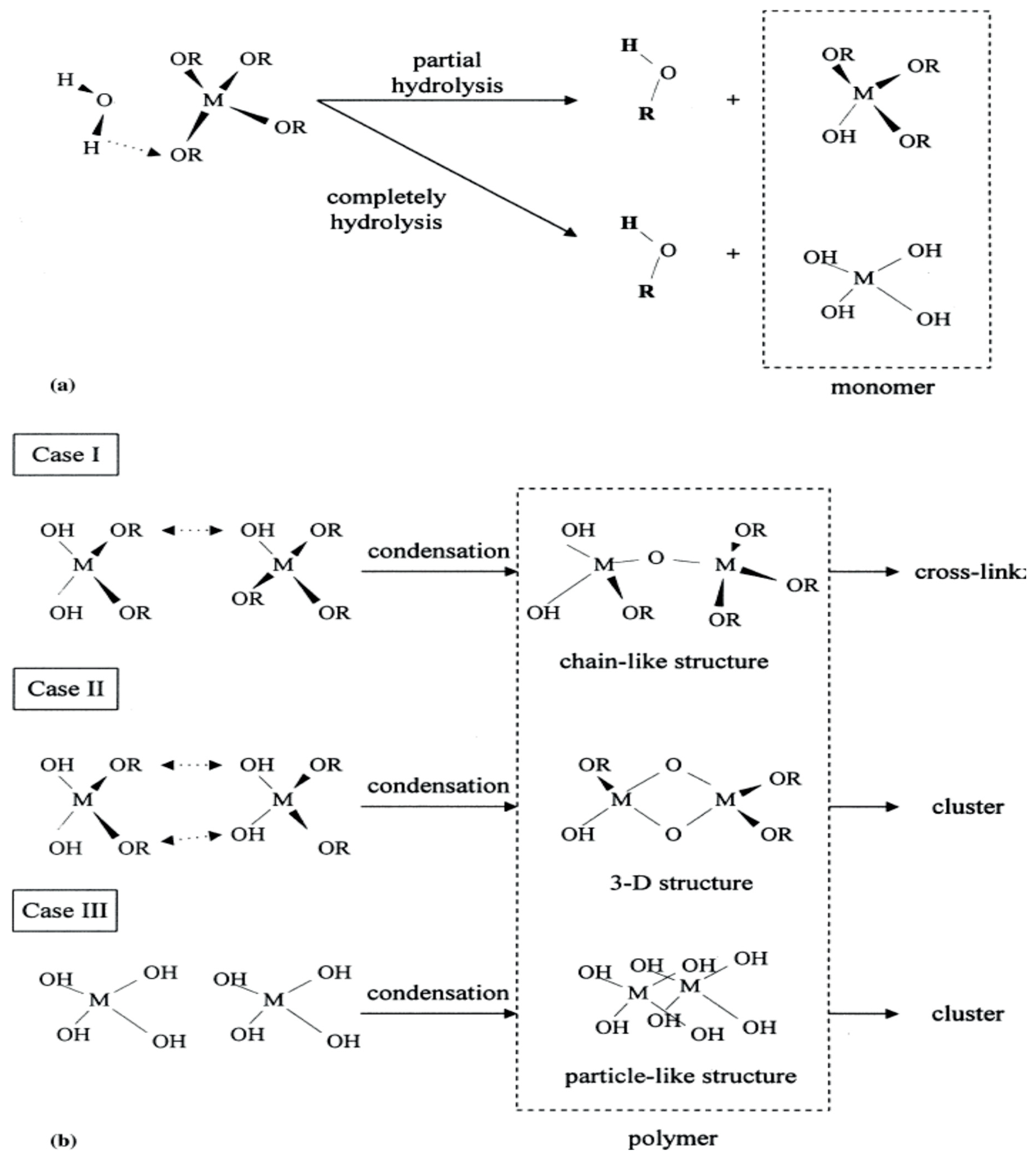

Table 1.
Effect of different factors on the properties of TiO2 nanoparticles.
| Precursor | Solvent | Catalysis | pH |
Temperature oC |
Crystalline phase | Particles size | Reference |
| Ti(OBu)4 5 cc |
Isopropyl Alcohol 10 cc |
HNO3 | 2 | 400 600 800 |
Anatase Mix (anatase + rutile) Rutile |
6 nm 25.8 nm 33 nm |
[53] |
| TTIP 0.4 M |
Ethyl alcohol 0.1 M | NaOH | 8.5 | 450 900 |
Anatase Rutile |
21-24 nm 69-74 nm |
[54] |
| TTIP 5.5 ml |
Ethanol 54.8 ml |
NH4OH Or HCl |
1 7 10 |
500 | Anatase with rutile Anatase Anatase |
14 nm 19 nm 20 nm |
[55] |
| TTIP 5 mL |
Deionized water 100 mL | NaOH | 7 9 |
400 | Anatase | 14 nm 16 nm |
[56] |
| TTIP 76.7 ml |
Isopropanol 76.4 ml |
HNO3 | 1.5 | 400 500 |
Anatase | 5-10 nm | [57] |
| TiCl4 3.5 ml |
Ethanol 35 ml |
NH4OH | 1.1 | 250 400 600 |
Anatase |
9.22 nm 14.33 nm 36.72 nm |
[58] |
Disclaimer/Publisher’s Note: The statements, opinions and data contained in all publications are solely those of the individual author(s) and contributor(s) and not of MDPI and/or the editor(s). MDPI and/or the editor(s) disclaim responsibility for any injury to people or property resulting from any ideas, methods, instructions or products referred to in the content. |
© 2025 by the authors. Licensee MDPI, Basel, Switzerland. This article is an open access article distributed under the terms and conditions of the Creative Commons Attribution (CC BY) license (http://creativecommons.org/licenses/by/4.0/).
Copyright: This open access article is published under a Creative Commons CC BY 4.0 license, which permit the free download, distribution, and reuse, provided that the author and preprint are cited in any reuse.